
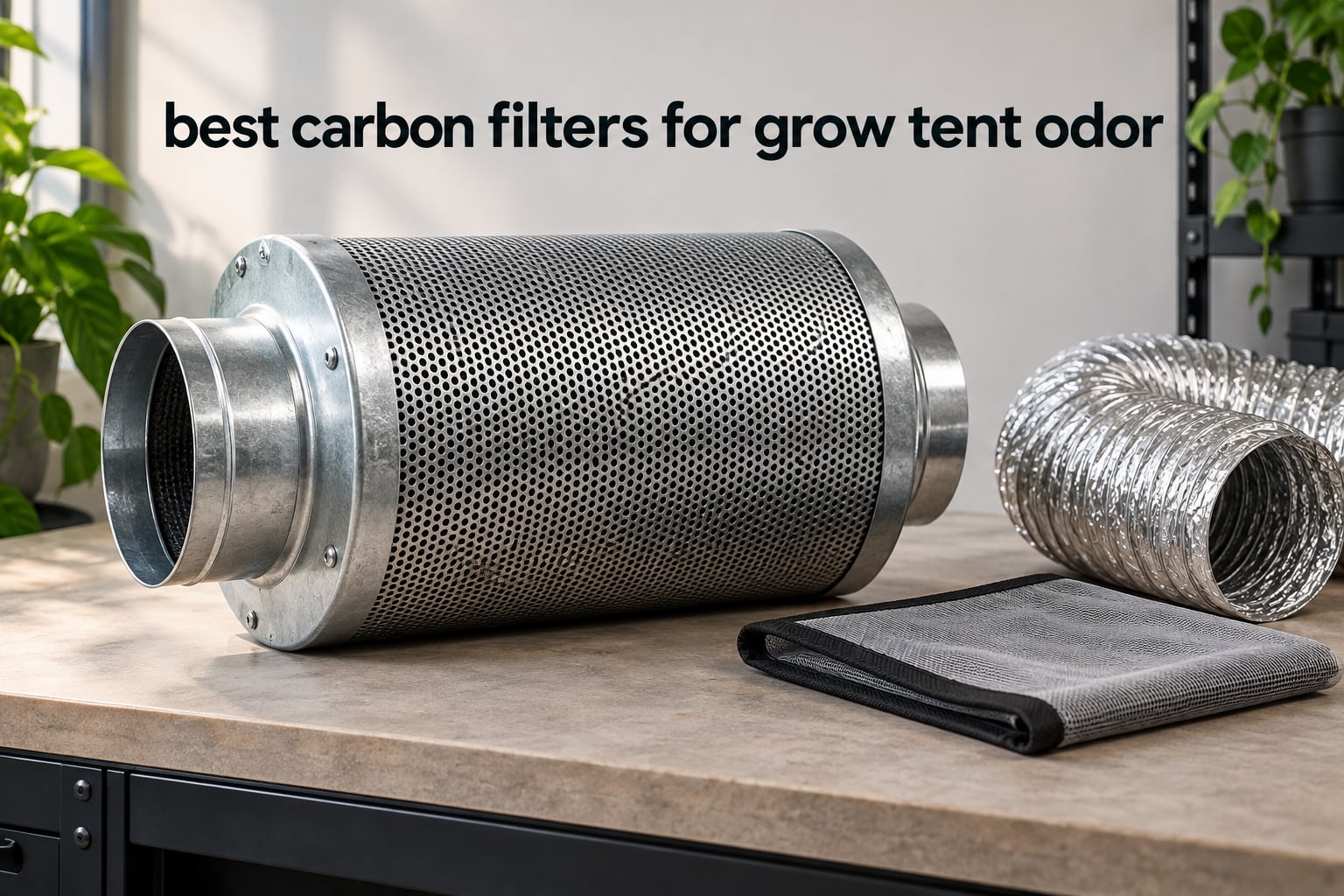
Short answer: the AC Infinity 6 Inch Air Carbon Filter is the best carbon filter for grow tent odor overall in 2026, because it pairs a 38mm bed of Australian virgin charcoal rated at 1200+ IAV with a published 410 CFM airflow figure and a 4.8 star rating across more than 10,000 reviews. It is the pick for most 2×4, 3×3 and 4×4 tents paired with a 6 inch inline fan.
That answer deserves a caveat before anything else. No carbon filter removes 100% of odor from a flowering grow tent, and the reason is rarely the filter itself. Air bypasses around the edges of a carbon bed through gaps in the mesh and flange, and a tent that sits at positive pressure pushes untreated air out of the zipper seams before it ever reaches the duct. Get the sizing, sealing and pressure right and a good filter does most of the work. Get one of those wrong and no brand on the market will save you.
This roundup covers ten canister-style carbon filters for grow tents, from 4 inch units sized for a 2×2 closet to 6 inch canisters that handle a 4×4 or larger. We compared published carbon grades, IAV ratings, bed thickness, airflow numbers, housing construction and the real complaints in buyer reviews, then cross-checked the whole category against what growers actually say on r/microgrowery and THCFarmer. That last step matters, because every editorial result on this topic is a brand selling its own filter, and the brands growers rank highest are not always the brands ranking highest in search results.
Two quick notes before the picks. The first is that a carbon filter does not filter air for your plants. It cleans the air on its way out of the tent, which is an odor problem, not an air quality problem for the canopy. The second is that if you are outfitting a full tent kit, you will still need an inline duct fan, ducting and a pre-filter, none of which are included in most of these canisters. Our canvas hot tent comparison covers the shelter side if you are still choosing your enclosure.
Table of Contents
Top 3 Carbon Filters for Grow Tent Odor in 2026

AC Infinity 6 Inch Carbon Filter
- 410 CFM airflow
- 38mm bed of Australian virgin charcoal at 1200+ IAV
- Aluminum flanges and galvanized steel mesh
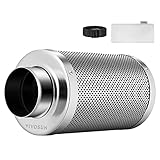
VIVOSUN 4 Inch Carbon Filter
- 223 CFM airflow
- 38mm RC412 charcoal bed at 1200+ IAV
- Reversible flange and washable pre-filter

AC Infinity Refillable Carbon Filter Kit
- Refillable instead of discarded
- Refill matches two standard 4 inch filters
- Twist-off flanges for tool-free refilling
The 10 Best Carbon Filters for Grow Tents at a Glance
Every filter below mounts inline with a duct fan and pulls air through a bed of activated charcoal. Ratings and review counts are copied from the product listings, and the best-for column reflects how we would match each one to a tent rather than a marketing claim.
| Product | Specifications | Action |
|---|---|---|
| AC Infinity 6 Inch Air Carbon Filter |
|
Check Latest Price |
| VIVOSUN 4 Inch Carbon Filter and Pre-Filter |
|
Check Latest Price |
 vanleno 4 Inch Carbon Filter vanleno 4 Inch Carbon Filter |
|
Check Latest Price |
 VIVOSUN 6 Inch Pro Carbon Filter VIVOSUN 6 Inch Pro Carbon Filter |
|
Check Latest Price |
 iPower GLFILT6M 6 Inch Carbon Filter iPower GLFILT6M 6 Inch Carbon Filter |
|
Check Latest Price |
| AC Infinity Refillable Carbon Filter Kit 4 Inch |
|
Check Latest Price |
 Spider Farmer 6 Inch Carbon Filter Spider Farmer 6 Inch Carbon Filter |
|
Check Latest Price |
 HYDROWE 4 Inch Air Carbon Filter HYDROWE 4 Inch Air Carbon Filter |
|
Check Latest Price |
 MELONFARM 4 Inch Air Carbon Filter MELONFARM 4 Inch Air Carbon Filter |
|
Check Latest Price |
 iPower 4 Inch Air Carbon Filter iPower 4 Inch Air Carbon Filter |
|
Check Latest Price |
1. AC Infinity 6 Inch Air Carbon Filter – Best Overall
AC Infinity Air Carbon Filter 6″ with Premium Australian Virgin Charcoal
- Premium Australian virgin charcoal rated at 1200+ IAV
- 38mm carbon bed inside a 410 CFM housing
- Powder-coated gunmetal finish resists rust in humid grow rooms
- Aluminum flanges and galvanized steel mesh for a tight fan seal
- Includes two straps two rope clips and two pre-filters
- Carbon can saturate faster than cheaper brands in continuous heavy use
- Not refillable in the field so a saturated bed means a new canister
- The large canister takes real floor space inside a tent
This is the filter we come back to because the numbers are unusually complete. AC Infinity publishes the duct opening, the length, the airflow rating, the IAV grade and the bed thickness, which is more than most brands in this category do, and every one of those numbers is competitive rather than generous marketing.
The 38mm bed of RC412 Australian virgin charcoal is the same grade used by the VIVOSUN canisters, and the 1200+ IAV rating is the top grade we saw across all ten products. In practice the housing is what separates it: aluminum flanges and galvanized steel mesh clamp down evenly against an inline fan, and a tight seal at the duct joint is the single biggest factor in whether odor stays inside the tent.
Owner reviews split into two camps. Plenty of people use it far outside a grow tent and report it handling paint and welding fumes, which is a good sign for the carbon grade. The recurring complaint is lifespan under heavy continuous duty, with some owners saying the bed saturates sooner than cheaper canisters in a room that runs 24 hours a day.
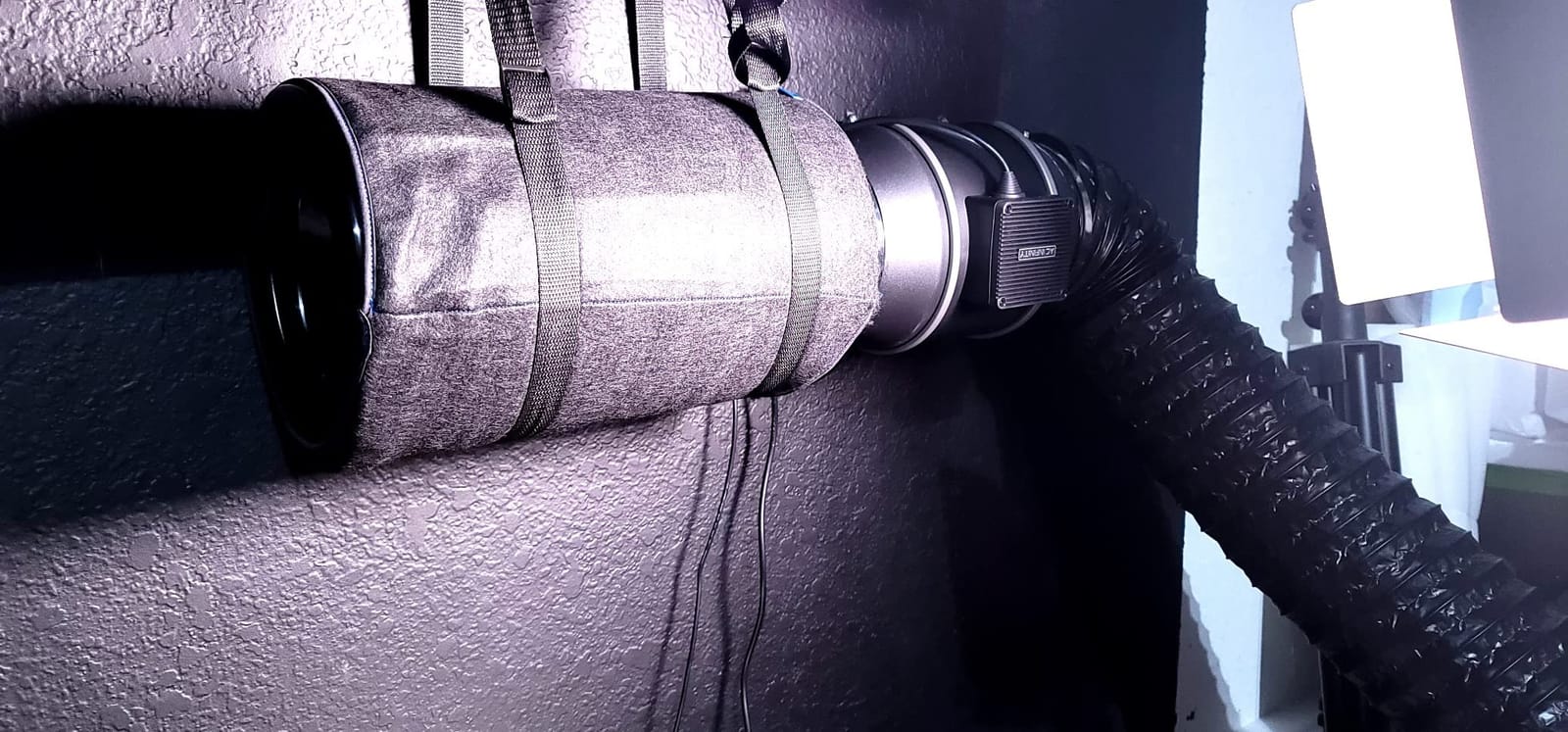
One review also reported loose carbon and pre-filters that arrived damaged, which points to a packing problem rather than a design flaw. It is worth checking the canister over the seam when it arrives, because carbon escaping into the duct is a smell problem you will never solve by buying another filter.
Community opinion on this brand is genuinely split, and we would rather say so than pretend otherwise. In one r/microgrowery thread a grower wrote that AC Infinity filters are not very good and that they work for a little while on a small grow but are not worth the price. The top-ranking Reddit result on carbon filter effectiveness for grow tents says close to the opposite, that the brand works particularly well when the tent is closed. Both experiences are plausible, and the difference between them is usually tent size and pressure, not the filter.
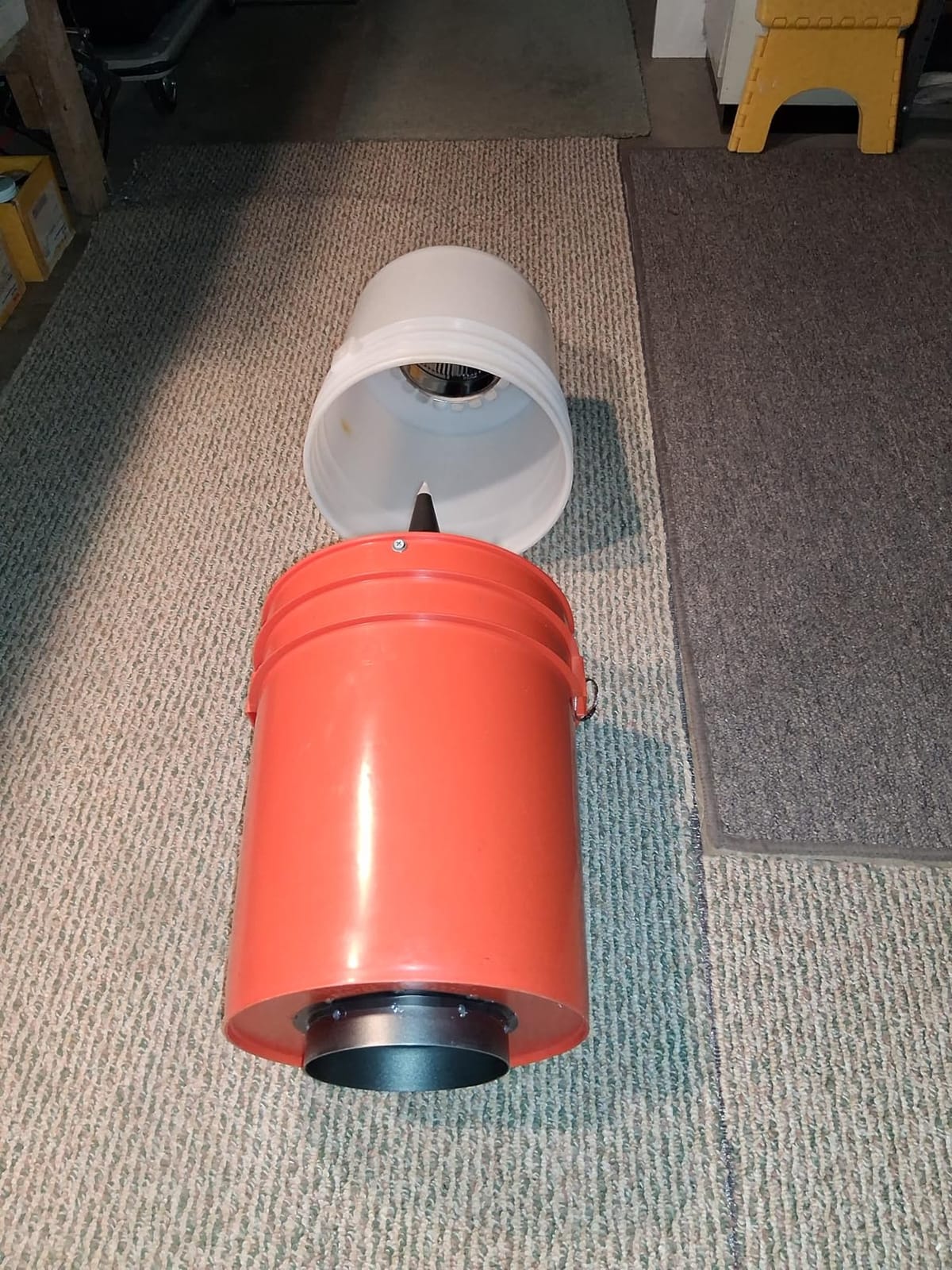
Who the AC Infinity 6 Inch filter suits
This is the right canister for a 2×4, 3×3 or 4×4 tent running a 6 inch inline duct fan, and it is the safest default choice in the whole roundup. At 410 CFM it has enough headroom for a 4×4 with a 1000W light once you account for the restrictions of the carbon bed and the bends in your ducting.
If you are running a bedroom grow, the powder-coated finish and the 6 inch footprint work in your favor, since a larger 6 inch canister mounted outside the tent keeps the odor out of the room rather than circulating it. Several owners pair it with an AC Infinity inline fan specifically because the clamp fit is tight, and a good seal is what keeps the fan from pulling air around the filter instead of through it.
What to watch on the AC Infinity 6 Inch filter
Carbon lifespan is the real limitation. Growers report losing odor control inside a single cycle when the tent runs continuously, and this canister cannot be refilled in the field. When the bed is spent, the whole metal canister goes in the bin, which is exactly the waste and cost problem the refillable design solves.
Plan your CFM before you buy. A 6 inch canister is large enough that a small 2×2 tent has no room for it, and forcing an oversized filter into a tiny tent drops airflow and raises temperature inside, which is its own problem. If your tent is 2×2 or 3×3, the 4 inch canisters on this list are a better physical fit.
2. VIVOSUN 4 Inch Carbon Filter and Pre-Filter – Best Value
- RC412 Australian virgin charcoal at 1200+ IAV in a 38mm bed
- 223 CFM through round-hole galvanized steel mesh
- Reversible flange and base to flip the canister for more carbon
- Washable detachable pre-filter plus hanging belts included
- The 4 inch format caps airflow in larger tents
- Some buyers add a second canister on the exhaust side
- Only a 90 day manufacturer warranty
More than 10,000 reviews at 4.6 stars makes this the most proven canister in the category, and for a 2×2 or 3×3 tent it is very hard to argue with. The carbon is the same RC412 Australian virgin charcoal at 1200+ IAV used in the premium 6 inch models, packed into a 38mm bed behind dual-sided galvanized mesh with a round hole pattern chosen for open area.
The detail we like most is the reversible flange and base. Because the end caps come off, you can flip the canister over and push air through the half of the bed that has not been exposed to the grow yet, which roughly extends the useful life of a fixed bed without any extra parts.
The pre-filter cloth is detachable and washable, and it blocks 99% of particles before they reach the carbon. That matters more than it sounds, because dust and pollen loading up the surface of a carbon bed chokes airflow and makes the whole tent run warmer. Swapping or rinsing a cloth every few weeks is far cheaper than replacing a canister.
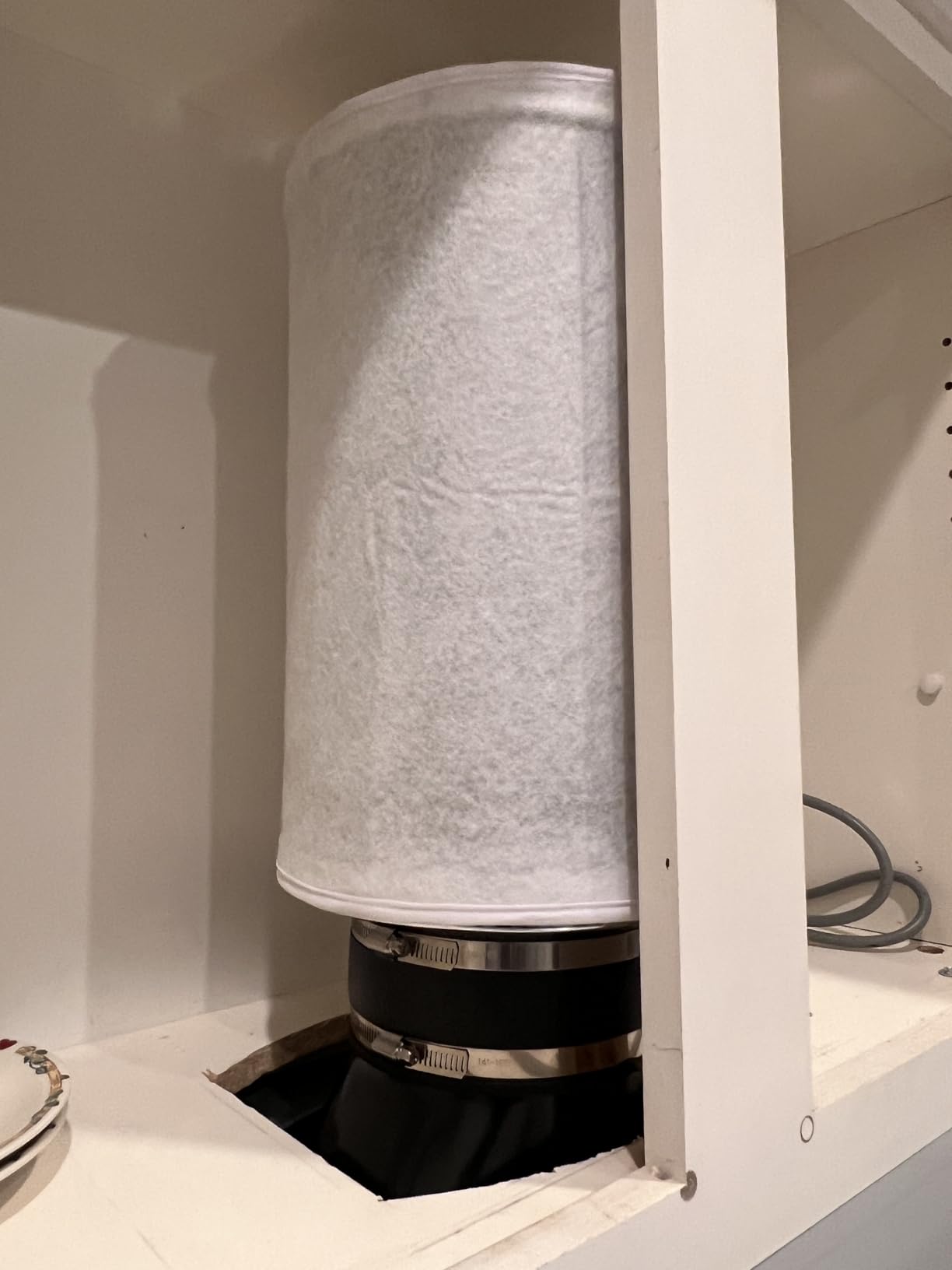
Real-world lifespan is where this filter beats its own spec sheet. A grower on r/microgrowery reported a VIVOSUN 4 inch filter lasting about eight months in total use, which is well past the three-month window most brands imply. Another grower in the same community called the build quality of a 6 inch Vivosun filter good and said the brand name is worth it, which matches what we see in the 4 inch reviews.
The recurring limit is size, not quality. Buyers running heavier strains or larger tents report that a single 4 inch canister cannot keep up and that they add a second unit on the exhaust. That is an honest limitation of the diameter rather than a defect, and it is the reason the 6 inch VIVOSUN Pro exists.
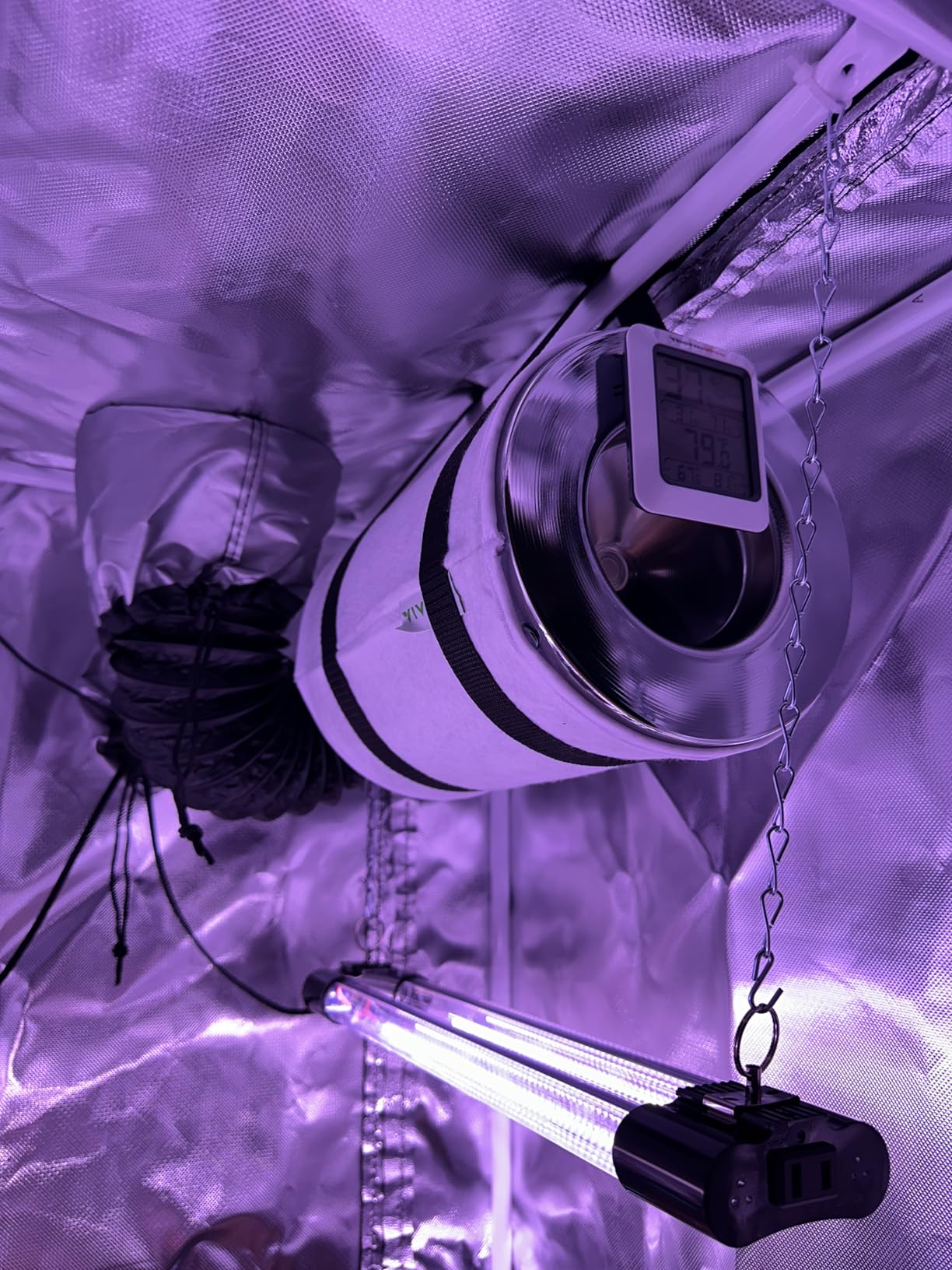
Who the VIVOSUN 4 Inch filter suits
This is the one to buy for a 2×2, 3×3 or 3×5 tent with a 4 inch inline fan, and it is also the sensible pick if you are a first-time grower who wants a proven canister without a large footprint. At 223 CFM it covers a small tent with room to spare once you account for the carbon restriction.
It is equally good as a second filter on a multi-filter extraction setup. Growers running two smaller canisters instead of one large one on a bigger tent report that this configuration gives better coverage, and this is the most affordable way to add a second stage without buying a premium 6 inch unit twice.
What to watch on the VIVOSUN 4 Inch filter
The 90 day manufacturer warranty is the shortest stated in this roundup, and it is worth remembering that a warranty is not a lifespan claim. It covers defects, not a bed that saturates in the middle of a grow, so budget for a replacement on roughly a two to three cycle rhythm if you run heavy odor loads.
Some owners note the carbon is riveted in place, which makes field refilling difficult even though the end caps reverse. If you think you will want to refill carbon rather than replace the canister, go with the refillable design in this roundup instead of trying to open this one.
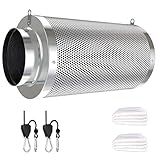
3. vanleno 4 Inch Carbon Filter – Best Complete Hanging Kit
- Two pre-filters included to protect the carbon bed
- 1200+ IAV Australian activated carbon
- Rope hangers and stainless steel flanges in the box
- Compact 12 inch body suits small tents
- Listing specs include fields that do not fit a passive inline filter
- 210 CFM sits below the 223 CFM of the VIVOSUN 4 inch
- Smaller catalog and thinner bed than the premium rivals
What separates this canister is what arrives with it. Most competitors in the 4 inch class include a pre-filter and little else, and this one ships with two pre-filters, a pair of rope hangers and stainless steel flanges, so you can mount it in a tent without a hardware run.
The carbon is 1200+ IAV Australian activated carbon, which puts it in the same grade tier as the AC Infinity and VIVOSUN canisters despite sitting well below them. Airflow is rated at 210 CFM through a 4 inch flange with a 12 inch body length, so it sizes alongside a 4 inch inline duct fan.
At 4.6 stars across nearly 3,000 reviews, the owner feedback tends to focus on the package rather than on breakthrough odor performance. People like that the hardware is all there and that the pre-filters protect the bed from particle loading early in a grow.
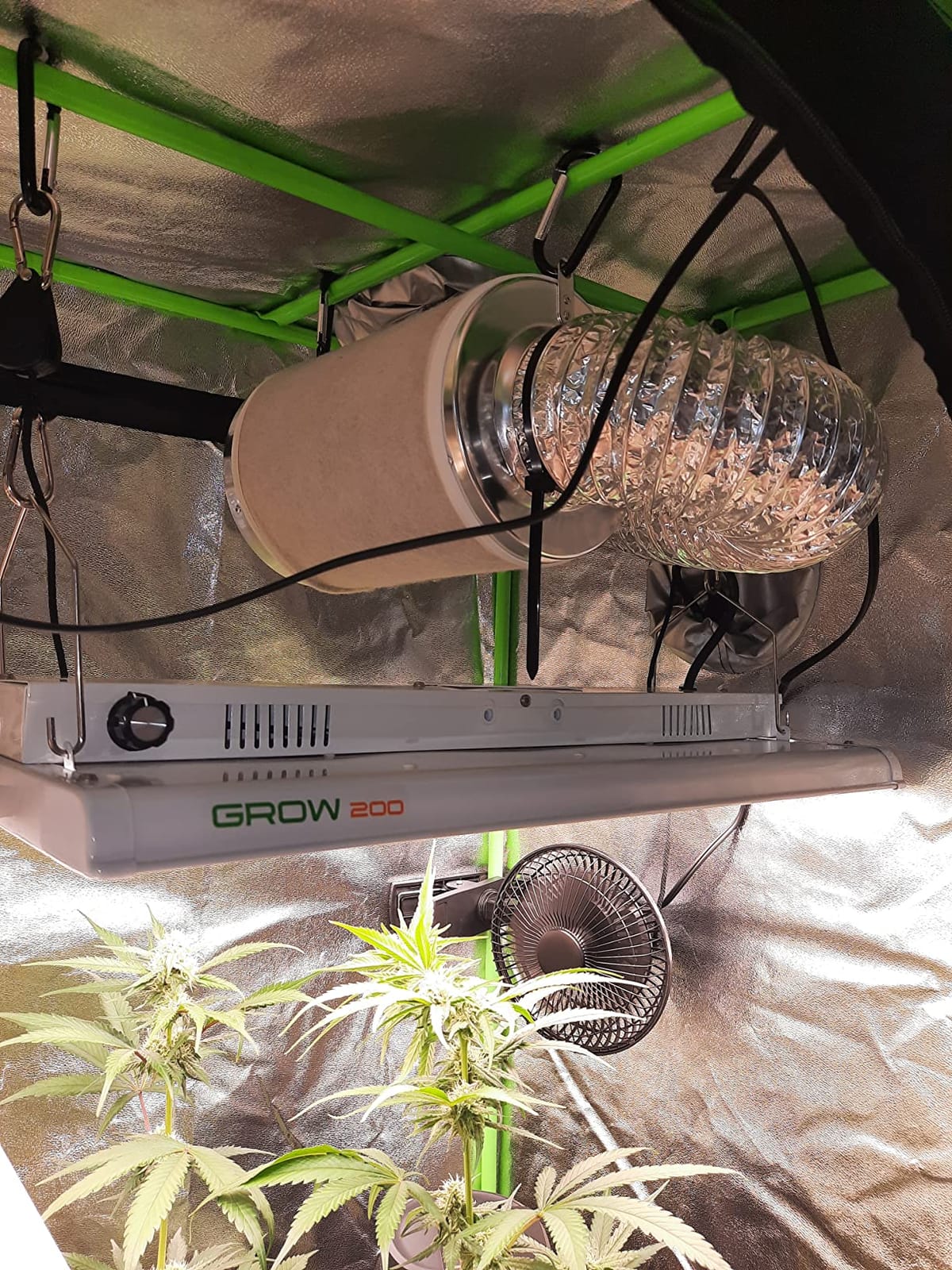
The honest weakness is that a few reviewers feel the carbon bed is thinner than the premium rivals, and the 210 CFM figure is a little below the 223 CFM of the VIVOSUN 4 inch. In a small tent that gap is irrelevant, but it is the reason we would not stack two of these for a large room.
One oddity worth flagging: the product listing includes specification fields such as app control and button control that do not apply to a passive inline canister. We read that as thin catalog data rather than a missing feature, but it is a reminder to confirm the physical specs you care about rather than trusting the listing fields at face value.
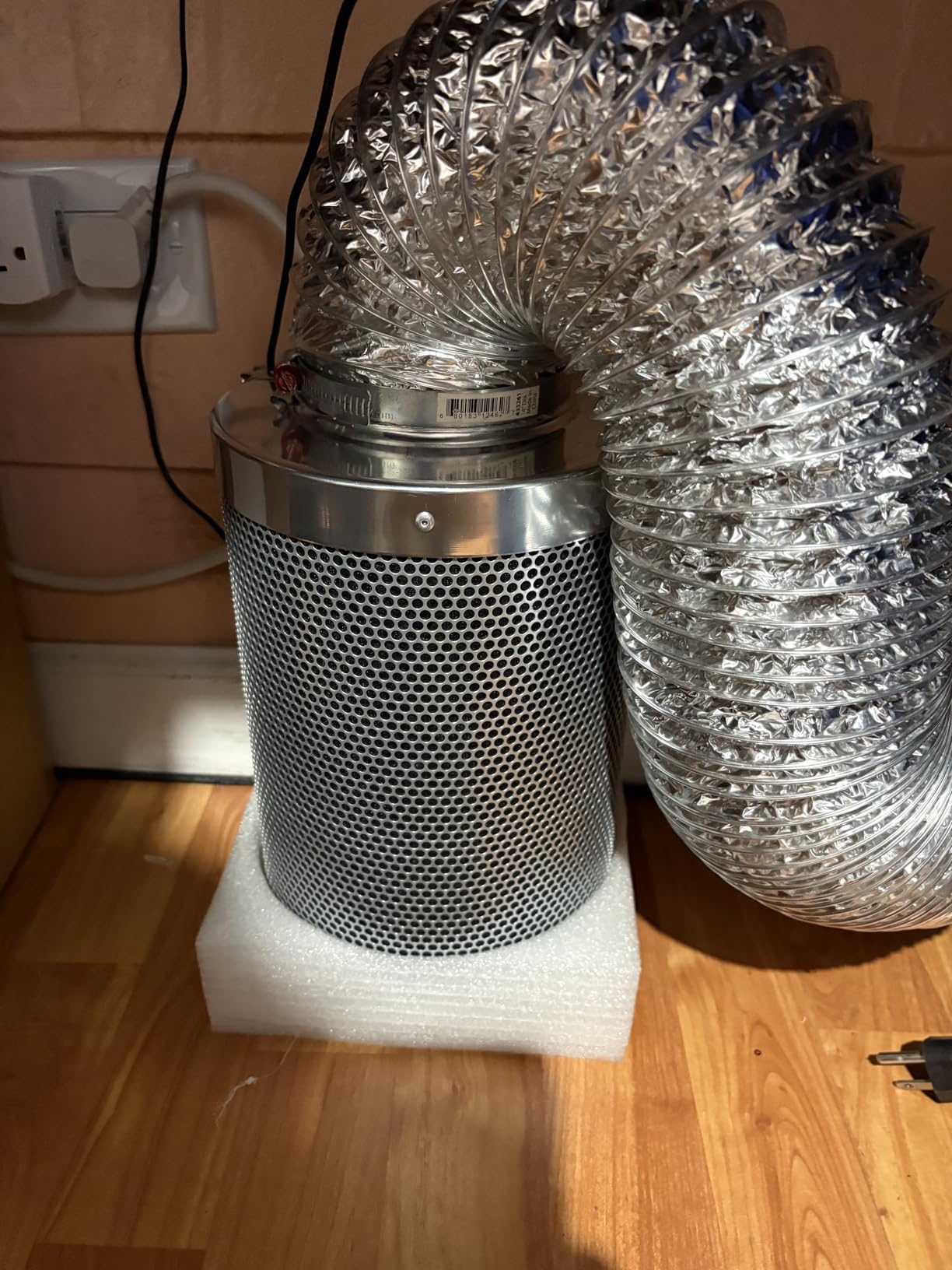
Who the vanleno 4 Inch filter suits
Pick this if you are building a first tent kit and want everything you need to hang and connect in one box. The rope hangers alone save a trip, and the included stainless steel flanges mean you are not improvising a mount when the tent is already assembled in a closet.
It is also a good second filter for a small tent with two exhaust ports, or a dedicated intake-side filter if you are running one fan on intake and one on exhaust. A grower can use the same carbon on both sides if both canisters come from the same batch.
What to watch on the vanleno 4 Inch filter
The brand has a much smaller catalog than the major ventilation names, which matters less for a canister than it would for a controller or fan, but it does mean fewer replacement parts down the line. If the pre-filter cloth tears you will be hunting for a generic replacement rather than an exact part.
Treat the stated 210 CFM as the ceiling, not the typical operating figure. A carbon filter always restricts airflow, and the number on the box is measured through the empty housing. If your tent is near the top of the small-tent range, the VIVOSUN 4 inch has more headroom.
4. VIVOSUN 6 Inch Pro Carbon Filter – Best for Medium and Large Tents
VIVOSUN 6″ Pro Carbon Filter & Pre-Filter 455 CFM for Inline Fan, Black
- 455 CFM is the highest published airflow figure in this roundup
- 38mm RC412 Australian virgin charcoal bed at 1200+ IAV
- Hexagonal mesh maximizes open area and cuts restriction
- Ring anchors and rope hangers for quick hanging
- The 16 inch canister is bulky inside a tent
- Riveted construction means no field refilling
- Only a 90 day manufacturer warranty
When a 6 inch filter needs real headroom, this is the canister with the most published airflow in the group at 455 CFM. That number matters for a 4×4 or 5×5 tent where a 400 CFM filter leaves almost no margin once the carbon bed, the duct bends and the heat from a big light are all accounted for.
The carbon is the same 38mm RC412 Australian virgin charcoal at 1200+ IAV used in the 4 inch VIVOSUN, so the grade is not compromised for the extra size. The mesh is hexagonal rather than round hole, which the manufacturer positions as maximizing open area to reduce restriction.
Ring anchors on the housing make quick hanging inside a tent straightforward, and the reversible flange and base extend the usable carbon in the same way as the 4 inch model. Buyers consistently call out airflow and the mesh design as the reasons they stepped up to this version.
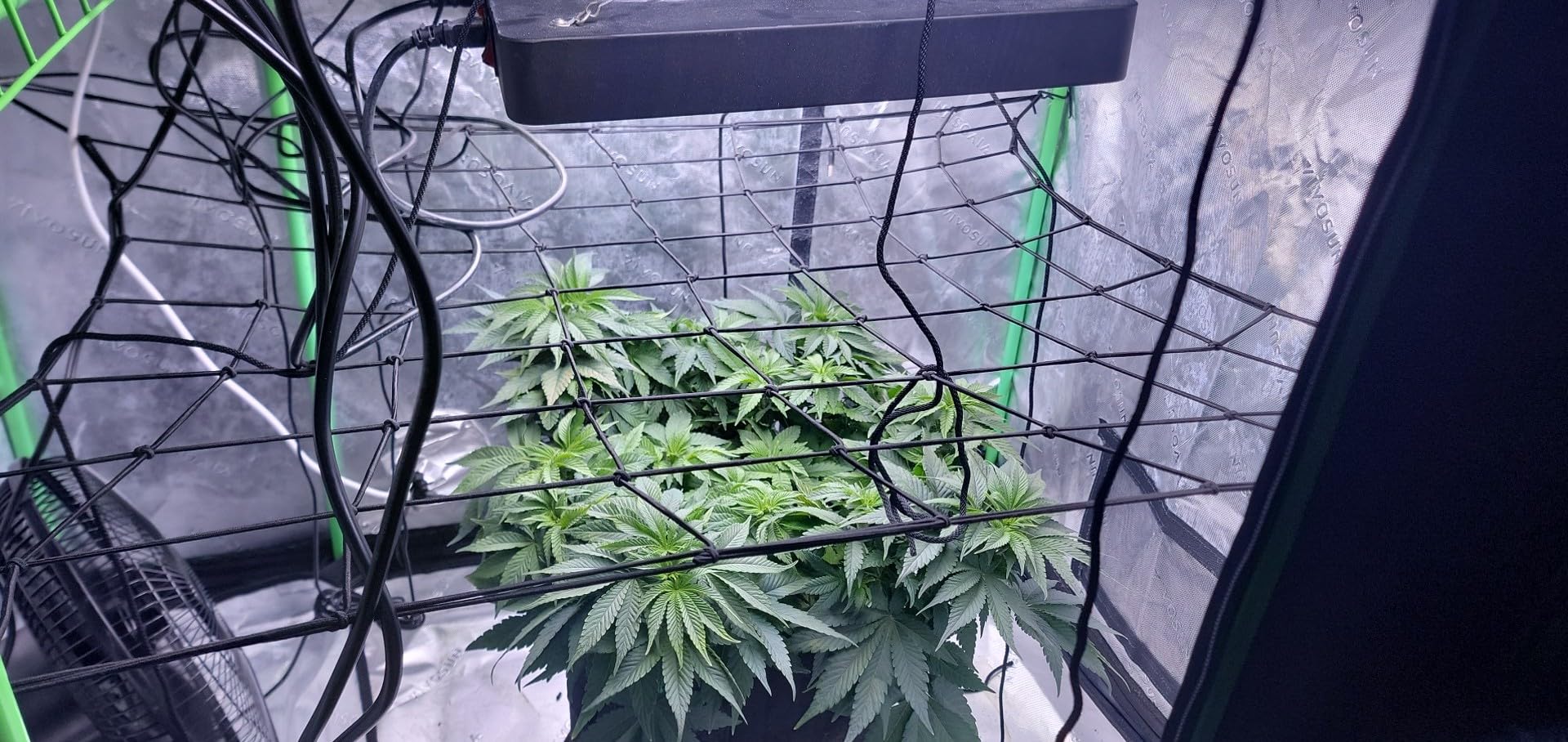
The feedback is mostly about physical size. At 16 inches long the canister is a genuine object inside a tent, and in a 2×4 or 3×3 it is more machine than you need. Mounting it outside the tent on the exhaust line is the usual answer, and the ring anchors make that an easy hang.
As with the 4 inch VIVOSUN, the build is riveted, so replacing carbon in the field is not a realistic option. Plan on replacing the whole canister, and set a calendar reminder at the start of flower rather than waiting until you can smell the room.
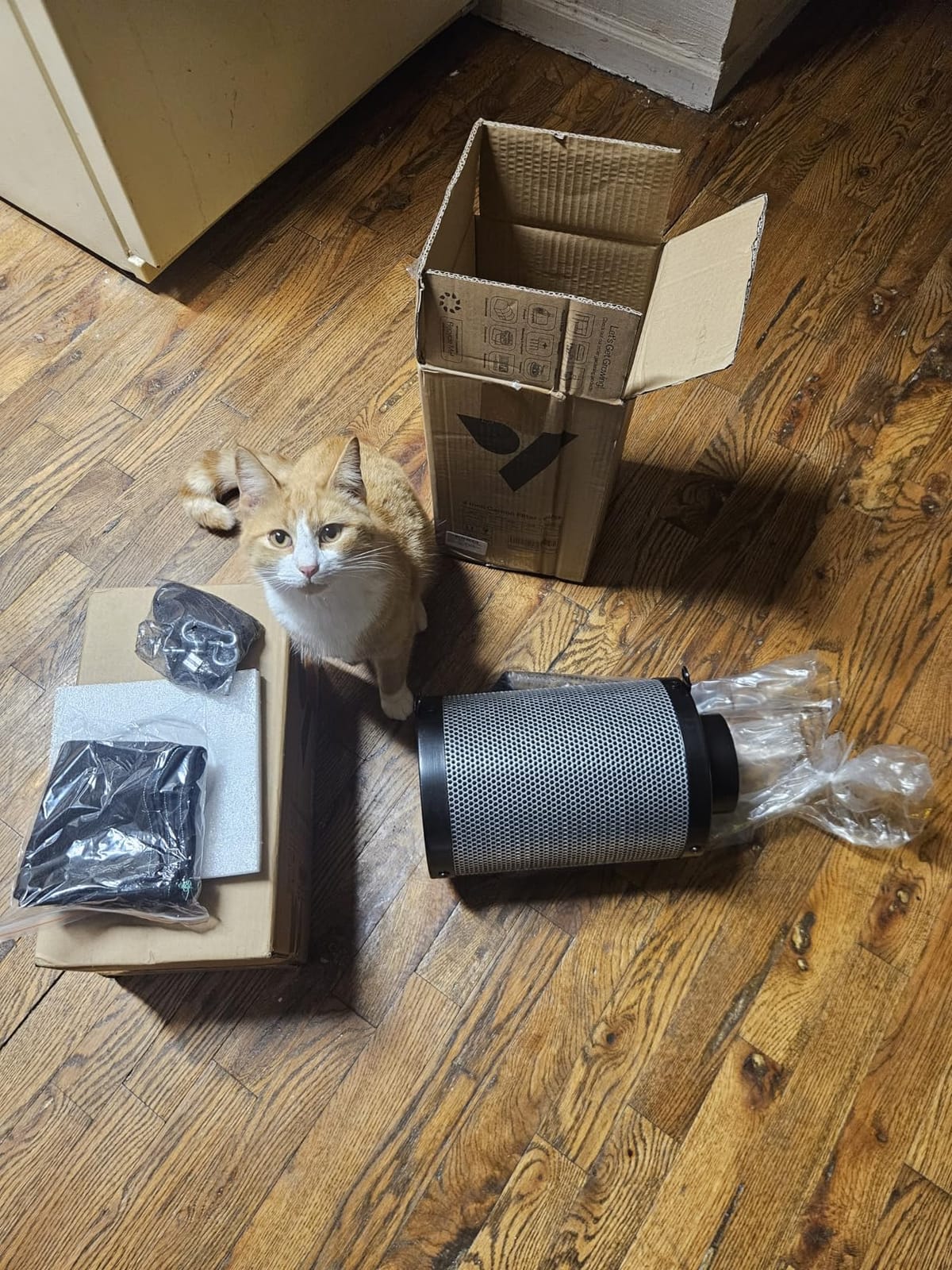
Who the VIVOSUN 6 Inch Pro suits
This is the pick for a 4×4 tent with a 1000W light, or a 5×5 with a pair of fans, where the exhaust requirement lands in the 350 to 450 CFM range once you include the filter penalty. Buyers running larger rooms report that the extra airflow keeps canopy temperature and humidity steadier during flower.
It also makes sense if you intend to run two extraction points rather than one. A 4×8 room or a double-tent setup usually wants two 6 inch canisters or one 6 inch plus one 4 inch, and buying the larger of the two first is the smarter sequence.
What to watch on the VIVOSUN 6 Inch Pro
Do not oversize a 6 inch canister into a small tent chasing odor control. Cutting airflow raises heat and humidity inside the tent, which shows up as slow growth and mold risk, and growers on forums regularly note that oversized filtration creates its own problems. Match the diameter to the fan you already own or intend to buy.
The 90 day warranty again covers manufacturing defects only. Budget for carbon replacement across a long cycle, and if you run this tent continuously, the refillable approach in this roundup is the more economical path over a full year.
5. iPower GLFILT6M 6 Inch Carbon Filter – One Year Warranty
- One year manufacturer warranty
- 400 CFM airflow for 6 inch fan setups
- Reversible flange and base extend the usable carbon
- Pre-filter included and swaps on a six month cadence
- 1050+ IAV carbon sits below the 1200+ IAV grade
- Heaviest listed weight in the group at 11 pounds
- Some users report shorter carbon life than premium brands
The iPower GLFILT6M is the only canister in this roundup with a stated one year manufacturer warranty, and for a grower who intends to hang a filter outside a tent in a humid closet that is a real, if unglamorous, advantage.
Airflow is rated at 400 CFM through a 6 inch flange with a 16 inch ducting length, which lands it right alongside the AC Infinity 6 inch for medium tents. The carbon is 1050+ IAV Australian RC412, a step below the 1200+ IAV grade in the AC Infinity and VIVOSUN canisters, and that difference shows up in service life rather than in day-one performance.
The reversible flange and base work the same way as the VIVOSUN design, letting you flip the canister to use the unexposed half of the bed. iPower recommends replacing the included pre-filter every six months, which is an easy interval to keep track of.
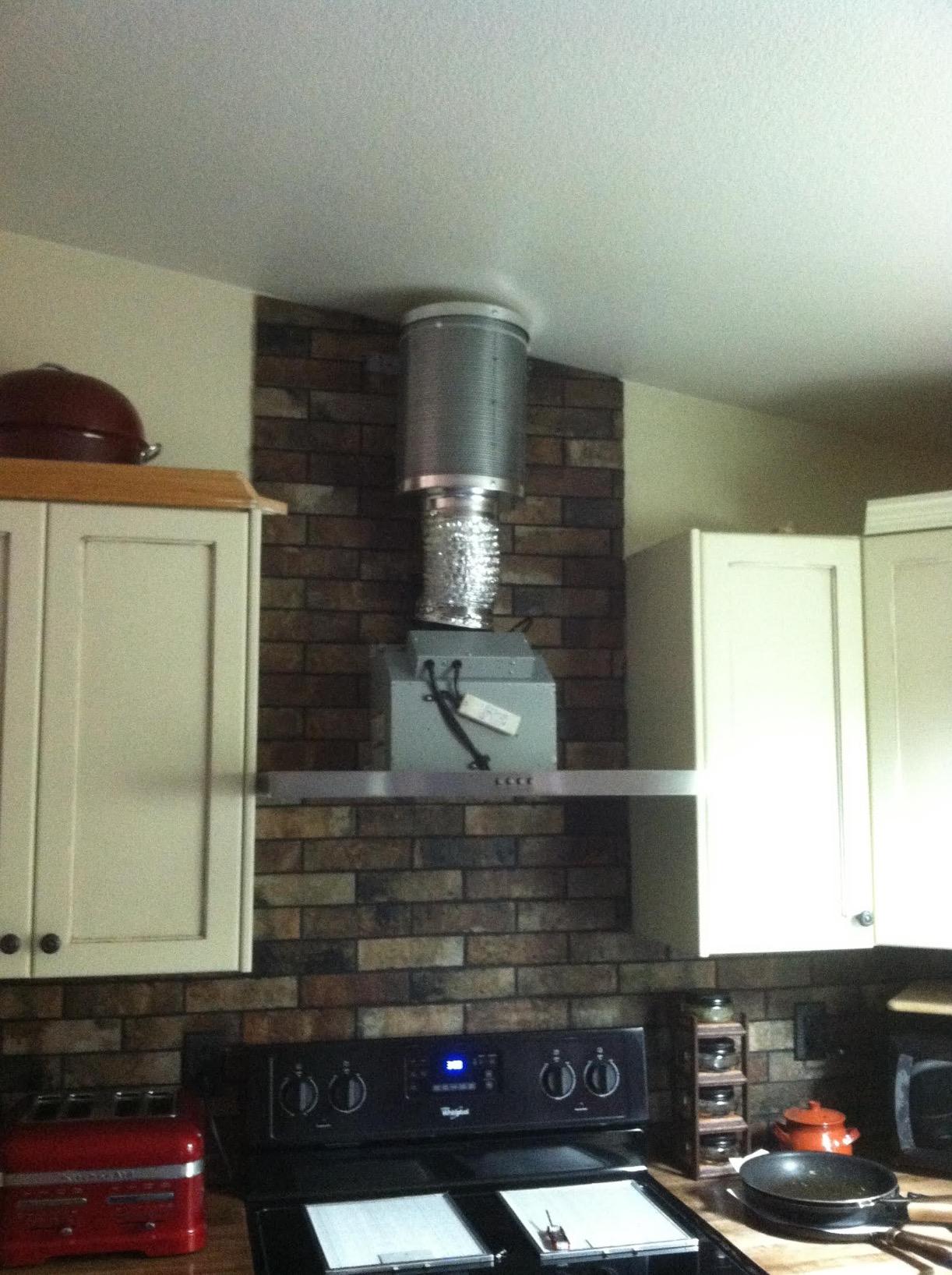
Reviewers like that it works as either an intake or an exhaust filter across a range of fan configurations, which makes it easy to deploy in a two-filter setup where one canister sits on each side of the tent.
The recurring theme in the reviews is that carbon life runs shorter than premium brands at similar airflow. That is the honest trade for the lower IAV grade, and it is worth pricing into your replacement schedule rather than discovering in week six of flower.
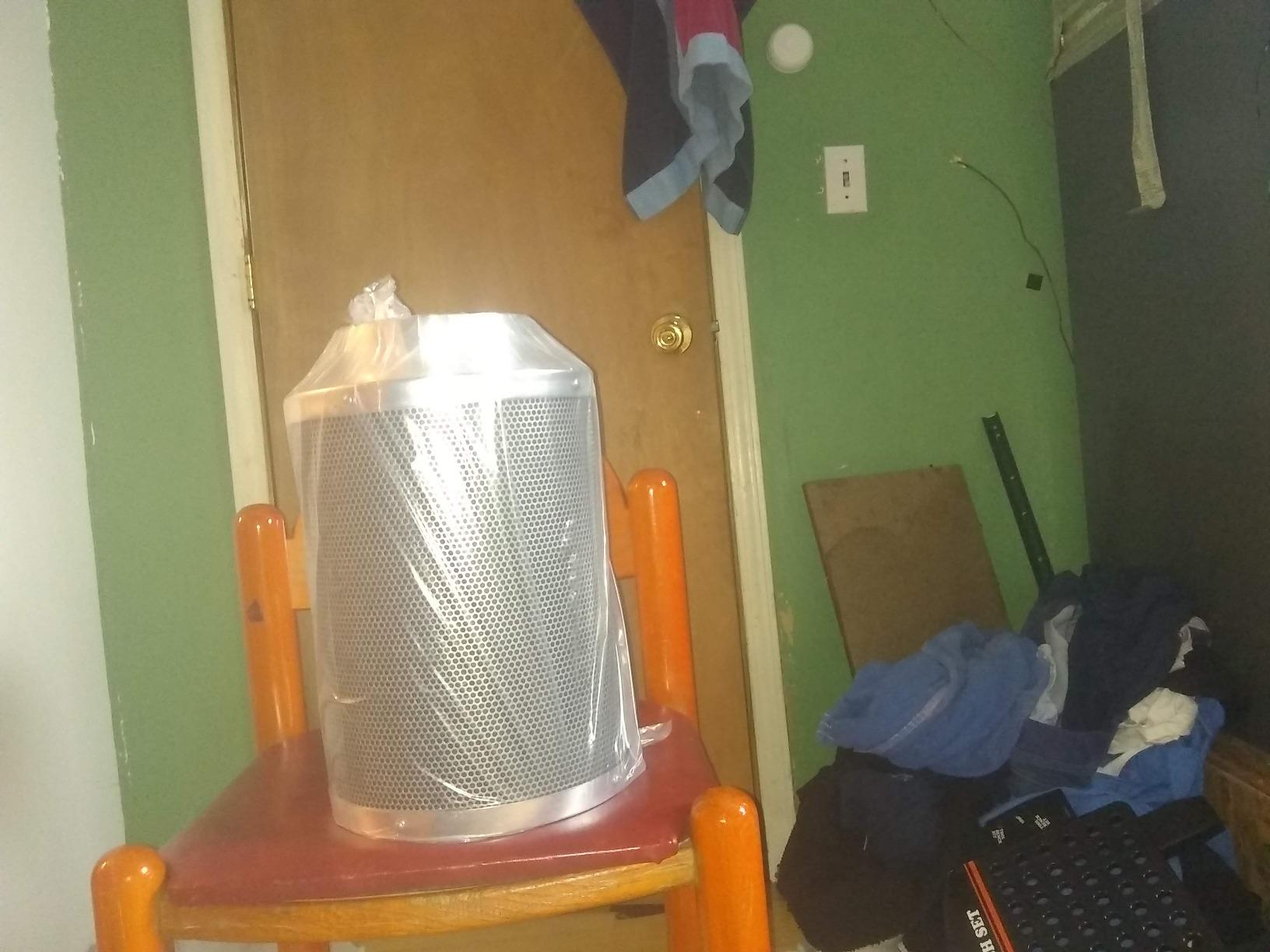
Who the iPower GLFILT6M suits
This is the choice for a grower who wants a 6 inch canister with a real warranty behind it, particularly if the filter will live in a humid grow room or a closet where corrosion is a genuine risk. The aluminum construction holds up better in that environment than a bare steel housing.
It is also a good option for bedrooms and apartments where noise and heat are already tight. Running 400 CFM through a filter with a decent pre-filter keeps the exhaust path moving enough air that the tent stays at negative pressure instead of pressurizing and pushing odor through the seams.
What to watch on the iPower GLFILT6M
At 11 pounds this is the heaviest listed weight among the canisters here, so plan the hanger properly. A filter this heavy on a cheap rope hanger in a tent frame can work its way loose over a long cycle, and a dropped canister in a wet tent is not a small problem.
The pre-filter replacement is an extra recurring step that the refillable designs do not ask of you. If that maintenance discipline is unrealistic for your setup, choose a canister that gets you a longer carbon service interval instead of a shorter warranty.
6. AC Infinity Refillable Carbon Filter Kit – Top Rated for Long-Term Value
- Refill carbon in minutes instead of discarding a metal canister
- Twist-off flanges with a funnel and scoop make refilling tool-free
- Interchangeable end caps let you flip the bed for more carbon
- Refill matches the capacity of two standard 4 inch filters
- Dual-layered coated steel mesh handles humid tents
- The most expensive item in this roundup
- Refill media is a recurring purchase and refilling is messy
- Available in 4 inch 6 inch and 8 inch only so size must match
This is the pick if you run more than one cycle a year, because it changes the economics of carbon entirely. Instead of throwing away a metal canister every time the bed saturates, you open the housing and pour in fresh carbon from the included refill.
The refill is the striking part. One refill is matched by the manufacturer to the filtration capacity of two standard 4 inch carbon filters, so a single bag of media covers roughly twice the life of a disposable canister. The chamber is larger and lab tested to hold odor control without compressing the carbon, which is what allows it to work as well as a standard unit.
Refilling is deliberately painless. The flanges twist off by hand, and a funnel and scoop are included so you can pour media in without making a mess of the tent floor. Interchangeable end caps let you flip the chamber and use the other half of the bed before you refill at all.
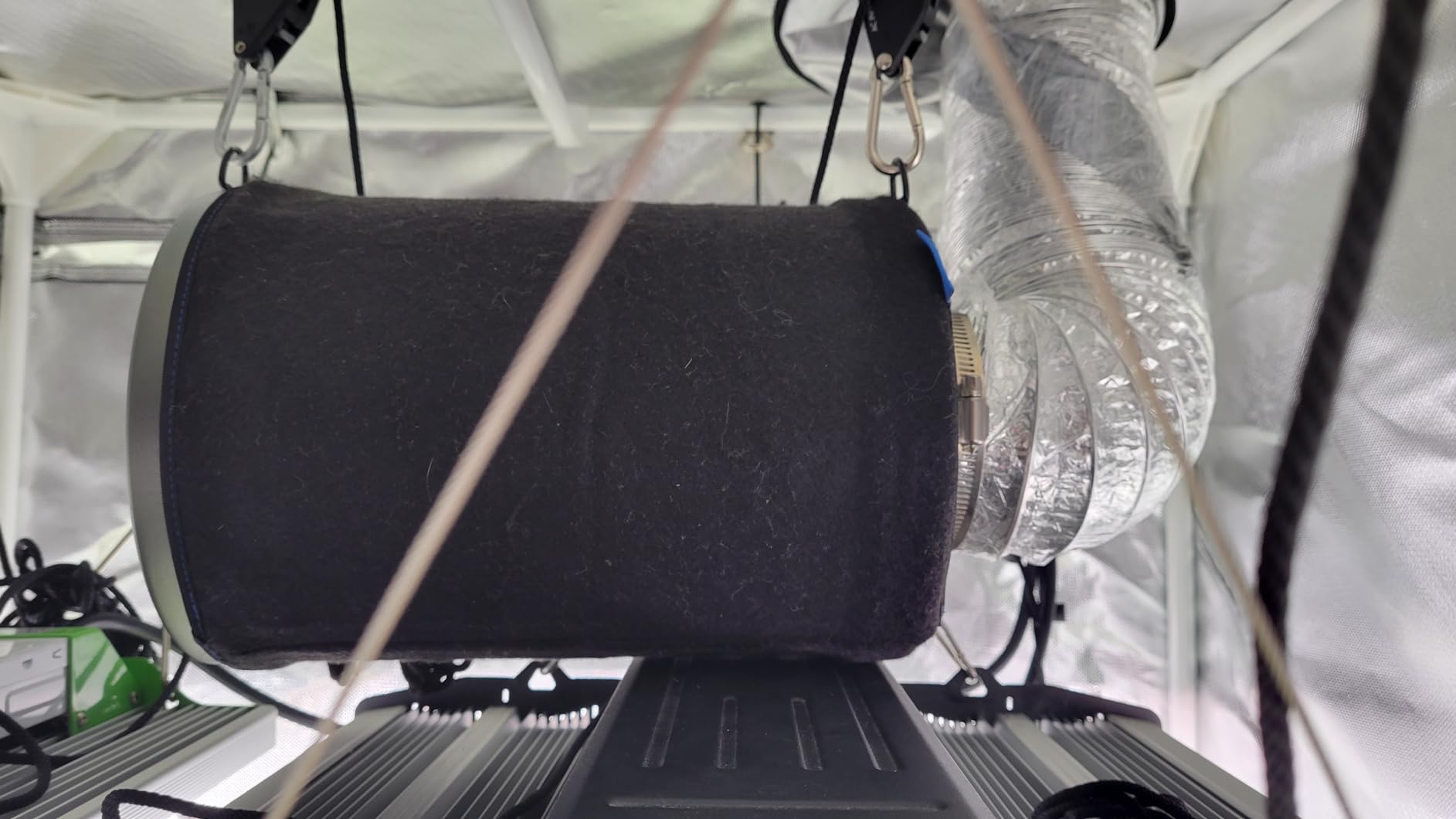
Owners frame the refill system as a cost and waste saving rather than a performance upgrade, and several report holding odor control from mid-flower through harvest where a comparison filter had already saturated in under a quarter. The 4.8 rating is the highest in this roundup, on a smaller review base than the disposable canisters.
The housing is dual-layered steel mesh with a protective coating, built specifically for the humidity levels inside a grow tent over many cycles. That is a longer-horizon design choice than most competitors make, and it is the reason the chamber is heavier than a basic canister.
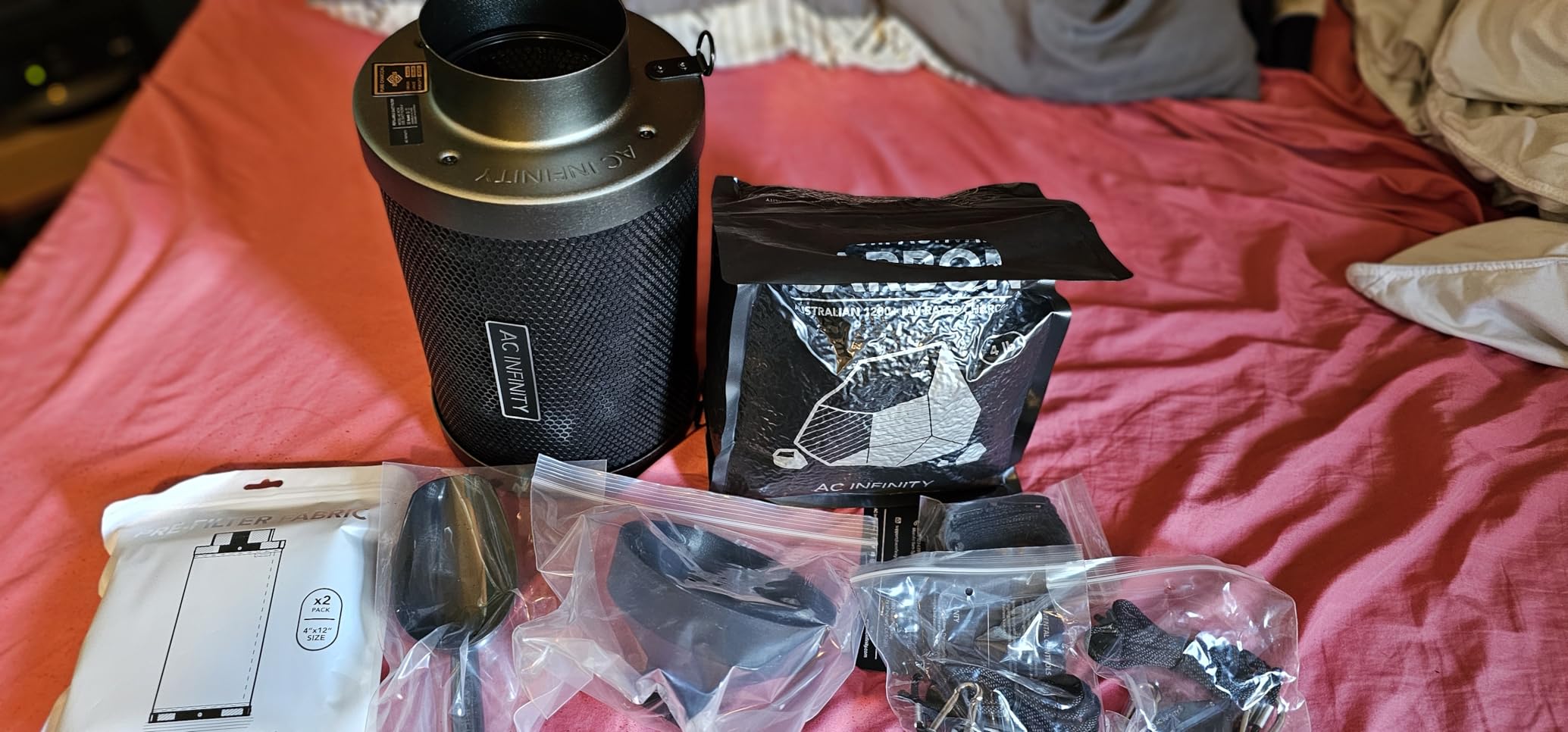
Who the AC Infinity Refillable Kit suits
This suits a grower who runs continuous cycles, keeps a tent running year round, or simply hates throwing away 20 pound metal canisters. If you will get through more than two or three canisters in a year, the refill media pays for the difference in cost quickly.
It is also the cleanest answer to the forum complaint that replacing a full canister every cycle is physically annoying. The unit here is sold in 4 inch, 6 inch and 8 inch, so match the kit to your existing inline fan rather than buying the largest size available and forcing it into a small tent.
What to watch on the AC Infinity Refillable Kit
It is the priciest item in this group, and the refill media is a separate recurring purchase. If you only plan one grow, a disposable canister is the cheaper path and you will not get the value out of a refill you never perform.
Refilling carbon is inherently messy no matter how well the kit is designed, and the patented design means third-party refill media is not guaranteed to fit. Buy the manufacturer refill rather than a generic bulk carbon bag, or you may end up with a chamber that leaks around the mesh.
7. Spider Farmer 6 Inch Carbon Filter – Best Washable Pre-Filter
Spider Farmer 6 Inch Carbon Filter for Grow Tent Odor Control
- Washable pre-filter and washable carbon design extend service life
- Heavy-duty aluminum flanges and galvanized steel body
- Connects to inline duct fans without tools and includes two straps
- Compact body suits mid-size tents
- No published CFM rating makes sizing harder
- 4.4 stars with a 9 percent three-star share
- Some buyers find odor control adequate rather than complete in late flower
Spider Farmer built this one around maintenance. Both the pre-filter cloth and the carbon itself are described as washable, and a washable pre-filter that you can rinse instead of discard is the single easiest way to keep a filter breathing through a full grow.
The housing is aluminum flanges and a galvanized steel body, and it connects to inline duct fans and grow tent fans without specialized tools, with two straps included. At 9.45 inches square by 11.42 inches it is a compact 6 inch canister, so it takes up less room than the 16 inch bodies in this roundup.
The carbon is RC412 Australian virgin charcoal with high adsorption and porosity, the same base grade used by several of the premium canisters here. Buyers regularly mention the easy installation and the maintainability as the reasons they keep this filter.
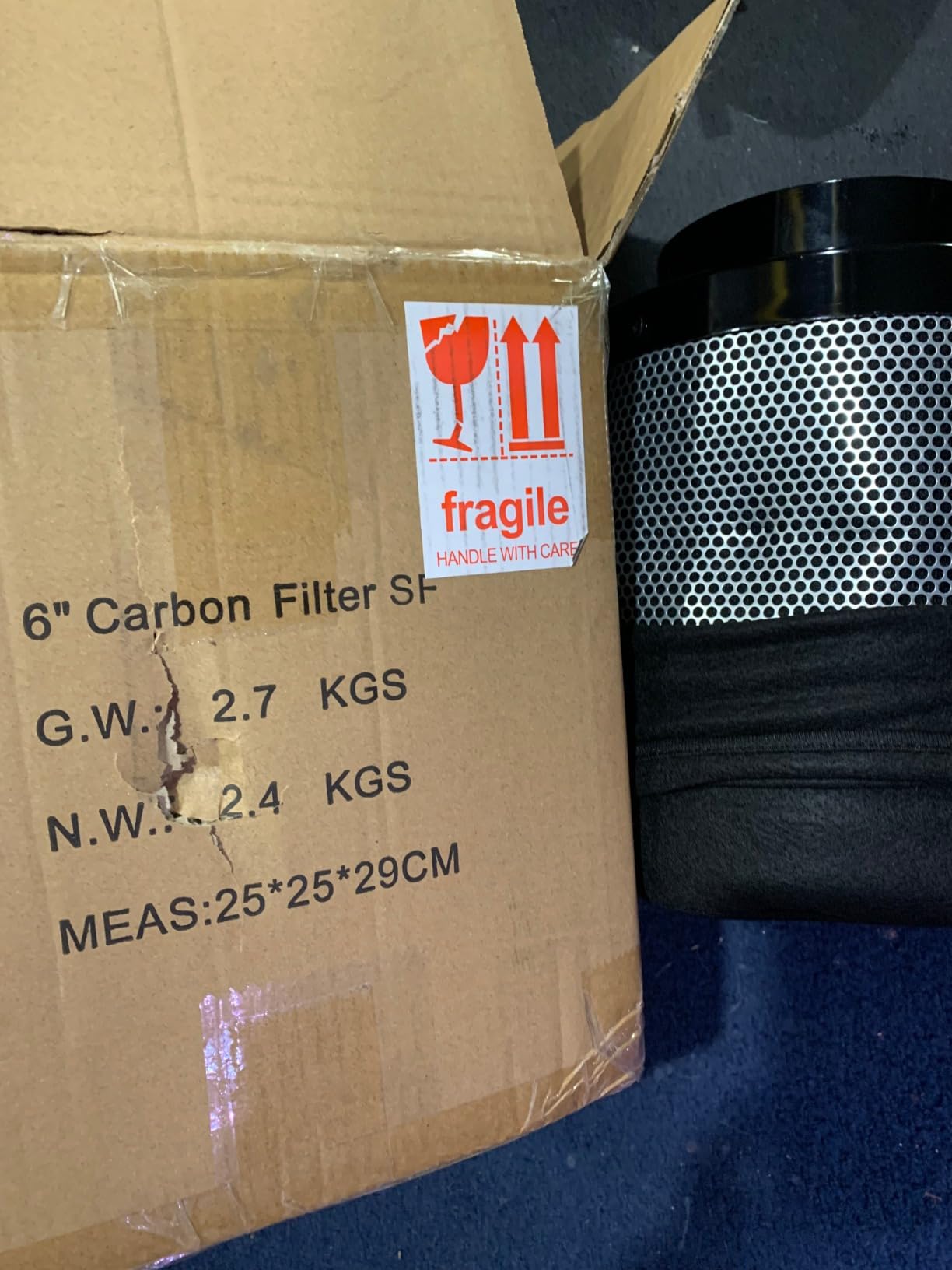
The big practical drawback is that no CFM rating is published, so you cannot size it against the other 6 inch filters in this list. You are relying on the duct diameter alone, which is workable for a mid-size tent but leaves you guessing at the margins.
There is also a smaller but real group of buyers who find the odor control adequate rather than complete during late flower. Community opinion on this brand runs hot, and one r/microgrowery grower put it bluntly, recommending Prima Klima Industry Line over the AKF filters from Spider Farmer and Mars Hydro. Others on forums rate Spider Farmer as a solid mid-range option with nothing wrong with it.
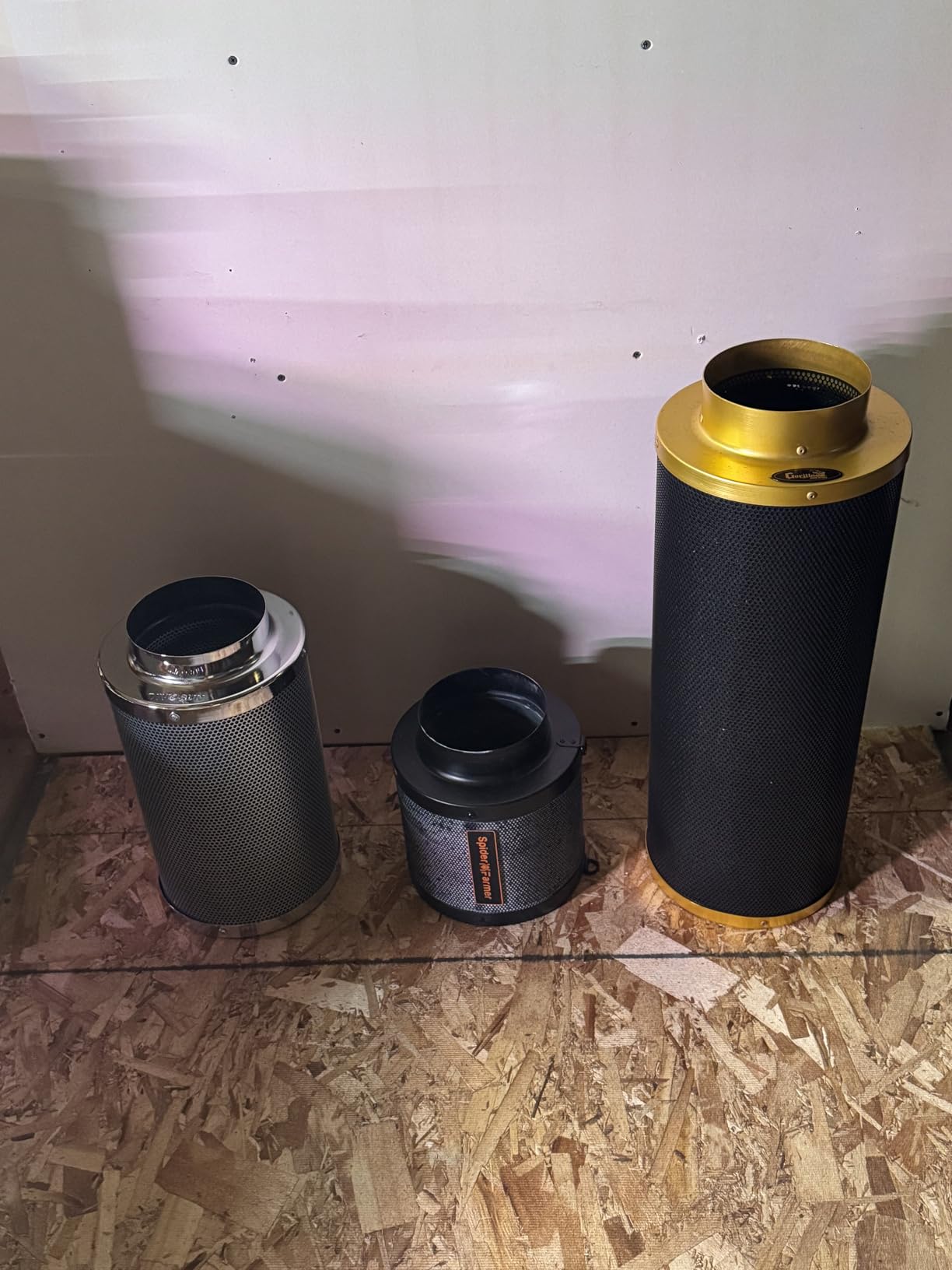
Who the Spider Farmer 6 Inch filter suits
This is a good fit if you already own Spider Farmer lighting or fans, since the brand builds a coherent kit and the 6 inch body is compact enough for a smaller tent than a 16 inch canister. The washable pre-filter also suits growers in dusty rooms who would otherwise replace cloths constantly.
It works for bedrooms and small apartments where you want a serviceable filter you can keep running rather than replace. The tool-free connection means setup and repositioning take minutes, which matters if you move the tent between rooms.
What to watch on the Spider Farmer 6 Inch filter
Without a published CFM figure you cannot tell whether it will keep a 4×4 at negative pressure with a 1000W light. Verify your airflow with a cheap anemometer or duct gauge after installation, and if the tent reads positive, add a second filter or move up a diameter.
Late flower is where terpene load peaks and a good filter shows its limits. If you are running a heavy-leaning cultivar in a small space, the 6 inch AC Infinity or the 6 inch VIVOSUN Pro have more verified capacity behind them.
8. HYDROWE 4 Inch Air Carbon Filter – Straightforward 4 Inch Starter
- Entry-level cost with imported Australian activated carbon
- Steel flanges and galvanized steel mesh construction
- Cloth pre-filter with a cone-shaped internal base
- Several buyers report buying repeats
- Several reviews report odor returning within weeks of flowering
- A few buyers suspect the bed is under-packed
- Part number is simply 4inch with thin listing detail
The HYDROWE 4 inch canister is a simple, honest entry point: imported Australian activated carbon in a steel flange housing with a galvanized mesh body. There is no refill system, no app and no marketing around proprietary carbon grades, which some growers appreciate.
The internal base is cone shaped and covered with a cloth pre-filter, which helps distribute air across the face of the bed rather than pushing it through the center. Weight and dimensions are listed at around 2.99 kg and just under 12 inches tall, so it hangs in a small tent without taking much room.
At 4.5 stars across 346 reviews, the ratings sit below the two 4 inch premium canisters but above the cheapest option in this roundup. Several buyers report coming back for a second canister once the first proved out.
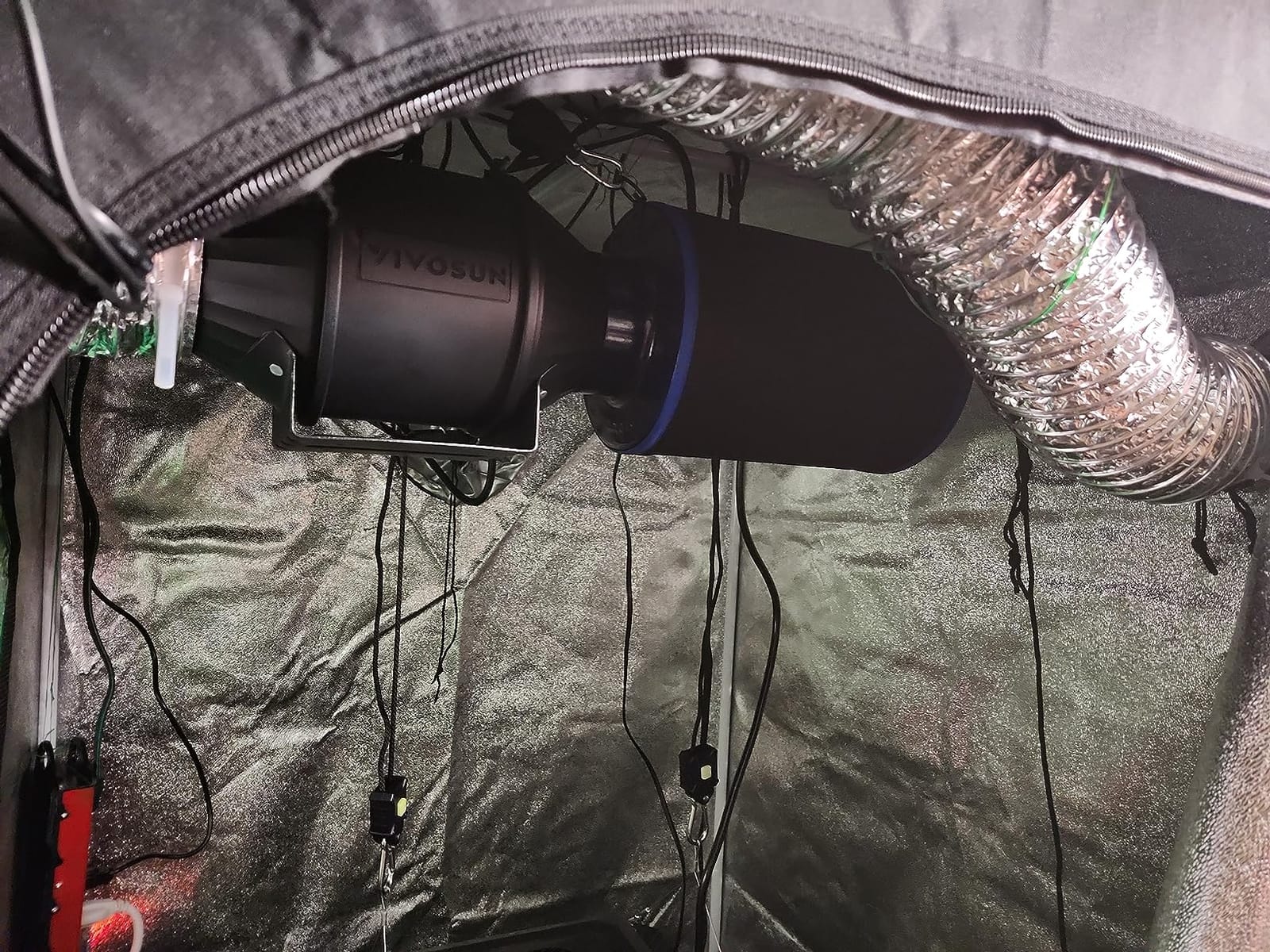
The review spread is wide, and that is the honest headline here. Several 5 star reports describe good odor control through flower, sitting against multiple 1 to 3 star reports of smell reappearing within about three weeks of bloom, which points to variable carbon density between production batches rather than a design fault.
The 6 percent three-star and 2 percent one-star shares are the largest negative-rating presence among the 4 inch canisters here. If you buy this one, inspect the carbon at the seam when it arrives and shake it gently over a bin, because an under-packed bed breaks down early and there is no way to check it once it is sealed in the duct.
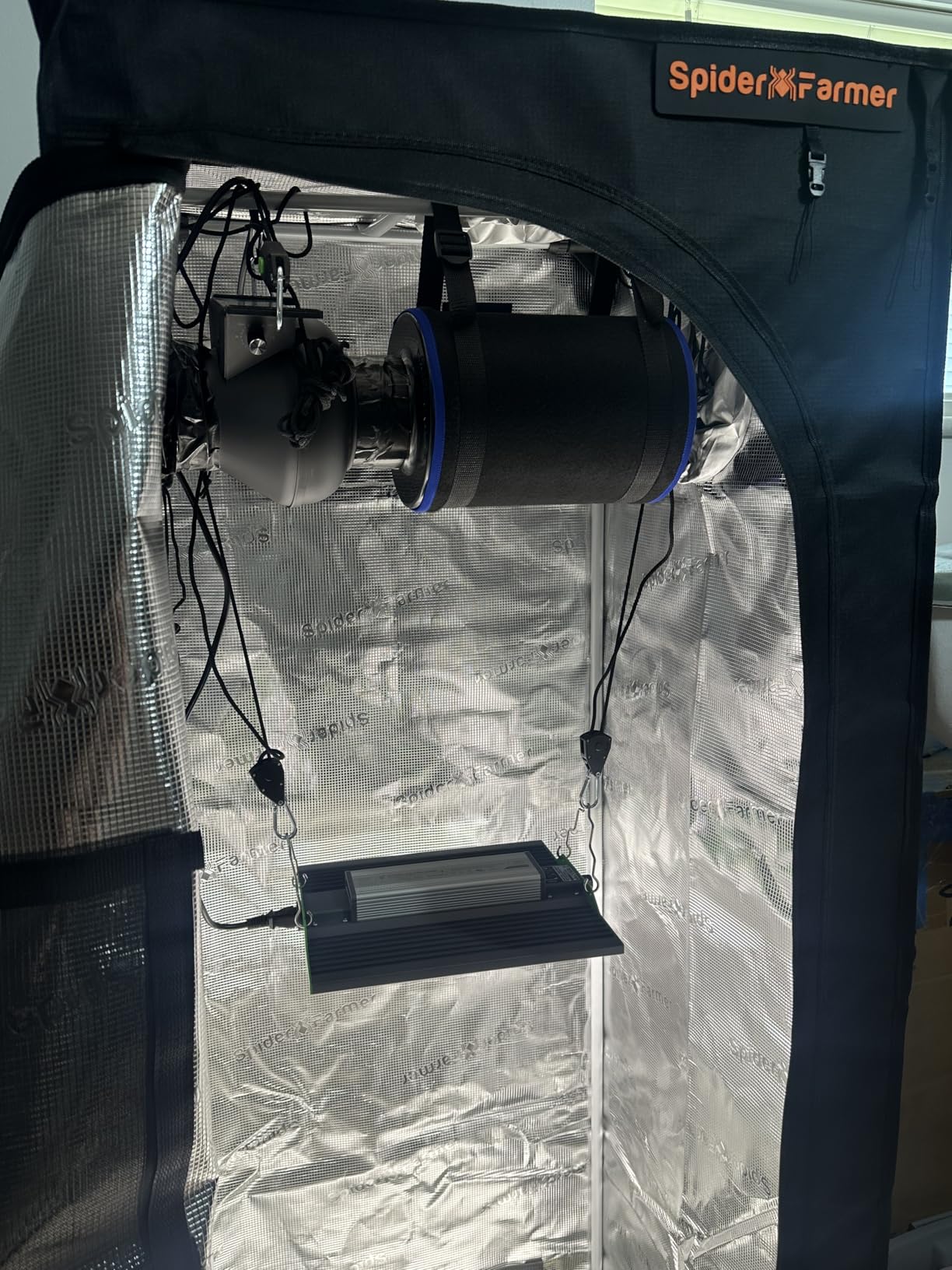
Who the HYDROWE 4 Inch filter suits
This suits a first-time grower with a 2×2 or 3×3 tent who wants a canister for a single short cycle and does not want to commit to a refill system. The low entry cost also makes it a reasonable second filter for a small two-port setup.
It is also worth considering for non-grow uses that share the same problem, since the housing and carbon work on paint, cooking and pet odors in a small room. Just treat it as a light-duty canister and expect to replace it sooner.
What to watch on the HYDROWE 4 Inch filter
Odor breaking through within weeks of flowering is the most repeated complaint, so this is not a filter to rely on for a heavy plant late in flower. If your space is shared with neighbors or a rental agreement is in play, spend up on a canister with a documented 1200+ IAV bed instead.
The listing detail is thin, with a manufacturer part number that is simply 4inch. That means you will not find a spare pre-filter cloth or a matching flange listed against it, so plan to source a generic cloth pre-filter that fits a 4 inch canister.
9. MELONFARM 4 Inch Air Carbon Filter – Highest 4 Inch Airflow
- 254 CFM is the highest published airflow for a 4 inch canister here
- 38mm Australian virgin charcoal bed at 1050+ IAV
- Fixed heavy-duty flange and base reduce carbon leakage
- Also handles pet smoke and cooking odors
- 1050+ IAV sits below the 1200+ IAV grade of premium rivals
- Fixed flange means the bed cannot be reversed
- Only one pre-filter in the package
The MELONFARM 4 inch canister makes a case on airflow. At 254 CFM it publishes a higher figure than any other 4 inch filter in this roundup, and the hexagonal galvanized steel mesh on both sides is the reason, since the pattern is chosen to keep open area high.
The carbon is a 38mm Australian virgin charcoal bed at 1050+ IAV, which puts it in the middle grade tier rather than the top one. It is paired with a non-removable heavy-duty flange and base engineered to a tight fit specifically to prevent carbon leakage, and that is a real design priority for odor control.
At 4.5 stars over 346 reviews, buyers highlight the sturdy fixed flange and the solid airflow numbers. The filter is also sold in kits with a fan and ducting bundled, which can be convenient if you are building a tent from nothing.
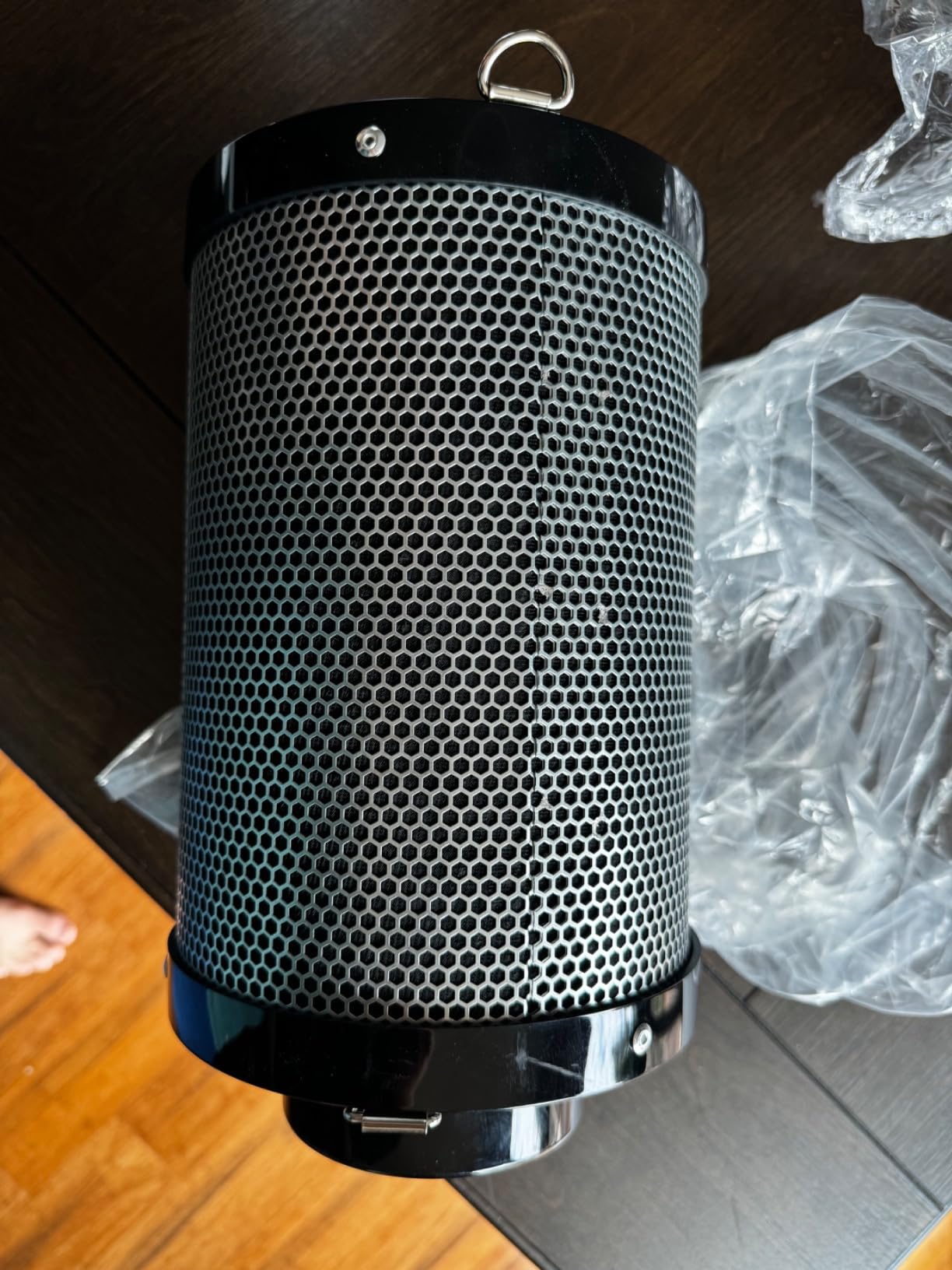
The trade-off for that fixed flange is that the canister cannot be reversed, so you cannot flip it to reach the unexposed half of the bed the way you can with the VIVOSUN and iPower designs. You get a tighter seal in exchange for losing that easy extension.
Only one pre-filter cloth is included, and with 254 CFM pushing a lot of air through the bed, keeping that cloth clean matters more here than on a lower-flow canister. Plan a rinse or a swap every few weeks rather than waiting.
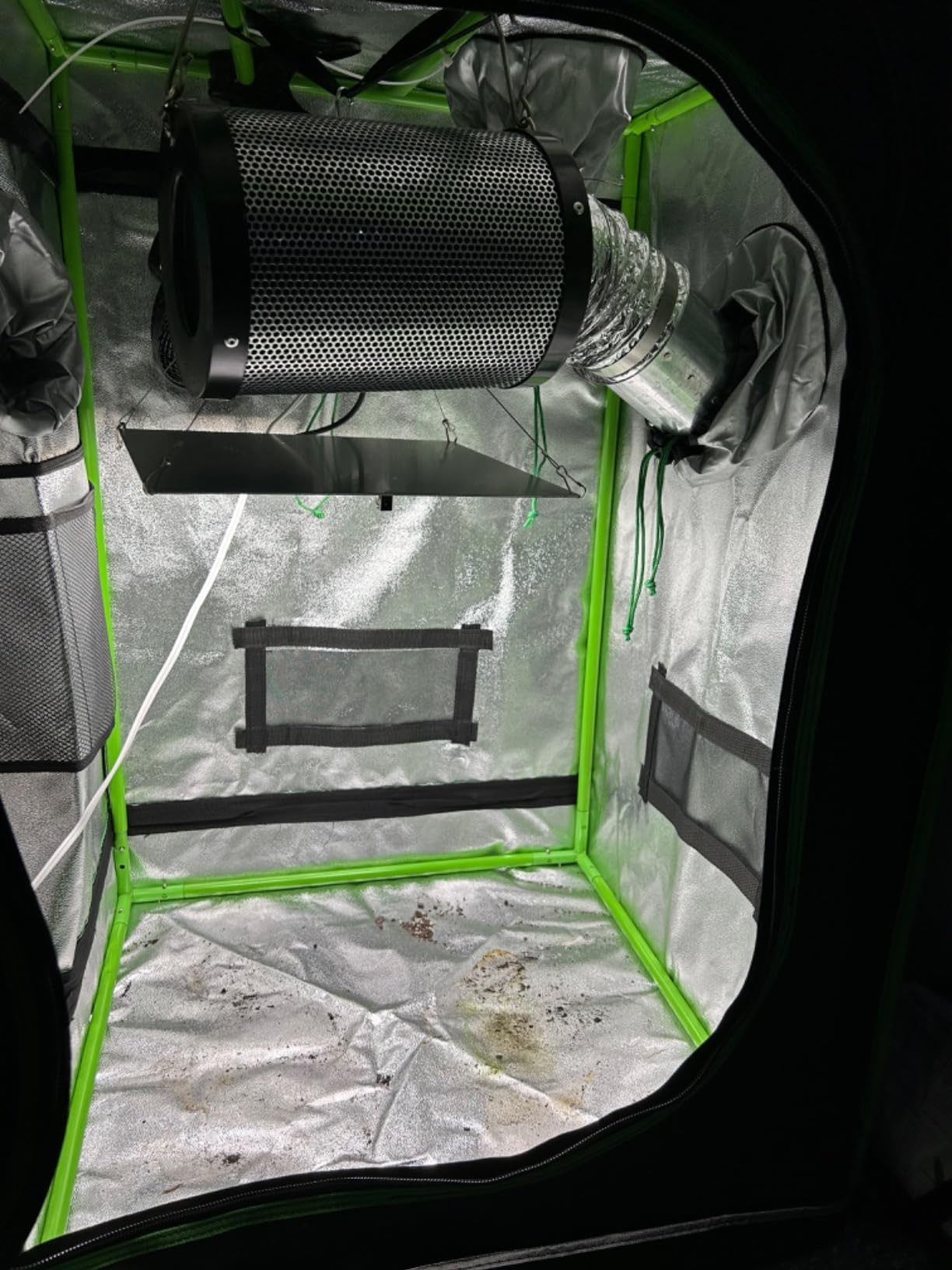
Who the MELONFARM 4 Inch filter suits
This is a good match for a 3×3 or 3×5 tent where you want to stay on a 4 inch inline fan but need more headroom than a 200 or 223 CFM canister offers. The extra airflow also helps hold negative pressure in a tent that is running a moderately sized light.
Because the carbon handles pet, smoke and cooking odors too, it is a reasonable dual-purpose canister for a home where the grow space and living space are close together. Run it on the grow exhaust and the living room smells better as a side effect.
What to watch on the MELONFARM 4 Inch filter
1050+ IAV is a meaningful step down from the 1200+ IAV used by the AC Infinity and VIVOSUN canisters, and service life is usually where that shows. If you are running a full flowering cycle, expect to plan on a replacement rather than a multi-cycle canister.
Do not confuse the published 254 CFM with the airflow you will actually see. A carbon filter always restricts, and a higher rating simply means more headroom before restriction. Size it against your fan, not against the number on the box.
10. iPower 4 Inch Air Carbon Filter – Budget Pick
- Least expensive canister in this roundup with 1050+ IAV carbon
- Reversible flange and base extend the usable carbon
- 200 CFM through round-hole galvanized steel mesh
- Machine washable pre-filter cloth included
- Can shed carbon granules if shaken or inverted
- Stiff flange on some size variants makes clamps hard to tighten
- 1050+ IAV sits below the 1200+ IAV grade of premium rivals
The iPower 4 inch is the cheapest canister we reviewed and it still uses 1050+ IAV Australian virgin charcoal in a 38mm bed, which is more than most entry-level filters manage. For a 2×2 tent on a short cycle, it does the job at the lowest outlay in this roundup.
Construction matches the 6 inch iPower: dual-sided galvanized steel mesh with a round hole pattern, a reversible flange and base so you can flip the canister, and a machine washable pre-filter cloth that traps carbon residue before it reaches the bed. Airflow is rated at 200 CFM.
At 4.4 stars across 245 reviews, it is tied for the lowest average rating in the group, and the distribution is worth reading before you buy. There is a 10 percent three-star share and a 5 percent one-star share, and several owners do report multi-season service life in a tent.
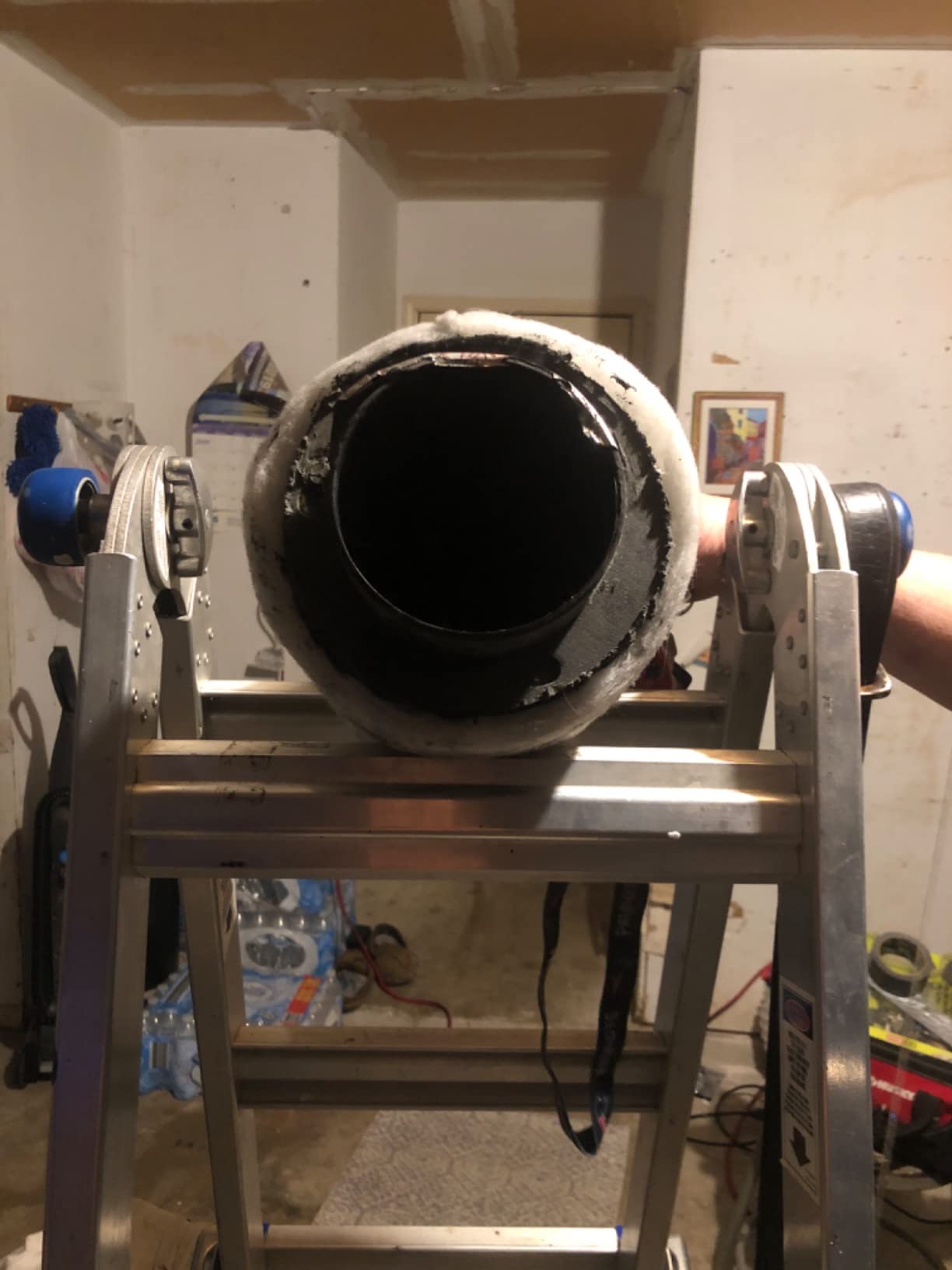
The most repeated complaint is carbon shedding, with owners reporting that granules can come loose if the canister is shaken or inverted. Handle it gently when you install it and when you flip the reversible flange, and check under the tent floor for a light dusting of black powder every few weeks.
A stiff flange on some size variants is the other practical annoyance, because a standard hose clamp will not tighten smoothly against it. Budget a few minutes of fitting rather than assuming a quick connect, and confirm the flange diameter matches your clamp before the tent is assembled.
Who the iPower 4 Inch filter suits
This is for a grower working with a tight budget, a 2×2 or 3×3 tent and a short grow. If you are only filtering one or two small plants through veg and early flower, the 200 CFM figure and a 38mm bed are adequate, and you can reinvest the savings in an inline fan, which matters more to the result than the filter tier.
It is also a sensible spare to keep on hand. Having a second canister ready means you can swap mid-cycle if odor creeps back in week six, instead of leaving a saturated filter in the duct while you wait for a delivery.
What to watch on the iPower 4 Inch filter
The 1050+ IAV grade means shorter carbon life than the premium 1200+ IAV canisters, so budget for more frequent replacement over a year. On a long-running setup, the refillable kit in this roundup ends up cheaper per cycle even though it costs more up front.
At 200 CFM this is the lowest airflow figure in the roundup, so it is the last one to reach for on a 3×5 or larger tent. If your tent is anything above 3×3, the 4 inch VIVOSUN or MELONFARM give you meaningfully more room to breathe.
How to Size a Carbon Filter for Your Grow Tent
Sizing is where most odor problems start and end, so it is worth doing the arithmetic before you buy anything. The method used across the industry starts with the volume of your tent, then adds a penalty for every restriction in the exhaust path.
Step 1: calculate the base volume. Multiply tent width by depth by height in feet. A 4×4 tent at 6.5 feet tall comes to roughly 104 cubic feet, and that figure is your starting CFM target for a single pass of air exchange per minute.
Step 2: add the carbon filter penalty. A carbon bed typically costs you about 25% of your airflow, so 104 CFM becomes roughly 130 CFM needed at the fan.
Step 3: add the duct bend penalty. Each 90 degree bend costs about 20% of your flow, so two tight elbows in a short run add roughly 25 CFM on that same example.
Step 4: add heat from lighting. Allow about 10% extra per 1000W of light, which is about 10 CFM for a single 1000W fixture.
That 4×4 example lands at roughly 182 CFM required at the fan. Map that to the canisters in this roundup and a 4 inch filter rated at 223 CFM covers it, while a 6 inch at 400 CFM covers a 4×4 with room to spare and can support a second exhaust point.
Here is the shorthand mapping we use, from the smallest tents upward:
- 2×2 tent (2 by 2 feet, about 26 cubic feet): 60 to 100 CFM. A 4 inch canister at 200 CFM is far more than the tent needs, which is good, because the filter becomes the only restriction in the path.
- 3×3 tent (about 58 cubic feet): 100 to 150 CFM. Still a 4 inch canister, and this is where the 200 CFM iPower is genuinely sufficient.
- 3×5 tent (about 97 cubic feet): 140 to 200 CFM. A 4 inch at 223 CFM works, and this is the size where growers most often report still smelling plants, usually because they went too small or the tent is not sealed.
- 4×4 tent (about 104 cubic feet with height factored): 150 to 250 CFM depending on light. The 4 inch at 223 CFM is the efficient choice, the 6 inch at 400 CFM is the comfortable one.
- 4×8 or 5×5 room: 400 CFM and above. One 6 inch at 455 CFM, or better, two smaller filters on separate exhaust points rather than one large canister on a single port.
Match the filter diameter to the inline fan you already have, or buy both at the same time. A 6 inch canister clamped onto a 4 inch fan is a leak you will pay for in odor, and no carbon grade fixes it. If you are still planning the rest of the enclosure, sizing a shelter first makes the duct and filter decisions much easier to reason about.
What a carbon filter can and cannot do
A carbon filter adsorbs odor molecules onto the surface of activated carbon, which is a different process from absorption. The carbon is a porous solid with an enormous surface area, and organic compounds stick to that surface while cleaned air passes through and out of the tent.
What it cannot do is remove every molecule. Air that flows around the outside of the carbon bed instead of through it, known as a bypass gap, carries full-strength odor to the exhaust. That is why mesh quality, flange fit and carbon packing density matter as much as the IAV grade printed on the box.
It also cannot fix a leaky tent. Zippers, intake ports with unfiltered openings and duct joints sealed with tape instead of clamps all move air that never touches carbon. No filter in this roundup, at any price, compensates for a tent that sits at positive pressure.
Five mistakes that let odor escape a good filter
- The filter is too small for the tent. Sizing to the fan rather than to the required CFM is the most common error. The fan moves air, the filter resists it, and an undersized bed turns your exhaust into a partial bypass.
- No pre-filter. Every canister here except a couple include one, and those that do not should have one fitted. Particle loading on the bed face chokes airflow and warms the tent.
- Positive pressure. If a tent inflates slightly or the zipper ports blow outward, odor escapes faster than the filter can scrub it. Check for suction at a port before every cycle.
- The filter is mounted too far from the fan. Air should hit the carbon almost immediately. Long duct runs with multiple bends between fan and filter add restriction and delay scrubbing.
- Unsealed duct joints. Clamp every connection to both flanges with a hose clamp. Duct tape alone lets odor slip out at the joint, which is the last place anyone checks.
Run the tent closed for an hour with the exhaust running, then stand outside the door and check for suction and for smell. A tent that pulls air in at every port is the only configuration where a carbon filter is doing the whole job.
Refillable versus disposable economics
Disposable canisters are cheaper to buy and cost more over time. Each one is a fixed quantity of carbon, and once the bed saturates you discard the entire metal housing to replace it. Growers running continuous cycles report this as the most irritating part of the whole setup, and it adds up quickly across several tents.
The refillable design in this roundup changes the line item. One refill is matched to the filtration capacity of two standard 4 inch canisters, the housing never gets thrown away, and the media becomes a consumable you buy in a bag rather than a canister you lug to the bin. Over a twelve-month cycle with multiple grows, the refill approach is meaningfully cheaper per month.
The break-even is about cycles, not months. One or two grows and a disposable canister wins on simplicity. Three or more, or a tent that runs year round, and the refill kit is the smarter purchase.
Grower consensus versus brand marketing
On r/microgrowery and THCFarmer, the brands named most often as the best performers are Prima Klima Industry Line, Rhino Pro, Common Culture and GrowBright. One recurring post recommends Prima Klima outright and dismisses the AKF filters from Spider Farmer and Mars Hydro. None of those brands appears in this roundup, which is a fair criticism of it.
The reason is data quality. The ten filters we could verify carry published carbon grades, bed thicknesses, airflow figures and review counts, while the forum favorites vary by region, by batch and by what a grower could find locally. We would rather rank what we can measure and tell you which names the community keeps coming back to, so you can look for them yourself.
On AC Infinity specifically, community opinion is genuinely split rather than uniformly negative. The same threads that contain complaints about price also contain growers saying the brand works particularly well when the tent is properly closed. Both are describing real setups, and the difference is usually tent size and pressure rather than the carbon.
There are also other established names worth naming: GrowBright uses high-grade coal-based pelletized carbon machine-packed into steel mesh, Gorilla Grow Tent markets a coconut carbon bed, Secret Jardin makes filters sized to its own tents, and Mars Hydro and Yield Lab sit in the same price band as the mid-tier picks here.
Frequently Asked Questions
Does a carbon filter eliminate odor?
No, not entirely, and any brand claiming otherwise is overselling. A carbon filter adsorbs most odor molecules as air passes through the bed, but air that bypasses around the edges of the carbon, or leaks out of a leaky tent, carries full-strength smell to the exhaust. Real odor control comes from pairing a correctly sized filter with a washable pre-filter, sealed duct clamps, and a tent running at negative pressure.
What is the best carbon air filter for a grow tent?
For most indoor tents, the AC Infinity 6 Inch Air Carbon Filter is the strongest all-round choice. It pairs a 38mm bed of Australian virgin charcoal rated at 1200+ IAV with a published 410 CFM airflow figure and a 4.8 star rating across more than 10,000 reviews. For a 2×2 or 3×3 tent, the VIVOSUN 4 Inch canister at 223 CFM is the better physical fit.
How long does a carbon filter last in a grow tent?
Real-world service life runs longer than the three-month window most brands imply, and shorter than the six to twelve months optimistic buyers report. One grower on r/microgrowery reported a VIVOSUN 4 inch filter lasting about eight months, while others report losing odor control inside a single continuous cycle. Heavy terpene loads, 24 hour operation and a missing pre-filter all shorten the life of a bed.
How do I size a carbon filter for my tent?
Calculate the tent volume in cubic feet, add about 25% for the carbon bed restriction, add about 20% for each 90 degree duct bend, and add about 10% per 1000W of light. A 4×4 tent at 6.5 feet with a 1000W light and two bends lands near 182 CFM. Match the resulting figure to the published airflow of the canister, then match the canister diameter to your inline fan.
Should the carbon filter be inside or outside the grow tent?
Outside the tent on the exhaust line is usually the better choice, because the treated air never circulates back through the growing space and a larger canister does not steal tent floor area. Mounting it inside works well for small tents where the filter hangs in a corner. Either way, connect the fan to the filter first and the tent second, then clamp both duct joints and confirm the tent pulls air inward at every port.
The Verdict on the Best Carbon Filters for Grow Tent Odor
For a 2×4, 3×3 or 4×4 tent on a 6 inch fan, the AC Infinity 6 Inch Air Carbon Filter is the pick, with the strongest combination of carbon grade, published airflow and review history in 2026. For a small tent on a 4 inch fan, the VIVOSUN 4 Inch canister is the value choice, and the AC Infinity Refillable Carbon Filter Kit is the right buy once you start running more than two or three cycles a year.
Whichever one you choose, the filter is the last line of defense, not the first. Size it to your tent, clamp every duct joint, fit a washable pre-filter, and confirm the tent pulls air inward before you start flower. Get those four things right and the brand matters far less than the spec sheet suggests.