
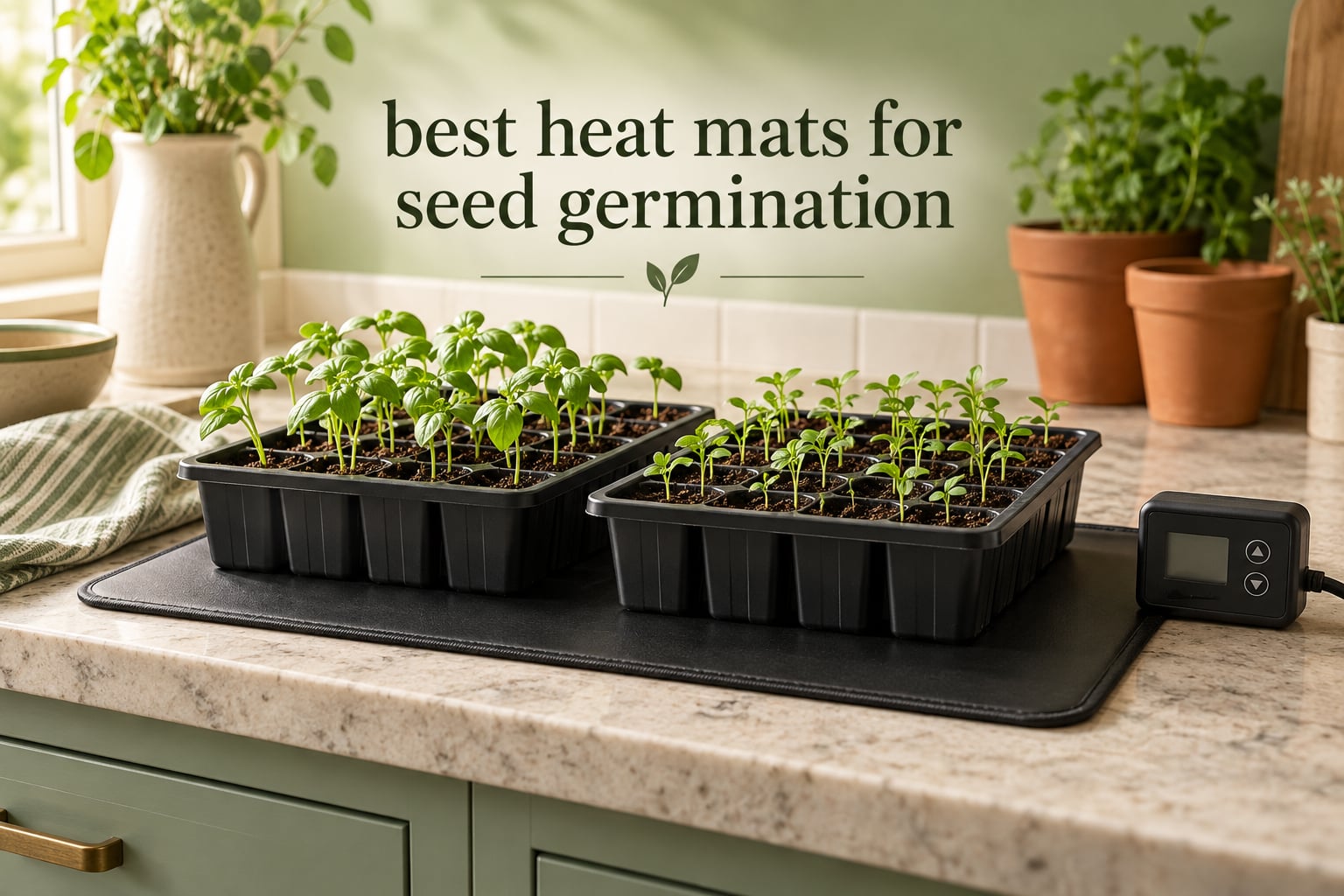
Most homes sit between 68 and 72 degrees Fahrenheit, which is cooler than the soil temperature that warm-season seeds actually want. A seedling heat mat fixes that by warming the growing medium from underneath rather than heating the air, holding the root zone steady in the 70 to 85 F range where tomatoes, peppers, eggplants and basil germinate quickly and evenly.
That is the whole idea behind the best heat mats for seed germination: they add roughly 10 to 20 F to the soil above whatever the room happens to be doing. If your kitchen counter is already sitting at 72 F, a mat pushes the medium to the low 80s. If you are starting seeds in a basement at 55 F, the same mat cannot close that gap, and that is exactly where a thermostat and a bit of insulation underneath start to matter.
We compared eight mats across the details that actually change results: certification marks, waterproof rating, tray footprint, whether a controller is included, and how much heat the manufacturer claims versus what the listing says buyers measure. Every mat below runs low wattage, wipes clean, and rolls up for storage. If you have not built a seed-starting station yet, our seed starting systems with grow lights guide covers the light side, and this one covers the heat side.
Short answer for most people: the 10 x 20.75 inch mats that fit a standard 1020 tray are the workhorses, and adding a thermostat controller is the single upgrade that removes most of the frustration people report online.
Table of Contents
Top 3 Seedling Heat Mat Picks for 2026

VIVOSUN 10 x 20.75 Heat Mat
- UL and MET certified
- IP67 waterproof PVC
- Maintains 68-86 F
- Fits 1020 trays

BN-LINK 10 x 20.75 Heat Mat
- Maintains 70-85 F
- Far-infrared dual insulation
- IP67 waterproof PVC
All 8 Heat Mats Compared Side by Side in 2026
| Product | Specifications | Action |
|---|---|---|
| VIVOSUN 10 x 20.75 Inch Heat Mat |
|
Check Latest Price |
| Seedfactor 2-Pack 10 x 20 Inch Heat Mat |
|
Check Latest Price |
| BN-LINK 10 x 20.75 Inch Heat Mat |
|
Check Latest Price |
 Hydrofarm Jump Start 48 x 20 Inch Hydrofarm Jump Start 48 x 20 Inch |
|
Check Latest Price |
 AC Infinity SUNCORE S3 Heat Mat AC Infinity SUNCORE S3 Heat Mat |
|
Check Latest Price |
 iPower 10 x 20 Inch 2-Pack iPower 10 x 20 Inch 2-Pack |
|
Check Latest Price |
 Propagate Pro 20 x 48 Inch Heat Mat Propagate Pro 20 x 48 Inch Heat Mat |
|
Check Latest Price |
 BN-LINK 48 x 20.75 Inch with Thermostat BN-LINK 48 x 20.75 Inch with Thermostat |
|
Check Latest Price |
1. VIVOSUN 10 x 20.75 Inch Durable Waterproof Seedling Heat Mat
- UL and MET certified for electrical safety
- Even temperature across the whole surface
- IP67 waterproof surface you can scrub
- Low wattage and rolls up for storage
- Deepest pool of verified buyer feedback
- No built-in thermostat or on-mat switch
- Indoor use only and cannot be immersed
- Top temperature depends on a warm room
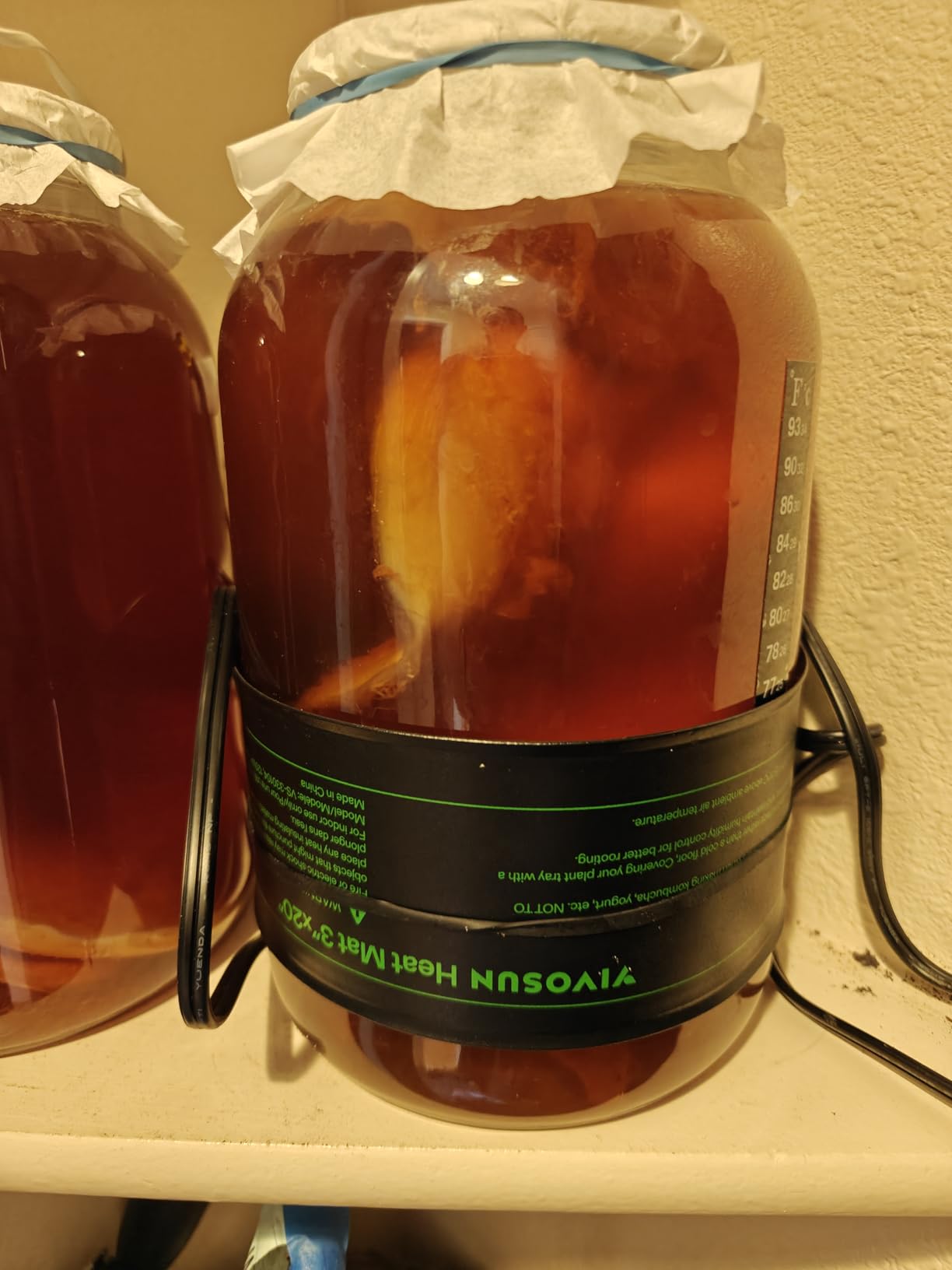
This is the mat we come back to most often, and the one with the deepest well of real buyer feedback behind it. The 10 x 20.75 inch footprint drops straight onto a standard 1020 tray with no overhang, and the far-infrared heating film between the insulation layers gives soft, even warmth rather than a hot line down the middle.
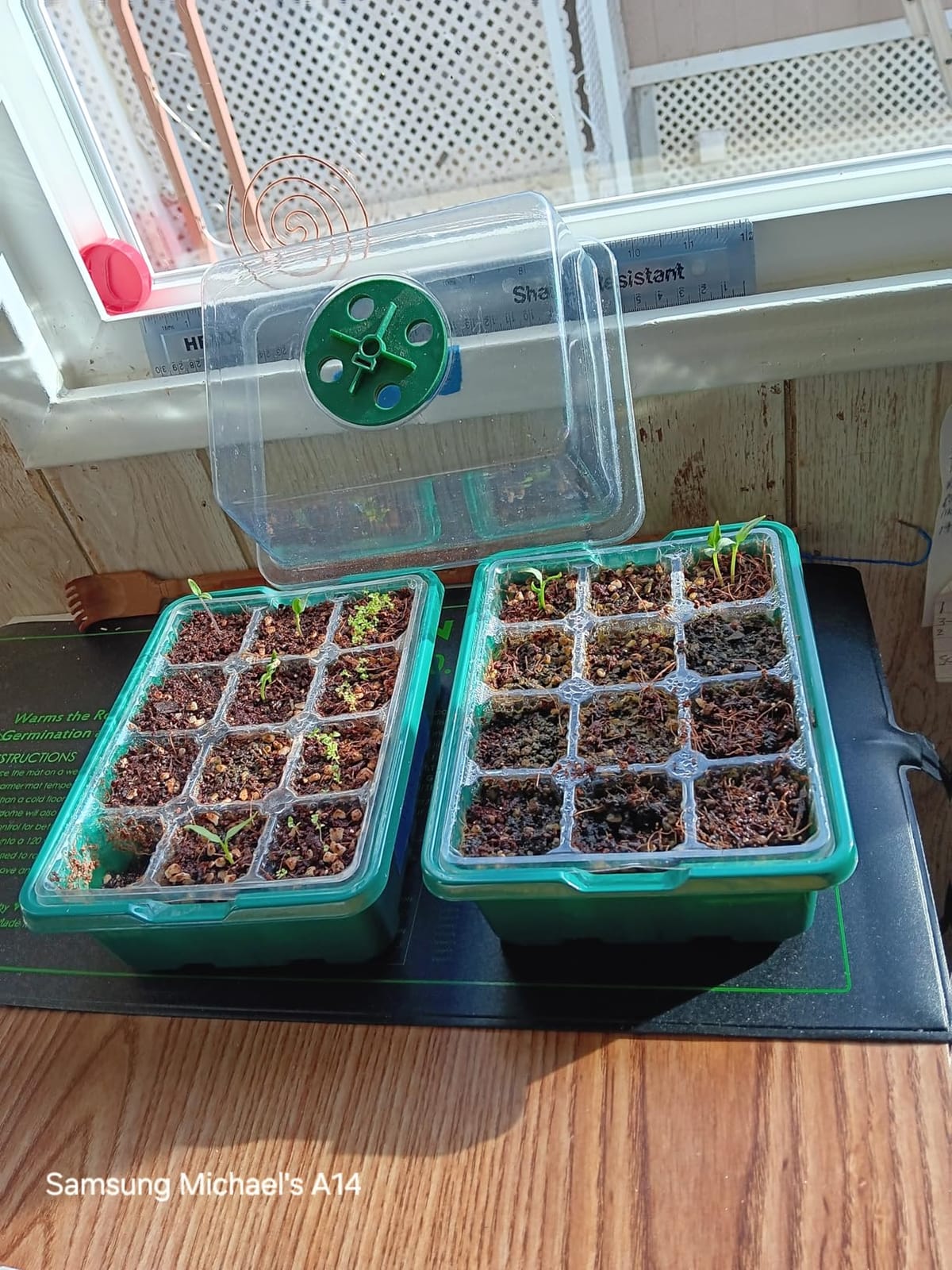
Two certifications matter here. UL and MET listing means the electrical design has been checked by two independent labs, which answers the fire-safety question that comes up more than any other in gardening forums. The IP67 waterproof surface means an overflowing tray or a damp dome is not a disaster, and the PVC wipes clean in seconds.
One thing to know before you buy: this is a fixed-output mat, not a controlled one. The listing states it heats up to 104 F when the surrounding room is between 68 and 77 F, and maintains a working band of 68 to 86 F. If your room is cooler than that, the top of that range is out of reach, which is the single most common reason people think a mat has failed.
What to check before you commit
Measure the mat against your tray, not the shelf. A 10 x 20.75 inch mat matches a 1020 tray almost exactly, and a mat that is a few inches short leaves one edge of the tray sitting on a cold counter. That edge is where you get the patchy germination people complain about.
Decide now whether you will run a controller. Reviews on this mat describe it as steady and even, but the recommendation that comes up again and again is to pair it with a thermostat and a humidity dome. With both of those, the numbers land right where pepper and tomato seeds want them.
Where it falls short
There is no on-mat switch and no regulator, so the only way to change the output is to unplug it or add a controller. A handful of buyers also report it running slightly warm in an already-cozy room, which is another argument for a thermostat rather than a reason to skip the mat.
It is also indoor use only, and the manufacturer is clear that it cannot be immersed. That is fine for seed starting. It is not a propagation bed for an outdoor greenhouse bench in wet weather.
2. Seedfactor MET Certified 2-Pack 10 x 20 Inch Heat Mat
- Two mats allow staggered sowings
- MET certified and compliant with UL 499 and CSA C22.2 No.64
- Holds 70-85 F in the root zone
- 7.5mm wire spreads heat evenly
- Heat-resistant waterproof SJTW cord
- No thermostat
- output is fixed
- 10 x 20 inch size is a little under a 1020 tray
- Both mats share one listing average
Two mats in one pack is the practical reason to look at this one. You can run a pepper tray and a tomato tray at once, or start one batch two weeks behind the other so you have transplants ready at different times instead of all at once.
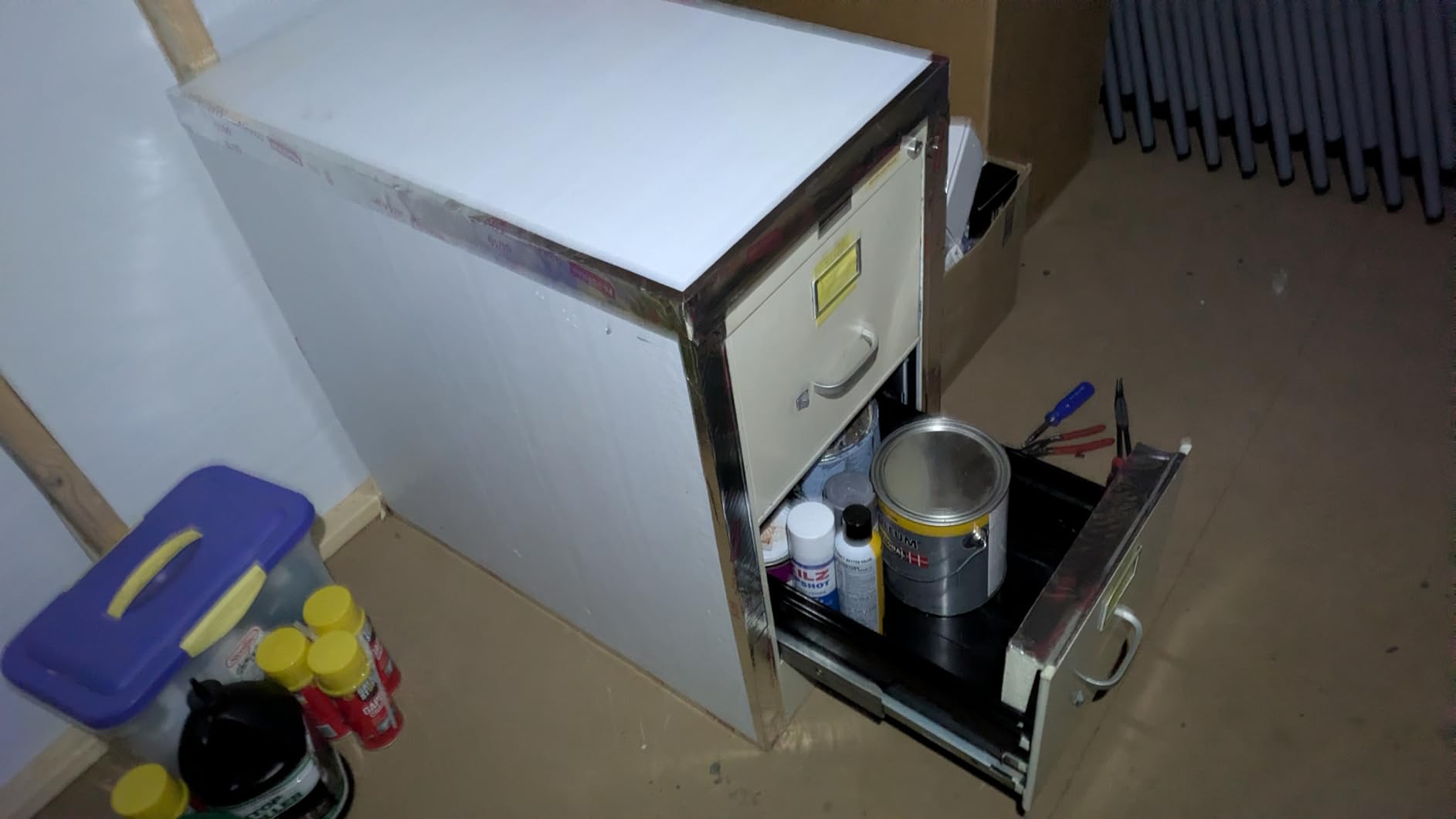
The safety paperwork here is unusually specific. The mat is MET certified and compliant with UL 499 and CSA C22.2 No.64, which are the standards that cover household electric heating appliances. Buyers single that out repeatedly, and it is fair to treat a named standard as a better signal than a generic claim of being safe.
Heating here runs through 7.5mm thickened wire in a multi-layer build, and the manufacturer states it keeps the seedling root area between 70 and 85 F. That is the band most warm-season seeds want, and it is stated as a range rather than a single headline number, which is more honest than most listings in this category.
What to check before you commit
Look hard at the dimensions. These are 10 x 20 inch mats, not 10 x 20.75, so a standard 1020 tray overhangs by about three quarters of an inch on the long side. In practice most people center the tray and lose nothing, but if even coverage across the whole flat matters to you, this is the detail to notice.
Also plan for the fact that the pack gives you two independent mats but one combined review average. If you only plan to sow one tray this season, the second mat is spare capacity rather than a feature, and the money is often better spent on a small thermostat for the mat you actually use.
Where it falls short
Output is fixed. There is no built-in thermostat and no switch, so again you are relying on a separate controller or on accepting whatever steady temperature the mat settles at.
Because both mats sit under a single listing, the review average covers the pack rather than each mat separately. If one of the two runs warm, you would not see it called out separately, so check the first week with an independent thermometer rather than trusting the pack rating.
3. BN-LINK 10 x 20.75 Inch Seedling Heat Mat
BN-LINK 10″ x 20.75″ Seedling Heat Mat for Seed Starting Plants Germination
- Holds the 70-85 F band consistently
- Dual insulation layers reduce scorch risk
- IP67 waterproof surface wipes clean
- Exact 1020 tray fit with no dead edge
- Fixed output with no built-in control
- Warms faster than expected in a small space
- Still needs a separate thermostat for a setpoint
This is the closest match to the VIVOSUN footprint, and it is the one to look at if you want a dead-even 1020 tray fit with the same IP67 waterproof multi-layer build. It is a single mat, sized so the whole flat sits over warm surface with no cold counter edge creeping in at one end.
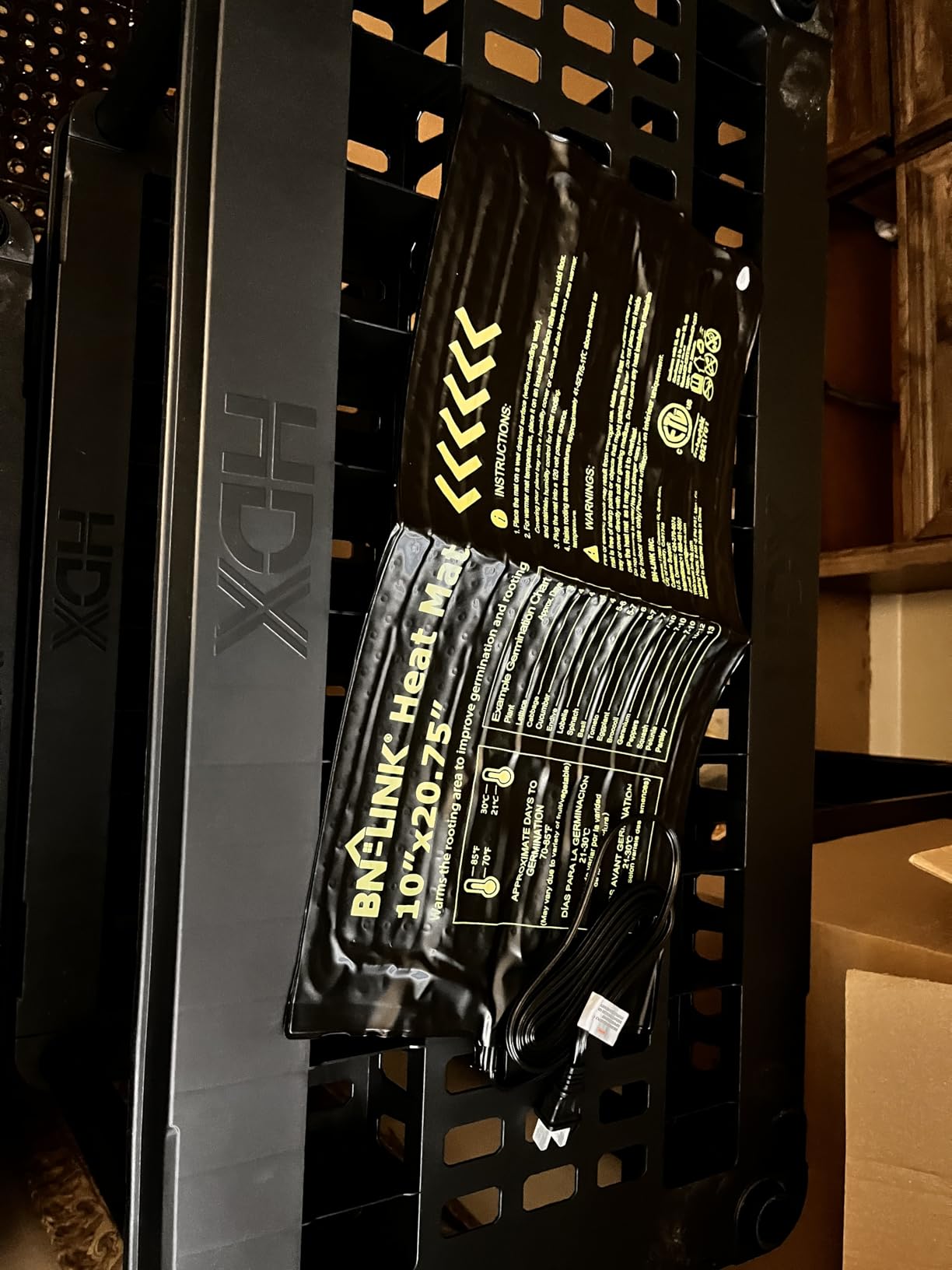
It draws 20 watts and holds the 70 to 85 F range, which is the band that covers tomatoes, peppers and eggplants without pushing them. The far-infrared film sits between two insulation layers, and the manufacturer is specific that this is what prevents the localized overheating that scorches roots on cheap single-layer mats.
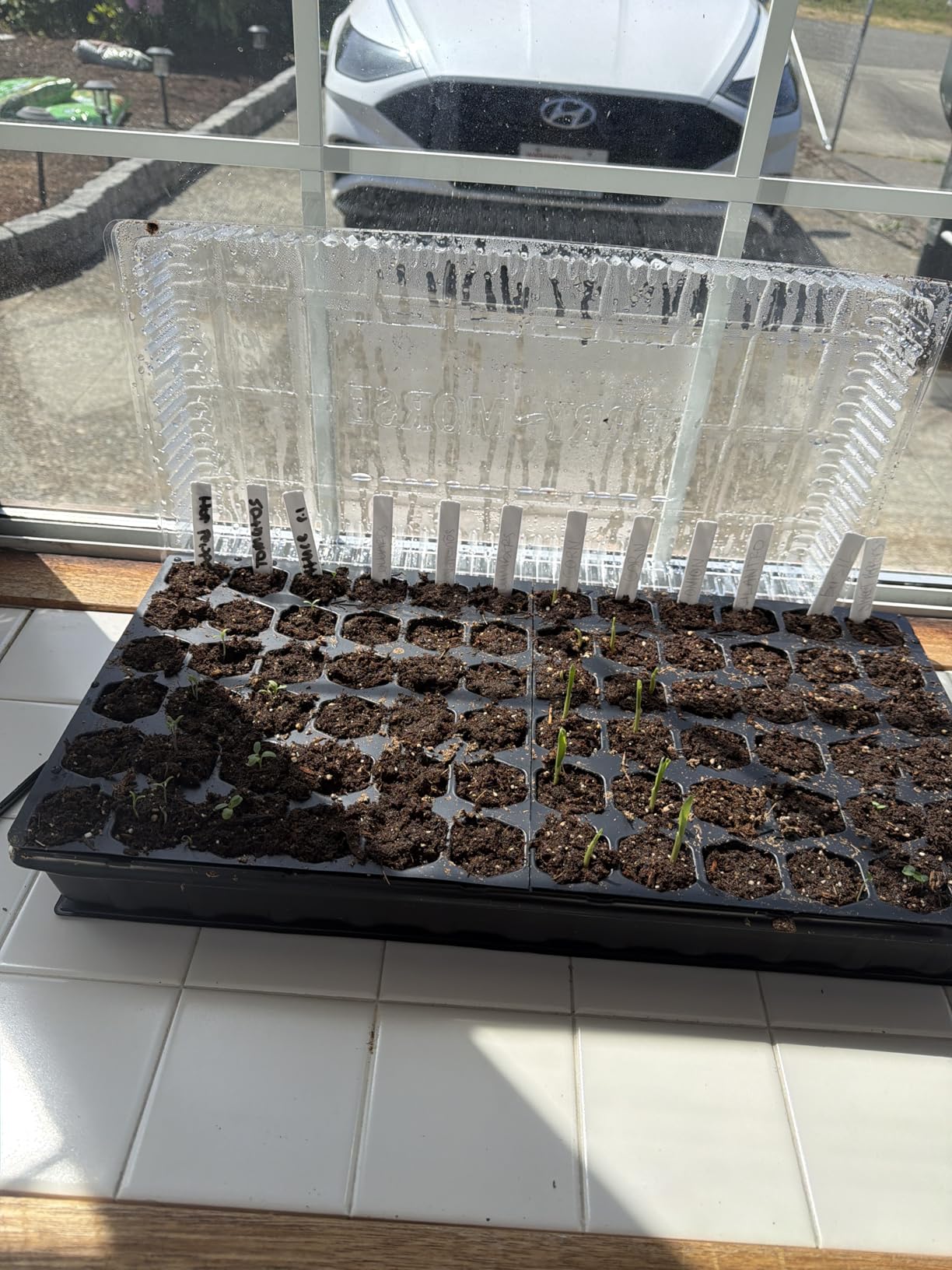
Buyers report the same thing across the board: even, steady warmth and noticeably faster, more uniform germination than an unheated setup. The wipe-clean IP67 surface also holds up in a damp greenhouse, which is where cheaper mats start to smell and degrade.
What to check before you commit
Decide whether one tray is where you will stay. The 10 x 20.75 inch surface matches a 1020 flat exactly, which makes it the safest single-tray purchase, but it does not stretch into a two-tray or shelf setup. If you expect to scale up next season, size up now rather than buying a second identical mat later.
Check the cable. This mat has a 5.9 foot cord, which is enough for a standard shelving unit but tight if your controller sits on a far shelf. Longer cords are the first thing people wish they had bought.
Where it falls short
Heat control is the gap. The output is fixed, and the stepped far-infrared design really wants a controller to be usable as a precision tool. Some buyers report it warming faster than they expected in a small, closed space, which means you should be checking soil temperature daily during the first week.
And like most fixed-output mats, the headline 70 to 85 F band assumes a normally heated room. In a cool basement the mat simply delivers less than the range suggests, which is another reason to budget for a small digital thermostat alongside it.
4. Hydrofarm Jump Start MT10009 48 x 20 Inch Heat Mat
Hydrofarm Jump Start MT10009, 107 Watt UL Certified Seedling, 48″x20″ Heat Mat, Jumpstart
- Daisy-chains up to five mats for a full bench
- UL certified for household heating use
- 50 percent thicker build than competing mats
- Even heat holds close to the mat edges
- 6 ft cord with waterproof connectors
- Thermostat sold separately
- Modest 10-20 F lift so insulate beneath it
- It is a step up in cost from 1020 mats
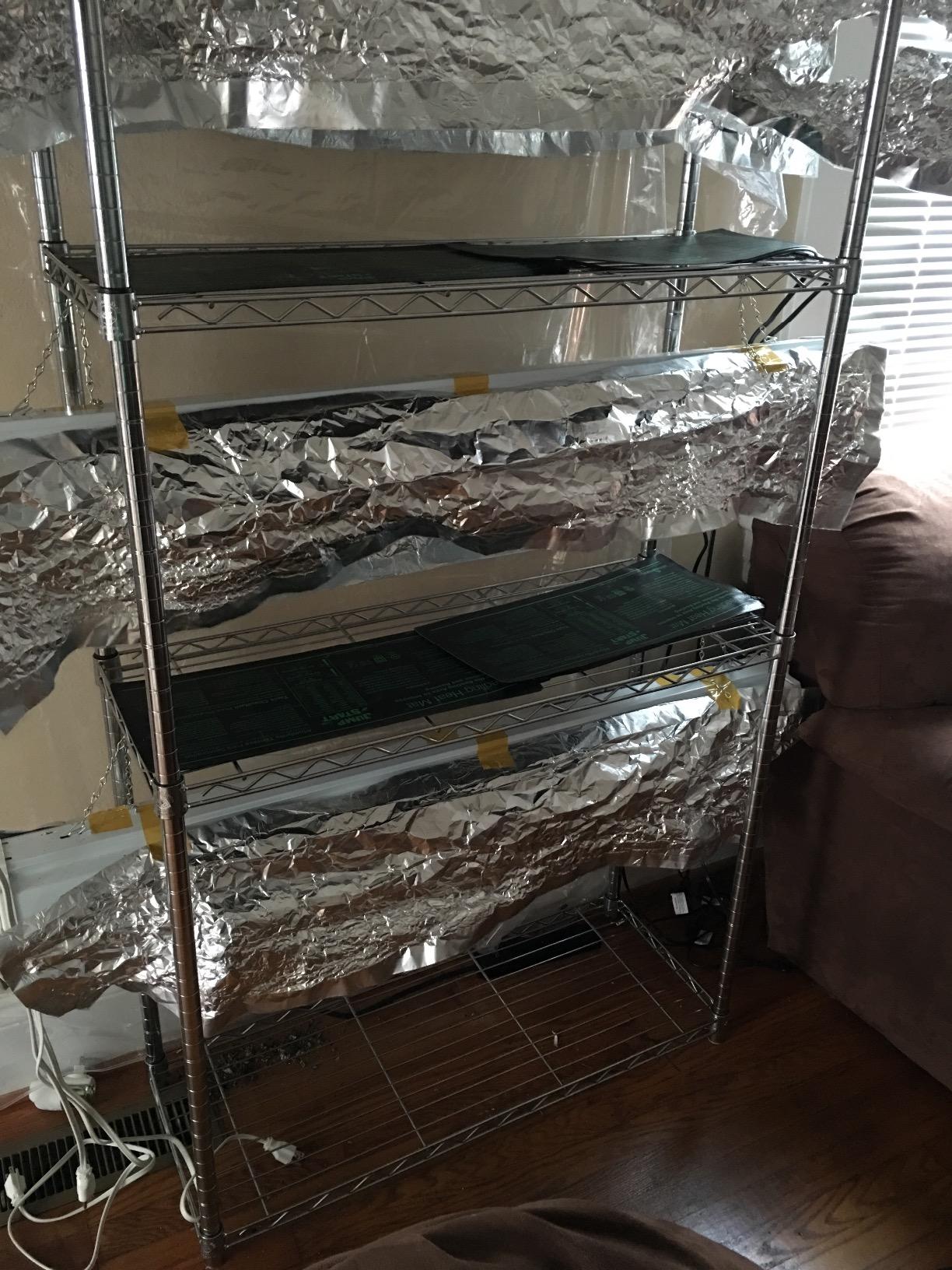
This is the mat for anyone outgrowing a single tray. At 48 x 20 inches it covers a full shelf, and the daisy-chain capability means you can run up to five units off the same controller once you have a bench rather than a shelf.
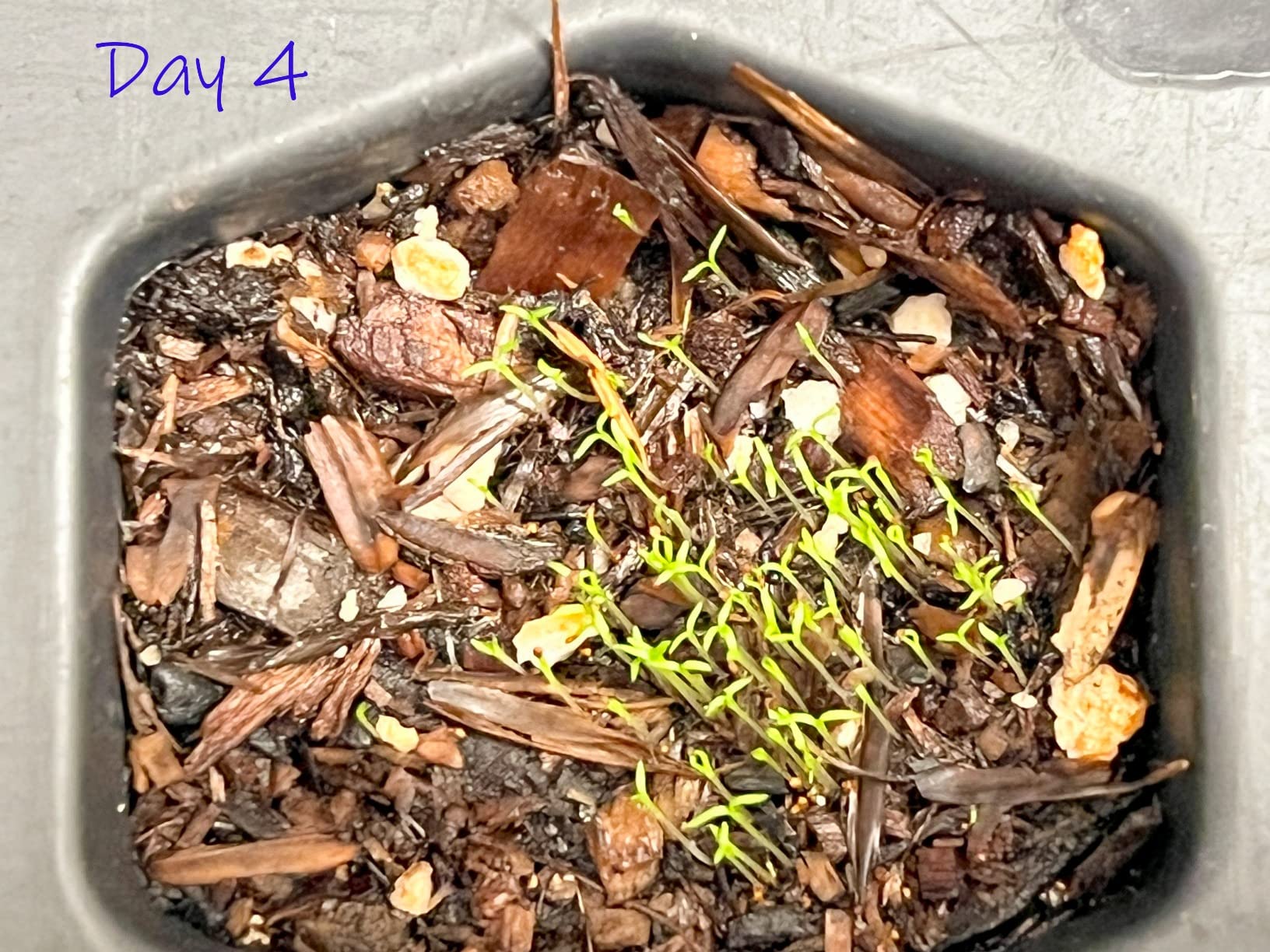
Hydrofarm built it roughly 50 percent thicker than competing mats, and buyers notice. Heat stays even within a couple of inches of the edges, which is where smaller mats give you a cold strip and you get a row of seeds that simply does not come up.
One of the more thoughtful touches is that lighting, watering and planting information is printed on the mat surface. It sounds minor until you are standing over a tray at nine at night trying to remember whether you already watered.
What to check before you commit
The 10 to 20 F lift is the number to plan around. That is enough in a normal heated room but marginal in a cold basement or garage, and heat sinks straight down into an uninsulated countertop. A layer of foam board or a folded towel underneath costs almost nothing and makes a visible difference.
Budget for the controller. This mat does not regulate itself, and the recommended digital thermostat is sold separately. Buying the pair together is the sensible order, and it is a good time to check our seed drill guide so your sowing schedule lines up with when heat is actually needed.
Where it falls short
It is a step up in cost from the 1020-size mats, and it is not a complete system on its own. If you are only starting one tray, this is far more surface than you can use.
There is no on-mat switch and no built-in regulator, so the mat runs whenever it is plugged in. Plan to switch it at the plug or put it on a controller, especially once seedlings appear and the mat’s job is done.
5. AC Infinity SUNCORE S3 Seedling Mat with Variable Heat Control
AC Infinity SUNCORE S3, Seedling Mat 10″ x 20.75″ w/ Variable Heat Control
- Built-in variable heat dial avoids on/off cycling
- Far-infrared film warms fast and evenly
- Quad-layer IP-67 PVC wipes clean
- Slim 0.09 inch profile rolls up small
- Stepped dial is not a precise setpoint
- Only three heat settings
- One size in this listing
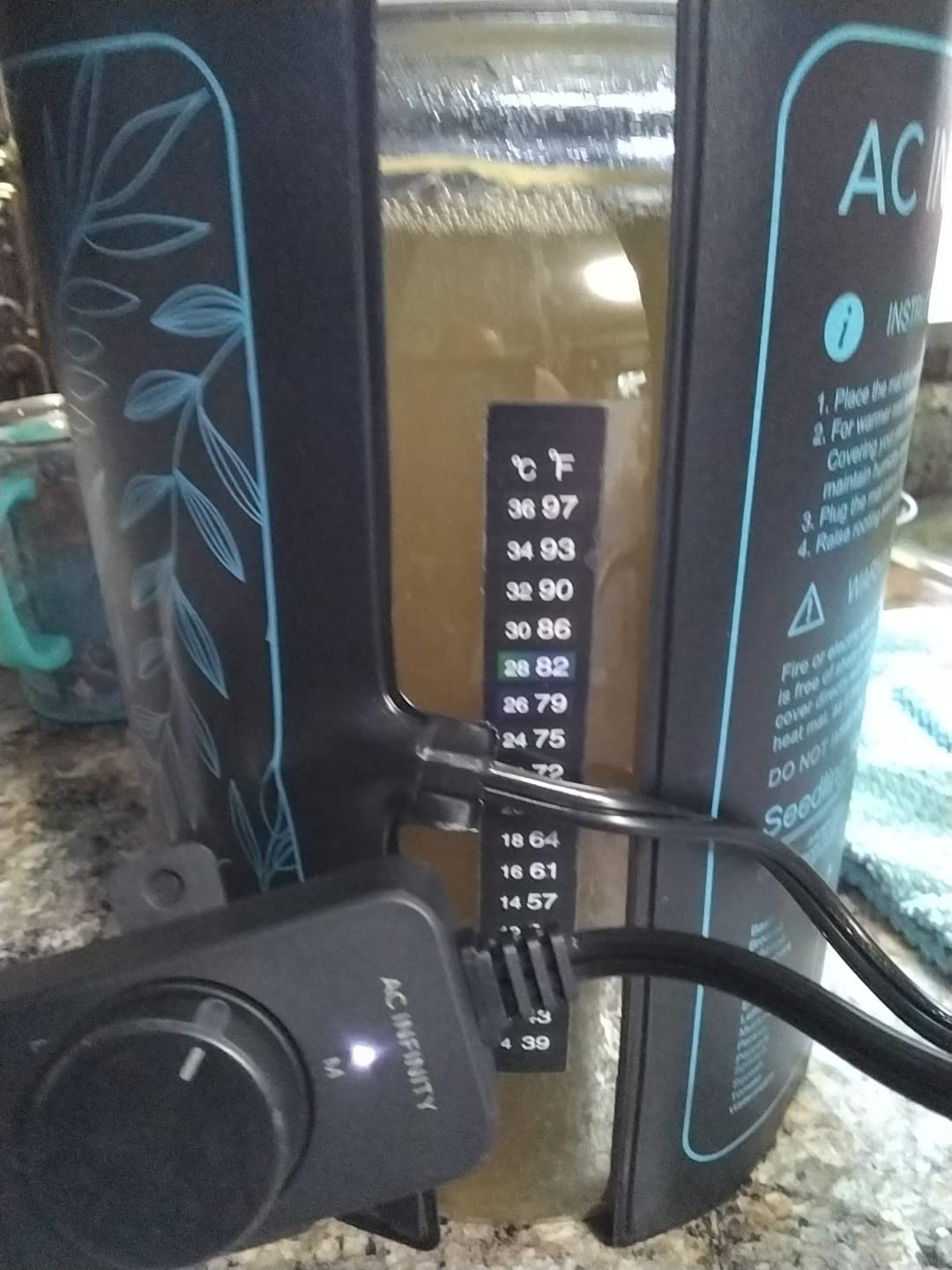
This is the only mat here with any heat control built in, and that changes how you use it. A dial on the controller varies the output gradually rather than switching the mat fully on and off, which matters because constant on/off cycling produces temperature swings that stress young seedlings.
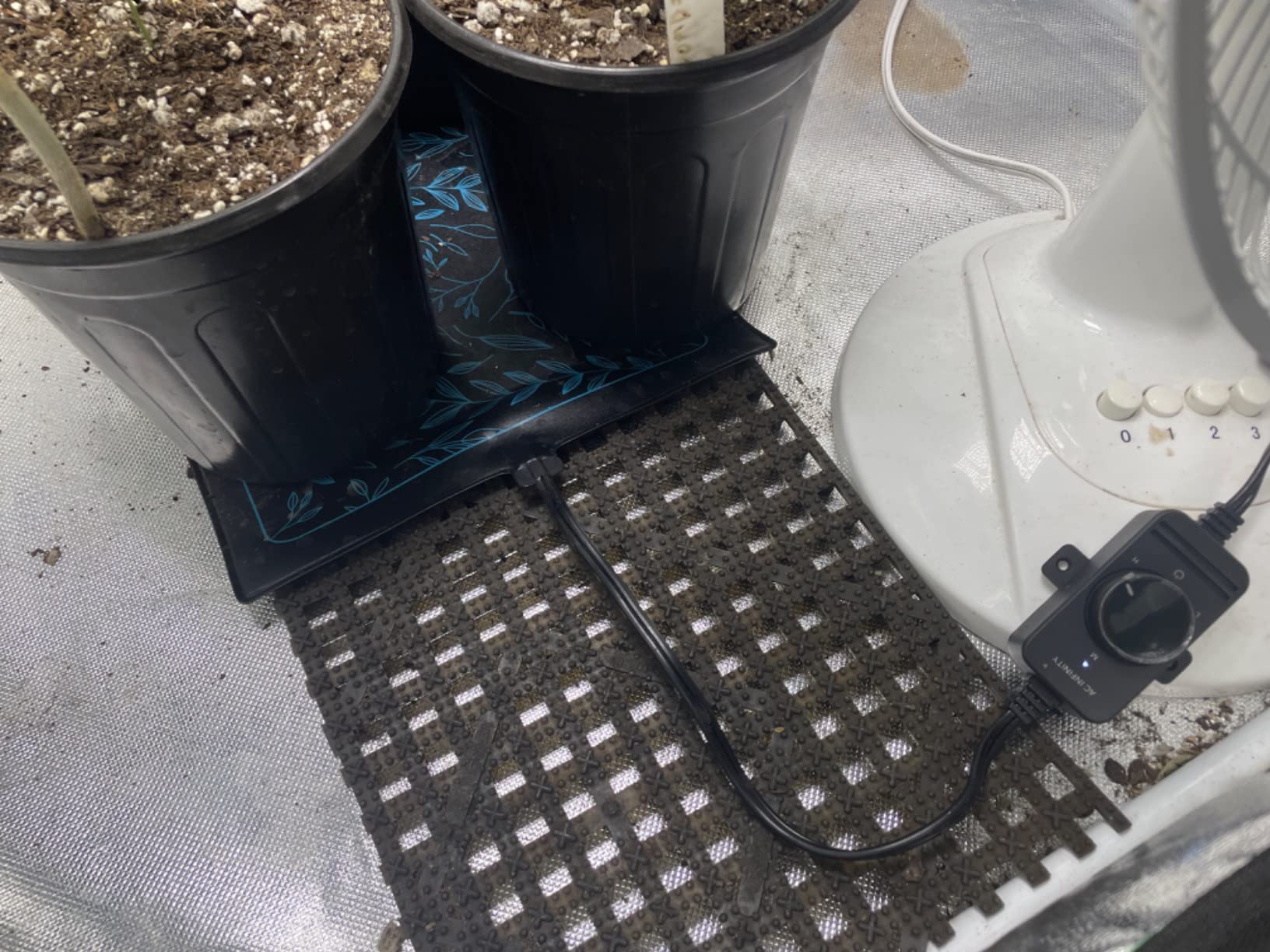
The far-infrared film is the reason it feels different in the hand. Reviewers consistently describe a fast warmup and a soft, even spread rather than the harsh centre hotspot you get on a thin mat. At 0.09 inch thick it is also the slimmest option, which makes it easy to roll and store between seasons.
Build quality is easy to check without a spec sheet. The quad-layer IP-67 PVC is flexible, wear-resistant and wipes clean, and the extra layers are what let a mat this thin still hold an even temperature across the full 10 x 20.75 inch surface instead of running hot in the middle.
What to check before you commit
Understand what the dial does and does not do. Three stepped settings give you low, medium and high, which is enough to keep a mat from cooking a tray in a warm room. It is not a thermostat, so it cannot hold a specific number and it has no soil probe. If you need a true setpoint, this is not it.
For propagation specifically, the stepped control is a genuine advantage. Cuttings in water or perlite have no thermal mass to speak of, so a dial you can turn down is safer than a fixed-output mat running at full tilt with no feedback.
Where it falls short
There is one size here, 10 x 20.75 inches, so this does not scale past a single tray without a second purchase. And the coarse control means you are still verifying real soil temperature with an independent thermometer rather than trusting the dial position.
Worth flagging honestly: a user in a r/vegetablegardening thread reported that this pad seemed to barely put out heat in their setup. Most reviews describe the opposite, so ambient temperature and how well the mat is seated on the surface are the likely explanation rather than the mat itself.
6. iPower 10 x 20 Inch Waterproof Seedling Heat Mat 2-Pack
- Warms a full 72-cell tray
- Thick vinyl with a sealed cord entry point
- Two mats per pack for staggered starts
- No settings to fiddle with
- Runs warm without scorching surfaces
- No temperature control at all
- Heat concentrated toward the center in one report
- Lower review volume than the leaders
This is the simplest thing in the roundup and that is the point. There is no dial, no display and no probe. You plug it in, set the tray on top, and it lifts soil temperature 10 to 20 F above the surrounding air, which the manufacturer states as 6 to 12 C.
Build quality is better than the feature list suggests. The heating wire is thickened and laid out to spread across the pad rather than running in one channel, and the connection point between the pad and the cord is reinforced, which is the part that usually fails first on cheaper mats.
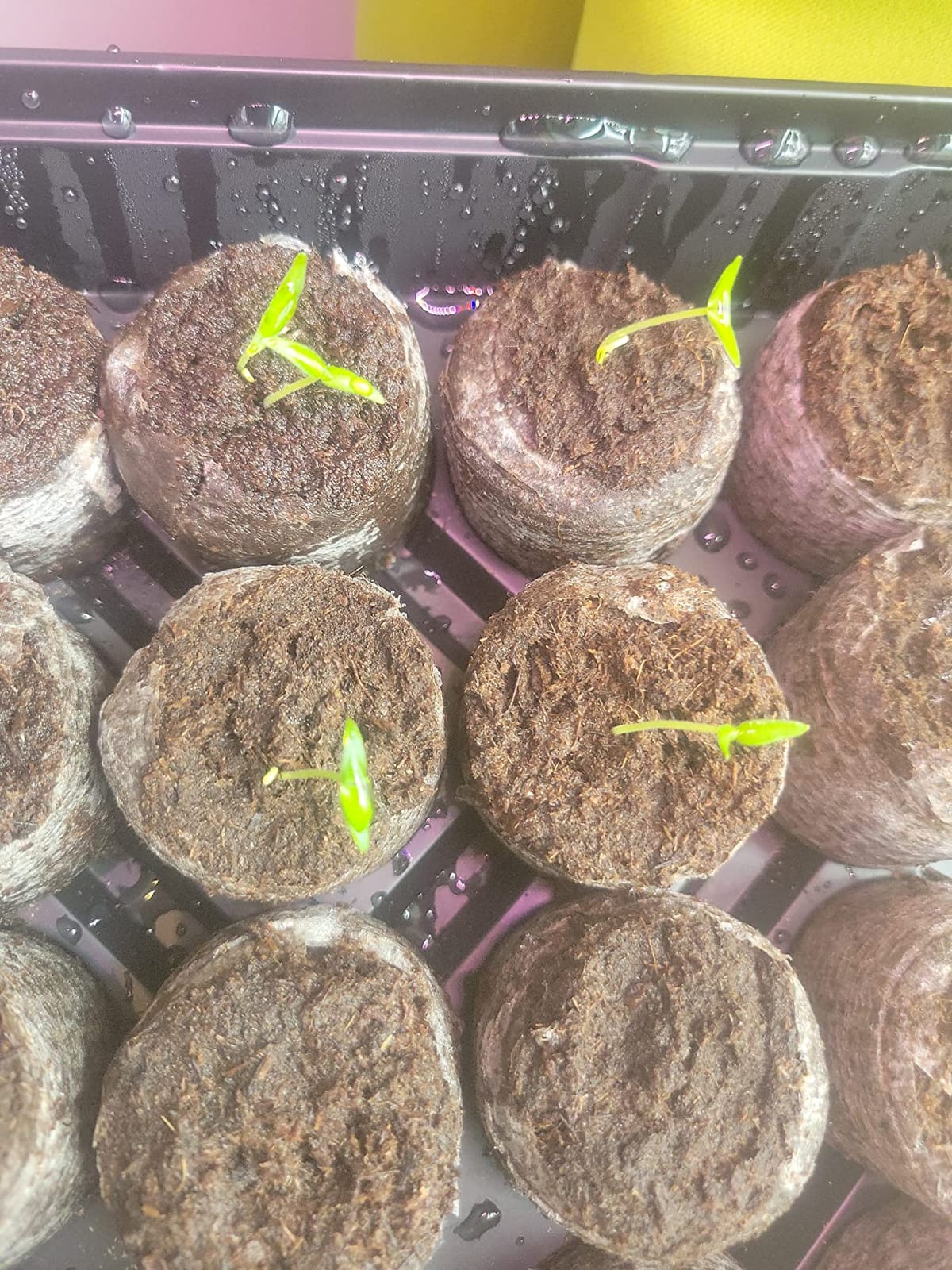
One reviewer reported radish seeds coming up in about three days on a full 72-cell tray, which is the kind of concrete result that tells you more than a star rating does. The mats are also marketed for reptile and rodent enclosures, which is a reasonable second use if you keep pets.
What to check before you commit
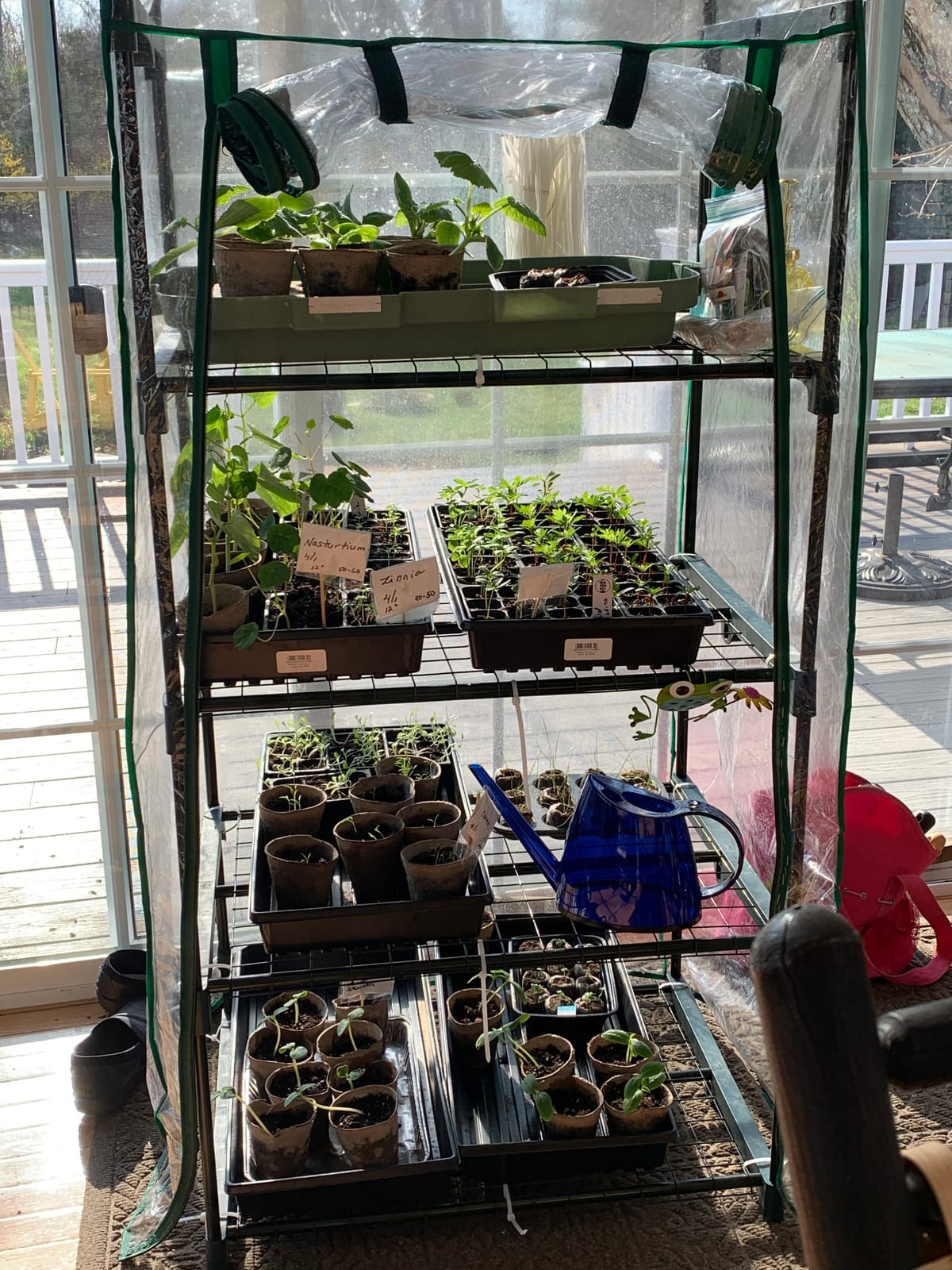
Ask yourself honestly whether you can live without any control. If your room holds a steady temperature all winter, a fixed mat is genuinely fine and you save money. If your house swings between a heated kitchen and a cool bedroom at night, you will want a controller and this is the wrong purchase.
Check the size against your trays. At 10 x 20 inches these are a touch under a 1020 flat, so center the tray carefully. A small overlap at the ends is not a serious problem at this level of output.
Where it falls short
No control means unplugging is the only adjustment, and that is inconvenient mid-germination. One reviewer also found the heat concentrated toward the centre rather than reaching edge to edge, so uniformity is a little less predictable than the certified mats above.
The star distribution here is a little more mixed than the leaders, and the review count is lower. It is a competent budget option rather than the one we would put under a valuable collection of tomato or pepper seed.
7. Propagate Pro 4 Ft Seedling Heating Mat for Four 1020 Trays
Propagate Pro Seedling Heating Mat, 4 Ft, Fits 4 Standard 1020 Trays, 48″
- Fits four standard 1020 flats side by side
- Highest average rating in this roundup
- Owners report use across four seasons
- Broad surface removes small-mat cold spots
- Double-insulated commercial-grade wiring
- Thermostat sold separately
- Very stiff out of the box
- Two-prong plug needs an adapter in some regions
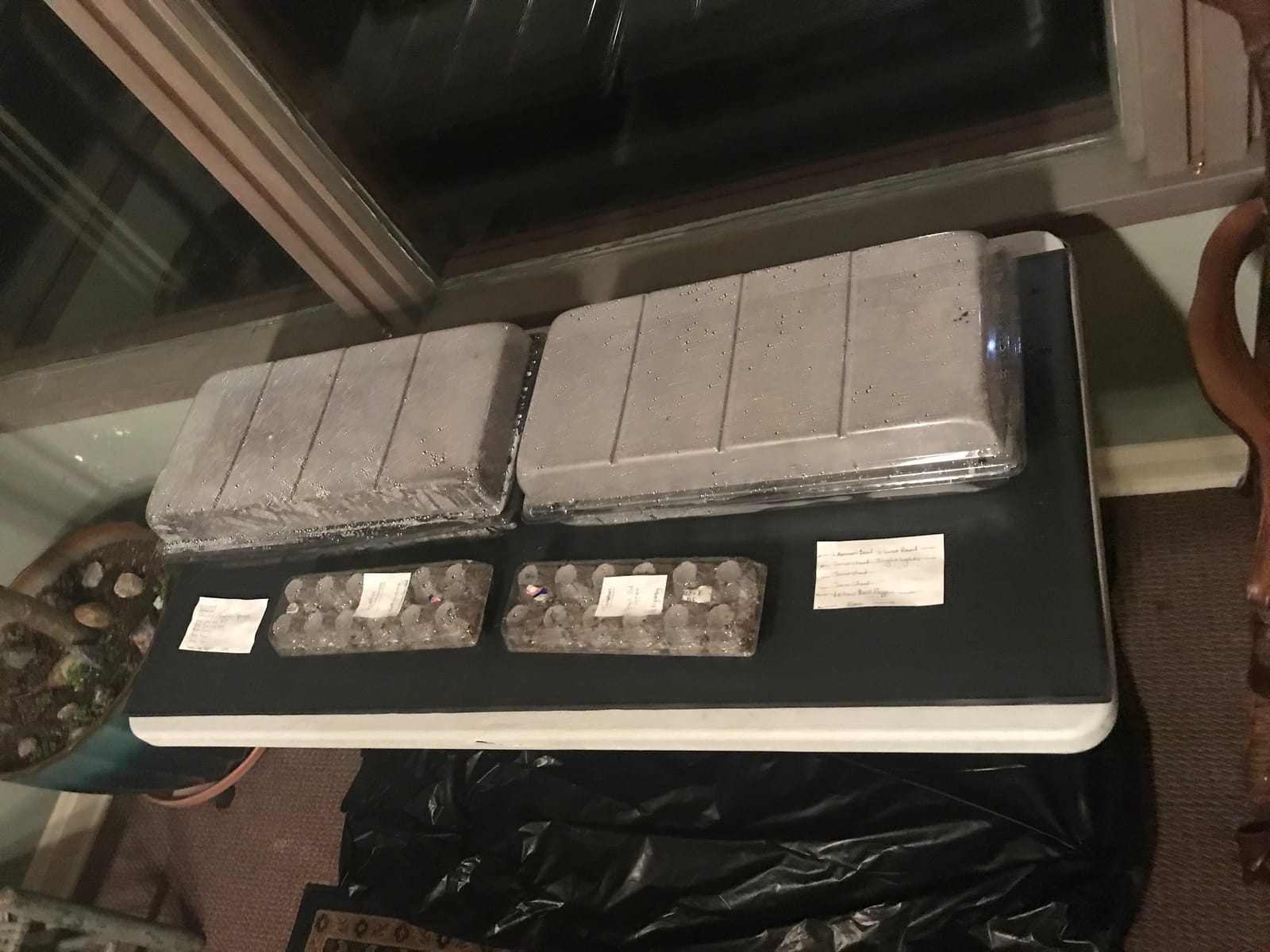
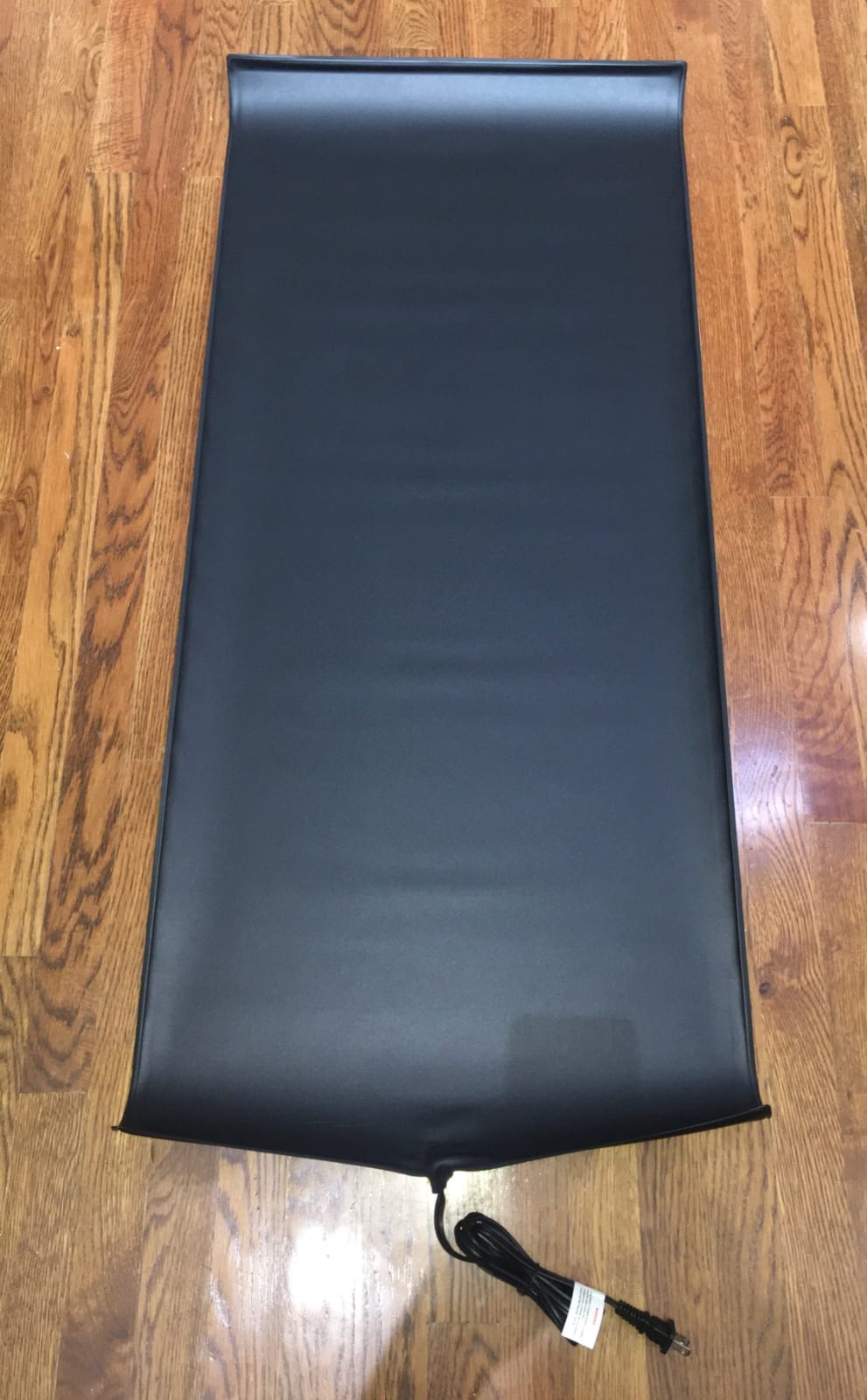
Four standard 1020 trays side by side, in one piece of mat, is the pitch, and it is the real advantage. If you are starting a serious quantity of peppers, eggplants or tomatoes, this replaces four small mats and the gaps between them where heat escapes.
The build is the heaviest in this roundup at 12 pounds, using multi-layer waterproof commercial-grade construction with double-insulated wiring. That mass is not a gimmick. It is why the heat stays consistent across a 20 x 48 inch surface instead of forming the cold pockets that show up on narrow mats.
Owners report units still performing after four seasons of use, and several run multiple mats off a single thermostat through a power strip. The stated lift is up to 20 F above ambient, which is the largest climb listed for a mat of this class.
What to check before you commit
Measure your shelf. A 48 by 20 inch mat needs a full-length shelf and a nearby outlet, and if it hangs over an edge you lose the even coverage you are paying for. This is a mat for a dedicated seed bench, not a bookshelf.
Allow a few days for it to relax. It arrives stiff and the most common piece of owner advice is to weigh it down flat and let it settle before the first sowing, rather than trying to smooth it out on day one.
Where it falls short
The thermostat is not included, so add that cost to your plan. Without one, this mat runs warm enough under a dome and grow lights to push soil past the target range, and reviewers specifically advise lowering the setting after sprouting.
It includes a two-prong Chinese and US style plug, which means you will need an adapter in some regions. Small thing, easy to forget at checkout.
8. BN-LINK 48 x 20.75 Inch Heat Mat with Digital Thermostat Controller
BN-LINK 48″ x 20.75″ Seedling Heat Mat with Thermostat Controller Combo Set
- Thermostat included so no second purchase
- 40-108 F range with LED display and F/C toggle
- Controller rated to 120VAC/1000W with a 4.92 ft probe
- IP67 waterproof mat with double insulation
- Large surface holds four to five typical planters
- Controller is not water resistant so keep it under the bench
- Runs hot on sunny days with lids on
- Costs more than a bare mat
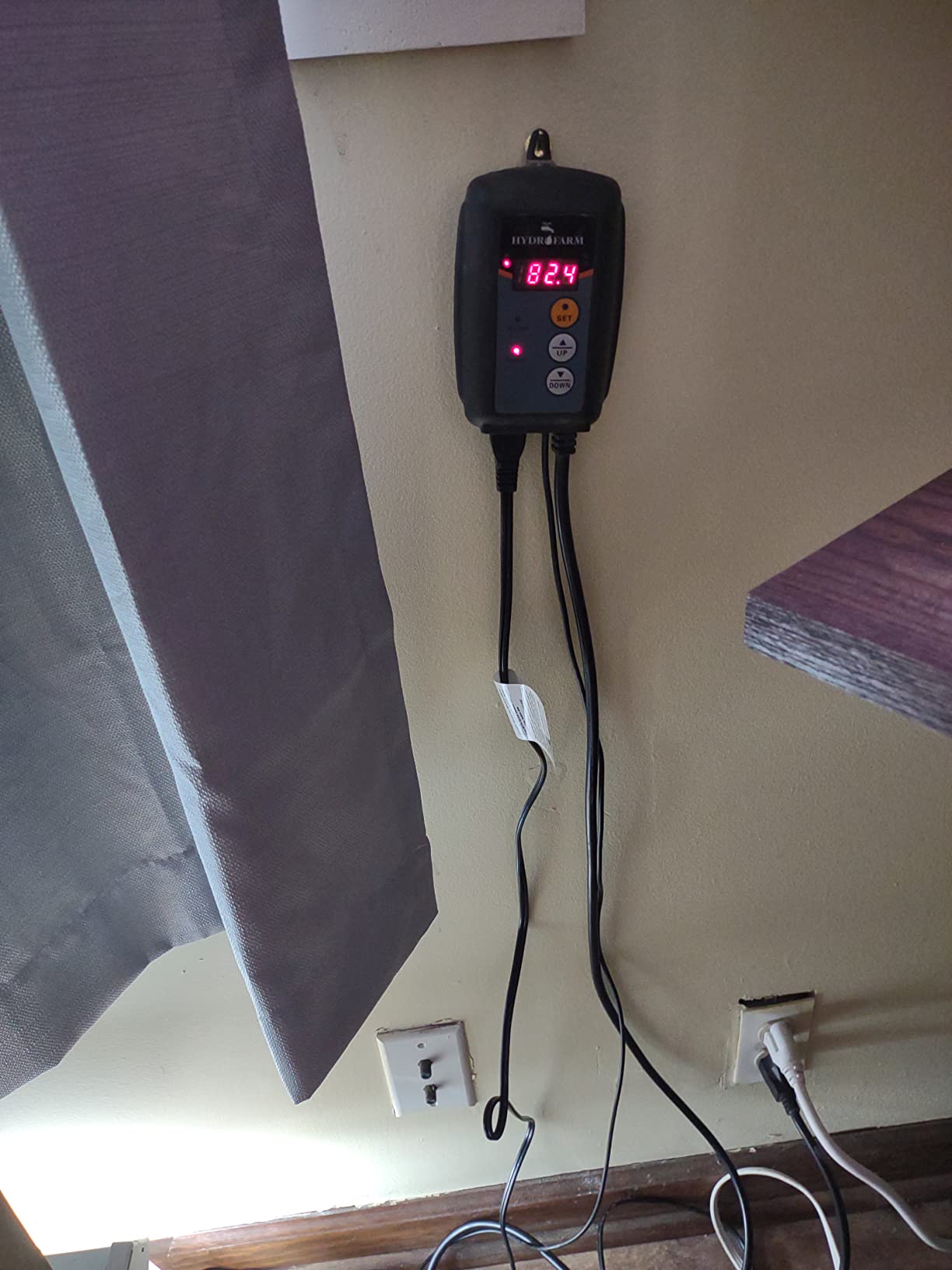
This is the one to buy if you have been frustrated by guessing. The mat and a digital thermostat controller come as a set, and that controller is the single thing that resolves the most common complaint in this entire category: a dial that says one number while the soil sits somewhere else entirely.
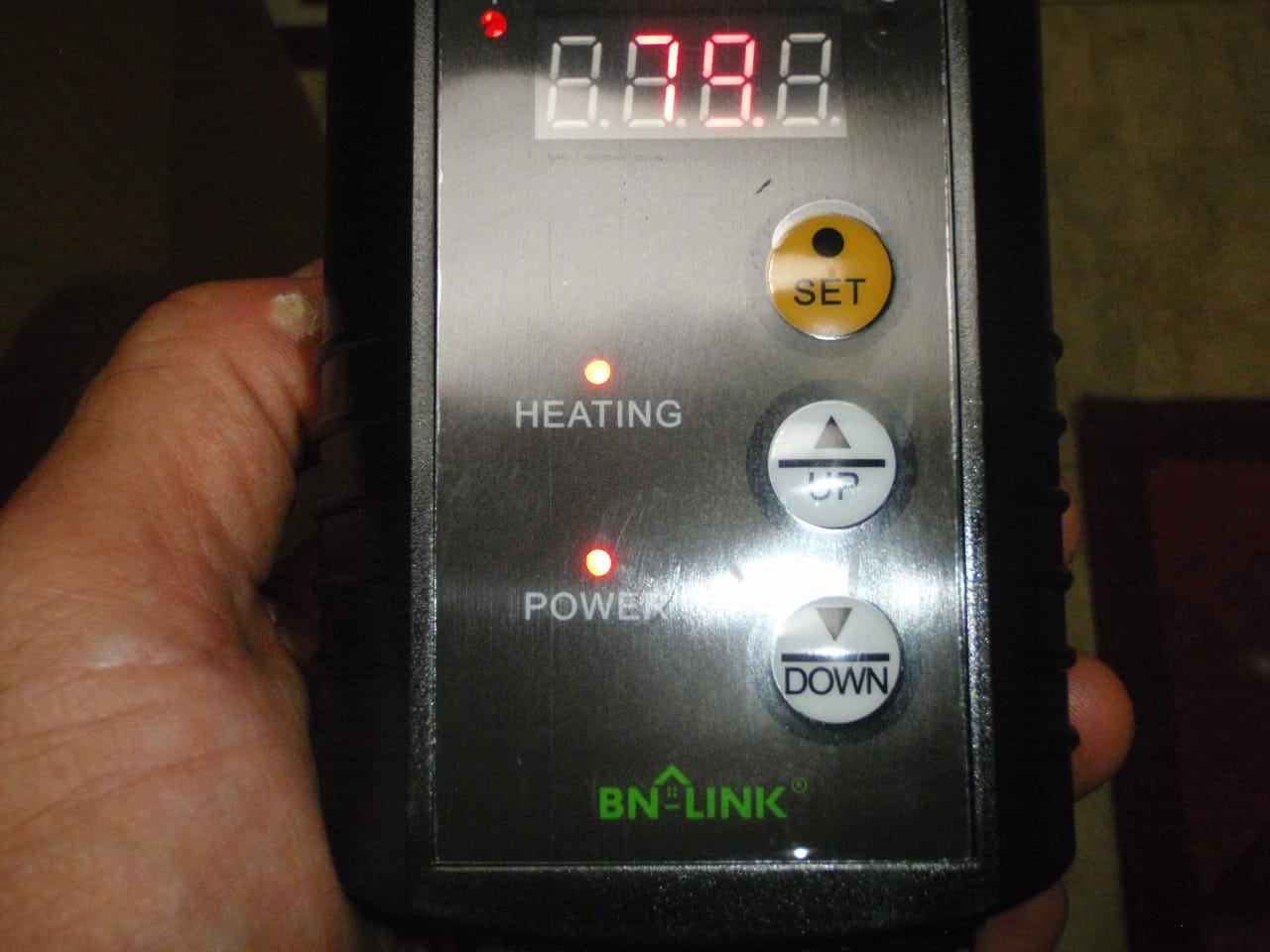
The controller has a three button interface and a bright LED display, switches between Fahrenheit and Celsius, and adjusts across a 40 to 108 F range. It is rated to 120VAC and 1000 watts, so it can run a far more powerful mat than the 20 watt mat bundled here, and the probe cord is 4.92 feet, long enough to reach the middle of a deep tray.
The mat itself is 48 x 20.75 inches with an IP67 waterproof multi-layer PVC surface and double insulation. Reviewers describe the temperature regulation as accurate and the heating as uniform across the whole surface.
What to check before you commit
Work out how many trays you will actually fill. A 48 by 20.75 inch mat holds four to five typical planters with room for smaller containers, so if you are only sowing one tray a season this is a lot of mat, and a 1020-size mat with a small controller would suit you better.
Plan where the controller sits. Owners using it in a greenhouse flag that the controller itself is not water resistant, so it needs to live under the bench or in a dry enclosure while the probe stays in the medium.
Where it falls short
With a 20 watt mat on a 1000 watt controller you are paying for capacity you may not use, and the combination costs more than a bare mat plus a small add-on controller. Some buyers feel the premium is not quite justified for a single-tray setup.
Under a closed dome on a sunny day, this mat can push soil well past the target. In an enclosed greenhouse without ventilation it can overshoot again. A controller helps you correct it, but you still need to look at the actual soil temperature rather than assume.
How to Use a Heat Mat for Seed Starting in 2026
Set the mat on a flat surface first, ideally on top of an insulating layer, then set the tray on the mat. Put the probe in the medium, not against the wall of the tray, because a probe sitting on plastic reads the mat temperature rather than what the roots feel. Set your target, and write down the actual soil temperature you measure.
Warm-season crops want soil in the 75 to 85 F range. Tomatoes, peppers, eggplants and basil all sit in that band, and growers in cooler rooms report the biggest gains from a mat with these seeds. Cool-season crops are a different story: lettuce, spinach and peas germinate happily at room temperature, and heat can push them out of range and reduce quality. Skip the mat for those.
Remove seedlings from the heat the moment the first sprout appears. The mat’s job is done once roots are established, and leaving it under a tray with a dome on encourages leggy seedlings and damping-off. Move the tray a few inches away first rather than shocking it straight into cooler air.
One cold-start warning: a mat that lifts soil 10 to 20 F above ambient cannot rescue a garage at 50 F. If you are starting seeds somewhere genuinely cold, you need a closed, insulated setup with the mat inside it, or you need to accept slower germination and start later.
Heat Mat Buying Guide: Controller, Size, IP Rating and Safety
Size first, because it is the decision you cannot change later. The 10 x 20.75 inch mats fit a standard 1020 tray exactly, 10 x 20 inch mats are slightly short, and 48 x 20 inch mats cover four trays or a full shelf. Buy the mat that matches your tray count, not the one that seems like a better deal per square inch.
Controller type is the second decision. Plug-and-play mats run a fixed output and are fine in a stable, warm room. A dial controller like the AC Infinity SUNCORE S3 gives you three stepped levels without a probe. A digital thermostat with a soil probe is the only option that holds an actual setpoint, and it is what most of the frustration in forum threads comes down to.
Here is the calibration point that almost nobody makes clearly: verify the real soil temperature with an independent thermometer, not the controller reading. Users on permies.com have described setting a thermostat to 90 and finding soil sitting at 73 F days later. The probe and the medium can disagree, and only a second thermometer tells you which one is wrong.
IP rating decides how much water the mat tolerates. IP67 means dust tight and protected against temporary immersion, which is the right choice when a tray can overflow or a dome condenses. IPX4 is splash resistant and adequate indoors, less so in a greenhouse.
Wattage is small money. A 20 watt mat left running continuously for six weeks costs a few dollars of electricity, so the running cost is rarely the deciding factor. Focus instead on certification marks: UL, ETL or MET listed, ideally with a file number you can verify. How we chose this roundup came down to exactly that, plus tray fit, claimed temperature range, waterproof rating, and whether a controller was included.
Heat Mat Safety: Fire Risk and Why Household Heating Pads Are a Bad Idea
Fire risk is the first question people ask about heat mats, and the answer is certification. Every mat in this roundup is listed by UL, ETL or MET to household appliance heating standards, which means the electrical design and the heating element have both been evaluated. A generic mat with no mark on the listing is the one to avoid.
Do not use a human heating pad. They are built to run at body temperature against skin for hours, they run at lower wattage but with a different heat profile, and many have auto shutoff features that switch them off in ways that are unhelpful for a seed tray. The dedicated mats here are waterproof, roll up, and are built for a damp tray on top of them.
Insulate underneath the mat so heat goes up into the medium instead of down into the counter, keep mats flat rather than folded, and check the corners of a large mat for hot spots with a soil thermometer in the first week. Treat any mat that smells, discolours or feels unnaturally hot at the plug as a failure and stop using it.
Frequently Asked Questions
Do I really need a heat mat to germinate seeds?
Only for crops that want warm soil. If your room holds 70 F or above, tomatoes and most herbs will germinate without one. Peppers, eggplants and other warm-season seeds germinate faster and more evenly on a mat that lifts soil into the 75 to 85 F range, and cool-season crops such as lettuce, spinach and peas do not need one at all.
What temperature should a heat mat be for seed germination?
Aim for 75 to 85 F in the growing medium for warm-season crops. That is 24 to 29 C. Measure the medium with an independent thermometer rather than trusting a dial, because a fixed-output mat only reaches temperatures roughly 10 to 20 F above the surrounding room, so a cool room means a cooler mat.
Do I need a thermostat for my seedling heat mat?
You need one if your room temperature swings, if you are starting in a basement or garage, or if you want to hit a precise setpoint. Fixed-output mats are fine in a stable, warm room. A thermostat controller is the most common add-on purchase and the most common fix for complaints about mats running too hot or not reaching temperature.
How long should seedlings stay on a heat mat?
Keep seedlings on heat until the first sprout appears and roots are established, which for most warm-season crops takes three to seven days. Then move the tray a few inches away and remove it entirely within a day or two, since leaving heat under a domed tray encourages leggy seedlings and damping-off.
Why is my seedling heat mat not getting hot?
Check four things in order. First, measure the medium with an independent thermometer, since the controller may read higher than the soil. Second, note the room temperature, because a mat adds only about 10 to 20 F over ambient. Third, check that the mat is flat and fully supported, since a curled edge loses contact. Fourth, confirm the mat is not running through an overloaded power strip.
Can I use a human heating pad for seedlings?
You can, but it is not recommended. Household heating pads are designed for skin contact, often include auto shutoff behaviour that is unhelpful for seed trays, and are not waterproof. A dedicated seedling heat mat is waterproof, sized to a 1020 tray, and rated by UL, ETL or MET for household heating use.
Which Heat Mat Should You Buy?
For most people, the VIVOSUN 10 x 20.75 inch mat is the one to buy: it fits a standard tray, carries UL and MET certification, has an IP67 waterproof surface and has more verified buyer feedback than anything else in this category. Add a digital thermostat and you have removed almost every complaint we found.
Starting two batches at once? The Seedfactor or iPower 2-packs cover more trays for less per mat. Want the same 10 x 20.75 fit with a different build? The BN-LINK single mat holds the same 70 to 85 F band. Filling a whole shelf? The Hydrofarm Jump Start daisy-chains up to five units. Propagating cuttings? The AC Infinity SUNCORE S3 dial lets you turn heat down without cycling the mat on and off. And if you want the controller already in the box with a 40 to 108 F range, the BN-LINK combo is the shortest path to a controlled setup.
Whichever you choose, verify the achieved soil temperature with an independent thermometer in the first week. That single habit separates the growers who get uniform germination from the ones who wonder whether their mat is working.