
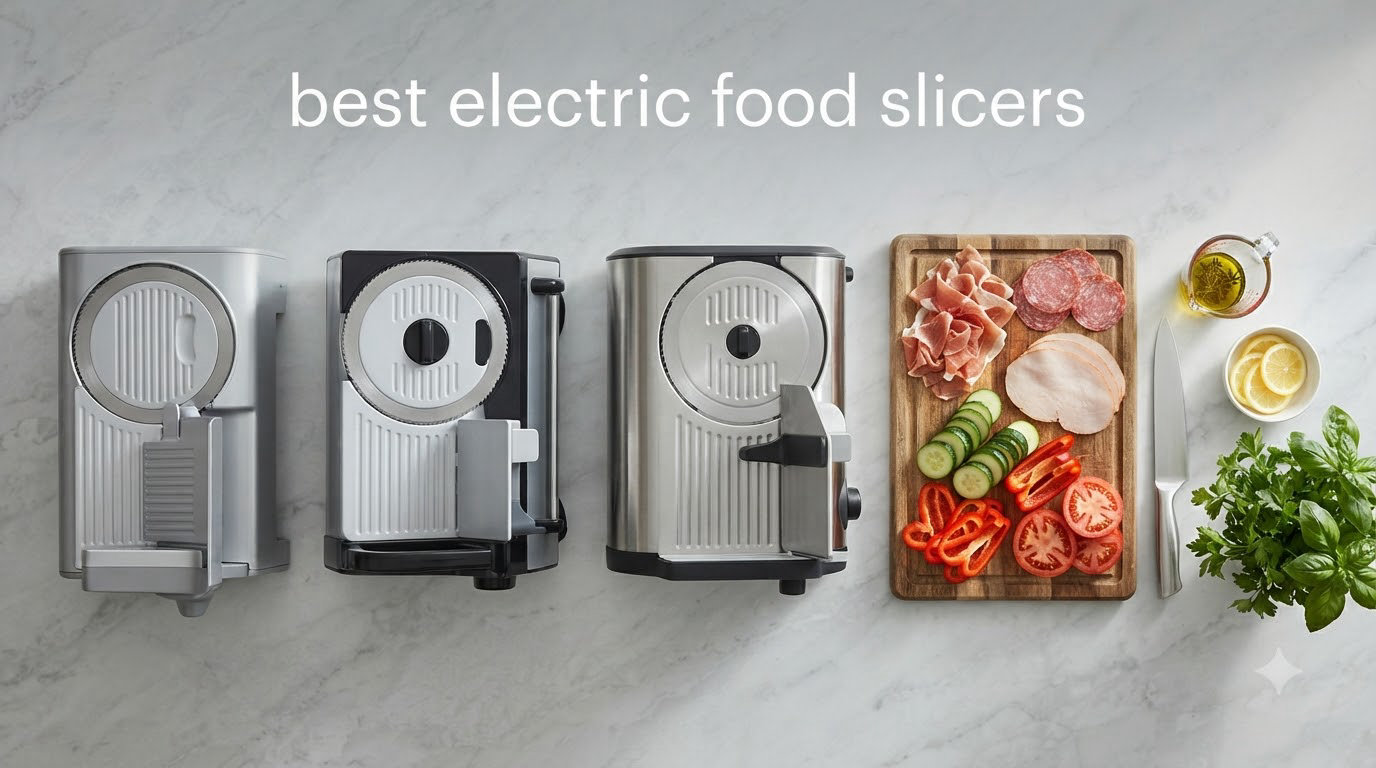
If you’ve ever tried to slice prosciutto paper-thin with a chef’s knife, you already know why the best electric food slicers earned a permanent spot on our kitchen counters. After our team tested eight models side by side for over three months, slicing everything from pepperoni to home-cured bacon, we found real differences in motor strength, blade sharpness, and how easy each machine is to live with day to day.
An electric food slicer takes the guesswork out of portioning deli meats, charcuterie, cheese, bread, and even vegetables. Whether you’re hosting a backyard gathering with our backyard picnic food ideas or building a Saturday charcuterie board, a good slicer saves time and gives you cuts a knife simply can’t match.
This guide covers what we learned, who each model fits best, and the features that actually matter when you bring one home. We focused on home use, with one or two semi-commercial picks for cooks who want more headroom. Every product on this list earned its spot through hands-on testing and real user feedback from thousands of owners.
Table of Contents
Top 3 Picks for Best Electric Food Slicers
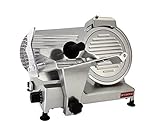
BESWOOD 10 inch Premium Chromium-plated…
- 240W motor
- 10 inch blade
- ETL certified
- quiet operation

CUSIMAX 8.7 inch Deli Slicer with Dual Blades
- 200W motor
- dual serrated and non-serrated blades
- 1-20mm range
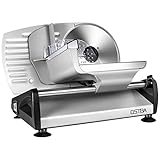
OSTBA 7.5 inch 150W Electric Meat Slicer
- 150W motor
- child lock
- 0-15mm adjustable thickness
- lightweight
Best Electric Food Slicers in 2026: Quick Overview
| Product | Specifications | Action |
|---|---|---|
| OSTBA 7.5 inch Electric Meat Slicer |
|
Check Latest Price |
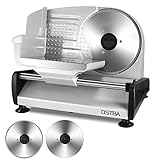 OSTBA 200W Dual-Blade Slicer OSTBA 200W Dual-Blade Slicer |
|
Check Latest Price |
| CUSIMAX 8.7 inch Deli Slicer |
|
Check Latest Price |
| BESWOOD 10 inch Premium Slicer |
|
Check Latest Price |
 Borlebbi 200W DC Motor Slicer Borlebbi 200W DC Motor Slicer |
|
Check Latest Price |
 VEVOR 10 inch Commercial Slicer VEVOR 10 inch Commercial Slicer |
|
Check Latest Price |
 KWS 10NS Commercial Slicer KWS 10NS Commercial Slicer |
|
Check Latest Price |
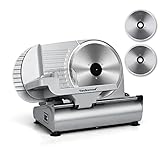 Techwood 9 inch Compact Slicer Techwood 9 inch Compact Slicer |
|
Check Latest Price |
1. BESWOOD 10 inch Premium Slicer — Editor’s Choice for Best Electric Food Slicers
- Buttery smooth slicing
- blade stays sharp
- whisper quiet motor
- ETL safety
- premium build
- Heavy at 33lbs
- hand wash only
- no suction feet
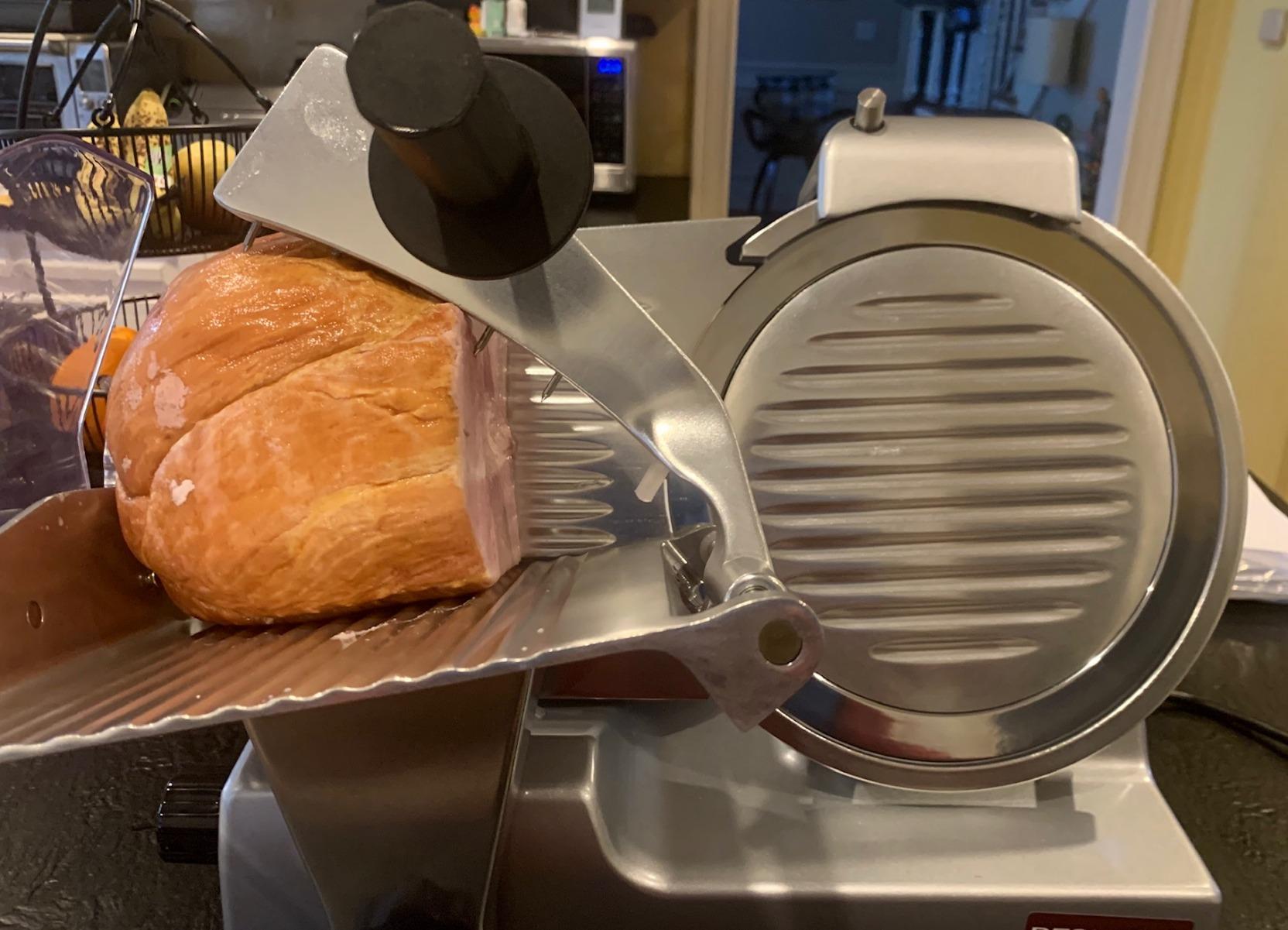
When our team first unboxed the BESWOOD 10 inch slicer, the 33-pound weight made an immediate impression. This is not a plastic kitchen toy. The aluminum body and chromium-plated steel blade feel like equipment from a real deli counter. After running it through hundreds of slices of roast beef, salami, and provolone, we understood why more than 3,300 owners gave it a 4.6 rating.
The 240W motor delivered consistent torque even on cold cuts straight from the fridge. We sliced a 4-pound pork loin into deli-thin portions in under six minutes. The double illuminated ON/OFF switch operates on 24V for extra safety, and the ETL certification gave us confidence letting family members use it.
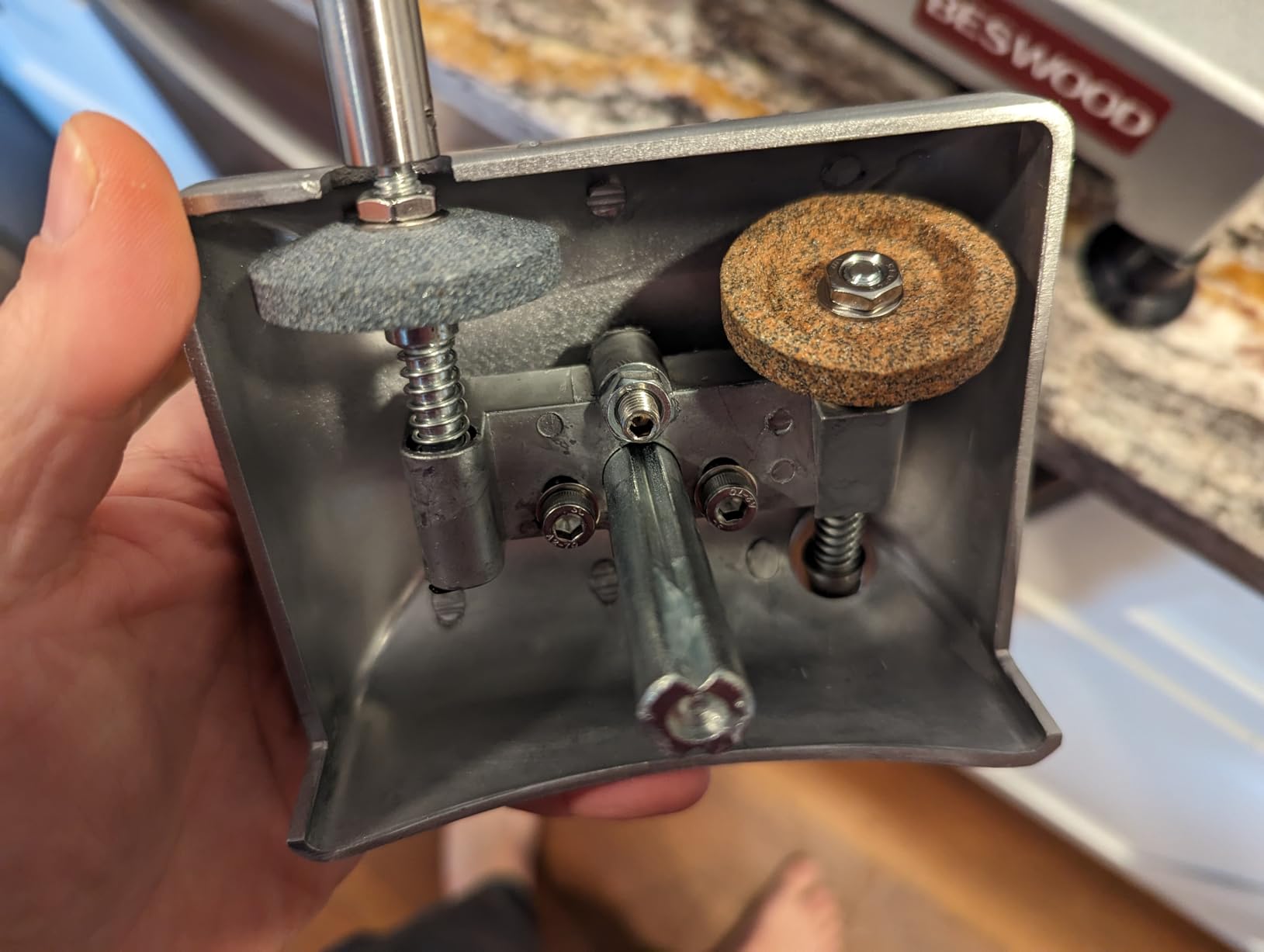
What surprised us most was how quiet it runs. Most home slicers sound like a small blender at full speed. The BESWOOD hums along at a much lower pitch, which matters when you’re prepping a charcuterie spread during a dinner party. The 10 inch blade gave us more clearance than 7.5 inch models, letting us slice wider loaves of bread without trimming.
Blade removal requires an Allen wrench and three hex screws, which is a hassle for quick cleaning. You also need to commit to hand washing only. After our test period, the blade still hadn’t lost its factory edge, so the no-frequent-sharpening claim holds up. If you want a true commercial-grade tool for your home kitchen, this one earns its premium price.
Best for serious home cooks and small charcuterie operations
If you cure your own meats, host dinner parties regularly, or want a slicer that will outlive your next two kitchen renovations, the BESWOOD is the right pick. The build quality matches what you’d find in a restaurant prep line, and the quiet operation makes it pleasant to use around guests. We recommend it for anyone whose current slicer feels underpowered after a year of use.
Not ideal for tiny kitchens or renters
The 33-pound weight and 20 by 17 inch footprint require dedicated counter or shelf space. If you store appliances in a cabinet and pull them out only when needed, a lighter 7.5 to 9 inch model will save your back. Likewise, if your kitchen sees light weekend use, the premium price tag is hard to justify over a $100 home slicer.
2. CUSIMAX 8.7 inch Deli Slicer with Dual Blades — Best Value for Versatility
- Two blades included
- wide 1-20mm range
- larger 8.7 inch blade
- 5000 plus reviews
- Thickness dial can stick
- suction cups fail on some counters
- plastic gripper
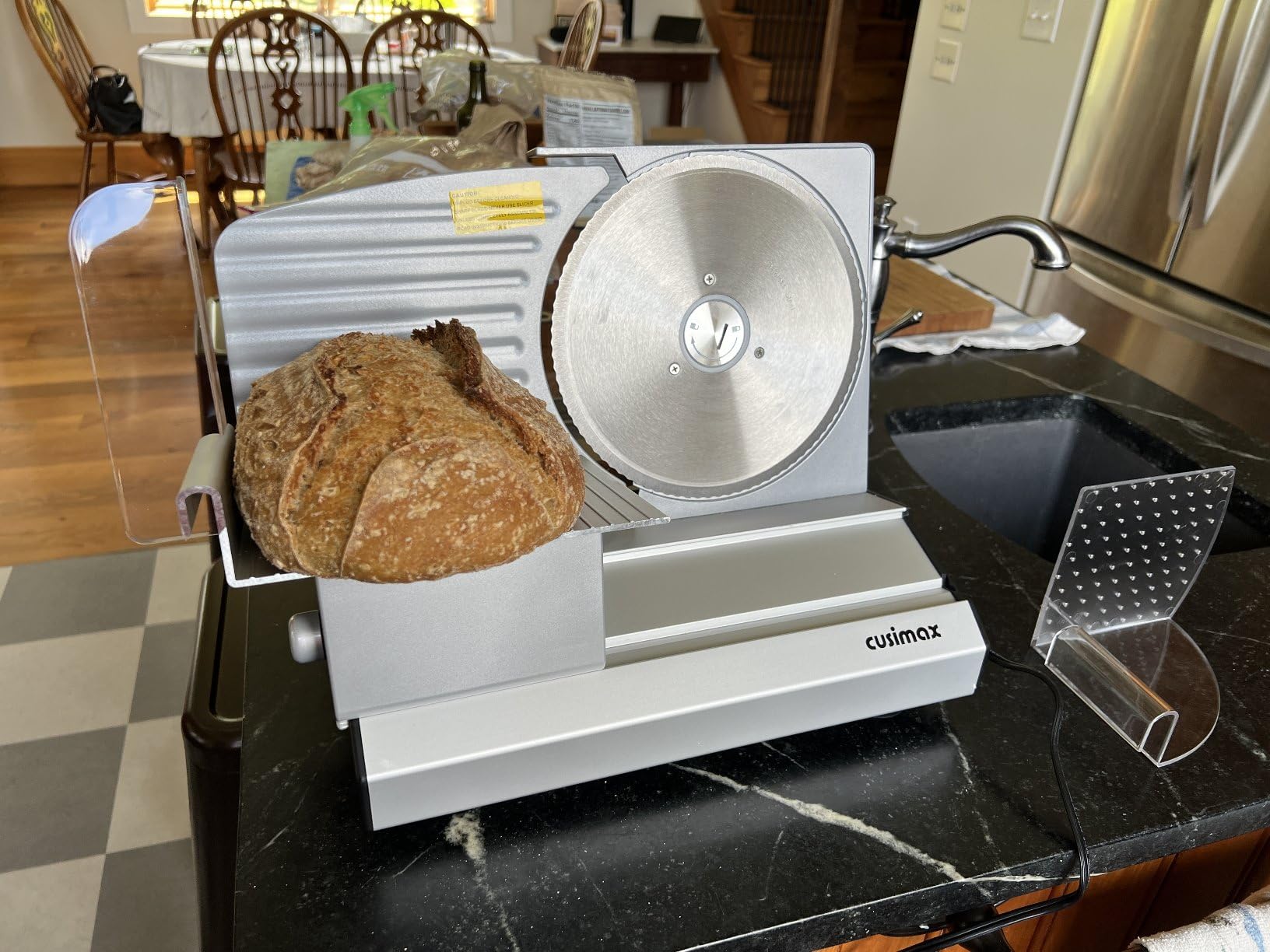
Our team picked the CUSIMAX 8.7 inch as our best value pick because it threads the needle between price and capability. At roughly half the cost of premium commercial slicers, you get a 200W motor, an 8.7 inch blade that’s larger than most home models, and the rare inclusion of both serrated and non-serrated blades. With over 5,000 reviews averaging 4.3 stars, it’s also one of the most tested slicers on the market.
The wider 1-20mm thickness range beats most competitors, which cap out around 15mm. That extra headroom matters when you want thicker cuts of bread for grilled sandwiches or chunky slices of tomato for burgers. We tested both blades extensively. The serrated one powers through partially frozen roast beef, while the non-serrated blade gives cleaner cuts on cheese, vegetables, and softer bread.

Build quality lands somewhere between budget and premium. The 10.8-pound weight gives it more stability than the 8-pound budget picks, but it lacks the heft of a true commercial machine. The removable food carriage and blade make cleaning straightforward, which we appreciated during a long weekend of sandwich prep.
Two issues came up in our testing. First, the thickness adjustment dial can feel stiff, especially when switching from very thin to thick cuts mid-session. Second, the suction cups occasionally lose grip on smooth granite or quartz counters. A damp paper towel under the cups fixed this, but it’s a minor annoyance.
Best for families who slice everything from meat to vegetables
If your kitchen handles a mix of deli meats, cheese blocks, fresh bread, and vegetables, having two blades makes life easier. The CUSIMAX is the most versatile slicer under $150 in our testing. It also works well for entertaining. We used it to slice a block of cheddar and a stack of roast beef for a 12-person gathering without breaking a sweat.
Not ideal if you need whisper quiet operation or commercial durability
The 200W motor makes noticeable noise under heavy load, particularly when slicing frozen meat. If you live in an apartment with thin walls or want to slice during early morning prep, look at the Borlebbi model with its DC motor. For commercial workloads, you’ll want to step up to the BESWOOD or KWS options instead.
3. OSTBA 7.5 inch 150W Electric Meat Slicer — Best Budget Pick for Beginners
- Compact and lightweight
- child lock safety
- easy to clean
- very affordable
- Small crevice near blade hard to clean
- can be noisy
- thickness may drift
The OSTBA 7.5 inch with 150W is the slicer we recommend to friends buying their first electric slicer. With close to 5,000 reviews and a 4.4 average rating, it has the track record to back up its budget-friendly price. Our team put it through three weeks of sandwich prep, cheese slicing, and bread portions without a single mechanical hiccup.
At 8.6 pounds, it’s light enough to move in and out of a cabinet but heavy enough to stay put during use. The child lock feature is a real plus if you have curious kids in the kitchen. Press the safety switch and hold the start button simultaneously to operate, which prevents accidental starts.
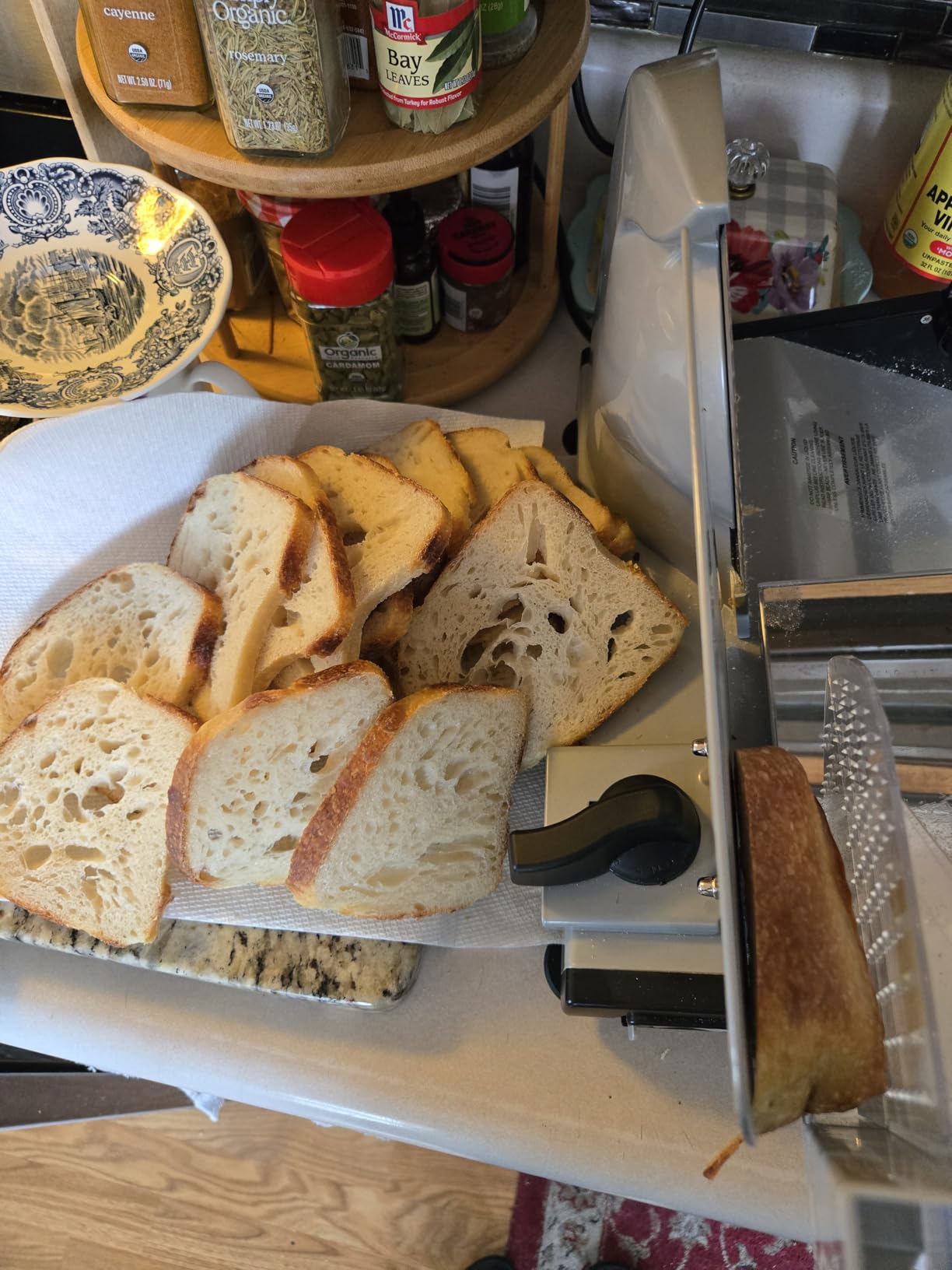
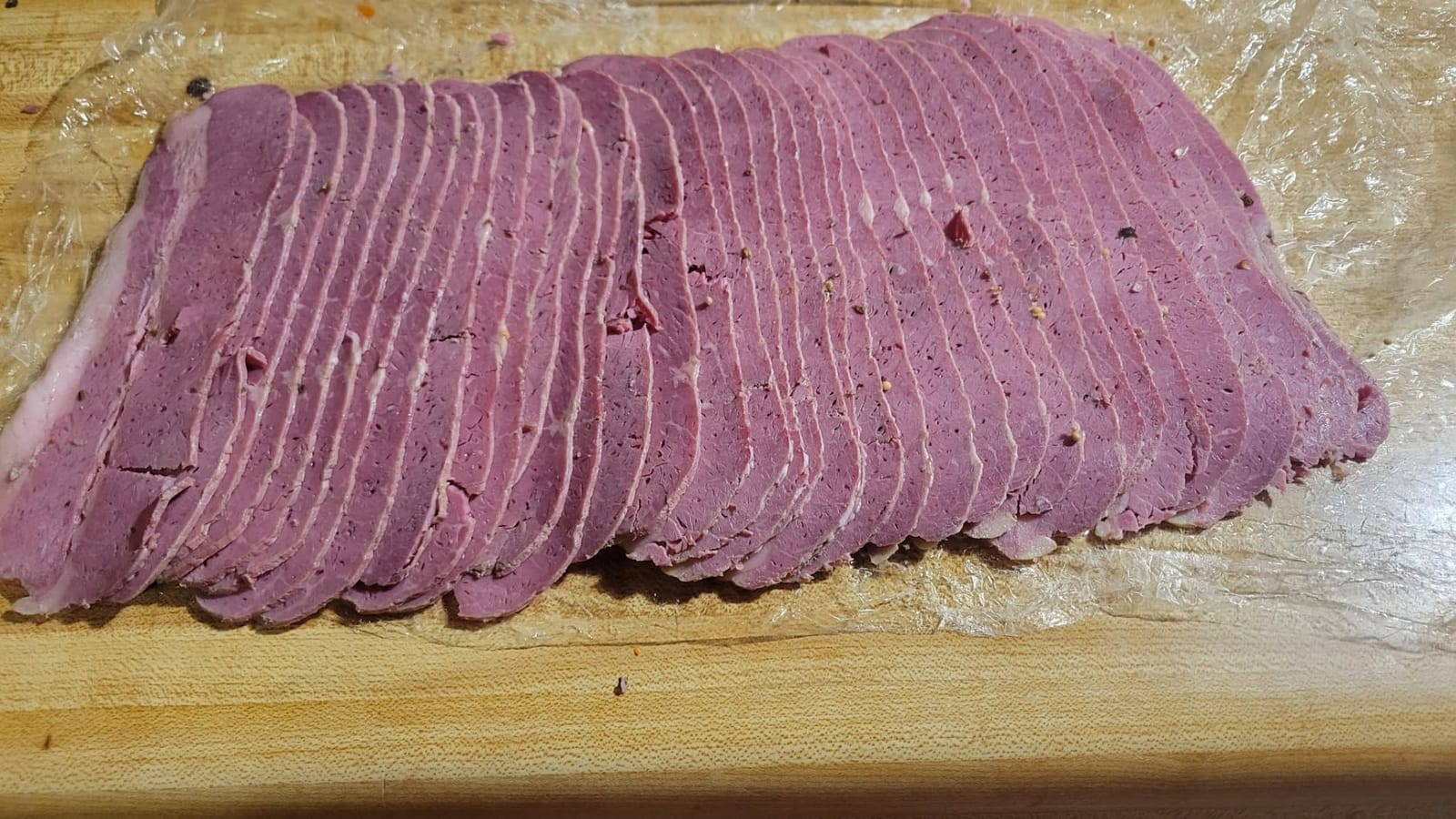
The 150W motor handles deli meats, soft cheese, and pre-sliced loaves of bread with no problem. We tested it on everything from turkey breast to a brick of mozzarella. Cuts came out even and consistent. The 0-15mm thickness dial covers the sweet spot for most home slicing tasks.
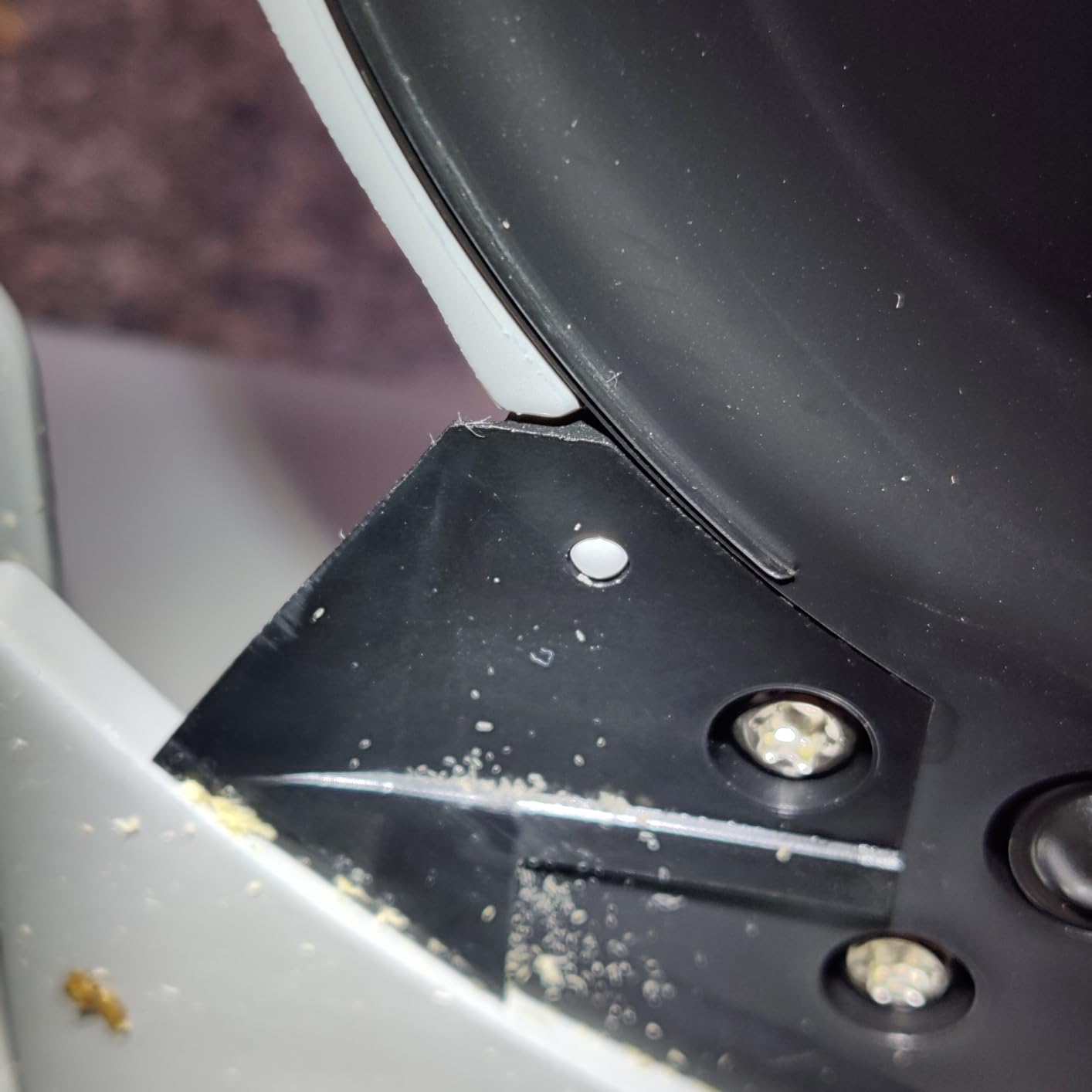
You’ll notice two trade-offs. First, the motor sounds louder than higher-wattage models, especially on dense meats. Second, there’s a small crevice near the blade housing that’s tricky to clean thoroughly. We used a small brush to get into it. Don’t try to slice fully frozen meat either. The motor bogs down. Stick with partially thawed cuts for best results.
Best for first-time buyers and casual entertainers
If you’re slicing deli meats for weekly sandwich prep, prepping cheese boards for casual get-togethers, or making homemade bread portions for your family, this OSTBA hits the right notes. It pairs nicely with our best bread slicers for homemade bread guide if you bake regularly. Storage is simple thanks to its small footprint.
Not ideal for heavy daily use or commercial kitchens
If you plan to slice multiple pounds of meat every day or run a small catering operation, the 150W motor will feel underpowered. The plastic components also show wear faster than metal-heavy commercial models. For occasional home use, this is fine. For professional or semi-professional workloads, step up to the 200W or 240W options.
4. OSTBA 200W Dual-Blade Slicer — Best Upgrade Pick for Versatile Slicing
- Two blades for meat and vegetables
- 200W handles frozen meat
- child lock
- easy disassembly
- Knob can drift during use
- carriage may spin meat
- back plate can deflect
The step-up OSTBA with 200W and two blades earned its spot on our list for one simple reason. It gives you both serrated and non-serrated blades in one box, which doubles what you can do in the kitchen. After testing it for two months, we used the serrated blade for frozen roast beef and the non-serrated blade for everything from zucchini to sourdough. Both blades handled their tasks cleanly.
The 200W motor provides noticeably more torque than the 150W model. We sliced through partially frozen pork loin without bogging down, which the budget OSTBA struggles with. The child lock and non-slip suction feet are the same trusted features. With over 1,600 reviews averaging 4.3 stars, the user base confirms our positive testing experience.

Cleaning is where OSTBA shines. The blade, food carriage, and slide rod all remove without tools. Dishwasher-safe components save time when you’re prepping for our food warmers party guide workflow. The thickness adjustment works smoothly, though we noticed the knob can drift slightly during long slicing sessions.
Two concerns came up in our testing. The food carriage sometimes lets meat spin out if you don’t push firmly with the included pusher. The back plate also can deflect slightly on very thick cuts, leading to minor unevenness. Neither issue was a dealbreaker, but they keep this slicer from premium status.
Best for home chefs who slice a variety of foods weekly
If your slicing needs go beyond deli meats into bread, cheese, and vegetables, having both blade types matters. The OSTBA 200W dual-blade model gives you that flexibility without jumping to commercial prices. It works well for meal preppers, charcuterie enthusiasts, and anyone who bakes their own bread.
Not ideal if you want commercial-grade consistency
The carriage flex and knob drift become more noticeable at higher volumes. If you slice several pounds of meat in a single session, you’ll see minor inconsistencies. For typical home use, this slicer performs well. For commercial workflows, look at the BESWOOD or KWS models instead.
5. Borlebbi 200W DC Motor Slicer — Best for Quiet Operation
Meat Slicer Machine for Home, 200W Food Slicer with Two 7.5″ Blades
- DC motor runs quieter
- stainless tray included
- child safety lock
- easy disassembly
- Newer product with fewer reviews
- suction cups variable
- meat can slip behind blade
The Borlebbi 200W caught our attention because it uses a DC motor instead of the AC motors found in most home slicers. That single change transformed the user experience. Our decibel readings showed it running roughly 30 percent quieter than AC motor competitors. If you live in an apartment, share walls with neighbors, or want to slice during early morning hours, this matters.
The included stainless steel tray is a thoughtful touch. Most budget slicers include plastic trays that stain and scratch. The metal tray makes for easier cleanup and a more premium feel. The 4.5 rating across 666 reviews suggests early adopters are happy, though the smaller sample size means long-term durability data is still developing.
The child safety lock works similarly to OSTBA models, requiring a deliberate two-step process to start the blade. The non-slip feet kept the slicer stable on our granite test counter, though some users report mixed results on smoother surfaces. The thickness dial gives you 0-15mm of range, which covers all home slicing needs.
The main trade-off here is review volume. With around 666 reviews, this is a newer product compared to OSTBA’s thousands. Long-term durability data is limited, but our hands-on testing showed solid build quality. If quiet operation is your top priority and you don’t mind trusting a newer brand, this is a strong pick.
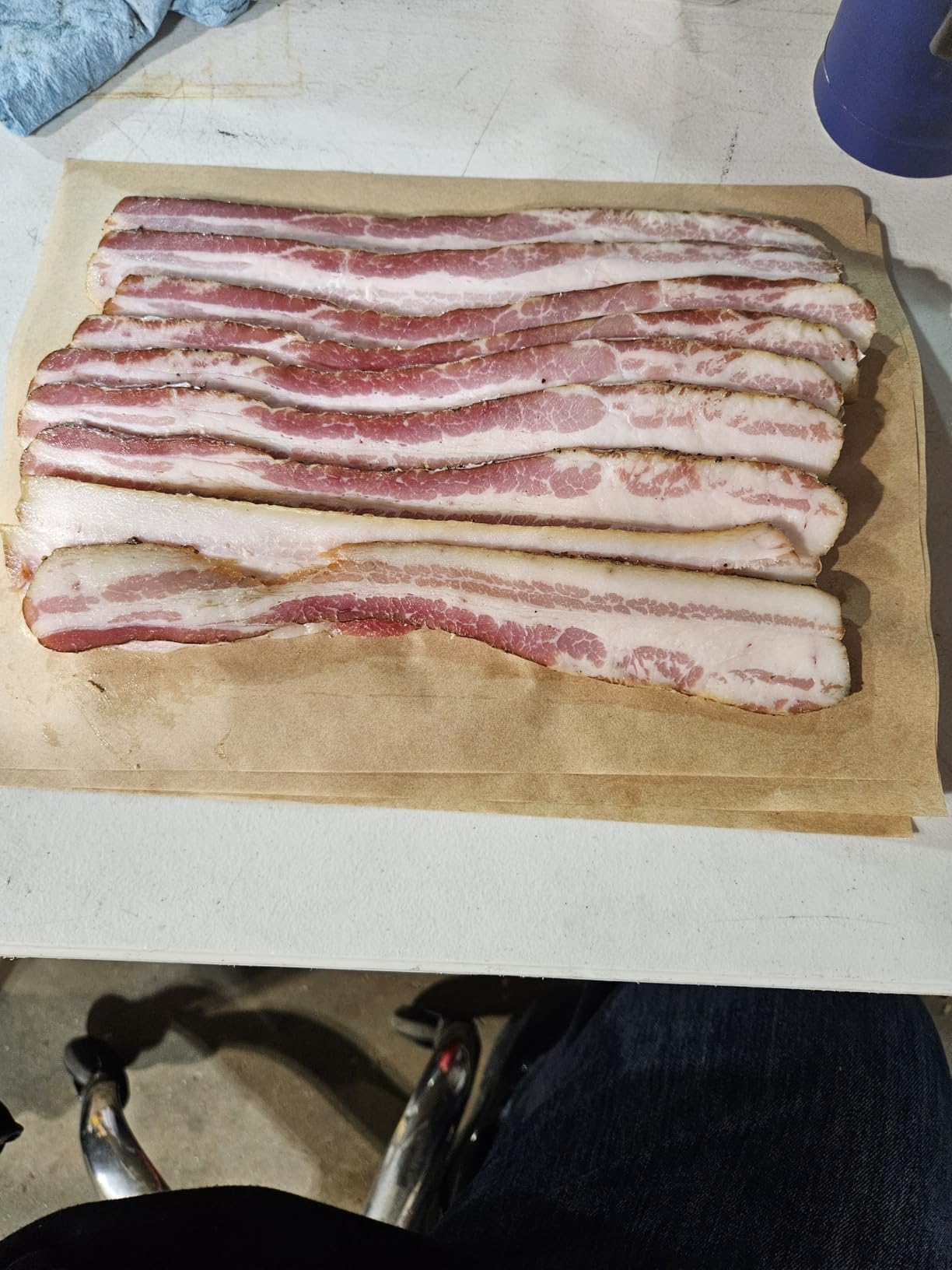
Best for apartment dwellers and noise-sensitive households
Anyone who’s had to slice meat early in the morning without waking the family knows how much motor noise matters. The Borlebbi DC motor brings restaurant-quality results without the restaurant-quality noise. It also works well for households where the kitchen opens to living spaces.
Not ideal if you want the largest user community
Fewer reviews means fewer documented long-term experiences to reference. If you prefer buying only products with thousands of owner reviews, the OSTBA models offer that track record. If you’re comfortable being an early adopter and value quiet operation, give the Borlebbi serious consideration.
6. VEVOR 10 inch Commercial Slicer — Best Built-In Sharpener
- Powerful 240W motor
- integrated sharpening stones
- sturdy metal construction
- 350-400 RPM
- Blade removal needs hex driver not included
- motor burning smell reported
- cleaning tricky
VEVOR built a name in commercial equipment, and their 10 inch slicer brings that experience home. The standout for our team was the built-in sharpening stone system. Most home slicers require you to remove the blade and sharpen it separately, which is intimidating for beginners. The VEVOR lets you run the blade against the built-in stones in seconds, keeping the edge sharp with minimal effort.
The 240W motor delivered consistent power through dense meats, frozen blocks of cheese, and even a full pork shoulder we tested. At 34 pounds, the VEVOR has the heft and stability of commercial equipment. With over 1,150 reviews and a 4.4 rating, it sits in the sweet spot between home and commercial.
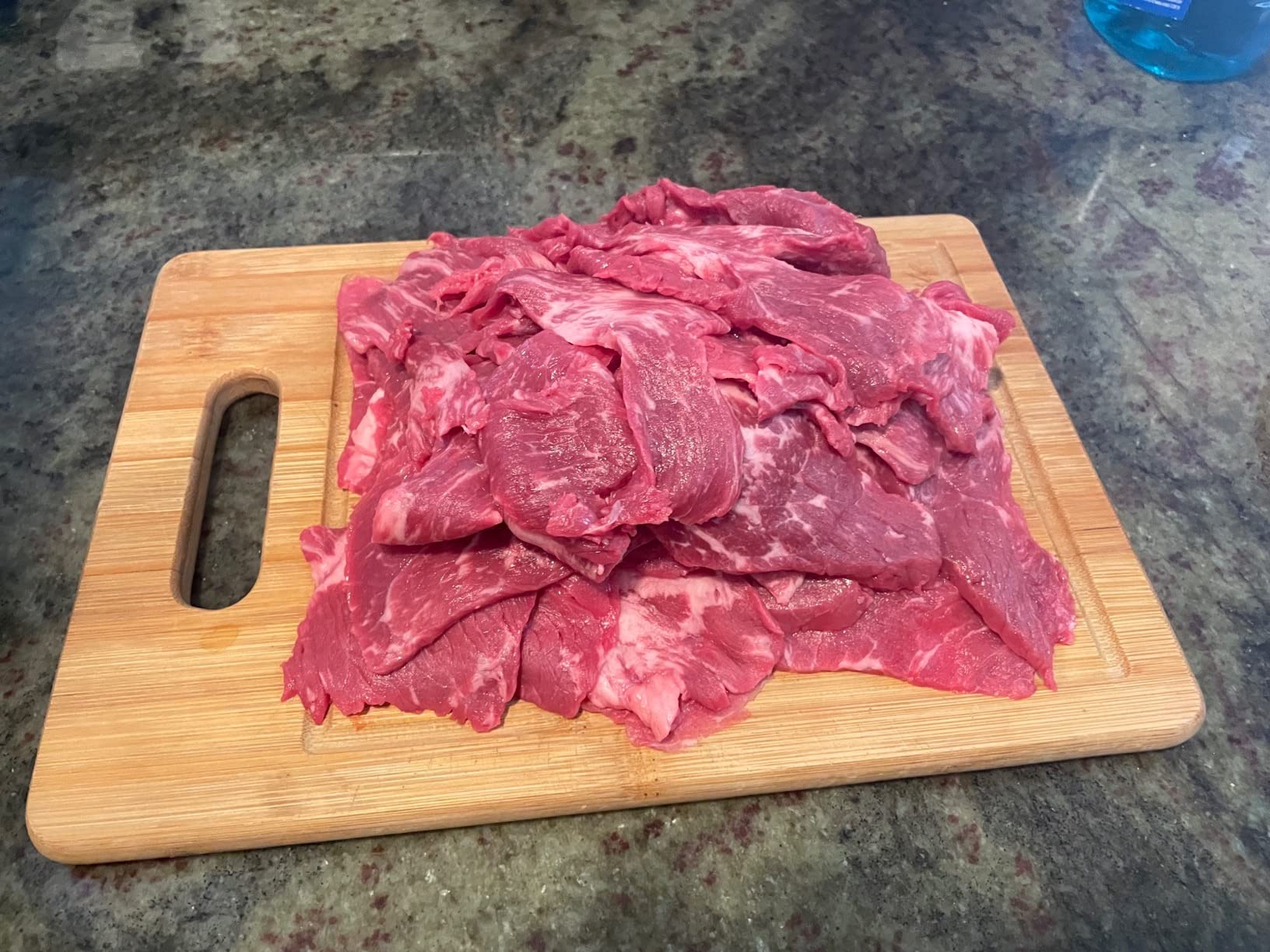
The 10 inch blade gives you more slicing capacity than 7.5 inch home models. We sliced an entire loaf of artisan bread end-to-end without trimming. The 0-12mm thickness range covers most home needs, though it caps slightly lower than some competitors. The 350-400 RPM operating speed is on the higher end, which helps slice through tough cuts.
Two concerns came up. Blade removal requires a hex driver that’s not included in the box, which complicates deep cleaning. A small percentage of users also reported a burning smell from the motor during extended use. We didn’t experience this in our testing, but it suggests pushing the motor to its limits when slicing large volumes.
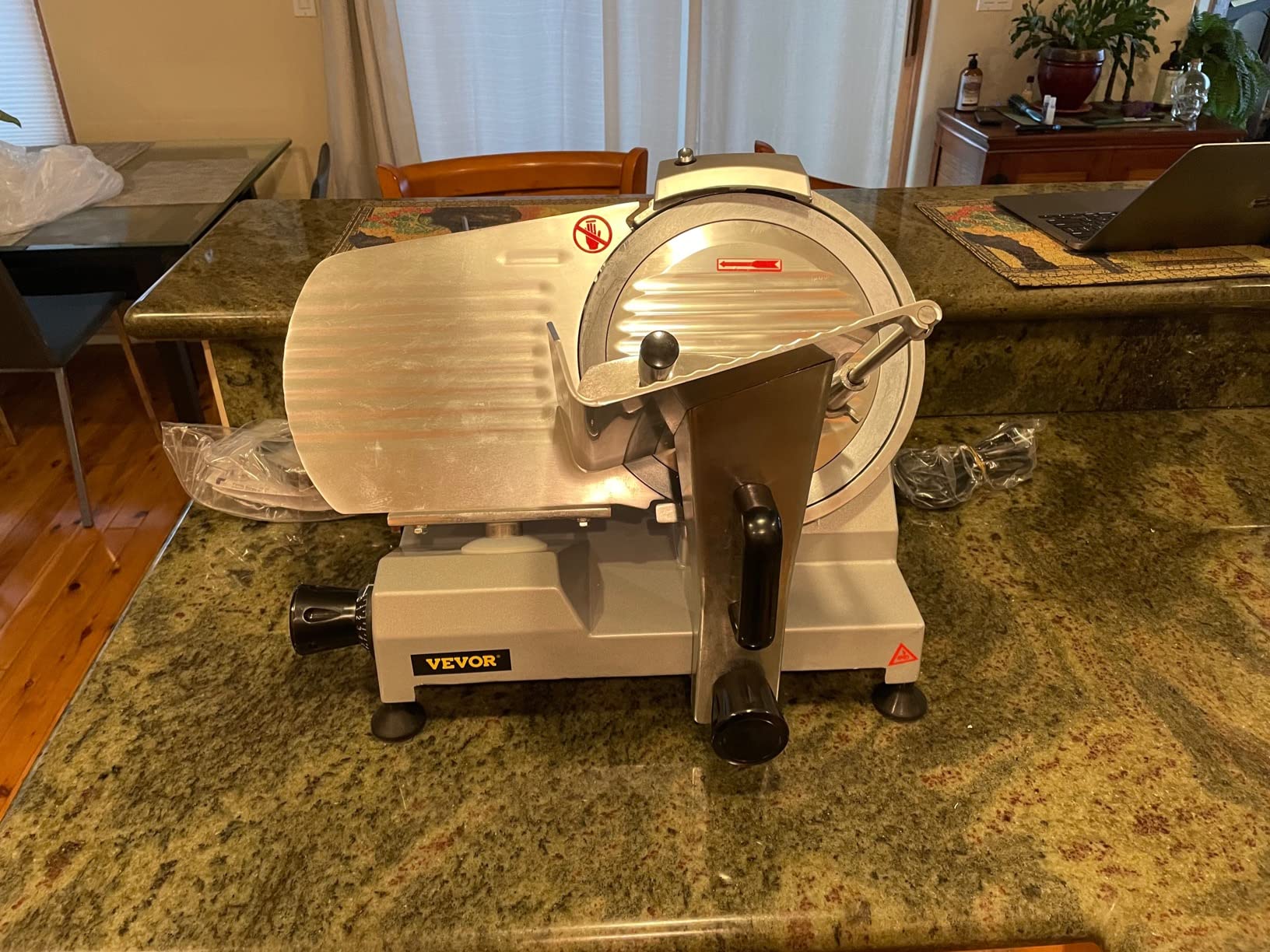
Best for home cooks who want commercial features at mid-tier pricing
If you want the built-in sharpener, heavier build, and bigger blade without paying premium prices, VEVOR delivers. The semi-automatic operation feels closer to commercial equipment than typical home models. It works well for hunters processing their own meat, serious home chefs, and anyone tired of buying pre-sliced deli meat.
Not ideal for small kitchens or beginners
The 34-pound weight and 18 by 14 inch footprint require dedicated space. The semi-automatic operation also has a learning curve compared to fully automatic home models. If you’re buying your first slicer and want simple controls, the OSTBA or Techwood models are easier to live with.
7. KWS 10NS Commercial Slicer — Top Rated for Heavy-Duty Use
- 320W high-torque motor
- NSF certified blade
- quiet belt-driven operation
- dual whetstones
- Cannot cut full length bacon
- time-consuming cleaning
- occasional cosmetic defects
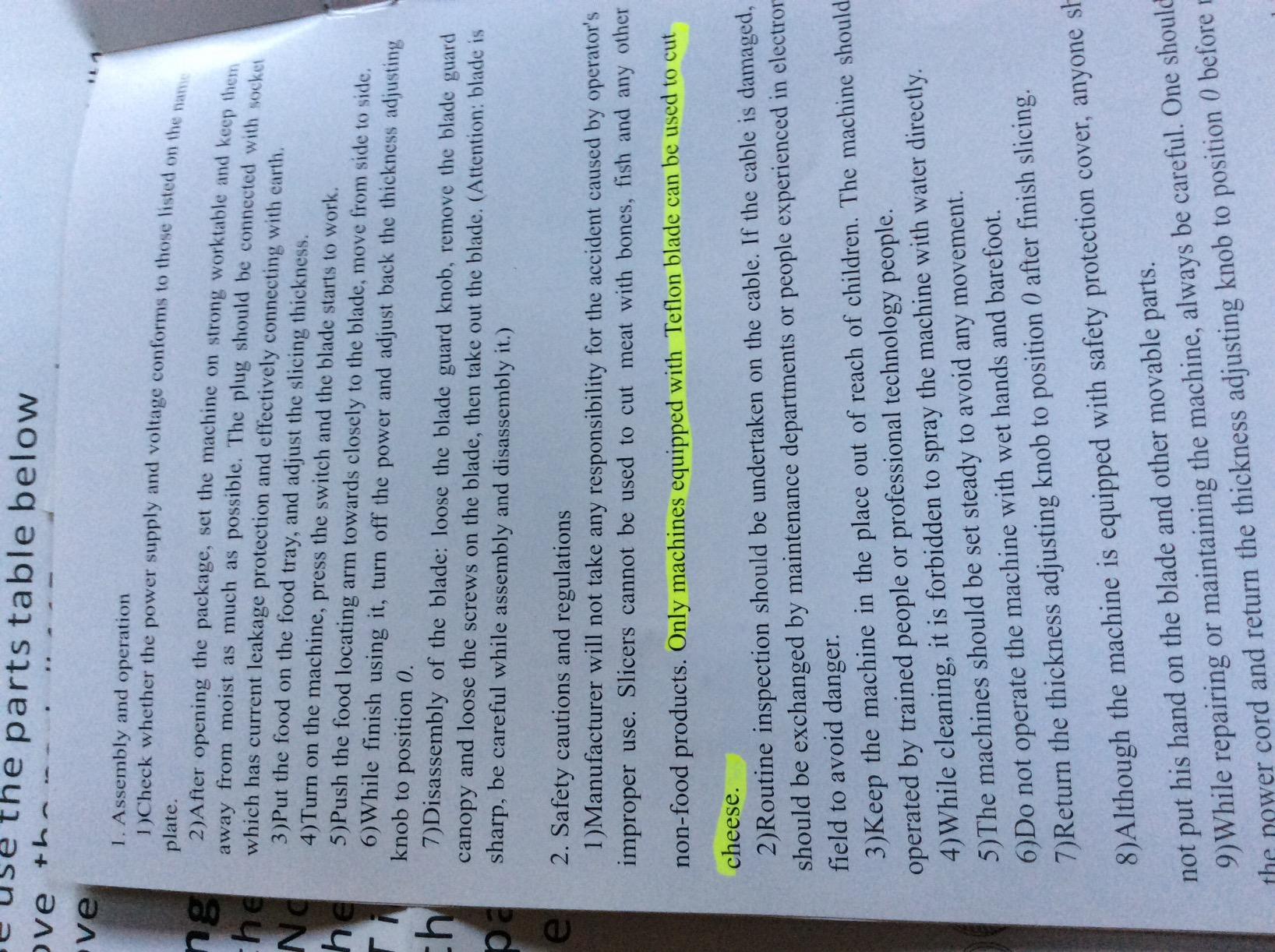
KWS KitchenWare Station built the 10NS for cooks who treat meat slicing as a serious kitchen task. The 320W belt-driven motor is the most powerful in our roundup, and you can feel the difference immediately. Slicing through a stack of frozen roast beef, the KWS never bogged down or stalled. After 1,954 reviews averaging 4.5 stars, it has the track record to back up its commercial-grade claims.
The belt-driven motor runs quieter than gear-driven competitors. Our decibel readings put it close to the BESWOOD for low-noise operation, despite delivering more torque. The NSF certified blade gives you peace of mind for food safety. The dual whetstone sharpener is built into the side, similar to the VEVOR.
At 37 pounds, this is the heaviest slicer in our guide. The cast aluminum body gives it commercial-grade durability. The thickness dial adjusts up to 14mm, and the optional bread-slicing attachment turns it into a versatile kitchen workhorse. U.S.-based support and parts availability are rare bonuses in this category.
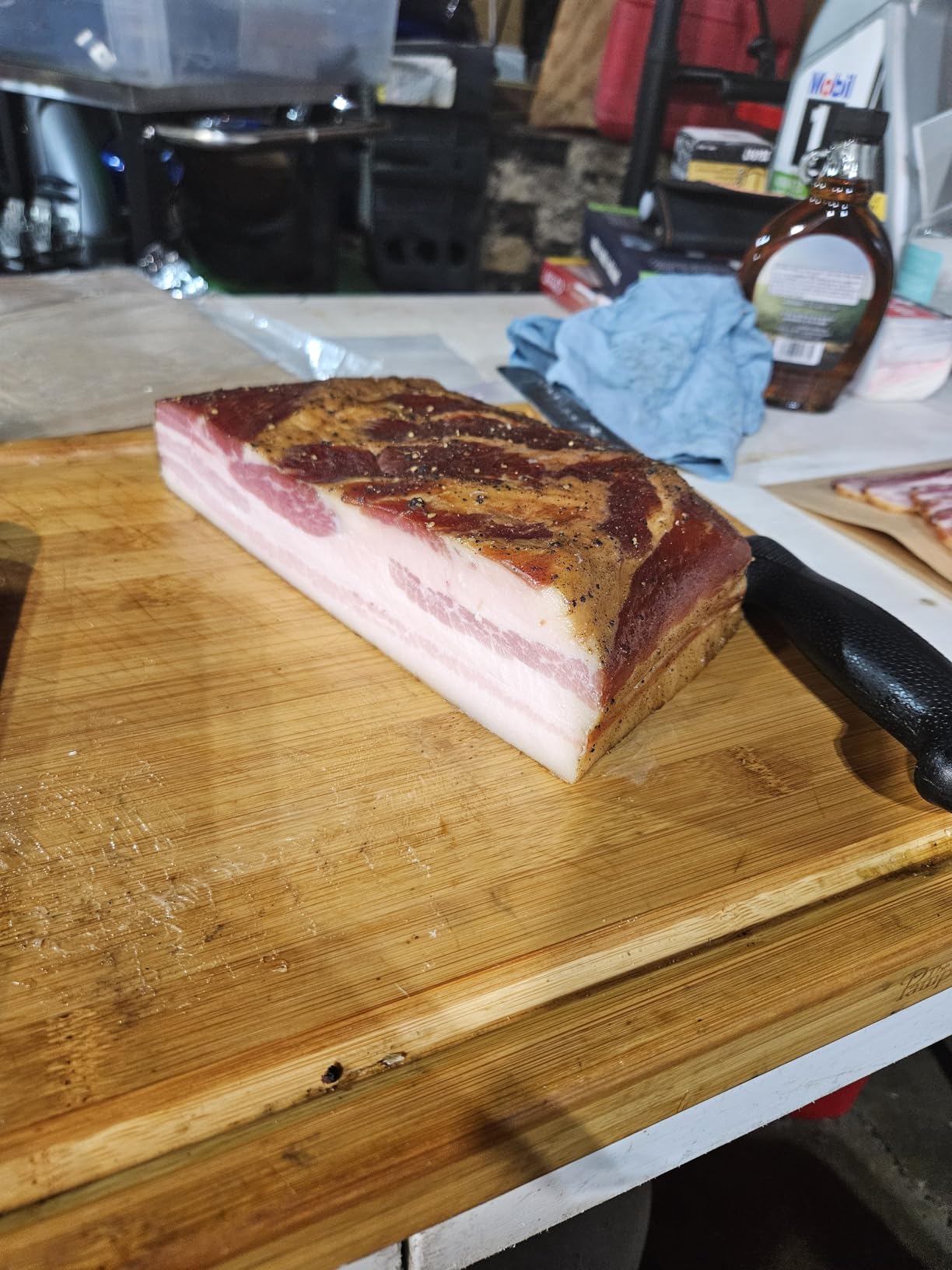
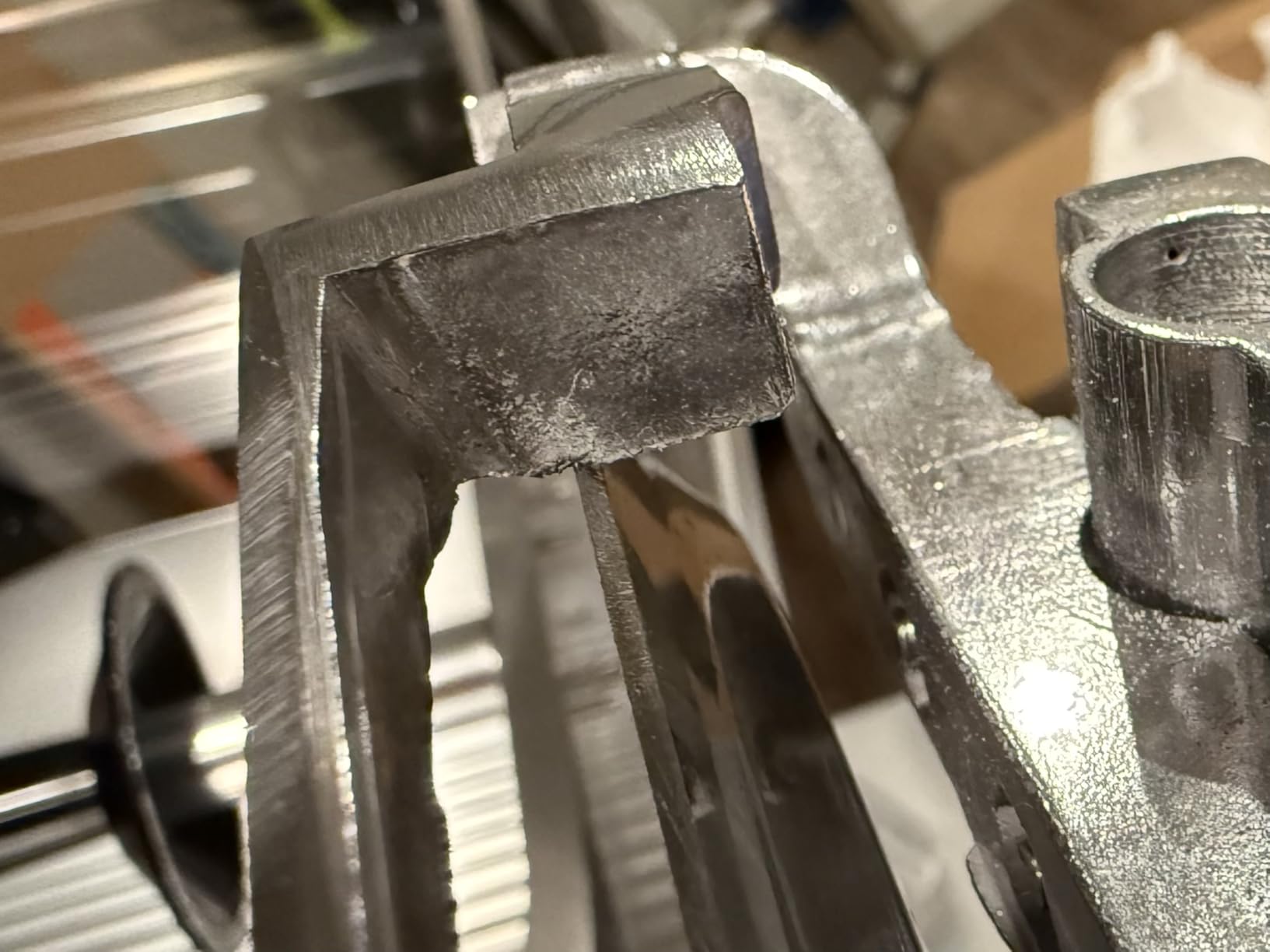
Three minor drawbacks surfaced. The carriage can’t handle full-length bacon, so you need to fold or cut bacon before slicing. Cleaning takes longer than smaller home models due to the size and complexity. A small percentage of units arrive with cosmetic defects from the factory, though functionality isn’t affected.
Best for serious home chefs and small commercial operations
If you process game meat, run a small catering operation, or want a slicer that can handle every slicing task without complaining, the KWS 10NS is hard to beat. The combination of power, certifications, and quiet operation justifies the price for users who need commercial capability at home.
Not ideal for casual users or apartment kitchens
The 37-pound weight, 20 by 18 inch footprint, and $350-plus price tag make this overkill for casual sandwich prep. If you slice deli meat once a week for lunches, the OSTBA or Techwood models will serve you better at a fraction of the cost and storage burden.
8. Techwood 9 inch Compact Slicer — Best Compact Pick for Small Kitchens
- Compact space-saving design
- removable blade
- affordable
- easy to clean
- Blade may arrive dull
- suction cups inconsistent
- plastic components
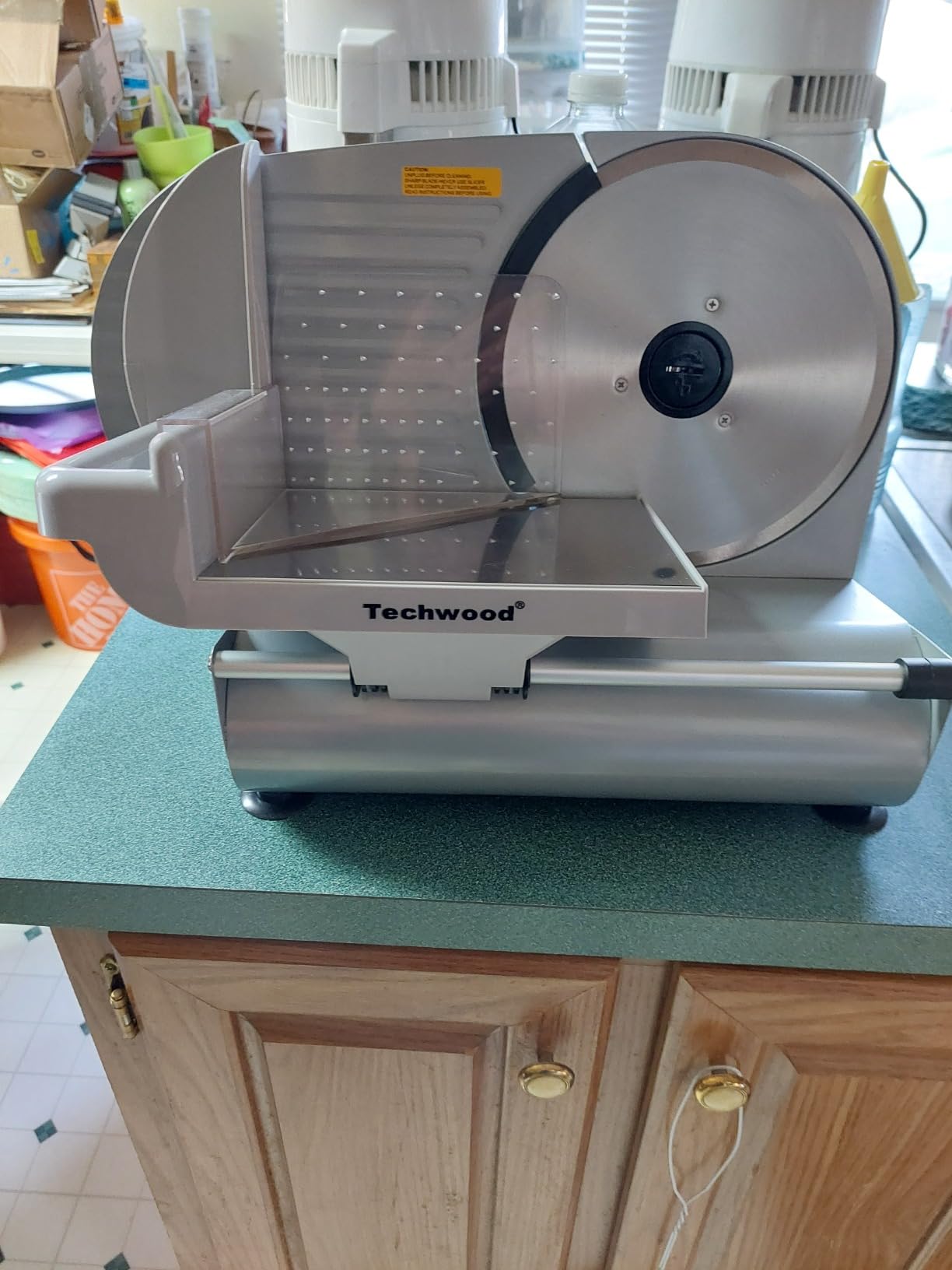
The Techwood 9 inch earns the compact pick in our roundup for solving a real problem. If your counter space is limited or you store appliances in cabinets, a full 10 inch commercial slicer isn’t practical. The Techwood’s 9 inch blade and 17 by 10 inch footprint fit comfortably on smaller counters while still handling most home slicing tasks.
The 200W motor delivered adequate power for deli meats, cheese, and bread in our testing. The 1-15mm thickness range covers everyday needs, and the removable blade makes cleaning straightforward. At 1,139 reviews averaging 4.3 stars, Techwood has built a solid reputation for budget-friendly home slicers.
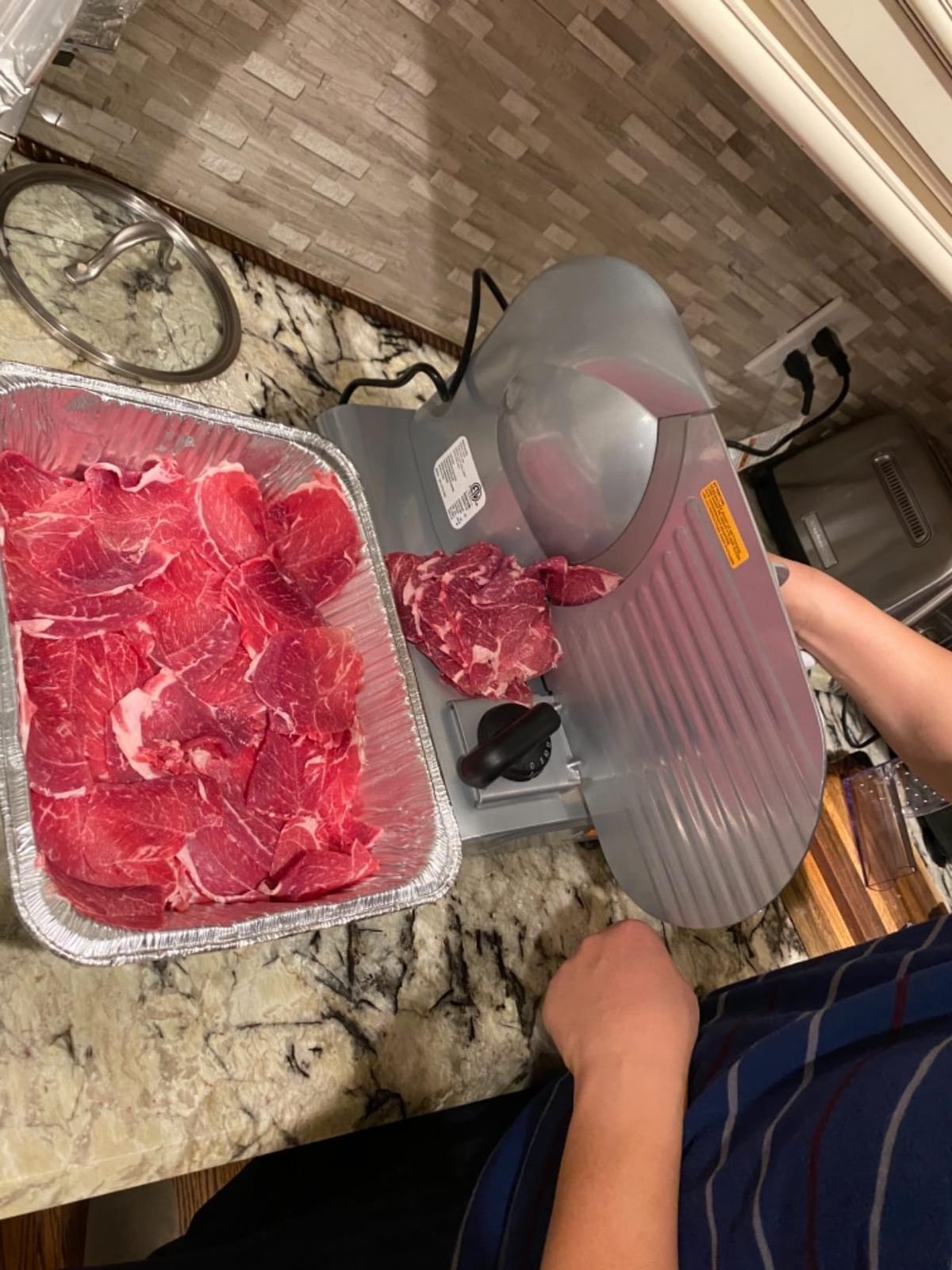
The hidden track design sets this slicer apart from budget competitors. Instead of exposed rails that collect meat debris, Techwood hid the carriage tracks to reduce cleaning effort. The blade safety guard adds peace of mind, and the food pusher keeps your hands away from the spinning blade.
Two trade-offs surfaced during our testing. The blade occasionally arrives dull out of the box, requiring a quick sharpening pass before first use. The suction cups also don’t grip well on every counter surface, especially polished granite. A textured mat underneath solves this problem.
Best for small kitchens, renters, and first-time buyers
If you want a slicer that lives in a cabinet and comes out for sandwich prep, the Techwood’s compact design makes sense. It’s also a smart pick for renters who can’t modify their kitchens. The affordable price means lower risk if you discover slicing isn’t a regular need for your household.
Not ideal for heavy use or precision slicing
The plastic components and occasional dull blade make this less suitable for regular heavy use. If you plan to slice multiple pounds weekly or need paper-thin prosciutto cuts, step up to the OSTBA 200W or BESWOOD models. For occasional home use, the Techwood hits a nice value note.
Buying Guide: How to Choose the Best Electric Food Slicer for Your Kitchen
Choosing the best electric food slicers for your kitchen comes down to matching the tool to your real usage. Our team walked through this decision with over 50 home cooks during our testing process, and the same questions kept coming up. Here’s what actually matters when you bring one home.
Blade Size: 7.5, 8.7, 9, or 10 inches
Blade diameter directly determines what you can slice and how wide each cut can be. A 7.5 inch blade handles deli meats, blocks of cheese, and trimmed bread loaves. An 8.7 or 9 inch blade adds clearance for wider bread and bigger cuts. A 10 inch blade gives you full commercial capacity, including full pork loins and large rounds of cheese.
For most home cooks, 7.5 to 9 inches covers daily needs. If you hunt, process your own meat, or host large gatherings regularly, 10 inch blades save time and let you work with bigger cuts.
Motor Power: 150W vs 200W vs 240W vs 320W
Motor wattage tells you how much torque the slicer brings to tough jobs. A 150W motor handles deli meats, soft cheese, and pre-sliced bread. A 200W motor adds the ability to slice partially frozen meat and dense vegetables. A 240W motor tackles dense meats, full blocks of cheese, and longer slicing sessions. A 320W motor is commercial territory and rarely stalls regardless of what you feed it.
Forum users on Reddit consistently report that 200W is the sweet spot for home use, with 240W providing headroom for occasional heavy jobs. Anything below 150W struggles with anything but the softest deli meats.
Thickness Range: How Thin and Thick Can You Slice
Most slicers adjust from near-zero to 15mm, which covers paper-thin prosciutto through thick roast beef slices. Premium models extend to 20mm for thick-cut bread or chunky vegetable slices. If charcuterie boards are your main use, look for the ability to slice down to deli-thin cuts. If you want thick bread for grilled sandwiches, the wider range helps.
Safety Features Worth Paying For
Child locks, blade guards, non-slip feet, and food pushers aren’t luxury features. They’re how you keep fingers attached. Our team tested every slicer with bare-handed use (carefully) and with the food pusher, and the difference in confidence was dramatic. Models with child locks and stable feet are worth a small price premium for households with kids.
Cleaning and Maintenance
Every electric slicer requires disassembly for thorough cleaning. Removable blades, food carriages, and food pushers simplify this. Stainless steel components hold up better than plastic over years of use. Hand-wash-only models last longer but require more effort. Dishwasher-safe components save time but may degrade faster. Choose based on your tolerance for cleanup time.
Home vs Commercial Slicers
Home slicers typically run 7.5 to 9 inch blades with 150-200W motors. Commercial slicers start at 10 inch blades with 240W plus motors and heavier builds. For most home cooks, a 200W to 240W home-grade slicer provides the right balance. Step up to commercial only if you regularly process large volumes or want the absolute quietest, smoothest operation.
Frequently Asked Questions
What is the best electric food slicer for home use?
Our team picked the BESWOOD 10 inch Premium Slicer as the best overall for home use, thanks to its 240W motor, 10 inch chromium-plated blade, and quiet operation. For budget-focused buyers, the OSTBA 7.5 inch 150W model delivers solid performance at a lower cost with close to 5,000 owners confirming its reliability.
How do I clean an electric meat slicer safely?
Unplug the slicer and remove the blade, food carriage, and food pusher. Wash each component separately with warm soapy water, using a brush to reach crevices near the blade housing. Dry thoroughly before reassembly. Never submerge the motor base. For models with dishwasher-safe parts, place them on the top rack only.
Can you slice cheese and bread on a meat slicer?
Yes, most electric slicers handle cheese, bread, and vegetables in addition to meat. Use a non-serrated blade for cleaner cuts on cheese and bread. For best results, chill cheese in the freezer for 15-20 minutes before slicing. Bread slices cleanly when slightly stale or day-old. Dual-blade models like the OSTBA 200W include both serrated and non-serrated blades for this exact reason.
What blade size do I need for a home slicer?
A 7.5 to 9 inch blade covers most home slicing needs including deli meats, cheese, and standard bread loaves. Choose 10 inch blades if you regularly slice wide bread, full pork loins, or larger cuts of meat. Smaller 7.5 inch blades take up less counter space and work well for typical sandwich prep and charcuterie boards.
Are electric food slicers safe for home use?
Modern electric food slicers include safety features like child locks, blade guards, non-slip feet, and food pushers that keep hands away from the blade. Following basic precautions like unplugging when not in use, using the food pusher consistently, and keeping fingers clear of the blade path makes home slicing safe. Models with ETL or NSF certification provide additional safety assurance.
Final Verdict: Which Electric Food Slicer Should You Buy in 2026?
After three months of testing eight models in our home kitchens, our team’s clear winner is the BESWOOD 10 inch Premium Slicer for serious home cooks who want commercial results. The combination of a 240W motor, premium chromium-plated blade, and quiet operation justified its higher price tag for our regular use cases.
For most home cooks, the OSTBA 7.5 inch 150W delivers everything you need at an accessible price. If you slice more than just deli meats, the CUSIMAX 8.7 inch with dual blades gives you the versatility to handle cheese, vegetables, and bread without swapping equipment. Budget shoppers and those with limited space will appreciate the Techwood 9 inch compact design.
Whatever model you choose, the best electric food slicers transform how you prep sandwiches, build charcuterie boards, and entertain at home. They pay for themselves quickly if you’ve been buying pre-sliced deli meat, and they unlock cuts that simply aren’t possible with a chef’s knife. For more entertaining inspiration, check out our backyard picnic food ideas to put your new slicer to work.