
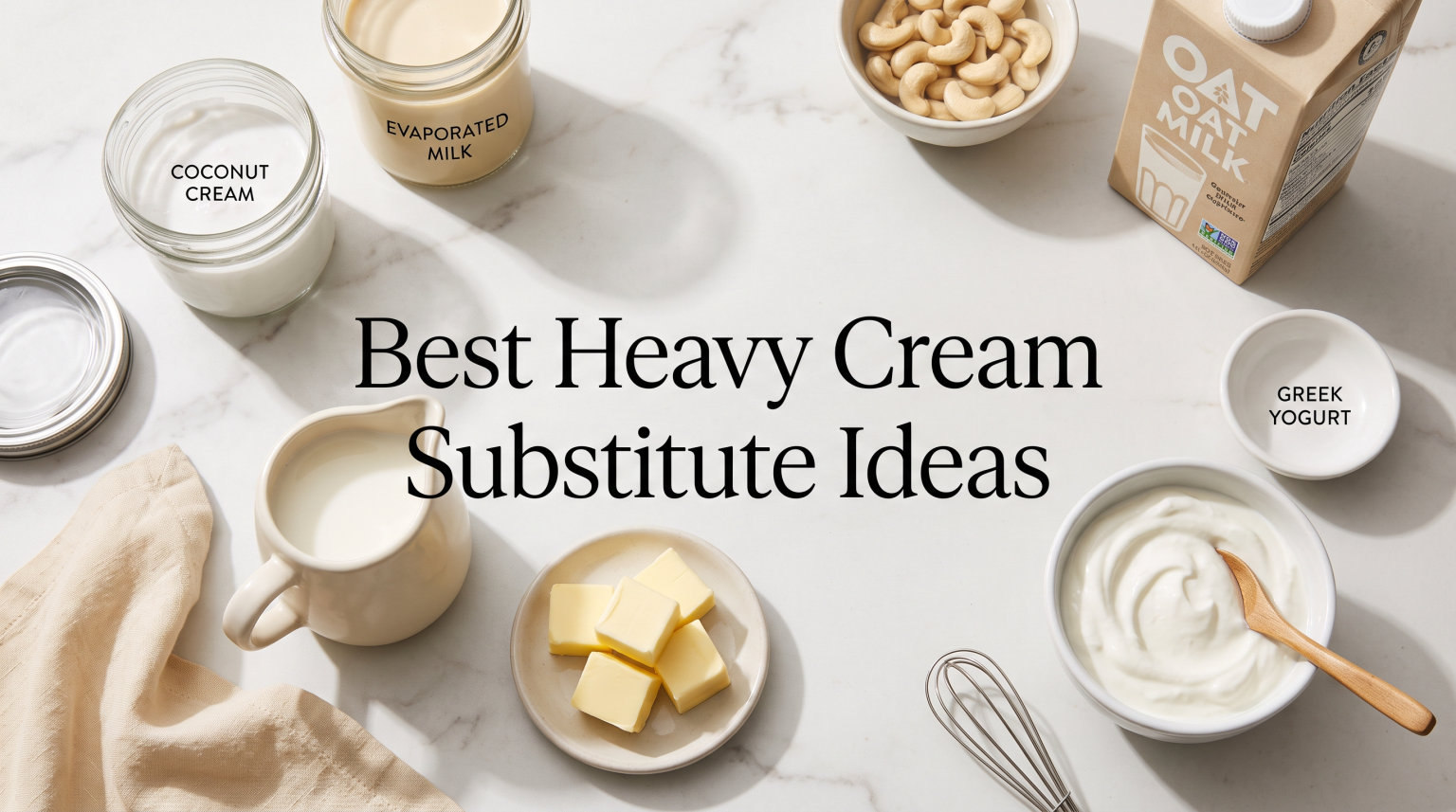
The best heavy cream substitute ideas depend on what the cream is doing. A soup needs richness and heat stability, a cake needs moisture and fat, Alfredo needs smooth emulsification, and whipped topping needs enough fat to trap air. One substitute cannot excel at all four jobs.
This guide gives you eight exact ratios, separates whippable from non-whippable choices, and explains which dairy or plant-based option fits baking, sauces, soup, pasta, coffee, and dessert.
Table of Contents
What Is Heavy Cream?
Heavy cream is the high-fat layer that rises to the top of milk before homogenization. By law in the United States, heavy cream must contain at least 36% milk fat. This high fat content is what allows heavy cream to whip into stable peaks, thicken sauces without curdling, and add that signature richness to desserts and savory dishes.
Many people confuse heavy cream with whipping cream, but there is a difference. Whipping cream contains slightly less fat, typically 30-36%, which makes it lighter but also less stable when whipped. Heavy cream creates firmer, longer-lasting whipped cream that holds its shape better for decorating cakes or topping coffee drinks.
The fat in heavy cream serves important functions in cooking. It carries flavor, creates smooth textures, and helps bind other ingredients together. When you heat heavy cream, the fat molecules help stabilize the liquid and prevent separation. Understanding this helps explain why some substitutes work better than others depending on what you are making.
8 Best Heavy Cream Substitute Ideas at a Glance
-
Milk and butter: Mix 3/4 cup whole milk with 1/4 cup melted unsalted butter; use 1 cup for cooking or baking, not whipping.
-
Half-and-half: Use 1 cup for 1 cup in soups, sauces, coffee, and some baking; it will not whip like heavy cream.
-
Evaporated milk: Use 1 cup for 1 cup in cooked sauces, custards, and baking.
-
Greek yogurt and milk: Whisk 3/4 cup plain Greek yogurt with 1/4 cup milk; use in baking and gentle sauces.
-
Coconut cream: Use 1 cup for 1 cup when coconut flavor fits; chill before attempting to whip.
-
Cashew cream: Use 1 cup prepared cashew cream for 1 cup heavy cream in blended soups and sauces.
-
Soy milk and oil: Blend 2/3 cup unsweetened soy milk with 1/3 cup neutral oil; use for richness, not whipping.
-
Silken tofu and soy milk: Blend equal parts until smooth, then measure 1 cup for thick sauces or baking.
Dairy-Based Heavy Cream Substitutes
Dairy-based substitutes are closest in flavor, but their fat content and heat stability still vary. Choose by the recipe’s main requirement: richness, body, or whipping.
Milk and Butter (The Classic Emergency Substitute)
Mix 3/4 cup whole milk with 1/4 cup melted unsalted butter to make 1 cup. The butter restores fat while the milk supplies liquid and dairy flavor.
Let the melted butter cool slightly before mixing so it does not curdle when combined with cold milk. Whisk vigorously or blend briefly to create a smooth emulsion. This substitute works beautifully in baking, sauces, and soups where heavy cream is called for.
The only limitation is that this mixture cannot whip. The butter remains in liquid form rather than incorporating air like heavy cream fat does. For recipes requiring whipped cream, you will need a different substitute.
Half-and-Half
Half-and-half contains about 10-18% milk fat, making it lighter than heavy cream but still richer than plain milk. You can use it as a 1:1 substitute in soups, sauces, coffee, and custards.
Half-and-half does not contain enough fat to whip into stable peaks. Reserve it for cooked applications, coffee, custards, and recipes where liquid richness is the goal.
For a richer result closer to heavy cream, you can mix half-and-half with a small amount of melted butter. This boosts the fat content and improves the mouthfeel in recipes.
Evaporated Milk
Evaporated milk is regular milk with about 60% of the water removed, giving it a concentrated, slightly caramelized flavor. It contains about 6.5% fat and works as a 1:1 substitute for heavy cream in many recipes.
Evaporated milk has a lightly cooked flavor that fits pumpkin pie, custards, soups, and sauces. Use it when heat stability matters more than whipping.
Like half-and-half, evaporated milk will not whip into peaks. Reserve it for baking, cooking, and coffee applications. The lower fat content means sauces made with evaporated milk may be slightly thinner than those made with heavy cream.
Greek Yogurt and Milk Combination
Mix equal parts Greek yogurt and milk to create a protein-rich substitute that works well in baking. The yogurt adds moisture and protein while the milk thins it to the right consistency.
Plain Greek yogurt adds tang, moisture, and protein. Thin it before use and add it gently to hot sauces to reduce the chance of curdling.
For a closer match to heavy cream’s fat content, use whole milk rather than low-fat milk. This substitute is not suitable for whipping or for applications where you need the fat to create emulsions, like in Alfredo sauce.
Dairy-Free and Vegan Heavy Cream Substitutes
Whether you follow a vegan diet, have lactose intolerance, or simply want to try something different, these plant-based substitutes deliver excellent results. I have tested each of these extensively in my kitchen. They also work wonderfully in our cookie recipes when you want to adjust the fat content.
Coconut Cream
Coconut cream is the thick, high-fat portion of coconut milk and can whip when thoroughly chilled. It is the strongest dairy-free choice when both richness and whipping matter, but its coconut flavor remains noticeable.
To extract coconut cream, refrigerate a can of full-fat coconut milk overnight. Do not shake the can. Open it carefully and scoop out the thick white cream from the top. One can typically yields about 1/2 to 3/4 cup of solid coconut cream depending on the brand.
Whipped coconut cream is delicious but does have a distinct coconut flavor. This works wonderfully with tropical desserts, chocolate recipes, and coffee drinks. For savory applications where you do not want coconut flavor, use refined coconut oil in your cashew cream instead.
Cashew Cream
Soak raw cashews for at least four hours, drain, and blend with fresh water until completely smooth. Start with 1 cup soaked cashews and 1/2 cup water, adding more only as needed.
Cashew cream has a mild flavor that works in pasta sauces, blended soups, and some desserts. Add a little neutral oil only when the recipe needs more richness.
A high-speed blender creates the smoothest cashew cream with no grittiness. If you only have a standard blender, soak the cashews longer and blend for several minutes, scraping down the sides as needed.
Soy Milk and Oil Blend
Mix two parts soy milk with one part neutral oil like canola or vegetable oil for a vegan cooking cream. The oil provides the fat content while the soy milk provides the liquid base and protein structure.
A soy-milk-and-oil blend works in savory sauces and soups where you need dairy-free richness. Blend until fully emulsified before adding it to the recipe.
The neutral flavor of soy milk means this substitute does not overpower other ingredients. However, it will not whip and should not be used in desserts where you need the cream to provide structure.
Other Plant-Based Options
Oat milk can work as a lower-fat substitute for heavy cream in soups and sauces. Look for barista-style oat milk which has a higher fat content and creamier texture. It adds a slight oat flavor that works well in savory applications.
Almond milk is too thin to use on its own, but you can thicken it with cornstarch or arrowroot powder. Mix one cup of almond milk with one to two tablespoons of starch for a light cream substitute suitable for soups and sauces.
Best Heavy Cream Substitutes by Recipe Type
Different recipes place different demands on heavy cream. Here is how to choose the right substitute based on what you are making.
For Baking (Cakes, Muffins, Scones)
For baking, choose a substitute that supplies both moisture and enough fat. Milk and butter works in many quick breads, cakes, muffins, and scones, but it cannot whip.
Greek yogurt mixed with milk adds moisture and modest protein structure, making it practical for coffee cakes and muffins.
For recipes like scones or biscuits where the cold cream creates flaky layers, make sure your butter is fully cooled before mixing. Warm butter will melt into the flour rather than creating those desirable pockets of steam during baking. If you are looking for inspiration, try our our apple cinnamon pop tarts recipe which works beautifully with these substitutes.
For Soups and Sauces
Soups and sauces need substitutes that can withstand heat without curdling or separating. The milk and butter combination works well here, but you must be careful about temperature. Add the mixture at the end of cooking and warm gently rather than boiling vigorously.
For a lower-fat option, cornstarch-thickened milk creates a creamy texture without the added fat. Whisk two tablespoons of cornstarch into cold milk before adding to your soup or sauce, then heat until thickened.
Evaporated milk is relatively stable in hot applications and works well in creamy tomato soup, chowder, and many sauces.
For Whipped Cream
Cold coconut cream is the most reliable dairy-free option for visible peaks. Very cold evaporated milk can become foamy, but the result is softer and less stable than whipped heavy cream.
Chill your mixing bowl and beaters in the freezer for ten minutes before whipping coconut cream. Add powdered sugar and vanilla extract once soft peaks form. The whipped cream will hold for several hours in the refrigerator.
Do not attempt to whip half-and-half, milk and butter mixtures, or standard plant-based milks. They lack the fat structure necessary to trap air and create peaks. You will only waste time and ingredients.
For Pasta and Alfredo
Alfredo sauce relies on heavy cream to create a stable emulsion with butter and cheese. The best substitutes here are the milk and butter combination or cashew cream for a dairy-free version.
When using the milk and butter substitute for Alfredo, add the cheese gradually over low heat. High heat can cause the proteins to separate and create a grainy texture. Stir constantly for the smoothest results.
Evaporated milk with a small amount of cream cheese can create a lighter Alfredo-style sauce while maintaining body. Keep the heat gentle and add cheese gradually.
Troubleshooting Heavy Cream Substitutes
-
Curdled sauce: Lower the heat and whisk off the burner. Use a more heat-stable option such as evaporated milk next time, especially around tomato or lemon.
-
Substitute will not whip: Milk-butter blends, half-and-half, yogurt, and most plant milks lack enough fat to form stable peaks; switch to cold coconut cream or real whipping cream.
-
Soup is too thin: Simmer gently to reduce, blend part of the soup, or add a small cornstarch slurry.
-
Butter separated from milk: Bring the ingredients closer in temperature and blend or whisk thoroughly before adding.
-
Yogurt looks grainy: Temper it with warm sauce and add it off direct heat.
-
Coconut flavor is too strong: Use evaporated milk, cashew cream, or a neutral soy-based blend when dairy-free requirements allow.
A Four-Question Substitute Check
-
Must it whip? Use real heavy cream or well-chilled coconut cream; most other substitutes stay liquid.
-
Will it boil or meet acid? Choose evaporated milk, coconut cream, or another heat-stable option and keep the temperature controlled.
-
Is coconut flavor acceptable? If not, choose a dairy, cashew, soy, or tofu-based option.
-
Does the recipe depend on fat for structure? A low-fat swap can change tenderness, spread, and mouthfeel in baking.
Use this guide alongside the buttermilk substitute ratios, the egg substitute guide, the easy pasta recipes, or the easy dessert ideas. Under the United States standard of identity, heavy cream contains at least 36% milkfat, which explains why lower-fat liquids behave differently.
Frequently Asked Questions
What is the best substitute for 1 cup of heavy cream?
For cooking or baking, mix 3/4 cup whole milk with 1/4 cup melted unsalted butter. For a direct dairy-free swap where coconut flavor fits, use 1 cup coconut cream. Neither choice is universal, so check whether the recipe needs whipping.
Can milk replace heavy cream by itself?
Milk can thin a soup or sauce, but it lacks the fat and body of heavy cream. Add butter for richness or use a thickener when the recipe needs a creamy texture. Milk alone will not whip.
What heavy cream substitute works in Alfredo sauce?
Half-and-half, evaporated milk, cashew cream, or a milk-and-butter blend can work. Use gentle heat, add cheese gradually, and avoid a hard boil so the sauce stays smooth.
Which dairy-free heavy cream substitute can whip?
Well-chilled coconut cream is the most dependable home option. Chill the can, use the solid cream, keep the bowl and beaters cold, and stop once stable peaks form.
Can Greek yogurt replace heavy cream?
Yes, in many baked goods, dips, soups, and sauces. Thin 3/4 cup plain Greek yogurt with 1/4 cup milk or water for 1 cup. Temper it and add it away from high heat to reduce curdling.
Is evaporated milk the same as heavy cream?
No. Evaporated milk has concentrated milk solids but much less fat, so it does not whip like heavy cream. It is useful in soups, sauces, custards, and baking where heat stability matters.
Conclusion: Choose the Best Heavy Cream Substitute Ideas by Function
The best heavy cream substitute ideas preserve the function that matters most. Milk and butter restores richness, evaporated milk handles heat, yogurt adds body and tang, coconut cream can whip, and cashew or soy blends provide dairy-free creaminess.
Measure the ratio before you start, keep heat gentle, and do not expect a non-whippable liquid to form peaks. Matching the substitute to the job is what keeps a convenient swap from changing the entire recipe.