
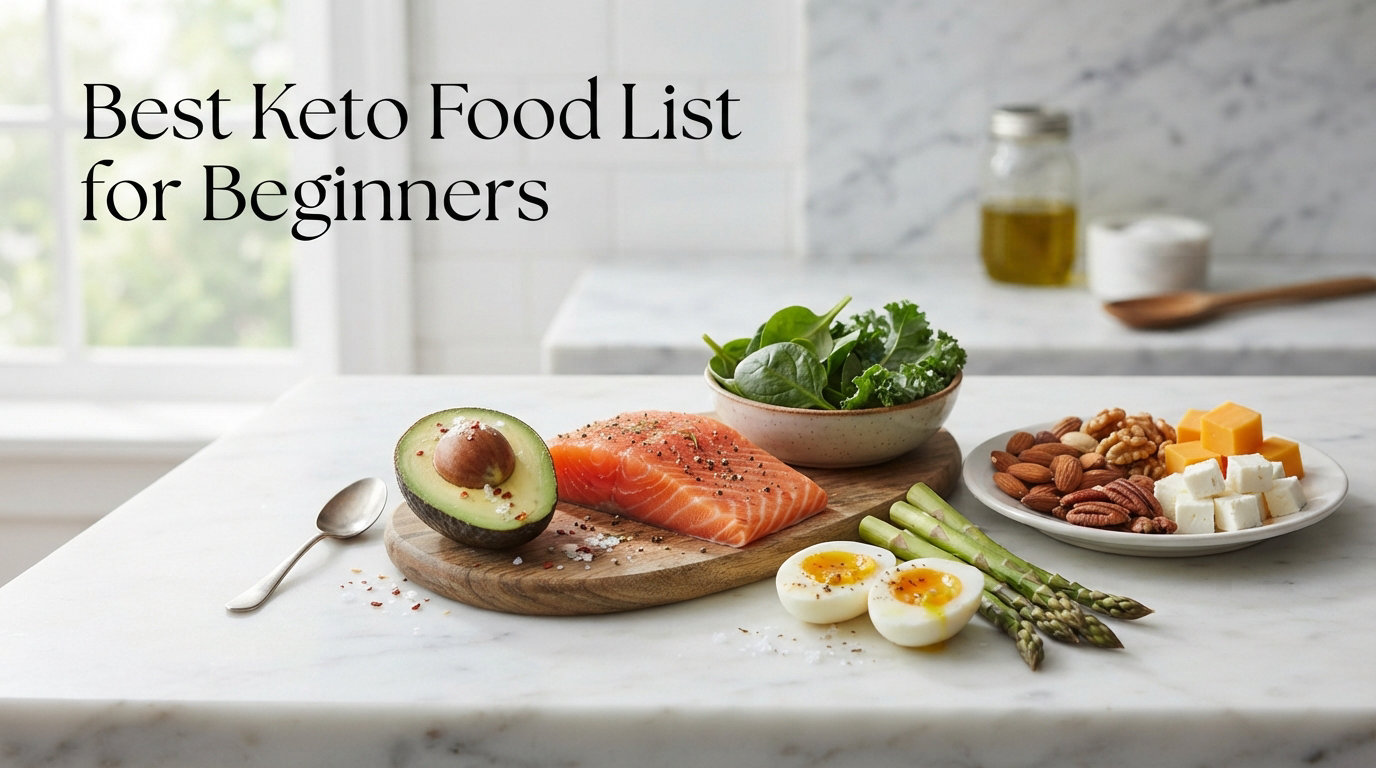
Starting the ketogenic diet feels overwhelming when you first walk into a grocery store. I remember standing in the produce aisle three years ago, wondering if I could eat that banana or if it would kick me out of ketosis. A clear best keto food list for beginners eliminates that confusion and sets you up for success from day one.
The ketogenic diet works by shifting your body into a fat-burning state called ketosis. This happens when you drastically reduce carbohydrate intake and increase healthy fats. Most beginners aim for about 70% of calories from fat, 25% from protein, and only 5% from carbohydrates.
This guide covers every food category you need to stock your kitchen. I have organized everything with specific net carb counts so you can make informed choices without guesswork. By the end, you will have a complete shopping list that makes meal planning simple and sustainable.
Table of Contents
Understanding Keto Macros and Net Carbs
Before diving into the food list, you need to understand the numbers that make keto work. Net carbs represent the carbohydrates that actually affect your blood sugar. Calculate them by subtracting fiber and sugar alcohols from total carbohydrates.
Most beginners thrive on 20 to 50 grams of net carbs per day. Staying under 20 grams accelerates ketosis, while 50 grams allows more flexibility. I started at 20 grams daily and gradually increased as my body adapted.
Your macro breakdown should look like this: 70% fat, 25% protein, and 5% carbs. Do not obsess over hitting these numbers perfectly every day. Focus on keeping carbs low and letting the fats and proteins fall into place naturally.
Why Net Carbs Matter More Than Total Carbs
Fiber does not spike blood sugar or interrupt ketosis. This means high-fiber vegetables like broccoli and spinach count favorably toward your daily intake. A food with 10 grams total carbs and 6 grams fiber contains only 4 net carbs.
Sugar alcohols like erythritol also subtract from total carbs. Many keto-friendly products use these sweeteners to keep net carbs minimal. Always check nutrition labels and do the math yourself rather than trusting marketing claims.
Best Keto Food List for Beginners: Proteins
Protein forms the foundation of your keto meals. The good news is that most pure protein sources contain zero carbohydrates. Focus on quality sources that provide nutrients beyond just protein.
Meat and Poultry
All unprocessed meats fit perfectly into a ketogenic lifestyle. Choose fatty cuts over lean options to hit your fat macros without adding extra ingredients. Grass-fed and pasture-raised meats offer better omega-3 fatty acid profiles.
Zero-carb protein options include beef, pork, lamb, chicken, turkey, duck, and game meats. Chicken thighs beat chicken breast for keto because they contain more fat. Ground beef with 80% lean and 20% fat works better than 95% lean versions.
Organ meats like liver provide incredible nutrient density. While many beginners skip these, they pack vitamins A, B12, and iron. Start with milder options like chicken liver before trying beef liver.
Seafood and Fish
Fatty fish deliver protein plus heart-healthy omega-3s. Salmon, mackerel, sardines, and herring top the list for nutritional value. Wild-caught fish generally contain fewer contaminants than farmed alternatives.
Shellfish contain minimal carbs but slightly more than finfish. Shrimp, crab, lobster, and most fish have zero net carbs. Oysters and mussels contain about 4 grams net carbs per 3-ounce serving, so enjoy these in moderation.
Canned fish offers budget-friendly convenience. Stock your pantry with canned salmon, sardines, and tuna for quick meals. Look for fish packed in olive oil rather than water for added healthy fats.
Eggs and Full-Fat Dairy
Eggs represent nature’s perfect keto food. One large egg contains 6 grams protein, 5 grams fat, and less than 1 gram carbohydrate. Buy pasture-raised eggs when possible for superior nutrient content.
Dairy works on keto when you choose full-fat versions. The fat helps you feel full while providing calcium and vitamin D. Avoid low-fat and fat-free products, which often contain added sugars to compensate for flavor.
Best Dairy Options for Keto
Hard and soft cheeses add flavor and fat to meals. Cheddar, mozzarella, brie, camembert, goat cheese, cream cheese, and parmesan all contain under 1 gram net carb per ounce. Blue cheese and gouda offer bold flavors that make small portions satisfying.
Heavy cream and sour cream enrich sauces and coffee. One tablespoon of heavy cream contains 0.4 grams carbs. Full-fat Greek yogurt works in small amounts, with about 4 grams net carbs per half-cup serving.
Butter and ghee provide pure fat for cooking. Grass-fed butter offers higher levels of vitamins A and K2. Ghee works better for high-heat cooking since the milk solids have been removed.
Low-Carb Vegetables
Vegetables deliver essential fiber, vitamins, and minerals without spiking blood sugar. The key rule is simple: eat above-ground vegetables and limit below-ground options. Leafy greens and cruciferous vegetables become your new best friends.
Leafy Greens and Salad Vegetables
Spinach, kale, arugula, lettuce, and mixed greens contain roughly 1 to 3 grams net carbs per cup. These form the base of keto salads and side dishes. Darker greens offer more nutrients than iceberg lettuce.
Other excellent choices include asparagus (2g net carbs per cup), zucchini (3g per cup), and cucumber (2g per cup). Bell peppers add color and crunch with 3 to 4 grams net carbs per half-cup serving. Celery makes a perfect vehicle for nut butters or cream cheese.
Cruciferous Vegetables
Broccoli and cauliflower rank as keto superstars. One cup of broccoli contains 4 grams net carbs. Cauliflower clocks in at 3 grams net carbs per cup and substitutes beautifully for rice, potatoes, and even pizza crust.
Brussels sprouts offer 5 grams net carbs per cup when cooked. Cabbage works for slaws, stir-fries, and soups at 3 grams net carbs per cup. These vegetables provide bulk and satisfaction while keeping carbs minimal.
Above-Ground vs Below-Ground Rule
Plants that grow above ground generally store less starch. Plants that grow below ground store energy as starch, making them higher in carbs. This simple visual rule helps you make quick decisions at the grocery store.
Above-ground winners include eggplant, okra, green beans, and snow peas. Limit below-ground vegetables like potatoes, sweet potatoes, carrots, parsnips, and beets. A medium potato contains 30 grams net carbs, enough to exceed most daily limits in one serving.
Keto-Friendly Fruits
Fruit presents a challenge on keto because most varieties contain significant sugar. Berries offer the best solution, providing antioxidants with relatively low carb counts. Avocado technically qualifies as a fruit and serves as a keto staple.
Berries and Portion Sizes
Raspberries and blackberries contain the fewest carbs at about 3 grams net carbs per quarter-cup serving. Strawberries follow closely at 3 to 4 grams per half-cup. Blueberries run higher at 9 grams net carbs per half-cup, so measure carefully.
I recommend frozen berries for budget-conscious shoppers. They last longer and work perfectly in smoothies or as toppings for keto desserts. Buy organic when possible since berries appear on the Dirty Dozen list for pesticide residue.
Avocado: The Perfect Keto Fruit
One medium avocado contains approximately 2 grams net carbs and 21 grams of healthy fats. This fat-to-carb ratio makes avocados ideal for hitting your macros. They also provide potassium, an electrolyte often lacking in early keto stages.
Use avocados in salads, smoothies, or as a side dish with eggs. Store ripe avocados in the refrigerator to extend freshness. To speed ripening, place hard avocados in a paper bag with a banana.
Nuts and Seeds
Nuts and seeds provide portable fat and protein for snacking. However, they require portion control since carbs add up quickly. Some varieties fit keto better than others based on their fat-to-carb ratios.
Best Nuts for Keto
Macadamia nuts rank as the keto king with 21 grams fat and only 2 grams net carbs per ounce. Pecans follow with 20 grams fat and 1 gram net carb. Walnuts offer omega-3s with 4 grams net carbs per ounce.
Brazil nuts, hazelnuts, and almonds work well in moderation. Almonds contain 3 grams net carbs per ounce, so measure your portions. Avoid cashews and pistachios, which contain 8 to 9 grams net carbs per ounce.
Seeds and Seed Butters
Chia seeds absorb liquid and create pudding-like textures. One ounce contains 2 grams net carbs and 9 grams fat. Flax seeds provide fiber and omega-3s with zero net carbs. Grind them fresh for best nutrient absorption.
Pumpkin seeds and sunflower seeds make excellent snacks. Pumpkin seeds contain 4 grams net carbs per ounce. Sunflower seed butter offers a nut-free alternative to almond butter for those with allergies.
Healthy Fats and Cooking Oils
Fat becomes your primary fuel source on keto, so quality matters enormously. Choose minimally processed fats from whole food sources. Avoid industrial seed oils that promote inflammation.
Best Oils for Cooking and Dressing
Extra virgin olive oil works for low to medium heat cooking and salad dressings. Avocado oil handles high heat with a smoke point of 520 degrees Fahrenheit. Coconut oil provides medium-chain triglycerides that convert quickly to ketones.
Butter and ghee add richness to vegetables and meats. Tallow from beef and lard from pork offer traditional cooking fats. These animal fats stand up well to high temperatures without oxidizing.
Oils to Avoid
Skip vegetable oil, canola oil, soybean oil, corn oil, and safflower oil. These industrial oils undergo heavy processing and contain inflammatory omega-6 fatty acids. Most processed foods contain these cheap oils, making label reading essential.
Check ingredient lists even on products marketed as healthy. Many salad dressings, mayonnaise brands, and packaged foods rely on these problematic oils. Make your own dressings with olive oil and vinegar when possible.
Keto Beverages
What you drink impacts your carb count as much as what you eat. Sugary beverages pose the biggest hidden threat to ketosis. Fortunately, plenty of satisfying options exist.
Water and Hydration
Plain water remains your best beverage choice. Aim for at least 8 glasses daily, more if you exercise or live in hot climates. Add a pinch of salt or lemon juice if plain water bores you.
Sparkling water and mineral water add variety without carbs. Brands like LaCroix, Perrier, and San Pellegrino contain zero calories and carbs. Avoid tonic water, which contains sugar.
Coffee and Tea
Black coffee contains zero carbs and offers antioxidant benefits. Add heavy cream, MCT oil, or butter for a keto-friendly bulletproof coffee. Avoid sugar and flavored creamers.
All unsweetened teas fit into keto, including green tea, black tea, and herbal varieties. Iced tea works fine as long as you skip the sweetener. Try cold-brew methods for smoother flavor without bitterness.
Pantry Staples for Keto Cooking
Stocking your pantry with keto-friendly ingredients makes meal preparation effortless. These staples replace high-carb alternatives in your favorite recipes.
Alternative Flours
Almond flour and coconut flour replace wheat flour in baking. Almond flour contains 3 grams net carbs per quarter-cup. Coconut flour is more absorbent at 6 grams net carbs per quarter-cup, so recipes require less of it.
Other useful alternatives include psyllium husk powder for binding and flax meal for fiber. These ingredients create bread, muffins, and pancakes that satisfy cravings without the carbs.
Sugar Substitutes
Erythritol, stevia, and monk fruit sweetener replace sugar in recipes. Erythritol measures like sugar with zero glycemic impact. Stevia works well in beverages but can taste bitter in baked goods. Monk fruit blends often with erythritol for better baking results.
Avoid maltitol and other sugar alcohols that spike blood sugar. These appear in many sugar-free products but cause digestive distress and raise insulin levels.
Foods to Avoid on Keto
Knowing what not to eat matters as much as knowing what to include. These foods quickly exceed your carb limit and kick you out of ketosis.
Grains and Starches
Wheat, rice, corn, oats, barley, and quinoa all contain too many carbs for keto. One slice of bread contains 15 grams net carbs. A cup of cooked rice packs 45 grams net carbs.
Even whole grains exceed daily carb limits. The fiber helps, but not enough to make these foods keto-friendly. Replace rice with cauliflower rice and pasta with zucchini noodles.
Sugary Foods and Sweeteners
Sugar in all forms interrupts ketosis. Avoid white sugar, brown sugar, honey, maple syrup, and agave nectar. These natural sweeteners raise blood sugar as much as table sugar.
Hidden sugars lurk in unexpected places. Check labels on ketchup, barbecue sauce, salad dressings, and marinara sauce. Many contain 4 to 8 grams sugar per tablespoon.
High-Carb Fruits and Starchy Vegetables
Bananas, apples, grapes, mangoes, and pineapple contain too much sugar for regular consumption. One medium banana contains 24 grams net carbs. Stick with berries and avocado for your fruit intake.
Root vegetables store starch underground. Potatoes, sweet potatoes, carrots, parsnips, turnips, and beets all exceed keto carb limits. Even onions and garlic require careful portioning at 3 to 4 grams net carbs per quarter-cup.
Processed and Low-Fat Products
Low-fat yogurt, skim milk, and reduced-fat cheese contain added sugars. Manufacturers remove fat and replace it with sugar to maintain flavor. Always choose full-fat dairy options.
Most processed foods combine multiple problems: added sugars, refined grains, and unhealthy oils. Stick with whole foods that require minimal ingredient lists.
Budget-Friendly Keto Shopping Tips
Eating keto does not require expensive specialty products. Smart shopping keeps costs manageable while maintaining nutritional quality.
Money-Saving Strategies
Buy whole chickens and cut them yourself rather than purchasing pre-cut pieces. Chicken thighs cost less than breasts and provide more fat. Ground beef offers versatility at lower prices than steak cuts.
Frozen vegetables match fresh nutrition at lower cost. Stock up on frozen broccoli, cauliflower, and spinach when sales occur. Canned fish like sardines and mackerel provide omega-3s affordably.
Eggs remain the cheapest complete protein source. At roughly 20 cents each, they form the backbone of budget keto eating. Rotate through different preparation methods to prevent boredom.
Reading Labels for Hidden Carbs
Serving sizes often hide the true carb impact. A small bag of chips might list 15 grams carbs per serving, but contain 3.5 servings total. Do the math based on what you actually eat.
Watch for sneaky carb sources like maltodextrin, dextrose, and corn syrup solids. These appear in processed meats, seasonings, and packaged foods. Ingredients list in order of quantity, so sugar near the top signals problems.
Sample Meal Ideas Using This List
Putting the food list into practice helps you visualize daily eating patterns. These simple combinations require minimal cooking skills.
Breakfast Options
Scramble three eggs in butter with spinach and cheddar cheese. Add half an avocado on the side for extra fat. This meal contains approximately 4 grams net carbs.
Make a chia seed pudding with coconut milk, chia seeds, and a few raspberries. Prepare it the night before for a grab-and-go option. Each serving delivers about 5 grams net carbs.
Lunch and Dinner Combinations
Grill salmon and serve with roasted asparagus drizzled in olive oil. Add a side salad with full-fat ranch dressing. This satisfying meal stays under 5 grams net carbs.
Stir-fry ground beef with broccoli, bell peppers, and coconut aminos. Top with sesame seeds and a drizzle of sesame oil. Quick, flavorful, and approximately 6 grams net carbs.
How to Find All the Best Keto Foods
Building your personalized keto food list starts at the grocery store perimeter. Fresh produce, meats, and dairy line the outer walls of most supermarkets. The center aisles contain processed foods that require careful navigation.
Shop with a list organized by store section to save time and prevent impulse purchases. Include protein sources for the week, plenty of low-carb vegetables, and healthy fat options. Keep staples like eggs, butter, and olive oil stocked at all times.
Track your meals for the first two weeks to identify patterns. Note which foods keep you satisfied and which trigger cravings. This personal data helps you refine your permanent keto food list.
Keto Success Tips for Beginners
Starting keto brings challenges beyond just choosing foods. These practical strategies help you navigate the transition smoothly.
Preventing Keto Flu
The first week often brings headaches, fatigue, and irritability as your body adapts. This keto flu results from electrolyte imbalances and dehydration. Increase your sodium, potassium, and magnesium intake.
Drink bouillon or bone broth for easy sodium replacement. Eat avocado and leafy greens for potassium. Consider a magnesium supplement before bed to prevent muscle cramps.
Meal Prep Strategies
Cook proteins in bulk on weekends. Roast a whole chicken, hard-boil eggs, and grill several steak portions. Store these ready-to-eat proteins for quick assembly during busy weekdays.
Wash and chop vegetables immediately after shopping. Pre-portion nuts into small containers to prevent overeating. Having keto foods ready to go eliminates the temptation of convenient carb-heavy options.
What do I eat when I first start keto?
Focus on simple whole foods that require minimal preparation. Eggs cooked in butter, grilled chicken with olive oil, leafy green salads with full-fat dressing, and avocados form the perfect foundation. Avoid complicated recipes during your first week. Aim for under 20 grams net carbs daily by tracking everything you eat in a food diary app.
Is there a keto food list for beginners?
Yes, a comprehensive keto food list includes meats, fish, eggs, full-fat dairy, low-carb vegetables, berries, nuts, seeds, and healthy oils. The best lists organize foods by category with net carb counts. This article provides exactly that reference guide, covering all food groups with specific recommendations for beginners starting their ketogenic journey.
What should a beginner buy for keto?
Start with eggs, butter, olive oil, chicken thighs, ground beef, salmon, spinach, broccoli, cauliflower, cheese, heavy cream, and avocados. These staples create dozens of meal combinations. Add almonds, macadamia nuts, and berries for snacks and variety. This basic shopping list covers one week of meals without requiring specialty products.
What to eat on your first week of keto?
Keep meals simple and repetitive to reduce decision fatigue. Breakfast can be scrambled eggs with cheese. Lunch might include a salmon salad with olive oil dressing. Dinner could feature grilled chicken with roasted broccoli and butter. Snack on nuts or celery with almond butter. Drink plenty of water with added electrolytes to prevent keto flu symptoms.
What are the 9 rules of keto?
The nine rules include: keep net carbs under 20-50 grams daily, eat adequate protein for your body weight, consume enough fat to feel satisfied, choose whole foods over processed options, read every label for hidden carbs, drink plenty of water, supplement electrolytes, plan meals ahead, and be patient with weight loss plateaus. These guidelines create a sustainable approach to ketogenic eating.
Can I lose 20 lbs in 2 months on keto?
Many beginners lose 20 pounds within two months, especially during the initial water weight phase. The first week often brings 5 to 10 pounds of loss from reduced glycogen and water retention. Subsequent weeks typically yield 1 to 2 pounds of fat loss weekly. Individual results vary based on starting weight, adherence, activity level, and metabolic health. Consistency matters more than speed.
Will a keto diet lower my A1C?
Research shows ketogenic diets significantly reduce A1C levels in people with type 2 diabetes and prediabetes. Most studies demonstrate A1C reductions of 1.0 to 1.5 percentage points over three to six months. The elimination of sugar and refined carbohydrates stabilizes blood glucose. Always consult your healthcare provider before starting keto if you take diabetes medications, as dosages may need adjustment.
Conclusion: Your Keto Journey Starts Here
This best keto food list for beginners gives you everything needed to start shopping and cooking with confidence. Remember the simple principles: prioritize whole foods, track your net carbs, and choose quality fats over processed alternatives.
Success on keto comes from preparation, not perfection. Stock your kitchen with the foods listed here, plan your meals for the week, and give your body time to adapt. The first two weeks feel challenging, but most beginners report increased energy and mental clarity by week three.
Print this guide or bookmark it for your next grocery trip. Start with the basics: eggs, quality meats, leafy greens, healthy fats, and berries. As you gain experience, you will naturally expand your repertoire and find the specific foods that work best for your body. Here is to your health and success in 2026!