
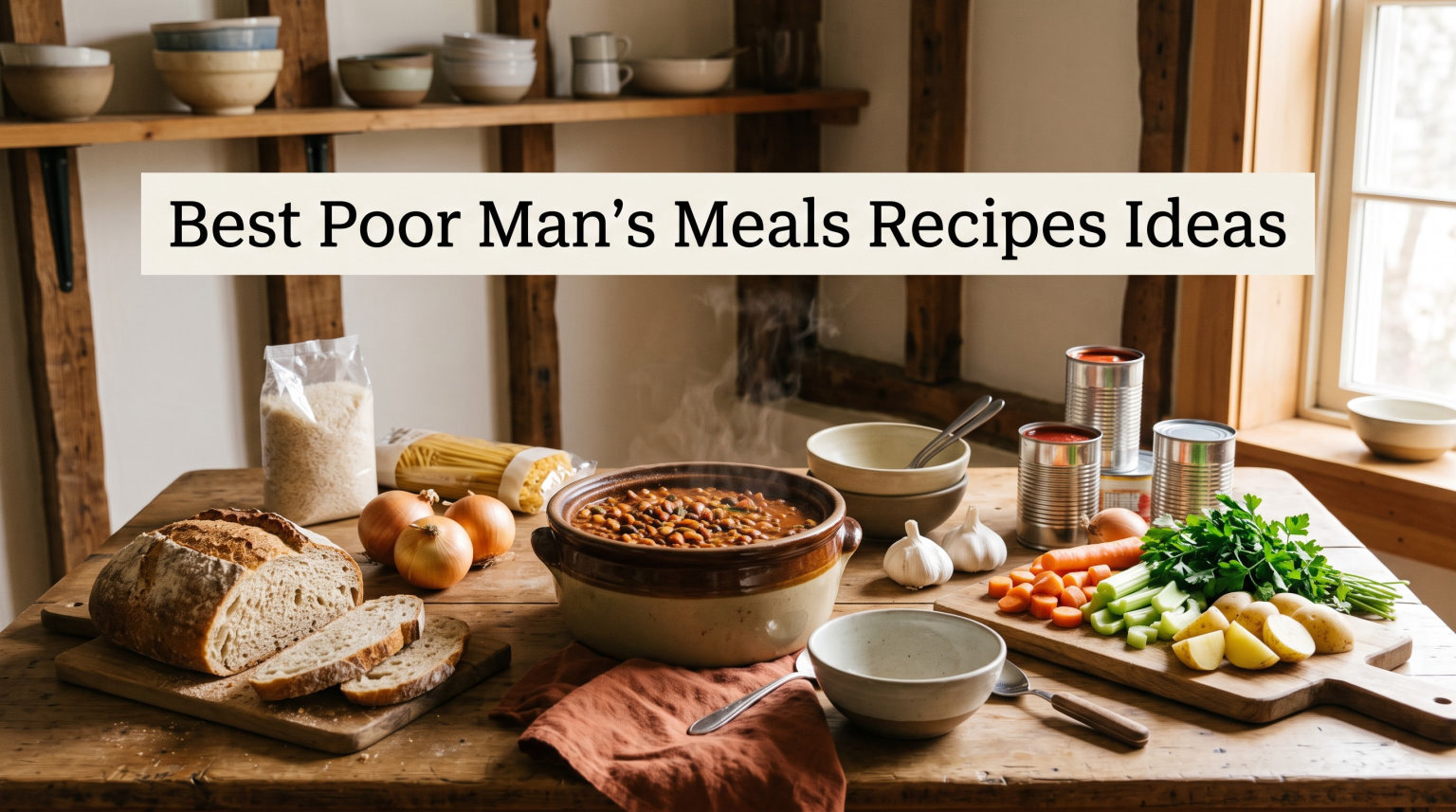
This complete collection gives you measured ingredients, complete methods, timing, and doneness cues in one place. The cheap pantry meals and budget family dinners let you choose, shop, cook, troubleshoot, store, and reheat without opening another recipe page.
The guide also notes realistic swaps and likely failure points. For related planning, see cheap family dinner ideas, easy budget dinners, ground beef dinner recipes. Factual safety and health context follows USDA safe-temperature guidance.
Table of Contents
Poor Man’s Meals
Use this page when you want the exact quantities and checkpoints visible before cooking. These cheap pantry meals and budget family dinners keep substitutions specific instead of leaving you to guess how a swap changes time or texture.
Complete Recipes and Methods
1. Classic Poor Man’s Meal (Ground Beef and Potatoes)
This is the recipe most people picture when they hear the phrase poor man’s meal.
Serves: 4 | Time: 45 minutes | Method: Oven
Ingredients
-
1 pound ground beef
-
4 cups frozen or fresh diced potatoes
-
1 can corn (drained)
-
1 small onion (diced)
-
2 tablespoons cooking oil
-
salt
-
pepper, garlic powder to taste
Instructions
-
Heat the oil in a large skillet over medium heat.
-
Add the diced potatoes and cook until golden and tender, about 15 minutes, stirring occasionally.
-
Remove potatoes and set aside.
-
In the same skillet, brown the ground beef with the onion until no pink remains.
-
Drain excess grease.
-
Return potatoes to the pan, add the corn, and season generously.
-
Cook another 5 minutes until everything is heated through.
Substitutions: For recipe 1, lean ground turkey can replace the beef; cook it to 165°F and add one teaspoon of oil if the pan looks dry.
Storage: For recipe 1, cool within two hours and refrigerate in a shallow airtight container. Reheat covered until steaming; dishes containing cooked leftovers should reach 165°F.
Tip: For recipe 1, prepare and measure every ingredient before heating the pan so the short cooking stages do not overrun.
2. Depression-Era Breakfast for Dinner
During the Depression, eggs were one of the cheapest sources of protein available.
Serves: 4 | Time: 45 minutes | Method: Oven
Ingredients
-
6 eggs
-
4 slices of bread
-
2 tablespoons butter
-
2 large potatoes (diced)
-
salt and pepper
-
1 cup milk or cream, as listed
Instructions
-
Fry the diced potatoes in a skillet with a little oil until crispy and cooked through.
-
In a separate pan, scramble the eggs gently with butter over low heat until just set.
-
Toast the bread and butter it generously.
-
Serve everything together with salt and pepper.
-
For recipe 2, heat the oven to 375°F. Line a rimmed sheet pan with parchment and spread the ingredients in one layer.
Substitutions: For recipe 2, swap vegetables for others with a similar density and moisture level; cut firm vegetables smaller so everything finishes together.
Storage: For recipe 2, cool within two hours and refrigerate in a shallow airtight container. Reheat covered until steaming; dishes containing cooked leftovers should reach 165°F.
Tip: For recipe 2, prepare and measure every ingredient before heating the pan so the short cooking stages do not overrun.
3. Hearty Beans and Rice Bowl
Beans and rice is arguably the most famous poor man’s meal in the world. Nearly every culture has a version because the combination is cheap, filling, and nutritionally complete.
Serves: 4 | Time: 45 minutes | Method: Oven
Ingredients
-
1 cup dry beans (black, pinto, or kidney)
-
1 cup white rice
-
1 small onion
-
2 cloves garlic
-
1 tablespoon oil
-
salt
-
pepper, any seasoning blend you like
Instructions
-
Soak the beans overnight.
-
Then simmer in fresh water for about 90 minutes until tender.
-
In a separate pot, cook the rice according to package directions.
-
Saute the onion and garlic in oil until soft.
-
Then mix into the cooked beans.
-
Serve the beans over the rice and season to taste.
Substitutions: For recipe 3, swap vegetables for others with a similar density and moisture level; cut firm vegetables smaller so everything finishes together.
Storage: For recipe 3, cool within two hours and refrigerate in a shallow airtight container. Reheat covered until steaming; dishes containing cooked leftovers should reach 165°F.
Tip: For recipe 3, prepare and measure every ingredient before heating the pan so the short cooking stages do not overrun.
4. Tuna Noodle Casserole
Tuna noodle casserole is one of those affordable meals that became iconic for a reason. It uses canned tuna, pantry pasta, and a can of condensed soup to create a creamy, comforting dish that reheats beautifully for leftovers.
Serves: 4 | Time: 45 minutes | Method: Oven
Ingredients
-
1 bag egg noodles
-
2 cans tuna (drained)
-
1 can cream of mushroom soup
-
1 cup frozen peas
-
1 cup crushed potato chips or crackers
-
salt and pepper
Instructions
-
Preheat oven to 375 degrees.
-
Cook the egg noodles according to package directions and drain.
-
In a large bowl, combine the noodles, tuna, soup, and peas.
-
Season with salt and pepper.
-
Spread into a greased baking dish and top with crushed chips.
-
Bake for 25 minutes until bubbly and golden on top.
Substitutions: For recipe 4, swap vegetables for others with a similar density and moisture level; cut firm vegetables smaller so everything finishes together.
Storage: For recipe 4, cool within two hours and refrigerate in a shallow airtight container. Reheat covered until steaming; dishes containing cooked leftovers should reach 165°F.
Tip: For recipe 4, rest the finished dish for 10 minutes before cutting so the sauce settles and the portions hold together.
5. Creamy Potato Soup
When money is genuinely tight, potato soup is the meal that saves the day. Potatoes are one of the cheapest foods you can buy, and a simple soup turns them into something rich and comforting.
Serves: 4 | Time: 45 minutes | Method: Oven
Ingredients
-
6 large potatoes (peeled and diced)
-
1 onion (diced)
-
4 cups water or broth
-
1 cup milk
-
3 tablespoons butter
-
salt and pepper
Instructions
-
Combine the diced potatoes, onion, and water in a large pot.
-
Bring to a boil.
-
Then reduce heat and simmer for 25 minutes until potatoes are very soft.
-
Use a potato masher to break up about half the potatoes, which naturally thickens the soup.
-
Stir in the butter and milk, season generously, and serve hot.
Substitutions: For recipe 5, thawed frozen hash browns and thinly sliced fresh potatoes are not interchangeable without changing the bake time; use the form specified in the ingredients.
Storage: For recipe 5, cool within two hours and refrigerate in a shallow airtight container. Reheat covered until steaming; dishes containing cooked leftovers should reach 165°F.
Tip: For recipe 5, prepare and measure every ingredient before heating the pan so the short cooking stages do not overrun.
6. Egg Fried Rice
Leftover rice, a couple of eggs, and whatever vegetables are hanging around become a full dinner in under fifteen minutes.
Serves: 4 | Time: 45 minutes | Method: Oven
Ingredients
-
4 cups cooked rice (preferably day-old)
-
3 eggs
-
1 cup frozen peas and carrots
-
2 tablespoons oil
-
2 tablespoons soy sauce
-
1 small onion (diced)
Instructions
-
Heat oil in a large skillet or wok over medium-high heat.
-
Saute the onion until soft.
-
Push the onion to one side and scramble the eggs in the empty space.
-
Once set, break them up and mix with the onion.
-
Add the rice, frozen vegetables, and soy sauce.
-
Stir constantly for 5 minutes until everything is hot and well combined.
Substitutions: For recipe 6, swap vegetables for others with a similar density and moisture level; cut firm vegetables smaller so everything finishes together.
Storage: For recipe 6, cool within two hours and refrigerate in a shallow airtight container. Reheat covered until steaming; dishes containing cooked leftovers should reach 165°F.
Tip: For recipe 6, prepare and measure every ingredient before heating the pan so the short cooking stages do not overrun.
7. Smoked Sausage and Cabbage Skillet
Smoked sausage and cabbage is a classic one-pan meal that feels almost too easy to be this good.
Serves: 4 | Time: 25 minutes | Method: Skillet
Ingredients
-
1 link smoked sausage or kielbasa (sliced)
-
1 head green cabbage (chopped)
-
1 onion (sliced)
-
2 carrots (sliced)
-
1 cup broth or water
-
salt and pepper
Instructions
-
Brown the sliced sausage in a large skillet until lightly crisped.
-
Remove and set aside.
-
In the same pan, saute the onion, cabbage, and carrots until softened, about 10 minutes.
-
Add the broth, return the sausage to the pan, cover, and simmer for 10 more minutes.
-
Season to taste and serve.
Substitutions: For recipe 7, swap vegetables for others with a similar density and moisture level; cut firm vegetables smaller so everything finishes together.
Storage: For recipe 7, cool within two hours and refrigerate in a shallow airtight container. Reheat covered until steaming; dishes containing cooked leftovers should reach 165°F.
Tip: For recipe 7, prepare and measure every ingredient before heating the pan so the short cooking stages do not overrun.
8. Pantry Pancakes for Dinner
A batch of pancakes costs almost nothing to make, and kids see it as something special rather than a sacrifice.
Serves: 4 | Time: 45 minutes | Method: Oven
Ingredients
-
2 cups flour
-
2 tablespoons sugar
-
2 teaspoons baking powder
-
1/2 teaspoon salt
-
2 cups milk
-
2 eggs
-
3 tablespoons melted butter or oil
Instructions
-
Whisk together the dry ingredients in a large bowl.
-
In a separate bowl, beat the eggs, milk, and melted butter.
-
Pour the wet ingredients into the dry and stir until just combined.
-
Cook on a greased griddle or skillet over medium heat, flipping when bubbles form on top.
-
For recipe 8, heat the oven to 375°F. Lightly grease a 9-by-13-inch baking dish with 1 teaspoon oil or butter.
Substitutions: For recipe 8, use an unsweetened dairy-free milk or yogurt of similar thickness when needed, and use only the measured sweetener specified because blends differ in strength.
Storage: For recipe 8, cool within two hours and refrigerate in a shallow airtight container. Reheat covered until steaming; dishes containing cooked leftovers should reach 165°F.
Tip: For recipe 8, begin checking several minutes early and cool completely before cutting; carryover heat finishes the center.
The most useful cooking guides explain both the main method and the recovery plan when texture, moisture, or timing goes wrong. These cheap pantry meals and budget family dinners focus on those practical decisions rather than name-only inspiration.
Before starting, read the full method once, prepare every ingredient in the form listed, and choose a pan that leaves enough room for even heating. Keep raw protein and ready-to-eat ingredients on separate boards, wash hands and tools between tasks, and use an instant-read thermometer when a safe temperature is given. If the center needs more time but the top is already browned, cover the dish loosely with foil and continue in short intervals. If the mixture looks dry before cooking, add only a tablespoon or two of the stated liquid at a time; excess liquid is much harder to correct. Let hot baked dishes rest before serving because the temperature continues to equalize and sauces thicken as steam settles. Label leftovers with the date so storage guidance is easy to follow.
What Exactly Is a Poor Man’s Meal?
A poor man’s meal is a simple, budget-friendly dish traditionally made from inexpensive pantry staples like potatoes, beans, rice, eggs, and ground meat. The term comes from generations of families cooking through hard times, especially during the Great Depression, when home cooks learned to stretch every ingredient as far as it would go.
What makes these meals special is not just the low cost. It is the creativity behind them. A handful of flour, some water, a bit of lard, and a pinch of salt became biscuits. Leftover potatoes became hash. A can of condensed soup turned a few vegetables and some pasta into a full dinner. These frugal meals filled bellies and carried families through genuinely difficult chapters of history.
The Starter Pantry for Budget Cooking
If you keep these basics stocked, you can always pull together a satisfying meal without running to the store.
Your starter pantry should include dried beans and rice, pasta in any shape, potatoes and onions, eggs, canned tomatoes, condensed soups, flour, cooking oil, and basic seasonings like salt, pepper, and garlic powder. Add ground beef, chicken thighs, or smoked sausage when they go on sale, and you have the building blocks for dozens of meals.
These ingredients form the backbone of almost every recipe in this guide.
this guide Recipes Ideas
This collection of these recipes recipes ideas brings together the most satisfying and budget-friendly dishes passed down through generations. From simple ground beef skillet meals to creamy potato soups, each recipe proves that hearty eating does not require expensive ingredients.
5 Tips for Stretching Your Groceries Further
Making this recipe is about more than just following recipes. It is a mindset that helps you waste less and spend less.
Cook beans from dry instead of buying canned. A one-pound bag of dry beans costs about a dollar and yields the equivalent of four cans. The savings add up fast over a month.
Buy meat in family packs and freeze portions. The per-pound price drops significantly when you buy larger quantities. Divide into meal-size portions before freezing.
Plan meals around what you already have. Before you shop, look in your pantry and fridge first. Build the week’s meals around those ingredients instead of starting from a recipe list.
Use leftovers as the base for the next meal. Leftover rice becomes fried rice. Leftover vegetables go into soup. Leftover roast becomes sandwiches. Nothing should go to waste.
Learn a few versatile base recipes. Once you can make a basic soup, a stir-fry, a casserole, and a grain bowl, you can adapt them to whatever ingredients are on sale. For more on building balanced meals, the USDA nutrition guidance is a helpful free resource.
Frequently Asked Questions
How should a recipe be chosen from this guide?
Start with the cooking time and main ingredient you have, then compare the method, doneness cue, and make-ahead notes.
Can I assemble these recipes ahead?
Most can be prepped in stages. Keep raw protein separate, cover and refrigerate promptly, and add crisp toppings just before baking.
How do I prevent a watery result?
Drain canned and thawed ingredients well, avoid crowding the pan, and rest baked dishes before cutting.
What is the safest way to store leftovers?
Refrigerate within two hours in shallow covered containers and reheat only the portion you plan to eat until steaming hot.
Conclusion
Choose a recipe by matching the method to your available time and ingredients. Because the cheap pantry meals and budget family dinners include complete quantities, doneness cues, substitutions, storage, and troubleshooting, you can finish the meal confidently from this page.