
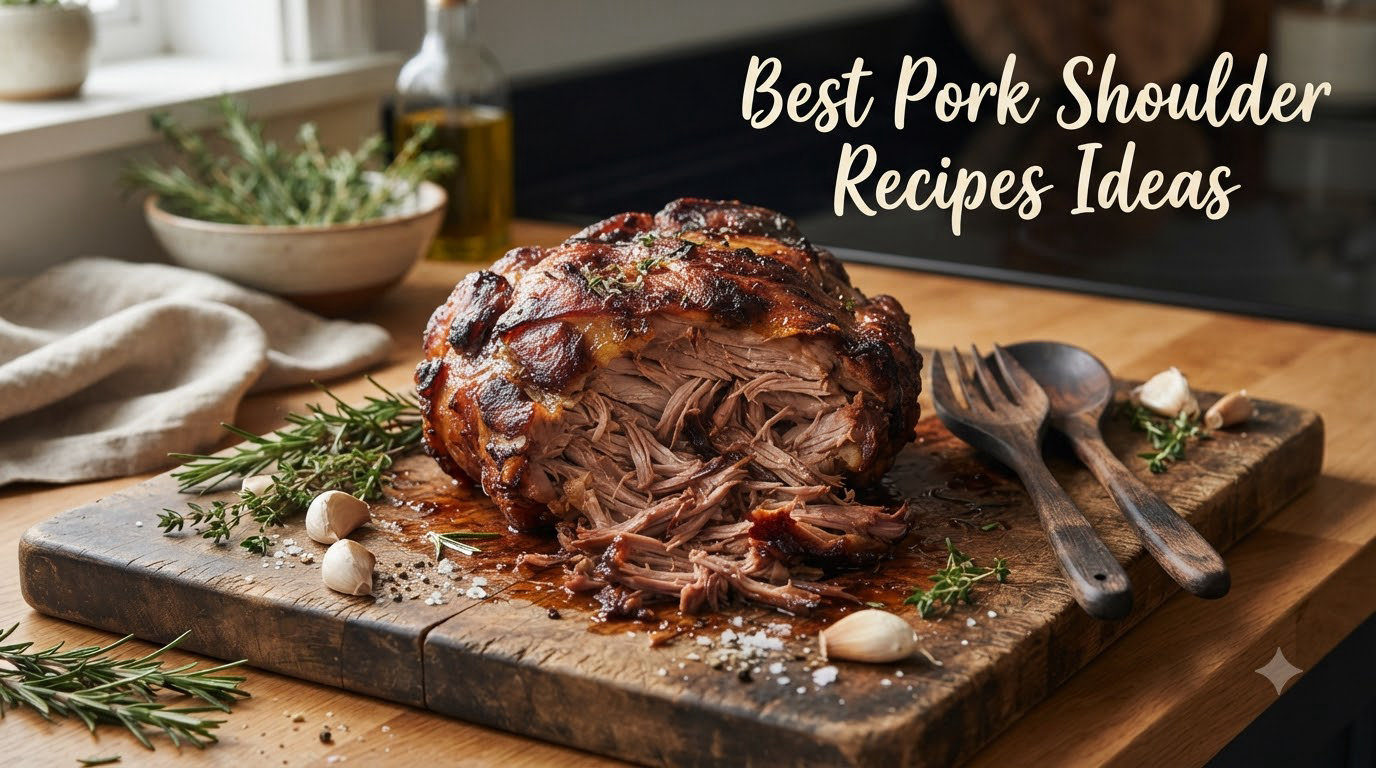
Planning what to make with pork shoulder starts with the few choices that change the result. For pork shoulder that becomes succulent rather than stringy, I season the cut deeply, use a gentle covered cook, and stop only when the collagen has softened enough for effortless shredding.
You will also find slow-cooked pork shoulder dinners presented naturally, with clear doneness cues, useful sides, storage guidance, and fixes for tough fibers or dry shredded meat. For another useful dinner plan, see these best sides for pulled pork.
Table of Contents
What Is Pork Shoulder? Understanding the Cut
Pork shoulder is a flavorful cut taken from the upper front leg of the pig. It is known for rich marbling and a network of connective tissue that breaks down into tender, juicy meat when cooked low and slow.
Unlike lean cuts like loin or chops, pork shoulder has enough fat to stay moist through hours of cooking. That same fat and collagen are what give pulled pork and carnitas their signature melt-in-your-mouth texture.
Pork shoulder is also one of the most affordable cuts you can buy. A single four to eight pound roast typically costs a fraction of what you would pay for beef chuck or pork tenderloin, and it feeds a crowd with leftovers to spare.
That combination of low cost, forgiving cookery, and big yield is exactly why home cooks, BBQ enthusiasts, and meal preppers all love this cut. Once you learn a few reliable techniques, pork shoulder becomes one of the most useful proteins in your rotation.
Pork Shoulder vs Pork Butt vs Picnic Shoulder
This is where most people get tripped up at the meat counter. Pork shoulder, pork butt, and picnic shoulder all come from the same general area, but they are not identical. Here is the quick breakdown.
Boston butt (also labeled pork butt) is the upper portion of the shoulder, right above the shoulder blade. It is well-marbled, typically bone-in or boneless, and rectangular in shape. This is the cut most people want for pulled pork because it shreds cleanly and stays juicy.
Picnic shoulder comes from the lower part of the front leg, below the blade. It is usually bone-in with the skin on, has a slightly tapered shape, and contains more connective tissue. Picnic shoulder shines in dishes where you want gelatinous richness, like stews and posole.
Pork shoulder as a label often refers to the entire front shoulder primal, which includes both the Boston butt and the picnic. When a recipe calls generically for pork shoulder, you can usually substitute pork butt or picnic with good results.
For everyday cooking, Boston butt is the most versatile choice. It is easy to handle, predictable to cook, and works in almost every recipe below. Picnic shoulder is worth seeking out for specific dishes like Cuban lechon or Mexican posole where the skin and bone add depth.
One more practical note: because pork shoulder freezes so well, I almost always buy the largest roast I can find, cook half right away, and stash the rest. Our freezer meal recipes walk through exactly how I portion and store big cuts like this for later use.
Best Cooking Methods for Pork Shoulder
For safe handling, I follow the USDA thermometer guidance: whole cuts of beef and pork need 145°F plus a three-minute rest, while leftovers should be reheated to 165°F. Tender braises often cook beyond the safety minimum to soften collagen.
Across these pork shoulder, the same principle holds: give the well-marbled cut steady low heat and keep its cooking juices for serving and reheating. That is what makes what to make with pork shoulder dependable instead of vague and keeps slow-cooked pork shoulder dinners useful. You can build the next meal around this easy slow-cooker recipes.
The cooking method you pick shapes the final result more than almost anything else.
Slow Cooker (Set It and Forget It)
The slow cooker is my default for busy days. Season a three to five pound pork butt, add a half cup of liquid (broth, juice, or even beer), and cook on low for eight hours. The meat is fall-apart tender every time with zero babysitting.
-
Best for: pulled pork, carnitas, chili, and any recipe where you want shredded meat.
-
Best for: pork ragu, posole, chili verde, and rich stews where you want a developed sauce.
-
Best for: porchetta-style roasts, lechon, and any recipe where you want crispy edges.
-
Best for: traditional Southern pulled pork, Texas-style smoked Boston butt, and competition-style BBQ.
-
Best for: carnitas, weeknight tacos, and any time you forgot to plan ahead.
Dutch Oven Braising
Braising on the stovetop or in the oven gives you deeper flavor than a slow cooker because you can brown the meat first. Sear the roast on all sides, add aromatics and liquid, cover, and cook at 325F for three to four hours.
Oven Roasting Low and Slow
Oven roasting at a low temperature gives you that classic BBQ-style bark on the outside while the inside stays juicy. Cook uncovered at 275F to 300F for five to seven hours, depending on size, until the internal temp hits 200F to 205F.
Grilling and Smoking
If you have a smoker or a grill set up for indirect heat, this is where pork shoulder becomes legendary. Smoke at 225F to 250F for one to one and a half hours per pound until the internal temperature reaches 195F to 205F. The smoke ring and bark are unmatched.
Instant Pot (Pressure Cooker)
The Instant Pot cuts an eight-hour cook down to about 90 minutes of pressure cooking plus a natural release. You lose some of the bark, but the convenience is hard to beat for a weeknight dinner.
Best Pork Shoulder Recipes Ideas
For reliable what to make with pork shoulder, use these three checkpoints before choosing a recipe. The same checkpoints keep slow-cooked pork shoulder dinners practical rather than repetitive.
-
Best result: Give the well-marbled cut steady low heat and keep its cooking juices for serving and reheating.
-
Avoid: Tough fibers or dry shredded meat.
-
Doneness: The meat should pull apart with minimal pressure and the connective seams should feel soft; whole-muscle pork is safely cooked at 145°F, but shreddable shoulder needs much more tenderizing time.
13 practical recipe ideas
Here are the pork shoulder recipes I come back to again and again. They cover slow cooker, oven, stovetop, and pressure cooker methods, plus a range of flavors from classic American BBQ to Korean, Filipino, and Italian.
1. Classic Slow Cooker Pulled Pork
Rub a four pound boneless pork butt with brown sugar, smoked paprika, garlic powder, salt, and pepper. Pile it into the slow cooker with a half cup of apple cider vinegar and cook on low for eight hours. Shred with two forks and mix in your favorite BBQ sauce.
This is the recipe that taught me why pork shoulder is so forgiving. Serve on hamburger buns with coleslaw for the classic sandwich.
2. Crispy Instant Pot Carnitas
Cut a three pound pork butt into two inch chunks and season with salt, cumin, and oregano. Pressure cook with orange juice, a quartered onion, and a cinnamon stick for 45 minutes, then quick-release. Shred the meat and spread it on a sheet pan. Broil for five minutes until the edges are crispy.
The broiler step is the secret. Pressure cooking gives you tender meat fast, but the broil recreates the crispy bits that traditional lard-fried carnitas are known for. Stuff into warm corn tortillas with onion, cilantro, and salsa.
3. Italian Pork Ragu with Tomatoes
Sear a boneless pork shoulder roast in olive oil with garlic and rosemary. Add a large can of crushed tomatoes, a cup of dry red wine, and a splash of milk. Braise covered at 325F for three hours, then shred the meat back into the sauce. Serve over pappardelle.
The milk sounds unusual but it tenderizes the meat and rounds out the acidity of the tomatoes.
4. Korean Braised Pork Shoulder (Bossam Style)
Simmer a pork butt in water with garlic, ginger, onion, and a tablespoon of doenjang (Korean soybean paste) for about two hours, until fork-tender. Let it cool, then slice into thick pieces. Serve wrapped in fresh napa cabbage leaves with spicy ssamjang paste, raw garlic, and kimchi.
Bossam is one of the most underrated pork shoulder preparations outside of Korea. The gentle boil keeps the meat incredibly tender, and the spicy, funky condiments cut through the richness perfectly.
5. Filipino-Style Lechon Belly (Oven Roasted)
Score the skin of a skin-on pork belly or picnic shoulder, then rub the inside with lemongrass, garlic, onion powder, salt, pepper, and a little brown sugar. Roll it tightly with the skin out and tie with kitchen twine. Roast at 400F for one hour, then drop to 325F for another two to three hours until the meat is tender. Crank the heat back up at the end to crackle the skin.
Real whole-pig lechon is a project. This rolled version captures the same flavors and crackling skin in a home-friendly format.
6. Cuban Mojo Marinated Pork
Marinate a pork shoulder overnight in a mojo of sour orange juice (or half orange, half lime), lots of garlic, oregano, cumin, and olive oil. Slow roast at 325F for four to five hours, basting occasionally, until the meat shreds easily. Serve with black beans, rice, and fried plantains.
The overnight marinade is non-negotiable here. The citrus and garlic soak deep into the meat and create a flavor that is bright, tangy, and totally different from BBQ-style pulled pork.
7. Pork Chili Verde
Brown cubes of pork shoulder in a Dutch oven, then remove. Saute onions, jalapenos, and a generous amount of roasted poblano peppers. Add the pork back with chicken broth and simmer for two hours until the meat is tender. Stir in chopped cilantro and a squeeze of lime at the end.
Chili verde is a great answer for anyone tired of standard BBQ. It is also freezer-friendly, which makes it a perfect batch-cook recipe for meal prep.
8. Southern Smoked Boston Butt
Coat a six to eight pound Boston butt with a classic dry rub of salt, pepper, paprika, brown sugar, and garlic powder. Smoke at 225F to 250F using hickory or apple wood for roughly one to one and a half hours per pound, until the internal temperature reaches 200F to 205F. Rest for at least 45 minutes before pulling.
This is the BBQ classic. Long cooks reward patience with a deep smoke ring and bark that you cannot fake in the oven. Allow a full eight to twelve hours start to finish.
9. Garlic and Herb Oven Roasted Pork Shoulder
Stud a boneless pork shoulder with slivered garlic by cutting small slits and pushing the garlic inside. Rub the outside with rosemary, thyme, salt, pepper, and olive oil. Roast uncovered at 300F for five to six hours until the meat pulls apart easily with a fork.
This is the easiest “fancy” dinner in my rotation. The garlic melts into the meat from the inside, and the low oven temperature guarantees tenderness with almost no effort.
10. Pork Posole (Hominy Stew)
Simmer bone-in pork shoulder pieces with onion, garlic, and dried chiles (guajillo and ancho) for two hours. Add canned hominy and continue cooking until the meat falls off the bone. Serve in deep bowls with shredded cabbage, radish slices, lime wedges, and warm tortillas.
Posole is exactly the kind of recipe that showcases why picnic shoulder is worth buying. The bone and connective tissue create a broth that you simply cannot get from a leaner cut.
11. Char Siu (Chinese BBQ Pork)
Marinate strips of pork shoulder overnight in a mixture of hoisin sauce, soy sauce, honey, five-spice powder, fermented red bean curd, and a little red food coloring (optional). Roast at 375F for 30 to 40 minutes, basting twice, until the edges are caramelized and charred.
Char siu is usually made with pork loin or tenderloin, but shoulder works beautifully if you slice it correctly. The extra fat keeps the meat juicy through the high-heat roast.
12. Pork Shoulder Tacos Al Pastor
Marinate thin slices of pork shoulder in a blend of dried guajillo chiles, achiote paste, pineapple juice, vinegar, garlic, and spices. Thread the meat onto a vertical spit if you have one, or roast on a sheet pan at 400F until the edges char. Slice thinly and serve on corn tortillas with grilled pineapple, onion, and cilantro.
Without a real trompo (the vertical spit), you will not get the exact street-taqueria texture. But the marinade does most of the work, and a hot oven with a broiler finish gets you remarkably close.
13. Apple Cider Braised Pork Roast
Sear a pork shoulder roast in a Dutch oven until deeply browned. Remove the meat, saute sliced onions and apples, then deglaze with apple cider and a splash of apple cider vinegar. Nestle the roast back in, cover, and braise at 325F for three hours until fork-tender.
The cider reduces into a sweet-tart sauce that pairs perfectly with mashed potatoes or crusty bread for soaking up the juices.
Pro Tips for Perfect Pork Shoulder
-
Cook to Temperature, Not Time: The single biggest mistake people make is pulling the pork too early. For slicing, cook to 180F to 185F. For pulled pork and shredding, you want 195F to 205F. At that range the connective tissue fully breaks down and the meat literally falls apart. Use a reliable instant-read thermometer. Every pork shoulder cooks at a slightly different rate depending on shape, fat content, and bone, so a time estimate is only a rough guide.
-
Let It Rest Before Shredding: Once the pork hits your target temperature, let it rest for at least 30 to 45 minutes, loosely tented with foil. The juices redistribute and the meat is much easier to shred without turning to mush.
-
Save the Bones and Drippings: If you cooked a bone-in roast, save the bone for stock. Pour off the cooking liquid, chill it, and skim the fat. The gelatin underneath makes incredible soups, beans, and rice dishes.
-
Plan for Leftovers: A single pork shoulder easily stretches into four or five meals. Use leftovers for tacos, sandwiches, baked potatoes, breakfast hash, fried rice, and quesadillas. Pork shoulder is one of the best proteins for batch cooking because it freezes beautifully and reheats without drying out.
-
Do Not Skip the Salt: Pork shoulder is a big cut and needs proper seasoning all the way through. Salt generously the night before if you can, or at minimum an hour ahead. A dry brine in the fridge uncovered overnight also helps dry out the surface for better bark if you are smoking or roasting.
Frequently Asked Questions
Is pork butt the same as pork shoulder?
Pork butt, or Boston butt, comes from the upper shoulder; picnic shoulder comes from the lower portion. Both suit long, slow cooking.
Should I remove the fat cap?
Trim very thick, hard fat but leave a thin layer for protection and flavor during a long cook.
Why will my pork shoulder not shred?
It has probably not cooked long enough for collagen to soften. Keep cooking gently and check again later.
Can I make pork shoulder ahead?
Yes. Store the meat in its juices, then reheat covered to 165°F; many braised versions taste even better the next day.
Can I freeze pulled pork?
Yes. Cool it promptly, freeze with enough juices to prevent drying, thaw overnight, and reheat thoroughly.
Wrapping Up
For what to make with pork shoulder and slow-cooked pork shoulder dinners, use the recipes as flexible road maps, but let the doneness and texture cues make the final decision.
This guide answers the full dinner question: what to cook, how to know it is ready, what to serve, and how to keep the leftovers worth eating.