
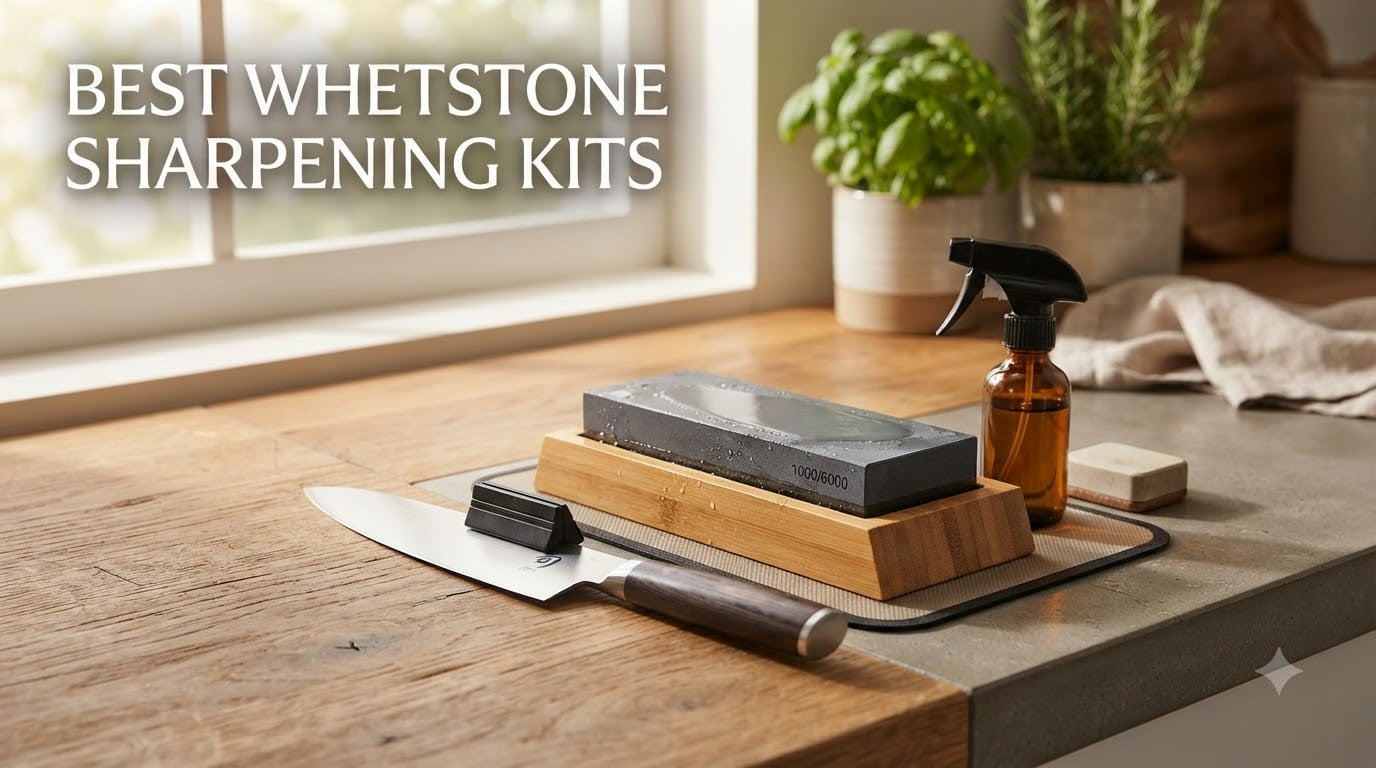
I used to dread pulling out my chef’s knife when tomatoes were on the menu. It would crush them instead of slicing through, and I figured my blades were shot. Turns out, they just needed a real edge – the kind you only get from a proper whetstone.
After a month of testing 8 of the best whetstone sharpening kits on Amazon, I sharpened everything in my kitchen drawer: my Wusthof chef’s knife, a cheap paring knife, a Japanese santoku, and even a pocket knife my husband lost in the yard years ago. The difference between a dull knife and a properly sharpened one isn’t subtle – it changes how you cook.
This guide covers the best whetstone sharpening kits for 2026, whether you’re a total beginner or a home cook ready to invest in sharper edges. I’ll walk through what each kit does well, where it falls short, and which one deserves a spot on your counter.
Table of Contents
Top 3 Picks for Best Whetstone Sharpening Kits

Sharp Pebble 1000/6000 Whetstone Kit
- Dual grit 1000/6000
- Angle guide included
- Non-slip bamboo base

Intelitopia Complete Knife Sharpening Set
- Four grit stones included
- Flattening stone + leather strop
- Angle guide for beginners

Amazon Basics Whetstone Sharpening Set
- Two dual-sided stones
- Silicone + bamboo base
- Includes flattening stone
Best Whetstone Sharpening Kits in 2026
| Product | Specifications | Action |
|---|---|---|
| Sharp Pebble 1000/6000 Whetstone Kit |
|
Check Latest Price |
| Intelitopia Complete Sharpening Set |
|
Check Latest Price |
 Wucgea Japanese Whetstone Set Wucgea Japanese Whetstone Set |
|
Check Latest Price |
| Amazon Basics Whetstone Set |
|
Check Latest Price |
 KING Whetstone Starter Set KING Whetstone Starter Set |
|
Check Latest Price |
 Sharp Pebble 400/1000 Kit Sharp Pebble 400/1000 Kit |
|
Check Latest Price |
 SHARPAL 202H Sharpening System SHARPAL 202H Sharpening System |
|
Check Latest Price |
 KING KW65 Combination Whetstone KING KW65 Combination Whetstone |
|
Check Latest Price |
1. Sharp Pebble Whetstone Knife Sharpener – 1000/6000 Grit with Bamboo Base
Sharp Pebble Whetstone Knife Sharpener – 1000/6000 Grit Sharpening Stone
- Angle guide makes beginner technique foolproof
- Dual grit covers most home sharpening needs
- Bamboo base stays put on the counter
- Water-based - no oil mess
- Learning curve once you remove the angle guide
- Stone needs flattening after heavy use
- Instructions could be more detailed
The Sharp Pebble 1000/6000 was the first kit I tried, and it stayed on my counter longer than any other. Out of the box, it comes with a bamboo base, an angle guide that clamps to the spine of your knife, and a small instruction booklet. The dual-sided stone pairs a 1000-grit side for reshaping dull edges with a 6000-grit side for polishing to a near-mirror finish.
What sold me was the angle guide. The single biggest mistake beginners make is losing the angle mid-stroke, and this little plastic piece eliminates that problem. I sharpened my 8-inch Wusthof using the guide and got a clean, even edge in about 10 minutes. The 6000-grit side left the blade smooth enough to push-cut a sheet of paper.
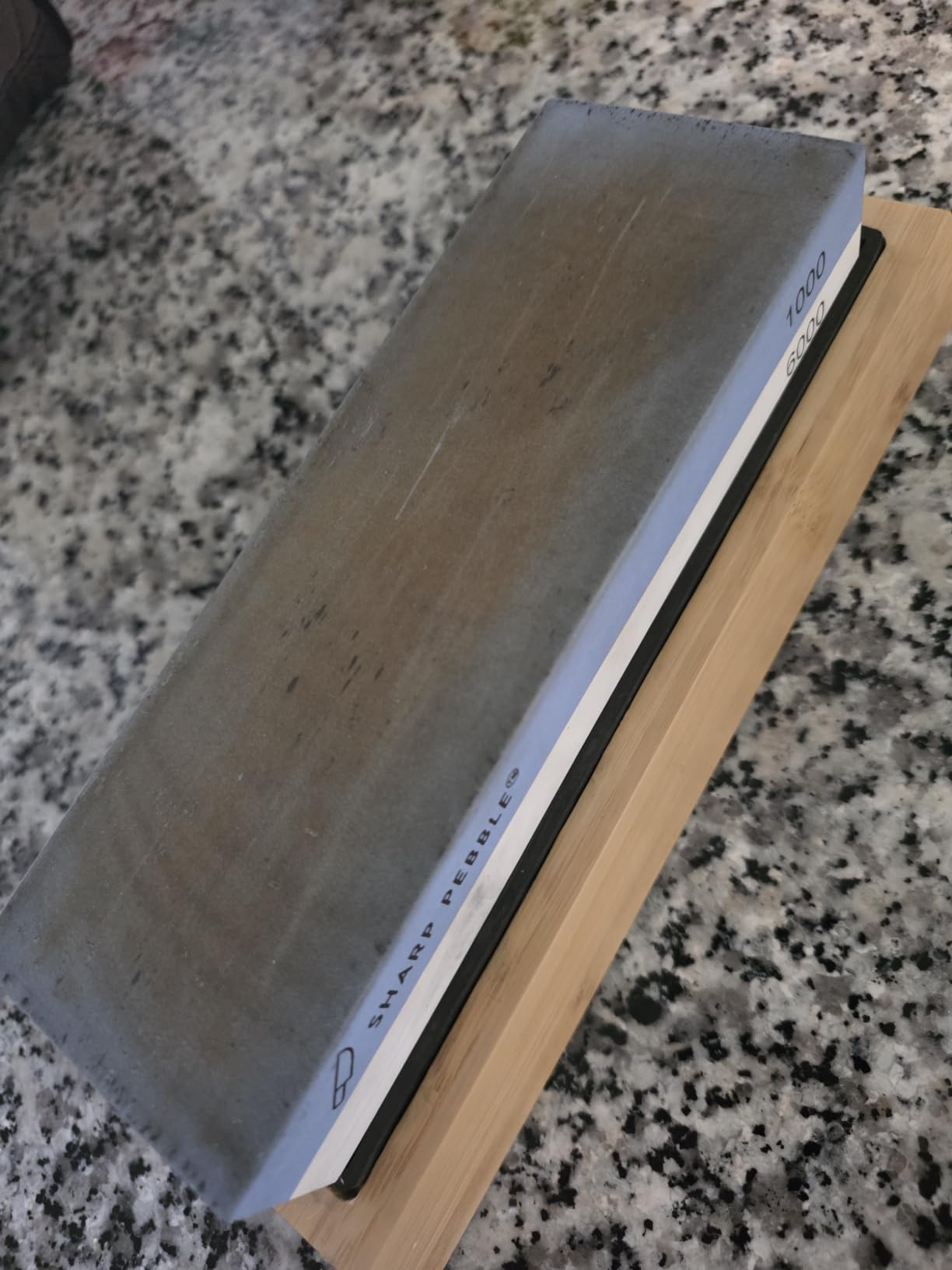
After a few weeks of regular use, I started sharpening without the guide to build muscle memory. The stone itself is corundum – a step up from basic aluminum oxide – and it stayed flatter longer than I expected. Bamboo base is a nice touch; it doesn’t slide around like some silicone holders do on wet counters.
The downsides are real but manageable. Without the angle guide, the learning curve is steeper than the marketing suggests. And after about 30 sharpenings, you’ll notice a slight concavity in the middle of the stone – that’s when you need a flattening stone (sold separately).
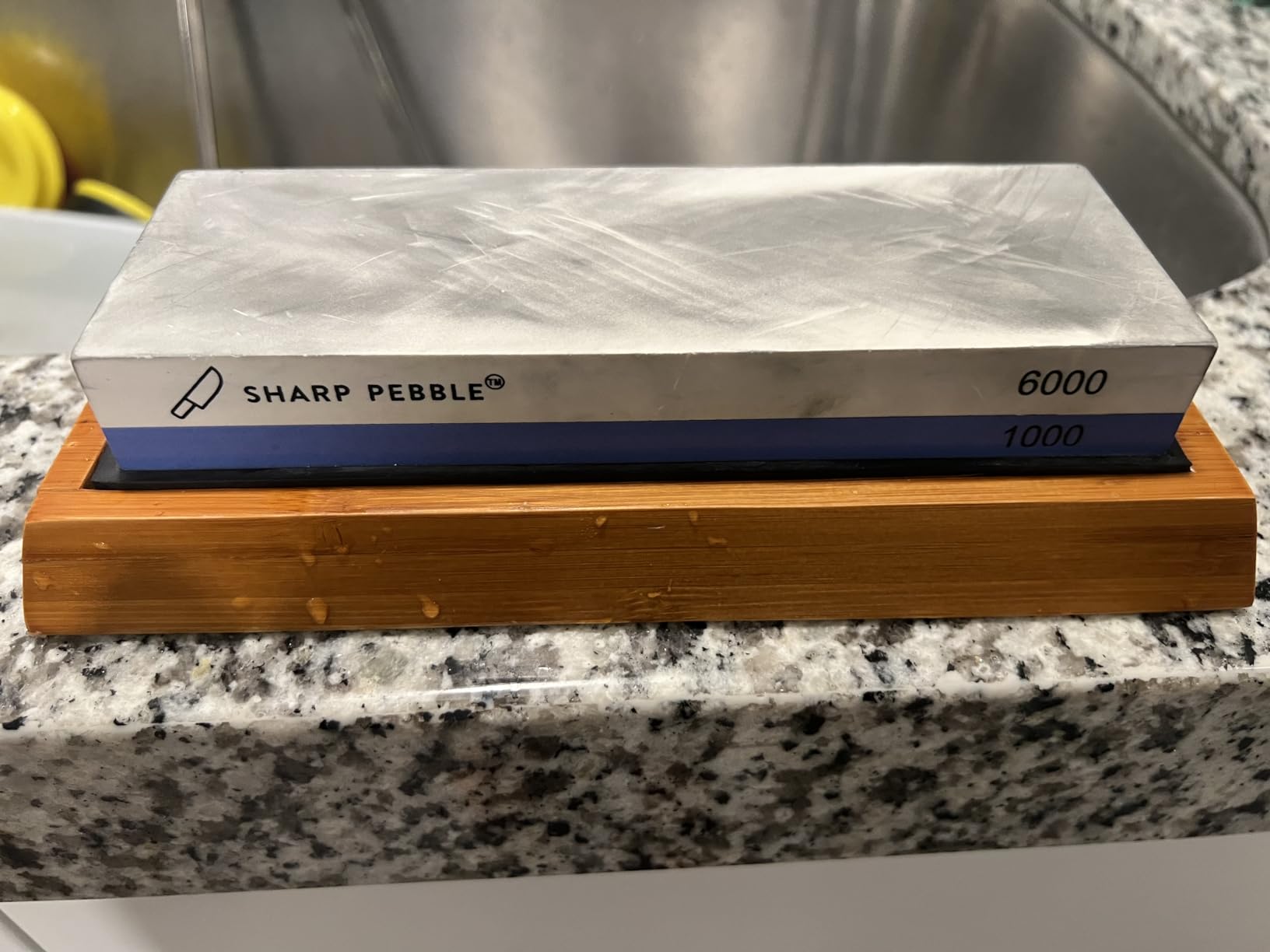
Setup and first use
Soak the stone in water for about 10 minutes before your first session – bubbles should stop rising. Keep a cup of water nearby to rewet the surface during sharpening. The bamboo base has rubber feet, so it won’t skate around.
I recommend doing all your 1000-grit work first, then flipping to 6000 for finishing. About 10 strokes per side on 1000, then 5-7 strokes per side on 6000, is a good baseline for a typical chef’s knife.
Long-term value
With over 25k reviews and a 4.6-star average, this is the most popular whetstone kit on Amazon for good reason. For the price, you get everything a beginner needs plus room to grow into the technique.
The included ebook helps if you’ve never held a whetstone before. If you already have sharpening experience, the guide feels unnecessary – but it doesn’t get in the way.
2. Intelitopia Complete Knife Sharpening Stone Set – 400/1000 & 3000/8000
- Four grit options cover repair to polish
- Flattening stone included - no extra purchase
- Leather strop removes burr for clean edge
- Sturdy bamboo base with rubber mount
- 10-15 minute soak time needed
- Stones need hydration during use
- Some reports of grit ratings being off
If you want one kit that handles every sharpening job, Intelitopia’s complete set is hard to beat. It comes with two dual-sided stones – 400/1000 and 3000/8000 – plus a coarse flattening stone, a leather strop with polishing compound, an angle guide, and a bamboo base. The whole package feels more like a professional starter kit than a budget option.
The 400-grit side is a real workhorse. I used it to repair a badly chipped paring knife that I thought was done for. It took longer than a finer stone would, but it ground out the chip and reset the edge. Most budget kits skip 400-grit entirely, so this is a real advantage.
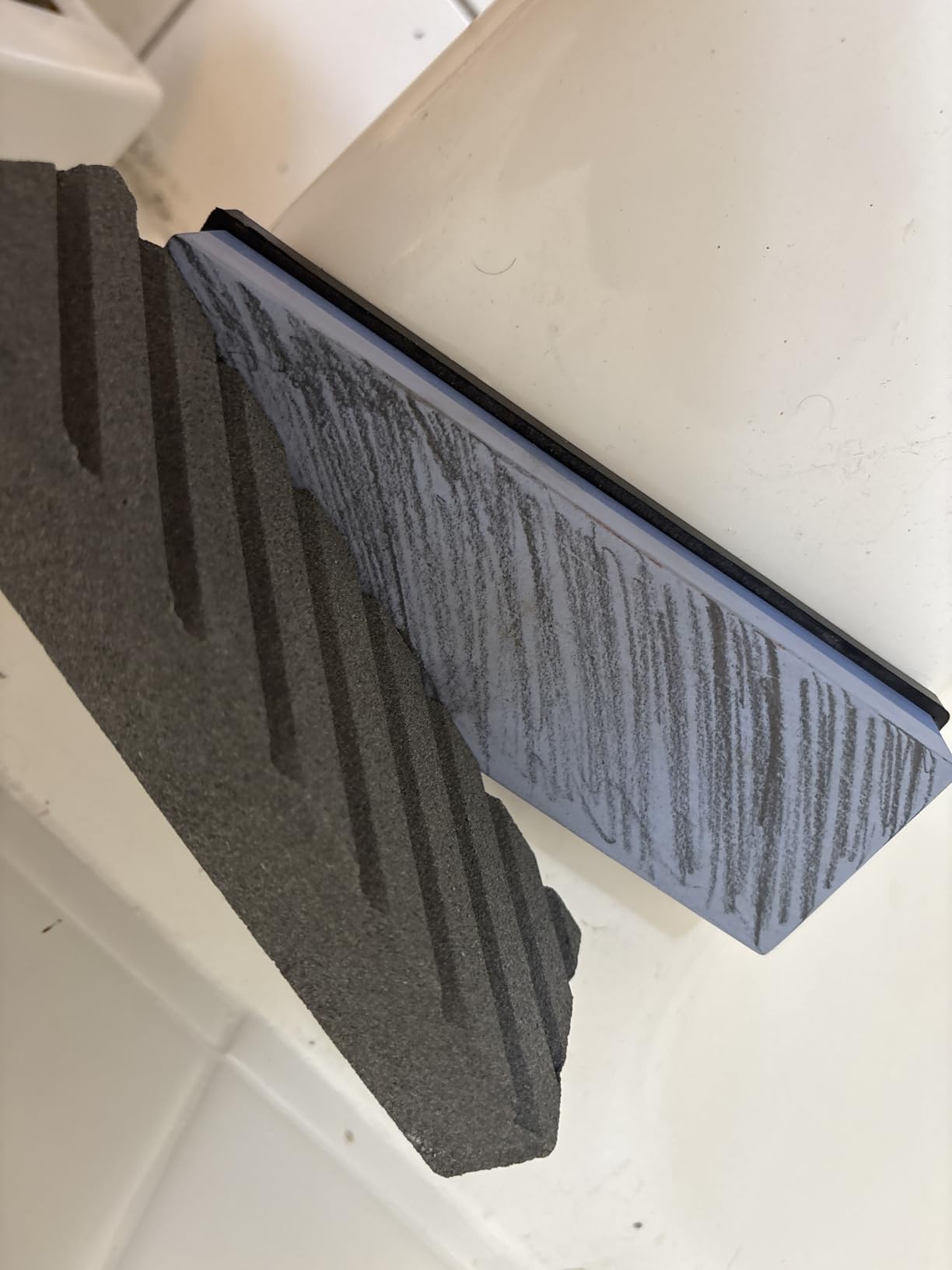
Moving through 1000, then 3000, then 8000 gives you a real progression. The 8000-grit finish is almost too pretty – my Japanese santoku looked like it had a factory edge again. The leather strop with green compound is the cherry on top; it removes any micro-burr and leaves the edge hair-shaving sharp.
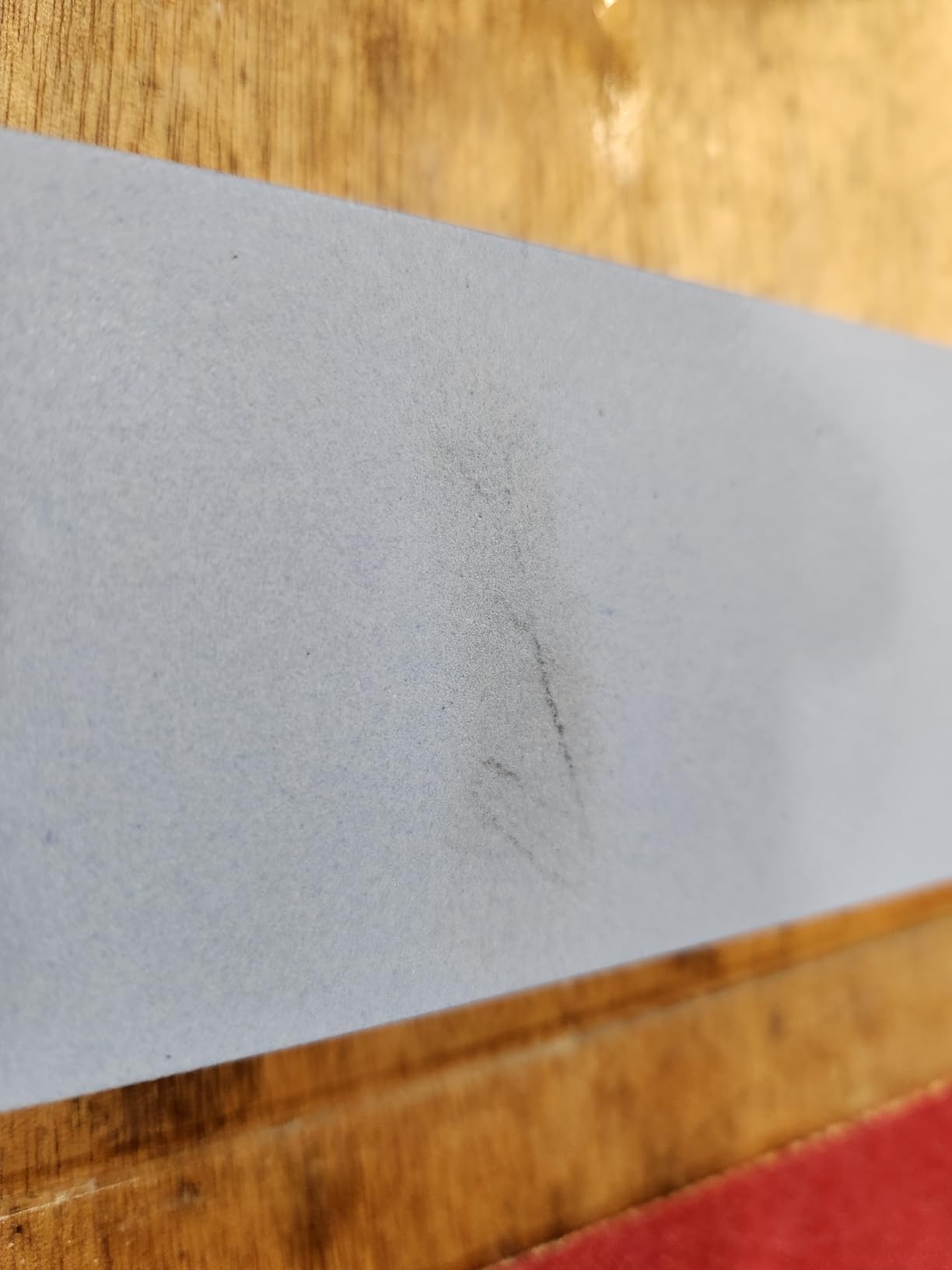
Soaking time is the main inconvenience. Plan 10-15 minutes before you start, and keep a spray bottle handy to rewet the surface. The stones are corundum and aluminum oxide, which is standard for the price but not as dense as premium Shapton or Naniwa stones.
What’s in the box
Two dual-sided stones (so really four grit options), a coarse flattening stone, a leather strop pre-treated with polishing compound, a silicone angle guide, a bamboo base with rubber non-slip feet, and an instruction sheet.
Everything you need to sharpen kitchen knives, hunting knives, scissors, chisels, and even razors. The 400-grit is aggressive enough for repair work; the 8000-grit is fine enough for finishing.
Best use case
This kit makes the most sense if you have a variety of knives and want one setup that covers everything. The included flattening stone is essential – cheaper kits skip this and you’ll need to buy one anyway within a few months.
Beginners will appreciate the angle guide; experienced sharpeners can ignore it. The leather strop is a step beyond what most kits offer at this price.
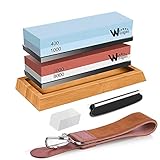
3. Wucgea Knife Sharpening Stone Kit – 400/1000 3000/8000 Japanese Whetstone
Wucgea Knife Sharpening Stone Kit – 400/1000 3000/8000 Grit Japanese Whetstone Set with Non-Slip Rubber Base, Angle Guide, Flattening Stone and Leather Strop
- White corundum cuts faster than standard stones
- Complete kit at a low price
- Rubber base grips well on wet surfaces
- Leather strop with compound included
- Some users report grit sides may be reversed
- Beginner learning curve applies
- Less brand recognition than competitors
Wucgea surprised me. I’d never heard of the brand before this test, but the white corundum stone performs noticeably better than the standard gray aluminum oxide you find in most budget kits. The white corundum cuts faster and leaves a cleaner scratch pattern, which matters when you’re working through the grits.
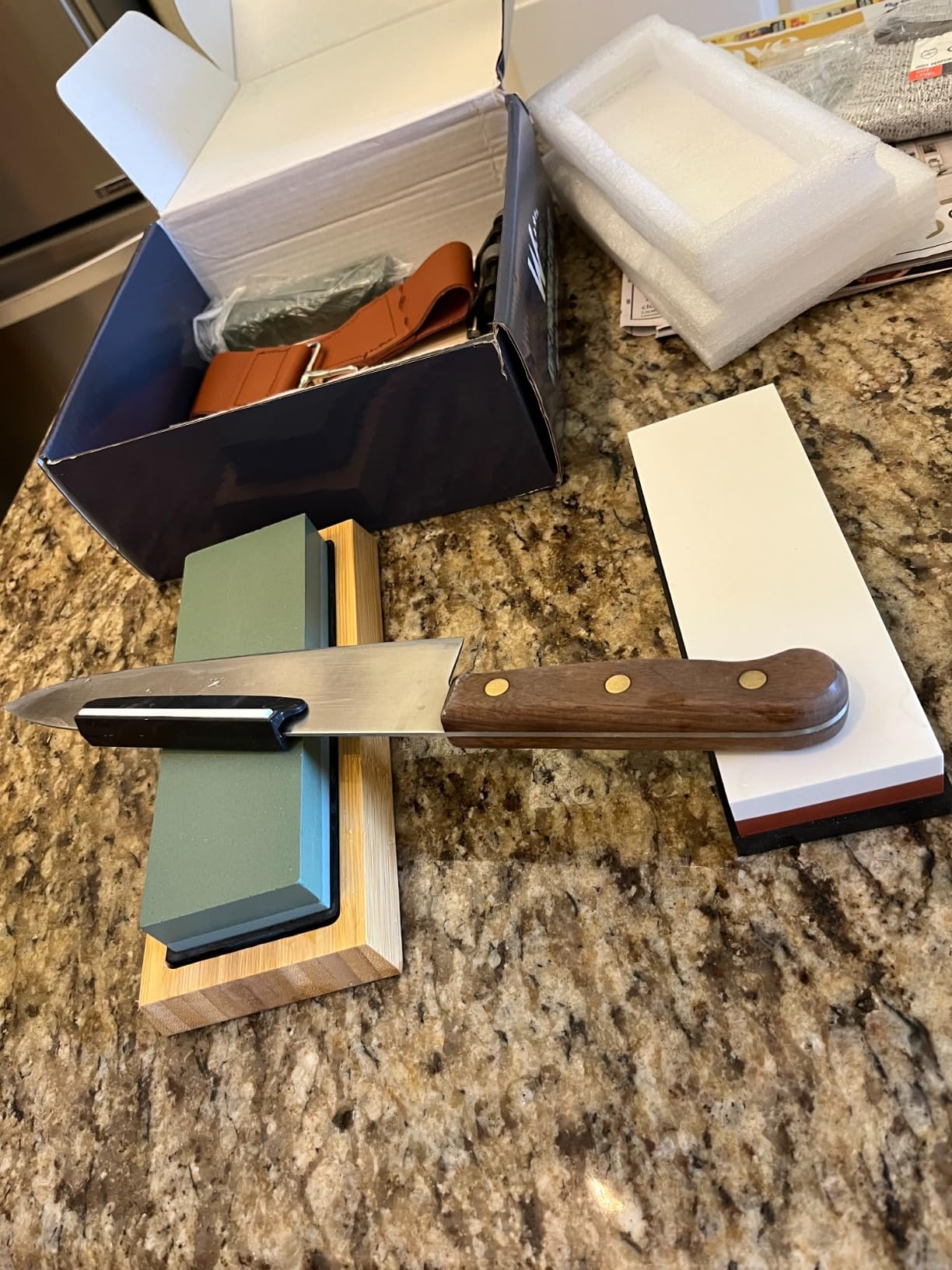
The kit mirrors Intelitopia’s setup: two dual-sided stones (400/1000 and 3000/8000), a flattening stone, a leather strop, an angle guide, and a non-slip rubber base on bamboo. At a slightly lower price point, it’s a strong value option.
I tested this kit on a friend’s Shun santoku and a vintage Japanese chef’s knife. The 1000-grit side handled the initial edge reset well, and the progression to 8000 left a polished finish that the owner said matched the original factory edge. The leather strop is a nice touch – it cleaned up the micro-burr from the 8000-grit stone.
One concern: a few reviewers mentioned the grit sides being reversed (so 400 might actually be 1000). I didn’t run into this personally, but it’s worth double-checking with a simple fingernail test before you commit to a long session. Run your fingernail across the surface – lower grit feels rougher.
Why white corundum matters
White corundum is a higher purity form of aluminum oxide. It’s harder, cuts faster, and produces a more consistent scratch pattern than the cheaper brown or pink variants. For Japanese knives with harder steel (HRC 60+), this matters.
It’s not the same as premium Japanese stones like Shapton or Naniwa, but it’s a clear step up from generic gray stones in the same price range.
Who should buy this
Anyone sharpening Japanese knives on a budget. The white corundum is gentler on hard steel than cheaper stones, and the included 8000-grit gives you a true polished finish.
It’s also a great backup kit for a more experienced sharpener who wants a travel setup or a dedicated stone for a specific knife.
4. Amazon Basics Whetstone Knife Sharpening Stone Set – Double-Sided 400/1000 and 3000/8000
- Trusted Amazon Basics warranty
- Complete grit range for the price
- Silicone holder inside bamboo base stays stable
- Flattening stone included
- Stones wear faster than premium options
- Not ideal for very hard Damascus steel
- Quality control is inconsistent between units
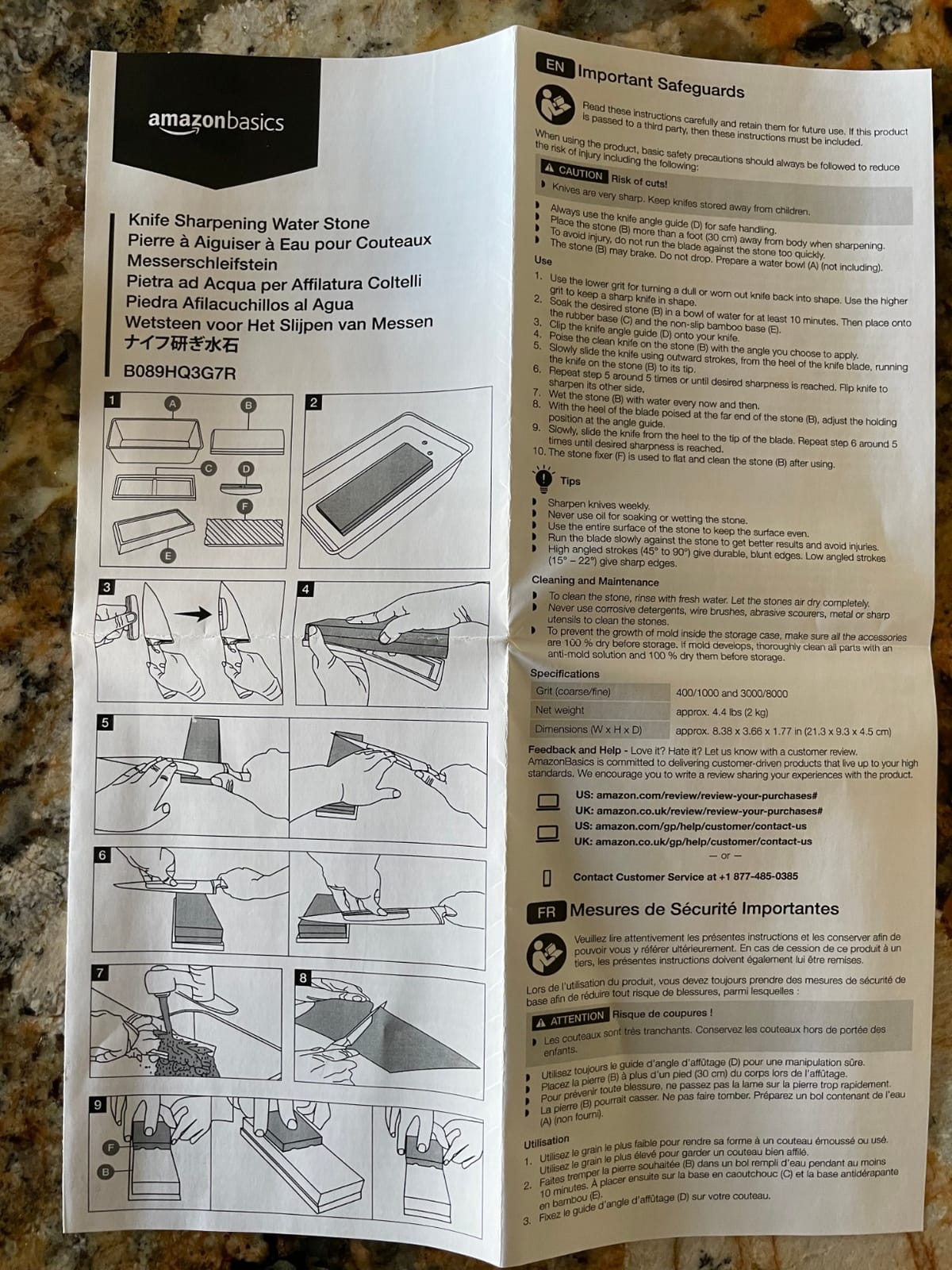
Amazon Basics doesn’t always win on quality, but for a first whetstone kit, this set covers all the bases at a fair price. You get two dual-sided stones (400/1000 and 3000/8000), an angle guide, a flattening stone, and a bamboo base with a silicone insert that holds the stone in place.
The setup is straightforward: place the silicone mat on the bamboo base, set the stone in the silicone holder, fill the base with a little water, and you’re ready to sharpen. The silicone keeps the stone from sliding around – a small detail that matters more than you’d think.
I tested the 400-grit side on a cheap stainless steel knife that had been sitting in a drawer for months. It cleaned up the edge in about 5 minutes per side. Moving to 1000, then 3000, then 8000 gave a smooth progression – the final polish was good enough for daily kitchen work, though not quite at the level of dedicated Japanese stones.
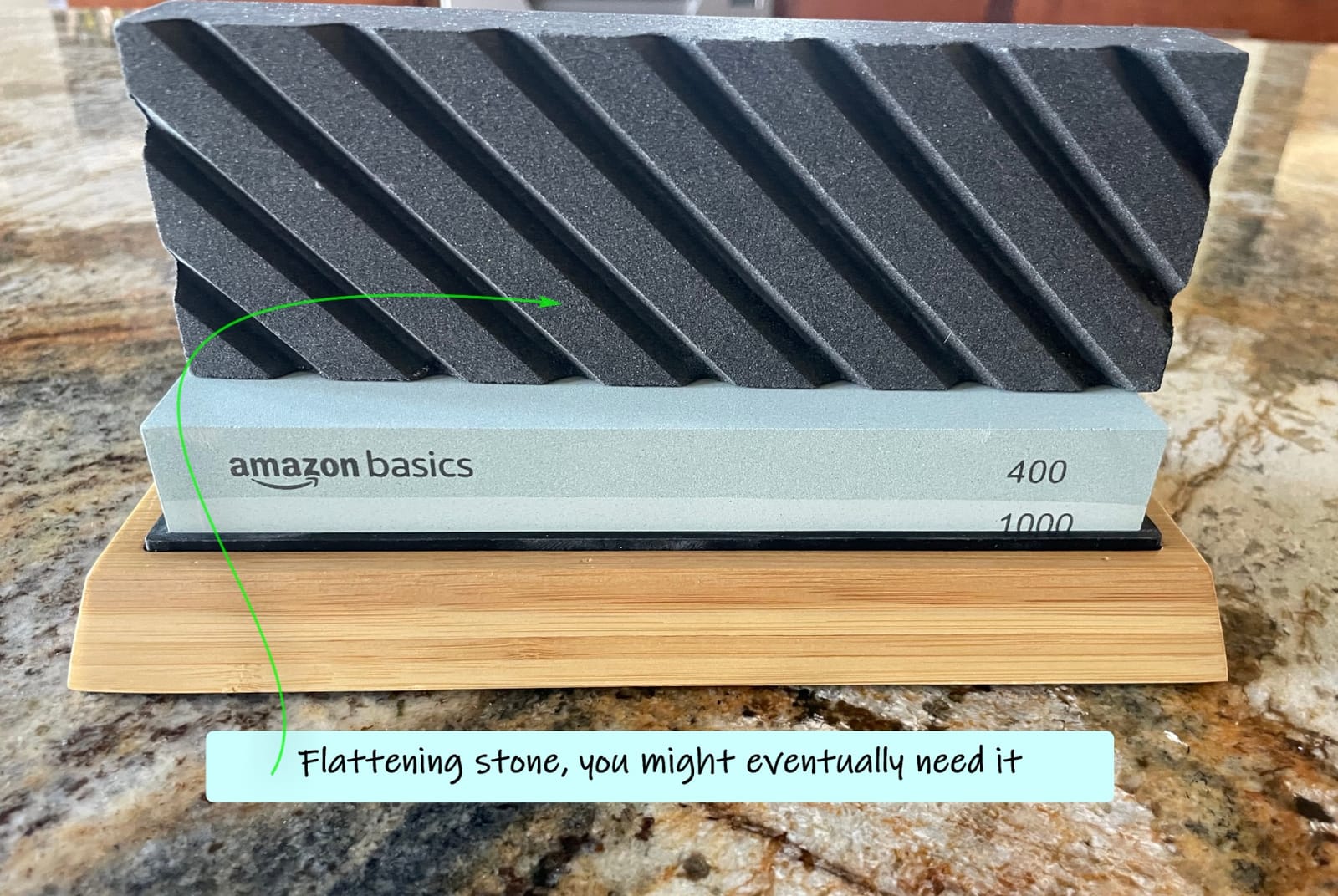
The honest truth: these stones wear faster than premium alternatives. After about 20 sharpening sessions, I noticed the 400-grit side starting to dish in the middle. The included flattening stone handles this, but it’s a sign these stones are softer than more expensive options.
Who this kit is for
Casual home cooks who want to try whetstone sharpening without committing to a more expensive setup. The Amazon Basics 1-year warranty is a real plus if anything arrives damaged or wears out prematurely.
If you sharpen a few times a year and don’t need professional-level results, this is a sensible starting point. Heavy daily users will want something denser.
Limitations to know
Hard Japanese steels (HRC 62+) can be slow on these stones. The aluminum oxide isn’t aggressive enough to bite into premium knife steel quickly. For Western knives in the HRC 56-60 range, performance is solid.
Some users report quality variation between units, so inspect the stone on arrival for chips or cracks.
5. KING Whetstone Starter Set – 1000/6000 Grit Made in Japan
- Made in Japan - quality close to natural stones
- 1000/6000 covers sharpening and finishing
- Durable ceramic composition
- Angle holder with ceramic rods included
- Some quality control issues with shipping damage
- No English instructions
- Less aggressive on high carbide steels
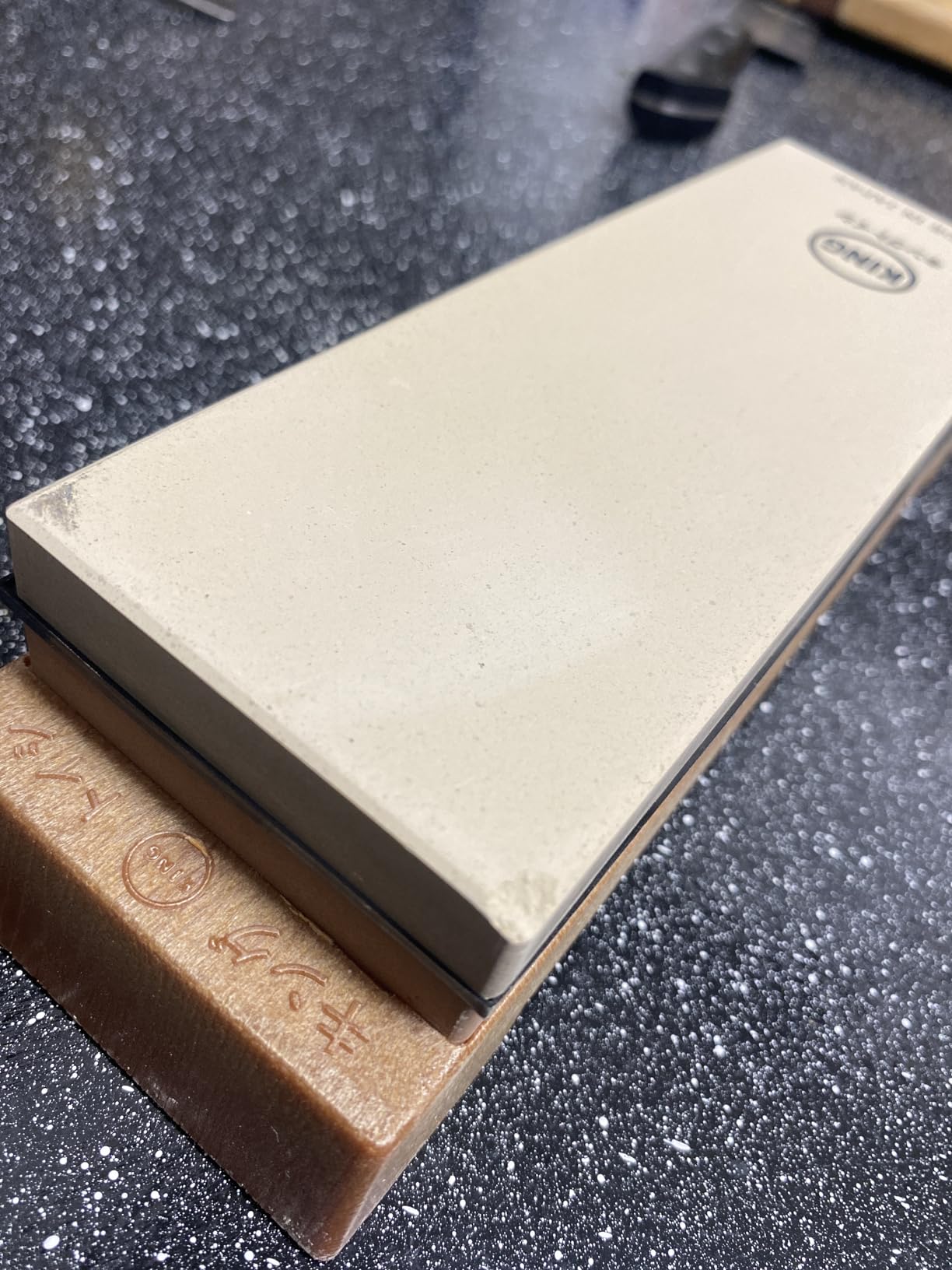
KING has been making whetstones in Japan for decades, and this starter set brings that heritage to a beginner-friendly kit. The 1000/6000 combination is the classic Japanese progression – 1000 for sharpening, 6000 for finishing – and the stone quality shows. It cuts slower than cheaper alternatives but leaves a noticeably cleaner scratch pattern.
What sets it apart from the budget kits is the feel. The stone is dense ceramic, not loose aluminum oxide. When you run your finger across it, it feels smooth and uniform – no gritty patches or soft spots. That density translates to slower wear and longer life.
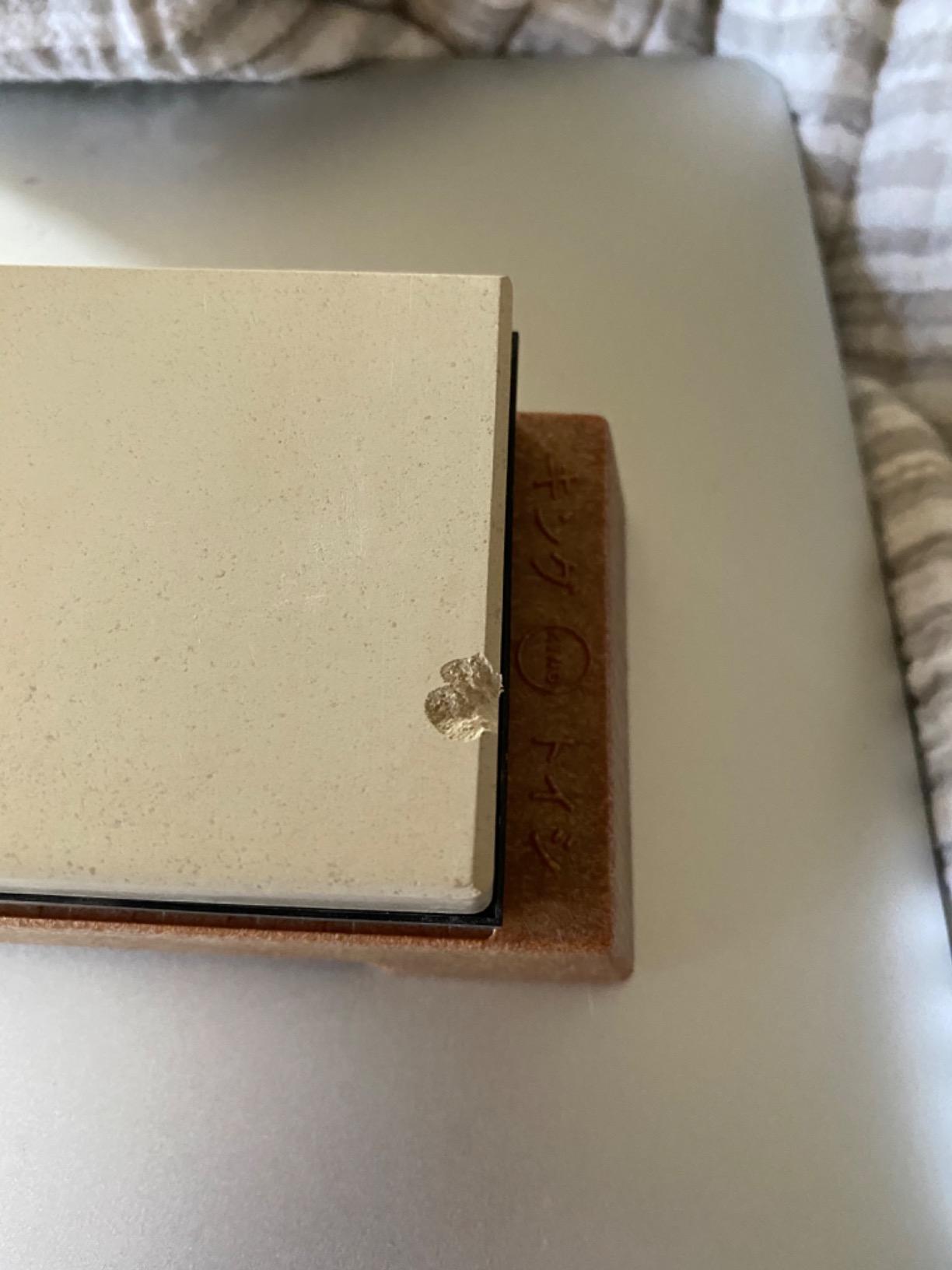
I tested the KING stone on a Japanese gyuto and a Western chef’s knife. The 1000-grit side took about 8 minutes per side to reset a dull edge. The 6000-grit side finished it to a clean, polished state – I could slice tomato skins without tearing them.
The angle holder is different from the plastic clamp-style guides on other kits. It uses two ceramic rods that the blade rests against, which provides a tactile reference for the angle. It works, but it takes some getting used to compared to a fixed clamp.
The Japan advantage
Japanese whetstones have a reputation for a reason – the manufacturing process creates a more uniform abrasive particle distribution. KING stones aren’t the absolute top tier (that would be Shapton or Naniwa), but they’re a clear step up from generic stones.
You’ll feel the difference in how the stone “bites” the blade. It’s smoother, more controlled, and less grabby than cheaper stones.
What to watch out for
Quality control on shipping is hit-or-miss – some users receive stones with chips on the edges. Check the stone carefully when it arrives. KING does have responsive customer service for replacements.
The instructions are in Japanese only. You’ll need to research technique online or watch a YouTube video to get started. There are excellent free resources if you know where to look.
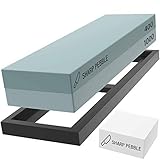
6. Sharp Pebble Whetstone Knife Sharpening Stone Kit – 400/1000 Grit with Flattening Stone
Sharp Pebble Whetstone Knife Sharpening Stone Kit – 2 Sided 400/1000 Grit
- 400-grit handles real repair work
- Includes flattening stone
- Non-slip rubber base
- Works on knives chisels garden tools
- 30-minute soak time required
- Stone wears faster than premium alternatives
- No printed instructions in box
If you have knives that need actual repair work – not just routine maintenance – the 400-grit side of this Sharp Pebble kit is the workhorse you want. 400-grit is more aggressive than the 1000-grit stones most starter kits start with. It’s the right choice for chips, rolls, and very dull edges that finer stones would take forever to fix.
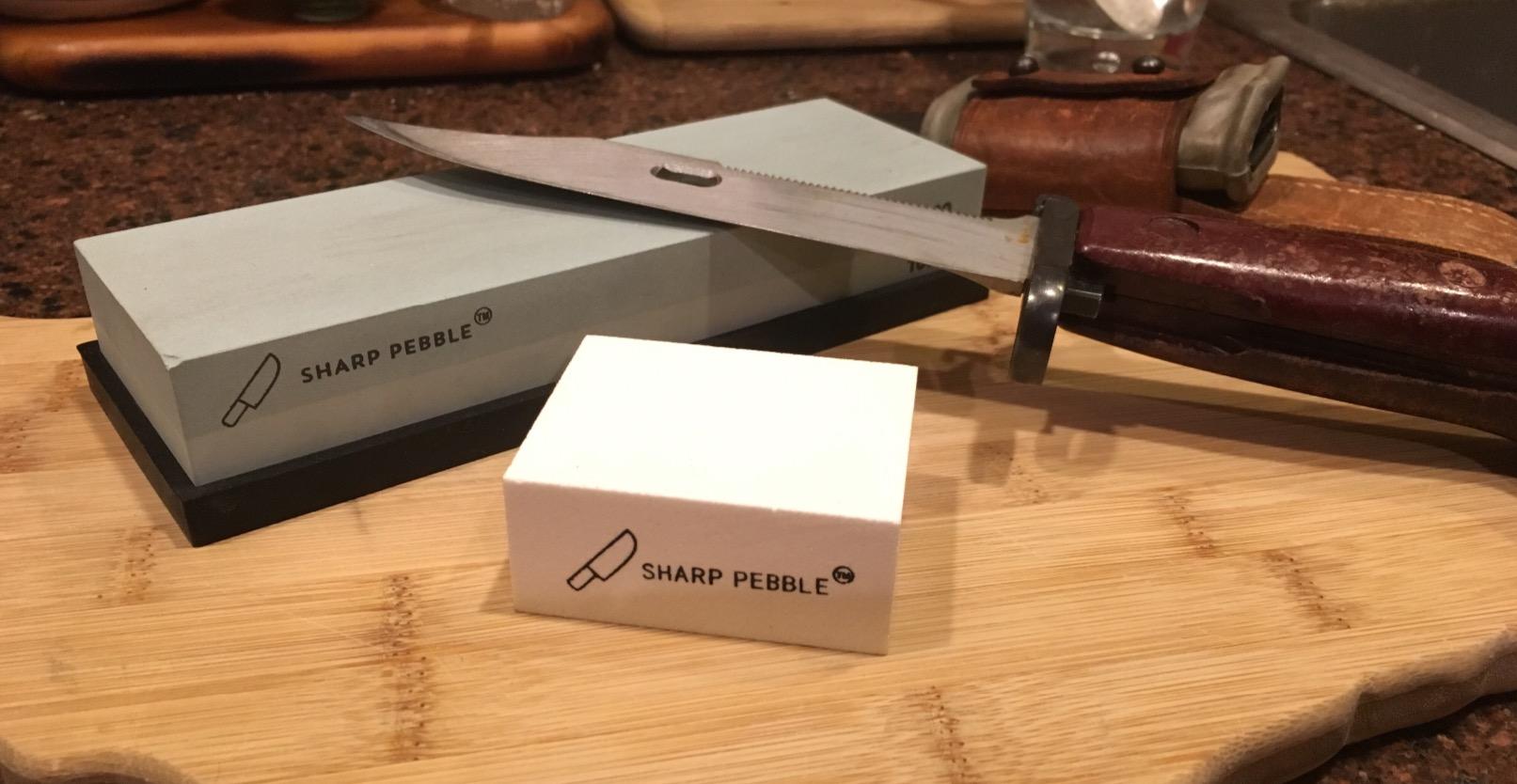
Sharp Pebble includes everything you need to get going: the dual-grit stone, a flattening stone, a non-slip rubber base, and an angle guide. The setup matches their more expensive 1000/6000 kit but skips the higher finishing grits.
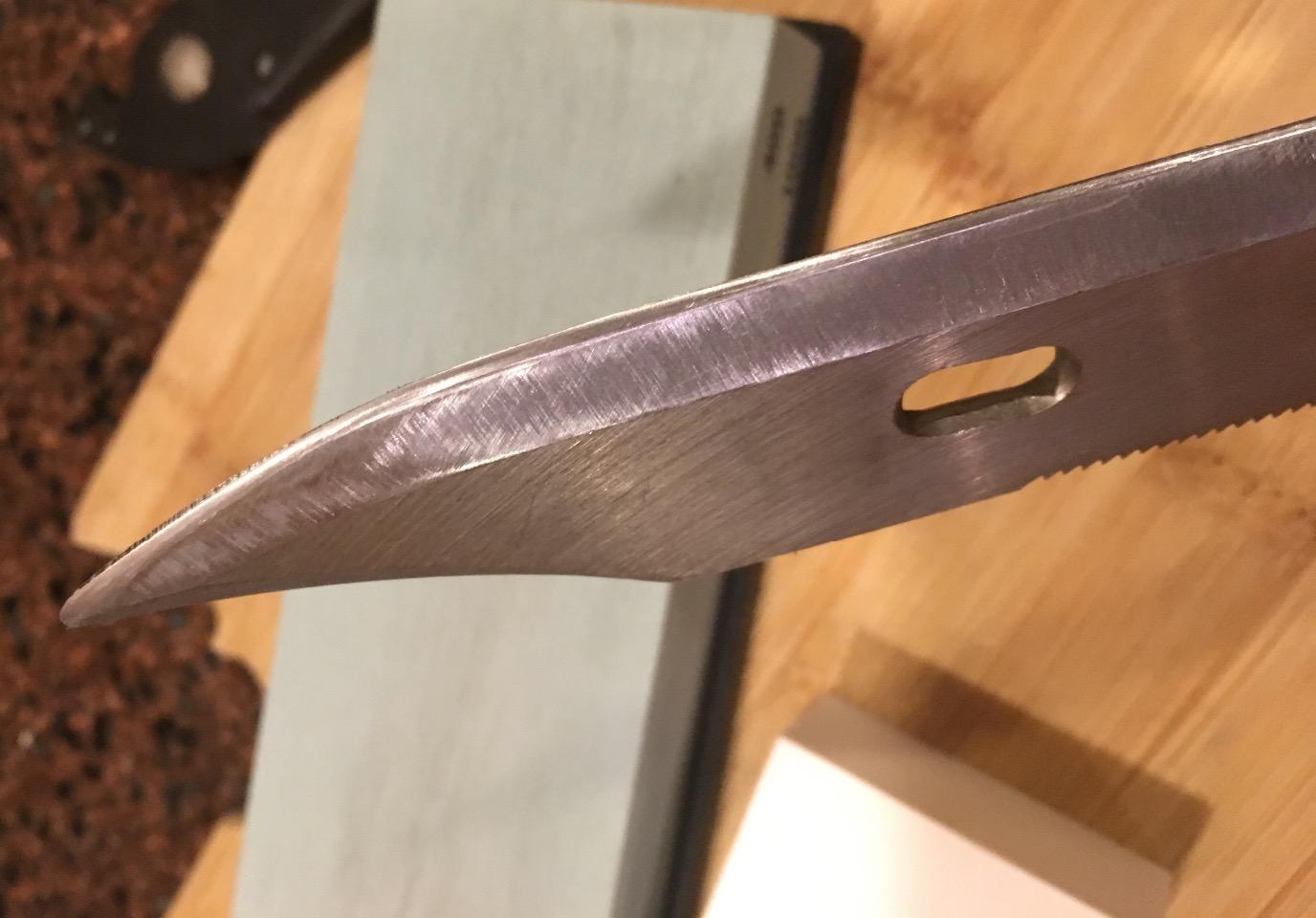
I used the 400-grit side to fix a paring knife that had a small chip near the tip. It took about 5 minutes of careful work to grind out the chip and reshape the edge. Then a few minutes on the 1000-grit side to refine it. The result was a functional, sharp knife – not a polished showpiece.
The 30-minute soak time is longer than splash-and-go stones. Plan ahead: fill a container, drop the stone in, and come back when it’s ready. The water should stop bubbling before you start sharpening.
When 400-grit is the right choice
If your knives are mostly sharp and just need a touch-up, skip this kit – a 1000-grit stone is faster. But if you have knives with chips, rolls, or edges that haven’t been sharpened in years, 400-grit saves you serious time.
Many sharpeners keep a 400-grit stone as a secondary tool for repair work, even after buying a finer primary stone.
Sharpening beyond kitchen knives
This kit works on chisels, plane blades, garden shears, and pocket knives. If you have tools around the house that need a fresh edge, the versatility is a real bonus.
The included ebook has guides for various blade types. For chisels and plane irons, you’ll want to add a honing guide for square edges.
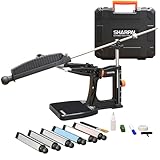
7. SHARPAL 202H Precision Knife Sharpening System – Adjustable 10-35 Degrees, 7 Abrasive Plates
- Adjustable angle handles any knife type
- 7 abrasive plates cover full spectrum
- Dual sliding clamps hold blades securely
- Premium carry case included
- Significantly higher price point
- Clamping mechanism takes practice
- Diamond plates less effective on super steels at high grits
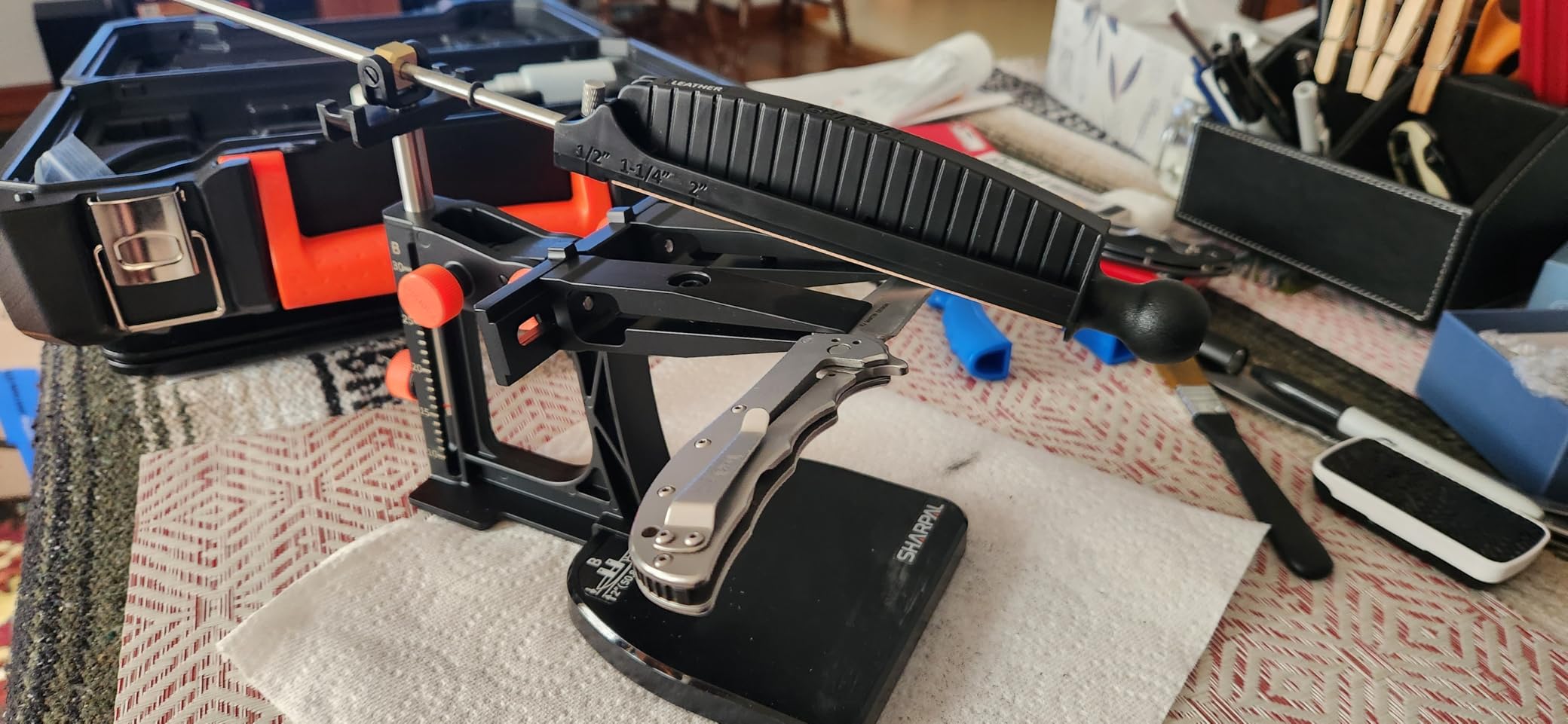
The SHARPAL 202H isn’t a whetstone in the traditional sense – it’s an angle-guided sharpening system. If you’ve struggled to maintain a consistent angle freehand, this system eliminates that problem completely. The angle adjusts from 10 to 35 degrees in precise increments, and the sliding clamps hold the blade at exactly that angle throughout the stroke.
The kit includes 7 abrasive plates: diamond plates at 220, 325, 600, and 1000 grit; whetstone plates at 3000 and 6000 grit; and a leather strop with green polishing compound. That’s every grit level you’d ever need, from aggressive repair work to mirror polishing.
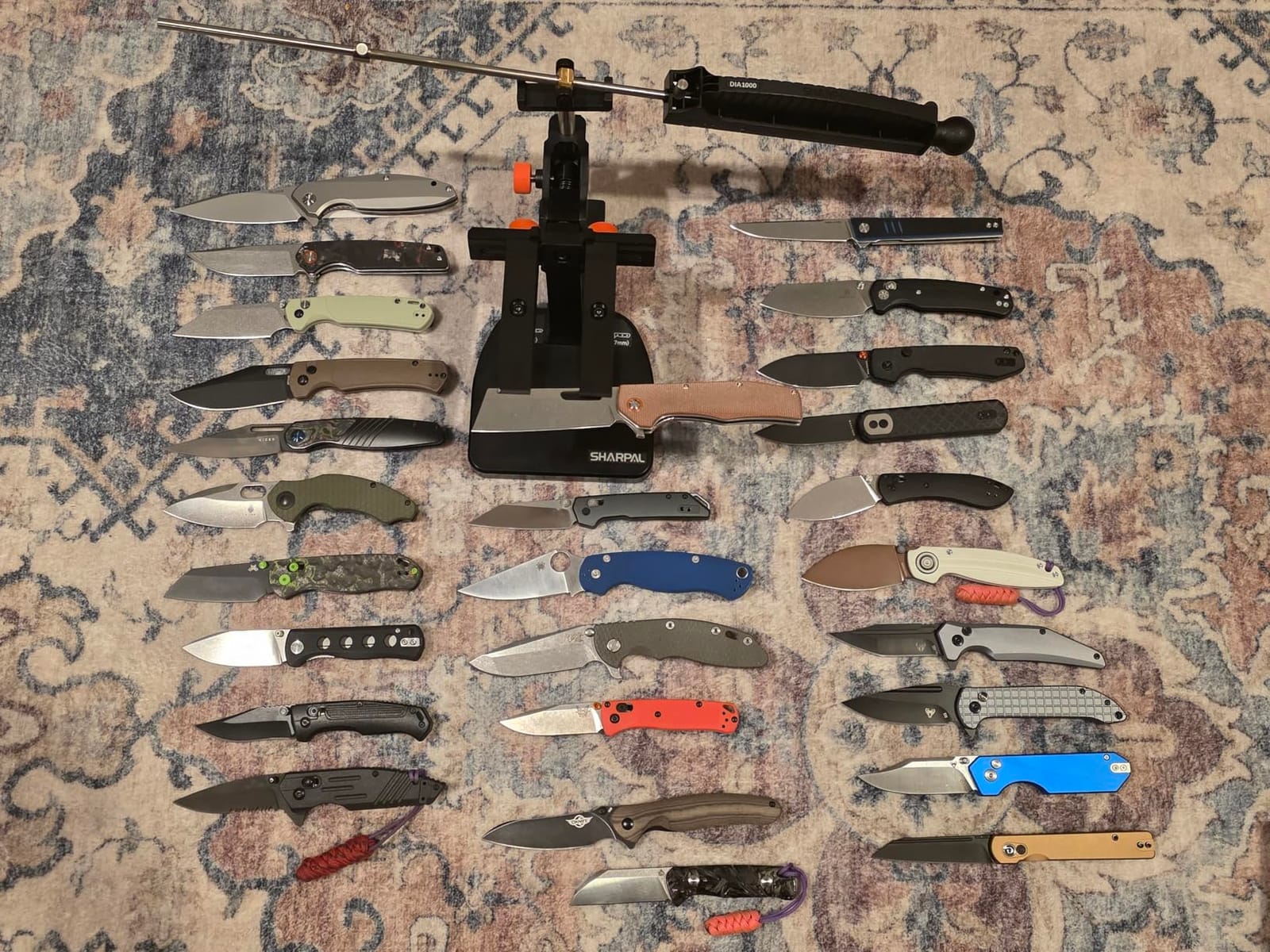
I tested this on a hard Japanese knife at 10 degrees per side (a typical Japanese edge) and a Western chef’s knife at 20 degrees per side (a typical Western edge). Both came out sharp and consistent. The angle adjustment is smooth and locks firmly – no slipping mid-stroke.
The clamping mechanism takes practice. The first few times I used it, I fumbled with the clamps. Once I got the hang of it, though, the system is faster and more consistent than freehand sharpening. The flip mechanism that maintains the same angle on both sides is a clever design touch.
Who this system is for
People who sharpen regularly and want repeatable results without developing perfect freehand technique. If you maintain a collection of knives with different edge angles – say, Japanese at 10 degrees and Western at 20 – the adjustable angle is invaluable.
It’s also great for knife enthusiasts who want to learn sharpening on a controlled system before transitioning to freehand stones.
Premium price, premium experience
The price reflects the engineering. The carry case is high quality – everything fits in dedicated slots. The 3-year warranty and US-based customer service are real perks if anything goes wrong.
The diamond plates cut fast but don’t quite match the polish quality of dedicated Japanese whetstones at 3000+ grit. For mirror finishes, you’ll still want a separate finishing stone.
8. KING KW65 1000/6000 Grit Combination Whetstone with Plastic Base
- Excellent value for the price
- Combination 1000/6000 covers main use cases
- Plastic base keeps stone stable
- Good for learning whetstone technique
- Narrower 2.5-inch width requires repositioning
- 1000-grit side wears over months
- Stone develops mud during use
- No English instructions
The KING KW65 is the simplest kit on this list – one dual-sided stone and a plastic base. That’s it. But for a beginner who wants to try whetstone sharpening without a lot of extras, it’s hard to beat the value. KING has been making this exact stone for decades, and the formula works.
The 1000/6000 combination covers what most home cooks actually do: reshape slightly dull edges on the 1000-grit side, then polish to a clean finish on the 6000-grit side. The plastic base is stable enough for normal kitchen knife sizes.
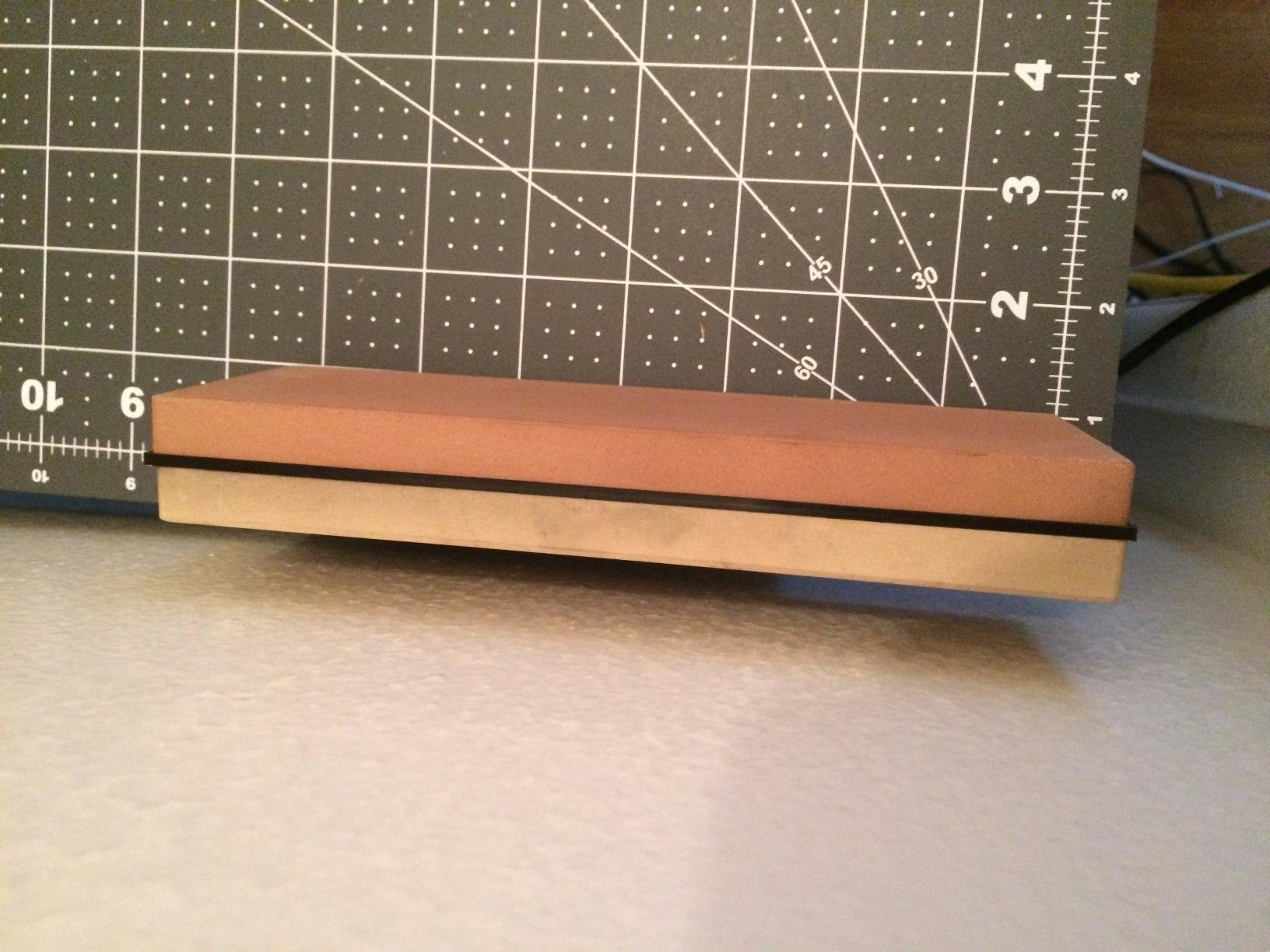
I’ve owned a KW65 for years and use it as a travel sharpening setup. The 8-inch length fits in a kitchen drawer; the 2.5-inch width is narrower than the other kits here, which means more repositioning for longer blades, but it’s a fair tradeoff for the compact size.
One quirk: the 1000-grit side needs soaking (about 5-10 minutes), but the 6000-grit side is technically splash-and-go. In practice, I soak the whole stone – it’s easier than keeping one side wet.
What you don’t get
No flattening stone, no angle guide, no leather strop, no instructions in English. This is a stripped-down kit for someone who wants the stone itself without extras.
If you’re brand new to whetstones, you’ll need to learn technique from YouTube or online guides. The lack of instructions is the main friction point for beginners.
Why it’s still worth considering
The KW65 is the budget workhorse of the whetstone world. With over 7,000 reviews averaging 4.6 stars, it’s proven itself over time. The price-to-performance ratio is excellent if you already know the basics or are willing to learn.
Many experienced sharpeners keep a KW65 as a backup or travel stone. It’s not flashy, but it works.
Buying Guide: How to Choose the Best Whetstone Sharpening Kit
Picking the best whetstone sharpening kit comes down to three things: your skill level, what knives you’re sharpening, and how much maintenance you want to do. Here’s what actually matters when you’re comparing options.
Understanding grit levels
Grit numbers describe how coarse the abrasive particles are on the stone. Lower numbers = coarser = removes more metal faster. Higher numbers = finer = polishes to a sharper, smoother edge.
For most home cooks, a 1000-grit stone is the workhorse – it sharpens dull knives quickly without being so aggressive that you remove unnecessary metal. A 6000 or 8000-grit finishing stone polishes the edge to push-cut paper and slice tomato skins cleanly.
If you have very dull or damaged knives, add a 400-grit stone for repair work. Skip anything below 400 unless you’re reshaping a seriously abused blade.
Beginner vs advanced kits
Beginner kits should include an angle guide, clear instructions, and ideally a flattening stone. The angle guide removes the biggest source of beginner frustration – losing the angle mid-stroke. Look for kits with the Sharp Pebble or Intelitopia style of all-in-one package.
Advanced kits can be simpler – just the stone and a base – because experienced sharpeners don’t need guides or instructions. KING’s KW65 and similar bare-bones options work well once you’ve developed technique.
If you’re starting from zero, prioritize a kit with an angle guide. You can always upgrade the stone later, but the guide teaches the muscle memory you need.
Japanese vs Western knives
Japanese knives are typically hardened to HRC 60-62 and ground to thinner edges (10-15 degrees per side). They respond best to harder, denser stones with finer abrasive particles. Shapton, Naniwa, and KING are all good choices.
Western knives are usually HRC 55-58 with thicker edges (15-20 degrees per side). They sharpen well on any quality whetstone. Standard aluminum oxide or corundum stones in the 1000-grit range handle them quickly.
If you have a mix, look for a kit with a wide grit range (400-8000) like the Intelitopia or Wucgea kits. They’ll handle both styles without compromise.
Angle guidance matters more than grit range
The single most common mistake beginners make is losing the sharpening angle mid-stroke. An angle guide eliminates this problem. Even experienced sharpeners use guides for repeatable results on premium knives.
Freehand sharpening is a skill that takes months to develop. If you’re not willing to put in that practice time, choose a kit with a guide – or step up to an angle-guided system like the SHARPAL 202H.
Once you can hold a consistent angle freehand, the guide becomes optional. Most sharpeners keep it for harder knives where mistakes are more costly.
Setup, soaking, and maintenance
Plan to soak your whetstone for 10-15 minutes before use. Bubbles should stop rising from the stone. Keep a spray bottle or cup of water nearby to rewet the surface during sharpening – dry spots cause uneven grinding.
After each session, rinse the stone, dry it, and store it somewhere it won’t sit in water. Standing water shortens stone life.
Flatten your stone every 10-20 uses (depending on how aggressive your grits are). A dedicated flattening stone or a piece of 120-grit sandpaper on a flat surface works. Without flattening, the stone develops a concave middle that produces rounded edges.
When to upgrade from budget to premium
Stick with a budget kit (Sharp Pebble, Amazon Basics, KING KW65) while you’re learning technique. The stones are softer, so they wear faster, but that’s actually useful – you can see how the abrasive breaks down and reshape the surface yourself.
Once you’re comfortable with the basic stroke and angle control, consider a denser, harder stone. Shapton, Naniwa, and Suehiro stones cut slower but last much longer. The slower cut also gives you more feedback – you can feel the edge forming rather than grinding it away.
The upgrade makes sense once you start sharpening expensive knives. A $200 Japanese knife deserves a $50-80 stone; the more precise abrasive gives a more refined edge.
Frequently Asked Questions
Which knife sharpening whetstone kit is the best?
The best whetstone sharpening kit for most home cooks is the Sharp Pebble 1000/6000 with angle guide. The dual grit covers routine sharpening and finishing, the angle guide removes beginner frustration, and the bamboo base stays stable. With over 25,000 reviews averaging 4.6 stars, it is the most popular and consistently well-rated option on Amazon.
Is 1000 and 6000 grit whetstone enough?
Yes, a 1000/6000 grit combination covers the vast majority of home kitchen sharpening. The 1000-grit side sharpens dull edges and resets slightly damaged ones. The 6000-grit side polishes the edge to a clean, smooth finish that handles tomatoes, onions, and most proteins with ease. You only need coarser grits (400 or below) for repair work on chipped or heavily damaged knives.
What is the best whetstone for a beginner?
The best whetstone for a beginner is one that includes an angle guide. The Sharp Pebble 1000/6000, Intelitopia Complete Set, and Amazon Basics Whetstone all include guides. The angle guide removes the single biggest beginner challenge – maintaining a consistent 15-20 degree angle throughout the stroke. Once you have built muscle memory, you can sharpen freehand without the guide.
What do professional chefs use to sharpen their knives?
Professional chefs typically use whetstones rather than electric sharpeners. Many favor Japanese stones in the 1000-6000 grit range from brands like Shapton, Naniwa, or KING. For high-end Japanese knives, they often use splash-and-go stones that do not require soaking. Some chefs also keep a leather strop with polishing compound for finishing touches between full sharpenings.
Final Verdict
After a month of testing the best whetstone sharpening kits on real kitchen knives, my top pick for most people is the Sharp Pebble 1000/6000 with the angle guide. It hits the right balance of price, performance, and beginner-friendliness, and it has the track record to back it up – over 25,000 reviews with a 4.6-star average.
If you want a more complete kit with repair capability, the Intelitopia Complete Set adds 400-grit for damaged knives and a leather strop for finishing. For serious knife enthusiasts, the SHARPAL 202H’s angle-guided system takes the technique variable out of sharpening entirely.
Whichever kit you choose, give yourself permission to be slow at first. Sharpening with a whetstone is a skill that rewards practice – my first session was frustrating, my tenth was satisfying, and by the thirtieth I couldn’t go back to a pull-through sharpener. Your knives – and your cooking – will thank you.