
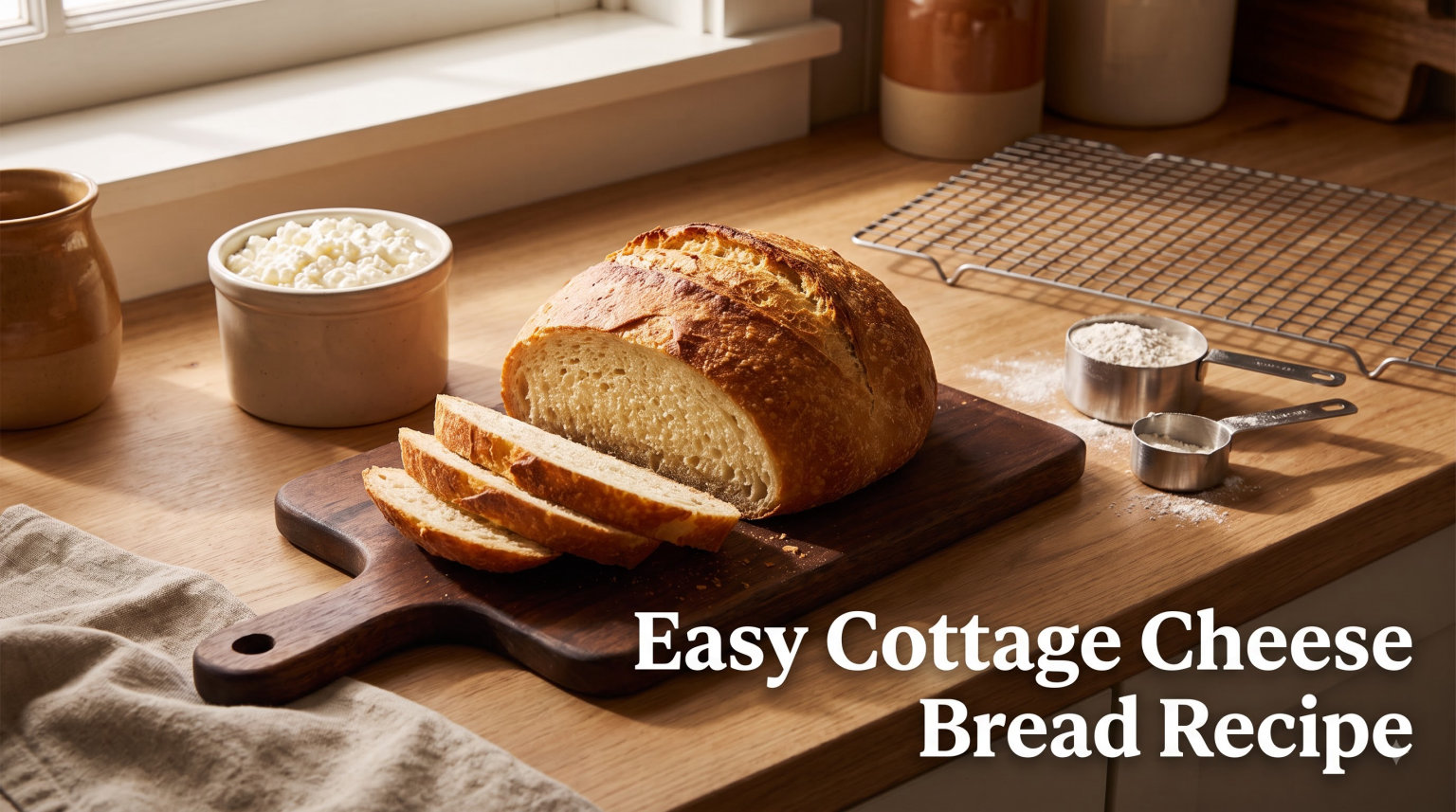
For a dinner I can plan with confidence, I use cottage cheese bread recipe. The dependable result comes from one practical choice: blend the wet ingredients smooth, measure flour carefully, and bake until the center is set rather than judging color alone. The guide below explains the texture, timing, substitutions, serving options, and storage without guesswork.
I have also included high-protein cottage cheese bread guidance for the exact moments that decide the result, from prep and doneness to storage. For another practical dinner, browse these easy high protein dinner recipes.
Table of Contents
Before making Easy cottage cheese bread recipe
Why You Will Love This cottage cheese bread
This is not your typical bread recipe, and that is exactly the point. There is no yeast to bloom, no dough to knead, and no long rise time to plan your day around. You blend, you cook, and you eat.
Here is what makes this recipe stand out from the traditional loaves I grew up making.
It Comes Together in 5 Minutes
The prep work is genuinely fast. You dump cottage cheese and eggs into a blender, give it a quick spin, and the batter is ready. Most of the time involved is hands-off cooking while you set the table or scroll your phone.
No Yeast, No Kneading, No Stress
If you have ever been intimidated by bread baking, this is the recipe that changes things. The cottage cheese provides moisture and structure, while the eggs do the binding work that yeast and gluten usually handle. No proofing, no resting, no guessing whether your dough is too wet.
High Protein and Filling
Each slice packs a meaningful amount of protein thanks to the cottage cheese and egg base. I find that two slices keep me full through the morning in a way regular toast never does. For more protein-forward snack inspiration, browse our diabetic-friendly snack recipes which feature cottage cheese in several forms.
Friendly for Several Diets
Depending on the flour you choose, this bread can be gluten-free, low-carb, and vegetarian all at once. I will walk you through the flour options in the ingredients section so you can pick the one that fits your needs.
Ingredients for Easy Cottage Cheese Bread
For dependable cottage cheese bread recipe, blend the wet ingredients smooth, measure flour carefully, and bake until the center is set rather than judging color alone. The same rule keeps high-protein cottage cheese bread focused and balanced instead of a gummy middle or dense loaf. You may also want to save these easy no bake cheesecake recipe for your next meal plan.
The beauty of this cottage cheese bread is that the core ingredient list is short. Everything beyond the first two items is optional or a matter of preference.
Core Ingredients
2 large eggs – The eggs bind everything together and contribute to the fluffy texture. Room temperature eggs blend more evenly than cold ones.
Optional Flour (Choose One)
-
Adding a small amount of flour gives the bread more structure and a texture closer to traditional bread. Pick whichever fits your diet.
-
1/4 cup all-purpose flour for a classic soft bread texture.
-
1/4 cup rolled oats (blended fine) for a gluten-free version with a slightly nutty flavor.
-
1/4 cup almond flour for a low-carb, keto-friendly option that adds richness.
Optional Flavor Add-Ins
-
1/4 teaspoon salt – I recommend this even if your cottage cheese is salted, because it balances the flavor.
-
1/2 teaspoon garlic powder or onion powder for savory bread.
-
1 tablespoon fresh or dried herbs like rosemary, thyme, or chives.
-
1/4 cup shredded cheese like cheddar or mozzarella folded into the batter.
-
1 teaspoon honey or maple syrup if you want a subtle sweetness for breakfast-style bread.
-
Everything bagel seasoning sprinkled on top before cooking for a crunchy, savory crust.
Equipment You Will Need
You do not need any specialty equipment for this recipe, which is part of why it has become so popular.
Blender or food processor – A standard blender works best for getting the cottage cheese completely smooth. A food processor or immersion blender also works.
Mixing bowl – If you are adding flour or extras, you will want a bowl to fold them in after blending.
Non-stick skillet or baking pan – A 10-inch skillet is ideal for flatbreads. An 8×8 baking pan works for the oven method.
Spatula – For flipping and removing the bread without tearing it.
Measuring cups and spoons – Standard kitchen measuring tools.
How to Make Cottage Cheese Bread – Step by Step
For food-safety temperatures and handling limits, I follow the USDA food-safety guidance and use an instant-read thermometer whenever doneness is uncertain.
I judge cottage cheese bread recipe by the finished texture and temperature, not by the clock alone. With high-protein cottage cheese bread, a tester should come out without wet batter, and the loaf should feel springy before cooling completely for clean slices. For a useful companion guide, see these can you freeze cream cheese safely.
-
Blend the Cottage Cheese and Eggs: Add the 1 cup of cottage cheese and 2 large eggs to your blender. Blend on medium speed for about 20 to 30 seconds, or until the mixture is completely smooth with no visible curds. You are looking for a consistency similar to a thin pancake batter. If the mixture seems too thick, add a tablespoon of water or milk and blend again briefly. If you do not have a blender, you can mash the cottage cheese with a fork until as smooth as possible, then whisk in the eggs thoroughly. The texture will be slightly chunkier, but it still works.
-
Add Flour and Seasonings (If Using): Pour the blended mixture into a mixing bowl. Add your chosen flour (start with 1/4 cup), salt, and any dry seasonings. Stir gently with a spatula or whisk until just combined. Do not overmix at this stage. A few small lumps are fine and actually help keep the bread tender. Overmixing can make the bread dense. This is also the moment to fold in shredded cheese, herbs, or other add-ins if you are using them.
-
Choose Your Cooking Method: Now decide whether you want to cook the bread on the stove or bake it in the oven. I will cover both.
-
Pan Method – Cook on the Stove: Heat a non-stick skillet over medium-low heat and lightly coat with butter, ghee, or oil. Let the pan get warm before adding batter, about 2 minutes. Pour about 1/4 cup of batter into the pan for each bread round. The batter will spread into a circle roughly 4 to 5 inches across. You can cook 2 to 3 rounds at once depending on your pan size. Cook for 4 to 5 minutes on the first side, until the edges look set and the bottom is golden brown. Flip carefully with a spatula and cook another 3 to 4 minutes on the second side. Transfer to a plate and repeat with the remaining batter. This recipe makes about 6 to 8 small flatbreads.
-
Oven Method – Bake Into a Loaf: Preheat your oven to 375 degrees Fahrenheit. Line an 8×8 baking pan with parchment paper or grease it well. Pour the entire batch of batter into the prepared pan and spread it evenly. Bake for 25 to 30 minutes, until the top is golden and the center is set when you press lightly on it. Let the bread cool in the pan for 5 minutes before slicing into squares or wedges. The oven method produces a thicker, more sliceable bread that works well for sandwiches or toast.
-
Serve and Enjoy: Serve the bread warm for the best texture and flavor. It is delicious plain, with butter, or topped with your favorite spreads. For a quick meal, I love pairing it with scrambled eggs and fresh fruit for breakfast, or using it as a base for avocado toast at lunch. If you want more ideas, our easy lunch recipes collection has plenty of pairing inspiration.
This cottage cheese bread comes together fast, but I want to walk you through each step in detail so your first batch turns out as good as the pictures. I will cover both the pan method and the oven method.
Expert Tips for the Best Cottage Cheese Bread
-
Blend Until Completely Smooth: The single biggest factor in getting a bread-like texture rather than a lumpy pancake is how well you blend the cottage cheese. Run the blender a full 20 to 30 seconds and check that no curds remain visible. Smooth batter equals smooth bread.
-
Use Medium-Low Heat on the Stove: Cottage cheese bread browns faster than regular pancakes because of the natural sugars in the dairy. Medium-low heat gives the inside time to cook through before the outside burns. If your bread is browning too quickly, drop the heat down a notch.
-
Do Not Skip the Resting Moment: Once you mix in the flour, let the batter sit for 2 to 3 minutes. This gives the flour time to hydrate, which produces a more tender bread. It is a small step that makes a noticeable difference.
-
Grease the Pan Generously the First Time: Even with a non-stick pan, the first batch can stick if the pan is not hot enough or well-greased. Use a little butter or oil for the first round, then you can usually reduce it for subsequent batches.
-
Make a Double Batch: This bread stores and freezes beautifully, so it is worth making extra. I almost always double the recipe and stash the extras for busy mornings. If freezer-friendly cooking appeals to you, our freezer meal recipes guide has more make-ahead ideas.
Delicious Variations to Try
-
Garlic Herb Bread: Add 1 teaspoon of garlic powder, 1 tablespoon of dried Italian herbs, and a pinch of black pepper to the batter. Top with a little grated Parmesan before cooking. This version is perfect alongside soup or pasta.
-
Cheddar Jalapeno Bread: Fold 1/4 cup of shredded sharp cheddar and 1 tablespoon of finely diced jalapeno into the batter. The result is a slightly spicy, cheesy bread that makes an excellent snack on its own.
-
Cinnamon Sweet Bread: Add 1 teaspoon of cinnamon and 1 tablespoon of honey or maple syrup to the batter. Cook as usual and serve with cream cheese or a drizzle of additional honey.
-
Everything Bagel Bread: Sprinkle everything bagel seasoning generously over each bread round right after you pour the batter into the pan. Flip carefully so the seasoning transfers to the other side. The crunch and flavor are fantastic.
-
Gluten-Free Oat Version: Replace the all-purpose flour with 1/4 cup of finely blended rolled oats. Use certified gluten-free oats if you are sensitive to cross-contamination. The bread has a slightly heartier texture that works well for sandwiches.
Once you have the basic recipe down, the variations are nearly endless.
How to Store and Freeze Cottage Cheese Bread
This bread keeps well, which makes it great for meal prep and batch cooking.
Storing in the Refrigerator
Let the bread cool completely on a wire rack before storing. Place the cooled pieces in an airtight container and refrigerate for up to 4 days. Layer parchment paper between pieces to prevent sticking.
Reheating Refrigerated Bread
To reheat, pop a slice in the toaster on a low setting, or warm it in a dry skillet over medium heat for about 1 minute per side. The toaster gives the best texture, with a slightly crisp exterior and soft middle.
Freezing for Later
Cottage cheese bread freezes beautifully for up to 3 months. Let the bread cool fully, then wrap each piece individually in plastic wrap or parchment paper. Place the wrapped pieces in a freezer-safe bag and squeeze out as much air as possible.
To thaw, transfer a piece from the freezer to the fridge the night before, or microwave on low power for 30 to 60 seconds. Finish in a toaster or skillet to restore the texture.
Nutrition Notes for Cottage Cheese Bread
One of the reasons this cottage cheese bread has gone viral is its nutrition profile. Compared to regular white bread, it delivers more protein and fewer empty carbs per slice.
Why the Protein Matters
For reference, the USDA MyPlate guidelines recommend spreading protein intake throughout the day for better absorption and appetite control. Starting your morning with a high-protein bread like this one is an easy way to do that.
Is Cottage Cheese Bread Low-Carb?
The 2-ingredient version without flour is genuinely low in carbs, making it suitable for keto and low-carb diets. Once you add flour, the carb count goes up, but it is still lower than most store-bought breads.
Frequently Asked Questions
How do I know when cottage cheese bread is ready?
A tester should come out without wet batter, and the loaf should feel springy before cooling completely for clean slices.
How do I prevent a gummy middle or dense loaf?
Blend the wet ingredients smooth, measure flour carefully, and bake until the center is set rather than judging color alone.
Can I substitute Greek yogurt for cottage cheese?
Not as a direct equal swap; yogurt changes moisture and protein structure, so use a recipe developed specifically for it.
What should I serve with cottage cheese bread?
Toast slices for eggs, soup, chicken salad, avocado, or a simple snack with nut butter.
Can I make cottage cheese bread ahead?
Cool completely before refrigerating airtight; toast or warm slices briefly to restore their texture.
Can I freeze cottage cheese bread?
Freeze cooled individual slices with parchment between them and toast straight from frozen.
Conclusion
For cottage cheese bread recipe, the most important move is to blend the wet ingredients smooth, measure flour carefully, and bake until the center is set rather than judging color alone. That same discipline makes high-protein cottage cheese bread useful on a busy day without sacrificing flavor or texture.
I recommend reading the method once, preparing every ingredient, and using the doneness cues above as the final authority. The dependable result comes from one practical choice: blend the wet ingredients smooth, measure flour carefully, and bake until the center is set rather than judging color alone. The guide below explains the texture, timing, substitutions, serving options, and storage without guesswork.