
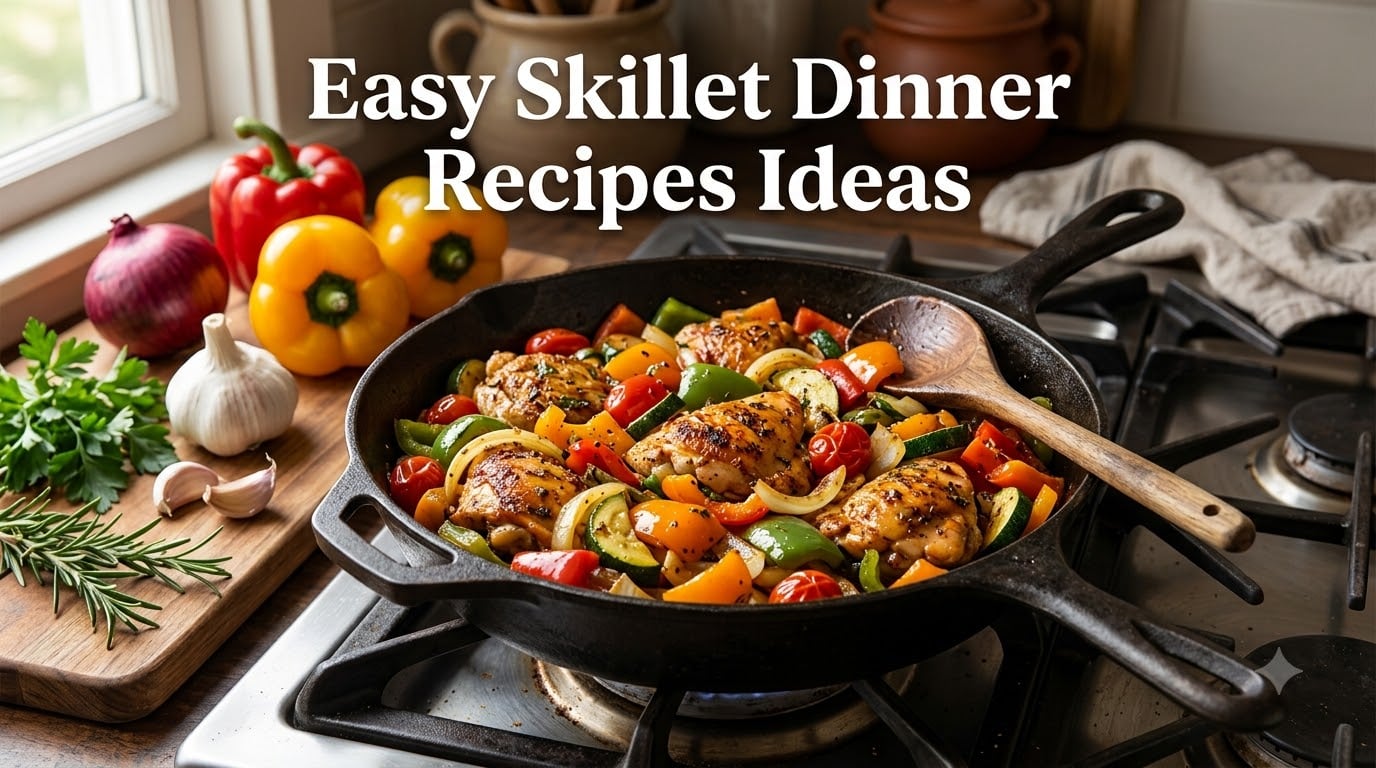
A skillet is useful because its heat is visible. Oil loosens, food begins to hiss, steam fades, and browned bits appear; each change tells me what the next ingredient needs. The pan is not just a promise of fewer dishes.
That is the boundary for these easy skillet dinner recipes ideas: every dinner stays on a stovetop burner, and every entry explains when to sear, when to lower the heat, and when a lid helps. Sheet pans, casseroles, and hidden oven finishes belong elsewhere.
The recipes use familiar 10- to 12-inch pans. If a skillet is smaller, divide a searing batch instead of stacking food; surface contact is part of the cooking method.
Table of Contents
Read the Pan Before Adding the Next Ingredient
A sharp hiss signals evaporation and browning. Quiet bubbling signals a simmer. A covered pan trades browning for trapped moisture. Those three states—not the protein name—organize the dinners that follow.
13 Easy Skillet Dinner Recipes Ideas That Stay on the Burner
Begin with a Hard Sear
1. Lemon Caper Chicken with Green Beans
Thin chicken cutlets and green beans share a lemon-caper pan sauce without an oven finish.
Serves: 6 | Time: 30 minutes | Method: 12-inch stainless skillet
Ingredients
-
1 1/2 pounds chicken cutlets
-
1 teaspoon kosher salt, divided
-
1/2 teaspoon black pepper
-
1/3 cup flour
-
2 tablespoons olive oil, divided
-
12 ounces green beans, trimmed
-
3 garlic cloves, minced
-
3/4 cup chicken broth
-
1 lemon
-
2 tablespoons capers
-
2 tablespoons butter
Instructions
-
Season chicken with half the salt and pepper and dust lightly with flour.
-
Sear in 1 tablespoon oil for 3 minutes per side until 165°F; transfer to a plate.
-
Add remaining oil and green beans for 5 minutes, then garlic, broth, remaining salt, lemon zest, and capers; cover for 4 minutes until beans are tender-crisp.
-
Uncover, swirl in butter and lemon juice, and return chicken for 1 minute to coat.
Substitutions: Use turkey cutlets at the same 165°F target. Asparagus needs about 2 fewer minutes.
Storage: Refrigerate 4 days and warm the chicken with a spoonful of broth to 165°F.
Tip: A thin flour coat thickens the pan sauce but should not form a heavy breading.
2. Steak, Pepper, and Chimichurri Skillet
Steak strips sear in batches before peppers and onions pick up the browned fond and fresh herb sauce.
Serves: 6 | Time: 28 minutes | Method: cast-iron skillet
Ingredients
-
1 1/2 pounds sirloin steak, sliced across the grain
-
1 teaspoon kosher salt
-
1/2 teaspoon black pepper
-
2 tablespoons neutral oil, divided
-
3 bell peppers, sliced
-
1 red onion, sliced
-
1 cup parsley leaves, chopped
-
2 tablespoons red wine vinegar
-
1 garlic clove, grated
-
1/4 teaspoon red pepper flakes
-
2 tablespoons olive oil
Instructions
-
Pat steak dry, season with salt and pepper, and sear half at a time in 1 tablespoon neutral oil for 2 to 3 minutes; reserve.
-
Add remaining neutral oil, peppers, and onion and cook 7 minutes until browned at the edges but still firm.
-
Mix parsley, vinegar, garlic, red pepper, and olive oil while the vegetables cook.
-
Return steak just until hot; for medium, confirm 145°F and rest 3 minutes before spooning chimichurri over the skillet.
Substitutions: Use chicken strips cooked to 165°F or portobello strips cooked until tender.
Storage: Store steak and vegetables 3 days; reheat to 165°F briefly so the meat does not toughen.
Tip: Two uncrowded steak batches preserve the high heat that creates fond.
3. Pork Chops with Cabbage and Apples
Boneless chops sear first, then cabbage and apple soften in mustard-cider drippings on the burner.
Serves: 4 | Time: 35 minutes | Method: lidded cast-iron skillet
Ingredients
-
4 boneless pork chops, 1 inch thick
-
1 teaspoon kosher salt, divided
-
1/2 teaspoon black pepper
-
1 tablespoon olive oil
-
1 small green cabbage, sliced
-
1 onion, sliced
-
2 firm apples, sliced
-
1 teaspoon caraway seed
-
1/2 cup apple cider
-
1 tablespoon Dijon mustard
-
1 teaspoon apple cider vinegar
Instructions
-
Season chops with half the salt and pepper and sear in oil for 4 minutes per side; reserve.
-
Cook cabbage and onion for 7 minutes, scraping the browned bits, then add apples and caraway for 2 minutes.
-
Whisk cider, Dijon, vinegar, and remaining salt into the pan; set chops above the cabbage and cover for 5 to 8 minutes.
-
Remove from heat when pork reaches 145°F and rest 3 minutes while the cabbage absorbs the sauce.
Substitutions: Use pear wedges or red cabbage with a few extra minutes. Chicken cutlets must reach 165°F.
Storage: Chill for 4 days and reheat leftovers to 165°F with a splash of cider.
Tip: Keeping the chops above the vegetables protects their seared surface during the covered finish.
4. Cajun Shrimp and Corn Rice Skillet
Quick shrimp, corn, tomatoes, and already-cooked rice get a smoky Cajun finish in under 25 minutes.
Serves: 6 | Time: 23 minutes | Method: wide nonstick skillet
Ingredients
-
1 1/2 pounds large shrimp, peeled and deveined
-
2 teaspoons Cajun seasoning, divided
-
2 tablespoons olive oil, divided
-
1 red bell pepper, diced
-
2 cups corn kernels
-
3 scallions, sliced
-
2 garlic cloves, minced
-
1 can (14 ounces) diced tomatoes, drained
-
4 cups cold cooked rice
-
1 lime
-
2 tablespoons chopped parsley
Instructions
-
Season shrimp with half the Cajun seasoning and sear in 1 tablespoon oil for 1 minute per side; transfer before fully cooked.
-
Cook bell pepper and corn in remaining oil for 5 minutes until browned in spots; add scallion whites and garlic for 30 seconds.
-
Fold in tomatoes, rice, and remaining seasoning and cook 5 minutes until the grains are steaming.
-
Return shrimp for 2 to 3 minutes until opaque, firm, and 145°F; finish with lime, parsley, and scallion greens.
Substitutions: Use small scallops at the same 145°F target or diced fully cooked sausage reheated to 165°F.
Storage: Eat refrigerated seafood within 2 days; cool rice promptly and reheat the full dish to 165°F.
Tip: Finishing partly cooked shrimp on top of hot rice protects them from a long, rubbery stir-fry.
5. Blackened Salmon with Lima Bean Succotash
Salmon portions sit over a buttery lima bean, tomato, and corn succotash after a short spice sear.
Serves: 4 | Time: 29 minutes | Method: heavy skillet with lid
Ingredients
-
4 salmon fillets, 6 ounces each
-
2 teaspoons blackening seasoning
-
1 tablespoon neutral oil
-
2 cups frozen lima beans, thawed
-
1 1/2 cups corn kernels
-
1 pint cherry tomatoes, halved
-
3 scallions, sliced
-
1/2 teaspoon kosher salt
-
1/3 cup vegetable broth
-
1 tablespoon butter
-
1 lemon
Instructions
-
Coat salmon with blackening seasoning and sear in oil for 3 minutes on the first side and 2 minutes on the second; transfer.
-
Add lima beans, corn, tomatoes, scallion whites, salt, and broth and simmer for 6 minutes.
-
Place salmon over the vegetables, cover, and cook 3 to 6 minutes until it flakes and reaches 145°F.
-
Stir butter and lemon juice into the succotash around the fish and add scallion greens.
Substitutions: Use cod portions or peeled shrimp, checking each for 145°F. Frozen edamame works for lima beans.
Storage: Refrigerate salmon 2 days and succotash 4; reheat gently to 165°F.
Tip: The covered succotash supplies gentle steam after the spices have toasted against the skillet.
For these easy skillet dinner recipes ideas, the first five use a sear mainly to build fond for vegetables or sauce. If seafood is the ingredient on hand, the garlic-butter shrimp variations explore the short shrimp clock in more flavor directions.
Let the Skillet Settle into a Simmer
6. Turkey, Zucchini, and Orzo Skillet
Ground turkey, zucchini, orzo, tomatoes, and feta cook with measured broth in a single steady simmer.
Serves: 6 | Time: 34 minutes | Method: deep sauté pan
Ingredients
-
1 1/2 pounds ground turkey
-
1 tablespoon olive oil
-
1 onion, diced
-
2 zucchini, diced
-
3 garlic cloves, minced
-
1 1/2 cups dry orzo
-
1 can (14 ounces) crushed tomatoes
-
3 cups chicken broth
-
1 teaspoon dried oregano
-
1 teaspoon kosher salt
-
1/2 cup crumbled feta
-
1/4 cup chopped mint
Instructions
-
Brown turkey and onion in oil for 8 minutes, breaking the meat into small pieces.
-
Add zucchini for 4 minutes, then garlic, orzo, oregano, and salt for 1 minute.
-
Pour in tomatoes and broth and simmer uncovered for 11 to 13 minutes, stirring from the edges.
-
Stop when orzo is tender and turkey reaches 165°F; remove from heat and add feta and mint.
Substitutions: Use ground chicken or beef, cooking beef to 160°F. Pearl couscous can replace orzo with similar monitoring.
Storage: Refrigerate 4 days and loosen with broth while reheating to 165°F.
Tip: Frequent edge-to-center stirring prevents small orzo grains from settling beneath the meat.
7. Salsa Verde Chicken Quinoa Skillet
Diced chicken, rinsed quinoa, beans, salsa verde, and peppers cook beneath one lid before fresh toppings.
Serves: 6 | Time: 38 minutes | Method: lidded sauté pan
Ingredients
-
1 1/2 pounds chicken thighs, diced
-
1 tablespoon olive oil
-
1 teaspoon cumin
-
1 teaspoon kosher salt, divided
-
1 cup quinoa, rinsed well
-
1 1/2 cups chicken broth
-
1 cup salsa verde
-
1 can (15 ounces) pinto beans, rinsed
-
1 bell pepper, diced
-
1 cup frozen corn
-
1 avocado, diced
-
1/4 cup cilantro
Instructions
-
Brown chicken in oil with cumin and half the salt for 6 minutes.
-
Stir in quinoa, broth, salsa verde, beans, bell pepper, corn, and remaining salt.
-
Bring to a simmer, cover, and cook on low for 18 to 22 minutes without repeatedly lifting the lid.
-
Continue until quinoa is tender and curled open and chicken is 165°F; rest 5 minutes, fluff, and add avocado and cilantro.
Substitutions: Use black beans or diced turkey tenderloin. A red salsa creates a deeper tomato flavor.
Storage: Keep avocado separate; refrigerate the cooked skillet 4 days and reheat to 165°F.
Tip: Rinsing quinoa and resting it covered remove bitterness and finish the last pockets of liquid.
8. Sausage, White Bean, and Escarole Skillet
Browned Italian sausage, creamy beans, escarole, tomatoes, and fennel create a brothy skillet supper.
Serves: 6 | Time: 31 minutes | Method: deep cast-iron skillet
Ingredients
-
1 pound Italian sausage, casings removed
-
1 tablespoon olive oil
-
1 onion, sliced
-
3 garlic cloves, sliced
-
1 teaspoon fennel seed
-
2 cans (15 ounces each) cannellini beans, rinsed
-
1 can (14 ounces) diced tomatoes
-
2 cups chicken broth
-
1 head escarole, chopped
-
1/2 teaspoon kosher salt
-
1/3 cup grated Parmesan
Instructions
-
Brown sausage in oil for 7 minutes, breaking it into rough pieces, and transfer.
-
Cook onion for 5 minutes, then garlic and fennel for 30 seconds.
-
Add beans, tomatoes, broth, escarole, salt, and sausage and simmer uncovered for 10 minutes.
-
Serve when escarole is tender and sausage reaches 160°F; scatter Parmesan over the broth.
Substitutions: Use turkey sausage and cook it to 165°F. Kale needs a few more minutes than escarole.
Storage: Refrigerate 4 days; bring sausage and broth back to 165°F before serving.
Tip: Returning sausage with the broth keeps its browned edges from disappearing during the onion stage.
9. Tomato Basil Tortellini with Spinach
Refrigerated tortellini simmers directly in a crushed-tomato cream sauce with spinach and basil.
Serves: 6 | Time: 25 minutes | Method: nonstick sauté pan
Ingredients
-
1 tablespoon olive oil
-
1 shallot, minced
-
3 garlic cloves, minced
-
1 can (28 ounces) crushed tomatoes
-
2 cups vegetable broth
-
1/2 teaspoon kosher salt
-
20 ounces refrigerated cheese tortellini
-
1/2 cup heavy cream
-
5 ounces baby spinach
-
1/2 cup grated Parmesan
-
1 cup basil leaves
Instructions
-
Soften shallot in oil for 3 minutes and add garlic for 20 seconds.
-
Pour in tomatoes, broth, and salt and simmer for 5 minutes.
-
Add tortellini and cook at a gentle bubble according to its package, stirring without breaking the pasta.
-
When tortellini are tender, lower the heat and fold in cream, spinach, Parmesan, and torn basil until smooth.
Substitutions: Use ravioli or shelf-stable gnocchi with its own cooking time. Half-and-half makes a lighter sauce.
Storage: Refrigerate for 3 days; add broth while reheating to 165°F because filled pasta absorbs sauce.
Tip: Adding dairy after the pasta softens keeps the tomato sauce from reducing too far.
10. Peanut Chicken Noodle Skillet
Thin chicken, cabbage, carrots, noodles, and a lime-peanut sauce come together without baking.
Serves: 6 | Time: 30 minutes | Method: wok or deep skillet
Ingredients
-
12 ounces dried rice noodles
-
1 1/2 pounds chicken breast, sliced thin
-
2 tablespoons neutral oil, divided
-
4 cups shredded cabbage
-
2 carrots, cut into matchsticks
-
3 scallions, sliced
-
1/3 cup creamy peanut butter
-
3 tablespoons low-sodium soy sauce
-
1 lime
-
1 tablespoon honey
-
1 teaspoon grated ginger
-
1/2 cup hot water
Instructions
-
Soak or cook noodles according to the package until flexible but firm; drain well.
-
Stir-fry chicken in 1 tablespoon oil for 6 minutes until 165°F and transfer.
-
Add remaining oil, cabbage, carrots, and scallion whites for 4 minutes while whisking peanut butter, soy sauce, lime juice, honey, ginger, and hot water.
-
Return chicken with noodles and sauce and toss for 2 minutes until glossy; add scallion greens.
Substitutions: Use tofu browned until crisp or thin pork cooked to 145°F. Sunflower-seed butter makes the sauce peanut-free.
Storage: Refrigerate 3 days and loosen noodles with water while reheating chicken to 165°F.
Tip: Firm noodles finish in the sauce instead of absorbing it all before reaching the skillet.
The steady-simmer dinners use enough liquid to cook a grain, filled pasta, beans, or noodles, but not enough to turn the pan into soup. Stir from the outer edge, where small starches settle first.
Lower the Heat for the Final Set or Glaze
11. Mediterranean Chickpeas with Eggs
Tomatoes, chickpeas, peppers, olives, and spices cradle eggs that set beneath a skillet lid.
Serves: 6 | Time: 30 minutes | Method: lidded skillet
Ingredients
-
2 tablespoons olive oil
-
1 onion, diced
-
1 red bell pepper, diced
-
3 garlic cloves, minced
-
1 teaspoon cumin
-
1/2 teaspoon smoked paprika
-
1 can (28 ounces) crushed tomatoes
-
2 cans (15 ounces each) chickpeas, rinsed
-
1/2 teaspoon kosher salt
-
6 large eggs
-
1/3 cup sliced olives
-
1/2 cup crumbled feta
-
1/4 cup parsley
Instructions
-
Cook onion and pepper in oil for 7 minutes; add garlic, cumin, and paprika for 30 seconds.
-
Stir in tomatoes, chickpeas, and salt and simmer uncovered for 8 minutes until thickened.
-
Make six wells, crack in eggs, cover, and cook 5 to 8 minutes until whites are set and yolks match the preferred firmness.
-
Remove from heat and add olives, feta, and parsley before carrying the skillet to the table.
Substitutions: Use white beans or add chopped spinach before the eggs. Omit feta for a dairy-free meal.
Storage: Refrigerate the chickpea base 5 days; cooked egg portions keep 3 days and should be reheated to 165°F.
Tip: A thick sauce holds the egg wells open; watery tomatoes let the whites spread unevenly.
12. Crisp Tofu, Mushrooms, and Snap Peas
Cornstarch-coated tofu browns before mushrooms, snap peas, and a ginger-soy glaze enter the skillet.
Serves: 5 | Time: 32 minutes | Method: seasoned cast-iron skillet
Ingredients
-
14 ounces extra-firm tofu, pressed
-
2 tablespoons cornstarch
-
3 tablespoons neutral oil, divided
-
12 ounces mushrooms, sliced
-
10 ounces snap peas
-
3 scallions, sliced
-
2 garlic cloves, minced
-
1 tablespoon grated ginger
-
3 tablespoons low-sodium soy sauce
-
1 tablespoon rice vinegar
-
1 tablespoon maple syrup
-
1 teaspoon sesame oil
Instructions
-
Tear tofu into bite-size pieces, toss with cornstarch, and brown in 2 tablespoons oil for 8 to 10 minutes until crisp; transfer.
-
Add remaining oil and mushrooms for 6 minutes without constant stirring, then snap peas for 3 minutes.
-
Stir in scallion whites, garlic, and ginger for 20 seconds while mixing soy sauce, vinegar, maple syrup, and sesame oil.
-
Return tofu, pour in glaze, and toss for 90 seconds until the sauce clings; finish with scallion greens.
Substitutions: Use tempeh or shelled edamame. Broccoli needs an extra 2-minute covered start.
Storage: Refrigerate 4 days and reheat uncovered to 165°F to protect the tofu edges.
Tip: Tearing creates craggy surfaces that hold cornstarch and glaze better than smooth cubes.
13. Spinach, Feta, and Potato Stovetop Frittata
Thin pre-cooked potatoes, eggs, spinach, tomatoes, and feta set gently under a lid with no oven step.
Serves: 6 | Time: 27 minutes | Method: 10-inch nonstick skillet with lid
Ingredients
-
10 large eggs
-
1/3 cup milk
-
1 teaspoon kosher salt, divided
-
1/2 teaspoon black pepper
-
1 tablespoon olive oil
-
12 ounces cooked baby potatoes, sliced thin
-
3 scallions, sliced
-
5 ounces baby spinach
-
1 cup cherry tomatoes, halved
-
3/4 cup crumbled feta
-
2 tablespoons chopped dill
Instructions
-
Whisk eggs, milk, half the salt, and pepper until no streaks remain.
-
Heat oil and brown potato slices for 5 minutes; add scallions, spinach, tomatoes, and remaining salt for 2 minutes.
-
Pour in eggs, scatter feta across the top, reduce heat to low, and cover for 9 to 13 minutes.
-
Remove from heat when the center is set and eggs reach 160°F; rest covered 3 minutes and add dill.
Substitutions: Use cooked sweet potato or roasted peppers. Goat cheese can replace feta.
Storage: Refrigerate wedges for 4 days and reheat to 165°F, or serve them cold within the safe storage window.
Tip: Low heat and a tight lid set the top with trapped steam before the bottom becomes tough.
Three Sounds Are More Useful Than One Timer
Listen for an active hiss while moisture leaves steak, tofu, or mushrooms. Wait for the softer plop of a steady simmer when orzo or quinoa needs absorption. After adding eggs, dairy, or a sugary glaze, lower the heat until the pan is nearly quiet. The clock still matters, but the sound identifies what the surface is doing.
A wide pan cannot replace enough food-safe heat. Poultry and leftovers should reach 165°F, ground beef 160°F, and whole cuts or seafood their stated target; the USDA temperature chart is the reference for those checks.
Frequently Asked Questions
Which skillet material is easiest for dinner?
Nonstick is forgiving for eggs and filled pasta, stainless steel builds useful fond, and cast iron holds heat for searing. The recipe’s heat pattern matters more than owning every material.
Why does meat steam instead of brown?
The surface may be wet, the pan may be crowded, or food may have entered before the oil was hot. Pat it dry and work in batches without raising the burner beyond the oil’s safe range.
When should I cover a skillet?
Use a lid after browning when grains must absorb liquid, dense vegetables need steam, or eggs need top heat. Remove it when sauce must reduce.
Can I use a smaller pan?
Yes, but sear in batches and watch liquid depth. A deep layer takes longer to reduce and can change a stir-fry into a braise.
How do I loosen browned bits without burning them?
Lower the heat, add measured broth, cider, or tomatoes, and scrape with a wooden spoon while the liquid bubbles. Black, acrid bits should not be folded into a sauce.
Final Take: Let the Skillet Tell You What Comes Next
Good easy skillet dinner recipes ideas move through heat states on purpose: sear while the pan hisses, simmer when starch or vegetables need moisture, and quiet the burner for a delicate finish. Read that progression and one stovetop pan becomes a method, not a gimmick.