
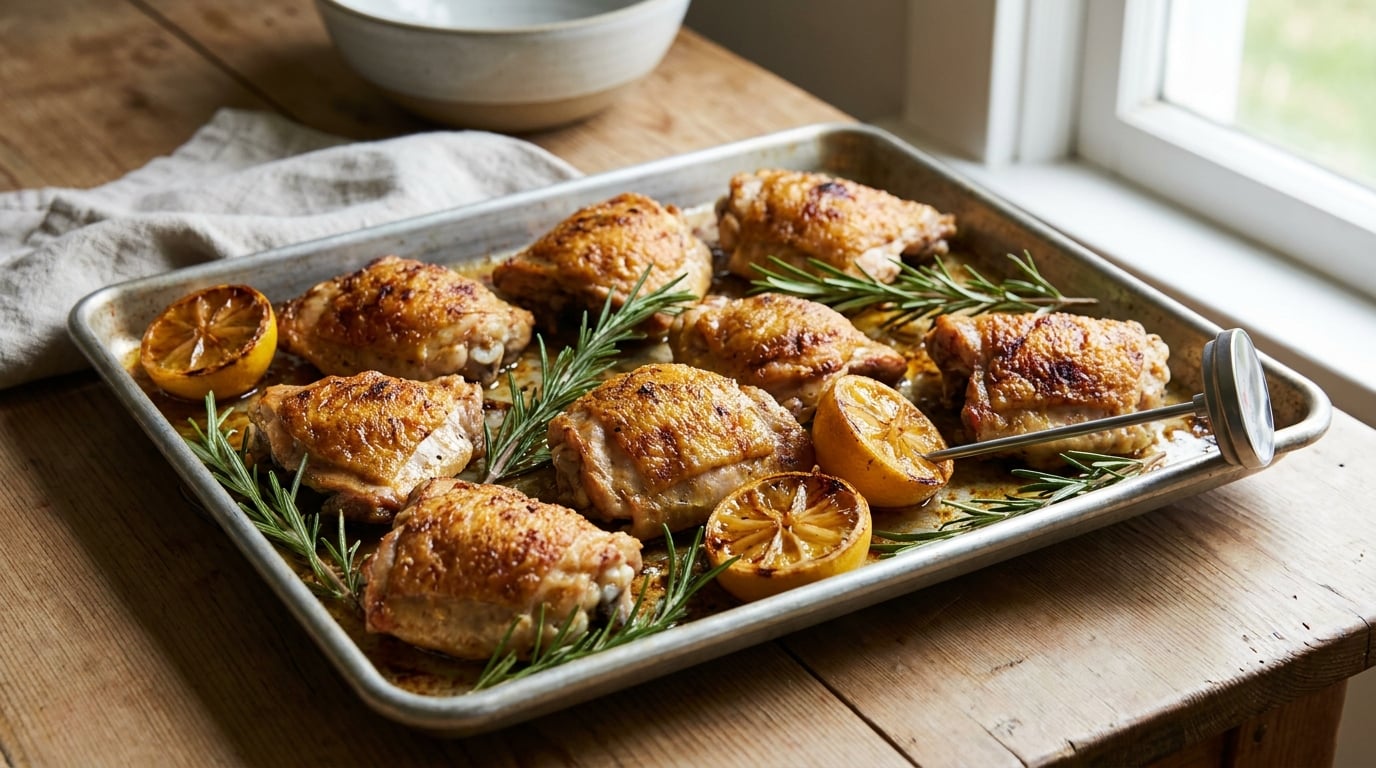
If you’ve ever pulled chicken thighs out of a 375°F oven at the 25-minute mark and worried they were still raw, this guide is for you. How long to bake chicken thighs at 375°F is one of those questions where the honest answer is a range, not a number. Boneless skinless thighs usually land in the oven for 25 to 30 minutes. Bone-in, skin-on pieces ask for 40 to 45 minutes, sometimes a little more.
Fall and winter weeknights are when I bake thighs most, because the oven does the whole job while I deal with homework and laundry. A rimmed sheet pan, a heavy sprinkle of salt, and a timer is genuinely all you need. What decides the finish isn’t the clock, though. It’s the thermometer, and this guide walks through exactly where to put it.
Table of Contents
How Long to Bake Chicken Thighs at 375°F: Quick Guide
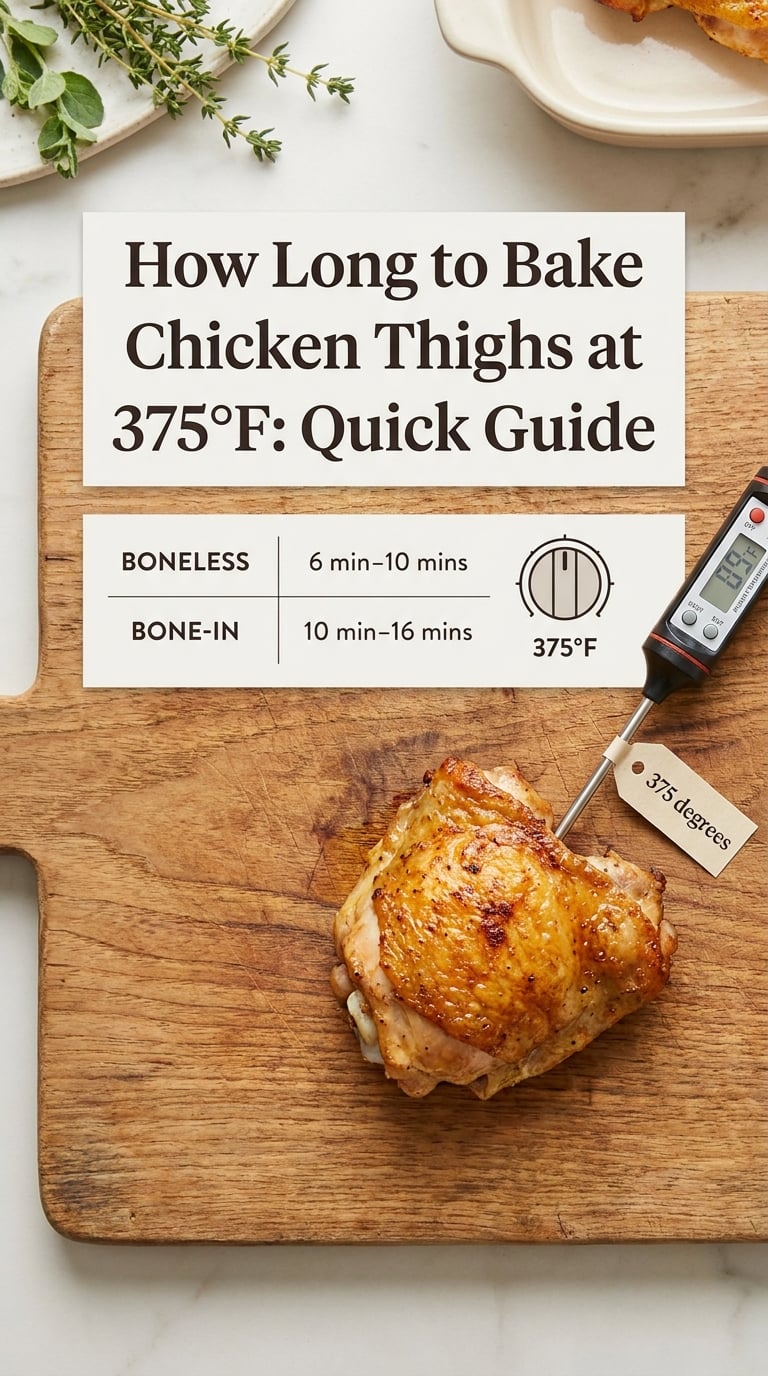
Here is the short version you can screenshot. The clock starts the moment the thighs go into a fully preheated oven, not while the oven is heating up.
| Chicken thigh type | Typical size | Time at 375°F | Safe internal temp |
|---|---|---|---|
| Boneless, skinless | 2 to 3 oz | 25 to 30 minutes | 165°F (74°C) |
| Boneless, skin-on | 3 to 5 oz | 28 to 35 minutes | 165°F (74°C) |
| Bone-in, skin-on | 4 to 6 oz | 40 to 45 minutes | 165°F (74°C) |
| Bone-in, skinless | 4 to 6 oz | 38 to 42 minutes | 165°F (74°C) |
| Bone-in thighs, frozen | 4 to 6 oz | 50 to 60 minutes | 165°F (74°C) |
Two rules sit underneath all of these numbers. First, the USDA minimum internal temperature for poultry is 165°F (74°C), and that’s the only test that counts. Second, times run long rather than short. Overcooked chicken is a bad dinner, but undercooked chicken is a health risk, so err that way.
Chicken Thighs at 350°F, 375°F, and 400°F Compared
Lots of recipes quote 30 minutes, then 45, then an hour, and it’s rarely wrong. They’re baking different things at different temperatures. This is how the three common oven temperatures compare.
| Oven temperature | Boneless thighs | Bone-in thighs | Good for |
|---|---|---|---|
| 350°F (177°C) | 30 to 35 minutes | 45 to 50 minutes | Maximum tenderness, glassier skin |
| 375°F (190°C) | 25 to 30 minutes | 40 to 45 minutes | Best all-round balance |
| 400°F (204°C) | 20 to 25 minutes | 35 to 40 minutes | Crispier skin, less forgiving timing |
Is 375 too high for chicken? No. It’s the sweet spot: hot enough to render fat and crisp skin, gentle enough that the middle catches up before the outside burns. If you like your skin shatteringly crisp and don’t mind watching the clock, my oven baked chicken thighs recipe starts at 450°F for 15 to 20 minutes, then drops the heat to 375°F to finish.
How Long to Bake Boneless Chicken Thighs at 375°F
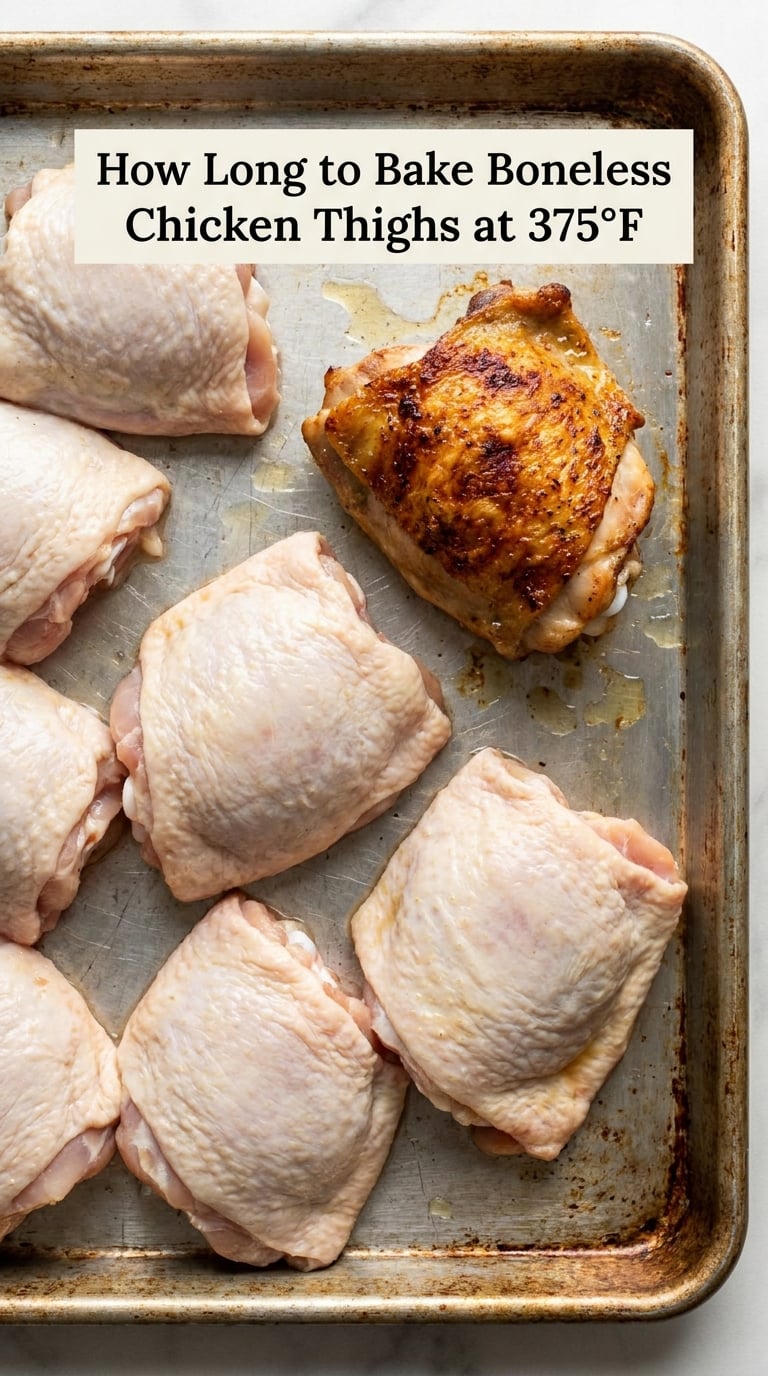
Boneless thighs are quick, which is exactly why people pull them too early. A 2-ounce skinless thigh can be done at 25 minutes, while a thick 5-ounce skin-on piece needs closer to 35. Weighing them if you can is the fastest way to stop guessing.
Thickness matters more than weight. Slice a chunky thigh in half and you’ve made two thinner pieces that each cook faster. Leaving it whole gives you one thick center, and that center is exactly where undercooked chicken hides.
Give the pieces room on the pan. If the thighs touch each other, steam replaces browning, and you get pale, soft skin that never crisps. A standard rimmed half-sheet pan fits about six to eight boneless thighs with space between them. Crowding twelve into the same pan is the fastest route to a soggy result.
Start checking the temperature at 22 minutes. Push the probe into the thickest part of one thigh, away from the pan and away from any bone, and read it fast so you don’t lose heat. Most home cooks in the cooking forums I read say they check a single piece and assume the rest matches, which is how a tray of undercooked thighs sneaks onto the table.
How Long to Bake Bone-In Chicken Thighs at 375°F
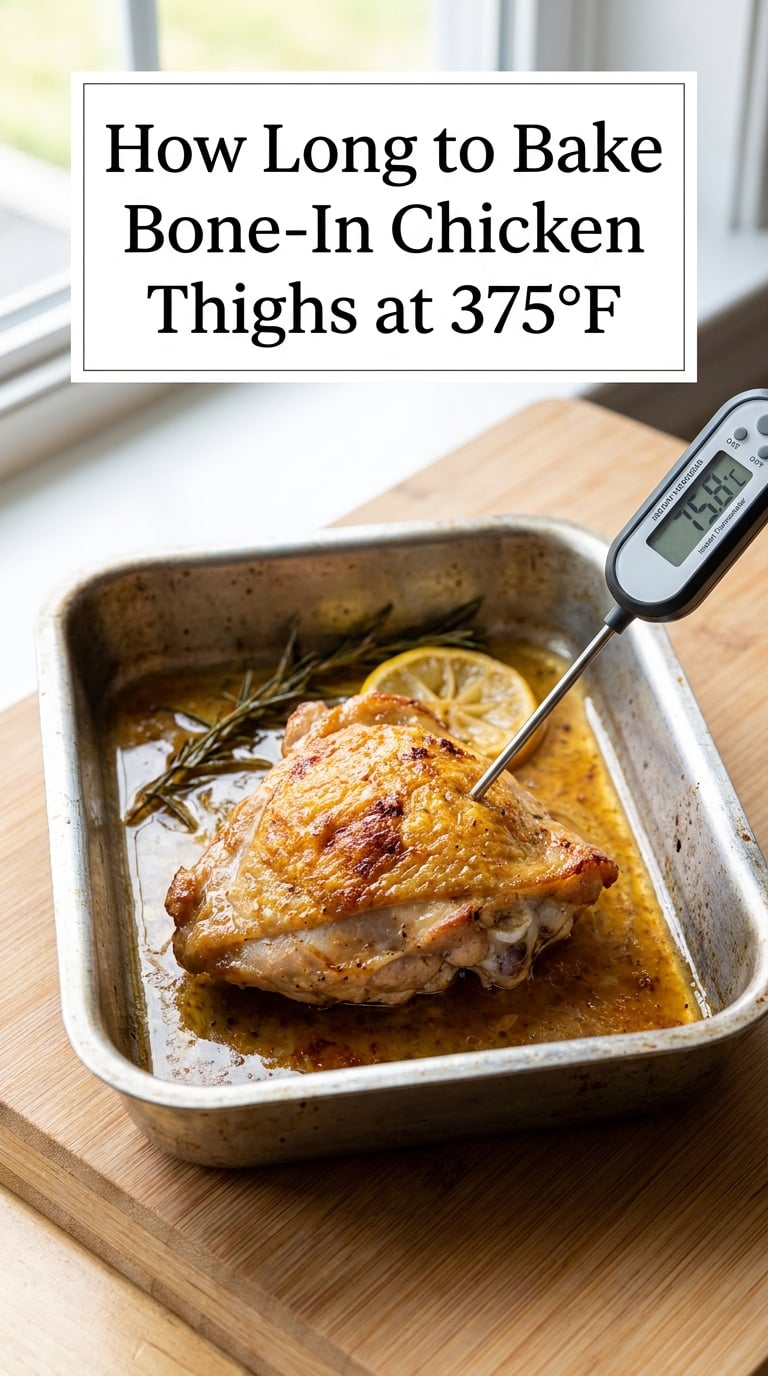
Bone-in thighs run 40 to 45 minutes at 375°F, and the extra time isn’t about the bone acting as a heat sink. It’s that bone-in pieces are physically larger, and the meat right against the joint is the thickest part on the tray. That section needs longer to come up to temperature.
Two adjustments change the timing. Pulling the skin off gets you closer to 38 to 42 minutes, because there’s no skin layer slowing the browning. Leaving the skin on and tenting the pan loosely with foil after about 25 minutes keeps the meat on pace while stopping the top from going dark before the center is done.
Par-baking works too. A 10-minute head start at 400°F, then 30 minutes at 375°F, gets you to a deeply browned piece without the dry, shrunken edges you get from blasting skin at full heat for the whole cook.
Check the thigh that looks smallest, not the biggest. Pieces vary, and the one that finished first is the one most likely to be overdone while you wait on the rest.
Step-by-Step: Baking Chicken Thighs at 375°F
- Preheat the oven to 375°F (190°C) with the rack in the center. Give it a full 15 to 20 minutes.
- Pat the thighs dry with paper towels. Wet skin steams instead of browning, and this is the single biggest reason thighs come out of the oven pale.
- Season generously with salt, then add garlic powder, onion powder, and paprika if you like. Oil the skin lightly so it colors.
- Arrange the thighs skin-side up in a single layer on a rimmed sheet pan, with space between the pieces.
- Bake uncovered. Boneless pieces need 25 to 35 minutes, bone-in pieces 40 to 45 minutes.
- Start checking early. Test a boneless thigh at 22 minutes and a bone-in thigh at 32 minutes.
- Confirm 165°F (74°C) in the thickest part, then rest the thighs 5 to 10 minutes before serving so the juices settle back into the meat.
Resting is not optional if you care about texture. Slicing a thigh the second it leaves the oven pushes the juice onto the cutting board, and the meat tastes drier than it actually is. Ten minutes is plenty.
How to Tell When Chicken Thighs Are Done
Use an instant-read thermometer in the thickest part of the thigh, pressing in until you feel the probe hit resistance, and pull it out. The reading needs to hit 165°F (74°C). Avoid the bone, which reads high and gives you a false result, and avoid the very edge, which reads low.
When you don’t have a thermometer, look for three things together. The juices run clear when you pierce the meat with a fork, the texture goes from floppy to springy, and the meat pulls away from the bone on bone-in pieces. Color is the least reliable cue of the bunch. Paprika and soy marinades brown the surface long before the center is safe, so a golden thigh means nothing on its own.
Chicken thighs carry over about 5°F after they leave the oven, so pulling them at 160°F to 162°F and letting them finish on the pan is how you get succulent meat. That’s the technique that beats a rubbery result, and it only works if you check early enough to catch them.
Can You Bake Frozen Chicken Thighs at 375°F?
You can, but thaw them first when you have the chance. A frozen thigh has an insulating ice core, so the outside cooks and dries out while the middle is still frozen solid. From frozen at 375°F, bone-in pieces need roughly 50 to 60 minutes, and boneless pieces about 40 to 45.
The 165°F requirement doesn’t change. Shortening the cook time because the chicken started frozen is the most common way people serve raw chicken in the middle, so set the timer for the long end and probe the thickest piece.
A quick thaw in cold water, sealed in a bag, takes about 30 minutes for a few pieces. Saltwater or warm water is worth skipping, since it can push texture toward rubbery and starting the outside of the meat cooking before the center thaws.
Common Mistakes When Baking Chicken Thighs at 375°F
- Crowding the pan. Thighs need about an inch of space. Touching pieces steam each other and the skin never crisps. Use a second pan instead of doubling up.
- Using a huge pan. A large sheet pan with six lonely thighs sends heat around the food and dries the edges. Match the pan to the amount of chicken.
- Checking one small piece. Sizes in a tray vary. Check the thickest and the smallest thigh, not just the one nearest the door.
- Piercing the meat repeatedly. Each hole lets moisture out. One clean probe at the end is all you need.
- Not preheating the oven. Thighs that go into a cold oven spend the first fifteen minutes sweating instead of browning. Use a full preheat.
- Pulling at the first sign of browning. Color leads temperature by a wide margin. Wait for the thermometer, not the crust.
- Covering the whole tray with foil. Foil traps steam and softens skin. If you need it, tent loosely and only for the last stretch.
How to Keep Chicken Thighs From Drying Out at 375°F
Dry chicken thighs come down to a handful of habits. Use skin-on pieces when you can, since the skin fat bastes the meat as it renders. Trim only the loose flap of fat that would otherwise scorch, and leave a thin layer behind.
Coat the skin with a small amount of oil before it goes in, and check the temperature at the short end of the range so you can pull the moment it lands. A light coat of sauce, a honey mustard glaze, or butter pushed under the skin all add moisture and flavor at the same time.
Chicken thighs left over from dinner reheat well the next day. Cool them within two hours, refrigerate in a sealed container, and eat within three to four days. Reheat in a 350°F oven with a splash of broth or a lid on the pan, which keeps the moisture in. If you want the skin back, finish under the broiler for the last two minutes.
Cooking more thighs than you need is a good idea. Thighs are the best chicken part for meal prep, and they hold up in grain bowls, salads, and sandwiches all week. My chicken thighs and rice recipes are built around a batch cooked exactly this way. If you prefer a countertop oven instead, my air fryer chicken thighs method gives you similar results in about half the time.
Frequently Asked Questions
Do you need to flip chicken thighs when baking at 375°F?
No. Thighs are fatty enough to render their own fat, so cooking them skin-side up without flipping gives you crisp skin and moist meat. Flip them only if your pan is very dark metal and the underside is browning faster than the top, or if you basted with a sugary glaze that needs coating on both sides.
Should I cover chicken thighs with foil while baking?
Usually not. Foil traps steam, which softens the skin and keeps the surface pale. If your thighs are browning too quickly before the center is cooked, tent them loosely with foil after about 25 minutes and remove it for the last 10 minutes so the skin can brown again.
How long do baked chicken thighs keep in the fridge?
Cooked chicken thighs keep three to four days in the refrigerator when stored in a sealed container. Cool them within two hours of cooking, and use airtight containers so the skin does not go soggy from trapped moisture. Reheat in a 350°F oven with a little broth, or in a covered pan on the stove.
Is 30 minutes at 375°F enough for chicken thighs?
It is enough for a small boneless skinless thigh weighing two to three ounces. It is not enough for bone-in or skin-on pieces, which need 40 to 45 minutes at the same temperature. Size, not the oven setting, decides the time, so check the thickest thigh with a thermometer and look for 165°F.
Can I bake chicken thighs from frozen without thawing them first?
Yes, but add a lot of time. Frozen bone-in thighs at 375°F take about 50 to 60 minutes and boneless pieces 40 to 45 minutes. The ice core slows the center down, so the outside dries before the middle cooks. Thawing in cold water for about 30 minutes gives you a much better result.
Do I need a meat thermometer to know when chicken thighs are done?
You can manage without one by checking for three signs together: clear juices, springy texture, and meat pulling away from the bone. Color is unreliable because paprika and soy marinades darken the surface early. A cheap instant-read thermometer removes the guesswork and is the only way to confirm 165°F every time.
Conclusion: Start With the Thermometer
Preheat the oven to 375°F, spread the thighs out skin-side up with space between them, and set your timer for the right range: 25 to 30 minutes for boneless, 40 to 45 for bone-in. When the timer goes off, ignore your eyes and read the thermometer in the thickest part of the thigh.
How long to bake chicken thighs at 375°F comes down to size and cut, and this guide gives you both numbers so you don’t have to guess again. Keep coming back as you cook different packages, and the results will get more consistent every time.