
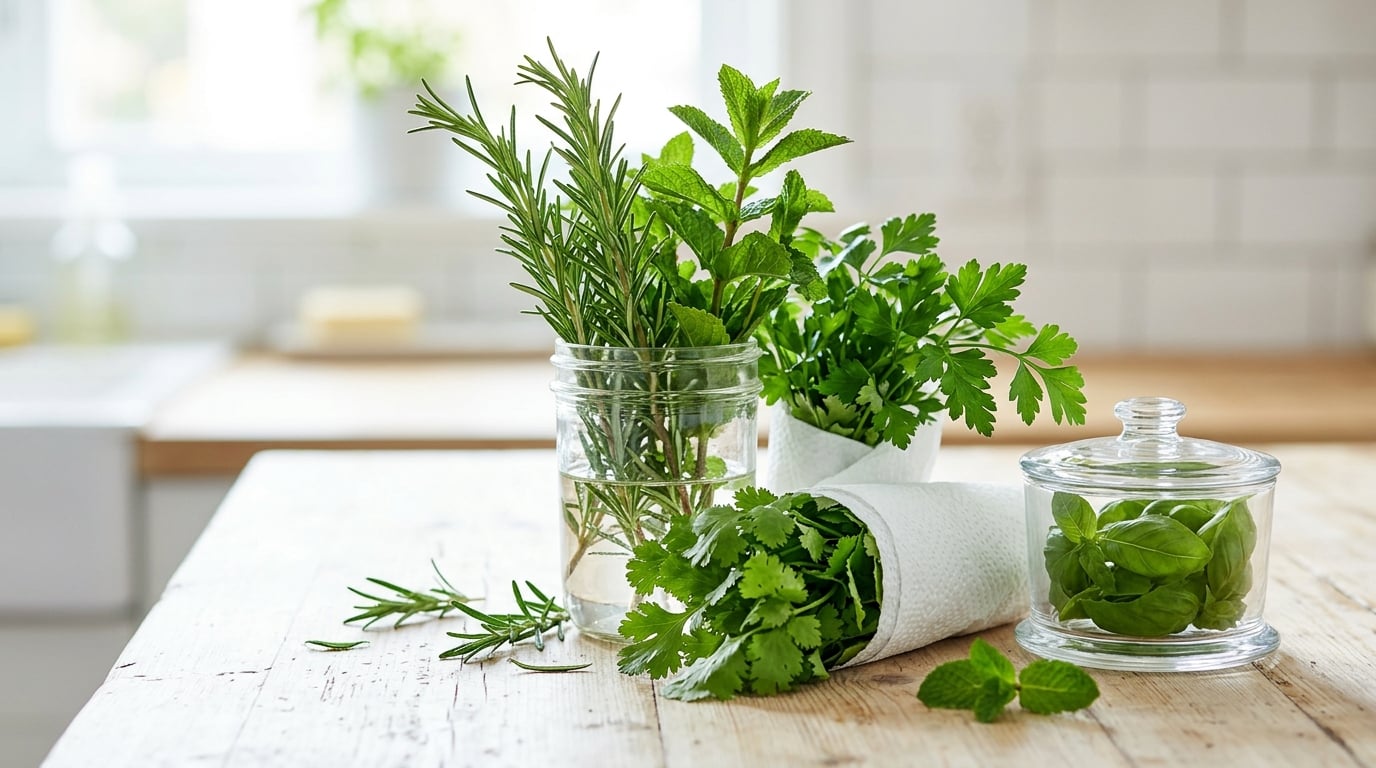
To store fresh herbs so they stay green, wrap soft herbs like cilantro, parsley and dill in a slightly damp paper towel and refrigerate them in a sealed bag or container. Keep basil in a glass of water at room temperature, leave rosemary and thyme in the fridge, and freeze anything you will not cook within a week.
A bunch of herbs bought for one recipe usually turns to slime in the fridge door within four or five days. Most of that waste is fixable with what is already in your kitchen.
The whole thing comes down to three things: enough moisture to keep the leaves from drying out, not so much that bacteria take over, and darkness and cold. The 2026 garden surplus season is exactly when this matters most, because that is when herbs pile up faster than anyone can cook them. If you want a plan for using them up, my refreshing summer salad recipes come in handy later in the week.
Table of Contents
How to Store Fresh Herbs So They Stay Green
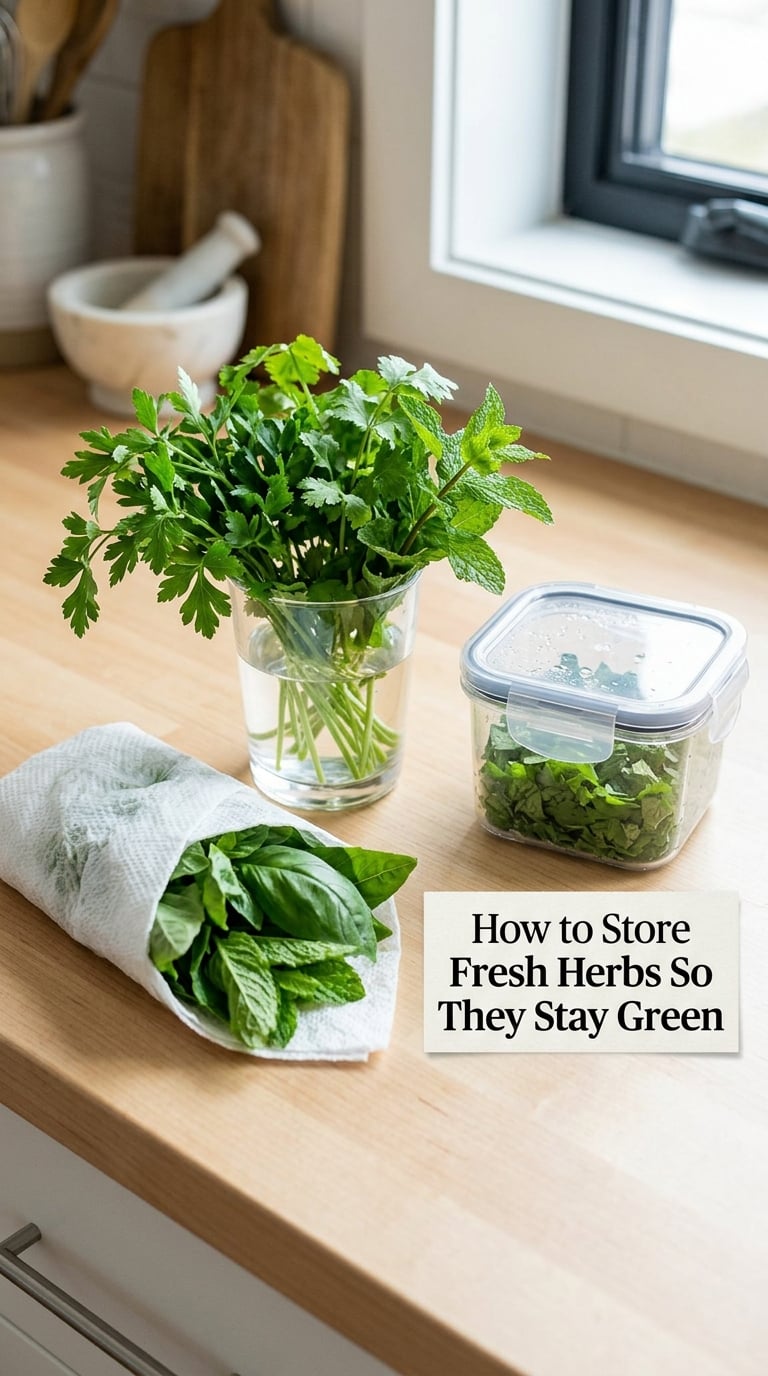
The single best fridge method is the damp paper towel wrap, and it takes about five minutes. This is how to store fresh herbs so they stay green and crisp for up to 10 to 14 days.
- Trim about 1 inch off the bottom of the stems with a sharp knife.
- Rinse the herbs in cool water only if you need to, then dry them completely in a salad spinner or between two paper towels.
- Spread the herbs in a single layer on a paper towel that is damp, not wet. If you can squeeze water out of it, it is too wet.
- Roll the towel loosely around the herbs, leaving the leafy ends slightly open.
- Slide the whole roll into a zip-top bag or a container with a lid and seal it.
- Refrigerate in the crisper drawer or the back of the fridge, and check it every few days.
The damp towel raises the humidity around the leaves just enough to slow transpiration without trapping a swamp. Almost everyone who stores herbs this way lands on the same result: a moist towel, never a soaking one, is what keeps store-bought herbs alive past a week.
Which Storage Method Works Best for Each Herb?
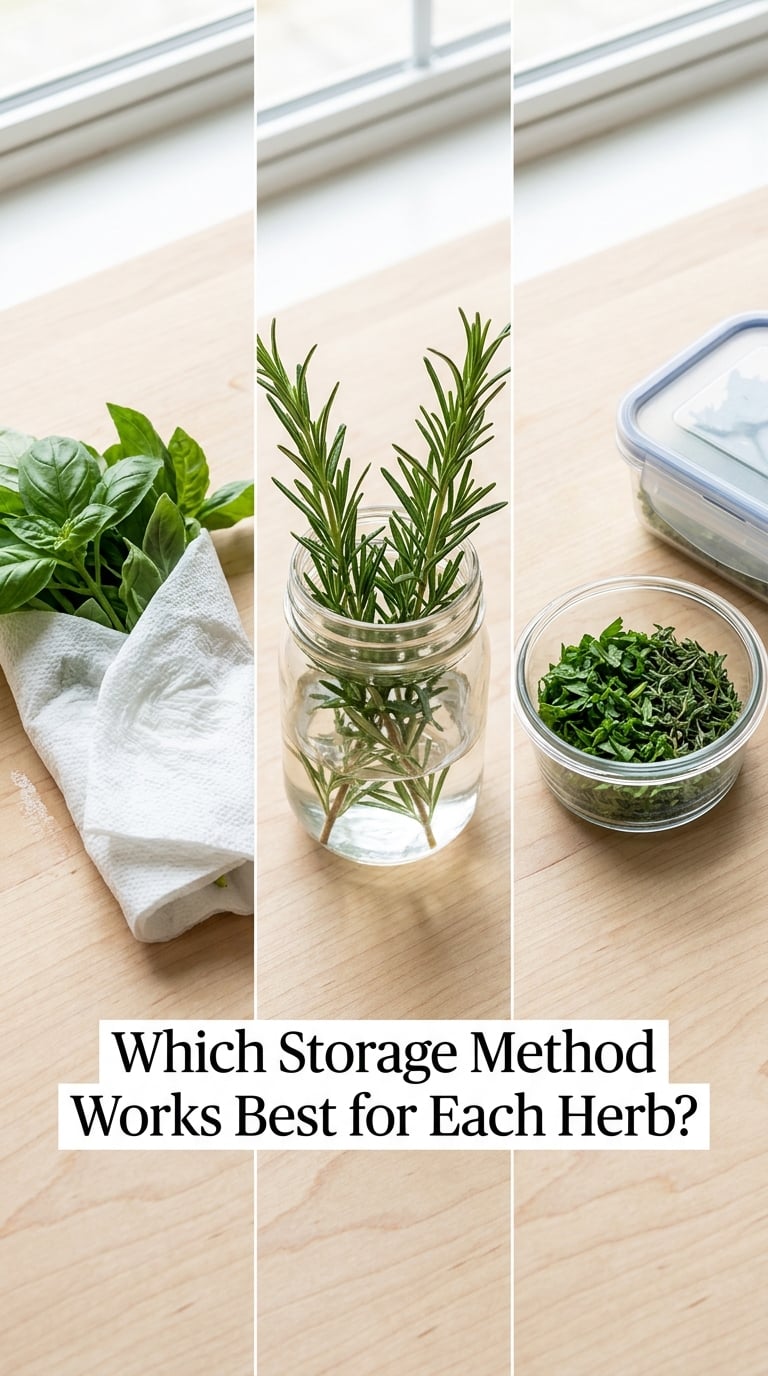
The right method depends on whether the herb is soft and leafy or woody and hardy. Soft herbs drink water through their cut stems, so they need a damp environment. Hardy herbs are built to survive dry air and barely wilt at all.
| Herb | Fridge-safe | Best method | Expected life | Wash first? |
|---|---|---|---|---|
| Basil | No | Stems in water at room temperature | 4 to 6 days | Yes, then dry well |
| Cilantro | Yes | Damp paper towel in a bag | 10 to 14 days | Yes, then dry well |
| Flat-leaf parsley | Yes | Damp paper towel in a bag | 10 to 14 days | Yes, then dry well |
| Dill | Yes | Damp paper towel in a bag, loosely closed | 7 to 10 days | Yes, then dry well |
| Mint | Yes | Damp paper towel in a bag | 10 to 14 days | Yes, then dry well |
| Chives | Yes | Airtight container with a damp towel | 7 to 10 days | Yes, then dry well |
| Tarragon | Yes | Damp paper towel in a bag | 7 to 10 days | Yes, then dry well |
| Rosemary | Yes | Loose bag or jar, barely damp towel | 2 to 3 weeks | Only if needed |
| Thyme | Yes | Loose bag or jar, barely damp towel | 2 to 3 weeks | Only if needed |
| Sage | Yes, briefly | Airtight container lined with a towel | about 7 days | Only if needed |
| Oregano | Yes | Loose bag or jar | 2 to 3 weeks | Only if needed |
Basil is the one exception in the whole list. Its leaves are tender and it blackens in the cold, so it lives on the counter in water instead of the fridge.
How Long Do Fresh Herbs Last in the Fridge?
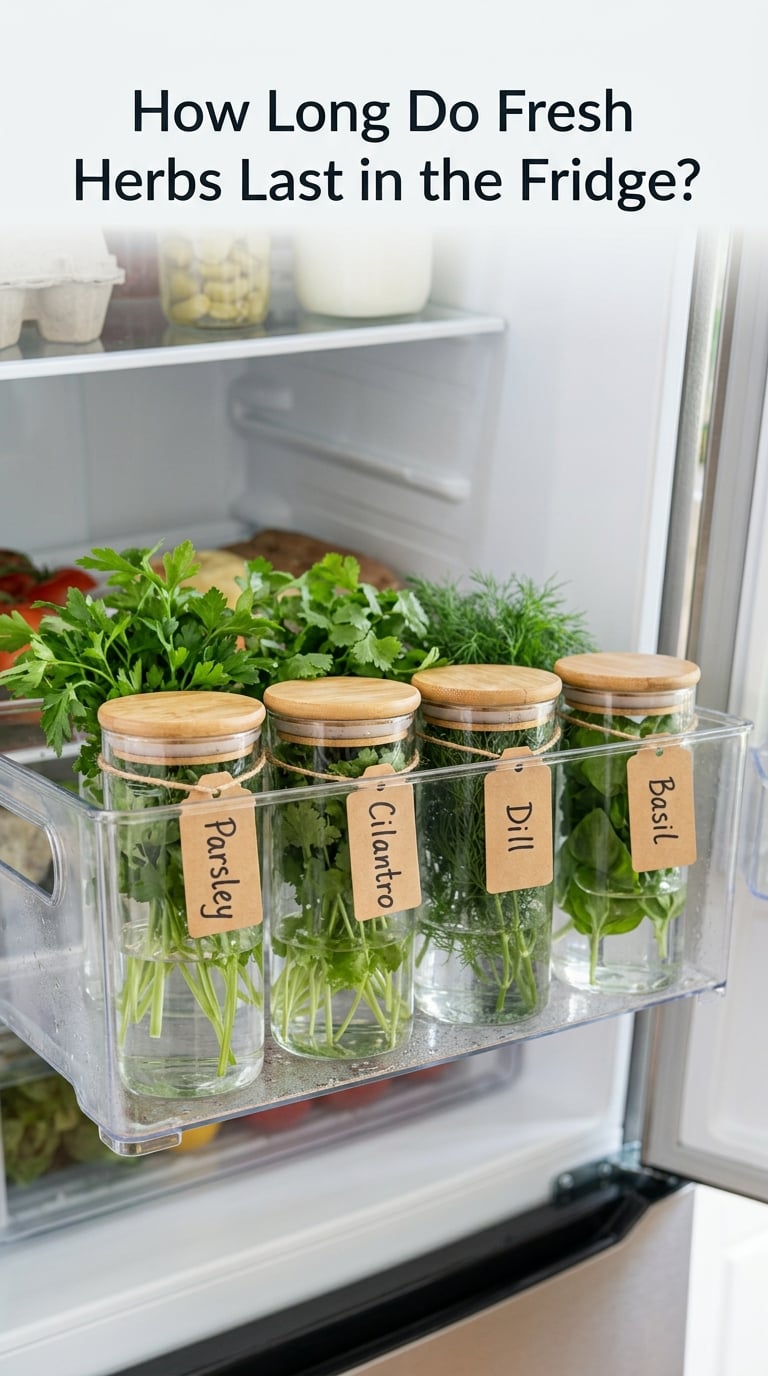
Expect 10 to 14 days for soft herbs stored in a damp paper towel, and roughly a week in the plastic produce bag they came in. The method you choose is what decides the difference.
| Storage method | Soft herbs last | Best for |
|---|---|---|
| Damp paper towel in a sealed bag | 10 to 14 days | The everyday default |
| Stems in water, loosely covered | 7 to 10 days | Basil, mint, rosemary |
| Airtight container | 7 to 10 days | Chopped herbs, sage |
| Loose bag with a barely damp towel | 7 to 10 days | Big fridge-free bunches |
| Plastic produce bag, no wrapping | 4 to 6 days | Nothing but the fallback |
| Freezer bag, chopped | 4 to 6 months | Cooking only |
| Air-dried on a stem | 6 months or more | Pantry storage |
Temperature matters as much as the wrap. The back of the fridge is the steadiest, coldest spot, and the door is the warmest and most changeable because it opens all day.
Small-space kitchens can skip the jar entirely. Lay herbs flat in a shallow container with a paper towel between each layer, which uses far less room than standing stems in water.
How to Prepare Herbs Before Storing Them
Preparation decides whether the towel trick works at all. Start by picking over the bunch and pulling off any yellow, bruised or slimy leaves, since one wet bad spot will take the whole roll with it.
Trim the stems, then dry the herbs thoroughly. Rinsing is fine, but every drop has to go before the herb goes anywhere near a bag. Use a salad spinner, roll them in a dry towel, or let them sit on a plate for 20 minutes.
Choose the container last. Plastic zip-top bags breathe a little and are forgiving; glass jars hold humidity better but need a towel inside. If you are storing herbs for a big dinner, chopping them first gets more of the flavor into the oil when you freeze them, and my easy salsa recipes with fresh tomatoes are a good test of whether the cilantro survived.
The Best Ways to Store Fresh Herbs
The damp paper towel wrap works best for soft herbs
This is the method above, and it is the one I come back to for cilantro, parsley, dill and mint. Damp, not wet, is the whole trick. Dry the herbs first, wrap loosely, seal, refrigerate.
An airtight container works for chopped herbs
Cut herbs into small pieces and store them in a sealed container lined with a paper towel. Chopping speeds up how quickly the plant loses moisture, so it needs less air, not more.
A glass of water keeps stems alive longest
Stand the stems in an inch or two of water and cover loosely with a bag. This is the bouquet method, and it is the only good option for basil.
Mason jars work well when you need to see what you have
Yes, you can store herbs in mason jars. Stand trimmed stems in shallow water for leafy herbs, or layer dry herbs and paper towels flat in a jar when you want every centimetre of fridge space. Seal tightly, or cover loosely with a bag so condensation has somewhere to go.
Dry storage suits hardy herbs and pantry planning
Rosemary, thyme, sage and oregano barely need the fridge. Slip them into a jar with the lid ajar, or hang small bunches upside down in a dry, dark cupboard. For my backyard picnic food ideas, I dry whatever the garden hands over too fast and keep it in a jar by the stove.
How to Store Fresh Herbs in Water
Storing herbs in water refreshes them the way a bouquet of flowers works, because the cut stem drinks through the stalk and pushes water into the leaves. It is worth doing for basil, mint and rosemary.
- Trim 1 inch off the bottom of the stems at an angle.
- Remove any leaves that would sit below the waterline, or they will rot quickly.
- Add 1 to 2 inches of cold water to a jar or glass.
- Stand the stems in the water and keep the leaves above the surface.
- Cover the top loosely with a bag or lid to slow evaporation.
- Change the water every two or three days and top it up daily if the jar looks low.
Trimmed stems kept in a shallow jar of water can keep growing in the fridge for a couple of weeks. That is true for mint and rosemary, and for basil only if you leave it on the counter.
Can you store basil in water in the refrigerator? You can, but I would not. Cold blackens basil leaves within a day or two, and the black does not come out, so the water method is for room temperature only.
How to Freeze Fresh Herbs Without Losing Their Flavor
Freezing is what to do with herbs that are about to turn, and it keeps them usable for months. The catch is that freezing breaks down the cell walls, which suits cooking and ruins texture for garnishing.
- Wash and dry the herbs, then chop or tear them into small pieces.
- For a paste that disperses well, spoon the herbs into ice cube tray wells with a little olive oil and freeze.
- For general cooking, add a small splash of water, or use the herbs dry.
- Pop the frozen cubes into a labelled freezer bag once solid and stack them.
- Alternatively, blanch sturdy herbs for 15 seconds in boiling water, chill in ice water, dry and freeze flat on a tray.
Blanching suits chives, parsley and dill, where colour matters. Basil freezes badly as a raw cube and turns brown, so use it quickly after freezing or switch to pesto.
One practical note: frozen mint and ice-cube water can dilute a drink, so mint is better frozen dry in a bag. You can also share one jar of water between herbs, as long as the stems are not packed too tightly.
Should You Wash Fresh Herbs Before Storing Them?
Yes, wash them if you plan to eat them raw, but dry them completely before they go into storage. Residual moisture on the leaves is the single biggest reason herbs go slimy in the fridge.
The counterargument is that store-bought herbs were washed at the packing house and are usually already wet, so rinsing again adds nothing but risk. Some people never wash herbs before storing and still get a week or two.
My rule is simpler than either camp. If the bunch smells clean and you are cooking with it, just pat it dry and skip the rinse. If you are making guacamole or a salad where raw leaves go straight onto the plate, wash and dry. Either way, water sitting on herbs is the enemy.
Common Mistakes That Make Herbs Turn Yellow or Wilting
Soaking-wet paper towels cause rot. If you can squeeze water from the towel, it needs another pass with a dry one.
A dry towel and an unsealed bag are two different mistakes that fix each other. One dries the leaves out, the other lets them wilt. Damp plus sealed is the combination that works.
Bagging herbs wet puts them in a sealed environment with no airflow, so condensation builds and the leaves turn translucent. Dry them first, then seal.
Storing in the fridge door exposes herbs to the biggest temperature swings in the house. Move them to the back or the crisper drawer, and keep apples, bananas and avocados, which release ethylene gas, on the other side of the fridge.
Leaving basil in the coldest spot makes it black. Above about 50°F it keeps its colour, and it blackens below that, which is also why a bag of basil rides in a car for two days looking fine.
Crushing herbs into a small jar or a sealed plastic clamshell bruises the leaves, and bruised leaves brown fast. Give them room, or chop them deliberately and store the chopped herbs in an airtight container instead.
Waiting too long to freeze means freezing herbs that have already browned. Freeze them the day you buy them if you know you will not use them, and leave soft herbs in their own bag rather than a crowded produce drawer.
Frequently Asked Questions
What is the best way to store fresh herbs so they stay green?
Wrap soft herbs like cilantro, parsley and dill in a slightly damp paper towel, roll it loosely, and seal it in a bag or container in the fridge. That method keeps them crisp for 10 to 14 days. Keep basil in a glass of water at room temperature instead, and store rosemary and thyme in the fridge.
How long do fresh herbs last in the refrigerator?
Soft herbs kept in a damp paper towel last 10 to 14 days in the fridge. In the plastic produce bag they arrived in, expect only 4 to 6 days. Hardy herbs such as rosemary, thyme and oregano last 2 to 3 weeks, often stored loosely in a bag or jar.
Should fresh herbs be washed before storing them?
Wash herbs only if you will eat them raw, then dry them completely before storing. Water left on the leaves is the main cause of slimy herbs in the fridge. If you are cooking with the herbs, skip the rinse, pat them dry and store them straight away.
Can I store basil in water in the refrigerator?
You can, but basil usually turns black within a day or two in the cold. Stand the stems in a glass of water at room temperature, out of direct sun, and change the water every couple of days. That keeps basil usable for about four to six days.
How do I keep herbs from getting soggy or moldy?
Dry the herbs thoroughly before storing them and use a paper towel that is damp rather than wet. Squeeze the towel first; if water comes out it is too damp. Keep the container sealed, avoid the fridge door, and move herbs that have started to turn rather than waiting to see if they recover.
What is the best way to freeze fresh herbs?
Chop or tear washed, dried herbs and freeze them in a little olive oil in an ice cube tray, or freeze them dry in a labelled freezer bag. Oil cubes blend smoothly into sauces and soups, while dry frozen herbs suit stocks and cooking. Use frozen herbs within 4 to 6 months.
Simple Herb Storage Routine for Longer-Lasting Fresh Herbs
Start with the towel. Wash only if you are eating the herbs raw, dry them properly, roll them in a damp paper towel, seal the roll and put it in the back of the fridge. That single change is usually the difference between four days and two weeks.
Give basil its own glass of water on the counter, and freeze the surplus the day you bring it home. Herbs you may have missed can often be rescued too: trim 1 inch off the stems, stand them in ice water for 20 minutes, then move them to a fresh glass of water. Limp mint and cilantro usually perk back up within the hour.