
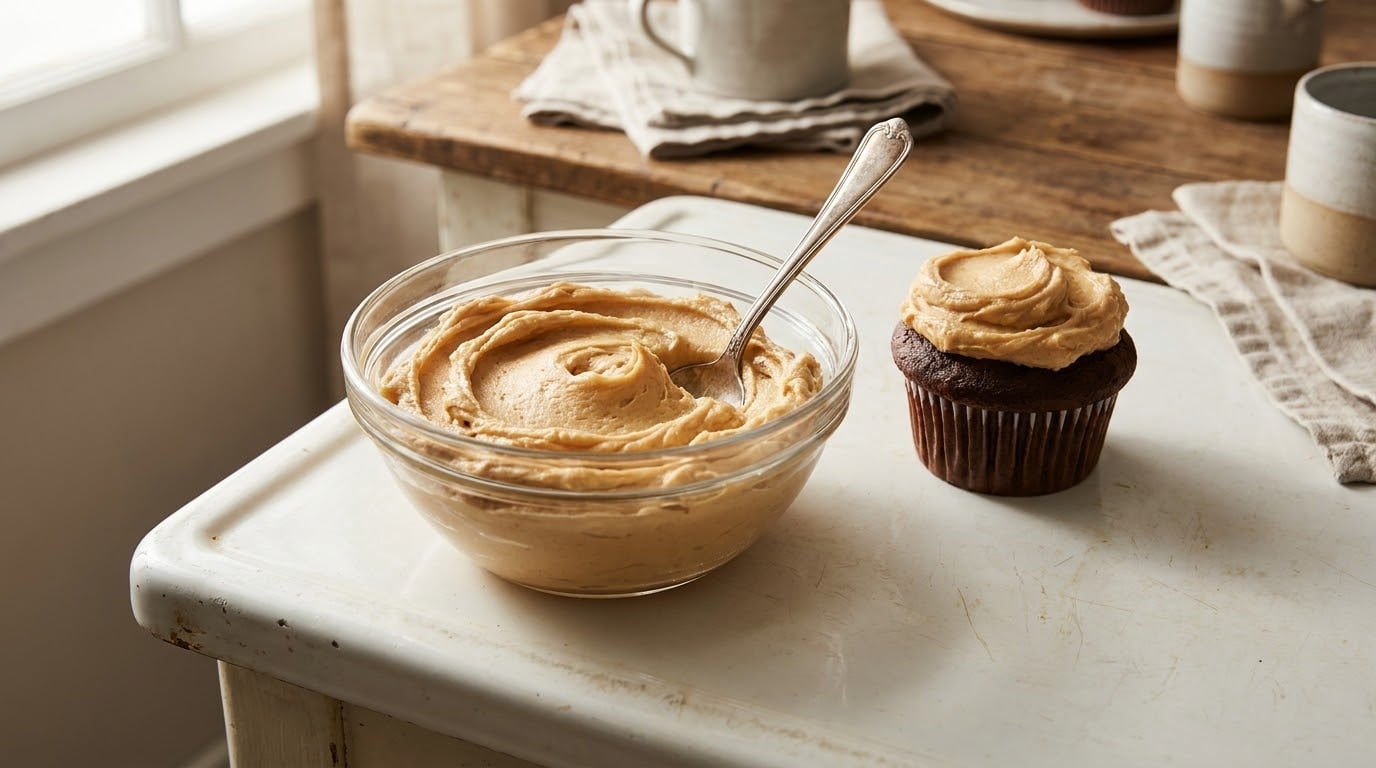
If you want a peanut butter frosting recipe that actually pipes cleanly without sliding off the cake, this one is for you. It comes together in about 5 minutes with a handful of pantry staples, and the texture lands right in that sweet spot between light and sturdy.
I’m partial to a peanut butter frosting that tastes like the classic American bakery version — sweet, salty, and unmistakably nutty — without going so thick you break your piping bag. After more batches than I can count, this ratio is the one I keep coming back to, and it has saved me on more than one last-minute birthday cake.
Table of Contents
Why This Recipe Works
This peanut butter frosting recipe works because three small details get the texture and flavor right every single time:
- The powdered sugar to butter ratio is high enough to hold a piped shape, but not so high that the frosting goes chalky or cloyingly sweet.
- A small splash of milk plus pure vanilla loosens the frosting just enough to spread without thinning the structure.
- Regular, no-stir creamy peanut butter (think Jif or Skippy) gives a stable base, while natural peanut butter almost always splits or goes grainy.
Those three choices together give you a frosting that holds a peak when you lift the beater, pipes sharp edges, and still tastes like real peanut butter.
Ingredients
- 1/2 cup (113 g) unsalted butter, softened to room temperature
- 1 cup (250 g) creamy no-stir peanut butter, such as Jif or Skippy
- 2 cups (240 g) powdered sugar, sifted
- 1/4 teaspoon fine salt
- 1 teaspoon pure vanilla extract
- 2 to 3 tablespoons whole milk, plus more as needed
Room-temperature butter is non-negotiable. Cold butter will leave you with lumps, and melted butter turns the frosting greasy and soupy. I leave mine on the counter for about an hour before starting.
Use commercial creamy peanut butter like Jif or Skippy. Natural peanut butter separates, and that oiliness will fight the butter and powdered sugar instead of cooperating with them. The result is almost always a split, oily mess.
Sift the powdered sugar if it’s clumpy. Two minutes of sifting saves you from spending five minutes chasing sugar lumps with a spatula.
Dairy-free swap: Replace the butter with a vegan baking stick (Country Crock plant-based or Miyoko’s) and use oat or almond milk in place of the dairy milk. You’ll likely want an extra tablespoon of powdered sugar to keep the structure firm.
Nut-free swap: Use sunflower seed butter (SunButter) in the same 1 cup measure. Skip the crunchy variety or the frosting will clog your piping tip.
Equipment
You only need two things: a stand mixer with the paddle attachment or a hand mixer, and a fine-mesh sifter for the powdered sugar.
The paddle is my first choice because it creams the butter and peanut butter without whipping in too much air. The whisk attachment can make the frosting too fluffy and prone to splitting if you overdo it. If you use a hand mixer, stop as soon as the frosting looks light and smooth — a few seconds more and it starts weeping oil.
How to Make Peanut Butter Frosting
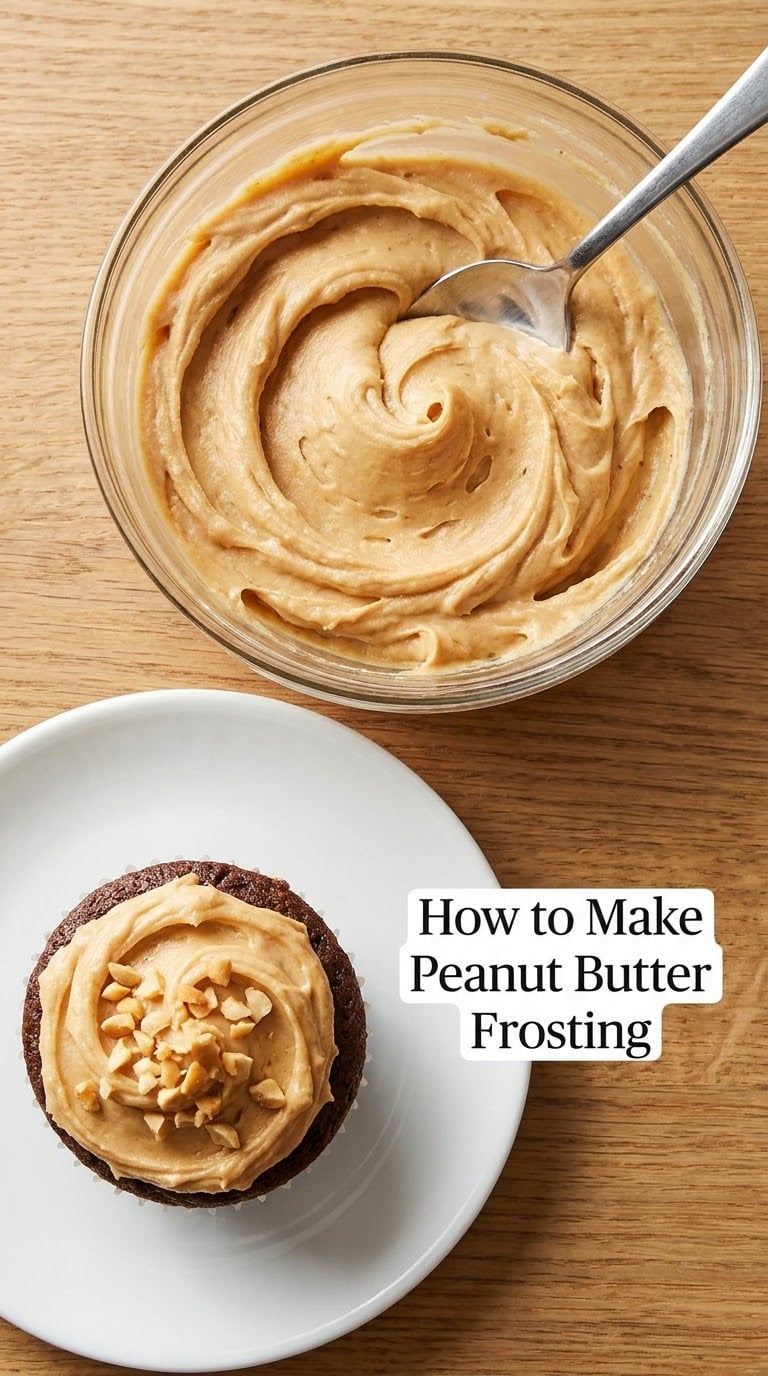
Yield: About 2 1/2 cups (enough to frost a 2-layer 8-inch cake or 12 cupcakes generously) · Prep: 5 minutes · Cook: 0 minutes · Total: 5 minutes · Difficulty: Easy
- Cream the butter. Beat the room-temperature butter on medium speed for about 2 minutes, until pale and fluffy. Scrape down the bowl once.
- Add the peanut butter. Drop in the creamy peanut butter and beat on medium for another 1 to 2 minutes, until completely smooth with no streaks.
- Mix in the salt and vanilla. Add the salt and vanilla, and beat just until combined, about 15 seconds.
- Add the powdered sugar. Turn the speed to the lowest setting, then add the sifted powdered sugar a little at a time. Wait for each addition to disappear before adding the next. This keeps the kitchen from turning into a snowstorm.
- Stream in the milk. With the mixer still on low, drizzle in 2 tablespoons of milk. Scrape the bowl, then beat on medium-high for 1 minute. Add the extra tablespoon of milk only if the frosting looks stiff.
- Check the texture. The frosting is done when it’s light, fluffy, and holds a soft peak when you lift the beater. It should look like soft-serve ice cream, not like softened butter and not like soft whipped cream.
Tip: If the frosting feels too soft to pipe right away, pop it in the fridge for 10 to 15 minutes. Cold peanut butter frosting pipes with bakery-clean edges, especially on a soft cake crumb.
Swap it: Use heavy cream instead of milk for a richer frosting, or half-and-half for something in between. The swap is one-for-one by the tablespoon.
Tips for Success
- Room-temperature butter is the single biggest factor. If your butter is too cold, the frosting stays lumpy. Too soft, and it won’t hold a peak. Press a finger in: it should leave a clear dent without sinking.
- Sift the powdered sugar. Even if the bag looks fine, there are almost always small clumps that turn into gritty bits in the finished frosting.
- Skip natural peanut butter. The separated oils don’t emulsify with the butter and sugar the way a no-stir creamy peanut butter does, so the frosting often splits or goes oily.
- Fix too-thick frosting with more milk, one teaspoon at a time. Fix too-thin frosting with more sifted powdered sugar, one tablespoon at a time. Adjust slowly — the line between perfect and overcorrected is thin.
- Chill before piping for sharp edges. Slightly cooler frosting holds rosettes and shell borders better than room-temp frosting, which can slump on a warm cake.
Variations
Chocolate peanut butter frosting. Sift 1/4 cup (25 g) unsweetened cocoa powder into the powdered sugar before adding it to the bowl. Add an extra tablespoon of milk at the end if the frosting looks stiff. This is the one I make most often for chocolate cupcakes.
Honey-sweetened peanut butter frosting. Skip the powdered sugar and beat 1/3 cup (115 g) honey into the creamed butter and peanut butter, plus 4 ounces (113 g) softened cream cheese. It pipes more softly and tastes a little tangy, almost like a peanut butter cream cheese frosting.
Dairy-free peanut butter frosting. Use a vegan butter stick and oat milk as called for in the swaps above. Expect a slightly softer finish — frost a cold cake for cleaner edges.
Fluffy marshmallow peanut butter frosting. After the final beat, fold in 3/4 cup marshmallow fluff by hand with a spatula. Don’t add it to the mixer, or the marshmallow will lose all its air and the frosting goes flat.
For a lighter topping on fresh fruit, try pairing this frosting with our Easy Homemade Whipped Cream Recipe on peanut butter pie.
Storage, Make-Ahead and Reheating
This peanut butter frosting recipe holds beautifully if you plan ahead.
- Counter: Frosted cake or cupcakes stay soft at 70°F for up to 6 hours. Cover loosely with a cake dome.
- Fridge: Store unfrosted frosting in an airtight container for up to 1 week. Press plastic wrap directly onto the surface to keep a skin from forming.
- Freezer: Freeze in a freezer-safe container for up to 3 months. Thaw overnight in the fridge, not on the counter.
- Re-whipping: Cold frosting looks stiff and broken. Let it sit on the counter for 15 to 20 minutes, then beat it on medium for 30 to 60 seconds. It comes right back to fluffy, spreadable texture.
Make-ahead for events: Make the frosting up to 1 week ahead and keep it in the fridge. Frost the cake the day before serving. Add any piped decorations the morning of the event so the edges stay sharp.
What to Serve It With
This frosting is more versatile than people expect. A few pairings I keep coming back to:
- Chocolate cake. The classic. The deep cocoa flavor balances the salty-sweet peanut butter, and a chocolate crumb keeps the frosting from feeling too heavy.
- Banana cupcakes or banana bread. Peanut butter and banana belong together. The banana stays moist under the frosting for days.
- Brownies. Spread it on cooled brownies as a thick layer, or pipe a generous swirl on top. It turns a plain brownie into something that feels like a bakery treat.
- Dip. Spoon the frosting into a small bowl and serve it with apple slices, pretzels, or graham crackers. It holds up at room temperature for about 2 hours.
If you’re frosting a chocolate layer cake, our Easy Homemade Chocolate Frosting Recipe is a good one to keep on hand for a half-and-half swirl.
Frequently Asked Questions
Can I use natural peanut butter in this peanut butter frosting recipe?
Natural peanut butter separates in the jar, and that loose oil fights the butter and powdered sugar instead of blending with them. The frosting usually turns out split, oily, or grainy. For the smoothest, most stable result, use a no-stir creamy peanut butter like Jif or Skippy. If you only have natural on hand, stir it very thoroughly and refrigerate it before measuring, then add an extra tablespoon of powdered sugar to compensate.
Why is my peanut butter frosting grainy?
Graininess almost always comes from the powdered sugar. Clumps in the bag don’t dissolve fully during mixing and stay as gritty bits in the finished frosting. Sift the powdered sugar before adding it, and add it slowly on low speed so it actually incorporates instead of flying around the bowl. Cold butter can also feel gritty because it won’t blend smoothly — let the butter sit at room temperature for at least an hour first.
Why is my peanut butter frosting runny and how do I fix it?
Runny frosting usually means the butter was too soft or melted, or too much milk was added. To fix it, beat in more sifted powdered sugar, one tablespoon at a time, until the frosting holds a peak. If the butter was the issue, chill the bowl in the fridge for 15 to 20 minutes, then beat it again briefly. A frosting that won’t hold soft peaks needs more structure, not more liquid.
How much frosting does this recipe make?
This recipe makes about 2 and a half cups of frosting, which is enough to generously frost a 2-layer 8-inch or 9-inch cake, or 12 to 14 cupcakes with tall swirls. For a 9×13 sheet cake, you’ll get a thinner layer. If you need to cover a 3-layer cake or 24 cupcakes, plan on doubling the recipe.
Does peanut butter frosting need to be refrigerated?
The frosting itself is safe at cool room temperature for about 6 hours, but if the cake or cupcakes are frosted and not eaten within that window, refrigerate them. Store unfrosted frosting in an airtight container in the fridge for up to a week. Cold frosting firms up, so let it sit on the counter for 15 minutes and re-whip briefly before using.
Can I make peanut butter frosting without powdered sugar?
You can, though it won’t behave quite like a classic buttercream. Try a honey-sweetened version: beat 1/3 cup honey with 4 ounces softened cream cheese, then blend in the butter and peanut butter. It pipes more softly and tastes a little tangy. Another option is to use powdered peanut butter (PB2) whisked with butter and a small amount of cream, but expect a lighter, less stable frosting that works best as a spread or dip.
Conclusion
If you’ve never made this peanut butter frosting recipe before, try it first on a batch of simple chocolate cupcakes so you can taste the base version before branching out. Once you have the texture down, the chocolate, honey, and marshmallow variations are easy ways to switch it up without re-learning the technique.
For more peanut butter baking ideas, browse our roundup of 15 Easy Peanut Butter Dessert Recipes for Beginners. Keep this frosting in your back pocket — it’s the kind of recipe that quietly solves a lot of last-minute cake emergencies.