
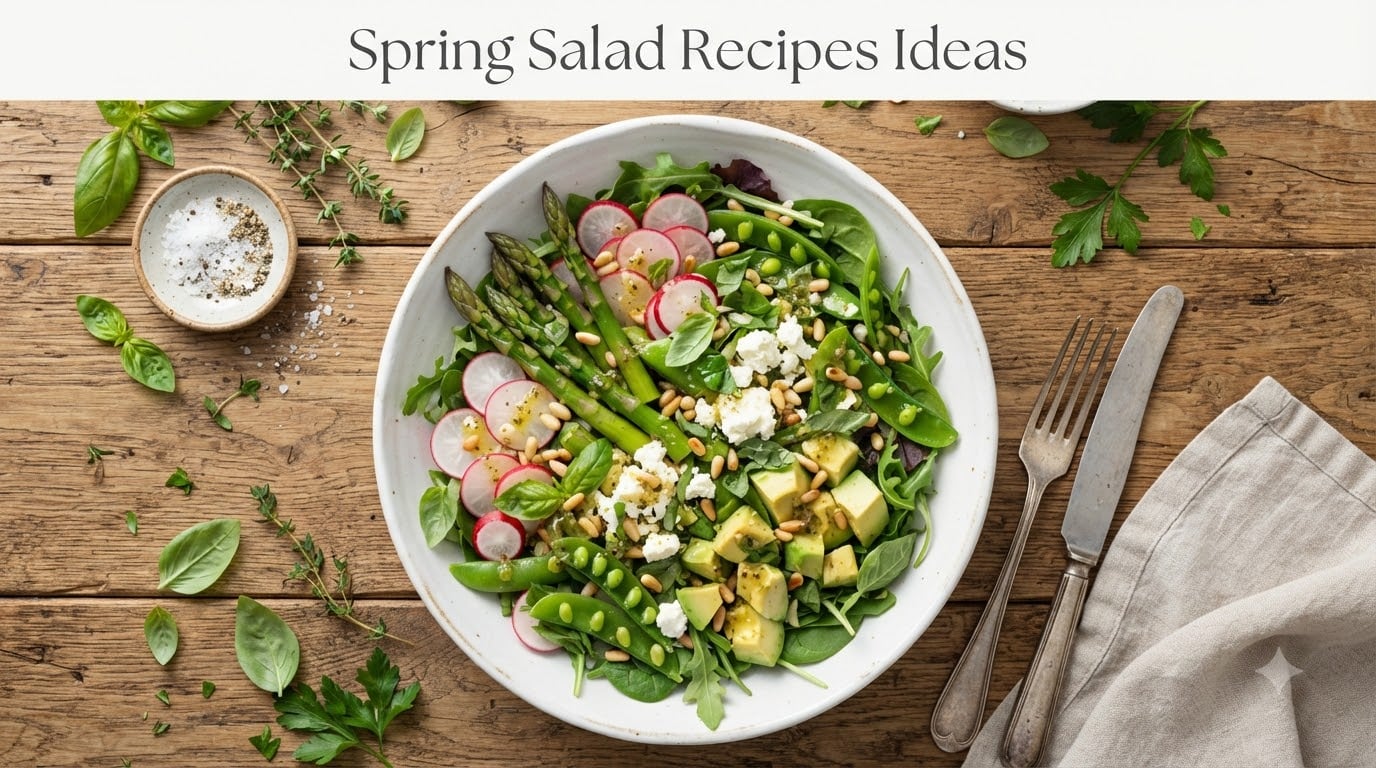
A good spring salad is built in layers of durability. Grains, beans, potatoes, or cabbage can take dressing early; lettuce, herbs, berries, avocado, and nuts cannot. These spring salad recipes ideas state the assembly order so the last forkful still has contrast.
I chose fourteen salads that can act as dinner, lunch, a picnic dish, or a side rather than fourteen bowls of greens with a different topping.
Table of Contents
14 Spring Salad Recipes Ideas with the Right Assembly Order
Grain, bean, and protein salads
1. Asparagus Strawberry Farro Salad
Serves: 6 | Time: 40 minutes | Method: saucepan and quick blanch
Chewy farro, crisp asparagus, and strawberries need a tart dressing and restrained feta. Warm grain absorbs the vinaigrette before the fruit enters.
Ingredients
-
1 cup farro
-
8 ounces asparagus, cut in 1-inch pieces
-
2 cups strawberries, quartered
-
3 cups arugula
-
1/2 cup crumbled feta
-
1/3 cup toasted almonds
-
3 tablespoons olive oil
-
2 tablespoons lemon juice
-
1 teaspoon Dijon mustard
-
1/2 teaspoon kosher salt
Instructions
-
Simmer farro until chewy-tender, about 25 minutes, and drain. Blanch asparagus for 2 minutes and cool in ice water.
-
Whisk oil, lemon, Dijon, and salt and toss half with warm farro. Cool 10 minutes.
-
Fold in asparagus, strawberries, arugula, feta, and almonds.
-
Add remaining dressing only until leaves shine; serve when the grain is cool but not refrigerator-cold.
Substitutions: Use barley or goat cheese; sunflower seeds replace almonds.
Storage: Refrigerate grain and dressing for 4 days; add berries and greens at service.
Tip: Dress warm farro first, then protect the fruit from heat.
2. Pea, Radish, and Butter Lettuce Salad
Serves: 6 | Time: 20 minutes | Method: no-cook and blanch
This salad is about delicate leaves and crisp vegetables, so every ingredient is dried before assembly. Mint and lemon keep the peas sweet rather than heavy.
Ingredients
-
2 heads butter lettuce, leaves separated
-
1 1/2 cups frozen peas
-
8 radishes, thinly sliced
-
1 cucumber, thinly sliced
-
4 scallions, sliced
-
1/3 cup mint leaves
-
3 tablespoons olive oil
-
2 tablespoons lemon juice
-
1 teaspoon honey
-
1/2 teaspoon kosher salt
Instructions
-
Blanch peas for 90 seconds, cool in ice water, and dry thoroughly. Wash and spin lettuce dry.
-
Whisk oil, lemon, honey, and salt in the bottom of a wide bowl.
-
Add peas, radishes, cucumber, scallions, and mint and toss with half the dressing.
-
Lay lettuce over the dressed vegetables and fold gently just before serving.
Substitutions: Use romaine hearts or snap peas; maple can replace honey.
Storage: Refrigerate components separately for 3 days. Once dressed, serve within 1 hour.
Tip: Dressing sturdy vegetables first keeps fragile lettuce from collapsing.
3. Lemon Chicken Arugula Salad
Serves: 4 | Time: 35 minutes | Method: skillet
Warm sliced chicken turns arugula, white beans, and roasted peppers into dinner. The dressing doubles as a finishing sauce but never touches raw chicken.
Ingredients
-
1 pound chicken cutlets
-
1 teaspoon kosher salt, divided
-
1 tablespoon olive oil
-
5 ounces arugula
-
1 can cannellini beans, 15 ounces, rinsed
-
1 cup sliced roasted peppers
-
1/2 cucumber, sliced
-
3 tablespoons olive oil, for dressing
-
2 tablespoons lemon juice
-
1 teaspoon Dijon mustard
-
1/3 cup shaved Parmesan
Instructions
-
Season chicken with half the salt and sear in oil for 3 to 4 minutes per side until 165°F. Rest 5 minutes.
-
Whisk dressing oil, lemon, Dijon, and remaining salt in a clean bowl.
-
Toss arugula, beans, peppers, and cucumber with two-thirds of the dressing.
-
Slice chicken, place over salad, and add Parmesan and remaining dressing.
Substitutions: Use turkey cutlets or chickpeas; feta can replace Parmesan.
Storage: Refrigerate chicken and vegetables separately for 4 days.
Tip: Rest and slice chicken before it meets the leaves, so hot juices do not wilt them.
4. Dill Salmon and New Potato Salad
Serves: 6 | Time: 45 minutes | Method: two saucepans
This salad uses a yogurt-dill coating instead of a heavy mayonnaise base. Potatoes are dressed warm, while salmon and cucumber join after cooling.
Ingredients
-
1 1/2 pounds baby potatoes, halved
-
1 pound salmon fillet
-
1 teaspoon kosher salt, divided
-
1 cup plain Greek yogurt
-
2 tablespoons Dijon mustard
-
2 tablespoons lemon juice
-
1/3 cup chopped dill
-
1 cucumber, diced
-
4 scallions, sliced
-
3 cups baby spinach
Instructions
-
Simmer potatoes 15 minutes until tender. Poach salmon gently in water for 8 to 12 minutes until 145°F; cool and flake.
-
Mix yogurt, Dijon, lemon, dill, and half the salt. Toss potatoes with half the dressing while warm.
-
Cool potatoes 15 minutes, then fold in salmon, cucumber, scallions, and remaining dressing.
-
Serve over spinach when the mixture is fully cool and the salmon remains in large flakes.
Substitutions: Use canned salmon or green beans for cucumber.
Storage: Refrigerate for 3 days and keep spinach separate.
Tip: Warm potatoes take seasoning better, but cool them before adding fish.
5. Herbed Lentil Cucumber Salad
Serves: 6 | Time: 35 minutes | Method: saucepan
Firm lentils make this a meal-prep salad, while cucumber and parsley are held back for crunch. The shallot softens in vinegar while lentils cook.
Ingredients
-
1 1/2 cups green lentils
-
4 cups water
-
1 shallot, finely diced
-
3 tablespoons red wine vinegar
-
3 tablespoons olive oil
-
1 teaspoon Dijon mustard
-
1 teaspoon kosher salt
-
1 cucumber, diced
-
1 cup chopped parsley and mint
-
1/2 cup crumbled goat cheese
Instructions
-
Simmer lentils 20 to 25 minutes until tender but intact and drain well.
-
While they cook, soak shallot in vinegar for 10 minutes, then whisk in oil, Dijon, and salt.
-
Toss hot lentils with dressing and cool 20 minutes.
-
Fold in cucumber, herbs, and goat cheese before serving.
Substitutions: Use brown lentils or feta; omit cheese for vegan salad.
Storage: Refrigerate dressed lentils for 4 days; add cucumber and herbs each day.
Tip: The marinated bean salads use the same warm-base principle with different legumes.
Crunchy make-ahead bowls
6. Sesame Snap Pea Cabbage Salad
Serves: 6 | Time: 25 minutes | Method: no-cook
Cabbage makes this the crunchy make-ahead salad, while raw snap peas and carrots add sweetness. Salting is unnecessary because a measured dressing softens it gradually.
Ingredients
-
5 cups shredded green cabbage
-
8 ounces snap peas, thinly sliced
-
2 carrots, julienned
-
4 scallions, sliced
-
1/2 cup cilantro
-
1/3 cup toasted peanuts
-
2 tablespoons low-sodium soy sauce
-
2 tablespoons rice vinegar
-
1 tablespoon lime juice
-
1 tablespoon sesame oil
-
1 teaspoon honey
-
1 teaspoon grated ginger
Instructions
-
Combine cabbage, snap peas, carrots, scallions, and cilantro in a large bowl.
-
Whisk soy, vinegar, lime, sesame oil, honey, and ginger until blended.
-
Toss vegetables with two-thirds of the dressing and rest 10 minutes.
-
Add peanuts and enough remaining dressing to lightly coat; serve while snap peas still crack.
Substitutions: Use tamari or sunflower seeds; red cabbage can replace half the green.
Storage: Refrigerate without peanuts for 3 days. Add nuts when serving.
Tip: Slice snap peas lengthwise so dressing reaches the sweet interior.
7. Roasted Carrot Quinoa Salad
Serves: 6 | Time: 45 minutes | Method: sheet pan and saucepan
Warm cumin carrots sit over quinoa with chickpeas and herbs. The salad works at room temperature because its dressing has no dairy.
Ingredients
-
1 pound carrots, cut in batons
-
2 tablespoons olive oil, divided
-
1 teaspoon ground cumin
-
1 teaspoon kosher salt, divided
-
1 cup quinoa, rinsed
-
2 cups water
-
1 can chickpeas, 15 ounces, rinsed
-
3 cups baby kale
-
1/3 cup parsley
-
2 tablespoons lemon juice
-
1 tablespoon tahini
Instructions
-
Roast carrots with half the oil, cumin, and salt at 425°F for 22 to 28 minutes until browned and tender.
-
Simmer quinoa in water 15 minutes, rest covered 5 minutes, and fluff.
-
Whisk remaining oil, lemon, tahini, remaining salt, and 1 tablespoon warm water.
-
Toss quinoa and chickpeas with dressing, fold in kale and parsley, and top with carrots.
Substitutions: Use farro or white beans; maple-roasted parsnips work for carrots.
Storage: Refrigerate for 4 days. Store carrots separately for firmer edges.
Tip: Toss kale with warm quinoa so it softens without turning limp.
8. Artichoke White Bean Antipasto Salad
Serves: 6 | Time: 20 minutes | Method: no-cook
Jarred artichokes and beans make this pantry-led, but celery, radish, and parsley keep it springlike. Rinsing salty ingredients gives the dressing room to work.
Ingredients
-
2 cans cannellini beans, 15 ounces each, rinsed
-
1 jar artichoke hearts, 12 ounces, drained
-
4 radishes, quartered
-
2 celery ribs, sliced
-
1/2 cup roasted red peppers, sliced
-
1/3 cup olives, rinsed
-
1/2 cup parsley leaves
-
3 tablespoons olive oil
-
2 tablespoons red wine vinegar
-
1 teaspoon dried oregano
-
1/2 teaspoon black pepper
Instructions
-
Pat beans and artichokes dry and cut large hearts in half.
-
Whisk oil, vinegar, oregano, and pepper in a wide bowl.
-
Fold in beans, artichokes, radishes, celery, peppers, and olives and rest 20 minutes.
-
Add parsley when the beans look glossy rather than wet, then taste before adding salt because olives and jars vary.
Substitutions: Use chickpeas or hearts of palm; capers can replace olives in a smaller amount.
Storage: Refrigerate for 4 days and add parsley fresh.
Tip: Dry canned ingredients so the vinaigrette stays concentrated. The celery should remain crisp after the rest.
9. Strawberry Spinach Feta Salad
Serves: 6 | Time: 15 minutes | Method: no-cook
Strawberry salad needs acidity and crunch, not extra sugar. Balsamic, black pepper, feta, and toasted seeds keep the fruit from reading like dessert.
Ingredients
-
8 ounces baby spinach
-
2 cups strawberries, sliced
-
1/2 small red onion, thinly sliced
-
1/2 cup crumbled feta
-
1/3 cup toasted pumpkin seeds
-
3 tablespoons olive oil
-
1 1/2 tablespoons balsamic vinegar
-
1 teaspoon Dijon mustard
-
1/2 teaspoon kosher salt
-
1/4 teaspoon black pepper
Instructions
-
Soak red onion in cold water 10 minutes, drain, and dry. Spin spinach completely dry.
-
Whisk oil, balsamic, Dijon, salt, and pepper.
-
Toss spinach and onion with half the dressing.
-
Add strawberries, feta, and seeds; stop dressing when the leaves look lightly glossy but still stand up, then serve at once.
Substitutions: Use goat cheese or raspberries; sunflower seeds work.
Storage: Refrigerate components separately for 3 days. Do not store dressed spinach.
Tip: Add berries after the first toss so they keep their shape. Stop while the leaves are crisp and lightly coated.
10. Broccoli Grape Almond Salad
Serves: 8 | Time: 25 minutes plus chilling | Method: no-cook
Blanched broccoli keeps a bright color and gentler bite than raw florets. Yogurt dressing, grapes, celery, and almonds make a crisp picnic bowl.
Ingredients
-
6 cups small broccoli florets
-
2 cups seedless grapes, halved
-
2 celery ribs, diced
-
4 scallions, sliced
-
1/2 cup toasted almonds
-
3/4 cup Greek yogurt
-
2 tablespoons apple cider vinegar
-
1 tablespoon honey
-
1 teaspoon Dijon mustard
-
1/2 teaspoon kosher salt
Instructions
-
Blanch broccoli for 90 seconds, chill in ice water, and dry thoroughly.
-
Whisk yogurt, vinegar, honey, Dijon, and salt.
-
Fold broccoli, grapes, celery, and scallions with the dressing.
-
Chill 30 minutes and add almonds immediately before serving.
Substitutions: Use sunflower seeds or cauliflower; mayonnaise can replace half the yogurt.
Storage: Refrigerate without almonds for 3 days.
Tip: Dry broccoli between towels so the dressing clings.
The spring salad recipes ideas in this middle group hold because sturdy vegetables are dried and dressed before fragile toppings enter.
Fruit, pasta, egg, and composed salads
11. Citrus Avocado Chickpea Salad
Serves: 4 | Time: 20 minutes | Method: no-cook
Orange and grapefruit juice become part of the dressing, while chickpeas make the salad substantial. Avocado is cut and folded only at the end.
Ingredients
-
1 can chickpeas, 15 ounces, rinsed
-
2 oranges
-
1 grapefruit
-
1 avocado, diced
-
1 small fennel bulb, shaved
-
3 cups mixed greens
-
2 tablespoons olive oil
-
1 tablespoon lime juice
-
1/2 teaspoon kosher salt
-
1/4 teaspoon red pepper flakes
Instructions
-
Cut citrus segments over a bowl and squeeze 2 tablespoons juice from the membranes.
-
Whisk captured juice, oil, lime, salt, and pepper flakes. Toss chickpeas and fennel with half.
-
Lay greens on a platter and add dressed chickpeas and citrus.
-
Fold avocado with remaining dressing and place on top when the cubes are coated but still distinct, immediately before serving.
Substitutions: Use white beans or cucumber for fennel.
Storage: Refrigerate chickpea and citrus mixture for 2 days; add avocado fresh.
Tip: Coating avocado in acidic dressing slows browning but does not stop it overnight. Fold gently so the avocado holds its shape.
12. Pasta Primavera Picnic Salad
Serves: 8 | Time: 35 minutes | Method: pasta pot
This cold pasta uses blanched spring vegetables and a lemon-herb vinaigrette, not a heavy creamy coat. Cooling the pasta on a pan prevents clumping.
Ingredients
-
12 ounces rotini
-
8 ounces asparagus, cut in pieces
-
1 cup frozen peas
-
1 cup cherry tomatoes, halved
-
1/2 cup chopped parsley and basil
-
1/2 cup grated Parmesan
-
1/3 cup olive oil
-
3 tablespoons lemon juice
-
1 teaspoon Dijon mustard
-
1 teaspoon kosher salt
-
1/2 teaspoon black pepper
Instructions
-
Cook pasta until just tender. Add asparagus for the final 2 minutes and peas for the final minute.
-
Drain, rinse briefly, and spread on a pan. Whisk oil, lemon, Dijon, salt, and pepper.
-
Toss warm pasta and vegetables with two-thirds of dressing and cool 20 minutes.
-
Fold in tomatoes, herbs, Parmesan, and remaining dressing before chilling.
Substitutions: Use gluten-free pasta or artichokes for tomatoes.
Storage: Refrigerate for 4 days. Refresh with lemon and oil before serving.
Tip: For another portable shape, the sauces and timing in these easy one-pot pasta recipes show which noodles stay sturdy after resting.
13. Egg, Asparagus, and Potato Salad
Serves: 6 | Time: 45 minutes | Method: two saucepans
Jammy eggs and tender potatoes make this a full lunch salad, while asparagus and mustard vinaigrette keep it from feeling heavy.
Ingredients
-
1 1/2 pounds baby potatoes, halved
-
6 large eggs
-
8 ounces asparagus, cut in pieces
-
4 cups baby greens
-
4 radishes, sliced
-
3 tablespoons olive oil
-
2 tablespoons white wine vinegar
-
1 tablespoon Dijon mustard
-
1 teaspoon honey
-
1 teaspoon kosher salt, divided
-
2 tablespoons chopped chives
Instructions
-
Simmer potatoes 15 minutes until tender. Lower eggs into another pan for 9 minutes, cool in ice water, and peel.
-
Blanch asparagus 2 minutes and chill. Whisk oil, vinegar, Dijon, honey, and half the salt.
-
Toss warm potatoes and asparagus with two-thirds of dressing and cool 10 minutes.
-
Arrange greens, potatoes, radishes, and quartered eggs; add chives, remaining dressing, and salt.
Substitutions: Use green beans or canned tuna instead of eggs.
Storage: Refrigerate potatoes and cooked eggs separately for 3 days.
Tip: The FDA produce-safety guidance recommends washing produce under running water; do that before cutting, not with soap.
14. Spring Cobb with Herb Vinaigrette
Serves: 8 | Time: 45 minutes | Method: skillet and platter
This Cobb uses chicken, eggs, asparagus, peas, radish, and avocado in deliberate rows, so guests can see the components before tossing. It can follow a simple bowl from my fresh spring dinner recipes when several generations are sharing a table.
Ingredients
-
1 pound chicken cutlets
-
1 teaspoon kosher salt, divided
-
1 tablespoon olive oil
-
6 cups chopped romaine
-
4 large eggs, hard-cooked and quartered
-
8 ounces asparagus, blanched
-
1 cup peas, blanched
-
6 radishes, sliced
-
1 avocado, diced
-
1/2 cup crumbled blue cheese
-
3 tablespoons olive oil, for dressing
-
2 tablespoons red wine vinegar
-
1/3 cup chopped herbs
Instructions
-
Season chicken with half the salt and sear in oil 3 to 4 minutes per side until 165°F. Rest and slice.
-
Whisk dressing oil, vinegar, herbs, and remaining salt. Toss romaine with one-third.
-
Arrange chicken, eggs, asparagus, peas, radishes, avocado, and cheese in rows over lettuce.
-
Drizzle lightly and serve remaining dressing beside the platter so guests choose the amount.
Substitutions: Use salmon or chickpeas; feta can replace blue cheese.
Storage: Refrigerate cooked components for 3 days and add avocado fresh.
Tip: Keep rows narrow enough that each serving can reach several ingredients.
Before serving, I taste one bite that contains the base, a vegetable, and a topping together. That is the only reliable way to judge the salt and acid balance. If the base tastes flat, I season the entire bowl; if only the greens need help, I finish them with lemon rather than soaking the sturdier ingredients.
Use Four Containers for Meal Prep
Store the durable base, delicate greens, wet dressing, and crisp finish separately. A grain or bean base may last three to four days, while cut avocado, dressed lettuce, berries, nuts, and toasted crumbs belong close to eating. Pack a wide bowl so tossing does not crush the ingredients.
For a Sunday prep session, I cook only the ingredients that improve after cooling: grains, lentils, potatoes, eggs, chicken, and blanched vegetables. I wash greens next, spin them until no droplets remain, and roll the leaves loosely in a clean towel. Dressing goes into a jar rather than over the salad. That sequence leaves Monday lunch almost assembled without making Thursday lunch tired.
Picnic packing needs one extra decision: choose the serving time before choosing the bowl. For a short trip, cabbage, quinoa, bean, or pasta salad can travel already dressed in a sealed container inside a cooler. Butter lettuce, spinach, avocado, berries, and toasted nuts travel separately. I bring a large empty bowl and combine them at the picnic table. Perishable salads should stay cold in transit and should not be left in warm sun while the rest of the meal is arranged.
Frequently Asked Questions
Which salads can be made a day ahead?
Lentil, bean, quinoa, pasta, cabbage, broccoli, and dressed potato bases can wait; add herbs, greens, fruit, avocado, and nuts later.
How much dressing should I use?
Start with two-thirds, toss, and add only until surfaces shine. Extra dressing can sit beside the bowl.
How do I make salad a full meal?
Add a measured protein such as chicken, salmon, eggs, beans, lentils, tofu, or a grain-and-bean combination.
Why is my salad watery?
Produce may be wet, canned ingredients undrained, or salt may have drawn water from cucumbers and cabbage. Dry components thoroughly.
Which greens are most durable?
Romaine, kale, cabbage, and arugula hold longer than butter lettuce or baby spinach. Even sturdy greens store best undressed.
Conclusion: Dress by Durability
The most useful spring salad recipes ideas control moisture and timing. Dress warm grains or sturdy vegetables first, protect delicate leaves and fruit, add crisp finishes last, and the bowl will taste intentionally layered instead of merely mixed.