

15 easy citrus dessert recipes for winter, all built on fruit at its winter best: navel and blood oranges, Meyer lemons, clementines, grapefruit and lime. Most need one pan, one bowl, or nothing but a refrigerator and a little patience.
Winter dessert has a problem. From November through March the grocery run turns brown and heavy, and by the second week of January even a good brownie feels like too much. Citrus is the fix, because it is the one winter fruit that tastes like it belongs to summer. It is bright, it is colorful on the plate, and most of these desserts are not too sweet, which matters when the dinner before them already had the butter. Every recipe below is home-baker friendly, gives you times and yields, and can be made the night before. If you want the same idea with one fruit, my 15 easy orange dessert recipes for winter is the deep dive.
Table of Contents
15 Easy Citrus Dessert Recipes for Winter at a Glance
| Recipe | Time | Difficulty | Best For |
|---|---|---|---|
| Easy Orange Cake with Cream Cheese Frosting | 1 hr 10 min | Easy | A holiday dinner centerpiece |
| Classic Lemon Bundt Cake | 1 hr | Easy | Brunch and afternoon tea |
| Easy Orange Creamsicle Pie | 20 min + chill | Easy | A no-bake holiday dessert |
| Shortbread Orange Bars | 45 min | Easy | Office parties and bake sales |
| Grapefruit Olive Oil Cake | 1 hr 5 min | Easy | Brunch with strong coffee |
| Lemon Ricotta Cheesecake | 20 min + chill | Easy | A make-ahead dinner party dessert |
| Easy Orange Bread Pudding | 55 min | Easy | Using up stale bread |
| Lime Coconut Layer Dessert | 25 min + chill | Easy | Light summer-style winter dessert |
| Orange Chocolate Chip Cookies | 35 min | Easy | Cookie exchanges and snowy nights |
| Winter Citrus Trifle | 45 min + chill | Easy | Feeding a crowd |
| Easy Lemon Mousse | 35 min + chill | Medium | Individual elegant servings |
| Tangerine Coconut Macaroon Cups | 35 min | Easy | Small-batch and gluten-free crowds |
| Easy Orange Posset | 15 min + chill | Easy | A three-ingredient showstopper |
| Citrus Rice Pudding | 50 min | Easy | Slow Sunday afternoon cooking |
| Winter Orange Trifle Cups | 40 min + chill | Easy | Individual servings for a buffet |
1. Easy Orange Cake with Cream Cheese Frosting

This is the cake I bake when someone asks what to bring to a Christmas dinner. Orange zest goes into the batter and into the frosting, so the whole cake smells bright before anyone takes a bite, and the cream cheese frosting stays tangy instead of drowning it.
Yield: 12 slices · Prep: 25 min · Cook: 35 min · Total: 1 hr 10 min · Difficulty: Easy
Ingredients
For the cake:
- 2 cups all-purpose flour (250 g)
- 1 1/2 cups granulated sugar (300 g)
- 1 teaspoon baking powder
- 1/2 teaspoon baking soda
- 1/2 teaspoon fine salt
- 3 large eggs, room temperature
- 3/4 cup unsalted butter, softened (170 g)
- 3/4 cup whole milk (180 ml)
- Zest of 2 large oranges plus 1/2 cup juice
- 1 teaspoon vanilla extract
For the frosting:
- 8 oz cream cheese, softened (225 g)
- 1/2 cup unsalted butter, softened (115 g)
- 3 cups powdered sugar (360 g)
- Zest of 1 orange and 2 tablespoons juice
Instructions
- Heat the oven to 350°F (177°C). Butter two 8-inch round pans and line the bases with parchment.
- Whisk flour, sugar, baking powder, baking soda and salt in a large bowl for 30 seconds.
- Beat butter and sugar for 2 minutes until pale, then beat in the eggs one at a time, followed by the vanilla.
- Add the flour mix in three additions alternating with the milk. Fold in the zest and juice last, just until no dry streaks remain.
- Divide between pans and bake 30 to 35 min until the top springs back lightly and a tester skewer comes out clean.
- Cool 10 min, then turn out and cool completely before frosting.
- Beat cream cheese and butter until smooth, then add powdered sugar gradually, finishing with the orange zest and juice.
- Spread the frosting on the cooled layers and refrigerate at least 30 min before slicing.
Tip: Juice the oranges before you zest them. You need both for this cake, and you cannot get juice from a fruit that has already been zested.
Swap it: Use grapefruit zest and juice for a pink-frosted version, or make a lemon version with the zest of 3 lemons and 1/2 cup juice.
Storage: Covered in the refrigerator it stays good for 4 days, and unfrosted layers freeze for 2 months. Frost the cake the day you plan to serve it.
2. Classic Lemon Bundt Cake

A Bundt cake is the most forgiving shape in baking, which is why this is a good recipe to make when you are tired. The glaze soaks into the crumb the next morning, so this one actually improves overnight.
Yield: 10 to 12 slices · Prep: 15 min · Cook: 45 min · Total: 1 hr · Difficulty: Easy
Ingredients
For the cake:
- 3 cups all-purpose flour (375 g)
- 1/2 teaspoon baking powder
- 1/2 teaspoon baking soda
- 1 teaspoon fine salt
- 1 3/4 cups granulated sugar (350 g)
- 4 large eggs
- 3/4 cup unsalted butter, softened (170 g)
- 1 cup whole milk (240 ml)
- Zest of 2 large lemons
- 1/3 cup fresh lemon juice (80 ml)
- 1 teaspoon vanilla extract
For the glaze:
- 1 cup powdered sugar (120 g)
- 2 tablespoons fresh lemon juice plus more as needed
- Zest of 1 lemon
Instructions
- Heat the oven to 350°F (177°C). Grease a 12-cup Bundt pan thoroughly and flour it, tapping out the excess.
- Whisk flour, baking powder, baking soda and salt together in a medium bowl.
- Beat butter and sugar for 3 min until light and fluffy. Add the eggs one at a time, then the vanilla.
- Add the dry ingredients in two additions with the milk in between. Fold in the lemon zest and juice.
- Bake 42 to 48 min until deeply golden and a skewer inserted into the thickest part comes out with a few moist crumbs.
- Cool 10 min in the pan, then turn out onto a rack and cool fully.
- Whisk glaze ingredients until it drips slowly off a spoon, then pour over the cooled cake and let it soak in.
Tip: Grease the pan twice, including the center post. A missed spot is the only real way this cake fails.
Swap it: Swap in blood orange for a pink glaze with a deeper flavor, and reduce the sugar in the cake by 2 tablespoons if the fruit is very ripe.
Storage: Keeps covered for 3 days at room temperature and 5 days in the refrigerator. Freeze the unglazed cake for up to 2 months.
3. Easy Orange Creamsicle Pie
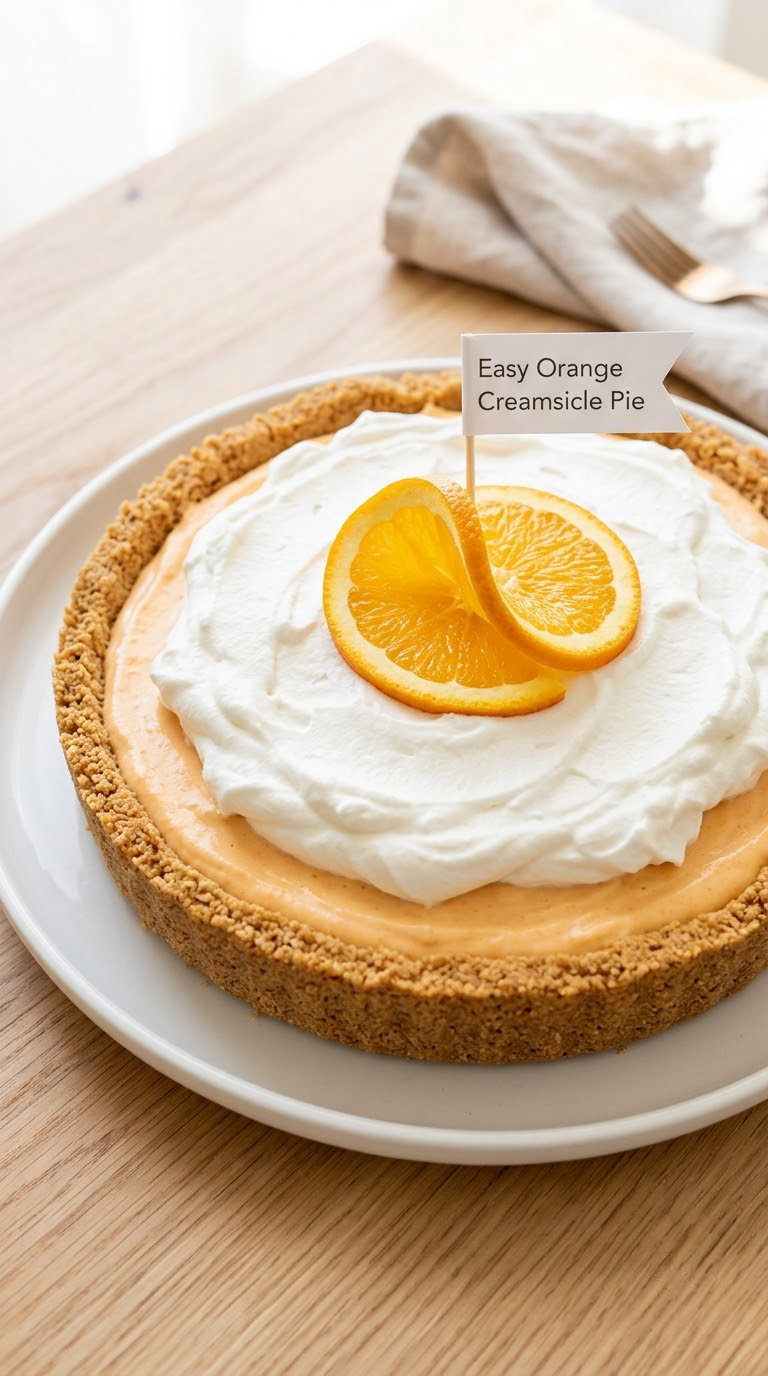
This tastes like summer and takes about twenty minutes of actual work. The filling uses heated, pasteurized eggs, so it sets into a clean slice that holds its shape on the plate, not a soupy one that runs.
Yield: 8 slices · Prep: 20 min · Cook: 10 min · Total: 30 min plus overnight chill · Difficulty: Easy
Ingredients
For the crust:
- 1 1/2 cups graham cracker crumbs (150 g)
- 5 tablespoons unsalted butter, melted (70 g)
- 2 tablespoons granulated sugar
For the filling:
- 1 can evaporated milk (5 oz, 150 ml)
- 3/4 cup granulated sugar (150 g)
- 2 whole eggs plus 2 egg yolks
- Zest of 1 orange
- 3/4 cup orange juice (180 ml), plus 1 tablespoon if you like it sharper
- 1 teaspoon vanilla extract
- Pinch of salt
Instructions
- Heat the oven to 350°F (177°C). Mix crumbs, melted butter and sugar, then press firmly into a 9-inch pie plate.
- Bake 10 min until the edges look dry and the center is still slightly soft. Cool completely.
- Whisk evaporated milk and sugar in a saucepan until the sugar dissolves.
- Whisk eggs, yolks, orange zest and juice in a bowl, then slowly pour into the warm milk, whisking constantly.
- Cook over low heat, stirring constantly, until the mixture thickens enough to coat a spoon, about 4 min. Do not let it boil.
- Strain through a fine mesh sieve, stir in vanilla and salt, then pour into the cooled crust.
- Cool to room temperature, then refrigerate at least 4 hours. Whip cream and top just before serving.
Tip: Strain the filling. The bits of cooked egg yolk that slip through are what make a custard pie turn grainy, and picking them out takes ten seconds.
Swap it: Use lime juice and zest instead of orange for a sharper, greener version, or use fresh blood orange juice for a marbled filling if you have it.
Storage: Keep refrigerated for up to 4 days. Do not freeze; the custard goes grainy once thawed. Add the whipped cream on the day you serve it.
4. Shortbread Orange Bars
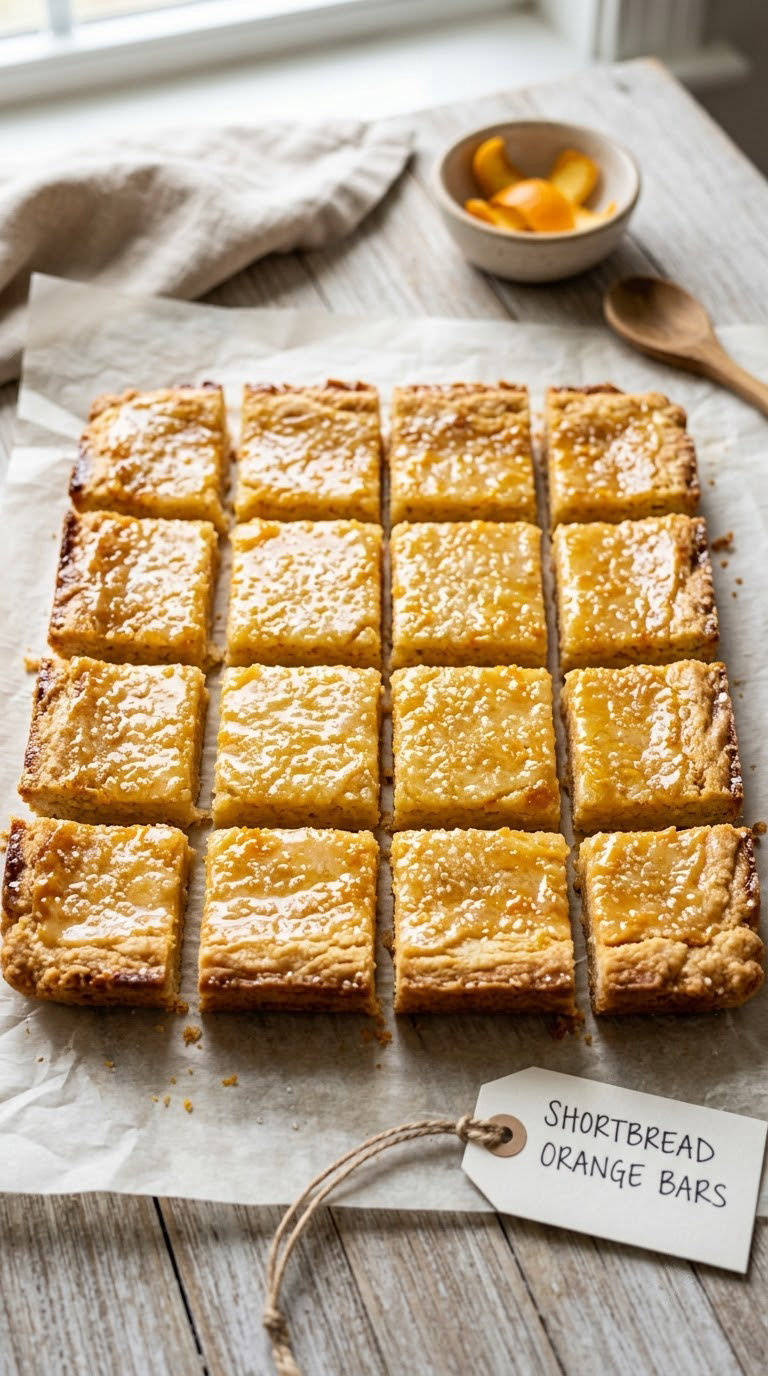
Shortbread is the most forgiving cookie base in the world, and adding orange zest to the dough rather than the topping gives you flavor all the way through. These travel well, cut clean, and disappear fast.
Yield: 16 bars · Prep: 15 min · Cook: 30 min · Total: 45 min · Difficulty: Easy
Ingredients
For the base:
- 1 1/2 cups all-purpose flour (190 g)
- 1/2 cup powdered sugar (60 g)
- 1/4 teaspoon fine salt
- 10 tablespoons unsalted butter, cold and cubed (140 g)
For the topping:
- 1 cup granulated sugar (200 g)
- Zest of 2 large oranges
- 4 tablespoons unsalted butter (55 g)
- 2 tablespoons heavy cream
- 1 teaspoon vanilla extract
- Coarse sugar, for finishing
Instructions
- Heat the oven to 325°F (163°C). Line an 8-inch square pan with parchment, leaving an overhang.
- Whisk flour, powdered sugar and salt. Cut in the cold butter with a pastry cutter until the mixture holds together in clumps.
- Press firmly and evenly into the pan. Bake 22 to 25 min until pale golden at the edges.
- Meanwhile simmer sugar, orange zest, butter, cream and vanilla in a small saucepan for 3 to 4 min until thick and glossy.
- Spread the topping over the hot base and return to the oven for 8 min until bubbling at the edges.
- Sprinkle with coarse sugar and cool in the pan for 30 min before lifting out and cutting into 16 squares.
Tip: Cut while the bars are still slightly warm. Straight from the oven the topping is soft enough that a clean knife goes through without pulling the shortbread apart.
Swap it: Replace half the orange zest with lime zest and add 2 tablespoons of lime juice to the topping for a lemon-lime version.
Storage: In an airtight container at room temperature they stay crisp for 4 days. They freeze for 3 months between layers of parchment.
5. Grapefruit Olive Oil Cake
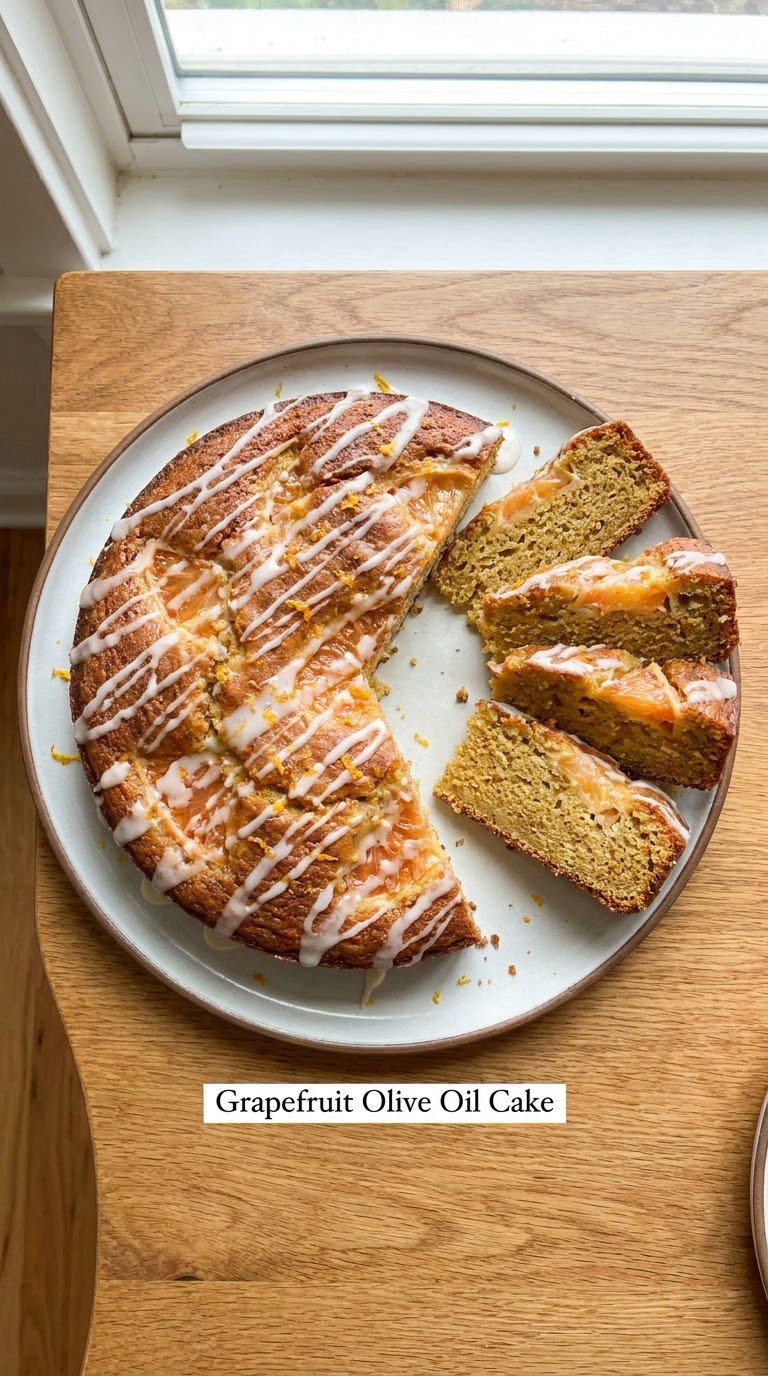
Grapefruit is at its peak from January through April and almost nobody bakes with it. Olive oil keeps the crumb tender and moist for days, so this is the cake to make on Sunday and slice all week.
Yield: 8 to 10 slices · Prep: 15 min · Cook: 45 min · Total: 1 hr 5 min · Difficulty: Easy
Ingredients
- 1 3/4 cups all-purpose flour (220 g)
- 1 teaspoon baking powder
- 1/2 teaspoon fine salt
- 3 large eggs
- 1 cup granulated sugar (200 g)
- 3/4 cup fruity extra-virgin olive oil (180 ml)
- 1 cup whole milk (240 ml)
- Zest of 2 grapefruits
- 1/2 cup fresh grapefruit juice (120 ml)
- 1 teaspoon vanilla extract
Glaze: 1 cup powdered sugar (120 g) and 2 tablespoons grapefruit juice, with more juice as needed.
Instructions
- Heat the oven to 350°F (177°C). Grease a 9-inch springform pan and line the base with parchment.
- Whisk flour, baking powder and salt in a bowl.
- Whisk eggs and sugar for 2 min until pale and slightly thickened. Slowly stream in the olive oil while whisking, then add milk, vanilla, zest and juice.
- Fold in the dry ingredients just until the batter is smooth, then pour into the pan.
- Bake 40 to 45 min until the top is deep golden and a tester comes out clean with a few moist crumbs.
- Cool 15 min, release the pan, cool fully, then pour the glaze over the top and let it soak in.
Tip: Use an olive oil you would happily dip bread into. In a cake with no butter, the flavor of the oil is front and center.
Swap it: Blood orange works here beautifully for a pink cake, and pink grapefruit makes a pale pink glaze if that is the appeal for you.
Storage: Keeps under a cake dome for 4 days, and moist olive oil cakes freeze well for 2 months wrapped in plastic.
6. Lemon Ricotta Cheesecake
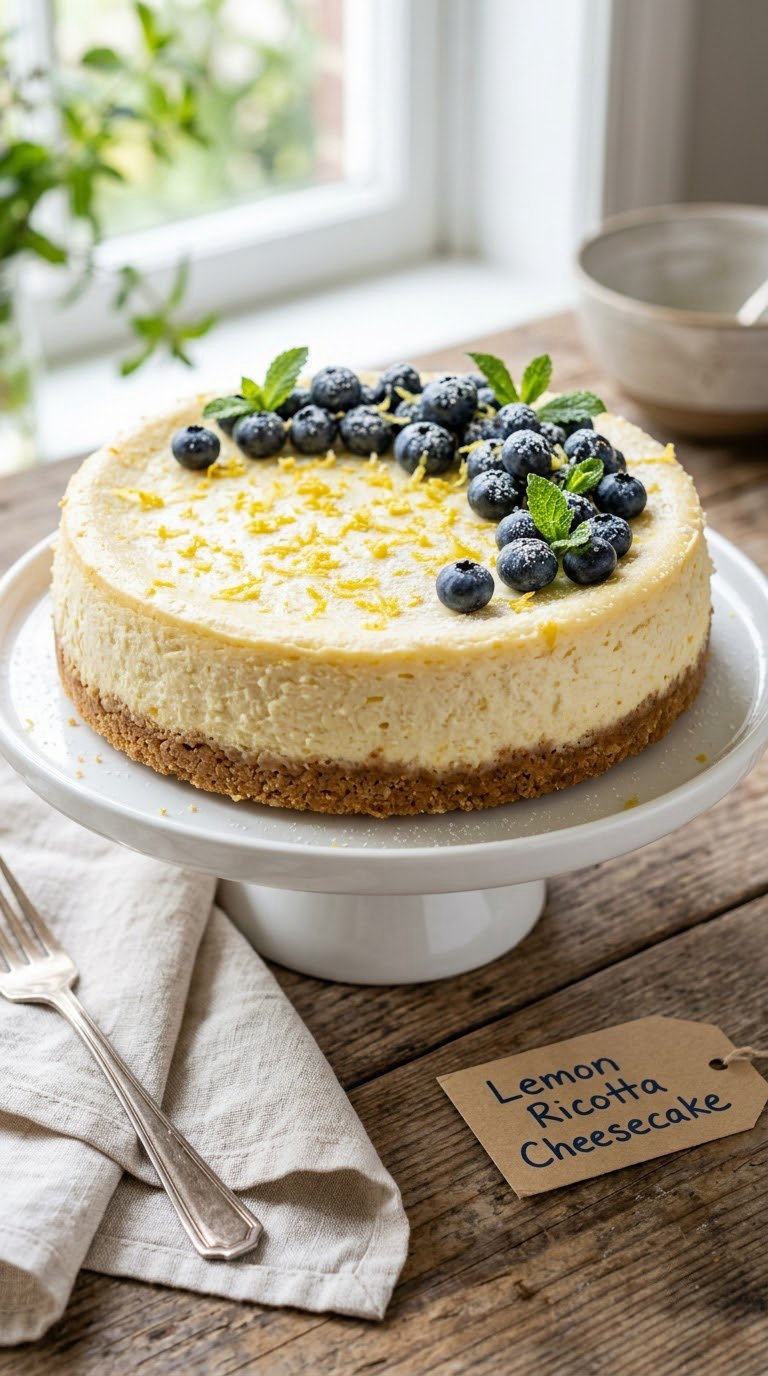
Whipped ricotta swaps in for cream cheese here, which cuts the fat and makes the filling lighter and less sweet than a classic cheesecake. The eggs are gently baked, so there is no raw egg anywhere in the filling.
Yield: 10 slices · Prep: 20 min · Cook: 50 min · Total: 70 min plus chill · Difficulty: Easy
Ingredients
For the crust:
- 1 1/2 cups graham cracker crumbs (150 g)
- 6 tablespoons unsalted butter, melted (85 g)
- 2 tablespoons granulated sugar
For the filling:
- 15 oz whole-milk ricotta (425 g)
- 8 oz cream cheese (225 g)
- 3/4 cup granulated sugar (150 g)
- 4 large eggs
- Zest of 2 lemons and 1/3 cup juice (80 ml)
- 1 tablespoon vanilla extract
- 2 tablespoons cornstarch
- 1/4 teaspoon fine salt
Instructions
- Heat the oven to 350°F (177°C). Mix crumbs, butter and sugar and press into a 9-inch springform pan.
- Bake 10 min, then cool.
- Beat ricotta and cream cheese for 2 min until smooth. Beat in sugar, then eggs one at a time.
- Add lemon zest, juice, vanilla, cornstarch, salt and mix until completely smooth.
- Pour into the crust and bake 45 to 50 min until the edges are set and the center still wobbles slightly when nudged.
- Cool on the counter for 30 min, then refrigerate at least 4 hours before releasing the pan and slicing.
Tip: Do not overbake. The filling should still tremble like jelly when you pull it from the oven, and it firms up entirely in the fridge.
Swap it: For a dairy-free version, swap the cream cheese for 225 g of chilled full-fat coconut cream and use coconut sugar in place of the granulated sugar, then expect a slightly softer set. The crust is already dairy-free if you use a coconut cookie crumb instead of graham crackers.
Storage: Keeps refrigerated for 4 days. Freeze slices without the topping for 1 month and thaw in the fridge overnight.
7. Easy Orange Bread Pudding

This is the recipe for the half loaf of sourdough nobody wanted. The custard bakes to 160°F (71°C) or higher, which makes it a safe baked egg dish, and the orange keeps it from tasting like plain bread pudding.
Yield: 6 servings · Prep: 15 min · Cook: 40 min · Total: 55 min · Difficulty: Easy
Ingredients
- 6 cups torn day-old white bread or brioche (about 600 g)
- 6 large eggs
- 3/4 cup granulated sugar (150 g)
- 4 cups whole milk (960 ml)
- 1 cup heavy cream (240 ml)
- Zest of 2 oranges
- 3/4 cup fresh orange juice (180 ml)
- 1 teaspoon vanilla extract
- 1/2 teaspoon ground cinnamon
- 1/4 teaspoon fine salt
- 2 tablespoons unsalted butter (30 g)
Instructions
- Heat the oven to 350°F (177°C) and butter a 9×13-inch baking dish.
- Whisk eggs and sugar until pale. Slowly whisk in milk and cream, then orange zest, juice, vanilla, cinnamon and salt.
- Pour the custard over the bread, press down gently so it sits submerged, and let stand 15 min so the bread absorbs it.
- Dot the top with butter and bake 35 to 40 min until the center reaches 160°F (71°C) and the top is browned.
- Rest 15 min before serving so the custard thickens instead of running.
Tip: Day-old bread is not optional advice. Fresh bread makes a soggy bottom that never quite firms up.
Swap it: Replace half the orange juice with pear juice and add one diced ripe pear to the dish for a pear-and-orange version.
Storage: Keeps refrigerated for 4 days. Cover tightly; uncovered bread pudding dries out quickly.
8. Lime Coconut Layer Dessert
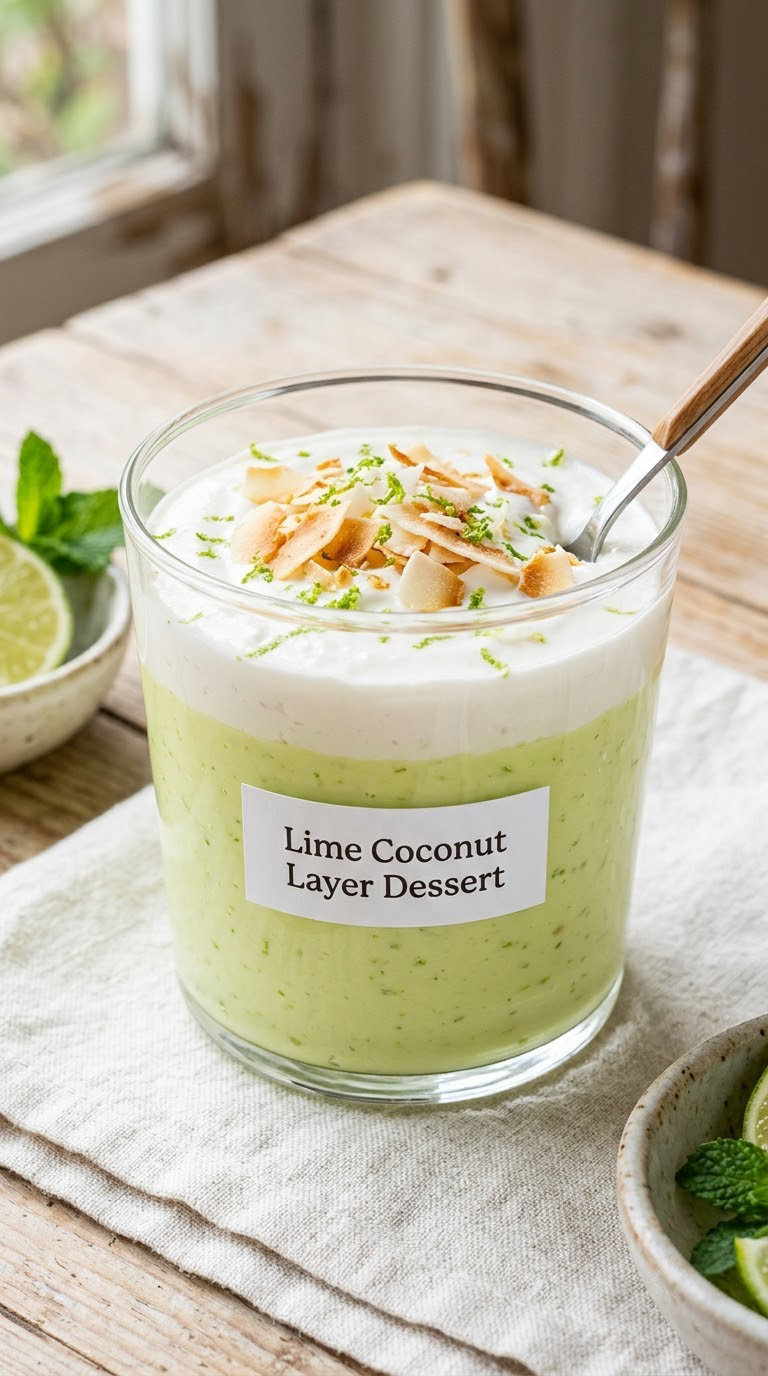
Lime plus coconut reads like a beach, which is exactly what a January table needs. There is no baking at all here, just a short ingredient list and about four hours of fridge time.
Yield: 6 cups · Prep: 25 min · Cook: 5 min · Total: 30 min plus chill · Difficulty: Easy
Ingredients
Coconut crust:
- 1 1/2 cups desweetened shredded coconut (120 g)
- 6 tablespoons unsalted butter, melted (85 g)
- 2 tablespoons granulated sugar
Lime cream:
- 8 oz cream cheese (225 g)
- 1/4 cup granulated sugar (50 g)
- 1/3 cup fresh lime juice (80 ml)
- Zest of 2 limes
- 2 tablespoons heavy cream
Topping:
- 1 can full-fat coconut milk (13.5 oz), chilled overnight
- 2 tablespoons powdered sugar
- 1/2 cup toasted coconut flakes
Instructions
- Heat the oven to 350°F (177°C). Mix coconut, melted butter and sugar and press into 6 ramekins or one small dish.
- Bake 8 min until the tops look dry and lightly golden. Cool on a rack.
- Beat cream cheese, sugar, lime juice, zest and heavy cream for 2 min until smooth and pourable.
- Spoon the lime cream over the cooled crust in each cup.
- Open the chilled coconut milk, scoop out the solid cream, and whip with powdered sugar for 1 min until it holds soft peaks.
- Top each cup with coconut cream and toasted flakes, then chill at least 4 hours.
Tip: Chill the coconut milk can upright for a full night. If it is not cold and solid on the bottom you cannot whip it.
Swap it: Use grapefruit juice and zest for the cream layer for a pink dessert, and swap lime for lemon if grapefruit is all you have.
Storage: Keeps refrigerated for 3 days in individual cups. It does not freeze well, since the coconut cream separates on thawing.
9. Orange Chocolate Chip Cookies

Orange and dark chocolate is one of those pairings that tastes more expensive than it is. The dough rests in the fridge for thirty minutes before baking, which is what gives you crisp edges and a soft, almost fudgy middle.
Yield: 18 cookies · Prep: 15 min · Cook: 12 min per batch · Total: 35 min · Difficulty: Easy
Ingredients
- 1 1/2 cups all-purpose flour (190 g)
- 1/2 teaspoon baking soda
- 1/2 teaspoon fine salt
- 1/2 cup unsalted butter, softened (115 g)
- 3/4 cup granulated sugar (150 g)
- 1/2 cup packed light brown sugar (100 g)
- 1 large egg plus 1 egg yolk
- Zest of 1 large orange
- 1 teaspoon vanilla extract
- 1 1/2 cups semisweet chocolate chips (270 g)
Instructions
- Whisk flour, baking soda and salt in a small bowl.
- Beat butter and both sugars for 2 min until creamy, then beat in the egg, yolk, orange zest and vanilla.
- Fold in the dry ingredients and chocolate chips until just combined. The dough will be very soft.
- Cover and refrigerate 30 min while the oven heats to 350°F (177°C).
- Scoop 2-tablespoon mounds onto parchment-lined sheets, spaced 2 inches apart.
- Bake 11 to 13 min until the edges are set and the centers still look underdone. Cool 5 min on the sheet before moving.
Tip: Pull them out while the centers still look damp. They finish on the tray, and that is the difference between chewy and crunchy.
Swap it: Chop a dark chocolate bar instead of chips for larger shards, or skip the chocolate entirely and add 1/2 cup toasted pecans for a chocolate-free version.
Storage: In an airtight container they stay soft for 4 days. Bake dough balls and freeze them for 2 months, then bake from frozen with 2 extra minutes.
10. Winter Citrus Trifle
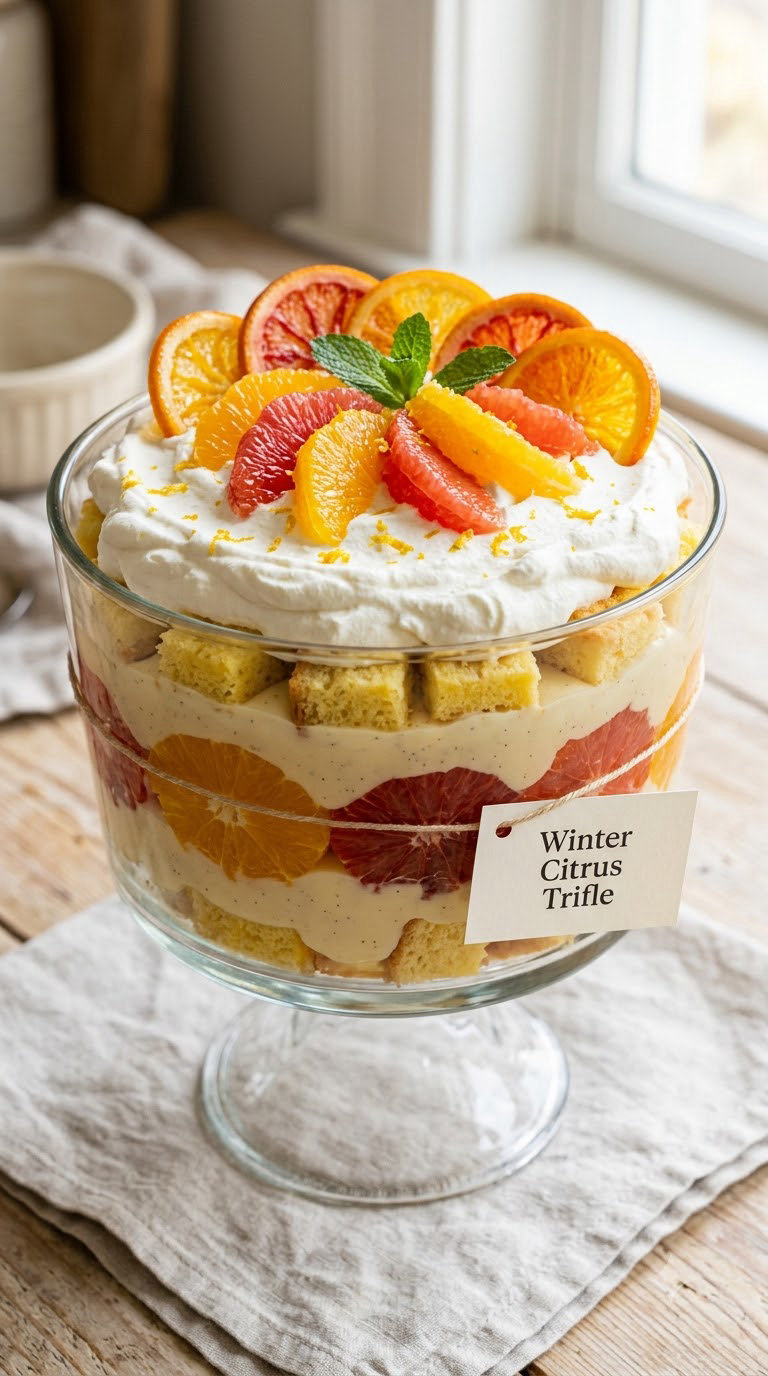
A trifle is the most useful thing you can make for a winter gathering, because it looks like effort and behaves like assembly. The trick is a cake that can handle being soaked, which is why pound cake works better than a light sponge.
Yield: 12 servings · Prep: 35 min · Cook: 8 min · Total: 45 min plus chill · Difficulty: Easy
Ingredients
For the cake layer:
- 1 prepared 9-inch pound or yellow cake, cooled
- 1/2 cup orange juice and 2 tablespoons lemon juice
- 1/3 cup granulated sugar (65 g)
For the pudding:
- 2 cups whole milk (480 ml)
- 1/2 cup granulated sugar (100 g)
- 2 large eggs plus 2 yolks
- 1 tablespoon cornstarch
- 1 teaspoon vanilla extract
- Pinch of salt
To assemble:
- 2 cups heavy whipping cream (480 ml)
- 1/4 cup powdered sugar
- 1 cup citrus segments, membranes removed
- Thin orange and grapefruit slices, for garnish
Instructions
- Cake layer: cube the cake into 2-inch pieces and toss with combined juices and sugar. Let stand 15 min.
- Pudding: heat milk and sugar until steaming. Whisk eggs, yolks, cornstarch and salt, then slowly stream in the warm milk.
- Return to low heat and stir constantly until the pudding coats the back of a spoon, about 4 min. Strain and stir in vanilla.
- Chill the pudding 2 hours until firm enough to scoop.
- Whip cream with powdered sugar to stiff peaks.
- Layer in a 3-quart glass bowl: half the cake, half the pudding, half the cream, then the citrus segments. Repeat once more.
- Top with the remaining cream and garnish with citrus slices. Chill at least 4 hours before serving.
Tip: Layer it no more than two hours before serving. Longer than that and the cake turns to mush at the bottom.
Swap it: Replace the orange segments with pomegranate seeds for a winter color pop, or use blood oranges so the juice stains the cake pink.
Storage: Keeps refrigerated for 3 days, covered with plastic wrap directly on the surface. Do not freeze.
11. Easy Lemon Mousse
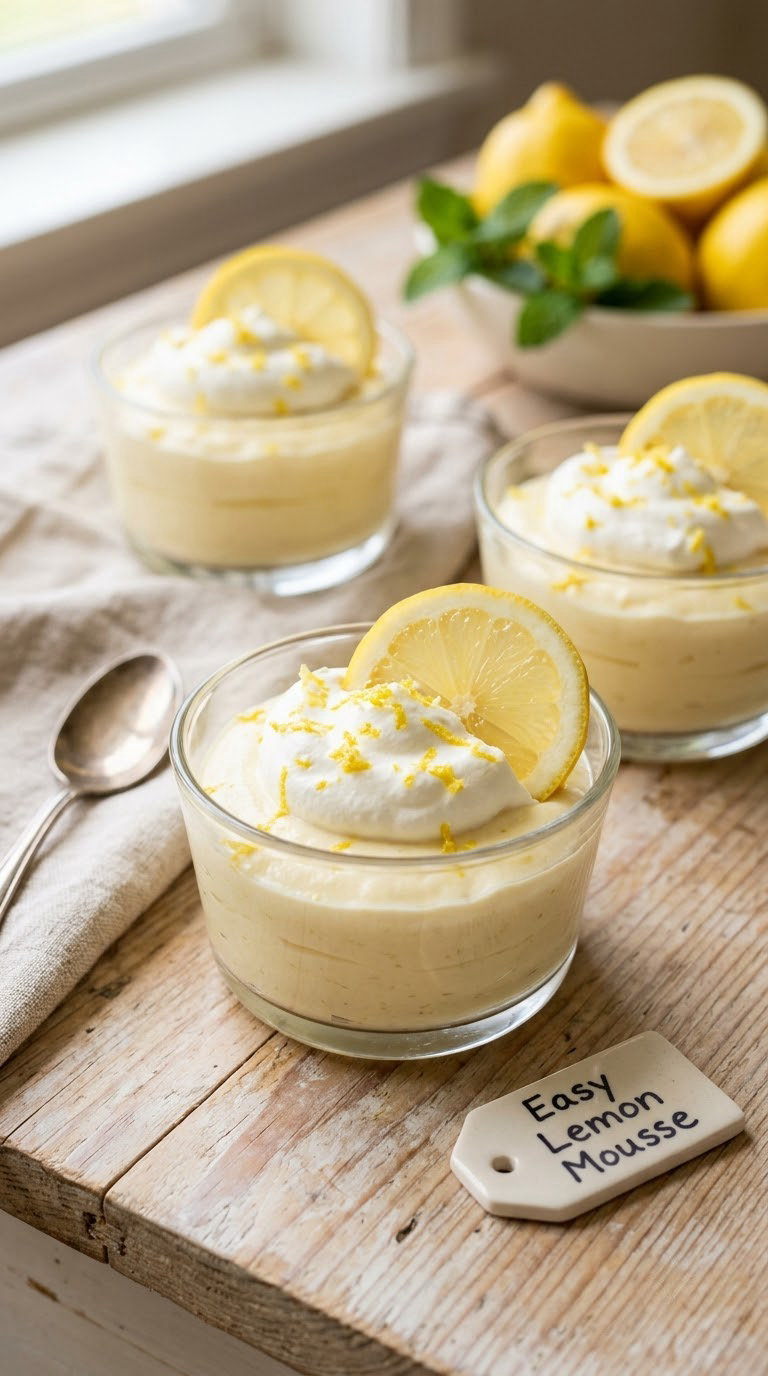
The lemon base here is a proper custard, cooked to 160°F (71°C) so the raw eggs are cooked through, which is what separates a mousse from an unpasteurized egg mixture. Fold it in while both parts are still cool and you get a light, stable cloud rather than soup.
Yield: 6 cups · Prep: 25 min · Cook: 8 min · Total: 35 min plus chill · Difficulty: Medium
Ingredients
For the lemon base:
- 3/4 cup granulated sugar (150 g)
- 3 large eggs plus 2 yolks
- 1/3 cup fresh lemon juice (80 ml)
- Zest of 2 lemons
- Pinpoint of fine salt
For the cream:
- 1 cup heavy whipping cream (240 ml)
- 1/2 cup granulated sugar (100 g)
- 1 teaspoon vanilla extract
Instructions
- Whisk eggs, yolks, sugar, lemon juice, zest and salt in a heatproof bowl.
- Set over barely simmering water and whisk constantly for 6 to 8 min until the mixture reaches 160°F (71°C) and thickens enough to ribbon.
- Cool the base to room temperature. It must be completely cool before you go on, or the cream will melt.
- Whip cream and sugar to stiff peaks, then beat in the vanilla.
- Stir one-third of the whipped cream into the lemon base to slacken it, then fold the base back into the remaining cream.
- Spoon into glasses, chill at least 4 hours, and top with extra cream, zest and a thin lemon slice.
Tip: Fold with a light hand, a third at a time. Pushing too hard deflates the cream and you end up with a heavy lemon soup.
Swap it: Orange zest and orange juice give a sweeter, softer mousse, and half a teaspoon of orange blossom water lifts either version.
Storage: Keeps refrigerated for 2 days and does not freeze. Mousse made with cream deflates quickly once thawed.
12. Tangerine Coconut Macaroon Cups
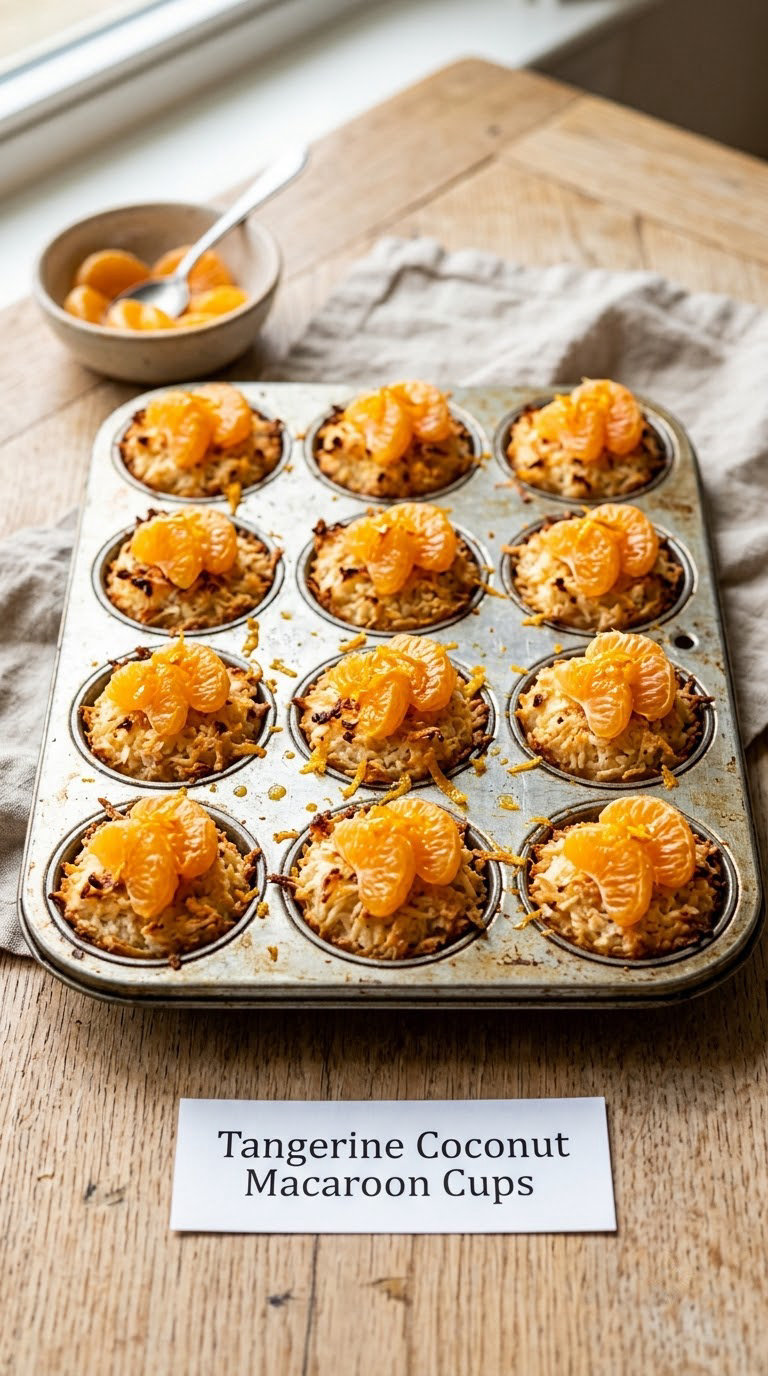
These are half of a two-step bake, which sounds harder than it is: the cups bake once, get filled, and go back in for a few minutes to set. They are small, forgiving, and completely free of flour and eggs.
Yield: 10 cups · Prep: 15 min · Cook: 20 min · Total: 35 min · Difficulty: Easy
Ingredients
- 3 cups desweetened shredded coconut (240 g)
- 1 cup sweetened coconut flakes (80 g)
- 1 can sweetened condensed milk (14 oz, 397 ml)
- 1 teaspoon vanilla extract
- Zest of 1 tangerine
- 1/4 cup fresh tangerine juice (60 ml)
- Pinch of fine salt
- 2 tangerines, peeled and segmented, for topping
Instructions
- Heat the oven to 325°F (163°C) and line a 12-cup muffin tin.
- Mix both coconut varieties, then fold through condensed milk, vanilla, tangerine zest, juice and salt.
- The mixture will look loose. Press it firmly into cups, filling them right to the top.
- Bake 18 to 20 min until the tops are golden and the edges have pulled slightly away from the tin.
- Cool 10 min in the tin, then ease out and place in the tin again with the rounded side up.
- Fill each cup with 2 to 3 tangerine segments and return to the oven for 5 min just to warm the fruit through.
- Cool 10 min. They are best the day they are made, but they do travel.
Tip: Press the mixture down hard and pack it to the top of the cup. Loose filling is the only reason a coconut cup falls apart.
Swap it: For a nut-free version, swap the coconut flakes for extra shredded coconut and add 2 tablespoons of tahini for the crunch. For gluten-free, this recipe already is.
Storage: Airtight at room temperature for 2 days, or refrigerated for 5 days. Freeze unbaked cups for 3 months and bake from frozen.
13. Easy Orange Posset

Three ingredients, ten minutes of work, and it sets to a silky custard purely from the acid reacting with the cream. It is the recipe I bring to a dinner party when I want something impressive without shopping for anything special.
Yield: 4 servings · Prep: 5 min · Cook: 10 min · Total: 15 min plus chill · Difficulty: Easy
Ingredients
- 2 cups heavy whipping cream (480 ml)
- 3/4 cup granulated sugar (150 g)
- 1 cup fresh orange juice (240 ml)
- Zest of 1 orange, plus thin slices to serve
Instructions
- Put 4 serving bowls or glasses in the freezer while you work.
- Combine cream, sugar and orange juice in a saucepan over medium heat.
- Bring to a full boil, stirring constantly so the sugar dissolves and nothing catches on the bottom.
- Boil for exactly 3 min, then remove from the heat and let it sit 5 min.
- Strain into the chilled bowls and refrigerate at least 4 hours, or overnight.
- Serve topped with whipped cream, orange zest and a thin slice.
Tip: Do not skip the full boil or shorten the three minutes. The acid needs to cook with the cream for the custard to thicken and set properly.
Swap it: Use lemon juice in the same quantity for a classic lemon posset, and reduce the sugar by 2 tablespoons since lemon is sharper than orange.
Storage: Keeps refrigerated for 3 days. It does not freeze, and it must be served chilled straight from the fridge.
14. Citrus Rice Pudding
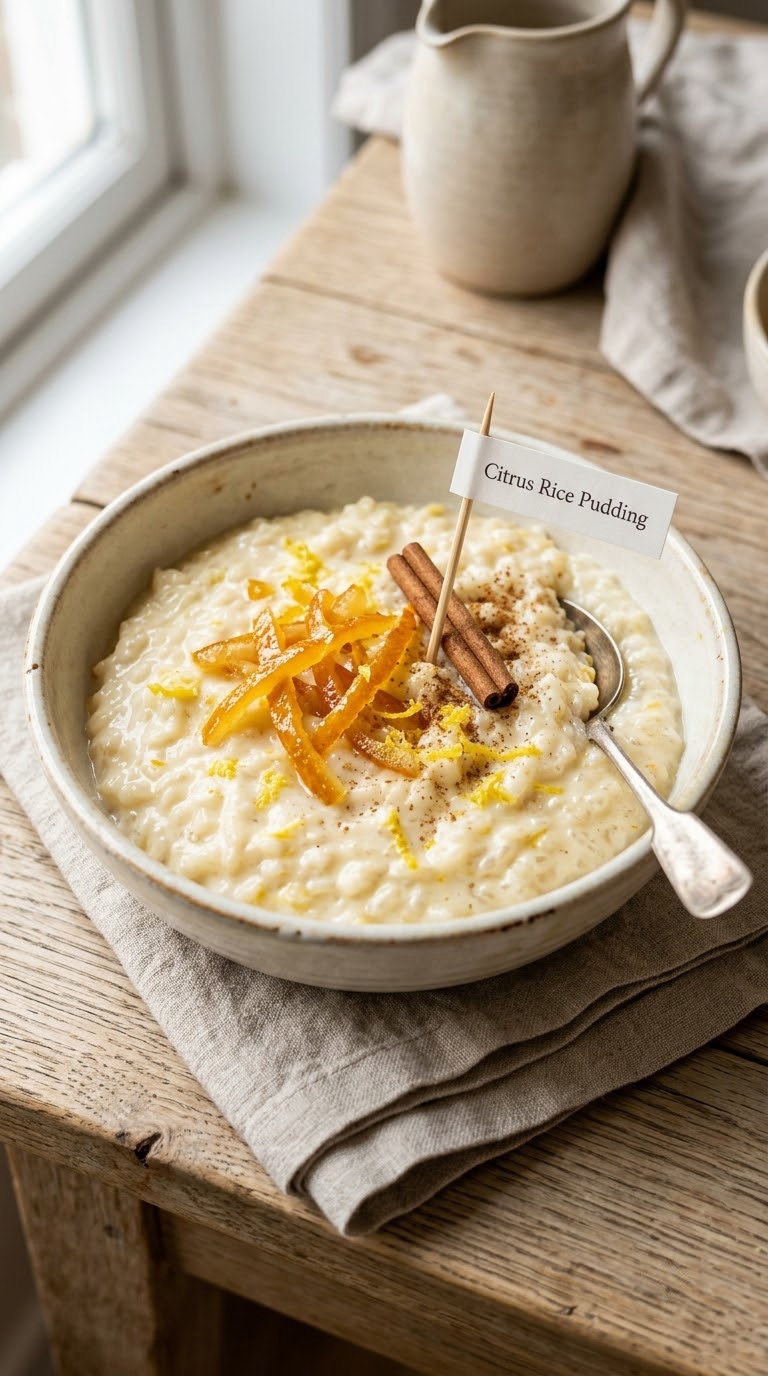
A stovetop rice pudding takes the same forty minutes as a baked one and gives you a better texture. The trick is adding the citrus at the very end, because orange juice and milk curdle if they simmer together for long.
Yield: 6 servings · Prep: 10 min · Cook: 40 min · Total: 50 min · Difficulty: Easy
Ingredients
- 1/2 cup long-grain rice (100 g), rinsed
- 6 cups whole milk (1.4 L)
- 1 cup heavy cream (240 ml)
- 1/2 cup granulated sugar (100 g)
- 1/2 teaspoon fine salt
- Zest of 1 orange and 1 lemon
- 1/2 cup fresh orange juice (120 ml)
- 2 tablespoons fresh lemon juice (30 ml)
- 1 teaspoon vanilla extract
- Candied orange peel and cinnamon, to serve
Instructions
- Combine rice, milk, cream, sugar and salt in a heavy saucepan over medium-low heat.
- Bring to a gentle simmer, then reduce the heat to low.
- Stir every 2 to 3 min, scraping the bottom, for 35 to 40 min until the rice is tender and the pudding is thick enough to hold a spoon standing.
- Take the pan off the heat and let it sit 5 min.
- Stir in both zests, both juices and the vanilla. The pudding will loosen as it sits, which is expected.
- Cool to room temperature, then chill at least 2 hours. Serve with candied peel and cinnamon.
Tip: Stir more often than feels necessary. Milk scorches fast, and one stuck layer ruins the whole pot.
Swap it: Use unsweetened coconut milk in place of the cream for a dairy-free version, and skip the candied peel if the sugar matters to you.
Storage: Keeps refrigerated for 4 days in a covered container. Reheat gently in a pan over low heat with a splash of milk, or in the microwave in short bursts, stirring between each.
15. Winter Orange Trifle Cups
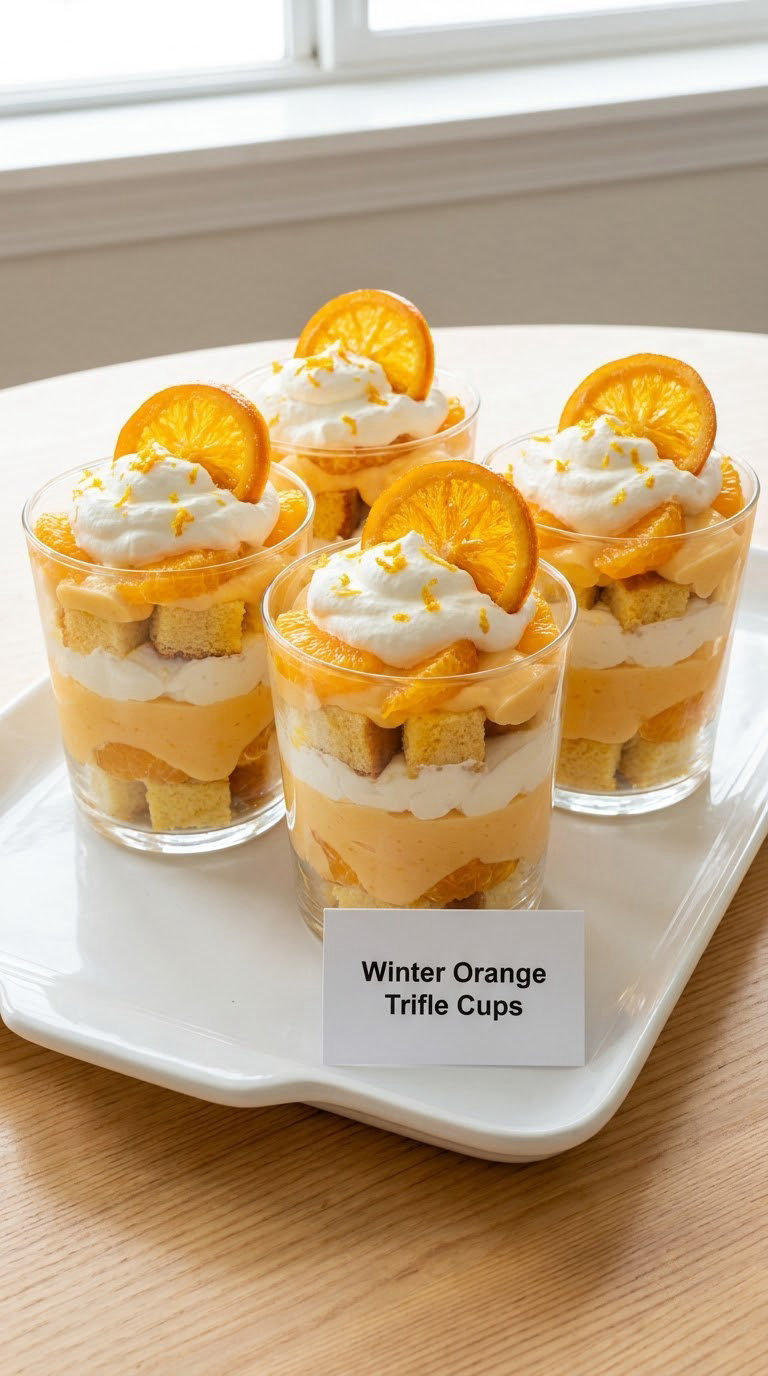
This is recipe 10 in individual portions, which solves the real problem with trifles at a gathering: everyone gets a clean, equal slice and nothing collapses on the way to the table. Make them in the cups a day ahead and set them out as guests arrive.
Yield: 6 cups · Prep: 30 min · Cook: 10 min · Total: 40 min plus chill · Difficulty: Easy
Ingredients
For the orange pudding:
- 2 cups whole milk (480 ml)
- 1/3 cup granulated sugar (65 g)
- 2 large eggs
- Zest of 1 orange and 3/4 cup juice (180 ml)
- 1 tablespoon cornstarch
- Pinch of salt
To assemble each cup:
- 6 small clear cups, roughly 10 oz each
- 2 cups cubed yellow cake or pound cake (about 300 g)
- 1/3 cup orange juice and 1 tablespoon sugar, for soaking
- 2 cups heavy whipping cream (480 ml)
- 1/4 cup powdered sugar
- 1 cup citrus segments, membranes removed
Instructions
- Heat the oven to 350°F (177°C). Bake a 9-inch yellow or pound cake, then cool and cube it.
- Toss the cake cubes with orange juice and sugar and let them soak 15 min.
- Whisk milk and sugar until steaming. Whisk eggs, orange zest, juice, cornstarch and salt in a bowl, then slowly stream in the warm milk.
- Cook over low heat, stirring constantly, for 4 min until the pudding coats a spoon. Strain and chill 2 hours.
- Whip cream with powdered sugar to stiff peaks.
- In each cup, layer half the cake, half the pudding and half the cream. Repeat, and finish with citrus segments.
- Chill at least 4 hours, then add a small spoonful of cream and a thin citrus slice on top just before serving.
Tip: Fill the cups no more than 90 minutes before serving. The cake is softer than the bowl is deep, so it settles as it chills.
Swap it: Use pink grapefruit segments instead of oranges for a two-color version, or layer blood orange segments through the middle so the juice gives the cream a faint blush.
Storage: Keeps refrigerated for 2 days. These do not freeze or travel well, so assemble them in the room where you are serving.
Tips for Making These
- Zest before you juice. The aromatic oils live in the skin and not in the juice, and once you juice a lemon you cannot get at the oils. Zesting one lemon takes about fifteen seconds.
- Watch the sugar, not the clock. Winter citrus gets sweeter the longer it sits in your kitchen. If your fruit is very ripe, pull 2 tablespoons of sugar out of any recipe rather than adding lemon juice to compensate, which can mute the fruit.
- Use a microplane and the soft part of the zest only. The white pith underneath is bitter, so take the yellow layer and stop. A box grater will drag pith into the zest and pull oils onto the outside.
- Chill make-ahead desserts at least four hours, not two. Anything set with gelatin, eggs or cream needs a full afternoon in the refrigerator, and puddles of juice at the bottom of the bowl are the tell.
- Toast the crust for two minutes before filling it. A graham cracker or coconut base that has sat raw in the fridge for a day soaks up moisture from the filling. A two-minute blast in a hot oven re-crisps it.
- Put the citrus slice on at the last moment. Fruit garnish left on a dessert for hours bleaches and dries out. Slice it fresh, and if you are serving a buffet, keep the slices in a bowl beside the dessert instead of on it.
For more seasonal cooking, my 15 easy cinnamon dessert recipes for fall covers the same kind of make-ahead thinking with a warmer spice palette.
Frequently Asked Questions
Which citrus fruit is in season in the winter?
Blood oranges and Cara Cara oranges peak from December through March, navel oranges run November to May, Meyer lemons run November to March, clementines and mandarins run October to March, and grapefruit is best from January to April. That window is exactly why winter desserts work: the fruit is at peak sweetness and color when the rest of the produce aisle is tired.
What are the easiest make-ahead citrus desserts?
The easiest are the four that set in the refrigerator rather than the oven: the orange posset, the orange creamsicle pie, the lemon ricotta cheesecake, and the lime coconut layer dessert. Each needs a short cook or none at all, and each relies on fridge time to firm up. Make them the night before, give every one at least four hours in the refrigerator, and they hold up beautifully on a buffet.
What is a simple three ingredient lemon dessert?
A lemon posset is the answer: heavy whipping cream, sugar, and lemon juice. You boil them together for exactly three minutes, chill, and the acid does the rest. It sets into a silky custard without eggs, gelatin, or butter. Recipe 13 has the full method, and it swaps to orange with no other changes.
What sweet flavors complement lemon well?
Dark chocolate, vanilla bean, cardamom, rosemary, olive oil, ginger and pistachio all work with lemon without swamping it. The pairing logic is the same each time: you want something with its own strong flavor but no sweetness, so the lemon stays sharp rather than fighting for attention. Dark chocolate and olive oil are the two I reach for most.
How do I stop citrus desserts from tasting bitter?
Most bitterness comes from pith, not from the fruit. Take only the colored outer zest with a microplane, cut out every white membrane when you supreme the segments, and strain out the seeds. If the juice itself tastes sharp, balance it rather than diluting it: add a spoonful of sugar, not more water.
What can I make with leftover oranges and lemons?
Candied peel uses the parts you throw away: slice the rind thinly, simmer it in equal sugar and water, and drain after about forty minutes. Beyond that, freeze juice in ice cube trays for drinks, stir zest into cookie dough, and salt preserved lemon halves in a jar for a savory use. None of it needs a second shopping trip.
A Bright Citrus Dessert for Winter
Start with the orange cake and cream cheese frosting. It is the most forgiving recipe here, it travels well if you frost it on the day, and it delivers exactly what a January dinner table needs: something that looks like an occasion and tastes bright rather than heavy.
Once you have that one down, work outward to the no-bake posset and the creamsicle pie, both of which are better for being made early. Over time, these 15 easy citrus dessert recipes for winter will cover everything from a three-ingredient pudding to a showpiece trifle, and every one of them leans on fruit that is at its best right now. If you want to keep going into spring, the 15 easy coconut dessert recipes for spring picks up a few of the same ideas with a lighter finish.