
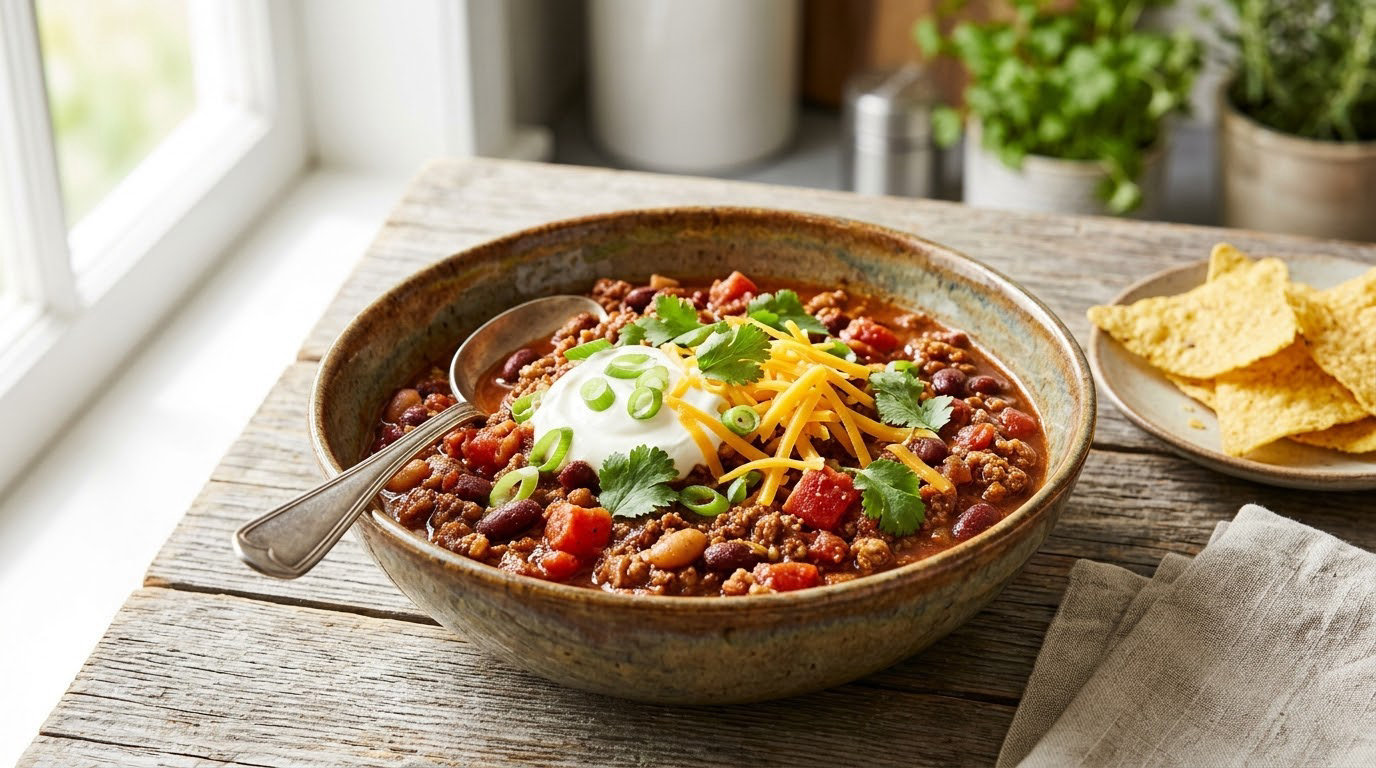
You can mix a jar of homemade chili seasoning from spices you probably already own in about five minutes, and it tastes better than anything from the packet. This easy homemade chili seasoning recipe gives you a warm, smoky blend where you decide how hot it gets and how much salt goes in.
The base is chili powder, cumin, garlic powder, smoked paprika, oregano, onion powder and a little salt, with cayenne and cinnamon left optional. One batch makes about 20 tablespoons, which covers roughly ten servings of chili, plus tacos, soups, roasted vegetables and grilled meat. Prep time is five minutes, cooking time is zero, and the whole thing costs a fraction of a single store-bought packet.
Table of Contents
Why This Recipe Works
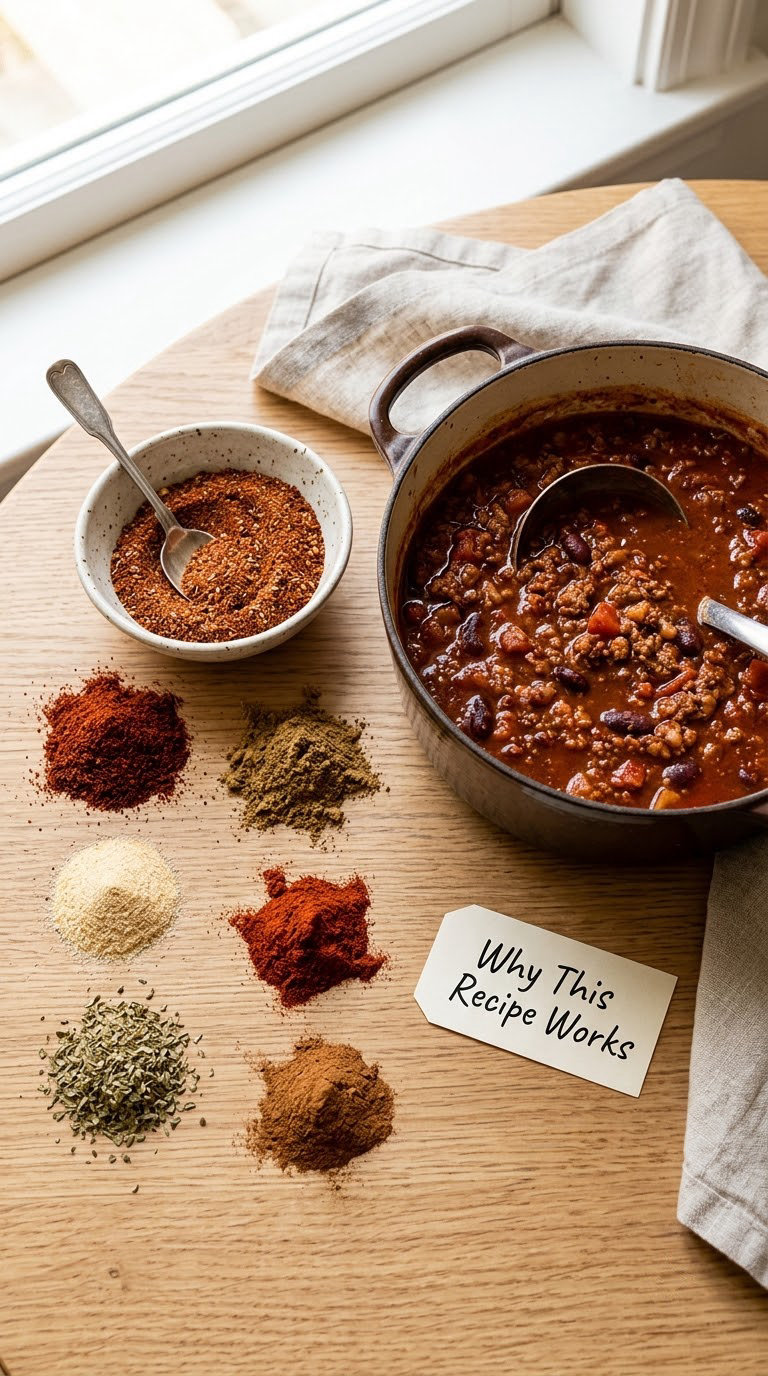
- Balanced in a way packets rarely are. Cumin gives warmth, garlic and onion powder build the savory backbone, paprika adds sweetness and smoke, and oregano keeps it from tasting flat.
- You set the heat. Cayenne is an add-in, not a requirement, so a household with picky eaters and one with a heat habit can share the same jar.
- Five minutes of work. Measure, whisk, jar. There is no toasting step, no grinding, and no cooking.
- Pantry staples only. Every spice sits in the average spice rack, and nothing expires in a few months the way fresh herbs do.
- Far more useful than a pot of chili. The same blend seasons taco filling, baked potatoes, corn, soups, stews, roasted vegetables and meat rubs.
One thing worth saying up front: store-bought chili seasoning is mostly salt. That is why homemade tastes different the first time you try it. You get the actual chile character and none of the anti-caking fillers or added sugars.
Ingredients
These amounts make about 20 tablespoons of seasoning, roughly one and a quarter cups.
- 3 tablespoons chili powder
- 2 teaspoons ground cumin
- 2 teaspoons garlic powder
- 2 teaspoons smoked paprika
- 1.5 teaspoons dried oregano
- 1 teaspoon onion powder
- 1 teaspoon ground coriander (optional, for a citrus note)
- 0.75 teaspoon salt, or 1 teaspoon for a bolder blend
- 0.5 teaspoon ground cinnamon (optional, for warmth)
- 0.25 teaspoon cayenne pepper (optional, for heat)
Here is what each spice is actually doing in the bowl.
| Spice | What it contributes |
|---|---|
| Chili powder | The base. Look for a pure chile blend, not a seasoned packet. |
| Cumin | Warm, nutty, slightly citrusy depth. The single most important spice after the chili powder. |
| Garlic powder | Savory background without sharpness or moisture. |
| Smoked paprika | Sweet smokiness. Regular paprika works, you just lose the smoke. |
| Oregano | Herbal brightness that keeps the blend from tasting dusty. |
| Onion powder | A rounded, sweet savoriness. |
| Ground coriander | Light citrus and floral notes, closest thing to the aroma of a fresh pot. |
| Salt | Amplifies every other spice. Skipping it is the fastest way to a bland blend. |
| Cinnamon | A trace of sweetness that softens heat, Texas style. |
| Cayenne | Clean heat. Use sparingly and taste as you go. |
For a mild blend, use ancho or New Mexico chile powder and leave the cayenne out. For more heat, add up to a full teaspoon of cayenne in batches. To go salt-free, omit the salt and season your finished dishes separately.
How to Make Easy Homemade Chili Seasoning
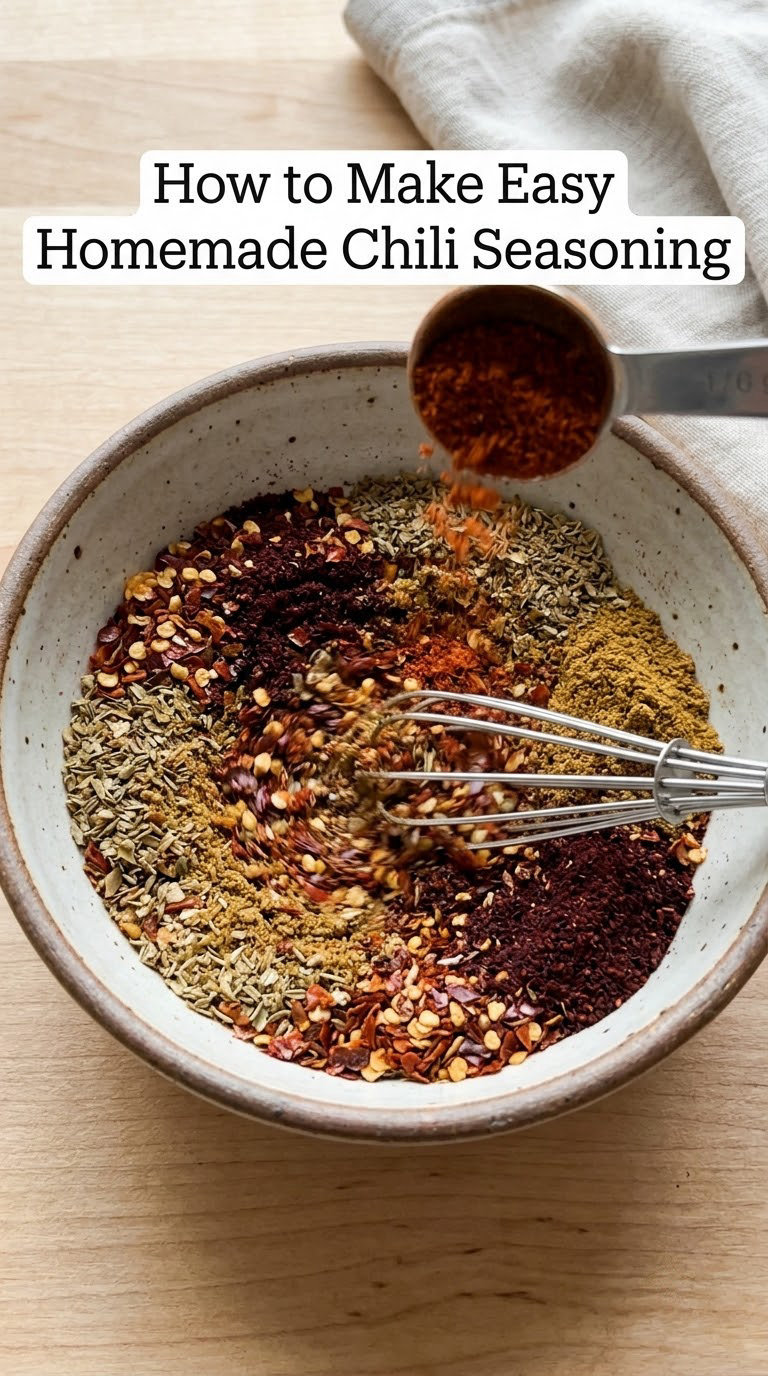
- Measure everything into a small bowl, starting with the chili powder so heavier spices do not end up buried at the bottom.
- Whisk with a fork or small whisk until the color is even and there are no streaks of red paprika or dark cumin left.
- Spoon into a clean dry jar, seal it tightly, and label it with the date.
Your doneness cues are smell and color. When the mixture smells fragrant rather than dusty, and the color is a uniform brick red rather than patchy, it is mixed. That takes about thirty seconds.
Use the blend within about six months for the brightest flavor, and double the recipe whenever you are stirring one out. A mason jar with a tight lid sits perfectly on the shelf, and most cooks label it with masking tape and the date so they know when it was made.
Mixing the Easy Homemade Chili Seasoning
The common mistake is adding everything at once and stirring with a spoon, which leaves cumin and garlic powder knotted in the bottom. Whisk the spices dry, with no oil or liquid, and break up any lumps of oregano or cinnamon with the back of a teaspoon before the final whisk.
If you own a small spice grinder, pulse the blend in two or three short bursts for a slightly finer texture. Do not run it long, or the cumin and chili powder will turn dusty and bitter from friction heat.
Tips for Success
- Buy plain chili powder. Many jars labeled chili powder already contain cumin, salt and garlic. Using one on top of this recipe skews the blend heavily toward cumin.
- Measure cumin carefully. It is the spice people overdo. Start at 2 teaspoons and taste a pinch on a cracker before adding more.
- Salt is not optional. Readers who halve the salt and then call the blend bland usually need salt back, not more chili powder. The sodium concern is real, so use 0.75 teaspoon and season the pot separately.
- Add it early in cooking. Bloom the seasoning in oil with onions for 45 to 60 seconds before liquid goes in. That step is the whole difference between seasoned and merely hot chili.
- Save some for the table. A teaspoon per serving at the bowl fixes under-seasoned chili, and the grindable texture works better than a wet sauce.
- Cook to a safe temperature. Ground beef and turkey chili need 160°F (71°C) internal temperature, chicken chili needs 165°F (74°C), and leftover chili keeps 3 to 4 days in the fridge.
Variations
- Mild version: swap in ancho chile powder for the chili powder, drop the cayenne entirely, and add an extra teaspoon of smoked paprika. Good for kids and for anyone who cannot handle chile heat.
- Smoky chipotle version: replace half the regular chili powder with chipotle powder and add 1 teaspoon of chipotle powder. One teaspoon of chipotle is plenty; it moves fast.
- Salt-free version: leave out the salt and add a pinch of salt at the end of cooking instead. This also works if you are watching sodium.
- Curry-inspired version: swap the cumin for curry powder, add 0.5 teaspoon of garam masala, and keep the smoked paprika. This works beautifully in roasted cauliflower and lentil dishes.
- Herb-finished version: blend in 1 tablespoon of dried cilantro or 2 teaspoons of Mexican oregano. Fresh cilantro stirred in at the end is a different thing entirely, and worth doing too.
For a Texas-leaning pot, double the chili powder and keep the cinnamon at 0.5 teaspoon. For Cincinnati style, add 1 teaspoon of cocoa powder and 1 teaspoon of brown sugar along with a pinch of nutmeg.
Storage, Make-Ahead and Reheating
Store the finished seasoning in an airtight jar in a cool, dry cupboard away from the stove and any window light. Ground spices lose aroma faster than whole ones, so plan on six months for peak flavor; up to a year is safe but softer. That is where the six month versus three month disagreement comes from, since three months is the conservative end of the same range rather than a different answer.
Two things shorten shelf life faster than anything else: moisture and heat. Measure with dry spoons, keep the jar away from the coffee maker, and never dip a wet spoon into it. If the blend clumps, spread it on a clean baking sheet and let it air out for an hour, then break it up and reseal it.
There is no reheating step for the seasoning itself. If you have a jar already opened, scoop out what you need and put the lid straight back on. Chili and soups made with it reheat on the stove over low heat for 20 to 30 minutes, stirring now and then, and keep 3 to 4 days refrigerated or freeze in single portions for up to three months.
For a make-ahead plan, double or triple the recipe and pack it into clean half-pint jars. This blend makes an easy host gift, especially with the date written on the lid and a note about how hot it is.
What to Serve With It
Start with a pot of chili. Use 2 tablespoons per 6-serving pot, or about 1 tablespoon per pound of meat, and adjust after the first taste. If you are cooking white chicken chili, go lighter at 1.5 tablespoons so the cream still reads through. These amounts hold true across the 15 easy chili recipes for game day, and they also suit a slow cooker batch.
Beyond chili:
- Taco filling: 1 tablespoon per pound of cooked ground meat or shredded chicken.
- Baked potatoes: 1 teaspoon split between two split baked potatoes, stirred into sour cream or butter.
- Roasted vegetables: 2 teaspoons per 2 pounds of potatoes, cauliflower or sweet potato, tossed with oil before roasting.
- Soups and stews: 1 teaspoon per quart, added in the last 10 minutes so it does not turn bitter.
- Grilled or roasted meat: 1 tablespoon per pound as a dry rub, applied 30 minutes before cooking so it does not scorch.
Cornbread is the obvious table companion, and there are plenty of good options in these easy cornbread recipes to serve with chili. Elote-style corn and a simple cucumber salad cool things down nicely if the blend turned out hotter than planned.
Frequently Asked Questions
How much homemade chili seasoning should I use?
Use 2 tablespoons for a pot of chili that serves six, which is roughly 1 tablespoon per pound of meat. For soups and stews, 1 teaspoon per quart is enough. If you are seasoning food as it is served, a small pinch per person at the table works better than loading the pot. Taste before adding more, since the salt in the blend builds up as you go.
How can I make this chili seasoning less spicy?
Use ancho or New Mexico chile powder instead of a hotter blend and leave the cayenne out entirely. Cutting the chili powder to 2 tablespoons and adding an extra teaspoon of smoked paprika keeps the volume the same while softening the heat. Cinnamon and a small amount of brown sugar also round out chile heat without dulling the flavor.
How long does homemade chili seasoning stay fresh?
Plan on about six months in an airtight jar in a cool, dry cupboard for the brightest flavor. It stays safe longer, up to a year, but ground spices lose aroma as they age and cumin dulls first. Moisture and heat are what spoil a blend early, so use dry measuring spoons and keep the jar away from the stove.
Can I use this chili seasoning in tacos, soups, and roasted vegetables?
Yes, and that is one of the best reasons to make it. The blend is a dry seasoning, so it works anywhere you would reach for taco seasoning: ground meat for tacos, soups and stews in the last 10 minutes, tossed with oil for roasted vegetables, or rubbed onto meat before grilling. Use about 1 tablespoon per pound of meat for a rub.
What kind of chili powder gives the best flavor?
Buy plain chili powder, which is a blend of dried ground chiles with nothing else added. Ancho or New Mexico powder gives a mild, earthy result that most people call best for a family blend. Avoid anything already labeled chili seasoning or taco seasoning, since those jars carry added salt, cumin and garlic that will skew the ratios here.
Can I make the chili seasoning salt-free?
You can, but do not expect the same result, because salt sharpens every other spice in the blend. Readers who remove it and then find the seasoning bland usually need it back. Leave the salt out, use 0.75 teaspoon if you are watching sodium, and season the finished pot at the end so you control the total per serving.
Whisk this easy homemade chili seasoning together the next time you are about to brown meat for a pot of chili, and hold back two tablespoons to throw into something else later in the week. It is the jar on my counter that gets used most.