
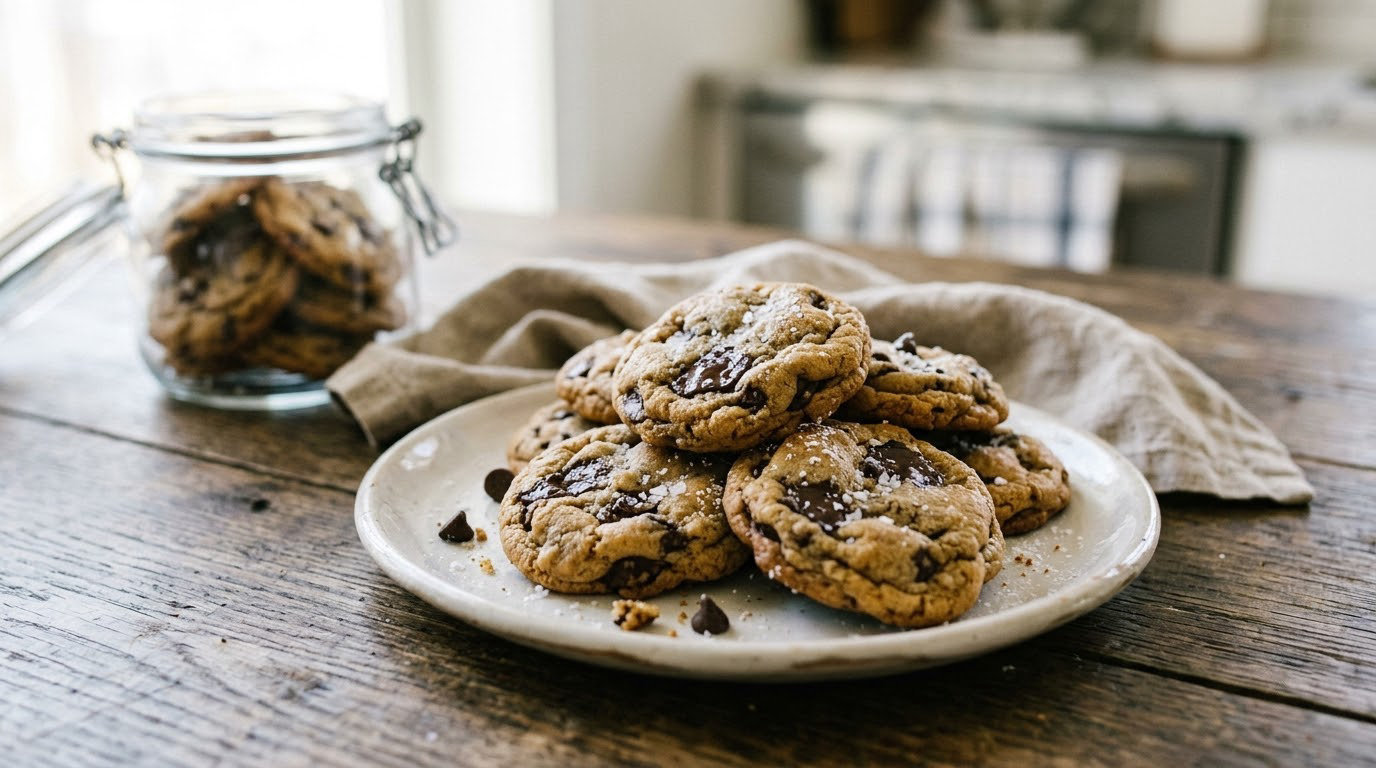
How to store homemade cookies so they stay fresh comes down to three things: cool them completely, seal them airtight at room temperature, and add a slice of white bread for anything soft and chewy. That is the whole base method. Everything after that is a tweak for the type of cookie in front of you.
Crisp shortbread and soft oatmeal cookies do not want the same container, though, and that mismatch is why so many batches go stale or soggy by day two. Below is the method I use, broken down by cookie texture, with real numbers for how long each one stays good on the counter, in the fridge, and in the freezer.
Table of Contents
How to Store Homemade Cookies So They Stay Fresh: Quick Guide
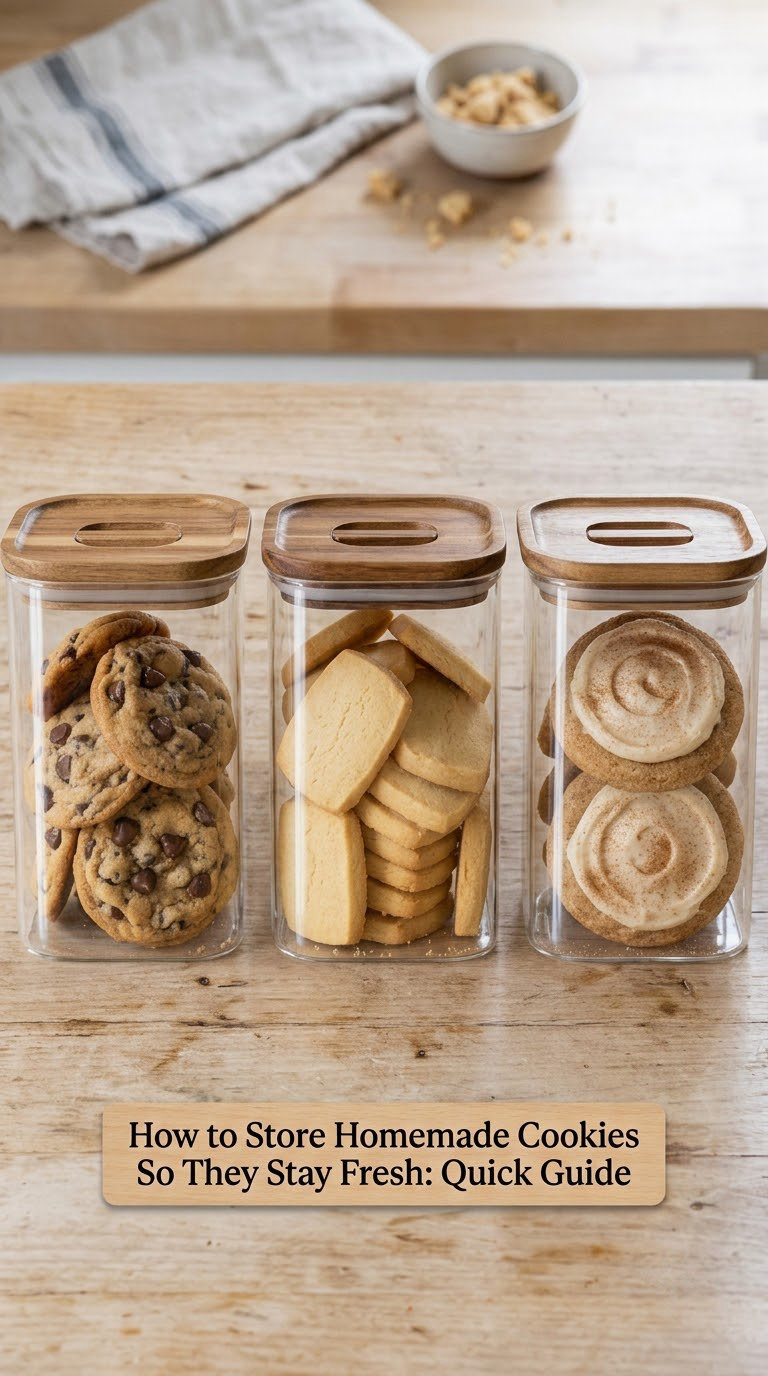
The table below is the short version. Match your cookie to the row, and you have your answer.
| Cookie type | Best container | Where to store | Layering | Room temperature | Refrigerated | Freezer |
|---|---|---|---|---|---|---|
| Soft and chewy (chocolate chip, oatmeal) | Airtight plastic or glass box | Counter, away from the stove | Stack with parchment; add a slice of bread | 4-6 days | About 7 days | 3 months |
| Crisp (shortbread, biscotti, wafers) | Cookie tin with the lid ajar, or a partly sealed bag | Cool, dry corner of the counter | Single layer or shallow stacks | 5-7 days | Not recommended | 6 months |
| Frosted or decorated (buttercream, royal icing) | Single layer on a sheet pan, covered loosely | Counter, out of direct light | One layer, no stacking | 2-3 days | Only for cream cheese frosting | Freeze undecorated |
| Filled (thumbprint, sandwich) | Airtight container, parchment between halves | Counter | Single layer preferred | 3-4 days | Depends on filling | 2 months |
| With perishable filling (whipped cream, custard, cream cheese) | Airtight container | Refrigerator at 40F (4C) or below | Single layer | Not safe past 2 hours | 3-4 days | 1-2 weeks |
Choose the Right Airtight Container
An airtight container keeps moisture, odors, and air away from the cookies. Moisture leaving a cookie is what makes it stale; moisture and smells getting in is what makes it taste like the last thing you stored.
For soft cookies I reach for a hard-sided plastic box with a snap lid. It holds a generous batch, stacks in a cupboard, and goes straight into the freezer. A glass jar with a rubber gasket does the same job and looks better on the counter, though glass is heavier and breaks if you drop a frozen one.
Resealable freezer bags work well for smaller amounts and for travel. Press most of the air out before sealing, because air is what dries cookies out in the freezer. A single layer in a bag is best for cookies you want to pull out one or two at a time.
A sheet pan covered with a cake dome or the inverted lid of another pan is a reasonable short-term option. It is not airtight, so I only use it on the counter for a day or two, never for freezing.
Storing cookies in the pan they baked in is the one habit worth dropping. Round or glass pans hold onto heat and grease, and the shape rarely fits your cupboard. If you want zero-cost storage, divide the batch into single servings in zip bags and lay them flat in a drawer.
A few practical points on containers:
- Visibility: a clear box means you will actually eat the batch instead of forgetting it in the back of a cupboard.
- Freezer fit: measure your freezer shelf before buying a tall container, since a box that does not fit is a box that ends up on the counter.
- Odor transfer: cookies are porous. Keep mint, peanut butter, and pumpkin spice in separate containers, and never store cookies next to coffee beans, onions, or spice jars.
- Upgrade path: for a big batch or holiday gifting, a vacuum sealer removes nearly all the air and buys you months. It is not necessary for a normal Sunday bake.
Let the Cookies Cool Completely Before Storing Them
Cookies must be completely cool before they go in any container. Sealing a warm cookie traps steam, and that steam condenses inside the lid, so the cookie sits in damp air and goes soft and gummy by morning.
Here is the method I use:
- Move the pan from the oven to a wire cooling rack. A rack lifts cookies off the hot metal and lets air move underneath them.
- Leave the whole pan undisturbed until the cookies feel room temperature on the bottom as well as the top. That usually takes 20 minutes for a standard 2-inch cookie.
- Check the thickest cookie by touching the underside. If there is any warmth left, wait.
- Only then transfer them to the container.
Cooling times scale with size and thickness. Drop cookies with a 1-inch scoop are usually cool in about 15 minutes. Thicker ones, or snickerdoodles that bake up domed, take closer to 30.
Thin wafers and pizzelles cool fastest but are also the most fragile, so give them an extra 10 minutes on the rack instead of moving them while they are still crisp. The moment of truth is simple: if you moved a cookie before it was fully cool and it turned gummy, the trapped steam did it. Next batch, give it the full time.
How to Store Homemade Cookies So They Stay Fresh by Texture
Soft and chewy cookies need a fully airtight container with a slice of white bread tucked in one corner, and they can be stacked with parchment between layers. The bread gives the escaping moisture a place to land, so it dries out before the cookies do. Swap it every two days.
Crisp cookies need air, so an airtight seal works against them. A cookie tin with the lid resting ajar, or a bag pressed shut but left un-squeezed, keeps them crunchy longest. A food-safe silica gel packet from a snack bag absorbs stray moisture without changing the flavor.
Frosted and decorated cookies stay on a single layer. Buttercream can dent under the weight of another cookie, and royal icing or fondant will crack if it touches a neighbor. Cover loosely with a cake dome or an upside-down sheet pan, and keep them out of sunlight, which softens icing.
Filled cookies such as thumbprints or ravioli-style sandwich cookies store in an airtight container in a single layer, with parchment between them if you must stack. The filling picks up moisture from the lid more than the cookie does, and a soggy bottom is hard to fix.
Sandwich cookies can be assembled from frozen shells. Freeze the halves separately, then fill them the day you serve so the cookies have time to soften back to the right texture.
Any cookie with whipped cream, custard, cream cheese, or fresh fruit filling goes in the refrigerator at 40F (4C) or below and stays there for 3 to 4 days. Those fillings are perishable, and the same handling applies to a cream cheese frosting. If you want to read more about the chocolate chip side of things, my chocolate chip recipes beyond cookies covers the batches worth storing.
How Long Do Homemade Cookies Stay Fresh?
Most cookies are at their best in the first 24 to 48 hours. These ranges are when quality holds, and they assume the cookies were cooled completely and stored airtight.
| Cookie style | Counter (airtight) | Counter (partly sealed) | Refrigerator | Freezer |
|---|---|---|---|---|
| Soft and chewy | 4-6 days | 2 days | About 7 days | 3 months |
| Crisp shortbread or biscotti | 3-4 days | 5-7 days | 2-3 days, drier | 6 months |
| Sandwich cookies | 5-7 days | 3 days | 7-10 days | 2-3 months, shells only |
| Frosted with buttercream | 2-3 days | 2 days | About 7 days | Freeze undecorated, 3 months |
| Royal icing or fondant | 5-7 days | 3 days | 5-7 days | 2 months |
| Perishable filling | 2 hours maximum | 2 hours maximum | 3-4 days | 1-2 weeks |
Two different things are happening in these numbers. Quality loss is flavor and texture fading, which is a matter of taste. Food safety is a different question, and only the perishable filling row is one. Plain baked cookies keep for months in the freezer with no safety concern at all, since the flour, sugar, and fat have already been through enough heat to make them shelf stable.
Refrigeration extends some cookies slightly and harms others. That is the trade-off covered below.
How to Freeze Cookies Without Losing Their Texture
Freeze baked cookies flat in a single layer first, because that flash-freeze step is what stops them from sticking together in one solid block.
- Cool the cookies completely on a wire rack.
- Arrange them in one layer on a parchment-lined baking sheet and put the sheet in the freezer for 1 hour, until firm.
- Pop off anything fragile, such as sprinkles, gold leaf, or a chocolate disk sitting on top.
- Move the frozen cookies to a freezer-safe container or a resealable freezer bag, layering with parchment and pressing out the air.
- Label the container with the type and the date. Freeze dough balls the same way, then bake from frozen, adding 2 to 3 minutes to the bake time.
Some cookies are simply not worth freezing. Pizzelles turn soft and limp, madeleines lose their browned edges, thin wafers crack when they come out, and anything with a jam or ganache topping goes weepy. Freeze those unfrosted and decorate later.
A well-known freezer trick from the r/Baking community is to keep an open box of baking soda in there to absorb odors. It costs nothing and does not transfer a smell to your cookies, unlike a scented product.
To thaw, keep the cookies sealed in their container and let them come to room temperature inside it, about 30 minutes for a single layer. The moisture they release stays inside and reabsorbs into the cookies, which is exactly what you want for soft ones. For decorated or crisp cookies, thaw them open on a paper towel so condensation can escape instead of forming beads on the icing.
How to Revive Cookies That Have Gone Stale
Stale cookies are recoverable, and the method depends on which way they went wrong. A cookie that dried out needs moisture back. A soft crisp cookie needs the water driven off.
To re-crisp soft cookies: heat the oven to 325F (163C). Spread the cookies on a baking sheet and bake for 5 to 10 minutes, until they feel firm at the edges again. Let them cool on the sheet for 5 minutes before moving them, and eat them the same day.
To soften dried-out cookies: put them in the microwave for 10 to 15 seconds, on a paper towel. Check at 10 seconds. They should feel slightly tacky and warm, not hot, and they firm back up as they cool.
A toaster oven works well for either job and preheats in a fraction of the time.
For chewy cookies that have dried out but not gone crunchy, a 325F (163C) oven for 3 to 5 minutes brings back some of the bite, and a very short microwave blast softens them. Bakers on the Straight Dope boards report leaving the container lid off for a few hours as the gentlest fix for cookies that softened in storage.
How to Stack and Freeze Cookies for the Best Results
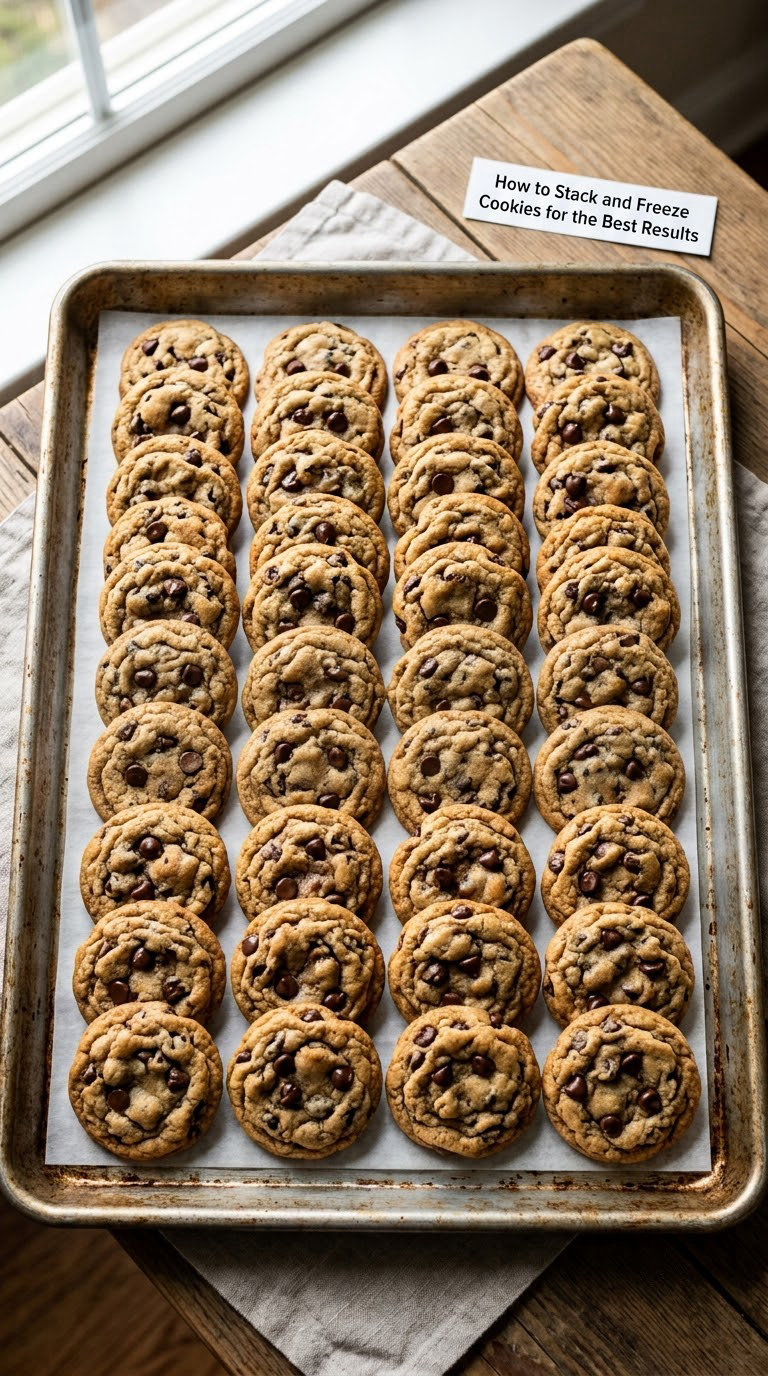
Use parchment paper between layers, always. It stops cookies from sticking to each other and stops frosting or chocolate from printing onto the layer below. Wax paper works too, but it moves around and does not handle freezing as cleanly. Plastic wrap is fine only for a single cookie wrapped tight for gifting.
Aim for three or four layers at most in a home container. Once you go past that, the weight at the bottom crushes the edges and the top layers get no pressure at all, which dries them unevenly. Frozen cookies can be packed closer since they are already firm.
Leave fragile things alone. Royal icing, fondant, piped buttercream, chocolate ganache, chopped nuts, and anything glued on should stay in a single layer, or be frozen unfrosted and decorated after thawing. A tall stack of frosted cookies is a stack of cracked icing.
Can You Refrigerate Cookies?
Refrigerate cookies only when they contain whipped cream, custard, cream cheese frosting, cheesecake, or fresh fruit filling. Those are the only cookies where the refrigerator solves a food-safety problem instead of creating a texture problem.
For everything else the refrigerator is a bad trade. Cold dry air moves out of the cookies faster, and the starch in the flour firms up again as it cools, which is the same thing that happens in a bread crumb on day two. The result is a cookie that is hard rather than crisp, dry rather than stale, and often smells like the leftovers in your fridge.
Community bakers reach the same conclusion. On the r/Baking buttercream threads the line is blunt: the fridge will make the cookie gross. Use the counter for plain cookies and the refrigerator for the ones with dairy or fresh fruit.
Keep the refrigerator at 40F (4C) or below, and eat refrigerated cookies straight from the container. Chilled soft cookies taste better after 20 minutes at room temperature, though they lose their edge faster.
The same rule applies to homemade dough. Bakers on r/Baking let dough rest 24 to 48 hours in the fridge before baking or freezing, because the rest develops flavor. Past that window the dough dries out and the texture changes, so freeze dough you will not use within two days.
Common Cookie Storage Mistakes and Easy Fixes
Storing warm cookies. This is the number one cause of soggy cookies. Cool fully on a wire rack, every time. It costs 20 minutes and it is the whole fix.
Wrapping cookies in loose plastic wrap. Wrap clings to the first cookie and tears the frosting off it. Put cookies in the container first, then cover the container.
Sealing crisp cookies on a humid day. A tight seal on a shortbread traps the humidity already in the air. Leave the tin lid ajar and add a silica gel packet.
Leaving frosted cookies uncovered. Buttercream picks up dust, pet hair, and fridge smells within hours. Use a cake dome or an inverted sheet pan, loose rather than tight.
Overcrowding one container. Two shallow boxes beat one deep one. Air does not circulate in the middle of a packed stack, and the cookies at the bottom get bruised.
Freezing cookies without the flash-freeze step. They fuse into a single block on the sheet. One hour flat on a lined sheet fixes it.
Forgetting to label portions. Freezer cookies become a guessing game by month two. Masking tape and a pen take five seconds per container.
Storing cookies near strong smells. Onion, coffee, and spices move through cookies fast. A cupboard shelf above the toaster oven is about the worst spot in the kitchen, because heat and odors both drive moisture out.
Thawing sealed and then sealing again. If a batch has condensation on the lid, leave the container open for an hour with a paper towel inside before re-sealing.
Frequently Asked Questions
Should homemade cookies be stored in a plastic container or a cookie jar?
For soft and chewy cookies, a hard-sided airtight container wins, whether it is plastic or glass. Cookies need moisture blocked from escaping, and both materials create a tight seal. A ceramic cookie jar is fine for crisp cookies that you only want to stay fresh about a week. If you will freeze the batch, choose a freezer-safe plastic box, since glass can crack. Whichever you choose, the lid has to close properly with nothing pinched at the edges.
Can you freeze cookies that have frosting or decorations?
You can, but freeze them undecorated whenever you have the choice. Buttercream, royal icing, and fondant all crack or bleed when frozen, and a piped border can collapse into the cookie. Decorations that are glued on often pop off in the freezer. Frost after thawing instead, and leave decorated cookies in a single layer so nothing presses against the icing. If you must freeze finished cookies, set them on a tray to freeze firm first.
Should cookies be wrapped individually before freezing?
Not for ordinary freezing. Once the cookies are frozen solid, a container or bag protects them and the layers do not stick together, so wrapping each one just uses more space and more time. Individual wrapping makes sense for shipping cookies as a gift, or for freezing cookies that are very fragile, like thin wafers or decorated ones. In that case, slip a square of parchment or wax paper between each cookie so nothing touches.
How do you keep cookies soft in a sealed container?
Add a slice of plain white bread to the container and leave it there. The bread gives the moisture escaping from the cookies somewhere to go, so the bread dries out instead of the cookies. Swap in a fresh slice every two days. Storing cookies airtight, layering with parchment, and skipping the refrigerator all help too. Cornstarch in the dough adds lasting softness, and a slice of apple works the same way as bread if you prefer it.
Why do cookies become soggy the next day?
Two reasons usually. The first is storing them before they cooled, which traps steam that condenses on the lid and leaves the cookie sitting in damp air. The second is storing crisp cookies fully airtight, which stops the moisture they hold from escaping while more moves in from the container. A partly sealed tin fixes the second one. For the first, cool the batch on a wire rack until the bottoms are room temperature, then seal.
Final Cookie Storage Checklist
Cool the whole batch on a wire rack, check the underside of the thickest cookie, and only then seal it up. Pick the container to match the cookie: airtight with a slice of bread for soft ones, a partly sealed tin for crisp ones, a single covered layer for anything frosted.
Keep delicate cookies unstackable, label every portion with the date, and move anything you will not eat in four days to the freezer. That is how to store homemade cookies so they stay fresh long enough for the whole week, the whole bake-ahead, and the whole gifting season. If you are planning a big outdoor spread, my backyard picnic food ideas list has plenty that travels well next to a tin of cookies.