
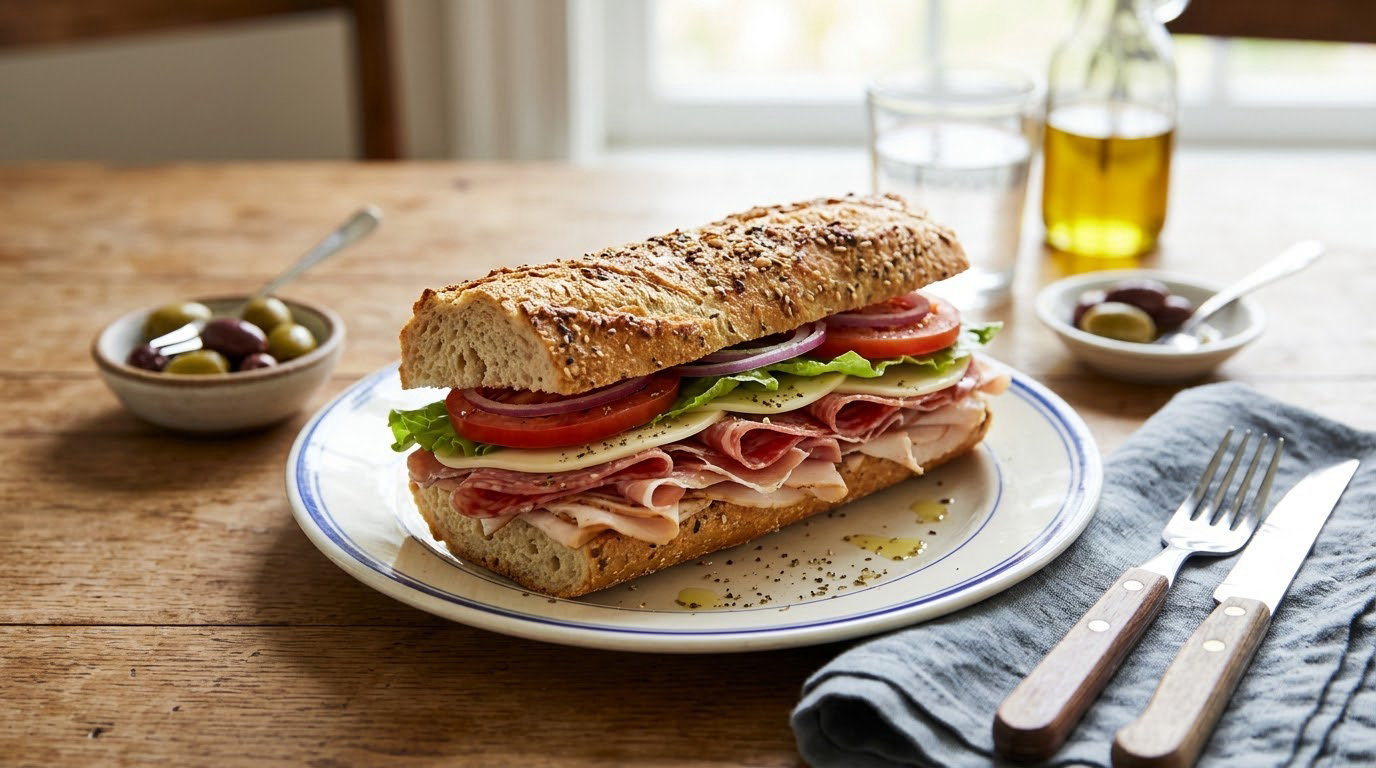
Deli meat lasts 3 to 5 days in the fridge once you open the package or a deli slices it for you, as long as it stays at or below 40°F (4°C). Homemade cooked deli meat is tighter, around 3 to 4 days. An unopened, factory-sealed pack usually holds until the date on the label, often another week or two out.
The trouble is that five days is easy to blow through. I buy turkey and ham on a Saturday, think about the sandwiches again on Thursday, and find a stiff-edged pack at the back of the fridge. A written open date and a decent container fix most of that, so here is the whole picture: how long does deli meat last in the fridge, how to stretch it, and how to know when it is finished.
Table of Contents
How Long Does Deli Meat Last After Opening?
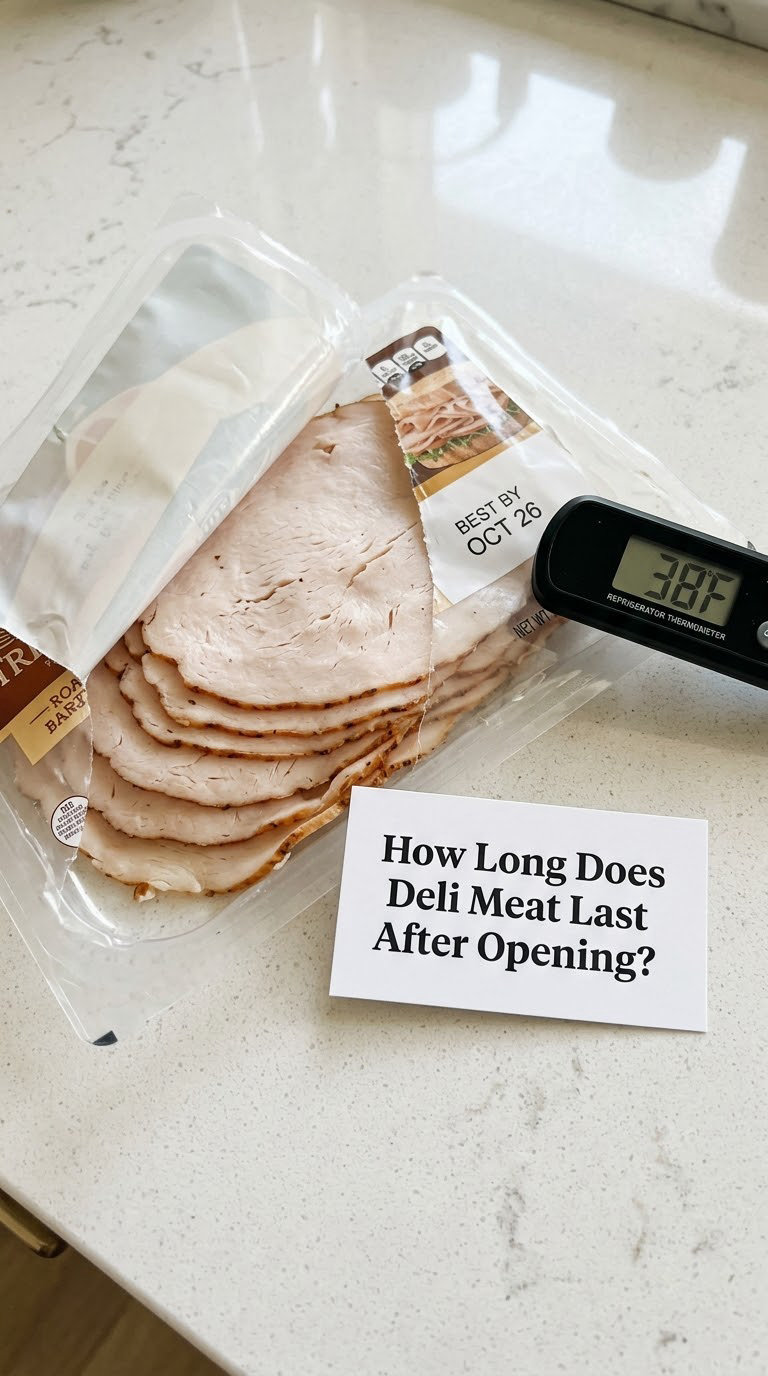
Opened, pre-packaged deli meat keeps 3 to 5 days refrigerated. Meat sliced fresh at a deli counter is treated the same as opened packaged meat, because the slicing exposes it to air, hands, and a cutting board. Homemade cooked deli meat, like a roasted turkey breast you slice yourself, gets 3 to 4 days.
Here is the short version by packaging state, all of it assuming a fridge at 40°F (4°C) or colder:
| State of the meat | How long it keeps in the fridge |
|---|---|
| Unopened factory-sealed package | Until the use-by or best-by date, usually 10 to 14 days from purchase |
| Opened pre-packaged deli meat | 3 to 5 days after opening |
| Sliced at a deli counter | 3 to 5 days after purchase |
| Homemade cooked deli meat | 3 to 4 days after cooking |
| Vacuum-sealed block, unopened | Until the label date, or freeze it on day one |
| Frozen deli meat slices | 1 to 2 months for best quality |
| Meat sold frozen by the manufacturer | About 6 months for best quality |
Two things drive that window. Salt, sodium nitrite, and added acids such as lactates slow bacteria while the package is sealed, and opening it starts the clock in earnest. Handling matters too, which is why deli-counter meat with no printed date gets treated as opened the moment you carry it home.
How Long Does Deli Meat Last in the Fridge by Type?
Turkey and chicken breast are the shortest-fuse of the bunch. Cooked poultry leftovers follow the same 3 to 4 day rule you would use for cooked chicken in the fridge, and deli turkey is a lean, low-salt product with nothing much holding bacteria back.
Ham keeps a little longer, usually 3 to 5 days opened. Roast beef and pastrami sit in the same 3 to 5 day window, and pastrami is often saltier, which stretches it slightly. Bologna is an emulsified, cooked product, so it also gets 3 to 5 days opened.
Dried and fermented meats are the long runners. Salami, pepperoni, prosciutto, and capicola are cured, so an unopened pack can keep well past its best-by date while sealed. Once you slice into the whole piece, treat the cut face like opened meat and use it within 3 to 4 weeks. Timing starts when the package is opened, not when you set it in the cart.
How to Store Deli Meat Safely in the Fridge
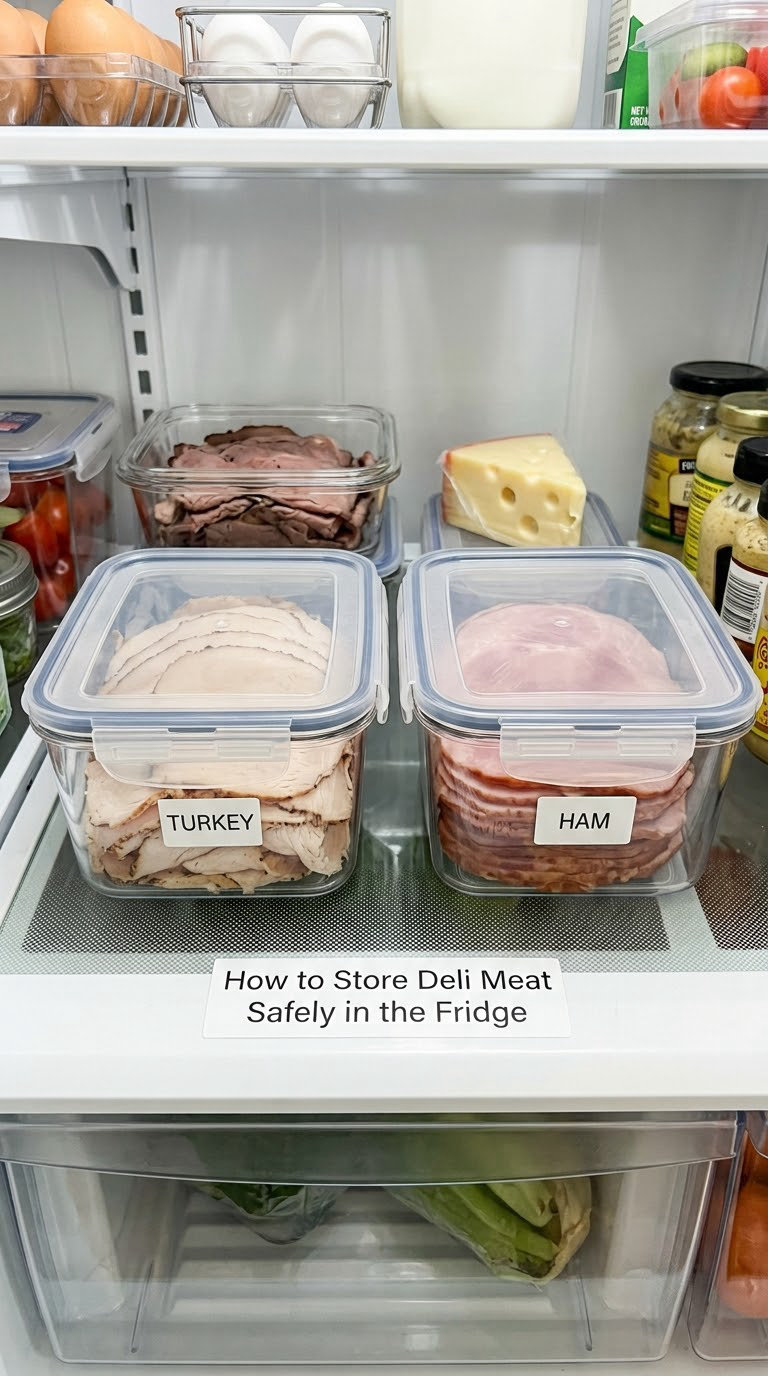
Seven steps cover it, and none of them take more than a minute each.
- Put the meat back in its original package, or move it to an airtight container. If you use the original bag, press the air out and roll the top down before you seal it.
- Write the opening date on the package with a marker or a small piece of tape. This single habit removes most of the guesswork in the back of the fridge.
- Keep the fridge at 40°F (4°C) or below. A cheap refrigerator thermometer is more useful here than any other kitchen gadget, and it catches the warm spot behind the butter.
- Place the meat on the lowest or back shelf, where the air is coldest. Avoid the door, which warms up every time you open it.
- Keep it in a sealed container so it cannot drip onto cheese, produce, or cooked rice below it.
- Do not crowd the shelves. Cold air has to move, and a packed fridge holds warm pockets near the back.
- Put opened meat back in the fridge within two hours of taking it out, or within one hour if the room is above 90°F (32°C).
If you like the idea of beating the five-day window, buying a larger vacuum-sealed block and slicing it yourself is the move most home cooks land on. Our picks in the deli meat slicer roundup are worth a look if you go that route, since you are only buying the sealed block once.
Can You Freeze Deli Meat to Make It Last Longer?
Yes, and it is the easiest way to buy yourself time. Freeze deli meat in single sandwich portions rather than one thick brick, because you will only thaw what you need. Press out the air, seal each portion in a freezer bag or wrap it tightly in two layers of plastic film, and label it with the date you froze it.
Keep the freezer at 0°F (-18°C) or below. USDA frozen-food guidance puts luncheon meat at roughly 1 to 2 months for the best quality once sliced, which is plenty of time to work through a sale. Frozen cooked meats in general hold their quality for about 3 to 4 months, and meat the manufacturer sold frozen keeps about 6 months.
Two things freezing will not do. It will not make spoiled or previously unsafe meat safe again, and bacteria start growing again as soon as the meat thaws, so move it from freezer to fridge and use it within a day or two of thawing. A pale, dry, freezer-burned edge on a slice is a quality problem, not a safety problem. A slimy, gray, or sour package is a safety problem no matter how well it froze.
Freezing sale-buy meat in individual sandwich portions is the habit that finally beats the five-day limit, and it works well for sandwich builds and lunchboxes. If you cook big batches anyway, the same window applies to your homemade soup in the fridge and most cooked dishes.
How to Reheat Deli Meat Safely
Reheating cooked deli meat to 165°F (74°C) kills Listeria monocytogenes, which is the reason ready-to-eat sliced meat carries a safety warning at all. This matters most for meat that has been sitting longer than you would like, and for people who are pregnant, over 65, immunocompromised, or feeding a young child.
Heat only the portion you are about to eat, and get it all the way through rather than warming the edges:
| Method | How to do it | Steady temperature | Time |
|---|---|---|---|
| Microwave, loose slices | On a plate, covered, stirred halfway | 165°F (74°C) | 1 to 2 minutes |
| Microwave, stacked slices | In a mug with a splash of water, covered | 165°F (74°C) | 75 to 90 seconds |
| Stovetop skillet | Sliced thin, medium heat, turn once | 165°F (74°C) | 3 to 5 minutes |
| In a sandwich or wrap | Panini press or skillet, pressed and flipped | 165°F (74°C) | 3 to 4 minutes a side |
Use a food thermometer if you want certainty, and keep it in the thickest part of the slice. Avoid reheating the same small portion over and over, since each warm-up cycle gives bacteria another chance to multiply. Reheat once, eat it, and move on.
Signs That Deli Meat Has Gone Bad
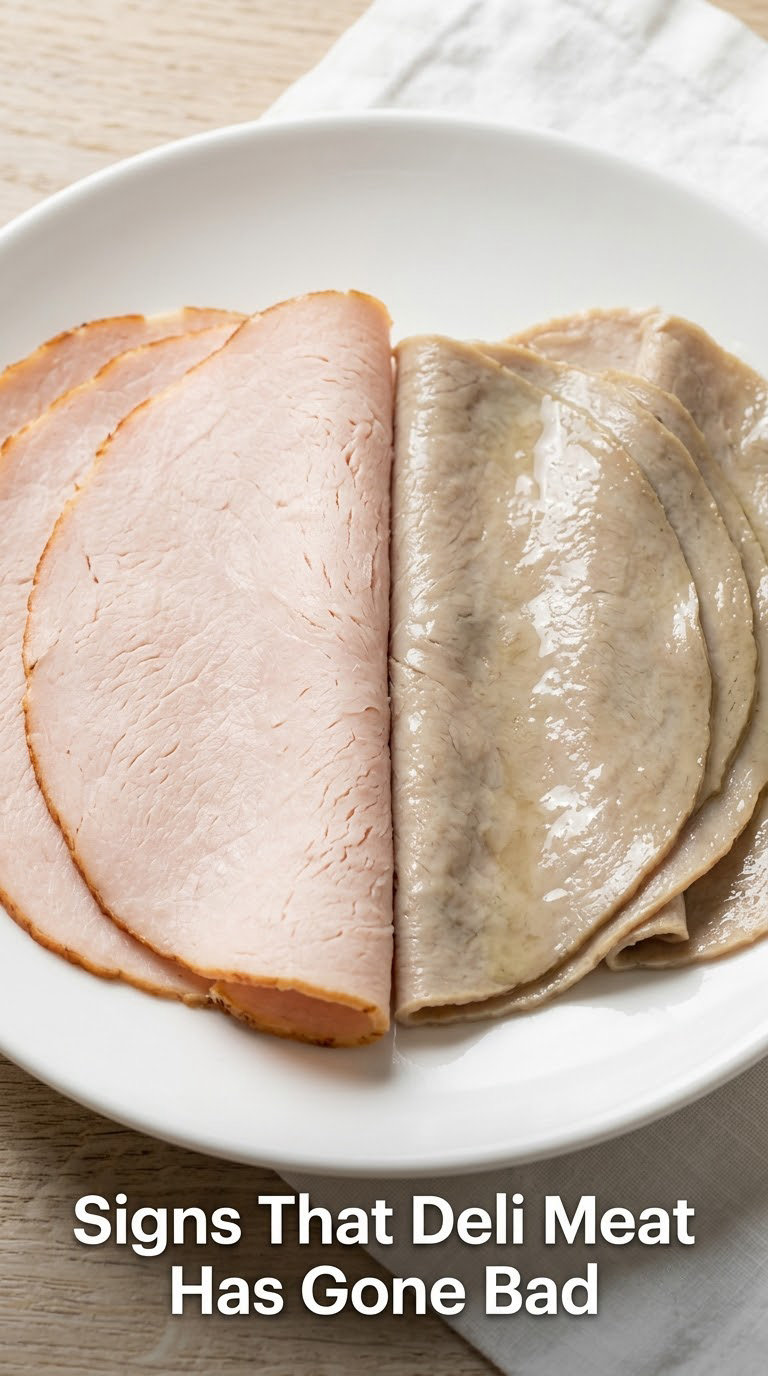
Do not rely on smell alone. Listeria can multiply at refrigerator temperatures without changing the color, smell, or taste, so the date on the package matters even when the meat looks perfect. Still, your senses catch the bacterial spoilage that does announce itself.
- A slick or tacky film on the surface, or slices that stick to each other and peel apart in a sheet
- Color shifting to gray, gray-brown, or greenish patches, particularly at the cut edges
- Mold anywhere on the slices, on the tray, or on the inside of the bag
- A swollen, bulging, or leaking package, or liquid pooling at the bottom that was not there before
- A sour, putrid, or ammonia-like smell once you open the bag
- Meat that feels warm rather than refrigerator-cold
Discard questionable meat rather than tasting it. A small taste is a large enough sample to make you sick, and there is no way to detect bacteria by flavor. If you suspect contamination, throw out the whole package and the container it sat in, then clean the shelf area.
Common Mistakes That Shorten Deli Meat Life
Most of the shelf life people lose comes down to a handful of habits, and each one has a simple fix.
- Leaving meat loosely wrapped. Clip or rubber-band the bag and press the air out. If the original bag is torn, move the meat to a sealed container.
- Storing it in the door. The door warms every time you grab a milk jug. Move opened meat to the lowest shelf at the back.
- Leaving it out on the counter. Two hours at room temperature is the limit, one hour above 90°F (32°C), and time out of the fridge shrinks the window you have left.
- Ignoring the open date. Mark the day you opened it. A sharpie on the package beats trying to remember.
- Crowding the refrigerator. Blocked shelves hold warm pockets, and a fridge above 40°F (4°C) quietly shortens everything inside it.
- Judging safety by color alone. A gray tint from oxidation or freezer burn is harmless; a slimy film, a swollen bag, or an ammonia smell is not.
- Storing it near raw food. Put raw meat on the lowest shelf so nothing drips down onto deli meat that is already sliced and ready to eat.
Frequently Asked Questions
Can I leave deli meat in the package after opening it?
You can, as long as you reseal it properly. Clip or rubber-band the top of the bag, press out as much air as you can, and roll the package down before sealing. Some people lay deli meat flat rather than rolling it, since slices stacked tightly inside a warm bag dry out faster. Write the opening date on the package and keep it at or below 40F (4C).
How should I store deli meat in the refrigerator?
Reseal the original package or move the slices into an airtight container, then label it with the date you opened it. Keep your refrigerator at 40F (4C) or colder, using a cheap fridge thermometer to check. Store the meat on the lowest or back shelf, away from the door, and leave room around the container so cold air can move. Avoid crowding the shelves.
Does deli meat have to be refrigerated after being sliced?
Yes. Sliced deli meat is ready-to-eat food with no further cooking step, so it cannot sit at room temperature. Keep it refrigerated at or below 40F (4C), and use opened or counter-sliced meat within 3 to 5 days. The two-hour rule still applies, so a platter of cold cuts left out at a party counts against that window, and heat above 90F (32C) cuts the time to one hour.
How long can sliced turkey and ham stay frozen?
Frozen sliced deli meat keeps its best quality for about 1 to 2 months, which is the USDA frozen-food figure most people use for luncheon meat. Frozen cooked meats in general hold quality for roughly 3 to 4 months, and meat sold frozen by the manufacturer keeps about 6 months. Freeze it in single sandwich portions, seal out the air, and refrigerate it after thawing since bacteria resume growing as it warms.
What date should I write on opened deli meat?
Write the day you opened the package, then count three to five days from that date. That covers the whole window for packaged and deli-counter sliced meat, and three to four days for homemade cooked deli meat. A permanent marker directly on the bag or a strip of tape on the container both work. If you cannot remember when you opened it, treat it as past the window.
Is deli meat safe if it smells a little different?
A faint change in smell is a reason to throw it out, not a reason to taste it. Sour, putrid, or ammonia-like odors come from bacterial waste, and a slice that smells off may only be a few hours past safe. Listeria monocytogenes is the reason to be strict here, because it can grow at refrigerator temperatures with no smell, color, or taste change at all. Discard the whole package if you suspect it has gone.
Safe Deli Meat Storage Starts with the Date
Three things decide whether your deli meat is still good: a fridge holding 40°F (4°C) or below, a date written on the package the day you opened it, and using it inside the window that applies to it. Check the thermometer first, since everything else depends on it.
Getting a handle on how long does deli meat last in the fridge stops both kinds of mistakes, the sandwich eaten a day too late and the pack thrown out while it was still fine. Pick up a marker and a fridge thermometer, label what is already in the door, and the guessing stops.