
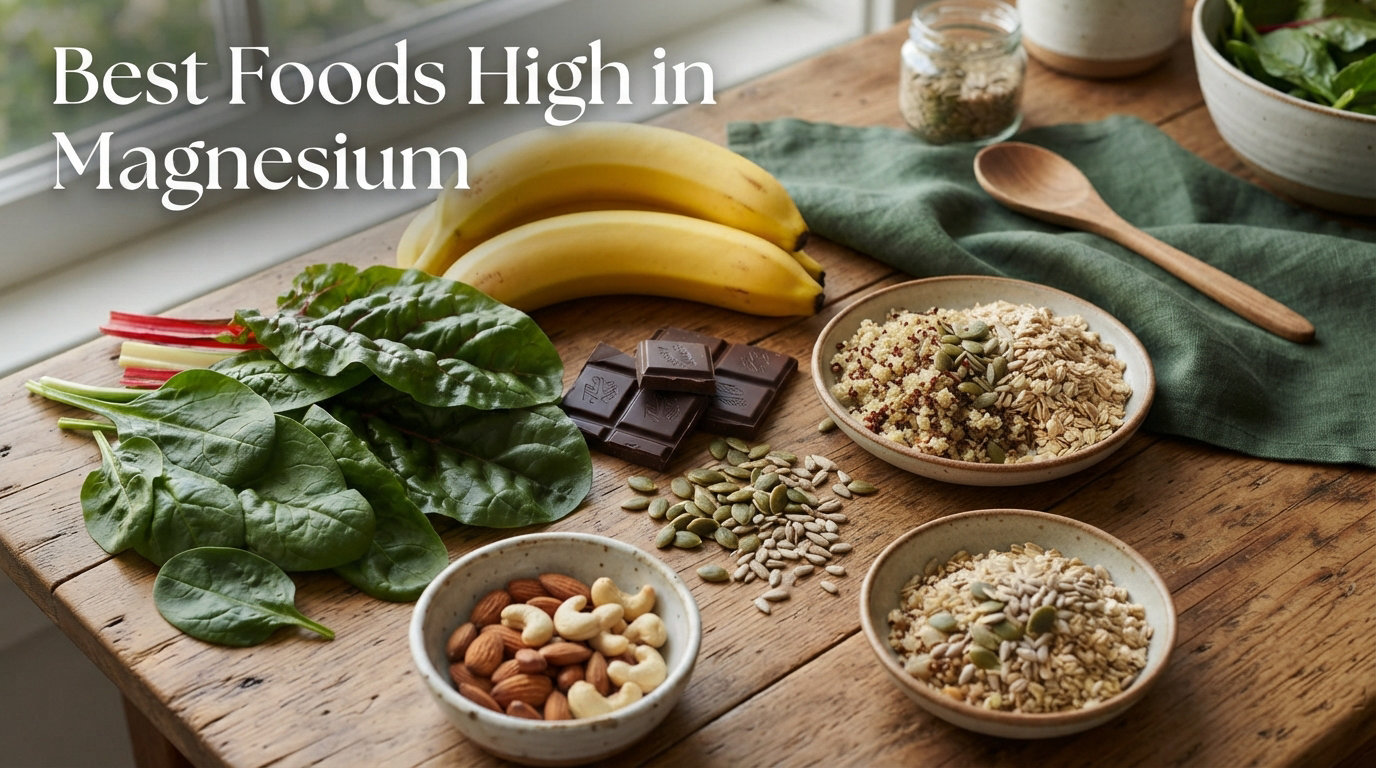
Magnesium is a mineral your body uses for muscle and nerve function, energy production, bone structure, and many other everyday processes. The easiest way to get more from food is to build meals around seeds, nuts, beans, leafy greens, and whole grains. This guide ranks 20 of the best foods high in magnesium with practical serving sizes, simple meal ideas, and notes that help you shop wisely.
Most adults need about 310 to 420 milligrams of magnesium per day, depending on age and sex; needs change during pregnancy. The amounts below come from the National Institutes of Health Office of Dietary Supplements and are useful estimates, but brands, varieties, and cooking methods can change the exact number. If you have kidney disease or take medicines that affect magnesium, ask your healthcare professional before using a supplement.
Table of Contents
20 Best Foods High in Magnesium
-
Roasted pumpkin seeds, 1 ounce: 156 mg. Sprinkle them over oatmeal, yogurt, soup, or salad, or eat a small handful as a snack.
-
Chia seeds, 1 ounce: 111 mg. Stir them into overnight oats, yogurt, smoothies, or chia pudding. Add enough liquid because the seeds absorb moisture.
-
Dry-roasted almonds, 1 ounce: 80 mg. Pair almonds with fruit, chop them over vegetables, or spread almond butter on whole-grain toast.
-
Boiled spinach, 1/2 cup: 78 mg. Fold cooked spinach into eggs, pasta, lentils, soup, or a grain bowl.
-
Dry-roasted cashews, 1 ounce: 74 mg. Use them in trail mix, stir-fries, or a creamy blended sauce. Choose unsalted nuts if you limit sodium.
-
Oil-roasted peanuts, 1/4 cup: 63 mg. Peanuts are inexpensive compared with many tree nuts and work in snacks, noodle bowls, and salads.
-
Shredded-wheat cereal, 2 large biscuits: 61 mg. Compare labels and choose a variety with little added sugar.
-
Plain or vanilla soymilk, 1 cup: 61 mg. Magnesium varies by brand, so check the Nutrition Facts label. An unsweetened fortified option is useful in cereal and smoothies.
-
Cooked black beans, 1/2 cup: 60 mg. Add them to tacos, soup, rice bowls, salads, or scrambled eggs.
-
Cooked shelled edamame, 1/2 cup: 50 mg. Serve it as a snack or add it to salads, noodle bowls, and stir-fries.
-
Smooth peanut butter, 2 tablespoons: 49 mg. Spread it on toast, stir it into oatmeal, or whisk it with lime and soy sauce for a quick dressing.
-
Baked potato with skin, 3.5 ounces: 43 mg. Keep the edible skin and top the potato with beans, vegetables, plain yogurt, or herbs.
-
Cooked brown rice, 1/2 cup: 42 mg. Use it under roasted vegetables, salmon, tofu, beans, or lentils.
-
Plain low-fat yogurt, 8 ounces: 42 mg. Add berries, chia seeds, or pumpkin seeds for an easy magnesium-rich breakfast.
-
Fortified breakfast cereal, 1 serving: about 42 mg. Fortification varies widely, so use the label rather than assuming every cereal is the same.
-
Instant oatmeal, 1 packet: 36 mg. Plain rolled or steel-cut oats also contribute magnesium; check the package for the amount in your serving.
-
Canned kidney beans, 1/2 cup: 35 mg. Drain and rinse them, then add them to chili, soup, salad, or a bean mash.
-
Banana, 1 medium: 32 mg. Pair it with peanut butter, yogurt, or oats for a more filling snack.
-
Milk, 1 cup: 27 mg. Use it in cereal, oatmeal, smoothies, or cooking if dairy fits your diet.
-
Cooked Atlantic salmon, 3 ounces: 26 mg. Salmon is not the most concentrated source, but it can contribute as part of a varied meal.
Note: Foods providing at least 20% of the Daily Value are considered high sources on U.S. labels, but foods with smaller amounts still add up over a day.
Magnesium at a Glance
-
Adult men: generally 400 to 420 mg per day
-
Adult women: generally 310 to 320 mg per day
-
Pregnancy: generally 350 to 360 mg per day for adults
-
Daily Value on U.S. labels: 420 mg
These figures are for generally healthy people and are not personalized targets. Age, pregnancy, health conditions, and medical advice can change what is appropriate.
Which Food Groups Provide the Most Magnesium?
Seeds and nuts
Among foods high in magnesium, pumpkin seeds and chia seeds lead this list, while almonds, cashews, peanuts, and peanut butter make the mineral easy to add without cooking. Portion them into small containers if eating from a large bag makes serving size hard to judge.
Beans and soy foods
Black beans, kidney beans, edamame, and soymilk contribute magnesium along with protein and other nutrients. Canned beans are a perfectly practical option. Rinsing them can reduce surface sodium, and gradual portions may be more comfortable if you are increasing fiber.
Leafy greens
Magnesium is part of chlorophyll, the pigment that makes plants green. Cooked spinach is concentrated because a large volume of raw leaves cooks down. Other greens contribute too, even when they do not match spinach milligram for milligram.
Whole grains
Brown rice, oatmeal, shredded wheat, barley, and whole-grain bread contribute magnesium. Refining grain removes much of the germ and bran, which can lower its magnesium content. Choose whole-grain versions when they fit the meal.
A One-Day Magnesium-Rich Meal Example
-
Breakfast: Oatmeal made with soymilk, topped with banana and chia seeds
-
Lunch: Brown rice bowl with black beans, spinach, tomatoes, and pumpkin seeds
-
Snack: Plain yogurt with almonds or an apple with peanut butter
-
Dinner: Salmon or edamame with a baked potato and cooked greens
This is an example, not a prescription. Adjust portions for your appetite, nutrition needs, allergies, and medical guidance.
Easy Ways to Eat More Magnesium-Rich Foods
-
Add one tablespoon of chia seeds or pumpkin seeds to breakfast.
-
Use beans or lentils in one lunch or dinner several times a week.
-
Replace some refined grains with oats, brown rice, barley, or whole-grain bread.
-
Keep unsalted nuts or peanut butter available for quick snacks.
-
Add cooked spinach to eggs, pasta sauce, soup, or a grain bowl.
-
Combine several moderate sources in one meal instead of relying on a supplement.
The same habits overlap naturally with a Mediterranean-style food list. Beans, whole grains, nuts, seeds, and vegetables also appear in our guide to the best foods for gut health, although individual tolerance matters.
Do You Need a Magnesium Supplement?
Not everyone does. Food supplies magnesium along with fiber, protein, vitamins, and other minerals. Supplements can be useful in specific situations, but they can also cause diarrhea, nausea, and cramping, and they can interact with some antibiotics, osteoporosis medicines, diuretics, and acid-reflux medicines.
The upper limit for adults is 350 mg per day from magnesium supplements and medications unless a healthcare professional directs otherwise. That limit does not include magnesium naturally present in food. The NIH magnesium fact sheet is a reliable place to check current guidance.
Frequently Asked Questions
What food has the most magnesium?
Among the foods in the NIH table, roasted pumpkin seeds are the most concentrated: 156 mg in a 1-ounce serving. Chia seeds are next at 111 mg per ounce.
Which fruit is high in magnesium?
Fruit generally contains less magnesium than seeds, nuts, beans, or spinach. A medium banana provides about 32 mg, while half a cup of avocado provides about 22 mg. Fruit still contributes as part of a varied day.
How can I get magnesium at breakfast?
Combine oatmeal or shredded wheat with soymilk or yogurt, then add chia seeds, almonds, peanut butter, or banana. Using two or three sources makes breakfast more substantial.
Does cooking reduce magnesium?
Some magnesium can move into cooking water, so methods and preparation affect the final amount. Eating the cooking liquid in soups or stews retains what moved into the liquid. The values in this article match the preparation listed.
Can too much magnesium be harmful?
Magnesium naturally present in food is not usually a concern for healthy people because the kidneys remove excess. High supplemental doses can cause digestive problems and, in extreme cases, serious effects. People with impaired kidney function need particular caution.
Conclusion
The best foods high in magnesium are easy to recognize and combine: pumpkin seeds, chia seeds, almonds, spinach, cashews, beans, edamame, whole grains, and yogurt. Start with one or two dependable additions—such as seeds at breakfast and beans at lunch—then build variety across the week. Food-first changes are practical, affordable, and easier to sustain than chasing one “perfect” source.