
Chronic inflammation silently affects millions of people, contributing to joint pain, fatigue, and increased risk of heart disease. I struggled with persistent stiffness and low energy for years before discovering how powerfully food can heal. The right anti inflammatory foods can reduce C-reactive protein levels, ease arthritis symptoms, and boost your overall vitality within weeks.
This guide gives you a complete list of the best anti inflammatory foods backed by medical research from Harvard, Mayo Clinic, and Johns Hopkins. You will learn which foods fight inflammation, practical ways to add them to your daily meals, budget-friendly options, and simple meal prep strategies that work for busy schedules.
Table of Contents
Quick Answer: Top 10 Anti-Inflammatory Foods
Want the fastest answer? These ten foods deliver the strongest inflammation-fighting benefits according to clinical research:
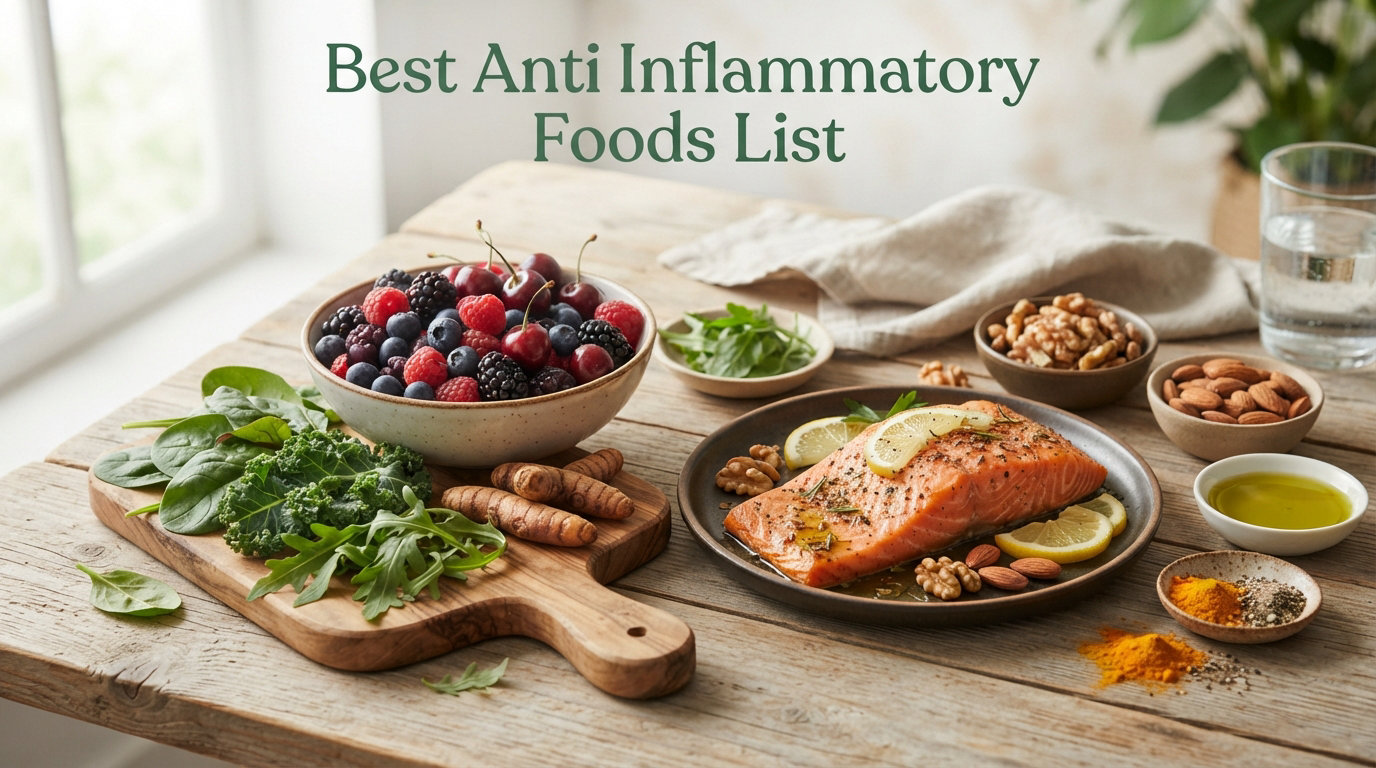
- Fatty fish (salmon, sardines, mackerel) – rich in omega-3 fatty acids
- Berries (blueberries, strawberries, raspberries) – packed with anthocyanins
- Leafy greens (spinach, kale, Swiss chard) – loaded with antioxidants
- Extra virgin olive oil – contains powerful oleocanthal
- Nuts and seeds (walnuts, almonds, chia seeds) – provide healthy fats and vitamin E
- Turmeric and ginger – natural sources of curcumin and gingerol
- Broccoli and cruciferous vegetables – contain sulforaphane
- Tomatoes – excellent source of lycopene
- Green tea – high in EGCG catechins
- Dark chocolate (70% cacao or higher) – delivers flavanols and resveratrol
Keep reading to discover exactly how these foods work, how much to eat, and easy ways to incorporate them into your meals every day.
What Is Inflammation and Why Your Diet Matters
Inflammation is your immune system’s natural response to injury or infection. Acute inflammation helps heal cuts and fight off viruses. This short-term response brings healing cells to damaged areas and protects your body from harm.
Chronic inflammation is different and far more dangerous. It happens when your immune system stays activated constantly, silently damaging tissues and organs over months or years. Research links chronic inflammation to heart disease, type 2 diabetes, arthritis, depression, Alzheimer’s disease, and certain cancers.
Your diet directly influences your inflammatory markers. Processed foods, refined sugars, and unhealthy fats trigger cytokine production and oxidative stress. Whole foods rich in antioxidants, polyphenols, and omega-3 fatty acids naturally lower inflammation and support your body’s healing processes.
Best Anti Inflammatory Foods List: Your Complete Guide
These fifteen foods form the foundation of any anti-inflammatory eating plan. Each one offers unique compounds that fight inflammation at the cellular level.
1. Fatty Fish (Salmon, Sardines, Mackerel)
Fatty cold-water fish top every anti-inflammatory foods list for good reason. They deliver EPA and DHA, the most potent forms of omega-3 fatty acids your body can use immediately. These compounds produce resolvins and protectins, molecules that actively resolve inflammation.
Salmon provides about 1.5 grams of omega-3s per 3-ounce serving. Sardines and mackerel offer even higher concentrations at a lower cost. Aim for two to three servings weekly to see measurable reductions in inflammatory markers.
I buy canned wild salmon and sardines for quick lunches when fresh fish is not available. They cost less than fresh fillets and last months in your pantry. Look for brands packed in water or olive oil rather than soybean oil.
2. Berries (Blueberries, Strawberries, Raspberries)
Berries contain anthocyanins, the pigments that give them deep red and blue colors. These compounds reduce oxidative stress and lower inflammatory gene expression. Studies show regular berry consumption improves brain health and reduces arthritis pain.
Blueberries rank highest in antioxidant capacity. Strawberries deliver excellent vitamin C and manganese. Raspberries provide substantial fiber that feeds beneficial gut bacteria, further reducing inflammation.
Frozen berries offer the same nutritional benefits as fresh at half the price. I keep bags of frozen mixed berries for smoothies and oatmeal year-round. They last months and work perfectly in recipes calling for fresh berries.
3. Leafy Green Vegetables (Spinach, Kale, Swiss Chard)
Dark leafy greens deliver vitamin K, folate, and carotenoids that protect against cellular damage. Spinach contains lutein and zeaxanthin for eye health. Kale provides glucosinolates that support liver detoxification and reduce inflammatory cytokines.
Swiss chard offers magnesium, a mineral many people lack that plays a critical role in managing inflammation. Just one cup of cooked greens delivers more than half your daily vitamin A and significant vitamin C.
Add handfuls of spinach to smoothies where the mild flavor disappears behind fruit. Massage kale with olive oil and lemon juice to soften it for salads. Saute greens with garlic as a simple side dish for any meal.
4. Extra Virgin Olive Oil
Extra virgin olive oil contains oleocanthal, a compound with anti-inflammatory effects similar to low-dose ibuprofen. Research shows it reduces inflammatory markers and protects heart health. The Mediterranean diet relies heavily on this golden oil for good reason.
Quality matters significantly with olive oil. Look for bottles labeled “extra virgin” in dark glass containers. Check harvest dates and choose oils less than two years old. Cold-pressed varieties retain the highest levels of beneficial polyphenols.
Use olive oil for low to medium heat cooking and as a finishing oil for vegetables and grains. I drizzle it over roasted broccoli with lemon juice and sea salt for a simple, delicious side dish that fights inflammation.
5. Nuts and Seeds (Walnuts, Almonds, Chia, Flax)
Walnuts contain the highest omega-3 content of any nut. Almonds deliver vitamin E, an antioxidant that protects cell membranes from damage. Chia and flax seeds provide ALA, a plant-based omega-3 that your body converts to EPA.
One ounce of walnuts (about fourteen halves) contains over 2.5 grams of omega-3 fatty acids. This serving size makes an ideal daily snack. Soaking chia seeds creates a gel that works beautifully in puddings and smoothies.
Store nuts in the refrigerator or freezer to prevent rancidity. The delicate fats oxidize quickly at room temperature, reducing their anti-inflammatory benefits. Buy raw or dry-roasted varieties without added oils or sugars.
6. Turmeric and Ginger
Turmeric contains curcumin, one of the most studied anti-inflammatory compounds in food. Research shows it blocks NF-kappa B, a molecule that triggers inflammation at the cellular level. Ginger provides gingerol, which reduces muscle pain and soreness after exercise.
Your body absorbs curcumin poorly without help. Always pair turmeric with black pepper, which contains piperine and increases absorption by 2,000 percent. Adding a source of fat like coconut milk or olive oil further improves bioavailability.
Start with half a teaspoon of turmeric daily if you are new to it. Mix into golden milk lattes, add to scrambled eggs, or blend into smoothies. Fresh ginger makes excellent tea and adds bright flavor to stir-fries and marinades.
Our diabetic diet guide covers additional anti-inflammatory spices including cinnamon and rosemary that complement turmeric beautifully.
7. Cruciferous Vegetables (Broccoli, Brussels Sprouts, Cauliflower)
Broccoli and its cruciferous cousins contain sulforaphane, a sulfur compound with powerful anti-inflammatory and cancer-protective properties. Brussels sprouts offer kaempferol, a flavonoid that specifically reduces inflammation in blood vessels.
Cauliflower provides glutathione, your body’s master antioxidant that neutralizes free radicals. One cup of cooked broccoli delivers more than your daily requirement for vitamins C and K. These vegetables support liver detoxification pathways that reduce overall inflammatory load.
Roast Brussels sprouts with olive oil and balsamic vinegar until caramelized. Steam broccoli briefly to preserve sulforaphane, then toss with lemon and garlic. Cauliflower rice makes an excellent base for grain bowls when you want something lighter.
8. Tomatoes
Tomatoes deliver lycopene, a carotenoid that gives them their red color and fights inflammation throughout the body. Cooked tomatoes actually provide more bioavailable lycopene than raw ones. Tomato paste and sauce concentrate this beneficial compound.
Research shows lycopene reduces inflammatory markers associated with heart disease and cancer. Tomatoes also provide vitamin C, potassium, and folate. Pair them with olive oil to maximize lycopene absorption.
Keep canned diced tomatoes and tomato paste in your pantry for quick sauces and soups. I make a simple pasta sauce by simmering canned tomatoes with garlic, olive oil, and basil. Roasted tomatoes make an excellent side dish or salad topping.
9. Green Tea
Green tea contains EGCG (epigallocatechin-3-gallate), a catechin that reduces inflammation and protects cells from damage. Regular consumption lowers C-reactive protein and other inflammatory markers. Theanine in green tea promotes calm focus without jitters.
Matcha provides the highest concentration of EGCG since you consume the whole powdered leaf. One cup of matcha equals about ten cups of regular green tea in antioxidant content. However, regular brewed green tea still offers significant benefits.
Brew green tea with water heated to 170-180 degrees Fahrenheit, not boiling. Hotter water creates bitterness and degrades some beneficial compounds. Steep for two to three minutes for optimal flavor and antioxidant extraction.
10. Dark Chocolate (70% Cacao or Higher)
Dark chocolate contains flavanols that reduce inflammation and improve heart health. The key is choosing chocolate with at least 70 percent cacao content. Milk chocolate contains too much sugar and too little cacao to offer meaningful benefits.
Research shows dark chocolate improves endothelial function and reduces inflammatory markers in people at risk for heart disease. Cocoa also provides magnesium, iron, and fiber. One ounce daily provides benefits without excess calories.
Look for brands with minimal ingredients: cacao, cocoa butter, and perhaps a small amount of sugar. Add raw cacao powder to smoothies or oatmeal for a chocolate flavor boost with no added sugar.
11. Cherries
Both sweet and tart cherries contain anthocyanins that reduce inflammation and muscle soreness. Tart cherries specifically show benefits for arthritis pain and exercise recovery. Studies found tart cherry juice reduced inflammation markers in marathon runners.
Cherries also provide melatonin, supporting healthy sleep patterns. Poor sleep increases inflammation, so this dual benefit makes cherries especially valuable. Fresh cherries are seasonal, but frozen and dried varieties work year-round.
Add frozen cherries to smoothies or thaw them to top yogurt. Tart cherry juice mixed with sparkling water makes a refreshing drink. Dried tart cherries work beautifully in trail mix or oatmeal.
12. Avocados
Avocados deliver monounsaturated fats similar to olive oil that reduce inflammatory markers. They also contain carotenoids that require fat for absorption, making the avocado itself the perfect delivery system. One avocado provides more potassium than a banana.
Research shows regular avocado consumption lowers inflammatory markers associated with heart disease. The fiber content feeds beneficial gut bacteria, creating a secondary anti-inflammatory effect through improved gut health.
Mash avocado onto whole grain toast with lemon juice and red pepper flakes. Add slices to salads, tacos, or grain bowls. Blend into smoothies for creaminess without dairy.
13. Mushrooms
Mushrooms contain polysaccharides that modulate immune function and reduce inflammation. Varieties like shiitake, maitake, and lion’s mane offer the most potent benefits. Even common button mushrooms provide meaningful anti-inflammatory compounds.
Mushrooms are one of the few non-animal sources of vitamin D when exposed to UV light during growth. Vitamin D deficiency strongly correlates with increased inflammation and autoimmune conditions.
Saute mushrooms with garlic and thyme as a side dish. Add to soups, stir-fries, and pasta sauces. Blend finely chopped mushrooms into ground meat to extend it while adding nutritional benefits.
14. Colorful Vegetables (Peppers, Carrots, Beets)
Brightly colored vegetables indicate high phytonutrient content. Red and orange peppers provide quercetin and vitamin C. Carrots deliver beta-carotene that converts to vitamin A. Beets contain betalains that specifically reduce C-reactive protein.
Eating a variety of colors ensures you get a wide spectrum of anti-inflammatory compounds. Each pigment represents different beneficial molecules that work together to reduce oxidative stress.
Roast a rainbow of vegetables together on sheet pans for easy meal prep. Add raw peppers and carrots to hummus for snacking. Blend cooked beets into smoothies or use them in chocolate baked goods for natural sweetness and color.
15. Beans and Legumes
Beans provide fiber that feeds beneficial gut bacteria, reducing inflammation throughout the body. They also contain phytonutrients and antioxidants. Lentils, black beans, chickpeas, and kidney beans all offer similar benefits.
Research shows people who eat legumes regularly have lower inflammatory markers and better heart health. The combination of fiber and plant protein creates lasting satiety that helps with weight management.
Cook dried beans in batches and freeze in portioned containers for convenience. Canned beans work perfectly when rinsed to reduce sodium. Blend chickpeas into hummus or roast them for crunchy snacks.
Budget-Friendly Anti-Inflammatory Foods
Eating anti-inflammatory foods does not require expensive specialty products. Many of the most powerful inflammation fighters cost less than processed alternatives. Smart shopping makes this lifestyle accessible to any budget.
Frozen berries cost half the price of fresh and last months without spoiling. Canned wild salmon and sardines provide omega-3s at a fraction of fresh fish prices. Dried beans and lentils cost pennies per serving and deliver more fiber than canned versions.
Buy seasonal vegetables when prices drop and freeze extras for later. Store brands of extra virgin olive oil often match name brand quality at lower prices. Spices like turmeric and ginger cost little per use but deliver significant benefits.
I spend about forty dollars weekly on anti-inflammatory groceries for two people. This includes salmon twice weekly, berries daily, and plenty of fresh vegetables. Planning meals around sales and seasonal produce keeps costs manageable.
Beginner’s Guide to Anti-Inflammatory Spices
Spices transform simple ingredients into flavorful anti-inflammatory meals. Starting with just two or three spices builds confidence before expanding your collection. A little goes a long way, so even small jars last months.
Turmeric works in scrambled eggs, roasted vegetables, soups, and rice dishes. Start with one-quarter teaspoon and increase gradually. The flavor is earthy and mild, becoming almost undetectable in strongly flavored dishes.
Fresh ginger keeps weeks in the freezer and grates easily while frozen. Add to stir-fries, marinades, tea, and smoothies. Ground ginger works in baked goods and oatmeal when fresh is unavailable.
Cinnamon adds sweetness without sugar and reduces inflammation. Sprinkle on oatmeal, yogurt, coffee, and roasted sweet potatoes. Black pepper enhances turmeric absorption while adding its own anti-inflammatory benefits.
Kid-Friendly Anti-Inflammatory Foods
Children benefit enormously from anti-inflammatory foods, especially for developing immune systems and brain health. Making these foods appealing to kids requires creativity and patience, but the effort pays off in better health and fewer sick days.
Smoothies mask spinach completely when blended with berries and banana. Let kids choose their fruits and help with blending. Homemade popsicles made from blended berries and coconut water feel like treats while delivering antioxidants.
Nut butters on apple slices or celery sticks make protein-rich snacks. Whole grain muffins with added blueberries or grated carrots satisfy sweet cravings nutritiously. Homemade hummus with colorful vegetable dippers appeals to young eaters.
Involve children in meal preparation to build interest in healthy foods. Even young children can wash berries, tear lettuce, or mix ingredients. Growing vegetables in a small garden or containers creates ownership and curiosity about eating what they grew.
Anti-Inflammatory Meal Prep for Busy People
Meal prep makes anti-inflammatory eating sustainable during hectic weeks. Spending two hours on Sunday creates ready-to-eat options that prevent reaching for inflammatory convenience foods when time runs short.
Cook a large batch of quinoa or brown rice to use throughout the week. Roast multiple sheet pans of vegetables with olive oil and spices. Prepare overnight oats with berries and chia seeds for instant breakfasts.
Make mason jar salads with dressing at the bottom, hearty vegetables next, and greens on top. These stay fresh for five days and require only shaking before eating. Soups and stews freeze beautifully in individual portions for emergency meals.
Keep hard-boiled eggs, washed berries, and cut vegetables visible at eye level in the refrigerator. When healthy options are the easiest to grab, you naturally choose them. I prep three days at a time to prevent food fatigue while maintaining convenience.
Sample Three-Day Anti-Inflammatory Meal Plan
Day 1: Breakfast features oatmeal with blueberries, walnuts, and cinnamon. Lunch is a salmon salad with olive oil dressing over mixed greens. Dinner includes turmeric-roasted chicken with broccoli and quinoa.
Day 2: Start with a spinach and berry smoothie with chia seeds. Lunch brings leftover chicken over a grain bowl with roasted vegetables. Dinner serves lentil soup with a side salad dressed in olive oil and lemon.
Day 3: Breakfast is avocado toast with cherry tomatoes on whole grain bread. Lunch features sardines with mixed greens and peppers. Dinner offers stir-fried shrimp with ginger, broccoli, and brown rice.
Inflammatory Foods to Limit or Avoid
Reducing inflammation requires both adding beneficial foods and removing harmful ones. Certain foods actively trigger cytokine production and oxidative stress. Minimizing these creates space for healing foods to work effectively.
Processed and ultra-processed foods contain refined sugars, unhealthy fats, and artificial additives that promote inflammation. Refined carbohydrates like white bread and pastries spike blood sugar, triggering inflammatory responses. Trans fats in fried and packaged foods raise inflammatory markers significantly.
Excessive red meat, especially processed varieties like bacon and sausage, correlates with higher inflammation. Some people find dairy triggers inflammatory responses, though this varies individually. Alcohol in excess damages gut lining and increases inflammatory markers.
Artificial sweeteners may disrupt gut bacteria balance, potentially increasing inflammation. MSG and other flavor enhancers trigger inflammatory pathways in sensitive individuals. Reading ingredient labels helps identify hidden inflammatory ingredients.
I follow an 80/20 approach: anti-inflammatory foods 80 percent of the time, with flexibility for social occasions. Perfection is not required for benefits. Every meal is an opportunity to support your body’s healing processes.
Your Anti-Inflammatory Shopping List by Store Section
Navigating grocery stores becomes easier with an organized list. This breakdown follows typical store layouts, saving time and preventing missed items. Print or save this list for efficient shopping trips.
Produce Section: Spinach, kale, mixed salad greens, broccoli, Brussels sprouts, cauliflower, tomatoes, peppers, carrots, beets, avocados, berries, cherries, lemons, garlic, ginger root, fresh herbs.
Pantry Aisles: Extra virgin olive oil, walnuts, almonds, chia seeds, flax seeds, quinoa, brown rice, whole grain pasta, oats, canned wild salmon, sardines, canned tomatoes, tomato paste, dried lentils, dried beans, green tea, dark chocolate (70%+ cacao), turmeric, black pepper, cinnamon.
Refrigerated/Frozen: Frozen berries, frozen cherries, frozen vegetables, plain Greek yogurt, eggs, fresh or frozen fish.
Shop the perimeter first where fresh foods reside. Then move to center aisles for pantry staples. This pattern naturally prioritizes whole foods over processed options.
Frequently Asked Questions
What reduces inflammation the fastest?
Fatty fish like salmon and sardines reduce inflammation fastest due to their high EPA and DHA omega-3 content. These compounds produce specialized pro-resolving mediators that actively turn off inflammatory signals. Studies show reductions in inflammatory markers within weeks of eating fatty fish twice weekly. Berries and tart cherry juice also work quickly by providing anthocyanins that modulate inflammatory gene expression.
What are 5 signs your body has inflammation?
Five common signs of chronic inflammation include persistent joint pain and stiffness, especially in the morning. Ongoing fatigue despite adequate sleep often indicates inflammatory processes. Digestive issues like bloating, constipation, or diarrhea suggest gut inflammation. Skin problems such as eczema, psoriasis, or unexplained rashes signal immune system activation. Frequent infections or slow wound healing indicate your immune system is overwhelmed by inflammatory responses.
What foods lower CRP levels?
Foods that lower C-reactive protein (CRP) include fatty fish rich in omega-3s, which directly reduce this inflammatory marker. Olive oil containing oleocanthal lowers CRP similarly to mild anti-inflammatory medications. Berries, cherries, and dark chocolate reduce CRP through their high anthocyanin content. Leafy greens, nuts, and whole grains provide fiber and antioxidants that decrease CRP over time. Turmeric with black pepper significantly reduces CRP due to curcumin’s effects on inflammatory pathways.
What is the number one anti-inflammatory snack?
A handful of walnuts ranks as the top anti-inflammatory snack due to their exceptional ALA omega-3 content, vitamin E, and polyphenols. Just one ounce provides more anti-inflammatory benefits than most other quick snacks. Blueberries with a small piece of dark chocolate make an excellent runner-up combination. For savory options, hummus with red pepper strips delivers fiber, healthy fats, and quercetin in one convenient snack.
Start Your Anti-Inflammatory Journey Today
The best anti-inflammatory foods list gives you a roadmap to better health through simple dietary changes. You do not need to overhaul your entire diet overnight. Start by adding one or two foods from this list to your meals this week.
Small steps compound into significant results. Within thirty days of consistently eating these anti-inflammatory foods, most people notice improved energy, better digestion, and reduced joint stiffness. Your body responds quickly to the healing power of whole foods.
Which food from this list will you try first? Pick something that appeals to you and build from there. Every meal is an opportunity to support your health and fight chronic inflammation naturally.
Medical Disclaimer: This information is for educational purposes only and does not replace professional medical advice. Consult your healthcare provider before making significant dietary changes, especially if you have existing health conditions or take medications.