
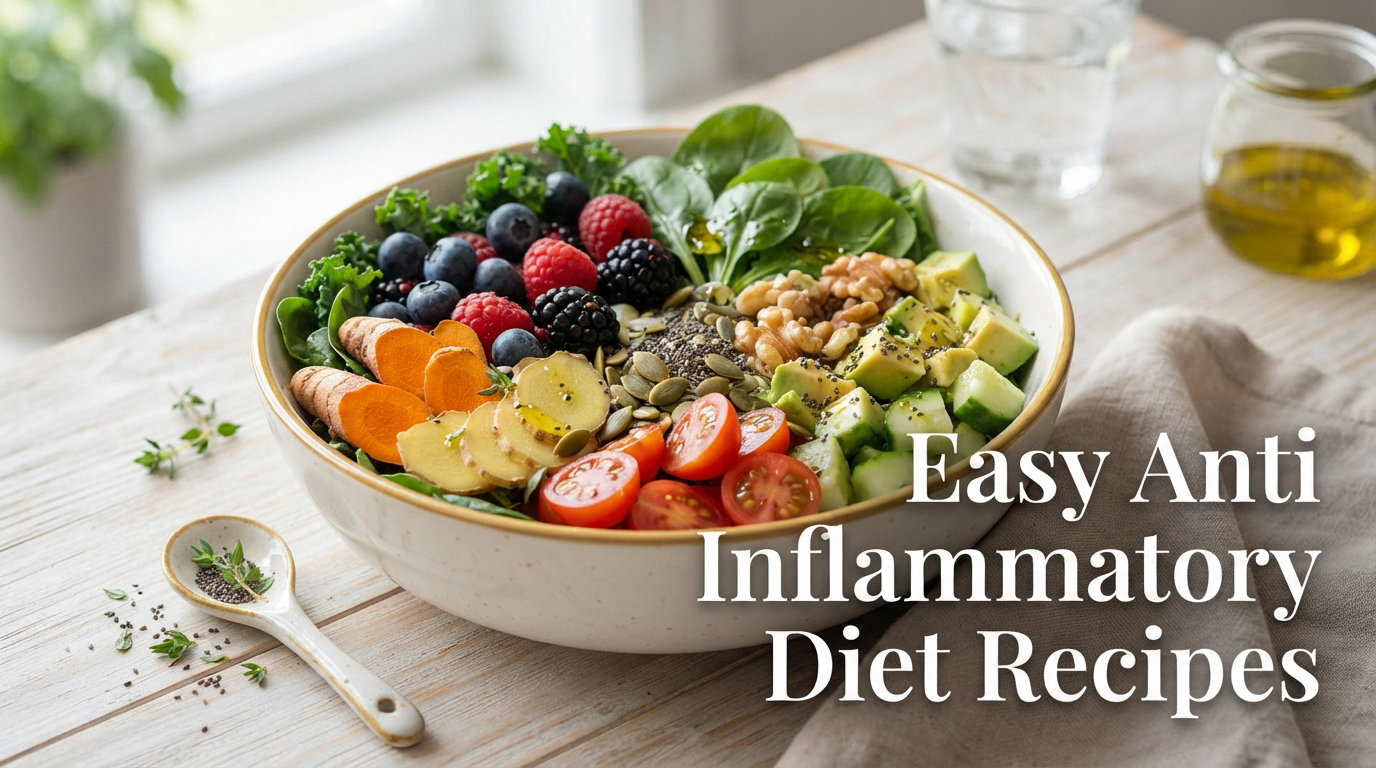
Starting an anti-inflammatory diet does not have to feel complicated or overwhelming. I have spent years testing simple recipes that fit into real life, and I have learned that eating to reduce inflammation can actually be easy, affordable, and delicious. This guide shares easy anti inflammatory diet recipes you can make today, plus everything you need to stock your pantry and build sustainable habits that stick.
Whether you are managing joint pain, looking to boost your energy, or simply want to eat healthier, these recipes prioritize whole foods rich in antioxidants, omega-3 fatty acids, and phytonutrients known for their inflammation-lowering effects. Every recipe here takes 30 minutes or less, uses simple ingredients, and includes practical tips for meal prep and budget-friendly swaps.
Table of Contents
Quick Overview: Easy Anti Inflammatory Meals You Can Make Today
Here are seven simple meals to get you started right away. These combine the most powerful anti-inflammatory ingredients into dishes that actually taste good:
- Turmeric Ginger Smoothie Bowl – Packed with antioxidants and healthy fats from chia seeds
- Salmon and Avocado Toast – Omega-3 rich salmon on whole grain bread with creamy avocado
- Mediterranean Quinoa Salad – Leafy greens, chickpeas, and olive oil dressed with lemon
- One-Pan Lemon Herb Salmon – 20-minute dinner with minimal cleanup
- Turmeric Chickpea Bowl – Plant-based protein with anti-inflammatory spices
- Greek Yogurt with Berries – Probiotics plus anthocyanin-rich blueberries
- Sweet Potato and Black Bean Bowl – Fiber-rich and full of beta-carotene
Each recipe below includes step-by-step instructions, nutritional highlights, and my personal tips for making ahead or adapting to your preferences. Let us dive into the full collection.
Your Anti-Inflammatory Pantry Staples
Having the right ingredients on hand makes anti-inflammatory eating effortless. I keep these staples stocked so I can throw together a healthy meal in minutes, even on busy weeknights.
Essential Proteins
Fatty fish like salmon and sardines top the list for their omega-3 fatty acids, specifically EPA and DHA, which studies show help reduce inflammatory markers. Canned salmon and sardines work just as well as fresh when budget is tight. Beans and lentils provide affordable plant-based protein and fiber that feeds good gut bacteria, which plays a key role in managing inflammation.
Produce Powerhouses
Leafy greens like spinach and kale deliver folate and antioxidants. Purple vegetables and berries contain anthocyanins that fight inflammation at the cellular level. I always keep frozen berries on hand, they are cheaper than fresh and perfect for smoothies. Cruciferous vegetables like broccoli and Brussels sprouts support your body’s natural detoxification processes.
Healthy Fats and Oils
Extra virgin olive oil serves as the foundation for Mediterranean-style anti-inflammatory cooking. Avocados provide monounsaturated fats and potassium. Walnuts, almonds, and chia seeds deliver omega-3s in plant-based form. These fats help your body absorb fat-soluble nutrients and keep you satisfied longer.
Anti-Inflammatory Spices
My spice cabinet is my secret weapon. Anti-inflammatory spices like turmeric and ginger contain curcumin and gingerol, compounds shown to reduce inflammatory cytokines. Cinnamon helps regulate blood sugar, while rosemary and garlic add flavor plus health benefits. These spices transform simple ingredients into flavorful, healing meals.
Budget-Friendly Substitutions
Eating anti-inflammatory does not require expensive specialty ingredients. Canned salmon works in place of fresh fillets. Frozen berries and vegetables offer the same nutrition at lower cost. Dried beans cost pennies compared to canned, though canned works perfectly for convenience. Store brands for olive oil, nuts, and spices cut costs without sacrificing quality.
Anti-Inflammatory Breakfast Recipes
Morning sets the tone for your entire day. These breakfast recipes provide sustained energy and start fighting inflammation from your first bite.
Turmeric Ginger Smoothie Bowl
This vibrant bowl takes five minutes to make and delivers a powerful dose of curcumin from turmeric and gingerol from fresh ginger. The frozen mango provides natural sweetness without added sugar, which can spike inflammation.
Ingredients: 1 cup frozen mango chunks, 1/2 cup frozen blueberries, 1/2 banana, 1 teaspoon fresh turmeric or 1/2 teaspoon ground, 1/2 inch fresh ginger peeled, 1/2 cup coconut water, 1 tablespoon chia seeds for topping, 1/4 cup sliced almonds for topping.
Instructions: Blend mango, blueberries, banana, turmeric, ginger, and coconut water until smooth. Pour into a bowl. Top with chia seeds and sliced almonds. Serve immediately.
My Tip: I batch-peel and freeze ginger in small portions. It grates easily when frozen and lasts for months.
Salmon and Avocado Toast
This savory breakfast provides omega-3 fatty acids from salmon and monounsaturated fats from avocado. The combination keeps me full until lunch without any mid-morning energy crashes.
Ingredients: 2 slices whole grain bread, 1/2 ripe avocado, 1/2 cup canned wild salmon drained, 1 teaspoon lemon juice, pinch of sea salt, black pepper to taste, red pepper flakes optional, 1 tablespoon everything bagel seasoning optional.
Instructions: Toast the bread until golden. Mash avocado with lemon juice, salt, and pepper. Spread onto toast. Top with flaked salmon. Sprinkle with red pepper flakes or everything bagel seasoning if desired.
Make-Ahead Tip: Mix the salmon with a little Greek yogurt and lemon juice the night before for a quick assembly in the morning.
Berry Chia Overnight Oats
Overnight oats are perfect for busy mornings. The chia seeds provide omega-3s and fiber, while berries deliver antioxidants called anthocyanins that reduce inflammation.
Ingredients: 1/2 cup rolled oats, 1 cup unsweetened almond milk, 2 tablespoons chia seeds, 1/2 cup mixed berries fresh or frozen, 1 tablespoon maple syrup optional, 1/2 teaspoon cinnamon, 1 tablespoon chopped walnuts for topping.
Instructions: Combine oats, almond milk, chia seeds, and cinnamon in a jar. Stir well. Refrigerate overnight. In the morning, top with berries and walnuts. Add maple syrup if desired.
Batch Cooking: Prepare five jars on Sunday for grab-and-go breakfasts all week.
Veggie-Packed Egg Muffins
These portable egg muffins combine protein with vegetables and anti-inflammatory spices. They reheat beautifully and work for breakfast or snacks.
Ingredients: 8 eggs, 1 cup spinach chopped, 1/2 red bell pepper diced, 1/4 cup red onion diced, 1/4 teaspoon turmeric, 1/4 teaspoon black pepper, 1/4 cup feta cheese optional, cooking spray.
Instructions: Preheat oven to 350 degrees Fahrenheit. Spray a muffin tin with cooking spray. Whisk eggs with turmeric and pepper. Stir in vegetables and cheese. Pour into muffin cups. Bake 20-22 minutes until set. Cool and store in the refrigerator.
Anti-Inflammatory Lunch Ideas
Lunch is where many anti-inflammatory diets fall apart. These recipes are designed for meal prep and quick assembly so you stay on track even during busy workdays.
Mediterranean Quinoa Salad
This salad combines complete protein from quinoa with Mediterranean staples known for their heart health and anti-inflammatory benefits. It tastes even better after marinating overnight.
Ingredients: 2 cups cooked quinoa cooled, 1 cup cherry tomatoes halved, 1 cucumber diced, 1/2 cup Kalamata olives pitted, 1/4 cup red onion thinly sliced, 1 cup chickpeas drained, 1/2 cup crumbled feta cheese, 1/4 cup extra virgin olive oil, 2 tablespoons lemon juice, 1 teaspoon dried oregano, salt and pepper to taste.
Instructions: Combine quinoa, vegetables, chickpeas, and olives in a large bowl. Whisk olive oil, lemon juice, oregano, salt, and pepper. Pour over salad and toss. Refrigerate at least one hour before serving.
Meal Prep: This salad keeps well for five days. I make a big batch on Sunday and portion into containers for the week.
Turmeric Chickpea Bowl
Chickpeas provide fiber and protein while turmeric delivers curcumin. The tahini dressing adds healthy fats and calcium.
Ingredients: 2 cans chickpeas drained and rinsed, 1 tablespoon olive oil, 1 teaspoon ground turmeric, 1/2 teaspoon cumin, 1/4 teaspoon smoked paprika, 4 cups baby spinach, 1 avocado sliced, 2 tablespoons tahini, 1 tablespoon lemon juice, 1 clove garlic minced, warm water to thin.
Instructions: Roast chickpeas with olive oil and spices at 400 degrees Fahrenheit for 20 minutes. Whisk tahini, lemon juice, garlic, and warm water for dressing. Divide spinach between bowls. Top with roasted chickpeas and avocado. Drizzle with tahini dressing.
Salmon Salad Lettuce Wraps
A lighter alternative to bread, these lettuce wraps feature canned salmon mixed with Greek yogurt for a protein-packed lunch that takes minutes to prepare.
Ingredients: 1 can wild salmon drained, 1/4 cup Greek yogurt, 1 tablespoon Dijon mustard, 1 celery stalk diced, 2 tablespoons red onion minced, 1 tablespoon fresh dill chopped, 1 teaspoon lemon juice, salt and pepper to taste, large butter lettuce leaves for wrapping.
Instructions: Flake salmon into a bowl. Mix with Greek yogurt, mustard, celery, onion, dill, lemon juice, salt, and pepper. Spoon into lettuce leaves and fold like tacos.
Sweet Potato and Black Bean Bowl
Sweet potatoes provide beta-carotene, which converts to vitamin A and helps reduce inflammation. Black beans add fiber and plant-based protein.
Ingredients: 2 medium sweet potatoes cubed, 1 can black beans drained, 1 teaspoon cumin, 1/2 teaspoon chili powder, 1/4 teaspoon smoked paprika, 1 avocado diced, 1/4 cup cilantro chopped, lime wedges for serving.
Instructions: Roast sweet potato cubes at 425 degrees Fahrenheit for 25 minutes until tender. Warm black beans with spices. Combine in bowls. Top with avocado and cilantro. Serve with lime wedges.
Anti-Inflammatory Dinner Recipes
Dinner is where you can really pack in the anti-inflammatory ingredients. These 30-minute meals prove that healthy eating does not require hours in the kitchen.
One-Pan Lemon Herb Salmon
This sheet pan dinner minimizes cleanup while maximizing nutrition. Salmon provides omega-3s, and the vegetables roast alongside for easy preparation.
Ingredients: 4 salmon fillets, 2 tablespoons olive oil, 1 lemon sliced, 2 cloves garlic minced, 1 teaspoon dried dill, 2 cups broccoli florets, 1 cup cherry tomatoes, 1 red onion cut into wedges, salt and pepper to taste.
Instructions: Preheat oven to 400 degrees Fahrenheit. Place salmon on a parchment-lined sheet pan. Arrange vegetables around it. Drizzle everything with olive oil. Season with garlic, dill, salt, and pepper. Top salmon with lemon slices. Roast 18-20 minutes until salmon flakes easily.
Sheet Pan Tip: Cut vegetables to similar sizes so they cook evenly. Harder vegetables like carrots can go closer to the edges where it is hotter.
Turmeric Ginger Chicken Stir-Fry
This colorful stir-fry combines lean protein with a rainbow of vegetables and anti-inflammatory spices. It comes together faster than takeout delivery.
Ingredients: 1 pound chicken breast sliced thin, 1 tablespoon coconut oil, 1 red bell pepper sliced, 1 cup snap peas, 1 cup broccoli florets, 1 carrot julienned, 2 cloves garlic minced, 1 tablespoon fresh ginger grated, 1 teaspoon ground turmeric, 2 tablespoons coconut aminos or low-sodium soy sauce, 1 tablespoon rice vinegar, 1 teaspoon sesame oil.
Instructions: Heat coconut oil in a large skillet over medium-high heat. Cook chicken 5-6 minutes until browned and cooked through. Remove and set aside. Add vegetables, garlic, ginger, and turmeric to the pan. Stir-fry 4-5 minutes until crisp-tender. Return chicken to pan. Add coconut aminos, vinegar, and sesame oil. Toss to combine. Serve over cauliflower rice or brown rice.
Mediterranean Baked Cod
Cod is a mild white fish that takes on the flavors of whatever you cook it with. The Mediterranean topping of tomatoes, olives, and capers adds bold flavor without heavy sauces.
Ingredients: 4 cod fillets, 1 cup cherry tomatoes halved, 1/4 cup Kalamata olives sliced, 2 tablespoons capers drained, 2 cloves garlic minced, 2 tablespoons olive oil, 1 teaspoon dried oregano, 1 lemon juiced, fresh parsley for garnish.
Instructions: Preheat oven to 400 degrees Fahrenheit. Place cod in a baking dish. Mix tomatoes, olives, capers, garlic, olive oil, oregano, and lemon juice. Spoon over fish. Bake 12-15 minutes until fish flakes easily. Garnish with parsley.
Sheet Pan Sausage and Vegetables
Use nitrate-free chicken or turkey sausage for a quick protein source. The variety of vegetables ensures you get a range of phytonutrients.
Ingredients: 4 links nitrate-free chicken sausage sliced, 2 sweet potatoes cubed, 1 red bell pepper chunked, 1 zucchini sliced, 1 red onion wedged, 2 tablespoons olive oil, 1 teaspoon smoked paprika, 1/2 teaspoon garlic powder, salt and pepper to taste.
Instructions: Preheat oven to 425 degrees Fahrenheit. Toss all ingredients together on a large sheet pan. Spread in a single layer. Roast 25-30 minutes, stirring once halfway through, until vegetables are tender and sausage is browned.
Lentil and Vegetable Curry
Lentils provide fiber, protein, and iron. This curry combines turmeric, ginger, and garlic for a triple anti-inflammatory punch. It tastes even better the next day.
Ingredients: 1 cup dried green or brown lentils rinsed, 1 can coconut milk, 2 cups vegetable broth, 1 onion diced, 2 cloves garlic minced, 1 tablespoon fresh ginger grated, 1 tablespoon curry powder, 1 teaspoon turmeric, 1/2 teaspoon cumin, 2 cups spinach, 1 can diced tomatoes, 1 tablespoon olive oil.
Instructions: Heat oil in a pot over medium heat. Saute onion until soft, about 5 minutes. Add garlic, ginger, curry powder, turmeric, and cumin. Cook 1 minute until fragrant. Add lentils, coconut milk, broth, and tomatoes. Bring to a boil, then reduce heat and simmer 25 minutes until lentils are tender. Stir in spinach until wilted. Season to taste.
Anti-Inflammatory Snacks
Smart snacking keeps blood sugar stable and prevents the kind of hunger that leads to poor food choices. These snacks combine protein, healthy fats, and anti-inflammatory ingredients.
Greek Yogurt with Berries and Walnuts
Plain Greek yogurt provides probiotics for gut health, which research increasingly links to reduced inflammation. Top with berries for antioxidants and walnuts for omega-3s.
Ingredients: 3/4 cup plain Greek yogurt, 1/2 cup mixed berries, 1 tablespoon chopped walnuts, drizzle of honey optional, pinch of cinnamon.
Instructions: Scoop yogurt into a bowl. Top with berries, walnuts, and cinnamon. Drizzle with honey if desired.
Hummus with Veggie Sticks
Chickpeas in hummus provide fiber and protein. Pair with colorful vegetables like bell peppers, carrots, and cucumber for variety and nutrition.
Ingredients: 1/3 cup hummus, 1 cup mixed vegetable sticks (bell peppers, carrots, cucumber, cherry tomatoes).
Quick Prep Tip: Buy pre-cut vegetables when energy or time is low. The convenience is worth the small extra cost.
Apple Slices with Almond Butter
This classic combination provides fiber from the apple, healthy fats from almond butter, and natural sweetness that satisfies cravings without refined sugar.
Ingredients: 1 medium apple sliced, 1 tablespoon almond butter, sprinkle of cinnamon.
Instructions: Core and slice the apple. Arrange on a plate with almond butter for dipping. Sprinkle with cinnamon.
How to Start an Anti-Inflammatory Diet for Beginners
Starting any new eating pattern can feel overwhelming. I have seen too many people abandon healthy eating because they tried to be perfect from day one. Here is a gentler approach that actually works.
The 80/20 Rule Explained
The 80/20 rule means you focus on anti-inflammatory foods 80 percent of the time, leaving 20 percent for flexibility. This might mean eating anti-inflammatory for about 17 meals per week, with 4 meals for whatever you enjoy, whether that is pizza at a party or a favorite dessert.
This approach works because sustainability beats perfection. Strict diets create stress, and stress itself increases inflammation. By allowing occasional flexibility, you reduce the psychological burden and actually stick with healthy eating long-term.
How to Start Without Feeling Overwhelmed
Begin with one meal per day. Maybe start with breakfast using the recipes above. Once that feels natural, add lunch. Then tackle dinner. Trying to change everything at once sets you up for frustration.
Focus on adding good foods rather than subtracting bad ones. Instead of thinking about what you cannot eat, concentrate on getting more salmon, berries, leafy greens, and nuts into your day. This positive framing makes the transition easier.
Budget-Conscious Tips
Anti-inflammatory eating does not require a luxury grocery budget. Frozen fish, vegetables, and berries cost less than fresh and last longer. Canned beans and lentils provide affordable protein. Buying spices and nuts from bulk bins reduces packaging costs.
I plan my week around sales. When salmon is on sale, I buy extra and freeze portions. When berries are in season, I stock up. Rice and beans form the foundation of many meals, with smaller portions of expensive proteins as accents rather than the main event.
Meal Prep and Batch Cooking Strategies
Spending a few hours on Sunday preparing for the week makes anti-inflammatory eating effortless on busy weekdays. Here is my proven system.
Batch Cooking Fundamentals
I cook a large batch of grains like quinoa or brown rice, roast a sheet pan of mixed vegetables, and prepare one protein like baked salmon or roasted chickpeas. These become building blocks for quick meals throughout the week.
Portion cooked ingredients into individual containers for grab-and-go lunches. Keep components separate so you can mix and match. Quinoa one day becomes a base for Mediterranean salad, then gets repurposed into a warm bowl with roasted vegetables later in the week.
Storage Tips for Freshness
Store leafy greens wrapped in a slightly damp paper towel inside a container in the crisper drawer. They stay fresh twice as long. Keep cut avocado from browning by storing it with a piece of onion or a squeeze of lemon juice.
Cooked grains last five days in the refrigerator. Roasted vegetables stay good for four days. Cooked fish should be eaten within three days. Label containers with dates so nothing gets forgotten.
Quick Assembly Meals
With prepped components, you can assemble meals in minutes. Combine grain plus protein plus vegetables plus a simple dressing. A drizzle of olive oil and lemon juice transforms basic ingredients into a satisfying meal.
Keep quick-add toppings on hand like hemp seeds, chopped nuts, and fresh herbs. These boost nutrition and make simple meals feel special without extra cooking.
Frequently Asked Questions
What are some easy anti-inflammatory meals?
Easy anti-inflammatory meals include turmeric ginger smoothie bowls, salmon and avocado toast, Mediterranean quinoa salad, one-pan lemon herb salmon, and Greek yogurt with berries. These combine anti-inflammatory ingredients like fatty fish, leafy greens, berries, nuts, and spices into dishes that take 30 minutes or less to prepare.
What can I eat to reduce inflammation quickly?
To reduce inflammation quickly, focus on foods rich in omega-3 fatty acids like salmon and walnuts, antioxidants from berries and leafy greens, and spices like turmeric and ginger. Avoid processed foods, excess sugar, and refined carbohydrates which can spike inflammation within hours.
What is the 80/20 rule for anti-inflammatory diet?
The 80/20 rule means eating anti-inflammatory foods 80 percent of the time while allowing flexibility for 20 percent of meals. This sustainable approach reduces stress around perfect eating and helps you stick with healthy habits long-term rather than burning out on strict restrictions.
How to start an anti-inflammatory diet for beginners?
Start by changing one meal per day, typically breakfast. Focus on adding anti-inflammatory foods like salmon, berries, and leafy greens rather than restricting. Stock your pantry with staples like olive oil, nuts, and spices. Use the 80/20 rule to maintain flexibility. Gradually expand to lunch and dinner as breakfast becomes routine.
What foods lower CRP levels?
Foods shown to lower C-reactive protein (CRP), an inflammation marker, include fatty fish rich in omega-3s, berries high in anthocyanins, leafy greens with folate, nuts containing healthy fats, and spices like turmeric with curcumin. Olive oil, tomatoes with lycopene, and fiber-rich whole grains also support lower CRP levels.
How long does it take to see results from an anti-inflammatory diet?
Most people notice initial improvements in energy and digestion within one to two weeks. Measurable changes in inflammatory markers typically appear after four to six weeks of consistent eating. Significant symptom relief for conditions like joint pain often requires three months or more of sustained dietary changes.
Your Path to Easy Anti Inflammatory Diet Recipes
Building an anti-inflammatory eating pattern does not require perfection, expensive ingredients, or hours in the kitchen. These easy anti inflammatory diet recipes prove that simple, whole foods prepared with healing spices can transform your health without complicating your life.
Start with just one recipe from this guide. Maybe the turmeric ginger smoothie bowl for tomorrow’s breakfast, or the one-pan salmon for this week’s dinner. Build your pantry gradually, focusing on the staples that make quick meals possible. Remember the 80/20 rule, sustainable progress beats perfect adherence every time.
The recipes here are designed for real life. They accommodate busy schedules, tight budgets, and families with varying tastes. Every ingredient serves a purpose, whether delivering omega-3 fatty acids, antioxidants, or fiber to support your body’s natural anti-inflammatory processes.
Pick one recipe and try it this week. Notice how you feel after eating a meal rich in whole foods rather than processed ingredients. That feeling, renewed energy, easier digestion, clearer thinking, is your body thanking you. From there, build one meal at a time until anti-inflammatory eating becomes your natural default.