
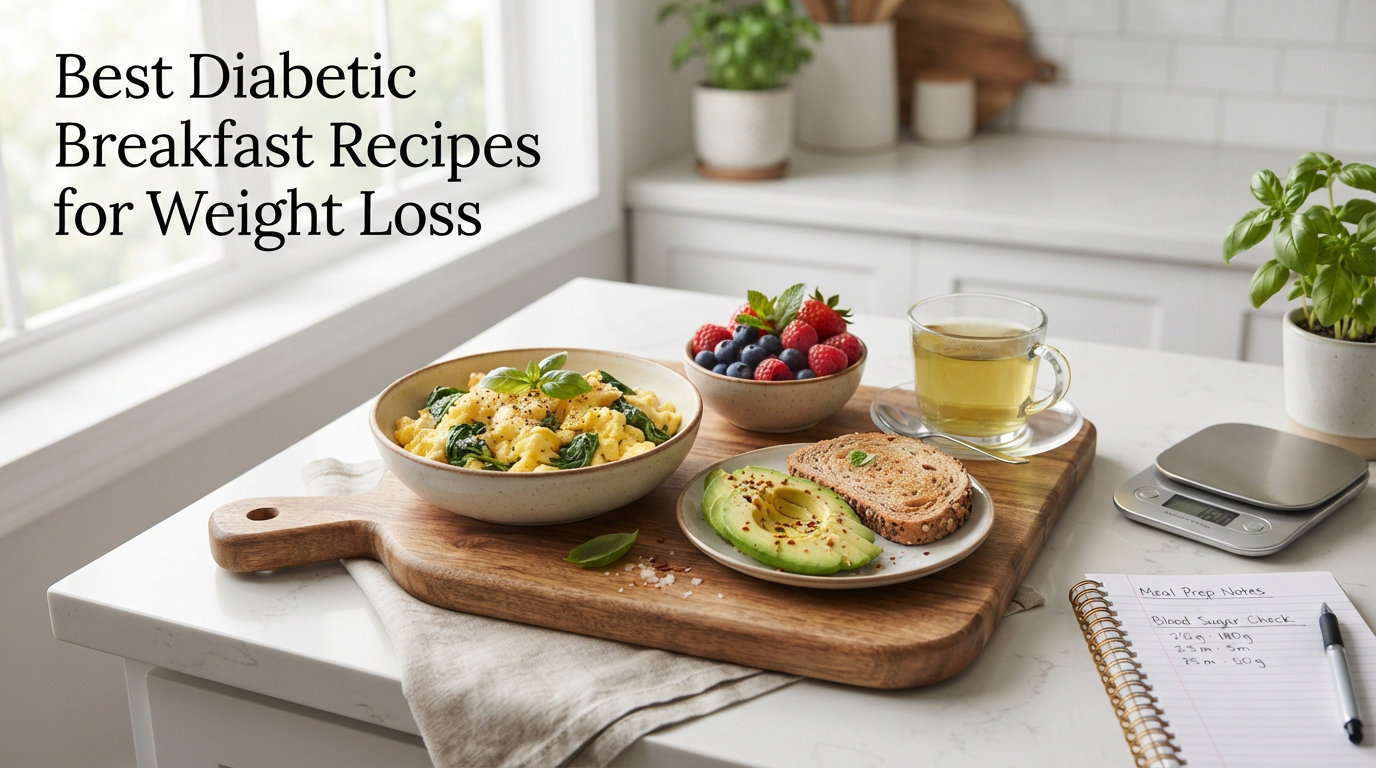
Best diabetic breakfast recipes for weight loss combine a defined portion with protein, fiber, produce, and a carbohydrate amount that fits your individual plan. These eight breakfasts include exact quantities, clear cooking steps, yields, and make-ahead notes, so they are useful on an ordinary morning—not only in a perfect meal-prep week.
No single breakfast causes weight loss or produces the same glucose response for everyone. Weight change depends on the full eating pattern, activity, sleep, medications, health conditions, and portions. If you use insulin or a medicine that can cause low blood glucose, ask your care team before changing carbohydrate intake or skipping a usual meal.
Quick picks: Choose egg muffins for meal prep, a cottage cheese bowl for a five-minute savory breakfast, overnight oats for a portable option, or pumpkin cottage cheese pancakes for a weekend meal.
Table of Contents
How to Build a Filling Breakfast for Diabetes and Weight Goals
The American Diabetes Association’s breakfast guide recommends combining lean protein and fiber-rich foods. The CDC’s healthy-weight guidance for diabetes emphasizes a sustainable eating plan, higher-fiber carbohydrates, protein, and portions that support individual goals. The useful lesson is structure, not a rigid universal menu.
Include a clear protein source
Eggs, plain Greek yogurt, cottage cheese, tofu, nuts, seeds, and lean poultry can make breakfast more substantial. Protein needs vary, particularly for people with kidney disease, so more is not automatically better.
Choose a fiber-rich carbohydrate
Oats, whole-grain bread, beans, berries, pear, apple, vegetables, chia, and flax contribute fiber. The CDC notes that fiber supports fullness and can be useful in diabetes and weight management. Increase fiber gradually and drink enough water if your usual intake is low.
Measure calorie-dense extras
Nut butter, nuts, seeds, cheese, avocado, and oil add flavor and texture, but a free-pour can turn a modest breakfast into a much larger meal. A tablespoon, teaspoon, or measured sprinkle is more dependable than estimating.
Make the portion repeatable
Use the same bowl, jar, or muffin portion when a breakfast works well for you. Repeatability makes shopping and meal planning easier and gives you clearer information when discussing the meal with your clinician or dietitian. Our diabetic diet food list offers a broader ingredient framework.
8 Best Diabetic Breakfast Recipes for Weight Loss Ideas
Each recipe makes a complete breakfast rather than a vague ingredient combination. Keep toppings and optional sides measured, and adjust the carbohydrate source only with your personal plan in mind.
Savory High-Protein Breakfast Ideas
1. Spinach, Mushroom, and Egg Skillet
Vegetables take up most of the skillet, while eggs and a small amount of feta make the breakfast satisfying without a heavy sauce.
Serves: 2 | Time: 15 minutes | Method: Skillet
Ingredients
-
1 teaspoon olive oil
-
2 cups sliced mushrooms
-
2 cups baby spinach
-
1/4 teaspoon garlic powder
-
1/4 teaspoon black pepper
-
4 large eggs
-
2 tablespoons crumbled feta
-
1 small tomato, chopped
Instructions
-
Heat the oil in a large nonstick skillet over medium heat.
-
Add the mushrooms and cook for 5 minutes, until their moisture evaporates.
-
Add the spinach, garlic powder, and pepper and cook until the spinach wilts.
-
Make four wells in the vegetables and crack an egg into each one.
-
Cover and cook for 3 to 5 minutes, until the whites set to your preference.
-
Divide between two plates and finish with feta and tomato.
Optional carbohydrate: Add one measured slice of whole-grain toast if it fits your plan.
2. Savory Cottage Cheese Breakfast Bowls
Cucumber, tomato, herbs, and seeds turn plain cottage cheese into a crisp, spoonable breakfast that requires no stove.
Serves: 2 | Time: 8 minutes | Method: No-cook
Ingredients
-
2 cups low-fat cottage cheese
-
1 cup chopped cucumber
-
1 cup halved cherry tomatoes
-
2 tablespoons chopped fresh dill or parsley
-
1 tablespoon pumpkin seeds
-
1 teaspoon extra-virgin olive oil
-
1 teaspoon lemon juice
-
Black pepper, to taste
Instructions
-
Divide the cottage cheese between two shallow bowls.
-
Top each bowl with half of the cucumber and tomatoes.
-
Whisk the olive oil, lemon juice, and pepper and drizzle over the vegetables.
-
Finish with the herbs and pumpkin seeds.
Shopping tip: Compare cottage cheese labels if sodium matters for your health plan.
3. Turkey Sausage and Pepper Egg Muffins
These vegetable-packed egg muffins reheat quickly and keep the serving size visible. Two muffins make one breakfast.
Serves: 6 | Time: 35 minutes | Method: Oven
Ingredients
-
1 teaspoon olive oil
-
6 ounces lean turkey breakfast sausage, casings removed
-
1 cup finely diced bell pepper
-
1 cup chopped baby spinach
-
8 large eggs
-
1/2 cup plain low-fat Greek yogurt
-
1/2 teaspoon smoked paprika
-
1/4 teaspoon black pepper
Instructions
-
Heat the oven to 350°F and coat a 12-cup muffin pan with cooking spray.
-
Heat the oil in a skillet, add the turkey sausage, and cook until browned and fully cooked.
-
Add the bell pepper and cook for 3 minutes, then stir in the spinach until wilted.
-
Whisk the eggs, yogurt, paprika, and pepper in a large bowl.
-
Divide the sausage mixture among the muffin cups and pour the egg mixture over it.
-
Bake for 18 to 22 minutes, until the centers are set.
Make-ahead: Refrigerate cooled muffins for up to 4 days. Reheat two on a plate until steaming hot.
4. Tofu and Black Bean Breakfast Scramble
Tofu provides the scramble texture, vegetables add volume, and a measured amount of black beans supplies fiber and carbohydrate.
Serves: 3 | Time: 20 minutes | Method: Skillet
Ingredients
-
14 ounces extra-firm tofu, drained and patted dry
-
1 teaspoon olive oil
-
1 cup diced bell pepper
-
1 cup sliced zucchini
-
1 teaspoon ground cumin
-
1/2 teaspoon turmeric
-
1/4 teaspoon black pepper
-
1/2 cup no-salt-added black beans, rinsed
-
1 cup salsa with no added sugar
Instructions
-
Crumble the tofu into small pieces with clean hands.
-
Heat the oil in a large skillet and cook the bell pepper and zucchini for 5 minutes.
-
Add the tofu, cumin, turmeric, and pepper and cook for 6 minutes, stirring occasionally.
-
Fold in the black beans and cook until hot.
-
Divide among three bowls and top each with one-third of the salsa.
Meal-prep: Refrigerate portions for up to 3 days. Add salsa after reheating for the freshest texture.
Sweet and Portable Breakfast Ideas
5. Greek Yogurt, Berry, and Chia Jars
Plain yogurt supplies protein while berries, chia, and walnuts add texture. There is no sweetened granola or flavored yogurt.
Serves: 3 | Time: 10 minutes | Method: No-cook
Ingredients
-
3 cups plain low-fat Greek yogurt
-
1 teaspoon vanilla extract
-
1 1/2 cups fresh or frozen berries
-
3 tablespoons chia seeds
-
3 tablespoons chopped walnuts
-
1/2 teaspoon ground cinnamon
Instructions
-
Stir the yogurt, vanilla, and cinnamon together.
-
Divide half of the yogurt among three jars.
-
Add half of the berries and chia seeds, then repeat the layers.
-
Cover and refrigerate; add the walnuts immediately before eating.
Storage: Refrigerate for up to 2 days. Frozen berries will release juice as they thaw, which can be stirred into the yogurt.
6. Apple Cinnamon Overnight Oats
A modest oat portion is paired with chia, yogurt, and diced apple rather than brown sugar, honey, or a large banana.
Serves: 3 | Time: 10 minutes, plus chilling | Method: Refrigerator
Ingredients
-
1 1/2 cups old-fashioned rolled oats
-
1 1/2 cups unsweetened soy milk or low-fat milk
-
3/4 cup plain Greek yogurt
-
3 tablespoons chia seeds
-
1 small apple, cored and finely diced
-
1 teaspoon ground cinnamon
-
1/2 teaspoon vanilla extract
-
3 tablespoons chopped pecans
Instructions
-
Stir the oats, milk, yogurt, chia, cinnamon, and vanilla in a bowl.
-
Fold in the diced apple and divide the mixture among three jars.
-
Cover and refrigerate for at least 6 hours or overnight.
-
Stir before eating and add one tablespoon of pecans to each jar.
Adjustment: Add one or two tablespoons of milk if the oats become thicker than you prefer.
7. Peanut Butter Pear Toast with Egg
This breakfast uses one toast slice, measured peanut butter, thin pear slices, and an egg instead of turning toast into an open-ended snack.
Serves: 2 | Time: 10 minutes | Method: Toaster
Ingredients
-
2 slices 100% whole-grain bread
-
2 tablespoons natural peanut butter with no added sugar
-
1/2 small pear, very thinly sliced
-
1/4 teaspoon ground cinnamon
-
2 hard-boiled eggs
Instructions
-
Toast the bread until crisp.
-
Spread each slice with one tablespoon of peanut butter.
-
Arrange the pear slices over the peanut butter and dust with cinnamon.
-
Serve each toast with one hard-boiled egg.
Prep help: Use our hard-boiled egg method to cook several eggs ahead.
8. Pumpkin Cottage Cheese Pancakes
Blended cottage cheese and oats make a tender batter, while pumpkin and spice provide flavor without syrup in the mix.
Serves: 3 | Time: 25 minutes | Method: Blender and skillet
Ingredients
-
1 cup low-fat cottage cheese
-
3/4 cup old-fashioned rolled oats
-
1/2 cup plain pumpkin puree
-
3 large eggs
-
1 teaspoon vanilla extract
-
1 teaspoon ground cinnamon
-
1/2 teaspoon baking powder
-
1/4 teaspoon ground ginger
-
Cooking spray
-
3/4 cup berries for serving
Instructions
-
Blend the cottage cheese, oats, pumpkin, eggs, vanilla, cinnamon, baking powder, and ginger until smooth.
-
Let the batter stand for 5 minutes while a nonstick skillet heats over medium-low.
-
Coat the skillet with cooking spray and add the batter in 1/4-cup portions.
-
Cook until the edges look dry and bubbles appear, then flip and cook until set.
-
Divide the pancakes among three plates and serve each with 1/4 cup berries.
Freezer tip: Cool pancakes completely, freeze them in a single layer, then transfer to a covered container for up to 1 month.
Breakfast Grocery List and Smart Substitutions
A short, overlapping ingredient list makes these breakfasts easier to maintain than eight unrelated shopping trips. Buy only the produce you can use before it loses quality, and rely on frozen spinach or berries when that prevents food waste.
Protein staples
-
Eggs: Use them in the skillet, egg muffins, toast plate, and pancake batter.
-
Plain Greek yogurt: Choose an unsweetened version for jars, oats, and the egg-muffin mixture.
-
Cottage cheese: Use it for a savory bowl and blend it into pancakes.
-
Extra-firm tofu: Drain and pat it dry so the scramble browns instead of steaming.
-
Natural nut butter: Look for a product made from nuts, with salt optional and no added sugar.
If dairy is not suitable, choose an unsweetened alternative with a protein amount that works for your needs rather than assuming every plant-based yogurt is equivalent. Many coconut-based products are low in protein, and flavored versions can contain added sugar.
Fiber and produce staples
-
Old-fashioned oats for overnight oats and blended pancakes
-
Chia seeds for yogurt jars and oats
-
Berries, fresh or frozen, for measured fruit portions
-
One small apple and one small pear for variety without buying a large fruit basket
-
Spinach, mushrooms, peppers, cucumber, tomatoes, and zucchini for savory breakfasts
-
Black beans for the tofu scramble
Frozen berries work well in yogurt and oats because their juices become part of the mixture. Frozen spinach can replace fresh spinach in the egg muffins when it is thawed and squeezed very dry. Canned beans are convenient; rinsing removes the packing liquid and improves their flavor.
Flavor builders that prevent boredom
Cinnamon, vanilla, smoked paprika, cumin, turmeric, lemon, dill, salsa, and black pepper allow the same basic ingredients to taste different across the week. Flavorings are most useful when they replace the expectation that every breakfast needs syrup, sweetened granola, a large amount of cheese, or a rich bottled sauce.
Make substitutions by function. Replace feta with a measured amount of another flavorful cheese, walnuts with pumpkin seeds when nuts are unsuitable, or pear with thin apple slices. Do not remove both the protein and fiber components at the same time; doing so changes the structure that makes the breakfast complete.
How to Adjust the Recipes Without Losing the Structure
A successful substitution preserves the role of the ingredient. If you remove yogurt from overnight oats, replace both its moisture and protein instead of adding only more milk. If you remove an egg from toast, replace the protein with cottage cheese, tofu, or another suitable option. If you increase fruit, recognize that the carbohydrate portion has also changed.
-
For lower sodium: Compare labels on cottage cheese, turkey sausage, salsa, feta, and canned beans.
-
For nut-free breakfasts: Use pumpkin or sunflower seeds and a seed butter with no added sugar.
-
For vegetarian breakfasts: Choose the tofu scramble, yogurt jars, oats, toast with egg, or pancakes.
-
For rushed mornings: Keep two egg muffins, one yogurt jar, or one oat jar in a clearly labeled grab-and-go container.
-
For family meals: Serve optional toast or fruit on the side so each person can assemble a portion that fits their needs.
Changes to carbohydrate timing or quantity can matter for people using insulin and certain glucose-lowering medicines. Recipe flexibility is useful, but it should support—not replace—personal medical nutrition guidance.
A Simple Breakfast Meal-Prep Plan
-
Choose one cooked option and one no-cook option for the week.
-
Prepare only the number of portions you expect to eat safely within the storage window.
-
Keep nuts, seeds, and toast separate from moist ingredients.
-
Pack breakfast in individual containers instead of one large batch bowl.
-
Write the preparation date on each container.
For additional variety not specifically focused on weight goals, browse our broader diabetic breakfast ideas.
Frequently Asked Questions
What makes a diabetic breakfast useful for weight loss?
A useful breakfast has a defined portion, includes protein and fiber, limits added sugar, and fits the person’s full-day eating plan. It should also be practical enough to repeat. No recipe can guarantee weight loss.
Do I have to eat breakfast to lose weight?
No universal meal schedule works for everyone. Some people prefer breakfast, while others follow a different plan. If you take insulin or medication that can cause low blood glucose, do not skip or delay a usual meal without individualized guidance.
Are oats allowed in a diabetic breakfast?
Oats are a carbohydrate food and can fit many plans in a measured portion. Pairing them with yogurt, chia, nuts, or another protein and fiber source creates a more complete breakfast.
Which recipe is best for meal prep?
Egg muffins keep for several days, yogurt jars are quick to assemble, and pancakes freeze well. Overnight oats are convenient when their oat and fruit portions fit your plan.
What should I drink with breakfast?
Water, unsweetened tea, or coffee without sugary flavorings are straightforward choices. Milk and dairy alternatives can contribute carbohydrate, so include them in the meal rather than treating them as invisible.
Conclusion: Best Diabetic Breakfast Recipes for Weight Loss
The best diabetic breakfast recipes for weight loss do not rely on miracle foods or an unrealistically tiny meal. They combine a repeatable portion with protein, fiber, produce, and a thoughtfully chosen carbohydrate source. That structure makes breakfast easier to plan, pack, discuss with a care team, and adapt to individual preferences.
Begin with the recipe that removes the biggest obstacle from your morning: egg muffins when time is short, a cottage cheese bowl when you do not want to cook, overnight oats for portability, or pancakes when you want a warm breakfast. Sustainable routines matter more than a single “perfect” plate.