
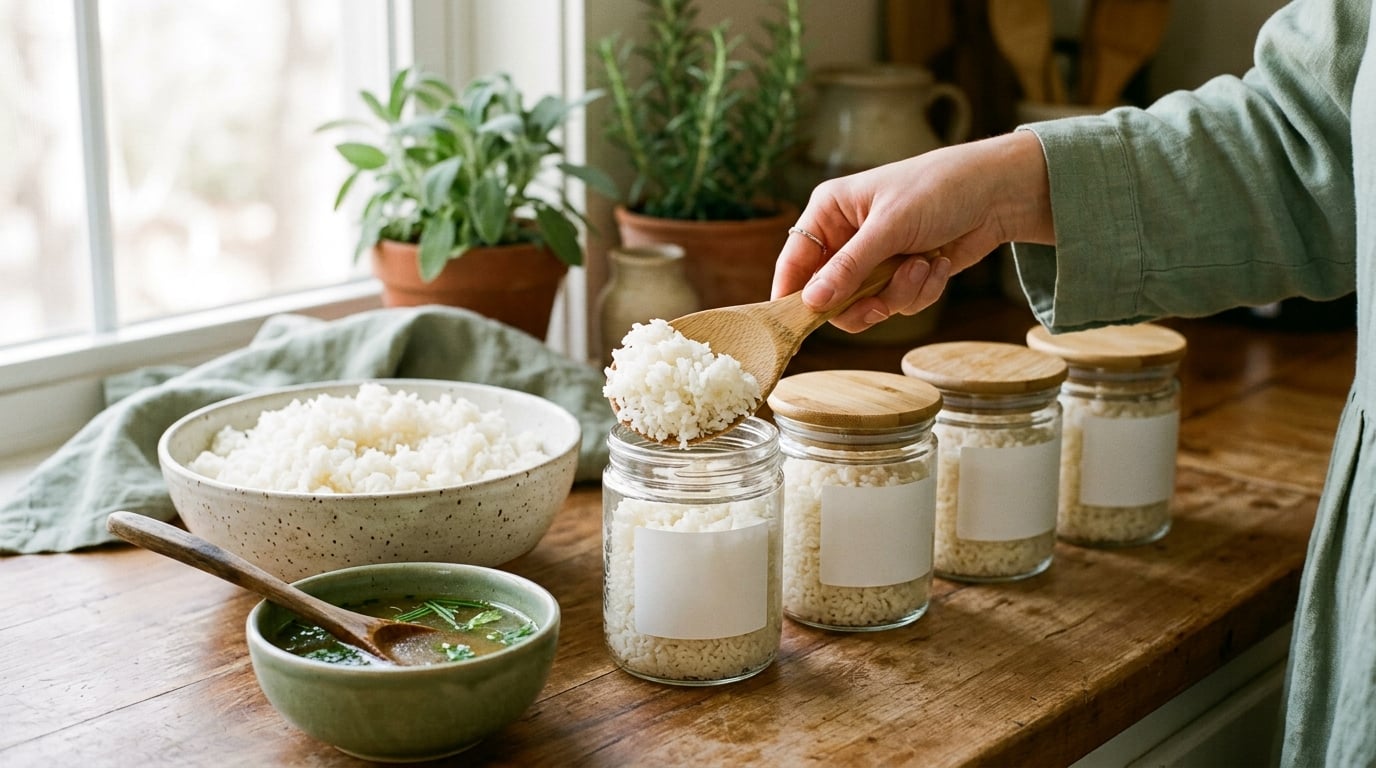
Yes, you can freeze cooked rice safely. Freezing halts the growth of the bacteria that make rice risky and keeps cooked rice safe for several months, far longer than the 3 to 4 days it lasts in the fridge. The one rule that matters is speed: cool the rice fast, seal it airtight, and get it into the freezer within about an hour of cooking.
Most of the worry around freezing rice comes from mixing up two very different problems. Freezer burn makes rice dry, pale, and bland, and that is a quality issue you can live with. Bacterial spoilage is a safety issue, and it happens in the warm window right after cooking, not in the freezer itself.
I batch-cook rice most Sundays for the week ahead, and the difference between a good portion and a sad one is entirely in the first hour. Get that hour right and freezing is the easiest step in the whole process.
Table of Contents
How to Freeze Cooked Rice Safely
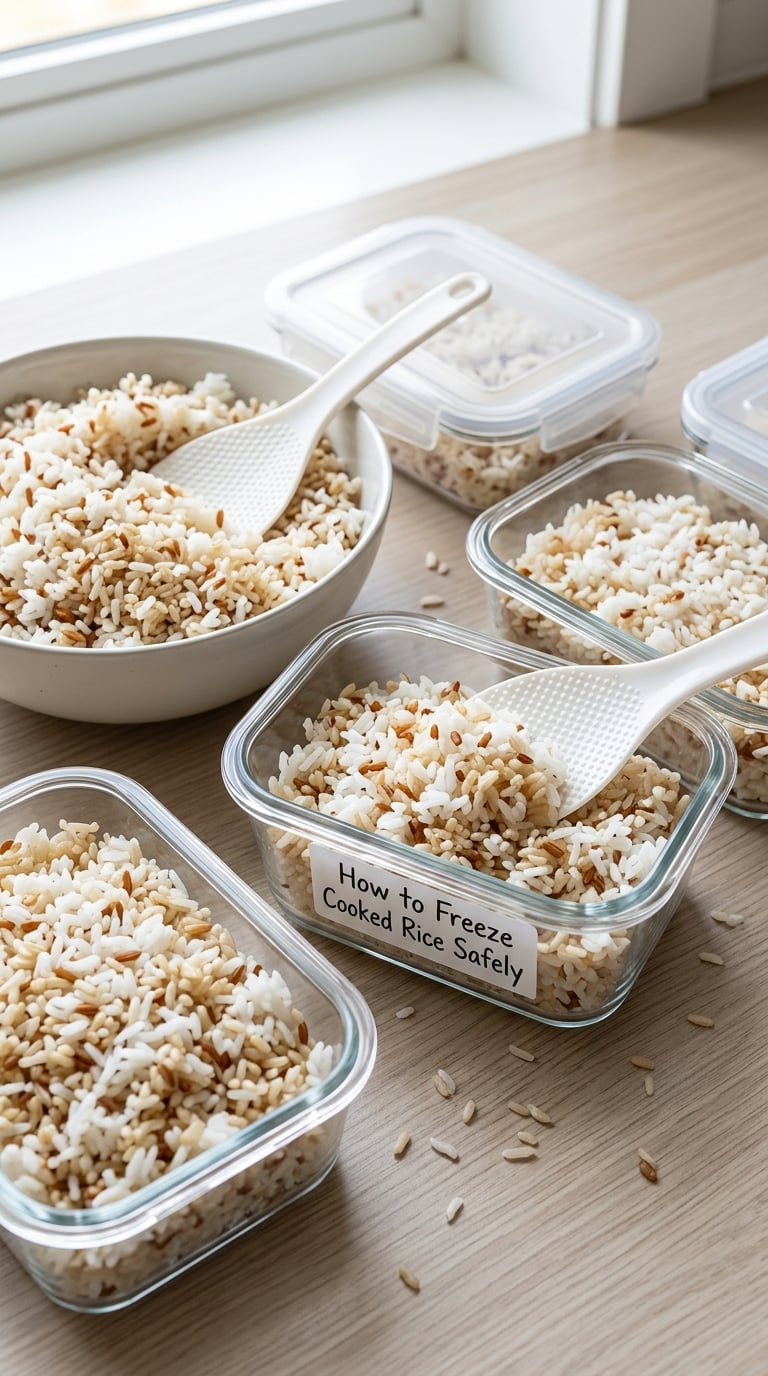
Freezing rice safely is a six-step job, and the clock starts the moment you drain the pot. Here is the method I use every week.
- Spread the rice out immediately. Turn it onto a rimmed baking sheet and break it up with a paddle or your fingers until it sits in a single loose layer about half an inch deep. A big mound stays warm in the middle for an hour, which is exactly the window bacteria like Bacillus cereus want.
- Chill it fast. Slide the sheet into the fridge for 20 to 30 minutes, or stand the pot in a bowl of ice water and stir for a few minutes if you cannot spare fridge space. You are aiming for rice that feels cool or barely warm to the touch, not rice at room temperature.
- Portion it. Scoop single servings of roughly half a cup to one cup into resealable freezer bags or airtight containers. Flat, thin portions freeze faster and thaw in minutes, and a freezer bag laid flat takes up about the same shelf space as a frozen loaf of bread.
- Push the air out and seal. Squeeze most of the air from the bag before you seal it, then press the seal along the full width. Air pockets are where ice crystals form, and ice crystals are what cause freezer burn. A rigid airtight container works just as well if you prefer glass to plastic.
- Label and date every portion. Write the rice type and the date on the bag with a marker, or use a strip of masking tape on the container. Frozen food loses its identity faster than you expect, and a date is the difference between using a portion and tossing it.
- Freeze it flat, then stack. Lay the bags or containers in a single layer on the freezer floor so they freeze solid quickly. After a couple of hours you can stack them however you like.
Rice cools faster in shallow layers than in a deep container, which is why the baking sheet step is not optional in my kitchen. For a big Sunday batch I cook a second pot of [Instant Pot rice](https://thesweetandsimplekitchen.com/how-to-cook-instant-pot-rice/) and freeze that while the first pot is portioning.
One caution about rice cookers: most of them have a keep-warm setting that holds cooked rice at somewhere around 140°F for hours, right in the range where Bacillus cereus spores multiply. If you are freezing rice, skip the warm setting and portion it out as soon as it is tender.
How Long Can Cooked Rice Stay Frozen?
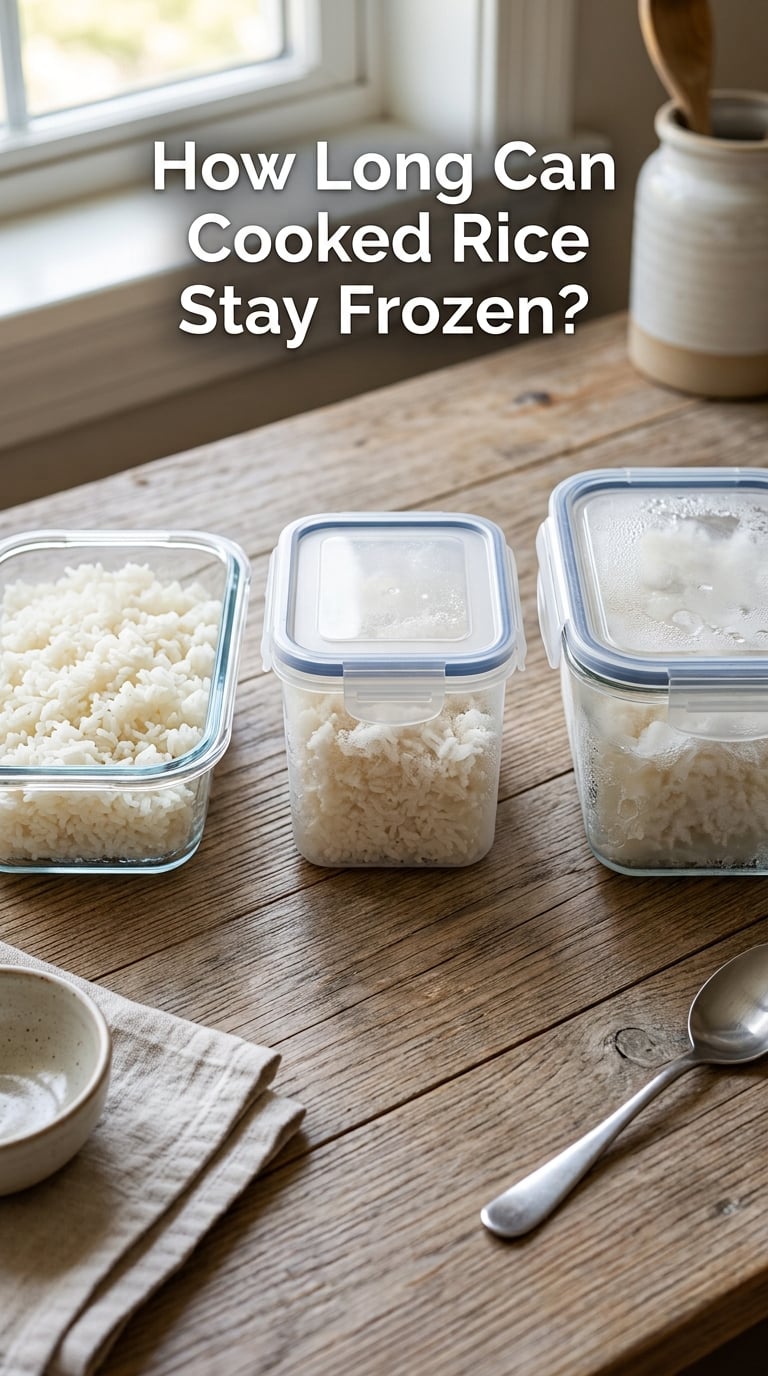
Cooked rice keeps 3 to 4 days in the fridge and 2 to 3 months in the freezer at its best. I treat the first month as the window where the texture is genuinely unchanged, and the following two months as perfectly good food that is a little drier.
| Storage method | How long it keeps | What to expect |
|---|---|---|
| Counter, uncovered | 2 hours at most | Discard after that. This is the danger zone, 40°F to 140°F |
| Counter, in a rice cooker on warm | Avoid | Holds rice in the danger zone for hours by design |
| Refrigerator, 40°F or below | 3 to 4 days | Edible but dries out and loses flavor fast |
| Freezer, airtight and dated | 2 to 3 months for best quality | Safe throughout; texture softens slightly after month one |
| Freezer, opened bag or loose foil | Weeks | Freezer burn, not dangerous, just unpleasant |
The USDA and the NHS both treat the freezer as a hold, not a sterilizer. Freezing stops what is already there from multiplying; it does not kill spores that formed while the rice was warm. That is why rice frozen after a long sit at room temperature is not magically rescued, and why rice that never lingered keeps best.
Brown rice holds up a little better than white, because its extra fiber and bran keep more moisture in the grain. Long-grain white, jasmine, and basmati are the ones most likely to taste dry on a second reheat. If you like the texture guidance for a specific variety, our [chicken and rice casserole ideas](https://thesweetandsimplekitchen.com/easy-chicken-and-rice-casserole-ideas/) are all built around leftover rice that has been cooled and stored the same way.
Freezing Cooked Rice by Serving Size
Single servings are the best use of your freezer space because you thaw only what you plan to eat. Half a cup of cooked rice is a realistic side portion for one adult, and one cup makes a decent bowl on its own.
For a family batch, portion straight from the baking sheet into a dozen bags rather than freezing one big block. A solid brick takes hours to thaw, thaws unevenly at the edges, and usually ends up reheated twice, which is the part you want to avoid.
Rice with vegetables freezes fine. Peas, carrots, broccoli, and green beans all hold their shape and texture, though softer vegetables like squash or potato can turn watery. The same goes for sauced rice: a soy- or teriyaki-coated batch freezes well, while a creamy or heavily buttered one tends to dry out, so add a splash of broth or water when you reheat.
Fried rice is the most forgiving of the lot, since it is already cooked twice and drier to begin with. Freeze it cooled and spread out, the same as plain rice, and it reheats like you just made it. I have used frozen fried rice for [one-pan shrimp dinners](https://thesweetandsimplekitchen.com/one-pan-shrimp-dinner-recipes-with-rice/) and for fried rice with leftover chicken, and it worked every time.
Can You Freeze Cooked Rice Safely in Single Portions?
Yes, and single portions are the method most home cooks end up preferring. A half-cup portion in a small airtight container, or a flat freezer bag, keeps the grain separated and thaws in about the time it takes to heat the sauce.
Use rigid containers if you are stacking things, since a soft bag can be crushed by whatever is above it. Squeeze the air out of a bag before sealing, press out any loose grains from the rim, and write the date on the bag with a marker that will still read after a few months in the cold.
Thaw one portion at a time in the fridge overnight, or move it straight to the pan. Once a portion is fully thawed and warmed through, that is the only reheating it gets, and anything still sitting out afterwards goes in the bin.
How to Thaw and Reheat Frozen Rice Safely
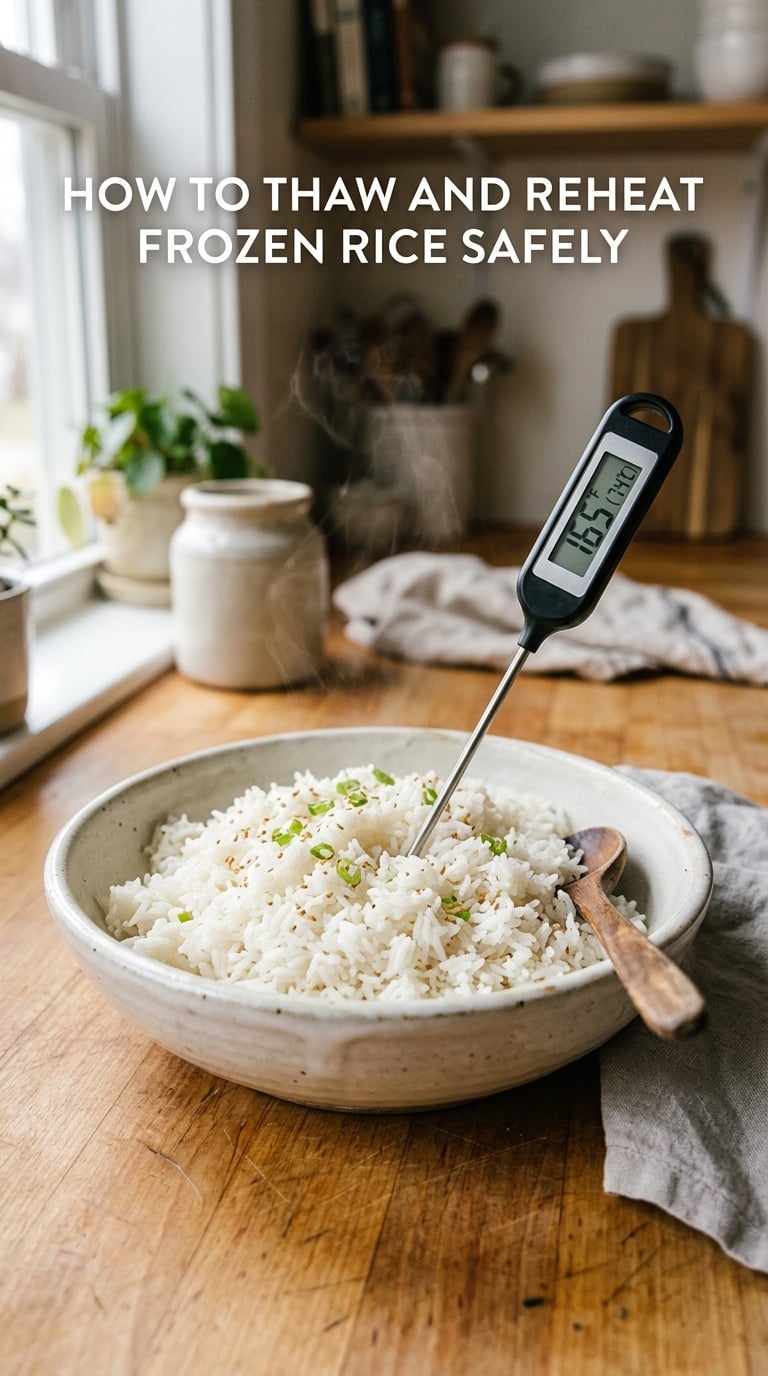
Reheat rice until it is steaming hot all the way through, which is 165°F (74°C) in the center. A kitchen thermometer is the only honest way to check, because the outside can feel hot while a cold core sits untouched.
| Method | Time | Moisture tip |
|---|---|---|
| Fridge overnight, then microwave | 8 to 12 hours, then 2 to 3 minutes | Sprinkle a tablespoon of water over the rice and cover |
| Microwave, from frozen | 4 to 6 minutes at half power, stirring halfway | Cover loosely, add two tablespoons of water |
| Stovetop, from frozen | 10 to 15 minutes over medium-low heat | Use broth instead of water, and press the grains flat |
| Steamer basket | 10 minutes once the water boils | No liquid needed; the steam does the work |
| Oven, covered dish | 20 minutes at 350°F (175°C) | Drizzle with a little water, cover tightly with foil |
Frozen rice reheated straight from the freezer is fine for the microwave and the pan. For an oven dish or a layered casserole, thaw in the fridge first so the center heats at the same rate as the edges.
Add moisture, always. A tablespoon of water or broth per cup of rice does more for the texture than anything else in this guide, because freezing pushes water out of the starch and the grain needs something to drink. Stir once or twice while reheating, and stop the moment the center hits 165°F so you do not dry it out. Leftover reheated rice goes back in the fridge for one more reheating at most, and then it is discarded.
Common Mistakes When Freezing Cooked Rice
Refrigerating it for two days first. Fridge storage is a countdown clock, not a holding pattern. If you are going to freeze rice, freeze it the same day you cooked it. If the rice already spent two days in the fridge, it is still edible, but the clock is running.
Freezing it while still warm. A warm portion freezes slowly at the center, and the hours it spends in the danger zone are exactly the hours spores need. Cool first, then freeze.
Sealing containers with wet rice inside or air trapped in the bag. Loose water and trapped air both turn into ice crystals, and crystals are what cause freezer burn. Cool the rice fully and squeeze the bag nearly flat before sealing.
Thawing on the counter. Rice that moves from freezer to room temperature spends its thaw time right in the 40°F to 140°F band. Thaw in the fridge, or skip the thaw and go straight into a pan or the microwave.
Overheating it. Rice reheated to piping hot and kept there for ten minutes turns dry and crumbly. Bring it to 165°F (74°C), cover it, and take it off the heat.
Freezing a block and then refreezing it twice. Each freeze-thaw cycle costs texture. Refreezing rice is only acceptable if it stayed cold the whole time, and it is never acceptable for rice that sat out on the counter at any point.
Frequently Asked Questions
Can you freeze cooked rice safely?
Yes. Freezing cooked rice is one of the safest ways to store it, and the freezer is actually gentler on rice than the fridge. Freezing halts the growth of heat-resistant Bacillus cereus spores that survive cooking. Cool your rice fast, seal it airtight, and freeze it within about an hour for the best texture and the longest shelf life.
How long does cooked rice last in the freezer?
Cooked rice keeps its best texture for about 1 month in the freezer and stays safe to eat for 2 to 3 months when it is sealed airtight and dated. In the fridge it lasts only 3 to 4 days. If the portion is dry or pale, that is freezer burn and a quality issue rather than a safety one.
Should cooked rice cool before freezing?
Yes, and quickly. Spread it in a thin layer on a baking sheet and chill it in the fridge for 20 to 30 minutes, or stand the pot in ice water. Freezing it while warm leaves the center in the 40F to 140F danger zone for hours, which is where Bacillus cereus spores multiply fastest.
What is the best way to thaw frozen rice?
Move the portion to the fridge and thaw it overnight for the least change in texture. For a quicker option, put the sealed portion straight into a skillet with a splash of broth or straight into the microwave, since frozen rice reheats safely from frozen. Thawing on the counter is the one method to avoid.
Can you reheat frozen rice from the freezer?
Yes. Put the frozen portion in a microwave-safe dish with a couple of tablespoons of water, cover loosely, and heat on half power for 4 to 6 minutes, stirring halfway. On the stovetop, a splash of broth and a lid over medium-low heat takes 10 to 15 minutes. Heat only until the center reaches 165F (74C).
Why does frozen rice become dry or sticky?
Dry rice is mostly a moisture problem: freezing draws water out of the starch, so add a tablespoon of water or broth per cup when reheating and keep it covered. Sticky or clumpy rice usually means you reheated it too hard or too long, or reheated it more than once. Gentle heat and one reheating only fixes both.
Conclusion
Yes, you can freeze cooked rice safely, and the first hour after cooking is the whole job. Spread the rice thin, chill it fast, portion it into single servings, squeeze out the air, label the date, and lay it flat in the freezer.
Eat it within a month for the best bite, treat three months as the outer limit, and reheat it once to 165°F (74°C) with a splash of water or broth. On your next batch, skip the rice cooker keep-warm setting and portion the rice while it is still warm, because that single change is what makes the rest of the method work. If you are freezing other leftovers alongside the rice, our [cream cheese freezing guide](https://thesweetandsimplekitchen.com/can-you-freeze-cream-cheese-safely/) covers the same cool-fast rules for a different ingredient.