
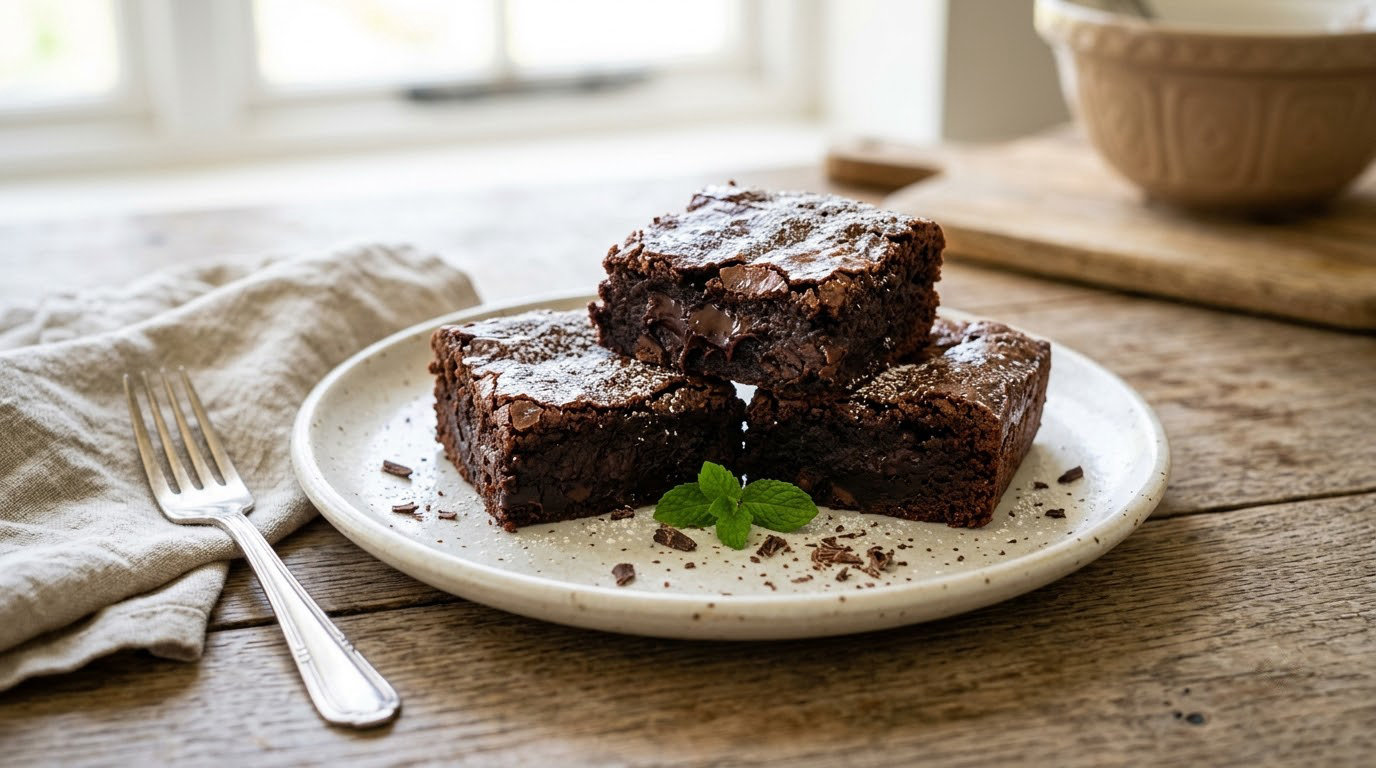
The short answer: let brownies cool completely, wrap the whole pan airtight or lay cut squares in one layer in a sealed container, then hold them at room temperature for up to three days, in the fridge for five to seven, or in the freezer for three months. Air is what turns a fudgy center into a dry crumb, so sealing matters more than anything else.
I bake a 9×13 pan most weekends, and the difference between day two chewy and day two crumbly is almost always how the pan got covered. Cool brownies left sitting next to the sink lose moisture overnight. The same brownies wrapped while still warm will sweat inside the plastic and go gummy around the edges.
Table of Contents
Quick Answer: How to Store Brownies So They Stay Fudgy
- Cool the pan on a rack until the center no longer feels warm, about two hours.
- Leave the slab uncut and press plastic wrap directly onto the surface, or cut and stack squares in a single layer.
- Seal with foil or a lid so no air can reach the crumb.
- Keep at room temperature for three to four days, refrigerate for five to seven, or freeze for up to three months.
- Thaw frozen brownies in the fridge, still wrapped, for eight to twelve hours.
If you are starting from scratch rather than storing a batch, my fudgy brownie recipe roundup is the place to pick the bake you will store. Texture on day three is decided on day one, so the bake itself matters as much as the wrapping.
How to Store Brownies So They Stay Fudgy
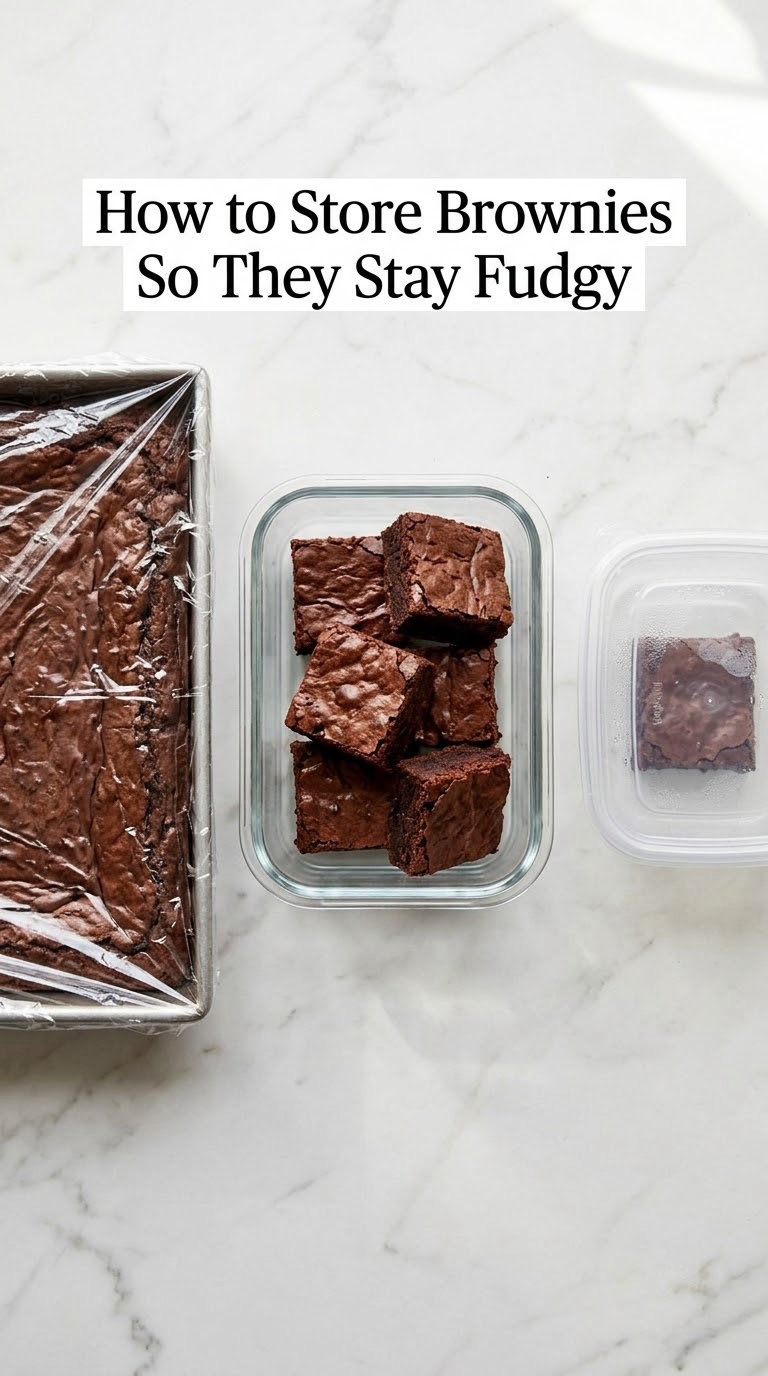
Brownies are unusual cakes. There is very little water in the batter relative to a sponge cake, so there is no built-in reservoir of steam to keep the crumb soft. Once moisture starts leaving, nothing puts it back on the counter.
Three things push that moisture out: cut edges expose more surface area, warm brownies wrapped tightly trap steam that then condenses, and moving air does its slow work on everything. Storage is just the removal of those three problems.
Wait until the pan is completely cool before wrapping, even if it costs you an hour of waiting. Warm brownies wrapped in plastic wrap will be wet and dense the next day, which is the soggy texture most people are actually trying to avoid.
Which Storage Method Is Best?
For a plain brownie with no perishable toppings, room temperature storage in an airtight container wins on flavor and texture. The crumb stays soft and the chocolate tastes like it did straight from the oven.
Refrigeration extends the calendar, but cold slows the softening of the ganache-like interior and firms the crumb. Most home bakers notice brownies turn denser and a little drier after a few days in the fridge. That said, refrigeration is the right call for cream cheese frosting, whipped cream, custard, or cheesecake layers, and it works if you take brownies out of the fridge 20 minutes before eating so they lose the chill.
Freezing is the only real answer for more than a week. It holds texture remarkably well when the brownies are sealed properly. If you need to bake two weeks ahead for a party, freeze them on the day they cool.
How Long Do Brownies Last at Room Temperature, in the Fridge, and in the Freezer?
| Storage method | How long they last | Texture you get | Best for |
|---|---|---|---|
| Room temperature, uncut slab, airtight | 3 to 4 days | Soft, fudgy, best chew | A few days of snacking |
| Room temperature, cut squares, airtight | 1 to 3 days | Good, edges dry first | Brownies sliced to order |
| Refrigerator, airtight | 5 to 7 days | Firmer, denser, less fudgy | Perishable toppings |
| Freezer, airtight, sliced | Up to 3 months | Close to fresh once thawed | Baking ahead, gifting, lunchboxes |
If you have ever wondered whether brownies left out overnight are safe, plain unfrosted brownies are shelf-stable; the risk comes from dairy-heavy toppings, not the brownie itself.
How to Wrap Brownies So They Stay Fudgy and Moist
For an uncut slab, press plastic wrap directly against the surface of the brownies, pushing out the air pockets. Then wrap the whole pan in foil. The double seal is not paranoia; forum bakers consistently report it buys another two days of soft texture.
For cut squares, line an airtight container with parchment or wax paper so the pieces do not stick to the sides, then lay them in a single layer rather than a stack. If you must stack, put a sheet of parchment between layers.
Wrap individual portions when you only eat one at a time. People on baking forums say individually wrapped squares stay soft noticeably longer than a whole wrapped block, because each cut face has its own seal.
Glass containers hold smells least and look best, but the seal on a snap-lock plastic lid is usually tighter. Metal tins are fine for counter storage and terrible for anything acidic. Skip bags for counter storage; they are for the freezer.
How to Store Frosted, Filled, and Layered Brownies
Cream cheese frosting, whipped cream, custard, and cheesecake layers are perishable. Keep them refrigerated at or below 40°F (4°C) and use them within three to four days, the same window you would give a frosted cake.
Ganache and buttercream are more forgiving. They can sit at room temperature for a day or two, and both freeze well enough for about a month, though ganache can weep a little on thawing. Cover frosting with a sheet of plastic wrap pressed lightly on the surface so it cannot take on fridge odors.
Nuts, chocolate chips, and marshmallows are fine at room temperature in an airtight container. Skip marshmallow-topped brownies for the freezer; they turn sticky and collapse when thawed.
Layered or filled brownies should be cut with a hot, clean knife right before eating if you can. Every extra cut surface is another place for moisture to escape.
Step-by-Step: How to Store Brownies So They Stay Fudgy
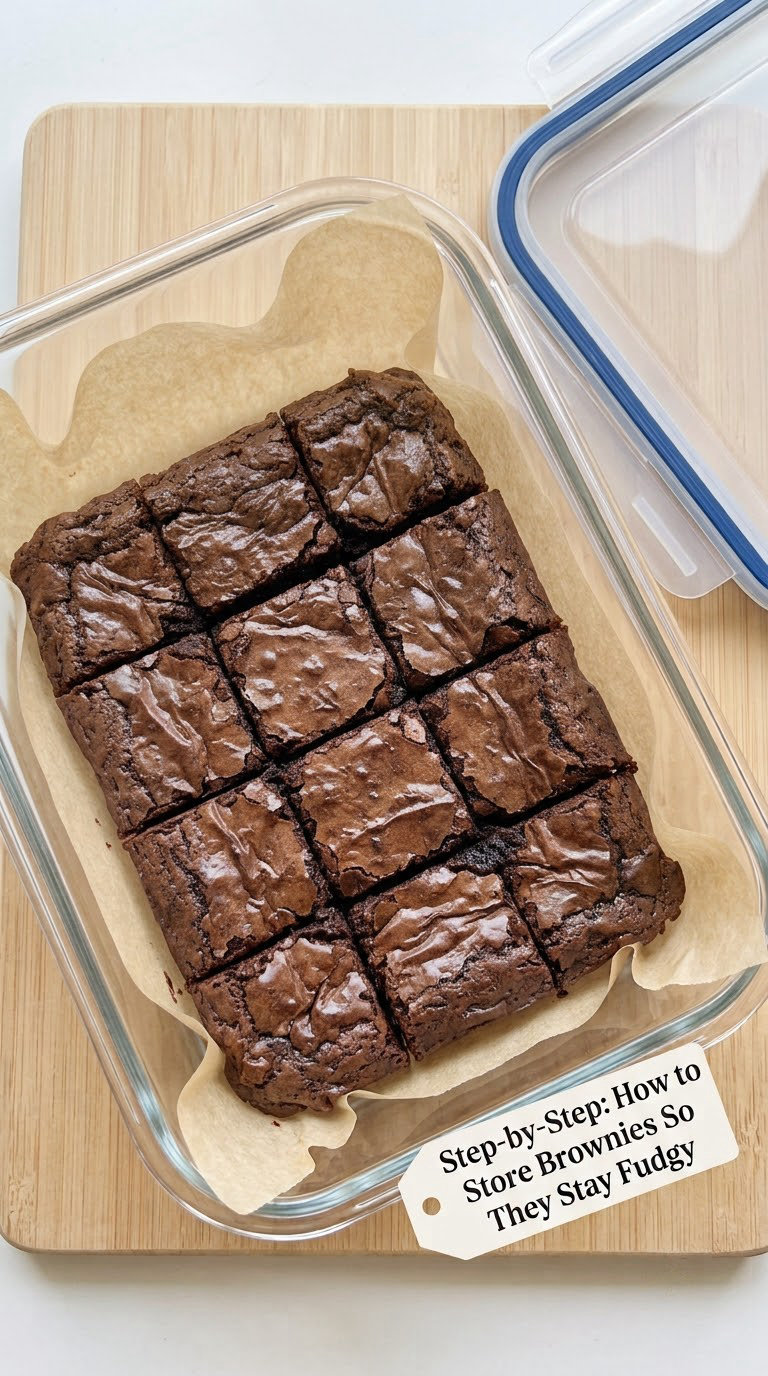
- Cool completely. Leave the pan on a wire rack for at least two hours. The bottom of the slab should feel room temperature, not just the top.
- Decide cut or uncut. Store uncut if you want maximum life; cut only what you plan to eat in the next day or two.
- Wrap against the surface. Press plastic wrap directly onto the brownies, or onto the cut tops of squares in the container.
- Seal it. Add foil over the pan, or close the container lid, or press out the air in a zip-top freezer bag.
- Label with the date. A scrap of masking tape on the container saves you from guessing at day five.
- Store at the right temperature. Counter for three to four days, fridge for five to seven, freezer for three months.
- Warm before serving. Let fridge-stored brownies sit 20 minutes, or give frozen ones eight to twelve hours in the fridge still sealed.
For a batch you will not finish quickly, freezing portion by portion beats freezing the whole pan. You can pull out exactly what you need, and you can thaw it in the fridge overnight without planning ahead.
A single slice of bread in the container is an old trick that still works. The bread gives up its moisture to the drier brownie, and bakers report an extra day or two of soft crumb. It is not a substitute for sealing, only a bonus.
How to Thaw Frozen Brownies Without Making Them Soggy
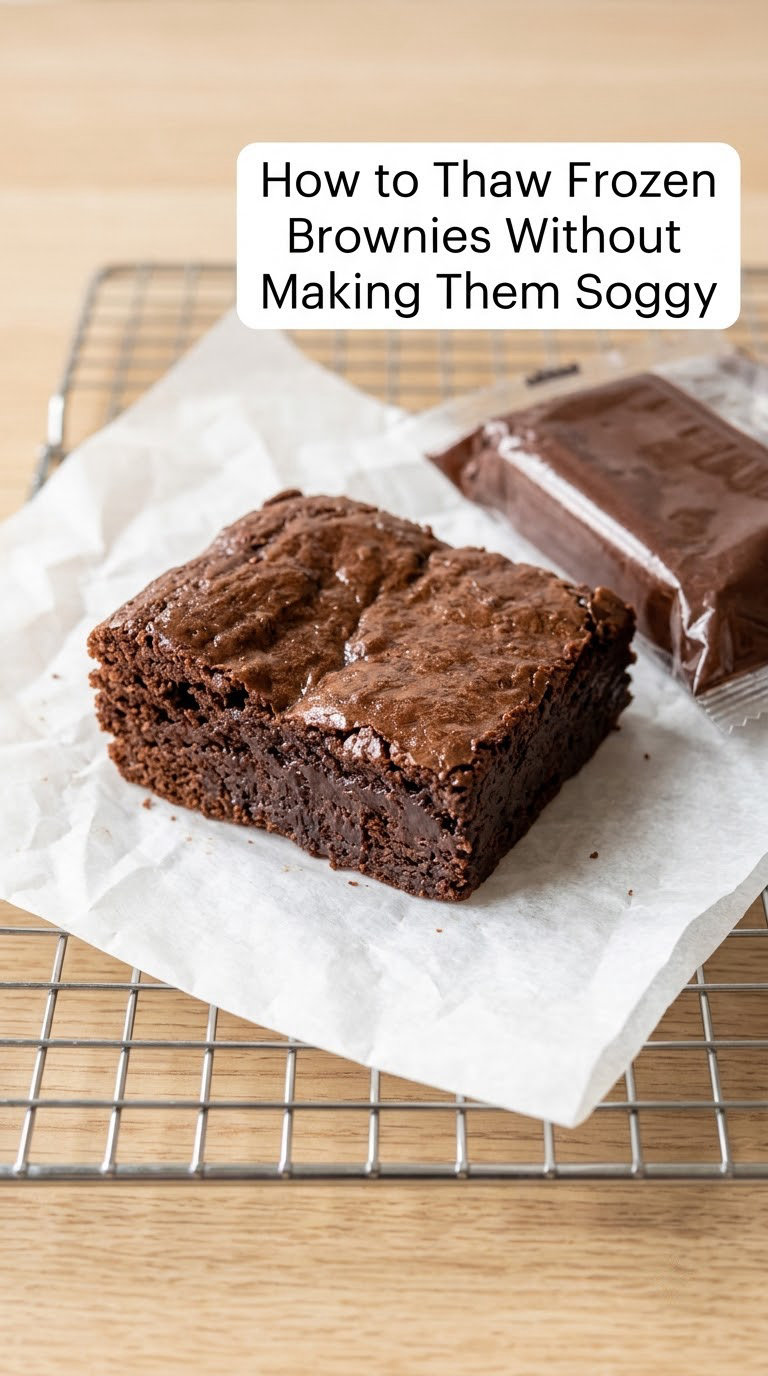
Thawing is where most frozen brownies get ruined. Moving them straight to the counter lets condensation form on the surface, and that water turns the top tacky.
Move the container from the freezer to the fridge, still sealed, and leave it eight to twelve hours. The brownie comes through slowly enough that no loose water forms on the wrapper.
If you want to eat one in under an hour, set it on a wire rack, leave the wrap loosely cracked open, and let the moisture escape instead of pooling. A 10 to 15 second low-power microwave blast revives a portion that feels dry, but it makes the crumb cakier, so use it as a rescue rather than the plan.
Never refreeze a thawed brownie if you can avoid it. The second freeze-thaw cycle is where texture really falls apart, and the risk goes up each time.
Common Mistakes That Dry Out or Ruin Brownies
- Wrapping while warm. Trapped steam condenses and leaves wet, gummy patches. Fix: cool fully first.
- Stacking cut squares without parchment. The top square sticks and the bottom one steams. Fix: parchment between layers, or a single layer.
- Leaving cut edges exposed. This is why a sliced pan goes dry in two days while the covered half keeps its texture for four. Fix: seal every cut face.
- Refrigerating without a reason. Plain brownies do not need it, and a week in the fridge leaves them firm. Fix: counter for short storage, freezer for long.
- Freezing frosted or marshmallow-topped brownies. Frostings crack or weep and marshmallows collapse. Fix: freeze plain, frost after thawing.
- Repeated thawing. Every cycle dries the crumb a little more. Fix: thaw only what you will eat in one sitting.
- Covered plate instead of a container. A plate traps no moisture and lets the edges go hard overnight. Fix: airtight lid, foil, or wrap.
Two smaller habits help too. Store brownies away from the stove and the dishwasher, since heat and steam defeat any seal, and if you are gifting them, wrap each piece rather than boxing the whole pan.
If you bake for the holidays or a party, my make-ahead dessert ideas cover the other desserts that freeze just as well, and the dessert recipe roundup is a good place to plan a full spread around your brownies.
Frequently Asked Questions
Do brownies need to be refrigerated to stay fresh?
Plain brownies with no dairy-based topping do not need refrigeration. Stored airtight at room temperature they stay fudgy for three to four days, and their texture is better than refrigerated brownies, which tend to firm up after a few days. Refrigerate only when the brownie has cream cheese frosting, whipped cream, custard, or cheesecake, and eat those within three to four days.
Can I freeze brownies with frosting or toppings?
Freeze the brownie plain whenever you can, then frost or top it after it thaws. Ganache and buttercream hold up reasonably well for about a month, though ganache may weep slightly. Cream cheese frosting travels badly, becoming grainy when frozen. Skip frozen storage entirely for marshmallow-topped brownies, which turn sticky and collapse once thawed.
How do I keep brownies soft overnight without covering them too tightly?
You do not need to leave them uncovered, and a plate will not do it. If brownies must sit on the counter overnight, press plastic wrap directly onto the surface and cover loosely with foil so air cannot reach the crumb while any residual warmth can still escape. Fully airtight sealing works too, provided the brownies are completely cool before you wrap them.
How do I revive brownies that have become slightly dry?
Warm one portion for 10 to 15 seconds on low power in the microwave and eat it straight away. For a whole pan, sit the wrapped tray in a 300°F (150°C) oven for five minutes. Laying a slice of bread on top of dry brownies for 15 minutes before reheating draws moisture back into the crumb. Deep dryness cannot be fully reversed, only softened.
Should I store brownies in plastic wrap, foil, or an airtight container?
Use plastic wrap against the brownies first, because it conforms to every cut edge and presses air out. Then use foil, a snap-lock lid, or a sealed zip-top bag for the outer layer. One method alone works, but double sealing is what most bakers report keeps the crumb fudgy longest. Avoid plain bowls, plates, and uncovered pans, which let moisture out all night.
Can I refreeze brownies after taking them out of the freezer?
You can, and it is safe, but texture declines with every thaw and refreeze cycle. Once thawed in the fridge, brownies lose the dense, fudgy interior that freezing originally preserved. If you only need part of a batch, take out one or two portions and leave the rest sealed in the freezer until the next time rather than thawing the whole container.
Conclusion
Cool the brownies fully, seal them against every cut surface, and choose the temperature that matches your timeline. Three to four days on the counter, a week in the fridge, three months in the freezer.
If you want brownies that still taste fudgy in 2026, freeze them the day they cool and thaw them slowly in the fridge. Do that one thing before the season’s baking starts and it will save every batch that follows.