
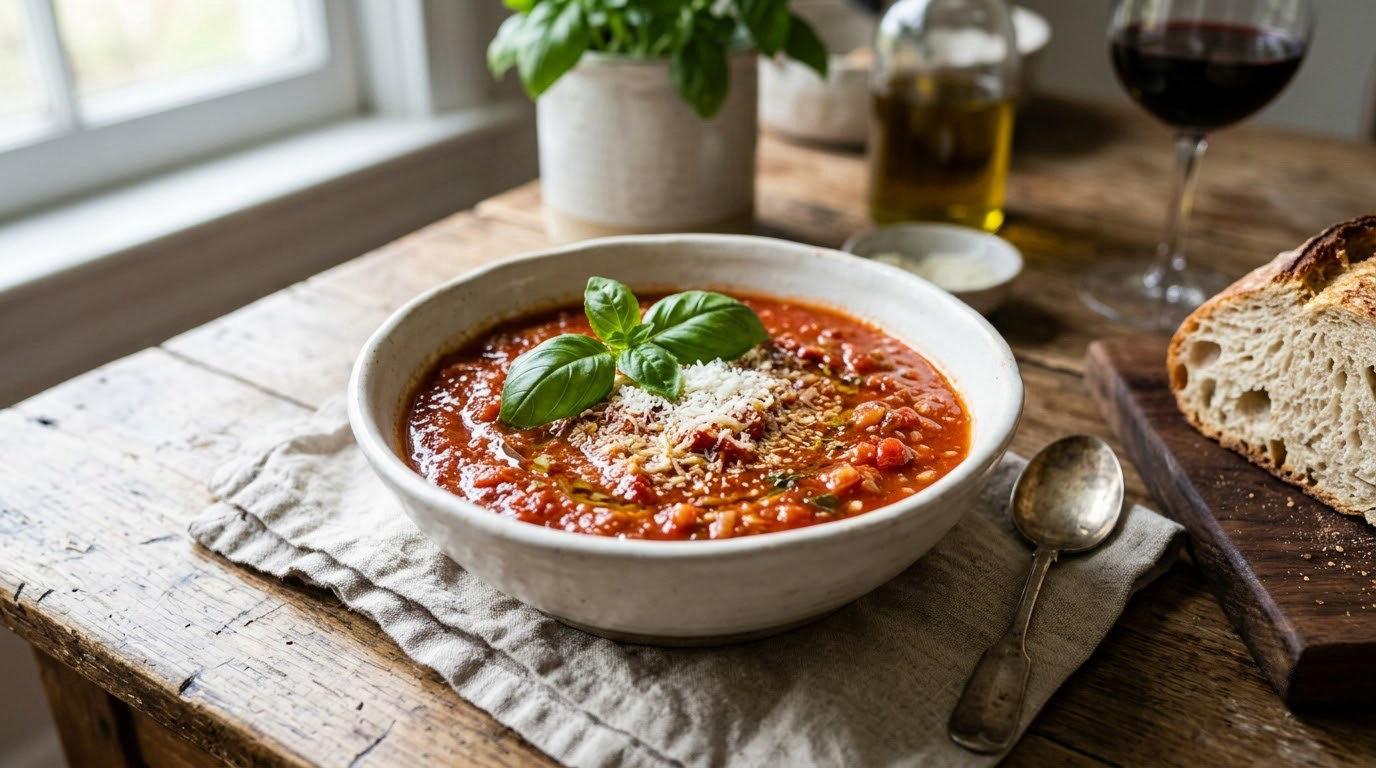
An easy homemade marinara sauce recipe takes canned tomatoes, olive oil, garlic, onion and a pinch of oregano, then cooks down on the stove in about 30 minutes with no chopping of fresh tomatoes and no special technique. You get a bright, glossy sauce that tastes fresher than anything from the jar, and it freezes well for the weeks ahead.
I make this most Sunday evenings, which is when tomato sauce fits into the week best. It takes one pan, one wooden spoon and about the same attention as boiling pasta. I updated this recipe for 2026 after making it through a late-summer garden glut, when the flavor was best and I had too much of it.
Table of Contents
Why This Recipe Works
It works because the method is short and the ingredients are forgiving. Five things carry the whole thing:
- Balanced acidity and sweetness. Tomato paste adds body, and a small amount of sugar rounds off the sharp edge without making the sauce taste sweet.
- A 20-minute simmer that still counts. Enough time for the flavors to marry, short enough for a Tuesday.
- Smooth texture on demand. Blend it for a glossy restaurant-style sauce, or leave it alone for a rustic, chunky one.
- Pantry-only ingredients. Every item lives in a cupboard or the fridge door, so this works in February.
- One base sauce, dozens of meals. The same batch becomes pizza sauce, meatball subs, baked pasta and dip.
Ingredients
This recipe makes roughly 3 cups of sauce, enough for about 8 ounces of pasta or a 12-inch pizza.
- 2 tablespoons extra virgin olive oil
- 1 small yellow onion, finely diced (about 1 cup)
- 3 garlic cloves, minced
- 2 tablespoons tomato paste
- 1 (28-ounce) can crushed tomatoes, with their juice
- 1 teaspoon dried oregano
- 1/2 teaspoon dried basil
- 1 bay leaf
- 1 teaspoon kosher salt, plus more to taste
- 1/4 teaspoon black pepper
- 1/2 teaspoon sugar (optional)
- Fresh basil leaves and a drizzle of olive oil, for serving (optional)
The crushed tomatoes are the dish. San Marzano tomatoes, grown near Naples, give a sweeter, less acidic sauce and are worth seeking out, but ordinary canned crushed tomatoes make a perfectly good weeknight version.
The sauce as written is already dairy-free, gluten-free and vegetarian, so nothing needs changing for those diets. If you have no fresh onion, use 1 tablespoon dried onion flakes plus 2 tablespoons water. Garlic powder can replace the fresh garlic at 1 teaspoon.
Equipment
Only three things actually change the result:
- A 10-inch or 12-inch sauté pan. A wide surface lets liquid evaporate. A tall pot steams the sauce instead of reducing it, and the flavor never concentrates.
- A wooden spoon. It scrapes the bottom cleanly and lets you stir without scratching a nonstick surface.
- A blender or immersion blender. Optional, and only if you want a smooth sauce.
How to Make Easy Homemade Marinara Sauce
Sauté the Aromatics
- Warm 2 tablespoons olive oil in the sauté pan over medium heat for 30 seconds, until the oil shimmers but does not smoke.
- Add the diced onion and cook for 5 to 7 minutes, stirring every minute or so, until it turns translucent and soft at the edges. Do not wait for browning.
- Add the minced garlic and stir for 30 to 45 seconds, just until it smells fragrant. If the garlic turns golden, it will taste bitter in the finished sauce.
Simmer the Easy Homemade Marinara Sauce
- Add the tomato paste and stir it into the oil and onion for about 1 minute, until the pan looks brick red and the paste darkens slightly. This blooming step is what gives the sauce depth without a long cook.
- Pour in the crushed tomatoes, then add the oregano, dried basil, bay leaf, salt and pepper. Stir once to combine.
- Bring the sauce to a light boil over medium heat, about 3 minutes, stirring so nothing catches on the bottom.
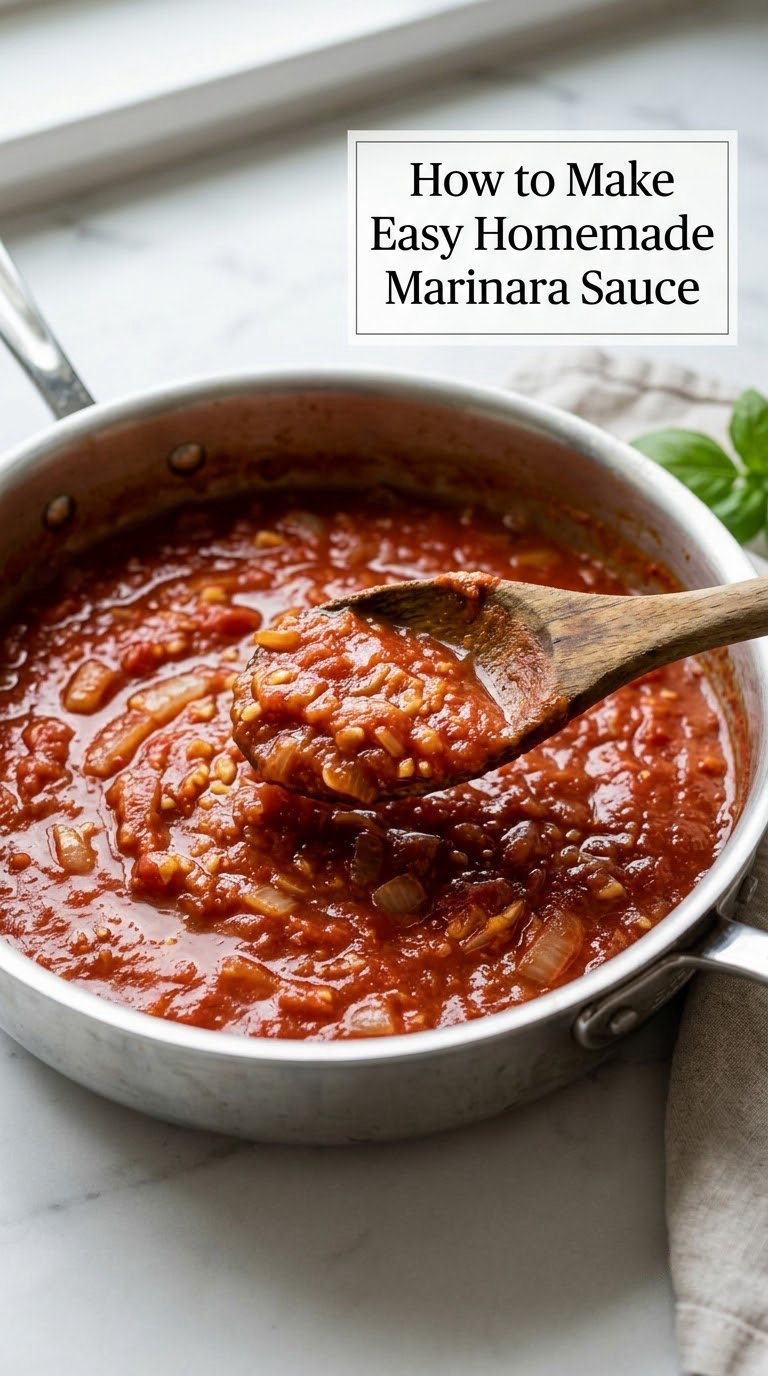
- Lower the heat to the lowest setting your stove offers. Simmer uncovered for 15 to 20 minutes, stirring every 3 or 4 minutes, until the sauce thickens, darkens a shade and leaves a clean trail behind the spoon.
- Taste. Add the sugar if the sauce tastes sharp, and more salt if it tastes flat. Remove the bay leaf.
- For a smooth sauce, blend it in the pan with an immersion blender, or transfer it to a countertop blender and pulse. Leave it chunky if you like texture.
The sauce is done when it looks glossy rather than watery and coats the back of a spoon. For a thinner sauce, add a splash of water. For a thicker one, simmer another 5 minutes.
Tips for Success
- Keep the heat low. A lazy bubble at the edges is right. Real boiling boils away flavor and dries the bottom of the pan.
- Stir more often than feels necessary. Once every 3 or 4 minutes prevents scorching, the single most common failure with this recipe.
- Balance acidity before serving, not while cooking. Add the sugar at the end so you can taste it. If the sauce is still sharp, stir in another half teaspoon and give it a minute.
- Do not add the sugar at the start. It dissolves into the sauce and dulls the tomato flavor over a long simmer.
- Add dried herbs early, fresh herbs late. Dried oregano survives the simmer. Torn fresh basil added at the end keeps its color and aroma.
- Canned versus fresh. Canned tomatoes are denser and sweeter, which is why they work so well here. Fresh tomatoes are fine but looser and more acidic; see the variations below.
Variations
- Smooth and silky. Blend for a full minute after simmering, until no lumps remain at all. This is the version most people mean by restaurant sauce.
- Rustic and chunky. Skip the blender entirely, and crush half the canned tomatoes by hand before adding them for irregular texture.
- Fresh herb version. Skip the dried basil, simmer as written, then stir in a handful of torn basil and a drizzle of olive oil once the sauce comes off the heat.
- Roasted red pepper version. Roast a red pepper and a head of garlic under the broiler until charred, peel the skins, blend both into the sauce at the blending step. Sweet, smoky, no added sugar.
- Lightly spicy version. Add 1/2 teaspoon red pepper flakes with the dried oregano, or split a hot chili and toss it in whole, then remove before serving.
Storage, Make-Ahead and Reheating
Keep the sauce in an airtight container in the refrigerator for up to 4 days. Let it cool to room temperature before you lid it, and do not leave it on the counter for more than 2 hours.
For the freezer, cool the sauce fully, spoon it into a freezer-safe bag or container, press out the air and freeze flat. Frozen marinara keeps for up to 6 months, and double the batch every time you make it. Many home cooks freeze it in single portions in a silicone ice cube tray, then move the frozen cubes into a bag.
Reheat on the stove over low heat with a splash of water, stirring, until it steams. Microwaving works too but dries the sauce out faster.
Make-ahead tip: this sauce tastes better the next day. Hold a jar in the back of the fridge and use it within a week.
What to Serve With It
- Spaghetti or rigatoni. Toss the cooked pasta with the sauce and a ladle of the pasta water, then finish with Parmesan and torn basil.
- Chicken parmesan. Top breaded baked chicken with sauce and mozzarella, and bake until the cheese bubbles and the thickest piece of chicken reaches 165°F (74°C).
- Meatballs and meatball subs. Simmer store-bought or homemade meatballs in the sauce for 15 minutes. For a full dinner idea, see 7 easy recipes with ground beef and tomato sauce.
- Pizza. Use it uncooked on dough before the toppings go on. Start with 10 easy pizza dough recipes for homemade pizza night if you want to build the crust yourself.
- Garlic bread, mozzarella sticks and zucchini boats. All three only need the sauce warm, not hot, which makes it a reliable party dip.
Frequently Asked Questions
Can I make marinara sauce without tomato paste?
Yes, and the sauce will still taste good. Tomato paste contributes body and a deeper tomato flavor, so without it your sauce will be thinner and brighter. Two easy substitutes: reduce the can of crushed tomatoes by 5 extra minutes on the simmer, or add 2 tablespoons of tomato puree. Skip it entirely and the result is closer to a fast pasta sauce than a slow marinara.
Why is my homemade marinara sauce too watery?
Most often the pot was too deep and too narrow. A wide 10 or 12 inch pan lets water evaporate, while a tall saucepan traps steam and the sauce never reduces. Give a thin sauce another 10 minutes of simmer, stirring often, and check the heat is low enough to avoid scorching the bottom.
Should I peel the tomatoes before making marinara sauce?
Not if you are using canned tomatoes, because they are already peeled and the cooking time will soften any remaining skins. If you are cooking fresh tomatoes for this sauce, blending them or grating them raw removes the skins entirely without the fiddly job of blanching and peeling. For a chunky sauce, just leave the skins on and let the simmer do the work.
Can I use fresh tomatoes instead of canned tomatoes?
You can. Use roughly 2 pounds of ripe fresh tomatoes for every 28 ounce can, which is about 5 or 6 large tomatoes. Grate them on the coarse side of a box grater, skip the skinning, and add them to the pan with a little extra cooking time. Fresh tomatoes are looser and sharper, so add the sugar at the end and simmer closer to 30 minutes.
How do I keep marinara sauce from burning while it simmers?
Drop the heat to the lowest setting and stir every 3 to 4 minutes. A lazy simmer, where only occasional bubbles rise, is what you want. Stirring more often than feels necessary is the whole trick. Stirring the paste and onion into the oil for a full minute at the start also helps, because that is where scorching usually begins.
Is homemade marinara sauce better than jarred sauce?
It is fresher, and the difference shows most in the aroma and the amount of sugar. Jarred sauces are often sweetened heavily to cover cooked-down flavor, while this version tastes mostly of tomatoes and herbs. The tradeoff is time and freezer space. Many home cooks do both, using the jarred sauce for weeknight speed and this one for weekend cooking and freezing.
Conclusion
Start with the easy homemade marinara sauce recipe as written this week. The ingredient list is short, the whole thing takes half an hour, and you end up with about 3 cups you can turn into a week of dinners.
Make it once plain to learn how it should taste, then start playing. A little more sugar, some roasted garlic, a handful of fresh basil at the end. Once you have the base down, it stops being a recipe and starts being something you make from memory, which is the point of this easy homemade marinara sauce recipe.