
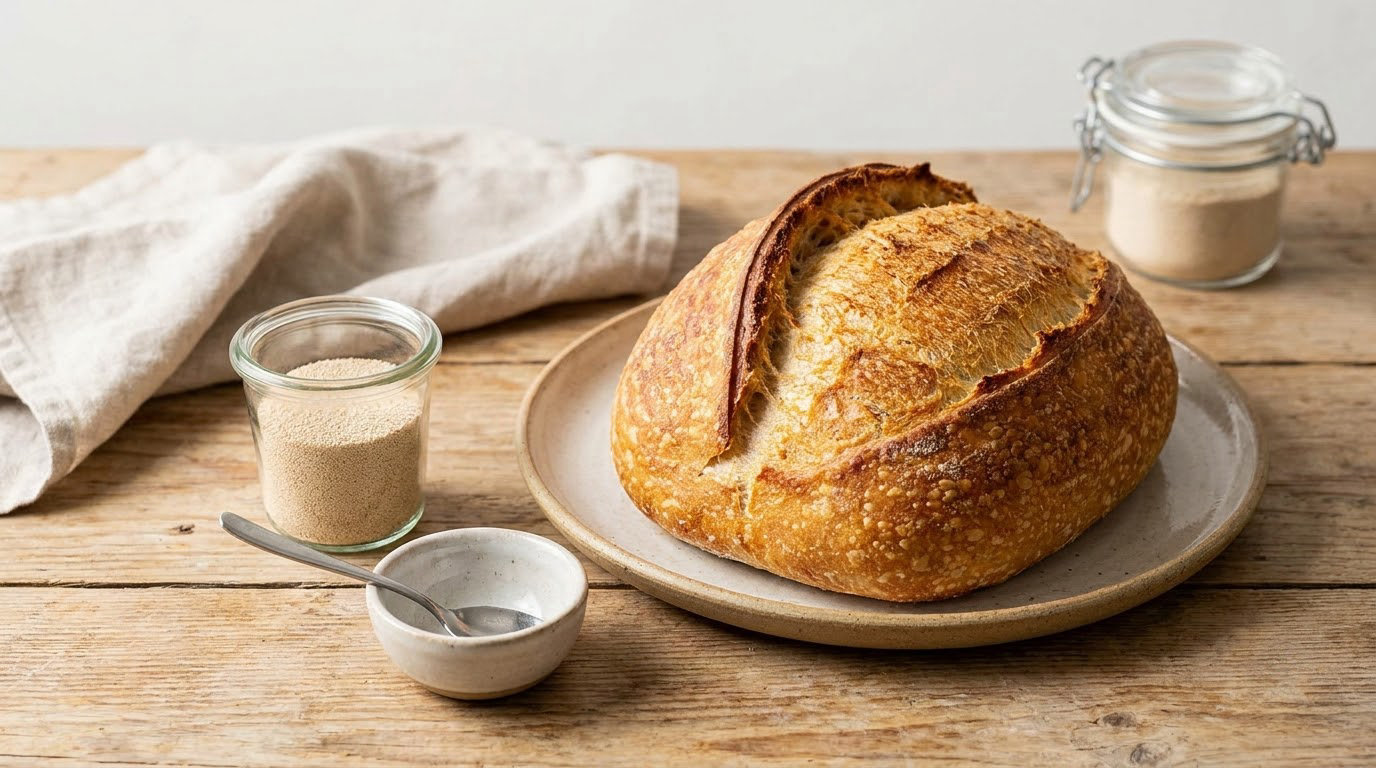
Short answer: keep yeast dry, airtight and cold. Reseal the packet, or decant it into a tight glass jar, write the date on the label, then refrigerate for roughly four months or freeze for six months or longer. An unopened foil packet can sit in a cool, dark pantry for about two years.
Yeast is a living fungus that goes dormant when it is dry and cold. Moisture wakes it up, warmth speeds it past the point of usefulness, and air slowly strips away what keeps the cells viable. That is the whole idea behind every storage method below.
I go through a pound or more of yeast a year, and the single change that saved me the most money was stopping the half-used paper packet from sitting open on the counter. If you have ever torn open a roll of foil wrap looking for scissors, you already know how this goes.
Fresh doughnuts are a good way to use yeast fast, so if you want something to bake this weekend, my perfect yeast doughnuts recipe is the place to start.
Table of Contents
How to Store Yeast So It Stays Active: Quick Guide
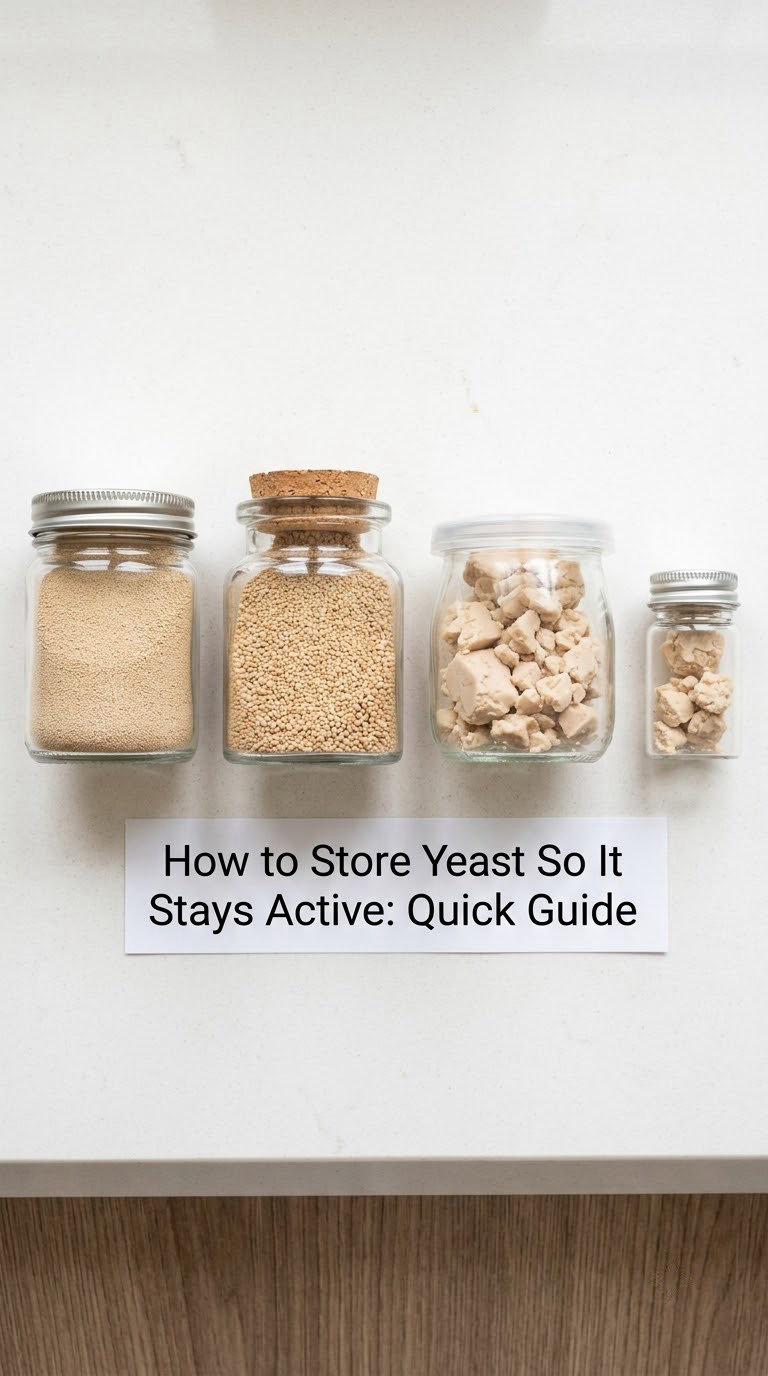
The rule is simple. Unopened yeast stays in the packet in a cool, dark place. Once opened, it moves into something airtight and something cold, and the colder you make it, the longer it lasts.
| Yeast type | Container | Where to keep it | Longest practical storage |
|---|---|---|---|
| Instant yeast | Sealed packet or glass jar | Pantry, then fridge or freezer after opening | About 2 years sealed; 4 months in the fridge; 6 months or more in the freezer once opened |
| Active dry yeast | Resealed foil bag with a clip, or glass jar | Fridge or freezer after opening | About 2 years sealed; 4 months in the fridge; 6 months or more in the freezer once opened |
| Fresh or compressed yeast | Original wrapping, airtight | Refrigerator only | About 2 weeks, or follow the use-by date |
| Cake yeast | Original wrapping or sealed container | Refrigerator | Use within the printed date, usually a few weeks |
Those unopened numbers are manufacturer guidelines printed on the box. Treat them as a target rather than a deadline, and always proof yeast that is older than you would like to bet on.
Which Type of Yeast Are You Storing?
The storage method follows the type, and mixing them up is how people accidentally refrigerate fresh yeast or freeze something that should never see ice.
Instant yeast is the granules most bakers buy today. You stir it straight into the flour, no warm water and no proofing step. Because it is already dried and coated, it shrugs off a little condensation, which makes it the most forgiving of the dry yeasts to store.
Active dry yeast looks nearly identical and stores the same way, but it does need warm water and a proof before it goes into the dough. Fleischmann’s and Red Star active dry yeast both come in foil packets you can reseal and clip, and both hold up well frozen.
Fresh or compressed yeast is the moist cake, sold in a small block. It is perishable and it never goes in the freezer. Freezing water inside the cell structure is exactly what you are trying to avoid with the dry yeasts, so fresh yeast lives in the fridge and gets used quickly.
Cake yeast is a slow-acting compressed yeast blended for sweet doughs. It follows the fresh yeast rules: fridge, sealed, and used near the date on the wrapper.
How to Tell Whether Yeast Is Still Active
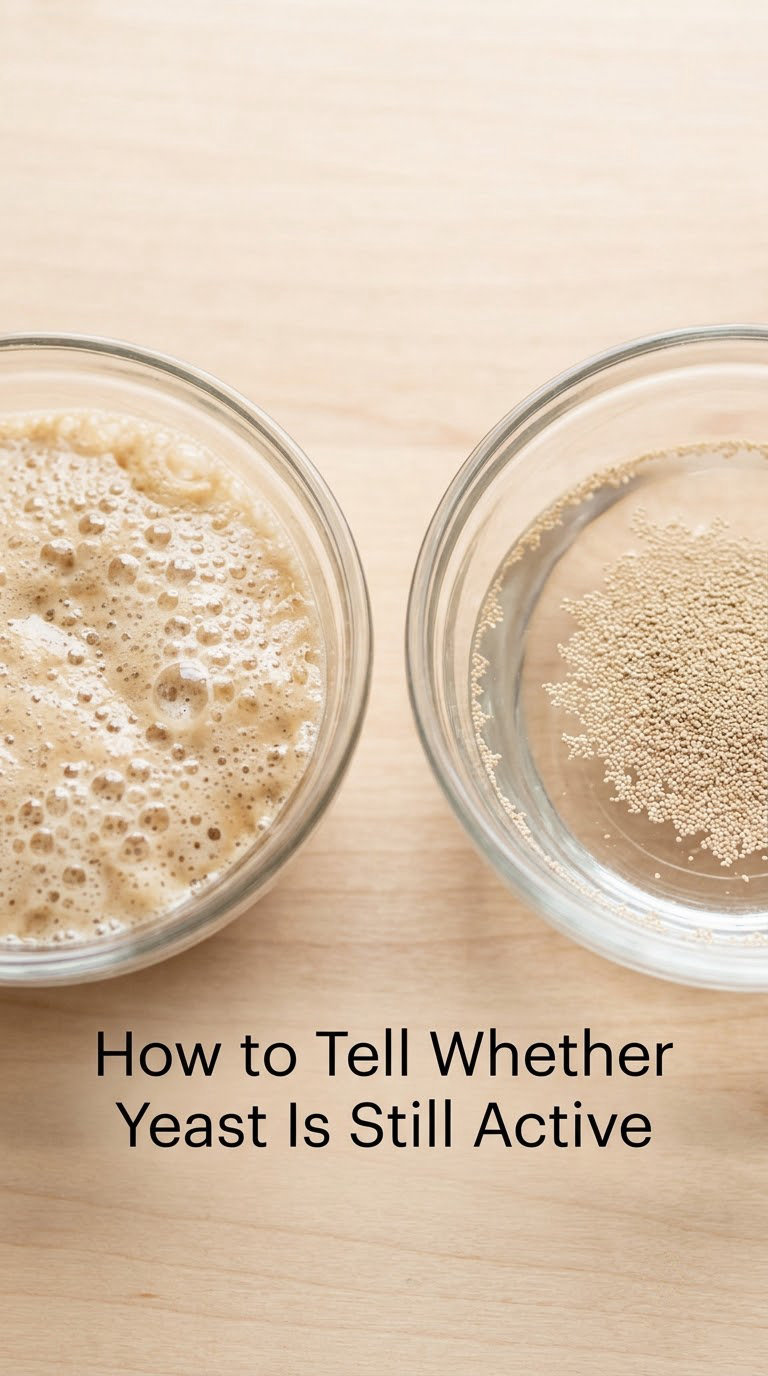
Proof it before you trust it. Warm half a cup of water to about 110°F (43°C), stir in 2 1/4 teaspoons of yeast and a teaspoon of sugar, then wait ten minutes without stirring.
Working yeast foams hard and swells the water to roughly the one-cup line, sometimes pushing a domed cap over the top. Dead yeast sits flat and clear. There is no in-between in a fresh sample, though a slow starter can take fifteen minutes, so give an older packet the full wait.
The float test takes ten seconds and catches the obviously dead ones. Drop a spoonful of yeast into water. Fresh yeast sinks; yeast that has lost its vigour floats, because trapped gas keeps the granules buoyant. It is a rough screen, not a verdict.
Go by your nose too. Good dry yeast smells faintly sweet and bready. A packet that smells sour, damp or faintly like nail polish remover has been in trouble, and clumped or rock-hard granules mean moisture got in.
How to Store Instant and Active Dry Yeast
After opening, get it out of the open packet and into something that does not let anything through. A glass mason jar with a two-piece lid is the simplest good choice. Airtight means airtight: no lid that rattles, no jar with a cracked seal, no lid you have to hold down with your thumb.
Four ways to reseal, in order of how well they work:
- Decant into a glass jar. Pour the yeast in, wipe stray granules off the rim, and close the lid properly. This is what I use.
- Roll and clip the foil bag. Push the air out, fold the top down twice, then clip it shut. A rubber band around the fold adds a second seal. This works well for Fleischmann’s and Red Star packets bought by the pound.
- Move it to a zip-top freezer bag. Fine for short stays in the fridge. For months in the freezer, use a vacuum sealer or a double bag, for reasons that come later.
- Keep the original foil packet sealed with a rubber band. Works in a pinch, but paper packets leak more than glass over time.
Whatever you use, write the date on it. A short piece of masking tape and a Sharpie on the lid tells you in six months whether this is three-month yeast or three-week yeast, and it beats squinting at a printed date that has nothing to do with when you opened it.
Keep the jar away from the stove, the sink and the coffee canisters. Yeast absorbs smells, and a jar stored next to a cinnamon tin will eventually taste like a bakery whether you meant it or not.
How to Store Fresh and Cake Yeast
Fresh yeast is a refrigerated product from the day it is wrapped. Leave it in its original wrapping, put it back in the plastic bag if you have one, and keep it at fridge temperature.
Plan on using it within about two weeks of opening, or until the use-by date, whichever comes first. If the block has darkened, dried out at the edges or developed a thin grey film, it has gone past saving.
Portioning helps here more than it does with dry yeast. A fresh block bought as a 10-count pack can be cut into single pieces, wrapped individually in plastic wrap, and stacked in a lidded container in the fridge. Each piece thaws in about 15 minutes on the counter when you need it.
Never freeze fresh or compressed yeast, including cake yeast. There is no way back from frozen cake yeast, and the cell damage shows up as dough that never gets going.
Can You Freeze Yeast?
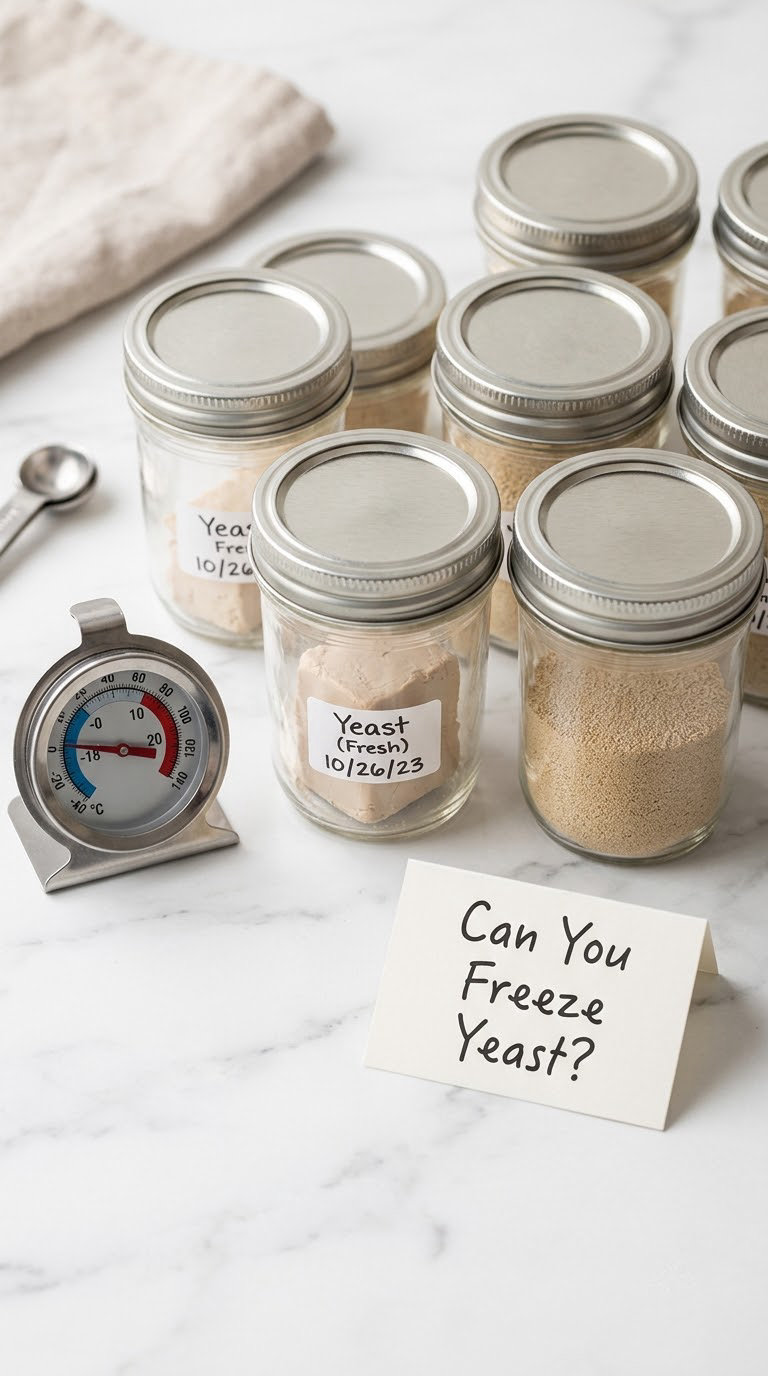
Yes, and it is the best answer for anyone who buys yeast in bulk. Freezing suspends the cells rather than destroying them, which is why frozen yeast keeps far longer than its printed date suggests. Bakers on baking forums report yeast still proofing correctly after five, eight and even ten years in a freezer, though I would never test that theory on the yeast I need for a birthday cake.
Before it goes in, divide the yeast into the quantities you actually bake. Most recipes call for 2 1/4 teaspoons, so small jars or sealed bags of that size are what you will reach for instead of the whole pound every Sunday.
Squeeze the air out of each portion and seal it properly. Ordinary zip-top freezer bags are not good enough for long storage. Cook’s Illustrated reported that ice crystals punched pinholes in them within about three weeks, which lets freezer air in and dries the yeast out. A vacuum sealer, a glass jar, or a bag inside a bag with the air pressed out all do better.
Pull the portion out and let it come to room temperature before it meets warm liquid or warm dough. Cold yeast warms up slowly, and mixing it straight into a hot bowl is a common reason dough starts sluggish. Thirty minutes on the counter is usually enough.
If you hit a wet lump after freezing, that is freezer burn, not dead yeast. Break it up and proof it. The real sign of trouble is that it does not foam.
Yeast Storage Times and Shelf Life at a Glance
Here is the reference chart. The pantry and fridge figures follow the guidance brands print on their packaging, while the freezer column is a practical estimate that leaves room for the truth: yeast outlives its date when it is sealed and cold.
| Storage method | Unopened yeast | Opened yeast | Best for |
|---|---|---|---|
| Cool, dark pantry | About 2 years | A few months at most | Sealed packets you will use soon |
| Refrigerator (about 40°F) | Not recommended | About 4 months | A working jar you refill from the freezer |
| Freezer (0°F) | Not needed | 6 months or longer | Bulk yeast and long-term stockpiling |
| Fresh yeast in the fridge | About 2 weeks | About 2 weeks from opening | Cake and enriched doughs made this month |
The system most home bakers land on is the two-part one: the bulk bag stays in the freezer, and a small jar of about four ounces sits in the fridge door and gets refilled from that bag as needed. Measuring straight from the cold jar and popping it straight back is fine; bakers report it makes no difference to how fast dough rises.
How to Store Yeast So It Stays Active for Long-Term Storage
For yeast you plan to sit on for six months or more:
- Buy the freshest you can. Check the date and prefer the shortest gap between packing and purchase. Buy dry yeast, not fresh, if the stash is long term.
- Divide it into bake-sized portions. Two teaspoons per small glass jar, or one recipe’s worth per sealed bag. Label each with the date you portioned it.
- Remove every bit of air. Vacuum seal where you can. Otherwise fill a wide-mouth jar and leave as little headspace as you can, because air in the jar is air reaching the yeast.
- Label and date it. Masking tape on the lid works. Include the type of yeast if you mix instant and active dry.
- Freeze it at 0°F or below. Keep a small working jar in the fridge so you are not thawing a portion every time you bake.
- Warm before using. Take the portion out, let it sit at room temperature for about 30 minutes, then proof it if it is active dry.
How to Keep Yeast Fresh Until You Need It
A few habits keep the yeast you use weekly in good shape without any freezer at all.
Return the jar to the fridge immediately after you scoop. Every open minute is moisture and warmth entering, and that is the top complaint from bakers who have quietly ruined a jar by rinsing out a spoon at the sink before closing the lid.
Use a dry spoon, keep the jar away from the stove, and give the lid a wipe once in a while so no sticky ring of old yeast sits under the gasket.
Buy what you will use. Yeast is one of the few ingredients where a bulk deal only makes sense if you can freeze it, and freezer-burned yeast from a great bargain ends up in the bin anyway.
Label your containers and rotate them. A first-in, first-out habit means the old jar gets used before the new one does, which solves the problem of yeast quietly expiring in the back of a shelf.
Common Yeast Storage Mistakes
Leaving the packet open. A rolled-down foil packet is not resealed. Clip it, band it, or move the yeast into glass.
Storing it by the stove or the oven. Heat is the fastest way to kill dormant yeast. Pick the coolest shelf you have, away from appliances.
Assuming a container is airtight. If it rattles, sags or you have to press it shut, it is not. Swapping the lid usually fixes the problem for less than you think.
Leaving zip-top bags in the freezer for months. Pinholes from ice crystals let the cold dry air in. Double-bag, vacuum seal, or use glass.
Freezing fresh or cake yeast. Compressed yeast and ice do not mix. Keep those refrigerated and use them fast.
Trusting the date blindly. Expiration dates assume a pantry, not a freezer. A packet three months past its date that was sealed the whole time will usually still proof. A two-month-old packet that sat open on a humid counter probably will not, date or no date.
Skipping the proof test on older yeast. Ten minutes of foam beats guessing, and it saves you from mixing a whole batch of dough that will not rise.
And if the dough sits flat anyway, work through the other suspects: water hotter than about 120°F (49°C) kills yeast on contact, salt above roughly 2 percent of flour weight slows it sharply, and dough kept in a cold fridge rises slowly before it rises at all. Test the yeast first, then blame the recipe.
Frequently Asked Questions
Can you freeze yeast to make it last longer?
Yes, and for bulk yeast it is the best option. Portion it into bake-sized amounts, squeeze out the air, seal each one in glass or a vacuum-sealed bag, and freeze at 0°F. Let the portion reach room temperature for about 30 minutes before using it. Bakers report frozen yeast still proofing after many years, though test anything older before you rely on it.
How long does dry yeast last after opening?
In a cool, dark pantry, opened dry yeast is good for a few months at most. Sealed airtight in the fridge it lasts about four months, and in the freezer six months or longer. Those figures assume the yeast never sees moisture or warmth, so label the jar with the date you opened it and proof it before a big bake if it is over a couple of months old.
Should yeast be refrigerated or kept in the freezer?
Freezer, if you are not baking weekly. Cold slows yeast far more than the fridge does, and sealed airtight yeast keeps a long time that way. The fridge makes more sense for a small working jar you refill from a frozen bulk bag, since it is easy to grab. Neither is needed while a sealed packet is still unopened and sitting in a cool cupboard.
How can you tell if yeast is still good?
Proof it. Warm half a cup of water to about 110°F, add 2 1/4 teaspoons of yeast and a teaspoon of sugar, and wait ten minutes. A dome of foam reaching roughly the one-cup mark means it is alive. Flat and clear means it is not. A float test gives a quick answer too: sinks means fresh, floats means past its best.
Why does my bread not rise, and could the yeast be inactive?
Possibly, and the proof test settles it in ten minutes. Dead or weak yeast is one of several common causes. Water hotter than about 120°F kills it on contact, high salt levels slow it, and dough kept in a cold fridge rises slowly before it rises at all. If your yeast foams in the test but the dough stays flat, look at temperature and salt instead.
Can yeast be stored in a tightly sealed plastic bag?
A tightly sealed bag works fine in the fridge for a few months. In the freezer, use a double bag or a vacuum sealer, because ordinary zip-top bags develop pinholes from ice crystals within about three weeks and let dry cold air in. Glass is the safer long-term choice, and a screw-top jar with a good gasket keeps out both moisture and smells.
Conclusion: Choose the Right Storage Method
Instant and active dry yeast go into an airtight jar the moment you open the packet, then into the fridge for up to four months or the freezer for six months and beyond. Fresh and cake yeast stay wrapped in the refrigerator and get used within a couple of weeks. Unopened packets of any dry yeast are fine in a cool, dark cupboard until the date runs out.
Whichever you choose, label the container and proof yeast that is older than a few months before it goes into a dough you care about. Ten minutes of foaming is the cheapest insurance in the kitchen. Last reviewed for 2026.
While you have the oven going, these air fryer recipes worth making keep the rest of the weekend easy.