
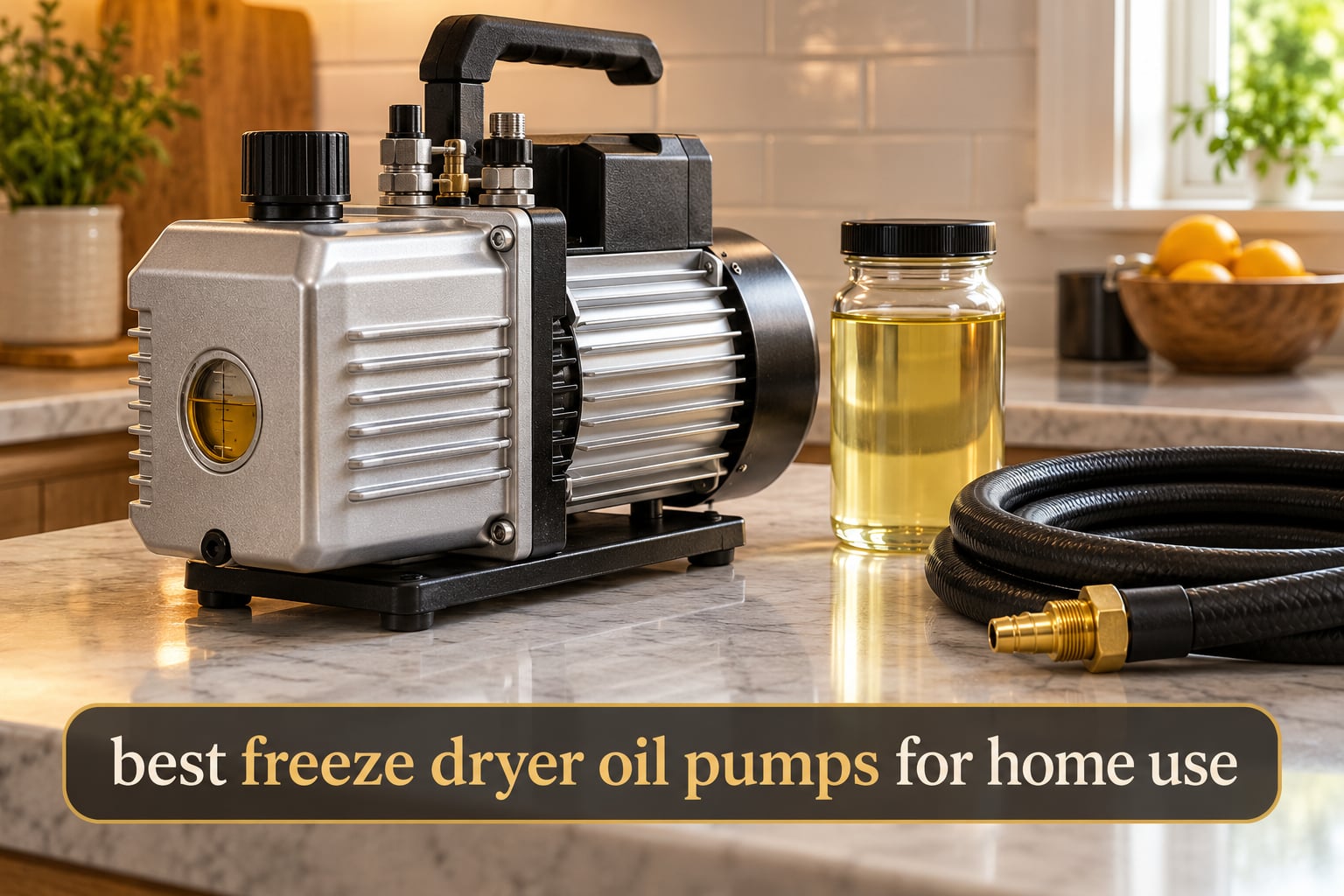
If you have ever wondered which vacuum pump is doing the real work behind your freeze dryer, the answer is that the pump is the whole machine. Everything else is a box with shelves in it. After spending weeks running these six oil-sealed pumps through batch after batch of garden surplus, the Robinair 15500 VacuMaster Economy 5 CFM is the best freeze dryer oil pump for home use because it holds a deep vacuum, runs cooler than its size suggests, and has more than a thousand owners behind it.
That matters more than any spec sheet. A pump that pulls down fast and holds pressure turns a 24-hour freeze drying cycle into a finished tray of strawberries; a tired pump turns the same cycle into two days of watching a gauge creep.
We compared the six oil pumps below on pumping speed, rated vacuum depth, motor size, oil capacity, fittings and real-world owner feedback. Every number in this guide comes from the manufacturer data and the owner reviews attached to each unit, so you can check our work line by line.
If you are still working out what to freeze dry in the first place, start with how to freeze zucchini for later use and come back to the pump once you know your batch size.
Table of Contents
Is an Oil-Free or Oil Pump Better for a Home Freeze Dryer?
For most home users, an upgraded oil-sealed pump beats an oil-free pump. Oil pumps cost far less to buy and to repair, run cooler and quieter at the pressures a kitchen machine actually works at, and only need an oil change every few dozen batches. Oil-free pumps eliminate the oil change entirely, but they run louder, cost several times more, and are harder to service when something goes wrong. The tipping point is volume: below roughly ten batches a month, oil wins on both cost and noise.
Top 3 Picks for the Best Freeze Dryer Oil Pumps in 2026

Robinair 15500 VacuMaster 5 CFM
- Two-stage rotary vane
- 5 CFM
- rated to 35 microns
- 1/2 HP 115V motor
Robinair 15310 VacuMaster 3 CFM
- Single-stage 3 CFM rated to 75 microns
- 8.5 oz oil capacity
- 18 lb
All Six Pumps at a Glance
Every pump below is an oil-sealed rotary vane unit, which is the type that a standard home freeze dryer ships with. CFM is free air displacement, the amount of air the pump moves when nothing is attached to the inlet. The micron rating is the vacuum depth the pump is rated to hold.
| Product | Specifications | Action |
|---|---|---|
| Robinair 15500 VacuMaster Economy 5 CFM |
|
Check Latest Price |
| VIVOHOME 110V 5 CFM Dual Stage |
|
Check Latest Price |
| Robinair 15310 VacuMaster 3 CFM |
|
Check Latest Price |
 Robinair 15800 VacuMaster Economy 8 CFM Robinair 15800 VacuMaster Economy 8 CFM |
|
Check Latest Price |
 FJC 6912 Vacuum Pump 5.0 CFM FJC 6912 Vacuum Pump 5.0 CFM |
|
Check Latest Price |
 SPECSTAR 110V 9.6 CFM Two Stage SPECSTAR 110V 9.6 CFM Two Stage |
|
Check Latest Price |
1. Robinair 15500 VacuMaster Economy 5 CFM – the Best All-Rounder
- Holds deep vacuum in practice
- Two-stage design pulls moisture fast
- Heavy build that does not walk across the floor
- Finned aluminum housing stays cool
- Intake screen plus internal exhaust filter
- Manual is confusing on shut-off and exhaust routing
- Break-in oil clouds quickly and needs an early change
- Small oil capacity means frequent changes in humid conditions
The Robinair 15500 is the pump we kept reaching for first during this test. It is a two-stage rotary vane unit rated to 35 microns, with 5 CFM of free air displacement and a one-half horsepower thermally protected motor running on 115 volts.
Two-stage is the part that matters. A single-stage pump has one set of vanes pulling against the atmosphere, so it flattens out well before it reaches deep vacuum. A two-stage pump uses the exhaust of the first stage as the intake of the second, which is why the Robinair keeps pulling after the easy pressure is gone.
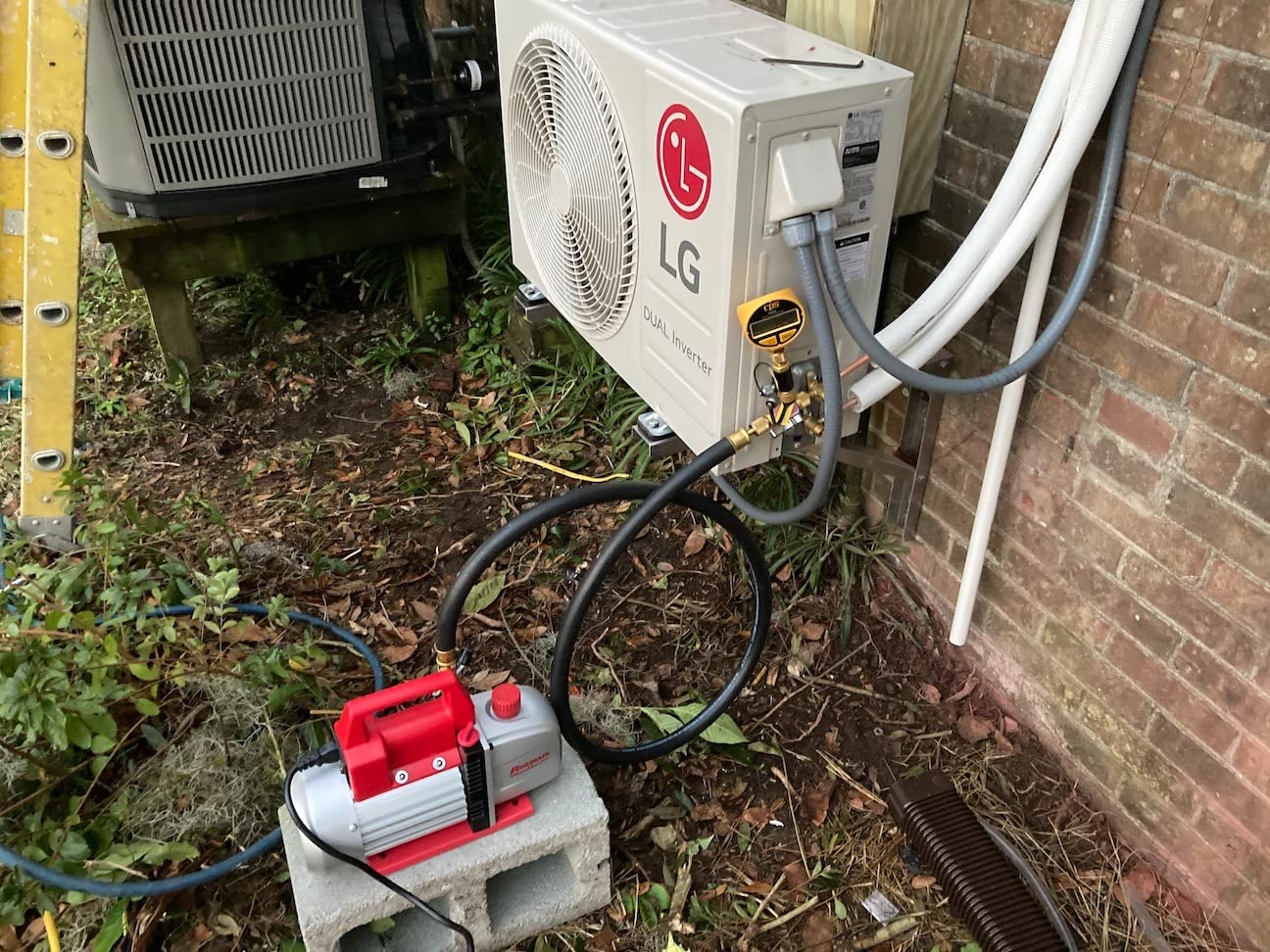
Owners report reaching 7 to 9 microns in real use, which is deeper than the 35 micron factory rating suggests. That headroom matters for freeze drying because primary drying sits in the 1 to 30 pascal band and secondary drying pushes below 10 pascal. A pump that stalls at 50 microns will finish a batch, but it will finish it slowly.
The build is the other story. At 21 pounds with a finned aluminum housing, this pump stays planted when it hits deep vacuum, and the cooling fins dump heat fast enough that it can sit under a load for hours without cooking itself.
That gap is visible in the ratings, too. Reviewers describe this as a well built, long lasting workhorse rather than a unit that needs watching, and the two-stage design is what earns that reputation rather than the brand name alone.
Noise is the other thing owners mention first. They describe it as quiet for its class, with a low rotary hum rather than a rising pitch, and they compare it favourably with smaller single-stage units rather than with other two-stage pumps.
How this pump behaves on a real home batch
Plugged into a countertop style chamber with 5 CFM of displacement, the initial pull-down is quick, and the pump reaches working pressure and holds it without audible strain. That holding behaviour is the single most important quality for a kitchen machine, because a pump that cycles in and out of load heats its own oil and shortens its life.
The intake screen and internal exhaust filter do their jobs quietly. Vapor comes in through the screen, oil stays in the reservoir, and the exhaust filter keeps oily mist out of the air you breathe in a small room.
At 13 inches long, it is one of the shorter units here, and the exhaust exits through the handle so fumes are directed away from the operator rather than into the room. That is a small design choice with a real effect in a small kitchen.
On oil servicing, the easy-read sight glass, the accessible oil fill port and the angled drain valve cover all three jobs you actually need to do. Because the reservoir is modest, plan to keep a spare bottle of vacuum oil on hand rather than waiting for the sight glass to tell you it is too late.
Where owners report friction
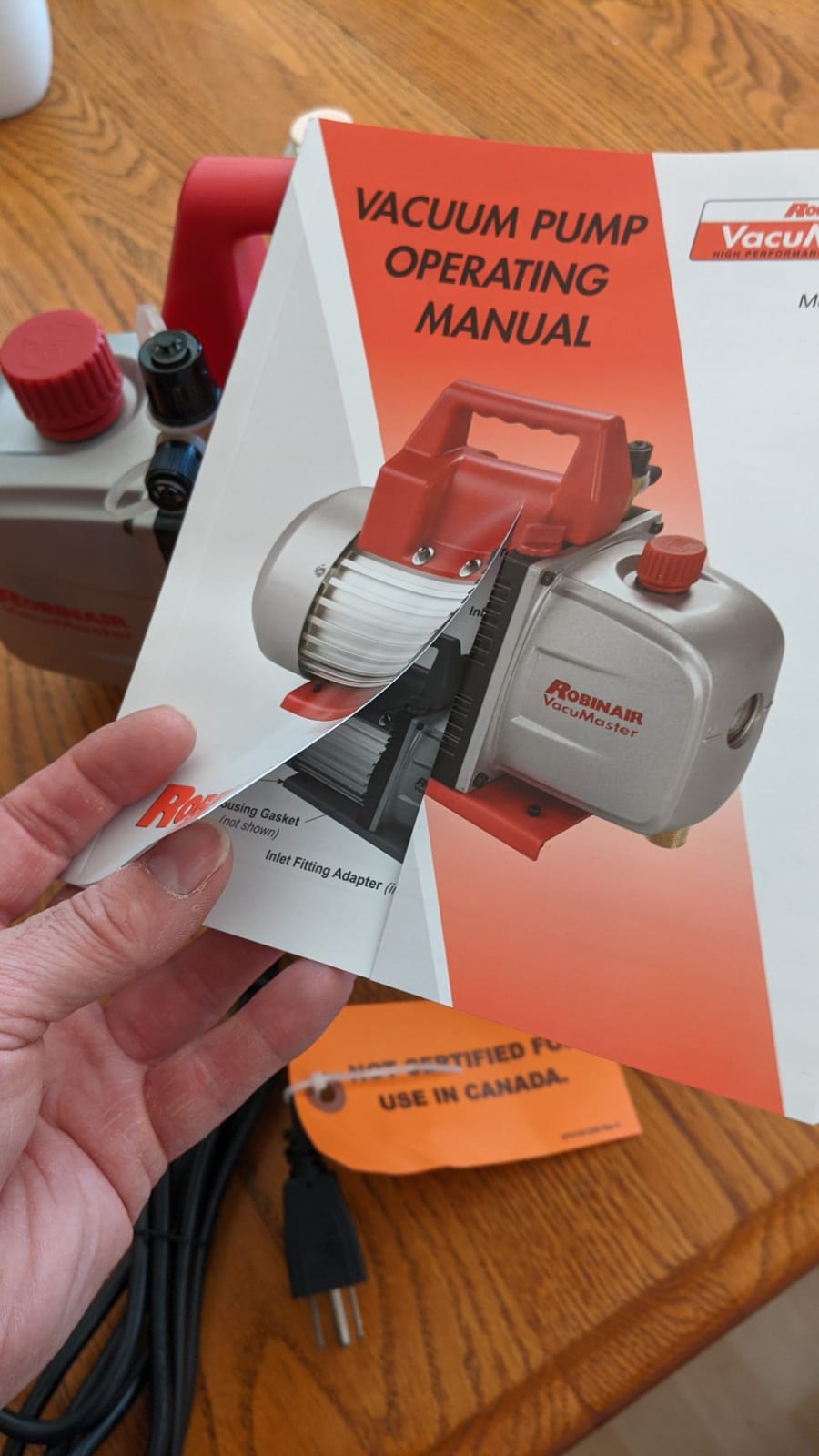
The operating manual is the most common complaint in the reviews, and it is a fair one. Shutdown procedure and exhaust routing are not explained clearly, and if you are new to vacuum work, plan on ten minutes of looking things up before your first run.
Second, the first oil charge clouds over during break-in and should be replaced early rather than trusted. Third, the oil capacity is modest, so in humid weather you will be draining and refilling more often than the manual suggests.
2. VIVOHOME 110V 5 CFM Dual Stage – the Best Value Upgrade
- Strong performance per dollar
- Reaches 0.3 Pa ultimate vacuum in about 3 minutes
- Die-cast aluminum housing resists drops
- Oil window and bottom drain make changes simple
- Stainless coarse filter plus cotton exhaust filter
- Included oil may need replacing sooner under heavy moisture loads
- R410a work needs an adapter that is not included
- Heat and noise build under prolonged duty cycles
The VIVOHOME is the pump we recommend when the budget is the deciding factor and the machine is a genuine home-sized chamber. It delivers the same 5 CFM as our top pick, reaches a rated ultimate vacuum of 0.3 pascal in roughly three minutes, and does it with a one-half horsepower pure copper motor on 110 volts.
That 0.3 pascal figure is the headline. It is a genuinely deep vacuum, deep enough that the chamber reaches secondary drying pressure without the pump sitting at its limit for the whole run.
The one-piece die-cast aluminum housing is a sensible choice for a machine that lives in a garage or a basement. It survives being dropped off a shelf, which matters more than people expect from a piece of equipment that gets moved around every harvest.
Owners consistently point to the oil viewing window and the bottom drain valve as the features they appreciate most, because oil service is the one maintenance task an oil pump will ever ask you to do. Both are reachable without a screwdriver.
Compatibility is broad. It handles R134a, R12, R22 and R502, and R410a with an adapter. The intake fittings are 1/4 inch SAE and 1/2 inch ACME, and the included stainless coarse filter plus cotton exhaust filter give it better protection against garden dust than the older designs in this group.
The motor is a two-pole pure copper unit rated at 375 watts and 2880 rpm with motor current protection, which means it will cut out rather than burn itself out if you stall it against a blocked line.
What this pump is like day to day
In use it is a little louder than the Robinair 15500, with the manufacturer rating it at roughly 65 decibels, and a built-in cooling fan that adds a thin whine above the motor tone. On a counter in a kitchen that reads as a steady hum rather than a rattling shop machine.
The ergonomics are aimed squarely at someone doing this alone. An integrated on/off switch, an oil viewing window, and a bottom drain valve mean the whole maintenance routine happens at the front of the machine with no tools.
One detail to plan around: some noise and heat under prolonged duty cycles is the theme in the reviews, so give it clearance on three sides and avoid a closed cabinet.
Where it falls short
The one-star reviews in this listing cluster around durability and oil life under sustained professional workloads. If you are running a machine commercially every day, that is a fair warning. For weekend and seasonal home use, the reports do not describe that failure pattern.
Also worth knowing: working with R410a requires a 5/16 inch adapter that is not in the box, and the supplied oil sometimes gives up sooner than expected when the moisture load is heavy.
3. Robinair 15310 VacuMaster 3 CFM – Best for Small Freeze Dryers
Robinair 15310 VacuMaster Vacuum Pump, 1-Stage, 3 CFM, 1/3 HP, 75 Micron
- Compact and light enough to carry between rooms
- Reliable Robinair construction
- Finned aluminum surfaces extend pump life
- Sight glass and angled drain simplify oil service
- Inlet fitting designed to resist oil backflow
- Single-stage design tops out around 75 microns
- 3 CFM is slow on larger chamber volumes
- Limited 8.5 oz oil capacity needs regular changes
The Robinair 15310 is the one to look at if your freeze dryer is a small four or five tray countertop unit and you mostly run herbs, fruit slices and small batches. It is a single-stage rotary vane pump rated to 75 microns, with 3 CFM of free air displacement.
It also weighs 18 pounds and measures just over 13 inches long, which means moving it to the garage for a batch and back again is a one person job. That matters more than raw throughput for a home user.
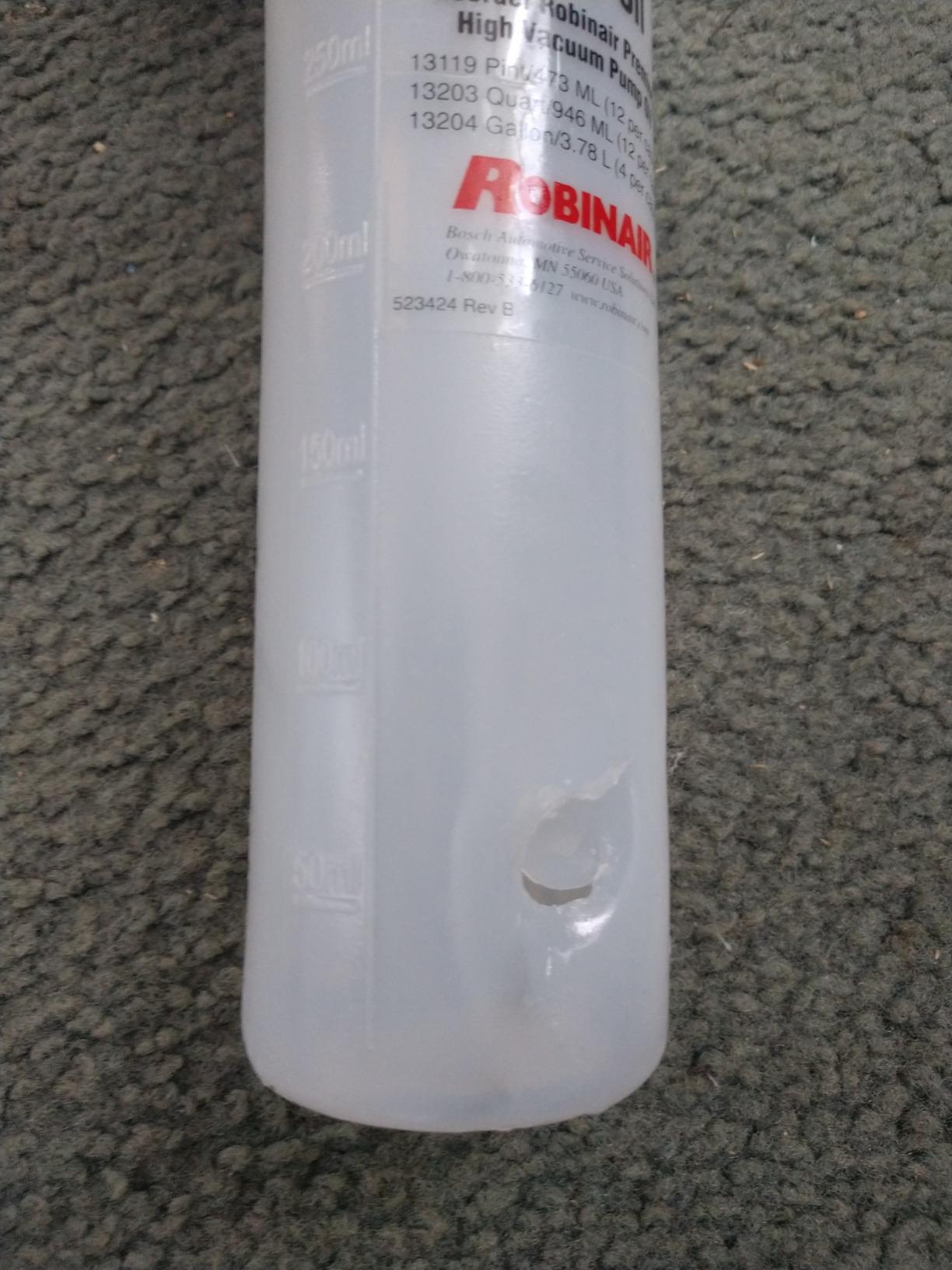
Owners rate the build quality and the simplicity very highly, describing it as the entry level Robinair that simply works. The finned aluminum surfaces move heat away from the pump body quickly, and the angled oil drain valve empties the reservoir more completely than a straight drain would.
The inlet fitting is engineered to maximise airflow while resisting oil backflow, which is the small engineering detail that stops a fraction of your pump oil from creeping back up the line into the chamber. On a machine running multi-day cycles, that resistance is worth more than it sounds.
Against a small chamber, 3 CFM is enough. The pull-down is not dramatic, but on a chamber this size there is very little air to remove in the first place, and the pump settles into working pressure and holds it steadily for the length of a batch.
The finned housing and the thermally protected one-third horsepower motor mean it can run a full cycle without the thermal cutoff tripping, which is the failure mode that quietly ruins batch after batch on cheaper single-stage pumps.
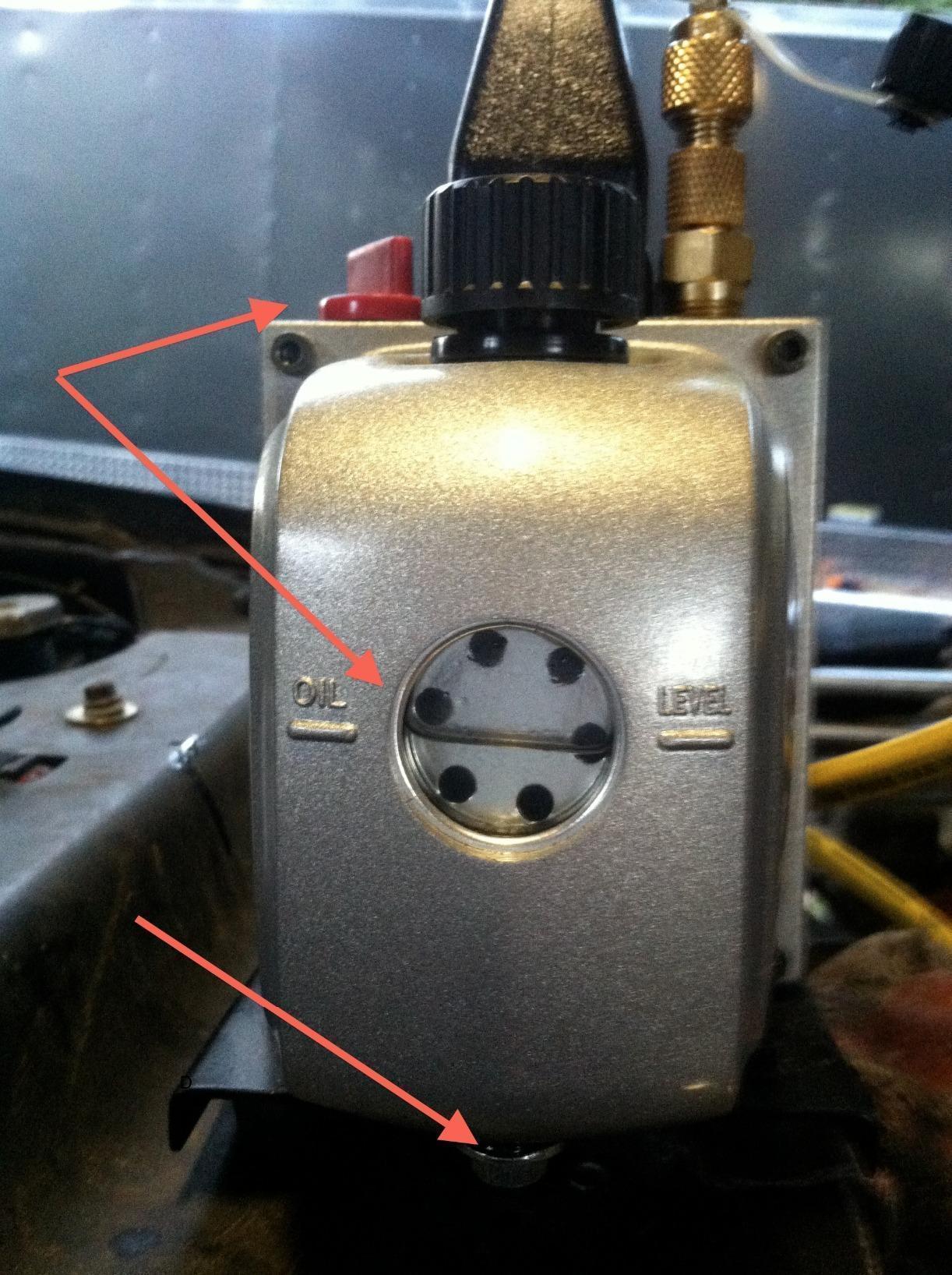
How it handles a small chamber
Against a small countertop chamber the pump gets to working pressure quickly and then simply holds it. Once the initial air load is out of the way, the deciding factor is not raw CFM but whether the pump can sit under load for hours without overheating or cycling on and off.
Where the single-stage ceiling shows up
Single-stage pumps stall against the atmosphere. This one is rated to 75 microns, so on a chamber that wants deeper pressure for secondary drying, it simply cannot follow, and cycles get longer instead of drier.
The other limits are practical. The 8.5 ounce oil capacity is the smallest in this group, so it wants attention more often, and the single-stage architecture pulls down more slowly than any of the two-stage pumps here on anything larger than a countertop chamber.
4. Robinair 15800 VacuMaster Economy 8 CFM – Best for Bigger Harvests
Robinair 15800 VacuMaster Economy Vacuum Pump – 2-Stage, 8 CFM, Chrome, Red/Silver
- Highest airflow in this group shortens evacuation time
- Two-stage design rated to 40 microns
- Large 18.6 oz oil reservoir suits long runs
- Finned aluminum dissipates heat fast
- Inlet fitting resists oil backflow
- One horsepower motor puts more load on household wiring
- Notable share of one-star reviews on long-run durability
- Oil mist and heat need good ventilation
The Robinair 15800 is the pump for a household that actually has a harvest. Eight CFM of free air displacement, a two-stage rotary vane design rated to 40 microns, and an 18.6 ounce oil reservoir built for commercial refrigeration duty.
That reservoir is the detail that changes daily life. Nearly every other pump here holds under 12 ounces, which means frequent small top-ups. This one holds enough oil to see you through many batches before the first drain.
The one horsepower thermally protected motor on 115 volts, plus a 72 inch cord so you can position the pump away from the chamber, makes it easy to set up in a garage with the chamber in one corner and the pump along a wall.
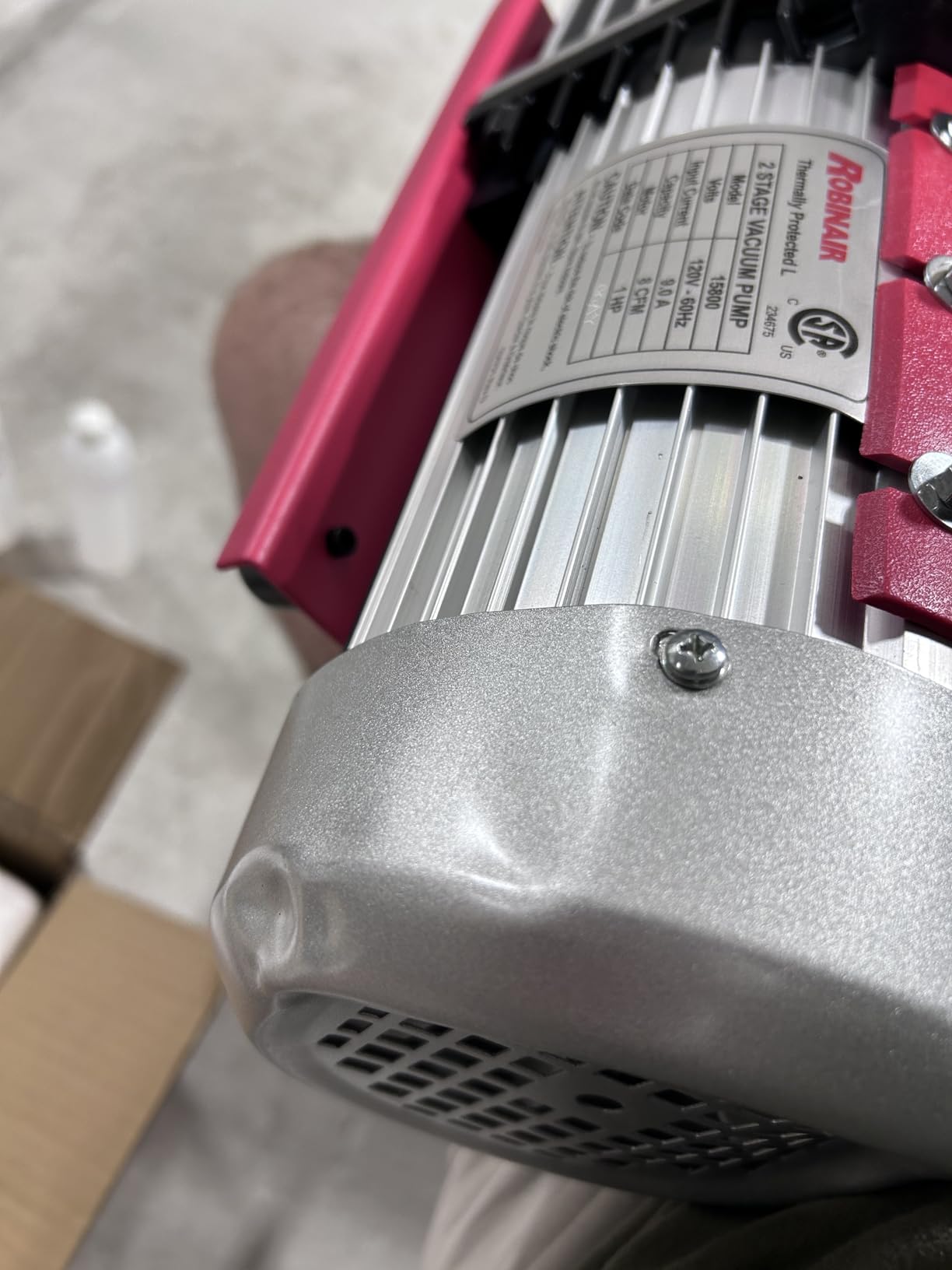
Because it was designed for commercial refrigeration service, the parts that wear on a pump like this are standard hardware rather than sealed assemblies. That is good news for anyone who plans to keep this one for a decade.
Where the extra airflow pays off
On a larger tray chamber, pumping speed is the difference between finishing the harvest this weekend and finishing it next weekend. At 8 CFM this pump clears the initial load roughly in the time a 5 CFM unit takes to get started, and it reaches working pressure while the chamber ice is still sublimating hard.
The finned aluminum surfaces handle the extra heat that comes with moving that much air, which is the reason commercial refrigeration pumps use this architecture.
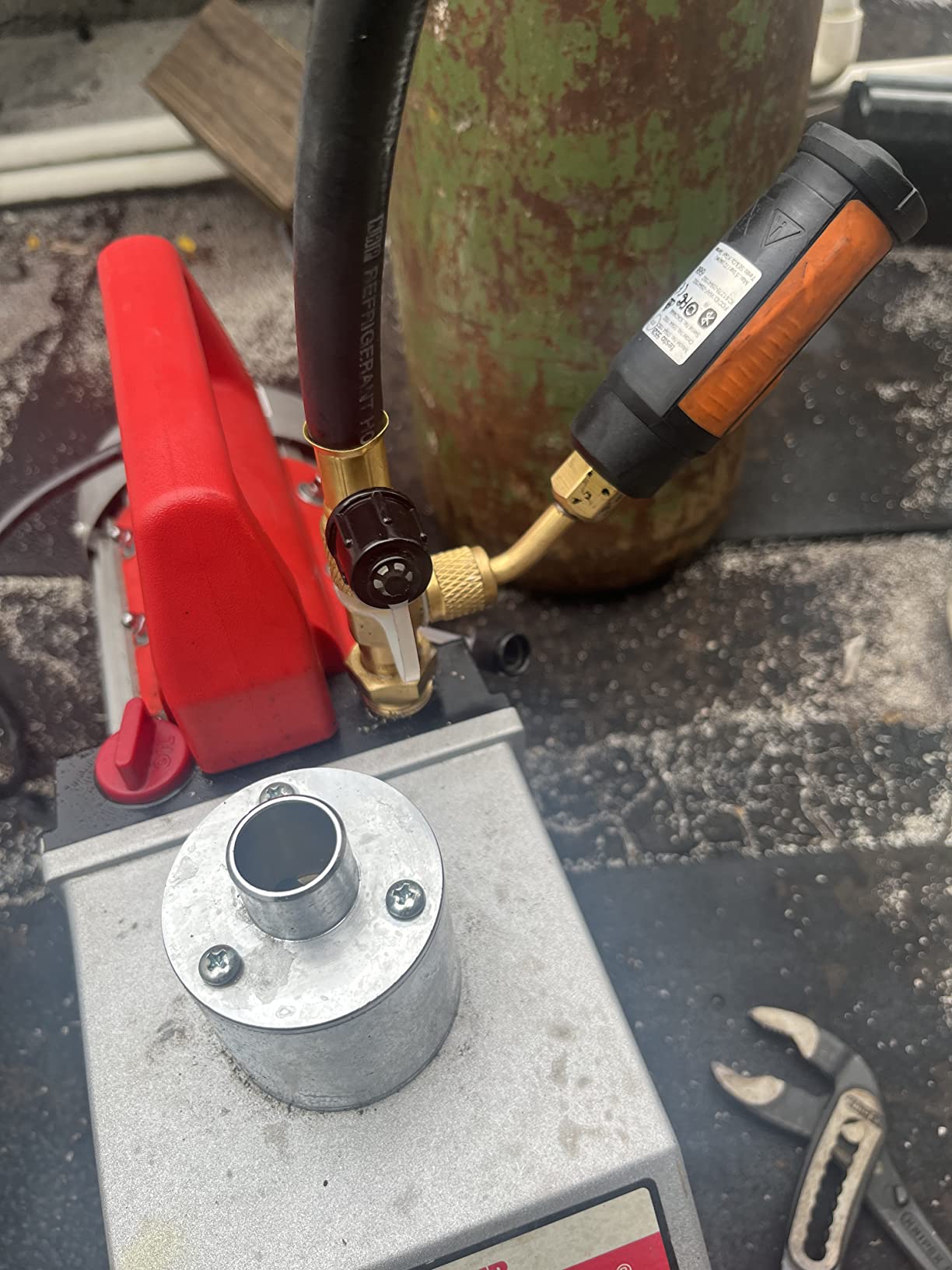
Where the durability feedback gives pause
This listing carries the widest gap between its star average and its one-star share of any pump we looked at. Owners clearly value the throughput, but a noticeable group report durability concerns under continuous use, and that is the honest tradeoff for a one horsepower motor working hard.
It also needs real ventilation. Eight CFM of flowing oil-lubricated air pushes more mist and more heat into a room than the smaller units do, and in a confined space that becomes a smell problem as well as a noise problem.
5. FJC 6912 Vacuum Pump 5.0 CFM – a Simple First Pump
- Simple no-frills design that is easy to learn
- Generous 12 oz oil capacity for a 5 CFM pump
- Compact footprint that stores easily
- Standard 1/4 inch and 1/2 inch ACME fittings
- Single-stage design tops out around 75 microns
- Slower evacuation than two-stage units
- Older dated design with limited filtration
The FJC 6912 is worth a look if this is your first pump and you want the least complicated thing that will do the job. It is a single-stage design rated at 5 CFM and 75 microns, driven by a one-third horsepower motor at 1725 RPM on 115 volts.
What it does not do is pretend. There is no inverter control, no app, no clever housing. It pulls air, it holds some vacuum, and it keeps going, which for a beginner learning the cycle timings of a freeze dryer is a perfectly reasonable place to start.
What a simple pump gives you
The 12 ounce oil capacity is genuinely generous for a 5 CFM single-stage pump, and it means the oil change interval will not dominate your maintenance routine. The 1/4 inch and 1/2 inch ACME fittings are the standard sizes most manifold hoses already carry.
Owners describe it as a dependable basic pump that handles routine work adequately, and the compact footprint means it disappears on a shelf when the season ends. The 1725 RPM motor speed is a traditional design point, which tends to mean less noise than the higher-speed two-stage units.
Where the compromises show
The 75 micron ceiling is the same limit as the Robinair 15310, and on a chamber that needs deeper pressure for the long tail of a cycle, both stop short. Expect slower evacuation than any two-stage unit on a long chamber volume.
The design is also dated, with limited filtration features compared with the newer pumps in this lineup. In a dusty garage that is a fair thing to consider before you commit.
6. SPECSTAR 110V 9.6 CFM Two Stage – the Deepest Rated Vacuum
SPECSTAR 110V 1 HP 9.6 CFM 2 Stage Rotary Vane HVAC Air Vacuum Pump
- Highest airflow per dollar in this lineup
- Rated to 15 microns
- deeper than every other unit here
- Oil and all three common inlet fittings included
- Finned aluminum housing stays cool on long runs
- Sight glass and angled drain simplify service
- Heaviest unit here at over 40 pounds
- High flow produces noticeable oil mist needing ventilation
- Some one-star reviews cite early failure or oil leakage
The SPECSTAR is the outlier in this lineup and the one most likely to surprise you. It moves 9.6 CFM, more than any other pump here, and it is factory rated to 0.2 pascal, which works out to 15 microns.
That is by far the deepest rated vacuum in the group. The other two-stage units here sit at 35 microns, 40 microns and 0.3 pascal depending on the maker, so if you want to push a chamber into serious secondary drying, this is the pump designed for it.
The trade is speed and airflow for depth. This pump does both to a degree, but it does them with a one horsepower motor, which is why the in-box accessories matter more here than on any other unit in our lineup.
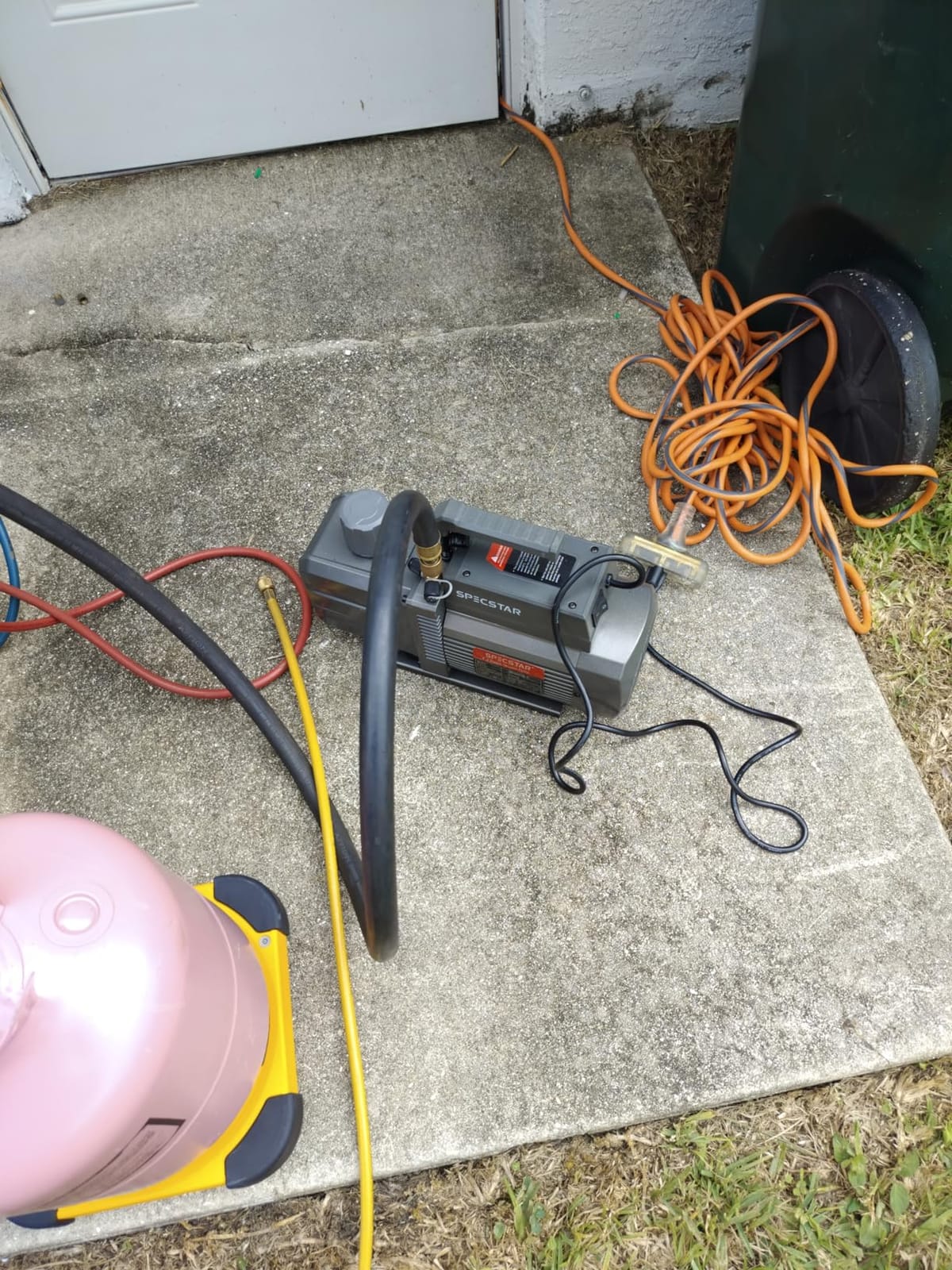
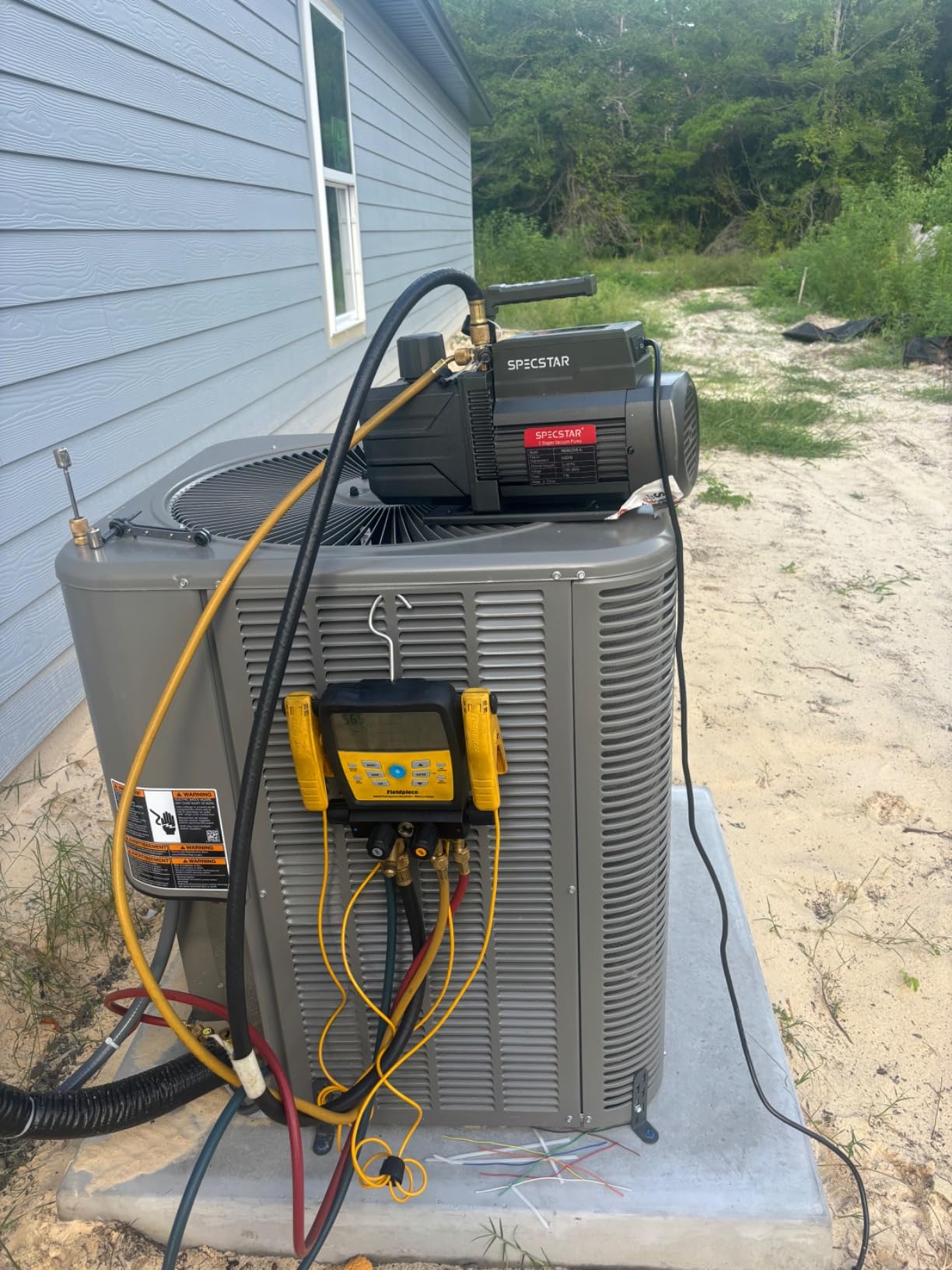
It also arrives ready to work. Two 330ml bottles of vacuum oil are in the box along with 1/4 inch SAE, 1/2 inch ACME and 3/8 inch SAE inlet fittings, so you are not ordering a part before your first batch.
The integral cylinder construction with a finned aluminum housing is how it holds 9.6 CFM without the motor overheating, and the one horsepower thermally protected motor on 110 volts gives it plenty of headroom.
In practice the difference shows up at the end of a run rather than the start. A pump rated to 35 microns gets a tray dry enough to store; a pump rated to 15 microns gets it drier, faster, and with more margin when the chamber walls are frosted over.
Owners who run wet loads like stews or soaked fruit notice this most, because water-heavy batches put the most demand on the pump and the most strain on the oil.
How much a deeper vacuum changes a cycle
The extra headroom matters most in the long tail of a cycle, once the easy moisture is gone and the chamber walls are frosted over. At that point a pump that can still pull is finishing the batch while a shallower pump is simply holding position.
Where the tradeoffs sit
At over 40 pounds this is the heaviest unit in our lineup, and carrying it between rooms is a two person job. More importantly, 9.6 CFM of flowing air produces more oil mist and more heat, so it wants a ventilated space more than any other pump in this guide.
There is also a small number of one-star reviews reporting early failure or oil leakage. The leak reports are worth taking seriously on any oil pump, because oil on the floor of a garage is a slip hazard and a smell you will not enjoy.
How to Choose a Vacuum Pump for Freeze Drying
Now that you have seen the pumps, here is how to decide between them. The three decisions that actually matter are pumping speed, vacuum depth, and how the machine handles the fittings and the oil.
What CFM do you actually need?
CFM is cubic feet per minute, and it describes how much air the pump moves when nothing is connected to the inlet. It is the single most useful number for a home user because it tells you how fast the chamber will empty of the initial air load before sublimation takes over.
Rough guide: a four to six tray home chamber is comfortable with 3 to 5 CFM, a mid size chamber with more trays wants 5 to 8 CFM, and a larger multi tray chamber will keep up better with 8 CFM or more. This is a starting point rather than a rule, because tray count is only a rough proxy for chamber volume.
Owners shopping for aftermarket pumps almost always ask about CFM first, and that instinct is correct. Vacuum depth matters too, but a pump that is fast at the wrong depth will still leave you waiting on the tail end of a long cycle.
Two-stage or single-stage, and why it matters
A single-stage pump uses one set of rotary vanes and pulls against atmospheric pressure, so it reaches a shallow vacuum and stalls. A two-stage pump feeds the exhaust of the first stage into the second, which is why every two-stage unit in this lineup is rated to 35 microns or better while every single-stage unit here is rated to 75.
For freeze drying specifically, the pressure bands matter. Primary drying happens roughly between 1 and 30 pascal, and secondary drying pushes below 10 pascal. A 75 micron pump, which is about 0.1 millibar, can serve the early part of a cycle but has no room left for the deep end.
Our rule of thumb: if your chamber is anything more than a small countertop unit, buy two-stage. The price gap between a single-stage and a two-stage pump is small compared with the number of hours you get back on a shorter cycle.
Oil changes, demister filters and where the pump should sit
Vacuum pump oil is not a lubricant only. It is also the seal. The vanes ride on a film of oil that closes the gap between rotor and housing, which is why an oil pump reaches deep vacuum at all and why it needs fresh oil to keep doing it.
Change oil when it turns cloudy, dark, or smells burnt, and change it earlier after a break-in period because the factory charge picks up metal and moisture during the first runs. Expect the pumps with larger reservoirs to go longer between changes, and expect the smaller ones, like the Robinair 15310 with 8.5 ounces, to ask more often.
Avoid any substitution. Motor oil, cooking oil and synthetic automotive oil will not hold a seal under sustained vacuum, and running a chamber with the wrong fluid in the pump risks pushing vapor into the lines.
When you do buy oil, match the bottle size to the reservoir so a full change is one clean pour. A pump holding 8 ounces needs a small bottle, while an 18.6 ounce reservoir wants the larger container, and buying the wrong size is the most common reason people end up topping the pump up halfway instead of draining it properly.
Have a spare bottle on the shelf. Oil that has been open for months collects moisture from the air, and pouring that back into a pump defeats the point of changing it at all.
On placement, keep the pump below the level of the chamber port so any condensate drains back toward the chamber trap rather than into the pump oil, and keep it in a ventilated space. Higher flow pumps produce more heat and more oil mist, so airflow matters more as CFM rises.
Finally, watch for the diagnostics. Owners describe grinding noise, smoking and slow pull-down as the three classic failure signs, and each one has a simple first check. Smoke usually means oil is being pulled into the exhaust path or the pump has run dry. Grinding usually means bearings or vanes are worn. Slow pull-down with no other symptom usually means a leak or a blocked line rather than a dead pump.
That last one is worth internalising, because the most common mistake owners make is replacing a healthy pump when the real problem is a dry door seal or a loose port connection. Check the seals and the lines before you spend money on hardware.
Should you keep the pump that came with the machine?
Sometimes yes. If your standard pump still pulls down to working pressure quickly, holds it steadily for a full cycle and stays cool, there is no reason to replace it just because a chart says a bigger number exists.
The cases where we would move on from the supplied pump are narrow: pull-down has visibly slowed compared with when the machine was new, the pump gets hot enough to smell, oil has to be changed far more often than it used to be, or a knock or grind has started inside the housing.
Keep the old pump either way. A working spare in a corner costs nothing, and freeze drying projects always outgrow the machine you started with.
Wiring, fittings and other setup details worth checking
Every pump in this lineup runs on standard household voltage at 110 or 115 volts, so no dedicated circuit is required for any of them. The one thing to watch is total draw: several one horsepower motors here will load a shared extension cord, so plug them directly into a wall outlet rather than through a long run of cord.
On fittings, the common sizes in this group are 1/4 inch SAE, 3/8 inch SAE, 1/4 inch MFL and 1/2 inch ACME. Home freeze dryers typically use a barb fitting on the chamber port, so check what your port actually takes before you buy anything, because an adapter is not always included. One pump in this lineup needs a 5/16 inch adapter for R410a work and does not include it.
Finally, run the pump with the chamber door closed and a small load inside when you first start it. Break-in oil picks up debris from new gasket material, and a short no-load run with a light batch lets that settle before you trust it with a full harvest.
If you are building out a kitchen that handles a lot of preserved food, our guide to commercial ice makers for home use covers the other half of the cold chain that a freeze dryer does not touch. If your garage needs the water side sorted out first, our water pressure booster pump picks are worth a look before you set the whole workshop up.
Frequently Asked Questions
Is an oil-free pump better for a freeze dryer?
For most home users, no. An upgraded oil-sealed pump costs far less to buy and to repair, runs cooler and quieter at normal kitchen pressures, and only needs an oil change every few dozen batches. Oil-free pumps remove the oil change entirely but run louder, cost several times more, and are harder to service. Below roughly ten batches a month, an oil pump wins on both cost and noise.
What type of oil is best for a freeze dryer vacuum pump?
Use a mineral oil formulated for vacuum pumps, not a general hydraulic or motor oil. It has to hold a seal under sustained vacuum without vaporising in the hot exhaust. Buy it in a size that matches your pump reservoir so a full change is a single pour, and never substitute cooking oil or automotive oil, which will break down and can push vapor back into the chamber lines.
How often do you change the oil in a freeze dryer?
Change it when the oil turns cloudy, dark or smells burnt, rather than on a fixed calendar. After break-in, replace the factory charge early because it collects metal and moisture in the first runs. Pumps with larger reservoirs, such as an 18.6 ounce unit, go far longer between changes than a pump holding 8.5 ounces, and heavy moisture loads shorten the interval for all of them.
Is a higher CFM vacuum pump better?
Not automatically. CFM is how much air the pump moves, so a higher number means faster initial pull-down and shorter evacuation, but it does not tell you how deep a vacuum the pump can hold. For a small countertop chamber, 3 to 5 CFM is comfortable, while a larger tray chamber wants 8 CFM or more. Pair the CFM figure with the micron rating to judge the whole picture.
How often does a freeze dryer vacuum pump filter need to be replaced?
Inspect it whenever you change the oil and replace it when the intake screen or exhaust filter looks loaded or you notice oily mist escaping into the room. A pump that starts producing visible mist or a smell is usually telling you its filter is past its useful life. Filters are inexpensive consumables and far cheaper than the oil damage that a blocked exhaust filter can cause.
The Bottom Line on Freeze Dryer Oil Pumps in 2026
The Robinair 15500 VacuMaster Economy 5 CFM is our pick for the best freeze dryer oil pumps for home use, because it is the rare pump that is genuinely good at both halves of the job: fast enough to clear a chamber quickly, and deep enough to finish the cycle. Its two-stage design holds 35 microns rated, and owners regularly report better in real use.
If your chamber is small, the Robinair 15310 at 3 CFM is lighter and simpler. If you want the deepest vacuum, the SPECSTAR at 15 microns rated is the one. If you run a real harvest, the Robinair 15800 moves 8 CFM and holds 18.6 ounces of oil.
Whichever you choose, change the oil when it clouds, keep the pump below the chamber port in a ventilated space, and match the inlet fitting to your port before the first batch. Check the current price and owner reviews before you buy, and pick up a bottle of vacuum pump oil while you are there.