
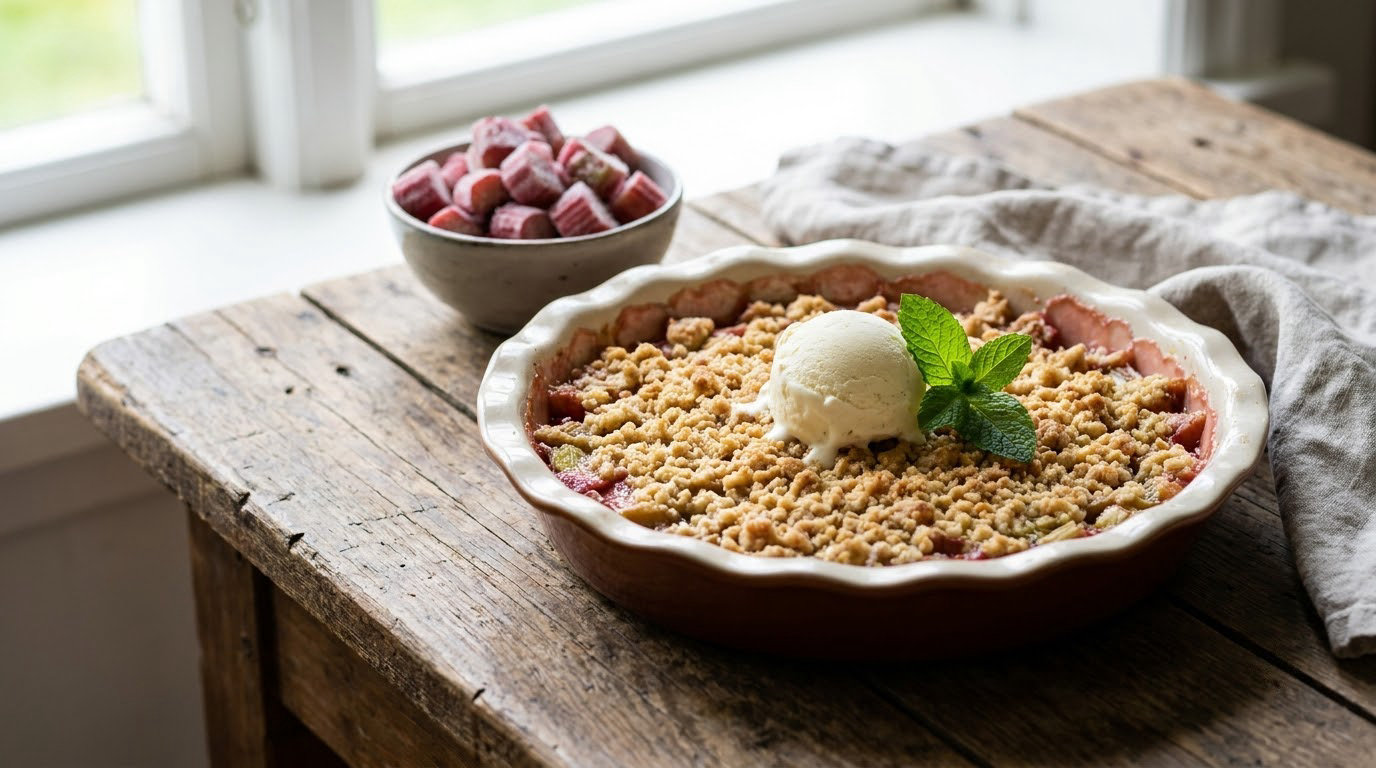
Rhubarb season runs about four to six weeks, and then it is gone until next spring. To learn how to freeze rhubarb for baking, wash the stalks, trim off the leaves and woody ends, slice them into even 1/2 to 1 inch pieces, spread the pieces in a single layer on a parchment-lined baking sheet, freeze them solid, then move them into labeled airtight freezer bags. No sugar, no blanching and no special equipment needed.
The part that trips people up is not the freezing. It is what happens in January, when a frozen bag meets a pie crust and the filling turns to soup. Fresh rhubarb is roughly 95 percent water, and freezing ruptures the cell walls, so thawed fruit gives up far more liquid than it did fresh. Freeze it properly and that is a non-issue for a pie baked straight from frozen. Skip the flash freeze and the pieces weld into one solid brick that never breaks clean.
Table of Contents
How to Freeze Rhubarb for Baking: Quick Guide
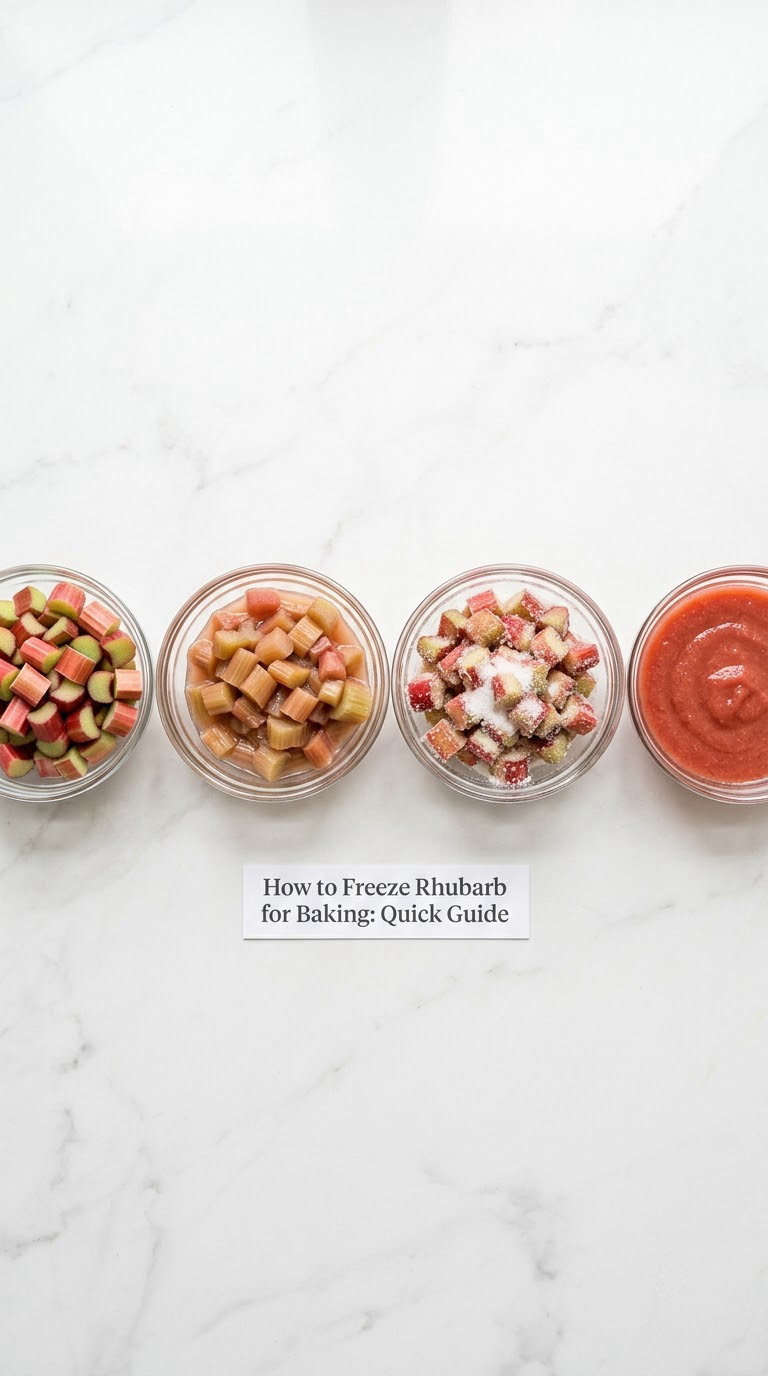
Four methods cover almost every baking need, from a plain rhubarb pie to a swirl in muffins.
| Method | Best used for | Preparation | Freezer storage time | Thawing needed | Yield from 1 pound fresh |
|---|---|---|---|---|---|
| Plain diced | Pies, crisps, cobblers, galettes, sauces | Wash, dry, cut, flash freeze in a single layer | 8 to 12 months | Bake from frozen, no thawing | about 4 cups diced |
| Blanched pieces | Pies and crisps where you want softer, deeper color | Boil 2 to 3 minutes, cool, drain, flash freeze | 10 to 12 months | Bake from frozen | about 3 cups, softened |
| Sugar-packed | Pies, cobblers, freezer jam, anything already sweet | Toss with sugar, rest, pack with extra syrup | 9 to 12 months | Bake from frozen | about 3 cups plus syrup |
| Puree | Cakes, quick breads, smoothies, sauces, fillings | Chop, cook briefly to soften, blend, portion | 9 to 12 months | Add straight from frozen | about 2 cups puree |
How to Prepare Rhubarb Before Freezing
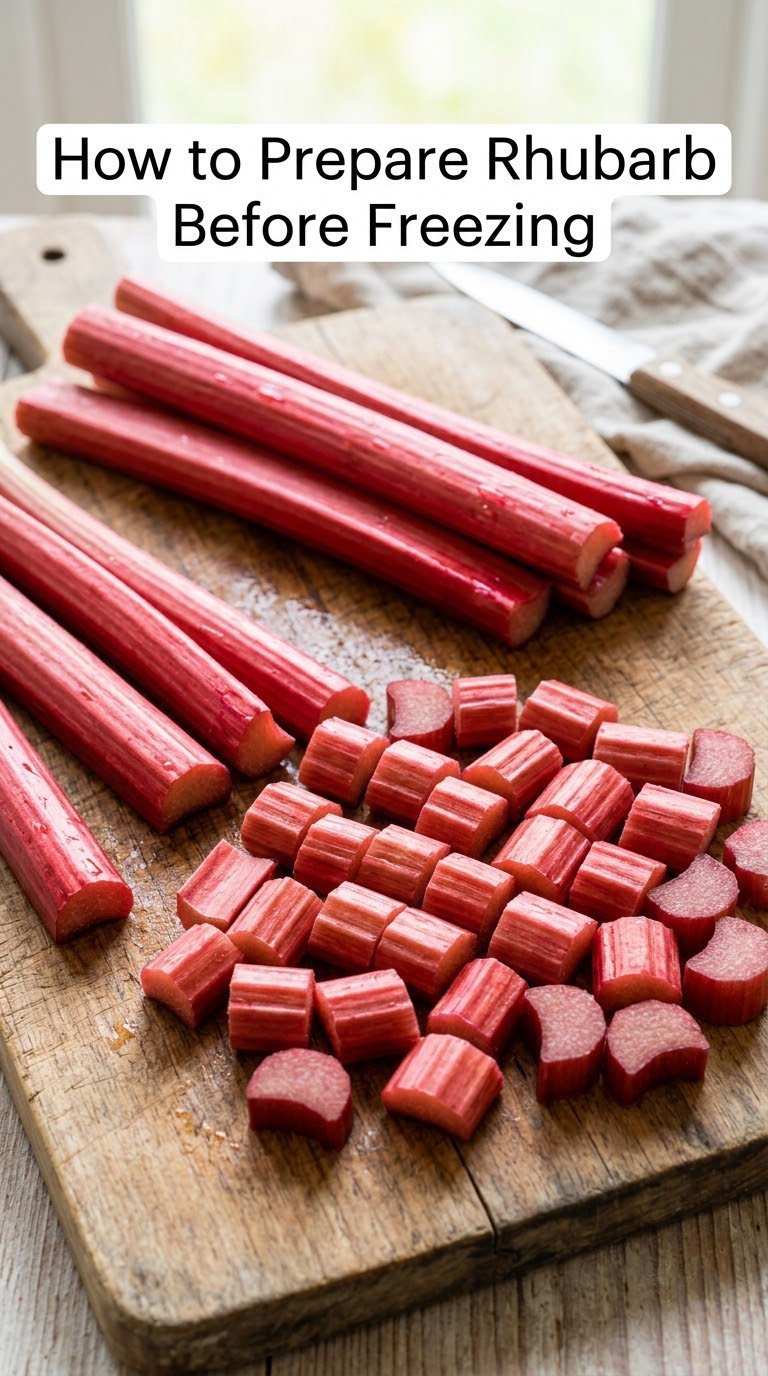
Pick stalks that are firm, heavy for their size and brightly colored. Soft spots, splits or a hollow core mean the piece is already breaking down and will not improve in the freezer.
Slice the leaves off first and compost them. Rhubarb leaves carry a high concentration of oxalic acid, which is why the stalks are cooked before eating and the leaves never are.
Trim the woody end from the bottom of each stalk, then the stringy outer skin if the stalk is old and wide. Younger stalks need nothing more than the leaf and the base removed.
Wash under cool running water and dry thoroughly. This is the single step people rush, and it is the one that causes clumping. Spin in a salad spinner or roll the stalks in a towel, then cut. Any surface moisture left on the pieces freezes into one fused block.
Cut to the project. One-inch pieces for pies and crisps where you want distinct chunks, half-inch pieces for muffins and quick breads, and slices for galettes. A pound of trimmed rhubarb gives you roughly four cups of diced fruit.
Which Freezing Method Is Best for Baking?
Plain frozen rhubarb is the most flexible. It takes no added sugar, so you can dial the sweetness in the recipe, and it cooks down to the same soft texture as fresh in a pie or crisp. If you only learn one method, learn this one.
Blanched rhubarb keeps its color a little longer and turns softer, which is a genuine advantage in a cooked filling where you do not want firm pieces. It is optional, not required. Blanching shortens the storage life a little and softens the fruit, so skip it for a jam you want to keep whole.
Sugar-packed rhubarb arrives already sweet and swimming in syrup, so it belongs in desserts where the recipe expects sweetness. It is not a good fit for anything you are trying to keep low in added sugar, and it reduces rather than sets.
Puree is the most useful form for a quick bread or a cake batter because it disperses evenly with no sinking. It also carries all the fiber and flavor of the stalk, so nothing is wasted.
How to Freeze Rhubarb for Baking Without Sugar
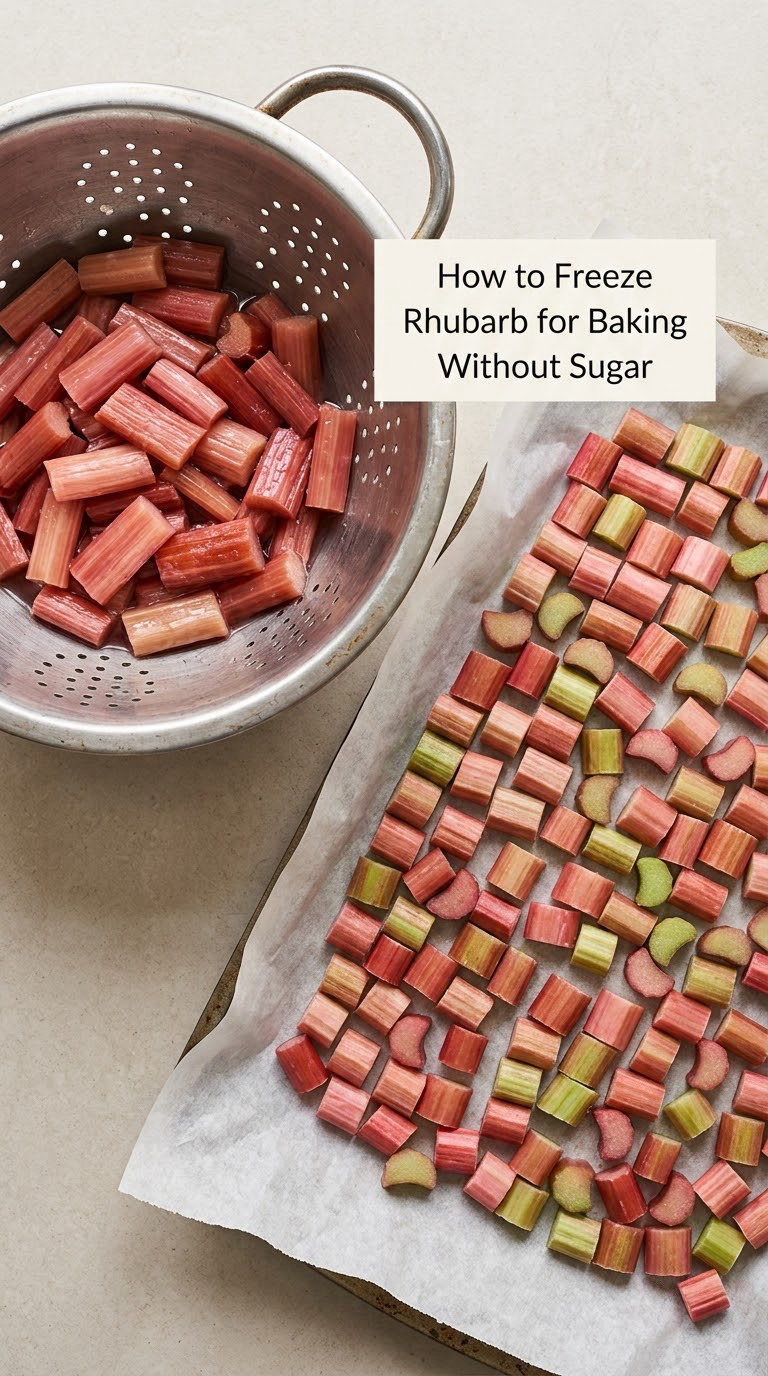
- Wash and dry. Rinse the stalks under cool water, trim the leaves and woody ends, and dry completely.
- Cut evenly. Slice into 1/2 to 1 inch pieces, or leave stalks whole for stews and sauces.
- Blanch if you want. Drop the pieces into boiling water for 2 to 3 minutes, then drain and cool. Optional for baking.
- Flash freeze. Spread the pieces in a single layer on a parchment-lined baking sheet. Freeze 1 to 2 hours until solid.
- Bag and label. Transfer to airtight freezer bags or rigid containers, leaving 1 inch of headspace for expansion. Squeeze the air out, seal, then write the method, the portion size and the date on the bag.
Portion as you bag. Two cups per bag is the standard measure and matches most pie and quick bread recipes exactly. Flat bags stack neatly and thaw faster than a lumpy heap.
How to Freeze Rhubarb in Sugar
A practical ratio is one-quarter cup of sugar per pound of diced rhubarb. That is enough to draw out some juice and keep the pieces from browning without turning them into a solid block later.
Toss the diced rhubarb with the sugar in a bowl, then let it sit for about 30 minutes at room temperature. Spoon the whole mixture, juice and all, into freezer bags or containers, then press out the air and seal. The syrup that forms keeps the fruit from browning in the freezer.
The tradeoff is real. Sugar-packed rhubarb thaws into a syrupy, softer texture, so it behaves more like a ready-made pie filling than like plain fruit. It is wonderful for pie, cobbler and freezer jam, and it is not what you want in a tart recipe or anything aimed at reducing added sugar.
How to Freeze Rhubarb Puree
Chop the trimmed stalks, then either simmer them in a little water for 10 to 15 minutes until soft or cook them straight from frozen in a covered pan. Blend until smooth, either with a blender or an immersion blender in the pot.
Cool the puree completely, then measure it into standard portions. One cup per bag or one cube per ice-cube tray well works, since most cake and quick bread recipes call for a cup or two. Freeze, then pop the cubes into a labeled bag so they do not scatter.
A pound of fresh rhubarb makes roughly two cups of puree. Freeze the cubes flat on a tray first if you have the space, then stack them in the bag.
How Long Does Frozen Rhubarb Last?
A home freezer sits at about 0°F (minus 18°C) and is the reliable anchor for every number below.
| Method | Storage container | Best quality | Still usable for baking |
|---|---|---|---|
| Plain diced | Freezer bag, air removed | 8 to 12 months | Up to 12 months |
| Plain diced | Rigid airtight container | 8 to 10 months | Up to 12 months |
| Blanched pieces | Freezer bag or container | 10 to 12 months | Up to 12 months |
| Sugar-packed | Bag or container with syrup | 9 to 12 months | Up to 12 months |
| Puree | Cubes or flat bag | 9 to 12 months | Up to 12 months |
| Any method | Vacuum sealed | 18 to 24 months | 2 to 3 years for cooked dishes |
Quality and safety are not the same line. Past twelve months the fruit is still perfectly safe frozen, it just fades in color and loses aroma, and baked filling is forgiving enough that it rarely matters.
Freezer burn looks like pale, dry, papery patches on the fruit. It does not make rhubarb unsafe, it just ruins the texture. Push the air out of the bag before sealing and you will mostly avoid it.
How to Thaw Frozen Rhubarb for Baking
For pies, crisps and cobblers, do not thaw. Go straight from freezer to oven. Frozen fruit releases its liquid during the bake rather than before it, which is exactly what you want in a filling.
For a sauce or a soup where you want control, thaw in the fridge overnight in a bowl or container with a lid. Expect the pieces to go quite soft and give up roughly half their volume in liquid. Use that liquid, do not throw it away.
A countertop thaw overnight in a sealed container takes about 6 to 8 hours and releases even more liquid than the fridge. A microwave on low for 20 to 30 seconds works in a pinch, and it softens the fruit enough to chop immediately.
Whenever you do thaw, drain the liquid and either stir it back into the filling or reduce it on the stove for a few minutes until it thickens slightly. Adding a spoonful of extra cornstarch or flour to a pie filling is the standard fix when the filling looks loose before it goes in the oven.
Baking a pie straight from frozen needs two small adjustments. Add 15 to 20 minutes to the bake time, and start checking 20 minutes earlier than usual. Bakers who get trapped by watery fillings usually forgot the starch, not the fruit.
How to Use Frozen Rhubarb in Baked Recipes
Frozen diced rhubarb drops straight into a pie filling or crisp filling at the same quantity as fresh. Do not drain it, and cut the sugar back by about a quarter cup if the fruit is especially tart.
In muffins, quick breads and cakes, fold frozen pieces straight into the batter and add two to three extra minutes to the bake. Frozen fruit works well here because the pieces melt into the crumb.
Sauces, jams and chutneys are the easiest place to use a surplus, since the extra liquid cooks down without any adjustment. A cup of puree per loaf of quick bread is the usual measure.
For a bright note, stir a teaspoon of lemon juice or orange zest into the filling. It sharpens fruit that has sat in the freezer, and it costs nothing.
If these bakes are in your plan, my spiced banana rhubarb muffins and the rhubarb banana crumble both take frozen fruit happily. And if the tray goes into the oven and comes out flat, the cause is usually leavening rather than fruit, which baking soda vs baking powder explains well. If you are still measuring by guesswork, the ounce-by-ounce flour guide is worth a bookmark.
Common Mistakes When Freezing Rhubarb
- Drying the stalks badly. Surface water glues everything together. Dry first, cut second.
- Skipping the flash freeze. Pieces dumped into a bag freeze as one solid lump. Thirty minutes to two hours on a lined tray separates every piece.
- Bagging while still warm. Warm fruit steams inside the bag and softens. Freeze solid first, then pack.
- Filling bags completely. Fruit expands. Leave an inch of headspace.
- Leaving air in. Squeeze the bag gently, or run a straw along the seam to draw the air out before sealing.
- Thawing and refreezing. Each cycle costs texture. Plan on one portion per bag instead.
- Expecting crispness. No method keeps rhubarb crisp through freezing. It is a cooked fruit, and pies and crisps are the right home for it.
- Ignoring limp or browning fruit. Past twelve months, skip it and move on.
Frequently Asked Questions
Should rhubarb be washed before freezing?
Yes. Rinse the stalks under cool running water, then dry them completely before cutting. Rhubarb holds water in its leaf grooves and stem hollows, and that trapped surface moisture freezes the pieces into a single clumped block. Dry first, cut second, and use a salad spinner or a clean towel if you have a lot of stalks.
Does frozen rhubarb need to be blanched first?
No. Blanching for 2 to 3 minutes is optional and is mostly useful if you want softer pieces and a slightly deeper color in a cooked filling. It also trims a little off the storage life. Most home bakers who freeze rhubarb for pies, crisps and muffins never blanch it, and the results are indistinguishable once it is baked.
Why is there so much liquid when frozen rhubarb thaws?
Because freezing ruptures the fruit’s cell walls. Rhubarb is about 95 percent water, so thawed pieces release a large amount of liquid and soften. That is normal, not spoilage. Do not drain it before a pie or crisp, since the liquid thickens during the bake. Drain only for sauces, and use the liquid rather than pouring it away.
Can I bake a pie using frozen rhubarb without thawing it first?
Yes, and that is the better method. Go straight from the freezer to the oven, add 15 to 20 extra minutes to the bake, and start checking about 20 minutes early. The fruit releases its liquid during the bake, where the starch in the filling can thicken it. If you want extra insurance, add a tablespoon more cornstarch to the filling.
How much rhubarb can I freeze for one pie?
Most standard 9-inch rhubarb pies call for about 3 to 4 cups of diced fruit, which is roughly three quarters of a pound of trimmed stalks. Freeze it in 2-cup bags so one pie takes one and a half bags and nothing is left in the freezer to thaw and refreeze. A pound of trimmed stalks gives you close to 4 cups diced.
Can I substitute sugar-packed frozen rhubarb for plain frozen rhubarb?
You can, but cut the added sugar in the recipe by roughly a quarter cup first and expect a softer, more syrupy filling. Sugar-packed rhubarb works well in pie, cobbler and freezer jam. It is a poor swap in a tart pie, a low sugar recipe, or anywhere you need the fruit to hold its shape.
Conclusion
Start by washing, drying, trimming and cutting the rhubarb while it is fresh, then flash-freeze it in a single layer and bag it plain. That is how to freeze rhubarb for baking with the most flexibility later, because you control the sugar in the recipe rather than the freezer.
Write the method, the portion size and the date on every bag before it goes back in the drawer. Six months from now, you will be glad you did.