
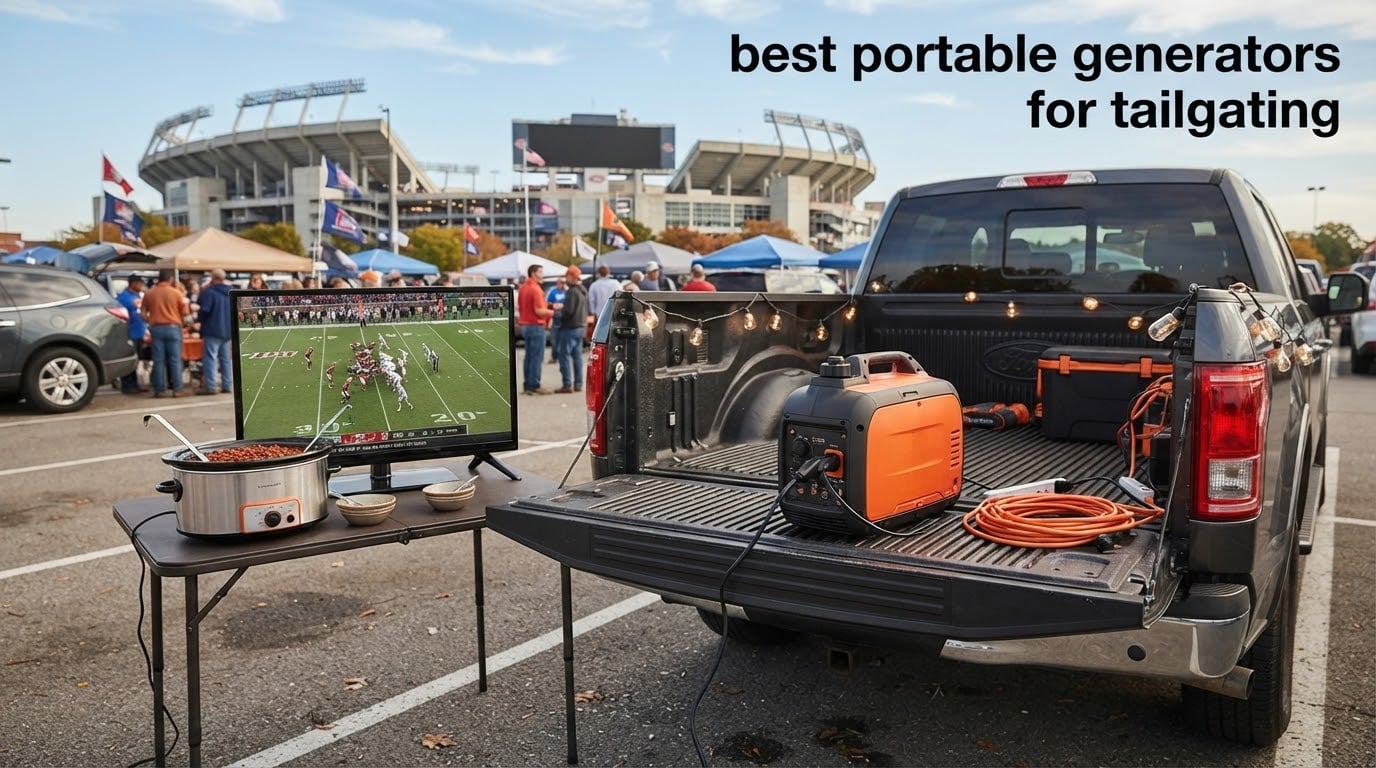
Most tailgates do not need a generator that can run an air conditioner and a coffee maker at the same time. They need about 1,500 watts of clean, quiet power for a TV, a soundbar, string lights and a slow cooker, and the best portable generators for tailgating deliver that without becoming the loudest thing in the row. Ten units below, ranked on running watts, noise, dry weight and runtime, with an honest note on who should skip each one.
This season we went through the specs on ten inverter-class portable generators in the 1,260 to 3,500 running-watt range, which is the band that actually works for a stadium parking lot. Anything above 4,500 running watts belongs in our home backup generator guide instead. Our narrower test story here is simple: read the noise number, then read the dry weight, because those two figures decide whether you enjoy your tailgate or spend it wrestling with a machine across a gravel lot.
One thing worth saying up front. Manufacturer dBA figures are not measured on a shared standard, so a 59 dBA claim and a 64 dBA claim from two different brands do not prove one is quieter. What you can trust is the shape of the number, and we use that in every pick below. Tailgaters in the forums also make the same point: the practical noise test is whether you can still enjoy music next to the unit, not what the box claims.
Table of Contents
Quick Answer: The Best Portable Generator for Tailgating in 2026
The WEN 56235i is the best portable generator for most tailgaters in 2026. It runs 1,900 watts, weighs 39 pounds and carries a two-year limited warranty, and 2,627 owners have already rated it. If you need more than that, the PowerSmart 3800W dual-fuel unit adds propane flexibility at 50.7 pounds.
- Best overall: WEN 56235i – 1,900 running watts, 39 pounds, under 10 hours on one gallon.
- Best value dual-fuel: PowerSmart 3800W – 3,300 running watts on gasoline, 3,100 on propane, 59 dBA at 25 percent load.
- Best budget inverter: PowerSmart 2500W – 1,900 running watts and a 52 dBA floor at 39.7 pounds.
- Lightest to carry: AIVOLT 1600W – 28 pounds, 1,260 running watts, 57 dBA at 23 feet.
- Best for a clean-power guarantee: Champion 4000W inverter – 3,000 running watts, under 3 percent total harmonic distortion, 48.1 pounds.
- Best for long game days: ERAYAK 4500W – 3,500 running watts on a 2.25-gallon tank, up to 16 hours.
None of these units are suitable for indoor use, inside a tent, or inside a parked vehicle with the tailgate closed. Placement rules come later in this guide and they matter more than any spec on the list.
Top 3 Tailgating Generator Picks


Best Portable Generators for Tailgating in 2026 at a Glance
| Product | Specifications | Action |
|---|---|---|
| WEN 56235i Super Quiet Inverter |
|
Check Latest Price |
| PowerSmart 3800W Dual Fuel Inverter |
|
Check Latest Price |
 Oxseryn 4400W Open Frame Oxseryn 4400W Open Frame |
|
Check Latest Price |
 Champion 4000W Inverter Champion 4000W Inverter |
|
Check Latest Price |
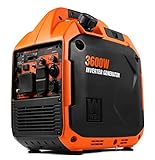 WEN 56360i RV-Ready Inverter WEN 56360i RV-Ready Inverter |
|
Check Latest Price |
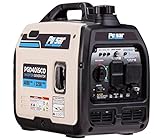 Pulsar PGD40ISCO Pulsar PGD40ISCO |
|
Check Latest Price |
 Oxseryn 2800W Inverter Oxseryn 2800W Inverter |
|
Check Latest Price |
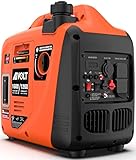 AIVOLT 1600W Inverter AIVOLT 1600W Inverter |
|
Check Latest Price |
 ERAYAK 4500W Inverter ERAYAK 4500W Inverter |
|
Check Latest Price |
| PowerSmart 2500W Inverter |
|
Check Latest Price |
1. WEN 56235i Super Quiet Inverter – the best overall tailgating generator
WEN Super Quiet 2350-Watt Portable Inverter Generator with Fuel Shut Off, Gasoline Power, Ultra Lightweight (56235i), Black
- Easy one-person carry at 39 pounds
- Quiet enough to talk over
- Clean inverter output for TVs and laptops
- Fuel shutoff switch protects the carburetor
- Two-year limited warranty
- 1-gallon tank means roughly 10 hours on a fill
- Surge margin is tight for large motors
- Low-oil shutdown can trip on sloped ground
The WEN 56235i is the unit we keep coming back to because the combination of 39 pounds and 1,900 running watts solves the actual tailgate problem. One person can lift it out of a sedan trunk, walk it to a spot 20 feet from the setup, and have it running before the second group unpacks.
Outlets are two three-prong 120V receptacles, one 12V DC receptacle and two 5V USB ports. That covers a TV, a soundbar, string lights and phone charging without a single power brick fight, and the inverter electronics keep the output clean enough for a laptop or a CPAP machine.
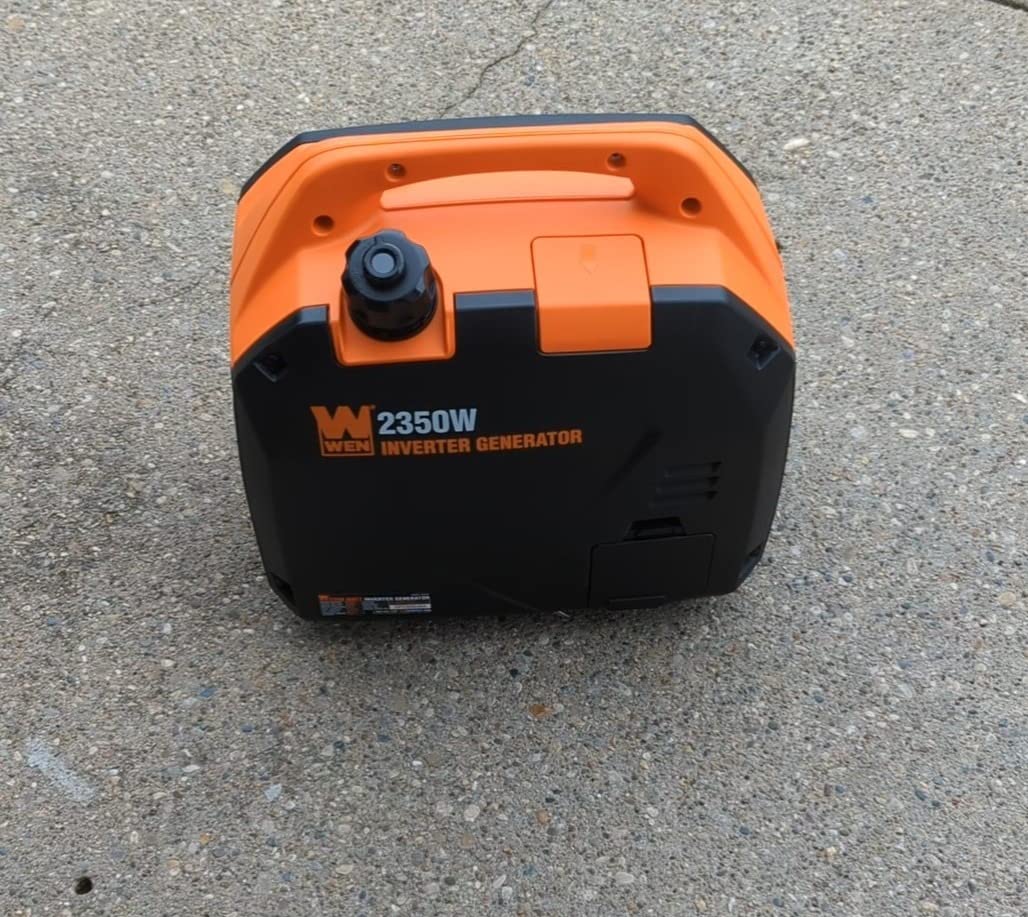
Owners consistently report first- or second-pull starts and quiet operation, and the 79cc four-stroke engine is one of the more compact designs in this group. The fuel shutoff switch burns off remaining fuel in the carburetor before shutdown, which is a small feature that meaningfully extends engine life.
The honest limitation is surge headroom. At 1,900 running watts from a 2350W peak rating, this unit wants you to start one big appliance at a time rather than everything at once. A microwave and a TV starting in the same second can trip the overload protection.
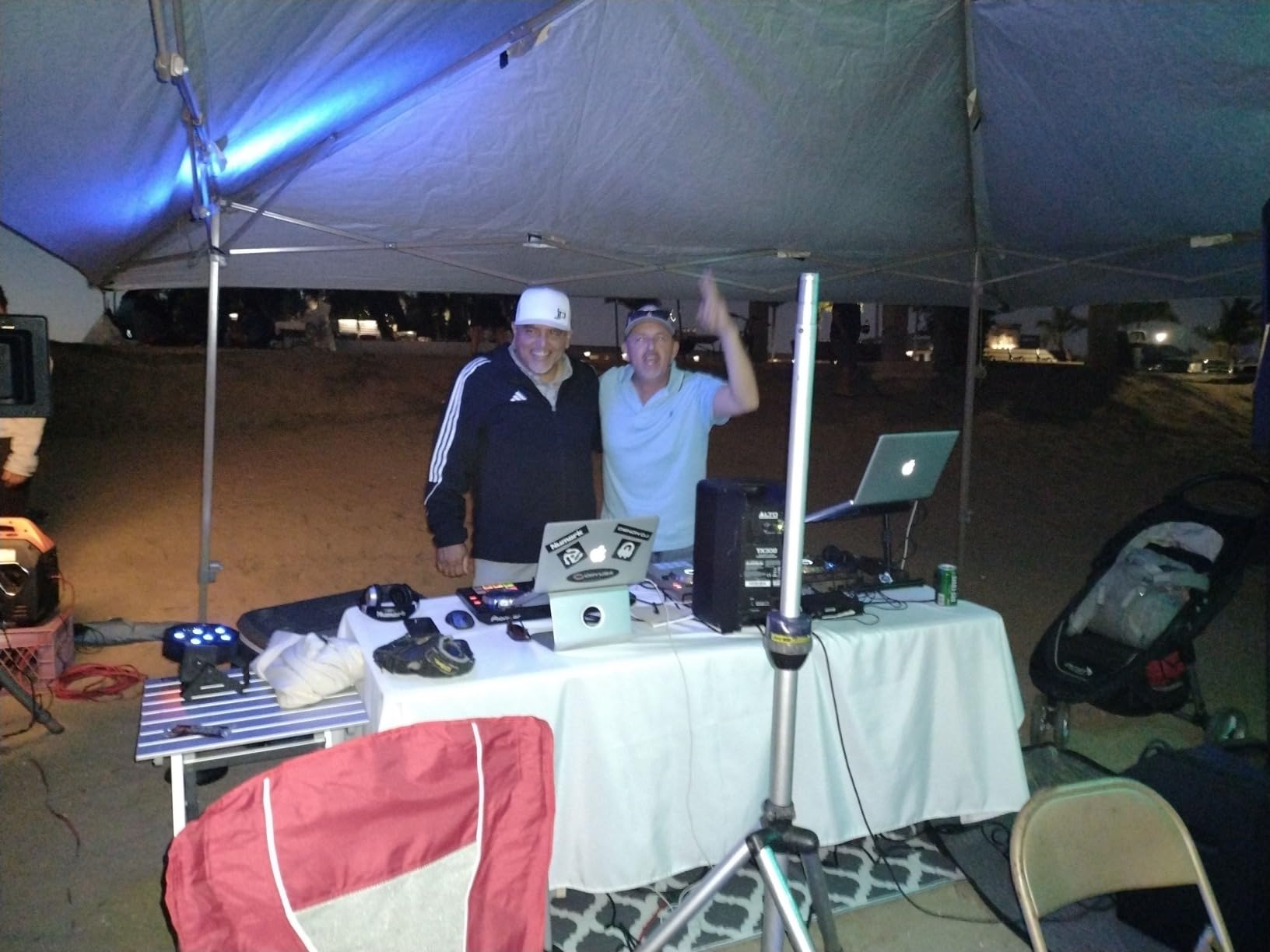
Who this generator fits
This is the pick for a group running one TV, a soundbar, a slow cooker and LED string lights. It also works as a storm backup for a fridge and a few lights, which is how most owners actually use it.
If your setup is a single 40-inch TV with speakers and nothing else, you are overbuying slightly – though the headroom buys you peace of mind when someone plugs in a hair dryer.
Who should skip it
Skip it if you plan to run a microwave, a portable air conditioner or a pellet grill ignition alongside your TV. The 1900-watt ceiling is real, and the small tank means one refill across a long double-header.
Owners also report occasional engine failures and slow repair support after a few months, so check your warranty terms before the season starts rather than on game day.
2. PowerSmart 3800W Dual Fuel – the best value pick with gasoline or propane
- Gasoline or propane with included regulator hose
- Digital display shows live wattage draw and run hours
- CO sensor with automatic shutdown
- 30A twist-lock plus household duplex
- Parallel ready to double output
- Heavier than most tailgating-size units at 50.7 pounds
- 1.3-gallon gas tank needs refills overnight
- Service panels need a Phillips screwdriver
- Noise climbs on gasoline under heavy load
Dual-fuel capability is the reason this unit earns its place. Propane stores indefinitely, travels next to a grill without a fuel can in the trunk, and keeps the carburetor clean between uses, which is a genuine convenience for a once-a-week tailgate.
Output is 3,300 running watts on gasoline and 3,100 on propane, with 3,800 and 3,500 peak respectively. That covers a bigger group: two TVs, a blender station, a griddle and a mini fridge on the same circuit.
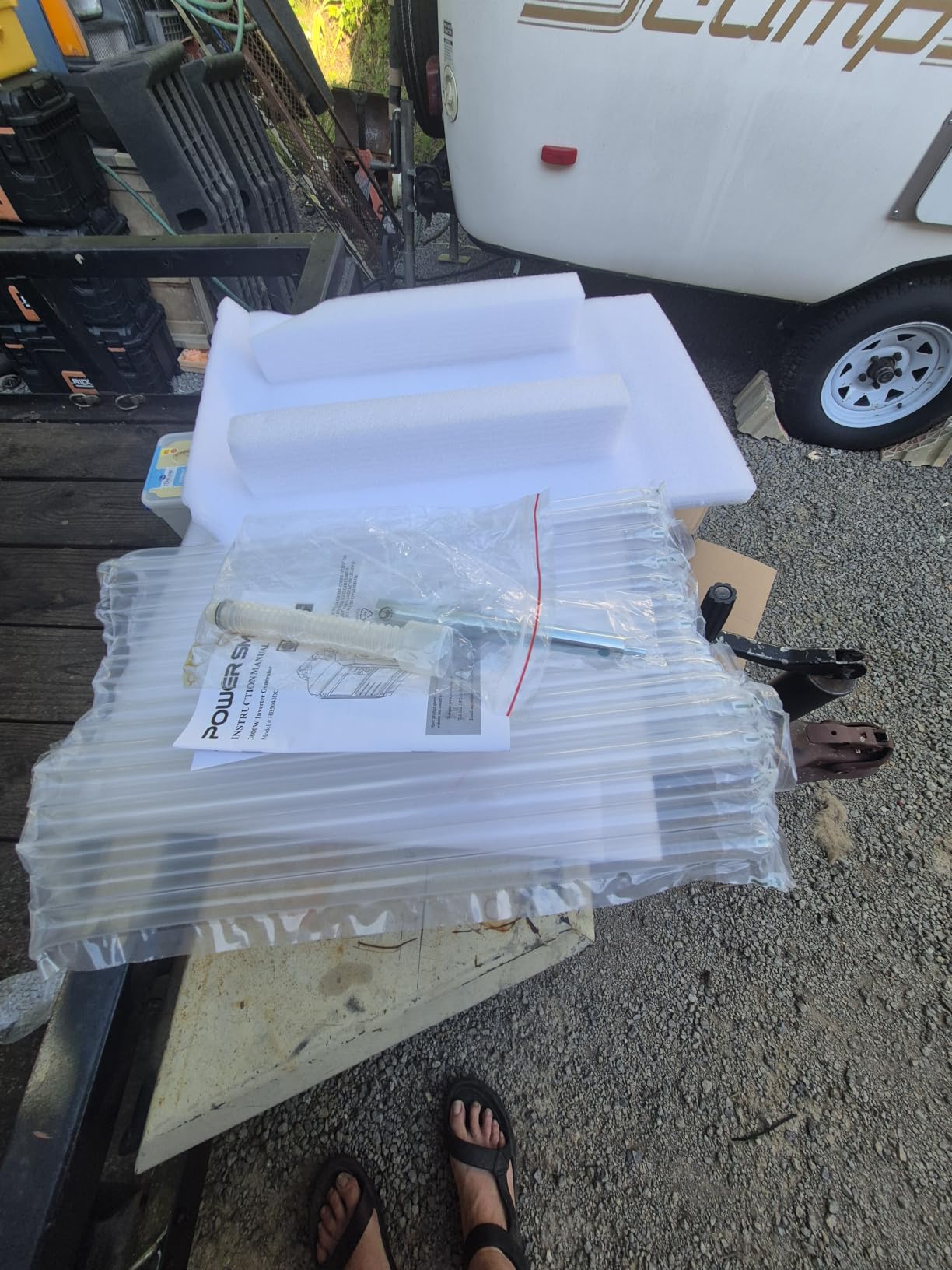
The digital control display is more useful than it sounds. It shows real-time wattage draw and cumulative run hours, so you can watch your actual load instead of guessing, and it tells you when you are approaching the 80 percent continuous threshold.
Runtime is 8 hours at 25 percent load on the 1.3-gallon gas tank, or up to 24 hours on a standard 20-pound propane tank. Protection includes overload, short circuit, CO sensor and low oil shutdown, and it carries a two-year limited warranty with lifetime technical support.
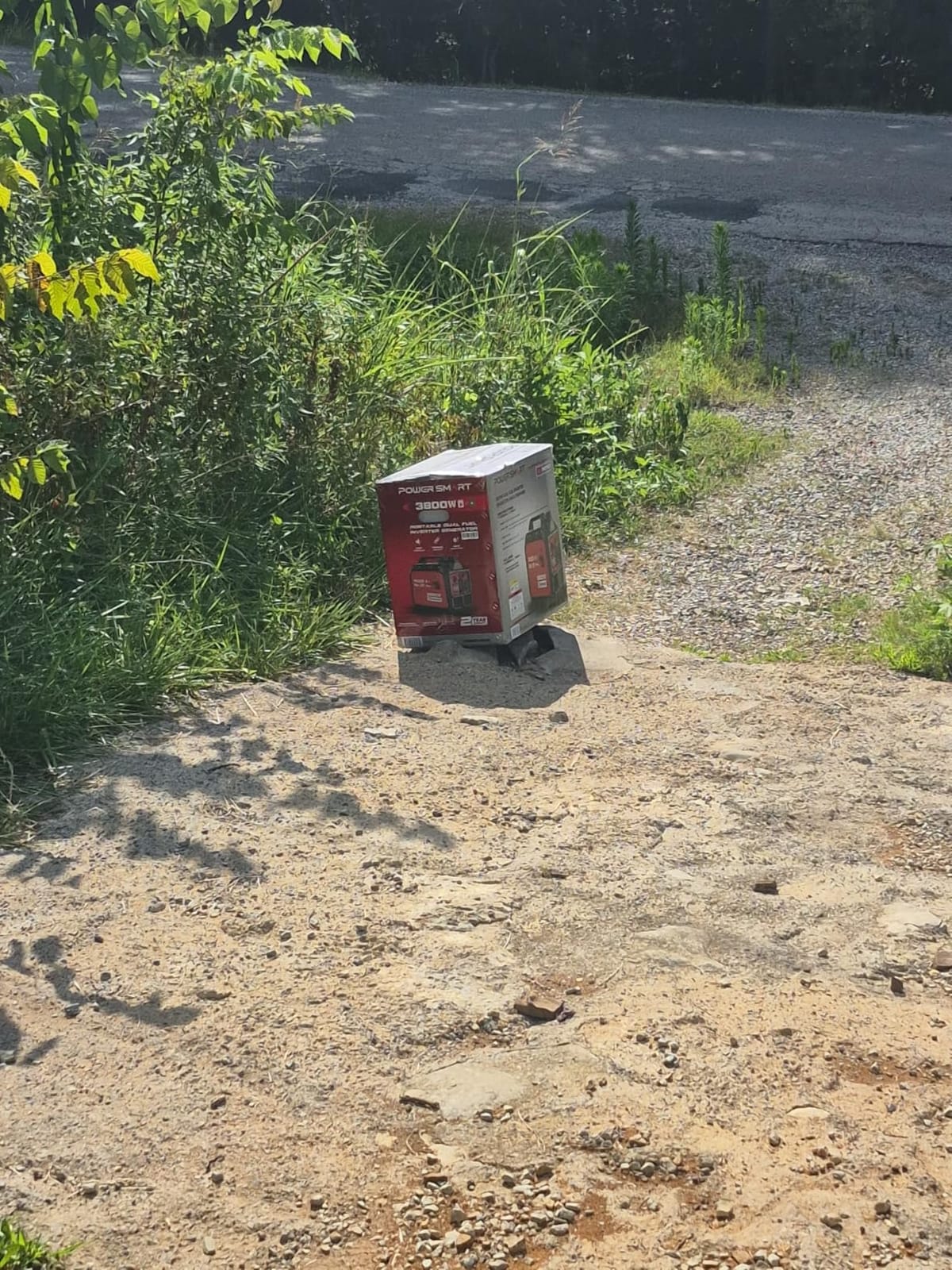
Who this generator fits
Pick this one if your group runs a griddle or a blender station alongside a TV, or if you already own a propane rig for a grill. The 30A L5-30R twist-lock and 20A duplex cover appliance and trailer needs without an adapter.
It is also the option for anyone who does not want stale gasoline sitting in a tank between seasons.
Who should skip it
Skip it if you have to carry it any real distance on your own. At 50.7 pounds with no wheel kit in the box, this is a two-person or cart job, and pulling it across a gravel lot is the complaint that comes up most.
The screw-fastened access panels also mean oil checks need a screwdriver, which is friction you will feel at halftime with cold hands.
3. Oxseryn 4400W Open Frame – high peak watts when the RV comes along
- One of the highest-output units here at 3400 running watts
- 2-gallon tank with fuel gauge
- ECO mode cuts noise and fuel at light loads
- RV outlet for direct trailer hookup
- Cold start technology
- Open frame is louder than an enclosed inverter
- 56 pounds is too heavy for a solo carry
- Only a one-year manufacturer warranty
- Factory fuel smell for the first few runs
This is among the highest-output units in the roundup at 3,400 running watts and 4,400 peak, and it is the one to consider if you are powering an RV alongside the tailgate. The included RV port means no adapter between the trailer and the generator.
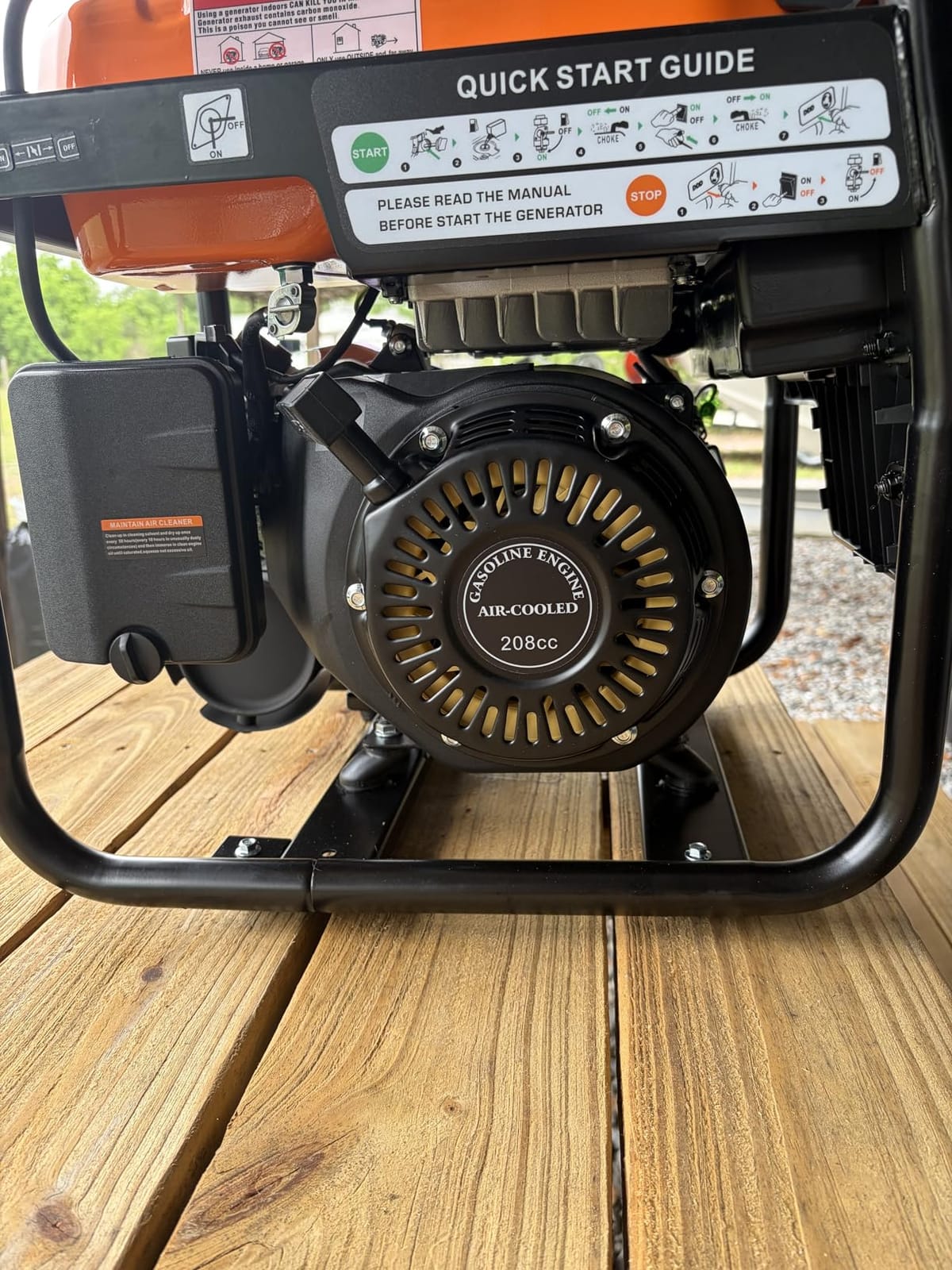
The 2-gallon tank with a fuel gauge and ECO mode gives up to 14 hours at 25 percent load, which is the kind of number that removes the mid-game fuel panic entirely.
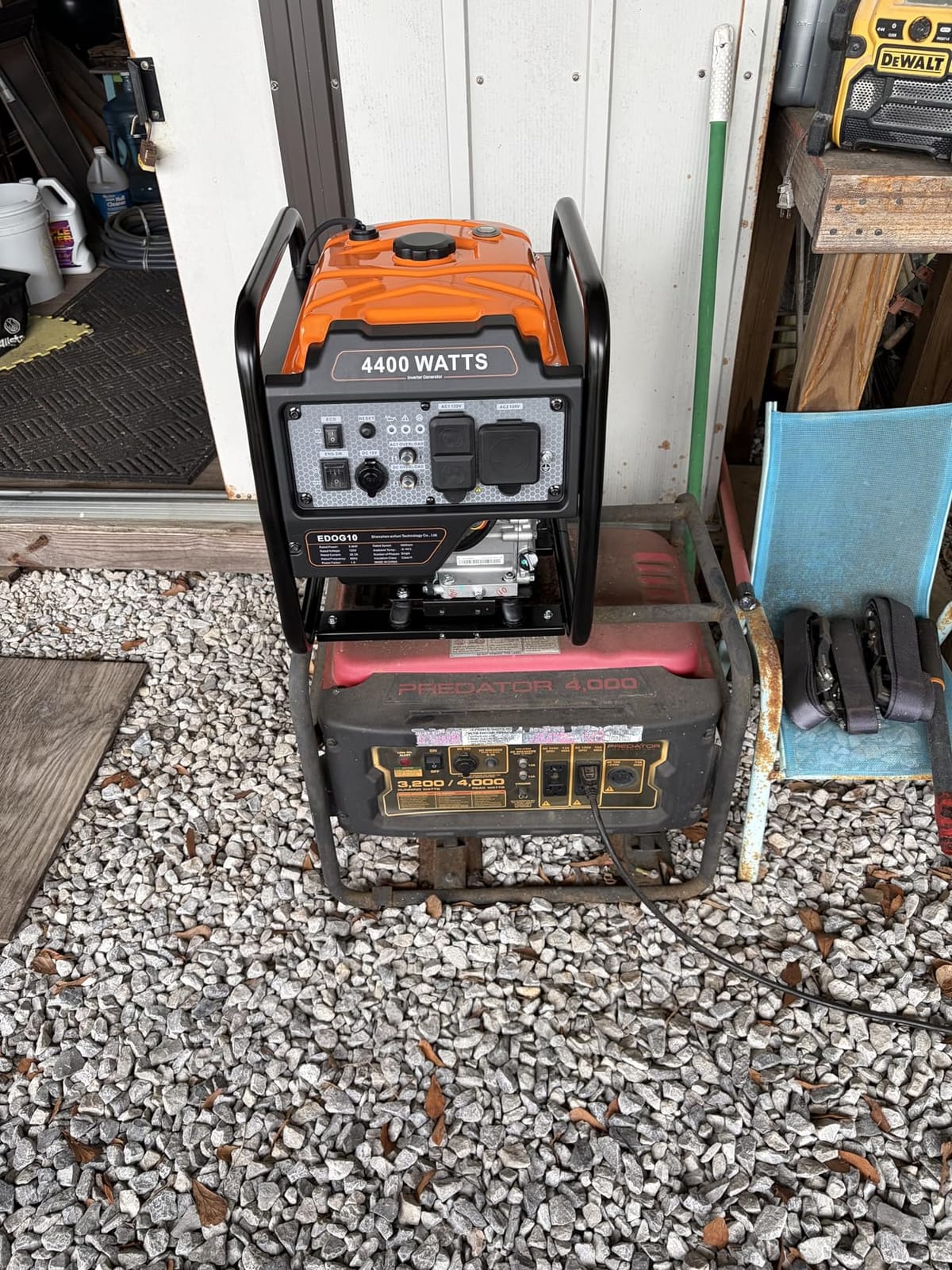
Outlets cover two 120V AC ports, one 12V DC port and the RV outlet. Cold start technology helps in a cold-weather lot, and low oil shutdown plus overload protection cover the basics.
Weight is 56 pounds and the design is open frame, which is why the noise figure is under 72 dBA at 23 feet rather than in the high 50s. Open frame means a quieter buy is possible, but it also means more sound and a slightly rougher tone at lower loads.
Who this generator fits
This suits a group that brings an RV, a trailer or a pile of battery chargers, and it is a solid backup unit for a weekend storm outage. Peak headroom is useful for anything with a compressor in it.
Users running saws or pressure washers alongside a campsite should read our chainsaw generator guide for the peak-wattage math, because those tools are where starting watts really bite.
Who should skip it
Skip it for a close-in tailgate setup. An open-frame unit at this output is not a conversation-friendly neighbour, and the one-year warranty is the shortest in this group for a machine of this size.
Also skip it if you intend to lift it solo out of a trunk. Nobody rolls 56 pounds across gravel gracefully.
4. Champion 4000W Inverter – the cleanest power for sensitive electronics
- Highest rated unit in the group at 4.6 stars
- Clean output under 3 percent THD
- Light for its class at 48.1 pounds
- CO Shield auto shutoff
- Three-year warranty with lifetime support
- Highest outlay in this roundup
- CO Shield can trip in enclosed setups
- Parallel kit sold separately
- 3000 running watts is well under the headline number
This is the highest-rated generator in our group at 4.6 stars across 680 reviews, and the reason is electrical rather than mechanical. Output stays under 3 percent total harmonic distortion, which is the number that protects a TV, a soundbar, a laptop or a medical device.
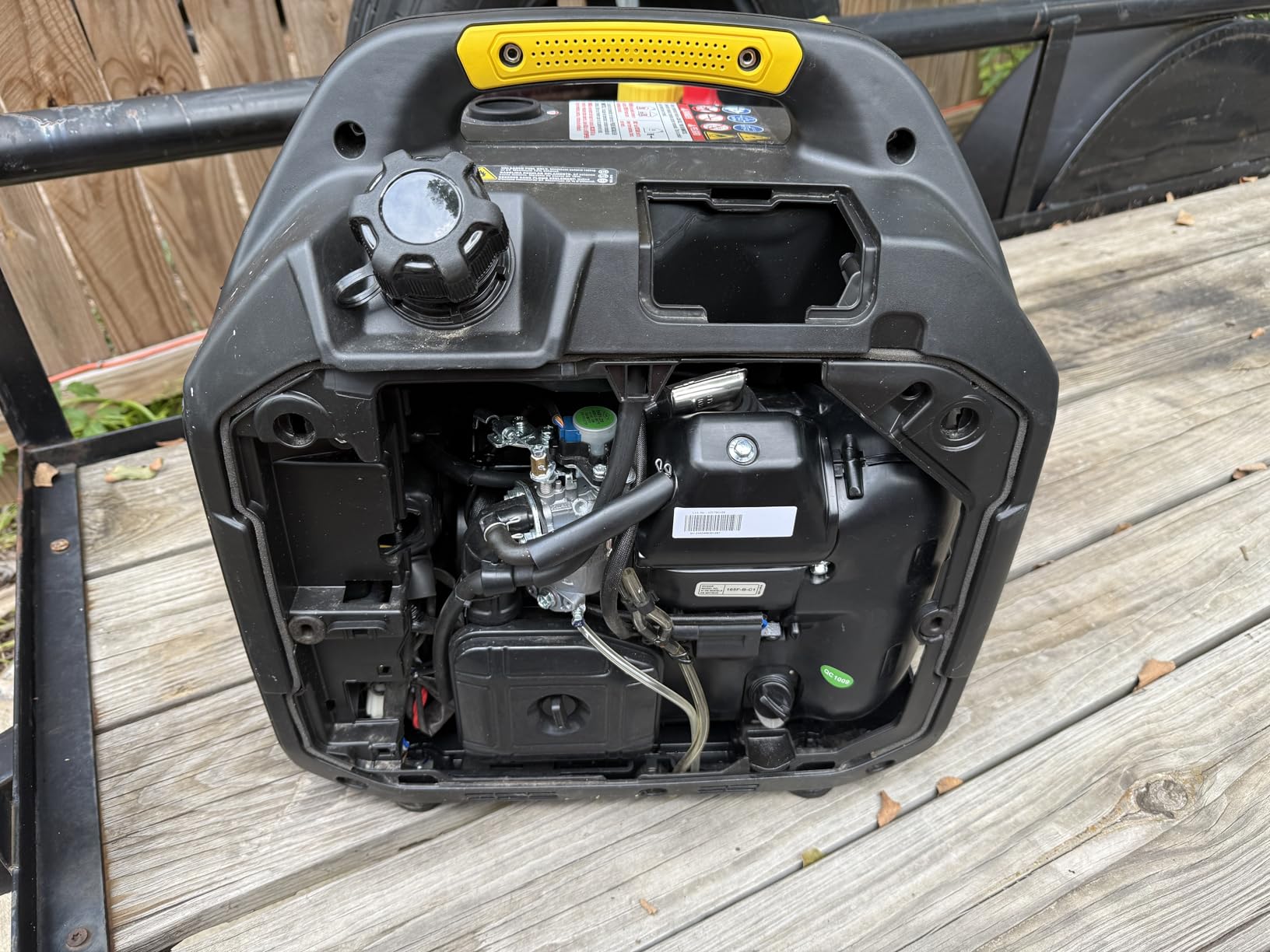
That number sits alongside the quietest figures here, and it is one of the lighter 4,000-watt inverters available, running up to 10 hours on its 1.54-gallon tank. The CO Shield system shuts the engine down when carbon monoxide levels rise.
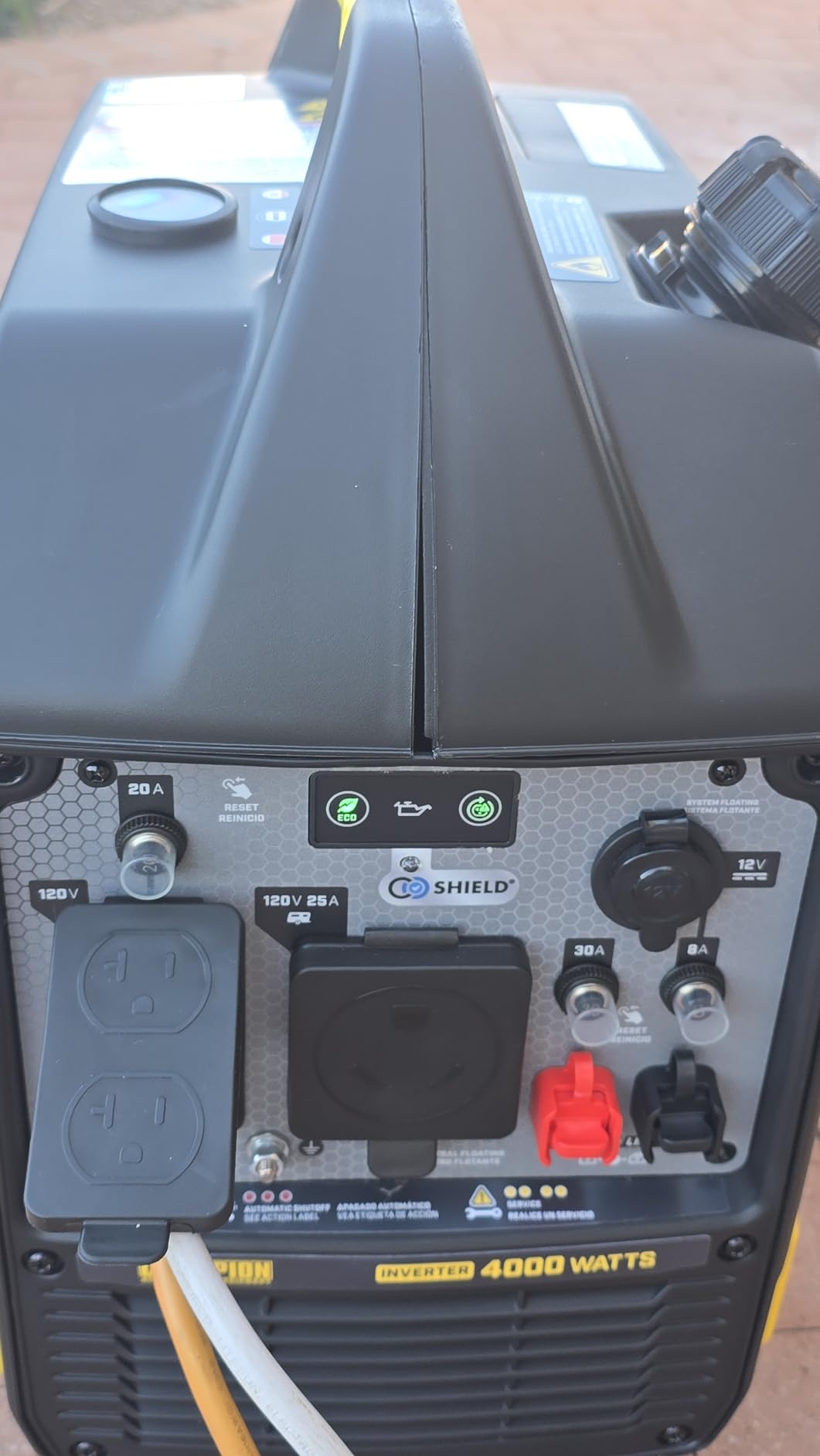
Outlets include a 25A TT-30R RV outlet, a 20A household duplex, a 12V automotive-style outlet and parallel outlets. That TT-30R matters if you are powering a trailer or a portable air conditioner rather than a television.
Note the gap between the 4,000-watt headline figure and the 3,000 running watts. Size on the running number. If you want a broader look at how Westinghouse and comparable brands handle clean output, our Westinghouse generator reviews cover that class in detail.
Who this generator fits
It fits a group whose priority is protecting electronics rather than raw output. CPAP machines, projectors, a decent sound system and a TV are all safe loads on this unit.
The three-year limited warranty and free lifetime technical support also make it the least stressful ownership choice here.
Who should skip it
Skip it on cost if a TV and a slow cooker is the whole plan. You are paying for electrical headroom you may not use, and cheaper inverters in this roundup handle that setup fine.
Also be ready for CO Shield to trip. In a cramped lot with the unit boxed in by vehicles, that shutdown is the system working as intended, not a defect.
5. WEN 56360i – the mid-size RV-ready inverter
WEN 3600-Watt Portable Inverter Generator, RV-Ready, Quiet and Lightweight with Fuel Shut Off (56360i)
- More output than the 2350W model in the same quiet footprint
- About 46 pounds
- Fully enclosed inverter body
- TT-30R RV receptacle included
- Three-year limited warranty
- 1.6-gallon tank means short runtime between refills
- Carburetor fuel needs draining during long storage
- Costly for its wattage class
This is the middle step between the 56235i and a full-size inverter. A 149cc four-stroke engine produces 2,900 running watts from 3,600 surge watts, and the fully enclosed body keeps it in the same noise territory as its smaller sibling.
At 46.3 pounds it is still a one-person lift for most adults, which is why it works as a step-up rather than a jump. Outlet count is six: two three-prong 120V receptacles, a TT-30R RV receptacle, a 12V DC receptacle and two 5V USB ports.
The fuel shutoff switch drains the carburetor on shutdown, which helps if you are storing the unit between seasons. Buyers pick this model specifically when they need more power than an entry inverter without giving up the quiet, light footprint.
Ratings sit at 4.4 across 609 reviews, slightly below the 2350-watt WEN, and the reservations are consistent: runtime and cost.
Who this generator fits
It fits a group running a TV, a microwave and a slow cooker together, or anyone pairing a trailer with a tailgate. The RV receptacle removes one adapter from the list.
If your load is measured in watts rather than in air conditioning units, this is a comfortable middle ground.
Who should skip it
Skip it if a long day away from a fuel source is the plan. The 1.6-gallon tank gives the shortest useful runtime of the enclosed units here, and you will be topping it up between the third and fourth quarter.
If the unit sits unused for months, the carburetor needs draining first. That is normal maintenance, but it is a step you have to remember.
6. Pulsar PGD40ISCO – the quiet high-output unit for air conditioner loads
Pulsar PGD40ISCO Ultra Light Quiet 4000W Portable Gas Inverter Generator, white
- 3200 running watts handles air conditioners to 13500 BTU
- 59 dB among the quietest in this group
- Lightweight for a 4000-watt class
- Parallel ready to pair two machines
- Three-year limited warranty
- 1-gallon tank gives only about 4 hours at half load
- Just three outlets
- No USB or DC charging ports
The Pulsar leads this group on rated output per pound of money and per pound of machine. At 3,200 running watts from a 145cc engine and 47.3 pounds dry, it is the unit to look at if your tailgate load includes a portable air conditioner up to 13,500 BTU.
Noise is rated at 59 dB, which sits alongside the quietest inverters here, and the inverter output is clean enough for sensitive electronics and RV use. Automatic voltage regulation handles the switching that motor loads cause.
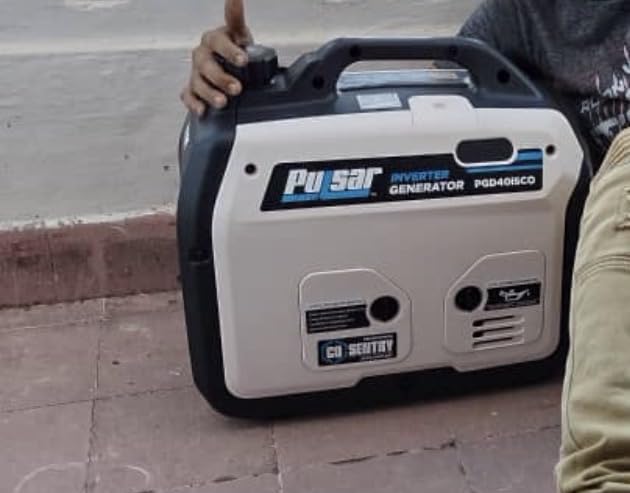
Three outlets is the trade-off that defines this machine. There is no USB and no 12V DC port, so phone charging means a wall adapter on the household duplex rather than a native port.
Parallel ready means a second unit can combine output, which is cheaper than trading up to a larger single generator if two groups want to share.
Who this generator fits
It fits a hot-weather lot, an RV hookup, or a group that wants maximum headroom at the lowest weight in the class. Anyone running a compressor-based appliance will feel the difference from a 1,900-watt unit.
For most tailgaters it is power you will not need, which is a fine reason to buy it anyway if you split costs across a large group.
Who should skip it
Skip it if you want all-day runtime. A 1-gallon tank gives roughly 4 hours at half load, the shortest half-load figure in this roundup, so a long day means carrying spare fuel or refilling during the game.
The three-outlet count also makes it a poor fit for a charging-heavy setup.
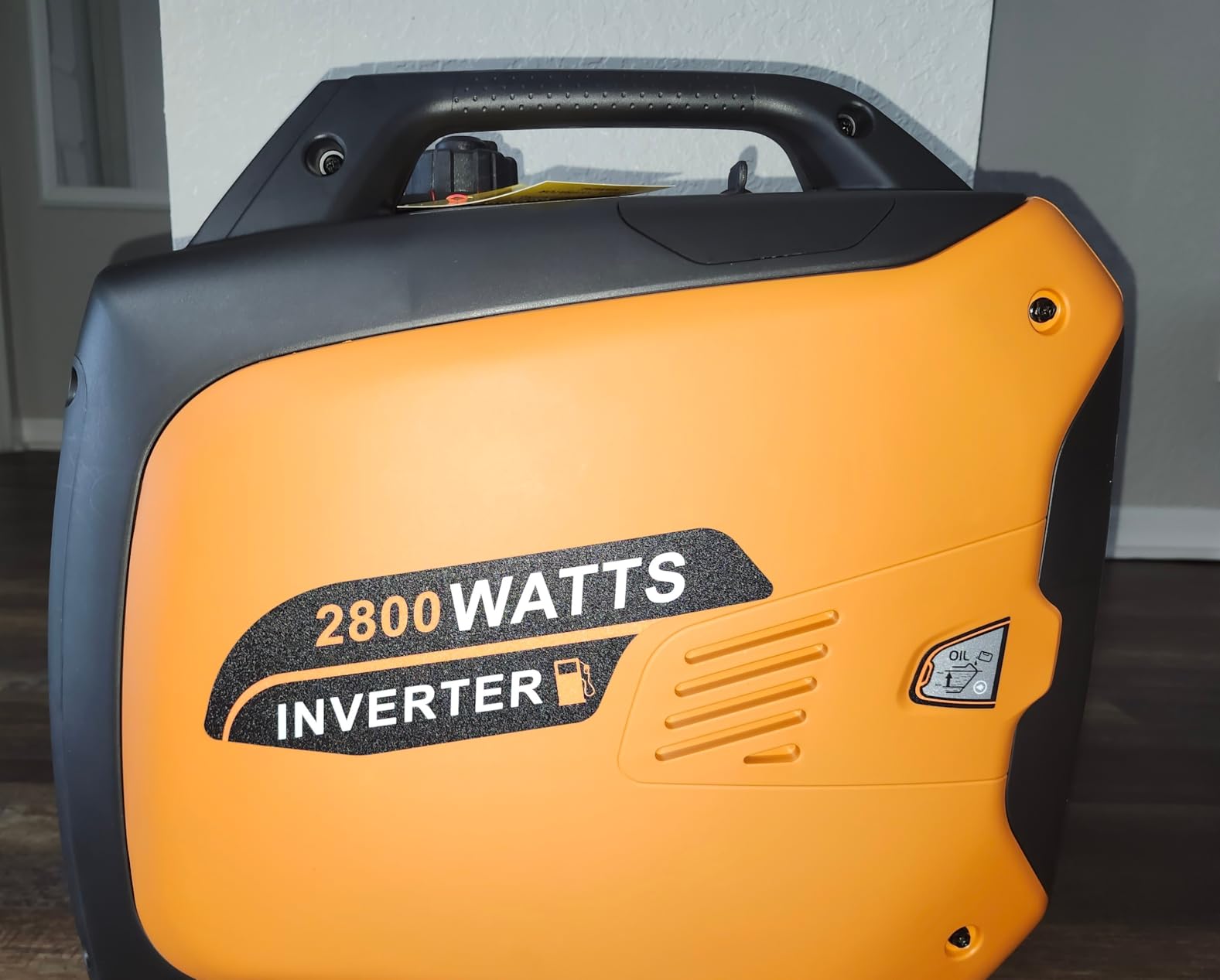
7. Oxseryn 2800W – the modern charging pick with USB-C
- Under 58 dBA from 23 feet
- 40 pounds with a built-in handle
- USB-A and USB-C plus a 12V DC port
- Fuel gauge and 9-hour ECO runtime
- Clean power under 3 percent THD
- 2000 running watts limits larger appliances
- Only a one-year manufacturer warranty
- Needs a separate high-altitude kit above 4000 feet
This is the unit for a group whose real demand is charging rather than watts. Two 120V AC outlets, a 12V DC port, a USB-A port and a USB-C port cover phones, tablets, laptops and a power station without anyone fighting over one wall brick.
Output is 2,000 running watts from 2,800 peak on a 79.8cc four-stroke OHV engine. That is enough for a TV, a soundbar, lights and a slow cooker, with ECO mode and parallel function for flexibility.
Noise is rated under 58 dBA from 23 feet, and it carries a built-in handle at 40 pounds. The 1.1-gallon tank includes a fuel indicator and delivers up to 9 hours at 25 percent load, which comfortably covers a pregame through postgame.
Output stays under 3 percent THD, so it is safe for laptops and phones, and there is a low-oil and overload shutdown. Above 4,000 feet elevation you need a separate high-altitude kit, which matters for Denver-located lots.
Who this generator fits
It fits a tech-heavy setup: laptops, tablets, cameras, a projector and a TV, all in a car at once. The USB-C port is genuinely the feature that differentiates it from older two-USB layouts.
It is also a solid choice for high-elevation lots below 4,000 feet where the fuel gauge saves repeated tank checks.
Who should skip it
Skip it if you plan to run a microwave, a heater or an air conditioner. The 2,000-watt ceiling is a real limit, and one large motor starting can crowd out everything else.
The one-year warranty is the shortest here, so expect to service it yourself or replace it sooner.
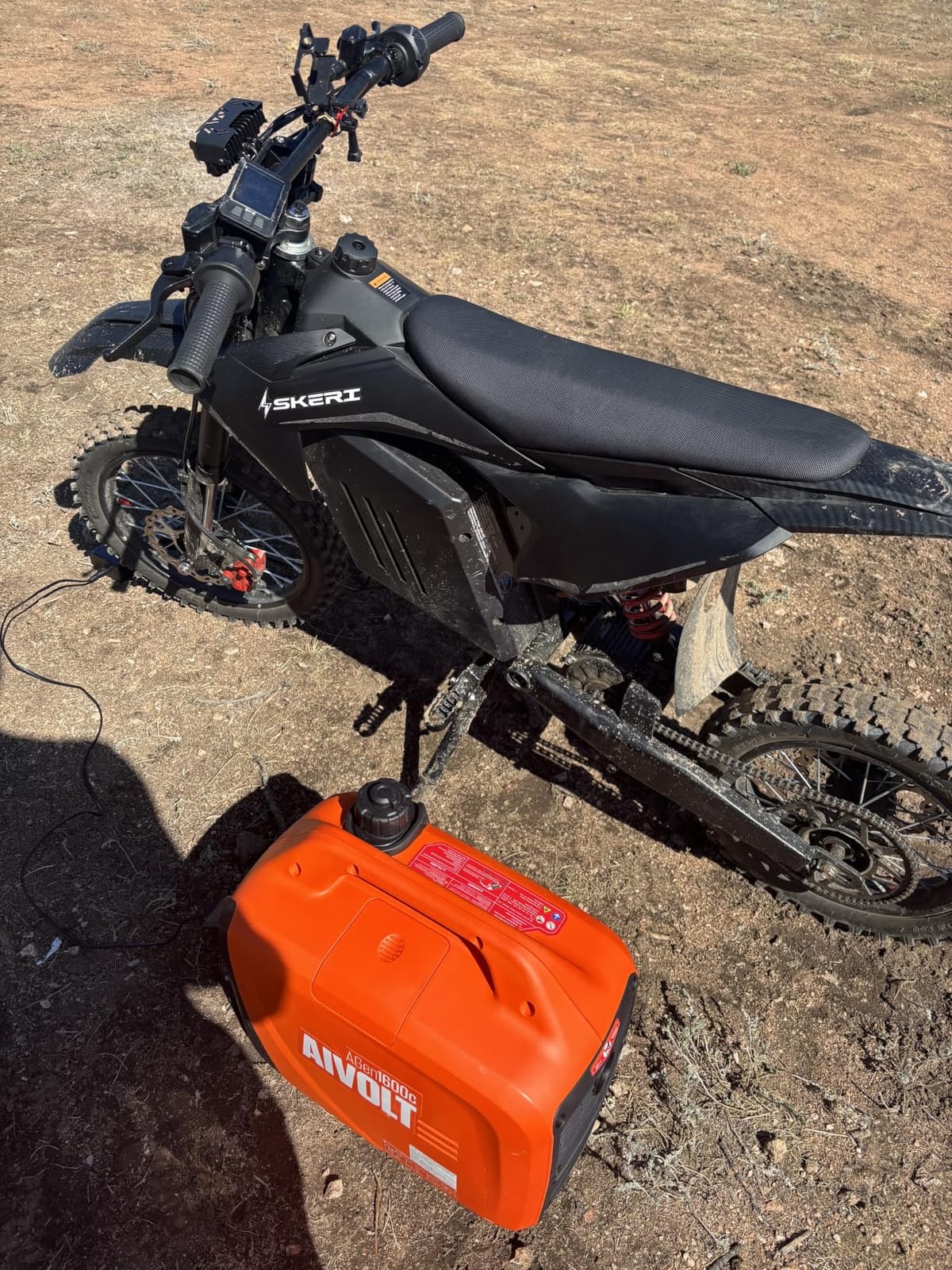
8. AIVOLT 1600W – the lightest unit for one-person carry
AIVOLT 1600W Super Quiet Inverter Generator 28lbs Portable for Camping
- Lightest unit in the group at 28 pounds
- 57 dBA at 23 feet
- CO Alert auto shutoff plus low-oil and overload protection
- USB Type-A and Type-C charging
- Hour meter and indicator lights
- 1260 running watts cannot run a microwave or air conditioner
- About 2 hours at full output
- Engine oil is not included
- Lowest average rating in this group
At 28 pounds this is the one unit in the roundup you can genuinely carry one-handed from a car to a spot. Everything else on this list asks you to plan the lift, and this one does not.
The engine is a 60cc four-stroke OHV with copper windings, producing 1,260 running watts from 1,600 peak with inverter output under 3 percent THD. That is a cooler, a small TV, speakers, string lights and phone charging.
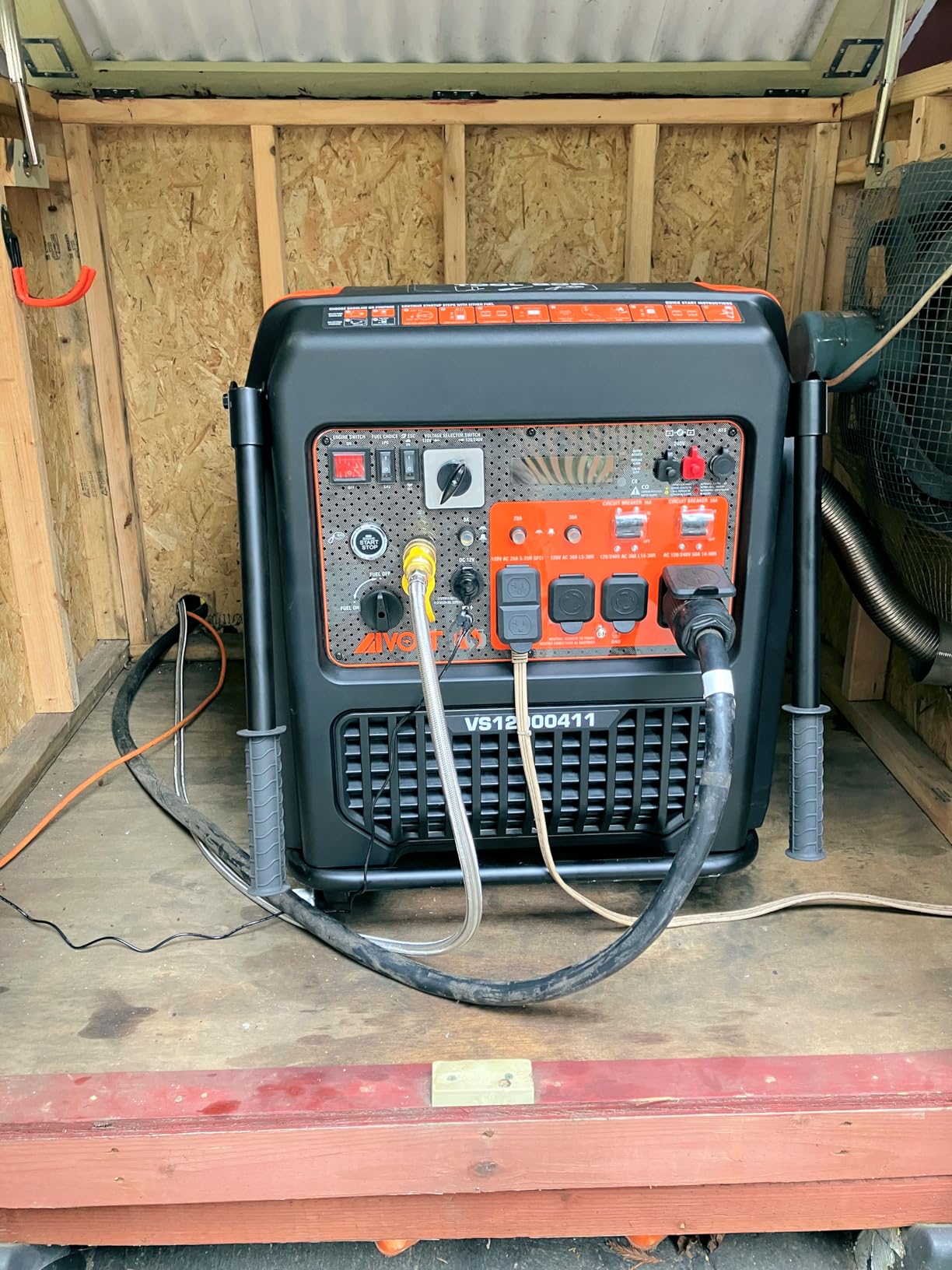
Safety hardware is good for the size: CO Alert auto-shutdown, low-oil auto-shutdown and overload protection, plus three indicator lights and an hour meter so you can see the state of the machine without crouching.
It is parallel capable through a parallel kit that is not included, so doubling the output is a later purchase rather than a box-contents feature.
Who this generator fits
It fits a solo tailgater, a couple, or anyone whose vehicle is small and whose lot is a long walk. It also fits a light secondary unit next to a bigger generator for a separate group.
Noise at 57 dBA from 23 feet is conversation-level, which matters most when the setup is physically close to a row of strangers.
Who should skip it
Skip it if you want to run anything with a compressor or a heating element. About 2 hours of runtime at full output is the honest ceiling, and 1,260 running watts will not start a microwave or an air conditioner.
Two more warnings: engine oil is not included, so add it before the first start, and the 4.1 average rating is the lowest here with a higher share of one-star reviews. Compliance also matters if you are in California – the listing states EPA approval and ANSI/PGMA G300-2018 compliance but not for sale in that state, so check your local rules before ordering.
9. ERAYAK 4500W – the longest gasoline runtime on a single tank
- 4500 peak and 3500 running watts for RV and appliance loads
- Quiet in ECO mode
- Up to 16 hours on one tank
- THD of 0.2 to 1.2 percent for CPAP and laptops
- Three-year warranty with lifetime support
- Engine oil is not included
- Loud at full throttle
- Heavy at 54 pounds for one person
- No fuel gauge on the gas version
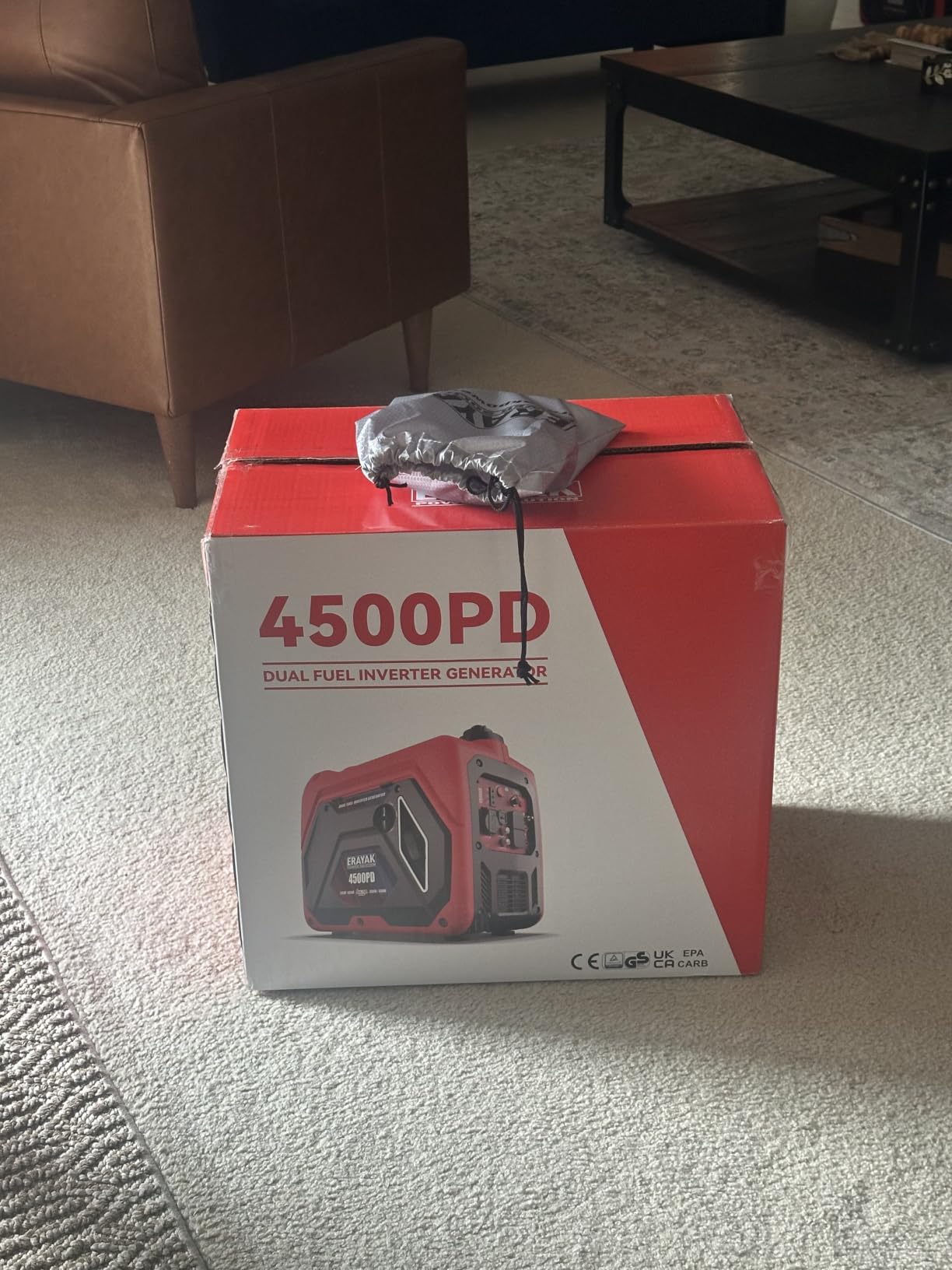
Runtime is the reason to look at this one. A 2.25-gallon tank gives up to 16 hours, and the published consumption figures are 0.561 gallons per hour at rated load and 0.21 gallons per hour at 25 percent load.
This is the highest running wattage listed here, at 3,500 running watts from 4,500 peak. Total harmonic distortion of 0.2 to 1.2 percent is the cleanest figure in this roundup, safe for CPAP machines, laptops and TVs.
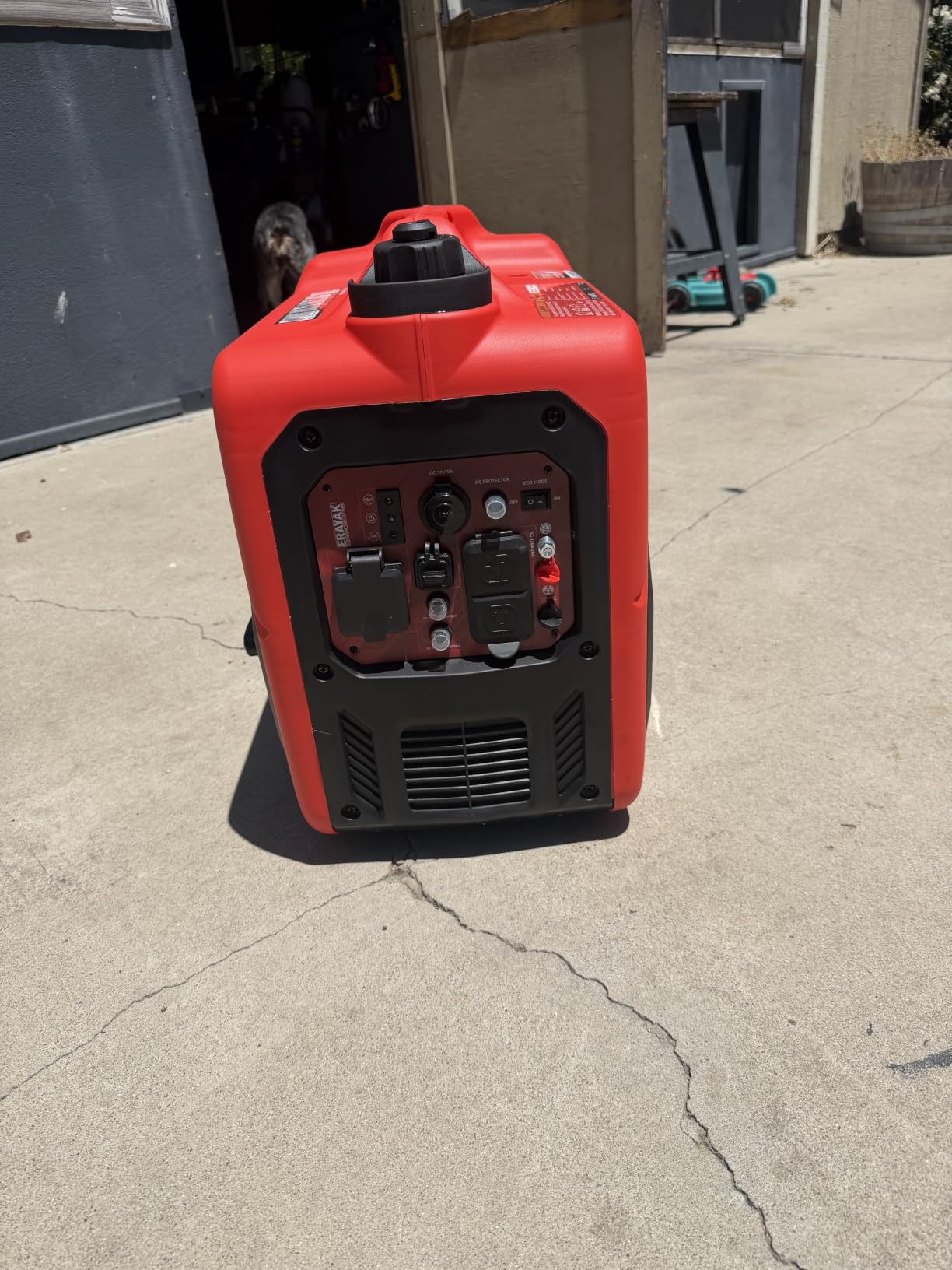
Outlets include a 30A L5-30R and a TT-30R RV outlet, two 120V AC outlets, a 12V cigarette lighter port, USB-A and USB-C. Parallel ready at 50A means two of these machines deliver 7,000 running watts and 9,000 peak for a large tailgate.
Owners report first-pull starts and describe it as quieter than neighbouring generators at campgrounds in ECO mode. A wheel kit and telescoping handle are compatible accessories, which is what you want at 54 pounds.
Who this generator fits
It fits a big group with multiple TVs and a real cooking load, and for a whole-day event where refuelling is the thing you want to stop thinking about. It also suits an RV with a 13,500 BTU-class air conditioner, though some owners report needing a soft-start device for the largest units.
Anyone running medical gear at altitude will like the low THD figure.
Who should skip it
Skip it if noise at full throttle bothers you – owners note it is louder than the advertised figure when the ECO mode is not managing the load.
Also remember the engine oil is not included and must be added before first start, or the low-oil protection will stop the engine from running at all. At 54 pounds you want the wheel kit.
10. PowerSmart 2500W – the budget inverter with a low noise floor
- 52 dBA at 25 percent load from 23 feet
- Under 40 pounds
- 8 hours at 25 percent load from a 1.06-gallon tank
- Clean output under 3 percent THD
- 120V duplex plus 12V DC and dual USB ports
- 1900 running watts limits it to lighter appliances
- Gasoline only with no propane option
- Slight factory fuel smell on some units
- Not parallel capable per the listed specifications
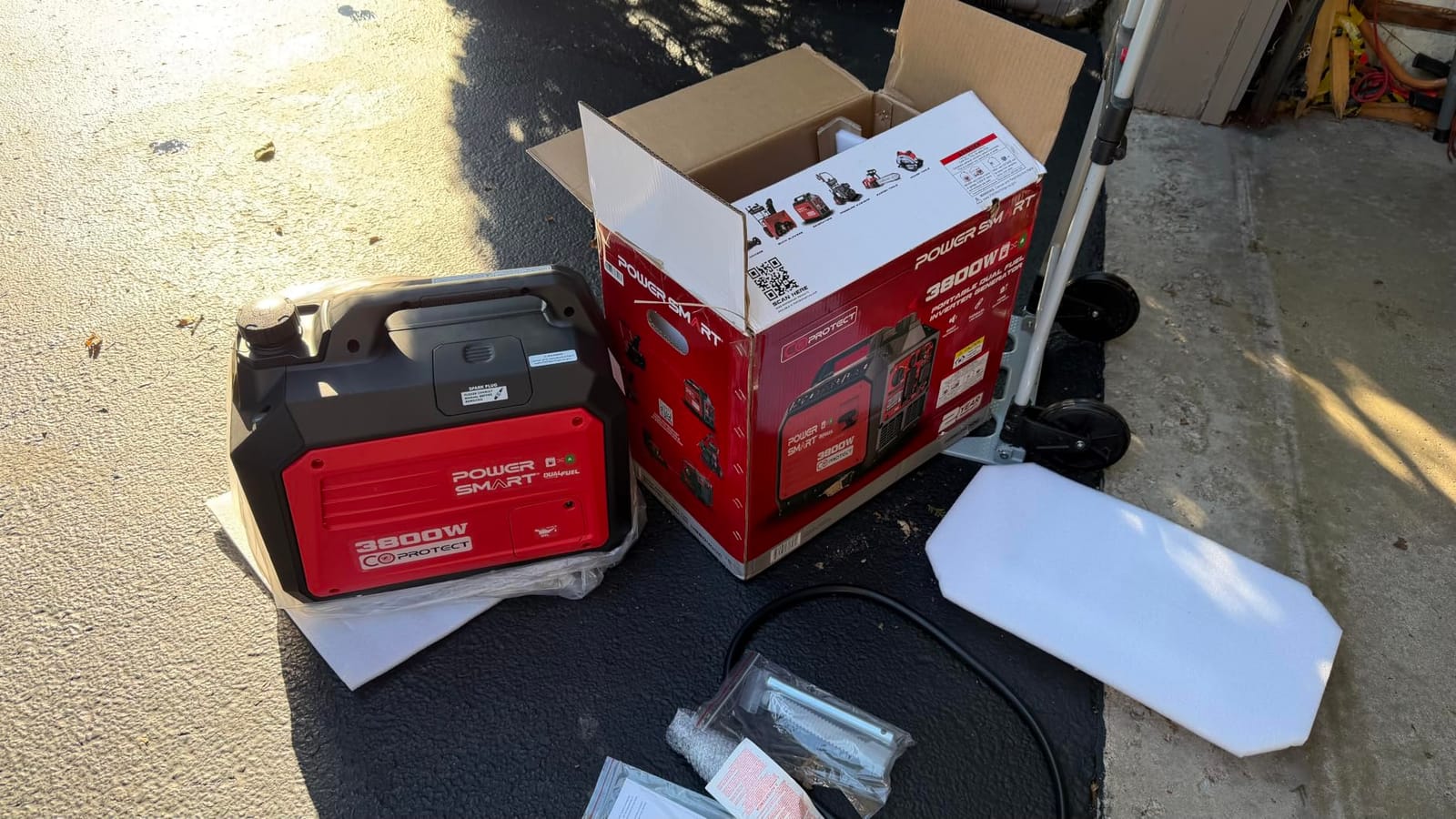
With 1,119 reviews at a 4.5 rating, this is the most heavily reviewed budget inverter on the list, and 52 dBA at 25 percent load from 23 feet is the lowest figure any of these manufacturers publishes.
The 80cc four-stroke engine produces 1,900 running watts and 2,500 peak with clean output under 3 percent THD. That covers a TV, a soundbar, string lights and a slow cooker, which is the standard tailgate load.
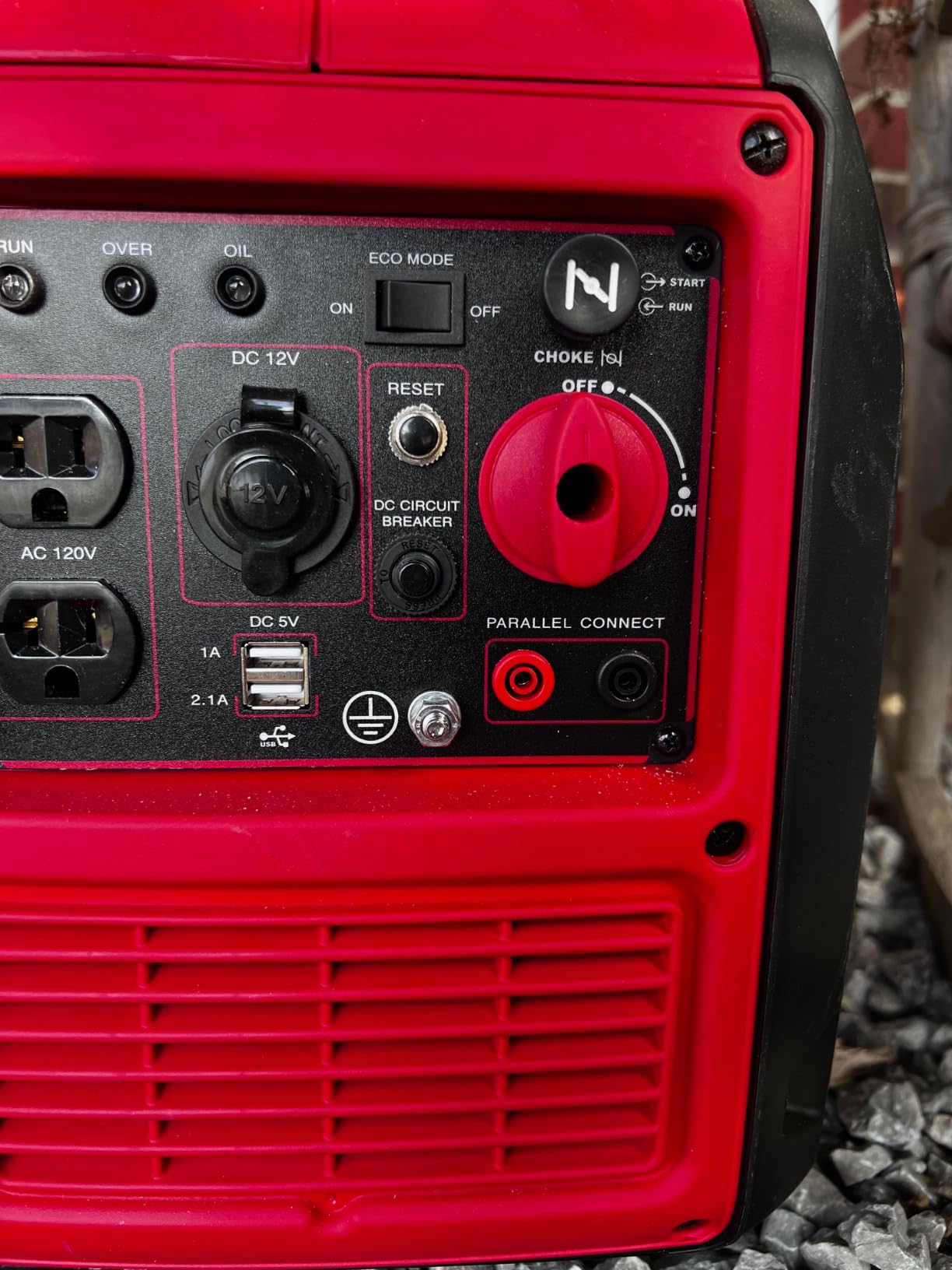
The 1.06-gallon tank gives up to 8 hours at 25 percent load. Outlets are a 120V 20A household duplex, a 12V 8A DC port and dual 5V USB ports, with cold start technology and low oil shutdown included.
Dry weight is 39.7 pounds, so this is a one-person carry, and the two-year limited warranty comes with lifetime technical support.
Who this generator fits
It fits a first-time tailgater, a smaller group, or anyone who wants quiet and light before they want power. Forum tailgaters repeatedly single out this class of unit as enough for a fridge or two, or a fridge plus a TV plus fans plus lights.
If your venue bans combustion engines, we cover the alternative in the power station section below.
Who should skip it
Skip it if you want propane flexibility – this one is gasoline only – or if you plan to run two units together, because the listed specification set does not include parallel capability.
Some owners also note a slight factory fuel smell, which fades after the first few runs.
What Size Generator Do You Need for a Tailgate?
The short answer: sum the running watts of everything you want on at the same time, add about 20 percent for headroom, then subtract efficiency losses. That last step is where most sizing guides skip, and it is the one forum users argue about most.
Wattage tiers for common tailgate sizes
- Small, 1,000 to 2,000 running watts: one TV, speakers, string lights and phone charging.
- Medium, 2,000 to 3,500 running watts: a TV and soundbar plus a slow cooker, blender or griddle.
- Large, 3,500 running watts and up: multiple TVs, a mini fridge, an RV or an air conditioner.
Most college-football and pro-football groups sit in the medium tier. r/CFB tailgaters, by contrast, mostly run a dedicated TV setup, which lands them squarely in the small tier.
Running watts vs starting watts and the 20 percent rule
Running watts is what an appliance draws continuously. Starting watts, also called peak or surge watts, is the brief spike a motor-driven appliance makes when it spins up – a fridge compressor, a fan, a blender. Size on running watts, then confirm the largest single surge does not exceed your peak rating.
Then add 20 percent headroom and keep total sustained load under 80 percent of rated output. That is the 80 percent rule: running at 100 percent rated output continuously generates heat the cooling system was not designed to absorb, and it is the fastest way to trip an overload.
Now the part most guides skip. Owners doing real load math in the forums land on roughly 280 watts for a slow cooker plus a TV, then find they lose 20 to 40 percent to conversion and line losses. Plan on your usable output being closer to 60 to 80 percent of the rated number once extension cords and distance are involved.
Worked example for a standard tailgate
Take a 40-inch TV at roughly 150 watts, a soundbar at 40 watts, LED string lights at 25 watts, a slow cooker at 250 watts and a small fan at 50 watts. That sums to 515 watts of continuous load. Add the slow cooker and fan startup surge, add 20 percent, and you land near 800 watts of rated capacity – comfortably inside the 1,900 running watts of our top pick.
Add a 1,000-watt microwave to that setup and the total crosses 1,500 watts. Add a hair dryer and you are near the ceiling of a small unit, which is why the medium tier exists.
Why inverter output matters for a TV
An inverter generator smooths raw alternator output into stable AC power with total harmonic distortion typically under 3 percent. Conventional open-frame units run far higher, and that noise shows up as a humming picture, a flaky HDMI link or a laptop charger that cycles on and off.
For a deeper comparison of inverter designs, our portable inverter generator reviews go through the electronics in detail.
Noise, and what 65 decibels actually sounds like
Use these as anchors rather than measurements, because manufacturers test at different distances and loads.
- Around 52 dBA: a background hum beneath normal conversation.
- 57 to 59 dBA: noticeable but easy to talk over.
- Around 64 dBA: you raise your voice slightly in conversation.
- 72 dBA and up: open frame, clearly audible across a parking aisle.
The test that matters is the one tailgaters already use: can you still enjoy music next to it. Anything in the mid 50s or below passes that test for most lots.
Weight, cords and altitude
The weight ladder runs from 28 pounds for the AIVOLT up to 56 pounds for the open-frame Oxseryn. Roughly 40 pounds is a one-person carry, and 50-plus pounds means two people or a cart.
Because placement rules require distance from your setup, you will be running an extension cord. Use a 10- or 12-gauge outdoor-rated cord, keep it elevated and dry, and connect directly rather than through a power strip. Inverter units with parallel kits can double their output when two identical models are linked.
Above roughly 4,000 feet, air density drops and so does output. Denver-located lots and high-elevation camping deserve either a high-altitude kit or a derating margin in your sizing math.
Where Can You Set Up a Tailgating Generator Safely?
Yes, most lots allow generators, but rules vary by venue, and you need to check before you buy rather than after you arrive. Some stadiums permit generators while banning propane cylinders, and some allow both while prohibiting open flame, which rules out a charcoal setup.
The faster answer is to look at your venue’s tailgating rules page and search for generator, fuel, propane, grill and open flame. If the policy is not published, a parking attendant on arrival is the worst possible time to find out.
The placement rules that matter
- Run the unit at least 20 feet from your tailgate setup, your vehicle and any neighbouring group.
- Point the exhaust away from neighbouring spots, vehicle windows and open doors.
- Keep it 5 feet clear of walls, tents, canopies and anything combustible on all sides.
- Never run it inside a tent, inside a vehicle, or in a garage, even with the tailgate open.
- Let it cool for 10 minutes before refueling, and refuel away from your grill.
- Start it from a distance the first time, outdoors, with the tailgate fully open.
CO sensor shutdown is a backup layer, not a placement plan. The Champion’s CO Shield and the AIVOLT’s CO Alert will shut an engine down in a poorly ventilated spot, which is the feature working correctly rather than a fault to route around.
Quiet hours and local rules
Running a generator all night is not automatically illegal, but local noise ordinances and venue quiet hours can make it a problem regardless of legality. Game ends late, a lot empties out, and the neighbours who are still there are the ones who will complain first.
Our practical advice: start no later than two hours before kickoff, run your quietest unit rather than the most powerful one, and shut down before the lot does.
Portable Power Station vs Generator for Tailgating
A portable power station runs silent, produces zero exhaust and sidesteps every venue fuel rule, which makes it the only realistic option if your lot bans combustion engines. The honest limitation is capacity: battery units deliver a few hundred to about 1,800 watts and drain noticeably faster under real load than the nameplate suggests.
For a single TV, speakers, lights and phone charging, a mid-size power station covers a full day comfortably. Add a slow cooker or a blender and you will be recharging before the fourth quarter. For sustained cooking loads, a generator remains the only realistic answer.
If you want the fuller breakdown of larger solar-capable systems and battery storage, our premium solar generator and battery storage guide covers that side in depth.
Frequently Asked Questions
What size generator do I need for a tailgate?
For most groups, a 2,000 running-watt inverter is enough: one TV, a soundbar, string lights and a slow cooker. Sum the running watts of everything running at once, add 20 percent headroom, then plan for another 20 to 40 percent of efficiency loss. Below 1,500 watts handles a TV-only setup. Above 3,500 watts is for multiple screens, a mini fridge, a griddle or an RV.
Can you bring a generator to a tailgate?
Usually yes, but venue policy decides and it varies widely. Some stadiums permit generators while banning propane cylinders, and some allow both while prohibiting open flame. Check your venue’s tailgating rules for generator, fuel, propane and grill terms before you buy. If a policy is not published, ask security or a parking attendant on arrival rather than unpacking first.
What is the 80 percent rule for generators?
The 80 percent rule means you should not draw more than 80 percent of a generator’s rated running watts for a sustained load. Sustained operation at full rated output generates heat the cooling system was not designed to handle, shortens engine life and causes early overload trips. Size your tailgate load to sit under that ceiling, not on it.
What is the 20/20 rule for generators?
There is no tailgate sizing rule commonly called the 20/20 rule. The practice most tailgaters mean is the 20 percent headroom buffer: add 20 percent to your summed running watts before choosing a unit. Related is the 20/20/20 maintenance rule, which refers to servicing an engine after 20 hours of use, 20 gallons of fuel consumed, or 20 months, whichever comes first.
How do I figure out what size inverter generator I need?
List every appliance you want running simultaneously and find each one’s running watts. Sum those numbers, then add the single largest starting-watt surge from a motor-driven appliance. Add 20 percent headroom and keep the result under 80 percent of rated output. Finally subtract 20 to 40 percent for conversion and extension cord losses before picking a model.
How loud is a 65 decibel generator?
Around 65 dBA you can hear it clearly across a small area and you would raise your voice slightly in conversation nearby. For reference, roughly 52 dBA sits under a normal conversation, the high 50s are talk-over-able, and open-frame units near 72 dBA carry across a parking aisle. Manufacturer figures use different standards, so treat these as anchors rather than exact comparisons.
How far should a generator be from my tailgate?
At least 20 feet from your setup, your vehicle and any neighbouring group, with 5 feet of clearance on all sides from tents, walls and anything combustible. Point the exhaust away from vehicle windows and other spots. That distance is why you need a 10- or 12-gauge outdoor-rated extension cord, kept elevated and dry. Never run a unit inside a tent, a vehicle or a garage.
What gauge extension cord do I need for a tailgate generator?
Use a 10- or 12-gauge outdoor-rated cord, which is what most tailgate generators expect for the 20-foot placement rule. Keep the cord elevated off wet ground and dry, connect appliances directly rather than through a power strip, and avoid running it under vehicle tires or doors. Undersized cords cause voltage drop, which shows up as humming electronics and tripped overloads.
Is it illegal to run a generator all night?
Not automatically. Local noise ordinances and venue quiet hours are what usually cause problems, not a blanket ban. Game ends late and lots empty out first, so the neighbours who remain are the ones who complain. Start no later than about two hours before kickoff, run your quietest unit rather than the most powerful one, and shut down before the lot does.
What is the best portable power source for tailgating?
A 2,000 to 3,000 running-watt inverter generator is the best all-round choice for a standard tailgate because it runs for a full day on one tank and handles any appliance a group realistically brings. A portable power station is better when your venue bans combustion engines, since it is silent and exhaust-free, but it drains fast under real cooking loads.
Which Tailgating Generator Should You Choose?
For most groups in 2026, the WEN 56235i is the best portable generator for tailgating: 1,900 running watts, 39 pounds, clean inverter output and the largest owner base in this roundup at 2,627 reviews. Step up to the PowerSmart 3800W dual-fuel unit if your group adds a griddle or a blender station, and drop to the AIVOLT 1600W if carrying the machine matters more than output.
Check your venue’s generator and fuel policy before you buy anything, keep the unit 20 feet from your setup, and check the price link on each pick above for the current figure.