
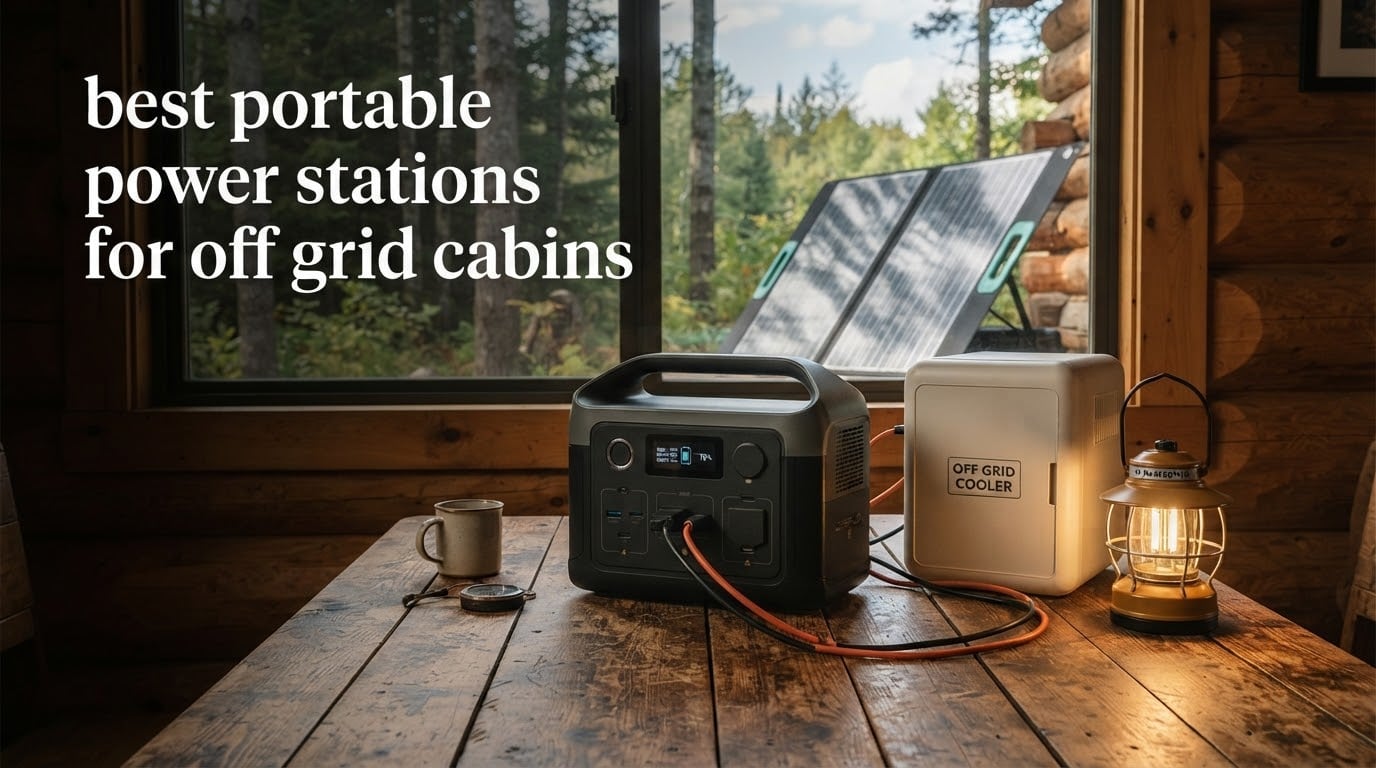
A cabin without a grid hookup has no gas dryer, no wall outlets that always work, and no quiet way to keep a refrigerator cold through a multi-day storm. That is the gap the best portable power stations for off grid cabins fill: a lithium iron phosphate battery with a pure sine wave inverter built in, charged by solar or a vehicle and run entirely indoors without combustion fumes.
We spent weeks sorting through ten of the strongest units on the market, from a 1,024Wh cabin workhorse to a 4,096Wh whole-cabin system. We compared them the way we think you should: by measured capacity, continuous and surge output, solar input wattage, idle draw, and the loads that actually break portable stations in a cabin, like well pumps, chest freezers, and window air conditioners.
If you want the short answer, the BLUETTI AC180 is the one we would put in most cabins. It delivers 1,152Wh, 1,800W of continuous output, and 500W of solar input with a five-year warranty. If your cabin needs roughly double the storage, step up to the Anker SOLIX C2000 Gen 2 and its 2,048Wh. We also cover runtime math, winter charging, and the honest point where a portable station stops being the right answer.
Before you compare models, it is worth checking our broader guides to solar generators for off-grid cabins and portable power station picks tested if you want a wider view of the category.
Table of Contents
Top 3 Picks for Off-Grid Cabins in 2026
The three units below cover the most common cabin situations: a weekend retreat with a fridge and lights, a seasonal cabin that needs real runtime, and a larger property running multiple circuits. Every one of them uses LiFePO4 cells, which matters more for cabin use than most roundups admit.



All 10 Cabin Power Stations at a Glance in 2026
Every unit below is LiFePO4 chemistry, which is the minimum we would consider for a cabin that sits unheated or unmonitored for months. Sort the list by capacity to match your load, then check the output column against your largest appliance.
| Product | Specifications | Action |
|---|---|---|
| BLUETTI AC180 1152Wh |
|
Check Latest Price |
| Anker SOLIX C1000 Gen 2 1024Wh |
|
Check Latest Price |
| OUPES Mega 1 1024Wh |
|
Check Latest Price |
 EcoFlow Delta 3 Classic 1024Wh EcoFlow Delta 3 Classic 1024Wh |
|
Check Latest Price |
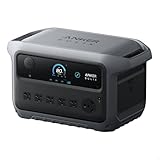 Anker SOLIX C2000 Gen 2 2048Wh Anker SOLIX C2000 Gen 2 2048Wh |
|
Check Latest Price |
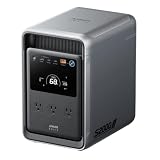 Anker SOLIX S2000 2010Wh Anker SOLIX S2000 2010Wh |
|
Check Latest Price |
 Jackery HomePower 3000 3072Wh Jackery HomePower 3000 3072Wh |
|
Check Latest Price |
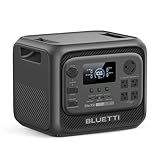 BLUETTI Elite 300 3014Wh BLUETTI Elite 300 3014Wh |
|
Check Latest Price |
 Jackery Explorer 2000 v2 2042Wh Jackery Explorer 2000 v2 2042Wh |
|
Check Latest Price |
 EcoFlow DELTA Pro 3 4096Wh EcoFlow DELTA Pro 3 4096Wh |
|
Check Latest Price |
How Much Battery Do You Need for an Off-Grid Cabin?
Most weekend cabins need 1,000 to 2,000 watt-hours, seasonal cabins need 2,000 to 3,000 watt-hours, and a full-time residence needs 3,000 watt-hours or more. Build that number by adding the wattage of everything you plan to run, multiplying by the hours you need it daily, then dividing by 0.85 to account for inverter conversion loss.
The five-step sizing method
Step one: write down every load. A refrigerator compressor, LED lights, a router, phone charging, a CPAP machine, a water pump, a coffee maker. Omit anything you would not be upset to lose.
Step two: find the running watts for each. Manufacturer plates list maximum draw, which is often two to four times the average. Compressor appliances like fridges and well pumps need their surge figure checked against the inverter’s peak rating.
Step three: estimate hours per day. A fridge runs roughly a third of the time. Lights and a router run whenever you are awake. A well pump runs only during a draw.
Step four: multiply watts by hours to get daily watt-hours for each load, then add them up. A realistic weekend cabin essentials list lands around 300 to 500 watt-hours per day.
Step five: divide by 0.85 and multiply by 1.2 for headroom. That 500 watt-hour day becomes roughly 700 usable watt-hours, so a 1,000 watt-hour unit covers a weekend, and a 2,000 watt-hour unit covers a couple of cloudy days without a recharge.
The 10 Best Portable Power Stations for Off Grid Cabins
1. BLUETTI AC180 1152Wh – Best Overall for Cabins
- Fast 1440W AC recharge fills it in about an hour
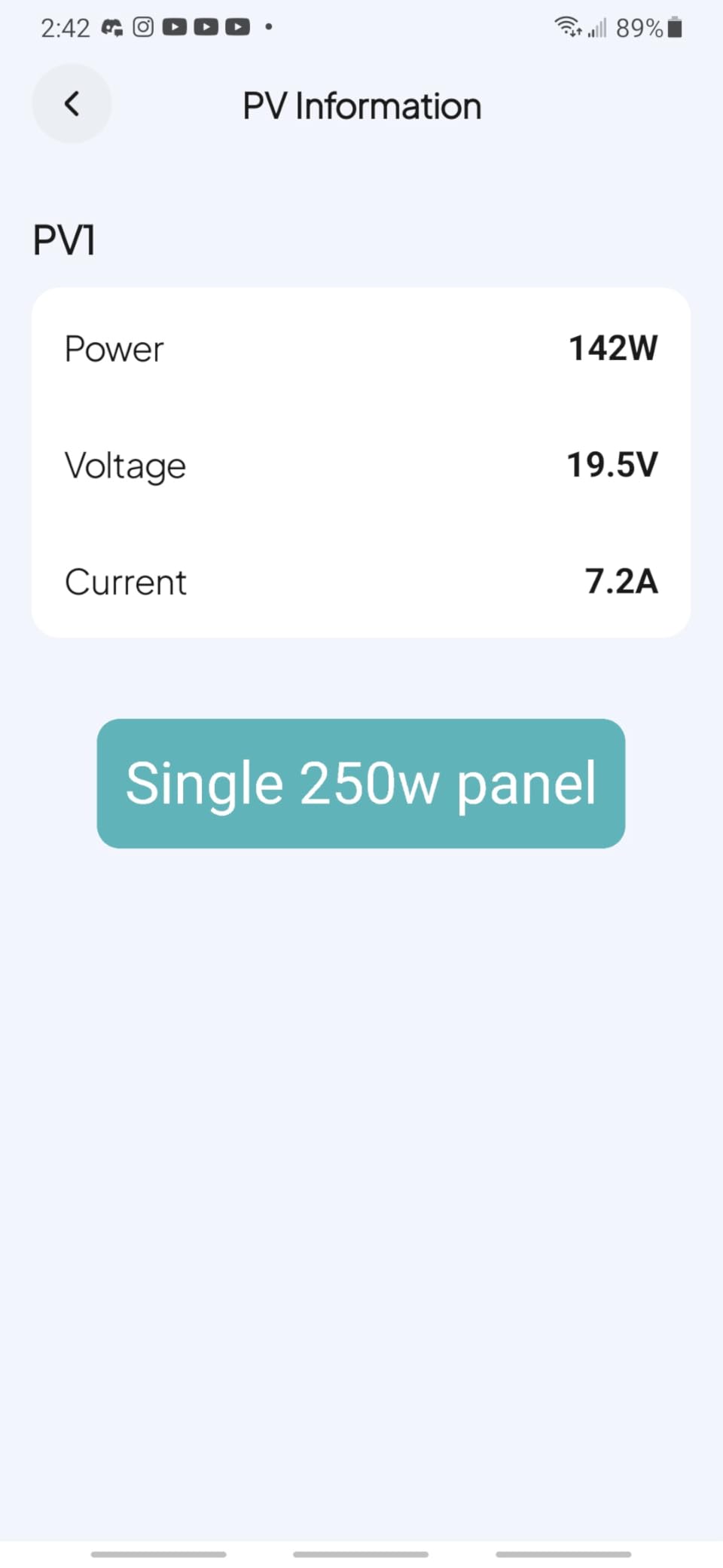
- 500W solar input refills it in roughly 3 hours
- 11 outlets: AC plus USB-A plus USB-C plus a wireless pad
- Reliable 20 ms UPS keeps routers and fridges running through an outage
- Bright LCD with clear runtime and load readings
- Five-year warranty
- Heavy at 37.4 lb for anyone moving it regularly
- Wireless charging pad frequently fails
- Only one USB-C port
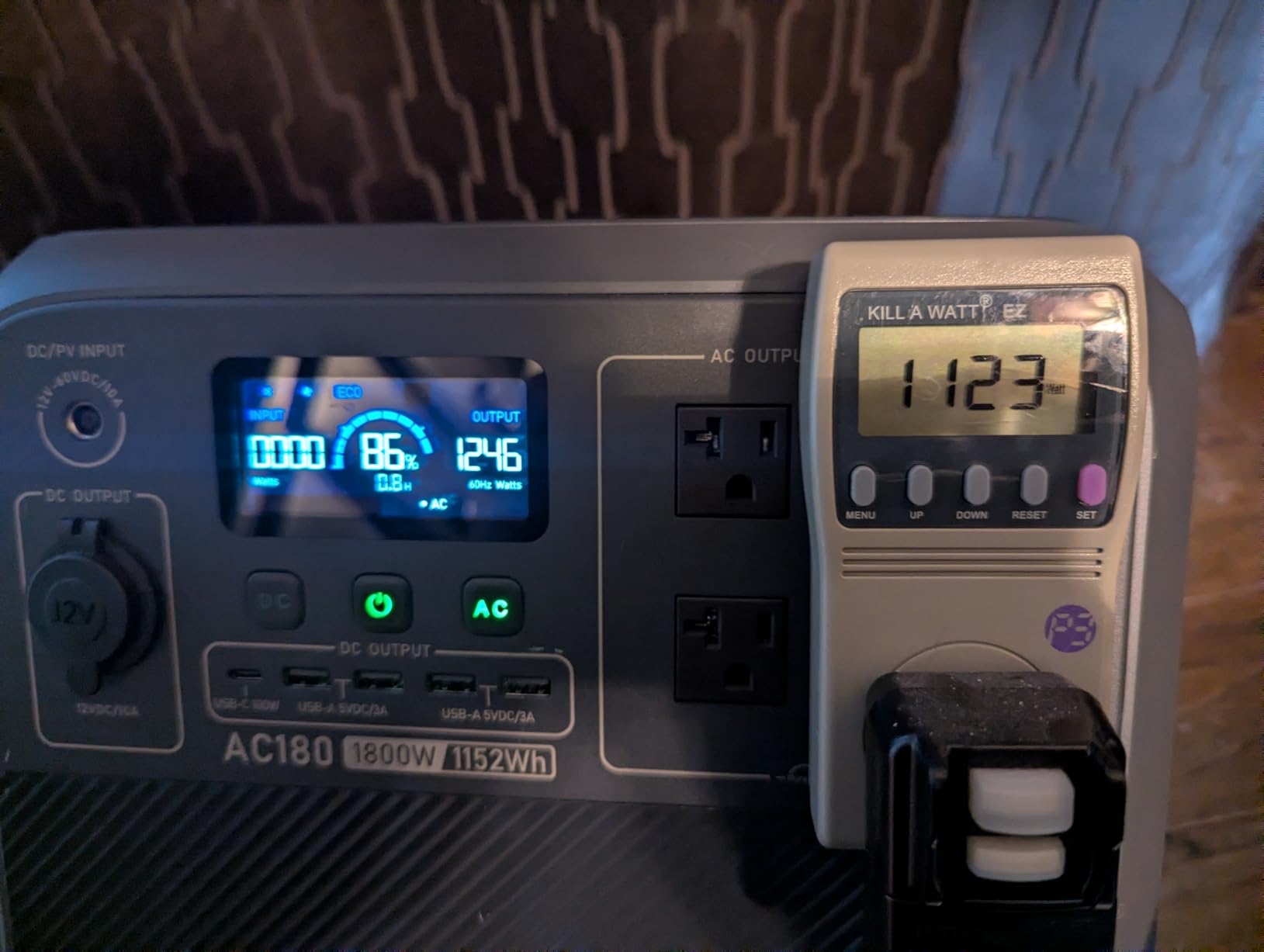
- About 15-20W of self-draw with the inverter on
This is the unit we keep coming back to for cabins because the numbers line up with real cabin life rather than campsite life. 1,152 watt-hours, 1,800 watts continuous, 2,700 watts of peak output, and 500 watts of solar input across a single built-in controller.
Our load math on it: 1,152 watt-hours at roughly 90% usable capacity and 85% inverter efficiency gives about 880 watt-hours of AC delivery. That covers a small refrigerator, a router, LED lighting, and phone charging for a full weekend without a wall outlet in sight.
The 20 millisecond UPS switchover is the detail that matters most for a cabin. Owners report using it as a home UPS for routers, lights, and a fridge, which means an outage does not reboot your network or spoil your food. The integrated BLUETTI app adds remote monitoring and output control.
Recharge flexibility is another win. It accepts 1,440 watts of AC input, solar, 12V car charging, and alternator input, so you can refill it from a wall outlet at home before a trip or from a truck on the road.
Who the AC180 suits
It suits weekend and seasonal cabin owners who need a fridge, lights, a router, and phone charging without hauling fuel. It also suits anyone who already owns 400 to 500 watts of solar and wants a unit that accepts that input without a separate charge controller.
The eleven-outlet mix means a cabin with several USB-C devices, a lamp, and a small appliance can run simultaneously without a power strip.
Where it falls short
At 37.4 pounds it is a set-and-forget unit, not a carry-in device. The clearest repeated caveat from owners is self-consumption of roughly 15 to 20 watts with the inverter on, which is why real runtime lands under the label.
The wireless charging pad is unreliable, there is only one USB-C port, and some settings including charge rate can only be changed in the app. Firmware updates sometimes have to land before the unit performs to spec.
2. Anker SOLIX C1000 Gen 2 1024Wh – Best for Light and Compact Cabins
- 49-minute full recharge on a 1600W wall input
- Lightest of the ten we covered at 24.9 lb
- 10 ms UPS switchover protects CPAP machines and network gear
- 4000-cycle battery life rating
- Anker app with TOU mode and reliable connectivity
- Compact 15.1 by 8.2 by 9.6 inch footprint
- No battery expansion in the Gen 2 design
- Only pulls 60-80W from a 100W panel
- Measured 15-20% harmonic distortion driving a microwave
- No storage case included
If your cabin is small enough that weight is the deciding factor, this is the one. At 24.9 pounds it is roughly 12 pounds lighter than the AC180 and the only unit in this roundup one person can comfortably carry from a truck bed into a cabin.
Power delivery is 2,000 watts rated with 3,000 watts of peak output, which covers a refrigerator, lights, a router, and a CPAP machine without strain. One owner reported powering a CPAP for three nights and a mini fridge for nearly two days on a single charge.
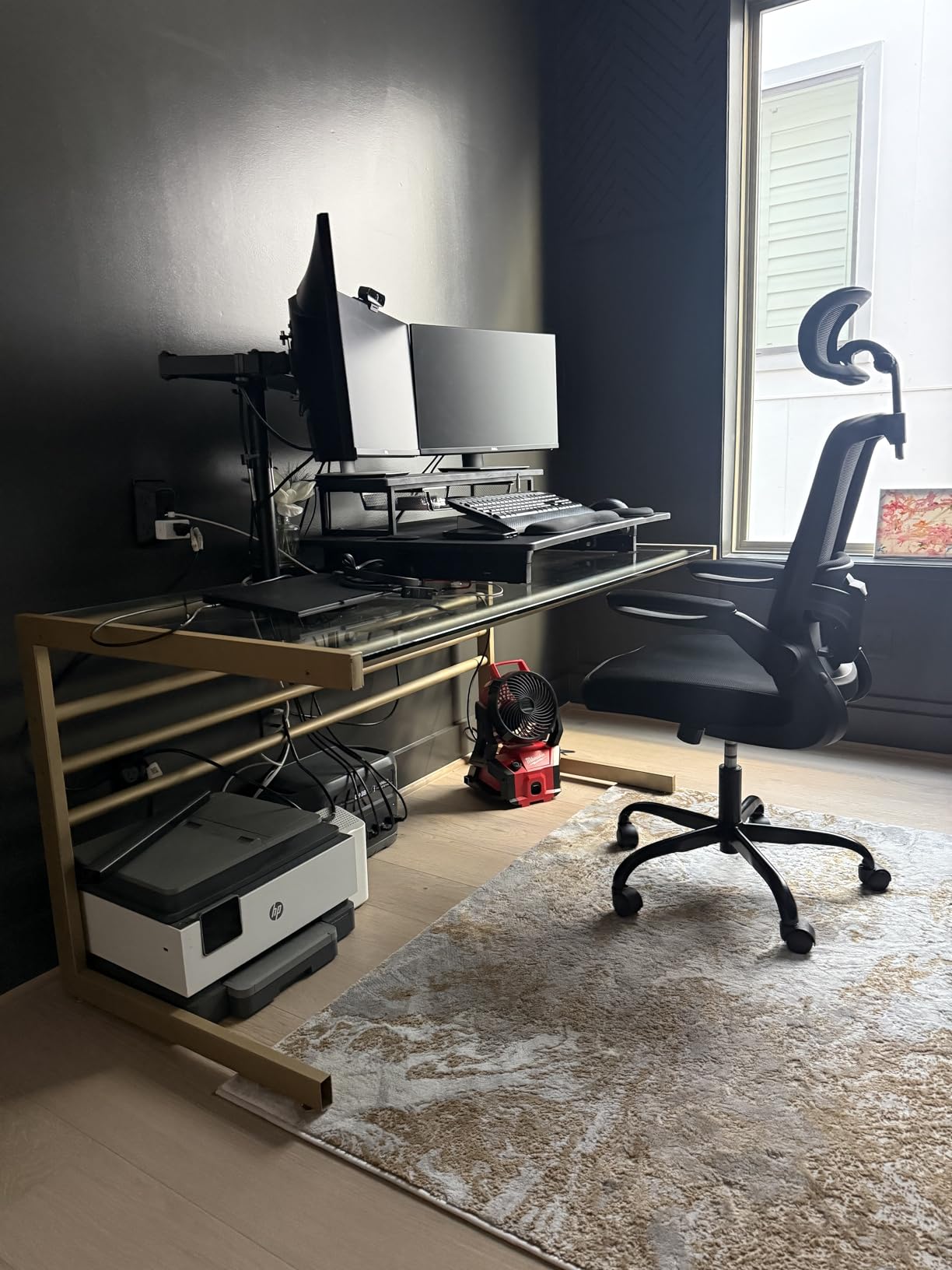
The 10 millisecond UPS is class-leading, and multiple owners run the unit unattended as a UPS for a refrigerator or network storage device for 5 to 13 hours at a stretch. For a cabin where someone works remotely, that switchover time is the difference between an interruption and an outage.
Recharge speed is the headline feature. A 1,600 watt HyperFlash input fills the battery in 49 minutes, and the 600 watt solar input is the highest in the 1,024 watt-hour class we tested.
Who the C1000 Gen 2 suits
It suits a hunt cabin, a fishing cabin, or a short-stay retreat where the load list is lights, a small fridge, a router, and medical equipment. The CPAP runtime reports make it a solid choice for anyone sleeping there for several nights.
It also suits buyers who want fast top-ups at a home wall outlet before leaving, since a full recharge takes under an hour.
Where it falls short
Gen 2 removed battery expansion, so capacity is fixed at 1,024 watt-hours. If your cabin loads grow next season, this is not the unit you can grow into.
Solar charging in the real world is slower than the headline suggests. Owners report pulling only 60 to 80 watts from a 100 watt panel, and measured output showed 15-20% harmonic distortion when driving a microwave.
3. OUPES Mega 1 1024Wh – Best Expandable Value
- Expandable to 5120Wh with two extra batteries
- 36-minute 0-80% AC recharge and 26 minutes with solar combined
- 4500W surge handles compressor starts
- Under 20 ms UPS with pure sine wave output
- Dual 100W USB-C PD ports
- 3500+ cycle LFP cells with smart BMS balancing
- Newer brand with a shorter support history than established names
- Some parameters adjustable only through the app
- Limited accessories in the box
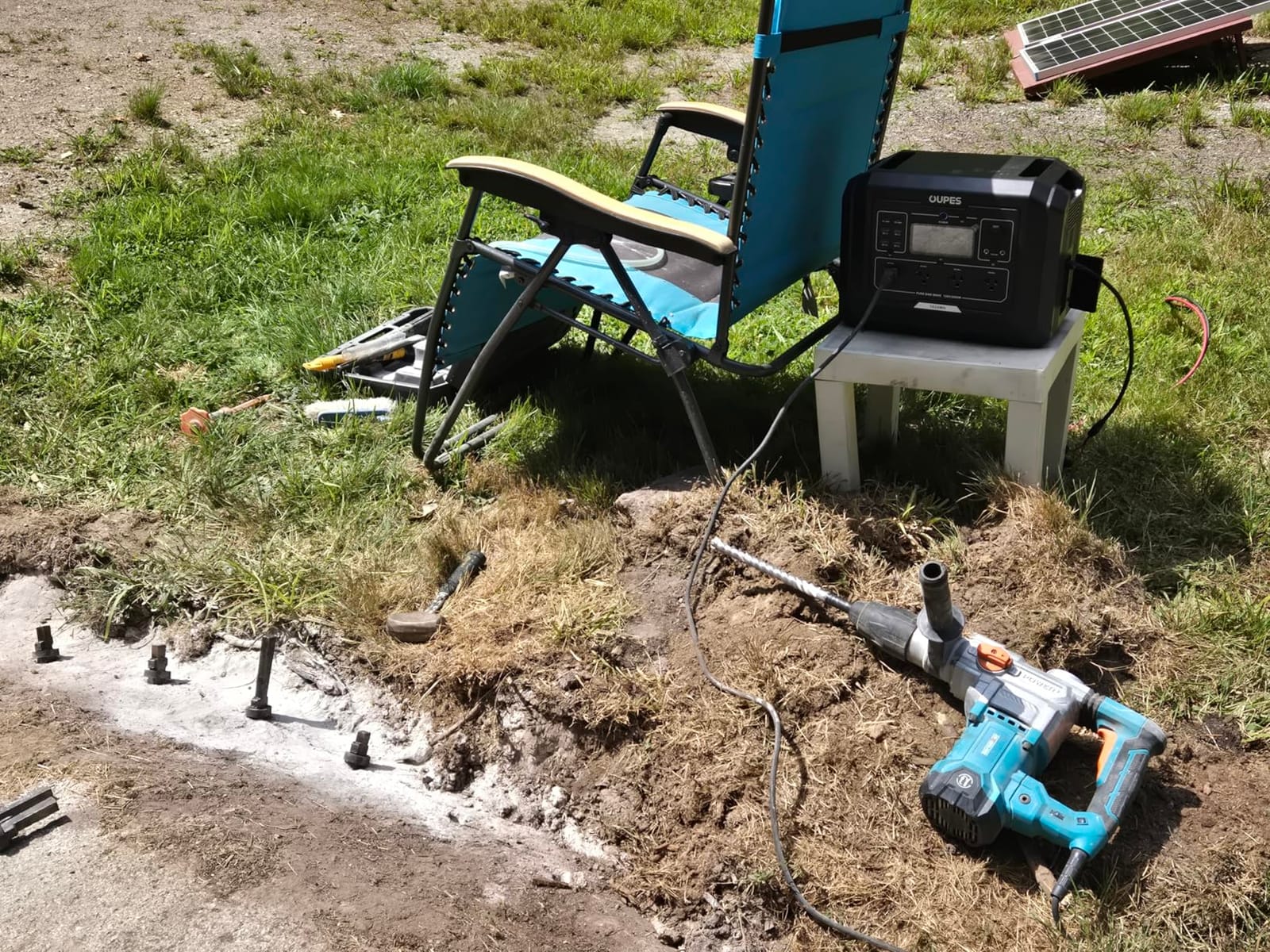
The Mega 1 is the only unit in this lineup that grows to 5,120 watt-hours on a single inverter. Two B2 extra batteries take it from 1,024 watt-hours to 5,120 watt-hours, which makes it the most direct path from a weekend cabin to a longer residency without replacing hardware.
It also carries 4,500 watts of surge output on 2,000 watts of continuous power. That headroom matters for cabin life because refrigerator compressors, water pumps, and dehumidifiers all draw a spike at startup.
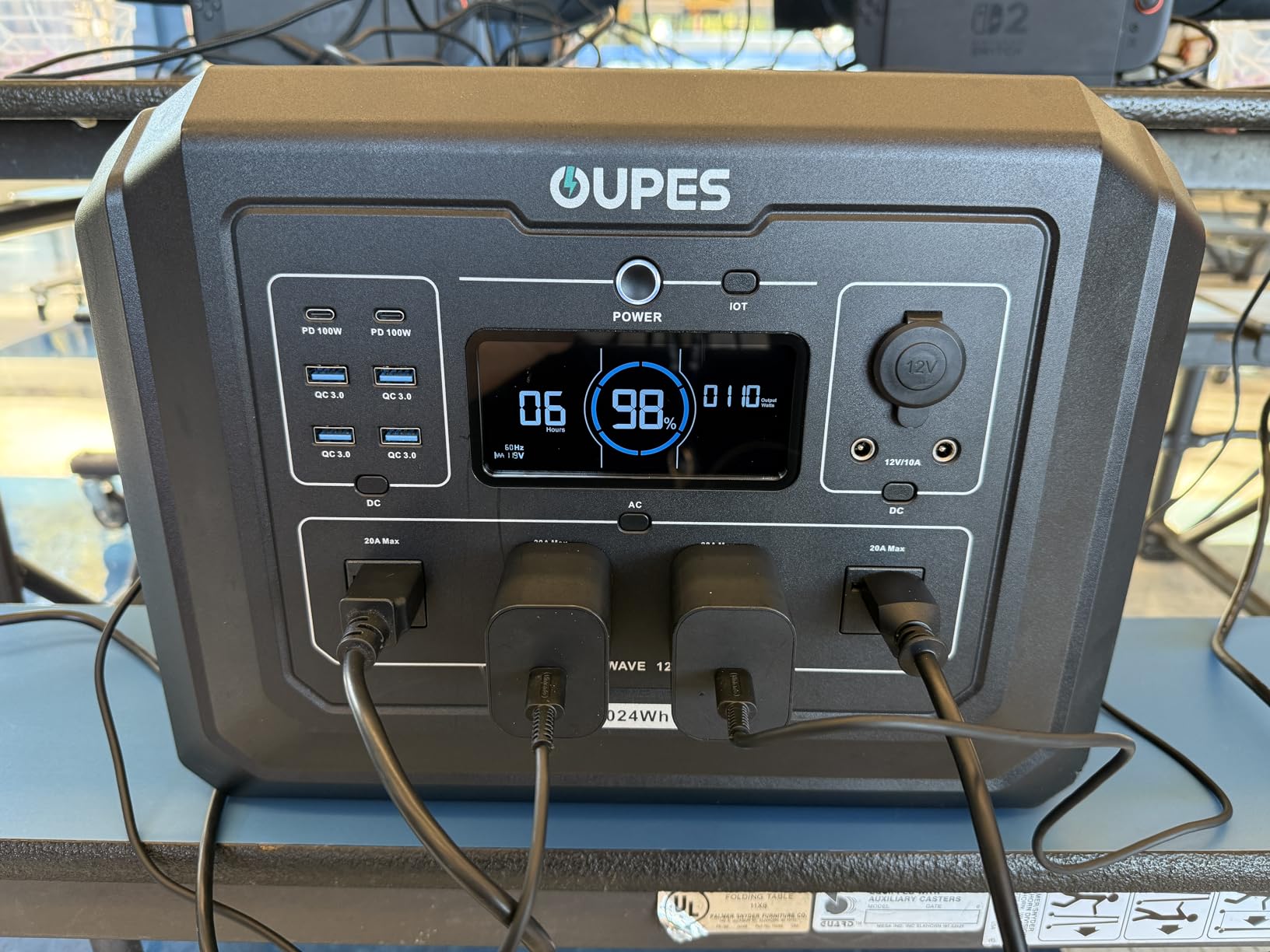
Charging is unusually quick for the capacity class. Owners report 0-80% in 36 minutes on AC and about 26 minutes when solar and AC are combined, and the pure sine wave output is specified for sensitive electronics.
Port selection is generous for a unit this size: dual 100 watt USB-C PD ports, four QC3.0 USB-A ports, 12V DC, and AC outlets, with Bluetooth app monitoring showing real-time consumption.
Who the Mega 1 suits
It suits cabin owners who are confident their loads will grow. If you live there partway through the year and plan to add a chest freezer or a router with Starlink next season, expansion capability is the reason to choose this over a sealed fixed-capacity unit.
The 4,500 watt surge ceiling also makes it a better match than most for wells with a harder start, or a cabin dehumidifier.
Where it falls short
The honest drawback is brand maturity. The 1,496-review history and the sales-rank position trail the established names here, and support responsiveness is less proven.
Several parameters are only reachable through the phone app, and the included accessory set is limited to AC, car, and MC4-to-Anderson cables. Extra batteries cost extra.
4. EcoFlow Delta 3 Classic 1024Wh – Best UPS for a Working Cabin
- Under 10 ms UPS switchover
- 0-80% AC recharge in 45 minutes
- Clear integrated display with charge state and run time
- Thoughtful handles and non-skid pads with a recessed input cover
- EV-grade CTC cell design rated for 10+ years of daily use
- Reliable Bluetooth app with Storm Alert
- About 27 lb and awkward for some users to move
- No extra battery compatibility for expansion
- Cloudy weather leaves solar input short for overnight loads
- Some third-party seller units arrived used or would not power on
If anyone works from the cabin, the Delta 3 Classic is the pick. The under 10 millisecond UPS transfer is fast enough to treat a desktop, a network rack, or a medical device as protected loads, and owners report running two sump pumps for two days on a 50% charge.
Its 1,800 watt output with 3,600 watts of surge, plus X-Boost to 2,600 watts, sits between the smaller 1,024 watt-hour models and the 2,000 watt-hour step-up options. Reported results include a refrigerator running more than 10 hours on one charge.
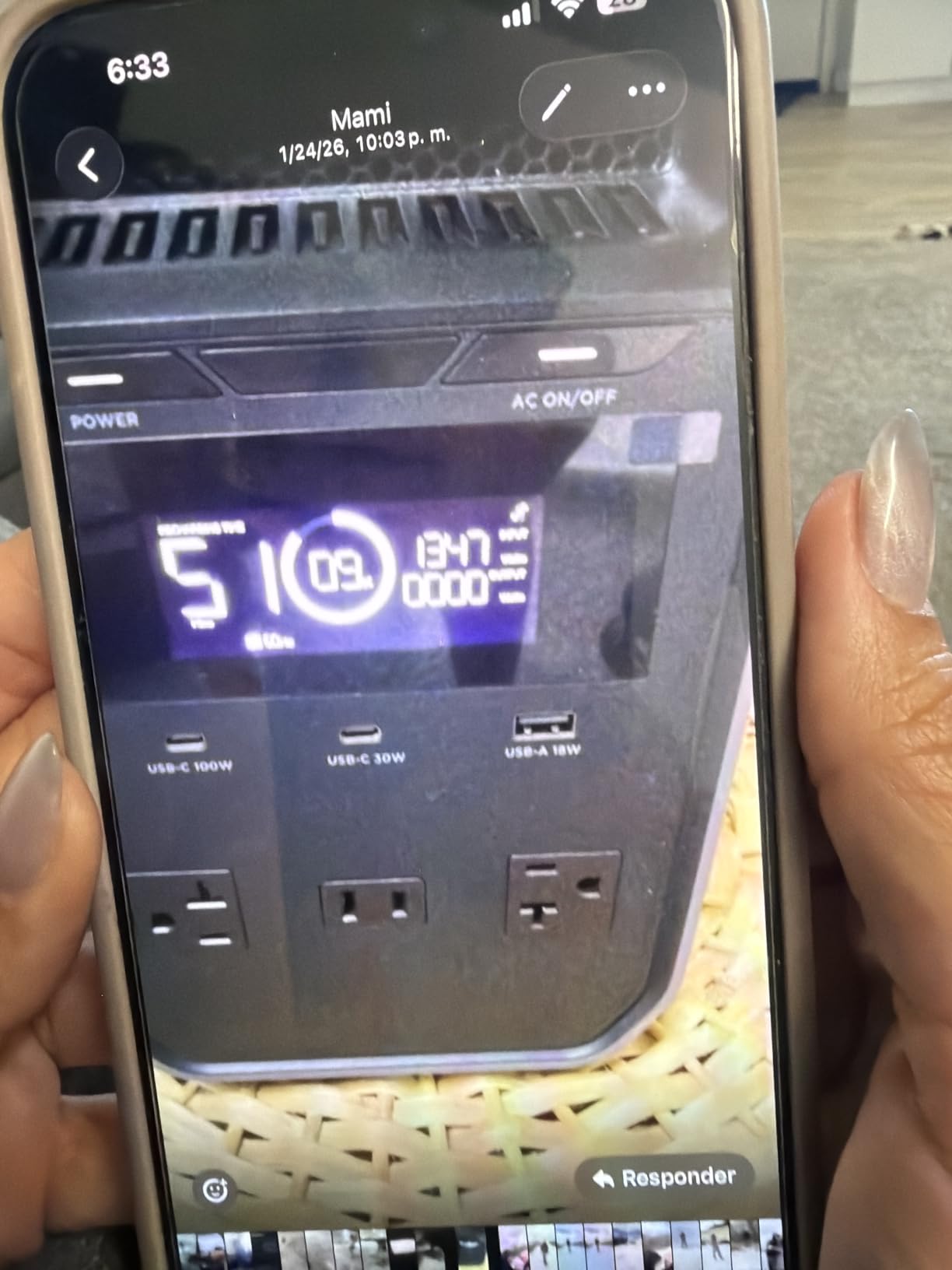
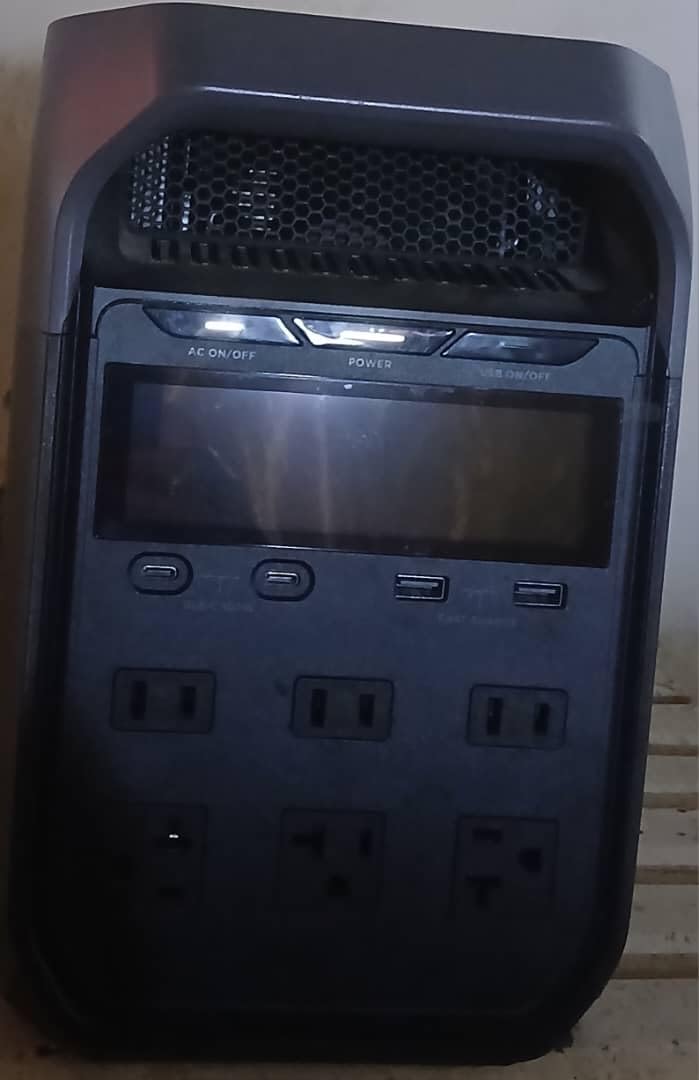
The 500 watt solar input refills the unit in about 2.5 hours at full sun, which is one of the better solar-to-capacity ratios in this class. The integrated display shows charge state, discharge time, and live input and output wattage, so you can size your own consumption without guessing.
The app adds charging schedules, a Storm Alert function, and a Self-Powered Mode that lets the unit run its own display and networking from its own battery.
Who the Delta 3 Classic suits
It suits remote workers and anyone running network equipment, since the transfer time keeps routers, NAS units, and monitors alive. It also suits cabin owners with a sump or drainage pump, where owners report multi-day runtimes.
It is a good fit for a van or truck build too, where 26.7 pounds is manageable and the recessed input cover and angled outlets survive travel.
Where it falls short
It does not accept DELTA 2 or DELTA 3 Series Smart Extra Batteries, so the 1,024 watt-hours is a hard ceiling. Plan for that before you buy rather than after.
Owners also report that cloudy or rainy conditions leave the solar input insufficient for overnight loads such as a fridge, and a small number of buyers received units that arrived used or would not power on through third-party sellers.
5. Anker SOLIX C2000 Gen 2 2048Wh – Best Runtime for a 2kWh Class Unit
Anker SOLIX C2000 Gen 2 Portable Power Station, 2,048Wh, 2,400W, Camping
- Very low 9W standby draw giving long fridge and freezer runtimes
- 100% recharge in 58 minutes on combined AC and solar
- 800W alternator charging refills from a vehicle in 3 hours
- 4000W peak output starts window and RV air conditioners
- 25% lighter and 29% smaller than the comparable unit in its own class per Anker
- Expands to 4kWh
- Larger and heavier than 1kWh options
- Port mix should be confirmed for a specific setup
The 9 watt standby draw is the number to pay attention to here. Anker specifies it as enough for a dual-door fridge to run up to 32 hours, or 64 hours once expanded, and that figure is the direct result of a much lower idle consumption than typical 2,000 watt-hour units.
For a cabin, idle draw is what determines overnight compressor runtime. A chest freezer that cycles all night on a station with 20 watts of overhead will drain noticeably faster than the same freezer on this one.
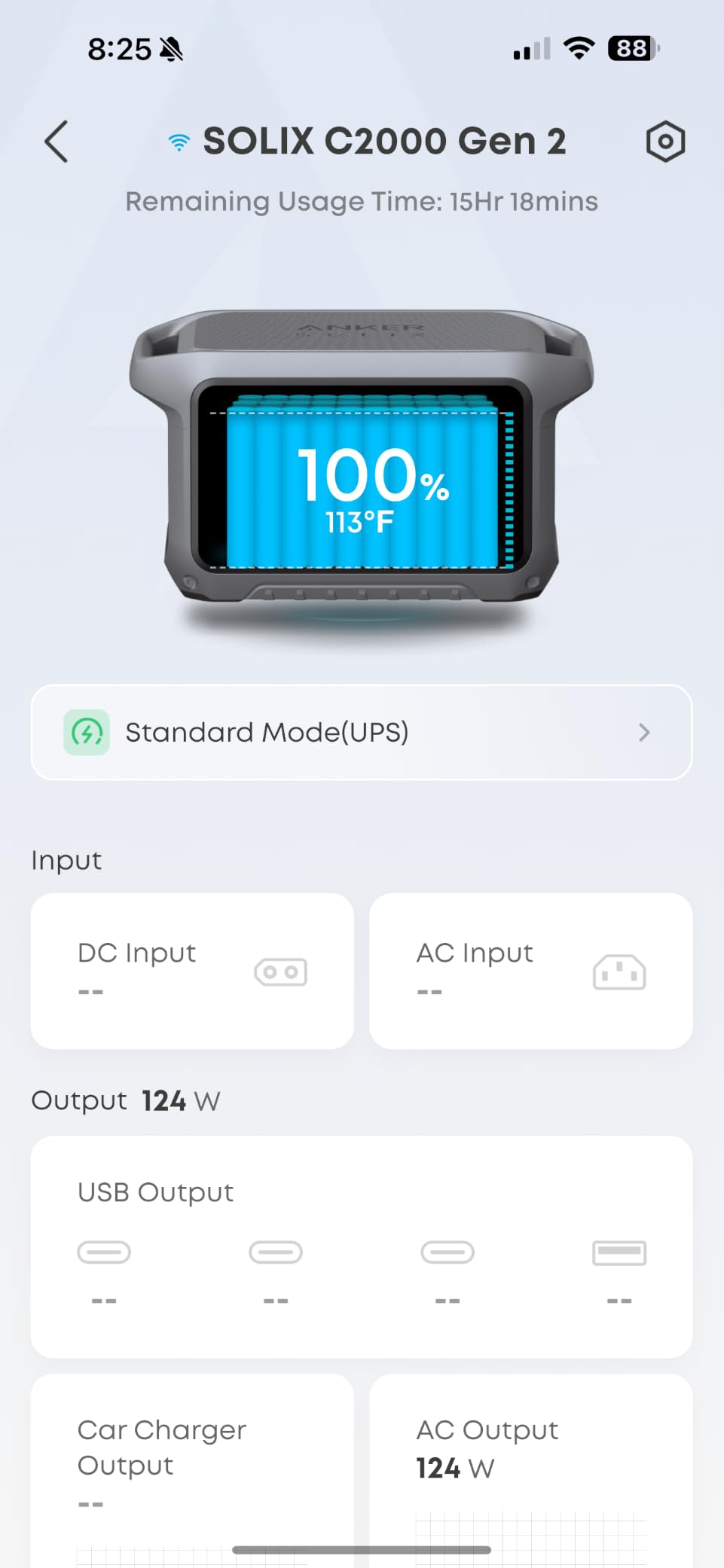
Recharging is where the 800 watt alternator input stands out. Owners refill from a vehicle in about three hours, which makes the drive to the cabin part of the charging cycle rather than a separate chore. AC plus solar gives a full recharge in 58 minutes.
With 2,400 watts rated and 4,000 watts peak, it runs most window and RV air conditioners, which is the load most 1,000 watt-hour units simply cannot attempt.
Who the C2000 Gen 2 suits
It suits seasonal cabins and hunting lodges where a refrigerator or freezer must stay cold overnight without a generator running. A dual-door fridge and a router fit comfortably, with capacity left for lights and charging.
It also suits anyone who drives to the cabin regularly and wants to arrive with a full battery, or who needs window air conditioning during summer months.
Where it falls short
At 41.7 pounds it is a two-person lift, and the 18.1 by 9.8 by 10.1 inch footprint is bulkier than the compact 2,000 watt-hour alternatives. Solo carry-in use is not its strength.
The listed total outlet count is reported as a single figure, so confirm the exact port mix against your setup before committing, and confirm the cost of the 4kWh expansion battery if you plan to grow later.
6. Anker SOLIX S2000 2010Wh – Best Measured Fridge Runtime
Anker SOLIX S2000 Portable Power Station, 2,010Wh, 1,500W
- Lowest idle draw in this roundup for long compressor runtimes
- Verified fridge result of about 3% of capacity per hour
- Compact 2kWh footprint at 8.19 x 11.1 x 12.7 inches
- Outlets on both front and back for always-on appliances
- 10000-cycle / 15-year LFP cell rating
- App with charge limits and TOU modes plus usage graphs
- Cooling fan is loud when charging at 1200W
- Strong burnt-plastic odor during the first charge
- 35 lb is heavy for one person
- No 12V DC port and no expansion options
- Charge limits require the app
Owners report a full-size refrigerator drawing roughly 3% of capacity per hour on this unit, which works out to more than 33 hours of continuous compressor runtime. That is the most concrete refrigerator result in this roundup and the reason the S2000 keeps appearing in offline-power discussions.
The battery is built on 314Ah LFP cells rated for 10,000 cycles over 15 years. For a cabin that may be checked only a few weeks a year, that cycle rating matters more than peak wattage.
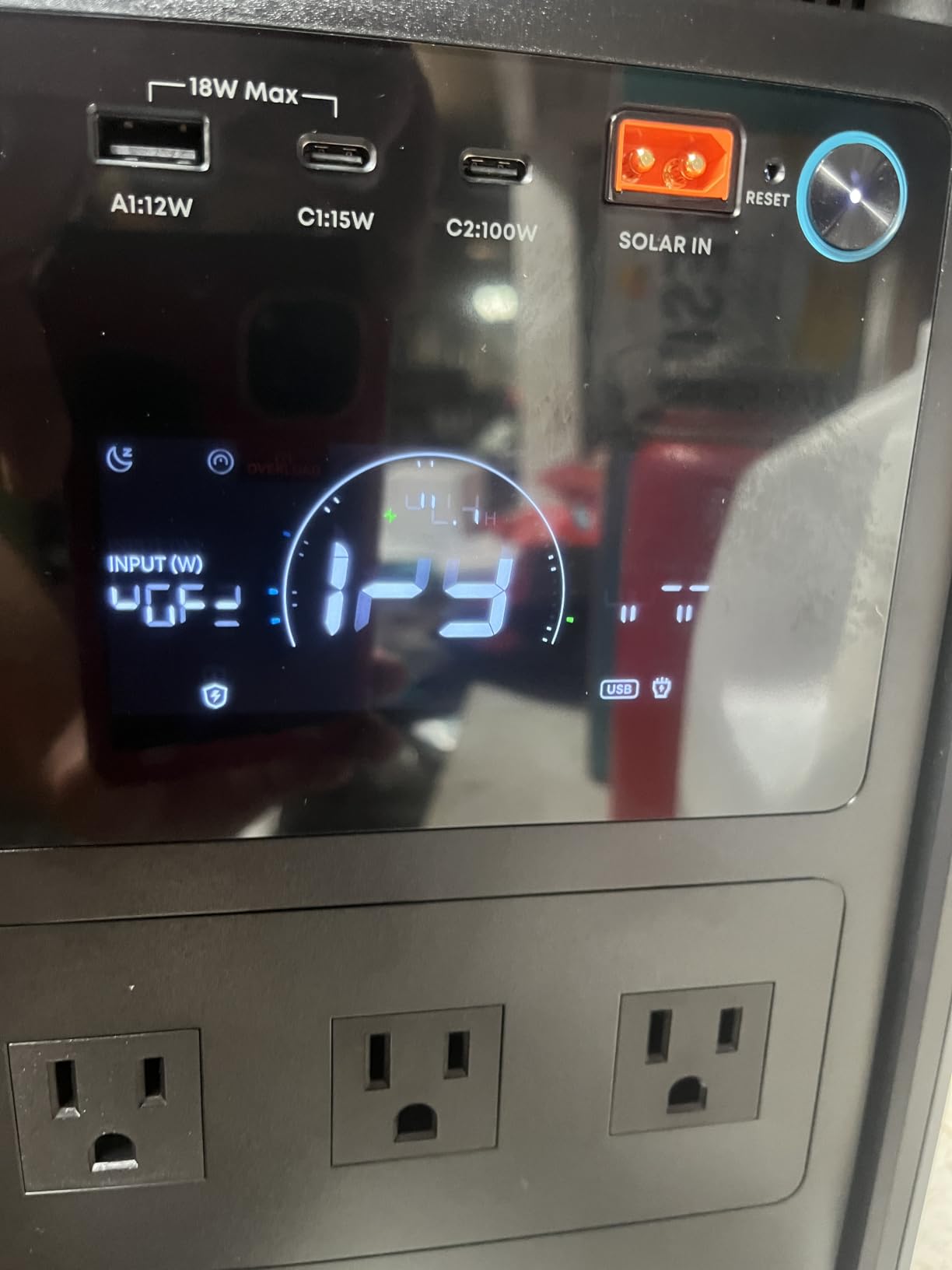
Reviewers also report carrying a 30-hour outage without incident, 13 hours on a network rack, and a coffee maker drawing over 1,600 watts. Six recharge paths cover AC, solar, generator, alternator charger, and a car outlet.
Outlets on both the front and back let always-on appliances stay permanently connected, which suits a cabin where the fridge and router are wired in permanently while you use the front ports day to day.
Who the S2000 suits
It suits cabin owners whose single biggest load is a refrigerator or freezer and who want the longest possible runtime between solar cycles. It is also a strong fit for a well-insulated cabin with modest heating needs in shoulder seasons.
Users with high-frequency reporting needs can use the app graphs to see exactly which appliance is drawing what, which is useful when you are still learning your load profile.
Where it falls short
The 1,500 watt continuous rating is the lowest output in the 2,000 watt-hour class here, so it will not start larger appliances. There is no 12V DC port and no battery expansion.
The cooling fan is noticeably loud when charging at 1,200 watts, and owners report a strong burnt-plastic odor during the initial first charge. At 35.7 pounds it still needs two people for most moves.
7. Jackery HomePower 3000 3072Wh – Best Bundle with Panels Included
Jackery HomePower 3000 and 2x200W Solar Panels, 3072Wh, 3600W AC Output
- Two 200W SolarSaga panels included in the box
- Quiet enough to run a camper air conditioner and microwave
- Owners verify two full days of refrigerator runtime
- 1.7-hour hybrid AC and DC recharge
- TT-30 RV port plus dual 100W USB-C PD
- ChargeShield 2.0 charging algorithms
- No extra battery expansion
- About 60 lb and many owners buy a separate wheel kit
- Jackery support criticized as unhelpful
- Minimum UPS load threshold is not documented
- One bundled solar cable uses an L-shaped plug that does not charge
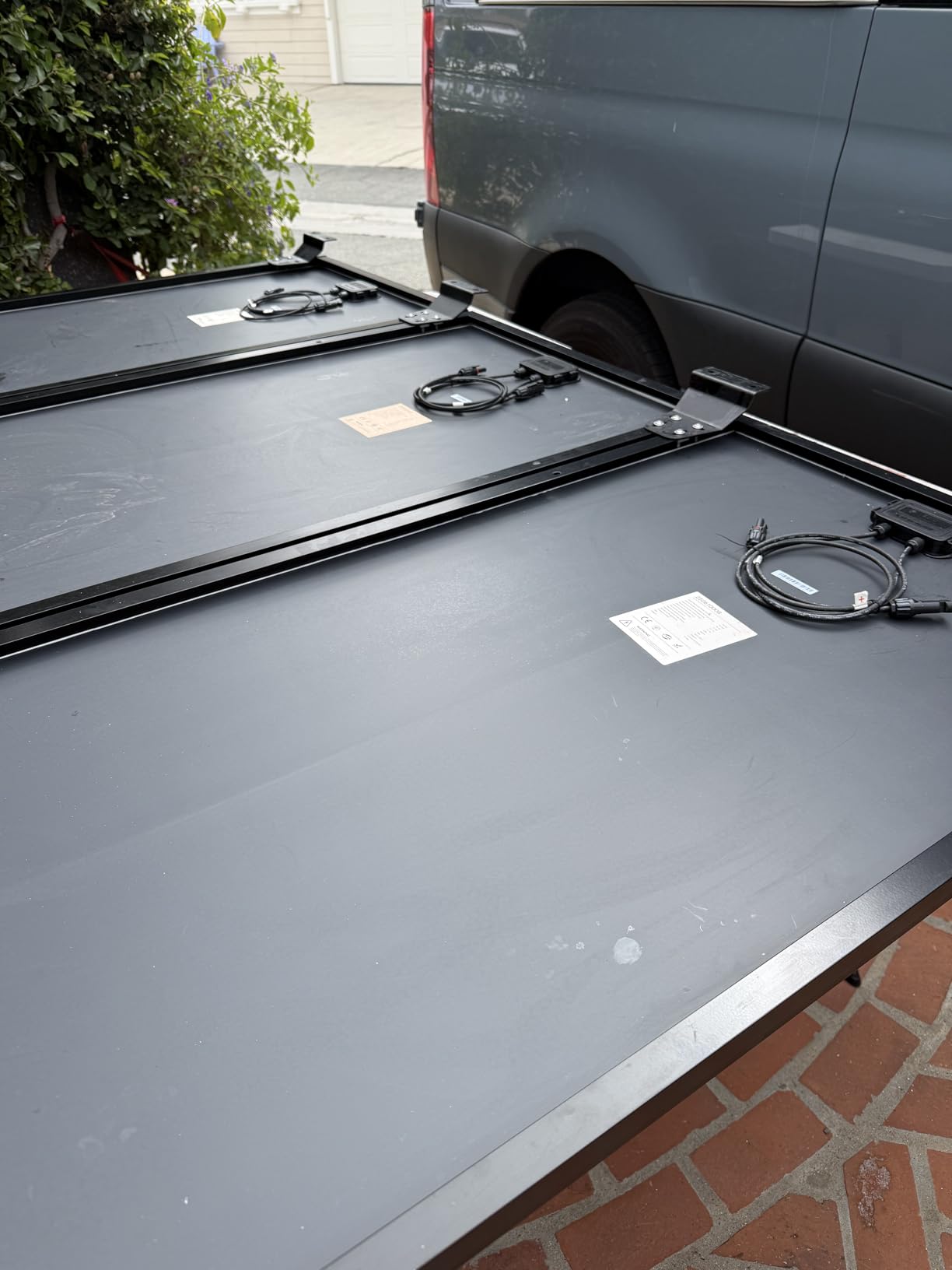
This bundle arrives with two 200 watt SolarSaga panels in the box, which removes the most common first-week mistake of mismatched panel connectors. Owners rate that inclusion as genuinely useful rather than a marketing extra.
At 3,072 watt-hours with 3,600 watts of output and 7,200 watts of surge, it carries the most output of any bundle we covered while still arriving as a self-contained package. Reported runtimes include a refrigerator for two full days on a single charge.
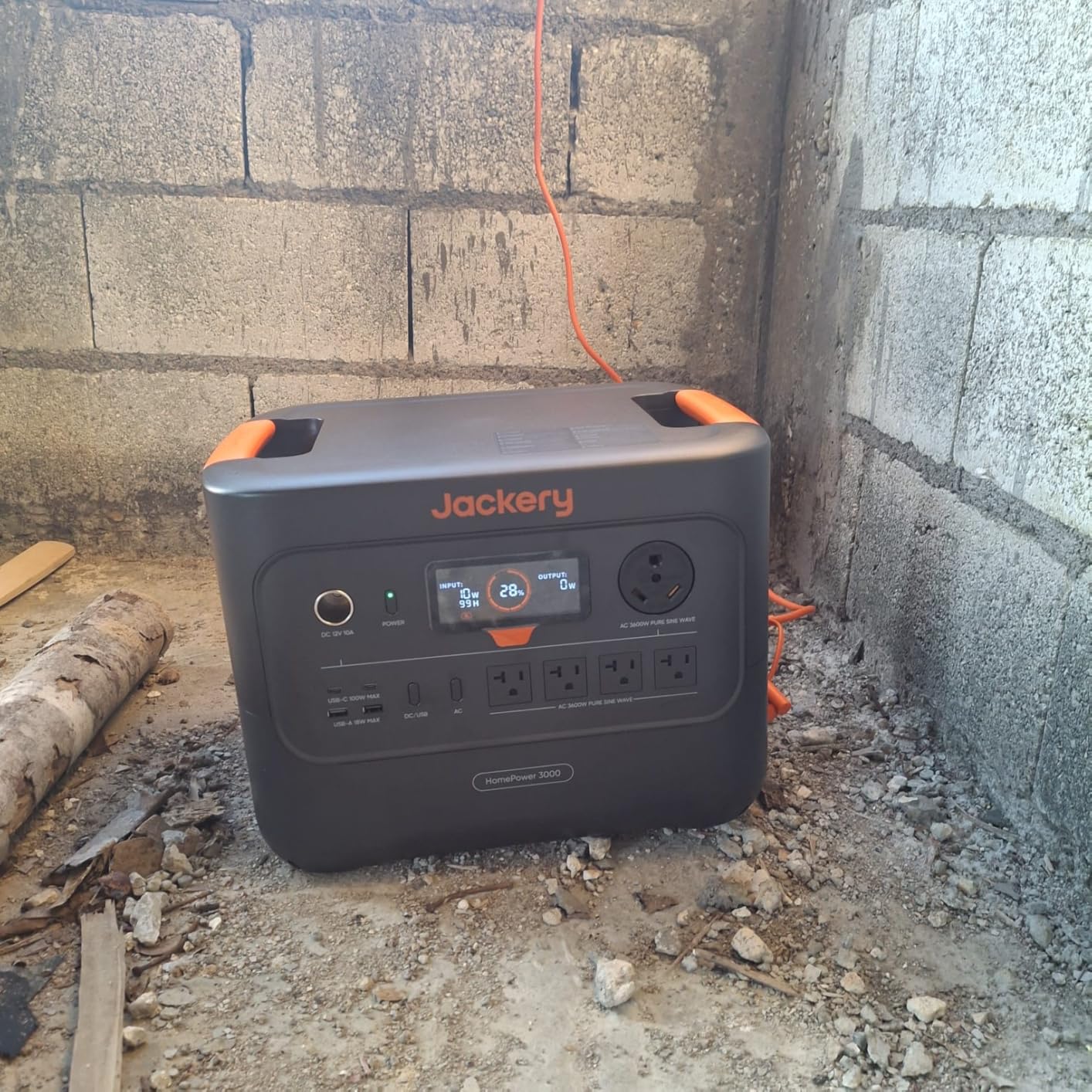
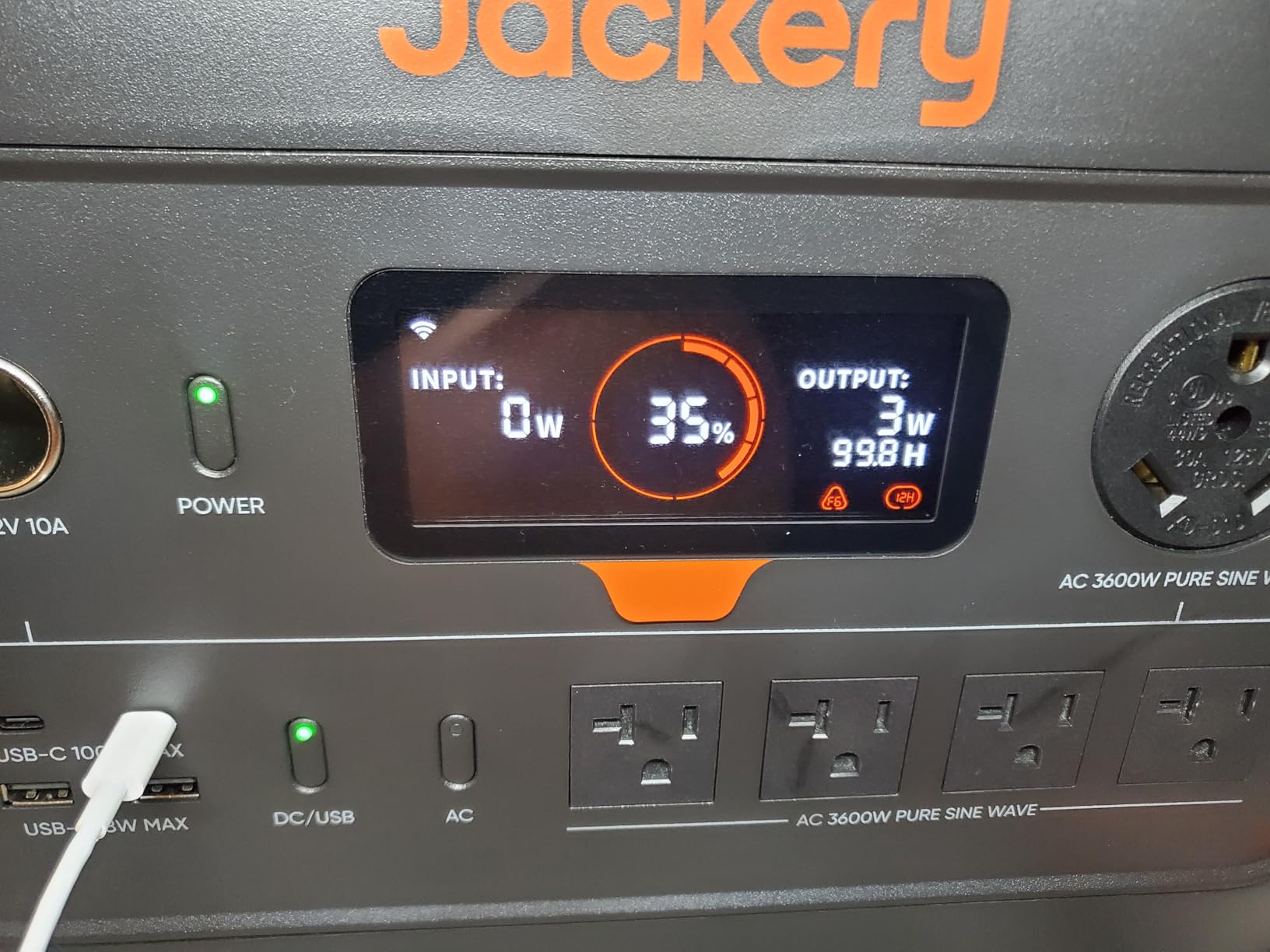
Recharge speed is strong: about 1.7 hours on hybrid AC and DC, or 2.2 hours on AC alone. The UL-certified 20 millisecond UPS switchover is specified for security cameras, medical refrigerators, and network gear.
It is also quiet enough to run a camper air conditioner and a microwave at the same time, which is a meaningful claim for a cabin rather than a campsite demonstration.
Who the HomePower 3000 suits
It suits first-time cabin buyers who want solar in the box and want to reach a working off-grid setup in one weekend instead of matching panels and cables themselves. The RV port also suits trailer and motorhome owners.
Anyone running a camper air conditioner during summer months, or a microwave for daily meals, needs the 3,600 watt output this provides.
Where it falls short
It does not support extra battery expansion, so 3,072 watt-hours is the ceiling. At about 60 pounds it is heavy, and many owners recommend buying the separate wheel kit.
The most common negative theme is brand support rather than performance: reviews cite a dead support URL, undocumented UPS minimum-load behavior, and a promoted Alexa feature that is not actually available. One bundled solar cable also uses an L-shaped plug that does not charge.
8. BLUETTI Elite 300 3014Wh – Best Compact 3kWh Option
BLUETTI Elite 300 Portable Power Station for RV & Home Backup 3014.4Wh
- Most compact 3kWh design per BLUETTI and Frost & Sullivan
- Sustained 2400W load for 30 minutes with multiple appliances
- 10 ms UPS that works flawlessly with a desktop computer
- True 20A right-angle blade outlets
- 30A 12V DC output plus TT-30 RV port
- Measured 77.2% round-trip efficiency in instrument testing
- No battery expansion
- 60V and 20A solar input ceiling can damage the MPPT
- Soft-start ramp stopped a 500W dehumidifier from starting
- Firmware updates are Wi-Fi only
- Only an AC cable is included
The Elite 300 packs 3,014 watt-hours into a 14.4 by 12 by 11.7 inch body, which BLUETTI verifies as roughly 59% smaller than traditional 3,000 watt-hour designs. If floor space in a small cabin is the constraint, that is the whole argument.
It carries 6,000 plus rated cycles, which is well above most units at this capacity, and 2,400 watts continuous with 4,800 watts surge. One owner held a sustained 2,400 watt load for 30 minutes with several appliances running and reported no issues.
Instrument testing by one owner measured 77.2% round-trip throughput efficiency, which is useful calibration for anyone doing their own runtime math. The UPS function was reported as flawless with a desktop computer during transitions.
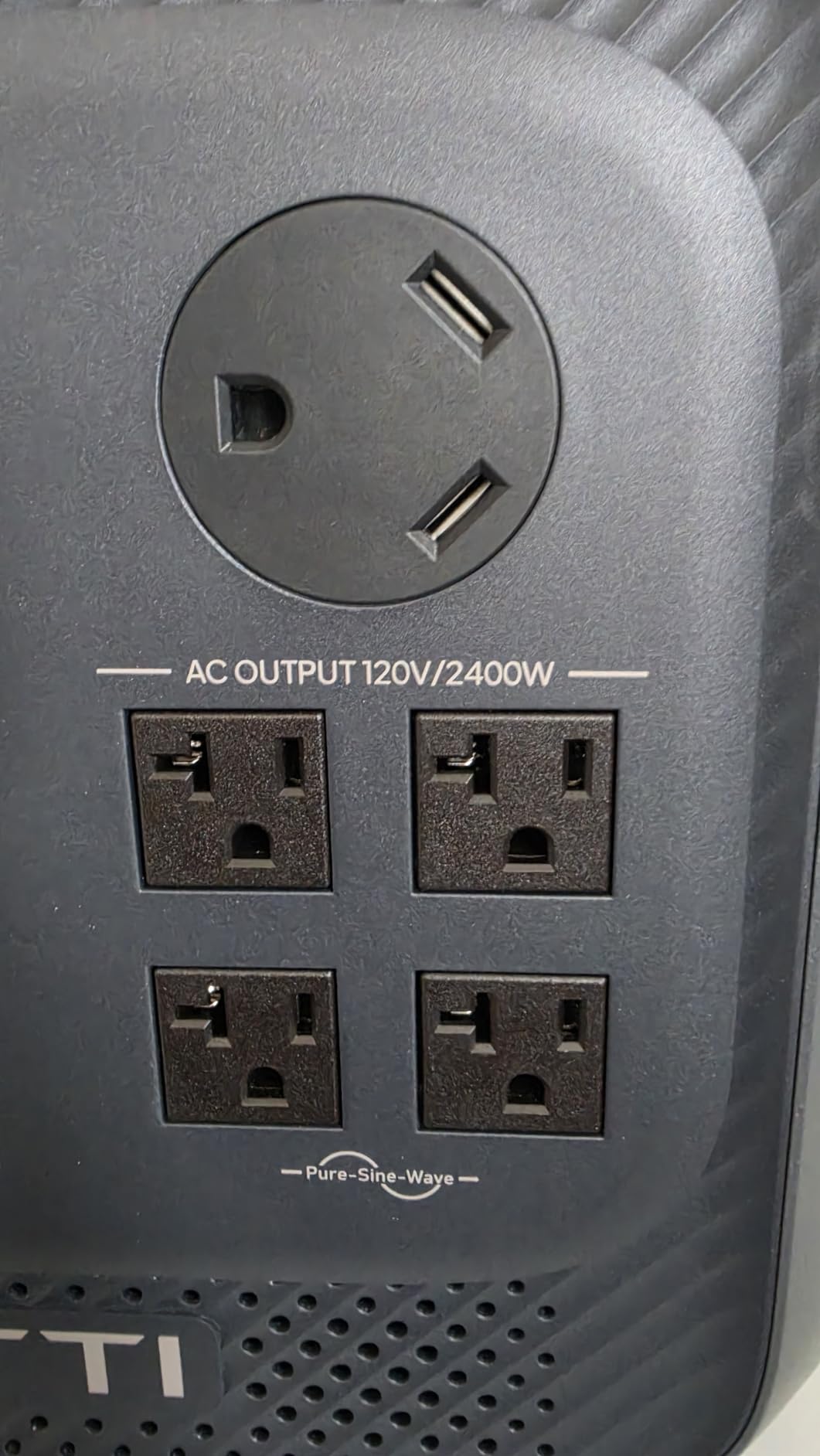
RV readiness is a genuine differentiator: a TT-30 outlet, 30A 12V DC on an EC-3 high-current connector, a 140 watt USB-C output, and an XT60-F solar input connector for up to 1,200 watts.
Who the Elite 300 suits
It suits cabin owners with limited indoor footprint, RV owners substituting for shore power, and anyone running 12V DC circuits. The 10 millisecond switchover suits a desktop-based remote office.
Owners running simultaneous AC and DC charging and discharging from the app, with adjustable AC input limits, are effectively managing a small hybrid system.
Where it falls short
There is no battery expansion. More seriously, the solar input is capped at 60V and 20A, and pushing panels beyond that can damage the MPPT and void the warranty. Check your panel specs before connecting.
A soft-start voltage ramp prevented a 500 watt dehumidifier from starting its compressor on demand, which is a real limitation for humid cabins. Firmware updates are Wi-Fi only, an interrupted update can brick the unit, and only an AC cable is included.
9. Jackery Explorer 2000 v2 2042Wh – Best Quiet Bundle with USB-C PD
Jackery Explorer 2000 v2 and 2x200W Solar Panels, 2042Wh, 2200W AC Output
- Silent charging mode at 30dB for a full charge in 5 hours
- 100W USB-C PD port charges laptops and phones directly
- Fume-free and indoor-safe as a gas generator replacement
- 80% recharge in 66 minutes on AC
- UL1778-certified 20 ms UPS switchover
- CTB design at 39.5 lb and 34% smaller than conventional 2kWh units
- Bundled panels need the straight DC8020 plug
- 2200W output will not start larger appliances
- Heaviest bundle here at 66.8 lb with panels
- Extra adapters may be needed for existing solar or vehicle setups
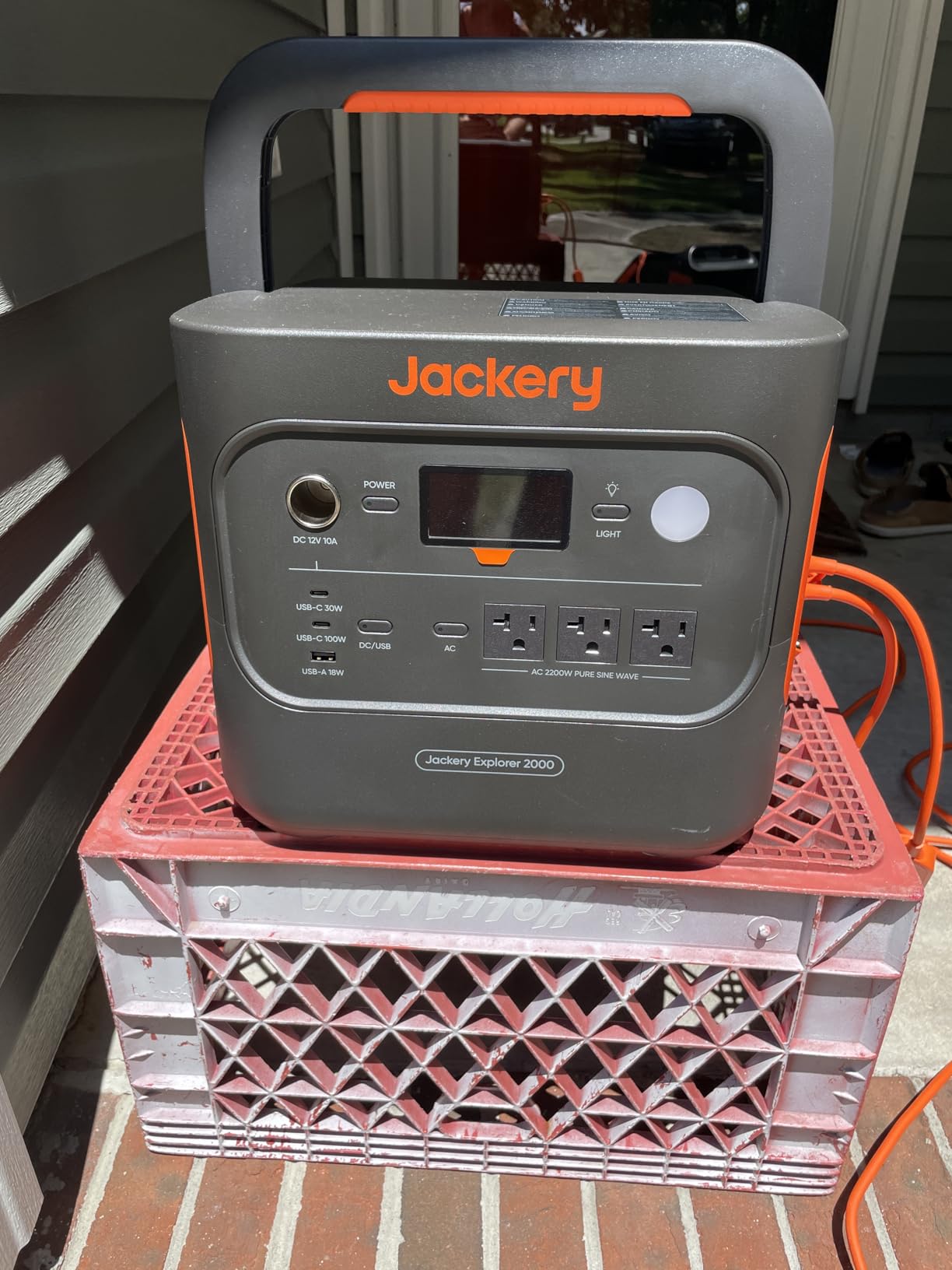
This bundle is the quietest option we covered, with a documented silent charging mode that reaches a full charge in five hours at 30dB. For a cabin where the unit sits inside a wood structure near where you sleep, that specification is worth more than raw peak wattage.
It also ships with two 200 watt panels, reaches 80% charge in 66 minutes on AC, and offers a 100 watt USB-C PD port that charges laptops and phones without adapters.
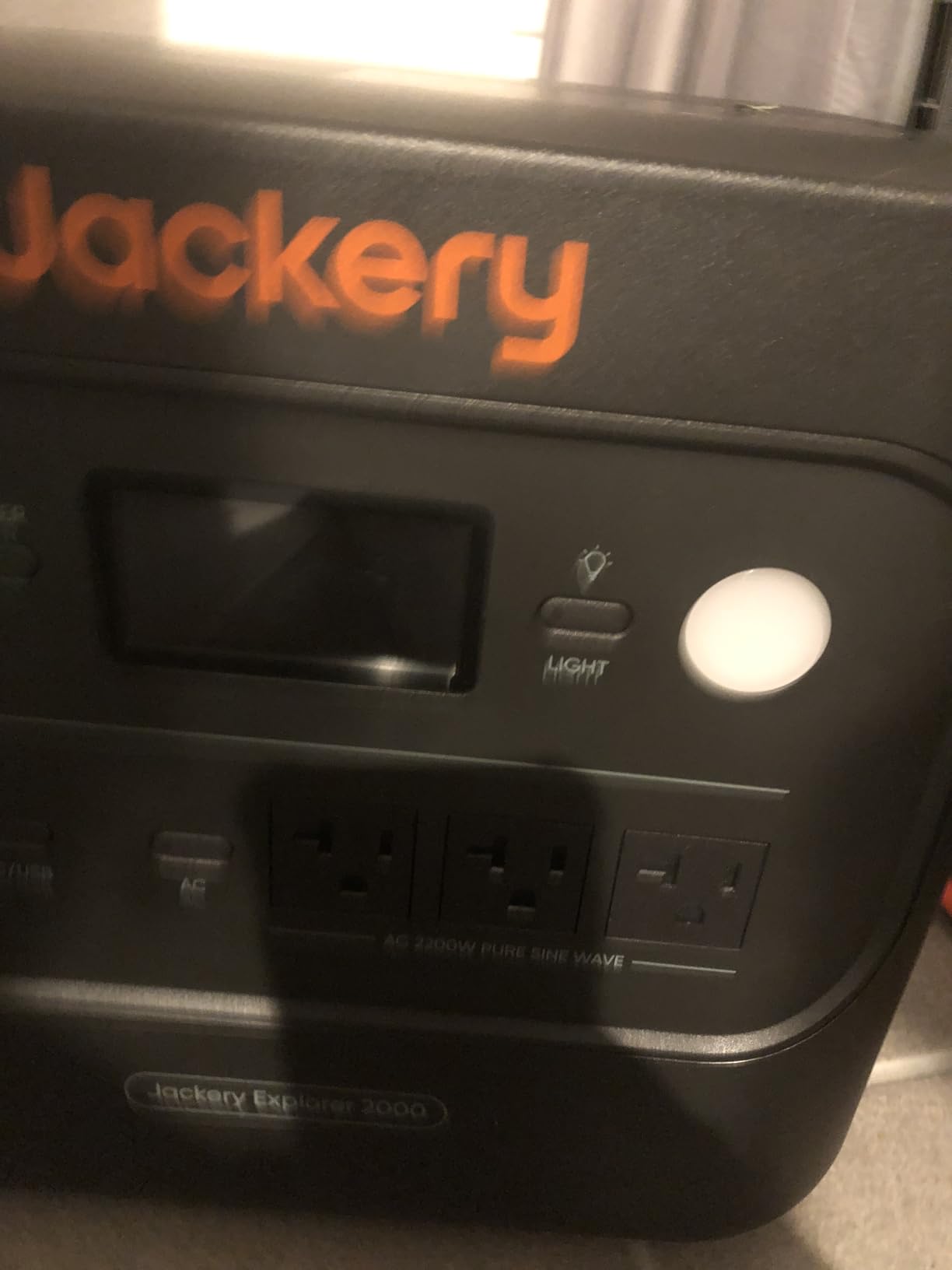
The UL1778-certified 20 millisecond switchover keeps critical devices running through outages, and the LiFePO4 battery is rated for up to 10 years of performance. Owners value it as a drop-in indoor replacement for a gas generator with no fumes.
Solar is the slow path here: a full charge takes about six hours with 400 watts of panels, and the Silent Charging mode takes five hours on its own.
Who the Explorer 2000 v2 suits
It suits cabin owners who are light sleepers or have the unit in a sleeping area, since the 30dB silent mode is documented rather than implied. The USB-C PD port suits anyone working from a laptop at the cabin.
It is also a strong first solar purchase for someone who wants panels in the box and a battery rated for a decade of daily use.
Where it falls short
2,200 watts of output covers essentials rather than large appliances, so a window air conditioner or a microwave is out of reach. It is the heaviest bundle in this roundup at 66.8 pounds with the panels.
The bundled panels require removing the L-shaped DC7909 plug and using the straight DC8020 plug, and some buyers report needing extra adapters to reuse existing solar or vehicle charging hardware.
10. EcoFlow DELTA Pro 3 4096Wh – Best for Full-Time Off-Grid Living
EF ECOFLOW DELTA Pro 3 Portable Power Station, 4096Wh, 4000W AC Output
- True 240V split-phase output from a single unit
- 4000W output runs central air
- a 1 HP water pump and a furnace
- Stackable Extra Batteries expand capacity to 12288Wh and up to 48kWh total
- Built-in neutral-ground bonding togglable in the app
- Measured 4000W peak sustained EV charging at 240V
- Much quieter cooling than the original DELTA Pro
- Heaviest unit here at 115 lb
- No built-in 12V cigarette output port
- Stacking batteries on top immobilizes the unit for transport
- Fewer included cables than the previous model
- Reported Error 71 BMS lockout on one unit
This is the only unit here that outputs 240V split-phase from a single box, with no second unit or hub required. For full-time off-grid living that is the feature that changes the calculation, because it removes the need to design around 120V-only circuits.
At 4,096 watt-hours with 4,000 watts of output, 6,000 watts with X-Boost, and up to 12,000 watts when linked, it is the only model in this roundup that can run central air, a 1 HP water pump, and a furnace.
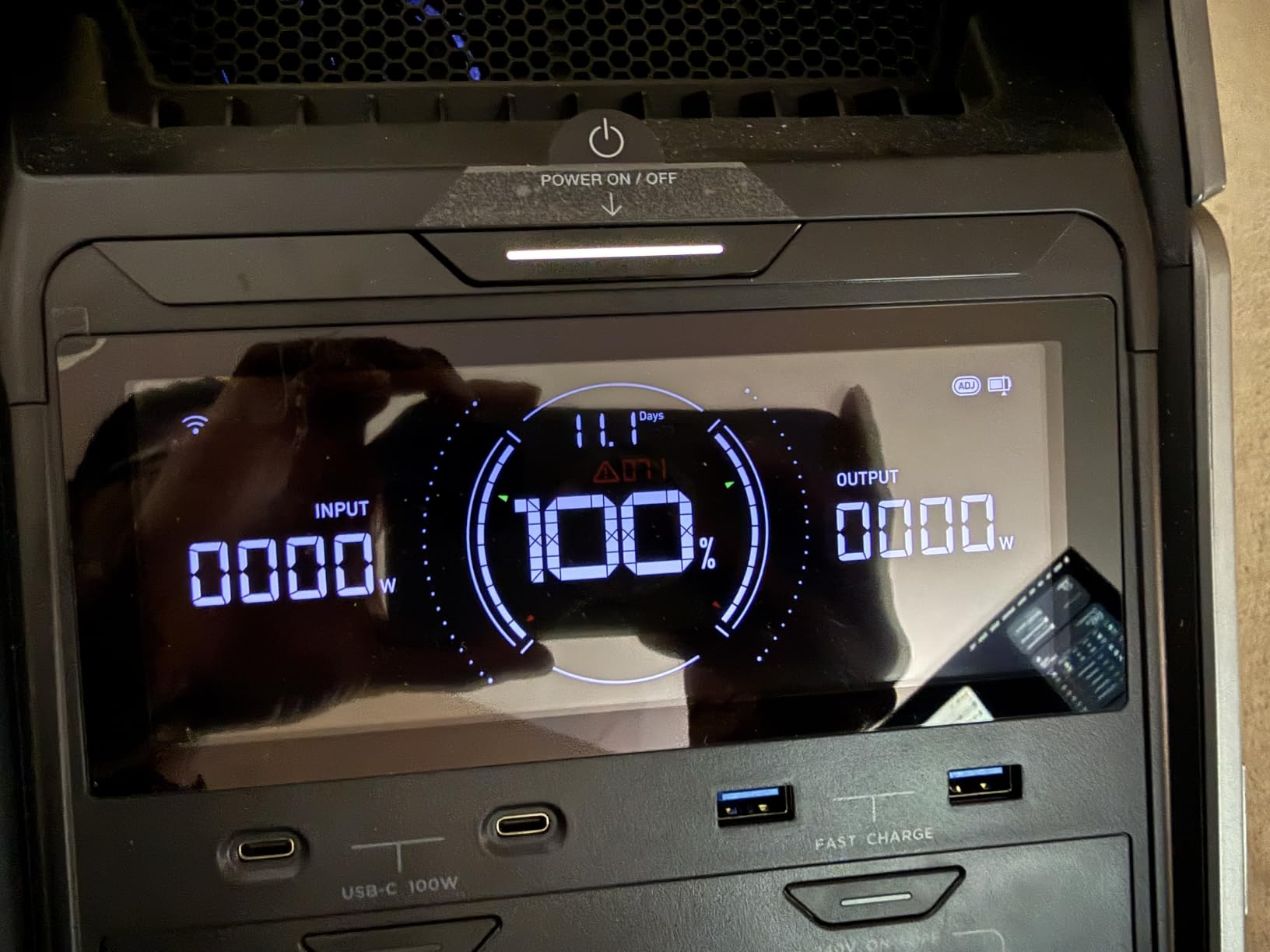
Solar input is handled by two ports totaling 2,600 watts, split across a 30-150V 15A range and an 11-60V 20A range, which accepts far more panel configurations than the single-port units above it.
Users report running an entire house including the furnace for a full day. The IP65-rated CTC battery pack and X-Quiet operation as low as 30dB are both relevant to a permanent installation.
Who the DELTA Pro 3 suits
It suits full-time residents and anyone whose load list includes heating, water pumping, or well equipment. The 240V output also suits owners planning EV charging, with one owner measuring sustained 4,000 watt EV charging at 240V for 30 minutes.
Built-in neutral-ground bonding simplifies RV and EV charger setups, and stackable Extra Batteries extend capacity to 12,288Wh, then up to 48kWh with additional units.
Where it falls short
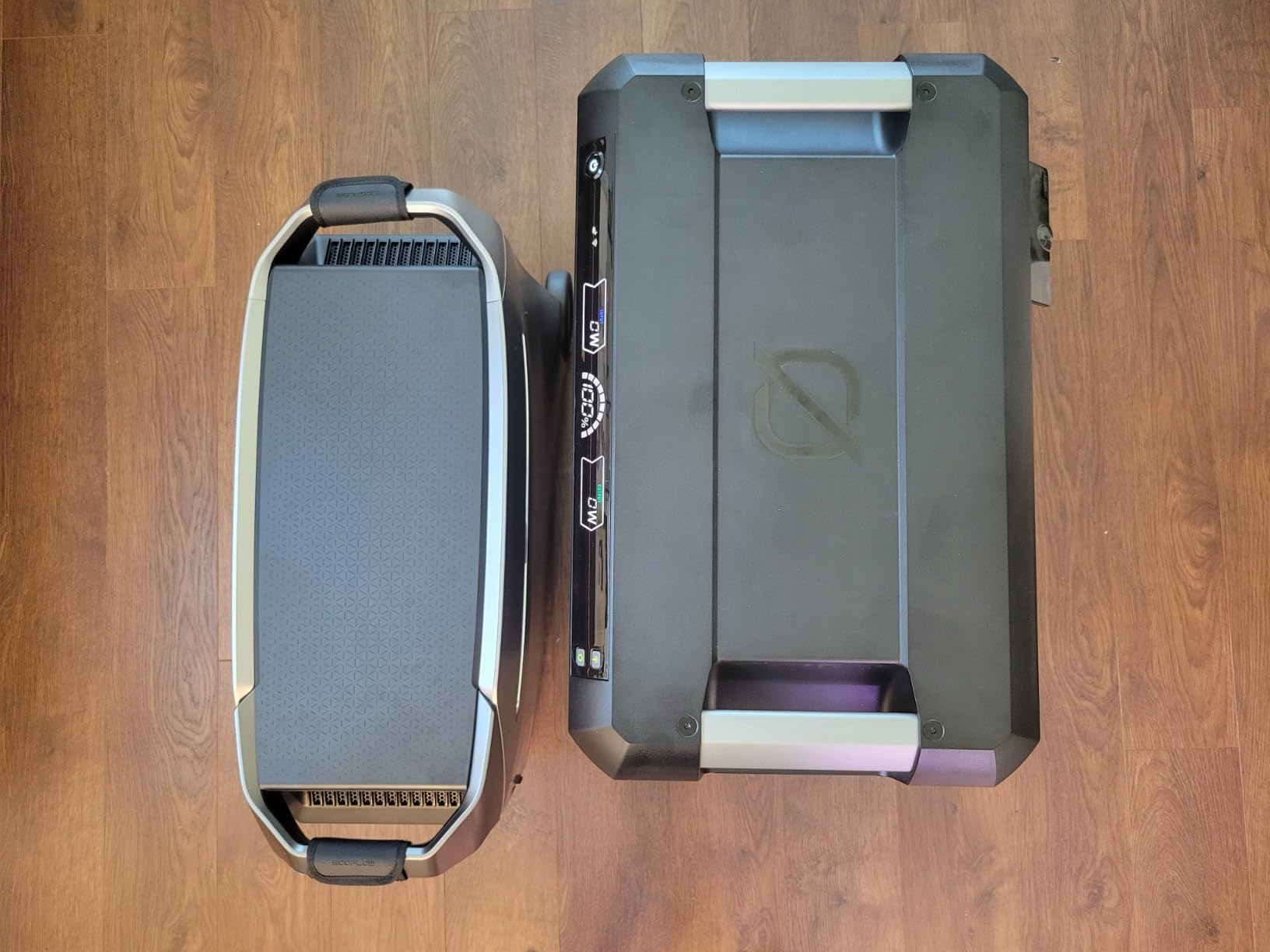
At 115 pounds it is a two-person move and hard to carry up cabin stairs. Stacking Extra Batteries on top immobilizes the main unit for transport, so plan the final location before you expand.
There is no built-in 12V cigarette output port and fewer cables are included than the previous DELTA Pro. One unit reportedly suffered an Error 71 BMS lockout, and warranty return logistics for a 115 pound battery were widely criticized.
Cabin Appliance Load Guide
This table maps the loads that actually decide your purchase. Compare the running watts and daily watt-hours against the unit you are considering, then apply the 0.85 inverter efficiency factor.
- Small refrigerator: 50-70W running with 200-300W surge, about 250-400Wh per day, 500Wh class station or larger.
- Full-size or dual-door fridge: 70-120W running with 300-400W surge, about 350-700Wh per day, 1,024Wh class station.
- Chest freezer: 80-150W running with 300-500W surge, about 500-900Wh per day, 1,024Wh class station or larger.
- LED lighting for a whole cabin: 30-60W running, no surge, about 100-250Wh per day, 500Wh class station is enough.
- Wi-Fi router and phone charging: 10-20W running, no surge, about 50-120Wh per day, 500Wh class station is enough.
- CPAP machine: 30-60W running, no surge, about 100-250Wh per day, 500Wh class station with a fast UPS switchover.
- Well or sump pump: 300-1,000W running with two to three times that in surge, load dependent, needs 2,000W or more of output.
- Electric water heater: 2,000-4,000W running, full element draw at surge, 2,000-4,000Wh per use, 3,000Wh class station with 3,600W or more.
- Space heater: about 1,500W running and 1,500W surge, 1,500-3,000Wh per hour of use, needs 2,000W or more plus large capacity.
- One induction cooktop burner: 1,100-1,800W running, same at surge, 700-1,400Wh per use, needs 2,000W or more of output.
- Microwave: 700-1,200W running and 1,200W surge, 70-200Wh per use, needs 1,500W or more of output.
- Coffee maker: 800-1,700W running, same at surge, 50-100Wh per use, needs 1,500W or more of output.
- Window air conditioner: 1,000-1,500W running with 2,000-3,000W surge, 600-900Wh per 8 hours, needs 2,000W rated and 4,000W peak.
Two loads deserve special attention. Compressor appliances draw their rated watts only a fraction of the time, so they are limited by startup surge rather than by average draw, which is why we keep recommending units with at least three times your running watts in peak capacity.
Resistance heating is the opposite problem. A space heater or water heater draws its full wattage continuously while it runs, which makes it the fastest way to empty any station and the clearest reason to size by daily watt-hours.
Solar Recharging and Winter Performance
Solar recharge time is roughly total watt-hours divided by panel watts, then adjusted for real-world losses. A 1,152 watt-hour unit on a 500 watt panel refills in about three hours at full sun, but a 1,024 watt-hour unit on a 200 watt panel needs closer to eight. A 3,000 watt-hour unit on a single 200 watt panel needs most of a full day.
This is the oversizing trap that shows up repeatedly in owner discussions. A large station paired with one small panel cannot keep up with a running refrigerator, and the fix is more panel wattage, not a bigger battery. Pair 200 to 400 watts with a 1,024 watt-hour unit, 600 to 1,200 watts with a 2,000 to 3,000 watt-hour unit, and 1,200 watts or more with the 4,096 watt-hour class.
MPPT charge controllers extract meaningfully more energy than PWM controllers in cold-morning, low-light conditions, which is exactly the condition at a shaded cabin. That is one reason we lean toward units with a high solar input rating rather than a large battery and a small panel.
On winter charging, the practical rule is to bring a cold battery to room temperature before charging it, and never leave a unit at zero percent in an unheated cabin. Forum accounts of charging at 0% in freezing conditions describe cell damage risk, and the same caution applies to leaving the unit in a vehicle overnight in deep cold.
Vehicle-to-load charging is a useful supplement rather than a primary source. The 800 watt alternator input on the C2000 Gen 2 refills from a truck in about three hours, which turns a drive into part of the charging cycle.
When a Portable Power Station Is the Wrong Choice
The most common criticism we found in owner forums is blunt: a sealed consumer power station is the wrong purchase for a permanent cabin build. That is a fair point, and we want to address it directly rather than pretend every situation favors a portable unit.
A portable station makes sense for weekend and seasonal use, for storm-season backup, and as a bridge while you plan a permanent system. It stops making sense when you are running a furnace, a well pump on a timer, and daily heating through winter, or when your load list exceeds what a single consumer inverter can start.
The honest alternative is a modular LiFePO4 battery bank with a dedicated MPPT charge controller and a separate inverter charger. That is more work to install and may involve permitting and a transfer switch, but it is serviceable, expandable one module at a time, and it does not have a display or app that can lock you out.
Safety deserves a note too. A portable station is indoor-safe in a way a propane generator is not, since there is no combustion and no carbon monoxide, which is why many cabin owners replace a generator with one. Leave ventilation around the unit, charge on a non-flammable surface, and do not store a unit in a hot uninsulated attic.
How to Choose the Right Unit for Your Cabin
Check the battery chemistry first. Every unit in this roundup uses LiFePO4, which holds capacity for more cycles than NMC lithium-ion and tolerates the temperature swings at an unheated cabin far better.
Confirm pure sine wave output. Sensitive electronics, medical devices, and variable-speed compressors behave poorly on a modified sine wave, and two units here have reported harmonic distortion on microwave loads.
Look at the UPS switchover time if you run a router, a NAS, a desktop, or a CPAP. Under 20 milliseconds covers most of these; the fastest switchovers we found sit at 10 milliseconds or below, which is what keeps a desktop, a NAS, or a CPAP machine running through a transfer.
Check solar input wattage against your panel plans, and check the input voltage ceiling before connecting anything unusual. The BLUETTI Elite 300 caps solar input at 60V and 20A, and exceeding that can damage the MPPT and void the warranty.
Decide on expandability early. Three of the ten here take an extra battery, either a stackable module on the DELTA Pro 3 or a clip-in pack on the Mega 1 and the C2000 Gen 2. The other seven are sealed at their listed capacity.
Finally, weigh real runtime math rather than nameplate watt-hours. Apply the 0.85 inverter factor, subtract roughly 10% for the unit’s own overhead draw, and add the self-consumption numbers we listed. Measured throughput on one instrument-tested unit came in at 77.2% rather than a theoretical figure.
If you want to compare specific units against a smaller budget, our guide to portable power stations under 500 covers the entry tier, and our CPAP-focused picks goes deeper on medical device runtime.
Frequently Asked Questions
How much battery storage do you need to go off-grid?
Most weekend cabins need 1,000 to 2,000 watt-hours, seasonal cabins need 2,000 to 3,000 watt-hours, and a full-time residence needs 3,000 watt-hours or more. Add up the wattage of each load multiplied by daily hours, then divide by 0.85 for inverter loss and add 20 percent headroom. A 500 watt-hour daily essentials list becomes about 700 usable watt-hours.
How many watts do I need in a portable power station?
Add the running watts of every load you intend to run at once, then confirm the inverter’s peak or surge rating is at least three times the largest compressor load. A refrigerator needs 200 to 400 watts of surge, a well pump needs 2 to 3 times its running draw, and resistance heating needs its full running wattage sustained.
What size portable power station do you need to run a refrigerator?
A small refrigerator drawing 50 to 70 watts consumes roughly 250 to 400 watt-hours per day, so a 500 watt-hour unit covers a weekend. A full-size or dual-door fridge needs a 1,024 watt-hour class station, and a chest freezer needs 1,024 watt-hours or more. Low idle draw extends compressor runtime significantly overnight.
What can a 2000W portable power station run?
A 2,000 watt continuous output runs a refrigerator, a router, LED lighting, a CPAP machine, a microwave, a coffee maker, a well or sump pump, one induction burner, and most window air conditioners given sufficient peak capacity. It will not run central air, a furnace, or multiple resistance heating elements at once, and a 2,000 watt-hour battery drains fast on those loads.
What is the best power source for off-grid living?
For weekend and seasonal cabins, a LiFePO4 portable power station with solar is the simplest path. For full-time residency with heating, well pumps, or 240V loads, a modular LiFePO4 battery bank with a dedicated MPPT charge controller and a separate inverter charger is the better long-term system. A propane generator remains useful for heavy loads but cannot run indoors.
Final Verdict on the Best Portable Power Stations for Off Grid Cabins
For most cabins, the BLUETTI AC180 is the pick: 1,152 watt-hours, 1,800 watts of continuous output, 500 watts of solar input, a 20 millisecond UPS, and a five-year warranty in a package that has the largest review base of anything we covered. If weight is the deciding factor, the Anker SOLIX C1000 Gen 2 at 24.9 pounds is the one you can carry alone. If you expect your loads to grow, the OUPES Mega 1 expands to 5,120 watt-hours on the same inverter.
For 2,000 watt-hour class units, the Anker SOLIX C2000 Gen 2 wins on 9 watt standby draw and alternator charging, while the Anker SOLIX S2000 wins on measured refrigerator runtime. Above 3,000 watt-hours, the Jackery HomePower 3000 bundle and the BLUETTI Elite 300 cover seasonal cabins, and the EcoFlow DELTA Pro 3 is the only unit here that outputs 240V split-phase from a single box.
Size to your load list, not to a brand name, apply the 0.85 efficiency factor, and pair the station with enough panel wattage to refill it. Start with the cabin solar generator guide to match panels to whichever station you settle on, and you will stay powered through more than one dark weekend.