
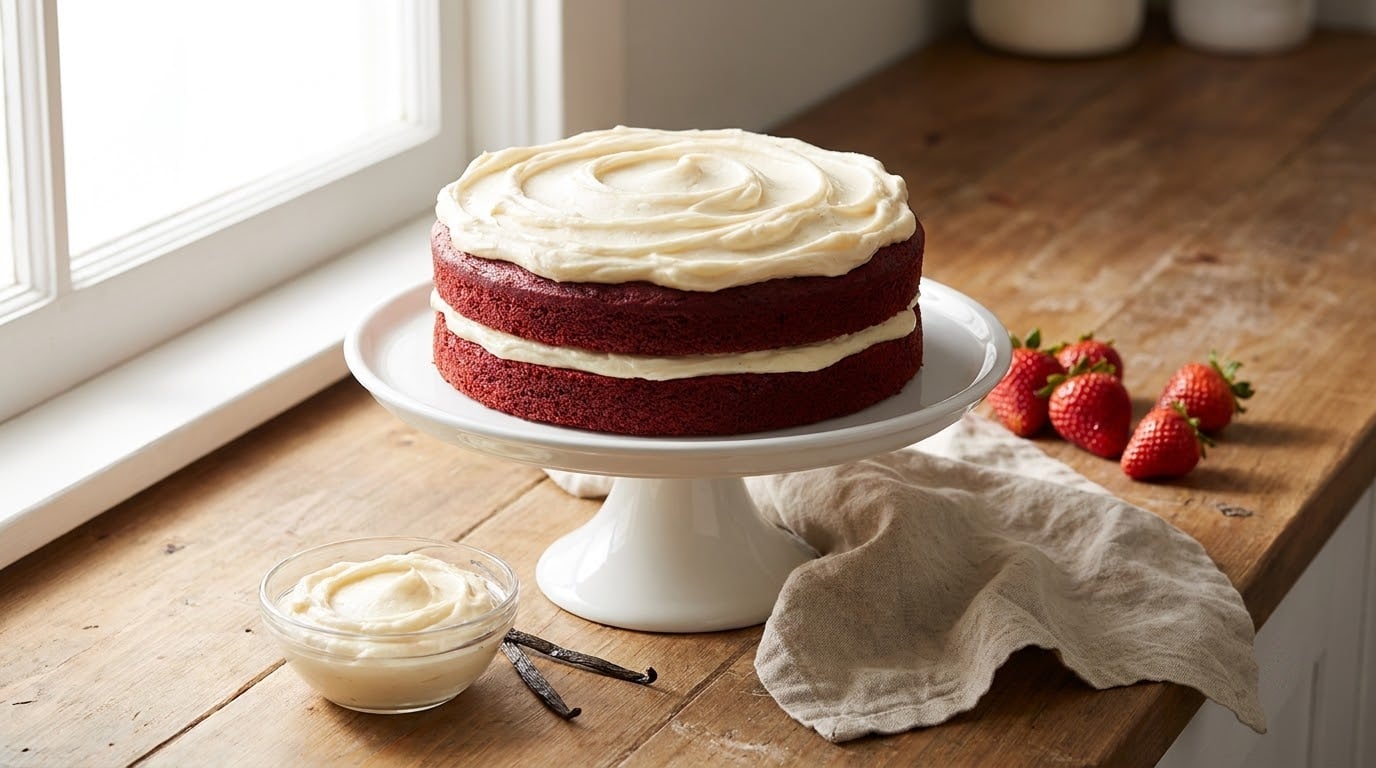
Ermine frosting recipe is a classic old-fashioned boiled milk frosting made with flour, milk, sugar, and butter, whipped into a silky, cloud-like spread that’s far less sweet than American buttercream. Also called flour buttercream or roux frosting, this egg-free frosting pipes beautifully on layer cakes and cupcakes and has been the traditional topping for red velvet cake long before cream cheese frosting took over.
I’ve been making this ermine frosting recipe on repeat for the past few months, and it has completely taken the place of Swiss meringue in my kitchen. There’s no candy thermometer to babysit, no raw eggs to worry about, and the texture comes out light and stable every single time. If you’ve been burned by grainy or runny frosting in the past, this method walks you through every cue so it works on the first try.
Table of Contents
Why This Recipe Works
Most frostings rely on powdered sugar or egg whites for structure. Ermine frosting skips both, which is exactly why it tastes lighter and less sweet than what you’re used to.
- The cooked-flour technique (called a roux) thickens milk and sugar into a paste that holds the frosting together without powdered sugar.
- Starch gelatinization is the real magic here: when flour is heated with milk, the starch granules swell and absorb liquid, creating a stable base that emulsifies smoothly into butter.
- Because there’s no powdered sugar, the sweetness comes from just a small amount of granulated sugar, so the butter actually tastes like butter.
- The finished frosting is pipeable, holds soft swirls, and stays soft at room temperature, unlike American buttercream which crusts.
- It’s naturally egg-free, so it sidesteps the food safety concerns of Swiss or Italian buttercream.
Ingredients
This recipe makes about 3 cups of frosting, which is enough to frost a two-layer (8-inch) cake or 18 to 24 cupcakes with a generous swirl.
- 5 tablespoons (40 g) all-purpose flour
- 1 cup (240 ml) whole milk
- 1 cup (200 g) granulated sugar
- 1 cup (226 g) unsalted butter, softened to cool room temperature (not melty)
- 1 teaspoon pure vanilla extract
- Pinch of fine salt
A few notes on the key ingredients: Whole milk gives the silkiest result because the extra fat keeps the roux rich. European-style butter (like Plugra or Kerrygold) makes a noticeably creamier frosting if you can find it. Clear vanilla extract keeps the frosting bright white; regular vanilla will turn it slightly off-white.
For a dairy-free version: swap the whole milk for unsweetened oat milk or cashew milk and use a good vegan butter block (not tub margarine). The texture comes out almost identical.
Equipment
- Medium heavy-bottomed saucepan (so the roux cooks evenly without scorching)
- Whisk
- Stand mixer with whisk attachment, or a hand mixer
- Instant-read thermometer (the roux must cool to room temperature, around 70°F / 21°C, before it meets the butter)
- Fine-mesh sieve (optional, for the smoothest possible roux)
- Plastic wrap or a piece of parchment pressed directly onto the surface of the cooked roux to prevent a skin from forming
How to Make Ermine Frosting
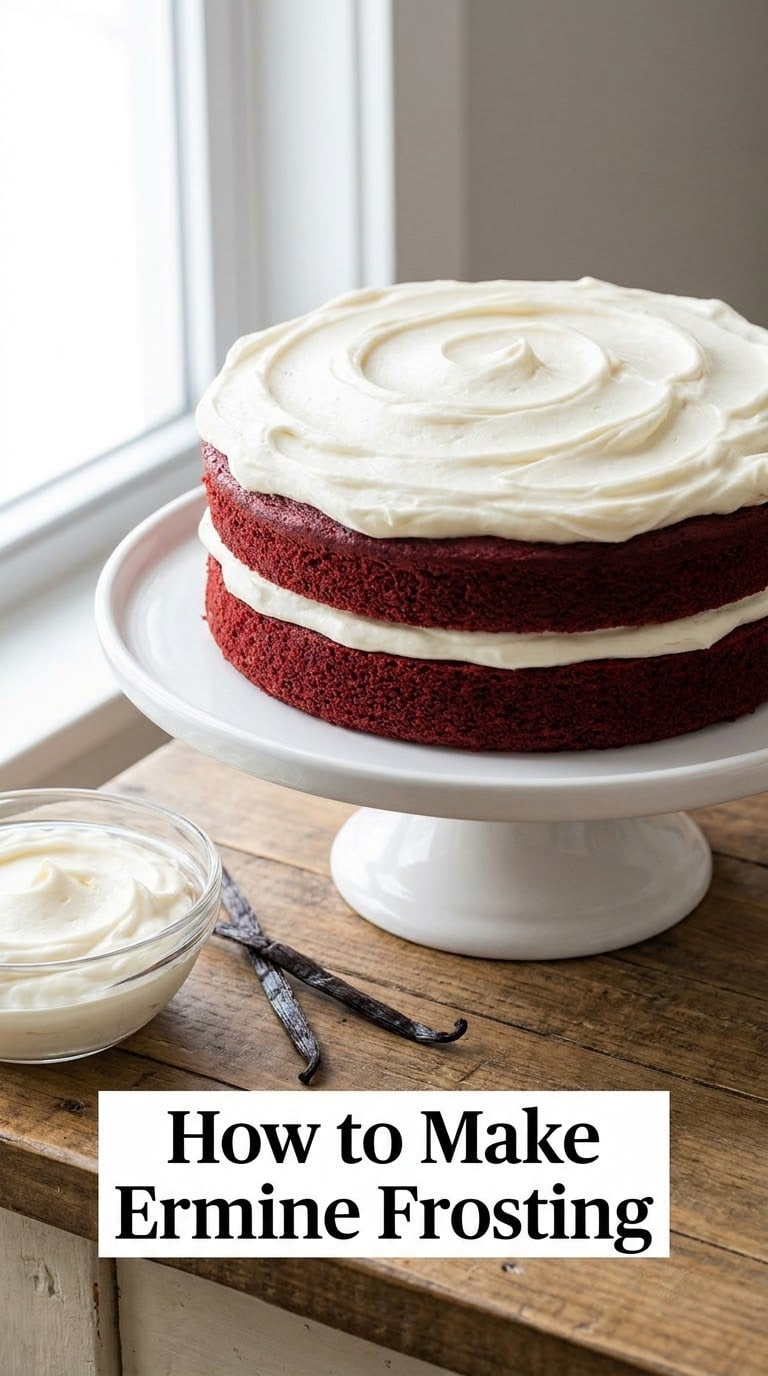
The whole process takes about 20 minutes of active time, plus cooling time for the roux.
Step 1: Cook the flour-milk roux
Whisk the flour and milk together in a medium heavy-bottomed saucepan until completely smooth, with no dry pockets of flour. Place over medium-low heat and add the granulated sugar and pinch of salt. Whisk constantly as the mixture heats.
Cook for 5 to 8 minutes, whisking the whole time, until the mixture thickens to the consistency of soft pudding. You should be able to draw a line through the mixture on the back of a spoon and have it hold for a second before closing back up. The flour taste should be completely gone. If you see raw flour flavor at all, keep cooking another minute or two.
Step 2: Cool the roux completely
This is the step that makes or breaks your frosting. Remove the pan from the heat and press plastic wrap directly onto the surface of the roux so it doesn’t form a skin. Let it cool on the counter for about 30 minutes, or speed it up by spreading it on a sheet pan and chilling it in the fridge for 15 to 20 minutes.
Test it with an instant-read thermometer before moving on. The roux must be at or below room temperature, around 70°F (21°C). If it’s even slightly warm, it will melt the butter and you’ll get a soupy mess.
Step 3: Whip the butter until pale and fluffy
In a stand mixer fitted with the whisk attachment (or in a large bowl with a hand mixer), beat the softened butter on medium-high speed for 3 to 4 minutes, until it’s noticeably lighter in color and almost looks like whipped cream. Scrape down the bowl once. This step is what gives the frosting its cloud-like texture.
Step 4: Add the cooled roux
Turn the mixer down to medium-low. Add the cooled roux one tablespoon at a time, waiting a few seconds between each addition so it has time to emulsify into the butter. Once all the roux is in, increase the speed to medium-high and beat for 3 to 5 minutes, until the frosting is light, fluffy, and looks like soft-serve ice cream.
Step 5: Add vanilla and finish
Beat in the vanilla extract and a small pinch of salt on low speed just until combined. Taste and adjust: another pinch of salt if it tastes flat, another teaspoon of vanilla if you want a stronger flavor.
Yield: about 3 cups · Cook: 8 minutes · Cool: 30 minutes · Whip: 8 minutes · Difficulty: Easy
Tip: the freezer quick-chill method is a real lifesaver when you’re in a rush. Pour the cooked flour-milk paste onto a rimmed sheet pan, spread it thin with a spatula, and pop it in the freezer for 10 to 15 minutes. Stir it once at the halfway point so it cools evenly. You’ll be ready to whip in half the time.
Swap it: if you’ve nailed this recipe and want to branch out, try our Easy Homemade Chocolate Frosting Recipe for Cake Lovers for a richer, cocoa-forward option that holds up on chocolate layer cakes.
Storage: see the full Storage section below for fridge, freezer, and make-ahead details.
Tips for Success
- Cool the roux all the way down. Warm roux melts the butter, and you’ll end up with a soupy frosting that never sets up. Use that thermometer.
- Butter should be cool room temp, not melty. It should bend without cracking but still hold its fingerprint. If it’s too soft, chill the whole thing 10 minutes and try.
- Whip the butter alone first. Don’t skip the solo butter-beating step. Creaming air into the butter before the roux goes in is what makes the final frosting light instead of dense.
- Whisk constantly while the roux cooks. The flour settles on the bottom fast, and scorched roux tastes bitter and will make your frosting taste off.
- Cook the roux long enough to kill the raw flour flavor. Five minutes is the bare minimum. Eight to ten is safer. The pudding consistency is your cue.
- If it splits, don’t panic. Stop the motor, let the bowl sit at room temp for 10 minutes, then try once more on medium speed. Most splits come back together with a little patience.
If you’re after a lighter topping for a fruit dessert, our Easy Homemade Whipped Cream Recipe: Silky 5-Minute Classic is the perfect partner when ermine frosting feels too rich.
Variations
Once you’ve got the vanilla version down, these swaps turn ermine frosting into a year-round workhorse.
- Chocolate ermine frosting: sift in 3 tablespoons (20 g) unsweetened cocoa powder along with the sugar in Step 1. The cocoa adds a faint bitterness that balances beautifully with the butter.
- Lemon ermine frosting: swap the vanilla for 2 teaspoons of fresh lemon zest and 1 tablespoon of lemon juice. Pairs perfectly with vanilla or almond cupcakes.
- Peanut butter ermine frosting: beat in 3 tablespoons of creamy peanut butter along with the vanilla in Step 5. Great on chocolate cupcakes or banana cake.
- Maple-cinnamon ermine frosting: swap the vanilla for 1 tablespoon of maple extract and 1 teaspoon of ground cinnamon. Delicious on sweet potato cake or spice cake.
- Dairy-free or vegan: use unsweetened oat milk for the milk and a vegan butter block (not margarine) for the butter. Texture comes out almost identical, with a slightly oat-milk-forward flavor.
Storage, Make-Ahead and Reheating
Ermine frosting holds really well, but the texture is best in the first 24 hours.
- At room temperature: the finished frosting keeps in a sealed container for about 8 hours. It’s stable enough that a frosted cake can sit out on the counter for a few hours without melting or crusting.
- In the fridge: store in an airtight container for up to 5 days. The frosting will firm up cold, so let it sit on the counter for 20 to 30 minutes, then re-whip it on medium speed for 1 to 2 minutes before using.
- In the freezer: store in a freezer-safe container for up to 2 months. Thaw overnight in the fridge, then bring to cool room temperature and re-whip as above.
- Make-ahead strategy (roux only): the cooked flour-milk paste keeps in the fridge for up to 3 days covered directly with plastic wrap. Whip it into butter fresh the day you need it. This is the trick bakers use when prepping for a big cake.
- Frosted cake storage: a frosted layer cake keeps well covered at room temperature for 1 to 2 days, or in the fridge for up to 4 days. Bring to room temperature before serving for the softest texture.
If you batch-prep dinner and cake in the same afternoon, our Easy Crockpot Pulled Chicken Sandwiches Recipe lets the slow cooker handle dinner while you focus on getting the roux and butter just right.
What to Serve It On
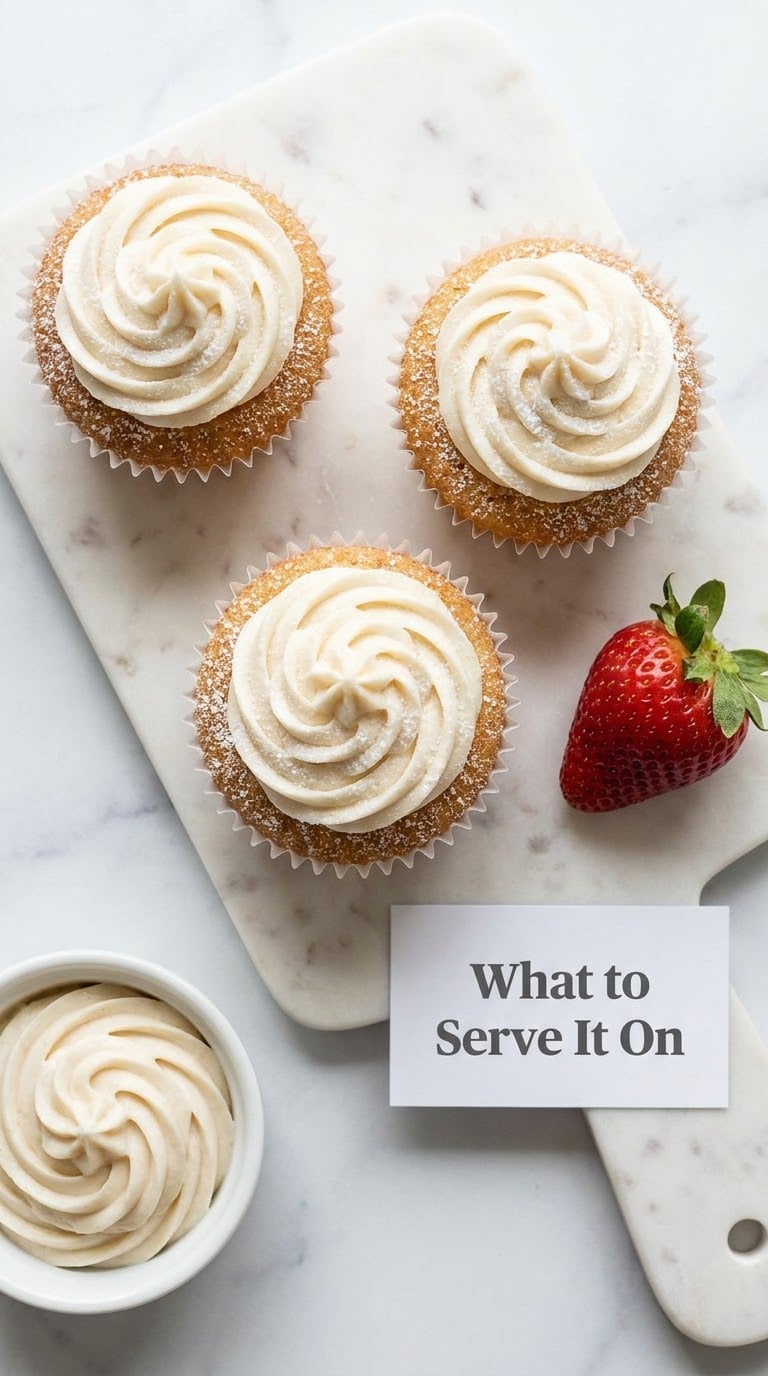
Ermine frosting’s lighter sweetness makes it a great match for cakes that already bring a lot of flavor on their own.
- Red velvet cake: this frosting is the original topping for red velvet, before cream cheese frosting took over. It lets the cocoa flavor of the cake shine without competing.
- Carrot cake: the silky, less-sweet frosting is a beautiful counterpoint to warm spices and a slightly dense crumb.
- Banana cake or banana cupcakes: the vanilla notes in the frosting pair perfectly with the caramel flavor of ripe bananas.
- Chocolate cake: yes, really. The frosting isn’t sweet, which means it lets the chocolate flavor come forward instead of fighting it. The chocolate variation is even better here.
- Vanilla cupcakes: a no-fail crowd-pleaser for birthday parties and bake sales. Holds piped swirls beautifully for hours.
For a fruit-forward dessert that uses a different base, our Easy Homemade Strawberry Shortcake Recipe, Best Classic is a great lighter alternative to layer cake.
Frequently Asked Questions
Is ermine frosting safe to eat with raw flour?
Yes, in this recipe the flour is fully cooked into the milk roux for 5-10 minutes, so any bacteria are killed off. You won’t taste raw flour in the finished frosting as long as you cook the paste until it looks like soft pudding. If you’re extra cautious, toast the dry flour in a dry pan for 2 minutes before whisking it into the milk, just to be safe.
Why is my ermine frosting runny and how do I fix it?
The two most common reasons are warm roux and butter that’s too soft. Check with an instant-read thermometer: the roux must be at or below 70°F (21°C) before you add it to the butter. If your butter was melty going in, chill the whole bowl in the fridge for 15 minutes, then re-whip on medium speed for 2 minutes. It usually comes back together.
Can you pipe ermine frosting for decorating cakes?
Yes, ermine frosting pipes beautifully. It holds soft swirls and rosettes for several hours at room temperature without crusting or weeping. For the sharpest edges and most defined piping, chill the finished frosting in the fridge for 20 minutes before piping, then use a sturdy star or petal tip.
How long does ermine frosting last in the fridge and freezer?
In the fridge, ermine frosting keeps in an airtight container for up to 5 days. In the freezer, it keeps well for up to 2 months. Cold frosting firms up, so let it sit at room temperature for 20-30 minutes and re-whip it on medium speed for 1-2 minutes before using to bring back the cloud-like texture.
What is the difference between ermine frosting and American buttercream?
American buttercream is just butter beaten with powdered sugar, which makes it very sweet and prone to crusting. Ermine frosting uses a cooked flour-milk paste in place of the powdered sugar, which gives it a silkier, less-sweet, almost whipped-cream texture that doesn’t crust. It’s also egg-free, which Swiss and Italian buttercreams are not.
Can I make ermine frosting dairy-free or vegan?
Yes. Swap the whole milk for unsweetened oat milk or cashew milk, and use a vegan butter block (not soft margarine). The texture comes out almost identical to the dairy version, with a slightly oat-milk-forward flavor that’s barely noticeable once it’s spread on cake.
This ermine frosting recipe is one of those quietly perfect techniques that belongs in your back pocket. Once you’ve made it a couple of times, you’ll start reaching for it instead of American buttercream for everything from birthday cakes to weekend cupcakes. Save the chocolate variation for the next red velvet cake you bake, and try the lemon version on vanilla cupcakes the first chance you get.