
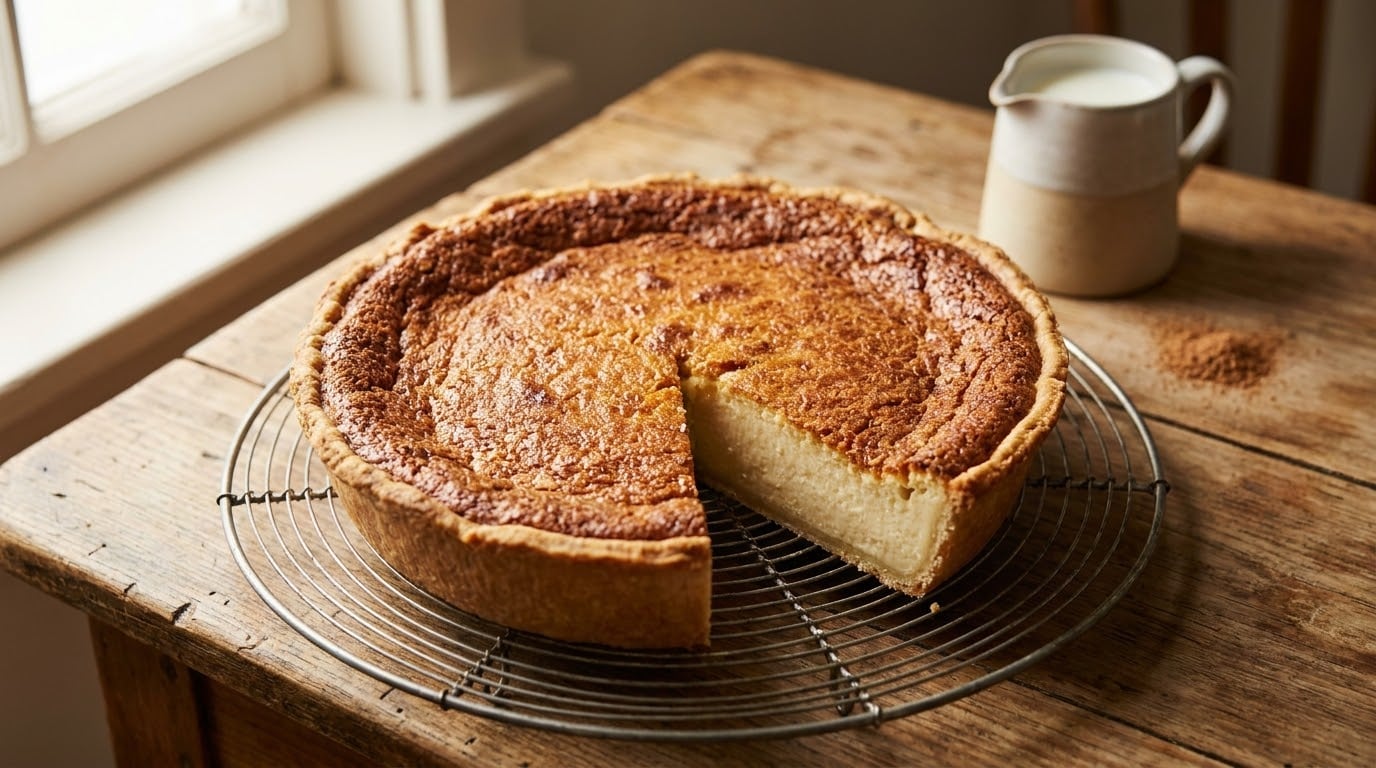
This buttermilk pie recipe is the kind of dessert that quietly steals the show at every holiday table. The filling bakes into a silky, pale-gold custard with a faint tang from real buttermilk, a hint of vanilla, and a crackly-sweet top that tastes like the best part of crème brûlée without any of the fuss. You whisk the filling in one bowl, pour it into a pie shell, and let a gentle 325°F oven do the work.
I started baking buttermilk pie a few Thanksgivings ago when I needed a dessert that could be made a day ahead, traveled well in the car, and didn’t require me to babysit a meringue. It checked every box. If you’ve been searching for a buttermilk pie recipe that is genuinely foolproof for beginners and still impressive enough to bring to a potluck, this is the one I come back to every single year.
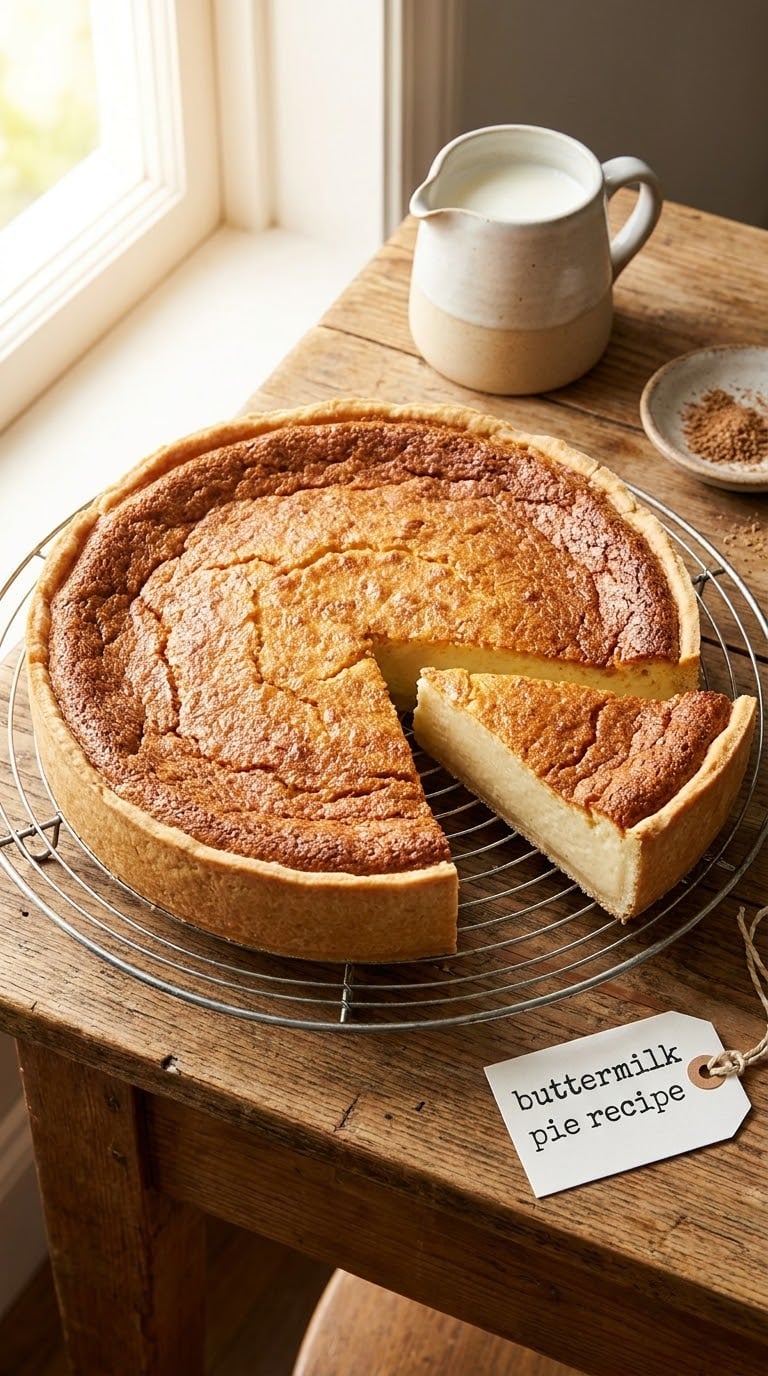
Table of Contents
Why This Buttermilk Pie Recipe Works
Most buttermilk pie recipes fail for the same reason: the oven is too hot. A 350°F oven blasts the top of the custard before the inside can set, leaving you with a cracked, rubbery top and a soupy middle. This recipe bakes at 325°F (165°C) and finishes with a quick blast at 375°F to brown the top, which is the one small trick that gives you both a silky center and that beautiful golden cap.
A few other things make this version reliable for first-time bakers:
- Room-temperature dairy and eggs so the custard blends smoothly without overbeating.
- A partially pre-baked crust to keep the bottom from turning soggy under the wet filling.
- A small amount of flour (just 1 tablespoon) to gently stabilize the custard without making it bready.
- Doneness by jiggle, not by clock. The center should wobble like Jell-O when you tap the pan.
Ingredients
One 9-inch deep-dish pie, 8 generous slices. Everything here is a pantry staple.
- 1 unbaked 9-inch deep-dish pie crust (store-bought or homemade pie crust)
- 1 1/2 cups (300 g) granulated sugar
- 3 large eggs, room temperature
- 1 cup (240 ml) full-fat buttermilk, room temperature
- 1/2 cup (115 g) unsalted butter, melted and slightly cooled
- 1 tablespoon (8 g) all-purpose flour
- 1 tablespoon (15 ml) fresh lemon juice
- 2 teaspoons pure vanilla extract
- 1/4 teaspoon fine sea salt
- 1/4 teaspoon ground nutmeg, plus more for dusting
Buttermilk is the star, so do not swap it for plain milk. If you are out, stir 1 tablespoon of white vinegar or lemon juice into 1 cup of whole milk and let it sit 10 minutes before using. Fresh lemon juice brightens the custard; bottled works in a pinch but tastes flatter. Skip the lemon if you only have limes on hand and want to keep the classic flavor profile.
Equipment
- 9-inch deep-dish pie plate (glass or ceramic, not a shallow tart pan)
- Pie shield or strips of aluminum foil
- Medium mixing bowl and a whisk
- Liquid measuring cup for the buttermilk
- Sheet pan to catch any drips and make transport easier
- Instant-read thermometer (optional, but the most reliable way to know the pie is done)
How to Make Buttermilk Pie
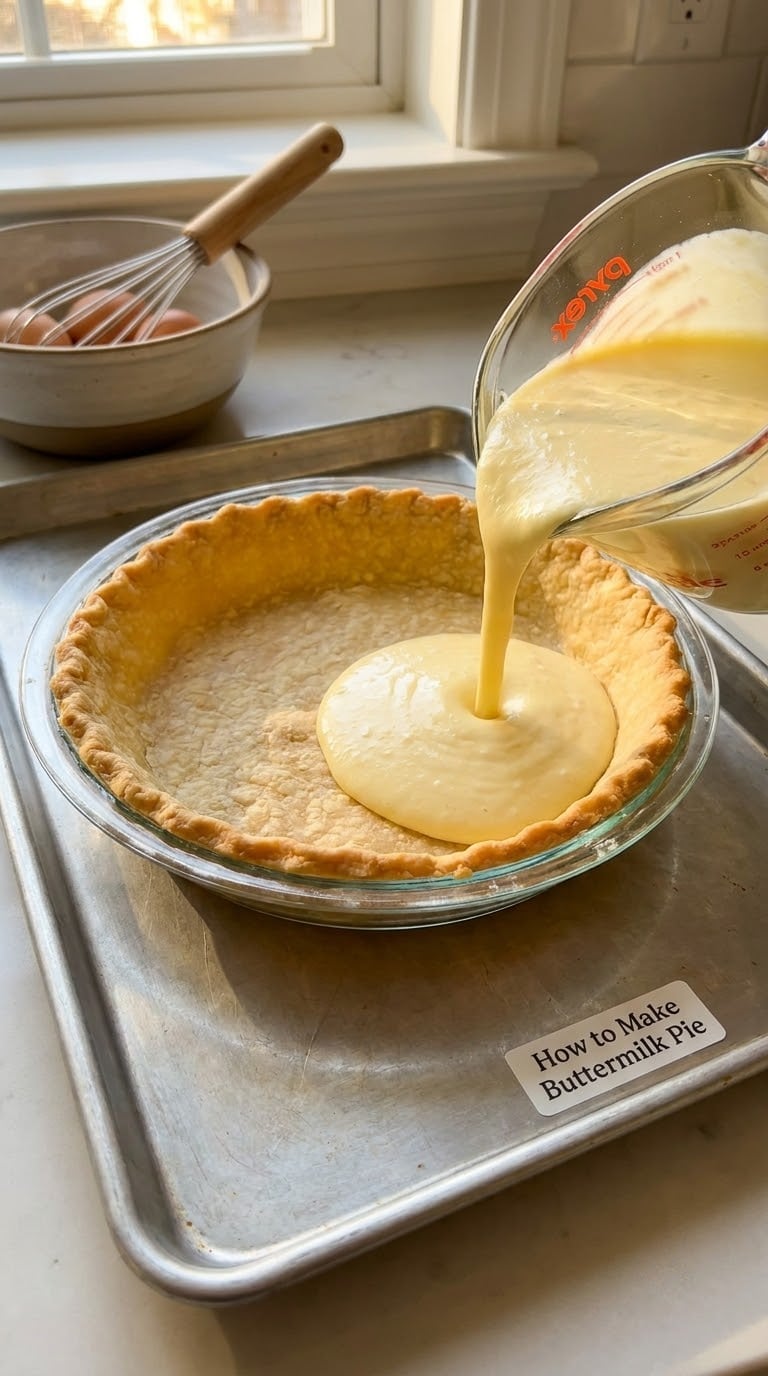
Plan on about 15 minutes of active work and 50 to 60 minutes in the oven. The pie needs at least 2 hours to cool before slicing, so build that into your schedule.
- Heat the oven. Place a rack in the lower third of the oven and preheat to 325°F (165°C). Set your pie plate on a rimmed sheet pan to catch any drips later.
- Par-bake the crust. Line the pie shell with parchment paper and fill with pie weights or dried beans. Bake 12 minutes, then carefully remove the parchment and weights. Bake 5 more minutes until the bottom looks dry and pale gold. Brush the warm crust with a thin layer of beaten egg white if you are worried about sogginess.
- Whisk the sugar and eggs. In a medium bowl, whisk the 3 eggs and 1 1/2 cups sugar just until combined and pale, about 30 seconds. Do not beat in a lot of air; you want a smooth custard, not a soufflé.
- Add the butter, buttermilk, and flavor. Whisk in the melted butter, then the buttermilk, flour, lemon juice, vanilla, salt, and nutmeg. Whisk until the batter is completely smooth and there are no streaks of flour at the bottom of the bowl.
- Pour and shield the crust. Pour the filling into the warm par-baked crust. Slide a pie shield (or strips of foil) over the edge of the crust so it does not burn during the long bake.
- Bake low and slow. Bake at 325°F (165°C) for 40 to 50 minutes. The pie is done when the edges are set, the center still has a 2- to 3-inch soft jiggle, and an instant-read thermometer inserted into the center (avoiding the crust) reads 175 to 180°F (79 to 82°C).
- Brown the top. Carefully remove the pie shield, turn the oven up to 375°F (190°C), and bake another 5 to 8 minutes until the top is a deep golden brown with a few small cracks. Watch closely; the difference between golden and burnt here is about 90 seconds.
- Cool fully. Transfer the pie to a wire rack and let it cool at room temperature for at least 2 hours. The custard finishes setting as it cools, so do not skip this step even if you are in a rush.
Buttermilk Pie vs Chess Pie
This is the question that comes up the most when I serve this pie. Chess pie and buttermilk pie are close cousins from the Southern dessert canon, and they share a custard base of eggs, sugar, and butter. The difference is the acid.
Classic chess pie leans on a small amount of vinegar or cornmeal for its tang and uses no dairy at all, which gives it a slightly denser, fudgier texture. Buttermilk pie swaps that acid for buttermilk, which adds both tang and richness, and the result is a softer, more spoonable custard with a brighter finish. If you love chess pie but want something a little lighter and more pourable, buttermilk pie is your pie. If you love buttermilk pie but want something a little sturdier for slicing, try chess pie next.
Tips for Success
- Room-temperature ingredients really matter. Cold eggs and cold buttermilk can make the melted butter seize into little bits, leaving you with a greasy, broken-looking filling. Set everything on the counter 30 minutes before you start.
- Whisk gently. You want the sugar dissolved and the flour incorporated, not a frothy, aerated custard. Air bubbles expand in the oven and turn into cracks as the pie cools.
- Trust the jiggle, not the timer. Every oven runs a little hot or cold, and the depth of your pie plate changes the bake time. The center should look set around the edges and wobble like a firm Jell-O in the middle when you nudge the pan.
- Use a deep-dish plate. A regular 9-inch pie plate runs over with this much filling. A deep-dish plate gives the custard enough room to set without sloshing in the oven.
- Do not slice it hot. I know it is hard to wait. A warm slice will look fine on the plate and puddle on the spoon five seconds later. Two hours on the counter is the minimum; overnight in the fridge is even better.
- Transport it on a sheet pan. Slide the whole pie plate onto a rimmed sheet pan before moving it. If the custard sloshes during the drive, the sheet pan keeps your car clean and the pie intact.
Variations
- Brown butter buttermilk pie. Brown the 1/2 cup butter in a small saucepan over medium heat until it smells nutty and has amber flecks, then cool it slightly before whisking it in. The toasted flavor is a quiet, lovely change.
- Lemon buttermilk pie. Bump the lemon juice up to 2 tablespoons and add 1 tablespoon of lemon zest for a brighter, more lemon-bar vibe.
- Coconut buttermilk pie. Stir 3/4 cup of sweetened shredded coconut into the filling before pouring. Sprinkle a little extra on top during the final browning step for a toasted coconut crust.
- Bourbon buttermilk pie. Replace 1 tablespoon of the vanilla with 1 to 2 tablespoons of bourbon. Skip the nutmeg or dial it back; the bourbon and nutmeg compete.
- Gluten-free buttermilk pie. Swap the tablespoon of all-purpose flour for 1 tablespoon of cornstarch and use your favorite gluten-free pie shell. The texture is a touch silkier, which most people actually prefer.
Storage, Make-Ahead, and Reheating
Once the pie has fully cooled, cover it loosely with foil and refrigerate. It keeps well for 3 to 4 days, and many bakers (myself included) think the flavor is even better on day two, once the custard has had time to settle and the vanilla has rounded out the tang.
To freeze, wrap the cooled pie (or individual slices) tightly in plastic wrap, then in a layer of foil. It keeps for up to 2 months in the freezer. Thaw overnight in the refrigerator and bring to room temperature before serving, or warm slices gently in a 300°F (150°C) oven for 8 to 10 minutes.
For make-ahead, this is one of the best holiday pies in the rotation. Bake it the day before, let it cool, and refrigerate. Dust with a little fresh nutmeg just before serving so the top looks freshly baked.
What to Serve With Buttermilk Pie
Buttermilk pie is rich and sweet, so it pairs best with something cool, tart, or slightly bitter alongside it.
- A big swoosh of homemade whipped cream with a teaspoon of vanilla stirred in.
- Fresh berries macerated with a spoonful of sugar for 10 minutes. Raspberries and strawberries are especially good against the tangy custard.
- A small scoop of good vanilla ice cream, served slightly softened so it melts into the warm slice.
- A strong cup of coffee or espresso. The bitterness is the perfect counterpoint.
- A light dusting of fresh nutmeg right before slicing, which adds a quiet holiday warmth.
On a Thanksgiving or Christmas table, I like to put it next to a slice of homemade apple pie. The spiced fruit and the tangy custard make a surprisingly good pair, and the plate looks generous without a lot of extra effort.
Frequently Asked Questions
What does buttermilk pie taste like?
Buttermilk pie tastes like a cross between custard and a lightly tangy cheesecake. The filling is sweet, creamy, and pale gold with a faint vanilla-lemon flavor, and the buttermilk gives it a gentle sour note that keeps the richness in check. The top browns into a thin, crackly sweet crust.
Why is my buttermilk pie runny in the middle?
A runny middle almost always means the pie came out of the oven too soon. The center should still have a 2- to 3-inch soft jiggle, not a sloshy wave, and an instant-read thermometer should read 175 to 180°F in the center. It also needs at least 2 hours to cool at room temperature so the custard can finish setting.
Do I have to pre-bake the crust for buttermilk pie?
Yes, par-baking the crust is the single best way to prevent a soggy bottom. The wet buttermilk filling soaks into a raw crust, so a 12-minute blind bake plus 5 more minutes uncovered gives the shell a head start and keeps the bottom crisp after the long bake.
How do I know when buttermilk pie is done baking?
The pie is done when the edges look set, the center still has a small soft jiggle when you nudge the pan, and an instant-read thermometer in the center reads 175 to 180°F. The top should be a deep golden brown with a few small cracks.
Can I freeze buttermilk pie?
Yes. Cool the pie completely, wrap it tightly in plastic wrap and then foil, and freeze for up to 2 months. Thaw overnight in the refrigerator and bring to room temperature before serving, or warm individual slices in a 300°F oven for 8 to 10 minutes.
What is the difference between chess pie and buttermilk pie?
Chess pie and buttermilk pie share a custard base of eggs, sugar, and butter. Chess pie uses a small amount of vinegar or cornmeal for its tang and has no dairy, giving it a denser, fudgier texture. Buttermilk pie swaps the vinegar for buttermilk, which adds both tang and richness and produces a softer, brighter custard.
Conclusion
If you have been on the fence about buttermilk pie, this is the recipe to start with. The ingredients are simple, the method is forgiving, and the result is one of those old-fashioned Southern desserts that looks like you tried much harder than you did. Bake it a day ahead, dust the top with a little fresh nutmeg, and let the slow-cooled custard do the rest.
For a first bake, follow the recipe exactly, trust the jiggle, and give it the full 2 hours to cool. Once you have made it once, the brown butter or bourbon variations are a fun place to start playing. Either way, save a slice for breakfast the next morning, cold from the fridge. That is when most buttermilk pie fans become buttermilk pie loyalists.