
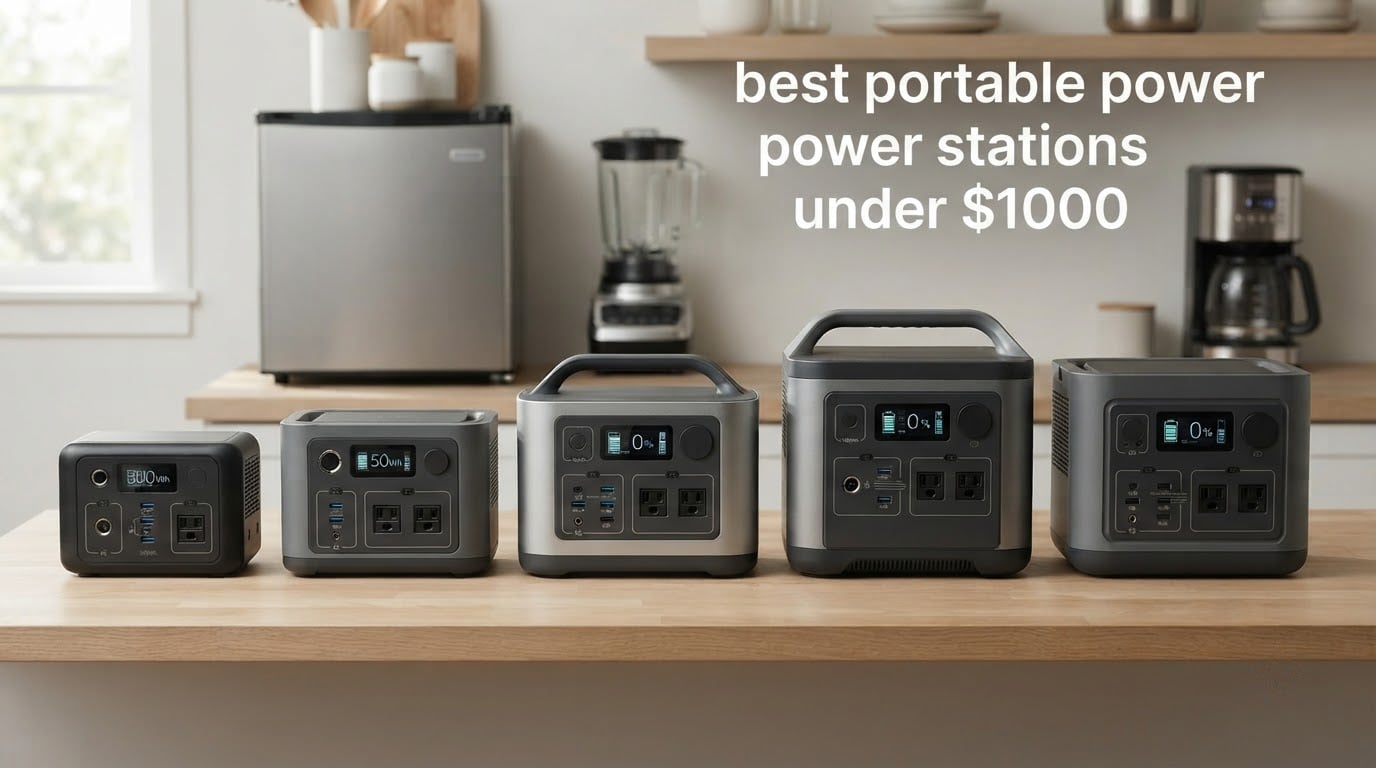
A portable power station is a rechargeable lithium battery with a built-in inverter that turns stored direct current into the 110V AC your appliances expect. It charges from a wall outlet, a 12V car socket, or solar panels, then feeds standard outlets plus USB and 12V DC ports. Some sellers call them solar generators, which is marketing shorthand for the same box.
The chemistry question comes early. LiFePO4 (lithium iron phosphate) cells tolerate far more charge cycles than the older NMC lithium-ion chemistry, and they are the safer choice for a box you plan to keep in a hallway closet or a bedroom. Every station in this roundup uses LiFePO4, and the cycle counts run from 3,000 to 10,000 rated cycles.
What changed recently is the price band. Under 1,000 dollars you can now get close to 1,000 watt-hours of storage, pure sine wave output, and 1,800W to 2,600W of continuous inverter power. That is enough to keep a refrigerator, a router, a laptop, and a coffee maker running through an outage, That was not true of the small 300Wh models that dominated this category a few years ago.
Every pick below sits under that ceiling, and we held to it strictly. We compared the twelve stations on capacity, continuous output, recharge speed, usable capacity, port selection, expansion options, warranty length, and the volume of real owner feedback behind each one. We also cross-checked the shortlists we keep for portable power stations and our picks for the best portable power stations under 500, since the same failure modes show up at every price.
Table of Contents
Top 3 Portable Power Stations Under 1,000 Dollars

Anker SOLIX C1000 Gen 2
- 2000W continuous from 1024Wh
- 49-minute full recharge
- Under 10ms UPS switchover
- 10 ports
- 5-year warranty

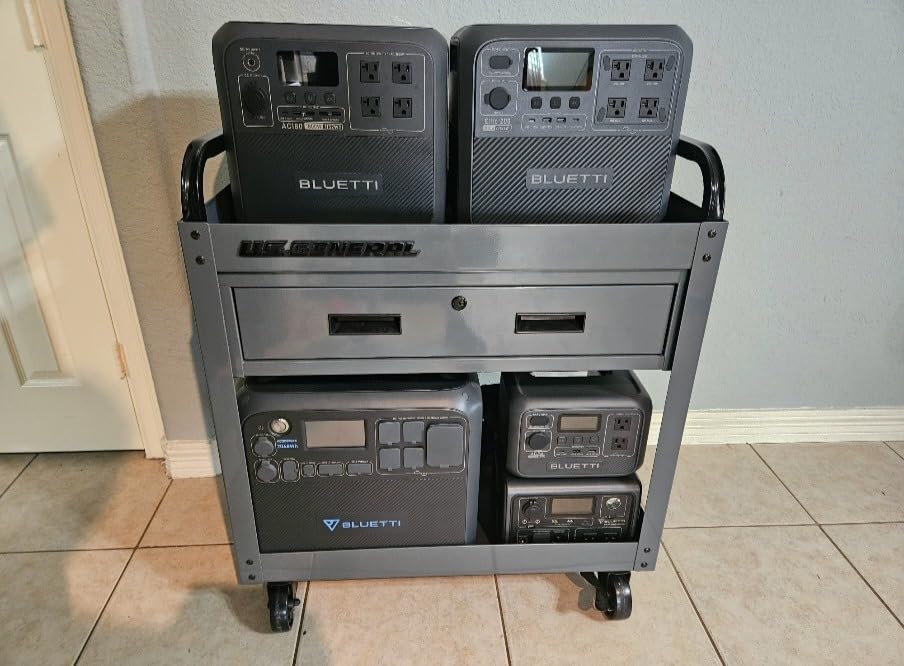
BLUETTI AC180
- 1152Wh LiFePO4 capacity
- 1800W output boostable to 2700W
- Full charge in 1 hour
- 500W solar input

Jackery Explorer 1000 v2
- 1070Wh LFP battery
- 1500W AC with 3000W surge
- 23.8 lb with folding handle
- 1-hour emergency charge mode
The Anker SOLIX C1000 Gen 2 is the best portable power station under 1,000 dollars for most people. It delivers 2,000W of continuous output from 1,024 watt-hours, refills in 49 minutes, and carries more than 1,600 reviews at a 4.7 average. The BLUETTI AC180 is the value pick for anyone who wants more outlets and a one-hour full charge, while the Jackery Explorer 1000 v2 is the most proven design on the market with more than 3,600 reviews behind it.
All 12 Picks at a Glance
| Product | Specifications | Action |
|---|---|---|
| Anker SOLIX C1000 Gen 2 |
|
Check Latest Price |
| BLUETTI AC180 |
|
Check Latest Price |
| Jackery Explorer 1000 v2 |
|
Check Latest Price |
 Anker SOLIX S2000 Anker SOLIX S2000 |
|
Check Latest Price |
 OUPES Mega 1 OUPES Mega 1 |
|
Check Latest Price |
 GRECELL 999Wh GRECELL 999Wh |
|
Check Latest Price |
 BLUETTI Elite 30 V2 BLUETTI Elite 30 V2 |
|
Check Latest Price |
 Anker SOLIX C300 Anker SOLIX C300 |
|
Check Latest Price |
 Jackery Explorer 2000 v2 Jackery Explorer 2000 v2 |
|
Check Latest Price |
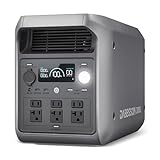 Dabbsson 2000L Dabbsson 2000L |
|
Check Latest Price |
 ALLWEI 2400W ALLWEI 2400W |
|
Check Latest Price |
 BLUETTI Elite 200 V2 BLUETTI Elite 200 V2 |
|
Check Latest Price |
1. Anker SOLIX C1000 Gen 2 – 2,000W From Just 1,024Wh
- 2000W continuous output from only 1024Wh
- 49-minute full recharge at 1600W input
- 10 ports running up to 10 devices
- Under 10ms UPS keeps CPAP and laptops running
- 5-year warranty
- Gen 2 dropped the expansion option the first generation had
- An engineer reviewer measured harmonic distortion on microwave loads
- Solar input capped at 600W
- No protective case in the box
This is the unit we keep coming back to. It packs 2,000 watts of continuous inverter output into a 1,024 watt-hour LiFePO4 battery rated for 4,000 cycles to 80 percent, and it weighs about 24.9 pounds. Only one other station here delivers 2,000W from a battery this small.
Recharge speed is the quiet headline. A full refill takes 49 minutes at 1,600W through the HyperFlash path, which means you can top it up while you make coffee after the power comes back on. The app adds time-of-use scheduling so the unit draws power when your utility rate is low.
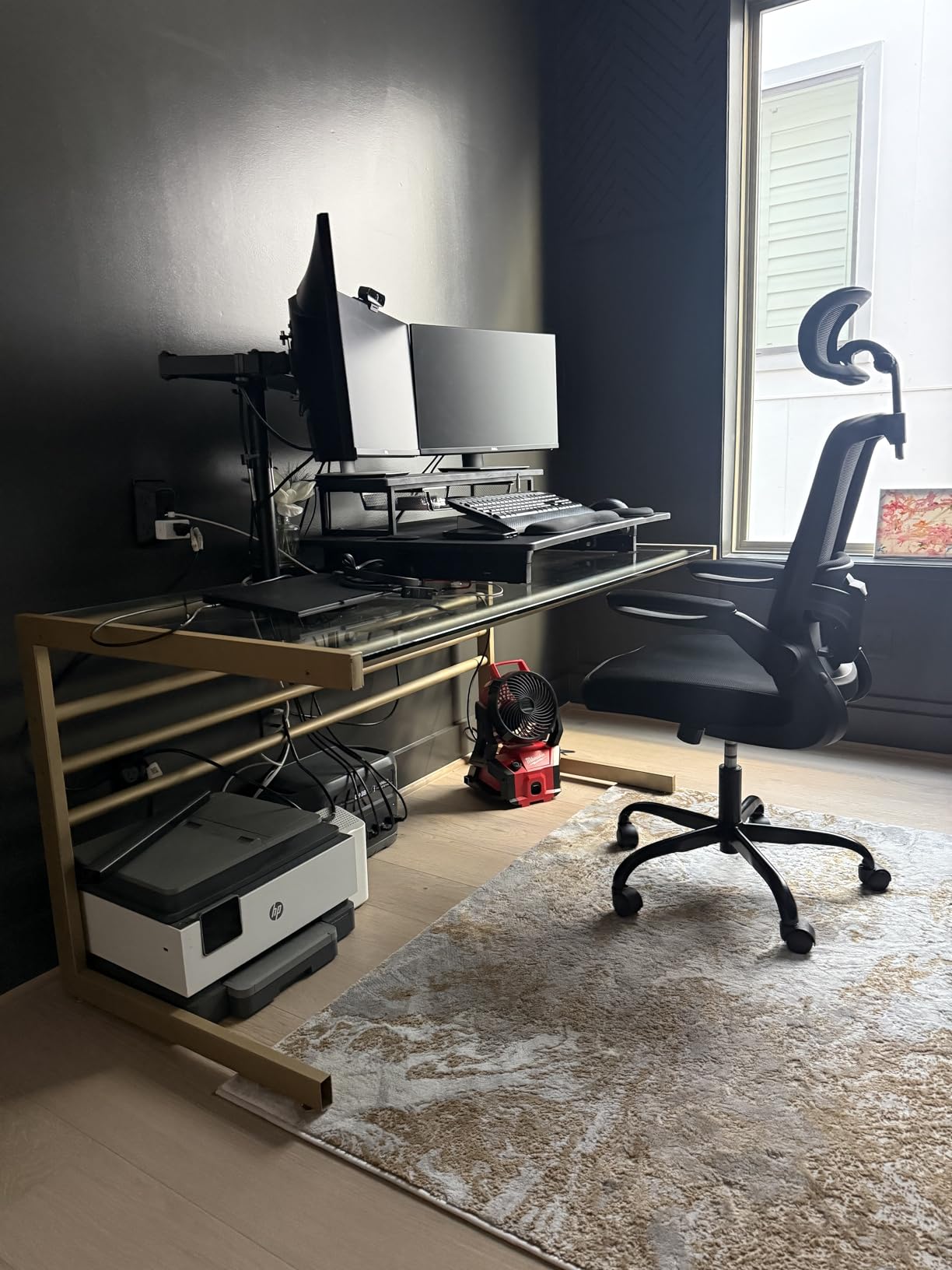
Owner reviews lean heavily on real endurance runs rather than spec sheets. Buyers describe three nights of CPAP operation, a ten-day storm recovery, and a permanently installed cabinet setup that carried a household through a five-hour outage without intervention.
Ten ports cover a household in one pass, and the under 10ms UPS switchover means a router, NAS, or CPAP machine does not reset when the grid drops. That is the feature that separates this from a car inverter with a small battery glued to it.
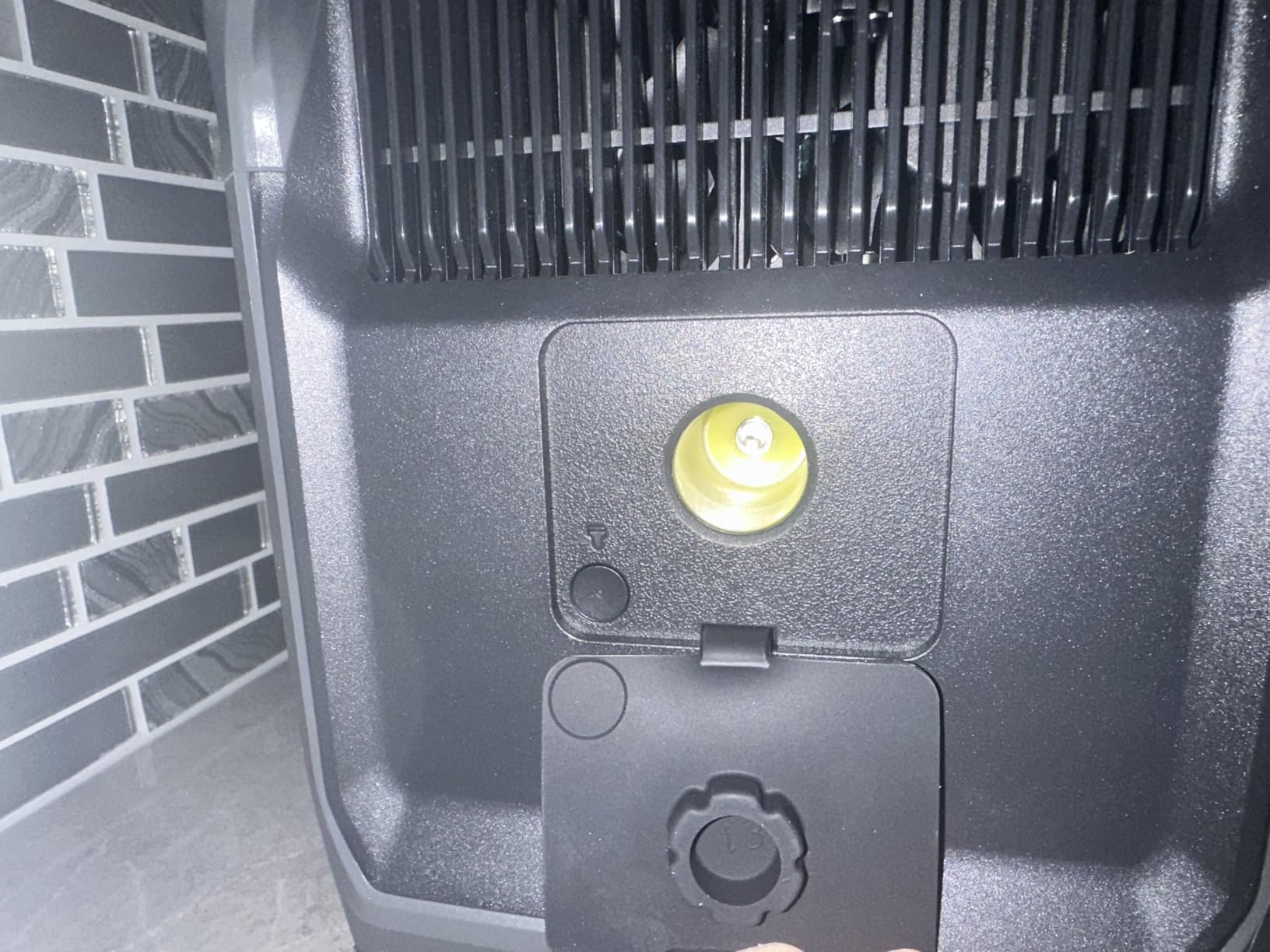
What tells you it is the right buy
Output per watt-hour is the number that matters and this unit matches the best figure in the roundup. If your load is a refrigerator cycling at 150W, a router, and a laptop, 1,024Wh of storage is enough, and 2,000W of headroom means you can also run a microwave or air fryer without tripping anything.
For anyone sizing a home backup rather than a weekend camping kit, that combination is hard to argue with. The five-year warranty also sits at the top of this group.
What gives you pause
Gen 2 removed the expansion battery option the first generation offered, so 1,024Wh is all you get. If you think you will want more capacity in three years, look at the OUPES Mega 1 or the ALLWEI instead.
One engineer reviewer who scope-tested the inverter measured roughly 15 to 20 percent harmonic distortion on a microwave load, with audible noise. That is a real caveat if your primary appliance is a microwave, and it is why we rank the BLUETTI Elite 200 V2 higher for kitchen duty.
2. BLUETTI AC180 – Best Value With 1,152Wh and 1,800W
- Full charge in 1 hour at 1440W input
- 1800W output boostable to 2700W from the app
- 20ms UPS for home circuits
- 11 ports with wireless charging on top
- 5-year warranty plus 5-year spare part availability
- Self-consumption runs 15 to 20W with the inverter on
- Only 90 percent of rated capacity is usable by design
- Heavy at 37.4 pounds
- Top wireless charging pad is frequently reported as unreliable
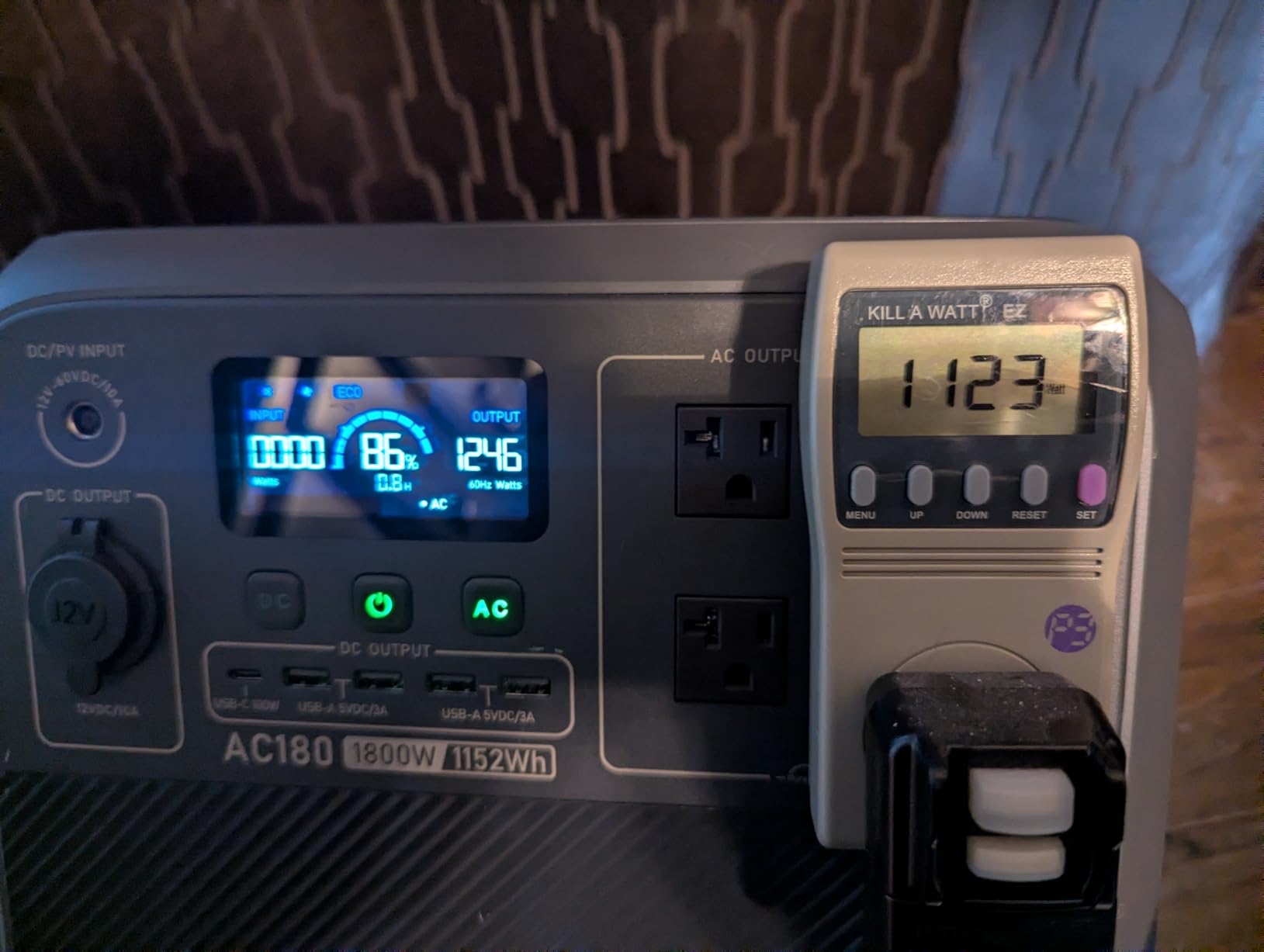
The AC180 is the most technically scrutinised station in this roundup, and most of that scrutiny is good news. Eleven ports, an 1,800W inverter you can push to 2,700W from the app, and a full charge in one hour at 1,440W of AC input.
On r/camping, BLUETTI comes up repeatedly in owner recommendations. The AC180 holds 1,152 watt-hours of LiFePO4 storage and carries more than 2,600 reviews, so there is a deep pool of real-world outage reports behind it.
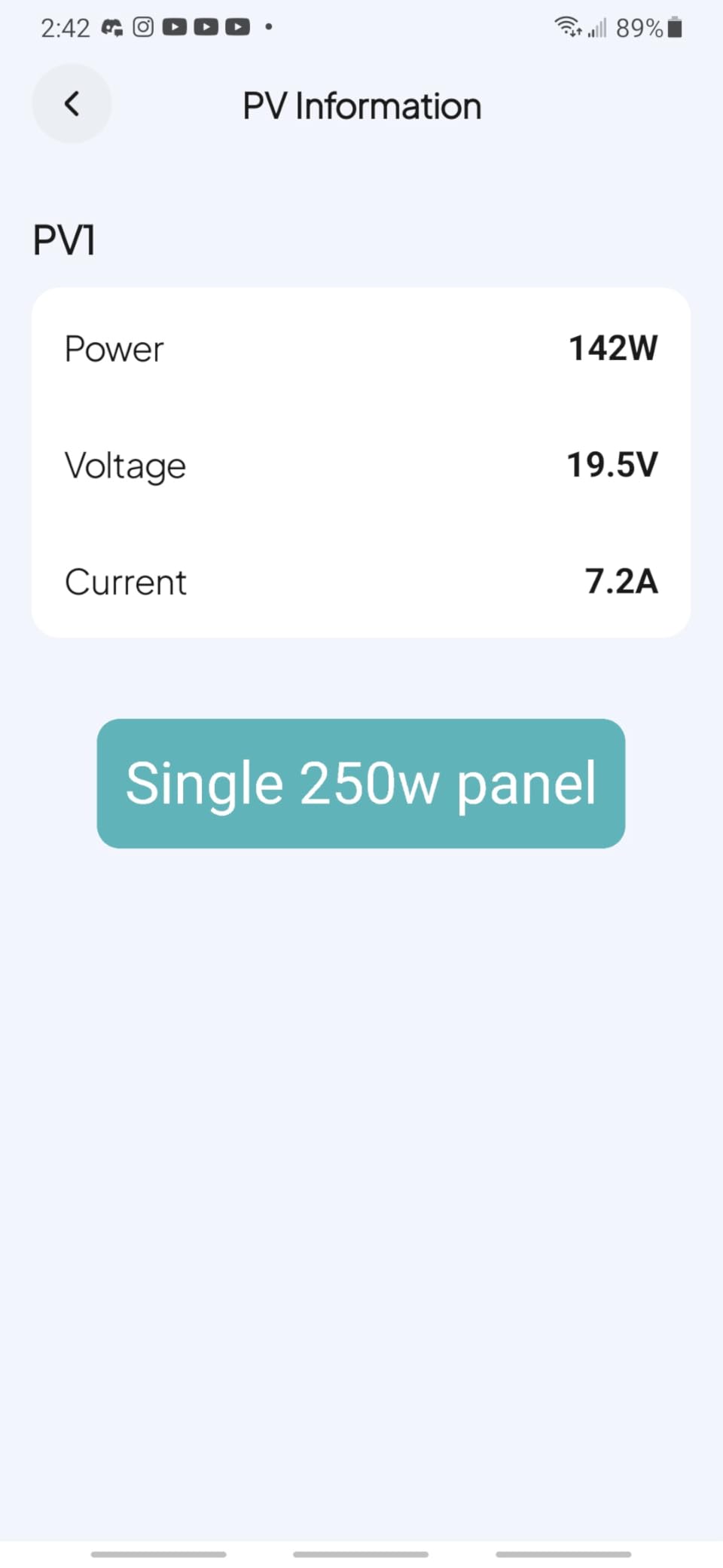
The success stories cluster around home backup circuits and RV use, including one buyer running the unit continuously for 22 hours. BLUETTI also guarantees spare part availability for five years, which is unusual at this tier and matters if you plan to keep the box for a decade.
Customer service comes up often too, with reviewers describing firmware fixes and an offered unit exchange. That is worth real money when a storm is the reason you bought the thing in the first place.
What to check before you order
Two numbers catch people out here and both are documented by owners rather than the marketing page. Self-consumption sits around 15 to 20W with the inverter on, and the battery is deliberately limited to 90 percent of rated capacity to protect itself, so real output is closer to 800 watt-hours than the headline figure.
Several early buyers read their unit as underperforming until they ran a firmware update and a full charge and discharge calibration cycle. After that, satisfaction returns to full marks. Do both on day one.
Where it is the wrong choice
At 37.4 pounds it is not a unit you carry to a campsite. It is a home device, and the weight reflects a design built around a home backup duty cycle.
The top-surface wireless charging pad is the most common disappointment, and a few reviewers argue the AC180P is a smarter purchase for slightly more money. The 20ms UPS switchover is excellent for a NAS or a home office circuit, but it is slower than the sub 10ms units in this list.
3. Jackery Explorer 1000 v2 – Most Proven 1,000Wh Design
- More than 3600 reviews at a 4.7 average
- Lightest full-size inverter unit here at 23.8 pounds
- 1-hour emergency charging mode
- Three pure sine wave AC ports plus 100W USB-C PD
- 30dB quiet mode for bedside use
- Solar charging restricted to Jackery panels
- 1500W output is modest next to the Anker C1000 Gen 2
- 1-hour fast charge must be enabled in the app first
- Only a 1-year listed warranty against the 10-year battery claim
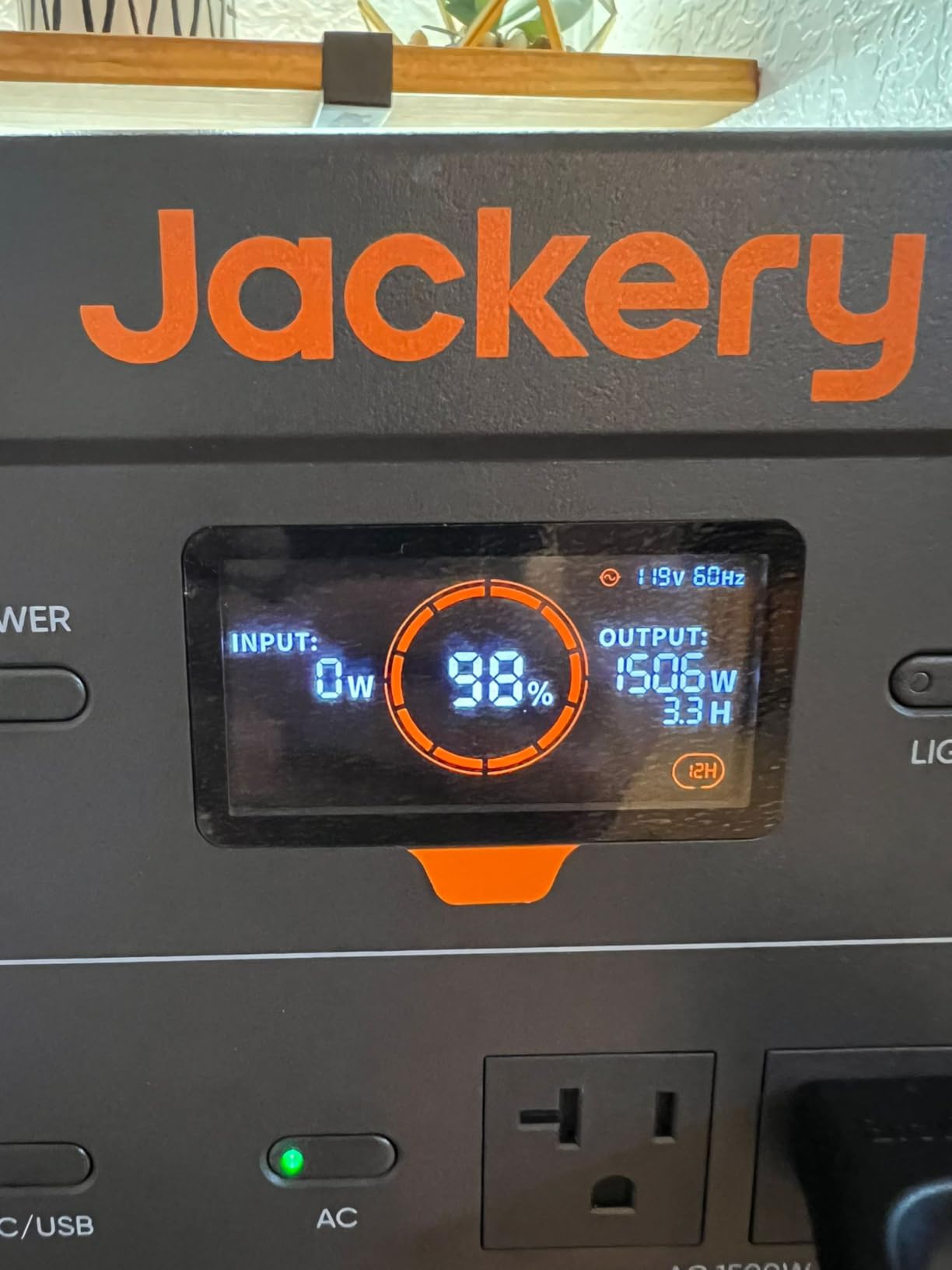
More than 3,600 reviews and a number-two sales rank in Outdoor Generators. The Explorer 1000 v2 is the design most people are comparing against, and our forum research found it named repeatedly as the model to beat, with the Anker C1000 Gen 2 and the EcoFlow DELTA 3 as the newer challengers.
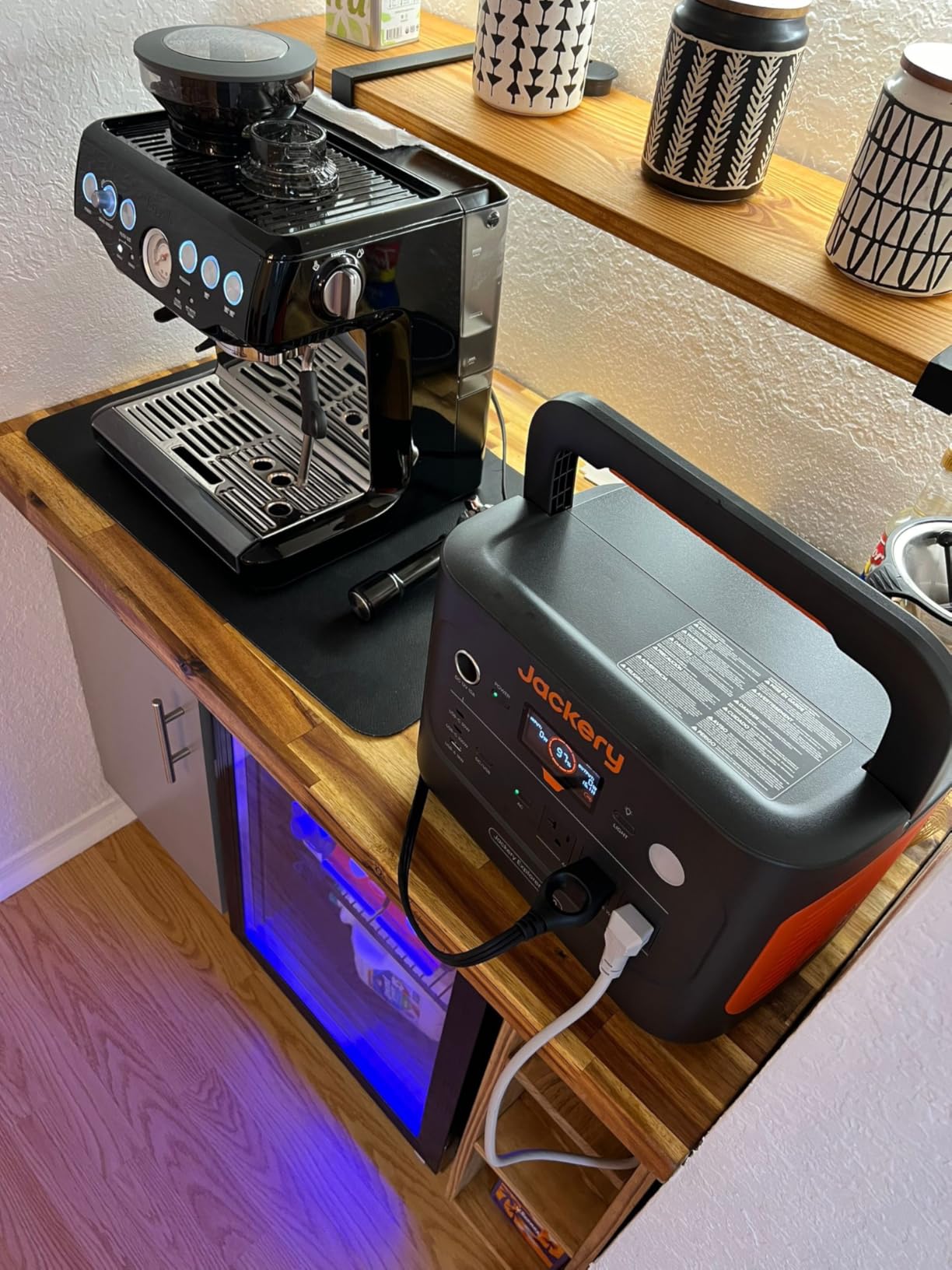
It stores 1,070 watt-hours of LiFePO4, keeps over 70 percent of that capacity after 4,000 cycles, and weighs 23.8 pounds with a folding handle. Three pure sine wave AC outlets, two 100W USB-C ports, a 12V car socket, and two LED lights cover most camping and emergency kits.
The single most repeated piece of advice in reviews is to turn on Emergency Charging in the app before you need it. The unit defaults to a battery-friendly 1.7 hour charge, and buyers who skip that step assume something is broken.
Our own guidance for medical use matches what owners report. We keep a longer list in our portable power stations for CPAP machines roundup, and the pattern is consistent: bigger capacity beats faster charging when the device runs all night.
Why it still earns a spot near the top
Proven field history is worth paying for. When a hurricane is forecast, you want the unit thousands of owners have already charged, carried, and recharged a hundred times, not the newest release with the longest spec sheet.
The 30dB quiet mode makes it usable in a bedroom, and the pure sine wave output is clean enough for sensitive electronics without needing an external UPS.
What to know before buying
Solar charging works with Jackery panels only, which is the ecosystem frustration that comes up again and again in owner communities. If you already own panels from another brand, plan on buying new ones or using a converter cable.
The listed warranty is one year even though the battery claim is ten years, and 1,500W of output is modest for the money when the Anker C1000 Gen 2 delivers 2,000W in the same bracket. It is a strong all-rounder rather than the sharpest spec.
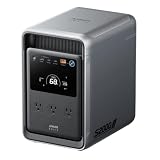
4. Anker SOLIX S2000 – 2,010Wh With a 10,000-Cycle Battery
- Longest claimed battery life here at 10000 rated cycles
- Smallest and lightest 2010Wh unit at 35.7 pounds
- 6W idle draw with a claimed 35 hours of fridge runtime
- Eight outlets split across front and rear panels
- App caps charge and discharge levels to protect long-term health
- 1500W output is the lowest of any 2010Wh station here
- No 12V DC port for RV and automotive users
- Some reviewers report a loud droning fan while charging at 1200W
- No dedicated carrying handle
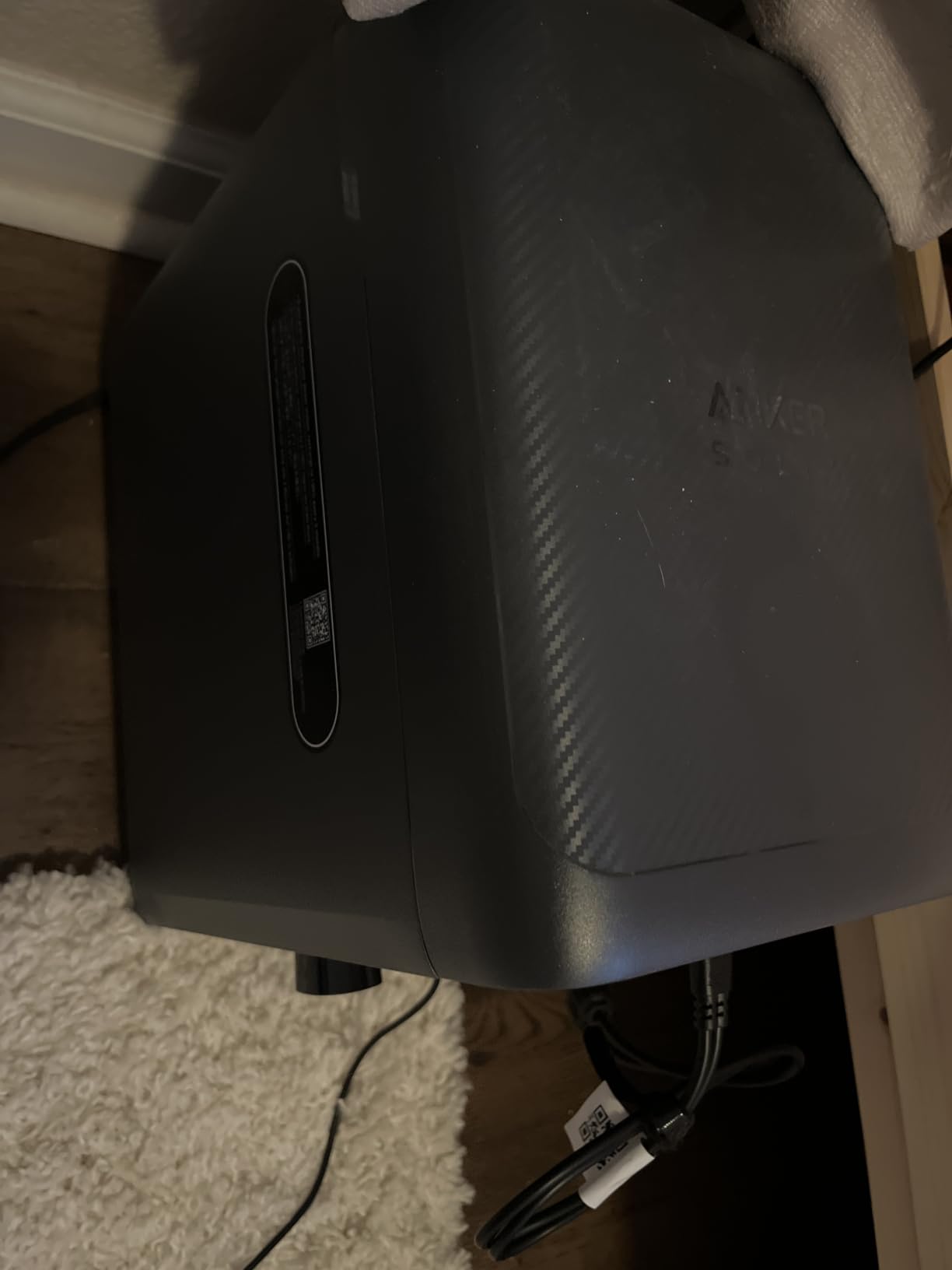
If you want two days of storage rather than one, the S2000 is the most interesting box in this roundup. It holds 2,010 watt-hours built on 314Ah LFP cells rated for 10,000 cycles, the longest claimed battery lifespan of anything we looked at, and it still weighs only 35.7 pounds.
Refrigerator and freezer runtime tests dominate the reviews, and the efficiency claims back that up. A 6 watt idle draw is unusually low, and Anker quotes fridge runtime of up to 35 hours on a single charge.
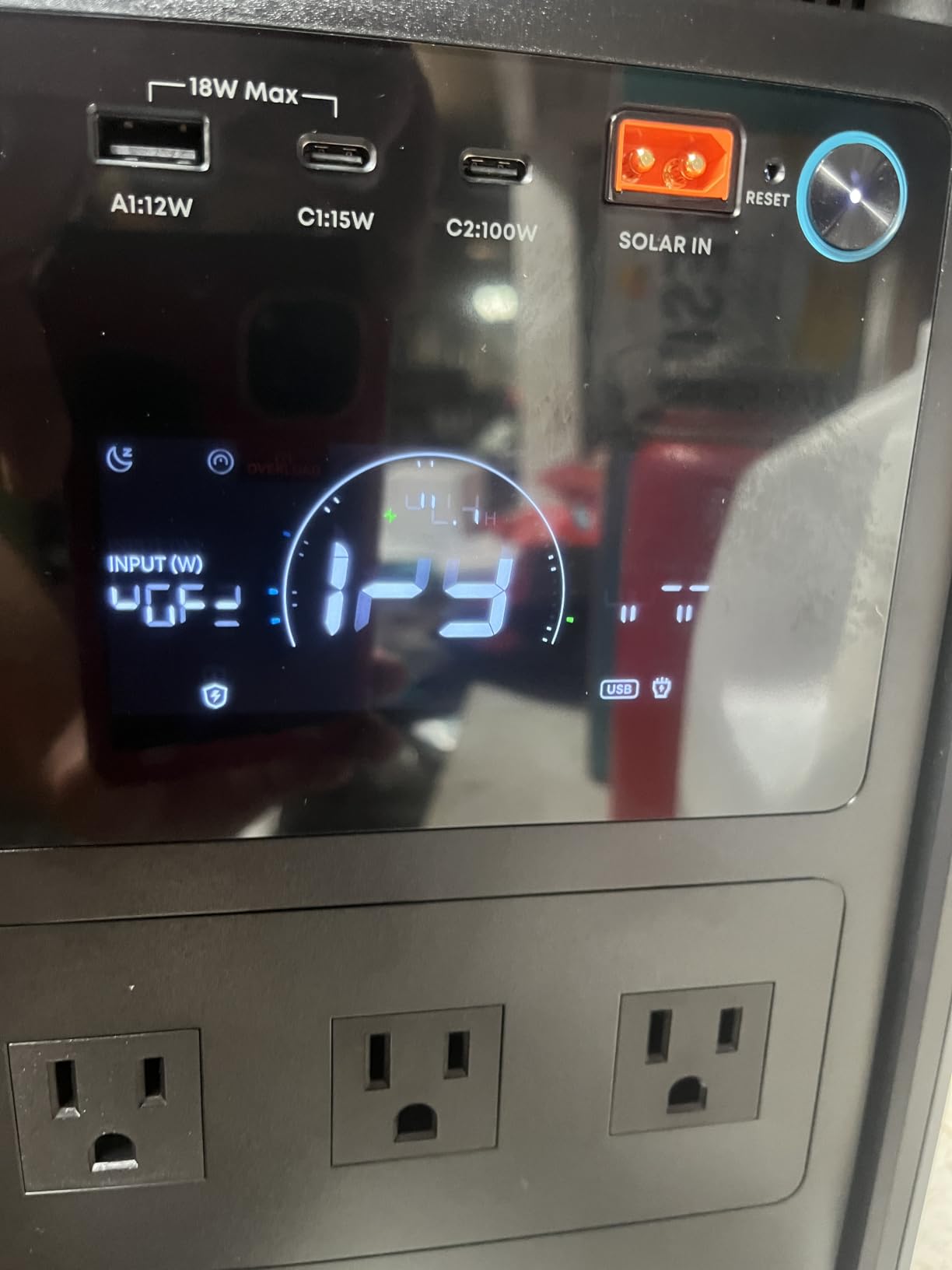
Several buyers describe carrying it through multi-day outages with a gas generator as backup, which is the realistic way to use 2,000 watt-hours. Eight outlets split between front and rear panels keep the setup tidy when the station lives in a cabinet, and the app lets you cap charge and discharge levels to slow long-term wear.
Households in hurricane-prone areas treat stations like this as essential home equipment rather than camping gear, and that is exactly the use case the capacity serves.
Why capacity beats output for outages
A refrigerator does not need 2,000 watts, it needs hours of stored energy. For anyone whose plan is fridge, freezer, router, and internet for two or three days, watt-hours are the number to optimise and the 2,010Wh figure leads this list.
The 10,000-cycle rating also means the battery should outlast most of the other hardware in the house, which is the quiet argument for spending more up front on chemistry.
What holds it back
1,500W of continuous output is the lowest among the 2,010Wh stations here, so a microwave or an air fryer will not run alongside much else. If your outage plan involves cooking, step up to the BLUETTI Elite 200 V2.
There is no 12V DC port, some reviewers report a loud droning fan while charging at 1,200W, and one buyer reported a strong burn-off smell on the very first charge. For CPAP duty at night, that fan behaviour is worth checking against our CPAP roundup.
5. OUPES Mega 1 – 2,000W Output From a 1,024Wh Pack
OUPES Mega 1 Portable Power Station 1024Wh 2000W (4500W Surge)
- Fastest recharge here at 0-80% in 36 minutes
- 2000W output from only 1024Wh
- Expandable to 5120Wh with two B2 batteries
- Dual 100W USB-C PD plus four QC3.0 USB-A ports
- 5-year warranty and over 1400 reviews
- 1024Wh base capacity is half that of the 2010Wh stations
- Expansion batteries add cost
- 3500-plus cycle rating is lower than the BLUETTI or Anker 2010Wh units
- Bluetooth-only app with no cloud or Wi-Fi option
The Mega 1 solves a specific problem: how do you get serious inverter output without hauling 40 pounds. It delivers 2,000 watts continuous and 4,500 watts of surge from a 1,024 watt-hour pack that weighs 27.8 pounds.
Recharge speed is the best in this roundup. It goes from empty to 80 percent in 36 minutes on AC alone, or 26 minutes with solar assist, which makes topping up before a storm a five-minute job rather than a project.
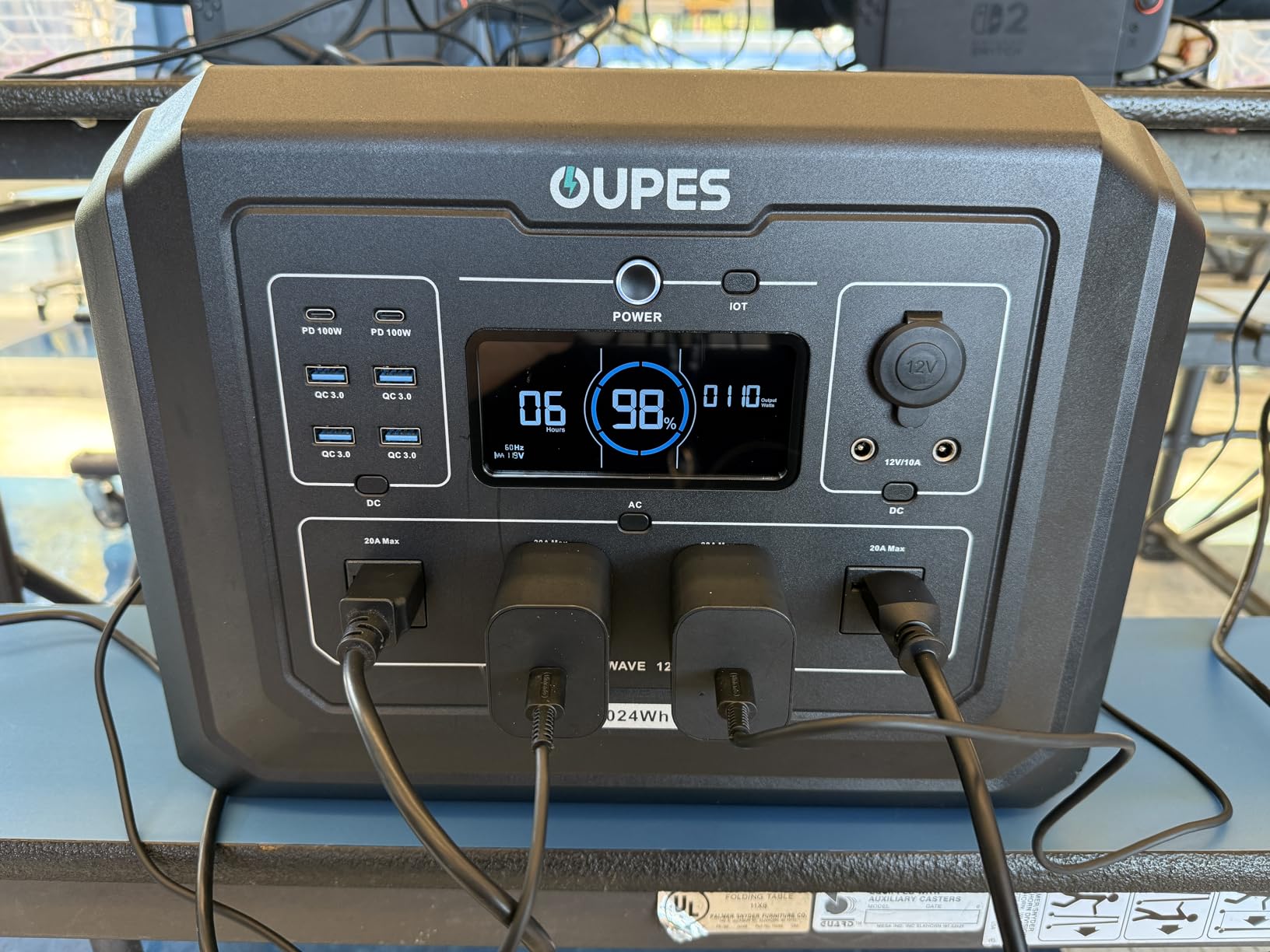
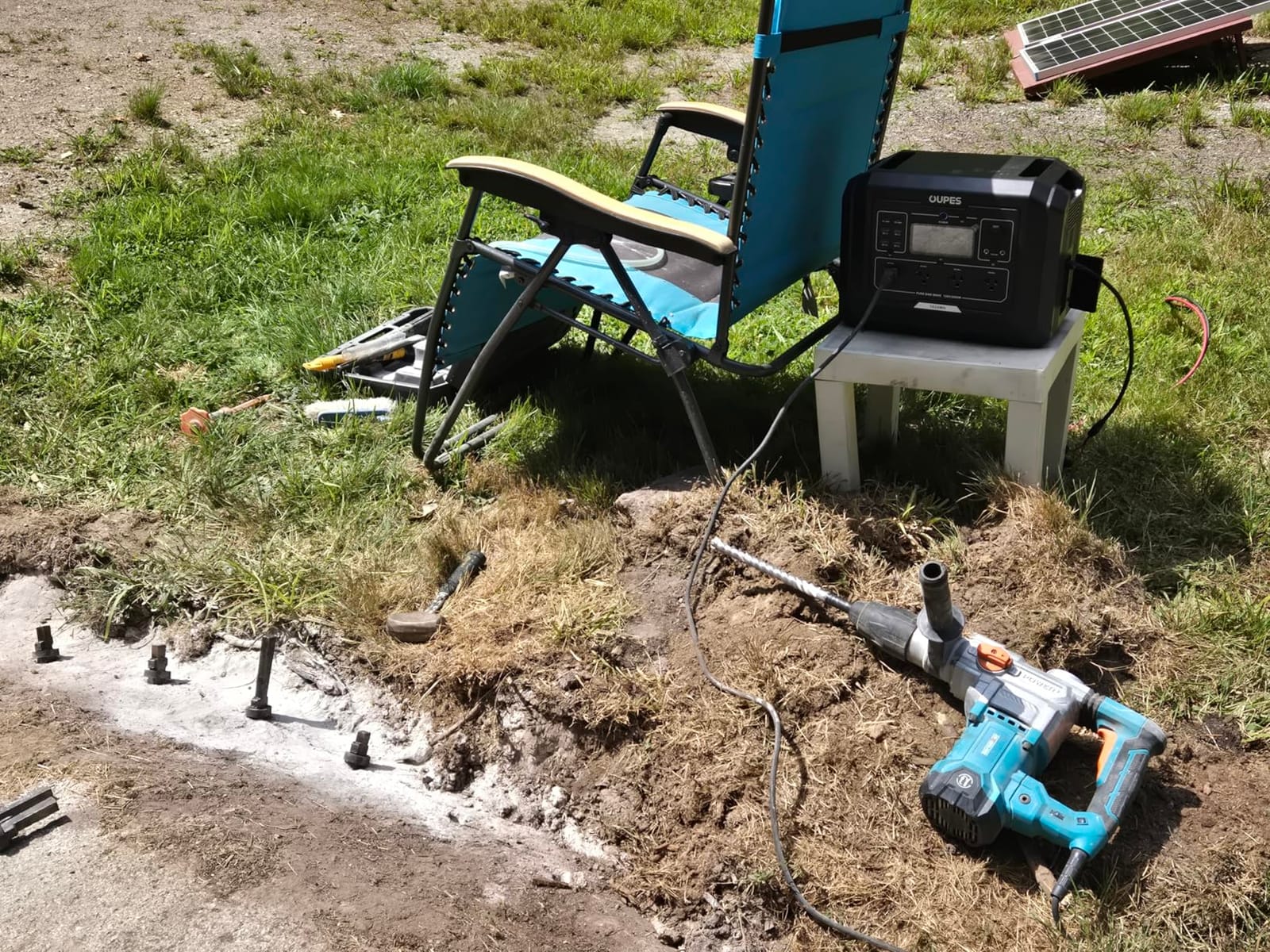
With 1,496 reviews it has more field history than the newer 2,010Wh competitors, and buyers consistently highlight the power-to-weight ratio as its defining advantage. Work site, RV, and home backup duty are the three use cases that come up again and again.
The port selection is generous for the size, with two 100W USB-C PD ports, four QC3.0 USB-A ports, 12V DC outputs, and AC outlets on a unit you can lift with one arm.
Where this design makes sense
If your loads are high-draw but short, output matters more than capacity. A power tool, a coffee maker, a projector, a microwave run fine on 2,000W, and the Mega 1 has the surplus output for those that other stations in this list cannot start.
It also expands to 5,120 watt-hours with two B2 extra batteries, which is the cheapest path to a bigger system if you later need overnight capacity.
What to keep in mind
Half the capacity of the 2,010Wh units means a fridge will run roughly half as long on one charge. Plan on solar or a second pack for anything beyond a long evening.
The app is Bluetooth only, with no cloud or Wi-Fi option, so you cannot schedule charging remotely. Some users also find the DC output specification confusing next to the advertised 2,000W figure, so read the manual before wiring anything unusual.
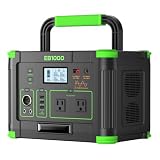
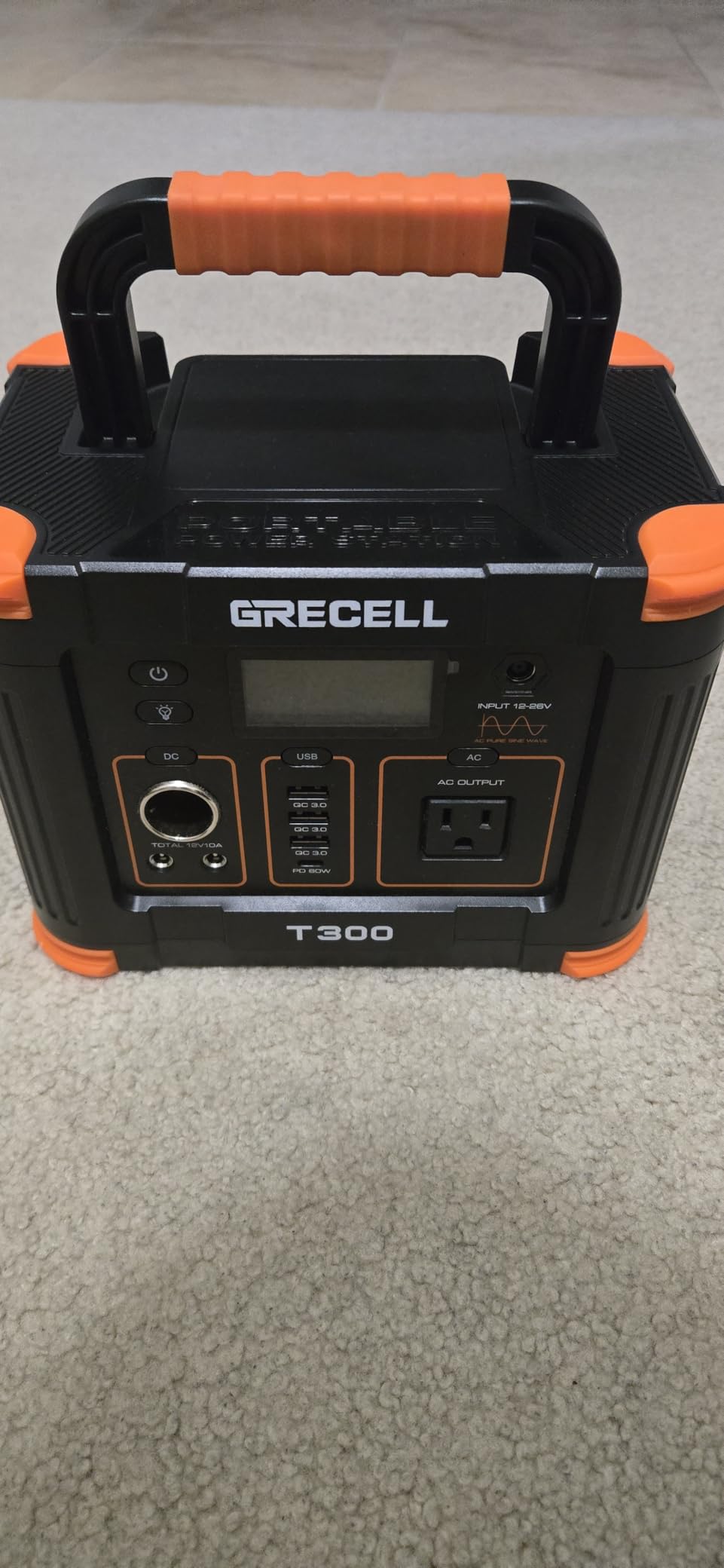
6. GRECELL 999Wh – Lowest Cost Per Watt-Hour Here
GRECELL 999Wh Solar Generator 1000W Portable Power Station for Outdoor
- Lowest cost per watt-hour of any station here
- 999Wh of storage at the lowest outlay in the roundup
- Pure sine wave output is unusual at this price
- Wireless charging pad
- LCD flashlight with SOS mode
- MPPT controller built in
- Lowest rating in the roundup at 4.3 with 10 percent one-star reviews
- Only two AC sockets
- 2-year warranty is among the shortest offered
- Wireless charging pad needs a two-button activation
- Runtimes are reduced by a stated 0.85 conversion efficiency
On a pure cost-per-watt-hour basis the GRECELL 999Wh is the value champion of this list, and nothing else gets close to 1,000 watt-hours of storage for the money. It also outputs pure sine wave, which you normally only see in stations costing far more.
The port count is generous: two AC sockets, three USB QC ports, a USB-C PD port, two 12V DC ports, a 12V car socket, a wireless charging pad, an LCD, and a flashlight with an SOS mode. A cable storage bag is included, which sounds trivial until you are packing up at midnight.
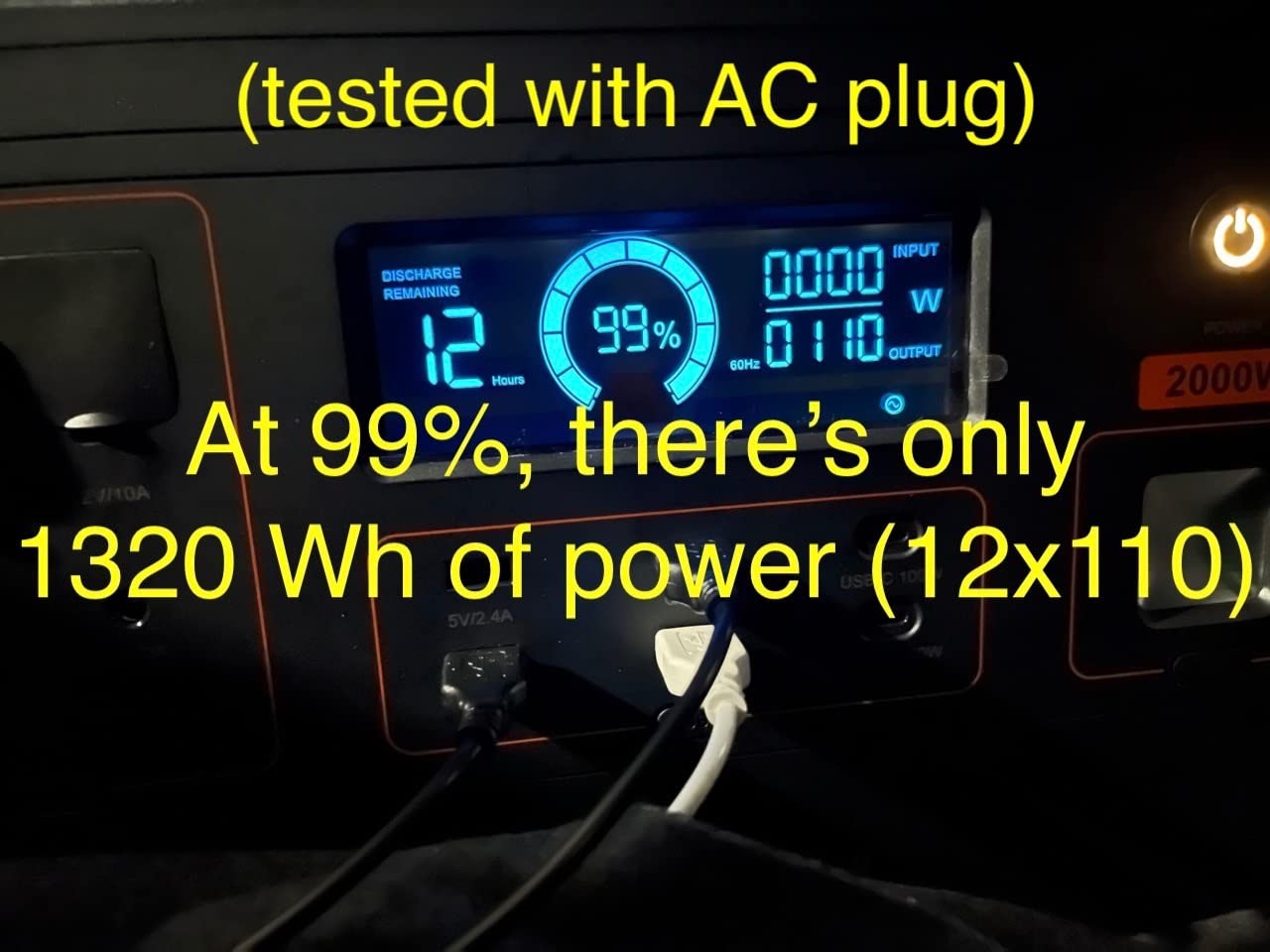
With more than 3,100 reviews there is a lot of history here, though it is not uniformly positive. Owners who keep it tend to rate the output quality and port selection as unusually good for the money, and the built-in MPPT controller is singled out for extracting maximum power from variable solar conditions.
The critical reviews cluster around the two AC sockets, the fiddly wireless charging activation, and background drain when the AC output stays switched on. Runtime is also cut by a stated 0.85 conversion efficiency before your device draws anything at all.
What makes it worth buying
Capacity per dollar is the entire argument, and it is a strong one. A fridge, a router, and a laptop for a day is realistic on 999 watt-hours, which no other sub-300-dollar class can do.
The flashlight with SOS mode, the LCD, and the included cable bag make it a genuinely complete kit for an emergency drawer rather than a bare battery.
When to look elsewhere
Two AC outlets is the real limitation. A household trying to run a coffee maker and a router at the same time will be switching cables, and there is no third outlet to fall back on.
The 4.3 average with a 10 percent one-star share is the lowest here, and the 2-year warranty is short against stations offering five. If you want the same capacity with more outlets and a longer warranty, the BLUETTI Elite 30 V2 is a different size class, and the BLUETTI AC180 is a different price class.
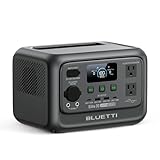
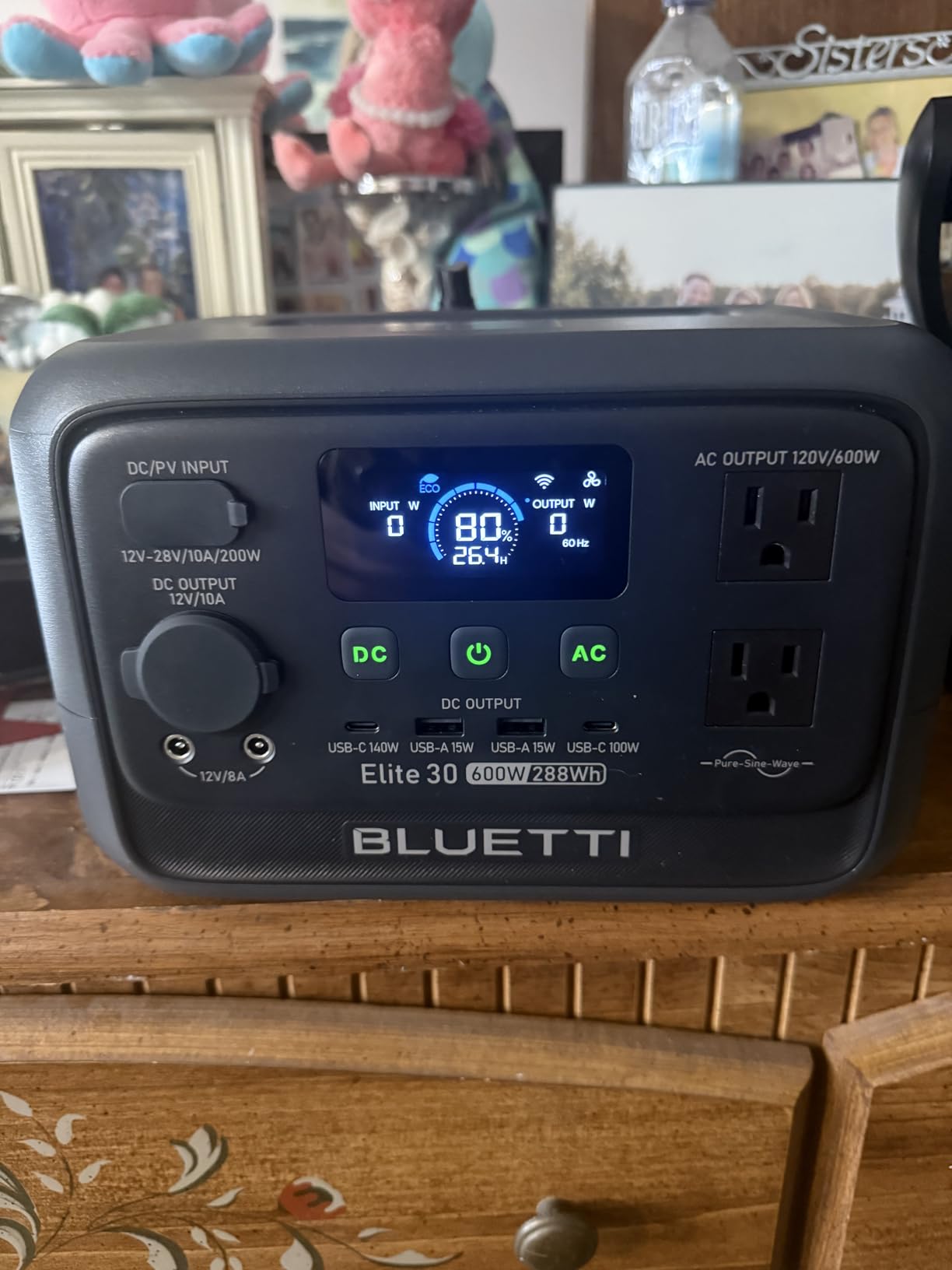
7. BLUETTI Elite 30 V2 – Lightest Unit With a Full Inverter
BLUETTI Elite 30 V2 Portable Power Station 288Wh 600W LFP Solar Generator
- Double the continuous output of the Anker C300 for a similar outlay
- Only 9.4 lb
- 50 percent lower power consumption with 4.5W standby draw
- 0-80% in 45 minutes and full in 70 minutes
- 1500W power lifting mode for small kettles and toasters
- 288Wh is small
- a reviewer running a CPAP drained it to 53 percent in one night
- Two reviewers report faster than expected self-discharge
- Cannot run a refrigerator despite the 600W headline
- No USB communication port for automatic computer shutdown
Nine pounds, nine ports, and a real 600 watt sine wave inverter. The Elite 30 V2 doubles the continuous output of the Anker C300 at a similar cost, which makes it the most capable small pack in this roundup by a wide margin.
Efficiency is its quiet strength. BLUETTI’s UltraCell technology and smarter cooling cut power consumption by half, giving 4.5W standby, 5W on DC, and 8W on AC. On a pack this small that difference decides whether your phone charge survives the night.
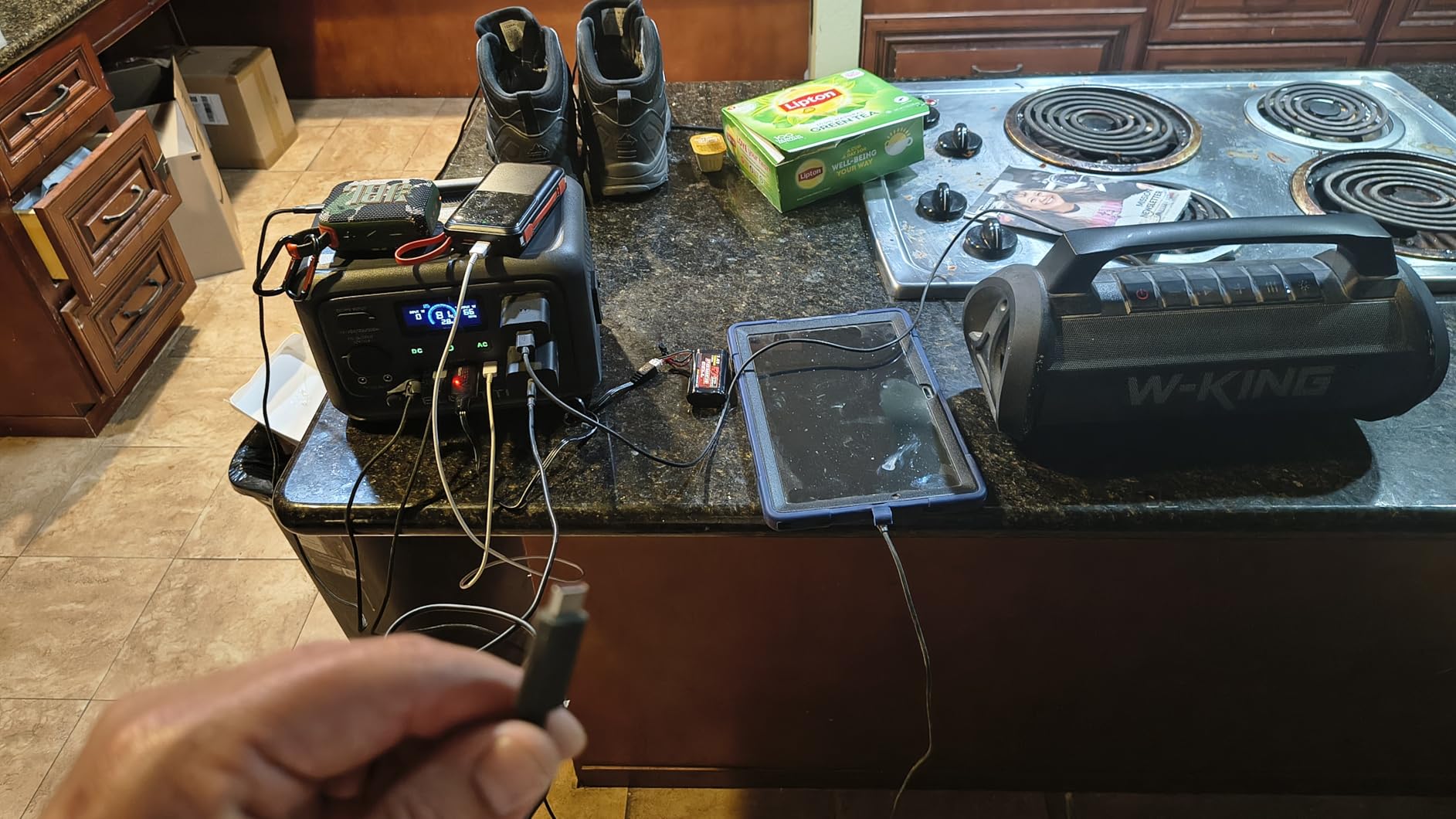
Three jobs drive most purchases here: portable power for phones, cameras, and lights on the road, a small UPS replacement for networking gear, and off-grid CPAP use. One reviewer ran a home server on it with zero switchover hiccups, and the app can genuinely open a garage door remotely.
Charging is fast for the class, with 0 to 80 percent in 45 minutes across eight charging modes and a full cycle in 70 minutes. It also accepts third-party solar connectors more readily than most units we tested.
Where it earns its place
At 9.4 pounds it is genuinely one-handed carryable, and 600 watts of continuous output covers coffee makers, small kettles through the 1,500W lifting mode, fans, and monitors. That is a working kit, not a phone charger.
For anyone replacing a 600VA UPS for a router or a NAS, the 10ms switchover and low standby draw are the two numbers that matter, and both are excellent.
What to watch out for
Capacity is the binding constraint. One reviewer running a CPAP machine went from full to 53 percent in a single night, and two separate reviewers documented faster-than-expected drain on phones and tablets.
The 10ms UPS has no USB communication port, so a computer cannot be told to shut itself down the way a traditional UPS allows, and Pro mode is gated behind a default passcode. It cannot run a refrigerator despite the 600 watt headline.
8. Anker SOLIX C300 – Tiny Pack for Phones and Cameras
Anker SOLIX C300 Portable Power Station, 288Wh Solar Generator for Camping
- Lightest and smallest station here at roughly 9 pounds
- Two 140W two-way USB-C ports that fast-charge laptops directly
- Recharges to 80% in 50 minutes
- 25dB noise level makes it practical to sleep beside
- Three AC outlets plus a car socket and four USB ports
- 288Wh is a tenth the capacity of the 2010Wh units
- 300W continuous output cannot run a fridge or most kitchen appliances
- Incompatible with the Anker PS30
- PS200
- and PS400 panels
- Shoulder strap sold separately
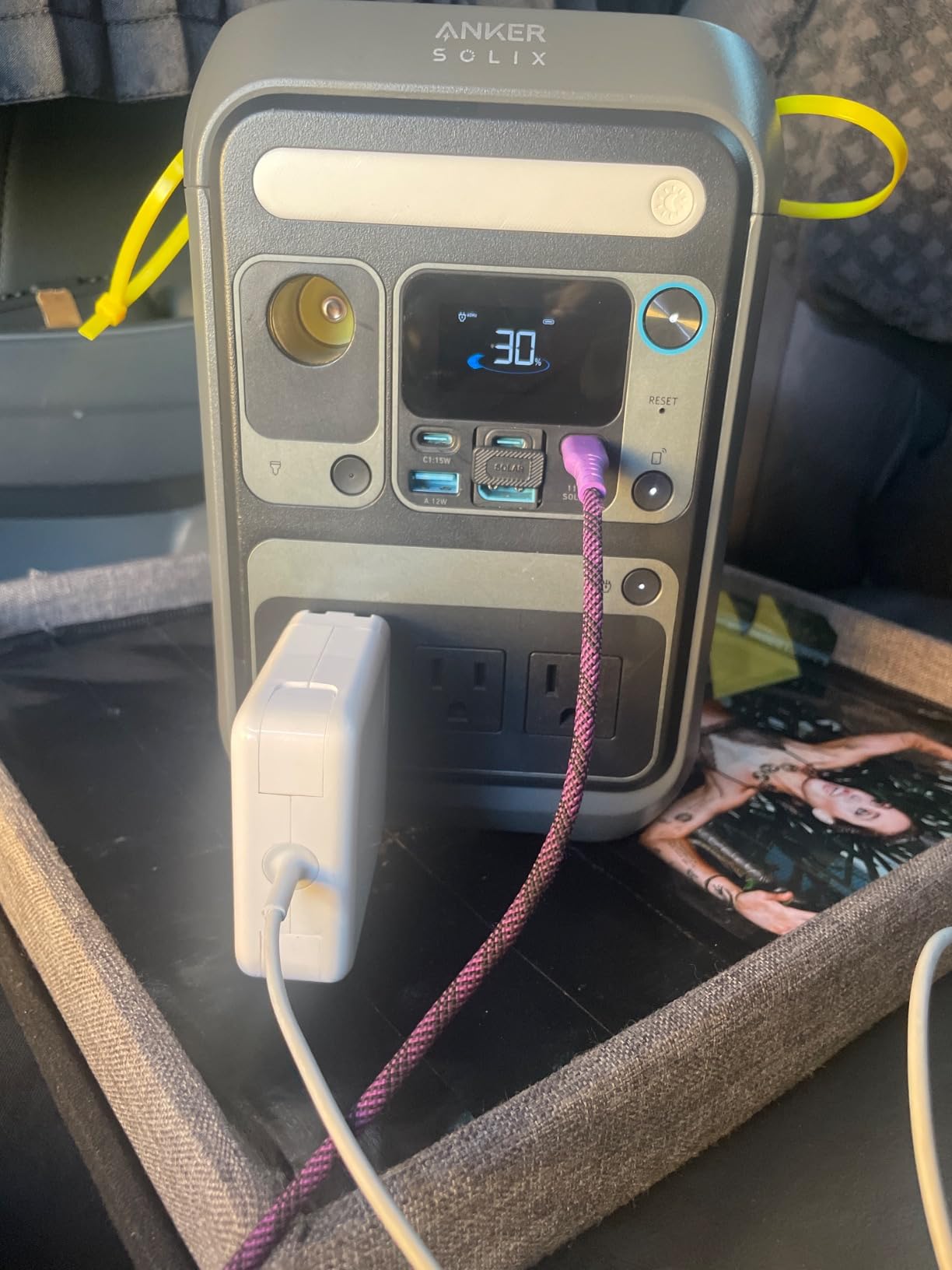
The C300 is the smallest complete unit here, and it is built around a single question: what is the lightest box that still has an AC inverter. At roughly 9 pounds and 288 watt-hours, it answers that question cleanly.
Two 140W two-way USB-C ports are the reason most people buy it. They fast-charge a laptop directly with no brick, and the 25dB operating noise means you can put it on a nightstand without thinking about it.
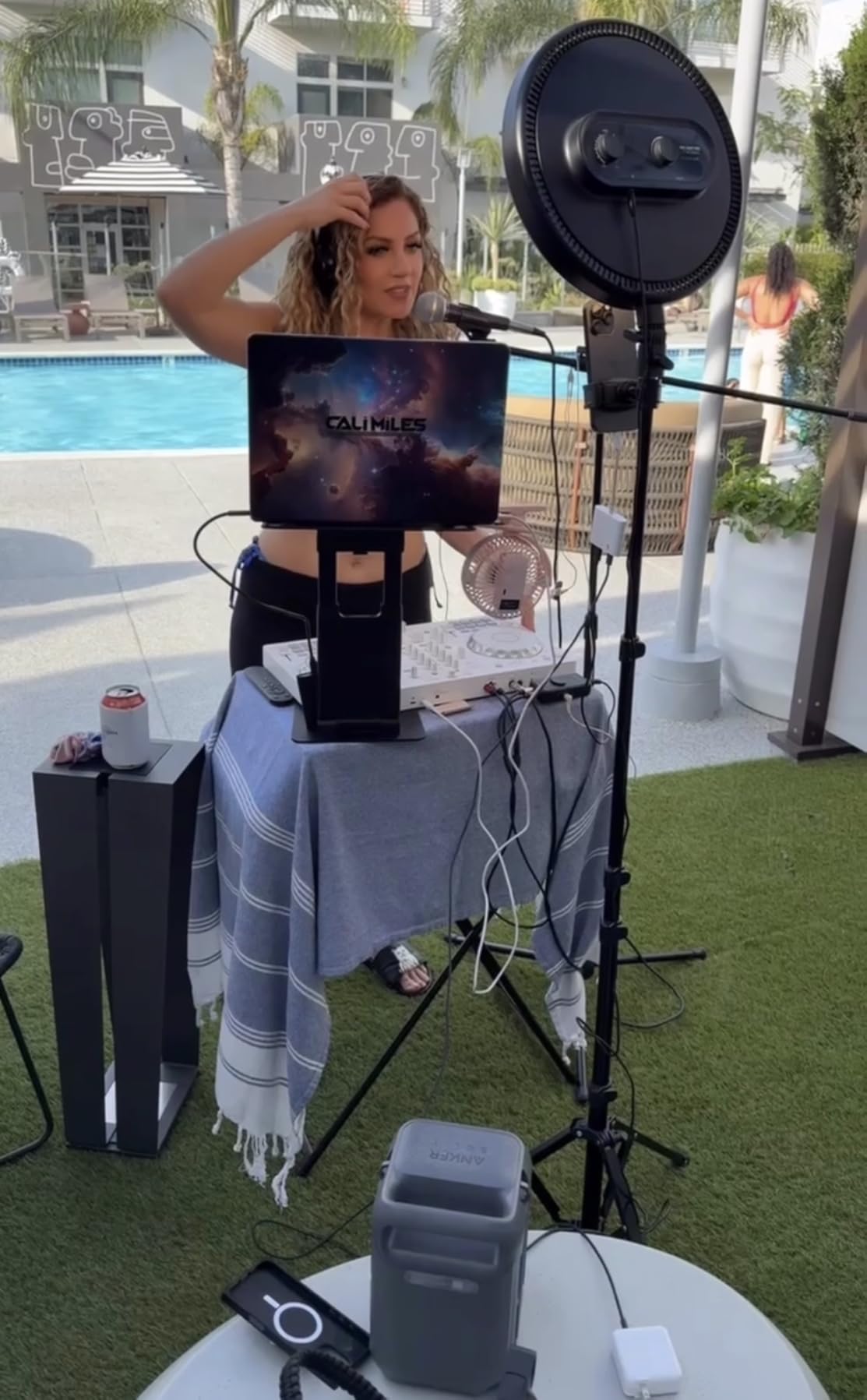
Owners position it correctly rather than as a general-purpose station. It is a day-trip, tailgating, and travel backup box for phones, cameras, laptops, and lights, where weight is the deciding factor. Car charging is supported, which is genuinely useful for a weekend away.
It refills to 80 percent in 50 minutes and carries a 3,000-cycle LiFePO4 battery with a five-year warranty, so the durability story is sound even at this size.
Why owners keep it
There is no smaller complete option with three AC outlets, a 12V car socket, and four USB ports. If your load is electronics rather than appliances, the port mix is the feature.
At 25dB it disappears acoustically, and the five-year warranty means it can live in a car boot or a carry-on without anxiety.
The limits you have to accept
288 watt-hours is a tenth of the capacity of the 2,010Wh stations in this list, so runtime is measured in hours rather than days. 300 watts of continuous output will not run a fridge, a fan, or most kitchen appliances.
It is also incompatible with several Anker solar panels including the PS30, PS200, and PS400, and the shoulder strap is not in the box. If you need more than electronics, the BLUETTI Elite 30 V2 doubles the inverter for a similar outlay.
9. Jackery Explorer 2000 v2 – 2,042Wh Built for Moving
Jackery Explorer 2000 v2 Portable Power Station, 2042Wh, 2200W AC Output
- Lightest and most compact 2042Wh unit at 39.5 pounds
- Cell-to-Body construction borrowed from EV battery design
- 100W USB-C PD port
- Silent charging mode under 30dB
- 20ms UL1778 certified UPS switchover
- Costs more than every other 2010Wh pick here while offering less output than two of them
- Largest one-star share of the Jackery units at 8 percent
- No 30A RV port on a unit this size
- Emergency Super Charging must be enabled in the app each session
Most 2,000 watt-hour boxes are a two-person lift. The Explorer 2000 v2 is 39.5 pounds, which makes it the one you can actually move from the hall closet to the car on your own, and reviewers repeatedly contrast that with heavier 2,010Wh competitors.
It stores 2,042 watt-hours of LiFePO4 rated for a decade, spreads 2,200 watts across three AC ports, and adds a 100W USB-C PD port for laptops. The build uses Cell-to-Body construction borrowed from EV battery design for a more secure internal structure.
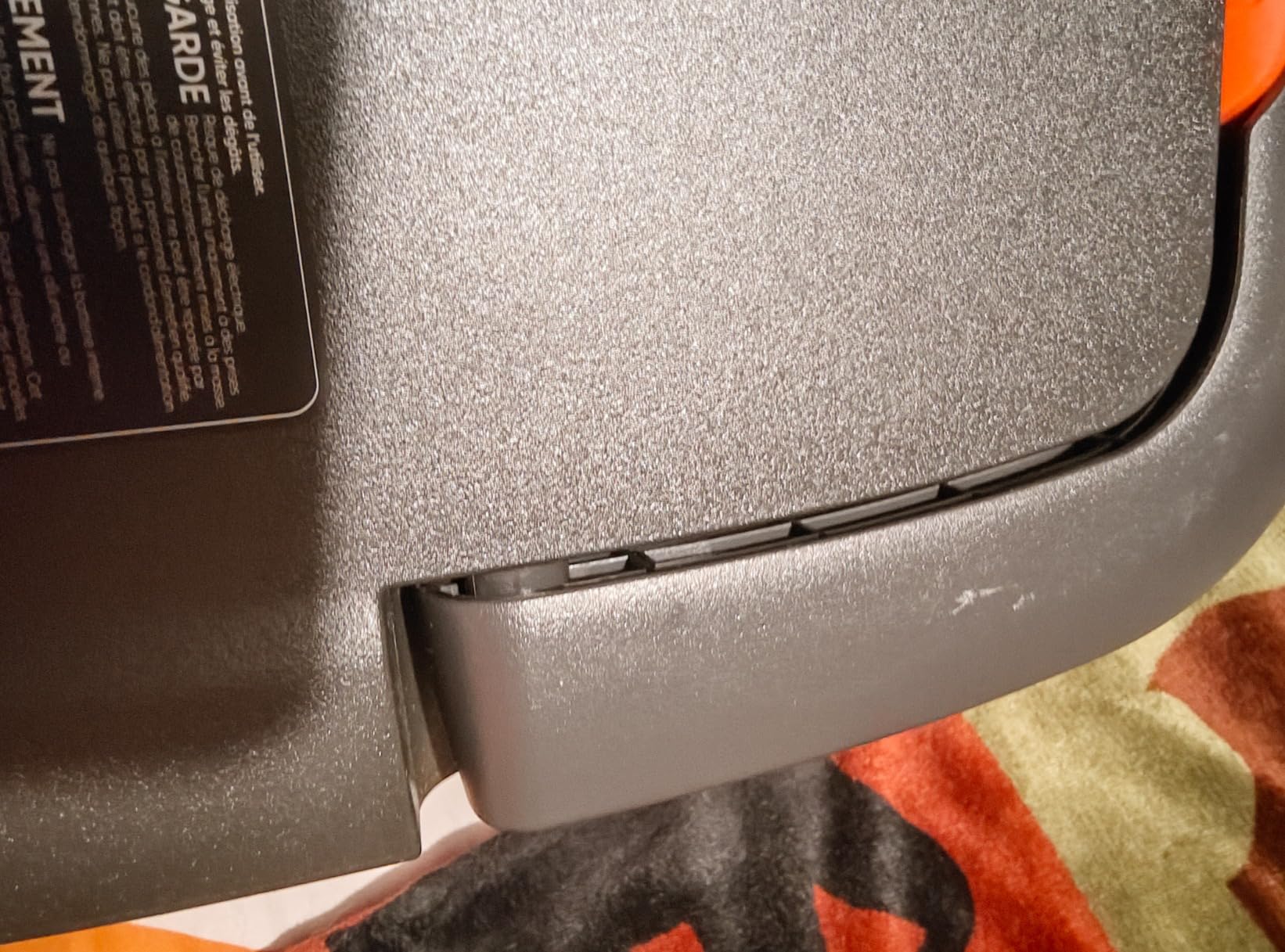
Recharge runs from empty to 80 percent in 66 minutes on AC, with a full cycle in 102 minutes in Emergency Super Charging mode, and 400 watt solar panels can refill it in about six hours. The silent charging mode sits under 30dB for bedrooms and home offices.
Buy-one-plus-an-extra-battery setups for home backup and camping are the recurring theme in reviews, and the 20ms UL1778 certified switchover keeps sensitive electronics running through an outage.
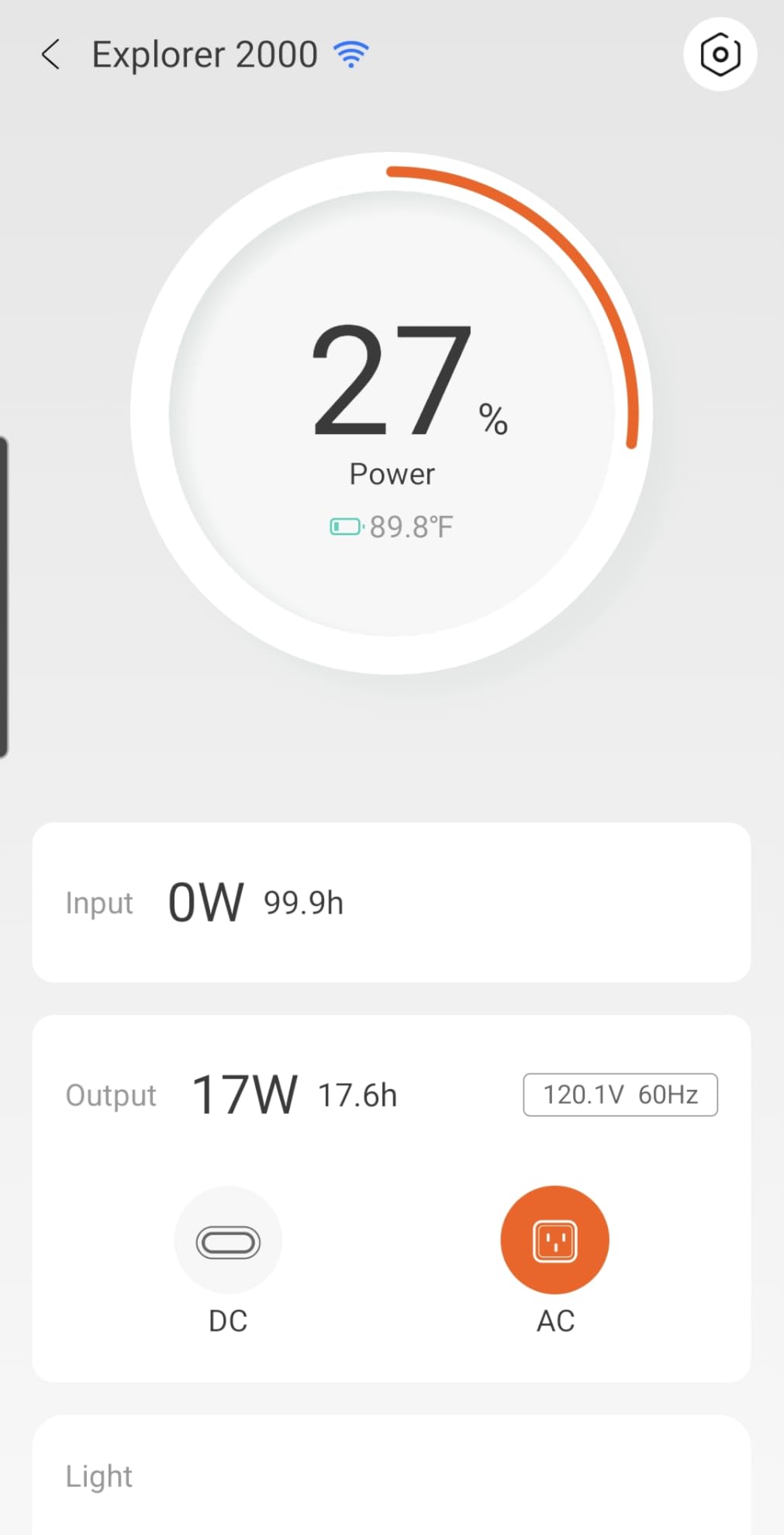
Why the weight matters more than the price
Portability is the entire pitch here, and 41 pounds saved against a typical 2,010Wh unit changes how you use the thing. You can move it to a car, take it to a campsite, or bring it upstairs without planning the trip.
For anyone with an RV or a van build where every pound is contested, that is worth more than a few extra watts of inverter headroom.
What gives you pause
You are paying more for this 2,042Wh unit than for the Anker S2000 and the Dabbsson 2000L, while getting less continuous output than the ALLWEI. That is the cost of the lighter chassis.
Its 4.4 average is the lowest among the 2,010Wh stations here and 8 percent of reviews are one-star. There is no 30A RV port on a machine of this size, and Emergency Super Charging has to be switched on in the app each session, which is a repeated stumbling block. Our RV roundup covers the 30A question in more detail.
10. Dabbsson 2000L – Six Outlets and 3,300W of Surge Boost
- Semi-solid LFP cells deliver measurably longer runtime than standard LFP at the same capacity
- Six AC outlets
- the most of any station here
- 3300W surge boost handled 1400W appliances and peaked above 4000W in testing
- Full AC recharge in about 1 hour at 41 pounds
- 5-year warranty
- Pass-through charging and a three-mode light
- Fan runs frequently and audibly even at near-zero draw
- App connection over 2.4GHz Wi-Fi was difficult to establish
- Charge and discharge limit settings in the app do not appear to save
- Constant audible clicking during AC pass-through
- Only two USB-C ports and it cannot be charged by USB-C
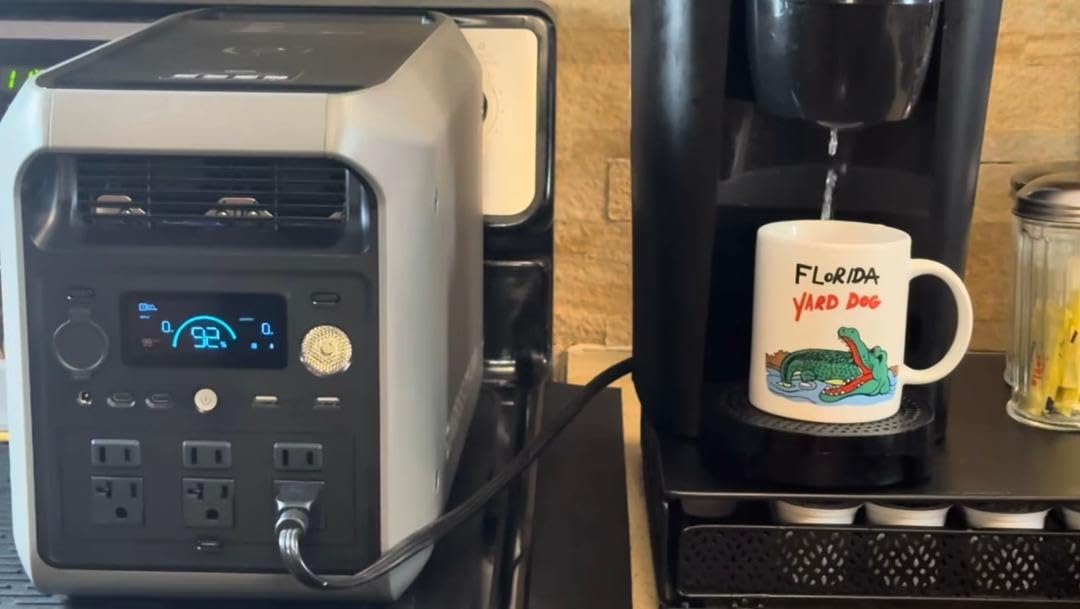
The 2000L uses semi-solid LiFePO4 cells, and owners report measurably longer runtime than standard LFP chemistry at the same nominal capacity. With 2,048 watt-hours and 4,000-plus deep cycles to 80 percent, it is built for people who intend to run it hard for years.
Six AC outlets is the highest count in this roundup, and the 2,200 watt inverter carries a 3,300 watt surge boost with 4,400 watts of starting power. One reviewer who has tested more than 35 stations calls it the best price-to-performance ratio in the 2,010Wh class.
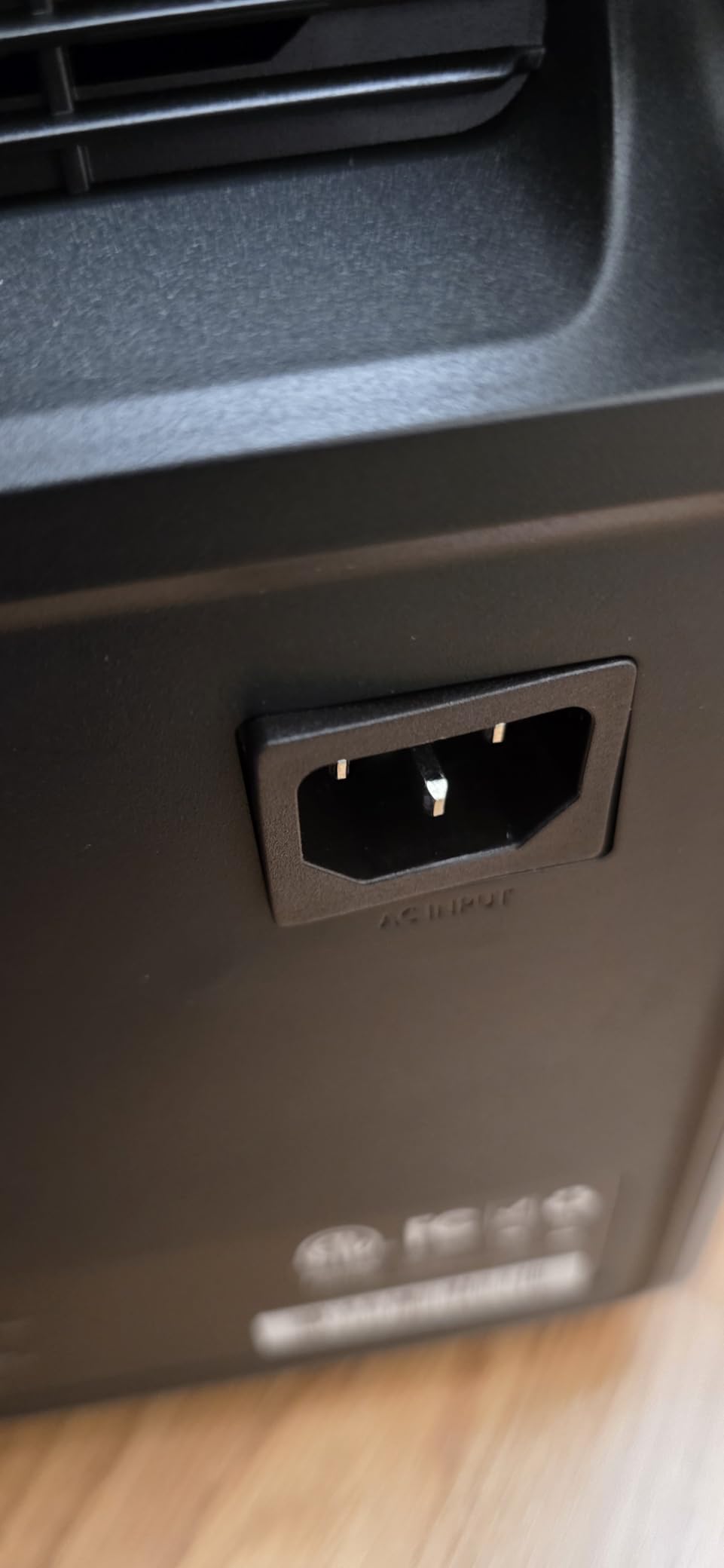
The enthusiast data is unusually specific, with multiple units running refrigerators for 20-plus hours, one running two freezers and two full-size fridges together for 7.5 hours, and peak draws recorded above 4,000W. The UL94-V0 flame-retardant housing is a detail most competitors in this bracket skip.
Recharge is fast, with a full AC cycle in roughly an hour, and 800W of MPPT solar input plus dual-input hybrid charging means you can top up from wall and panel at the same time.
When the extra outlets matter
If you are running a fridge, a freezer, networking gear, and a lamp, six outlets means you plug everything in once and stop rearranging cables during an outage. Pass-through charging lets it sit inline with mains power and take over instantly.
The surge boost is the quiet differentiator for motor-driven loads such as power tools and pumps, where startup draw is what actually trips a smaller inverter.
What to know first
App reliability is the weak point, not power delivery. Reviewers report difficulty establishing the 2.4GHz Wi-Fi connection, settings that do not appear to save, and poor app store reviews even where the connection works.
There is also frequent audible fan noise even at near-zero power draw and constant clicking during AC pass-through. Both are dealbreakers for overnight medical use, and there are only two USB-C ports with no USB-C charging input.
11. ALLWEI 2400W – Expansion Path to 10,240Wh
- Highest continuous output of any 2048Wh unit here at 2400W pure sine wave
- Expandable to 10240Wh
- the largest capacity ceiling in this roundup
- 1500W AC input gives 0-80% in 45 minutes
- ATS automatically engages UPS mode after an outage
- Up to 1200W of solar charging input
- Fewest reviews in the roundup at 196
- so limited field history
- 2-year manufacturer warranty against five years from BLUETTI
- Jackery
- and Anker
- 51 pounds is heavy for a model you will want to move
- 9 percent one-star rating
- 18.3 inches long
- the longest body in this class
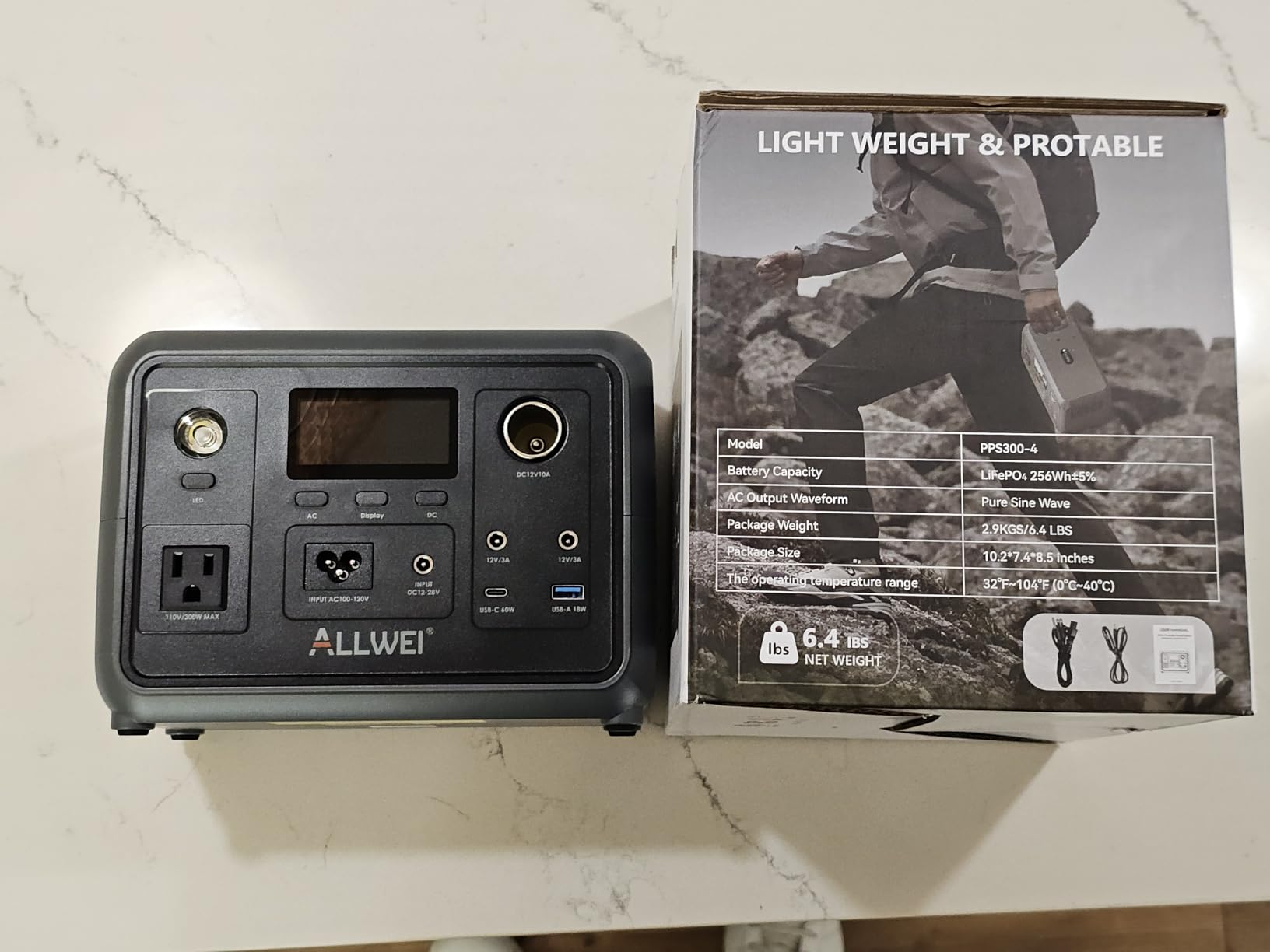
The ALLWEI is the only station here that can grow into a whole-home system. It starts at 2,048 watt-hours and expands to 10,240Wh with SGR-B200 PRO expansion batteries, which no other pick in this price range can approach.
Its 2,400 watt pure sine wave inverter is the highest continuous output among the 2,048Wh units, with 3,600 watts of power lifting, and 1,500W of AC input fills it from empty to 80 percent in 45 minutes.
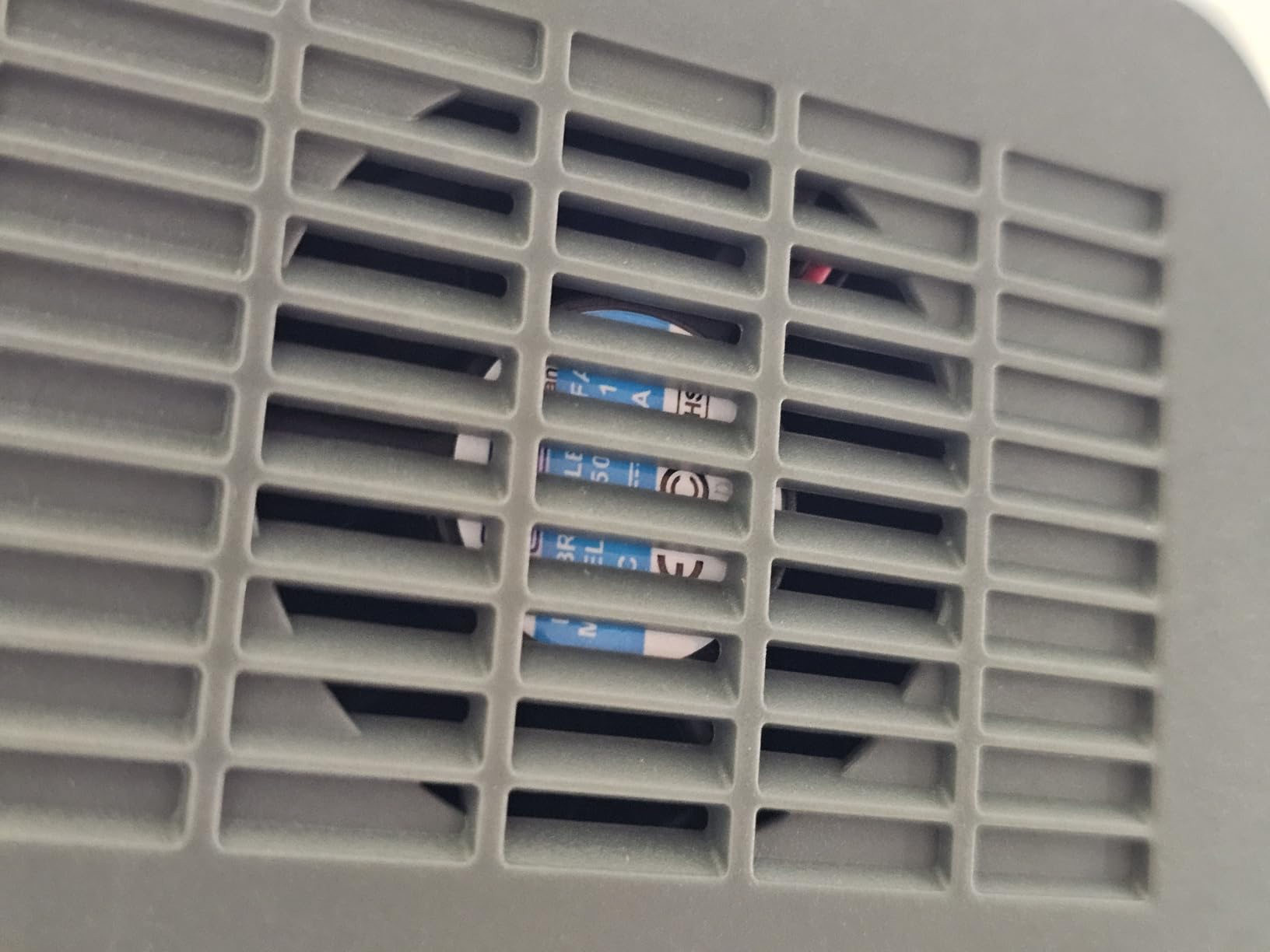
The automatic transfer switch feature is genuinely useful. It engages UPS mode on its own after an outage instead of waiting for you to notice and press something, which is the difference between a smooth ride and a dead router. Solar input accepts up to 1,200W, the highest panel ceiling in this roundup.
A built-in BMS and MPPT handle over-temperature, short-circuit, and overload protection, and the claimed 3,500-plus cycles work out to roughly a ten-year lifespan at daily use.
Who should buy this
If you know a bigger system is coming, start here. Buying the base unit plus expansion batteries later costs less than buying a second standalone station, and the 2,400W inverter means cooking appliances stay on the table as capacity grows.
It is also the pick for anyone whose solar panels are larger, since 1,200W of input halves the panel count needed to keep up during daylight.
Why we rank it eleventh
With 196 reviews it is the least proven product in this lineup, and that shows up in the field data as well as the rank. A two-year manufacturer warranty is the shortest here against five years from BLUETTI, Jackery, and Anker.
At 51 pounds and 18.3 inches long it is one of the bulkiest 2,048Wh models in this roundup, and 9 percent of its reviews are one-star. The expansion promise is the reason to buy it, and thin review history is the reason to buy it carefully.
12. BLUETTI Elite 200 V2 – 2,600W Kitchen-Heavy Output
BLUETTI Elite 200 V2 Portable Power Station 2073.6Wh 2600W Solar Generator
- Very compact for 2073Wh
- roughly the same footprint as the much smaller AC180
- 2600W inverter runs microwaves
- air fryers
- and induction cooktops
- Exceptionally low 10W standby draw extends usable runtime
- 0-80% in 50 minutes and full in about 1.6 hours on AC alone
- 6000-plus rated cycles with a claimed 17-year lifespan
- Heaviest station in its class at 53.4 pounds
- Not expandable with BLUETTI extra battery modules
- No 30A 12V output and few 12V options
- Some users report app connections dropping
- MPPT controller caps panel input at 60V
Outage cooking is the use case almost nobody researches and almost everybody needs, and this is the unit built for it. The Elite 200 V2 delivers 2,600 watts continuous and 3,900 watts in power lifting mode from 2,073.6 watt-hours, which is enough to run a microwave, an air fryer, and an induction cooktop at the same time.
That capacity comes with 6,000-plus rated cycles and a claimed 17-year lifespan, and the 10 watt standby draw is among the lowest in this roundup, which is why reviewers see longer usable runtime than the headline figure suggests.
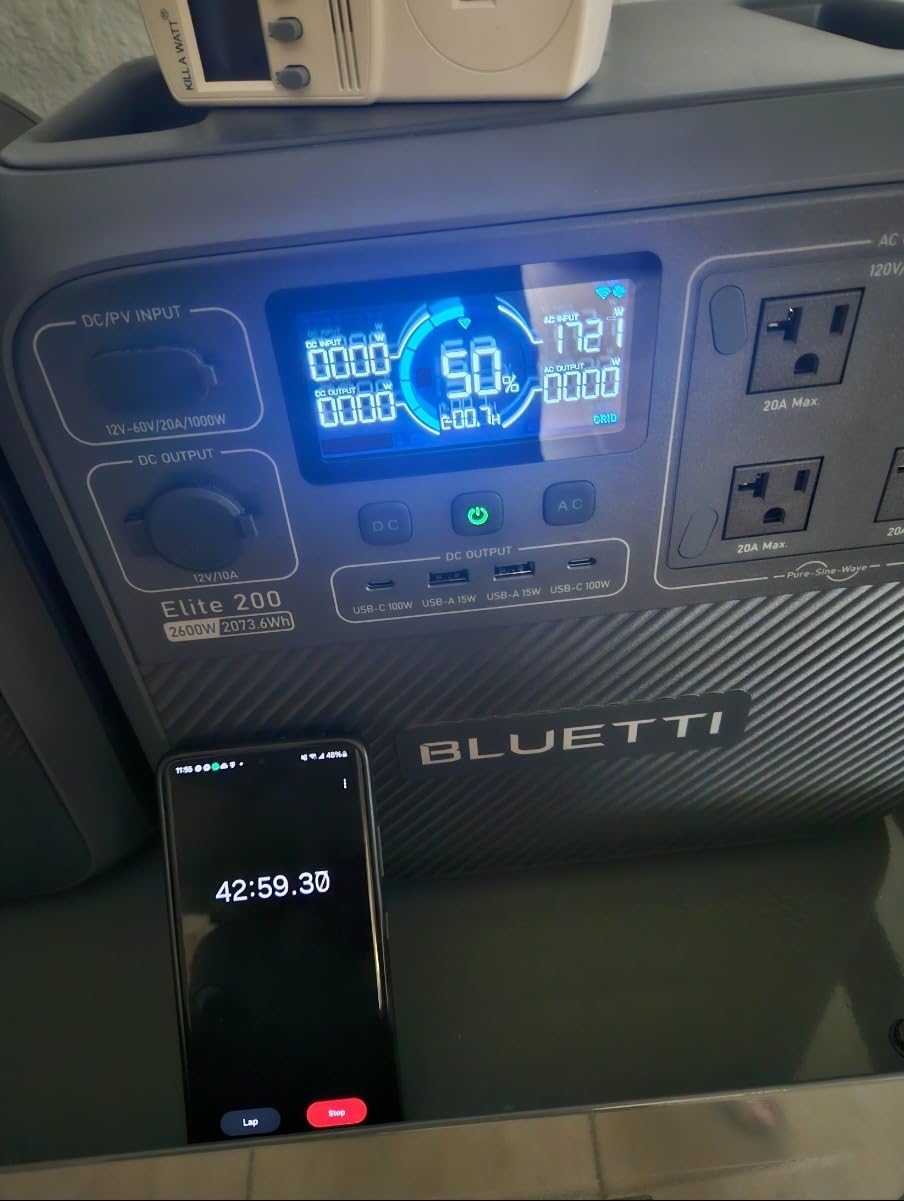
About 85 percent of its reviews are five-star, and the praise centres on exactly that combination of capacity and output. Charging is quick, with 0 to 80 percent in 50 minutes using both AC and DC inputs together, and a silent charging mode at 16 to 30dB for indoor use at night.
Multi-day outage backup for refrigerators, freezers, and networking gear is the dominant reported use, and the app supports Bluetooth-only control plus firmware updates that resolved real issues for some owners.
Why the inverter size matters at home
Most 2,010Wh stations deliver 1,500W to 2,200W, which means one kitchen appliance plus a fridge. At 2,600W you can run the coffee maker while the air fryer finishes a batch and the fridge keeps cycling, which is a normal evening in a real household.
Power lifting mode covers resistive loads like kettles and toasters that trip a strict inverter limit. Four AC outlets, two USB-C, two USB-A, and a 12V car port complete a well-distributed panel.
What works against it
It weighs 53.4 pounds, the heaviest unit in this roundup, and it cannot be expanded with BLUETTI’s own battery modules. If you want more capacity later, you are buying a second machine.
There is no 30A 12V output for RV users, some owners report app connections dropping and needing a manual refresh, and the MPPT controller caps panel voltage at 60V, which limits solar input in practice compared with the ALLWEI.
What a 1,000W Power Station Can Actually Run
Runtime is simple arithmetic once you understand two numbers. Watt-hours are how much energy is stored, watts are how fast it comes out, and a device running at 60W will drain a 1,000Wh pack roughly sixteen times over in theory, though inverter losses and standby draw mean you get closer to eighty percent of that in practice.
Here is what a station in this range handles during an average outage. Draw figures are typical for each appliance class.
Wi-Fi router and modem (15 to 20W): days of runtime on any unit here, including the 288Wh packs.
Phones, tablets, cameras (10 to 20W each): many full charges from the small 288Wh stations.
Laptop (60 to 100W): roughly 8 to 10 hours on a 1,024Wh unit once losses are counted.
CPAP machine (about 60W): about 12 hours on a 1,024Wh station and 20-plus hours on a 2,048Wh unit.
LED lights and a fan (10 to 40W): a full night easily, and multi-day on the 2,010Wh models.
Refrigerator (150 to 400W while cycling): two to three days on a 2,048Wh unit, closer to 24 hours on a 1,024Wh unit.
Microwave (1,200W): a handful of short bursts on a 2,000W-plus station, unusable on anything under 1,500W.
Coffee maker (800 to 1,200W): one or two cups on a 2,000W station, and you want the station to itself.
Space heater (1,500W): technically possible on the 2,600W units for short periods, but the battery is gone in under an hour. This is the expectation gap we see most often in forums.
Induction cooktop (1,800W): only the 2,400W and 2,600W stations can start one, and runtime is measured in minutes.
Two honest limits belong here. None of these stations will run a whole house, a well pump, or a central air conditioner, and none will carry a household through several days without either a solar panel or a second battery. Our honest read is that 1,000 to 2,000 watt-hours covers a refrigerator, internet, lighting, and a hot meal for most people, which is exactly the use case the sub-1,000 dollar tier was built for.
How to Choose: Capacity, Output, and Chemistry
Start with the biggest device you absolutely need to run, then work outward. Write down the wattage of your fridge, your CPAP machine, your router, and anything you want for cooking, add them up with a 25 percent margin, and that tells you the inverter size. Then multiply the total wattage by the hours you need and you have your capacity target.
For most households, 1,000 watt-hours covers a router, a laptop, lights, and a CPAP machine overnight, while 2,000 watt-hours adds a refrigerator for a day or two. Anything beyond that is where solar or a second unit takes over.
Continuous output is not the same as surge. The surge figure is a short burst for startup draw on motors and compressors, and a 3,000 watt surge rating does not mean you can run a 3,000 watt appliance for an hour. If a listing leads with surge, look for the continuous number.
Chemistry is the simplest filter. LiFePO4 is rated for 3,000 to 10,000 cycles depending on the model, versus roughly 500 to 1,000 for NMC lithium-ion, and forum advice across RV and overlanding communities consistently favours LiFePO4 for anyone keeping a unit for years. It is also the safer chemistry to store indoors.
Usable capacity is always less than the label. A 1,152Wh unit that deliberately limits itself to 90 percent and draws 15 to 20W of overhead will not deliver 1,152 watt-hours to your appliances. Budget for a realistic eighty percent and the runtime claims stop surprising you.
Recharge speed matters before the storm, not during it. The fastest units here refill from empty in 36 to 49 minutes, and the slowest take about an hour and a half, which is the difference between charging after dinner and charging overnight.
Expansion is worth checking early because it is hard to add later. The OUPES Mega 1 grows to 5,120Wh and the ALLWEI to 10,240Wh, while the Anker C1000 Gen 2 and the BLUETTI Elite 200 V2 cannot grow at all. Buying a second small unit is sometimes cheaper than an expansion battery, so do that math before assuming expansion is the cheaper path.
Weight is the portability tax. The list runs from 9 pounds to 53.4 pounds, and a 50-pound box does not get carried to a campsite. Match the weight to whether the unit lives in a closet or in a vehicle.
Solar pairing completes the picture. Units in this roundup accept between 100W and 1,200W of panel input, and a unit that takes a 200W panel on a slow input will disappoint next to one that takes 600W or more. We keep a separate roundup on solar panels for portable power stations if you are sizing a system.
Gotchas Worth Knowing Before You Buy
Brand-locked solar inputs are the most common regret. The Jackery Explorer 1000 v2 and Anker SOLIX C300 only take their own panels, and the Anker C300 is explicitly incompatible with the PS30, PS200, and PS400. Confirm your panel connector before ordering, because a third-party panel may need an adapter you also have to buy.
Fan noise decides medical use cases. The Dabbsson 2000L runs its fan audibly even at near-zero draw, the Anker S2000 draws complaints about droning at 1,200W charging, and the Anker C1000 Gen 2 is described as inaudible in a bedroom. If the unit sits next to you at night, check the quiet mode specification.
Missing 30A RV sockets show up on several units, including the BLUETTI Elite 200 V2 and the Jackery Explorer 2000 v2. If you plug into an RV, verify the 30A output exists before you buy rather than after.
Non-expandable designs limit your options later. The Anker C1000 Gen 2 dropped the expansion the first generation offered, and the BLUETTI Elite 200 V2 does not accept extra battery modules at all.
Warranty length varies enormously, from two years on the ALLWEI and GRECELL to five years on the Anker, BLUETTI, Jackery, and OUPES products, and even the Jackery Explorer 1000 v2 lists only one year against a ten-year battery claim. Longer coverage is a fair tiebreaker at equal price.
App quality is genuinely uneven. Bluetooth-only units cannot schedule charging remotely, the Dabbsson 2000L has difficulty holding a Wi-Fi connection, and several of these apps cannot save the settings you set. Read recent app store reviews before you rely on scheduling.
Frequently Asked Questions
What is the best power station under 1,000 dollars?
The Anker SOLIX C1000 Gen 2 is the best portable power station under 1,000 dollars for most people. It delivers 2,000W of continuous output from 1,024Wh of LiFePO4 storage, refills fully in 49 minutes, and holds a 4.7 average across more than 1,600 reviews. The BLUETTI AC180 is the value alternative with 1,152Wh, 1,800W, and an 11-port layout, while the Jackery Explorer 1000 v2 offers the most proven design with over 3,600 reviews.
What can a 1000W portable power station run?
A 1,000W continuous output handles a refrigerator, a Wi-Fi router, a laptop, LED lighting, a small fan, and a CPAP machine at once without overloading the inverter. It can also run a coffee maker or a microwave for short bursts. It cannot run a space heater, a well pump, a central air conditioner, or most full-size kitchen appliances, and runtime on small loads is limited by the station’s watt-hour capacity rather than its wattage.
How long does a 1000W power station last?
It depends on capacity and load, not on the wattage figure. A 1,024Wh station running a 60W CPAP machine delivers roughly 12 hours after inverter losses, and roughly 8 to 10 hours on a 65W laptop. A 2,048Wh unit doubles those figures, giving about 24 hours of CPAP or two to three days of a cycling refrigerator. Self-consumption of 6W to 20W matters more on small stations than large ones.
Which LiFePO4 power station is the best?
All twelve stations in this roundup use LiFePO4 chemistry, so the ranking comes down to capacity, output, and value. The Anker SOLIX C1000 Gen 2 leads on output per watt-hour, the BLUETTI AC180 on ports and recharge time, and the Anker SOLIX S2000 on longevity with a 10,000-cycle rated battery. Forum communities consistently recommend LiFePO4 over NMC lithium-ion for anyone keeping a station for more than a few years.
Which brand of portable power station is the most reliable?
Reliability tracks the size of the installed base and the length of the warranty. BLUETTI, Anker, and Jackery each back their units with five-year warranties, and the Jackery Explorer 1000 v2 has more than 3,600 reviews behind it. Lesser-known brands such as ALLWEI and GRECELL offer larger capacities or lower cost per watt-hour, but their warranties are typically two years and their review history is thinner.
What is the best budget portable power station?
The GRECELL 999Wh delivers 999 watt-hours of pure sine wave output for the lowest cost per watt-hour in this roundup, making it the cheapest way to get a fridge and router through an outage. Below that tier, the BLUETTI Elite 30 V2 gives 600W of continuous output at 9.4 pounds for electronics and networking gear. If your budget stretches further, the Anker SOLIX C1000 Gen 2 costs more but roughly doubles the continuous output.
Is it worth buying a portable power station?
It is worth it if you have a specific load you need to keep running, most often a refrigerator, a medical device, or internet access. A station in this price range covers a fridge, router, lighting, and a hot meal for a day, and LiFePO4 chemistry gives 3,000 to 10,000 rated cycles, so the battery should last a decade. It will not run a whole house, and a gas generator or a standby generator remains the answer for larger loads.
Final Verdict
After comparing all twelve stations under 1,000 dollars, the Anker SOLIX C1000 Gen 2 is the clear best portable power station under 1,000 dollars for most households. 2,000 watts of continuous output from 1,024 watt-hours, a 49-minute full recharge, ten ports, a sub 10ms UPS, and a five-year warranty is a combination nothing else in this price range matches.
Buy the BLUETTI AC180 if you want more outlets and a one-hour full charge, the Jackery Explorer 1000 v2 if you want the most proven design on the market, and the Anker SOLIX S2000 if you need two days of fridge runtime. For outage cooking, the BLUETTI Elite 200 V2 at 2,600W is the one to shortlist.
Whichever you choose, charge it fully before the forecast turns, keep it at room temperature, and know your inverter’s continuous rating rather than its surge number. That single habit prevents most of the disappointment we saw in owner reviews across 2026.