
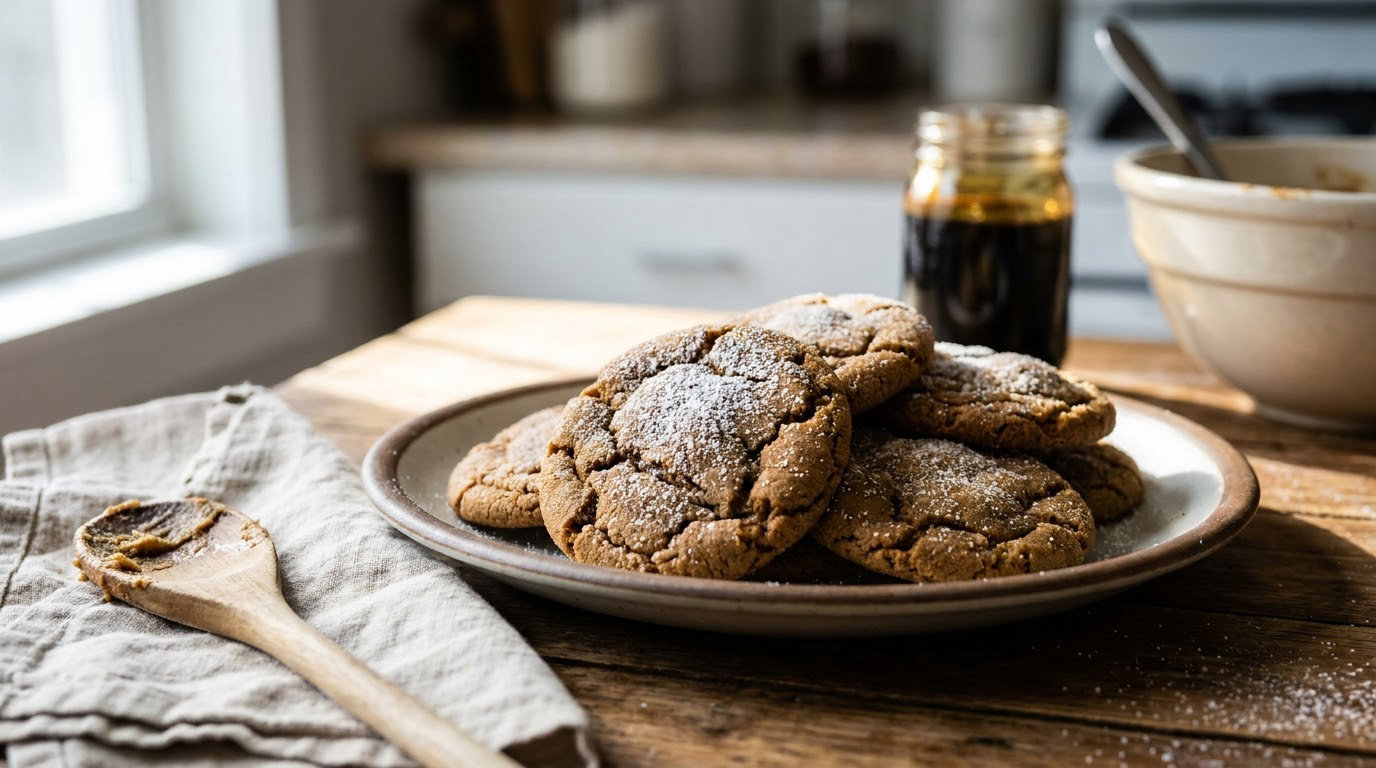
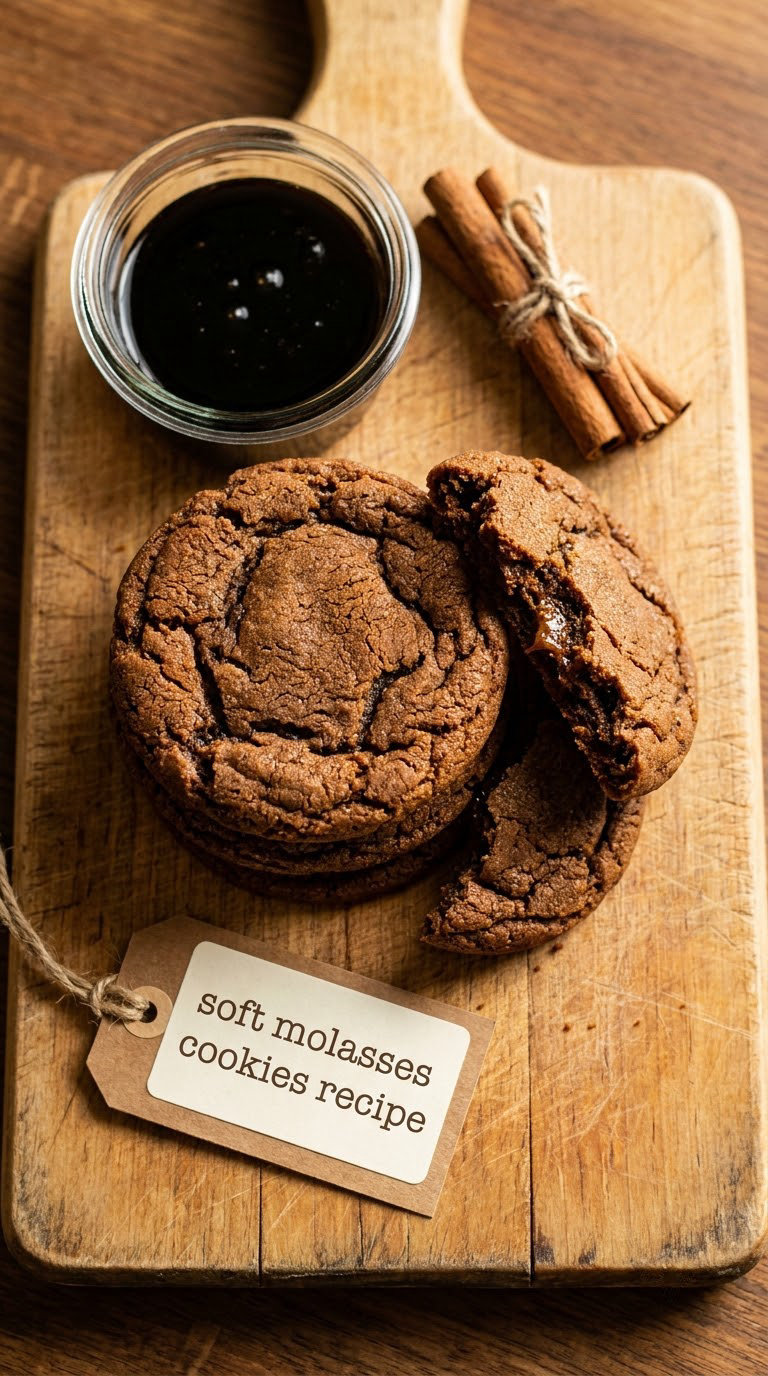
Soft molasses cookies are the kind of cookie that pulls people into the kitchen before they’ve finished cooling. Thick, crackly on top, almost fudgy in the middle, and warmly spiced with cinnamon, ginger, and cloves. This soft molasses cookies recipe comes together in one bowl, needs no overnight rest, and bakes up bakery-style in under 30 minutes.
If you’ve had molasses cookies turn out flat, cakey, or rock-hard the next day, this version is for you. Brown sugar plus a generous pour of dark unsulphured molasses keeps them tender for days, and pulling them out of the oven a touch early is the real trick to that bendy center.
Table of Contents
Why This Recipe Works
Soft and chewy molasses cookies rely on three things: moisture, fat, and a careful pull from the oven. Molasses is hygroscopic, which just means it grabs and holds onto water in the dough, so the cookies stay soft long after they cool.
Brown sugar doubles down on that moisture and adds a little acidity, which reacts with baking soda to give the cookies lift without making them cakey. A 50/50 blend of melted butter and a touch of shortening gives the deep flavor of butter with the spread control of shortening, so you get thick cookies with crackly tops instead of thin, brittle ones.
And the last piece is the bake. Pull the cookies when the edges look set but the centers still look a little underdone. They finish setting on the hot pan, and that’s exactly what creates that bendy, almost-underbaked middle.
- Dark unsulphured molasses for moisture and deep flavor without bitterness.
- Brown sugar for extra moisture and a slight tang.
- Melted butter + a little shortening for flavor plus spread control.
- A short 15-minute chill only if your kitchen is warm, not overnight.
- Pull at 9-10 minutes when centers still look soft.
Ingredients
Everything here is a pantry staple. Use grams for the flour, sugar, and butter if you have a kitchen scale; it makes a real difference with cookies.
Dry ingredients:
- 2 and 1/4 cups (281 g) all-purpose flour
- 1 teaspoon baking soda
- 1 and 1/2 teaspoons ground cinnamon
- 1 teaspoon ground ginger
- 1/2 teaspoon ground cloves
- 1/2 teaspoon fine sea salt
Wet ingredients:
- 1/2 cup (113 g) unsalted butter, melted and slightly cooled
- 2 tablespoons (28 g) vegetable shortening
- 3/4 cup (160 g) packed dark brown sugar
- 1/4 cup (50 g) granulated sugar
- 1/3 cup (113 g) dark unsulphured molasses (not blackstrap)
- 1 large egg, room temperature
- 1 teaspoon pure vanilla extract
For rolling:
- 1/3 cup (67 g) coarse sugar, turbinado, or granulated sugar
Ingredient notes and swaps:
Molasses: Dark unsulphured (like Grandma’s or Brer Rabbit) is the sweet spot. Light molasses is fine but gives a milder flavor. Avoid blackstrap; it’s bitter and will overpower the spices.
Brown sugar: Dark brown sugar gives a deeper molasses note. Light brown works in a pinch; the cookies will taste a little milder.
Butter + shortening: You can use all butter (1/2 cup + 2 tablespoons total) for a richer flavor, or all shortening for thicker, slightly cakier cookies. The blend gives the best of both.
Spices: If your ginger or cloves have been sitting in the cabinet for over a year, replace them. Old spices are the number one reason cookies taste flat.
Egg-free: Replace the egg with 2 tablespoons of applesauce or one flax egg (1 tablespoon ground flax + 3 tablespoons water, let sit 5 minutes).
Dairy-free: Use vegan butter in place of the butter, and skip the shortening or use a vegan stick shortening.
Gluten-free: Swap the all-purpose flour for a 1:1 gluten-free baking blend (King Arthur Measure for Measure and Bob’s Red Mill 1-to-1 both work well).
Equipment
You don’t need anything fancy for this soft molasses cookies recipe. Three things make it easier:
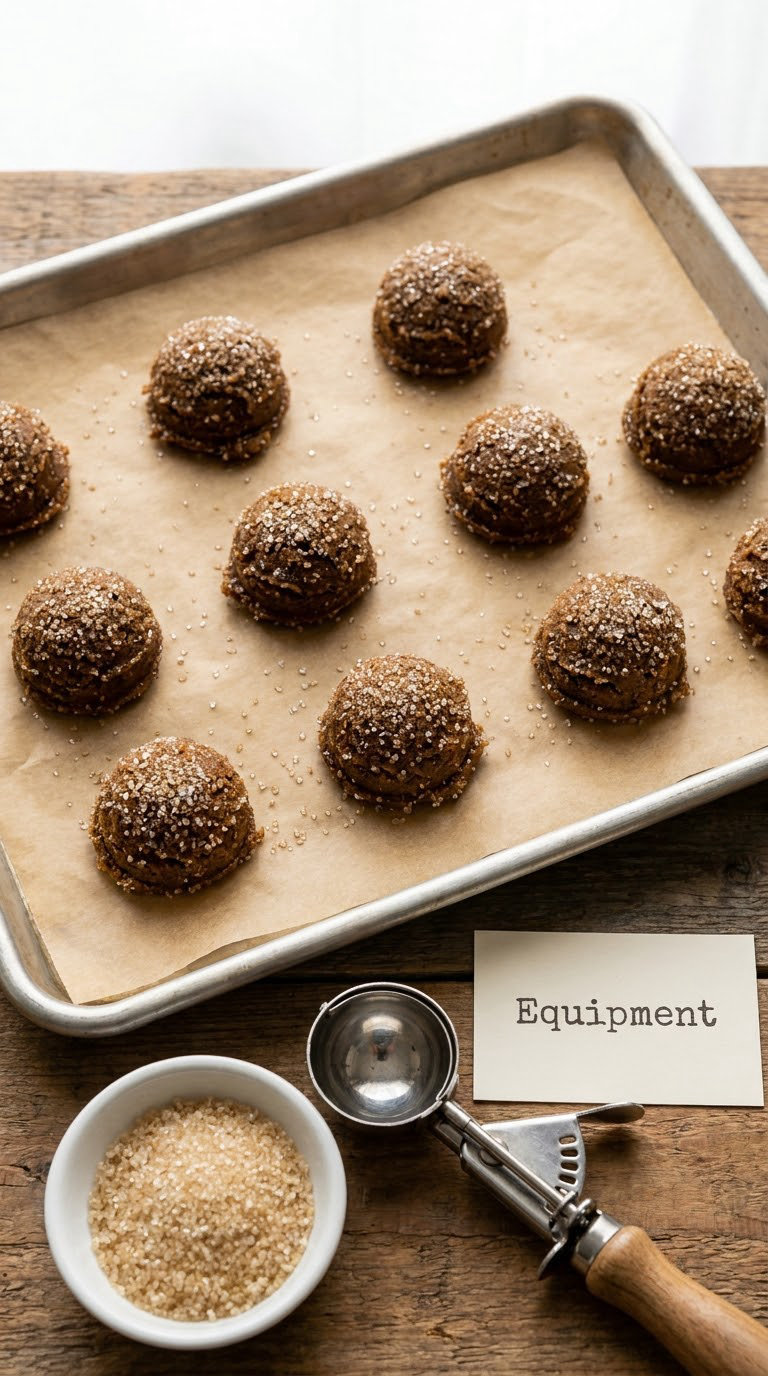
- A 2-tablespoon cookie scoop: Uniform balls mean even baking. A medium scoop is the difference between a perfect soft middle and an overdone edge.
- Two rimmed baking sheets: One bakes while the other gets the next batch scooped, so you never have to wash a hot pan mid-recipe.
- A wire cooling rack: Cookies finish setting on the pan, but they need airflow underneath to stay crisp on the bottom and soft on top.
Line your sheets with parchment paper or a silicone mat. Skip the spray; it can make the bottoms greasy and cause spreading.
How to Make Soft Molasses Cookies
Step 1: Mix the wet ingredients. In a large bowl, whisk the melted butter, shortening, brown sugar, granulated sugar, molasses, egg, and vanilla until smooth and glossy, about 1 minute. The mixture should look like a thick, dark caramel.
Step 2: Whisk the dry ingredients. In a separate bowl, whisk the flour, baking soda, cinnamon, ginger, cloves, and salt until evenly combined.
Step 3: Combine. Add the dry ingredients to the wet and stir with a wooden spoon or rubber spatula just until no streaks of flour remain. Do not overmix; a few small lumps are fine.
Step 4: Scoop and roll. Scoop the dough into 2-tablespoon balls (about 35 g each) and roll each one in the coarse sugar until coated all the way around. Place on a parchment-lined baking sheet, 2 inches apart.
Step 5: Bake. Bake at 350°F (175°C) for 9-10 minutes. The edges should look set and the tops should be crackly, but the centers will still look slightly underdone. That’s exactly right.
Step 6: Cool on the pan. Let the cookies rest on the hot baking sheet for 5 minutes. They’ll firm up as they cool but stay soft in the middle. Then transfer to a wire rack to finish cooling completely.
Tips for Success
These six fixes solve almost every soft molasses cookie problem I’ve run into over the years.
- Do not overbake. Pull them when centers still look wet. They finish on the pan. A 60-second overbake is the difference between soft and snappy.
- Use dark unsulphured molasses, not blackstrap. Blackstrap is too bitter and will dominate the spices.
- Chill the dough for 15 minutes if your kitchen is warm. If the dough feels sticky or your room is above 75°F (24°C), a short chill firms the butter and prevents spreading. Skip the overnight rest; it’s not needed here.
- Measure flour by weight. 281 g is what you want. One cup of flour can vary by 30+ grams depending on how you scoop it, and that throws off the texture every time.
- Use fresh spices. Ground spices lose their punch after about a year. If your ginger or cloves smell like nothing, they’re not doing anything for your cookies.
- Rotate the pan halfway through baking. Most home ovens run hot on one side. A quick half-turn at the 5-minute mark gives you evenly browned bottoms.
Variations
Once you have the base down, these swaps let you change the cookie depending on the season or who’s eating them.
- Ginger-molasses: Bump the ginger up to 2 teaspoons and add 1/4 teaspoon of black pepper for a warmer, spicier cookie that tastes like the holidays.
- Orange-molasses: Add the zest of one large orange to the wet ingredients. The citrus brightens the molasses and makes the cookies taste fresher.
- Dairy-free: Use vegan butter and a vegan stick shortening. Everything else stays the same.
- Gluten-free: Swap in a 1:1 gluten-free flour blend. Let the dough rest 10 minutes after mixing so the flour absorbs the moisture.
- Cream cheese sandwich cookies: Spread a thin layer of sweetened cream cheese filling (4 oz cream cheese, 1/4 cup powdered sugar, 1/2 teaspoon vanilla) between two cooled cookies. Roll the edges in coarse sugar for a holiday look.
Storage, Make-Ahead and Reheating
Soft molasses cookies are one of the best make-ahead cookies because the flavor actually deepens by day two. Store them right and they stay soft for almost a week.
Counter: Keep baked cookies in an airtight tin or container at room temperature for up to 4 days. Tuck a slice of plain bread in with them; the cookies pull moisture from the bread and stay soft longer. For more on this trick, see our guide on how to keep cookies soft after baking.
Freezer (baked): Freeze baked cookies in a single layer on a sheet pan, then transfer to a freezer bag once solid. They keep for up to 2 months. Thaw at room temperature for about 20 minutes.
Freezer (dough): Scoop the dough into balls, roll in sugar, and freeze on a parchment-lined sheet until solid, about 1 hour. Transfer to a freezer bag and freeze for up to 3 months. Bake straight from frozen, adding 1-2 minutes to the bake time. No thaw needed.
Reheating: Warm cookies in a 300°F (150°C) oven for 3 minutes. They come out tasting like they just came out of the oven, with that bendy middle back again. For longer storage, see our tips on how to store homemade cookies so they stay fresh.
What to Serve With Them
Soft molasses cookies are wonderful on their own, but they shine next to a few specific things.
- Hot mulled cider: The warm spices echo what’s already in the cookie. A mug of cider and one of these is a real December afternoon.
- Coffee or espresso: The bitterness of coffee balances the sweetness. A simple cup of black coffee is the best pairing for a chewy molasses cookie.
- Eggnog: During the holidays, this is the move. Pour a small glass and dunk the cookie in for a few seconds.
- Vanilla ice cream sandwich: Place a scoop of slightly softened vanilla ice cream between two cookies, roll the edges in chopped pecans, and freeze for 20 minutes. Worth it.
Frequently Asked Questions
How do I keep molasses cookies soft after baking?
Store them in an airtight container at room temperature with a slice of plain bread tucked in. The cookies pull moisture from the bread and stay soft for up to 4 days. Avoid leaving them uncovered or in a paper bag, which lets them dry out fast. If they firm up, warm one in a 300°F oven for 3 minutes to bring back the bendy middle.
Can I use blackstrap molasses instead of regular?
You can, but the cookies will taste noticeably more bitter and the spices will struggle to come through. Blackstrap has a stronger, almost burnt-sugar flavor that overpowers cinnamon and ginger. If you do use it, cut the amount by half and add an extra tablespoon of brown sugar to balance the bitterness.
Do I need to chill the dough for soft molasses cookies?
Not for this recipe. A short 15-minute chill is enough if your kitchen runs warm or the dough feels sticky. The overnight chill that some recipes call for develops flavor but isn’t needed for soft texture, and it actually makes the cookies thicker and more cakelike, which isn’t what we want here.
How long do soft molasses cookies stay fresh?
Stored in an airtight container at room temperature, they stay soft and chewy for about 4 days. The molasses continues to keep them tender, so they don’t harden the way sugar cookies do. After day 4, they’re still good but start to dry out at the edges. Freeze them if you need them to last longer.
Can I freeze molasses cookie dough?
Yes, and it freezes beautifully. Scoop the dough into balls, roll in sugar, and freeze on a parchment-lined sheet until solid. Transfer to a freezer bag and store for up to 3 months. Bake straight from frozen, adding 1 to 2 minutes to the bake time. No thawing needed.
Why did my molasses cookies come out flat?
The most common causes are warm dough, too little flour, or a hot oven. Measure your flour by weight (281 g) rather than by the cup, and chill the dough 15 minutes if it’s sticky. If your oven runs hot, drop the temperature by 25°F and bake a minute longer. An oven thermometer is the easiest way to know for sure.
Conclusion
Soft molasses cookies are the kind of recipe you’ll come back to every December, and honestly, most months in between. One bowl, no overnight rest, and a pull-from-the-oven trick that gives you bakery-style chew every time.
Make a batch this weekend. Roll them in coarse sugar, underbake them by a minute, and store them with a slice of bread. They’ll be the first cookies to disappear from the tin.