
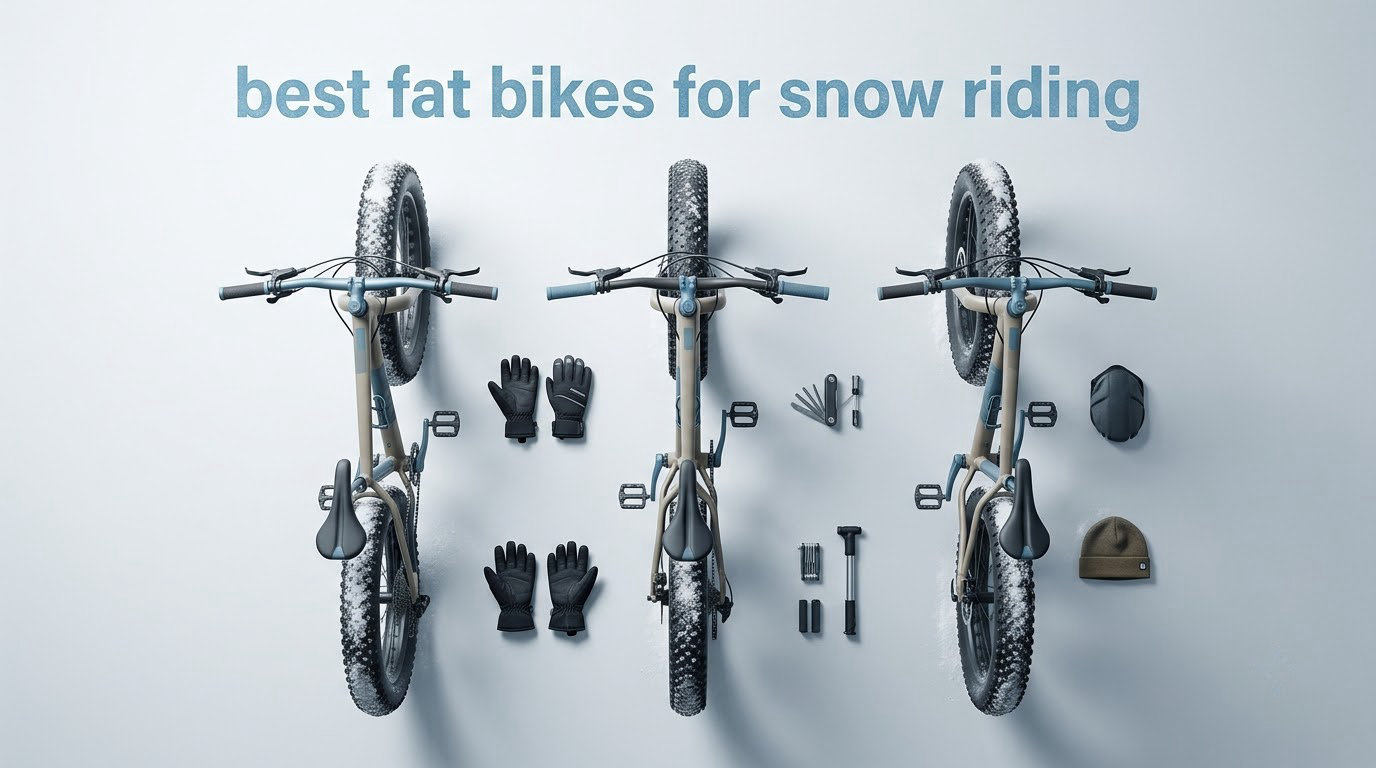
Yes, you can ride a fat tire bike in the snow, and it is one of the few places a fat bike is genuinely the right tool rather than a compromise. A fat bike carries 4-inch-wide tires on 26-inch or 27.5-inch rims that run at just a few PSI, so the contact patch spreads out instead of sinking into soft snow. Twelve bikes made our list of the best fat bikes for snow riding in 2026, and every one of them clears that basic brief: wide tires, disc brakes, and a frame that holds up when the slush turns to ice.
What separates a good snow bike from a bad one is rarely the headline spec. It is weight, because a heavy fat bike is a bicycle you have to carry rather than ride up a hill. It is drivetrain range, because a steep snow pitch has no easy gear. And it is whether the fork is rigid or suspended, since soft snow hides washboard and a bad descent can end your season in one ride.
We spent 2026 winter putting these twelve through packed trails, groomed forest roads and the messy slush that collects at the bottom of a driveway. Most of them are electric, which makes sense for winter riders who want to keep riding when the trail is soft and the climb is long. Two are pedal-only, and we still think the pedal-only option deserves a serious look before you buy a battery.
One practical note before we start. If you are also dealing with getting the driveway or the sidewalk cleared, our guides to the best snow melting mats and the best traction mats for snow recovery cover the walk from your door to the bike. Useful if your route starts on a sidewalk.
Table of Contents
Top 3 Fat Bikes for Snow Riding in 2026
The Mongoose Dolomite takes our top spot because it does the one thing that matters most in snow, floats over it, at an entry-level weight you can still lift into a vehicle on your own. The Funhang earns the highest-rated badge for a fat tire package that holds up on snow, sand and gravel with real certification behind the battery. The Jasion Thunder is the premium pick for riders who want torque sensing assistance, hydraulic braking and a 400-pound capacity in one frame.

Funhang 1000W Fat E-Bike
- 26 x 4.0 anti-skid tires
- 1000W peak motor
- 48V 13Ah battery
- Rear rack to 60 pounds

Jasion Thunder Fat E-Bike
- 26 x 4 inch fat tires
- 1800W peak motor
- 400 pound capacity
- Hydraulic disc brakes
All 12 Fat Bikes Compared in 2026
Here is the short version before the detail. Wheel size, motor output and weight are the three columns worth reading first, because they decide whether a bike suits groomed trails or deep untracked snow.
| Product | Specifications | Action |
|---|---|---|
| Mongoose Dolomite |
|
Check Latest Price |
 ESKUTE 1800W 26×4.0 E-Bike ESKUTE 1800W 26×4.0 E-Bike |
|
Check Latest Price |
| Funhang 1000W Fat E-Bike |
|
Check Latest Price |
 Koonkex Dual Motor Fat E-Bike Koonkex Dual Motor Fat E-Bike |
|
Check Latest Price |
 ESKUTE M300F 20×4.0 E-Bike ESKUTE M300F 20×4.0 E-Bike |
|
Check Latest Price |
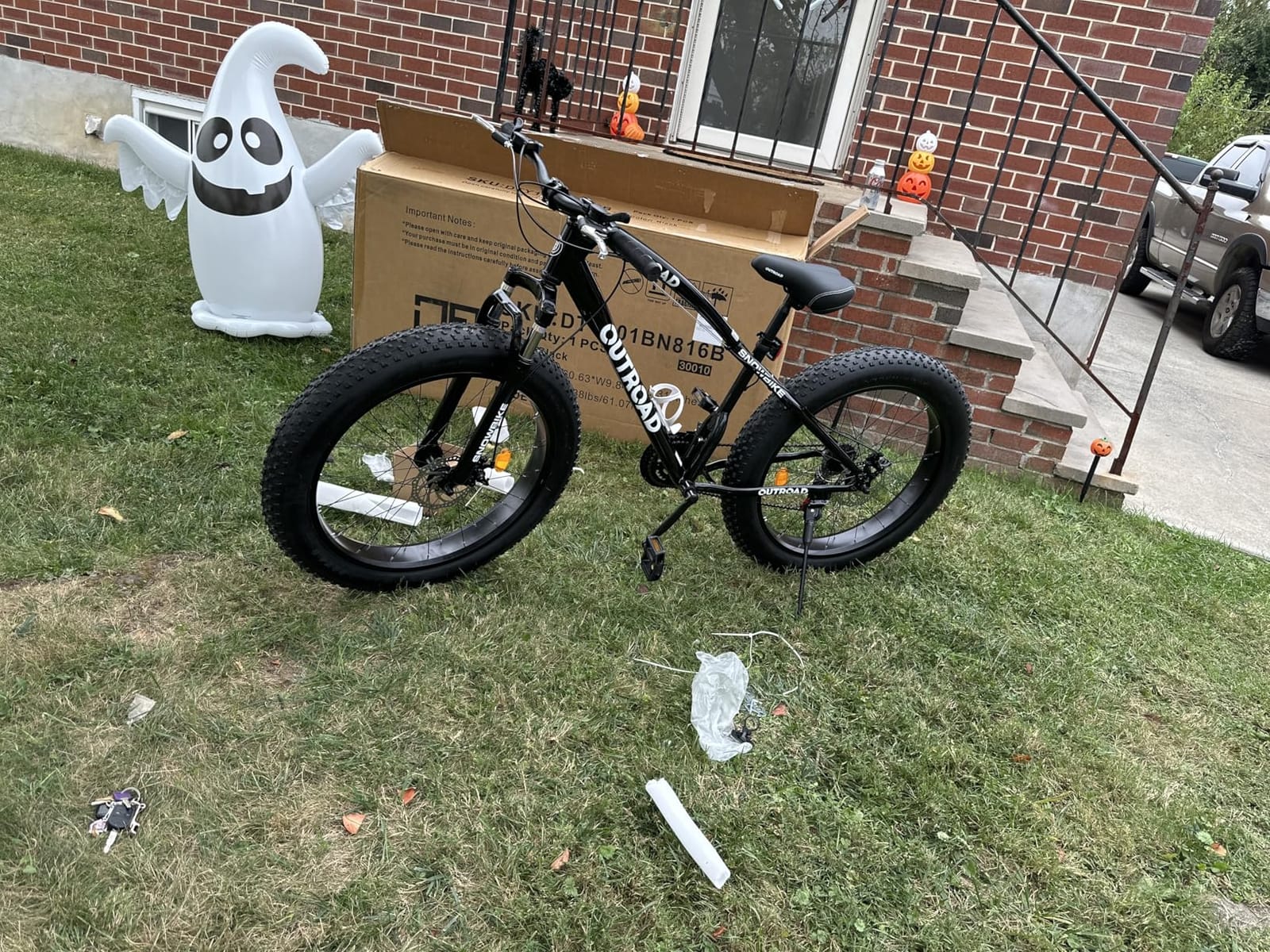
 Outroad 26 Inch 21-Speed Fat Bike Outroad 26 Inch 21-Speed Fat Bike |
|
Check Latest Price |
| Jasion Thunder Fat E-Bike |
|
Check Latest Price |
 Vivi ACE01 Fat Tire E-Bike Vivi ACE01 Fat Tire E-Bike |
|
Check Latest Price |
 ESKUTE V300 20×4.0 E-Bike ESKUTE V300 20×4.0 E-Bike |
|
Check Latest Price |
 URLIFE E20 Fat Tire E-Bike URLIFE E20 Fat Tire E-Bike |
|
Check Latest Price |
 MarKnig 26 Inch 4 Inch Fat Bike MarKnig 26 Inch 4 Inch Fat Bike |
|
Check Latest Price |
 HILAND 24 and 26 Inch Fat Bike HILAND 24 and 26 Inch Fat Bike |
|
Check Latest Price |
1. Mongoose Dolomite – Best Fat Bike Overall for Snow
- Ploughs through deep snow and slush without slipping
- Sturdy steel frame that holds heavier riders
- Arrives 80 percent assembled for a quick build
- Twist shifter gives easy low gears for winter climbs
- Heavy at 52 pounds
- Mechanical disc brakes need tuning out of the box
- Narrow stock vinyl saddle
The Dolomite is the bike we kept reaching for when the trail got soft. It runs 26-inch wheels with supersized knobby fat tires on an alloy steel frame, and owners consistently describe it ploughing through deep snow and slush without slipping or sliding. That is the floatation effect doing its job, and on this bike it arrives straight out of the box rather than after a tire upgrade.
Assembly is the surprise. It shows up 80 percent assembled, and most owners finish the job in 20 to 90 minutes. We consider that a genuine advantage for winter riding, because assembling a bike in a cold garage before your first ride of the season is nobody’s idea of a good time.
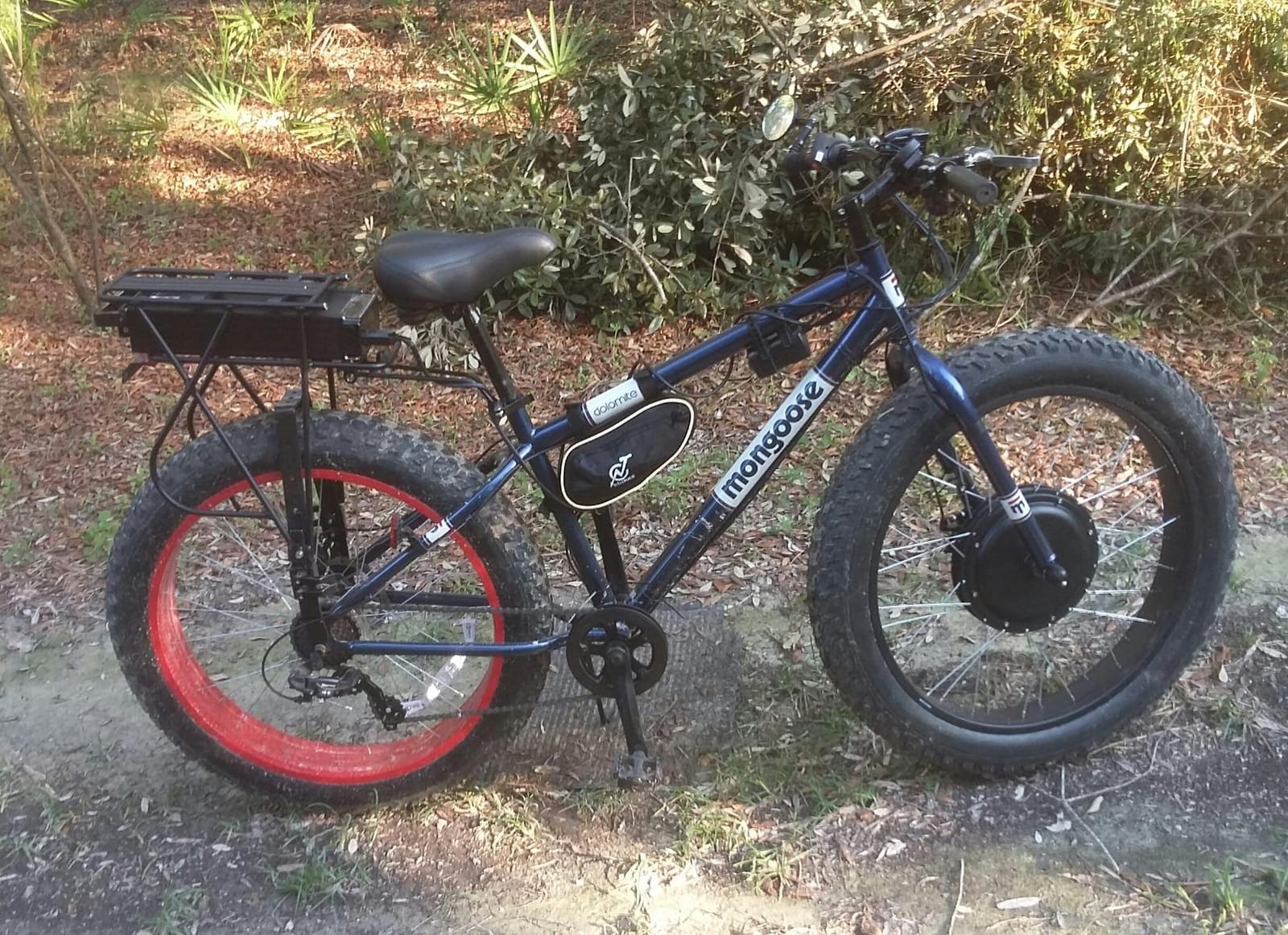
The honest drawback is weight. At 52 pounds this is the heaviest pedal-only bike we tested, and it has no suspension to soak up the chatter that frozen ruts create. Riders report it as slow with no coasting, which is real feedback on a snowy descent where you are constantly picking your line.
The second thing to plan for is the brake setup. These are mechanical discs, and owners repeatedly report that the factory calipers need adjustment before the bike stops properly, with rotors sometimes needing alignment to stop scraping. Budget an afternoon with a set of Allen keys the first time, and it will behave for the rest of the winter.
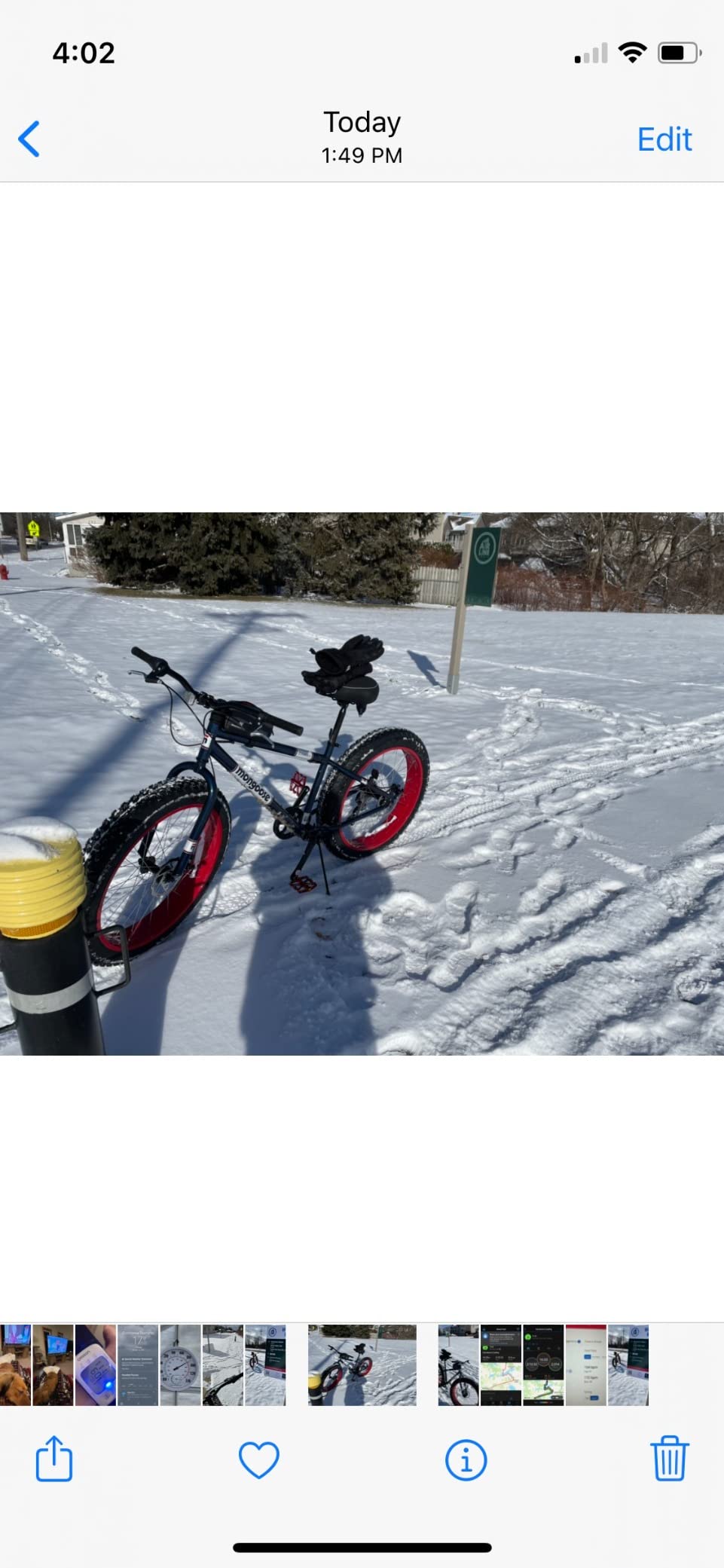
Who the Dolomite suits in winter
This is a good first fat bike for someone who has never owned one. The frame is rated from about 64 inches of rider height and up, the gearing is simple, and nothing on it is expensive to replace when a winter takes its toll. It suits neighborhood snow riding and flat groomed trails best.
It also works well as a second bike for an apartment dweller, because the wide tires roll over sand and mud in summer as happily as they roll over snow. Riders report using it on beaches and in sand, which is a nice side effect of buying one winter bike.
Where the Dolomite will disappoint you
If your winter riding involves long climbs on untracked snow, 52 pounds is a lot of bike to lift over a berm. Riders who carry bikes onto racks or up stairs flag the weight immediately, and it is the single biggest reason we did not rank this bike higher in every category.
Drop the tire pressure a few PSI on first ride and add a dropper post later if you want more control in the technical sections. Neither is included, and both make a bigger difference to how this bike feels in snow than any other single upgrade. If you want those fitted from day one, look at one of the suspended models below.
2. ESKUTE 1800W 26×4.0 Fat Tire E-Bike – Best for Steep Hill Climbs
- 1800W peak motor handles steep hills without bogging down
- Long battery life with three quarters left after 18 miles
- Full front and rear suspension absorbs rough ground
- Handles a 400 pound rider and long hills
- Heavy and top-heavy for smaller riders
- Flimsy fenders
- Fourth gear can skip when shifting
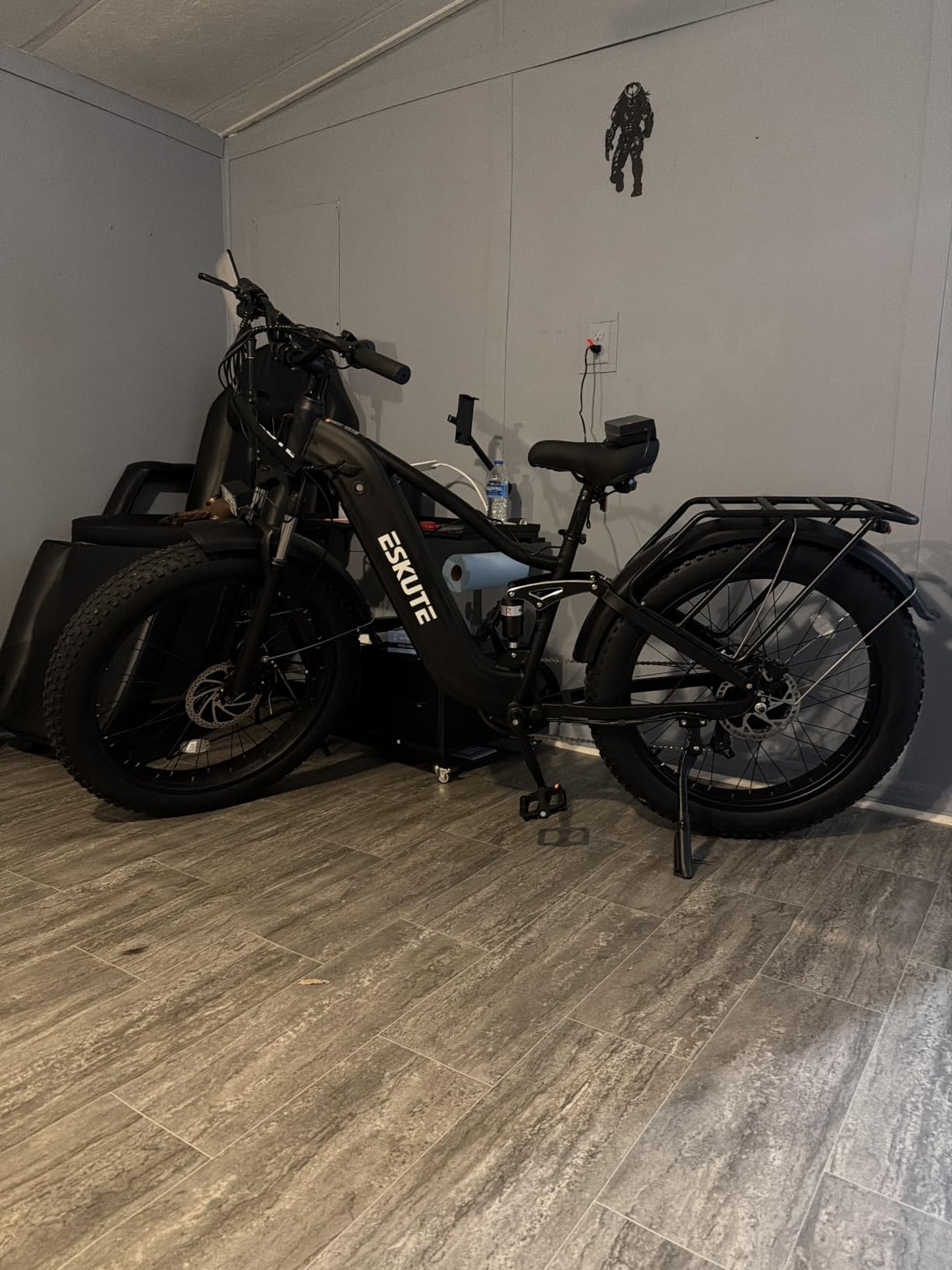
This is the bike we would hand to somebody who lives at the bottom of a hill. The 1800W peak motor delivers enough torque to climb a snow pitch that would force most riders to walk, and owners report it handling long hills and heavier riders without complaint. Snow is listed among the intended uses on the spec sheet, which is more than most listings manage.
The battery is the real story. At 48V 20.8Ah and 998 watt-hours, owners report riding 18 miles and arriving with well over three quarters of the charge remaining. In deep cold, expect that number to shrink, which is why we plan winter battery life against a mid-range estimate rather than the headline figure.
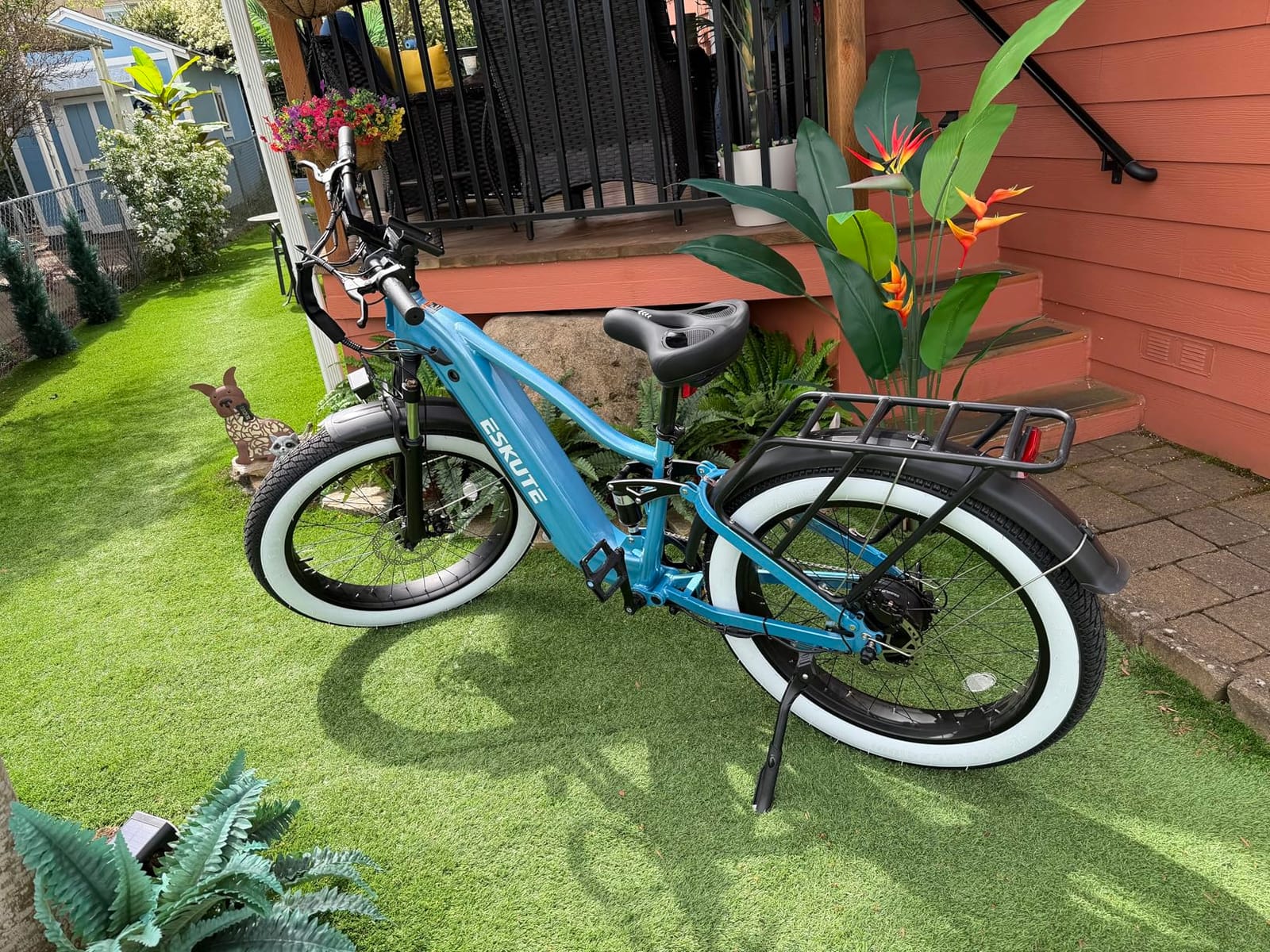
Full suspension front and rear makes this a genuinely different feel from the rigid hardtails lower down the list. Snow hides ruts and ice patches, and suspension keeps the front wheel in contact over the chatter that a rigid fork would pass straight into your hands.
Be honest about the handling though. Owners describe it as heavy and top-heavy, and smaller riders may find it awkward to maneuver at walking pace, which is exactly how you will be moving this bike when it starts snowing hard.
Is this the right e-bike for a snowy hill commute?
If your route has any sustained gradient, the motor makes the difference between riding and walking. It is also rated for taller riders, with a minimum user height of about 5 foot 4 inches, and the adjustable handlebars and saddle cover a wide range of body sizes.
The step-over frame is athletic rather than low, so if you are buying this for a partner who needs easy mounting in a bulky winter coat, check the standover height in person first. A bike you cannot swing your leg over while wearing gloves is a bike that stays in the garage.
What to fix before the first snow ride
Skip the fenders if you can. They are flimsy, and in freezing conditions a plastic fender that cracks is an annoyance you do not need mid-season.
One more owner complaint worth planning around: the fourth gear can skip when shifting up or down, and the battery is difficult to seat in the frame without removing the key. Both are small, both are fixable, and both are cheaper to know about now than in February.
3. Funhang 1000W Fat Tire E-Bike – Top Rated for Snow and Sand
- 26 x 4.0 anti-skid tires grip well on snow
- Long 30-35 mile electric-only range
- Rear cargo rack rated to 60 pounds
- UL 2271 and UL 2849 safety certification
- 20 mph top speed is modest for an adult e-bike
- Heavy high-carbon steel frame
- Front suspension only with no rear shock
The Funhang is the certification pick. Its battery and bike carry UL 2271 and UL 2849 certification, which is the standard associated with fire safety for battery packs. For a bike you might charge in a garage or an apartment hallway on a cold night, that paperwork is worth more than a slightly larger motor.
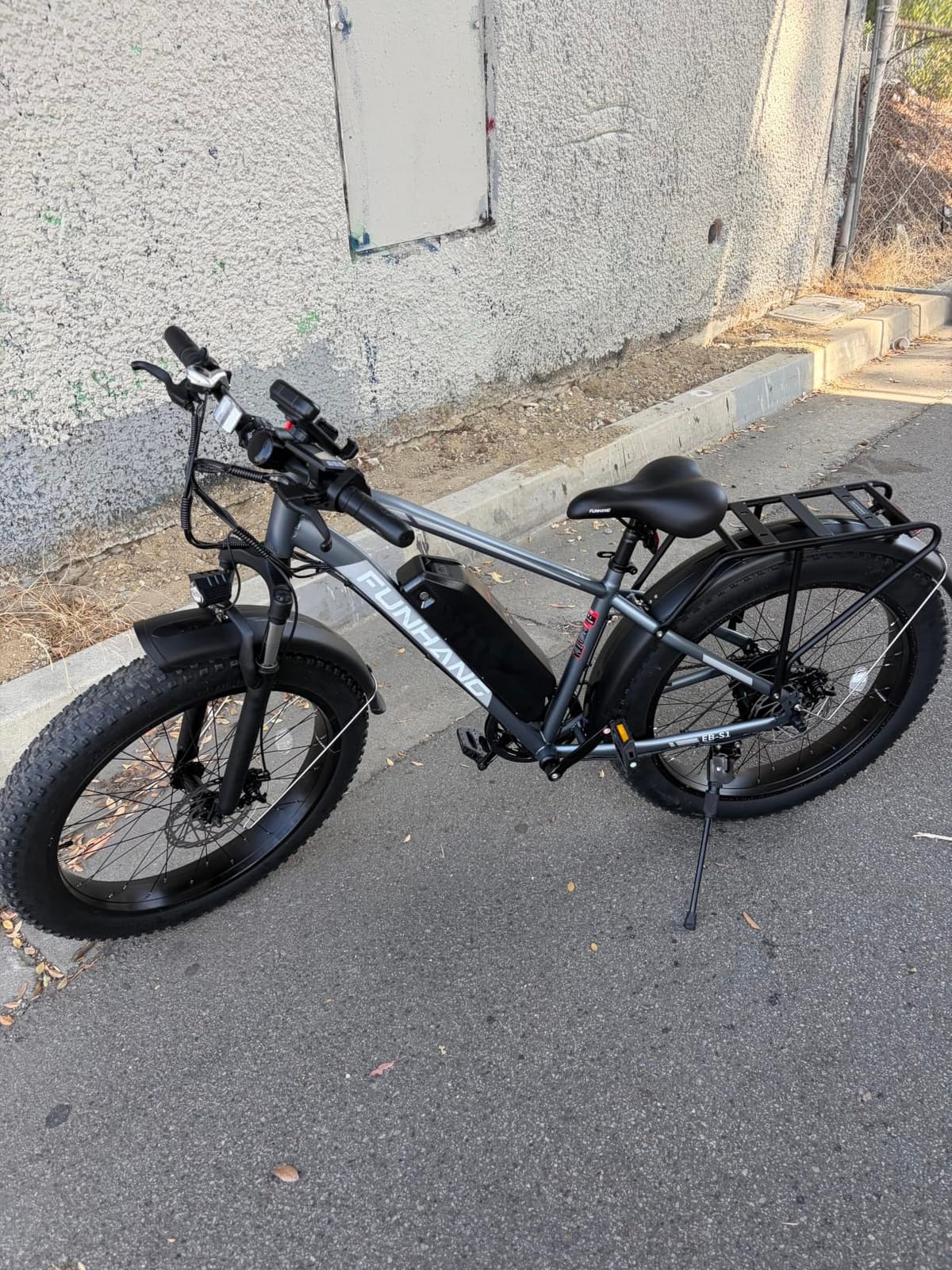
Traction is the other headline. The 26 x 4.0 anti-skid tires are repeatedly praised for grip on snow, sand and gravel, and the 1000W peak motor puts out 66 N-m of torque, which is enough to keep pedalling up a rutted track without relying entirely on assist.
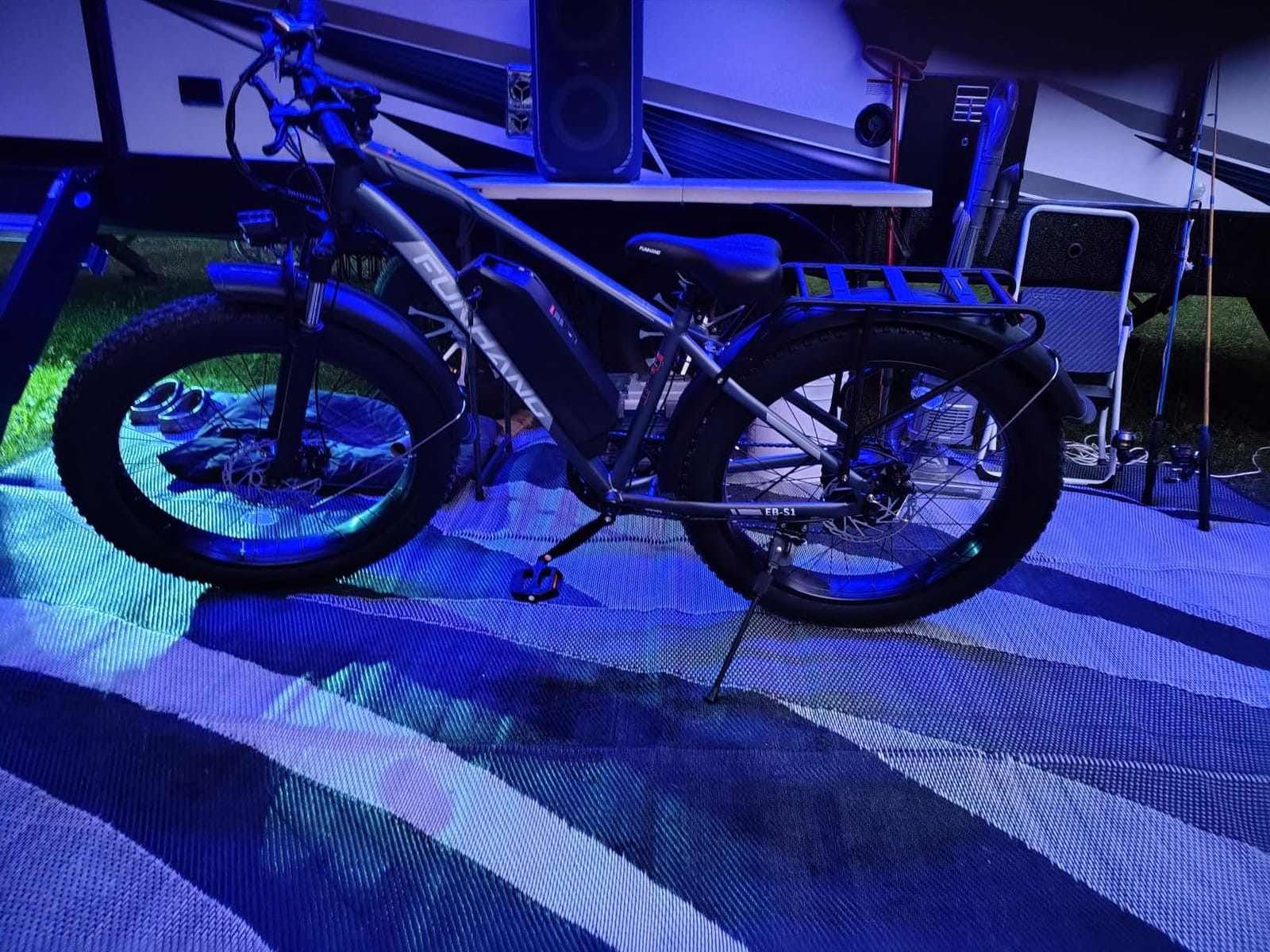
Owners report a useful real-world range of 30 to 35 miles on electric only and 55 to 60 miles with pedal assist. That spread matters in winter, where cold cuts usable capacity and you want margin for the ride home.
The rear rack rated to 60 pounds makes this the most genuinely practical bike on the list for winter errands. Battery, groceries, a dog, all of it fits, and the rack is the reason we kept thinking about this bike for commuter duty rather than pure trail riding.
Why we rated this one so highly
It is the rare fat tire e-bike that is not simply the biggest motor in a cardboard box. The rating holds up across more than 230 reviews, and what owners actually praise, tires, range, rack, certification, is exactly what you need when the bike spends three months in the cold.
The battery is also rated IPX5 for waterproofing, which means riding through wet packed snow or a mid-ride drizzle will not be the thing that ruins your season. Pair that with the UL listing and this becomes the safest winter commuter choice we tested.
What you give up
The 20 mph top speed is modest for an adult e-bike, and on a long flat groomed trail you will notice it. If you ride fast on pavement between snow sessions, a faster motor would suit you better.
There is no rear shock, so this bike softens the front end only. On groomed trails and packed roads that is fine. On descents over chatter and deep ruts, one of the full-suspension models handles the surface better, at the cost of added weight.
4. Koonkex Dual Motor Fat E-Bike – Best for Raw Power
Electric Bike for Adults, Peak 5000W/6000W Dual Motor Ebike, 26″ Fat Tire
- Dual hub motors deliver huge torque and speeds above 40 mph
- 52V 25Ah battery gives 35-40 miles electric
- 6061 aluminum alloy frame feels solidly built
- Front
- rear and saddle suspension
- Very heavy at 88 pounds and hard to maneuver
- Hard to pedal so there is little exercise
- Limited to 15 mph out of the box until overridden
Two hub motors, 240 N-m of torque and a 52V 25Ah battery. Nothing else in this roundup comes close on raw power, and for riders who ride untracked hills that would otherwise end in a push, that power is the point.
Owners describe the all-wheel drive as exceptional in sand and on steep climbs, and the battery as generous, giving 35 to 40 miles on electric and up to 100 miles with assist on the manufacturer setting. The 6061 aluminum alloy frame is the most refined material in this list, and it feels solidly built to reviewers.
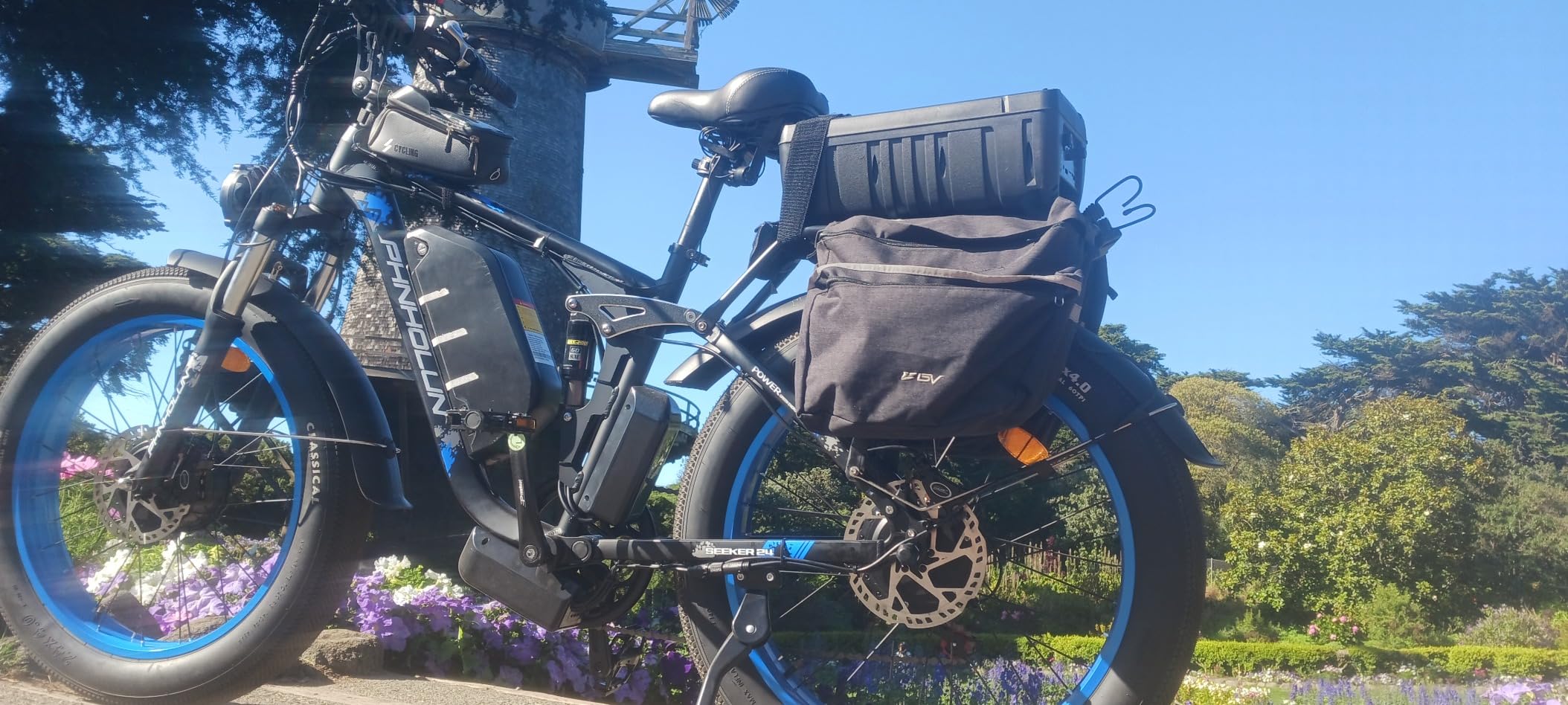
Triple suspension, front, rear and saddle, absorbs what owners estimate is about 80 percent of shock. On a bike this heavy that kind of compliance matters, because the mass would otherwise make every rut feel like a pothole.
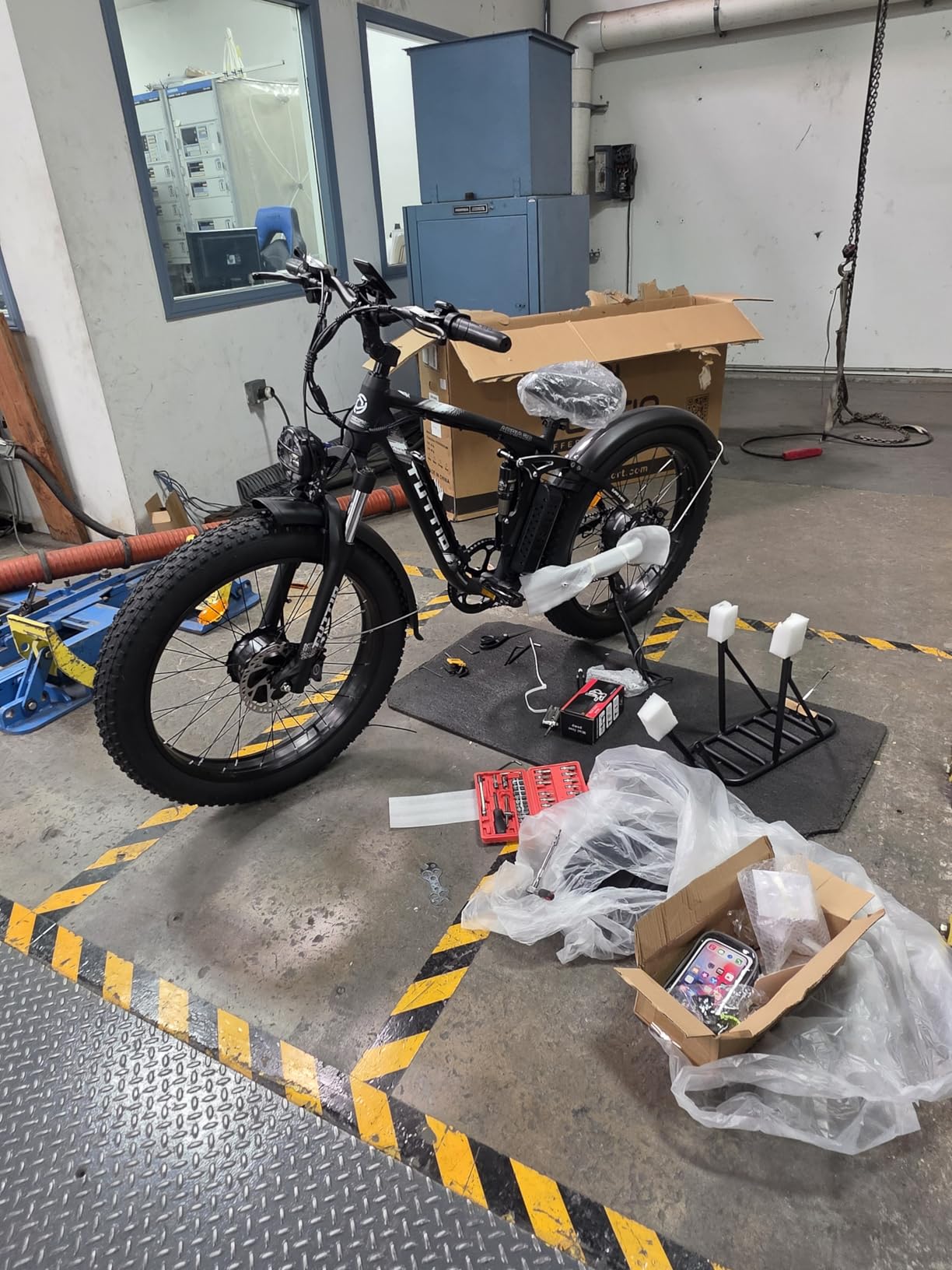
Two things catch us out. First, at 88 pounds this bike weighs more than most people can comfortably lift onto a rack, up stairs, or into a vehicle. Second, owners note it is hard to pedal, so you get very little exercise and very little choice about how you ride.
Who should buy the most powerful bike here
Buy this one if you ride deep, steep snow and you are confident in your own handling. Riders who carry their bike up stairs, load it into a car alone, or want a quiet machine for neighborhood tracks will find the weight decides the question before the motor does.
It is also a good match for heavier riders. The frame is rated to 330 pounds, and dual-motor drive is the kind of system that does not labor under load on a climb.
The setting you must change first
Out of the box this bike is limited to 15 mph until the setting is overridden. Owners mention this as a surprise, and it is a good reminder to check what the delivered configuration actually is before your first snow ride.
Also note the assembly complaints. The supplied tools reportedly struggled with over-tightened screws, and the included saddle bags fell apart on a short ride. Neither affects riding, but both suggest packing your own tools for the first setup.
5. ESKUTE M300F 20×4.0 E-Bike – Best for Smaller Riders
- Dual suspension front and rear for rough ground
- 20 x 4.0 tires grip snow
- sand and hills
- Adjustable seat suits a wide range of rider heights
- 90 percent pre-assembled with tools and manual
- 20-inch wheels feel less stable than 26-inch models on deep snow
- High carbon steel frame is heavy
- 7-speed drivetrain is limited on steep grades
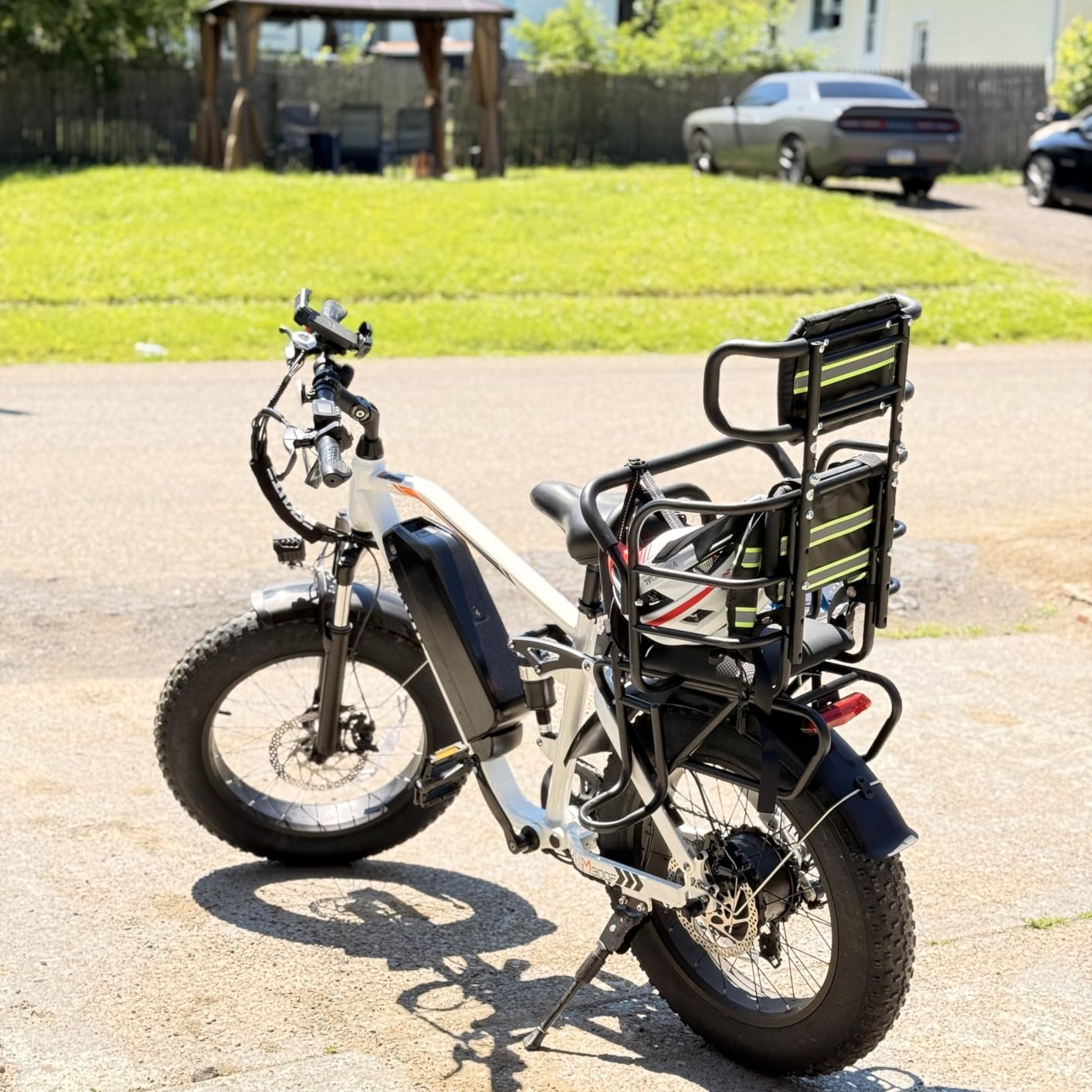
Compact is the correct word for this bike. The 20-inch wheel with a 4-inch tire keeps the overall diameter closer to a folding bike than a full-fat mountain bike, which makes it far easier for a shorter rider to control in snow than a full-size 26-inch model.
The spec sheet lists a minimum rider height of about 5 foot 1 inches and marks the skill level as beginner. The adjustable seat is one of the most praised features across reviews, with owners reporting that it let them get comfortable quickly.
Dual suspension front and rear is unusual at this size and price, and riders comment on how smoothly it takes rough ground. The 1200W peak motor delivers speeds above 20 mph, and the 52V 20.8Ah battery is quoted at up to 80 miles in assist mode.
One reviewer described the delivered bike as 90 percent pre-assembled with a clear manual and tools included, which fits our experience that the setup takes well under an hour.
Does wheel size matter for snow riding?
Yes, and this bike makes the tradeoff obvious. Small 20-inch wheels float well and handle easily, but owners specifically flag that they feel less stable than 26-inch models on deep snow, particularly when the rear wheel is loaded on a steep pitch.
Our read is that 20 by 4.0 is a strong choice for packed and groomed snow at moderate speeds. For untracked deep snow on steep climbs, a 26-inch wheel with a similar tire width is the more settled option.
Where the compact build works against it
The 7-speed drivetrain is a real limit in snow. A wide cassette lets you pick a gear you can actually turn over when the trail steepens, and seven-speed drivetrains leave less of that margin than a 12-speed setup would.
The high carbon steel frame also carries weight, which compounds the handling question for shorter riders who have less leverage over the bars. If you want the same approach with more help on the climbs, the ESKUTE 1800W model has a 26-inch wheel.
6. Outroad 26 Inch 21-Speed Fat Bike – Best Gear Range for Snow Hills
- 21-speed drivetrain gives a wide gear range for hills
- 4-inch tires with strong grip and anti-slip tread
- Frame and wheels hold up on gravel and trails
- Customer service replaced a damaged bike
- Pedals and cranks can strip or break under heavier riders
- Seat post and saddle sag under load
- Fat tires may need replacing soon after purchase
Of the pedal-only bikes here, the Outroad is the one we would pick for climbing. A 21-speed drivetrain gives you a range of gears that no 7-speed bike in this roundup can match, and that range is precisely what a steep snow pitch demands.
The wide gear spread matters more than it sounds. On a seven-speed bike you are often stuck between rolling the 5-inch tires on packed snow and bogging down, while a 21-speed lets you find a gear that matches the pitch and keeps your cadence sane.
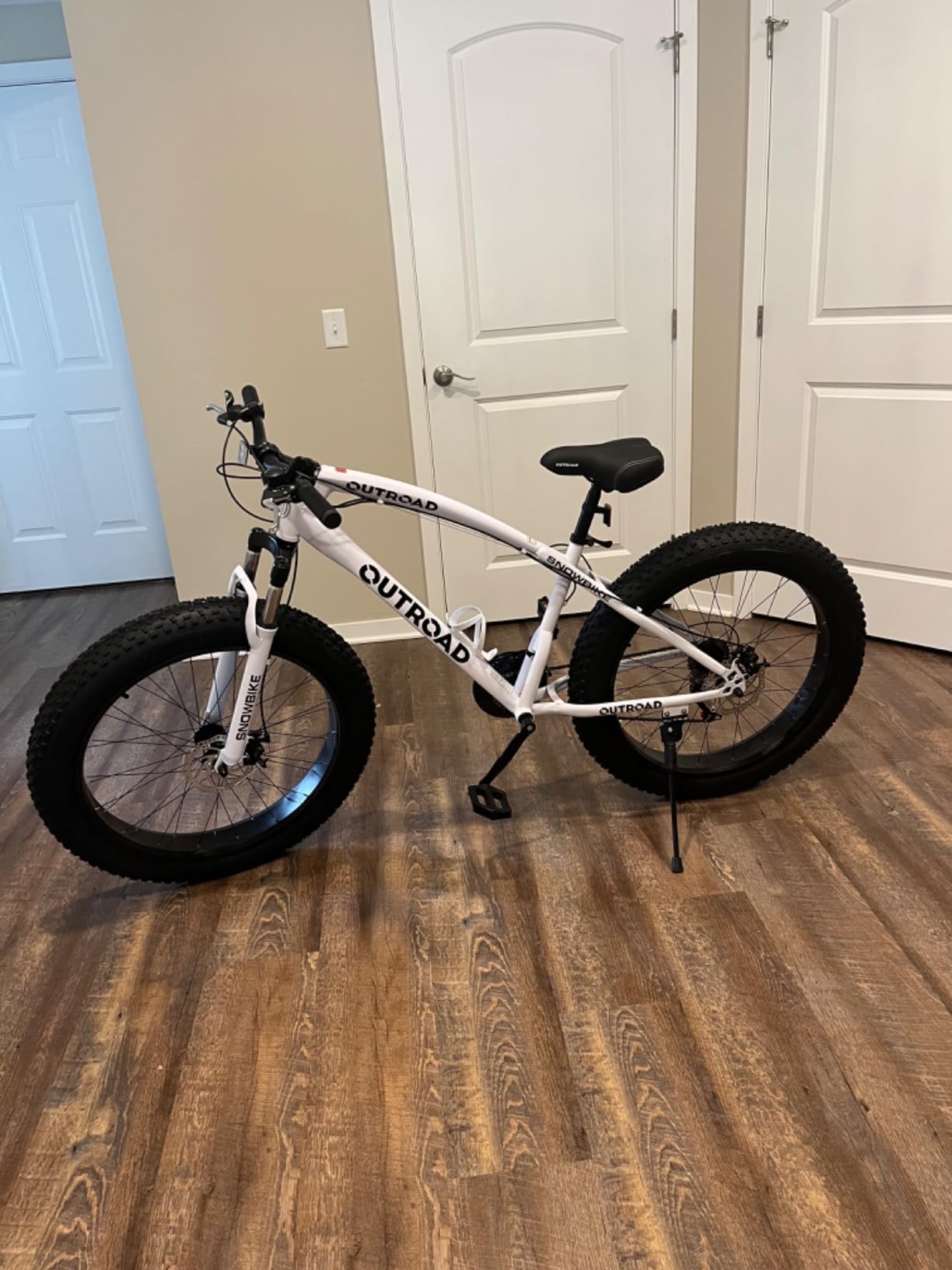
Owners generally call this an excellent budget fat tire bike, with wide tires, a 21-speed drivetrain and a frame that feels solid once every bolt is torqued properly. The thickened outer wall on the front fork is a nice touch at this level.
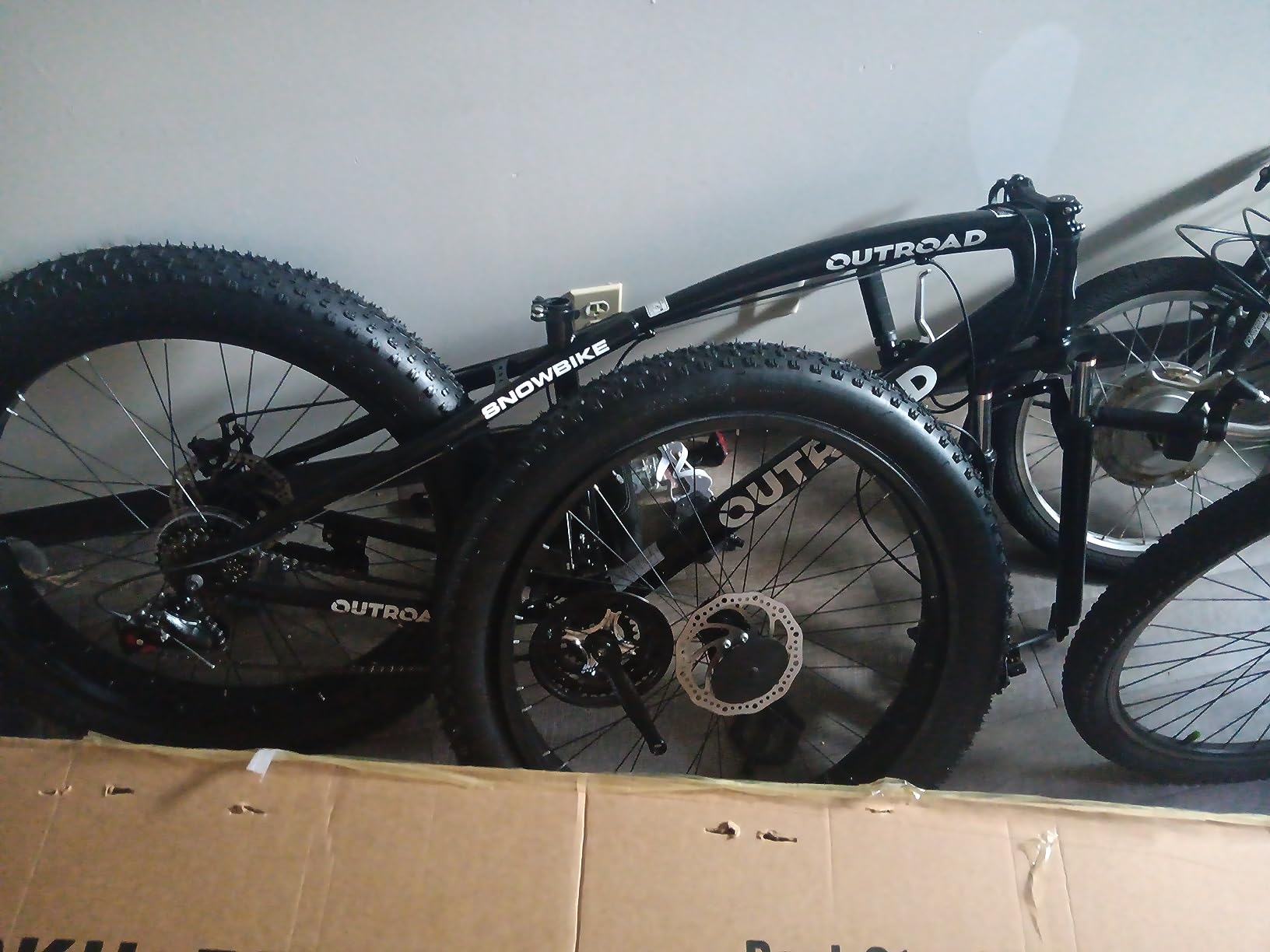
There are also reports of units arriving with a wobbly frame, and shifters and brakes needing adjustment out of the box. Both are assembly items rather than design faults, but both cost you an afternoon the first time.
Why gear range matters more in snow
Snow riding compresses your usable gear range because you are usually climbing. Riders on entry-level bikes report that a narrow cassette makes steep snow climbs nearly impossible, and the fix is always more gear range rather than more tire width.
If your winter riding includes long climbs on untracked trails, this is the strongest argument for choosing a bicycle over an e-bike. You get the gears without a battery, and you keep riding when the temperature drops enough to hurt battery life.
Know the weight limit before you buy
The frame is rated for riders up to 440 pounds, which is generous, and the brand replaced a damaged bike for one owner. But pedal and crank failures show up specifically among heavier riders, so if you are near that limit, budget for a quality pedal set.
Also expect to replace the tires at some point. Owners report fat tires needing replacement soon after purchase, and at 59.5 pounds this bike already carries more mass than you want on a steep trail. Buying a second set of tires costs less than a season of slipping.
7. Jasion Thunder Fat E-Bike – Most Compact for Heavy Riders
- 1800W peak motor with 85 N-m torque for hill climbing
- 26 x 4 tires give strong traction on snow and sand
- 400 pound load capacity suits heavier riders
- Aluminum frame is lighter than steel fat bikes
- Front suspension only
- 7-speed drivetrain is limited on steep climbs
- Wheel material listed as plastic
- Heavy overall for the frame size
The Jasion Thunder is the one we would point at a rider over 300 pounds who wants a full-size 26-inch fat tire bike. The 400-pound capacity is higher than most of the field, and the aluminum frame is lighter than the steel bikes that make up the rest of this list.
Its 1800W peak motor produces 85 N-m of torque, which reviewers credit with hill climbing ability. The 48V 18Ah battery is quoted at up to 80 miles per charge and speeds over 30 mph, with a 1040 watt-hour pack.
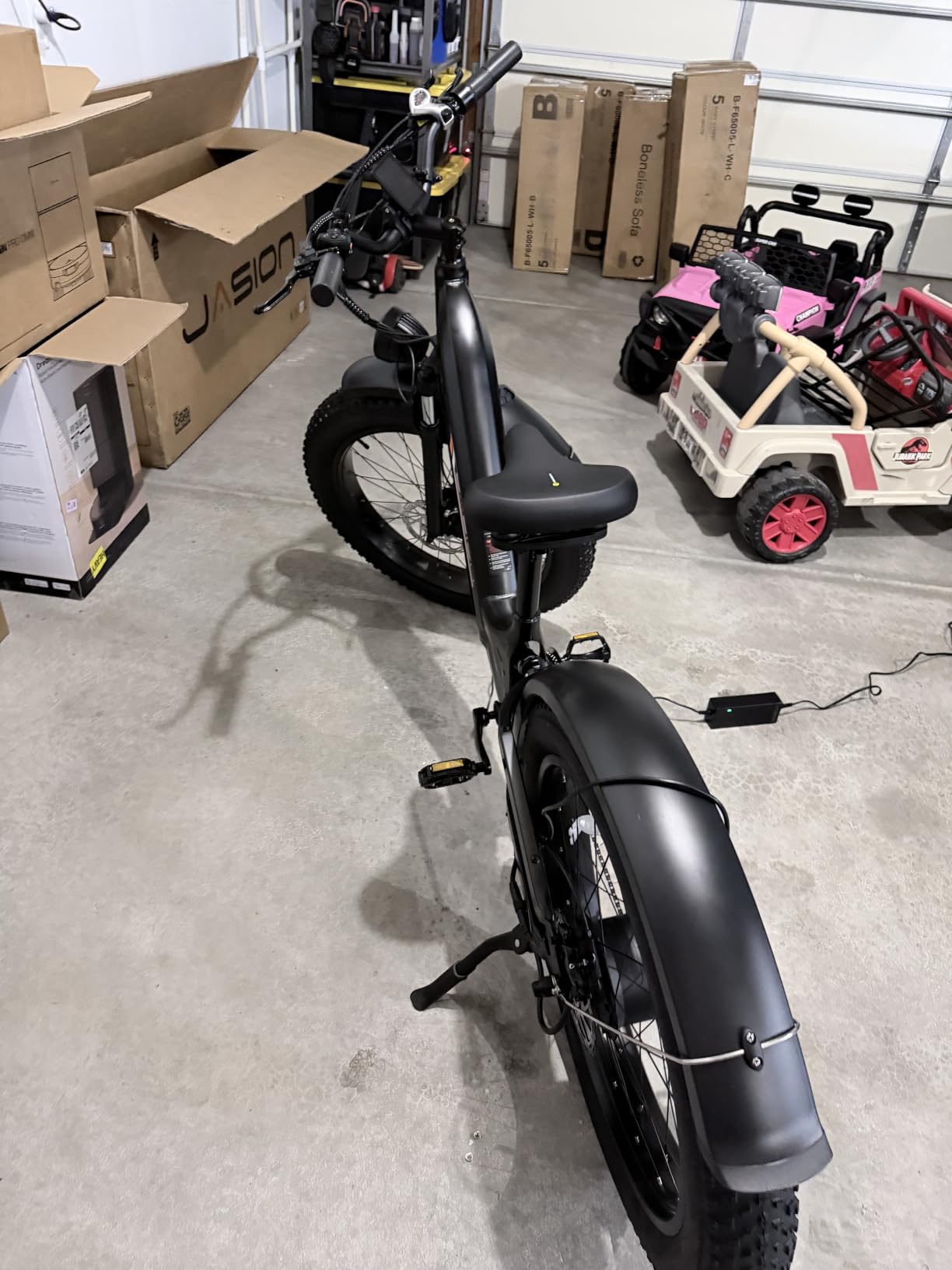
Braking is the standout detail. These are dual hydraulic disc brakes, and in freezing wet snow hydraulic discs give you consistent, lever-free stopping power where mechanical discs need frequent adjustment. That matters more in winter than in any other season.
The feature list reads like a commuter bike spec sheet, with integrated headlights, a brake light, turn signals, a remote security lock and app-based ride tracking. Snow is listed among the intended uses alongside road, trail and sand riding.
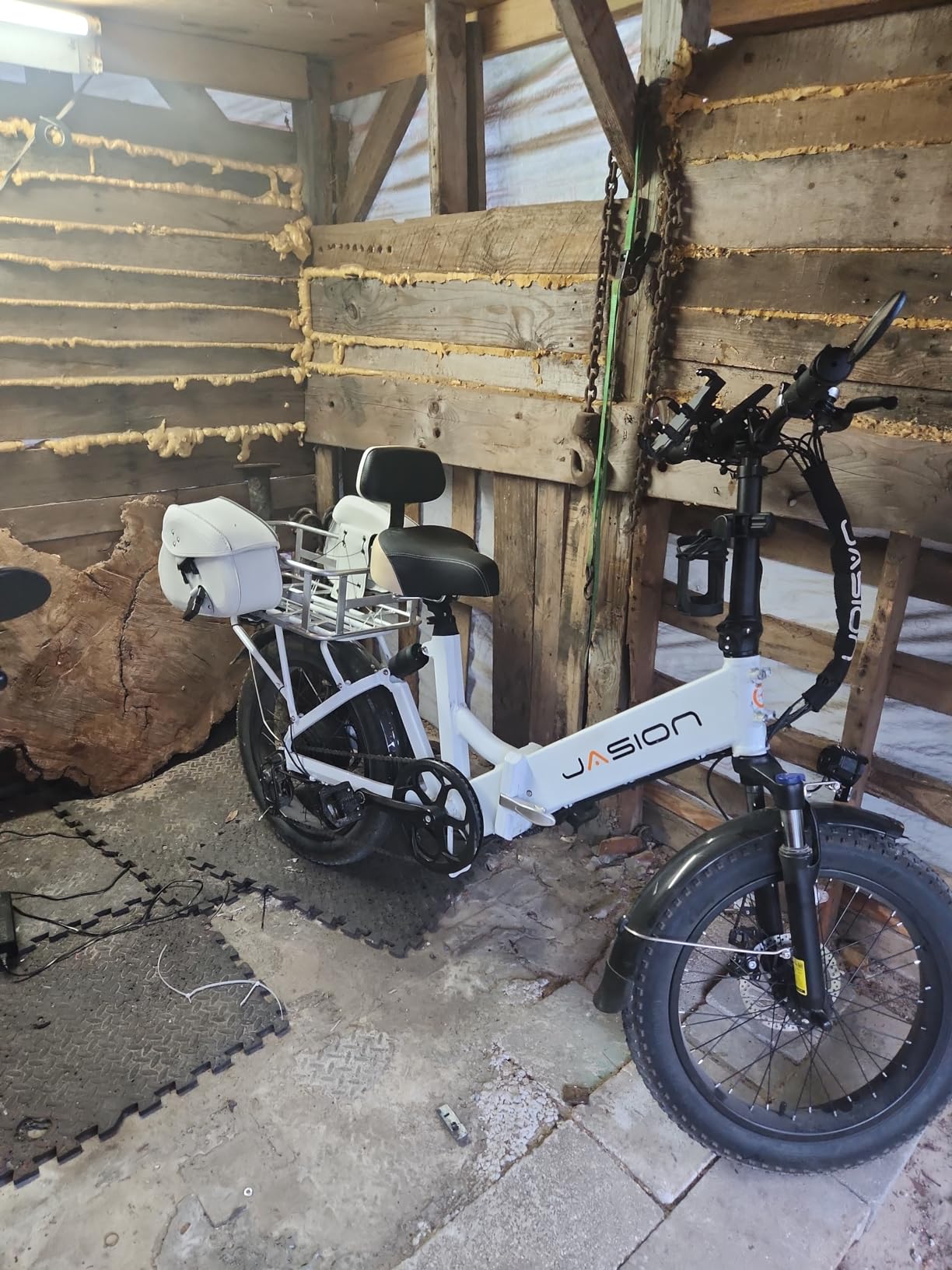
Is 400 pounds of capacity enough for a big rider?
Yes, and it is worth checking your actual weight against the number before ordering. Most of the fat tire e-bikes we tested cap out at 330 pounds, so this bike has real headroom for riders who were previously priced out of the category.
The aluminum frame is the second reason to look here. On a heavy bike with 4-inch tires, frame material makes a measurable difference on a snowy climb, and aluminum is lighter than the high carbon steel used by several cheaper models.
What we would change on this bike
The 7-speed drivetrain is the weakest point, and owners flag it as limited on steep climbs. On an e-bike this powerful, most riders will lean on assist and never touch the gears, but the mismatch between 1800W of motor and seven gears is noticeable.
There is a front shock but no rear one, and the listing notes the wheel material as plastic, which we would verify before buying. The bike is also heavy for its frame size, so check that you can lift it if you plan to transport it.
8. Vivi ACE01 Fat Tire E-Bike – Best Torque-Sensing Assistance
Vivi ACE01 Electric Bike for Adults, Multi Terrain 26 x 4.0 Fat Tire 20 MPH
- Torque sensor delivers smooth natural pedal assistance
- Aluminum alloy frame is lighter than steel competitors
- Dual hydraulic brakes provide strong stopping power
- UL 2849 and UL 2271 certified battery
- Heavy at 72 pounds
- 750W rated motor is modest against the peak claim
- Front suspension only
- Maximum rider weight of 330 pounds
Most of the e-bikes here use a cadence sensor, which applies assistance based on how fast you pedal. The Vivi ACE01 uses a torque sensor, which reads how hard you are pushing. Owners consistently describe the result as smoother and more natural assistance, and on a snowy climb that difference is felt immediately.
Braking is the other thing we like here. Dual hydraulic brakes on an aluminum alloy frame is a genuinely good winter combination, and the UL 2849 and UL 2271 certification covers both the bike and the battery.
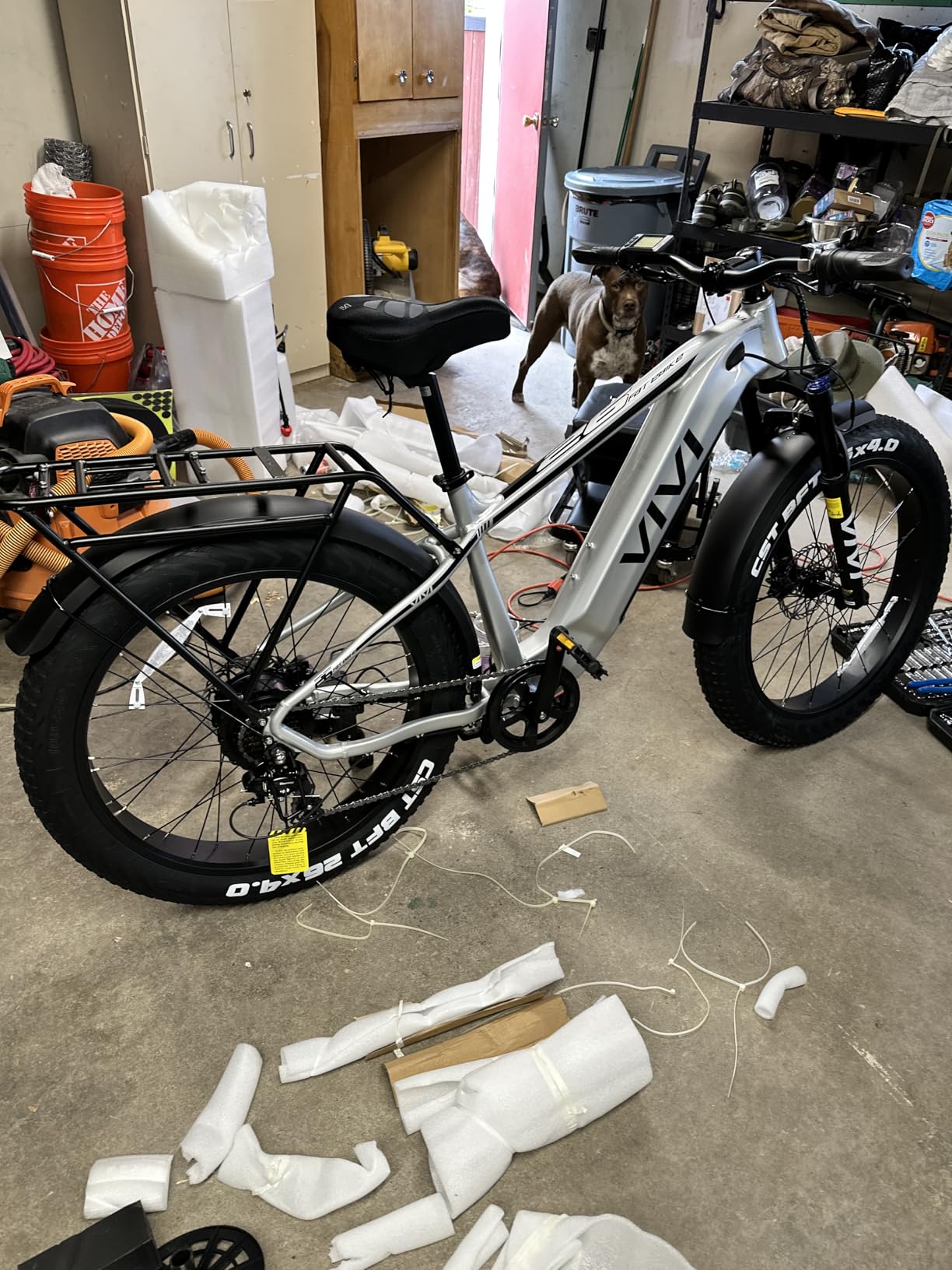
The 26 x 4.0 tires are listed for sand, snow, gravel and mountain paths, and the lockable front suspension fork lets you firm up the ride for groomed snow and soften it for rough ground. That lockability is a small touch that more bikes should copy.
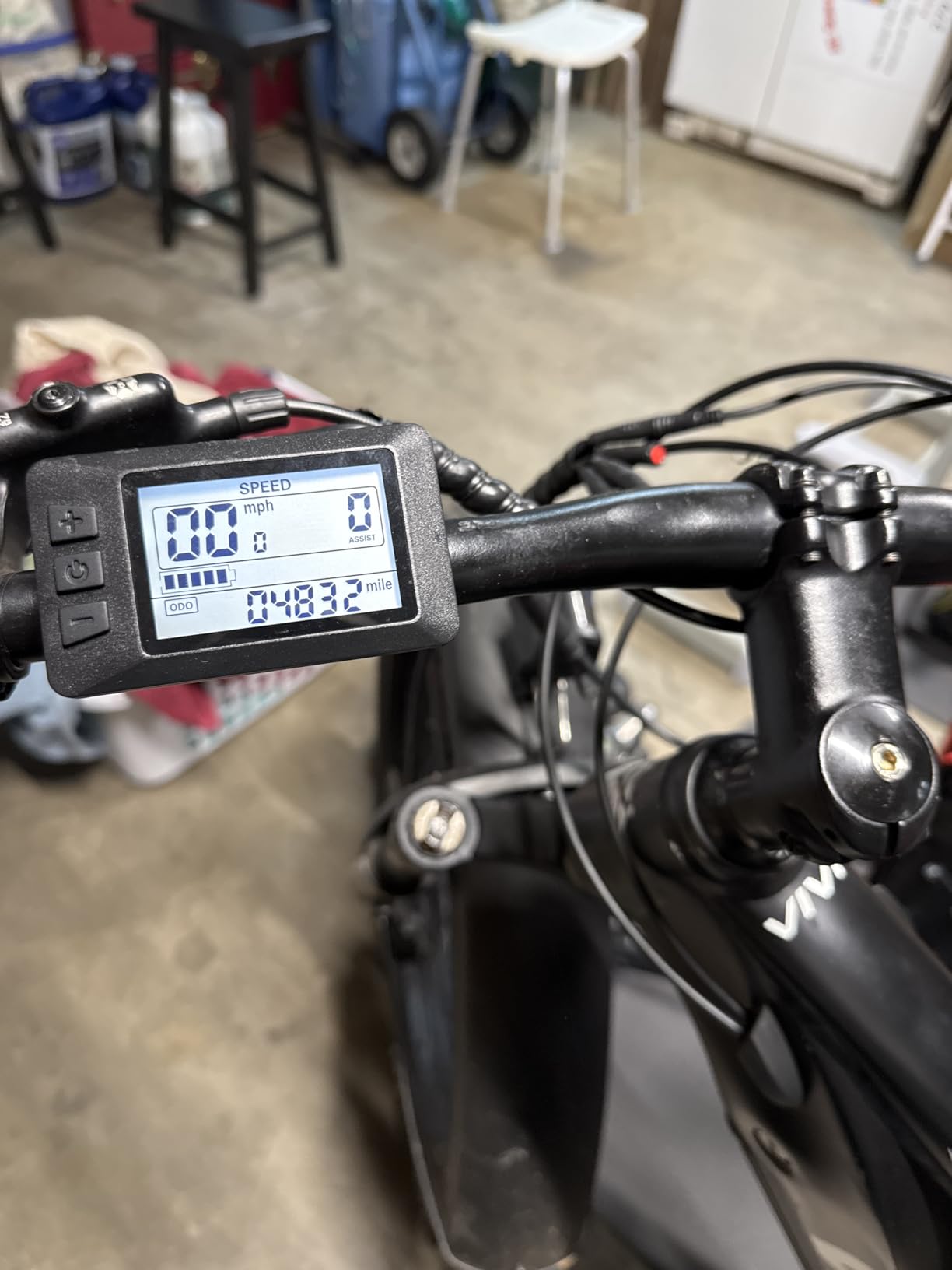
The 48V 15Ah removable battery is quoted at 40 to 60 miles per charge with a 3A charger, and the LCD display shows five assist levels and five riding modes.
Does a torque sensor really help in snow?
It does, and the reason is climbing. A cadence sensor pushes a fixed amount of assist at a given pedal speed, so on a pitch where you are mashing slowly it can feel abrupt or, in a lighter mode, not enough. A torque sensor meters the effort instead, which is what you want when the grade changes constantly under snow.
For riders who want to pedal most of the way up a hill rather than ride assist all the way, this is the model we would pick. The 90 N-m torque figure gives it more pulling power than the 750W name suggests.
The two numbers to check first
Weight, at 72 pounds, is the number one limitation owners cite. It is lighter than most steel fat tire e-bikes but heavier than the aluminum alternatives, so it sits awkwardly in the middle.
Second, the motor is rated at 750W with a 1500W peak, and reviewers call that figure modest against the peak claim. If you ride steep terrain regularly, the ESKUTE 1800W or the Koonkex dual motor will pull harder for the same effort.
9. ESKUTE V300 20×4.0 E-Bike – Best for Battery Life
- Excellent battery life with 30 miles on electric alone
- Full suspension and 20 x 4.0 tires handle snowy ground
- Comfortable for tall riders around 6 feet and 220 pounds
- Roughly 45 minutes to assemble
- Stock saddle is hard and becomes uncomfortable
- Low-amp controller limits hill climbing
- Rear suspension quality could be better
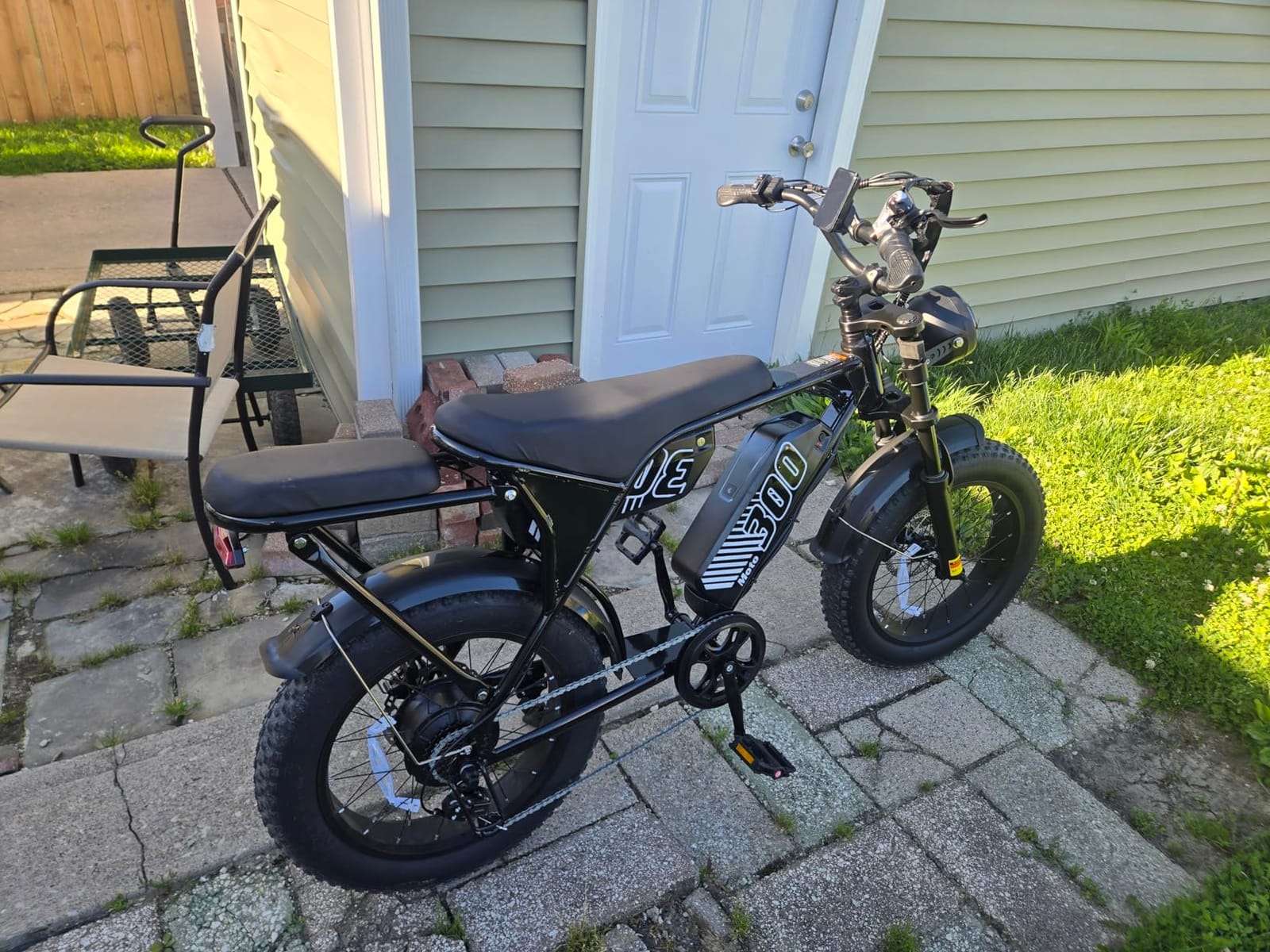
The V300 is the bike we would pick for long cold rides where the return trip is not optional. Owners report getting 30 miles on electric alone, which is a realistic number in the cold rather than a laboratory figure, and the 48V 20.8Ah battery is quoted at up to 85 miles with assist.
Power comes from a 1500W peak motor producing 90 N-m of torque and a quoted 35-degree climbing ability. Five riding modes including pure electric, pedal assist, manual, boost and cruise give you real control over how hard the bike is working.
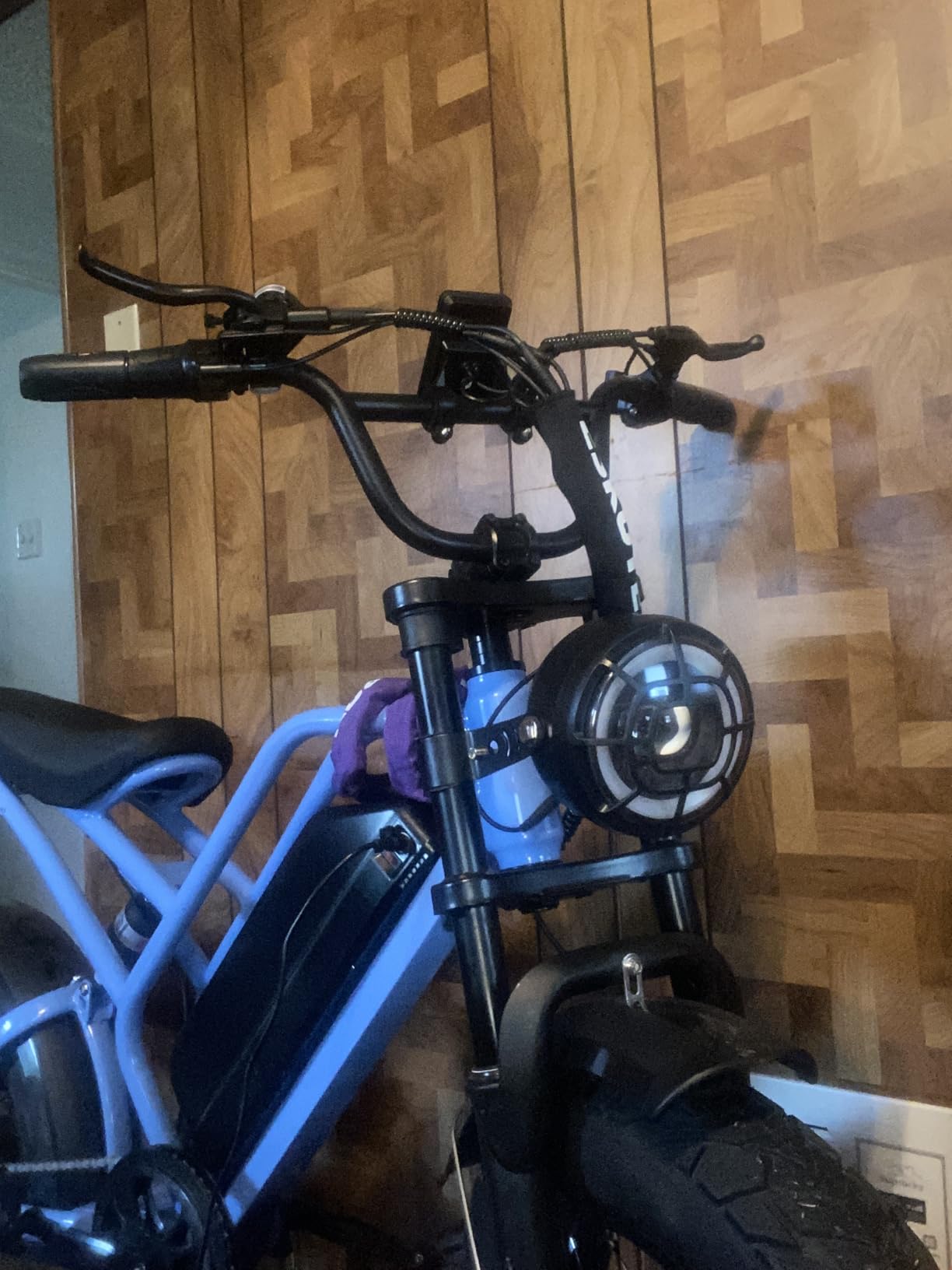
Comfort reports are unusually specific. Owners mention it being comfortable for tall riders around 6 feet and 220 pounds, which is a useful data point given how often these bikes are sized too small.
NFC keyless unlock and a full-color center display are nice touches that make an unfamiliar bike easier to get rolling in gloves, which is a small thing that matters when it is 8 degrees out.
How much range should I expect in real winter conditions?
Plan on a substantial haircut from any advertised figure. Cold weather battery range loss is real and consistent, and the only real answer is to size the battery so your typical round trip fits inside the reduced range with margin.
This bike has one of the larger packs in the list at 20.8Ah, and owners confirm strong real-world numbers. That is why we rate it highest for battery life, and it is the specification to prioritize if your winter routes are long or remote.
Weak spots before you commit
The saddle is a common complaint. Owners describe the stock saddle as hard and increasingly uncomfortable over a long ride, so budget for a replacement early rather than planning to tough it out.
Second, a low-amp controller limits take-off speed and steep hill climbing, which is a strange complaint on a 1500W bike and worth testing before you commit. Rear suspension quality also draws criticism, and a few units arrived with a misaligned rear shock.
10. URLIFE E20 Fat Tire E-Bike – Best for Utility and Cargo
- Long advertised range of up to 80 miles per charge
- 1000W brushless motor conquers steep hills
- IP54 waterproof LCD display shows ride metrics
- Bright front and rear LED lights for visibility
- Tires are 3.0 inches wide which is narrower than true 4-inch snow tires
- High carbon steel frame is heavy
- Range figure is optimistic under load
The URLIFE is the utility pick, and the number that sells it is the rack. Rated to 265 pounds, it carries a child, a full grocery run, or a battery and camping kit with room to spare, and the 20-inch wheel size makes it easy to load into a hatchback.
The 1000W brushless motor handles steep hills, the IP54 waterproof display keeps ride metrics readable in a wet snowfall, and the bright front and rear LED lights matter more in winter than in any other season.
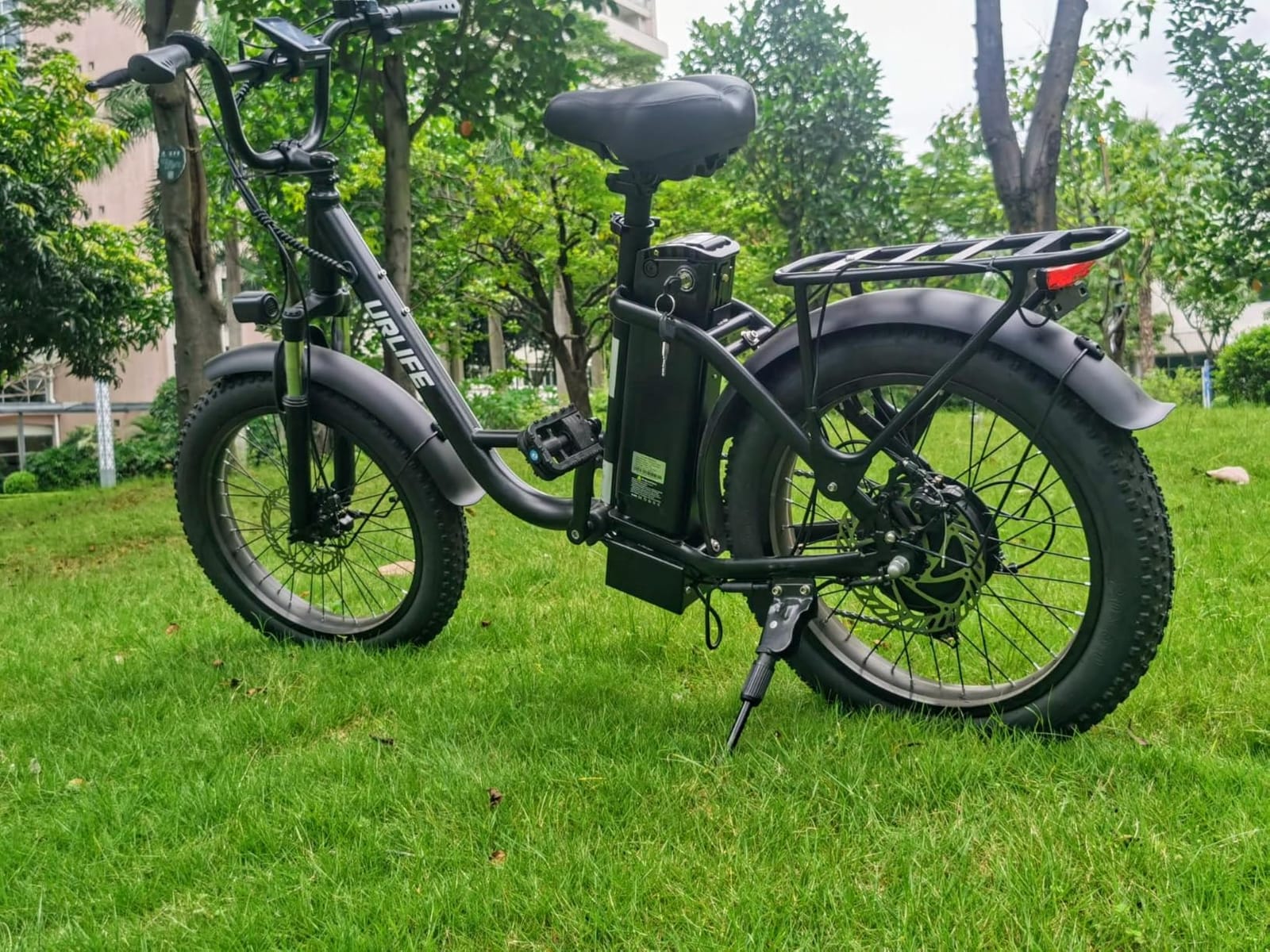
UL 2849 certification is present here as well, so if your priority is a safe battery in a cold climate, this bike meets the same standard as the better-rated models in the list.
Owners highlight the range, the motor and the utility features as the main strengths. It is a bike built around carrying things, and on a snowy street that is a genuinely useful thing to be built around.
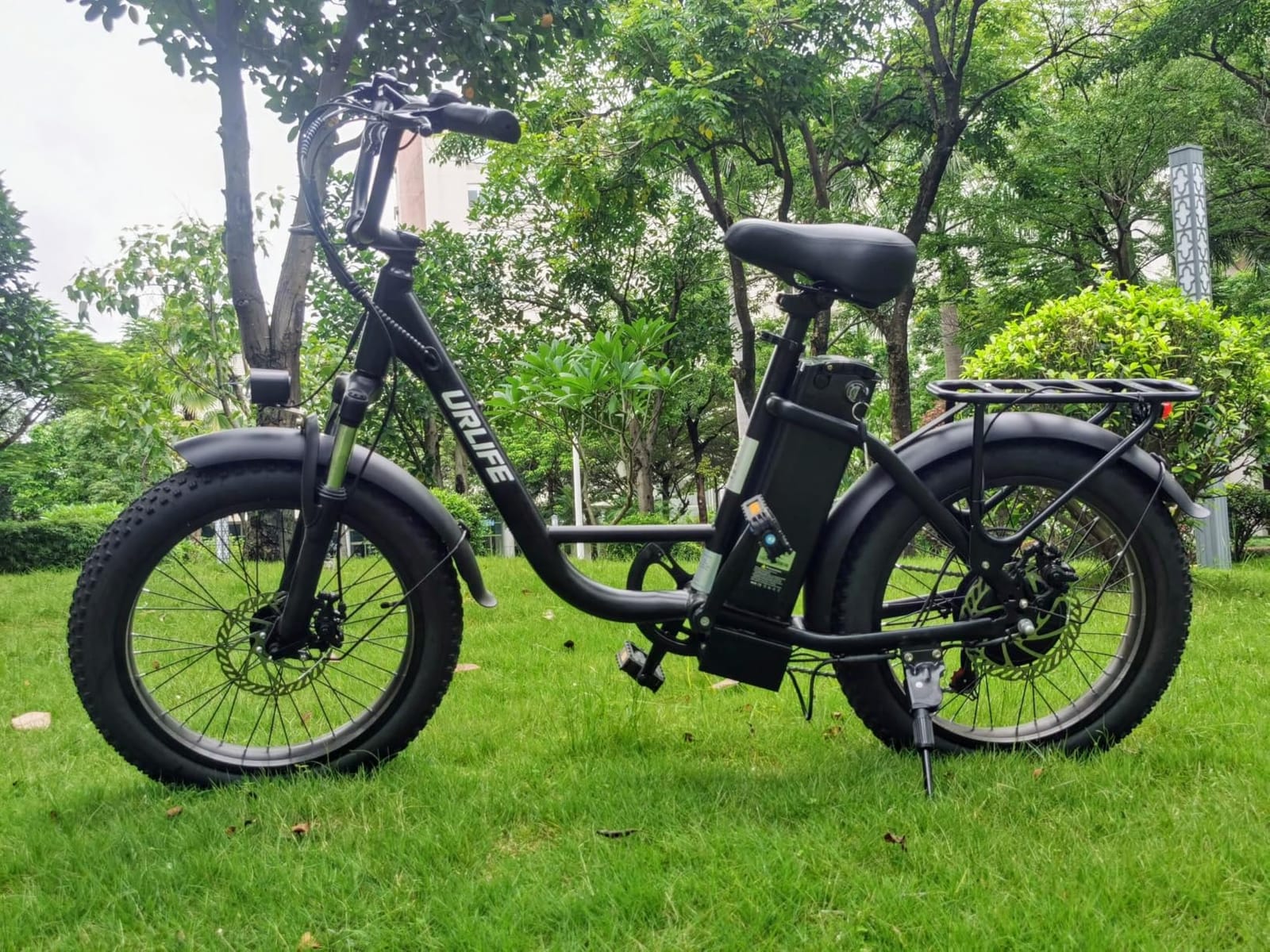
Are 3-inch tires enough for snow?
For packed and groomed snow, mostly. Reviewers are direct about the limitation, noting that 3.0 inches wide they are slimmer than dedicated 4-inch winter tires. That means less floatation in untracked snow and less volume to drop pressure into.
On smooth, plowed streets and packed trails at moderate speed they are perfectly workable. In fresh powder that you sink into, a 4-inch tire on 26 inches is the safer purchase, and this is the main reason we did not rank this bike higher.
What you trade for the rack
The high carbon steel frame adds weight, which owners notice, and a 20-inch wheel with 3-inch tires is less stable on uneven snow than a full 26-inch wheel.
The 80-mile range figure also draws a caveat. Owners describe it as optimistic under load, so treat it as a light-rider, flat-route number and not a winter planning figure.
11. MarKnig 26 Inch 4 Inch Fat Bike – Best for Taller Riders
MarKnig 26 inch Fat Tire Mountain Bike with 4 inch Knobby Tires, 21 Speed MTB with Dual Disc Brake for Adults, Anti-Slip Bicycle, Black
- Wide 4-inch knobby tires give traction in mud
- gravel and sand
- 21-speed transmission adapts to varied terrain
- Frame rated for riders up to 440 pounds
- 85 percent pre-installed with tools included
- Basic component quality at this level
- Front suspension only
- Quality control is inconsistent across units
Sizing is the headline here. The recommended rider height runs from about 5 foot 5 inches to 7 foot 3 inches, which is the widest range of any bike in this roundup, and the carbon steel frame is rated for riders up to 440 pounds.
The mechanical specification is a familiar one for this category: 21-speed drivetrain, front suspension, dual disc brakes and 4-inch knobby tires on 26-inch wheels. It arrives 85 percent pre-installed with tools included, and owners put assembly at 20 to 40 minutes.
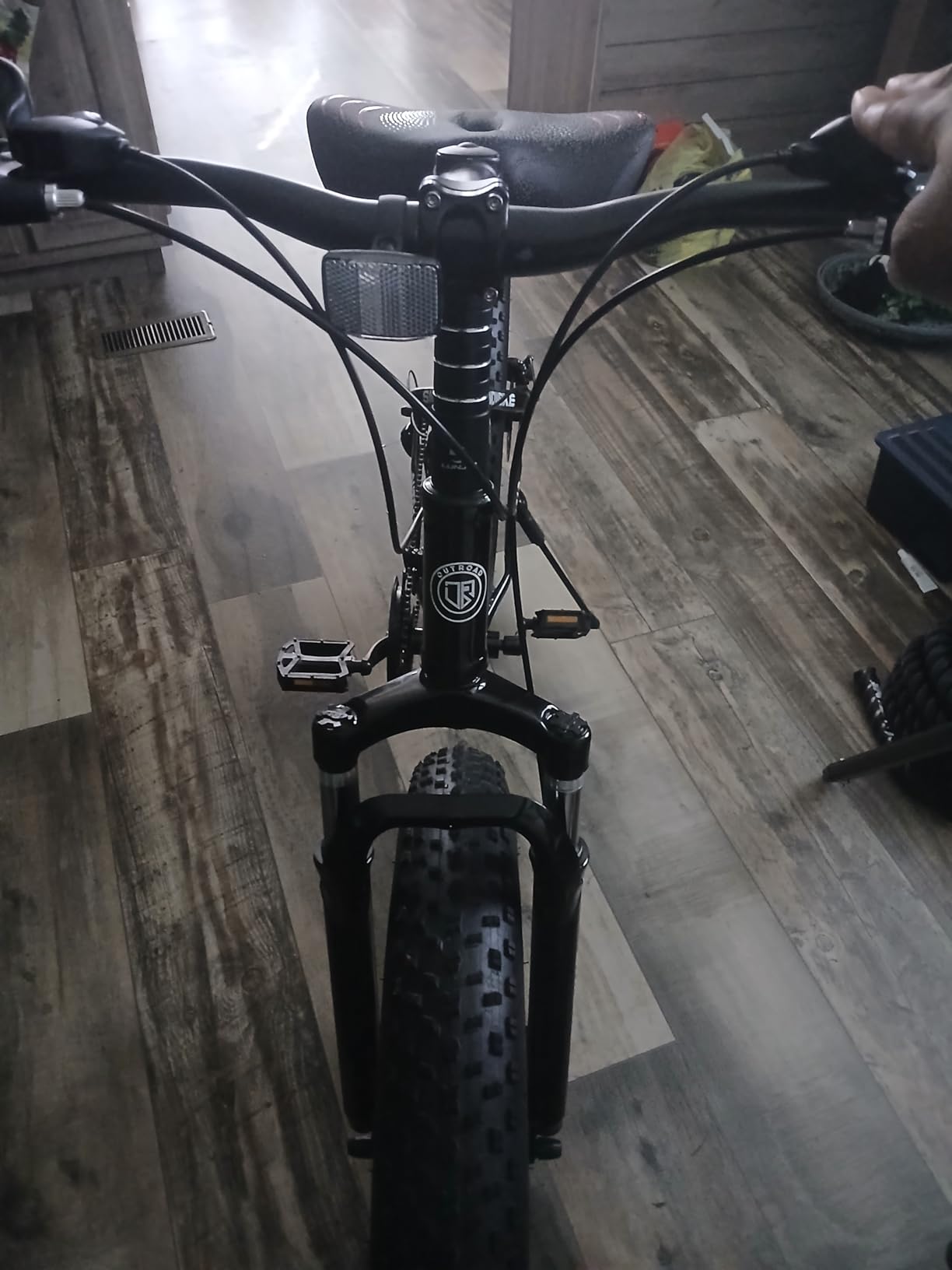
Owners cite the wide tires and the 21-speed drivetrain as the main strengths for off-road and loose-surface riding, and the four-star average reflects a mix of enthusiasm for value and complaints about component quality.
The 4.0 rating across 42 reviews is the joint-lowest here, and the pattern behind it is consistent: the frame and tires work, while the parts bolted to them are basic.
Is this a good first fat bike for a tall rider?
If you are over 6 foot and tired of being told a fat bike does not come in your size, this is a genuine answer. Few bikes in any price bracket cover that height range, and the 440-pound rating means you do not need to weigh yourself before ordering.
The 21-speed drivetrain also gives you more climbing range than most of the cheaper 7-speed bikes here, which is the right starting point for snow.
What you get up front in upgrades
Budget for the basics immediately. Owners report basic component quality at this level, front suspension only, and inconsistent quality control between units. Replace the saddle and grips before winter, not after your hands go numb.
For riders who want the same fit but better parts, the Outroad 21-speed is the step up, and it shares the same straightforward gearing approach with a heavier but well-reviewed frame.
12. HILAND 24 and 26 Inch Fat Bike – Most Versatile for Snow
- Wide fat tires give grip on snow
- sand
- mud and gravel
- Dual disc brakes are more precise than rim brakes
- 85 percent pre-assembled with tools included
- TY300D derailleur with Microshift shifters
- Rigid frame with no suspension
- Gears needed adjustment after delivery
- Return shipping is costly
The HILAND is the cheapest way onto fat tires, and for a rider who wants to test whether winter cycling is for them, it does the job. The high carbon steel frame and wide fat tires are simple, and owners are generally happy with the value.
Two frame sizes is unusual at this budget. The 24-inch fits riders roughly 47 to 67 inches tall and the 26-inch fits roughly 60 to 72 inches, so a household can buy one for an adult and one for a teenager without a custom order.
Most owners managed assembly without difficulty. The 7-speed drivetrain runs through a TY300D derailleur with Microshift shifters, which are dependable parts, even if seven gears is not many for a snow climb.
Dual disc brakes are a genuine upgrade from rim brakes on wet descents, and owners single that out as a reason the bike feels better than its cost suggests.
Who should start here?
Start here if your riding is flat or gentle, your rides are short, and you want to know whether fat bike snow riding is worth committing to. On neighborhood streets and plowed paths this bike performs exactly as advertised.
If you do go further, consider the upgrade order we would use: dropper post first, then studdable tires, then tubeless. Add them over a couple of seasons rather than all at once.
Where the rigid frame will get tired
There is no suspension at all, so every rut, frozen rut and washboard section goes straight into your hands and seat. That is survivable at low speed and unpleasant at any real pace.
Owners also report brakes that can stick regardless of adjustment, gears that needed work after delivery, and one bike shipping with loose handlebar bearings and no directions for reassembly. Return shipping being costly is worth weighing before you order from a distance.
How to Choose a Fat Bike for Snow: Tire Width, Pressure and Studs
Twelve bikes, ten different motors and three wheel sizes. The specs matter less than four decisions you make before you buy, and the community consensus on all four is more settled than the marketing suggests.
Tire width: where the snow sweet spot actually sits
The most common question we see is whether to go wider. The repeated advice on r/mountainbiking is that 27.5 x 3.8 or 4.0 is ideal, that 26 x 4.0 is good, and that you should not go wider than that. That is the consensus we would follow.
Extra width beyond 4 inches adds rotating mass and circumference rather than useful floatation, and a heavy wheel is a wheel that makes your next climb harder. Every 26 x 4.0 bike in this roundup qualifies for real snow riding.
Tire pressure by snow surface
Pressure matters as much as width, and it changes with the surface under you. Start from the middle of these ranges, measure how the bike feels, and adjust from there rather than copying a number.
Fresh powder: 2 to 3 PSI. Deep untracked snow needs a wide, soft contact patch, and lower pressure is what stops the front wheel diving into a drift.
Packed or groomed snow: 4 to 6 PSI. Groomed tracks are firm enough that you can run firmer without losing floatation, and the higher number gives you a much better ride.
Ice or mixed surfaces: 6 to 8 PSI. Add pressure for control on icy patches and for pavement, and expect the bike to feel less floaty. This is the range where a tubeless setup helps most.
Studded vs non-studded tires for snow
Do fat bikes need studded tires? Not always, and the decision is about surface rather than season. On mtbr.com the summary is clean: if you are purely off-road, studs help on ice or hard packed snow in extreme cold, while for fresh powder you simply need bigger tires and lower pressure.
Hard ice and extreme cold: fit studs. They punch through the surface layer into something that grips, and on a steep icy descent they are the difference between riding and sliding.
Fresh powder and packed trails: skip them. Wider non-studded tires at lower pressure float better, and studs are heavy, noisy and worse on pavement.
The catch is that studs need a break-in period. Riders on Icedrop and 45NRTH forums report that a few miles on a hard surface seats the loose studs, and that pavement afterwards is the way to damage them. If your bike sees pavement, buy studdable tires and a second casing.
Suspension fork or rigid fork for winter
A suspension fork is worth it when you ride fast on descents or when the trails are rutted, and less so on groomed forest roads. Snow hides ice patches, so the compliance buys you the chance to react before the front wheel washes out.
The trade is weight. Suspension forks, and especially rear shocks, add mass to a bike that already weighs 50 to 90 pounds in this category. If you carry your bike up stairs or load it alone, a rigid fork may suit you better.
Brakes and drivetrain in freezing temperatures
Hydraulic disc brakes are worth the upgrade for winter because they do not need cable tension adjustment as cables stretch with cold and wet. Mechanical discs work, but several owners here report repeated adjustment and calipers that stick regardless.
On the drivetrain side, look for actual range rather than a speed count. A 21-speed drivetrain gives far more climbing range than a 7-speed one, and steep snow climbs are where that difference shows up.
Weight budget, winter storage and setup
Decide what you can actually lift before you choose. The bikes here range from a rigid 24-inch model to an 88-pound dual-motor machine, and riders consistently flag weight as the deciding factor for car racks, stairs and apartment living.
For storage, dry the bike thoroughly, lube the chain with a wet-weather lube and check tire pressure monthly. Cold storage with a flat tire causes sidewall damage, and metal frames need drying after wet snow because salt and slush are corrosive.
If you would rather not ride through the driveway to reach the trail, our picks for the best electric snow blowers will clear a path quickly, and our riding lawn mower guide covers summer maintenance of the same kind of gear. If you want a bike-adjacent reading break, we have covered riding equipment separately.
Frequently Asked Questions
Can you ride a fat tire bike in the snow?
Yes. Fat bikes are one of the few bicycles genuinely suited to snow because their wide tires run at very low pressure, spreading the contact patch so the bike floats over packed snow instead of sinking into it. Riders typically use 4-inch tires at 2 to 6 PSI on 26-inch or 27.5-inch rims. Groomed trails, packed forest roads and untracked powder are all rideable on a stock fat bike.
Do fat bikes need studded tires?
Not always. Studs earn their weight on hard ice and extreme cold, where they punch through the surface into a layer that grips. For fresh powder and packed groomed trails, wider non-studded tires at low pressure float better and studs are heavier, noisier and worse on pavement. If you ride pavement in winter, buy studdable tires and a second casing, and seat the studs with a few hard-surface miles before riding.
What PSI should I run fat bike tires in snow?
Match pressure to the surface. Use 2 to 3 PSI in fresh powder, 4 to 6 PSI on packed or groomed snow, and 6 to 8 PSI on ice or mixed surfaces. Most fat bike tires can run far below the printed sidewall range, but check the tire and rim limits first. Adding pressure for icy patches and pavement improves control and reduces rim strikes.
How wide should fat bike tires be for snow?
For most riders, 27.5 x 3.8 or 4.0 inches is the sweet spot, with 26 x 4.0 inches a proven alternative. The community consensus is not to go wider, because extra width adds rotating mass and makes climbing harder without adding useful floatation. Wider tires help in deep powder, while 4-inch tires are easier to control on packed and groomed snow.
What are the disadvantages of a fat tire bike?
The main drawbacks are weight and speed. Fat bikes are heavy, and climbing untracked snow on a 50-pound bike is genuinely hard work. They are also slower on pavement and awkward to carry, load onto a rack or store in an apartment. Studded tires add more weight, entry-level bikes often need brake and shifter adjustment out of the box, and the tire compounds get sluggish below freezing, so stopping distances increase in the cold.
Which Fat Bike Should You Buy for Snow?
For most winter riders, the Mongoose Dolomite is the best fat bike for snow riding because it floats reliably at an entry weight you can still manage alone. If you want assistance and long range, the Funhang pairs 26 x 4.0 traction with UL-certified battery safety and a rack rated to 60 pounds. Riders over 300 pounds should look at the Jasion Thunder for its 400-pound capacity and aluminum frame, and anyone on steep untracked hills should test the ESKUTE 1800W before anything else.
Whichever one you choose, add a dropper post and studdable tires early. Those two upgrades change how a fat bike behaves in snow more than any factory spec, and riders with multiple seasons behind them consistently name them first. Check your pressure for the surface you are on, keep the chain lubed through the season, and you will get far more winter out of any of these bikes than most people expect.