
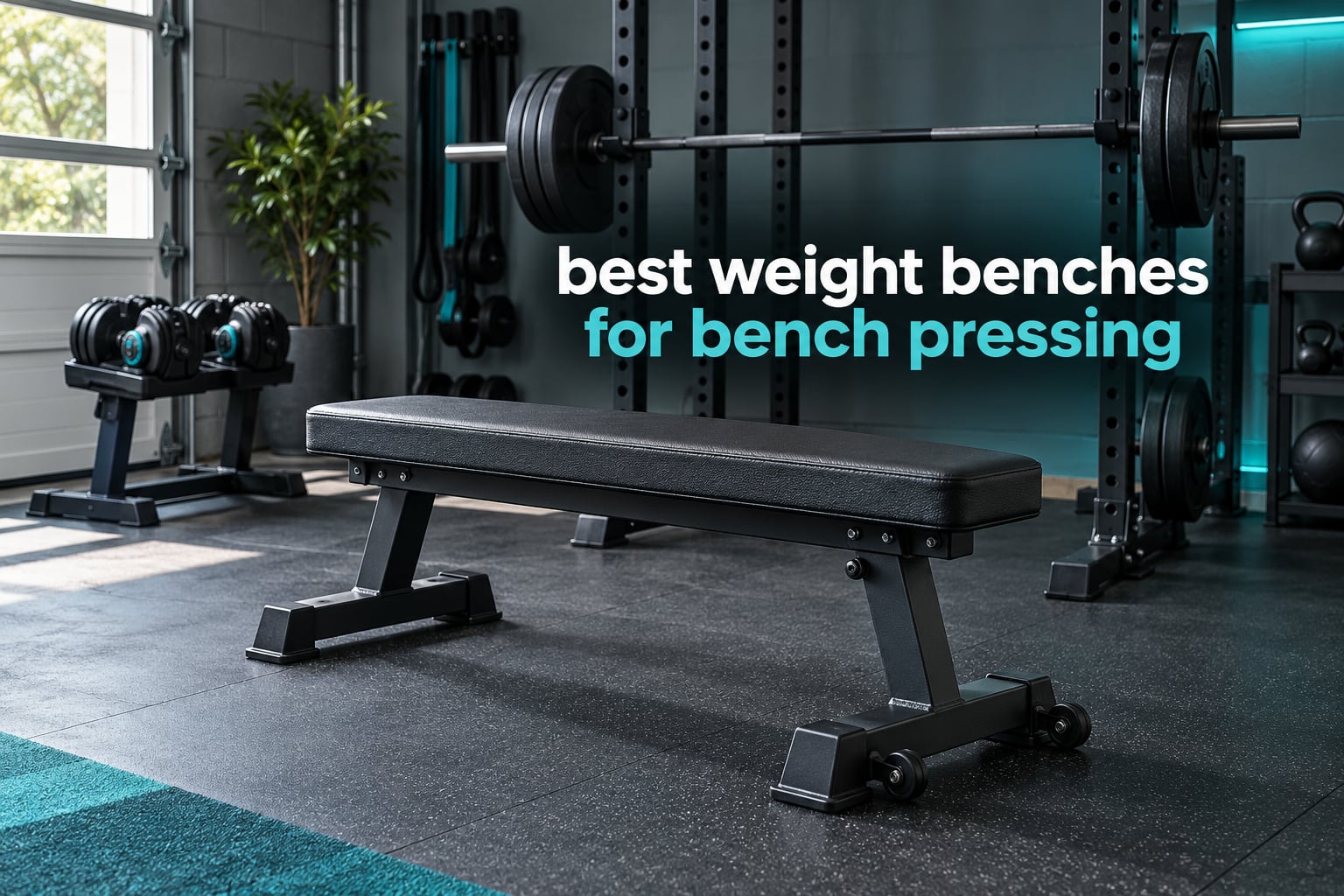
A bench is the one piece of equipment that sits directly between you and your next bench press PR, and choosing badly is expensive in a quiet way. A frame that rocks at the top of a triple costs you the rep. A pad gap that digs into your upper back costs you your arch, and your arch is where the strength lives. A bench that sits too tall keeps your feet off the floor and you lose the leg drive that adds 20 to 40 pounds to a serious press.
We compared 12 benches for this guide to the best weight benches for bench pressing, and the difference is not what most spec sheets suggest. Capacity ratings matter, but bench height, pad geometry and how the frame behaves under a loaded bar matter more. The picks below span fixed flat benches, folding flats and full adjustable benches, so you can match one to the way you actually train.
Our short version: if you want one bench that does everything without owning a rack, start with the FLYBIRD WB5 below. If you already own a rack and squat or deadlift, read the heavy barbell section first. Our broader home gym bench roundup covers the same benches from a room-and-budget angle rather than a pressing angle.
Everything in this guide was updated for 2026 and reflects what owners report after living with these benches, not just what the listing claims.
Table of Contents
Top 3 Picks for Bench Pressing in 2026
These three cover the widest range of use cases. One is the strongest all-rounder, one is the cheapest way into benching, and one is the best-built frame at this size class.

FLYBIRD WB5 Adjustable Bench
- 800 lb ASTM certified capacity
- 144 positions from -30 to 90 degrees
- 30 inch extended backrest
- Folds to a 9 inch wide profile

PASYOU Adjustable Bench
- 660 lb capacity
- 95 percent pre-assembled
- 13.9 inch wide seat
- Folds flat for closet storage

YOLEO 827 lb Bench
- 827 lb ASTM capacity
- 84 positions across back seat and legs
- Large flat feet for zero wobble
- Folds to 31.5 x 12.6 x 13 inches
The FLYBIRD WB5 takes the top spot on evidence rather than hype. It carries 26094 reviews at a 4.5 average, which is the largest sample of any bench here, and owners consistently describe it as comparable to a commercial gym bench. If you want the short version answer to the most common question about this topic, it is this: for home use, the FLYBIRD WB5 is the best bench press bench you can buy without owning a rack, because the spring-lock angle changes take about a second and the 30-inch backrest supports a real arch rather than a token one.
All 12 Benches Compared at a Glance
Every bench below is rated, sized and weighed using the manufacturer data and owner feedback. The key features column is the short version of what makes each one worth a look.
| Product | Specifications | Action |
|---|---|---|
| FLYBIRD WB5 Adjustable Bench |
|
Check Latest Price |
| PASYOU Adjustable Bench |
|
Check Latest Price |
| YOLEO 827 lb Adjustable Bench |
|
Check Latest Price |
 Amazon Basics Sturdy Flat Bench Amazon Basics Sturdy Flat Bench |
|
Check Latest Price |
 NICEPEOPLE Adjustable Bench NICEPEOPLE Adjustable Bench |
|
Check Latest Price |
 BARWING Adjustable Bench BARWING Adjustable Bench |
|
Check Latest Price |
 Yagud 880 lb Bench Set Yagud 880 lb Bench Set |
|
Check Latest Price |
 Finer Form Foldable Flat Bench Finer Form Foldable Flat Bench |
|
Check Latest Price |
 CAP Barbell Flat Bench CAP Barbell Flat Bench |
|
Check Latest Price |
 Keppi FID 1200 lb Bench Keppi FID 1200 lb Bench |
|
Check Latest Price |
 Steelbody Deluxe Utility Bench Steelbody Deluxe Utility Bench |
|
Check Latest Price |
 JOROTO FID 1300 lb Bench JOROTO FID 1300 lb Bench |
|
Check Latest Price |
How We Picked These Benches
We scored each bench on the criteria that decide whether a press goes well or badly, using owner reviews as the primary signal and manufacturer specifications as the supporting one.
First, stability under a loaded bar. A bench that flexes or shifts at the top of a set is a safety issue before it is a performance one. We looked closely at reports of wobble, rocking and frame flex, and at how much of the frame weight is steel tube versus thin bracing.
Second, bench height. Lifters on r/homegym and r/GarageGym repeatedly point out that the 17-inch standard exists for a reason, and that a taller bench makes a proper arch harder to set. We flagged every bench that lists a height near 17 inches.
Third, pad geometry, including the gap between the seat and back pad. That gap is the most common long-term complaint in the reviews we read, because it sits right under the upper back on every rep.
Fourth, adjustment repeatability. Spring locks that release in one second are more useful under fatigue than a pin-and-hole bench that needs two hands and a kneeling position. Fifth, we weighed warranty length and whether the brand is likely to still be around to honour it. We also noted footprint and weight, because a bench you cannot move or store is a bench you stop using.
1. FLYBIRD WB5 Adjustable Bench – Best All-Rounder for Pressing
- One-second spring-lock angle changes on seat and backrest
- 30 inch backrest and 15.7 inch seat pad give real arch support
- Folds in 3 steps to a 9.06 inch wide profile
- Leveling footpad steadies it on uneven floors
- ASTM certified 800 lb dual-triangle frame
- Firm padding that gets uncomfortable in long sessions
- Foot caps can detach from the leg tubes over time
- Upright position falls short of truly vertical
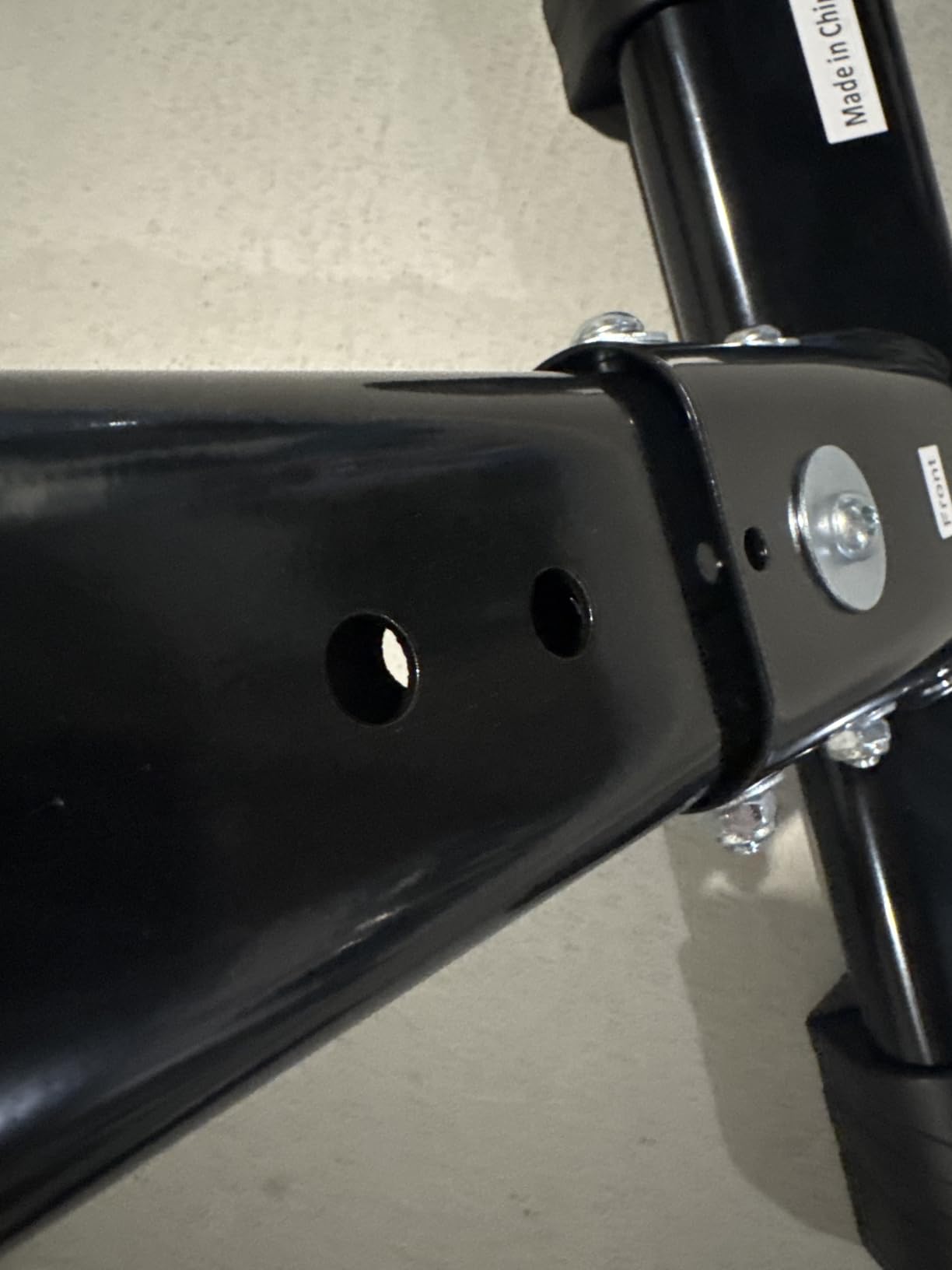
This is the bench I recommend to anyone starting a home gym with no rack. The FLYBIRD WB5 lists an ASTM-certified 800 lb capacity on a dual-triangle steel frame, and at 26094 reviews it has the deepest owner history of any bench in this roundup. That matters, because a bench with a quarter of a million unverified listings behind it is a different risk than one with a hundred.
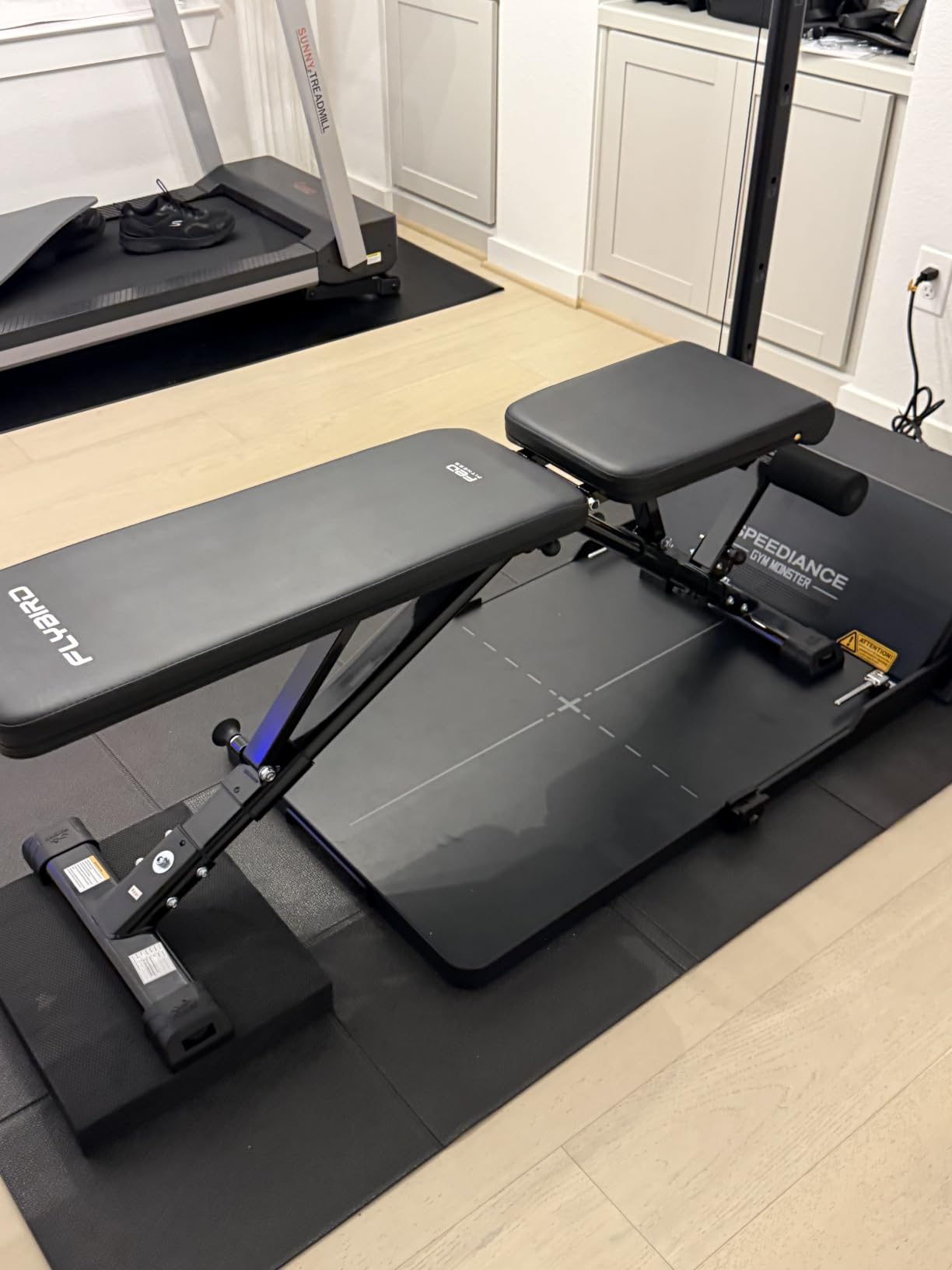
What owners actually praise is the spring-lock mechanism. The backrest and seat release with a pull and re-lock in about a second, which means moving between flat, incline and decline costs you almost nothing between sets. For pressing specifically, that matters more than the position count does, and the 144-position claim is generous marketing on top of a system that is genuinely quick to use.
The 30-inch elongated backrest and 15.7-inch seat pad are the other quiet strength. A short backrest forces tall lifters to hang their head off the end or arch awkwardly, and this pad runs long enough that the shoulder blades stay on vinyl. The frame lists a 46 by 13 by 48.5 inch footprint and weighs 28.5 pounds, so it is sturdy without being a two-person move.
Warranty coverage is 1 year on the frame with 3 years on parts, which is on the short side for a permanent piece of gym equipment. Some owners report the upright position stopping short of vertical despite the listing, and a few mention rubber foot caps detaching from the leg tubes after extended use. The recurring theme in the reviews is firm padding, which some people love because it does not compress under a load and others find punishing over a long session.
Why this bench works for a heavy press
The dual-triangle frame is the reason this bench holds at the top of a set. Triangle geometry resists the forward and lateral shear that a loaded barbell creates, and owners loading it with dumbbells and a bar report that it stays planted. The leveling footpad is a small detail that pays off on carpet or uneven concrete, where most cheap benches rock.
It also folds down to a 9.06-inch-wide slab in three steps. Our home gym bench guide covers the storage side of this in more detail, but the short version is that this is one of the few high-adjustment benches you can actually slide behind a door when the floor space disappears.
Who should skip it
Skip this bench if you are a tall lifter with shoulder mobility issues who wants a low, competition-style bench, because the adjustable frame sits higher than a fixed flat and the listing height runs tall at 48.5 inches in the upright configuration. It is also not the right choice for powerlifting competition, where the IPF 17-inch rule is enforced.
And if you plan to load it with serious barbell weight day after day, the 1-year frame warranty is thinner coverage than the Keppi and Steelbody options further down, both of which back their frames far longer. The WB5 is a strong daily driver bench, not a competition platform.
2. PASYOU Adjustable Bench – Best Budget Entry Into Pressing
- Lifts within about a minute of unboxing
- 13.9 inch wide seat and 29.5 inch backrest support the spine
- Light enough to carry alone yet stable under moderate dumbbell loads
- Folds into a flat rectangle for a closet
- Firm stiff foam
- Weak spring-loaded pin bearings that are easy to lose
- Back can slip if the horizontal locking rod is not fully engaged
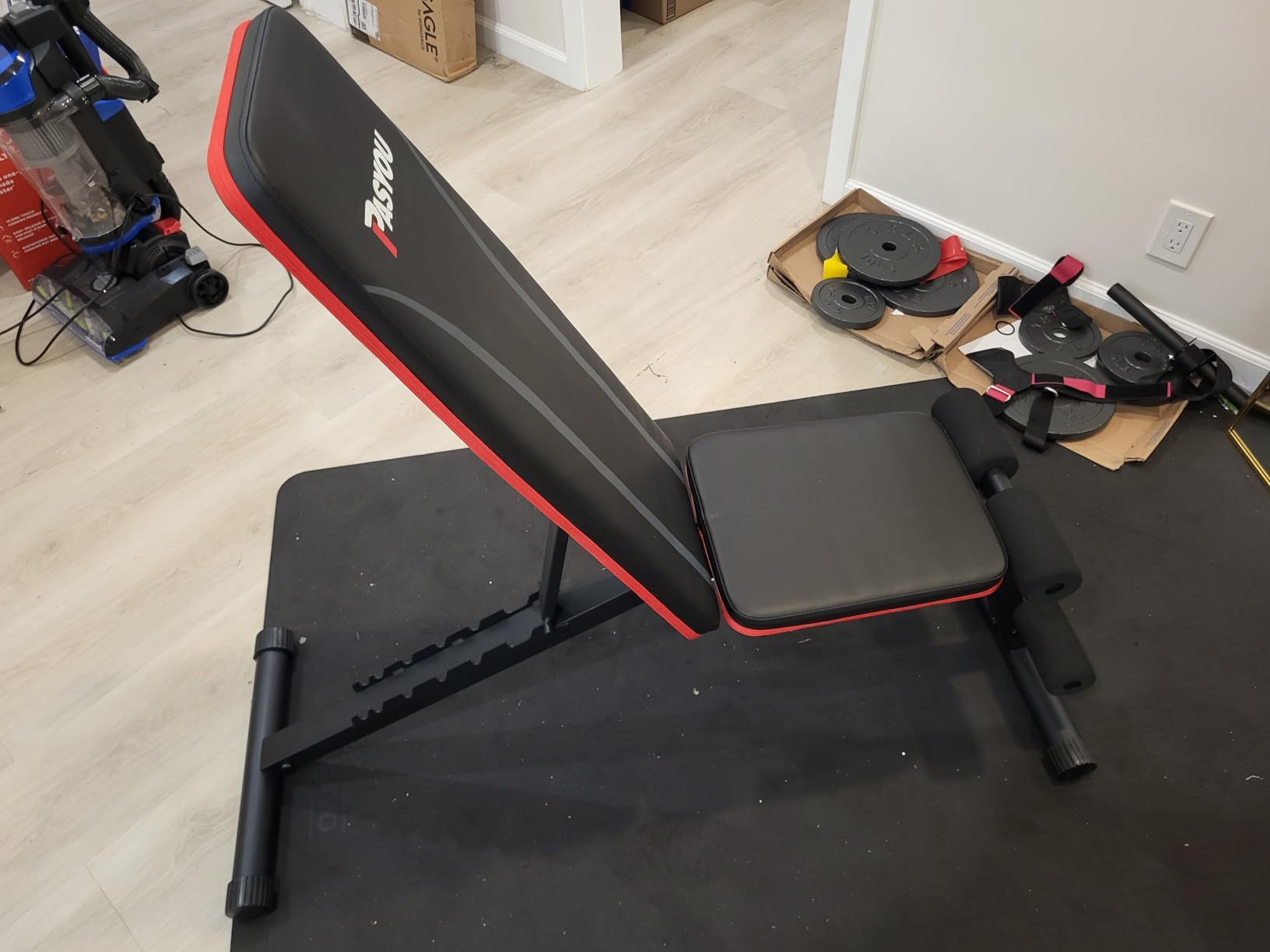
The PASYOU is the bench to buy when the deciding factor is how quickly you can start pressing. It arrives 95 percent assembled, and owners consistently report lifting within a minute of opening the box. The tool-free setup is a single ring pin and a ball-lock pin, which is a real advantage when you are training in a garage at six in the morning.
At 4.6 stars across 17374 reviews, it also holds the second-strongest satisfaction score in this group. The 13.9-inch-wide seat and 29.5-inch extended backrest are wider and longer than most benches at this level, and that extra width does real work when you are trying to keep your feet planted and drive up through a heavy press.
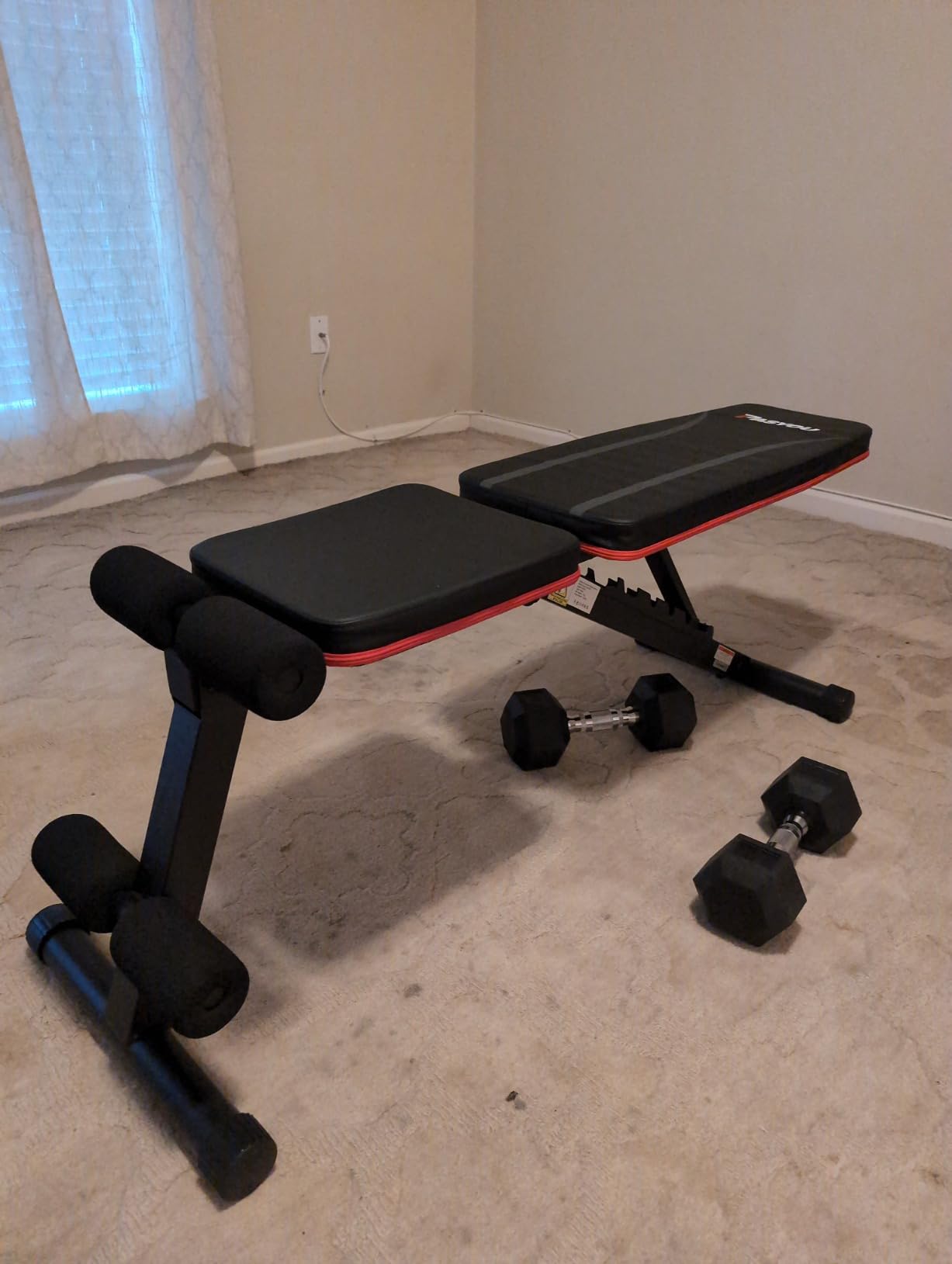
It adjusts through flat, incline and decline, so one bench covers chest, shoulders, arms and abs. The 24-pound frame weight is light enough to walk across a room, and the fold collapses it into a flat rectangle that stands against a wall or sits in a closet. For an apartment gym with no floor space to spare, that is the whole value proposition.
The honest weakness is the locking hardware. Owners report that the spring-loaded ball bearings are weak and easy to lose, and a few describe the backrest shifting if the horizontal locking rod is not fully engaged. That last point deserves real attention from anyone benching alone with a barbell, because a backrest that moves mid-set is the failure mode nobody wants. Bolts also need an occasional re-tighten after a period of use.
How it feels under a loaded bar
Owners describe this as stable under moderate dumbbell loading and light-to-moderate barbell work, which is exactly where most home pressers live. The alloy steel frame carries a listed 660 lb capacity, and the wide feet resist rocking on laminate or carpet. It is not a bench for a 500 lb attempt, and the reviews are clear about that boundary.
The width of the seat is the sleeper feature for pressing. A narrow seat narrows your base as you drive, and a 13.9-inch pad gives your glutes somewhere to sit while your upper back stays on the pad. For a bench in this class, that is a better use of the frame budget than adding more adjustment positions.
Who should look elsewhere
Skip this one if you press heavy singles, or if you are training alone in a space where a shifting backrest would leave you without a spotter. The adjustable hinge is the weak point, and it is exactly the component that takes the highest load.
It is also a poor fit for tall lifters who need a long backrest with head support, since a few owners report the seat and back cushion gap being uncomfortable during decline sit-ups and core work. If your priority is maximum pressing safety per dollar, look at the BARWING further down, which has a far more substantial frame and a one-second dual-lock release.
3. YOLEO 827 lb Adjustable Bench – Best Value for Serious Home Pressing
- 827 lb capacity that outclasses the price class
- Large flat feet give excellent stability with no wobble
- 98 percent pre-assembled
- Built-in carry handle and folds to 31.5 x 12.6 x 13 inches
- 24 month warranty with 24 hour support
- Seat and back gap is uncomfortable for decline core work
- Thinner padding than some buyers want
- XL size is oversized for lifters around 5 foot 11
The YOLEO is the bench we keep coming back to when someone asks which adjustable bench gives the most pressing capability for the least money. It lists an ASTM-certified 827 lb capacity with a 330 lb maximum user weight on a dual-triangle steel frame, and that number sits well above what most of its direct competitors claim at the same tier.
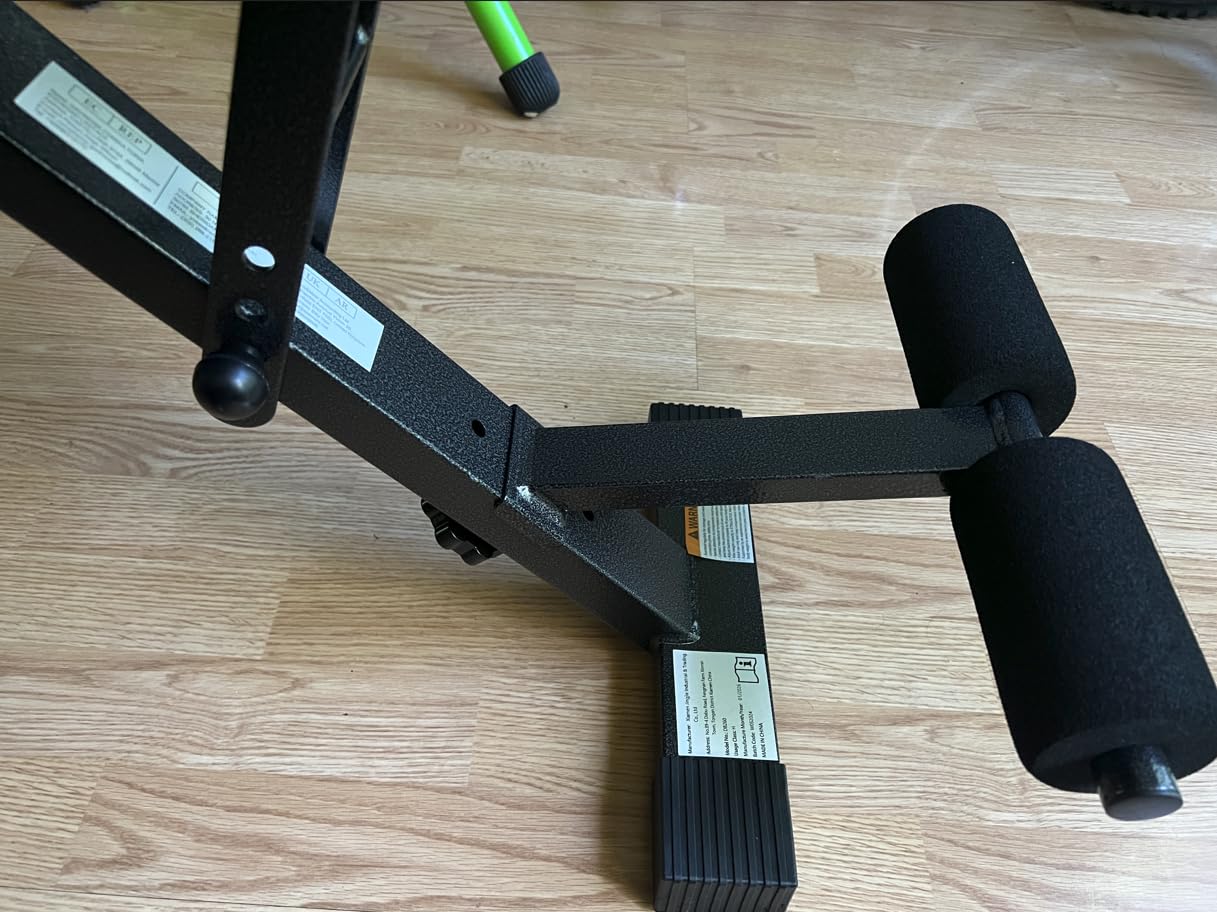
It is 98 percent pre-assembled, so you insert two pins and start training. Amazon recognizes it as a low-return product, which tells you something real about satisfaction, and the 24-month warranty is the longest in this group except for the Steelbody. Owners highlight the large flat feet above almost everything else, because a wide flat foot does not flex and does not rock.
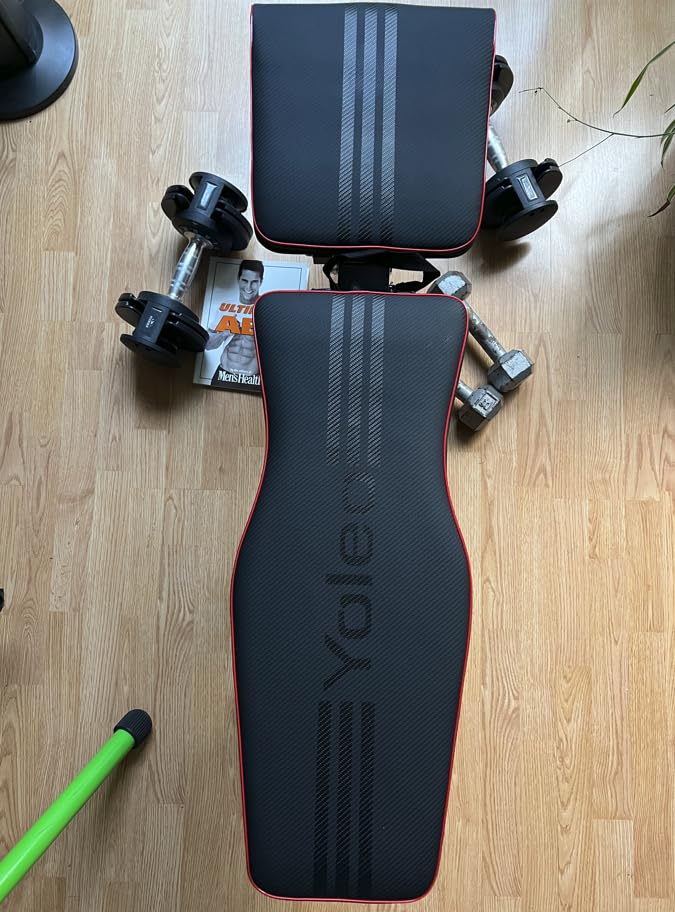
The adjustment system uses 84 positions spread across 7 back, 4 seat and 3 leg settings, which covers flat, incline, decline and upright work. An optional 3.1-inch thigh pad adds support for decline movements and leg drives. At 23.2 pounds with a built-in carry handle, it is one of the easier benches in this roundup to move between rooms.
Owners do flag the seat-to-back gap as uncomfortable during decline sit-ups, and the padding is thinner than some buyers would like. Sizing is the other real gotcha: the XL version is genuinely oversized for anyone around 5 foot 11, and reviewers recommend the L size for average-height users. The bench can feel slightly wobbly when completely unloaded, though it firms up as soon as weight goes on.
Why the feet and the frame matter here
Stability under load is what separates this from cheaper adjustable benches, and it comes from the feet and the triangle geometry rather than from the capacity sticker. Large flat feet spread the load and sit flat on hard floors without the micro-rock that lets a barbell tip. Lifters reporting near-zero wobble on laminate and concrete are the norm on this one.
The 84-position system is also less of a gimmick than it sounds, because the separate leg pad positions let you set the foot catch for decline work instead of fighting with the seat. For a bench presser who also does core and leg work, that is more usable range than a 144-position bench with a single hinge and no separate leg control.
Where it falls short
The 827 lb rating is a headline number, but reviewers do not describe it as a heavy-max bench. It is a solid working press bench for progressive barbell and dumbbell training, not a platform for competition attempts. Anyone chasing a 400 lb plus single should be looking at the Keppi or JOROTO further down, both of which have welded commercial-grade frames and 17-inch bench heights.
Choose the L size over the XL unless you are tall, and be aware that the screw-in ankle support has to be removed before every fold, which is an annoying extra step if you are trying to reclaim floor space daily.
4. Amazon Basics Sturdy Flat Bench – Best No-Frills Starter Flat
Amazon Basics Sturdy Flat Weight Bench for Home Gym, Strength Training, Stable Assembly, Black
- Zero-wobble upside-down T legs
- 18.4 inch seat height suits dips and pullovers
- All-steel tube frame with heavy welds
- Assembles in about five minutes
- Fixed flat with no angle options
- Short pad leaves tall lifters hanging over the edge
- Supplied foot bolts are slightly too short so nuts loosen over time
Long-term owners report this bench holding up through years of daily use with no pad or vinyl breakdown, which is a rarer result than it should be. The upside-down T-shaped legs keep the frame planted on both carpet and hard flooring, and the all-steel tube construction with heavy welds is the reason it outlives adjustable benches in the same price band.
The 18.4-inch seat height is unusually tall for a flat bench and genuinely useful for dips, pullovers and getting on and off. Assembly takes about five minutes with the included tools. Several buyers also use it as extra seating in a home gym, which is a small but real perk of a flat bench with a wide top surface.
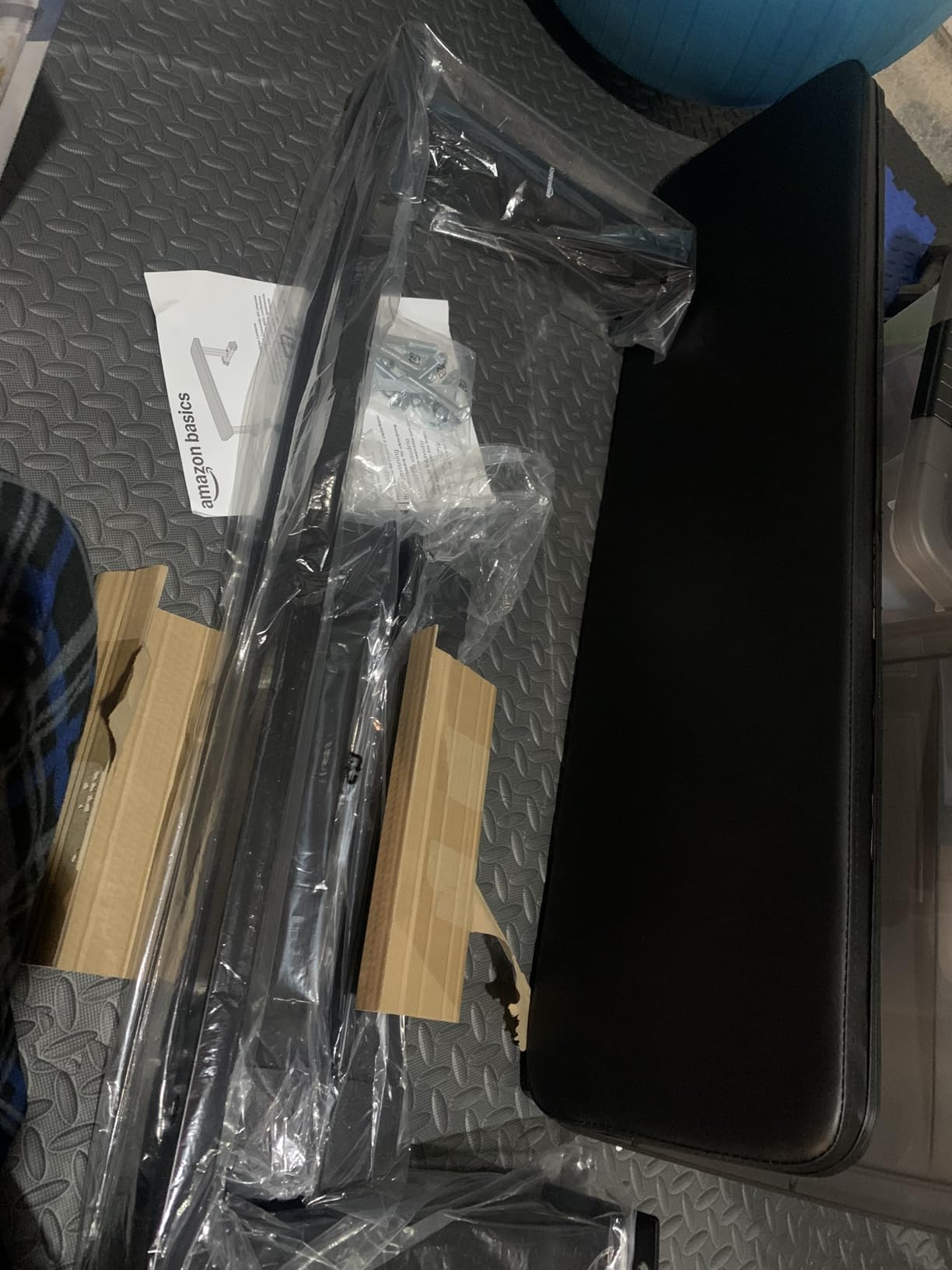
Two things temper that. The listed 700 lb capacity overstates real-world use in practice, and several buyers cite a 385 lb limit printed in the enclosed literature. The other is the 41.5-inch pad length, which leaves taller lifters with their heads hanging off the back edge, and that is not a small problem for someone whose bench press is built on upper-back arch.
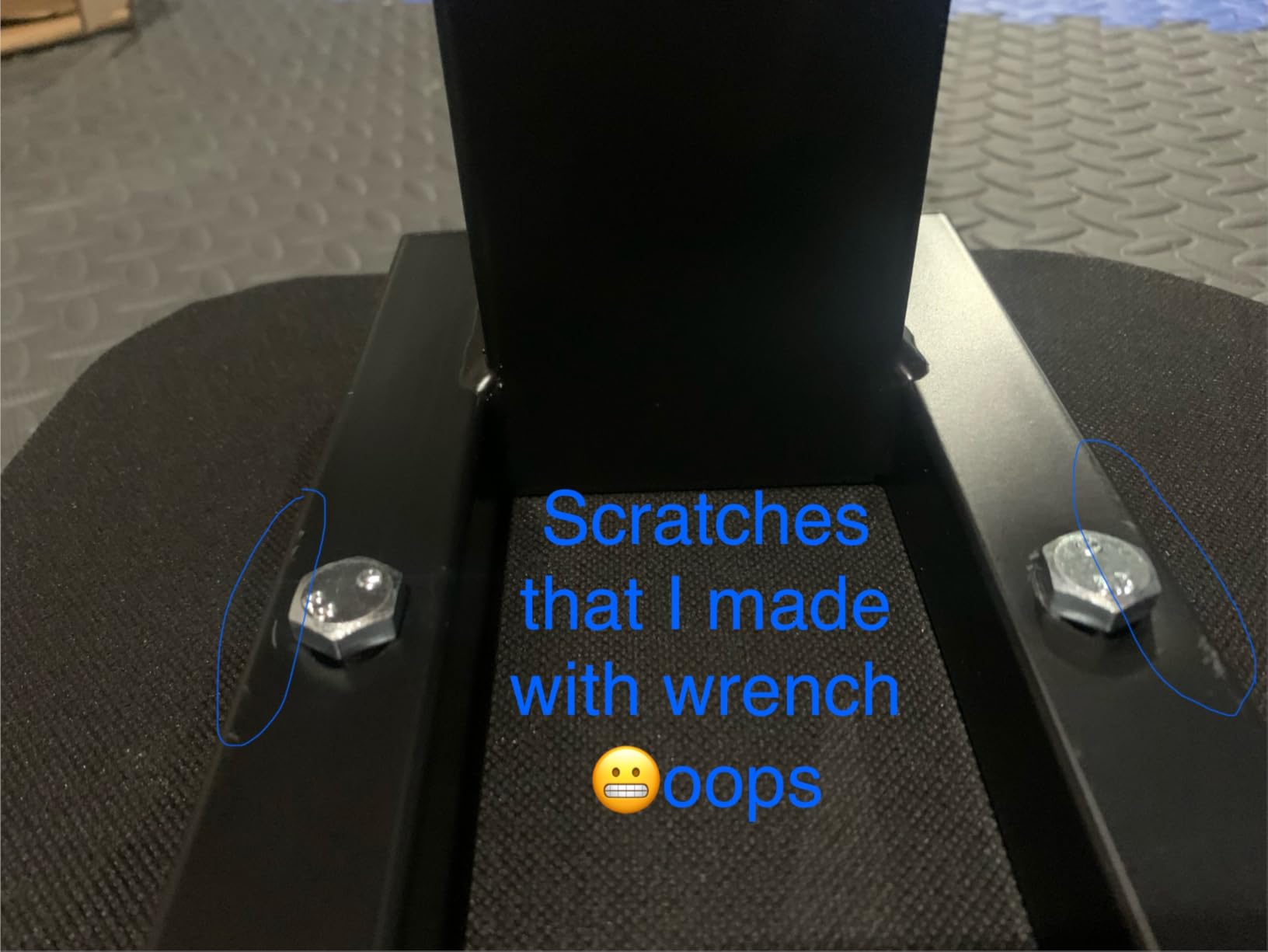
Owners also note that the supplied Phillips bolts for the feet are slightly too short, so the foot-bar lock nuts can loosen over time. A periodic re-tighten solves it, but it is the kind of detail that separates a bench designed for service from one assembled to hit a price point.
How it performs as a pressing bench
Because the frame is fixed and welded rather than articulated, there is no adjustment hinge to flex, and that is the single biggest reason flat benches outlast adjustables in this roundup. The load path runs straight from the pad through the front post into the feet. There is no pin, no ladder and nothing to slip mid-set.
What you give up is angles. There is no incline for dumbbell pressing and no decline for shoulder work, so if your training involves anything beyond flat barbell and dumbbell work, you are back to floor exercises. For a lifter whose entire program is the bench press and a squat, that trade is worth making.
Who should buy something else
Skip this bench if you are over roughly six feet. The short pad is the dealbreaker, because a head that hangs off the back edge forces you into a flat, non-arching press and the whole point of a good bench disappears. Anyone building a general home gym for shoulder and core work will also find the fixed flat limiting.
If you want the flat-bench feel with a longer pad and a higher capacity claim, the Finer Form further down shares the same fixed geometry with a 45-inch length and a 1000 lb rating. And if your space is tight, this bench is not the easiest piece to carry when you need the floor back.
5. NICEPEOPLE Adjustable Bench – Best for Small Apartment Spaces
- Eight backrest angles with a fast-adjust groove
- 29.3 inch backrest supports head and upper back
- One-step fold down to 9.25 inches tall
- Four rotatable leveling foot caps
- Only 8 backrest settings
- Fixed seat section limits leg-focused movements
- 17 lb frame can feel light under maximal barbell work
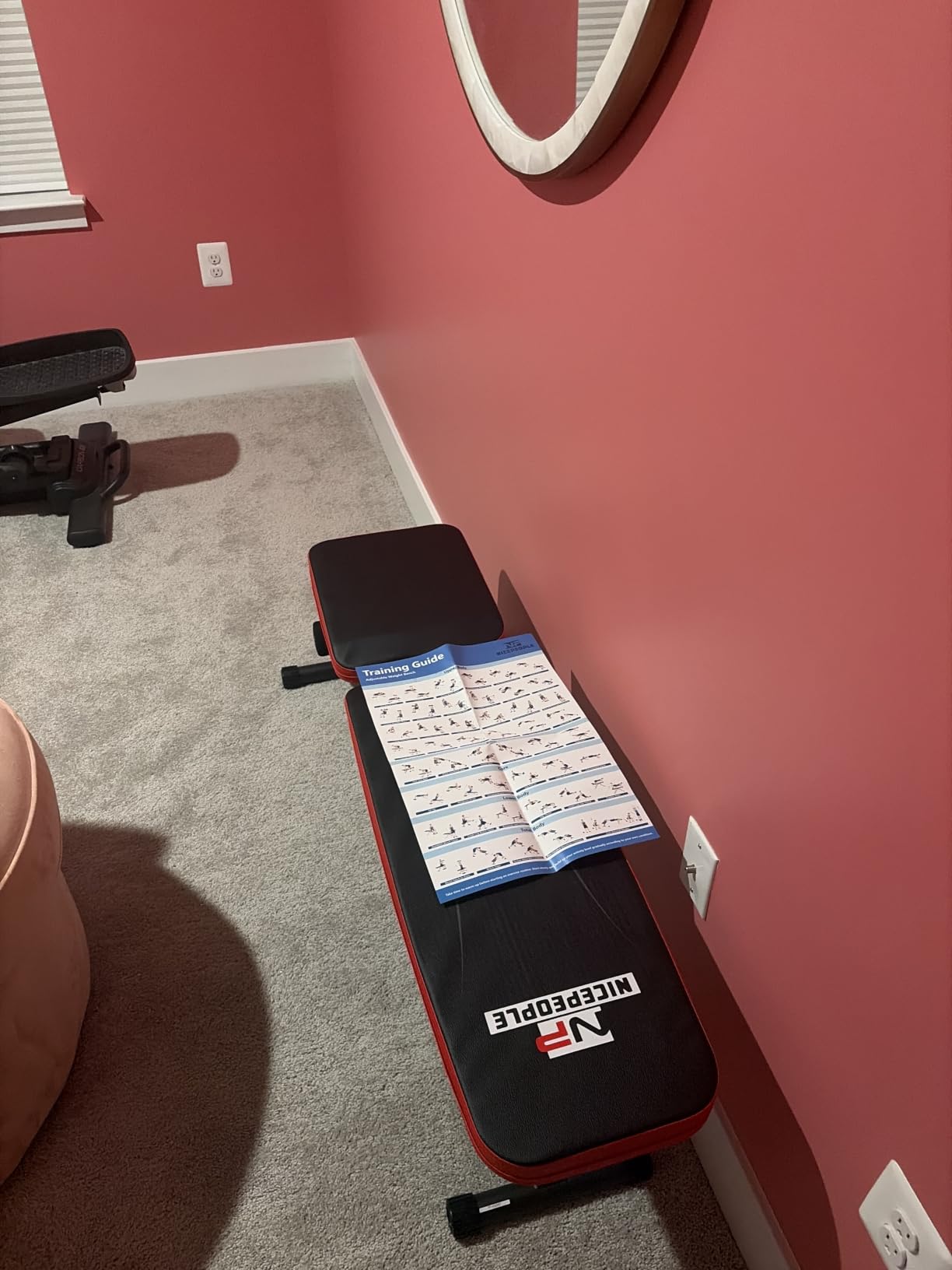
The NICEPEOPLE solves a specific problem well: pressing in a room that is not a gym. It folds in one step by removing two pins and drops to 30.7 by 16.3 by 9.25 inches, which is thin enough to slide under a bed or behind a sofa. The four rotatable leveling foot caps help it settle on uneven apartment flooring, where a rocking bench is a genuine hazard when you are pressing alone.
The 29.3-inch backrest is longer than most compact benches and supports head, neck and upper back for roughly 90 percent of users, according to the manufacturer. The frame is a reinforced triangular alloy steel design that the brand says was tested through more than 8000 durability cycles.
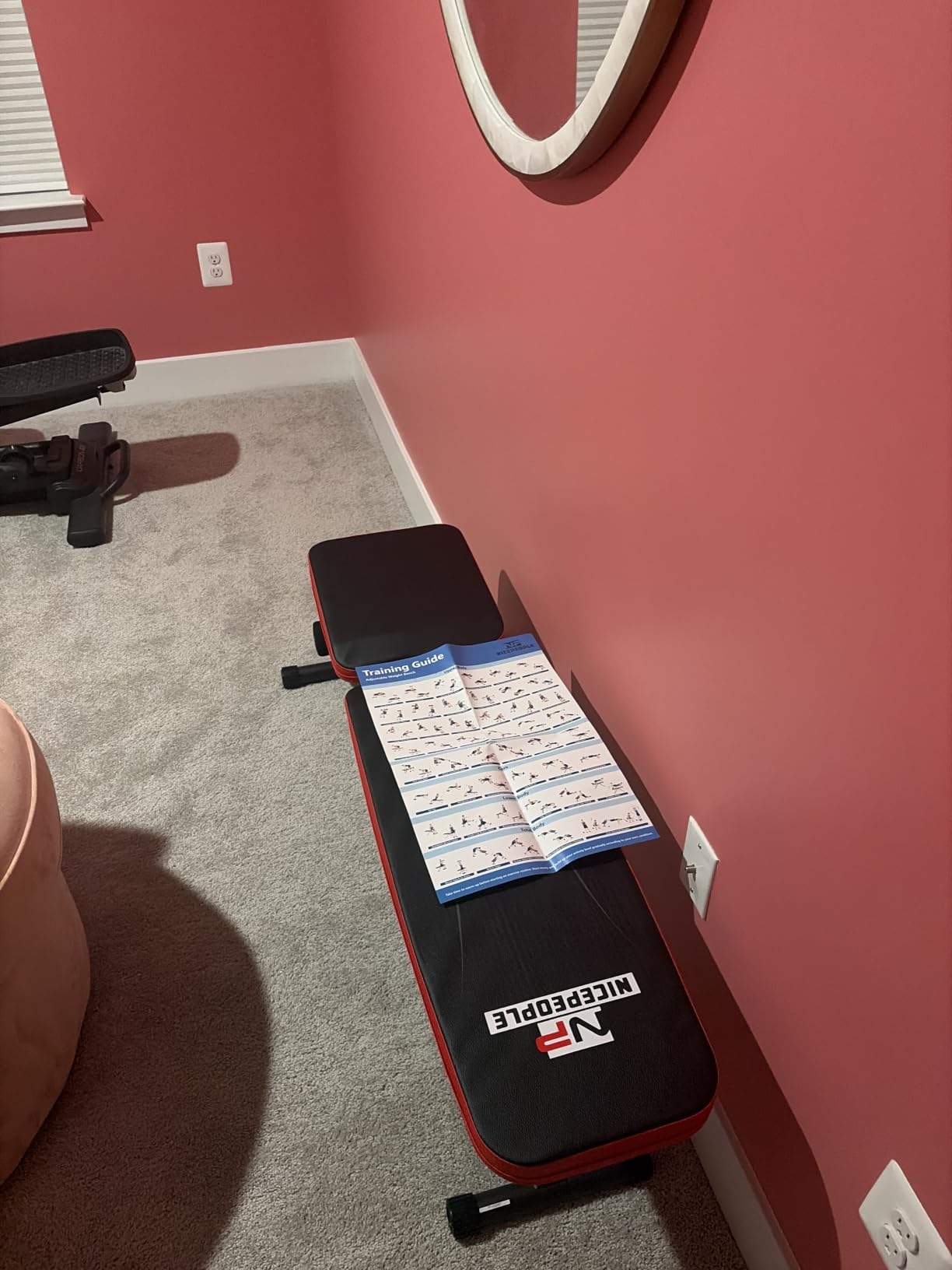
The trade-offs are real and reviewers state them plainly. Eight backrest positions is coarse compared with the 84 and 144 position benches, and the seat section is fixed, which limits leg-focused movements. The 660 lb capacity is also lower than the 800 to 1300 lb figures offered by similarly priced competitors.
At 17 pounds it is the lightest adjustable bench here, and that is the main caution. Owners describe the lighter frame as best suited to dumbbell work rather than maximal barbell loading, and a light frame simply has less steel resisting the forward shear of a heavy press.
Where this bench wins
The quick-adjust groove is the feature apartment lifters notice first. Moving between two exercises takes one pull, and there is no kneeling on the floor to re-thread a pin, which matters when your gym is the corner of a living room. The breathable, non-slip leather pad also does not slide the way cheap vinyl does when you are trying to set an arch.
For someone whose heaviest pressing day is a set of dumbbells, an incline press and some core work, the light frame is not a limitation. It is also the easiest bench here to carry between rooms, which is the deciding factor for a renter who cannot drill into a wall.
Where it stops short
Do not put a heavy barbell max effort set on this bench. The combination of a light frame, a limited 660 lb rating and a hinged backrest makes it a poor choice for the lifter whose goal is a 300 lb plus bench. The fixed seat also rules out decline leg and core work that the YOLEO and Keppi handle properly.
If your pressing ambitions have grown but your floor space has not, the FLYBIRD WB5 offers a much higher 800 lb rating with 144 positions while still folding to a 9.06-inch-wide profile. It is a heavier frame to move, but it is the better long-term bench for a serious press.
6. BARWING Adjustable Bench – Most Adjustable Pick Under 1000 lb
- 924 combinations across backrest seat leg height and leg depth
- Dual-locking spring mechanism releases in about a second
- 45.3 inch total seat plus backrest length
- One-pull fold to backrest size with front transport wheels
- Four-layer padding over a wooden inner board
- Stability depends on tightening every assembly screw
- Two-stage fold takes practice
- Lowest 4.4 rating in this group
The BARWING is the range pick. It lists 924 adjustment combinations drawn from 11 backrest, 7 seat, 4 leg height and 3 leg depth settings, running from flat through 30 degrees of decline to fully upright. For a home gym where one bench has to cover pressing, rowing, dips and core work, that is the most complete angle coverage here.
More important for pressing is the 18.6-inch seat height, which matches the common commercial gym standard and gives a natural foot plant. The measured 45.3-inch total seat-plus-backrest length suits taller users better than most adjustable benches, and the 31.1-inch backrest keeps the head supported at incline.
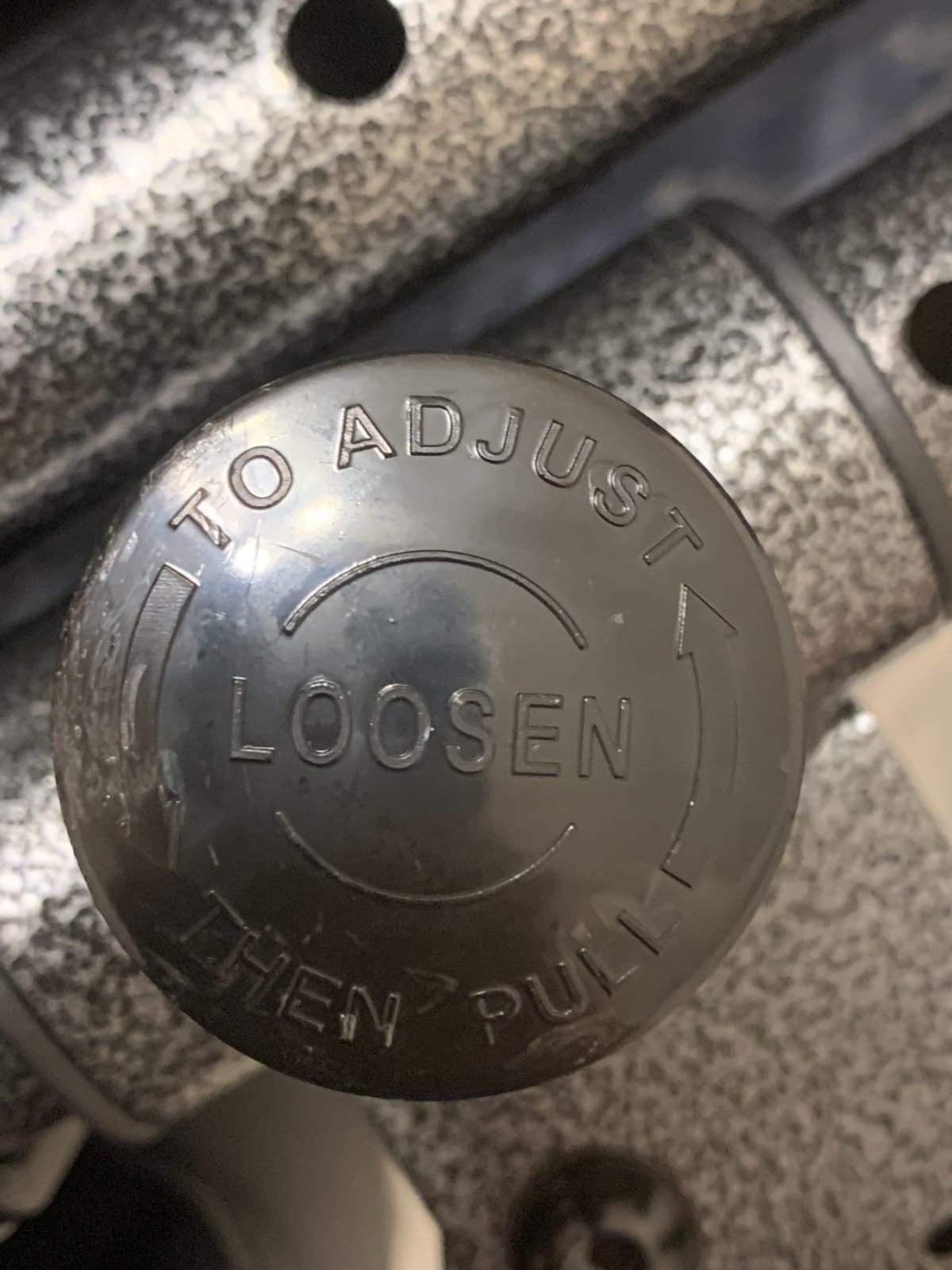
The dual-locking spring mechanism releases and re-locks in about a second, and it folds 180 degrees to roughly the size of a single backrest, rolling on front transport wheels. The padding is four layers over a wooden inner board, tested to 20000 abrasion cycles, which is a better spec than most competitors will quote for the same price band.
At a 4.4 average with a 5 percent one-star share, this is the lowest-rated bench in the roundup, and the reviews explain why. Some units shake or shift if the assembly screws are left loose, which means the bench’s stability depends on you tightening every fastener correctly. Folding also requires working a secondary lock pin, making it less one-handed than a pure spring lock.
How it handles heavy work
The 1000 lb capacity rating is genuinely useful rather than aspirational, and the frame is described as high-ductility steel put through more than 10000 load tests. The wide 12.2-inch seat and 14.2-inch seat pad give a stable platform for a loaded bar. Lifters who train seriously rate this one well for heavy pressing, which is why it earns a place here despite the rating.
The wooden inner board under the foam is a durability decision you rarely see at this tier. It keeps the pad from deforming over years, and pad failure is the reason most cheap adjustable benches end up in a garage corner. Coverage is 1 year on the frame and 3 years on parts.
Who should pass on it
Pass if you are not willing to read the assembly instructions. A bench that shakes when a screw is under-tightened is a poor match for someone benching alone in a basement, and that is the single most common complaint in the reviews.
Also pass if you need a competition-legal 17-inch bench height. At 18.6 inches this sits higher than the IPF standard, and lifters on forums consistently note that bench height changes how much arch you can set. For a dedicated heavy barbell platform, look at the Keppi at 17.3 inches instead.
7. Yagud 880 lb Bench Set – Best All-In-One Package
880LBS Adjustable Weight Bench, Foldable Workout Bench with Leg Developer
- Bench
- rack
- safety catches and leg extension in one package
- 880 lb limit on a triangular commercial-grade steel frame
- Safety bar catches add real confidence benching alone
- Waterproof PU leather over soft foam
- Folds quickly for compact storage
- No decline setting despite the product type
- Rack uprights sit roughly 8 inches behind the head
- A protruding metal connector presses on the tailbone
- Only 149 reviews
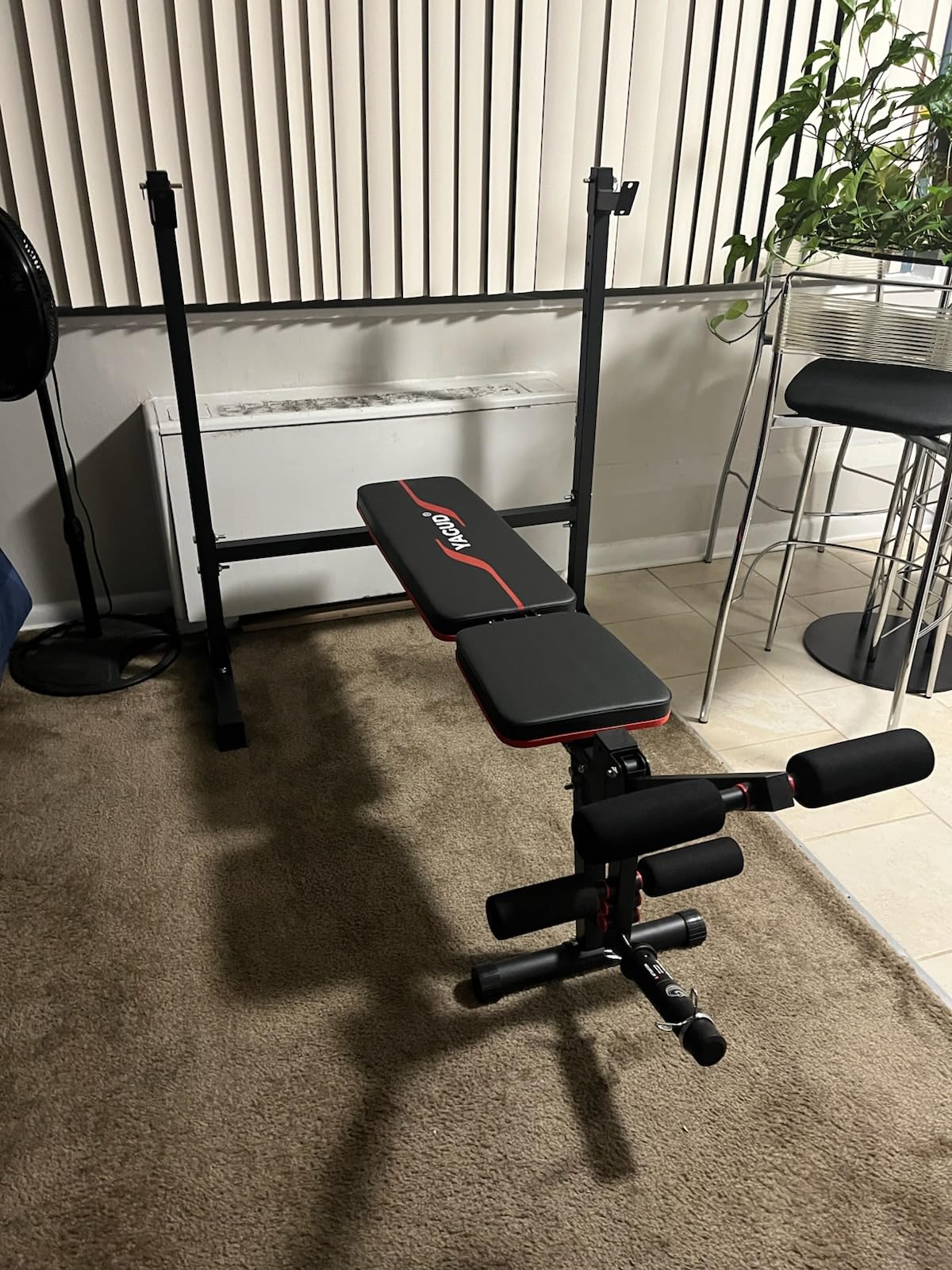
This is the only package here that includes a barbell rack and safety bar catches alongside the bench, and for someone training alone that combination changes the safety equation. Safety catches mean a failed rep is a nuisance rather than an emergency. Most home gym builders buy a bench, then spend months not pressing because nobody is spotting them.
The frame lists an 880 lb load limit on a triangular commercial-grade steel design, and the pad is extra-thick waterproof PU leather with reinforced stitching over soft foam. Assembly is straightforward, folding is quick, and owners generally treat it as a strong starter package for the number of moving parts it solves at once.
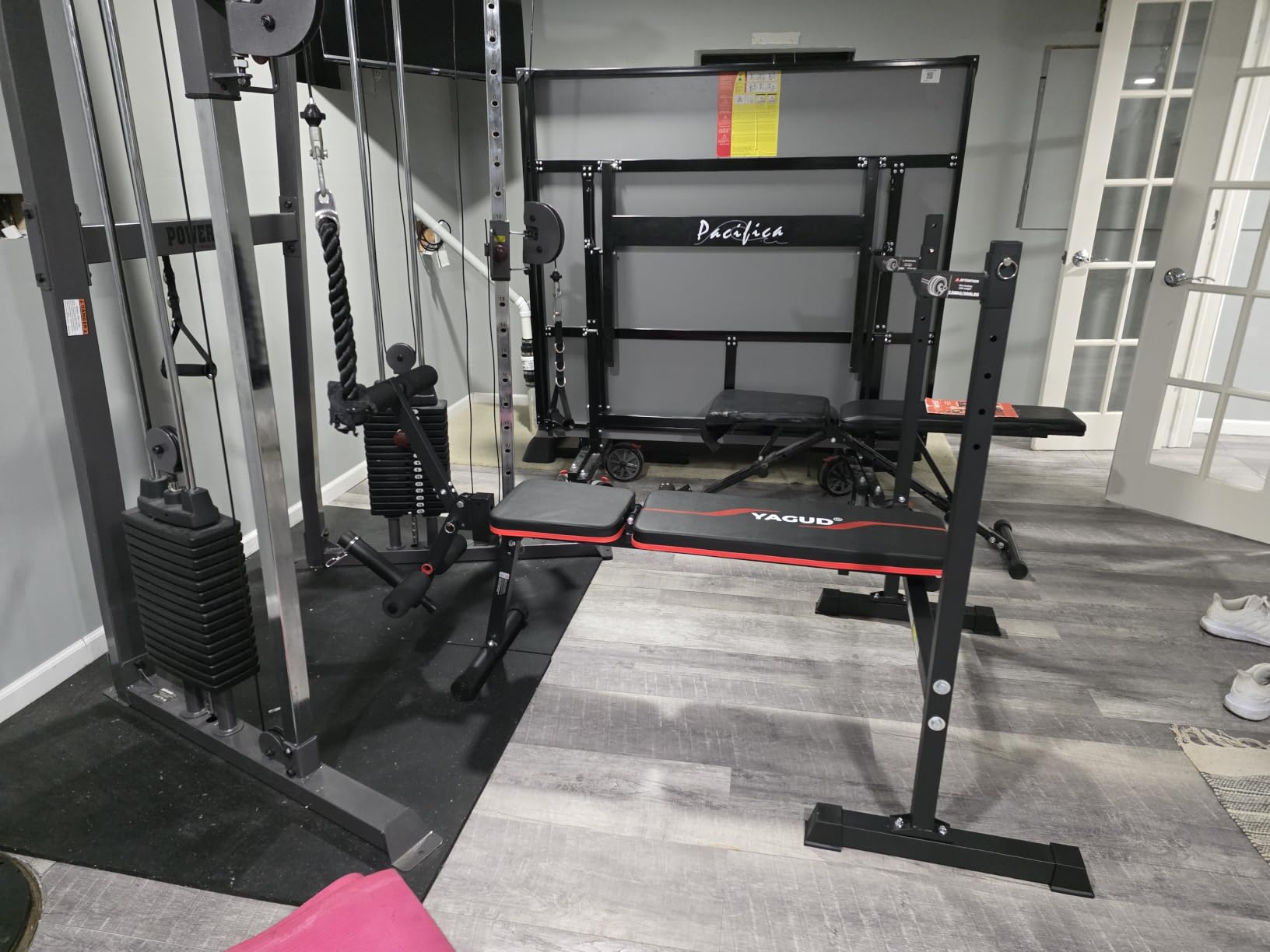
The critical reviews focus on geometry rather than build quality, and that is the more useful thing to know. There is no decline setting despite the product type. The rack uprights sit roughly 8 inches behind the head, which makes unracking awkward. And the leg extension hangs low enough that loaded plates nearly touch the floor.
There is also a protruding metal connector right at the seat and back junction that reviewers report pressing into the tailbone during a press. That is a small detail that would be disqualifying for us on a bench press bench specifically, since the hip area carries the most force during a heavy press setup.
What the package gets right
The value logic is sound. A bench, a rack, safety catches and a leg extension as one order covers the four pieces of equipment a beginner needs first, and the 7 backrest adjustments plus 3 preacher pad positions give enough variation for chest, shoulders and arms. The safety catches in particular are worth more than any of the attachments.
Coating is a 1-year warranty with 24/7 support, which is thin, and the red frame finish is a matter of taste. The bench weighs 36 pounds, so the fold is worth having if floor space is tight.
Why it is not our bench press pick
Do not buy this one to bench heavy. No decline position limits the movement, the rack geometry makes unracking from a liftoff position awkward, and the tailbone connector is a problem exactly when you are setting up with a loaded bar. Review volume is also far smaller than the rest of this list at 149 reviews with a 7 percent one-star share, which means less long-term evidence.
Buy it as a complete starter system for a teenager or an adult who wants everything in one delivery. For a dedicated bench press platform, any of the flat benches further down will serve you better and take up less room.
8. Finer Form Foldable Flat Bench – Best Foldable Flat for Heavy Pressing
Finer Form Foldable Flat Weight Bench for Home Gym, 1,000 lb Capacity
- Unique 4-way steel frame with no wobble under load
- 1000 lb capacity is a step above most flats in this range
- Extra-thick cushion holds its shape through heavy sessions
- Folds flat to store under a bed or in a closet
- Assembles in minutes
- Flat only with no incline or decline
- Narrow 12 inch width gives less lateral stability
- Heavier at 27.7 lb than most folding flats
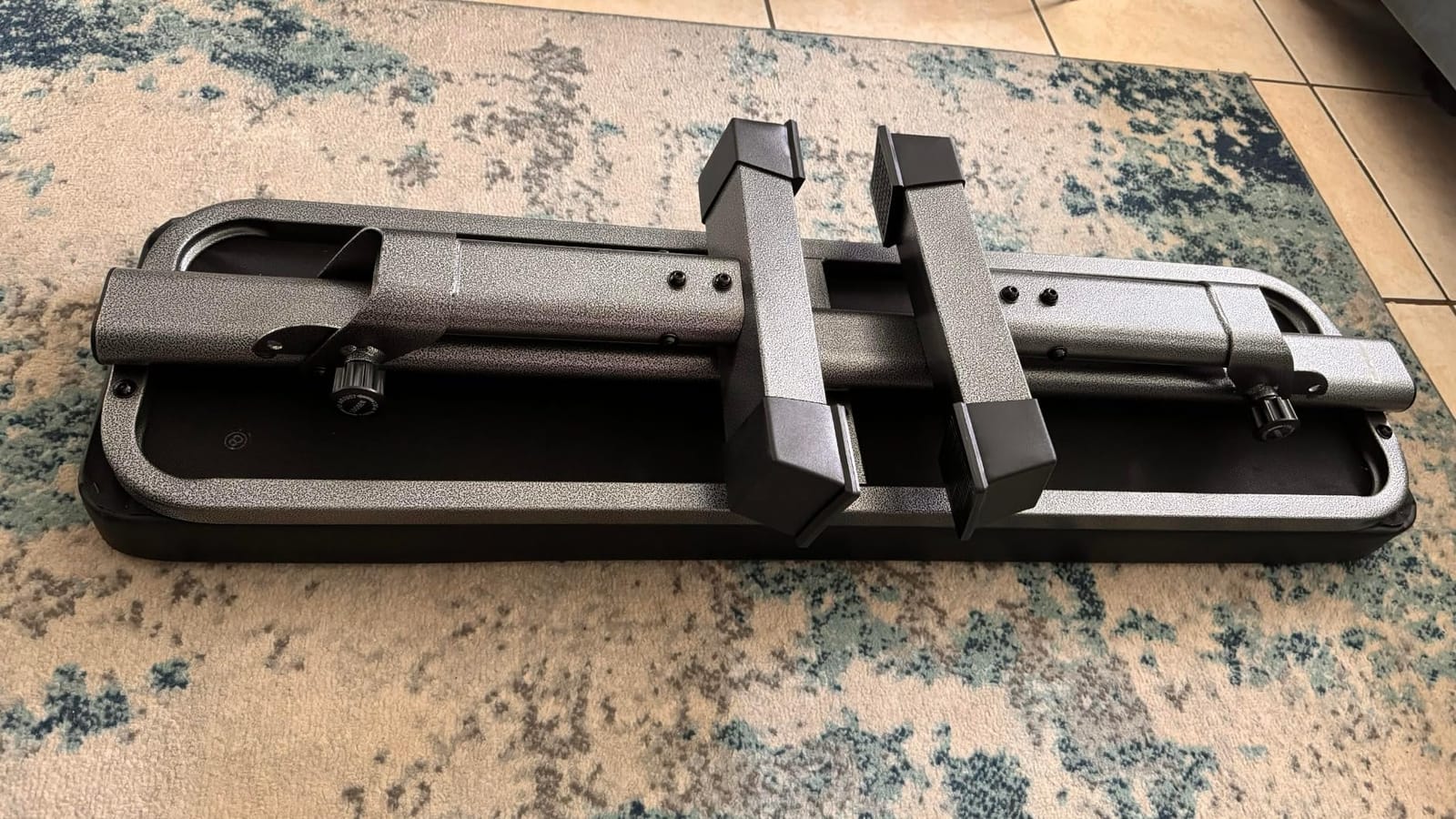
The Finer Form is our pick when the press is the whole point. It lists a 1000 lb capacity, which is a genuine step up from the flat benches that usually occupy this bracket, and it does it on a unique 4-way high-grade steel frame that owners describe as notably wobble-free under load.
That 4-way frame is the engineering story here. Instead of the usual upside-down T, the steel cross-braces on all four sides, so lateral and forward shear are resisted in both directions. For a bench press, where the load arrives at an angle through the pad and the front post, that geometry is doing real work.
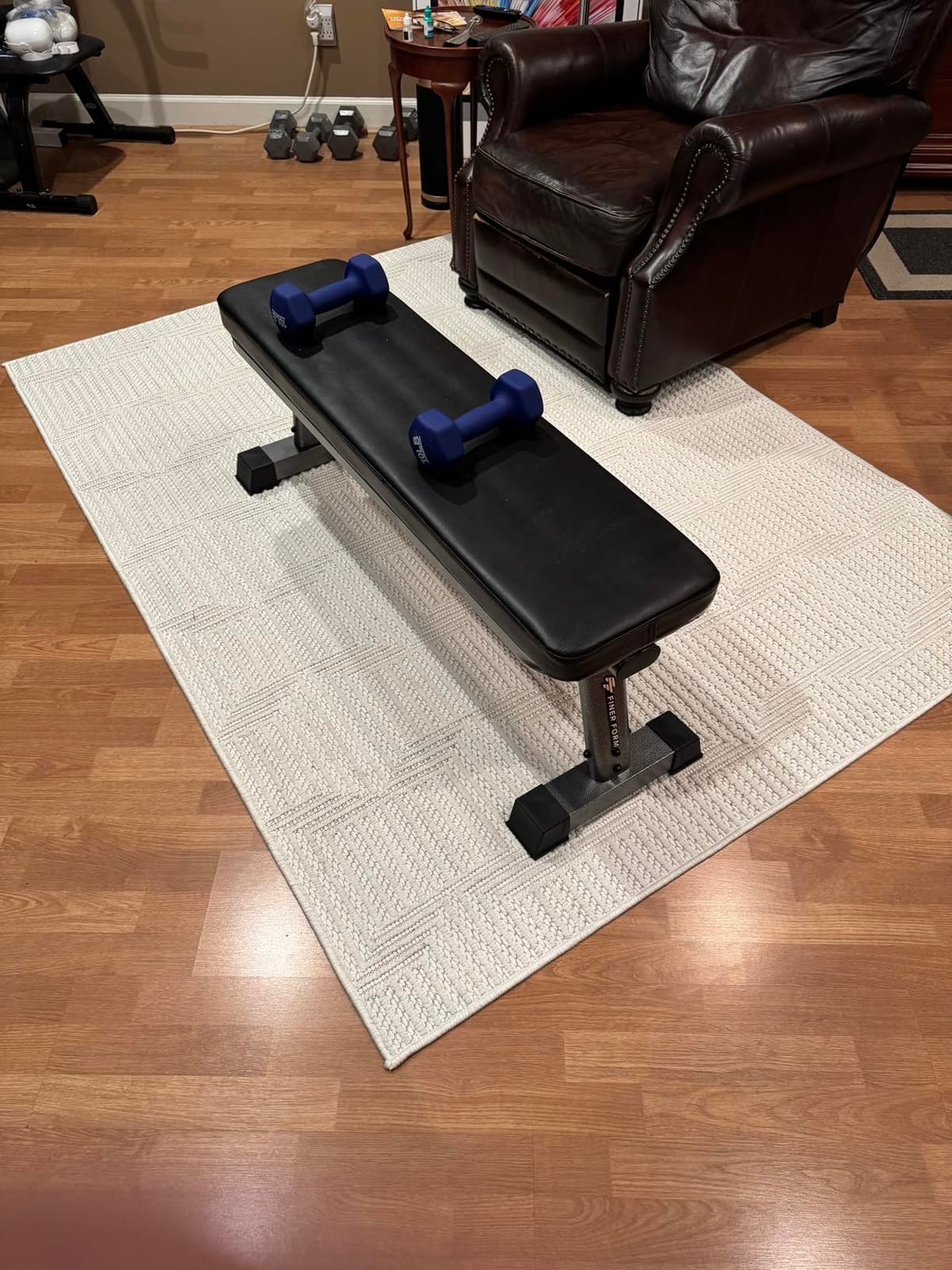
The pad is extra thick and owners report it holds its shape through heavy dumbbell sessions rather than compressing into the frame. At 45 by 12 by 18 inches, it is longer than the Amazon Basics flat, which matters for lifters with a longer torso. Assembly takes only a few minutes, and a free exercise chart is included.
The trade-offs are structural to the design. It is flat only, with no incline or decline, and the 12-inch width gives less lateral stability than the wider steel-tube benches. At 27.7 pounds it is also heavier than most foldable flats, so while it stores flat under a bed or in a closet, it is not a grab-and-go bench.
Why fixed flat beats adjustable for a max effort press
There is no hinge, no pin and no ladder, so there is nothing to shift or slip while the bar is moving. The full 1000 lb rating applies to a rigid welded frame rather than an articulated one, and the thick cushion does not bottom out under a heavy bar. For a single at the top of your range, that rigidity is worth more than any angle you can dial in afterwards.
Owners consistently report zero wobble as the standout, and the 82 percent five-star share in the reviews reflects that. The 18-inch height also sits closer to the 17-inch standard than most flats in this price range, which makes setting a proper arch easier.
Who should choose a different bench
Choose something adjustable if your training includes incline dumbbell pressing, shoulder work or decline movements. A flat bench is a specialist tool, and this one is very good at the single job it was designed for but refuses the other four.
Also consider the CAP Barbell instead if the lowest-cost route to a flat bench matters more to you than capacity, or the Steelbody if you want a ladder adjustment that feels more stable than pin-and-hole while still sitting in a rack. Neither does the Finer Form job better for heavy pressing, but each solves a different constraint.
9. CAP Barbell Flat Bench – Most Portable Flat for Light Work
- Genuinely solid powder-coated tubular steel frame
- Box-stitched padding is firm enough to support form
- Assembles in about 15 minutes with all hardware included
- 18 lb is light enough to move around a home
- 500 lb capacity is the lowest here
- Thin cross braces under the seat flex under lateral load
- Fixed flat with no angle adjustments
- Only a 30 day manufacturer warranty
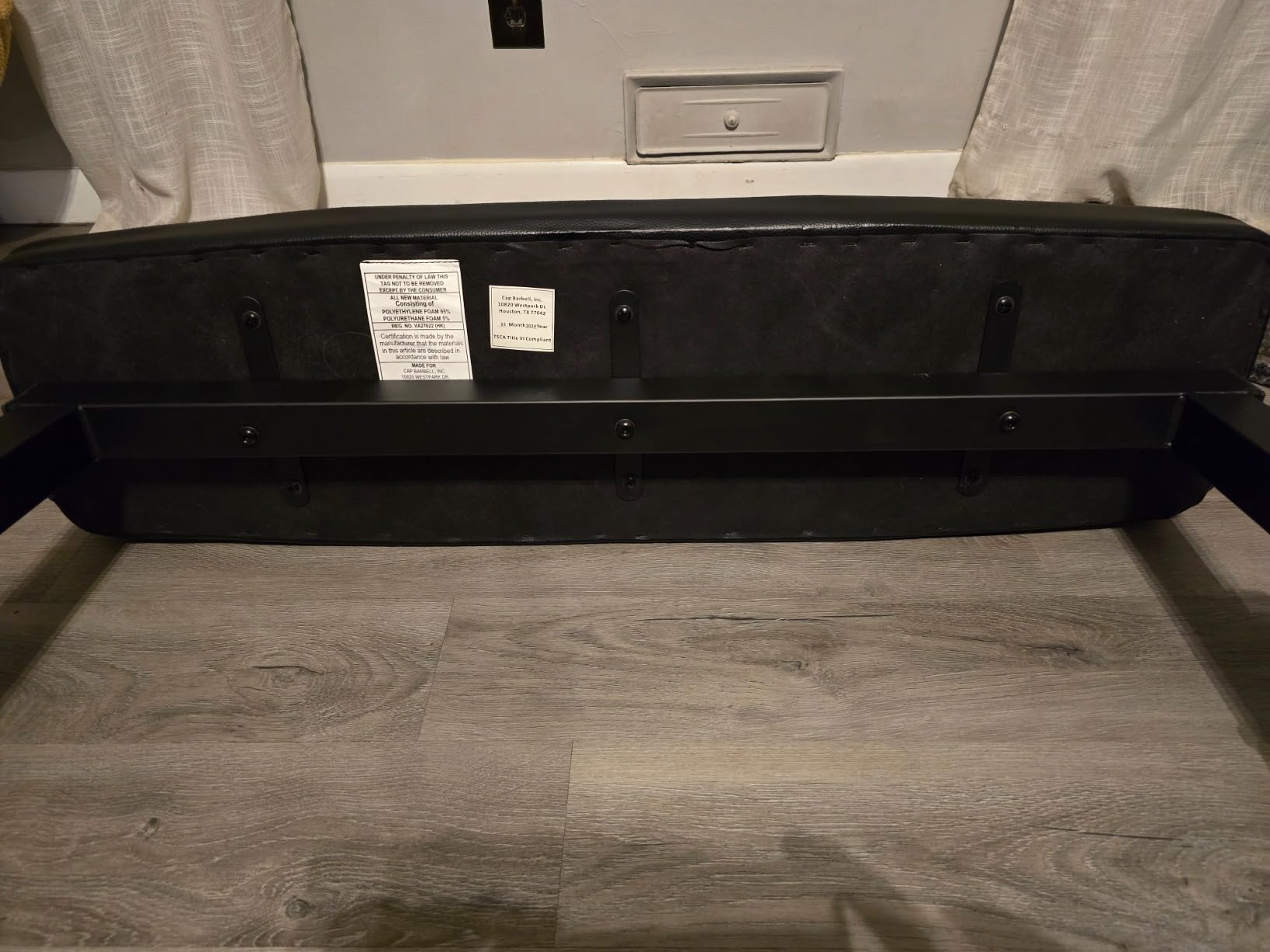
The CAP Barbell is the entry point, and owners say it is built better than its price suggests. The powder-coated tubular steel frame is solid, the box-stitched padding is firm enough to support a press without sinking into the vinyl, and assembly takes about 15 minutes with all hardware included.
At 18 pounds it is heavy enough to stay where you put it but light enough to move between rooms without a dolly. For a first piece of gym equipment, or a bench for a spare room or a basement corner, the simplicity is the feature. There are no pins, no adjustment system and nothing to learn.
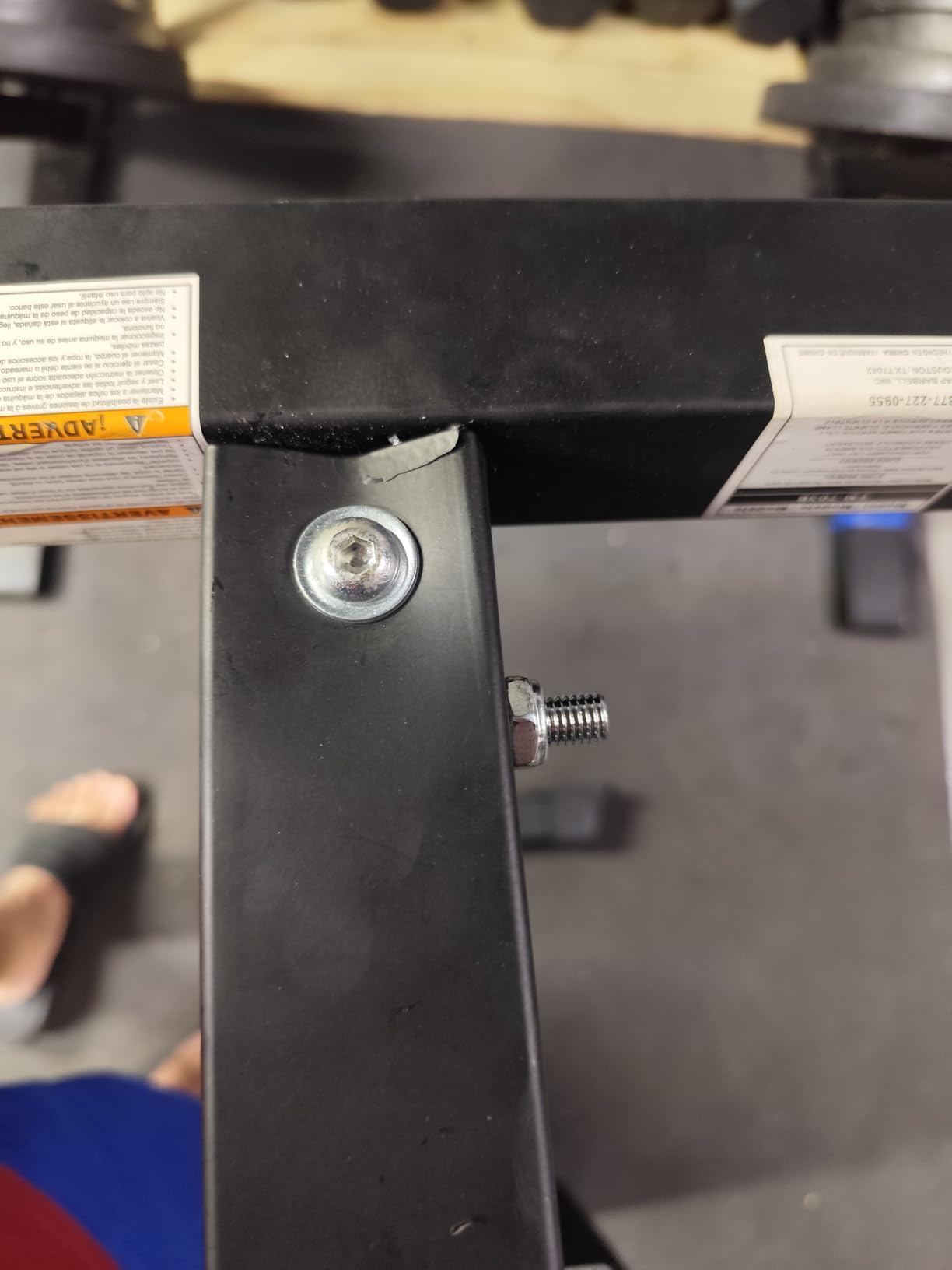
What you are accepting is the 500 lb capacity, which is the lowest in this roundup and limits the bench to moderate dumbbell work and a light barbell. Owners also report that the three thin cross braces under the seat flex under lateral load, and advise sitting in the middle of the pad because loading the ends feels tippy.
The warranty is 30 days from the manufacturer, which is the shortest here, and the bench is fixed flat with no angle adjustments at all. Several buyers do note that the build quality surprises them, so this is a bench built simply and honestly rather than cheaply assembled.
What it is genuinely good at
Dumbbell pressing, hip thrusts, core work and stretching. The firm box-stitched pad means your back does not sink into a soft surface when you are doing rows or sit-ups, and the wide 18-inch top gives room for a comfortable stance. The powder coat resists rust in a damp basement in a way that bare steel does not.
It is also the easiest bench here to relocate. When a bench press bench is not your focus and you want floor space back, carrying 18 pounds to another room takes seconds, with no wheels to fail.
Where it falls short for pressing
Do not load this with a heavy barbell. The thin under-seat cross bracing is the weak link and it flexes before the frame does, which is the wrong order of failure. The 500 lb rating also puts a hard ceiling on any barbell progression, and the 30-day warranty gives you almost no protection if something loosens in month two.
When you outgrow it, the step up is the Finer Form: same flat geometry, 45-inch length, a 1000 lb rating and a frame with far less lateral flex. Many home gym owners keep the CAP on a cardio floor and add a second bench for the barbell work later.
10. Keppi FID 1200 lb Bench – Best for Heavy Barbell Work
Keppi FID Adjustable Weight Bench,1200LBS Workout Bench for Home Gym
- ASTM-certified 1200 lb capacity on a fully welded 70x50mm frame
- 17.3 inch IPF-standard bench height
- 36 inch extended backrest suits larger lifters
- Adjustable foot catch with foam rollers for decline work
- 98 percent pre-assembled with wheels and handle
- Largest footprint here at 58.5 inches deep
- Heaviest bench at 59 lb so moving it takes two people
- Takes dedicated floor space
The Keppi is the one we would put under a serious barbell. It is ASTM-certified to 1200 lb on a fully welded 70x50mm commercial-grade steel frame, and welded construction is the single most important longevity factor in this entire roundup. There is no bolt to loosen and no joint to fatigue over years of loading.
The 17.3-inch bench height is the detail that separates it from every other adjustable in this guide. Lifters on home gym forums consistently point out that a taller bench makes a proper arch harder to achieve, which is exactly why the IPF standard exists. At 17.3 inches this sits right at that number, so your feet plant and your back stays flat.
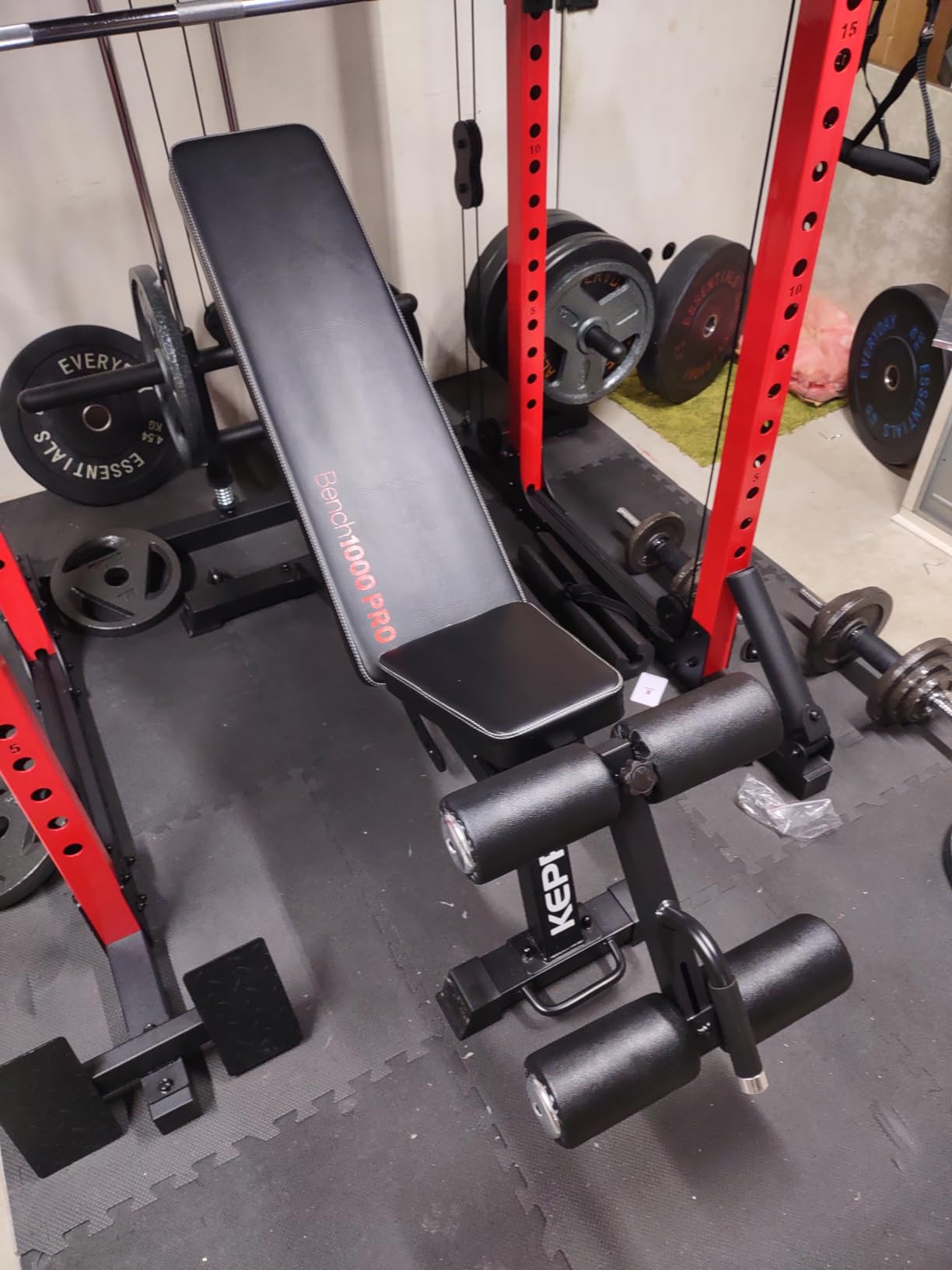
The 36-inch extended backrest is long enough to support head, neck and a full back for heavier lifters, and 12 backrest plus 3 seat positions give 36 angle combinations including decline. An adjustable foot catch with soft foam rollers makes decline work controlled rather than sketchy. It is 98 percent pre-assembled with built-in transport wheels and an ergonomic handle.
You pay for that build in floor space. At 58.5 inches deep and 24 inches wide, it has the largest footprint here, and at 59 pounds it is the heaviest bench we tested, meaning moving it without the wheels takes two people. The trade is deliberate: this is equipment for a dedicated garage, not a corner of an apartment.
Why bench height changes your press
Arch mechanics and leg drive are the whole reason. On a lower bench, the shoulders sit slightly above the chest, the upper back stays in contact with the pad through the pressing motion, and the legs have room to extend and drive. On a taller bench, the shoulders roll forward, the arch collapses toward flat, and the press becomes a shoulder press performed lying down.
The 36-inch backrest reinforces that. Longer backrests support more of the shoulder blade area, which lets you set a tighter arch without your head sliding off the end. Combined with the welded frame, this is the most stable combination of geometry and construction in the roundup.
Who should not buy it
Skip this if you live in an apartment, rent a space, or need your floor back on a schedule. Nearly 6 feet long and 59 pounds is not something you move between rooms after a workout. Anyone under about 5 foot 6 will also find the 36-inch backrest more bench than they need.
If you want the same welded rigidity at a slightly lower load rating and a smaller footprint, the JOROTO below shares the 17-inch height and a 1300 lb rating in a 45.9-inch frame. The Steelbody is the other option if you need something that fits inside a rack.
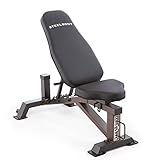
11. Steelbody Deluxe Utility Bench – Best Ladder Adjustment and Rack Fit
Steelbody Deluxe 6 Position Utility Weight Bench for Weightlifting and Strength Training STB-10105, Black-Brown
- Ladder adjustment feels far more stable and repeatable than pin-and-hole benches
- 2 inch thick faux canvas vinyl padding
- Built-in wheels recessed under the frame so they clear a rack
- Wider seat suits broader backs
- 2 year manufacturer warranty
- Listed 300 lb weight limit is far below the others
- No decline position
- Back pad too short for lifters around 6 foot
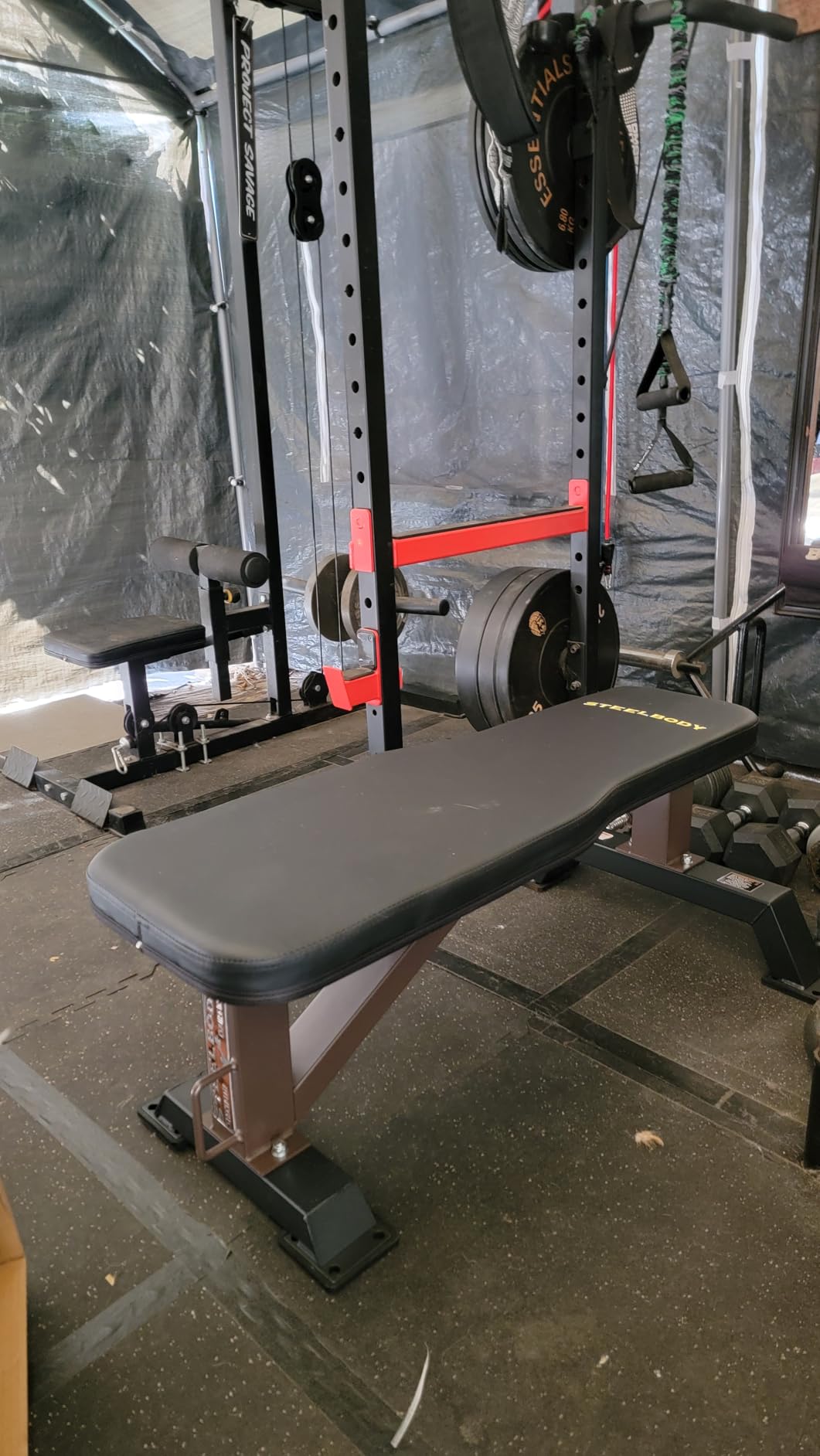
The Steelbody does two things nothing else in this roundup manages. It uses a ladder-style back adjustment instead of pin-and-hole, and its wheels are recessed under the frame so they do not interfere with a rack or a cage. Owners report working inside a Rogue S-2 or Titan T-3, which makes it a genuinely rack-friendly bench rather than one that merely fits a garage corner.
The ladder system is the more important of the two. A pin-and-hole bench is a set of holes and one loose pin, so the back pad can settle slightly and the angle depends on how carefully you seated the pin. A ladder is a ratchet, so every notch is the same position every time. Lifters who care about repeatable angles between sets notice the difference immediately.
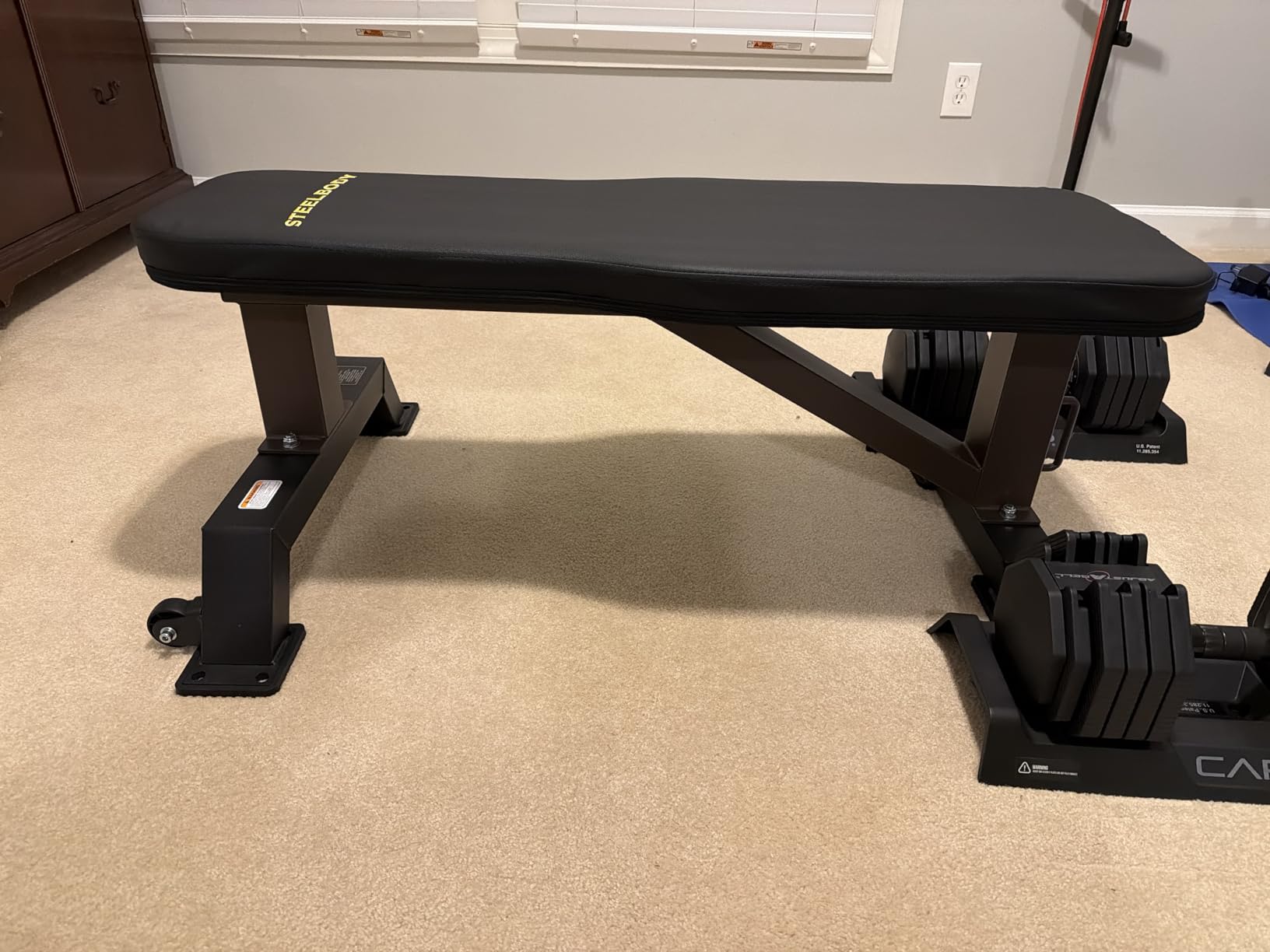
Build quality is near-commercial. It is 55 pounds of stainless steel with no side-to-side wobble, the padding is 2 inches thick and covered in a sturdy faux canvas vinyl that is comfortable over long sessions, and the seat is wider than average, which suits users with broader backs. The back pad adjusts into 6 positions including military, incline and flat, and the seat pad rearranges into 5 positions to pair with each angle.
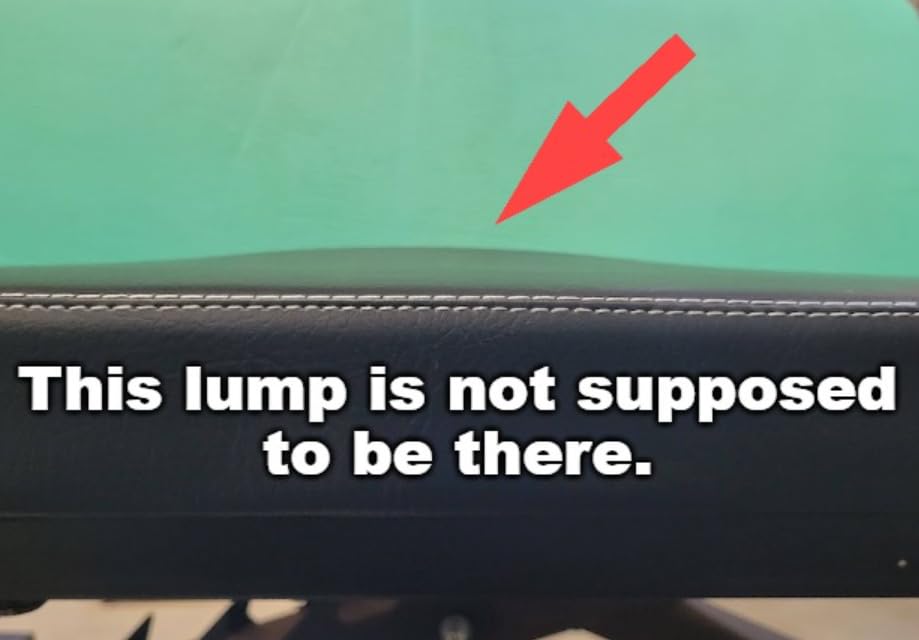
The 300 lb listed weight limit is the glaring catch and the reason this is not higher on the list. There is no decline position, the back pad is too short for anyone around 6 feet, and the gap between the seat and back pad when flat is noticeable. Instructions are poorly labelled and a wrench or socket is needed, and a few units arrive with a stained or torn back pad.
Why rack fit changes your options
A bench with wheels that protrude cannot sit inside a rack, so you end up pulling it in and out for every set. The recessed wheels here mean the bench can live under the bar permanently, which is the difference between a rack and a bench being one station or two. If you squat and bench on alternating days, that single design decision is worth a lot.
The stainless steel frame is also worth noting for a different reason: it will not powder-coat chip and rust the way painted steel does if you drag it across concrete, which is routine in a garage. Non-marking footpads and end caps avoid floor damage when moving it.
Who should skip it
Skip it if your max set is above 300 lb. That rating is the published limit and it is far below every other bench here, and no amount of frame stiffness makes a stated limit irrelevant when you are under a heavy bar alone. The Steelbody is an accessory and volume bench, not a maximal one.
Also look past it if you are 6 feet or taller, since the back pad will not support your head at incline, or if you need decline work, which it does not offer. For heavy pressing the Keppi or the Finer Form are the better tools.
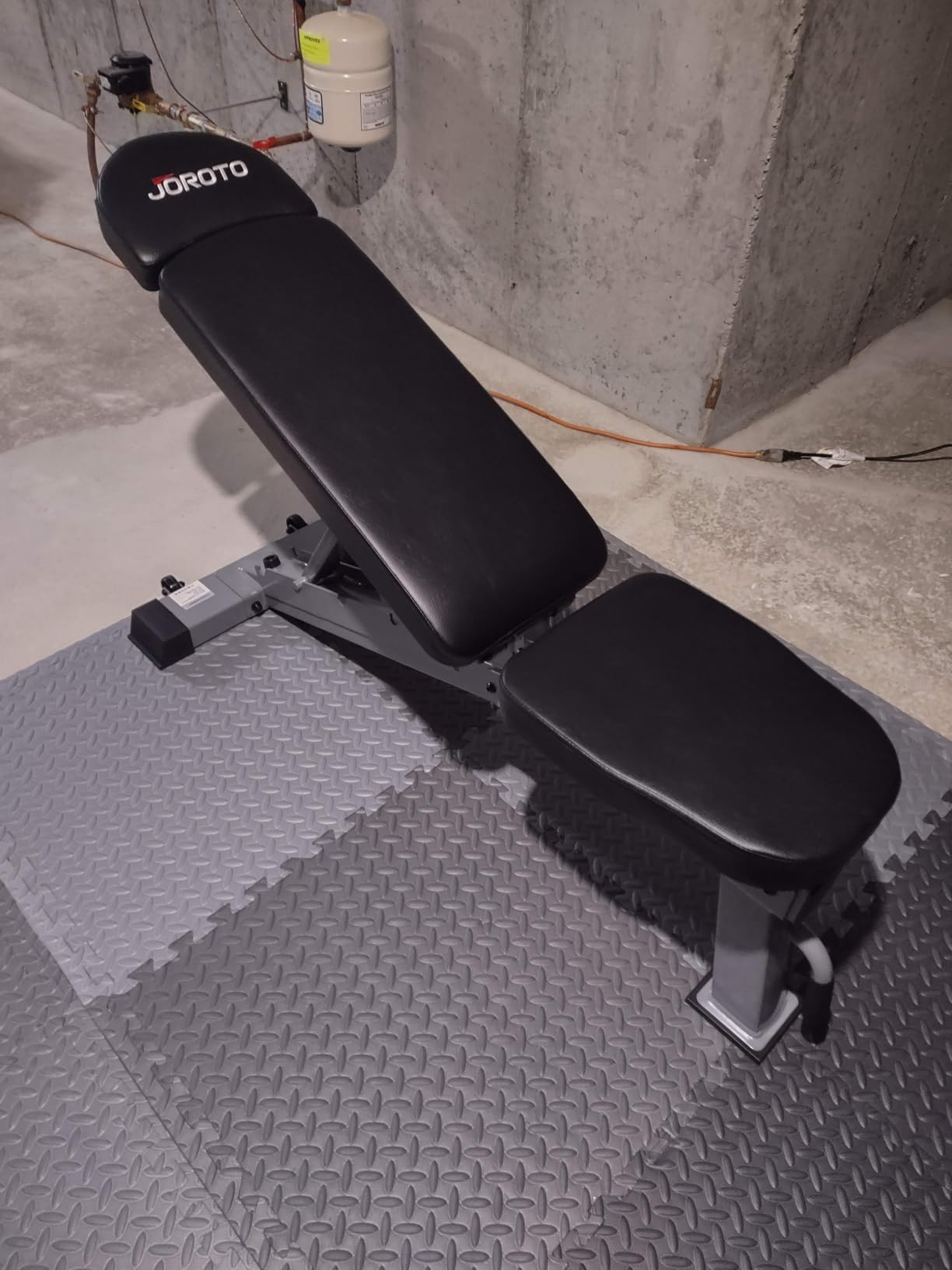
12. JOROTO FID 1300 lb Bench – Highest Load Rating in the Roundup
- 1300 lb rated capacity
- the highest here
- on a frame tested to 1500 lb
- Widened 34 inch backrest supports heavy barbell and dumbbell work
- 17 inch seat height close to the commercial standard
- Built-in transport wheels and handles make 42 lb movable
- Only 7 backrest angles
- so adjustment granularity is coarse
- 42 lb weight means a two-person lift without the wheels
- Wide 24.3 inch footprint needs a dedicated area
The JOROTO carries the highest load rating in this roundup at 1300 lb, on a reinforced triangular high-grade alloy steel frame the brand says was tested to 1500 lb. That is a large margin between the rated number and the tested number, and it is the kind of over-spec that gives a bench presser confidence under a heavy bar.
The 17-inch seat height is the other headline number, and it lands almost exactly on the commercial standard. Combined with a widened 34-inch backrest, this is a bench built around a serious press. The high-density foam sits under premium sweat-resistant leather, which matters in a garage on a hot day, because a slippery pad is a lost arch.
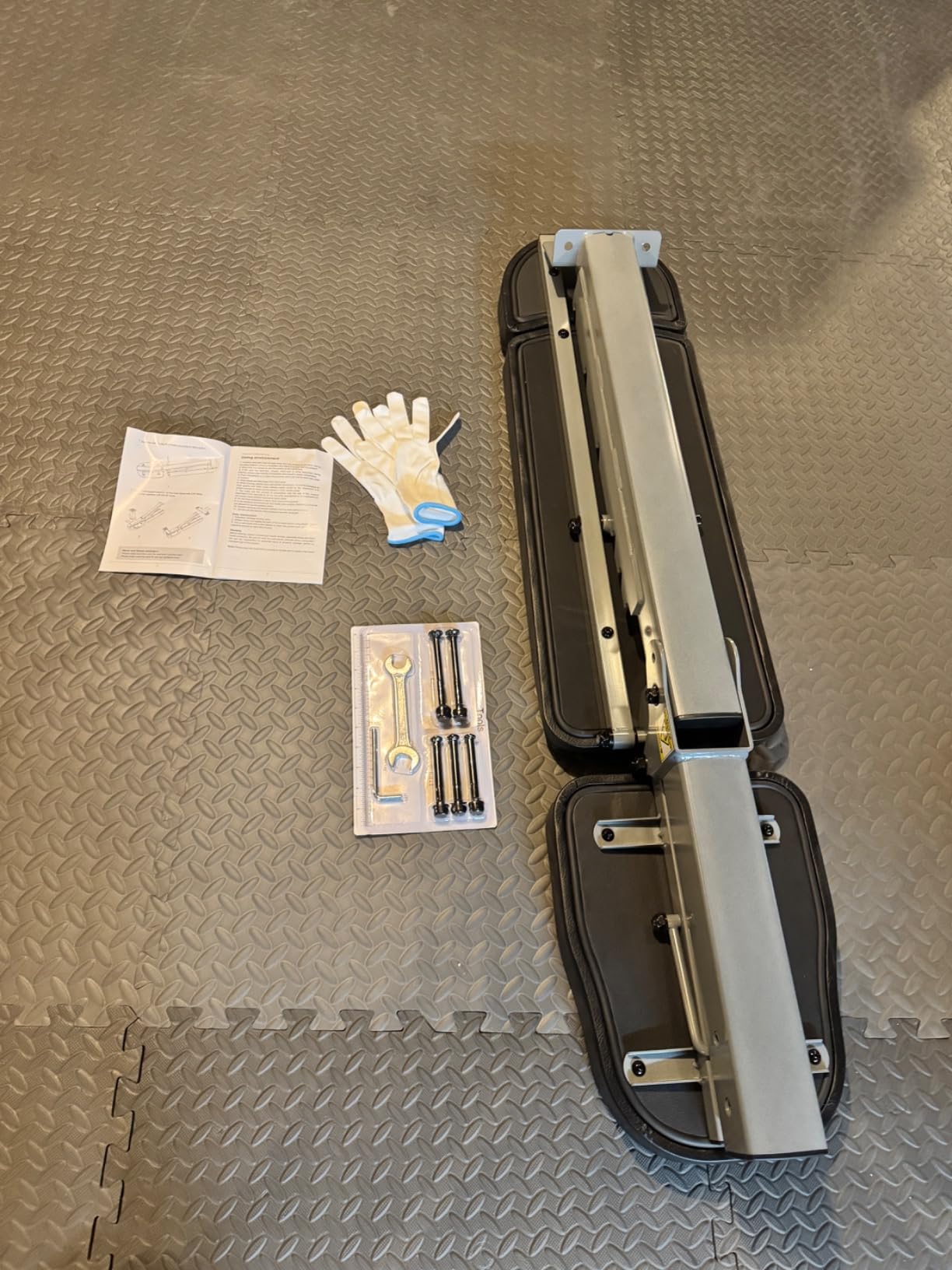
Seven backrest angles plus two seat adjustments give flat, incline, decline and upright positions. The adjustment is coarse by the standards of this roundup, where competitors offer 84, 144 and 924 combinations, and coarse means you will settle on the same two or three angles rather than scrolling through options.
At 42 pounds with built-in transport wheels and handles, it is movable with the wheels and a two-person lift without them. The 24.3-inch width demands a dedicated gym area, and only one color is listed. At a 4.7 average across 929 reviews, the satisfaction score is among the highest here, though the review base is smaller than the benches above it.
When the highest rating actually helps
Load rating is not a marketing number when the margin is this large. A 1300 lb rating tested to 1500 lb means the frame has been pushed well past the number you will ever approach, which is the safety margin you want between your bar and a structural failure. The reinforced triangular frame resists the same shear pattern as the Keppi, in a slightly smaller package.
The 34-inch backrest is long enough to keep the head supported through an incline press, which is where shorter pads fail most visibly. And the sweat-resistant leather keeps a grippy surface, and grip is what lets a big lifter drive their legs rather than sliding on the pad.
Where it loses ground
Adjustment granularity is the honest weakness. Seven backrest angles is enough to train on and not enough to fine-tune, so if you like to work at a specific angle rather than one of a handful, you will notice. The 42-pound weight and 24.3-inch width also make it a poor fit for anything smaller than a garage.
If you want even more capacity margin, the Keppi is fully welded at 1200 lb and holds an IPF-standard 17.3-inch height in a longer 36-inch backrest. If you want to save floor space, the Steelbody fits under a rack but carries a much lower 300 lb rating. The JOROTO sits in between, and it is the pick for a lifter whose pressing outpaces their adjustment needs.
How to Choose a Weight Bench for Your Press
Flat or adjustable: pick based on your program, not your ambition
A flat bench is a rigid, welded platform that does one thing perfectly, and an adjustable bench trades a small amount of that rigidity for positions you may never use. Serious pressers tend to converge on a dedicated flat bench once they outgrow an adjustable, which is a pattern that shows up constantly in home gym discussions. If your program is barbell bench press plus squat or deadlift, a flat bench gives you a stiffer platform and a lower bench height for a better arch.
An adjustable bench earns its place when your training includes incline dumbbell pressing, shoulder work, decline core work or rows. It is the better single-bench answer for a general home gym or a person training in an apartment, and it is the more forgiving choice for a beginner who has not settled on a program. The compromise is always at the adjustment hinge and the taller frame height.
Weight capacity: look at your bodyweight plus your load
How much weight capacity should a weight bench have? A common rule is to rate the bench above your bodyweight plus the total load you will ever put on it, so a 180 lb lifter pressing 300 lb needs a 500 lb bench and then some. Serious pressers should aim for 1000 lb or more. Every bench here clears 500 lb except the CAP Barbell at 500 lb, which is the one we would not put under a heavy barbell.
Two caveats matter. Treat a listed capacity as a marketing claim until you know whether the brand certified it, which is why the ASTM-certified figures in this roundup carry more weight than the unlabelled ones. And read the low number, not the high one: several owners of the Amazon Basics flat report a 385 lb limit printed in the enclosed literature despite a 700 lb listing, and the Steelbody publishes a 300 lb limit that is far lower than its rivals.
Bench height: why 17 inches is the number everyone cites
What bench height do powerlifters use? The answer is 17 inches, because the IPF standard is built around it. Lifters on forums consistently note that a taller bench makes the arch harder to achieve, since the shoulders roll forward and the upper back loses contact with the pad. A lower bench lets the legs extend and drive, and leg drive is the largest single contributor to a heavy press.
Among these picks, the Keppi lists 17.3 inches and the JOROTO 17 inches, both effectively standard height. The Finer Form flat sits at 18 inches, the Amazon Basics flat at 18.4 inches, and the BARWING at 18.6 inches, which is noticeably taller. If you are tall and have limited shoulder mobility, that last two inches is the difference between an arch and a flat press.
Pad gap: the most underrated feature on any bench
Do I need a small pad gap for bench pressing? Yes. The gap between the seat and back pad is the most repeated long-term complaint across the reviews we analysed, and lifters describe it digging into the upper back and glutes on every rep. A wide gap forces you to bridge across it, which takes the arch away from you and shifts the load onto your lower back. Bench height and pad gap are the same problem viewed from two directions.
This is the single clearest reason to read owner reviews rather than spec sheets, because manufacturers rarely publish a gap measurement. The Yagud set is the clearest example of a gap causing a real problem: owners report a protruding metal connector at the seat and back junction pressing into the tailbone during a press. The Steelbody and the YOLEO have a noticeable gap in flat position that owners mention specifically during decline and core work.
Lock pin versus ladder adjustment
A pin-and-hole bench is a set of holes and one loose pin. It is fast, cheap and light, and the pin can slip or be lost. A ladder or ratchet system is a series of notched positions where each notch is identical every time, so the angle is repeatable between sets and there is nothing small enough to lose. The Steelbody uses a ladder, and owners consistently describe it as more stable and repeatable than pin-and-hole benches.
The modern middle ground is the spring lock, which is what the FLYBIRD WB5 and the BARWING use. Pull the mechanism, move the pad, release, and the pad locks instantly. It is close to ladder repeatability with none of the weight penalty, and it is the reason the FLYBIRD tops this list for a home gym with no rack. The trade is that a spring-loaded mechanism is another small part that can weaken, and on the PASYOU owners report weak ball bearings and pins that are easy to lose.
Steel gauge, welds and why construction decides longevity
A capacity number tells you how much load a bench was tested to hold. Construction tells you how long it holds it. Welded frames such as the Keppi’s fully welded 70x50mm commercial-grade steel outlast bolted frames because there is no fastener to work loose under cyclic loading, and none of the competitors we analysed covers this factor at all. If you bench more than twice a week and intend to keep the bench for years, welded construction is the first thing to filter on.
Beyond that, look at the bracing under the seat. The CAP Barbell uses three thin cross braces that owners report flexing under lateral load, so loading the ends feels tippy. The Finer Form uses 4-way steel bracing on all four sides, and the difference in stability under a heavy bar is exactly what you would expect from that design choice. Powder coat is a corrosion treatment, not a strength rating, so do not mistake a good finish for a strong frame.
Footprint, storage and who moves the bench
Measure the floor space before you buy, and measure it with the bench in its folded position, not its open one. The Keppi is 58.5 inches deep, the JOROTO is 45.9 by 24.3 inches, and the BARWING is 48.8 inches wide. At the other end, the NICEPEOPLE folds to 30.7 by 16.3 by 9.25 inches, the FLYBIRD folds to a 9.06-inch-wide profile, and the Finer Form and Amazon Basics flat benches both fold flat.
Then check the weight, because a 59-pound Keppi or a 55-pound Steelbody is a two-person move without wheels. The CAP Barbell at 18 pounds walks between rooms in seconds. If you rent, folding and wheeled transport matter more than capacity, and our broader home gym bench guide covers storage options for small spaces in more depth.
Warranty length as a buying signal
A warranty is a signal about whether the brand expects to still be around to repair the frame, and the range in this roundup is stark. The CAP Barbell offers 30 days, the Amazon Basics flat and the FLYBIRD frame offer 1 year, the YOLEO and the Steelbody offer 2 years or more, and several adjustable benches add 3-year parts coverage on top of a 1-year frame.
For a permanent piece of equipment, prefer a brand with a longer warranty over one with a slightly higher capacity claim, because capacity you will never use does not matter if the adjustment hinge fails in year two. Bench adjustment hinges are the component that fails first, and no amount of frame steel prevents it.
Frequently Asked Questions
What is the best weight bench for bench press?
For most home gyms, the FLYBIRD WB5 is the best bench press bench because it combines an ASTM-certified 800 lb capacity with one-second spring-lock angle changes and a 30-inch backrest that supports a real arch, and it folds to a 9.06-inch-wide profile when you need the floor back. If you already own a rack and train heavy singles, look at a welded flat or a 17-inch bench like the Keppi instead, because a rigid frame beats adjustability for a max-effort press.
Should I buy a flat or adjustable weight bench?
Buy a flat bench if your program is barbell bench press plus squat or deadlift, because a rigid welded frame is stiffer, sits lower for a better arch, and has no adjustment hinge to fail. Buy an adjustable bench if you also train incline dumbbell pressing, shoulder work or decline movements, or if you train in a space where you need to fold the bench away. Many serious lifters start on an adjustable and graduate to a dedicated flat once the press outgrows the hinge.
What bench height do powerlifters use?
Powerlifters use 17-inch bench height, and that is the IPF standard. Bench height changes how much arch you can set: on a taller bench the shoulders roll forward and the upper back loses contact with the pad, while a lower bench keeps the feet planted and lets the legs drive. Among these picks, the Keppi at 17.3 inches and the JOROTO at 17 inches sit closest to that standard, while the BARWING at 18.6 inches is noticeably taller.
How much weight capacity should a weight bench have?
A practical rule is to pick a bench rated above your bodyweight plus the heaviest total load you will ever place on it, so a 180 lb lifter pressing 300 lb needs at least a 500 lb rating. Serious pressers should target 1000 lb or more. Prefer ASTM-certified figures over unlabelled claims, and read the low number as well, because some benches list a capacity far above what the enclosed literature states.
Do I need a small pad gap for bench pressing?
Yes, a small pad gap matters more than most buyers expect. A wide gap between the seat and back pad forces you to bridge across it, which flattens your arch and shifts load onto your lower back. The gap is the most repeated complaint in owner reviews, and it is the reason to check user feedback rather than spec sheets, since manufacturers rarely publish a gap measurement.
Is a 275 lb bench press impressive?
A 275 lb bench press is a genuinely strong result for a natural lifter and a solid milestone for anyone training seriously. For context, a 200 lb man at an intermediate level is often working in that range, and reaching it usually comes from a mix of technique, arch and leg drive rather than arm strength alone. What matters more for your bench is the trend across a training block, not the single number.
The Verdict
The FLYBIRD WB5 is the best weight bench for bench pressing for most people, and it wins on evidence rather than on a spec sheet. An ASTM-certified 800 lb capacity, a dual-triangle frame, one-second spring-lock angle changes and a 30-inch backrest that supports an arch add up to a bench that owners across 26094 reviews describe as commercial-gym quality. It also folds to a 9.06-inch-wide profile, which is the detail that keeps it in a small apartment instead of a garage.
Buy differently if your situation is different. Train heavy singles and already own a rack, and the Keppi with its fully welded 70x50mm frame at a 17.3-inch height is the tool for the job. Want maximum load rating in a slightly smaller package, and the JOROTO holds the highest rating here at 1300 lb on a frame tested to 1500 lb. Pressing at any level in the tightest possible space, and the NICEPEOPLE folds down to 9.25 inches tall. Fixed flat and lowest barrier to entry, and the CAP Barbell does the job with no moving parts.
Whichever one you choose, check the pad gap and the bench height before anything else. Those two numbers decide whether you can set a strong arch, and the arch is what moves the number on your barbell. Use the home gym bench roundup if you are still working out how much space you can give up, and this list will be current for 2026.