
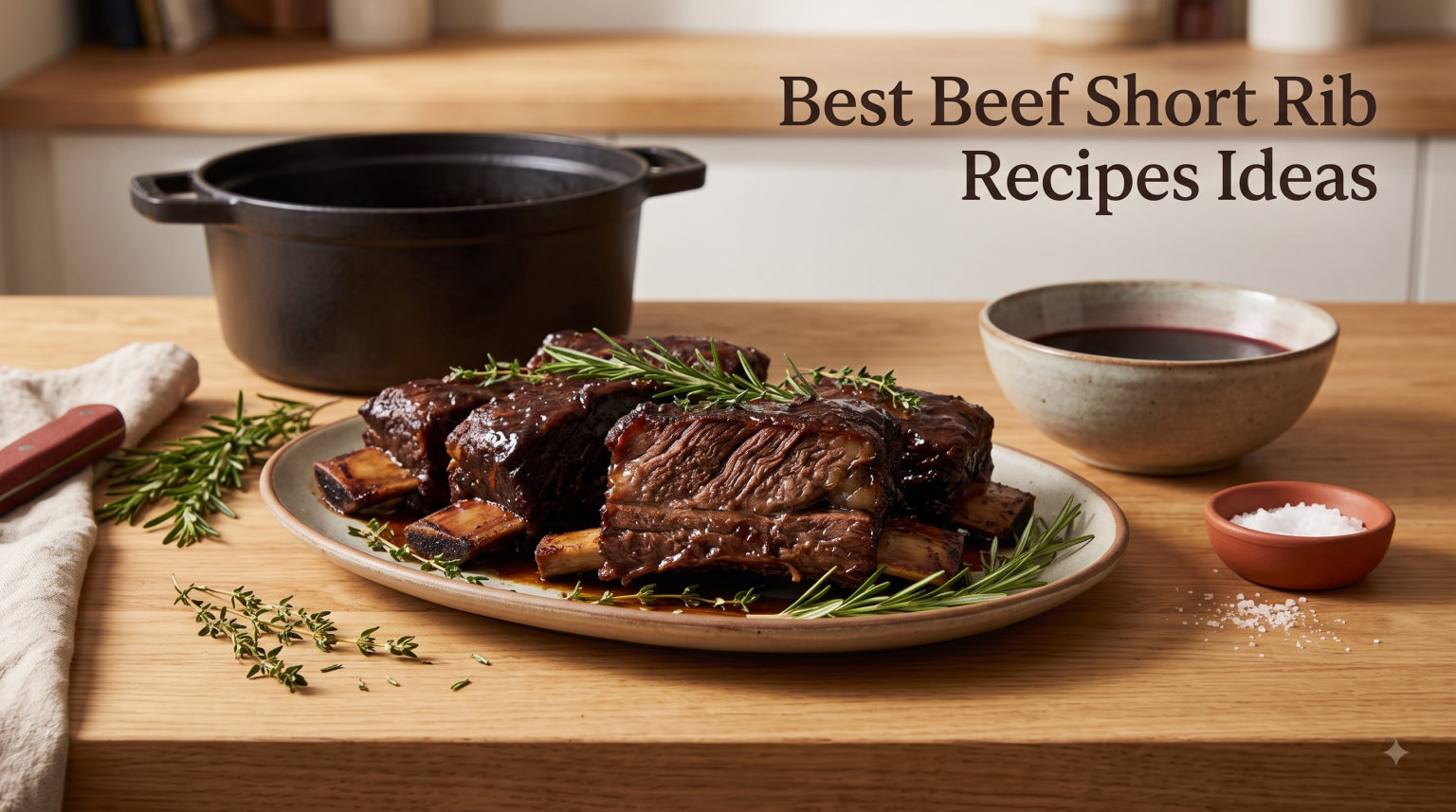
A good collection should answer the cooking question before adding options. I recommend choosing the cooking method by the result you want, seasoning in layers, and using texture and temperature—not the clock alone—to decide when beef short rib is ready. You will see that approach throughout these best beef short rib recipes ideas.
I organized the guide around easy beef short rib dinner recipes and beef short rib meal ideas, with practical timings, substitutions, serving ideas, storage guidance, and fixes for the problems that matter. For another useful option, see this ground beef cooking guide.
Table of Contents
What Are Beef Short Ribs?
Beef short ribs come from the chuck, plate, and brisket sections of the cow. They are essentially the ribs that run along the underside of the animal, cut into shorter, meaty portions. The name “short” refers to the fact that a small section of rib bone is left in each piece, rather than the long strip you see in a full rack of ribs.
What makes this cut so prized is the marbling. Short ribs are loaded with intramuscular fat and connective tissue. That combination sounds like a problem, but it is actually the secret to their flavor. When you cook them low and slow, that fat renders down and that tough connective tissue melts into gelatin. The result is meat so tender it falls apart with just a fork.
You will typically see short ribs sold two ways. English cut leaves the bone in, with a thick layer of meat sitting on top. Flanken cut slices across the bone into thin strips, which is what you see in Korean barbecue. Both come from the same area, but they cook very differently.
For most beef short rib recipes, especially braised ones, you want the English cut. The bone adds flavor to the sauce, and the thick meat layer is what gives you those melt-in-your-mouth results everyone talks about.
Why Short Ribs Are Perfect for Slow Cooking
There is real science behind why slow cooking turns short ribs into something magical. The magic word here is collagen.
Short ribs contain a lot of connective tissue made mostly of collagen. When cooked quickly at high heat, that collagen stays tough and the meat becomes chewy. But when you cook the ribs slowly at a low temperature — somewhere between 275°F and 325°F — that collagen slowly converts into gelatin. That gelatin coats the muscle fibers, making the meat literally melt in your mouth.
This is why a tough, inexpensive cut like short ribs can taste more luxurious than a much pricier steak. The fat and connective tissue, which would ruin a quick-cooking method, are exactly what create that deep, rich, fall-apart texture when given time.
This also explains why short ribs work so well in beef short rib recipes that use braising, slow cookers, or pressure cookers. All three methods use low, steady heat and liquid to break down the meat. They just do it at different speeds.
How to Choose Quality Beef Short Ribs
Picking good short ribs does not have to be complicated, but a few details make a real difference in the final dish.
Look for marbling. You want to see thin white streaks of fat running through the meat itself, not just a thick cap of fat on top. That intramuscular fat is what makes the meat tender. Avoid ribs where the meat looks completely lean or dark red throughout — they will dry out during the long cook.
Check the USDA grade. The USDA grades beef based on marbling, and for slow-cooked recipes this matters. Prime grade has the most marbling and is worth seeking out for a special occasion. Choice is widely available and works perfectly well for everyday braising. Select grade is leaner and will work, but the result will not be quite as rich.
Bone-in versus boneless. For braising, I strongly recommend bone-in. The bone adds flavor to the sauce and helps the meat hold its shape during the long cook. Boneless short ribs are easier to portion and work well in the Instant Pot, but you lose some of that deep, beefy character.
Plan portions. A good rule of thumb is one pound per person for bone-in short ribs, since the bone accounts for some of that weight. For boneless, plan on about half a pound per person.
Best Cooking Methods for Beef Short Ribs
There is no single “right” way to cook short ribs, but each method has its strengths. Here is a breakdown to help you choose.
Ideas to Try
1. Dutch Oven Braising (The Classic)
This is the traditional method and, in my opinion, still the best for developing deep flavor. You sear the ribs first, then cook them in a covered Dutch oven with liquid at around 300°F for 3 to 4 hours. The heavy lid traps moisture while the oven provides gentle, even heat. This method produces the richest sauce and the most complex flavor.
2. Slow Cooker (The Set-and-Forget Option)
The slow cooker is the most hands-off method and a favorite on home cooking forums. Brown the ribs first if you have time, then transfer everything to the slow cooker on low for 7 to 9 hours. The meat comes out incredibly tender, though the sauce will be thinner than oven-braised since the liquid does not reduce as much.
3. Instant Pot (The Fast Option)
When you need short ribs on a weeknight timeline, the Instant Pot is your friend. After searing, pressure cook on high for about 45 to 50 minutes with a natural release. You will not get quite the same depth of flavor as a 4-hour braise, but the meat is still fork-tender and the time savings are huge.
4. Oven Braising Without a Dutch Oven
You can absolutely braise short ribs in a heavy baking dish tightly covered with foil. The results are similar to a Dutch oven, just keep an eye on the liquid level and make sure the foil is sealed tightly so steam does not escape.
5. Smoking and Grilling
For a totally different experience, smoked short ribs are incredible. Cook them low and slow at around 250°F for 5 to 6 hours with wood smoke until they reach an internal temperature of about 205°F. This method does not produce the same saucy result, but the smoky bark and tender meat are unforgettable.
Best Beef Short Rib Recipes Ideas
Use these checkpoints to compare easy beef short rib dinner recipes and beef short rib meal ideas before committing to a recipe.
-
Match the method to the time and equipment you actually have.
-
Read the doneness cue before starting so the final texture is not left to guesswork.
-
Choose one useful side or make-ahead component to turn the idea into a complete meal.
This is the recipe I make when I want to impress someone. It is the one I have served at dinner parties, brought to holiday meals, and refined based on feedback from family and friends. The red wine sauce is what makes this dish restaurant-quality, and the technique is much simpler than the results suggest.
Ingredients
For the ribs:
-
4 pounds bone-in beef short ribs, English cut
-
2 tablespoons olive oil
-
1 tablespoon kosher salt
-
1 teaspoon freshly ground black pepper
-
1 large onion, roughly chopped
-
2 large carrots, roughly chopped
-
3 celery stalks, roughly chopped
-
6 garlic cloves, smashed
-
3 tablespoons tomato paste
-
2 cups dry red wine (Cabernet Sauvignon, Syrah, or Merlot)
-
2 cups low-sodium beef broth
-
3 sprigs fresh thyme
-
2 bay leaves
Serves: 4 to 6 people Prep time: 20 minutes Cook time: 3 hours 30 minutes Total time: 3 hours 50 minutes
Step 1: Season and Sear the Ribs
Preheat your oven to 325°F. Pat the short ribs completely dry with paper towels — this is critical for a good sear. Season generously on all sides with salt and pepper.
Heat the olive oil in a large Dutch oven over medium-high heat until it shimmers. Working in batches so you do not crowd the pan, sear the ribs for about 3 to 4 minutes per side until deeply browned. Do not rush this step. That brown crust is where a huge amount of flavor comes from.
Transfer the seared ribs to a plate and set them aside. Pour off all but about 2 tablespoons of the fat left in the pot.
Step 2: Build the Aromatic Base (Soffrito)
Lower the heat to medium. Add the chopped onion, carrots, and celery to the pot with a pinch of salt. Cook, stirring occasionally and scraping up any browned bits stuck to the bottom — that browned layer is called the fond, and it is pure flavor.
After about 8 to 10 minutes, when the vegetables are softened and starting to caramelize, add the smashed garlic cloves. Cook for another 2 minutes until fragrant.
Step 3: Add the Tomato Paste and Deglaze
Stir in the tomato paste and cook it for about 2 minutes. This step is easy to skip, but do not. Cooking the tomato paste removes its raw flavor and deepens the entire sauce.
Pour in the red wine and use a wooden spoon to scrape up any remaining browned bits from the bottom of the pot. Let the wine simmer until it has reduced by about half, roughly 5 to 7 minutes. This concentrates the flavor and burns off the harsh alcohol.
Step 4: Braise Low and Slow
Add the beef broth, thyme sprigs, and bay leaves. Stir to combine. Return the short ribs to the pot along with any juices that have collected on the plate. The liquid should come about halfway up the sides of the ribs — not fully submerging them.
Bring the liquid to a gentle simmer on the stovetop, then cover the Dutch oven with its lid and transfer it to the preheated oven. Braise for 3 to 3.5 hours, until the meat is fork-tender and pulls apart easily with a twist of a fork. Check at the 3-hour mark and add a splash more broth if the pot looks dry.
Step 5: Strain and Reduce the Sauce
Remove the pot from the oven and carefully transfer the ribs to a serving platter. Cover loosely with foil to keep them warm.
This next step is what separates a good recipe from a great one. Pour the cooking liquid through a fine mesh strainer into a saucepan, pressing on the solids with the back of a ladle to extract as much flavor as possible. Discard the solids.
Let the strained liquid sit for about 5 minutes, then skim off the layer of fat that rises to the top. Bring the sauce to a simmer over medium heat and let it reduce for 10 to 15 minutes, until it is glossy and coats the back of a spoon. Taste and adjust seasoning — add more salt only if needed.
Step 6: Serve
Spoon the reduced sauce generously over the short ribs. Garnish with fresh thyme leaves if you want it to look as good as it tastes. Serve immediately over mashed potatoes, polenta, or egg noodles.
Recipe Variations: More Beef Short Rib Recipes to Try
Once you have mastered the classic braise, these variations open up entirely new ways to enjoy this cut.
Slow Cooker Beef Short Ribs
Follow the same recipe above, but after searing the ribs and building the soffrito, transfer everything to a slow cooker. Cook on low for 7 to 9 hours or on high for 4 to 5 hours. The meat will be just as tender. To thicken the sauce, pour it into a saucepan and reduce on the stovetop for about 10 minutes before serving.
Instant Pot Beef Short Ribs
Use the sauté function on your Instant Pot to sear the ribs and soften the vegetables. Add the wine, broth, and aromatics, then seal the lid. Pressure cook on high for 45 minutes, followed by a 15-minute natural release. The texture is slightly less luxurious than oven braising, but the time savings are massive.
Korean BBQ Style Short Ribs (Galbi)
For this variation you need flanken-cut short ribs, the thin cross-cut style you find at Korean markets. Marinate them for at least 4 hours (overnight is better) in a mixture of soy sauce, sugar, sesame oil, garlic, grated Asian pear, and ginger. Grill them hot and fast over charcoal or a gas flame for about 3 to 4 minutes per side. Completely different from braising, but equally delicious.
Red Wine and Coffee Braised Short Ribs
A fun twist for adventurous cooks: add a quarter cup of strong brewed coffee or espresso along with the red wine. The coffee deepens the savory notes without making the dish taste like coffee at all. I was skeptical the first time I tried this, but it genuinely works.
Wine Pairing and Substitutions for Beef Short Ribs
The strongest easy beef short rib dinner recipes stay flexible without becoming vague, and the same is true of beef short rib meal ideas. Keep the timing cue and main technique intact, then adjust seasonings or sides to fit the meal. This protein-forward dinner guide offers another practical direction.
One of the most common questions I get about these beef short rib recipes is what wine to use. Here is what I have learned from years of testing.
Best wines for braising: You want a dry red wine with good body and not too much sweetness. Cabernet Sauvignon, Syrah (also called Shiraz), Merlot, and Pinot Noir all work beautifully. The wine does not need to be expensive — in fact, home cooks on cooking forums consistently confirm that budget wine works just as well as a pricey bottle for slow cooking. The long cooking process mellows everything out.
What to avoid: Sweet wines like Moscato or port will make the sauce cloying. Very tannic wines can leave a bitter edge after reduction. Cooking wine from the grocery store has added salt and preservatives that throw off the seasoning.
Non-alcoholic substitutions: If you prefer not to cook with wine, you have options. Combine one cup of beef broth with a quarter cup of balsamic vinegar and two tablespoons of grape juice or cranberry juice. You will not get the exact same depth, but the sauce will still be rich and complex. You can also use a non-alcoholic red wine, though these vary a lot in quality.
What to drink with the finished dish: Serve the same type of red wine you cooked with. A Cabernet Sauvignon or Syrah pairs naturally with the rich, beefy flavors. If you prefer white wine, a full-bodied oaky Chardonnay can stand up to the richness.
Serving Suggestions and Side Dishes
-
The sauce from these beef short rib recipes is the star, so you want sides that can soak it up.
-
Classic pairings: Creamy mashed potatoes are the obvious choice and for good reason. Soft polenta or grits are equally good. Egg noodles or wide pappardelle pasta turn the dish into something closer to short rib ragu.
-
Vegetable sides: Glazed carrots, roasted Brussels sprouts, sautéed mushrooms, or a simple green bean preparation all balance the richness. A bright, acidic salad with vinaigrette also cuts through the heavy meat flavors nicely.
-
Creative serving ideas: Shred leftover short ribs and stuff them into tacos with pickled onions and cilantro. Pile the meat onto a bun for the most decadent sandwich you will ever eat. Toss the shredded meat with cooked pasta and a little of the sauce for a quick second-night dinner.
Make-Ahead, Storage, and Freezing Instructions
-
Here is one of the best things about beef short rib recipes: they are often better the next day. The flavors deepen overnight, and the fat is much easier to remove from the sauce once it has chilled and solidified.
-
Make ahead: Cook the ribs completely, let everything cool to room temperature, then refrigerate the meat and sauce together in an airtight container. The next day, scoop off the solid layer of fat from the top of the sauce, then reheat gently on the stovetop or in a 300°F oven until warmed through.
-
Refrigerator storage: Cooked short ribs will keep in the refrigerator for 3 to 4 days. Store the meat in the sauce to keep it moist.
-
Freezing: Short ribs freeze beautifully. Cool them completely, then transfer to freezer-safe containers with enough sauce to cover. They will keep for up to 3 months. Thaw overnight in the refrigerator before reheating.
-
Reheating: Reheat gently in a covered pot on the stovetop over low heat. Avoid microwaving if possible — it tends to toughen the meat and splatter the sauce. If the sauce has thickened too much in the fridge, add a splash of beef broth to loosen it.
Tips for Perfect Beef Short Ribs Every Time
-
After making these recipes more times than I can count, here are the lessons that matter most.
-
Do not skip the sear. That browned crust is not just for appearance. It builds the foundation of flavor for the entire sauce. Take the time to get a real sear on every side.
-
Use low-sodium broth. Regular broth combined with the salt from seasoning and the reduction of the sauce can make things too salty. This is one of the most common complaints on cooking forums. Low-sodium broth gives you control.
-
Know when the ribs are done. Do not rely on time alone. The ribs are ready when a fork slides into the meat with almost no resistance and a gentle twist easily pulls a piece away. If there is any toughness, give them another 30 minutes.
-
Let the meat rest. After braising, let the ribs rest for 10 to 15 minutes before serving. This lets the juices redistribute and makes the meat easier to handle.
-
Fix a sauce that is too salty. If you accidentally over-seasoned the sauce, add a small peeled potato and simmer it for 15 minutes. The potato absorbs some of the salt. Remove it before serving. You can also dilute with a little unsalted broth.
Common Short Rib Substitutions
Short ribs are not always easy to find, and they can be pricey. If you cannot find them, or want a more budget-friendly option, here are the best substitutes for beef short rib recipes.
Beef chuck roast: This is the closest substitute. Cut chuck roast into large chunks and braise it the same way. The texture and flavor are remarkably similar. Chuck actually has excellent marbling and breaks down beautifully with slow cooking.
Beef shank: Cross-cut beef shanks (osso buco style) work well and bring their own deep, rich flavor thanks to the marrow bone. They look different on the plate but deliver a similar eating experience.
Oxtail: Oxtail has even more collagen than short ribs, which means an incredibly silky sauce. The trade-off is that there is less meat per pound, so plan accordingly.
Lamb shanks: Not a beef substitute, but a worthy alternative for the same style of cooking. Lamb shanks braise beautifully and bring a different but delicious flavor profile.
Storage, Reheating, and Food Safety
I follow USDA food-safety guidance for chilling, reheating, and temperature checks. Whole cuts of beef and pork need 145°F followed by at least a three-minute rest; braising cuts often cook longer for tenderness. For more meal-planning context, pair the guide with these slow cooker chili.
-
Refrigerate perishable food within two hours, or within one hour when the room or outdoor temperature is above 90°F.
-
Store leftovers in shallow, covered containers so they cool evenly.
-
Label freezer portions with the dish and date, then thaw them in the refrigerator rather than on the counter.
Helpful Questions Before You Cook
What is the easiest way to cook beef short rib?
Choose the least hands-on method that suits the cut. Sheet-pan and oven methods are simple for batches, while a skillet is faster for smaller portions.
How do I keep beef short rib from drying out?
Use an even size, avoid excessive heat, and check doneness early with an instant-read thermometer. Rest the food before slicing when the cut benefits from it.
Can I prepare beef short rib ahead of time?
Yes. Complete the safe prep steps, refrigerate in a covered container, and keep raw ingredients separate from ready-to-eat foods.
What sides work with beef short rib?
A useful plate combines one fresh vegetable, one satisfying starch or grain, and a sauce or acidic element that balances the main dish.
A Practical Way to Choose Tonight
Use the best beef short rib recipes ideas as flexible plans, then let the timing, texture, and doneness cues decide the final details. The best easy beef short rib dinner recipes solve the immediate dinner problem, while beef short rib meal ideas give you enough variety to keep the idea useful next week.
I would choose one option that fits tonight, prepare the most time-sensitive ingredient first, and save any make-ahead notes for the next meal.