
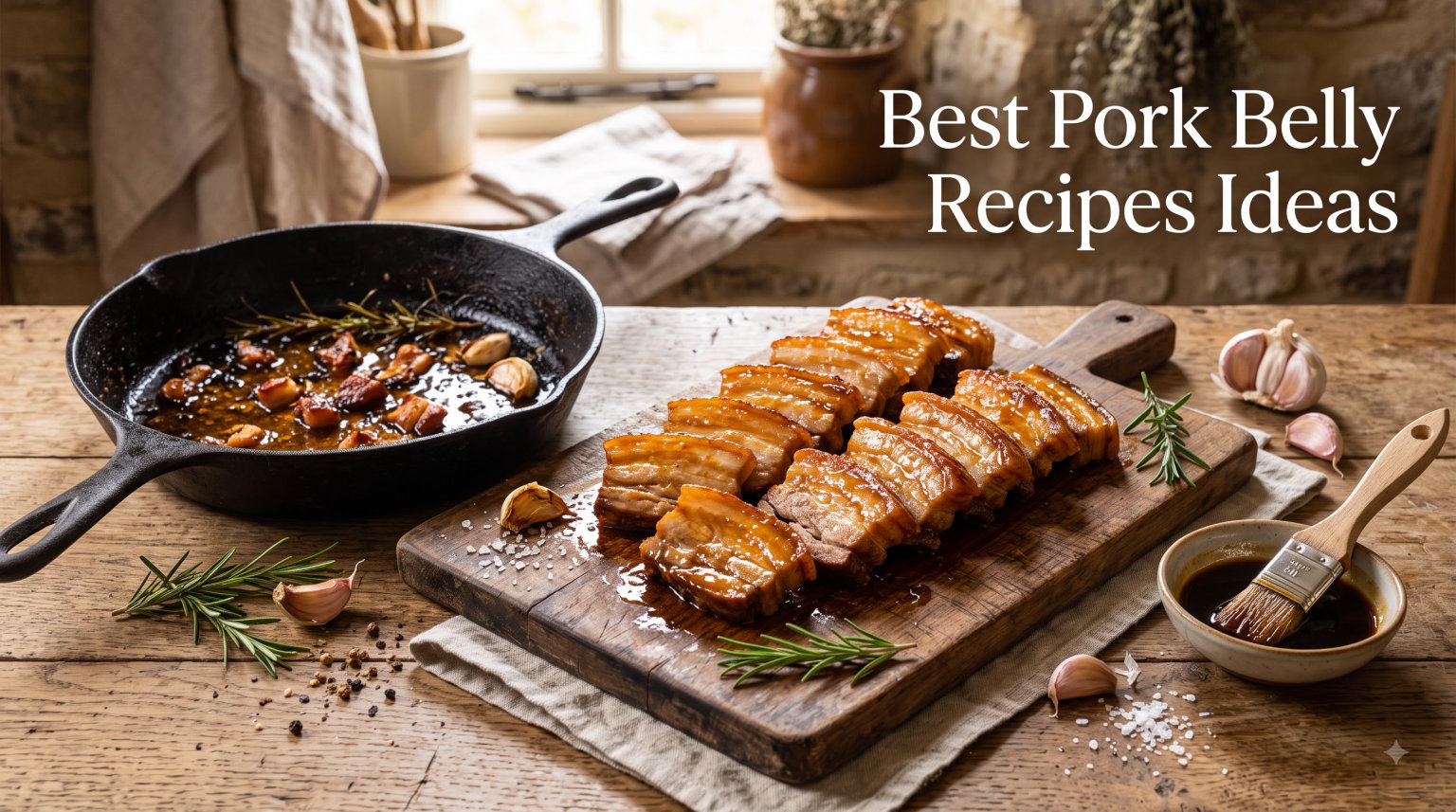
Before choosing a recipe, I decide what the finished plate needs to do. I recommend choosing the cooking method by the result you want, seasoning in layers, and using texture and temperature—not the clock alone—to decide when pork belly is ready. The result is a useful collection of best pork belly recipes ideas.
I organized the guide around easy pork belly dinner recipes and pork belly meal ideas, with practical timings, substitutions, serving ideas, storage guidance, and fixes for the problems that matter. For another useful option, see this oven-baked pork chop guide.
Table of Contents
What Is Pork Belly and Why Should You Cook It?
Pork belly is the uncured, unsmoked cut of meat from the underside of the pig. It is essentially bacon before it becomes bacon. That thick layer of fat running through the meat is exactly what makes it so forgiving and flavorful when cooked low and slow.
Unlike leaner cuts like tenderloin or chops, pork belly has enough intramuscular fat to stay juicy even if you wander off and forget the timer by ten minutes. That same fat renders down during cooking, basting the meat from the inside out and leaving you with the kind of rich, silky texture you cannot fake with a leaner cut.
It is also one of the most affordable cuts at the butcher counter, especially when you buy a whole slab. A single two pound piece can feed four people generously, especially when you serve it alongside rice, roasted vegetables, or crusty bread to soak up the rendered fat and juices.
There is a reason pork belly shows up in nearly every major cooking tradition, from Chinese red braised belly to American BBQ burnt ends to British roast crackling. It carries flavor beautifully and adapts to almost any seasoning profile you throw at it.
Best Pork Belly Recipes Ideas
Use these checkpoints to compare easy pork belly dinner recipes and pork belly meal ideas before committing to a recipe.
-
Match the method to the time and equipment you actually have.
-
Read the doneness cue before starting so the final texture is not left to guesswork.
-
Choose one useful side or make-ahead component to turn the idea into a complete meal.
These are the pork belly recipes I actually cook on repeat. I have organized them from simplest to most ambitious, so whether you have 45 minutes or an entire afternoon, there is something here for you. Every recipe in this list has been tested in my home kitchen on a regular gas oven and a basic stovetop setup.
Recipes and Methods
1. Crispy Slow Roasted Pork Belly Slab
This is the recipe that converted me to pork belly for life. You roast a whole slab low and slow at around 275 degrees Fahrenheit for two and a half to three hours, then crank the heat to 450 degrees for the last 20 to 30 minutes to blast the skin into shatteringly crisp crackling.
The key is drying the skin thoroughly in the fridge overnight, uncovered, before it ever sees the oven. I salt the meat side generously and leave the skin bare so it dehydrates. On cooking day, a light rub of oil and a thin layer of flaky salt on the skin is all you need.
Slice it into thick strips and serve with apple sauce, a sharp mustard, or a simple pan jus made from the drippings. This is the closest thing to restaurant quality pork belly you will make at home.
2. Sticky Chinese Red Braised Pork Belly (Hong Shao Rou)
This is the dish that made me understand why pork belly is treated like royalty in Chinese cooking. Cubes of skin-on belly are blanched, then braised in a mixture of soy sauce, Shaoxing wine, rock sugar, ginger, and star anise until the sauce reduces to a glossy mahogany glaze that clings to every piece.
The whole process takes about 90 minutes of mostly hands-off simmering. The fat softens until it is almost custardy, and the sauce caramelizes into something sweet, savory, and deeply comforting. Serve it over steamed white rice with a side of bok choy and you have a meal worth staying home for.
If you have never made a Chinese braise before, this is the one to start with. The technique is forgiving and the ingredient list is short once you have Shaoxing wine and star anise in your pantry.
3. BBQ Pork Belly Burnt Ends
Burnt ends are the unofficial king of American pork belly recipes. You cut a skinless slab into one inch cubes, toss them in a sweet and smoky dry rub, and cook them low and slow in a foil pan with a splash of apple cider vinegar and butter.
After about two and a half hours at 275 degrees Fahrenheit, you drain the rendered fat, toss the cubes in your favorite BBQ sauce, and roast them uncovered for another 30 minutes until the edges are sticky and caramelized. The result is bite-sized pieces with the texture of candy and the richness of pulled pork turned up to eleven.
You do not need a smoker for this. A regular oven works beautifully, and I have even made them on a gas grill using indirect heat. They are the first thing to disappear at every potluck I bring them to.
4. Pork Belly Tacos with Quick Pickled Red Onion
This is a reliable way to stretch a smaller piece of pork belly into a full meal. Slice the belly into thin strips, toss with a simple rub of smoked paprika, cumin, garlic powder, and brown sugar, then roast at 400 degrees Fahrenheit for 25 to 30 minutes until the edges are crisp and the fat has rendered into the meat.
Load the strips into warm corn tortillas with quick pickled red onion, crumbled cotija cheese, fresh cilantro, and a squeeze of lime. A drizzle of sour cream thinned with lime juice ties it all together.
The whole taco spread comes together in under an hour, and the pork belly strips reheat beautifully the next day for leftovers. This is the recipe I make when I want something fast but still feel like I am eating something special.
5. Korean Bo Ssam Style Pork Belly
Bo ssam is a Korean centerpiece meal where a big chunk of pork belly (or shoulder) is boiled with aromatics until fork tender, then roasted briefly to caramelize the outside. You shred it at the table and wrap pieces in lettuce leaves with kimchi, ssamjang sauce, raw garlic, and steamed rice.
The boiling step sounds unusual but it produces incredibly tender, clean flavored meat that soaks up whatever sauce you serve with it. A quick sugar and fish sauce glaze under the broiler for five minutes at the end gives the outside a sticky, lacquered finish.
This is the recipe I make when I have guests, because the interactive wrapping element turns dinner into an event. It also scales up effortlessly for a crowd.
6. Air Fryer Crispy Pork Belly Bites
The air fryer is wildly underrated for pork belly, and this recipe proves it. Cut skinless belly into bite-sized cubes, toss with salt, pepper, and a little baking powder (which helps the surface crisp), and air fry at 400 degrees Fahrenheit for 15 to 18 minutes, shaking the basket halfway through.
You get shatteringly crisp edges and juicy, tender centers in under 20 minutes with almost no active cooking. Toss the hot bites with a glaze of honey, soy sauce, and gochujang for a sticky sweet finish, or keep them plain with just salt for snacking.
This is the fastest pork belly recipe in my rotation and the one many families requests most often on busy weeknights. Cleanup is a single basket, which is a serious bonus.
7. Slow Cooker Pork Belly Ragu
If you want the laziest possible path to an impressive dinner, this is it. Cube a skinless pork belly slab, brown it briefly in a skillet, then transfer to a slow cooker with a jar of good tomato sauce, a chopped onion, garlic, a glug of red wine, and a sprig of fresh rosemary.
Cook on low for six to eight hours until the belly cubes fall apart at the touch of a spoon. The rendered fat enriches the sauce in a way you simply cannot get from ground meat. Toss the ragu with wide pappardelle noodles and finish with grated Parmesan.
This is comfort food at its deepest, and it reheats even better the next day. I often make a double batch and freeze half for emergency dinners.
8. Crispy Pork Belly Bao Buns
These are the showstopper I save for special occasions. Slow roast a skin-on belly slab until the meat is spoon tender and the crackling is golden, then slice it thin and tuck the pieces into soft, pillowy steamed bao buns with hoisin sauce, sliced cucumber matchsticks, pickled carrots, and fresh cilantro.
The contrast between the shatteringly crisp pork belly and the soft, slightly sweet bun is something everyone should experience at least once. You can use store-bought frozen bao buns to keep this manageable, and they steam back to life in about eight minutes.
This recipe does take planning since the belly needs an overnight dry in the fridge, but the active work is minimal and the payoff is enormous.
How to Get Perfect Crispy Crackling Every Time
If there is one skill worth mastering in all of pork belly cooking, it is the crackling. Here is exactly what I do.
Step 1: Dry the Skin Overnight
This is the step most recipes gloss over and it matters more than anything else. The night before cooking, score the skin in parallel lines about half an inch apart (a Stanley knife or box cutter works better than a kitchen knife for this). Salt the skin lightly, then place the slab uncovered on a rack in the fridge overnight.
The dry fridge air pulls moisture out of the skin, which is exactly what you want. Wet skin steams. Dry skin crackles. Skip this step and you are fighting an uphill battle.
Step 2: Salt Generously Right Before Cooking
An hour before the belly goes into the oven, take it out of the fridge and let it sit at room temperature. Rub the skin with a thin layer of neutral oil, then coat it generously with flaky sea salt. The oil helps the salt stick and promotes even browning.
Do not be shy with the salt.
Step 3: Roast Low, Then Blast High
Roast the belly skin side up at 275 degrees Fahrenheit for two and a half to three hours, depending on thickness. The internal fat renders and the meat turns spoon tender during this phase. The skin will look pale and wrinkled, which is normal.
Then crank the oven to 450 degrees Fahrenheit for 20 to 30 minutes. Watch closely because the skin can go from perfect to burnt in about two minutes. You are looking for the skin to puff up, bubble, and turn a deep golden brown. Tap it with a spoon and it should sound hollow.
Step 4: Rest Before Slicing
Rest the belly for 10 to 15 minutes before slicing so the juices redistribute. Cut through the crackling with a sharp serrated knife using a gentle sawing motion so you do not shatter the skin before it reaches the plate.
If the crackling did not puff up in spots, you can pop those sections under the broiler for one to two minutes right before serving. It is a useful rescue move that has saved many of my dinners.
Pork Belly Cooking Methods Compared
The strongest easy pork belly dinner recipes stay flexible without becoming vague, and the same is true of pork belly meal ideas. Keep the timing cue and main technique intact, then adjust seasonings or sides to fit the meal. This pork chop side dishes offers another practical direction.
Different cooking methods produce wildly different results with pork belly. Here is how the four most popular methods stack up, based on what I have actually tested in my own kitchen.
Oven roasting is the most versatile method. It handles everything from low and slow whole slabs to high heat strips and burnt ends. Plan on two and a half to three hours for a tender slab, or 25 to 35 minutes for thinner strips. This is the method I default to for almost everything.
Slow cooker is unbeatable for hands-off braises and ragus where you want falling-apart texture. It will not give you crisp skin, so save this method for skinless pieces or recipes where the belly gets shredded or cubed. Six to eight hours on low is the sweet spot.
Grill and smoker produce the smoky depth you cannot get from an oven. Set up a two zone fire with indirect heat for slabs and burnt ends, or use a smoker at 250 degrees Fahrenheit for three to four hours with wood chunks like apple or hickory. This is the most involved method but the flavor payoff is huge.
Air fryer is the surprise winner for quick weeknight pork belly. It excels at bite-sized cubes and strips, producing crisp edges in 15 to 20 minutes. It cannot handle a full slab and will not give you slow rendered fat, but for speed and convenience it is hard to beat.
For a deeper look at slow roasted technique specifically, this slow roasted crispy pork belly guide from RecipeTinEats is the resource I learned the most from.
Common Pork Belly Mistakes to Avoid
-
After coaching friends through their first pork belly attempts, the same handful of mistakes come up over and over. Here is what to watch for.
-
Skipping the overnight skin dry. This is the number one cause of rubbery skin. If you do nothing else from this article, do the overnight uncovered fridge rest on the skin.
-
Cooking at high heat the entire time. High heat from start to finish burns the outside before the fat has time to render. The two stage low then high approach is what gives you tender meat AND crisp skin.
-
Using a dull knife on the crackling. A sharp serrated knife and a gentle sawing motion is the only way to slice through crackling without shattering it into shards before it reaches the table.
-
Not scoring the skin deep enough. The scoring lines should reach down into the fat layer beneath the skin. Shallow scoring means the skin blisters unevenly and the fat cannot render properly.
-
Cutting portions too small for a slow roast. Tiny pieces of belly dry out before they get tender. For slow roasting, buy a slab at least one and a half inches thick.
-
Underseasoning. Pork belly is rich and fatty, which means it can handle more salt and seasoning than you think. Be generous, especially on the meat side.
Storage, Freezing, and Reheating Tips
-
Pork belly stores and reheats better than almost any other cut of meat, which makes it a meal prep dream. Here is how I handle leftovers and bulk purchases.
-
Fridge storage: Cooked pork belly keeps in an airtight container in the fridge for up to four days. Store it in slices or cubes with any rendered fat or sauce pooled around it to keep everything moist.
-
Reheating for crisp skin: Reheat sliced belly in a 400 degree Fahrenheit oven or air fryer for 8 to 10 minutes. The skin will re-crisp almost as well as the day you cooked it. Avoid the microwave, which turns the crackling rubbery.
-
Freezing raw: Raw pork belly freezes beautifully. Wrap it tightly in plastic wrap, then foil, and freeze for up to three months. Thaw overnight in the fridge before cooking. I buy a big slab when it is on sale and freeze it in one pound portions.
-
Freezing cooked: Freeze cooked cubes or shredded belly in freezer bags with the air pressed out for up to two months. The slow cooker ragu and burnt ends freeze especially well and reheat straight from frozen in a saucepan over low heat.
-
According to the USDA pork safety guidelines, fresh pork should be cooked to an internal temperature of 145 degrees Fahrenheit with a three minute rest, though slow roasted belly recipes will exceed this significantly.
Food Safety and Leftover Planning
I follow USDA food-safety guidance for chilling, reheating, and temperature checks. Whole cuts of beef and pork need 145°F followed by at least a three-minute rest; braising cuts often cook longer for tenderness. For more meal-planning context, pair the guide with these pulled pork side dishes.
-
Refrigerate perishable food within two hours, or within one hour when the room or outdoor temperature is above 90°F.
-
Store leftovers in shallow, covered containers so they cool evenly.
-
Label freezer portions with the dish and date, then thaw them in the refrigerator rather than on the counter.
Questions Readers Ask
What is the easiest way to cook pork belly?
Choose the least hands-on method that suits the cut. Sheet-pan and oven methods are simple for batches, while a skillet is faster for smaller portions.
How do I keep pork belly from drying out?
Use an even size, avoid excessive heat, and check doneness early with an instant-read thermometer. Rest the food before slicing when the cut benefits from it.
Can I prepare pork belly ahead of time?
Yes. Complete the safe prep steps, refrigerate in a covered container, and keep raw ingredients separate from ready-to-eat foods.
What sides work with pork belly?
A useful plate combines one fresh vegetable, one satisfying starch or grain, and a sauce or acidic element that balances the main dish.
Can cooked pork belly be frozen?
Most cooked versions freeze well when cooled promptly and packed with enough sauce or cooking juices to protect the texture.
How should I reheat pork belly?
Reheat gently and only until hot. Covered oven or skillet reheating usually preserves texture better than a long microwave cycle.
Conclusion
Use the best pork belly recipes ideas as flexible plans, then let the timing, texture, and doneness cues decide the final details. The best easy pork belly dinner recipes solve the immediate dinner problem, while pork belly meal ideas give you enough variety to keep the idea useful next week.
Start with one recipe, keep the key checkpoint visible, and use the storage notes so tomorrow’s portion tastes intentional rather than leftover.