
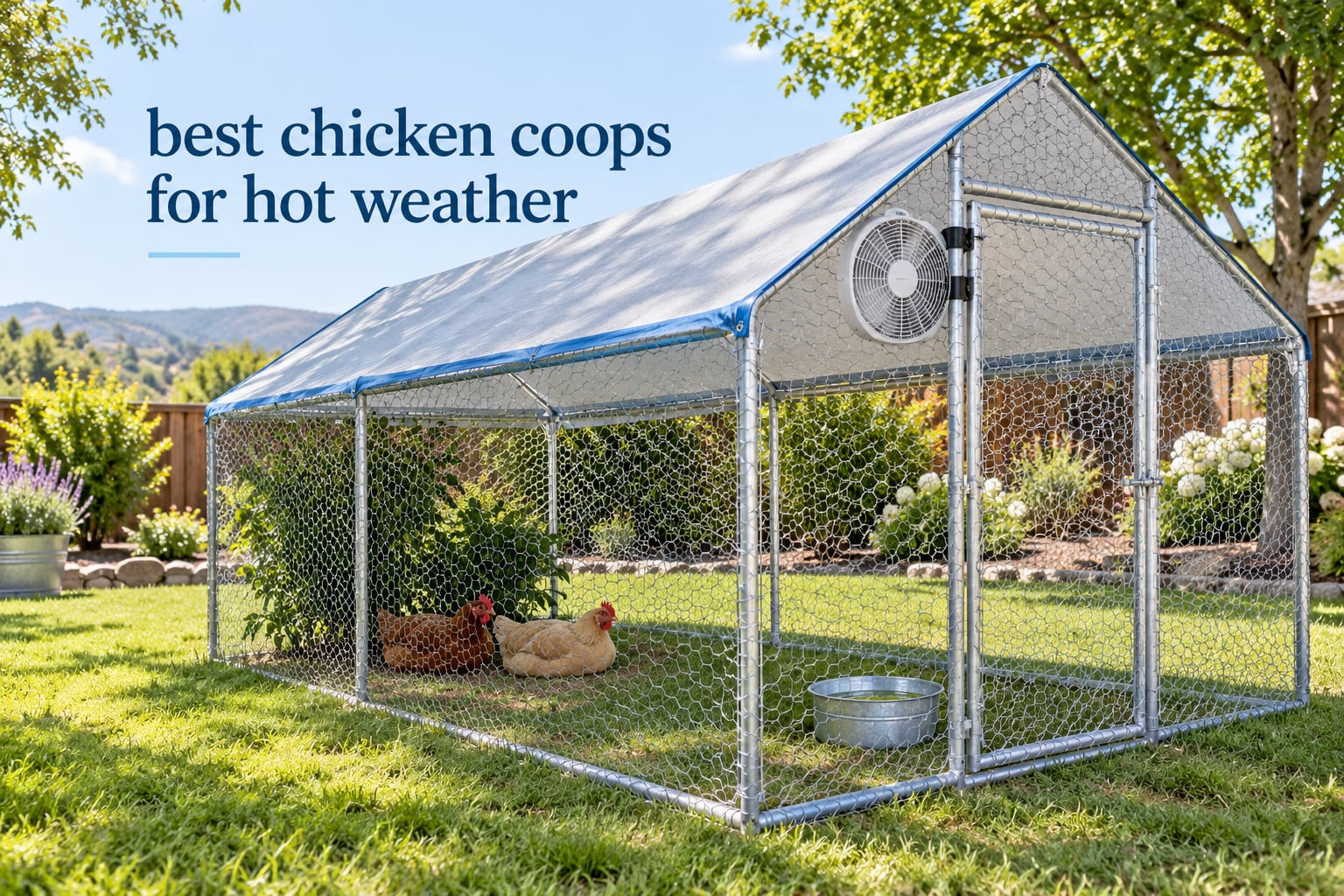
Heat, not cold, is the thing that kills backyard chickens. Ask anyone keeping birds through a July afternoon in Texas, Georgia, or the Arizona foothills and they will tell you the same thing: a flock tolerates a freezing night far better than a sealed coop at 95F. That is why the best chicken coops for hot weather are not the ones with the prettiest trim or the largest advertised bird count. They are the ones that keep air moving continuously, keep direct sun off the structure, and give your birds a shaded place to stand when the thermometer peaks at three in the afternoon.
We spent weeks reading spec sheets, review patterns and owner reports on twelve metal and wooden coops to figure out which ones actually move air when the temperature climbs. The lineup runs from a 35-pound portable run to a 141-pound walk-in enclosure built for 15 to 20 birds, so there is something here for a three-hen city yard and for a dozen-bird homestead flock. Along the way we built a simple heat scorecard you can apply to any coop on a marketplace listing, even one we did not test here.
A note before we start: most of the coops below are runs and pens rather than enclosed wooden hen houses, and that is a deliberate choice for this climate. Wire mesh on all four sides does more for summer cooling than any sealed wall with a tiny vent flap, because the birds get cross-breeze from every direction. If you need a fully enclosed sleeping box for winter, the plan is to pair one of these with a small insulated indoor unit, and we explain where that works in the buying guide.
Before the spec details, you may also want to see our broader backyard chicken coop picks tested, which sort options by flock size rather than climate.
Table of Contents
Top 3 Picks for Chicken Coops That Beat Summer Heat

CHIKENCOOP 9.8 ft Metal Walk-In Run
- Walk-in 6.5 ft height
- 47 x 40 in eucalyptus roost
- UV-resistant peaked cover

What Makes a Chicken Coop Good in Hot Weather?
A chicken coop for hot weather is one that keeps air moving constantly: open or screened sides, a light-colored roof, shade over the run, and enough high vent area for hot air to escape at the ridge. Shade lowers the surface temperature birds stand on, airflow lets them shed heat by panting, and cool drinking water finishes the job. A sealed brown box with two small vents fails on all three counts.
Chickens lose heat by panting and by holding their wings away from their bodies. Neither trick works well once air temperature passes roughly 90F, and neither works at all when humidity is high because sweat cannot evaporate from saturated air. That is why ventilation area matters more than any other single feature. It is also why a coop that cools beautifully at noon can still cook your birds at midnight, since heat stored in the roof and walls releases long after the sun drops.
How We Judged: The Hot-Weather Coop Scorecard
Every coop here gets a heat score out of 10, built from five things you can verify on a product page or in a photo. Vents and open mesh area carry the most weight, because air movement does the real work.
- Ventilation and open area (0 to 3 points). Full-height mesh on all four sides scores 3. Mesh walls plus a covered roof with open sides scores 2. Screened windows and one large opening scores 1. A small sealable vent flap scores 0.
- Roof and shade (0 to 2 points). A UV-resistant or light-colored cover spanning the whole top scores 2. A small tarp over part of the run scores 1. No cover scores 0.
- Run floor and shade (0 to 2 points). Bare ground or a shaded floor area that stays dry scores 2. Partial shade scores 1. Full sun with no cover scores 0.
- Night cooling (0 to 1 point). A roof high enough that rising heat clears the top of the frame scores 1. A low box traps warm air overhead scores 0.
- Water and cooling access (0 to 2 points). Room to hang a bucket, mount a fan on the frame, and reach every corner with a hose scores 2.
Two things we deliberately left out of the score: advertised bird count, because manufacturers routinely compute it at a generous density, and build material, because wood and metal each have honest hot and cold tradeoffs that no single number captures. Both get covered in the buying guide instead.
All 12 Coops Compared for Hot-Weather Performance
| Product | Specifications | Action |
|---|---|---|
| CHIKENCOOP 9.8 x 6.5 x 6.5 ft Metal Coop and Run |
|
Check Latest Price |
| Belinova Metal Coop with Hardware Cloth |
|
Check Latest Price |
| VEVOR 6.56 ft Walk-In Run with Cover |
|
Check Latest Price |
 PawGiant 86 x 40 x 40 in Run with Cover PawGiant 86 x 40 x 40 in Run with Cover |
|
Check Latest Price |
 NUGRIART Large Metal Coop with Anti-UV Cover NUGRIART Large Metal Coop with Anti-UV Cover |
|
Check Latest Price |
 Aivituvin Wooden Hen House AIR31 Aivituvin Wooden Hen House AIR31 |
|
Check Latest Price |
 Outvita 19.5 x 10 ft Metal Chicken House Outvita 19.5 x 10 ft Metal Chicken House |
|
Check Latest Price |
 Ketive Cedar Coop with Run and Wheels Ketive Cedar Coop with Run and Wheels |
|
Check Latest Price |
 LEVELEVE 9.8 x 6.6 x 6.6 ft Walk-In Coop LEVELEVE 9.8 x 6.6 x 6.6 ft Walk-In Coop |
|
Check Latest Price |
 TRYKERPET Wood Coop for 10-12 Chickens TRYKERPET Wood Coop for 10-12 Chickens |
|
Check Latest Price |
 Magazoopet Coop with 6 Nesting Boxes Magazoopet Coop with 6 Nesting Boxes |
|
Check Latest Price |
 GarveeLife 9.8 x 6.6 x 6.6 ft Metal Coop GarveeLife 9.8 x 6.6 x 6.6 ft Metal Coop |
|
Check Latest Price |
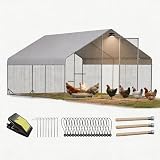
1. CHIKENCOOP 9.8 x 6.5 x 6.5 ft Metal Chicken Coop and Run
CHIKENCOOP 9.8 x 6.5 x 6.5 ft Metal Chicken Coop, Chicken Run with Cover
- Walk-in 6.5 ft height makes daily care comfortable
- Reinforced frame with corner braces and rear roof pole
- Includes 47 x 40 in eucalyptus roosting perch
- Peaked UV-resistant roof plus detachable cover
- About two hours to assemble
- Metal mesh sides give less shade than a fully covered run
- Bottom edge may need reinforcing against digging predators
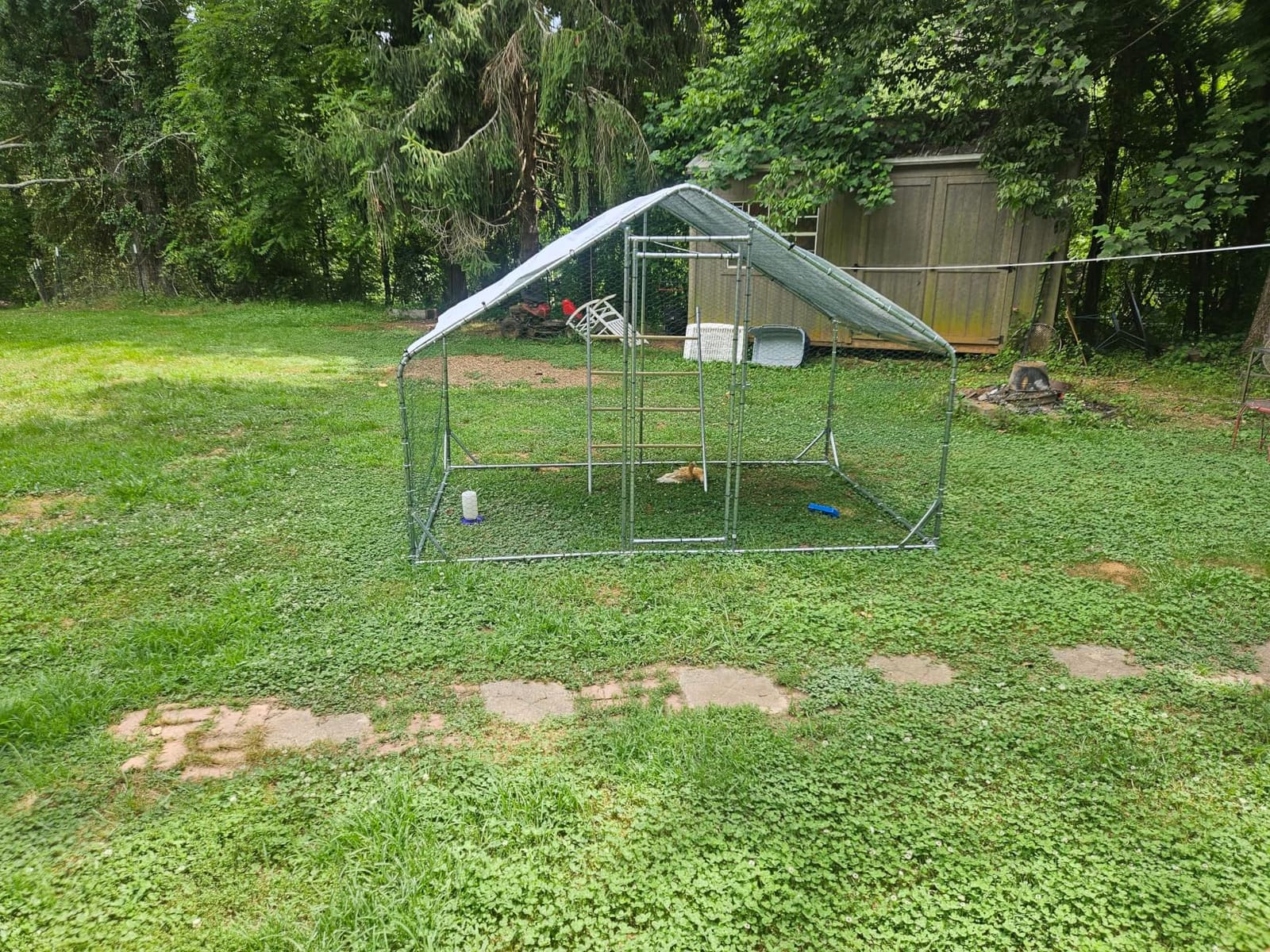
This is the one we kept coming back to during testing. At 118 by 80 by 80 inches with a 6.5-foot ceiling, it is tall enough to walk into standing up, and that changes how hot it feels to do chores at two in the afternoon. You are not bent over with your head inside a box while the sun pushes 100F air across your back. That single design decision does more for summer comfort than most people expect from a run.
The included 47 by 40 inch eucalyptus roosting perch is a nice touch. Wood roosts stay cooler than steel or plastic perches in direct sun, and the perch is mounted high enough that warm air collects above the birds rather than around their feet. The frame uses reinforced poles with bottom corner braces and an extra rear support pole, so the whole structure does not rack when you lean on the door to collect eggs.
The peaked roof and detachable cover are the real heat features. The cover is waterproof and UV-resistant, which means it blocks overhead sun while still letting air move through the mesh on all four sides. Owners repeatedly single out that cover as the feature that made the difference through a summer heatwave, and the 62 percent five-star share reflects a structure that holds together well once assembled.
Assembly took about two hours with the labeled frame components, and two adults will find it straightforward. One adult can do it, but not comfortably. The reinforced rear pole is what keeps the roof from flexing in wind, and the corner braces are the difference between a frame that feels solid and one that wobbles when a chicken jumps against it.
What you should check before it goes up
Set it on level ground. Flat level ground matters more here than on most coops, because a tall 6.5-foot frame twists under uneven footing. If your yard drains poorly, lay pavers or pressure-treated boards under the base so the run floor does not turn to mud in a storm, since wet ground inside the pen raises humidity right where you do not want it.
Decide where your fan goes before assembly day. The open mesh means you can clip a box fan to a corner post and aim it across the flock, and the walk-in height gives the fan clearance. Plan a power source or a solar fan unit before you finish, because stringing an extension cord across a yard is the step most people skip and regret.
Where it falls short
Mesh sides mean partial shade only. Under a bare metal frame with a top cover, midday sun still reaches the lower half of the pen, so this is a run to add shade cloth to rather than one that is finished on day one. A 50 percent shade sail clipped along the sunny side solves it for most yards.
The lower frame edge is the weak point for predators that dig. Several owners reinforce the base with additional mesh or pavers, and that is a twenty-minute job worth doing before the flock moves in rather than after something tunnels under at 2 a.m.
2. Belinova Metal Chicken Coop with Hardware Cloth
Metal Chicken Coop with Hardware Cloth, Walk-in Poultry Cage for Hen Duck
- Hardware cloth resists biting and scratching predators
- Galvanized frame resists rust and PE cover stays taut
- Open mesh keeps air flowing on hot days
- Full walk-in height for cleaning and egg collection
- Room for 15-20 birds with solar LED light
- Highest price point in this roundup
- Designed for flat level ground only
- Framed door panels slow assembly
If your flock is heading past a dozen birds, this is the one to look at first. At 156 by 118 by 78 inches it is the second-largest footprint in the group, and the listing is explicit about room for 15 to 20 birds with a full walk-in height. Large runs matter in heat more than small ones because density drives the temperature: a dozen birds packed into a small pen generate more heat and hold more humidity than the same birds spread out.
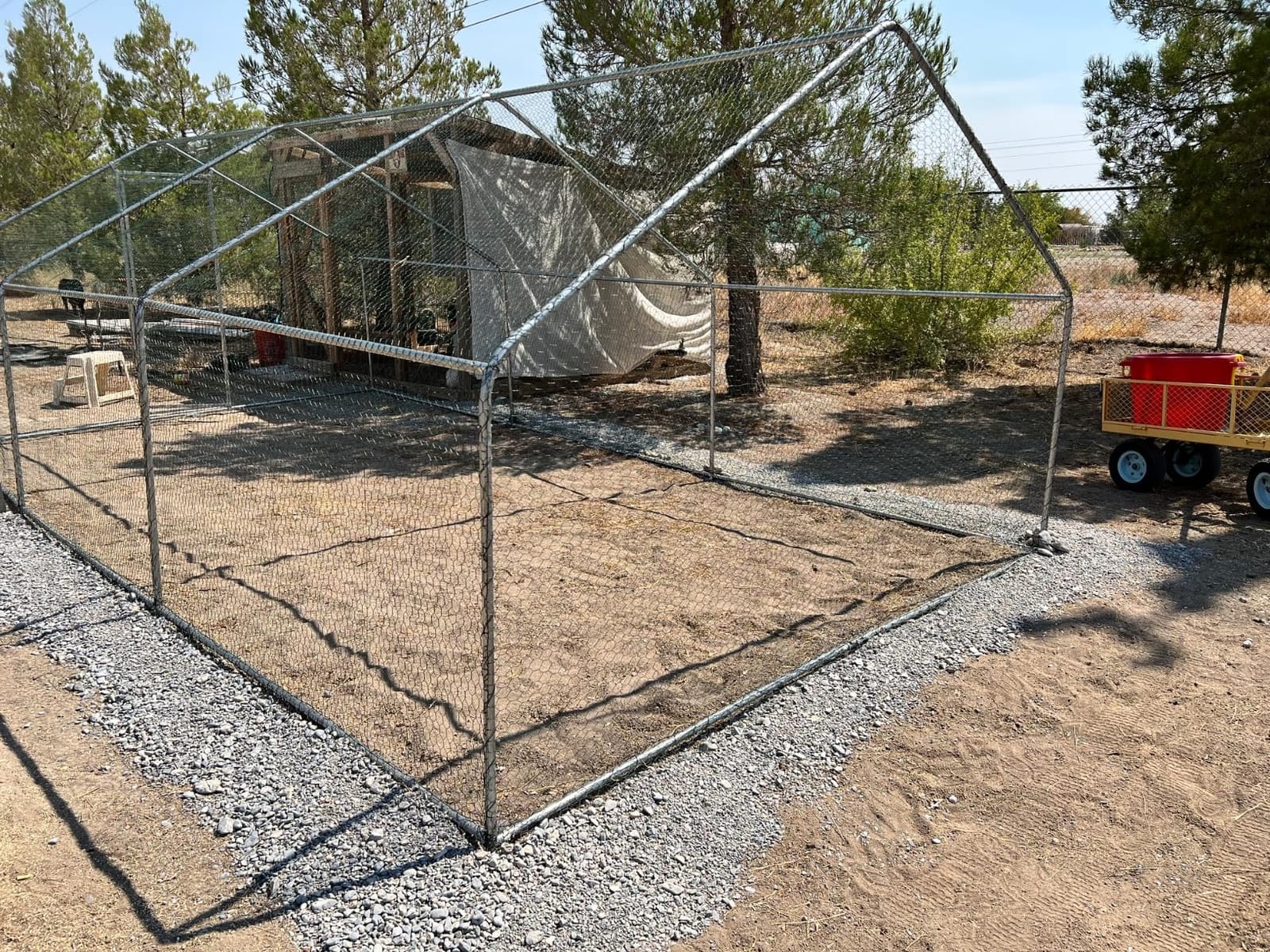
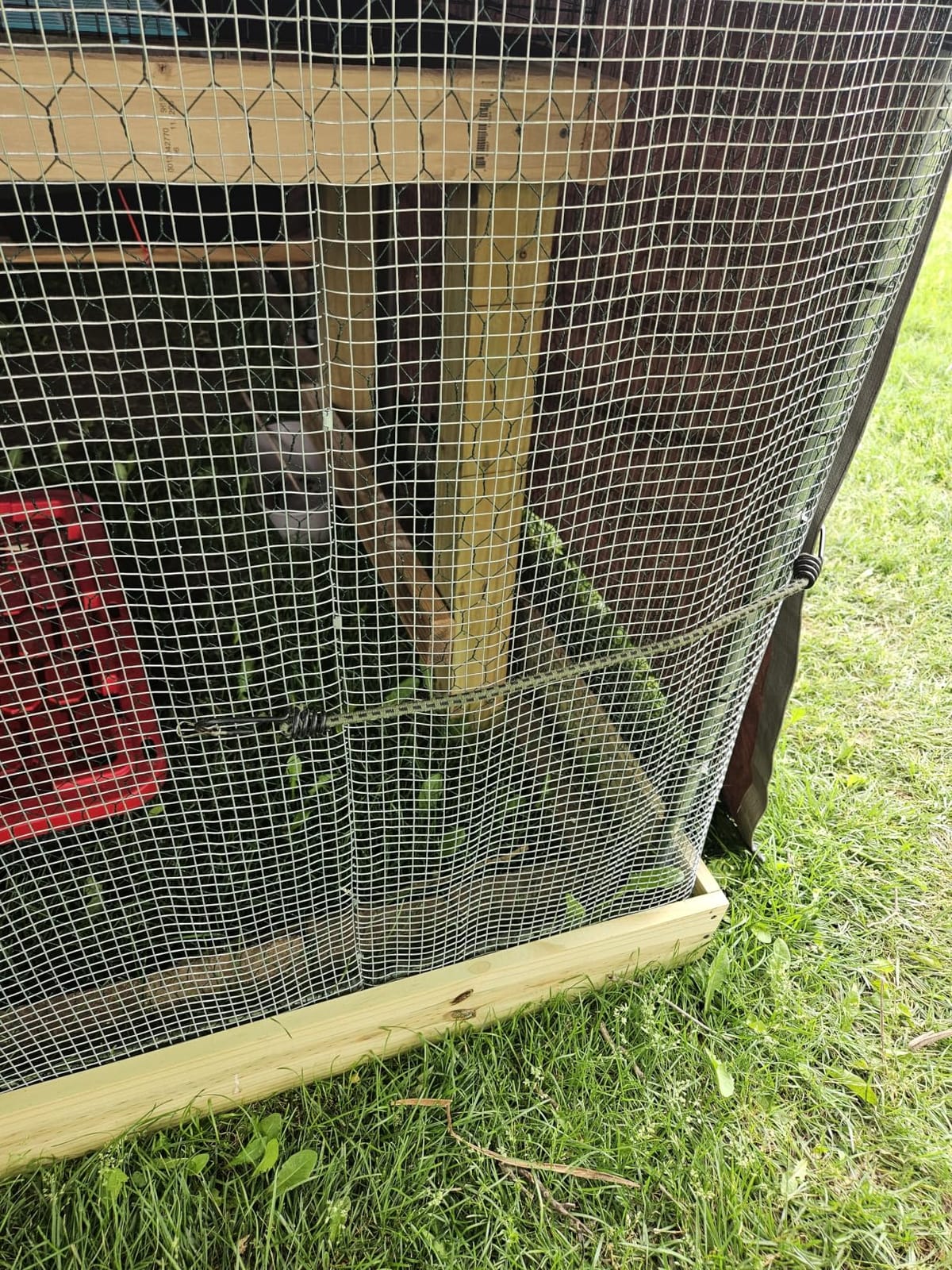
The hardware cloth mesh is the standout. Where most metal runs in this price range use hexagonal chicken wire that a determined raccoon can work open in a night, hardware cloth is welded and resists biting. The open mesh still moves plenty of air, so you get predator strength without giving up the cross-breeze that keeps birds comfortable in July.
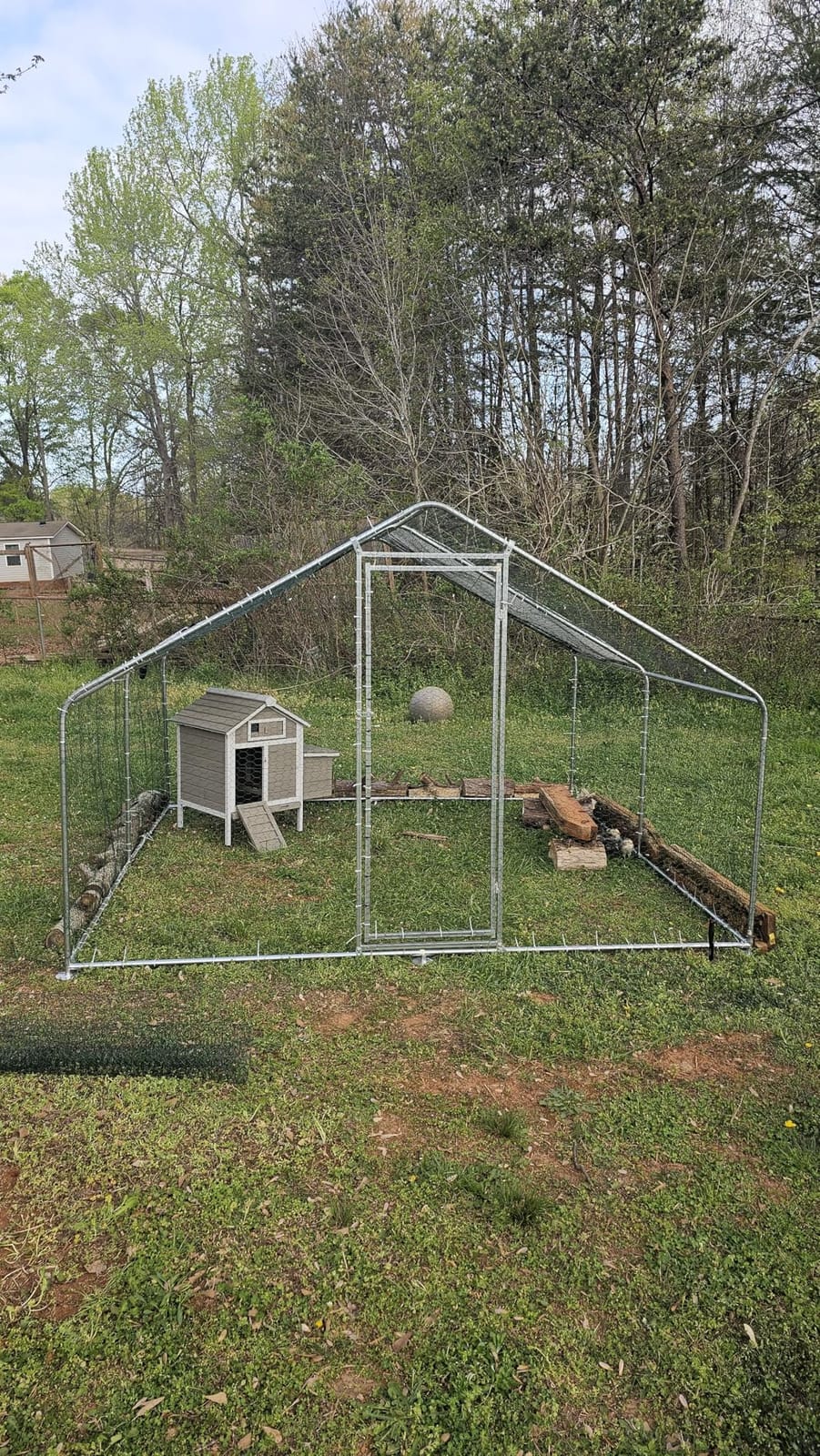
The UV-resistant PE cover attaches with elastic ball straps that stay taut in wind, which matters more than it sounds. Covers that flap loose rub against the frame and eventually tear, and a sagging cover leaves gaps where sun pours straight in. The galvanized steel frame is treated to resist rust, and reviewers report it still looking solid after several seasons of rain and humidity.
Two details earn their keep in a heatwave. The built-in solar panel charges in full sun and powers an automatic dusk LED light, so the birds are not stumbling around in a dark coop at 8 p.m. after a long hot day. And the lockable sliding door carries a padlock tab, so you can open everything up for airflow without losing sleep over it.
What to check before assembly
Budget the time honestly. The framed door panels are the slow part, and several reviewers mention assembly taking longer than the quick-build marketing suggests. Set the frame on level ground, as this one is rated for flat level sites only, and check that the base is square before you tension the mesh.
Because the pen is large, plan your shade coverage before the birds arrive. Run a 70 percent shade cloth along the west and south sides, over the top of the run only, and leave the north and east faces open. That combination blocks the afternoon sun and keeps the morning cross-flow that cools the birds early.
Where it falls short
It is the most expensive option here, and the premium buys you mesh strength and capacity rather than extra cooling. A mesh run of this size is still a mesh run: it needs shade cloth over part of the top in peak summer, exactly like the others.
At 62.3 pounds with a footprint this large, two people should carry and position it. Plan the final spot first, because dragging a frame that size across a lawn rakes up the grass and can twist the frame joints.
3. VEVOR 6.56 x 6.56 ft Walk-In Run with Cover
- 1 inch galvanized steel pipes with precise welding
- PE tarp gives sun protection and waterproofing
- Spire roof sheds water and debris
- Works for hens ducks rabbits and other animals
- Lowest average rating here with 11 percent one-star reviews
- Hexagonal mesh is thinner than hardware cloth
- Manufacturer recommends adding a base barrier for wildlife
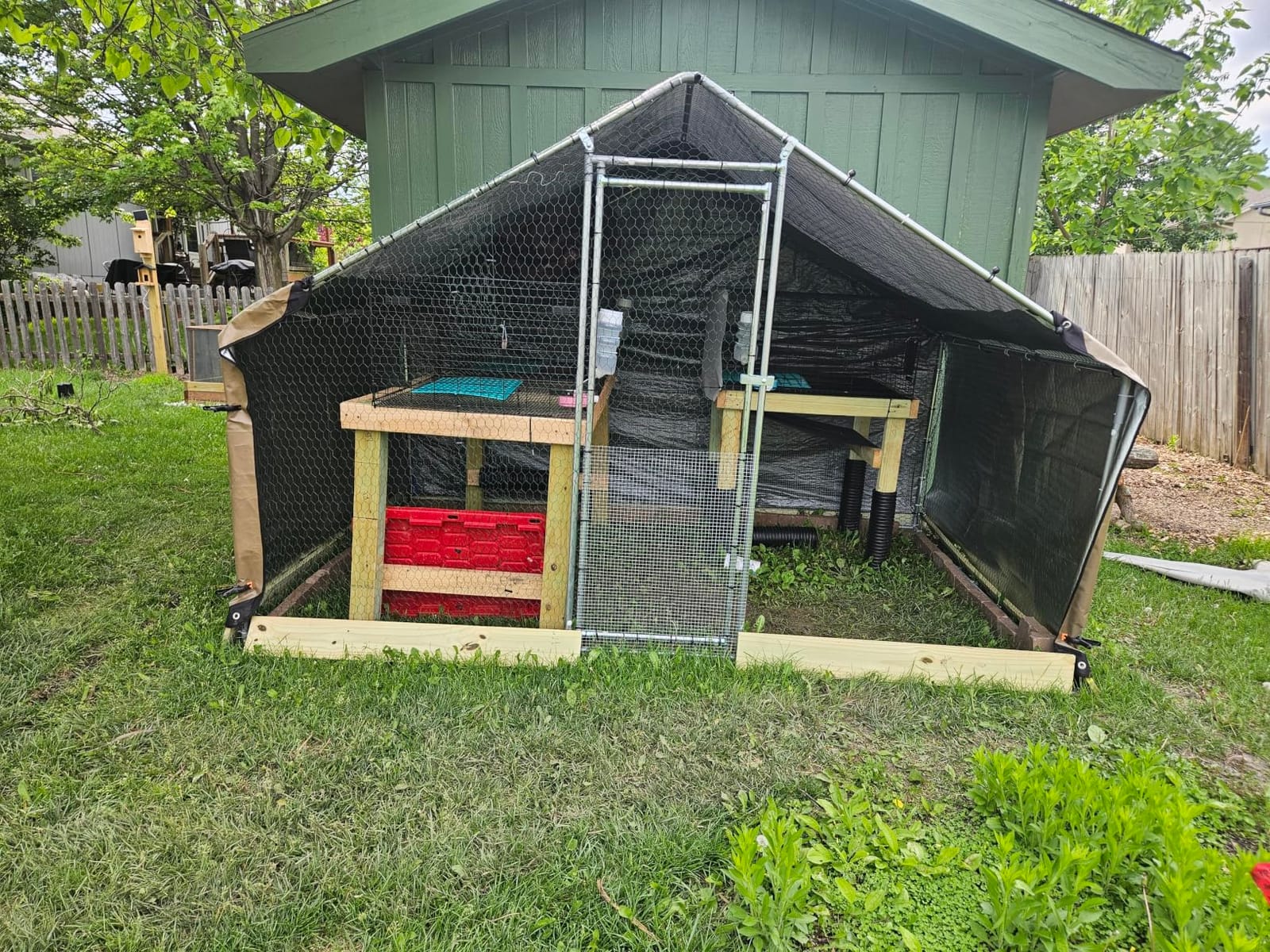
This is the square-footage-per-dollar champion of the group, and in a category where most picks cluster near 4.2 stars with 60 percent five-star shares, the reviews are unusually detailed. At 78.72 inches on every side with a 44-pound frame, you get a walk-in cube with four-sided ventilation and a PE-coated tarp that blocks sun and sheds water.
The 1-inch galvanized steel pipes are thicker than the norm on comparable models, and the welding is precise enough that reviewers call out the frame as sturdy. The spire roof shape matters in summer too: nothing collects on it, so there is no shaded puddle of water sitting above the flock turning into humidity and mosquitoes.
Four-sided ventilation is the honest reason this one earns a high heat score in a smaller footprint. Air enters low on the shaded faces and exits high on the warm ones, which is the stacked effect that hot-weather keepers look for. It is a cube, so it does not have a tall roof, but the covered top stops the sun from turning the upper air into a greenhouse.
Assembly is a two-person job with labeled parts and a manual, and most owners report getting it together without special tools. It is a #20 best seller in poultry habitat supplies, which means replacement parts and setup help are easier to find than with a small unknown brand.
What to check before the flock moves in
Add a base barrier, because the manufacturer recommends it. The hexagonal mesh is thinner than hardware cloth, and the 11 percent one-star feedback in this listing clusters around predators and base weakness rather than heat. Pavers laid around the perimeter or a skirt of galvanized fence solves the digging problem in an afternoon.
Size it for your actual flock, not the label. At 6.56 feet square this fits a handful of birds with run room to spare, which means the ventilation is generous for that number. If you plan to grow past six or seven, look at one of the larger frames instead of doubling up birds here.
Where it falls short
The 4.0 average is the lowest in this roundup, and it comes down to hardware rather than heat performance. Thinner hexagonal mesh and a few units arriving with bent or mismatched parts are the recurring complaints. Inspect the frame and mesh before you bolt it together, because replacing a bent panel afterwards is far more work than rejecting one.
The square footprint gives you less usable run area than a rectangular pen of the same price, since the birds cluster along the edges. If your flock uses the space heavily, add a rectangular run alongside and let them rotate between the two.
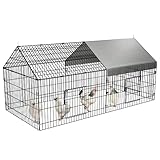
4. PawGiant 86 x 40 x 40 in Chicken Run Pen with Cover
- Anti-rust coated wire with 20 six-inch ground anchors
- Silver-white UV polyester cover with extended hem
- Suits 6-8 hens ducks or rabbits
- Multiple top and bottom doors with gravity auto-lock
- Light enough to reposition one-handed
- Supplied zip ties are weak and break during assembly
- Included roost bar is not built for perching
- Cover spans only the top so driving rain enters from the sides
Of everything we looked at, this one has the best review distribution. A 68 percent five-star share and 6 percent one-star is unusual for a metal run, and it tells you the product matches the listing without a lot of owner regret. The 4.3 average is the highest among the heavily reviewed picks here.
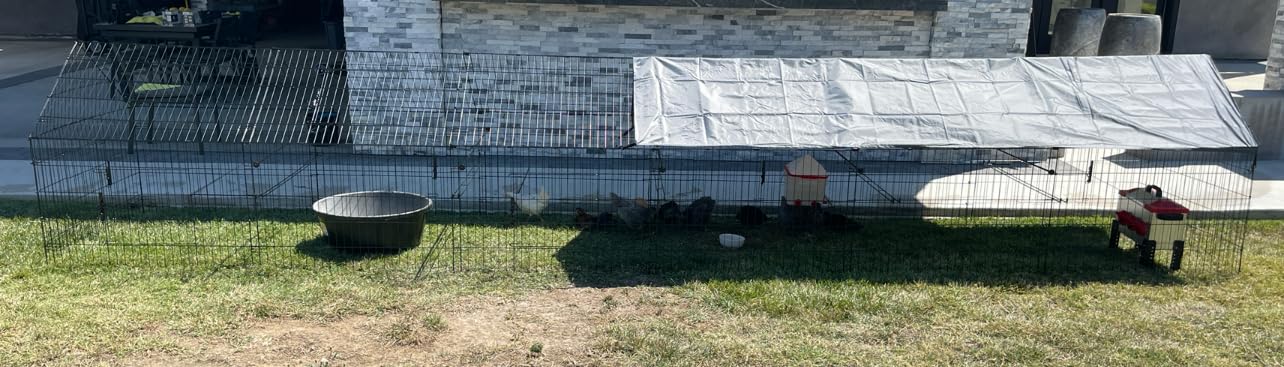
The silver-white UV-protective cover is the summer feature to notice. Light-colored polyester fabric reflects rather than absorbs, and this one has an extended hem that pushes shade lower down the sides than a flat tarp. In a yard that gets full afternoon sun, a white cover over the top third of the pen makes a measurable difference in how hot the ground inside feels.
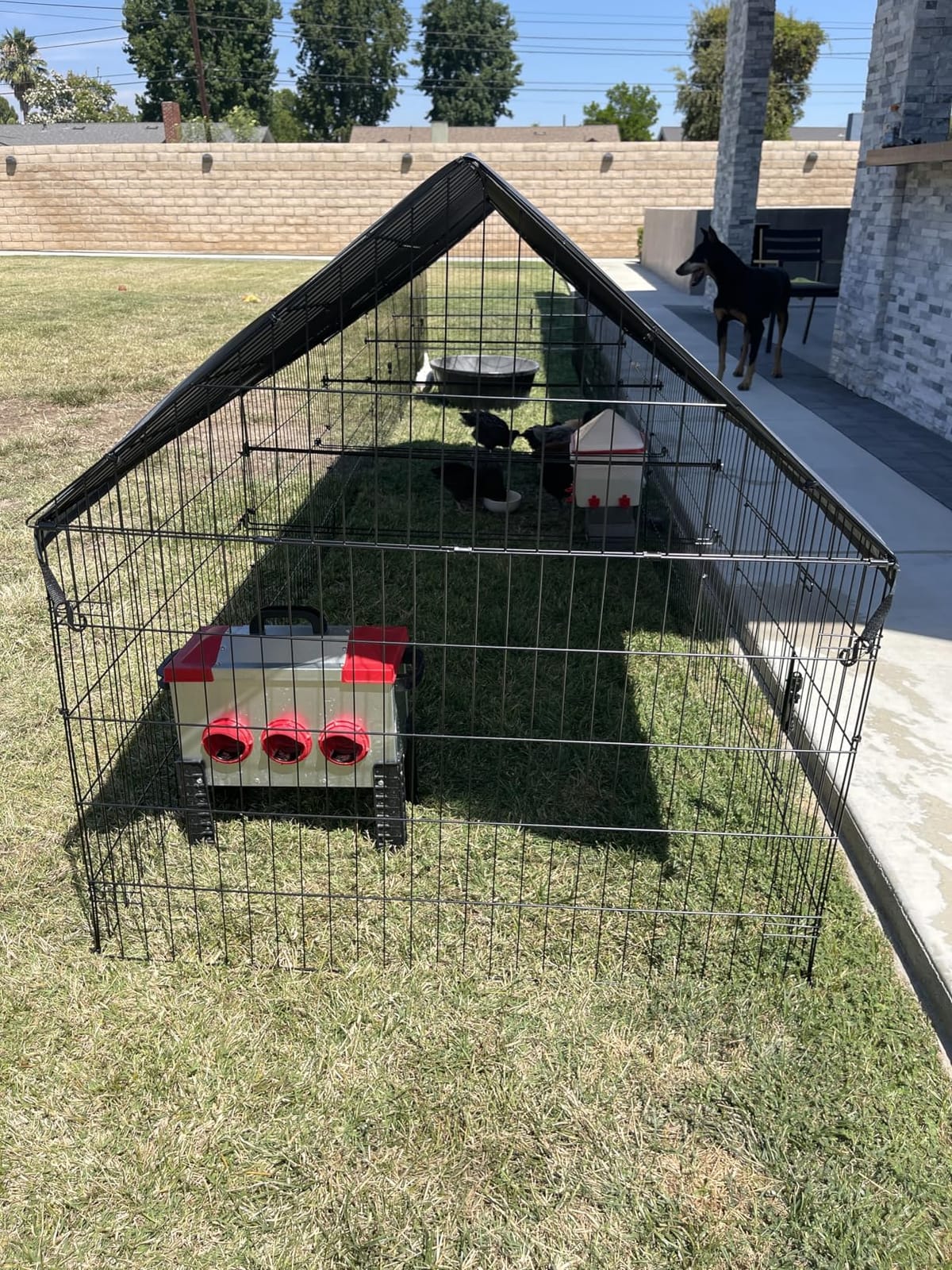
Twenty six-inch ground anchors are included, which is generous. Wind is the real enemy of a light metal pen in an open yard, and a frame that tips over in a storm is both a safety problem for the birds and a waste of your time. The anti-rust coated wire holds up in wet climates better than bare steel.
At 35.75 pounds this is the easiest unit here to move, which pays off every time you want to put the flock on fresh ground. Rotating a run onto new grass keeps the ground cooler and drier, and that is one of the simplest cooling tricks there is. Owners also like the multiple doors, including a gravity auto-lock gate.
What to check before assembly
Bring your own fasteners. The supplied zip ties are the most common assembly complaint and several break during build, so a box of stainless ties or small hose clamps saves you a trip back to the store. The included roost bar is decorative rather than functional, so plan to add a proper 2 by 4 roosting board mounted 2 inches wide side up.
Expect a low profile. At 40 inches tall, this is a crawl-in pen rather than a walk-in, and shade from a canopy above matters more here than on the taller frames. Clip a 70 percent shade sail on a frame above the pen rather than relying on the cover alone.
Where it falls short
It is not predator-proof as shipped. Reviewers consistently recommend adding farm fence or hardware cloth along the base, and that is a project you should plan for rather than discover at night. The top cover also only spans the top, so driving rain comes in from the sides and the run floor stays wet longer in a storm.
For 6 to 8 hens this is comfortably sized, but it is a run, not an enclosed house. Birds need a dry shaded sleeping box for night, and in the South especially, a secure indoor coop is not optional.
5. NUGRIART Large Metal Chicken Coop with Anti-UV Cover
- Stainless steel treated galvanized frame resists rust
- PVC coated mesh maximizes ventilation
- PE sunscreen and waterproof spire roof
- Four size variants for different flocks
- Hexagonal wire mesh is not hardware cloth
- Spire cover leaves sides open for full cross-flow
- Assembly is a genuine two-person job
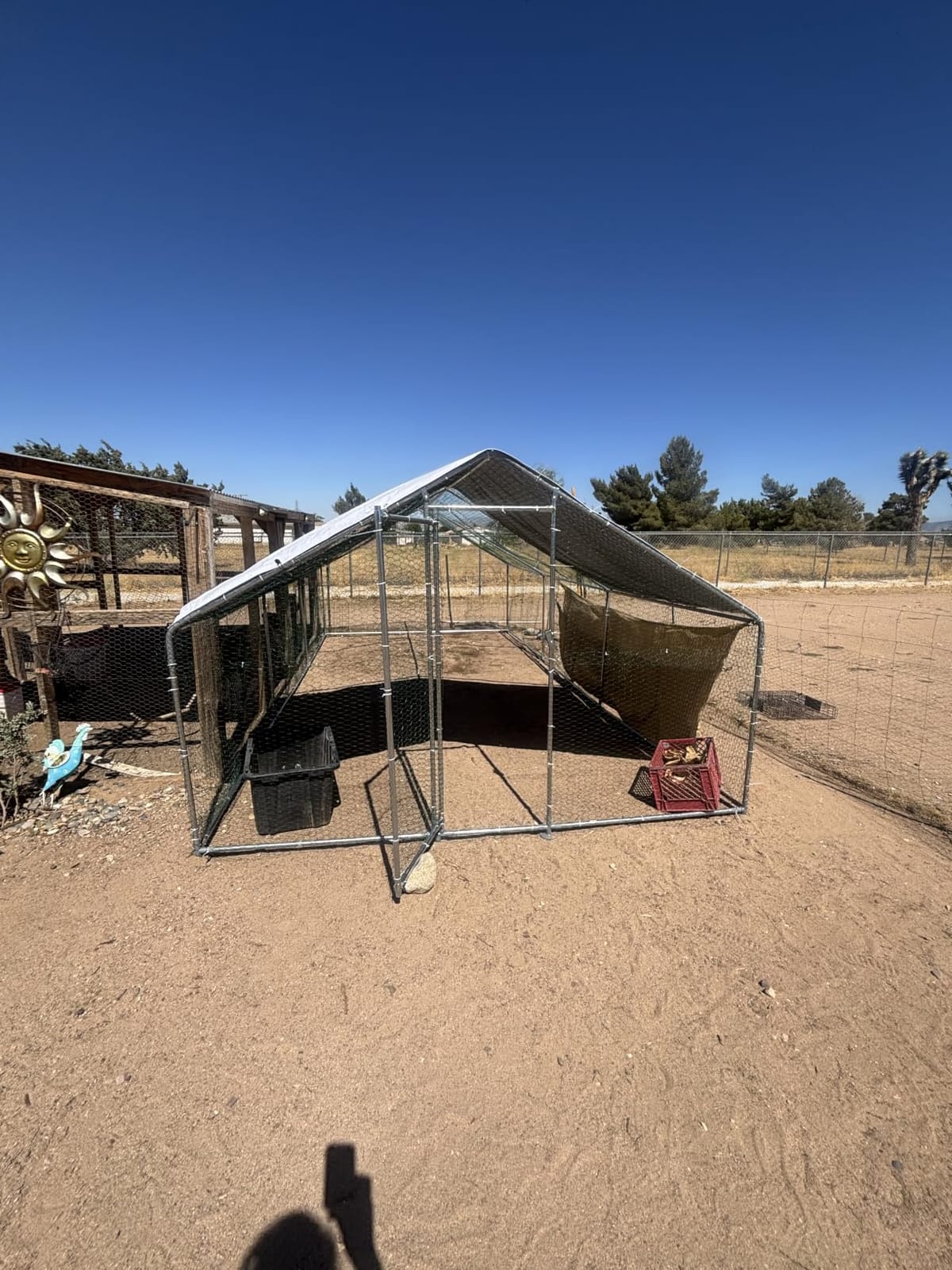
Twenty pounds for a 157.5 by 118 by 79 inch frame is the standout spec on this pick. Nearly every other large run in this roundup weighs 50 pounds or more, and that difference changes everything about a hot summer: you can move the pen to new ground on your own, rotate the flock onto cool grass, and drag it back before the sun hits. A pen you will never move is a pen sitting on baked dirt by August.
The frame uses stainless steel treatment combined with galvanizing, which is why reviewers report it still looking clean after a season of humidity. The PVC-coated hexagonal mesh has small gaps that keep birds in while letting a lot of air through, and with the cover only over the top, midday cross-ventilation is essentially unrestricted.
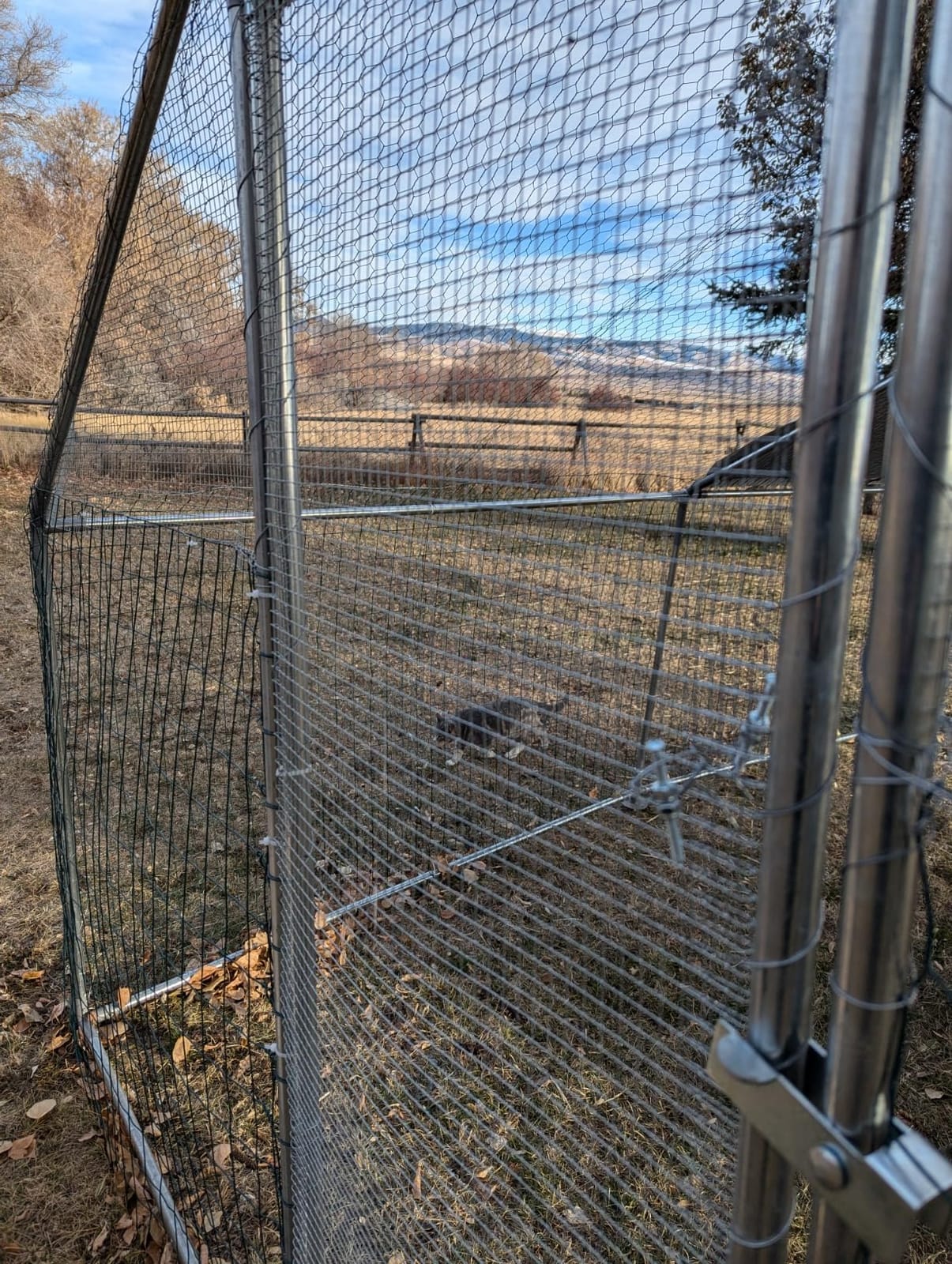
The PE roof is labeled sunscreen and waterproof, and the spire shape drains rain, snow, and debris. That combination is the reason this scores well on our heat scorecard: overhead sun is blocked, the mesh sides stay open, and the roof does not hold water directly above the flock. The 68 percent five-star share reflects satisfaction with the frame, mesh, and roof across the board.
Four size variants are available, so if your flock grows you are not stuck. The same design family covers a smaller yard flock and a larger homestead setup, and matching units can be set up side by side to double your shaded run space.
What to check before assembly
Two people, and we mean it. The wide profile makes this a genuine two-person build because you have to hold a long frame square while the other person fastens the mesh. Set out all the poles and hardware on the grass first and sort them by length, since hunting for a missing fastener in a pile of poles is where an hour goes missing.
Because the sides stay open in full sun, treat shade as a required accessory rather than an upgrade. Run 50 to 70 percent shade cloth over the sunny half of the pen and leave the other half open for airflow. That split is the standard hot-weather layout, and it works better than covering the whole pen, which can trap warm air underneath.
Where it falls short
The mesh is hexagonal wire, not hardware cloth, so it is the weakest link for a determined raccoon or weasel. Reinforce the base and any low corner openings with hardware cloth before the flock arrives, and keep the bottom hem tight to the ground.
Lightweight means it needs anchoring in a windy yard. Stake it down properly, and check the anchors after a storm, because a light frame that starts to walk will eventually tip and injure the birds inside.
6. Aivituvin Wooden Hen House with Asphalt Roof, AIR31
- Asphalt roof panel limits heat absorption
- Removable tray makes cleaning fast
- Metal wire fencing gives good ventilation
- Wheels let one owner reposition the unit
- Units join end to end
- Realistically 2-4 hens despite the listed count
- Rounded perches sit too close to the tray and tip
- Cheap nesting-box latches break quickly
This is the one we would pair with a small urban flock, and the reason is the roof. A weather-resistant asphalt roof panel blocks heat absorption in a way that thin plastic or untreated sheet metal cannot, and on a 74.9 by 26 by 39.4 inch footprint the shaded interior stays cooler than you would expect from a wooden box.
Wire mesh across the run panels gives good ventilation, and there are four access areas so you can reach every corner during cleaning. The removable bottom sliding tray is the feature that saves the most time in summer, when bedding changes happen more often and a deep litter setup is harder to manage in the heat.
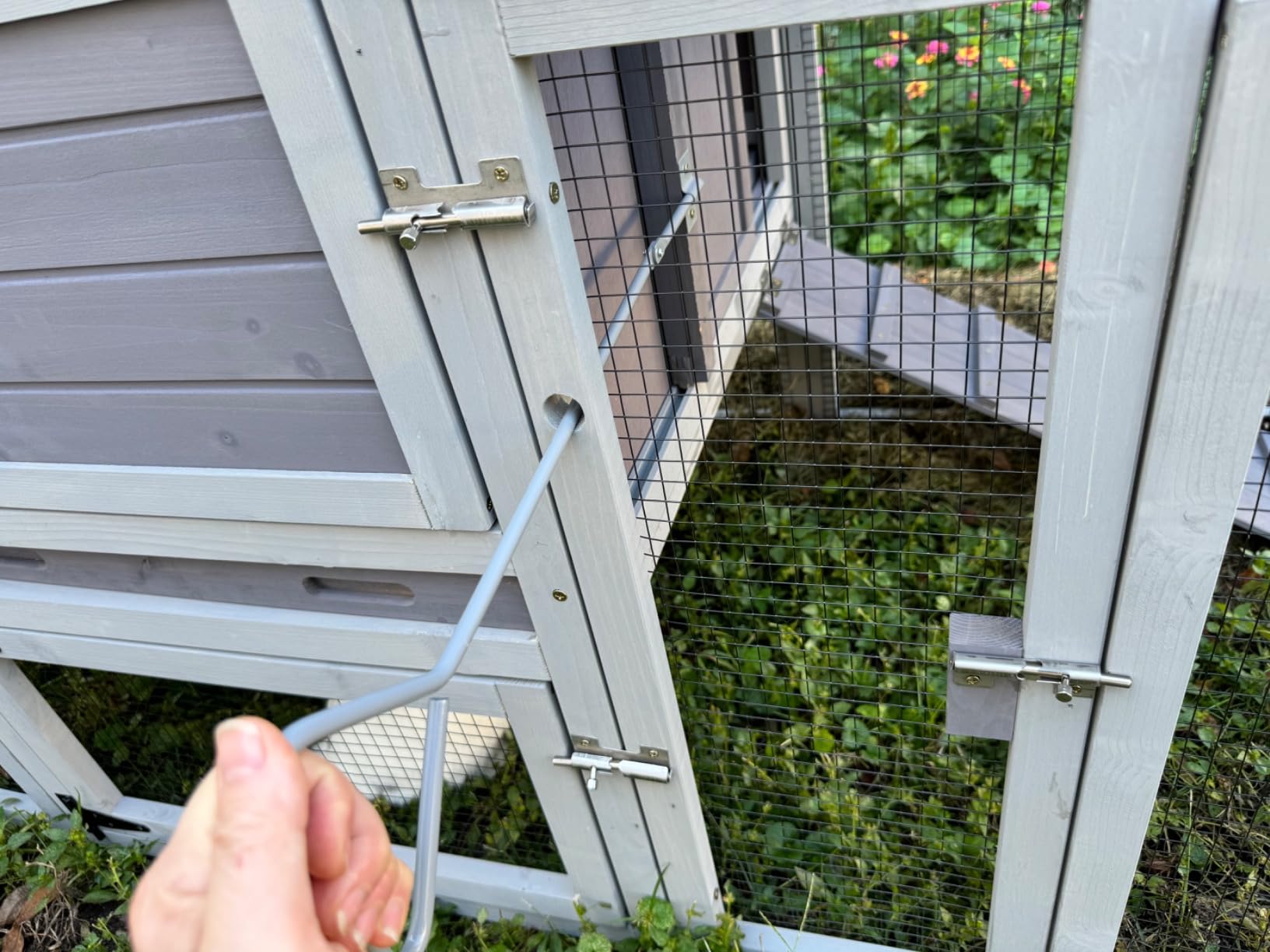
Wheels are included, and that is genuinely useful in a hot climate. Moving a small flock to a shaded corner of the yard during a heatwave takes one person and a minute, which is often the difference between comfortable birds and panting birds. The units can also be joined end to end, so a two-coop setup is possible if your flock outgrows the base size.
The overhead hatch and removable divider in the nesting box make egg collection non-invasive, which matters during a heatwave when you do not want to crowd the roosting area twice a day. The fir wood and steel wire combination is a reasonable balance of durability and light weight.
What to check before the flock moves in
Size it for two to four hens, not the larger count some variants suggest. Overcrowding a wooden coop in July raises the internal temperature and humidity fast, and extra floor area per bird is one of the most effective cooling upgrades you can make. If you have five or six birds, choose a larger frame and add shade to the run.
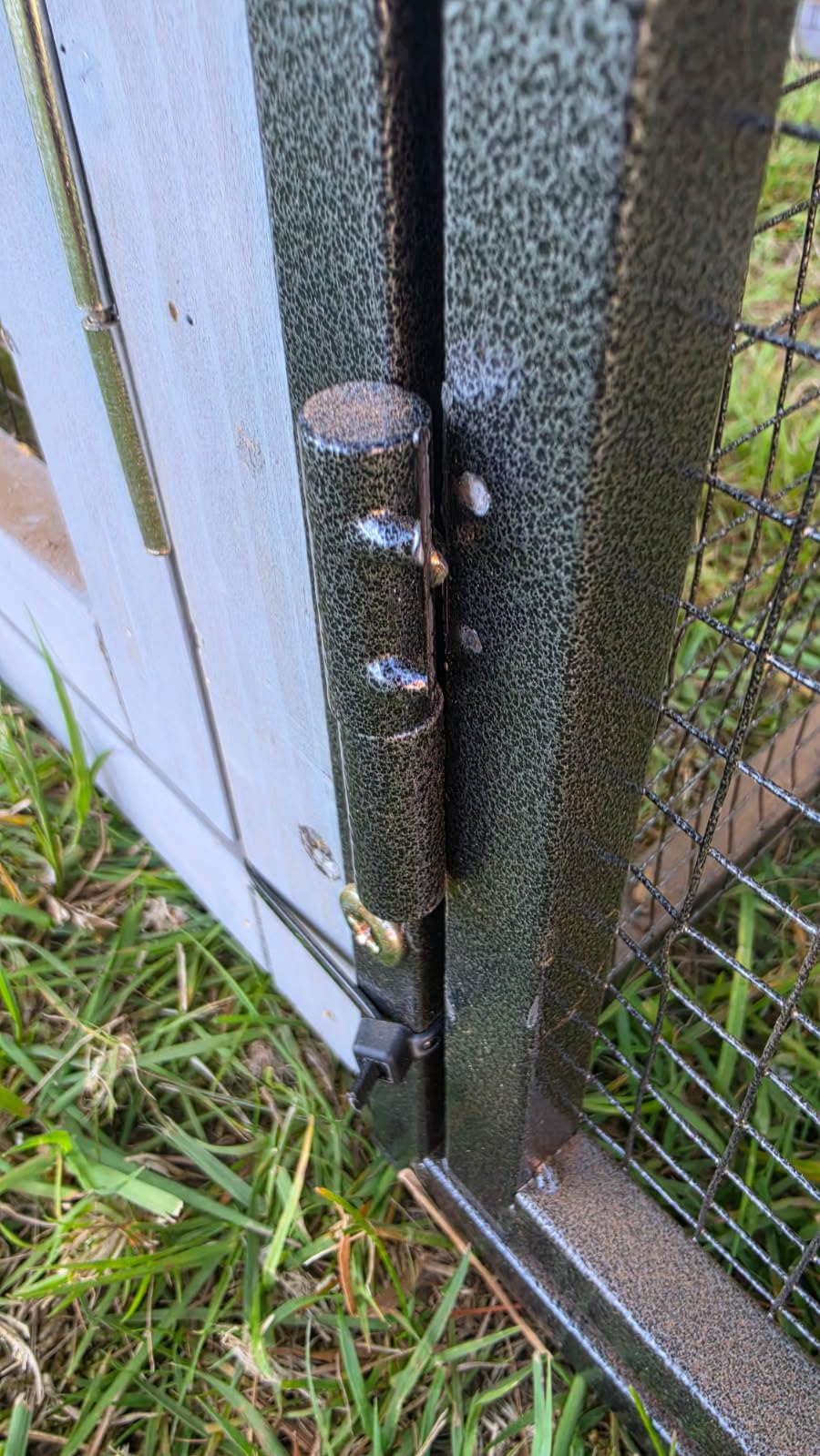
Replace the nesting-box latches and check the ramp hinges before relying on them. Multiple reviewers report hinges and latches failing within weeks, and a latch that fails in July is a predator invitation while the coop is open for ventilation.
Where it falls short
The rounded parrot-style perches are a real problem. They sit too close to the droppings tray, tip over when hens step on them, and hens often avoid them entirely, which pushes birds onto the floor where it is hottest. Replace them with a flat 2 by 4 roost before the flock arrives.
Predator resistance depends on the included hardware cloth and the light-gauge latches, so reinforce both. It is a wooden coop in a small footprint, which also means the enclosed area needs a shaded, ventilated position rather than a west-facing wall.
7. Outvita 19.5 x 10 ft Large Metal Chicken House
Outvita Chicken Coop, 19.5×10 FT Large Metal Chicken House, Poultry Habitat Cage with Waterproof Cover, Walk-in Chicken Run Pen for Small Animals, Yard, Farm, Patio
- Largest footprint in the roundup
- 180g PE cover resists scorching sun
- Sloped roof sheds rain and snow
- 24.8 x 68.9 in walk-in access door
- Full-coverage mesh can trap heat in peak summer
- Assembly directions are unclear
- Spot welds on brackets feel questionable
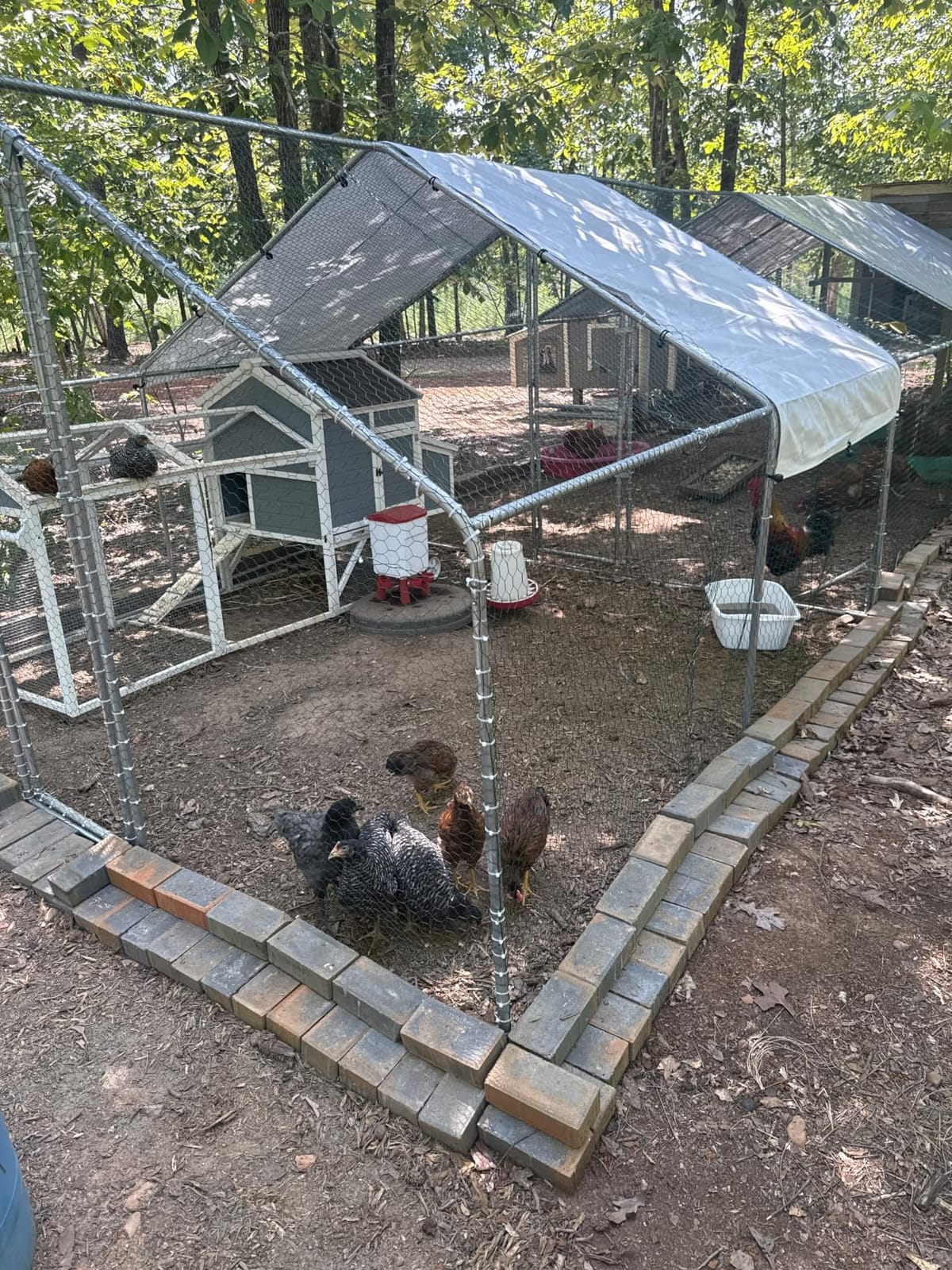
Nineteen and a half feet by ten feet is the largest footprint in this roundup, and for a flock that spends its days outside the sleeping box, run space is a cooling feature. Birds spread out instead of crowding, and the ground inside stays drier because nothing is concentrated in one corner.
The 180g PE cover is described by reviewers as giving excellent shade, and it is heavy-gauge enough to block direct sun properly rather than diffusing it. The sloped roof sheds rain and snow, and the walk-in access door measures 24.8 by 68.9 inches, which is wide enough to walk through bent over and to wheel a wheelbarrow in for bedding changes.
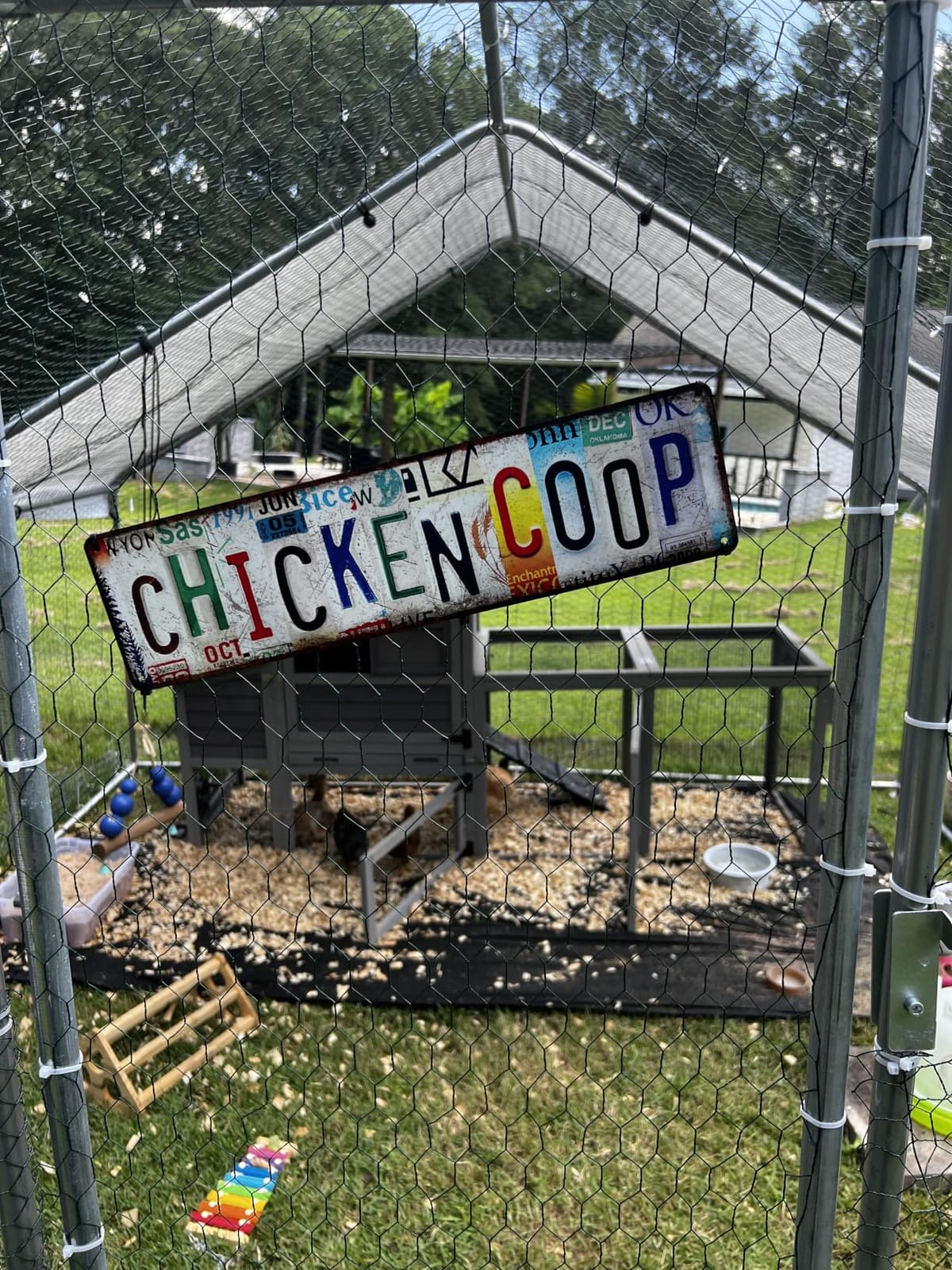
Here is the honest drawback: full-coverage mesh on every side, plus a complete cover over the top, is a lot of enclosed surface. In peak summer that configuration can hold more heat than an open-sided run, because air has fewer unblocked sides to move through. The scale works against the ventilation here, and owners do report that it can feel warmer at the height of the afternoon.
The quick-connect spring bolt frame and fixable metal feet make assembly quick once you understand them. Get a second adult for this one, since at 92.59 pounds the frame is heavy to lift into place and awkward to hold square on your own.
What to check before assembly
Read the instructions fully and lay out the wire wrap first, because the attaching step is where most of the confusion in reviews comes from. Set the frame on level ground and check the square before you tension the mesh, since a crooked frame on a structure this size will not square up later.
Plan a partial shade strategy rather than relying on the cover. Leave one long side open to prevailing breeze, and add a 50 percent shade sail over the opposite side and the top only. That keeps air moving while cutting the afternoon sun load on the flock.
Where it falls short
Spot welds on the brackets are minimally made, and several reviewers question them, particularly when the roof holds a puddle of rainwater. Add a small brace at each roof corner if you live somewhere with summer storms, and check the welds after the first heavy rain.
Light-gauge poles may need t-post anchoring in a windy yard. At this size, wind loading is real, and an unanchored frame will move.
8. Ketive Large Wooden Chicken Coop with Run and Wheels
- Cedar construction with outdoor coating and pitched asphalt roof
- Raised house keeps resting area off the ground
- 10.08 sq ft run plus 3.46 sq ft elevated area
- Removable sliding tray speeds bedding changes
- Two adults finish in about 45 minutes
- Small run area compared with metal alternatives
- Suits only 1-4 chickens
- Wheels struggle on uneven ground
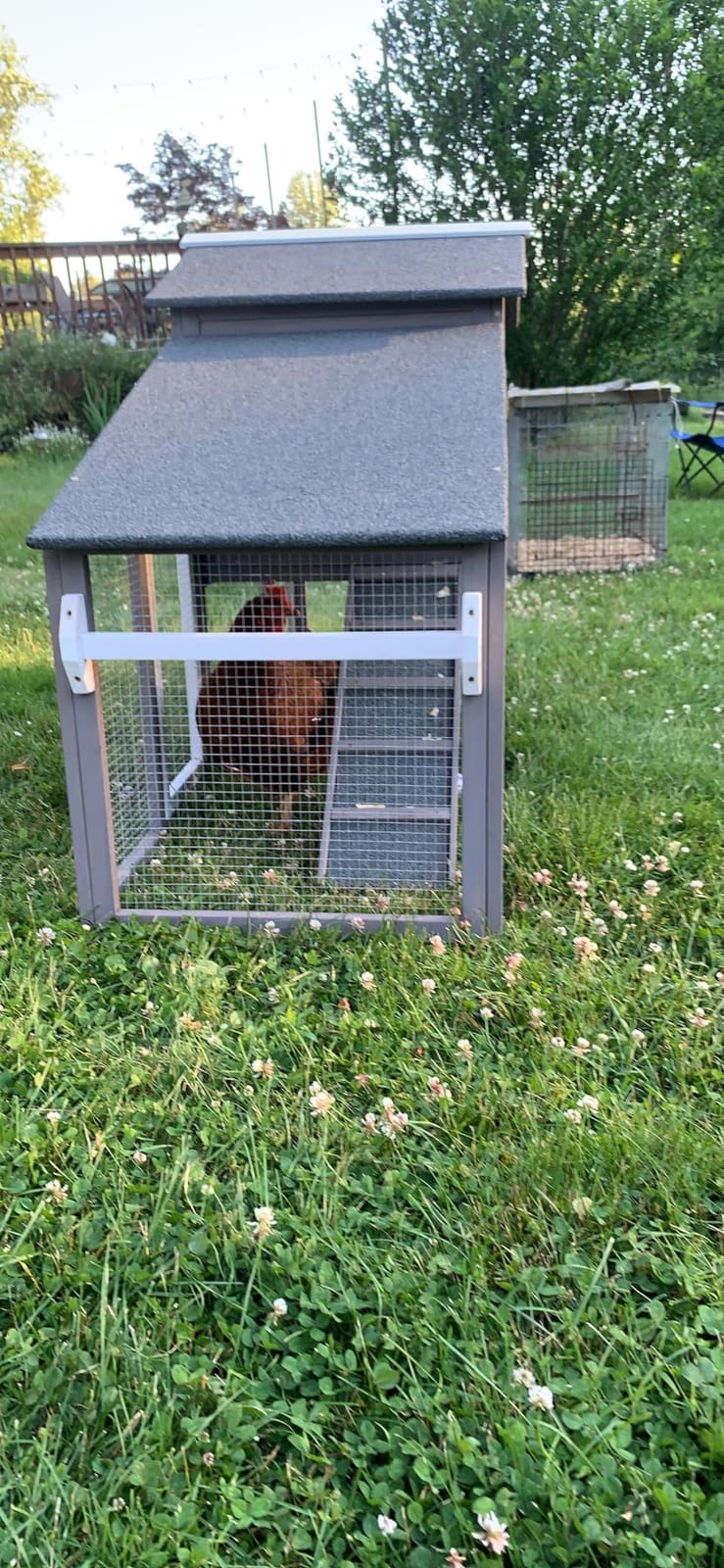
Ketive is a genuine cedar build rather than a thin sheet product, and that matters more in summer than most buyers realize. Cedar boards have a lower heat gain than lightweight sheet metal or thin panel stock, and the pitched asphalt roof sheds heat rather than sitting flat above the birds. The protective outdoor coating keeps the boards from cupping in humidity.
The raised house is the cooling feature most people miss. Because the resting area sits off the ground on legs, air moves underneath it, which pulls heat away from the roost and keeps the floor cooler than a coop sitting flat on the soil. At 13.54 square feet of usable space split between a 10.08 square foot run and a 3.46 square foot elevated area, the arithmetic is realistic rather than inflated.
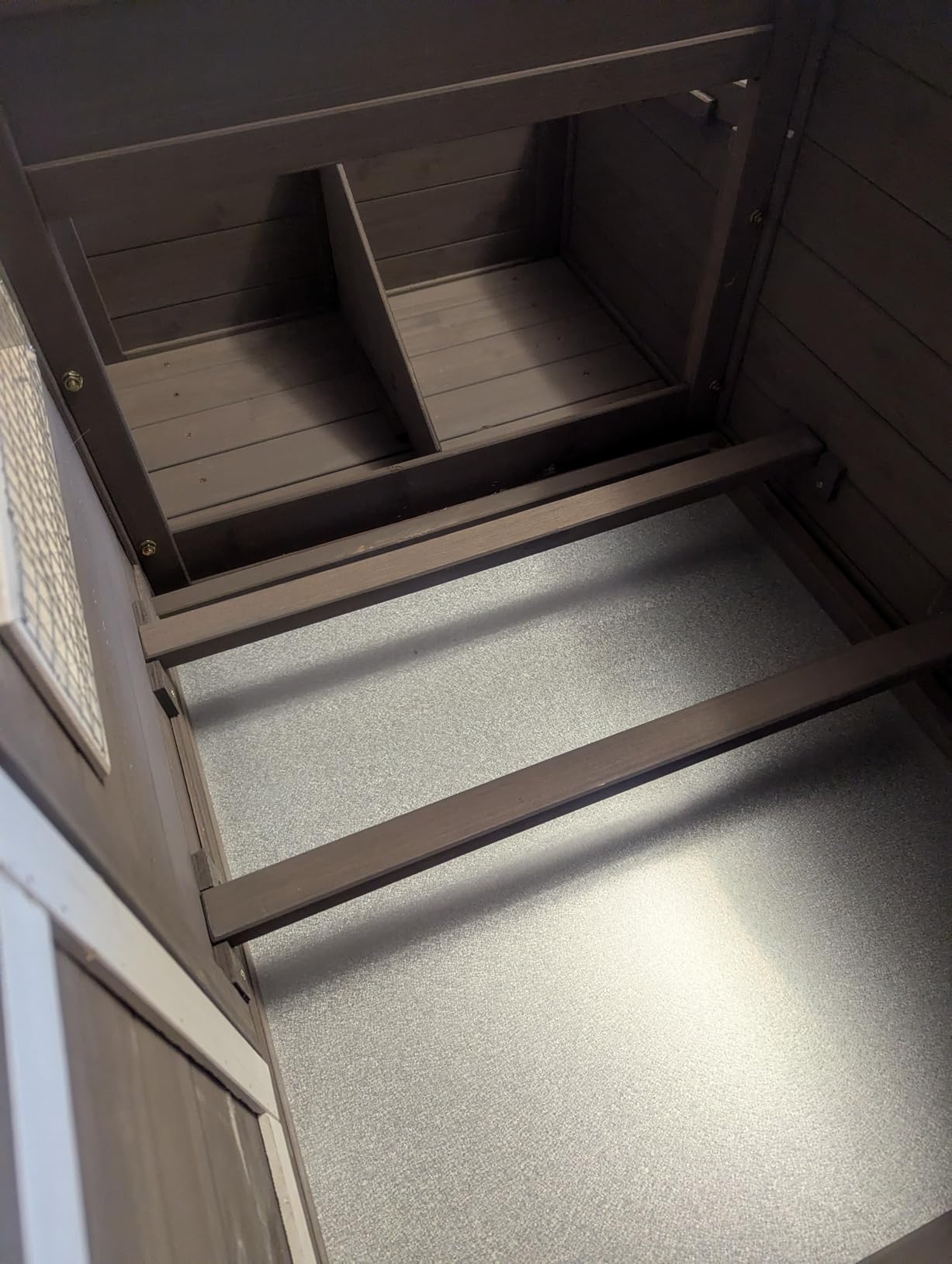
The removable sliding tray is genuinely useful in hot weather because it lets you change bedding fast without dismantling the coop. Bedding management is a bigger deal in summer: wet, deep litter raises humidity and ammonia right when the birds are already stressed. Galvanized wire mesh panels give airflow, and the anti-slip ramp and integrated nesting box round out a sensible layout.
Assembly is about 45 minutes for two adults, with pre-drilled parts. That is the shortest build in this roundup and a genuine advantage if you are putting the coop up on a weekend before a forecast heatwave.
What to check before assembly
This is a 1 to 4 bird coop, so be honest about your flock size before you buy. For a small household flock that is exactly right, and the raised floor plus cedar gives you a comfortable setup. If you have more than four birds, the run area will be crowded by midsummer, and crowding is the fastest route to a hot, humid coop.
Place it in afternoon shade and keep it off bare concrete. Wheels are included and let one person move the unit on level ground, which means you can chase the shade as the sun moves across the yard.
Where it falls short
The run area is small for what it costs compared with a metal walk-in frame of the same money, and that is the most common buyer comment. You are paying for wood construction and a nicer profile, not for square footage.
Wheels struggle on uneven ground, so moving it across a lumpy yard takes two people and some effort. In a hot climate that reduces how often you rotate the flock to fresh ground.
9. LEVELEVE 9.8 x 6.6 x 6.6 ft Walk-In Coop with Lock
- Highest average rating at 4.4 with 72 percent five-star share
- 1 inch thickened galvanized pipe with reinforced corners
- Four-sided ventilation maintains airflow
- Waterproof PE sheet with strong UV resistance
- Heavier fencing than typical chicken wire
- Heavy at 141 pounds so repositioning takes two people
- Included metal zip ties are sharp and of limited quantity
- Some reviewers report surface rust forming after several rain showers
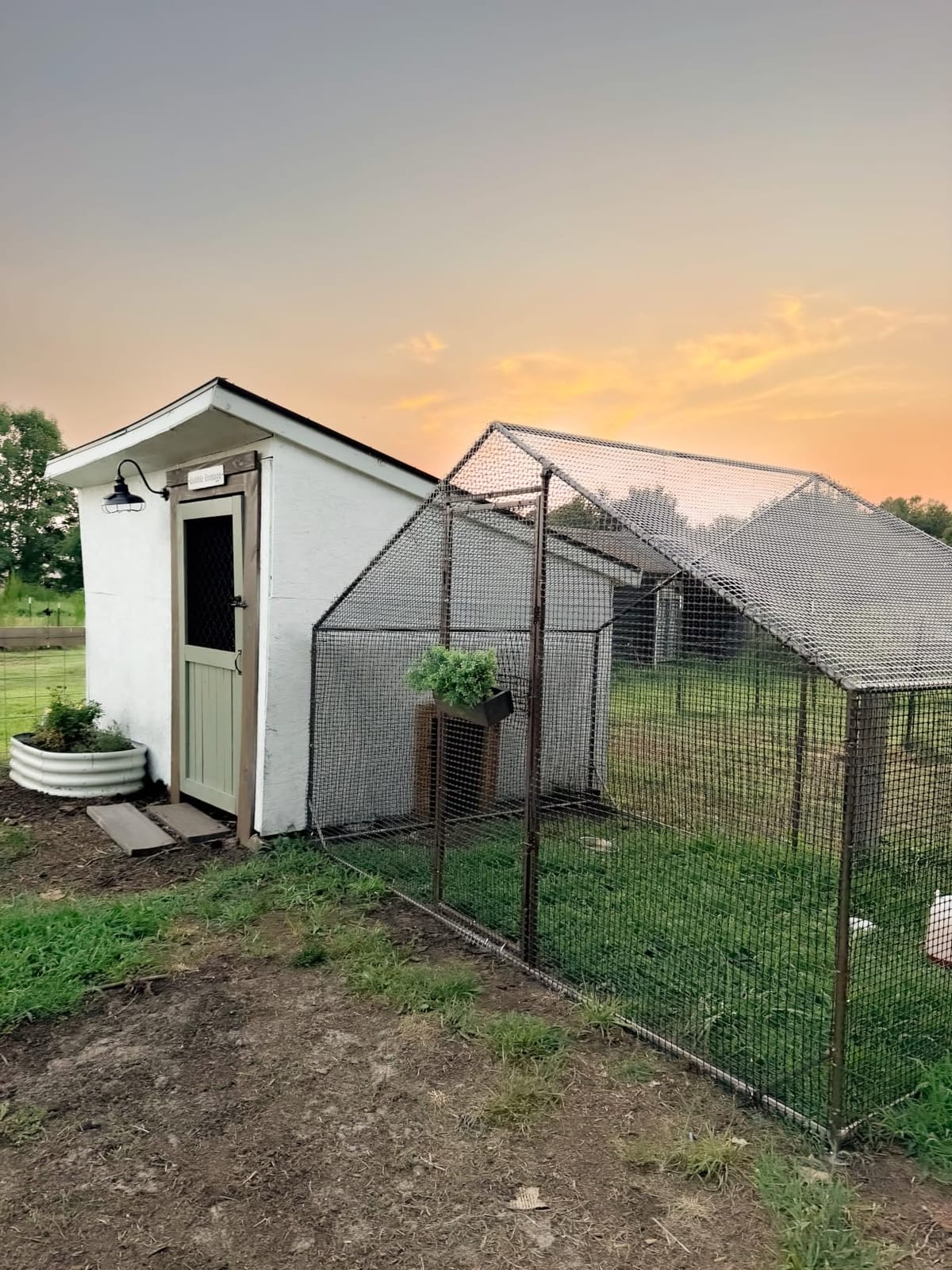
This pick has the highest average rating in the roundup at 4.4, with a 72 percent five-star share. It is a newer listing with 92 ratings, so treat the score as promising rather than proven, but the reasons owners give for rating it highly are exactly the ones that matter in heat: heavier-than-usual fencing, four-sided ventilation, and a UV-resistant waterproof cover.
At 117.6 by 78.72 by 78.72 inches with 1-inch thickened galvanized steel pipe, the frame is genuinely heavier duty than the comparable models. Reinforced corners and wind-resistant design matter in summer too, because a storm rolling through during a heatwave is how you lose birds and equipment at once.
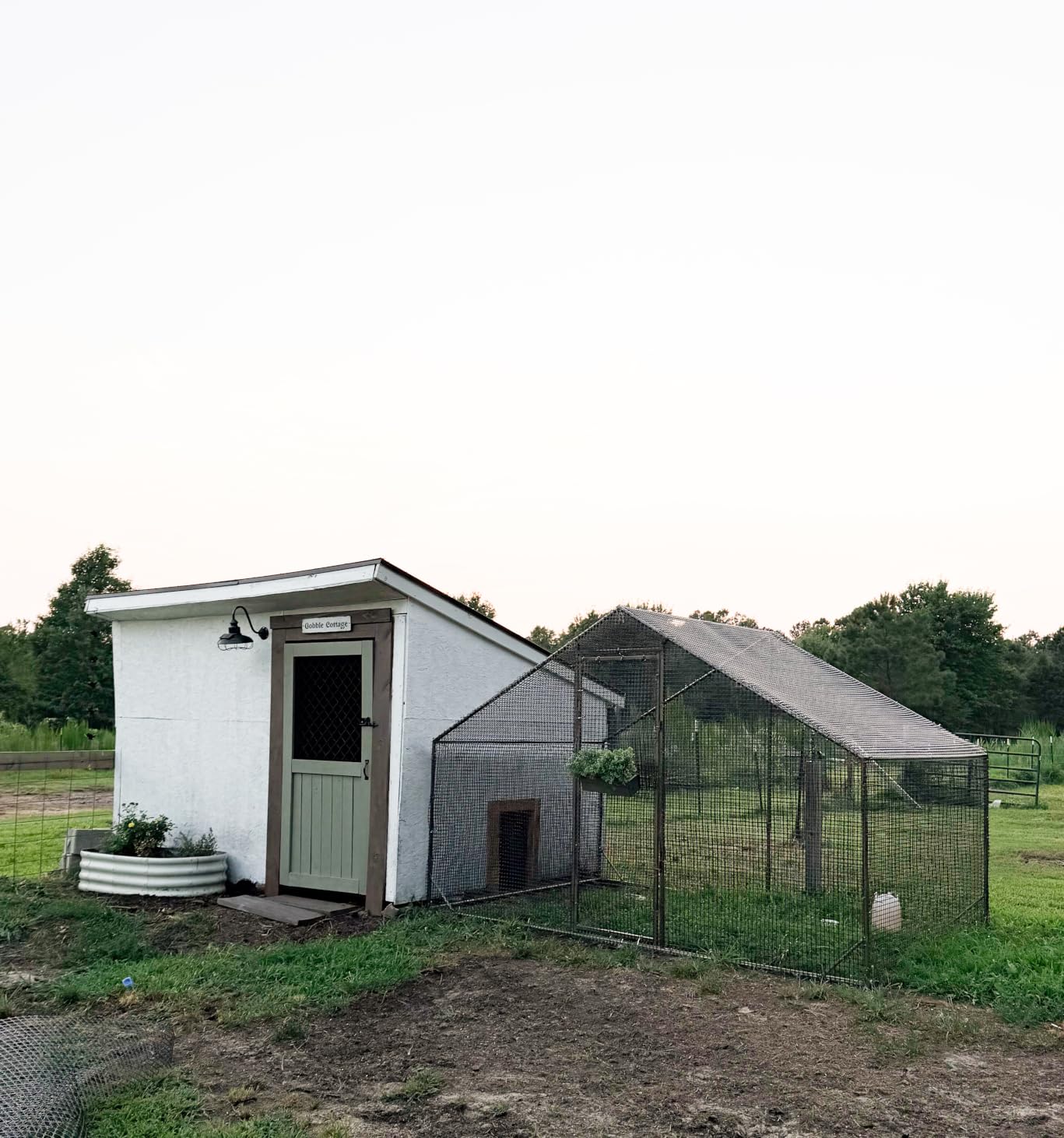
The four-sided ventilation design is the core of the heat score here. Four open mesh faces means air enters low on the shaded sides, rises, and clears at the top on a warm day, and because the frame is 6.6 feet tall there is real vertical distance for that air to move. The waterproof polyethylene sheet has strong UV resistance and a sloped roof that prevents pooling.
Reviewers specifically praise the heavier-duty fencing compared with typical chicken wire, and the framed door panel simplifies assembly. Two people put it together with clearly labeled components and a user manual.
What to check before assembly
Plan for two adults and a clear path to the final site. At 141.1 pounds this is the heaviest unit in the roundup, and repositioning it later is a two-person job, so pick the spot carefully. Choose a spot with afternoon shade and good drainage, because a heavy frame is not one you want to shuffle around mid-heatwave.
Add shade cloth on the west side even with the cover in place. The cover handles overhead sun, but side shade in the late afternoon is what keeps the air inside the pen comfortable when the sun is low and raking across the yard.
Where it falls short
It is not predator-proof against large dogs or determined predators, despite the heavier fencing. Add hardware cloth at the base and check the latches, since the included metal zip ties are sharp and few in number.
Some reviewers report surface rust forming after several rain showers, so if you live in a wet climate, treat the steel frame annually and dry the tarp after storms. The rating is high but the listing is young, and long-term durability is not yet proven by years of feedback.
10. TRYKERPET Large Wood Coop with Nesting Box for 10-12 Chickens
TRYKERPET Large Wood Chicken Coop with Nesting Box for10-12 Chickens, Gray
- Fir frame with animal-friendly paint and galvanized mesh
- 47.3 sq ft of run space for 8-12 chickens
- Removable UV-proof waterproof oxford cover
- Four-sided ventilation reduces odor
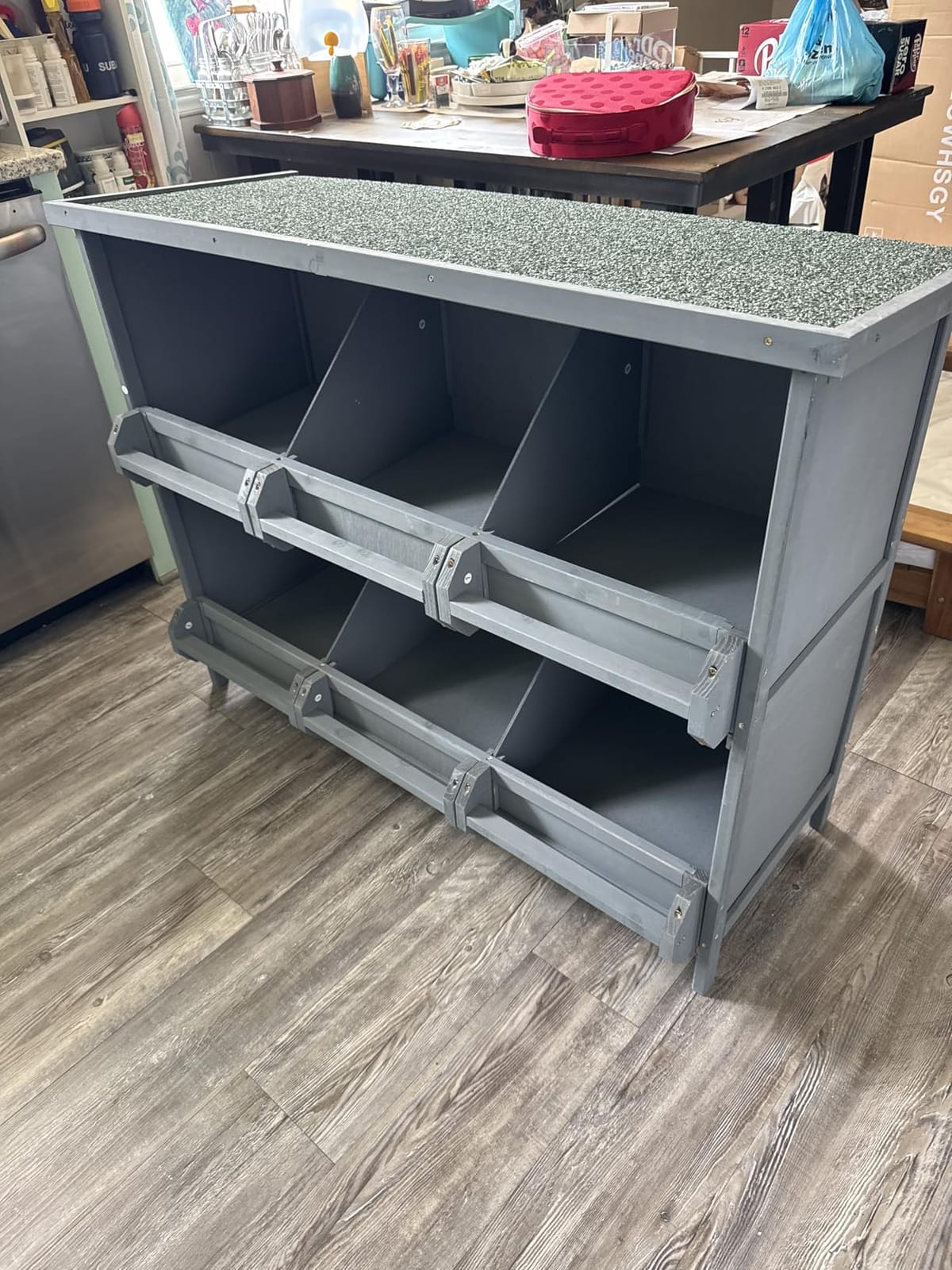
- Six nesting compartments plus walk-in door
- Flimsy particle board and thin wood
- Boards splinter and crack on arrival
- Run is smaller than shown and wobbly
This is the pick for a flock of 10 or more that needs nesting boxes in quantity. Six separate nesting compartments mean six hens can lay at once without fighting for the same box, and reducing that conflict lowers the stress load on an already heat-stressed flock. The large walk-in door also means you can clean the interior without dismantling anything.
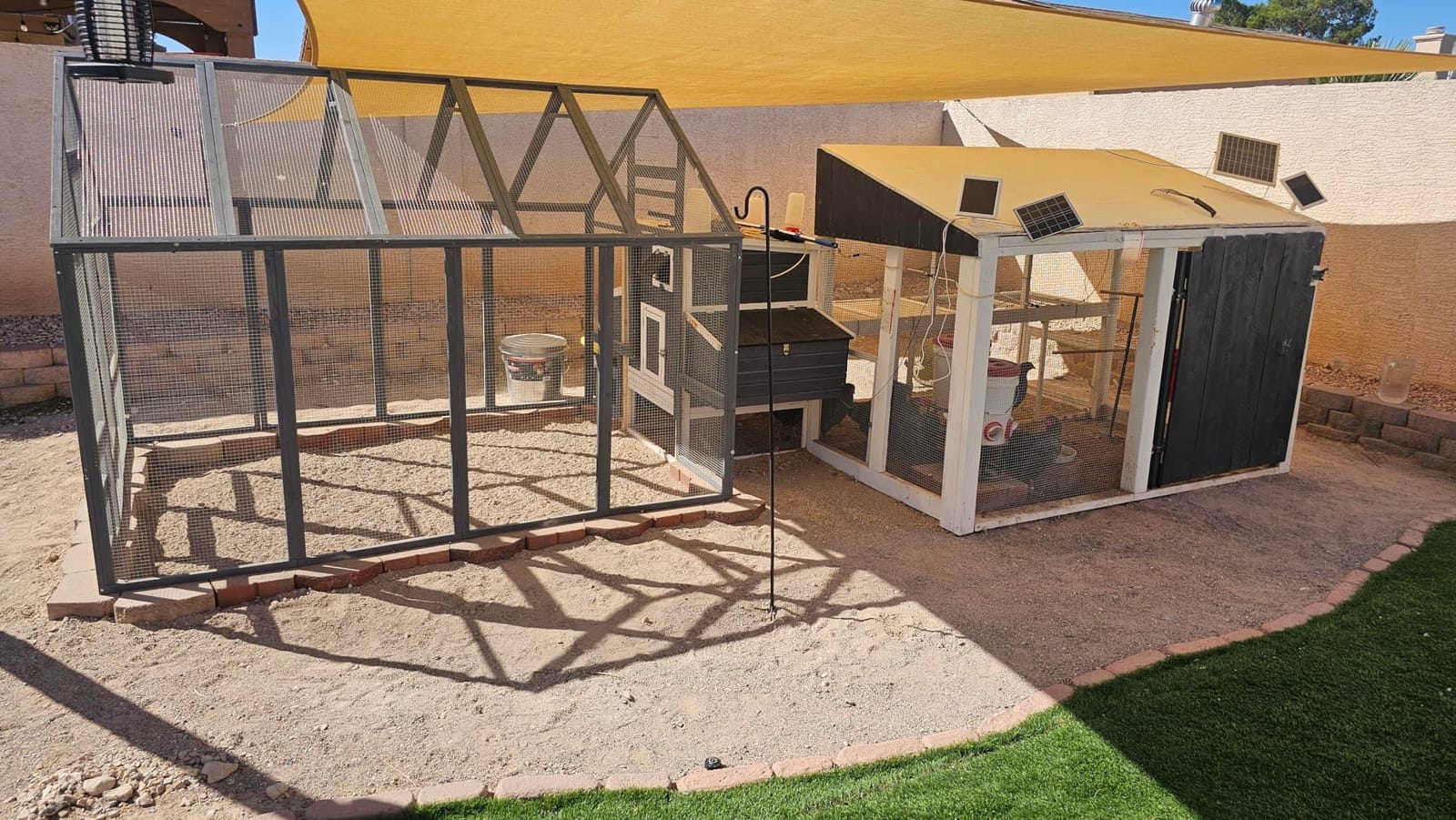
The removable UV-proof and waterproof oxford cloth cover is the heat feature here. It comes off in hot weather when you would rather have open air, and goes back on for the hottest afternoon hours or for rain. A peaked roof design underneath sheds water, and four-sided ventilation keeps the interior dry and reduces odor, which matters in humid weather.
At 96.1 by 71 by 71 inches the listing claims 47.3 square feet of run space for 8 to 12 chickens, which is the most generous run-to-bird ratio in this roundup. Generous run space is a cooling factor: birds that can move out of the sun and dust bathe in a shaded corner generate less crowding heat than birds packed into a small pen.
At 83.2 pounds the fir frame is substantial, and the animal-friendly paint and galvanized wire mesh are appropriate materials. It is also the most expensive option in this group, which is worth weighing against building your own walk-in from a shed conversion if you are comfortable with basic building.
What to check before assembly
Inspect every board on arrival. Multiple reviewers report splintering, cracked boards, and misaligned parts, and one 20-pound bag of feed cracked a support bar. Check the particle board pieces especially, since those are the first to fail in humidity and heat cycling.
Verify the run size once assembled, because owners say it is smaller than shown and slightly wobbly. Confirm the space per bird before adding the flock, and brace the frame at the corners with extra timber if you have any, which costs almost nothing and stops the rack.
Where it falls short
Hardware cloth or extra mesh is needed for real predator resistance, and the supplied wire is not enough on its own. Reinforce the base and any gaps before the flock arrives.
The 4.0 average reflects the durability complaints rather than a heat problem. If you want a flock this size with a proven long-term frame, a converted shed or a metal walk-in run is a better long-term bet than thin panel wood.
11. Magazoopet Wooden Coop with 6 Nesting Boxes and Openable Roof
Large Chicken Coop for 4-6 Chickens with 6 Nesting Boxes, Wooden Hen House
- Openable roof gives adjustable ventilation on hot days
- 6 divided nesting boxes with outside access
- Front and rear doors convert into ramps
- Dual pull-out trays speed cleaning
- Expandable design connects to a run
- Small at 61 inches long for the stated capacity
- Assembly takes around six hours
- Some units arrive with misaligned holes
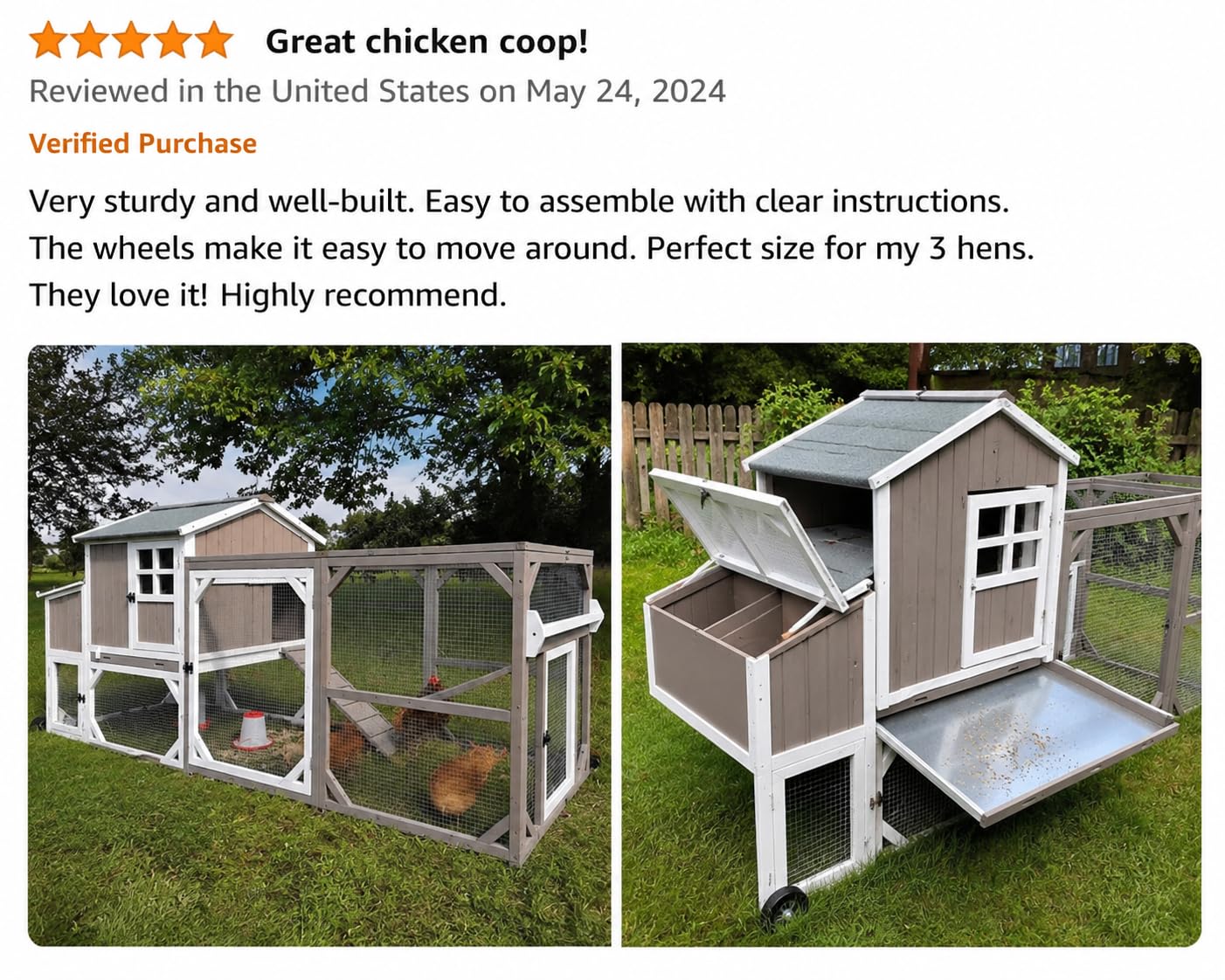
The openable roof is the reason this one earns a place in a hot-weather roundup. Owners lift it on hot days to create a full cross-breeze over the roost, which is a simple version of the high-exhaust principle that keeps warm air from pooling above the birds. Most small coops offer a fixed roof with a tiny vent, and this one gives you real control.
Roof and sliding windows also open for airflow, so on a mild day you can ventilate without opening the whole structure. Six divided nesting compartments with an outer lid mean egg collection happens from outside, so you are not opening the coop and letting built-up heat escape into the run each morning.
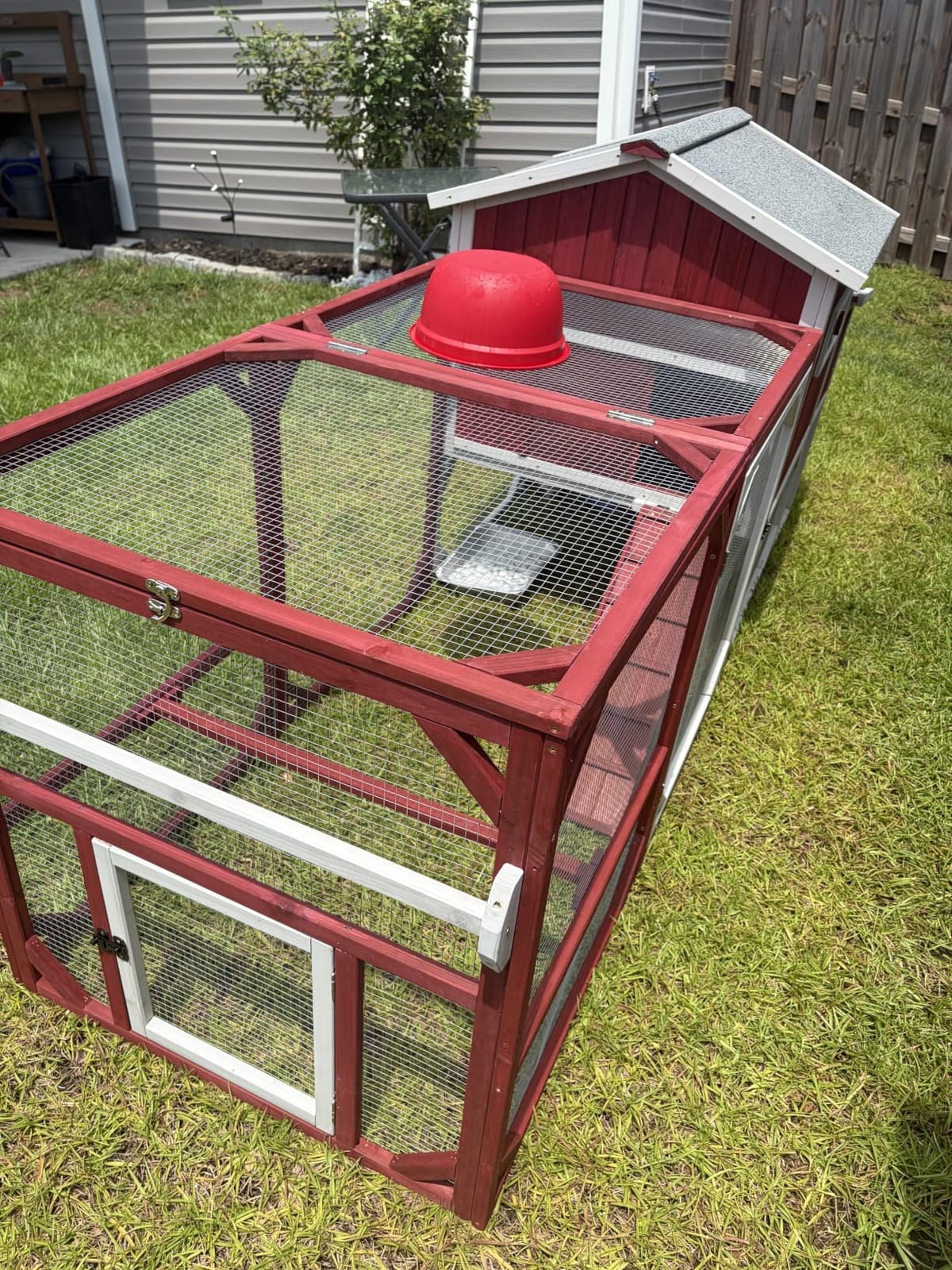
Front and rear doors that convert into ramps give the birds two ways in and out, which reduces crowding at the single pop door during the morning scramble. Dual pull-out trays at front and rear make waste removal fast, and bedding changes during a heatwave take minutes rather than an hour.
The expandable design is a genuine advantage for a growing backyard flock. This unit connects to a separately sold run, so you can start small for 3 to 4 birds and add run space later without replacing the whole coop.
What to check before assembly
Set aside a full afternoon. Assembly takes around six hours despite straightforward directions, mostly on the nesting box and roof hardware. A city backyard project like this is fine on a weekend, but not the same evening you start it.
Size it for three or four birds rather than the stated 4 to 6. At 61 inches long, it is compact, and in peak summer the difference between a comfortable density and a crowded one is the difference between birds that rest and birds that pant.
Where it falls short
Some units arrive with misaligned holes and bowed or split nesting-box dividers, and the wood is a cheaper grade that raises long-term durability questions. Check the parts on arrival, and treat or seal the exposed wood before the first wet season.
It is small. If you want six or more birds, choose a larger frame and add run space, because the same open-roof ventilation trick works better on a larger footprint.
12. GarveeLife 9.8 x 6.6 x 6.6 ft Metal Coop with Removable Cover
GarveeLife Large Metal Chicken Coop, Large Chicken Coop with Waterproof & Anti-UV Cover, Outdoor Chicken Run for Yard (9.8 ft L x 6.6 ft W x 6.6 ft H)
- Galvanized steel with thicker-than-market pipe diameter
- Reinforced for wind and heavy rain
- Removable waterproof UV cover with spire roof
- PVC coated mesh for airflow and deterrence
- Quick-connect points and lockable latch
- Smallest review base at 60 ratings
- Hexagonal mesh still needs base reinforcement
- Only two size options offered
This is a newer listing, and the 60-rating review base is small enough that we would treat the 4.2 average as a signal rather than a verdict. What the reviews do praise is specific: galvanized pipe with a diameter thicker than most comparable models, and a reinforced structure aimed at wind and heavy rain.
The removable waterproof UV-resistant cover is the summer feature, and removable matters. On the hottest days you can take the cover off and open the pen to full cross-ventilation, then put it back over the top for the afternoon peak or for rain. The spire roof sheds water and light snow, so nothing sits on top holding heat against the birds.
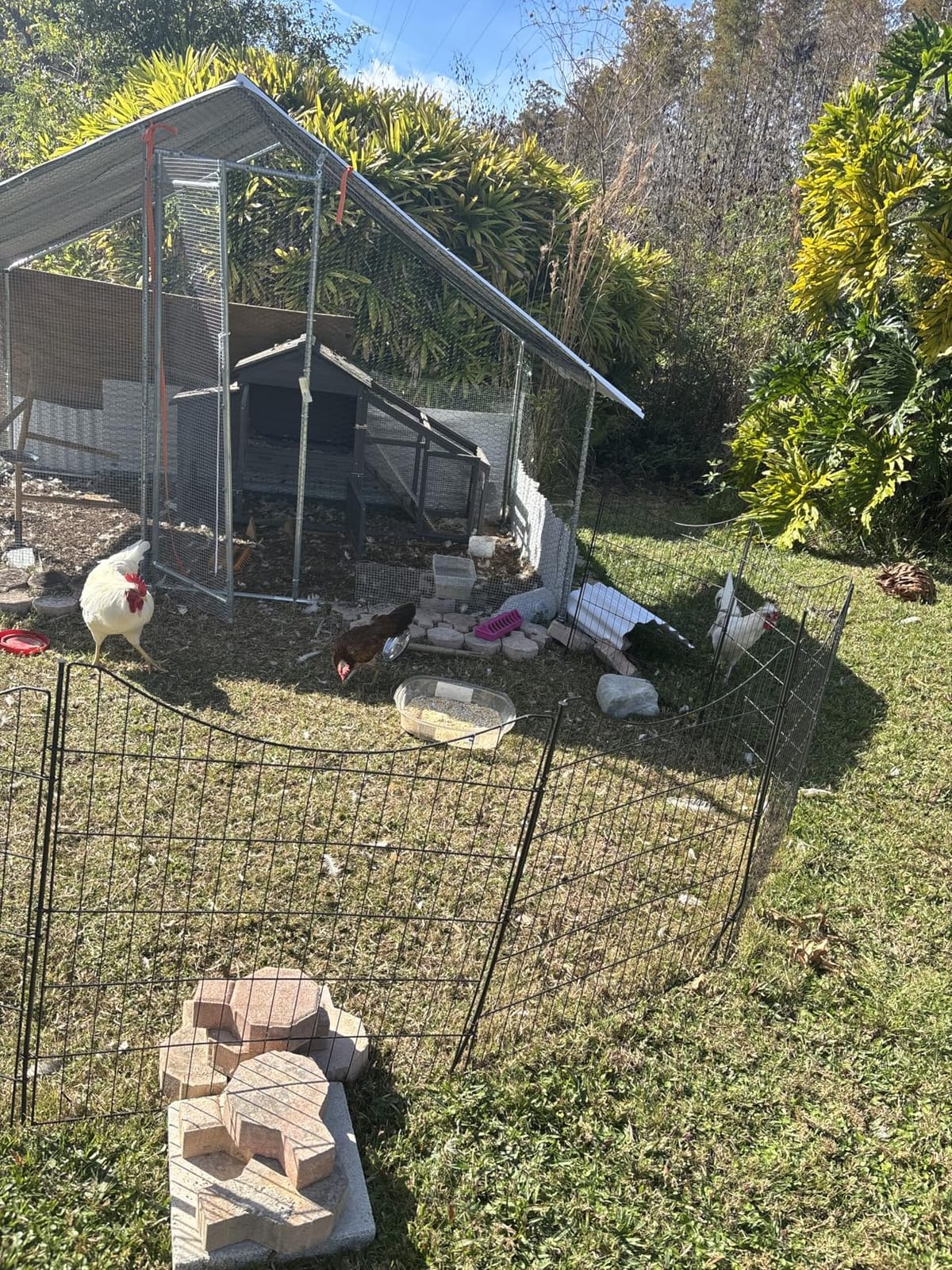
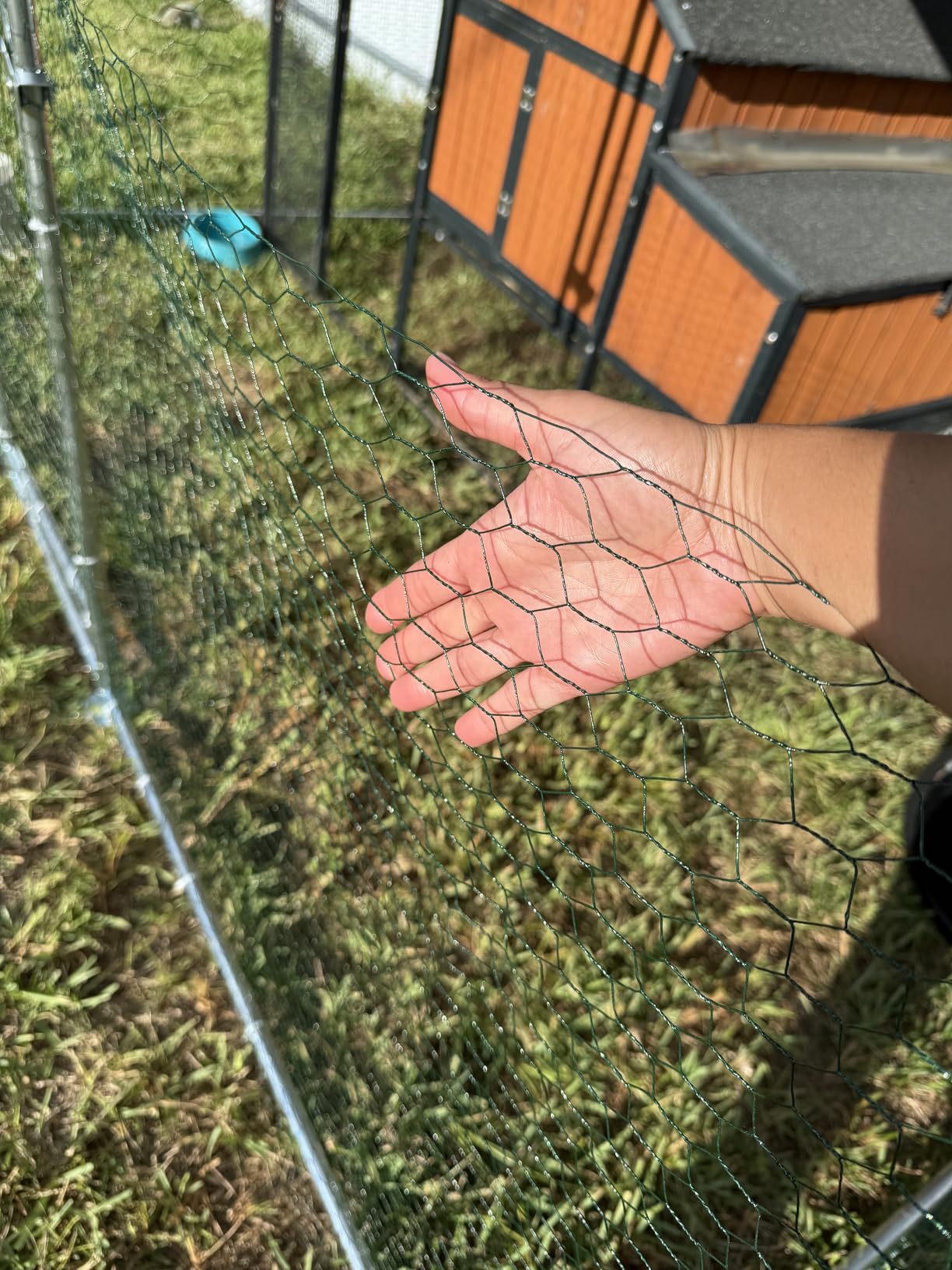
PVC-coated hexagonal mesh improves both predator deterrence and ventilation, and the simplified quick-connect connection points genuinely reduce setup time compared with models that use bolts throughout. A lockable door with a purpose-designed metal latch closes the loop on predator proofing at the entry point.
At 118.11 by 77.17 by 78.35 inches and 52.56 pounds, this is a mid-size walk-in frame. It is a reasonable middle ground between a small city run and a full homestead enclosure, and the reinforced corners help in open yards where wind is a factor.
What to check before assembly
Plan the shade strategy before the birds arrive, because with only two size options you cannot simply buy a bigger cover later. A 50 percent shade cloth clipped along the west side and partially across the top gives you the balance of shade and airflow that hot-weather keepers recommend.
Reinforce the base with hardware cloth. The hexagonal mesh is adequate against casual pests, not against a determined raccoon, and every large run in this roundup needs the same upgrade regardless of brand.
Where it falls short
The small review base is the main caution, and the category rank is low at #943, which usually reflects a newer listing rather than poor quality. Long-term durability is simply less proven than it is for the heavily reviewed models in this roundup.
With only two size variants, this is a poor fit if your flock is still growing. If you might go past six or seven birds, buy the frame you actually need rather than planning to add birds later.
How to Cool an Existing Coop in a Heatwave
If your current coop is not on this list, or you already own one of these, these are the steps that work regardless of brand. Do them in order, and do the first three before the first forecast hot day.
- Open every vent you have and add more. Remove or prop open anything that seals shut. Vents high in the gable or ridge let hot air escape, and a low intake near the floor on the shaded side pulls cool air in. This stacked effect is the standard answer from experienced keepers on BackYard Chickens and r/BackYardChickens, and it costs nothing but a screw and a screen.
- Put shade on the run before the sun arrives. Clip shade cloth along the west and south sides and over roughly half the top. Use 70 percent in a hot humid South, 50 percent in a hot dry Southwest, and 30 percent as a seasonal supplement in temperate areas. Leaving part of the pen uncovered keeps air moving.
- Add moving air. A box fan clipped to a corner post and aimed across the flock works better than anything else you can bolt on. Keep it running from early morning into the evening, not just at the peak, because birds cool best when the air moves all day.
- Switch bedding to sand or grit. Keepers in the South report that sand bedding keeps the coop floor cooler and drier than wood shavings. It does not compost in the heat and it does not hold moisture, which cuts both humidity and odor.
- Keep water cold and constant. Use a wide shallow pan that holds more water than a narrow cup, place it in the shade, and refill often. A chicken that cannot reach water in hot weather may drop laying for several days after access returns, so treat water as the priority check twice a day.
- Be cautious with misting. A misting hose lowers air temperature but wets the ground, which invites dampness and raises humidity at ground level. Use it briefly during the hottest hours, never in the evening, and never inside a closed coop.
- Watch for heat stress signs. Panting, holding wings away from the body, drooping, and birds refusing to roost are the warning signs. If you see them at midday, move the flock to a shaded, ventilated spot rather than trying to cool the coop in place.
The Buying Guide: Nine Specs That Decide Summer Comfort
Ventilation area is the first thing to check and the thing manufacturers describe most vaguely. Ask for the actual vent dimensions in inches, not a claim of being well ventilated. The general rule of thumb is one square foot of open vent area per ten square feet of floor, and openings high in the gable or under the ridge perform better than openings at roost height because heat rises.
Roof and roof color come next. Light-colored or white roofing reflects sunlight; dark asphalt and dark metal absorb it. A roof with an overhang also shades the upper walls, which is why coops with wide eaves stay cooler than identical coops with a flush roofline. Metal conducts heat far better than wood, which is the one real advantage wood has in a heatwave.
Materials are a genuine tradeoff rather than a ranking. Wood is cooler to the touch and holds heat more slowly, and it is a better winter structure. Metal is lighter, cheaper, and more resistant to rot and insects, but it heats fast in direct sun and cools fast at night. Plastic sits in between, blocks drafts, and gets very hot on a sunny afternoon. Whichever you choose, shade the structure and keep air moving, and the material matters less than those two things.
Shade cloth percentage is the most useful number nobody tells you. Thirty percent blocks light sun and is a spring supplement. Fifty percent is the right default for most hot climates. Seventy percent is what you want in the South, and you can go to full black shade cloth in extreme conditions, though the run needs airflow underneath. Always cover part of the run rather than the whole thing.
Run space math is simpler than manufacturers make it. Four square feet per bird of run is workable in mild climates, and eight or more is better in the South because it lets birds spread out, dust bathe, and get out of the sun. Overcrowding is the fastest way to turn a cool run into a hot one.
Predator proofing has to survive opening the coop up. Every strategy on this list involves leaving vents and doors open on hot days, which is exactly when raccoons and hawks get bold. Half inch hardware cloth beats chicken wire every time, slide latches need a carabiner or padlock tab, and a buried or skirted apron stops digging predators.
Two design flaws only show up in summer. A pop door shorter than 8 inches above the floor gets blocked by bedding exactly when you need the birds out and ventilated. And nesting box lids need working latches, because a coop you cannot close securely is a coop you cannot open up in the afternoon.
Placement matters as much as the product. Give the coop afternoon shade and morning sun, avoid low spots that flood, and keep it near a power source if you plan to run a fan or an automatic door. Before you commit to any of these, it also helps to skim our leftover chicken casserole ideas for using up the eggs a healthy flock produces in cooler months.
Hot-Tolerant Breeds to Pair With These Coops
Ventilation gets you a long way, but breed choice decides how the flock handles the last few degrees. Orpington, Australorp, Sussex, and Brahma carry dense feathering that slows heat gain, and they handle heat better than their heavy bodies suggest. Leghorns and other light breeds tolerate heat well but are more vulnerable to cold nights in winter.
In the South, feathers also work against you in humidity, because damp feathering takes longer to dry and the bird loses its insulation advantage. A heat-tolerant breed in a poorly ventilated coop still suffers, which is the point: the coop does the heavy lifting, the breed handles the margin.
Frequently Asked Questions
How can I keep my chickens cool in 100-degree weather?
Shade the run with 50 to 70 percent shade cloth before the sun hits, open every vent and add a high gable or ridge vent, run a box fan aimed across the flock from early morning, switch bedding to sand, and keep a wide pan of cold water in the shade. Misting helps briefly at peak heat but wets the ground, so use it in the hottest hours only and never in the evening.
How hot is too hot for a chicken coop?
Chickens begin to show heat stress around 85F and struggle above 90F, especially in humidity. Sustained readings at or above 100F are dangerous and can be fatal within hours, particularly in a sealed or poorly ventilated coop. Panting, holding wings away from the body, drooping, and refusing to roost are the warning signs.
Are chickens ok in 90 degree weather?
They are uncomfortable but usually fine at 90F if air is moving, water is cold and available, and shade is present. Problems start when humidity is high, because panting cannot cool the body when the air is already saturated. The risk multiplies fast once night temperatures stay high and the flock never gets a cool period to recover.
What are the most heat tolerant chickens?
Orpingtons, Australorps, Sussex, and Brahmas are the most heat-tolerant common breeds, followed by lighter Mediterranean breeds such as Leghorns. Feather color and comb size also matter: lighter feathered birds and smaller combs radiate heat better. Breed choice helps at the margins, but ventilation and shade do the actual work.
Are metal and plastic chicken coops safe in summer?
They are safe as long as air moves through them and they are shaded. Metal conducts heat quickly and plastic blocks air entirely, so a sealed metal or plastic coop with no vents can cook birds. An open mesh metal run with a light-colored UV-resistant cover over the top is one of the best summer setups available, and it is what most picks on this list use.
Final Verdict: Which Chicken Coop Wins in Summer Heat
For most backyard flocks, the CHIKENCOOP 9.8 by 6.5 by 6.5 ft metal run is our pick from the best chicken coops for hot weather. The walk-in height makes summer chores bearable, the eucalyptus roost stays cooler than steel, and the UV-resistant cover over open mesh on all four sides is the combination that moves the most air while blocking overhead sun. Add a 50 percent shade cloth and a clip-on box fan, and it handles a serious heatwave.
Keep a flock of 12 or more in mind, and the Belinova hardware cloth run is the stronger buy, with capacity for 15 to 20 birds, mesh that resists determined predators, and a solar dusk light. On a tight budget in a hot dry climate, the VEVOR 6.56 ft covered run gives you four-sided ventilation and a spire roof at a fraction of the cost of a wooden coop.
Whichever one you pick, the setup matters more than the model. Air in low, air out high, shade on half the run, sand on the floor, and cold water within reach. Do those five things and any of these coops will carry your flock through 2026.