
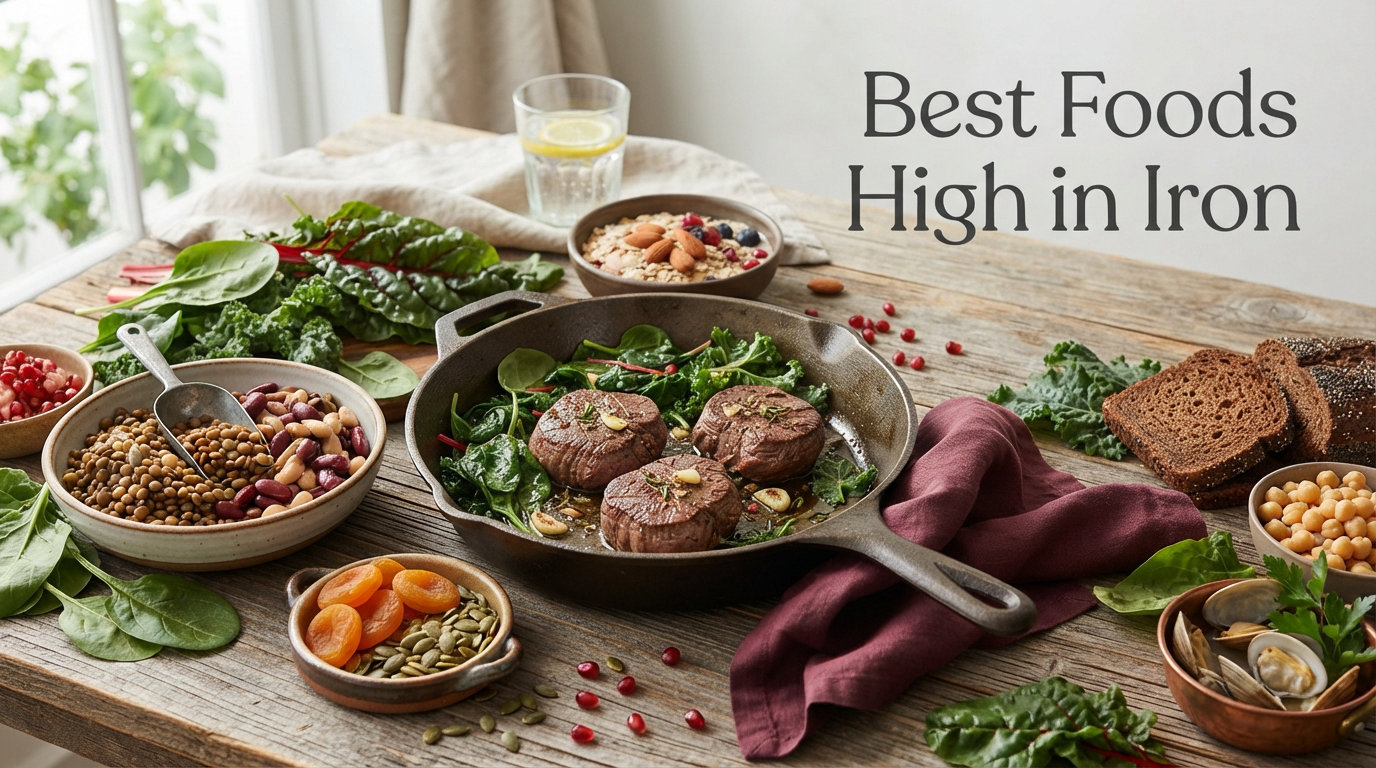
Best foods high in iron include shellfish, lean meat, beans, lentils, tofu, seeds, leafy greens, fortified grains, and several convenient pantry foods. This guide organizes 52 practical choices by food group, explains heme and nonheme iron, and shows how to pair plant sources with vitamin C.
Iron is essential, but a food list cannot diagnose or treat iron deficiency. Iron needs vary with age, pregnancy, menstruation, diet pattern, health conditions, and blood loss. If a clinician has told you that your iron or hemoglobin is low, follow the testing and treatment plan they recommend instead of relying on food alone or starting a supplement on your own.
Table of Contents
52 Best Foods High in Iron
Heme iron comes from meat and seafood and is generally absorbed more readily. Plant foods and iron-fortified products contain nonheme iron, whose absorption is more affected by the rest of the meal. Both types can contribute to an iron-supportive eating pattern. The numbered list below gives useful ways to serve each food without pretending that every brand, cultivar, or portion contains the same amount.
Meat and Seafood Sources
-
Oysters: Serve cooked oysters with lemon and a vegetable-rich side; shellfish is one of the most concentrated heme-iron choices.
-
Clams: Add cooked clams to tomato-based pasta, chowder, or a grain bowl, and follow local shellfish-safety guidance.
-
Mussels: Steam mussels with tomatoes, garlic, and herbs for a meal that combines heme iron with vitamin C.
-
Beef liver: Liver is iron-rich, but it is also high in preformed vitamin A; pregnancy and medical considerations make individualized advice important.
-
Chicken liver: Use a modest cooked portion in pâté, a rice dish, or sautéed onions, and never serve poultry liver undercooked.
-
Lean beef: Choose a lean cut for stir-fries, chili, tacos, or a vegetable-heavy skillet meal.
-
Dark-meat turkey: Roasted turkey thigh or leg contributes more iron than breast meat and works well in soups and grain bowls.
-
Dark-meat chicken: Add cooked chicken thighs to tomato stew, bean soup, or a sheet-pan dinner.
-
Sardines: Mash canned sardines with lemon and herbs for toast, or fold them into pasta with tomatoes.
-
Tuna: Use canned light tuna in a bean salad or whole-grain sandwich; people who are pregnant should follow current fish guidance.
-
Salmon: Pair baked salmon with broccoli, peppers, or a citrusy salad for a balanced meal.
-
Shrimp: Cook shrimp with tomatoes and peppers, then serve over brown rice or quinoa.
Beans, Lentils, Peas, and Soy Foods
-
Lentils: Use cooked lentils in soup, curry, pasta sauce, tacos, or chilled salads with tomatoes and lemon.
-
White beans: Stir canned white beans into kale soup, tomato stew, or a lemon-herb salad.
-
Kidney beans: Rinse canned beans and add them to chili, rice bowls, or a chopped pepper salad.
-
Chickpeas: Roast them for a snack, blend them into hummus, or toss them with tomatoes and parsley.
-
Black beans: Combine black beans with salsa, cabbage, avocado, and corn tortillas.
-
Split peas: Simmer split peas with carrots, onions, and herbs for a thick, economical soup.
-
Edamame: Add shelled edamame to stir-fries, salads, and brown-rice bowls.
-
Firm tofu: Press and roast tofu, scramble it with peppers, or add cubes to a vegetable stir-fry.
-
Tempeh: Marinate and sear tempeh for wraps, grain bowls, or a broccoli stir-fry.
-
Roasted soy nuts: Use a measured handful in trail mix or sprinkle them over a salad for crunch.
Nuts and Seeds
-
Pumpkin seeds: Sprinkle pepitas over oatmeal, yogurt, salads, soups, or roasted vegetables.
-
Sesame seeds: Add toasted sesame seeds to greens, tofu, noodles, or rice bowls.
-
Tahini: Whisk sesame paste with lemon and water for a dressing that suits beans and roasted vegetables.
-
Hemp seeds: Stir them into oats, yogurt, smoothies, or whole-grain muffin batter.
-
Chia seeds: Mix chia into overnight oats or yogurt and allow enough time for the seeds to hydrate.
-
Cashews: Pair unsalted cashews with fruit, or use them in a vegetable stir-fry.
-
Pistachios: Add chopped pistachios to salads, oats, yogurt, or roasted carrots.
-
Almonds: Use sliced almonds on cereal and salads or pair a small handful with berries.
Vegetables
-
Cooked spinach: Fold it into eggs, beans, pasta, or tomato sauce; cooking reduces the volume so a serving is easier to eat.
-
Swiss chard: Sauté chopped chard with garlic and finish it with lemon.
-
Collard greens: Braise collards with tomatoes and beans or slice them thinly for a quick sauté.
-
Beet greens: Cook washed beet tops as you would chard and serve them with citrus.
-
Green peas: Add peas to pasta, soup, fried rice, or a warm potato salad.
-
Broccoli: Roast or steam broccoli and serve it alongside beans, tofu, meat, or seafood.
-
Baked potato with skin: Top a scrubbed baked potato with beans, salsa, and plain yogurt.
-
Tomato paste: Cook tomato paste into lentil soup, chili, curry, or pasta sauce for concentrated flavor.
-
White mushrooms: Brown mushrooms well before adding them to eggs, grains, pasta, or a bean skillet.
-
Asparagus: Roast asparagus with lemon and serve it with eggs, fish, or lentils.
Fortified Foods and Grains
-
Iron-fortified breakfast cereal: Read the Nutrition Facts label because fortification varies widely by product.
-
Fortified hot cereal: Prepare fortified wheat or multigrain cereal and add berries or sliced kiwi.
-
Enriched bread: Check the label and use it for bean toast, tuna sandwiches, or egg-and-pepper toast.
-
Oatmeal: Top oats with pumpkin seeds and strawberries for a plant-iron and vitamin C combination.
-
Quinoa: Use cooked quinoa under roasted vegetables, beans, chicken, or fish.
-
Brown rice: Combine brown rice with black beans, peppers, and tomato salsa.
-
Whole-wheat pasta: Serve it with tomato sauce, lentils, spinach, clams, or lean beef.
Dried Fruit and Other Useful Sources
-
Dried apricots: Chop a measured portion into oats, grain salad, or unsalted trail mix.
-
Raisins: Add raisins to oatmeal, couscous, slaw, or a seed-and-nut snack mix.
-
Prunes: Serve prunes with yogurt or chop them into oatmeal and baked dishes.
-
Dark chocolate: Check the cacao percentage and portion size; treat it as an occasional contributor, not the main iron strategy.
-
Blackstrap molasses: Stir a small amount into oatmeal or a sauce, remembering that it also contributes added sugar.
How Much Iron Is in Common Foods?
Amounts depend on brand, preparation, variety, and serving size. The values below are rounded from the NIH Office of Dietary Supplements iron fact sheet; use the Nutrition Facts label or USDA FoodData Central when an exact product or portion matters.
-
Fortified breakfast cereal: Up to 18 mg in one labeled serving, depending on the product.
-
Cooked eastern oysters: About 8 mg in 3 ounces.
-
Canned white beans: About 8 mg in 1 cup.
-
Cooked beef liver: About 5 mg in 3 ounces.
-
Boiled lentils: About 3 mg in 1/2 cup.
-
Boiled spinach: About 3 mg in 1/2 cup.
-
Firm tofu: About 3 mg in 1/2 cup.
-
Canned kidney beans: About 2 mg in 1/2 cup.
-
Cooked chickpeas: About 2 mg in 1/2 cup.
-
Lean cooked beef: About 2 mg in 3 ounces.
Heme vs. Nonheme Iron
Heme iron is found in meat and seafood. Nonheme iron is found in plant foods, fortified grains, and also in mixed foods. The NIH notes that heme iron has higher bioavailability and that vitamin C, meat, poultry, and seafood can improve absorption of nonheme iron.
That does not make plant foods unhelpful. It means a varied plant-based diet needs deliberate food choices and useful pairings. Spinach, for example, contains iron but also compounds that reduce its bioavailability. Beans, tofu, fortified cereal, seeds, and vegetables can contribute across the day instead of depending on one supposed “superfood.”
Daily Iron Needs
The recommended dietary allowance changes across life stages. These adult values come from the NIH fact sheet and are general population targets, not individual prescriptions.
-
Men ages 19–50: 8 mg per day.
-
Women ages 19–50: 18 mg per day.
-
Adults ages 51 and older: 8 mg per day.
-
Pregnancy: 27 mg per day.
-
Lactation, ages 19–50: 9 mg per day.
The NIH states that the recommended intake for vegetarians is 1.8 times higher because nonheme iron is less bioavailable. Needs can also differ because of menstruation, gastrointestinal disease, blood donation, surgery, or another source of blood loss. A clinician can decide whether symptoms warrant blood tests and whether food, treatment of an underlying cause, or a prescribed supplement is appropriate.
Ways to Improve Iron Absorption
-
Pair plant iron with vitamin C: Combine beans, lentils, tofu, seeds, or greens with peppers, tomatoes, broccoli, strawberries, kiwi, or citrus.
-
Use mixed meals when appropriate: A small amount of meat, poultry, or seafood can improve nonheme-iron absorption in a meal that also contains plant sources.
-
Check fortified-food labels: The amount in cereal and bread varies substantially, so compare the iron percentage and serving size.
-
Prepare beans in a practical way: Soaking dried beans, discarding the soaking water, and cooking them thoroughly can improve texture and reduce some phytate.
-
Consider tea and coffee timing when advised: Polyphenols can reduce nonheme-iron absorption. People being treated for iron deficiency may be advised not to drink tea or coffee with an iron-rich meal, but rigid timing is unnecessary for everyone.
-
Do not overcorrect with supplements: Supplemental iron can cause side effects and excessive iron can be harmful. Use it only with appropriate clinical guidance.
Easy Iron-Rich Meal Ideas
Breakfast
-
Fortified cereal with strawberries and pumpkin seeds
-
Oatmeal with raisins, chia seeds, and kiwi
-
Tofu scramble with spinach, peppers, and tomato salsa
-
Eggs with whole-grain toast, sautéed greens, and orange slices
For more complete morning recipes, use our breakfast recipe ideas and adapt portions to your needs.
Lunch
-
Lentil soup with tomatoes and a lemony cabbage salad
-
White bean, tuna, pepper, and parsley salad
-
Hummus and roasted-pepper wrap with pumpkin seeds
-
Quinoa bowl with edamame, broccoli, and citrus dressing
Dinner
-
Lean beef and black bean chili with tomatoes and peppers
-
Tofu and broccoli stir-fry over brown rice
-
Clams with whole-wheat pasta and tomato sauce
-
Chicken thighs with lentils and roasted Brussels sprouts
-
Sardine tomato pasta with spinach and lemon
Our Mediterranean recipes for beginners and salad recipe ideas provide complete directions for several bean, grain, fish, and vegetable combinations.
How to Read Iron on a Food Label
In the United States, the Daily Value for iron shown on Nutrition Facts labels is 18 mg for adults and children age four and older. A label that lists 20% Daily Value therefore represents 3.6 mg in the stated serving. The percentage is useful for comparing similar cereals, breads, pastas, and meat alternatives, but it is not a personal daily target for every age or life stage.
-
Check the serving size first: A cereal may look very high in iron, but the listed serving could be larger or smaller than the amount you pour.
-
Compare like with like: Compare cereals to cereals or breads to breads so portion and use are reasonably similar.
-
Look for fortification: Iron in a fortified product was added during manufacturing, which is why two otherwise similar cereals can differ substantially.
-
Read the whole label: Sodium, added sugar, fiber, protein, and allergens still matter; the highest iron percentage is not automatically the best overall choice.
-
Use the product label over a generic number: Formulas change, and databases cannot represent every brand or serving.
Build an Iron-Supportive Day Without Chasing Numbers
A practical approach distributes iron sources across meals. Breakfast might include fortified cereal, pumpkin seeds, and strawberries. Lunch could combine lentils, tomatoes, peppers, and whole-grain bread. Dinner might use tofu and broccoli, bean chili, lean beef with vegetables, or fish with a quinoa salad. The food choices accumulate across the day, and the vitamin C pairings support absorption of nonheme iron.
For a plant-based day, begin with oatmeal, chia, pumpkin seeds, and kiwi. Make a white bean and tomato soup for lunch, then prepare tofu with broccoli and brown rice for dinner. A snack of hummus with pepper strips adds another bean-and-vitamin-C pairing. This pattern is more realistic than forcing a very large portion of spinach or seeds into one meal.
For an omnivorous day, a fortified cereal breakfast can be followed by a tuna-and-white-bean salad and a dinner of lean beef, lentils, or shellfish with vegetables. Heme iron does not need to dominate the plate. A modest portion can sit alongside beans, whole grains, and vegetables so the meal supplies fiber and other nutrients too.
Children, teenagers, pregnant people, endurance athletes, frequent blood donors, and people with gastrointestinal conditions may need more individualized planning. Do not use the sample days to replace advice based on laboratory results, growth, pregnancy, symptoms, or treatment.
Shopping, Cooking, and Storage Tips
-
Keep two shelf-stable sources: Canned beans, lentils, sardines, tuna, fortified cereal, seeds, and whole grains make an iron-supportive meal possible when fresh food is limited.
-
Add one vitamin C food: Bell peppers, tomatoes, broccoli, citrus, berries, and kiwi are easy partners for plant sources.
-
Rinse canned beans: Rinsing reduces surface sodium without removing the iron stored inside the beans.
-
Cook meat and seafood safely: Use the appropriate safe temperature and avoid raw or undercooked shellfish, poultry liver, meat, and fish when food-safety risk is higher.
-
Cool leftovers promptly: Divide large pots of soup, beans, chili, or grains into shallow containers and refrigerate within two hours.
-
Freeze useful bases: Lentil soup, bean chili, cooked grains, and fully cooked meat freeze well in meal-size portions.
-
Keep supplements away from children: Accidental iron overdose is an emergency; store supplements in child-resistant packaging and out of reach.
Frequently Asked Questions
What food has the most iron?
Some fortified cereals provide the most iron per labeled serving, while oysters, liver, white beans, and lentils are notable whole-food sources. “Most” depends on portion size and whether you are comparing total iron or the amount likely to be absorbed.
How can I raise low iron quickly?
Do not assume food alone can quickly correct a laboratory-confirmed deficiency. The cause and severity matter, and some people need prescribed treatment. Eat varied iron sources with vitamin C while arranging medical evaluation and following the plan based on your test results.
Can a vegetarian or vegan diet provide enough iron?
Yes, with planning. Regularly include beans, lentils, tofu, tempeh, seeds, fortified grains, and leafy vegetables, and pair them with vitamin C foods. The NIH uses a higher recommended intake for vegetarians because nonheme iron is less bioavailable.
Does spinach have a lot of iron?
Cooked spinach contributes iron, but its absorption is limited by naturally occurring compounds. Treat it as one contributor and rotate it with beans, tofu, fortified grains, seeds, and other sources.
Should I take an iron supplement?
Only when a clinician recommends the dose and duration. Iron supplements can interact with medicines, cause gastrointestinal side effects, and be dangerous in excess or to children if swallowed accidentally.
What are possible signs of iron deficiency?
Fatigue, weakness, shortness of breath, dizziness, headaches, paleness, restless legs, or unusual cravings can have many causes. Seek medical care rather than self-diagnosing, especially for chest pain, fainting, severe shortness of breath, pregnancy, or symptoms that persist.
Conclusion: Best Foods High in Iron
The best foods high in iron are the ones you can use consistently across varied meals: shellfish or lean meat if you eat them, plus beans, lentils, tofu, seeds, greens, and fortified grains. Pair plant sources with vitamin C, use labels for fortified foods, and let a clinician guide testing or supplements when deficiency is a concern.
Build one or two iron-supportive combinations into breakfast, lunch, or dinner rather than chasing a single high-number food. Variety makes the plan easier to maintain and supplies nutrients beyond iron.