
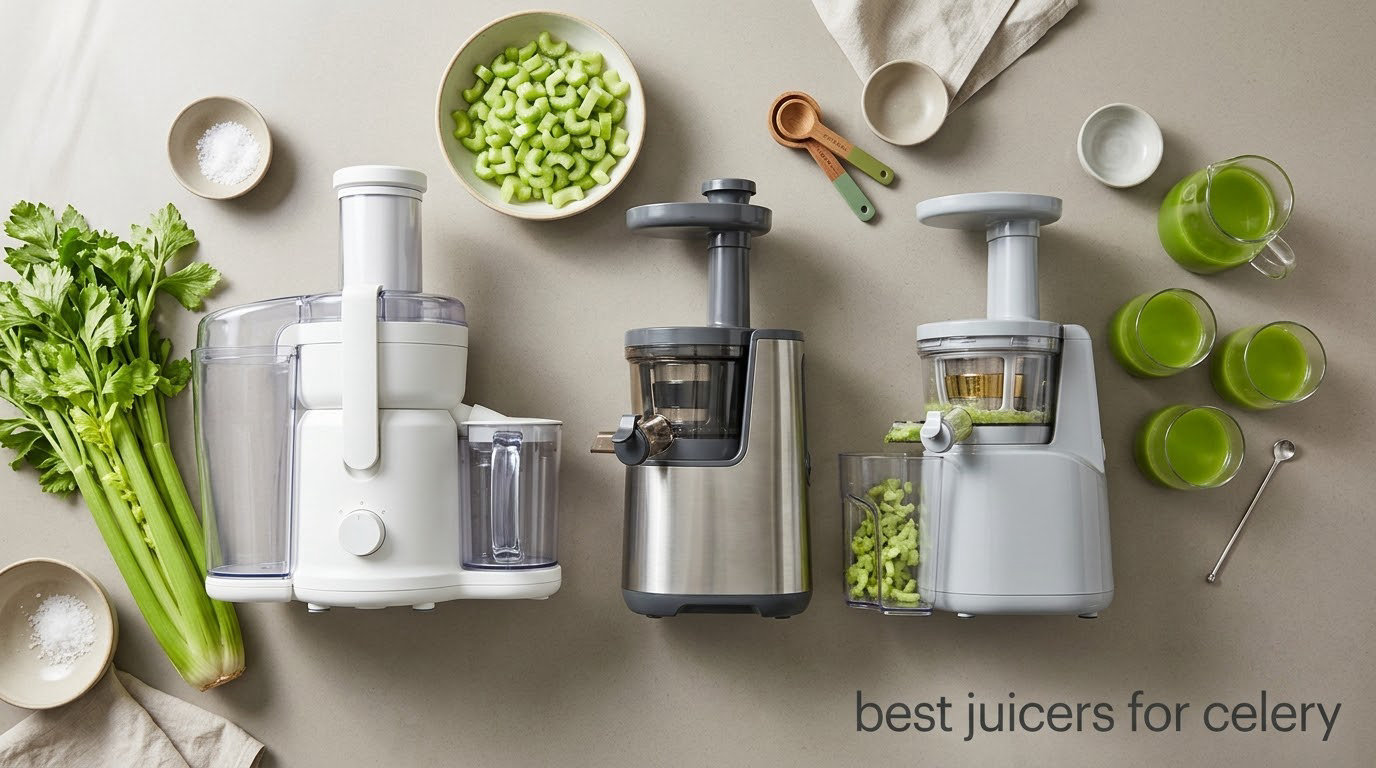
Celery is the one vegetable that punishes a weak juicer. Long stringy fibers wrap around fast blades, pack the pulp port solid, and stall motors that handle carrots without complaint. After working through a dozen machines side by side, cold press masticating juicers win for celery by a wide margin, and our top pick for 2026 is the Ninja NeverClog JC151 for its high-torque auger, its two interchangeable pulp filters, and a reverse button that clears most jams on contact.
This roundup covers 12 juicers judged on the only things that decide celery performance: motor torque, auger speed, feed chute width, strainer type, whether a reverse function exists, how many parts you have to wash afterward, and how long the warranty runs. Every pick is a single-auger cold press or twin gear machine, plus honest notes on where each one falls short.
One note before we start. Celery juice is heavily promoted in wellness circles, and the specific health claims attached to it have not been clinically proven. If you take blood pressure medication, have kidney or liver conditions, or are pregnant, talk to your doctor before making it a daily habit. The right machine is the fun part. The health part is a conversation with a professional.
Curious how these fit with the wider category? Our guide to cold press juicers covers the technology in more depth, and our masticating juicer roundup ranks more options if you also juice greens and roots.
Table of Contents
Top 3 Celery Juicers for 2026
These three are the ones we would put on a countertop for a daily celery routine. Each earns its badge for a different reason, and all three run cold press rather than centrifugal extraction.

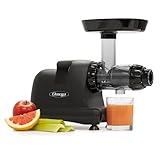

AAOBOSI 6.5-inch Chute
- 6.5-inch feed chute
- 100 oz capacity
- Dry pulp from celery
- Two-minute cleanup
All 12 Celery Juicers Compared Side by Side
Here is the full lineup for the best juicers for celery, with the type, power, chute width and warranty that actually influence how a stalk of celery comes out.
| Product | Specifications | Action |
|---|---|---|
| Ninja NeverClog JC151 Cold Press Juicer |
|
Check Latest Price |
| Omega J8006 All-in-One 80 RPM Juicer |
|
Check Latest Price |
| AAOBOSI 3-in-1 6.5-inch Chute Juicer |
|
Check Latest Price |
 AMZCHEF Self-Feeding 6.5-inch Slow Juicer AMZCHEF Self-Feeding 6.5-inch Slow Juicer |
|
Check Latest Price |
 EanOruus 3-in-1 Cold Press Juicer EanOruus 3-in-1 Cold Press Juicer |
|
Check Latest Price |
 YPONE 5.8-inch 400W Masticating Juicer YPONE 5.8-inch 400W Masticating Juicer |
|
Check Latest Price |
 TUUMIIST 3-in-1 Juicer TUUMIIST 3-in-1 Juicer |
|
Check Latest Price |
 Canoly C16 Cold Press Juicer Canoly C16 Cold Press Juicer |
|
Check Latest Price |
 Omega VSJ843QR Pure Press Juicer Omega VSJ843QR Pure Press Juicer |
|
Check Latest Price |
 Tribest Greenstar GSE-5000 Elite Tribest Greenstar GSE-5000 Elite |
|
Check Latest Price |
 BRECIOUS Slow Masticating Juicer BRECIOUS Slow Masticating Juicer |
|
Check Latest Price |
 Omega H3000RWH13 Cold Press Juicer Omega H3000RWH13 Cold Press Juicer |
|
Check Latest Price |
How We Picked: What Actually Decides Celery Performance
Most juicer roundups rank on star ratings and copy the manufacturer’s claims. That approach tells you very little about celery, so we scored every machine against a fixed checklist drawn from owner feedback and the physical design of each juicer.
Motor torque and auger speed came first. Celery is roughly 95 percent water, but the remaining fiber is long and springy, and it needs a motor with enough push to keep the auger turning when a dense mat of strands builds up. Auger speed matters just as much, because fast rotation cooks the produce through friction and the juice foams.
Chute width decides how much cutting you do before you ever switch the machine on. Then we looked hard at strainer design, since a fine mesh screen yields more liquid but clogs faster on strings, while a single slotted strainer clears faster and wastes less juice. Reverse functions, dishwasher-safe parts, and warranty length rounded out the list, and we also weighed how many separate pieces have to be washed, because a pile of crevices is the single biggest reason people abandon a juicer.
1. Ninja NeverClog JC151 Cold Press Juicer – Best Overall for Celery
Ninja NeverClog Cold Press Juicer, 24oz Jug, 36oz Pulp, Charcoal, JC151
- High-torque motor powers through celery
- greens and roots
- Pulp comes out noticeably dry
- Compact vertical footprint fits under cabinets
- Dishwasher-safe juice-contact parts
- Two filters let you trade speed for yield
- Some owners still report occasional clogs despite the name
- Hard vegetables need slicing thin
- Noticeably louder than some vertical cold press machines
The JC151 is the juicer we recommend to someone whose entire reason for buying a machine is celery juice. Its 150-watt motor turns a low-speed auger hard enough to keep moving when fibrous stalks bunch up, and the one-touch reverse program backs the auger up when something does snag. That combination is the whole reason it works where cheaper cold press machines struggle.
Cleaning is where it wins a second time. Every part that touches juice goes in the dishwasher, the auger lifts straight out, and there is no deep filter basket to scrub with a brush. For a daily routine, a two-minute teardown is the difference between a machine you use and a machine you regret buying.
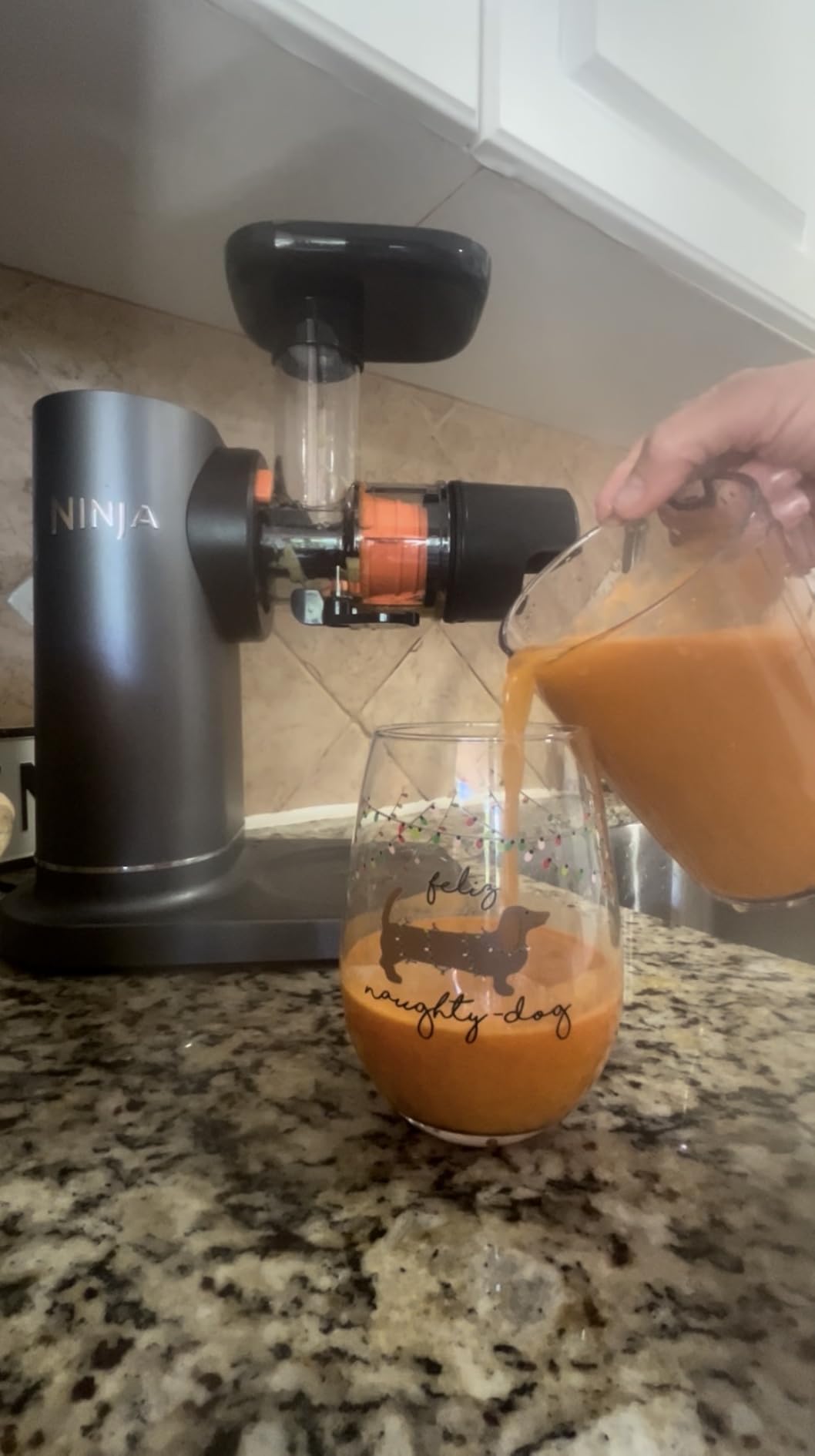
The two included pulp filters are the detail most reviewers mention. The Less Pulp filter pushes more liquid into your jug and slows throughput a little. The Lots Pulp filter moves faster with a drier discard. Swapping between them is a one-step process, and for celery most people end up using both depending on whether the juice is going into a glass or into a bottle for later.
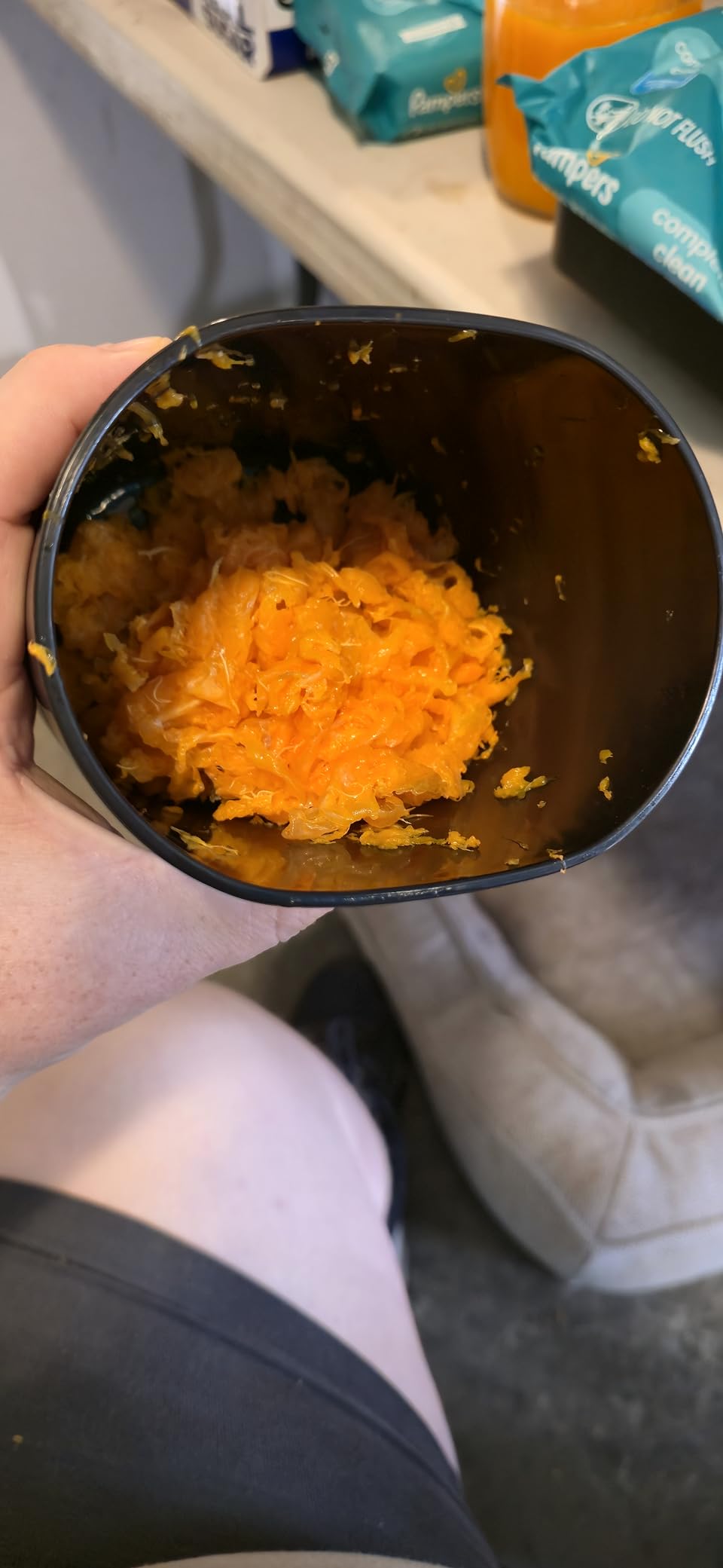
Yield is the other quiet advantage. Owners consistently describe the discarded pulp as dry, which means more liquid per pound of celery and less produce waste. That matters if you are buying a full bunch of stalks every few days rather than using celery as a garnish.
What to check before you buy
Two things deserve attention. Despite the product name, some owners report occasional clogs, usually when they push stalks in too fast or feed pieces that are too large. The auger recovers quickly with the reverse button, but you still have to stop and clear it.
Hard vegetables need to be sliced fairly thin, and the machine is audibly louder than slim vertical cold press options. If you live in a quiet apartment and juice at five in the morning, weigh that before committing.
Who it suits and who it does not
This suits a single person or couple who wants one glass of celery juice most mornings and will rinse the machine right after. It also works well for anyone who wants to avoid scrubbing a fine mesh screen every evening.
It suits less well for a household that wants to run three gallons of juice in one sitting, since the 24 oz jug fills faster than most people expect. If your plan is a weekend batch for the whole family, look at one of the large hopper machines further down this list.
2. Omega J8006 All-in-One 80 RPM Juicer – Best for Daily Celery and Greens
- Dry pulp compared with centrifugal output
- Very quiet for a slow juicer
- Doubles as a processor for nut butter and pasta
- Large 28 oz bowls
- 15-year motor coverage
- Narrow feed chute needs small cuts
- Slow throughput on soft produce
- Plastic auger chipped for some owners
- Many nozzles to wash
Where the Ninja is compact and fast, the Omega J8006 is a horizontal workhorse with a triple-stage 80 RPM auger and a much larger footprint. If your routine is a full glass of celery juice plus a carrot or an apple every morning, this is the machine that keeps up without drama. Long-term daily users report very dry pulp and celery, carrot and leafy green performance that holds up year after year.
The all-in-one attachment system is the sleeper feature. The same motor drives pasta nozzles, a homogenizing cone, and a blank for nut butter, so you are not buying a second appliance for those jobs. The included 28 oz bowls are large enough to handle a whole bunch of celery in one session without stopping to empty them.
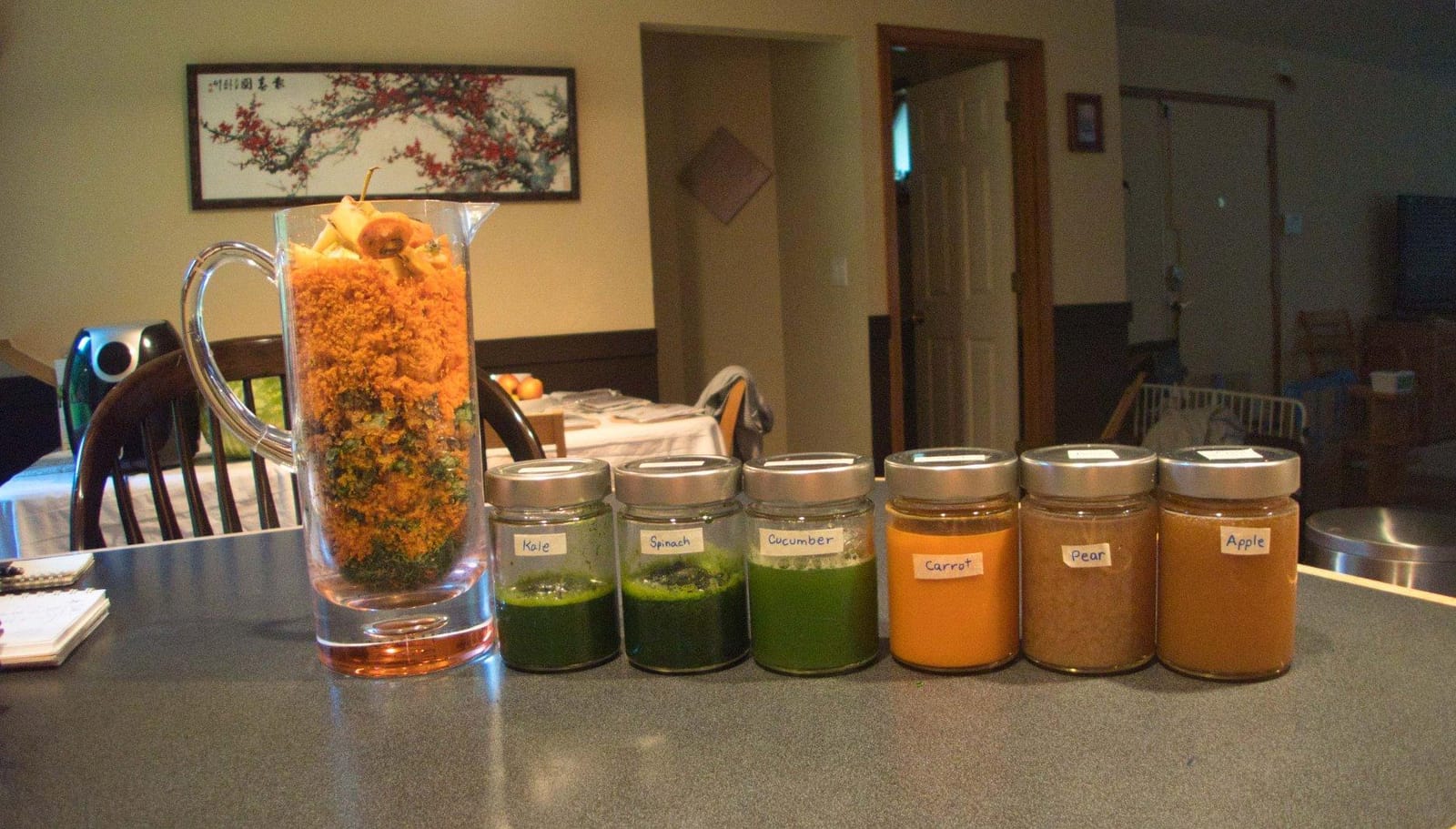
It is also unusually quiet for a machine with this much torque, which matters if you are juicing before the rest of the house is awake. Cleanup is mostly a sink rinse, and most of the removable parts are top-rack dishwasher safe.
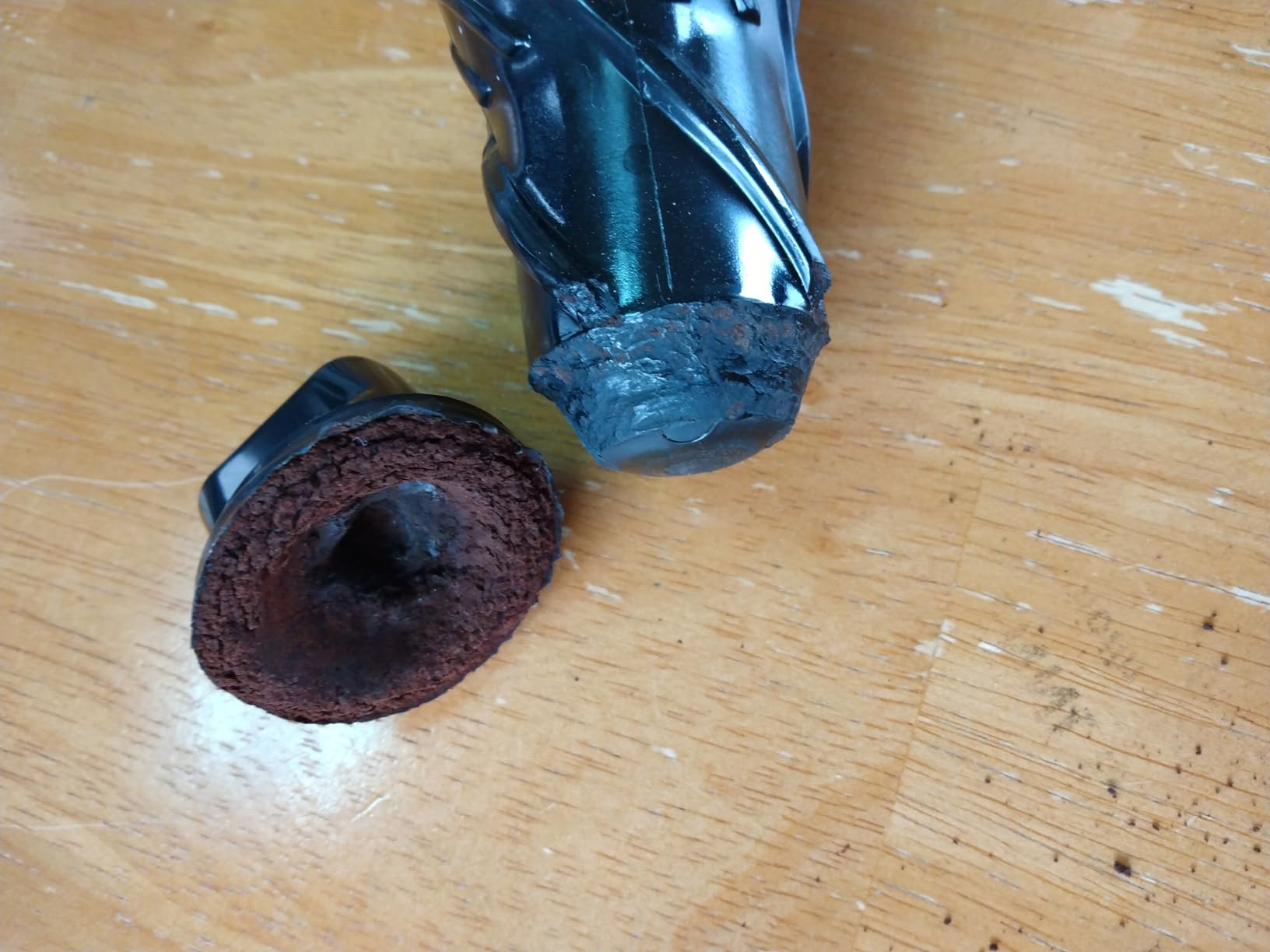
The 15-year motor warranty is the strongest coverage in this group and the clearest answer to the durability question that dominates buyer forums. Community members who bought budget cold press machines report replacing several units in a year; a warranty of that length is a real signal from the manufacturer.
What to check before you buy
The feed chute is narrow, so everything has to be cut down before you start. That prep time is the real cost of this machine, and it is why we rank it second rather than first. Throughput is slow, and soft produce such as cucumber or watermelon can clog the juicing tube if you run it alone.
Some owners report chipping the plastic auger and blank cone over time. The 14.1-pound body and the full set of nozzles also mean a fair number of pieces to wash, so budget extra time on the days you use the attachments.
Who it suits and who it does not
This suits a daily drinker who wants a single appliance for juice, nut butter and pasta, and who does not mind a few minutes of knife work at the start of the session. It is a good fit for a family that juices the same routine every morning.
It suits less well for someone who wants to drop a whole bunch of celery in and walk away. There is no hopper, and the cutting is on you. If speed of prep is your top priority, choose a wide chute machine instead.
3. AAOBOSI 3-in-1 6.5-inch Chute Juicer – Best Value
- Wide chute takes whole fruit with little cutting
- Consistently dry pulp on celery and fibrous roots
- Full cleanup in roughly two minutes
- Compact footprint
- Three strainer functions
- Long stalks still need cutting to fit
- Some reports of cracked hoppers
- Hand wash only
- Plastic blade material
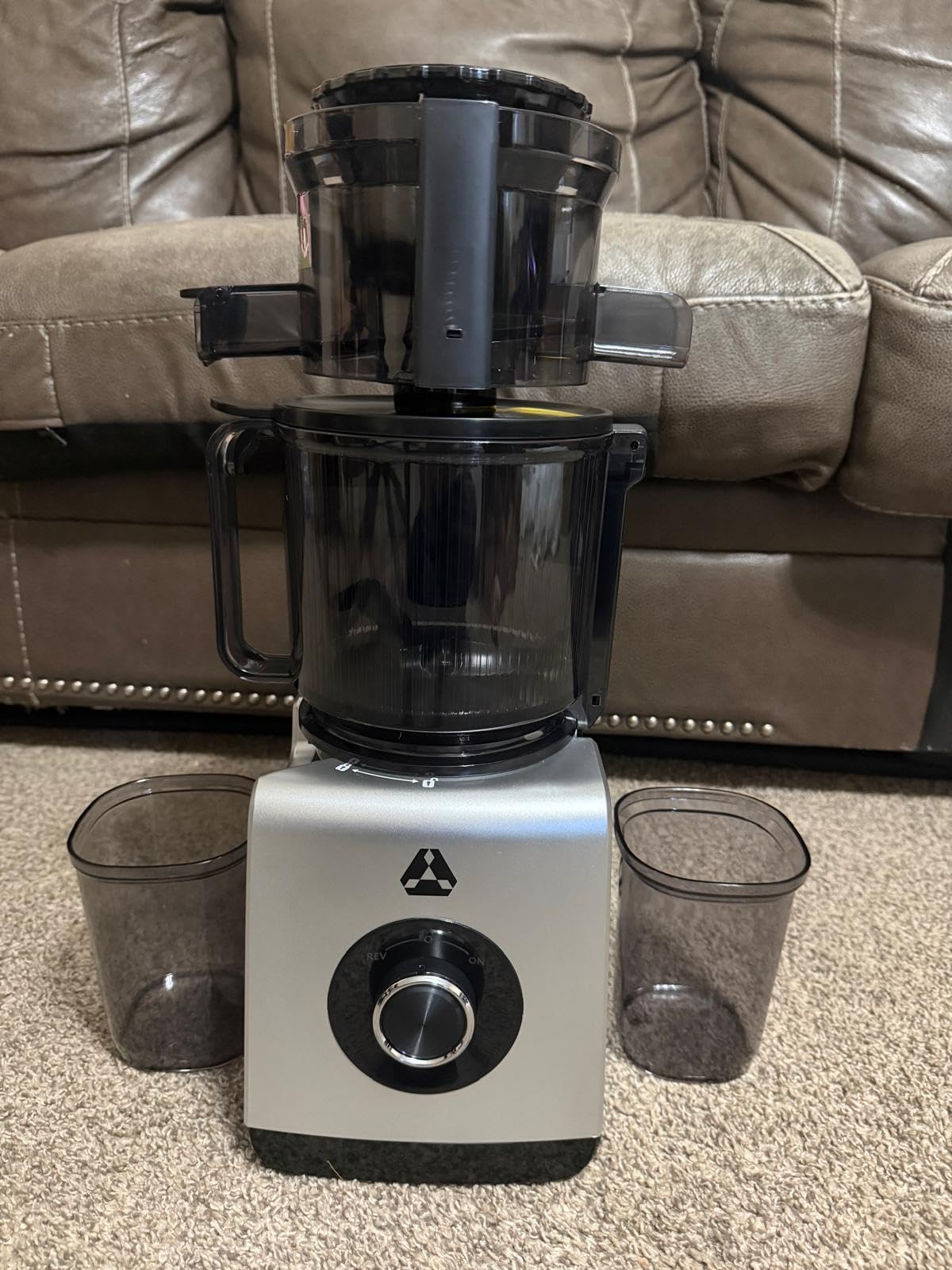
The AAOBOSI carries the largest review base in this roundup, and the pattern in those reviews is remarkably consistent for a celery routine: dry pulp from celery, fennel, ginger and turmeric, plus a cleanup that takes about two minutes. The 6.5-inch chute is wide enough that a short piece of celery usually goes in without any cutting at all.
At 100 oz the hopper holds enough produce for a family breakfast rather than a single serving, which makes this a batching machine in practice even though it looks compact. Detachable parts fit on a draining board, and the internal surfaces are smooth with few hidden crevices.
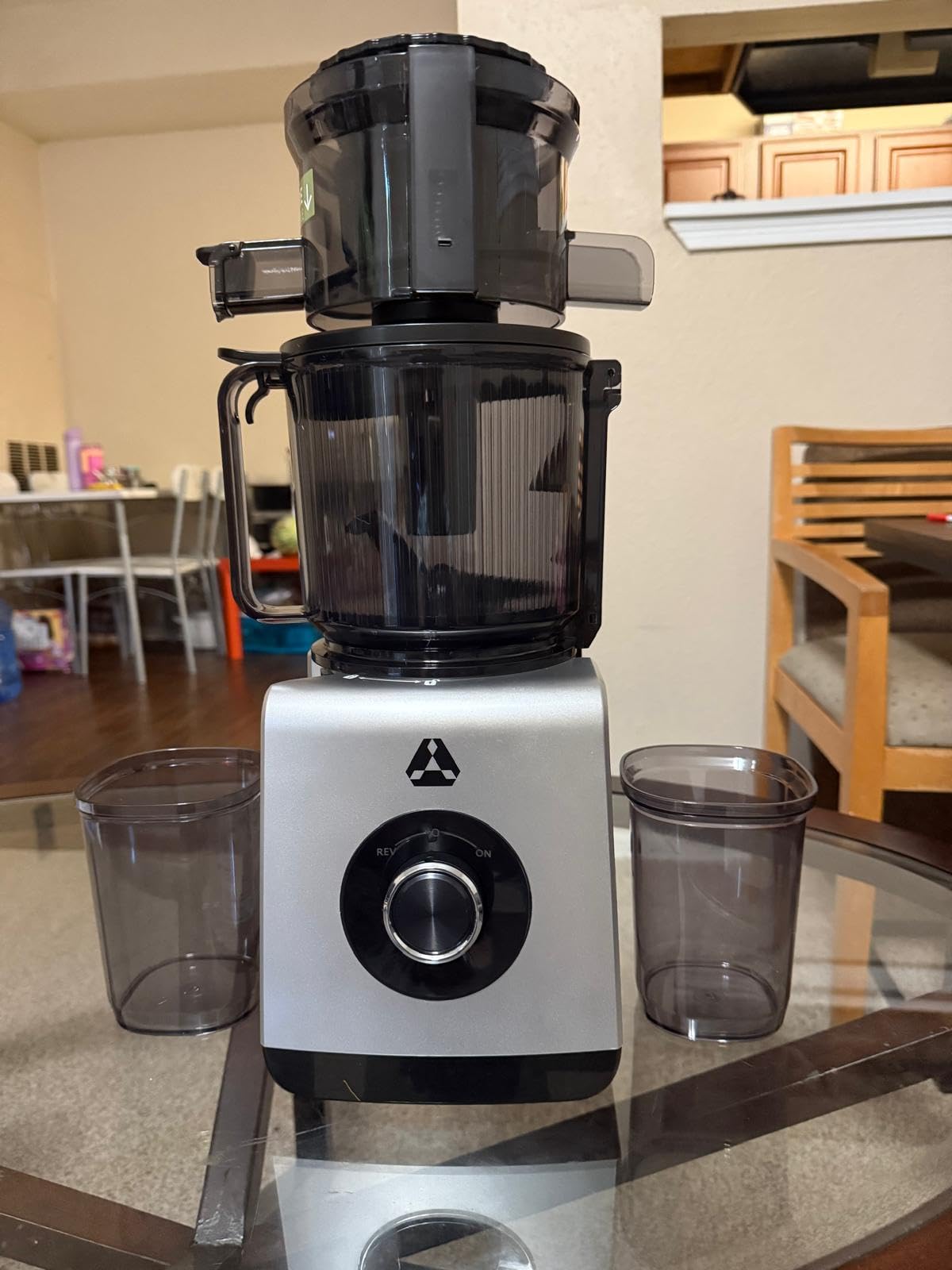
The anti-clog design and overheat protection are aimed directly at the celery problem, and the low-noise motor makes it usable in a shared space before anyone else is up. The same machine makes nut milk and sorbet with the included strainers.
That combination of wide chute, dry output and fast cleaning is why this one takes the value slot. You are giving up the Ninja’s torque and the Omega’s warranty length, and gaining the least prep work and the shortest wash of the three.
What to check before you buy
The chute is wide but not oversized, so a long celery stalk still needs to be cut into pieces that fit the throat. Know that going in rather than discovering it at the counter.
A smaller share of reviews than the rating suggests report cracked hoppers within weeks and poor support after that, and cleaning is hand wash only. The one-year warranty is the shortest here, so keep the receipt.
Who it suits and who it does not
This suits anyone who wants a wide chute, a large batch capacity and a two-minute cleanup without stepping up to a premium brand. It is also a sensible first machine for a household experimenting with celery juice for the first time.
It suits less well for someone who needs commercial durability guarantees or replacement parts on short notice. If your juicer will run twice a day for years, read the durability notes on the budget class before committing.
4. AMZCHEF 6.5-inch Self-Feeding Slow Juicer – Best Wide Chute
AMZCHEF Cold Press Juicer, 6.5″ Whole Fruit Self-Feeding Slow Juicer
- Self-feeding blade cuts produce inside the machine
- Very quiet running for a cold press model
- Rinses clean in under five minutes
- Handles celery and root vegetables well
- Compact tower that stores vertically
- Hard carrots can trip the overload protection
- Soft fruit alone comes out thick
- Frozen fruit must thaw before sorbet mode
- Wider body stands about 17 inches tall
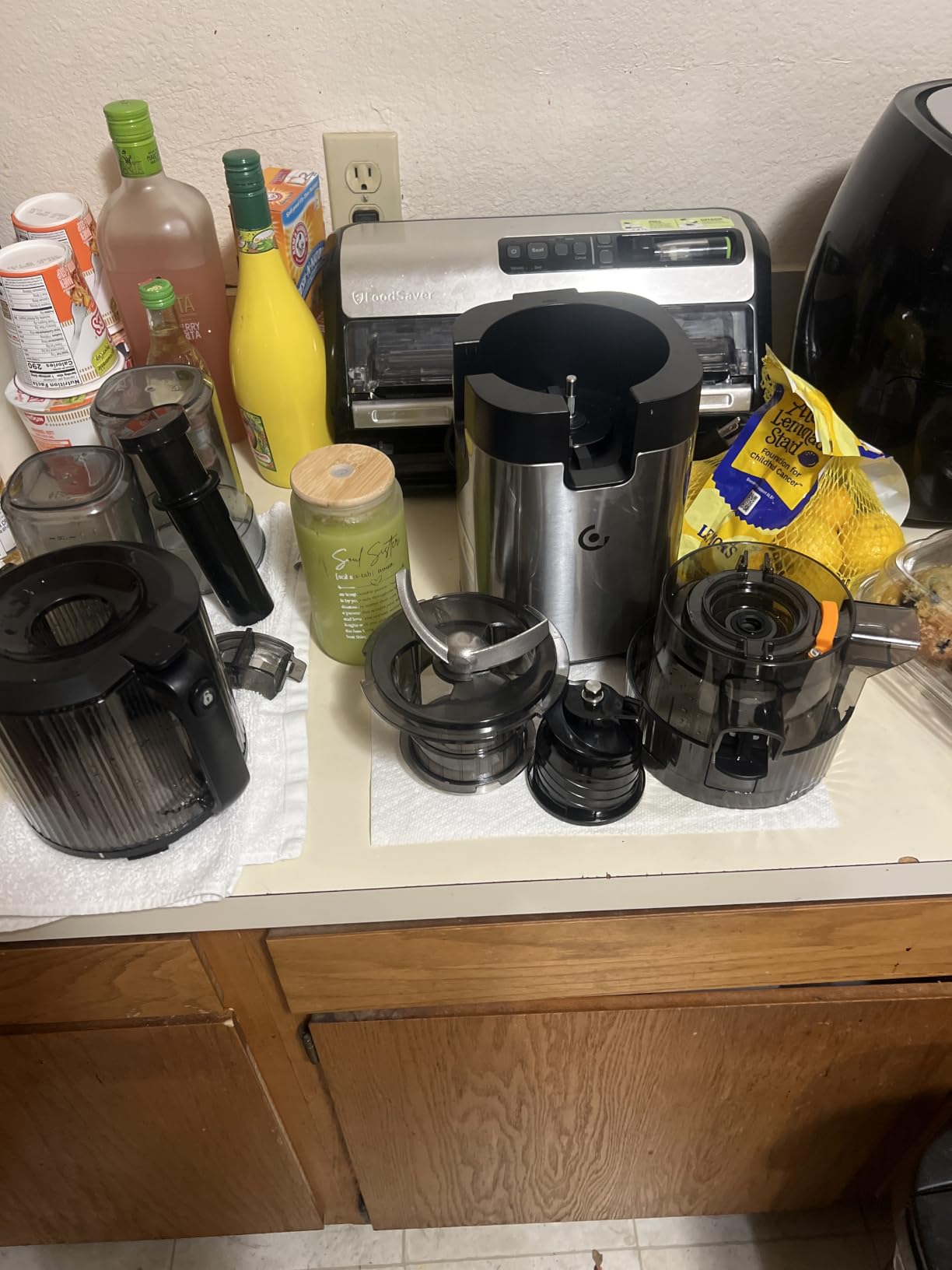
The AMZCHEF is the one to watch if prep time is what frustrates you most. Its reversible 6.5-inch chute has a built-in cutting blade, so a whole apple or a thick piece of celery goes in and gets cut as it descends. There is no deep filter basket to scrub either, which is why owners report a rinse that takes under five minutes.
Owners who juice celery-based green juice every morning single out the quiet motor and the wide chute as the two reasons they kept it. The 600-watt motor with a high-pressure auger has the power to keep celery moving, and a reverse function handles the odd snag.
The lid lock stops the motor the moment you open the chute, and the detachable body has a simple locking design with no messy basket to reseat. Three strainer functions are included for juice, nut milk and sorbet.
For a routine built around green juice where celery is the base and fruit is the sweetener, the internal cutting blade genuinely reduces the work. You spend less time at the board and more time pouring.
What to check before you buy
The 600-watt rating is a maximum figure, and the overload protection can still trip on very hard carrots. If you are juicing mostly hard roots, test a piece first and cut it smaller than you think you need to.
Soft fruit on its own produces something thick and applesauce-like, so always pair soft produce with something wetter. For sorbet, thaw frozen fruit first or pieces lodge against the blade. The tower is also about 17 inches tall, so check your cabinet clearance.
Who it suits and who it does not
This suits a green juice drinker who wants minimal cutting, minimal washing and a machine that stays quiet in a small kitchen. It stores vertically, which helps if counter space is tight.
It suits less well for a household of hard root vegetable drinkers, because the overload protection will interrupt you. Buy something with a stronger sustained torque if sweet potatoes and beets are a weekly thing.
5. EanOruus 3-in-1 Cold Press Juicer – Best for Large Batches
EanOruus Juicer Machines, 3-in-1 Cold Press Juicer, Premium Gray
- Very quiet motor for hard fibrous produce
- Nearly foam-free juice and dry pulp
- Two large cups for juice and pulp
- Disassembles quickly
- Chute reduces chopping for celery
- Actual chute closer to 6 inches than advertised
- Hopper assembly can shift if not firmly locked
- Some reports of pulp leaking at the side outlet
- Hand wash only and new plastic can carry an odor
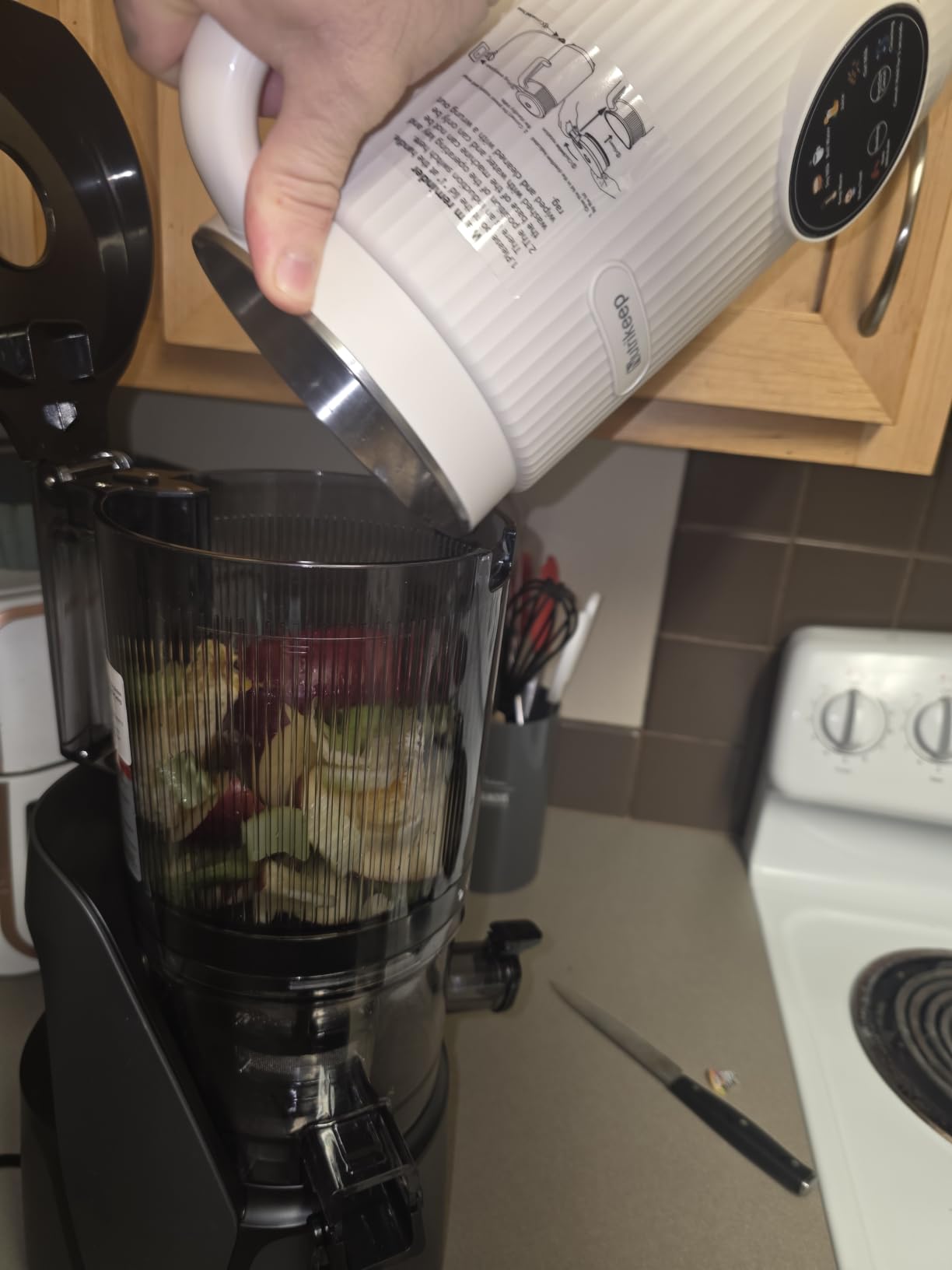
The EanOruus is built for volume. A 100-ounce hopper and a chute wide enough for whole fruit mean you can load a multi-day batch in one go, and reviewers who compared it directly against an Omega say the juice quality and dryness hold up. That comparison is the headline claim here, and it is a reasonable one based on owner reports.
The AC brushless motor is quiet enough for early morning use and is rated for heavy daily work. Two large cups, one for juice and one for pulp, keep a long session tidy, and auto-reversing with overheat protection covers the celery jam scenario.
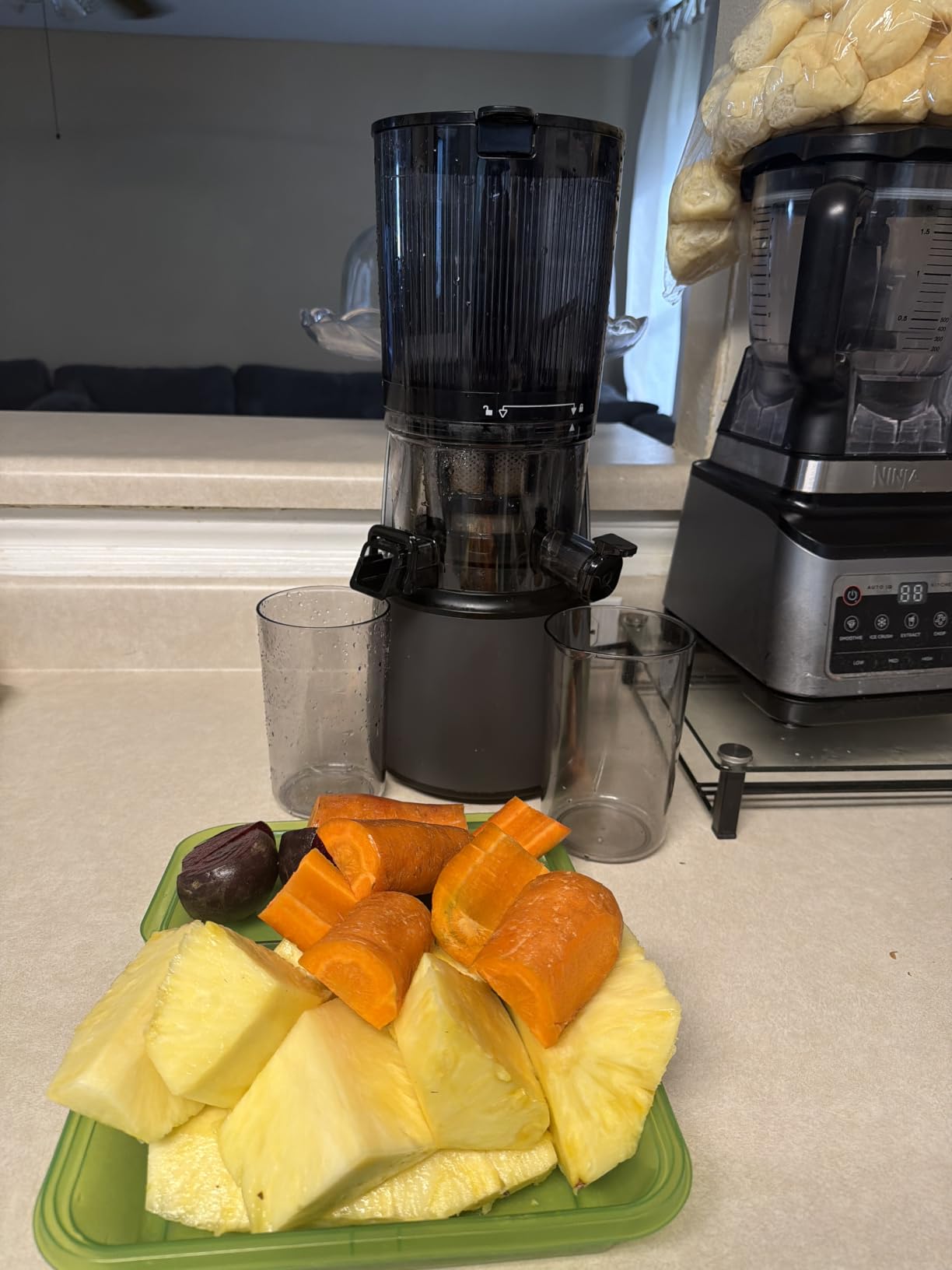
Juice comes out with very little foam, which matters more than most people expect when you are trying to drink a full glass of something green. The detachable pulp outlet makes the end of a batch cleanup quick.
Three interchangeable strainers cover juice, sorbet and nut milk, so the machine earns its counter space even on weeks when you are not juicing celery at all.
What to check before you buy
The advertised chute measures closer to 6 inches than 6.5 inches, and one reviewer measured it directly. Still wide, just know what you are getting. The hopper and bowl assembly can shift if it is not locked firmly during the first few uses, so push it down properly every time.
Some owners report pulp leaking from the side outlet and one measured extraction figure well below the marketing line on passion fruit. Cleaning is hand wash only, and new plastic parts can carry an odor for the first few sessions.
Who it suits and who it does not
This suits a family or a couple who juices several days at once and hates prep work. It is a good weekend batch machine for celery, greens and fruit together.
It suits less well for someone who wants dishwasher cleanup or a very small footprint. A 100-ounce hopper and a detachable bowl are not small, so measure the space before ordering.
6. YPONE 5.8-inch 400W Masticating Juicer – Best for Small Kitchens
YPONE Juicer Machines 2-in-1 Cold Press Juicer Easy to Clean Titanium gray
- Handles fibrous roots like celery and ginger well
- Large hopper for batch prep
- Powerful yet quiet motor
- Partly metal filter ring speeds cleanup
- Suction base keeps it stable
- Some owners report loud operation and movement
- Pulp can come out wetter than expected
- A few early failures and cracked reservoirs
- One-star share of 9 percent with difficult warranty service
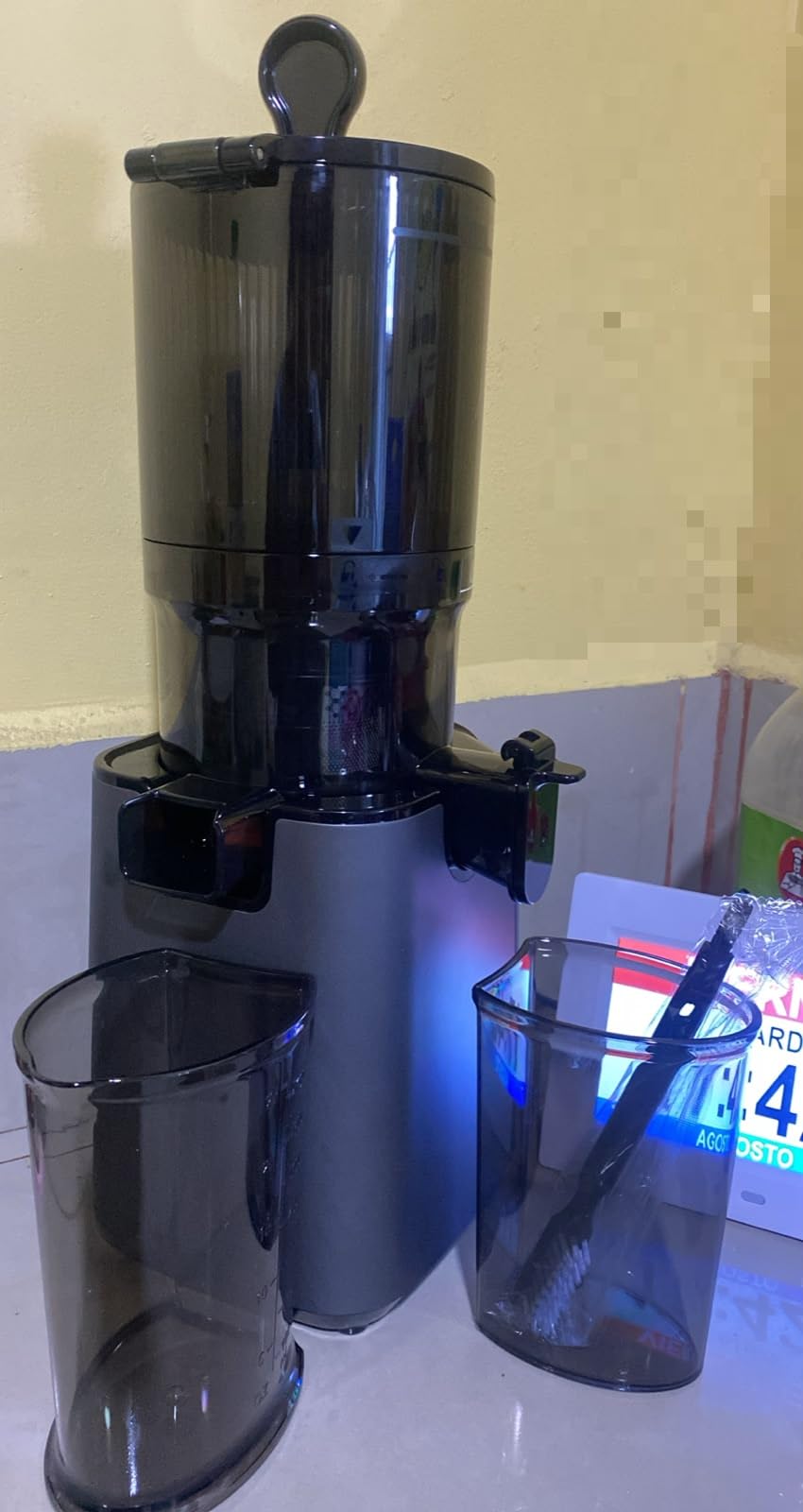
The YPONE is the smallest machine here that still handles celery well, at roughly five inches deep by eleven inches wide. If your counter is narrow or you need the space back after each glass, that footprint is the deciding factor. The 400-watt motor runs at 55 RPM, which is fast enough to keep a session moving without producing much heat.
Users switching over from compact blenders and narrow-chute models praise the filter cleaning most. The strainer ring is partly metal rather than a full mesh basket, so it rinses clean far faster than the fine screens used for maximum yield.
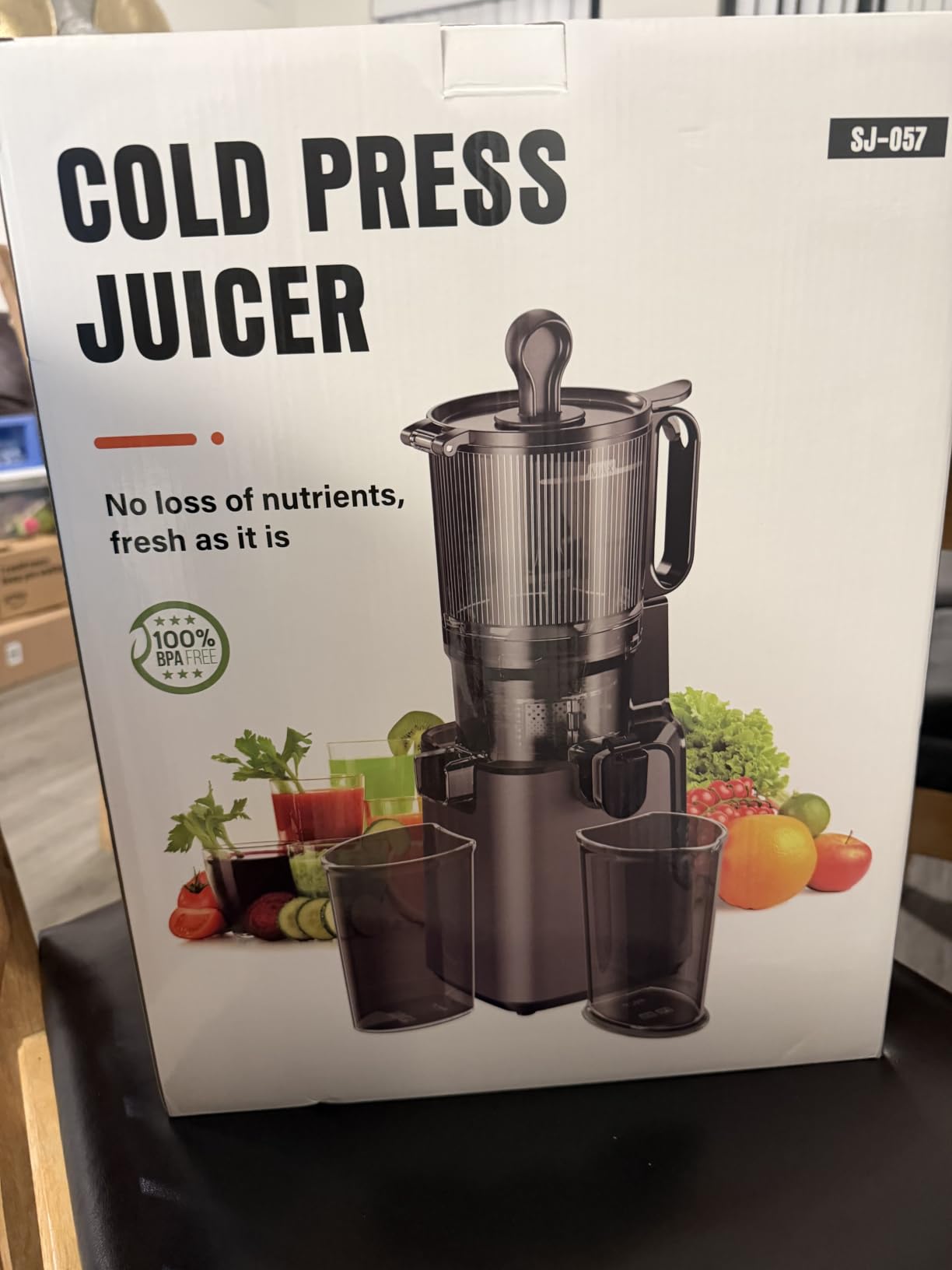
The 5.8-inch chute takes whole oranges, apples and celery with minimal prep, and the large hopper suits family batches. A smart safety lock stops the motor if the lid is opened, which is a real convenience during rushed mornings.
Juice texture is a touch coarser than on premium models, and some users say the pulp is wetter than they expected. For a drink mixed with lemon or lime, most people never notice. For a straight glass of celery juice, texture is the only real trade-off.
What to check before you buy
Several owners report noticeable noise and the unit shifting during operation, and the suction-style base is not always enough to stop it. A damp cloth under the base helps. Pulp can also be wetter than the marketing implies, which means more produce goes in the bin.
This is the machine in the group with the weakest support story. A small cluster of buyers report units that stopped working or a cracked reservoir within weeks, and the one-year warranty service is described as hard to obtain. Keep the receipt.
Who it suits and who it does not
This suits a small kitchen, a first juicer, and anyone who wants a compact machine for a single daily glass of celery juice. It also suits people who dislike scrubbing fine mesh.
It suits less well for someone who is put off by noise or who plans to run the machine several times a week for years. In that case, a longer warranty is worth the extra spend.
7. TUUMIIST 3-in-1 Juicer – Best Multi-Function Per Machine
TUUMIIST 3-in-1 Juicer Machines, Makes Juice & Sorbet & Nut Milk
- Chute and hopper load a whole recipe at once
- Quiet for a masticating juicer
- Dry pulp with little waste
- One strainer covers juice nut milk and sorbet
- Quick-release parts detach in seconds
- Celery strands can pack the pulp outlet and take time to scrape clear
- Juice catcher strainer drains slowly
- Slower than high-speed juicers
The TUUMIIST is the model we would buy for a household that jugs juice, nut milk and sorbet on a three-in-one machine but does not want a pile of interchangeable parts. A single strainer handles all three jobs, so cleanup involves fewer pieces than any competitor here. Buyers who upgraded from narrow-chute models single that out as the biggest change in their routine.
The 350-watt motor at 60 RPM handles celery, beets and carrots well, and the 6.5-inch chute with a 100-ounce hopper lets you load a full recipe before pressing anything. Overheat protection covers the long-batch case.
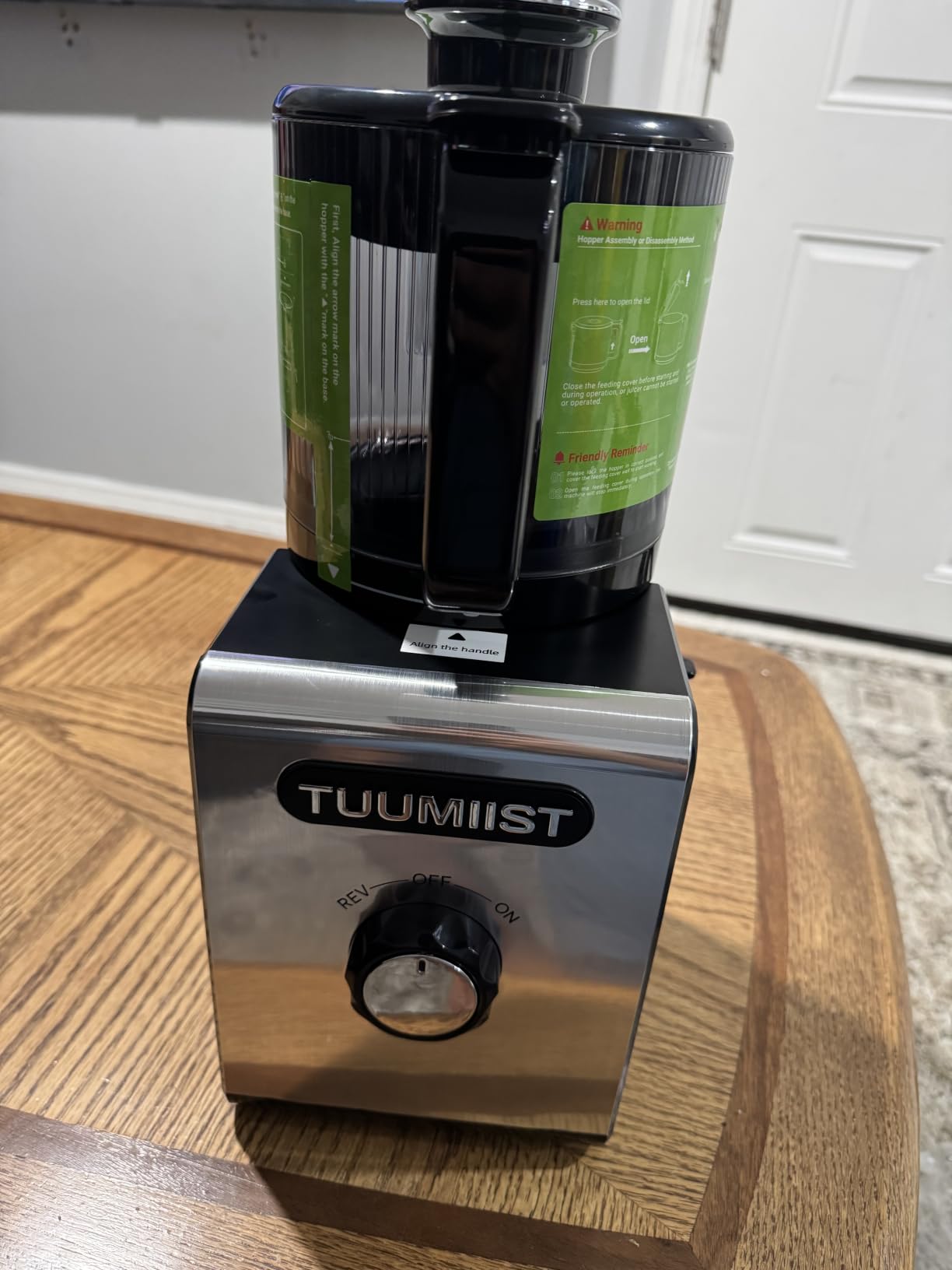
Quick-release disassembly means the parts detach in seconds and rinse clean, with a custom brush included for the screen. Operating noise is low for a machine in this class, which is unusual at 350 watts.
Juice quality and dryness hold up. Pulp comes out dry with minimal waste, and at 7 pounds it is one of the lighter large-capacity machines to lift when you need to move it.
What to check before you buy
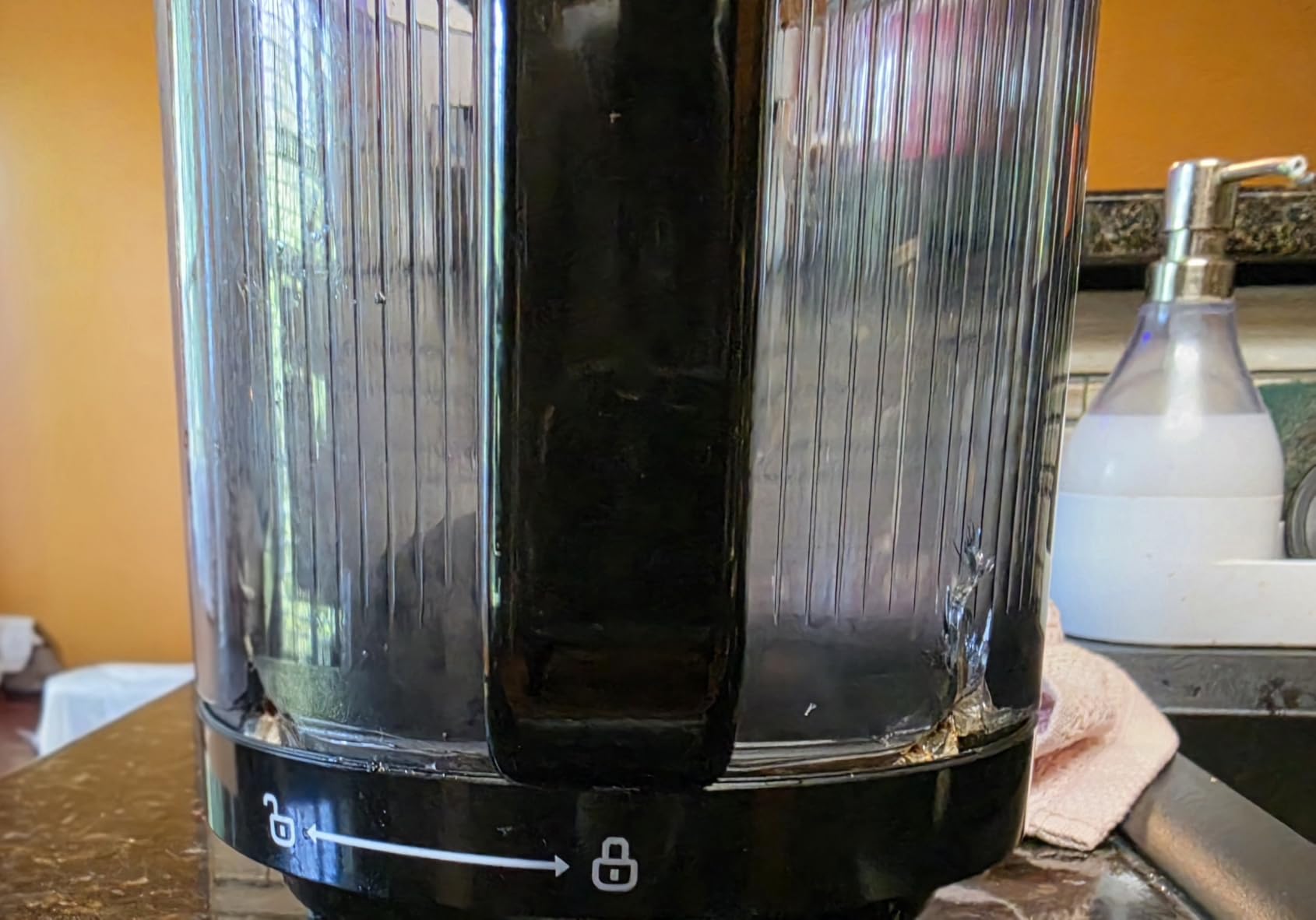
The specific celery weakness is the pulp outlet. Owners report that stringy produce such as celery can pack into the port and take roughly ten minutes of scraping to clear. That is the one job this machine does not ace.
The strainer on the juice catcher also drains juice through slowly, and the whole machine processes produce more slowly than a high-speed model. If your routine is a single quick glass every morning, that patience cost is real.
Who it suits and who it does not
This suits a family that wants nut milk, sorbet and juice from one appliance with minimal washing, and who will batch rather than juice one glass at a time.
It suits less well for a dedicated celery drinker who wants the fastest possible pulp disposal. In that case, a machine with a cleaner pulp port like the Ninja is a better match.
8. Canoly C16 Cold Press Juicer – Best for Quiet Morning Juicing
Canoly 3-in-1 Cold Press Juicer C16, Makes Juice & Sorbet & Nut Milk
- Six-inch throat takes large celery bunches
- Very quiet at 35 dB
- 90 oz hopper suits family batches
- Detachable pulp outlet resists residue
- Juice sorbet and nut milk modes
- Apples and beets need reverse to clear the chute
- Pulp not as dry as some higher-priced models
- Sorbet needs frozen fruit thawed first
- No printed guidance for the reverse function
The Canoly C16 is the quietest machine in this roundup by a clear margin, and for a 5:30 am celery routine that is not a minor detail. The 35 dB AC brushless motor runs cooler and steadier than a conventional brushed motor, and the manufacturer backs it with a 15-year motor warranty.
The 6-inch feed throat is sized for large celery bunches and whole apples, so prep time stays low even without a full hopper. A 90-ounce hopper handles family batch juicing and nut milk, and the detachable pulp outlet is designed to prevent residue building up in the channel.
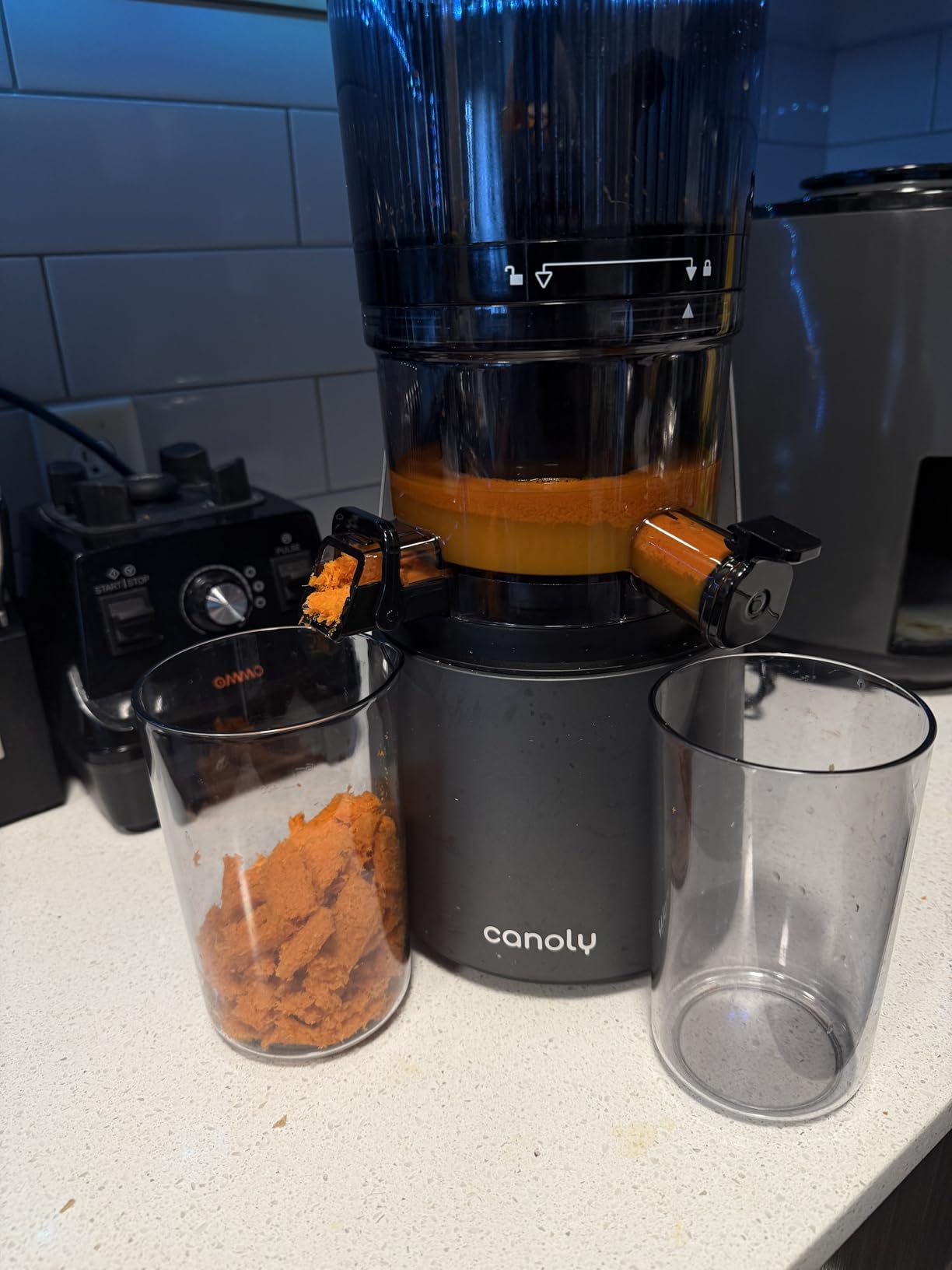
Two strainers are included for juice and sorbet, and the removable parts are BPA-free and dishwasher safe. Owners like the machine for celery and greens, where the quiet operation makes a before-breakfast habit realistic rather than annoying.
At 13.9 pounds it is a solid piece of equipment rather than a lightweight, and the wide 17.5-inch body means you need a real stretch of counter to park it.
What to check before you buy
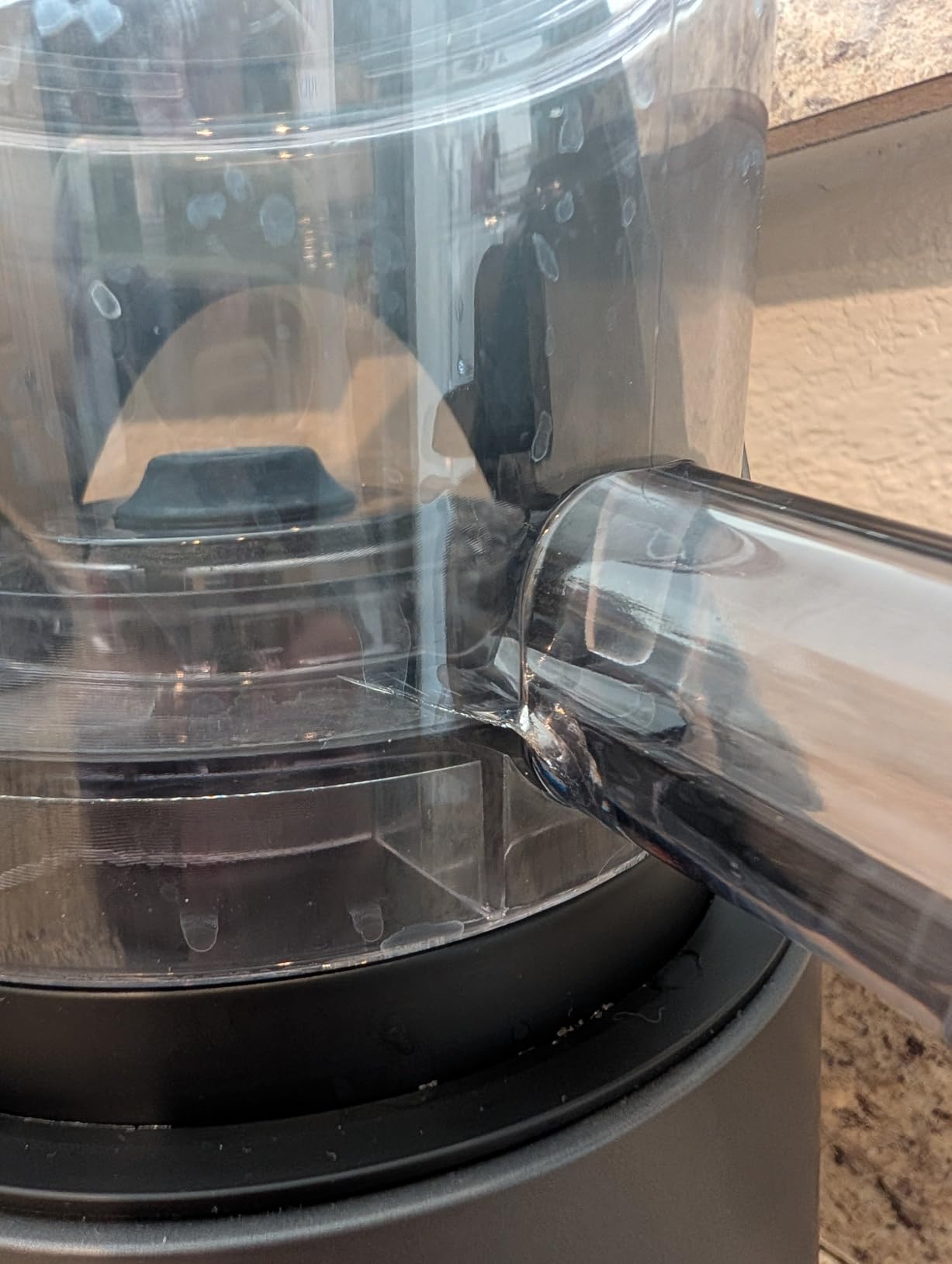
Apples and beets can clog the chute and require stopping to use reverse, which is the one recurring complaint. Celery itself is not the problem here, but if your routine includes beet juice, plan for the stop.
The pulp is not as dry as some higher-priced rivals, and sorbet mode needs frozen fruit thawed first or pieces lodge against the auger. There is also no printed recipe booklet, so learn the reverse function before you need it.
Who it suits and who it does not
This suits an early riser, a light sleeper household, or anyone who finds machine noise genuinely bothersome. It is also a strong choice for celery plus fruit morning blends.
It suits less well for someone chasing the driest possible pulp to cut produce waste, or for anyone short on counter space. The body is wide and heavy for a machine you will not move often.
9. Omega VSJ843QR Pure Press – Best for the Slowest, Thickest Juice
Omega Pure Press Cold Press, Vertical Low-Speed Juicer, in Red (VSJ843QR)
- Slowest RPM here
- which limits oxidation
- Dual-edge auger with tight tolerance
- 15-year parts and performance warranty
- Automatic cleaning system
- No-drip tap allows mid-process mixing
- Single speed with no reverse function
- No wide chute so produce needs careful cutting
- Slower throughput than faster cold press machines
The VSJ843QR turns at 43 RPM, the slowest speed in this group, and that is exactly why we include it. Slow rotation means less friction, less heat and less oxidation, so the juice keeps more of its character and separates less in the glass. For someone drinking a straight glass of celery juice and tasting the produce rather than the machine, that is the point.
The three-stage auger with a dual edge and a tight fit tolerance produces smooth, dense juice and ejects pulp automatically. Long-term owners highlight the 15-year parts and performance warranty, easy disassembly, and the automatic cleaning system that keeps the screen clear.
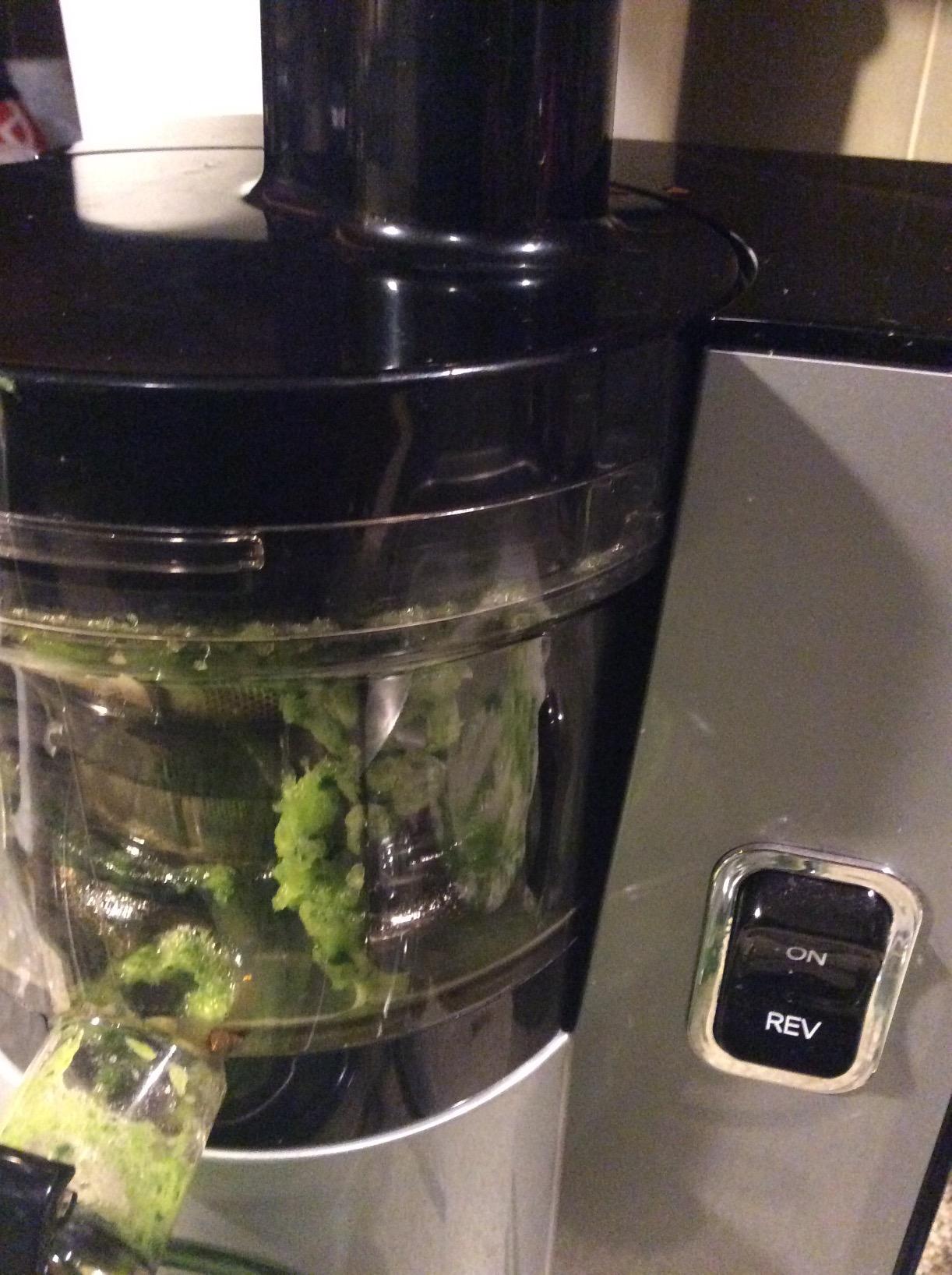
The no-drip tap is a small feature that changes daily use. It closes during and after juicing, and it lets you pour a partial amount or add something mid-process without the juice running down the side.
As a vertical machine it takes far less counter width than a horizontal twin gear unit, which is a genuine advantage in a narrow kitchen even though it has no wide chute.
What to check before you buy
There is a single speed and no reverse function, which is the main compromise. If a fibrous piece does snag, you cannot reverse out of it. Cut celery into smaller, even pieces and feed it steadily and the auger handles it, but you have to participate.
Throughput is slower than faster cold press machines, so a full glass takes a while. If you want a big batch in ten minutes, this is the wrong machine.
Who it suits and who it does not
This suits a slow juicer who values juice quality and long machine life over speed, and anyone who wants the strongest warranty available in this class. It is a good match for a single daily glass rather than a batch.
It suits less well for a beginner who wants the machine to solve problems for them. With no reverse button, the user has to prevent clogs by cutting and feeding carefully, which is a skill.
10. Tribest Greenstar GSE-5000 Elite – Best Twin Gear Extractor
Tribest Greenstar GSE-5000 Elite Twin Gear Cold Press Slow Masticating Juicer (White)
- Twin-gear extraction mimics human mastication
- Stainless steel gears and body for durability
- Makes sorbets nut butters salsas and pasta
- Fine and coarse screens adjust pulp texture
- 5-year warranty
- Hand wash only so cleanup takes real effort
- Heavy 17.2-pound body with an 18.6-inch footprint
- Single speed offers no control between soft and hard produce
The Greenstar is the only true twin gear machine here, and that distinction matters for a specific reason. Two counter-rotating stainless steel gears with cutting points replicate the motion of chewing, so celery is chewed and pressed rather than crushed. Enthusiasts consistently report the highest extraction quality in the category, and cellulose-heavy produce like celery is exactly what that design handles best.
It is also the most versatile machine in the roundup. The same gears make frozen sorbets, nut butters, salsas and, with the optional nozzles, pasta. Fine and coarse screens let you choose the pulp texture in the finished glass.
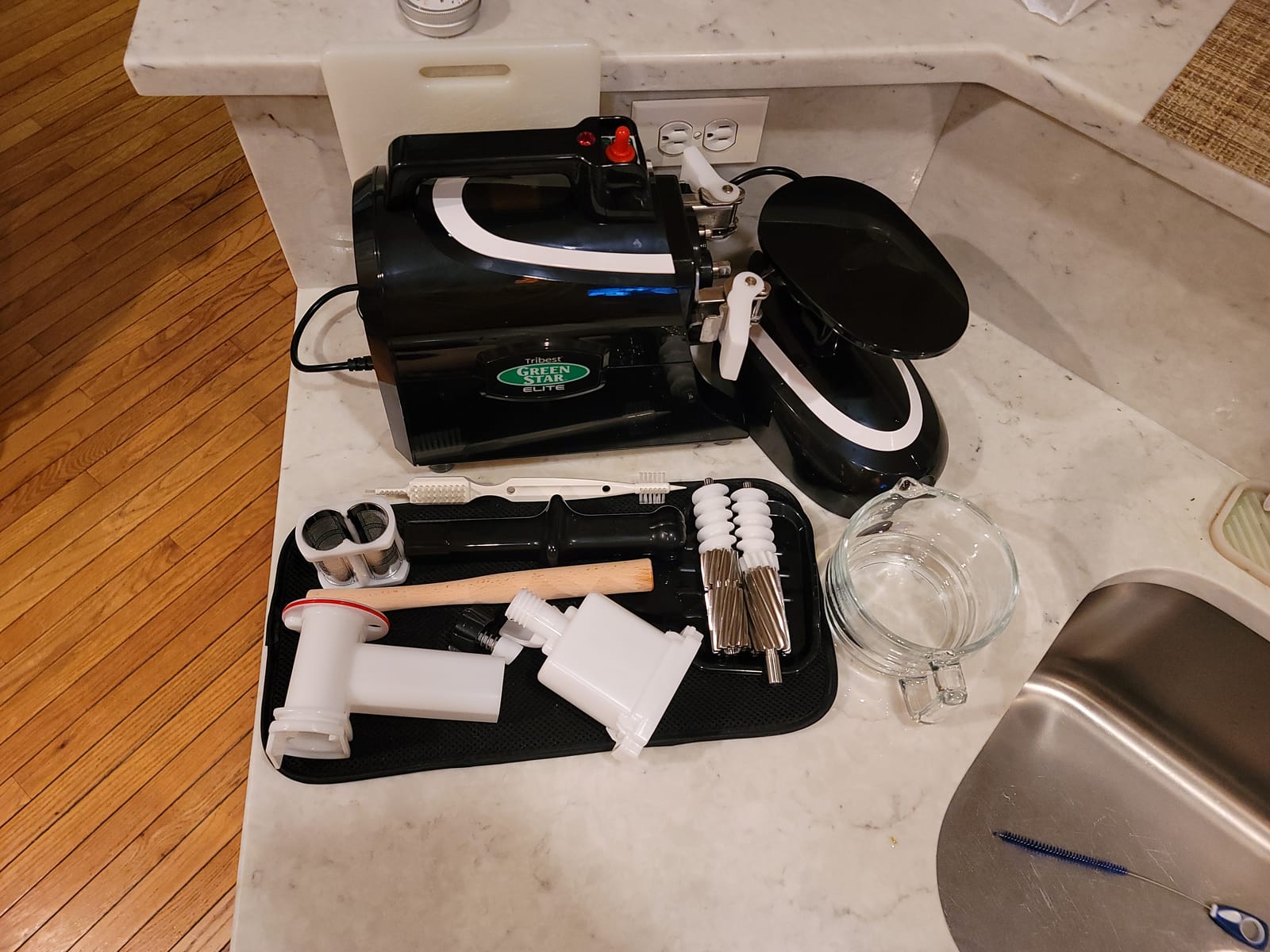
The full accessory set is included: a drive and free wheel gear set, a glass juice pitcher and a drip tray. That glass pitcher is a genuine upgrade over plastic jugs because it does not hold onto odors between juices.
Extraction quality is the reason to spend here. If you are buying for celery specifically and you want the maximum amount of liquid from every pound of produce, this is the machine built for that job.

What to check before you buy
It is hand wash only, so cleanup takes considerably more effort than the dishwasher-safe machines above. Budget real time for it, especially in a daily routine where a two-minute wash is what keeps you going.
At 17.2 pounds with an 18.6-inch footprint, it needs the most counter space of anything here, and there is a single speed, so switching between soft fruit and hard roots means changing prep rather than changing settings.
Who it suits and who it does not
This suits an enthusiast who makes juice several times a week, wants the best extraction, and will use the nut butter, sorbet and pasta functions. It is also the right pick if juice texture is the part of the process you enjoy.
It suits less well for a first juicer, a small kitchen, or anyone who wants to rinse parts and be done. The premium is real, and so is the effort involved.
11. BRECIOUS Slow Masticating Juicer – Best for Minimal Cleanup
- Dedicated soft and hard modes plus reverse
- Quiet at under 60 dB
- Reverse clears clogs and improves extraction
- Triple-layer filter gives smooth juice
- Dishwasher-safe parts with one-touch disassembly
- Narrow 1.8-inch chute needs small cuts
- ABS plastic body feels less premium
- One-year after-sales service
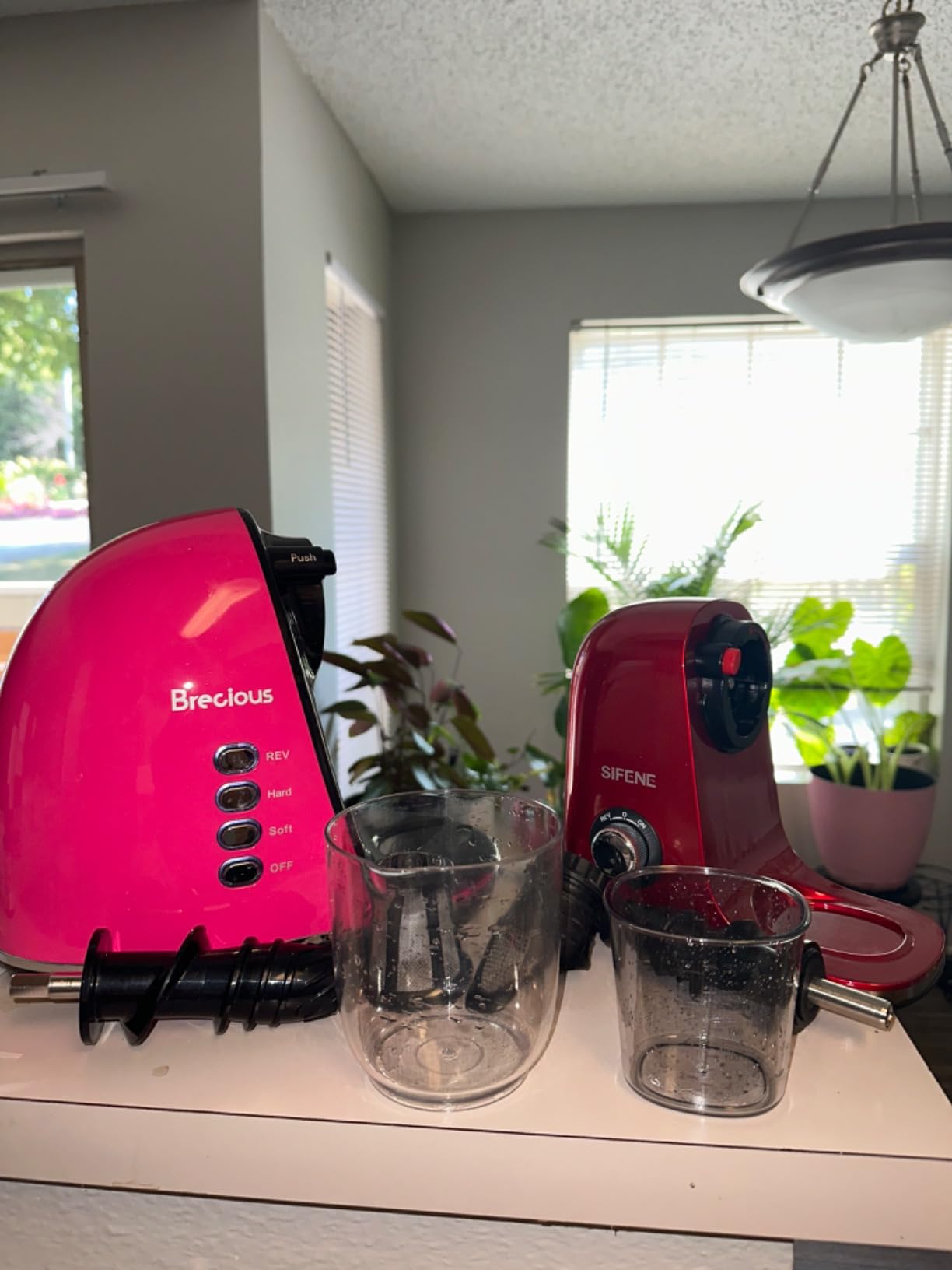
The BRECIOUS runs under 60 dB, which is quiet enough for an early morning without any of the drama, and its three control buttons are a genuine improvement on single-speed machines. Soft, hard and reverse map directly to the way celery behaves: soft mode for cucumber and celery, hard mode for carrots and ginger, reverse when something catches.
Cleanup is the headline. One-touch disassembly takes the whole juicing chamber apart, every detachable part is dishwasher safe, and a brush is included. The three-section filter with triple-layer filtration gives a smooth glass with minimal pulp, so there is no straining afterwards.
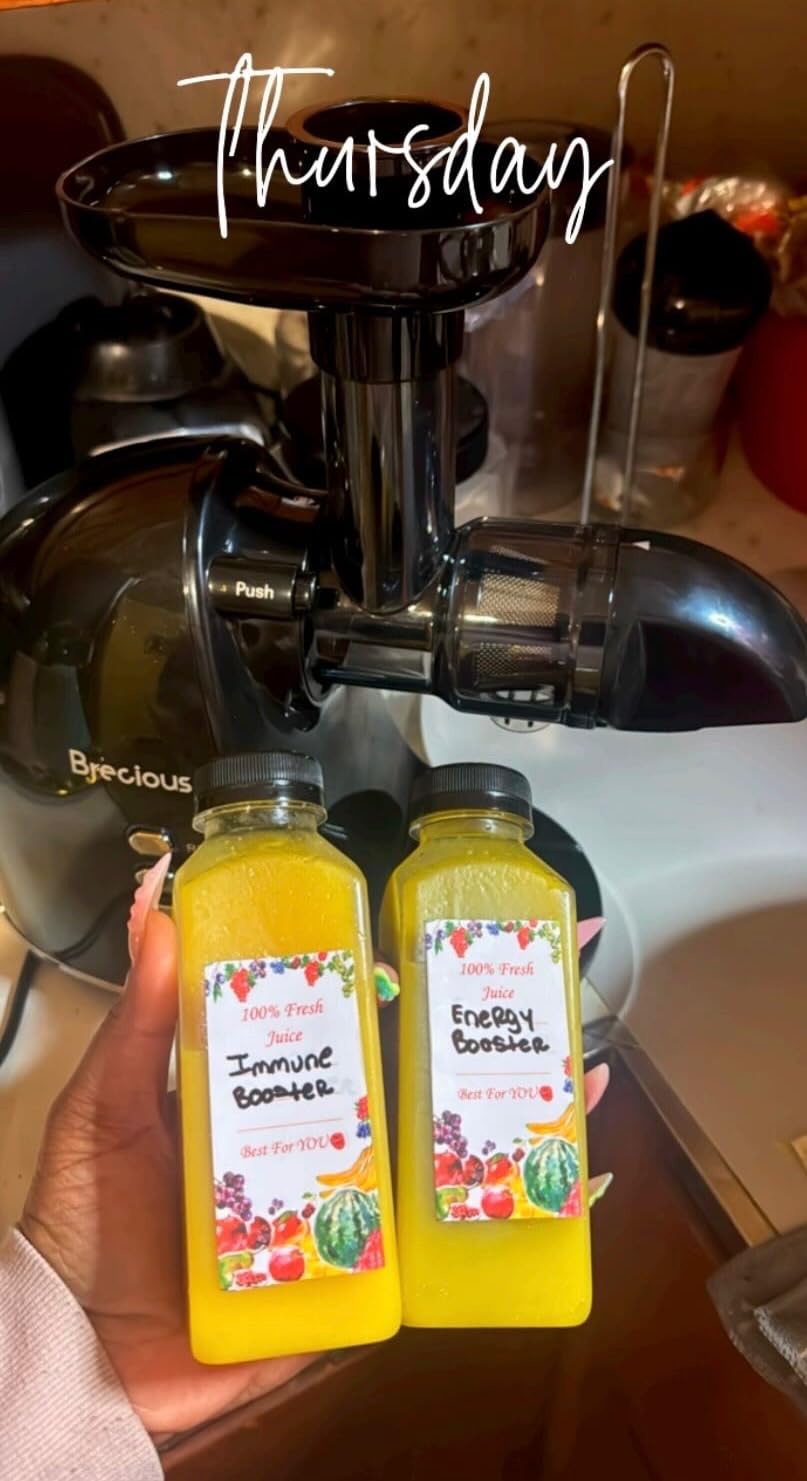
At 6.2 pounds and roughly seven inches wide, it is one of the more compact machines here, and the blade-free BPA-free design means there is no sharp edge to worry about when you are reassembling it half-awake.
Owners highlight the quiet motor, the celery-friendly reverse function and the simple cleanup. In a 1,141-review set, 76 percent of buyers gave five stars, which is one of the strongest consistency signals in this roundup.
What to check before you buy
The 1.8-inch chute is the narrowest here by a wide margin, and it is the most common complaint. Every piece of celery has to be cut small before the machine ever starts, so plan for real prep time on a daily basis.
The ABS plastic body is lighter and less rigid than stainless steel, and the after-sales service is one year. Neither matters much for a few years of use, but both matter if you keep a juicer for a decade.
Who it suits and who it does not
This suits someone who wants the simplest daily cleanup in the roundup and does not mind cutting produce into small pieces. The mode buttons also make it forgiving for beginners.
It suits less well for anyone who wants to drop whole vegetable pieces in without prep, or who plans to juice in volume. A narrow chute makes both of those slower than the machine’s other capabilities suggest.
12. Omega H3000RWH13 Cold Press – Best Starter Masticating Juicer
- Affordable entry into cold press juicing
- Compact body with simple assembly
- Reverse button helps clear stuck produce
- Handles leafy greens and celery well
- Good yield with little pulp in the waste bin
- Plastic drum and feed chute have cracked for some owners
- Fine screen takes effort to scrub
- Not built for daily hard items like ginger and turmeric
- Juice left sitting forms a film on plastic grates
- One-year warranty
- the shortest here
The H3000 is the most affordable way into the masticating category, and its 90 to 110 RPM slow speed handles celery, carrots, leafy greens and wheatgrass without the heat a high-speed machine generates. Cleanup is a rinse, and most removable parts are top-rack dishwasher safe apart from the drum.
It includes fine and coarse screens so you can trade juice volume against speed, and a reverse button that helps clear stuck produce. At 8.8 pounds it is easy to move when you want the counter space back.
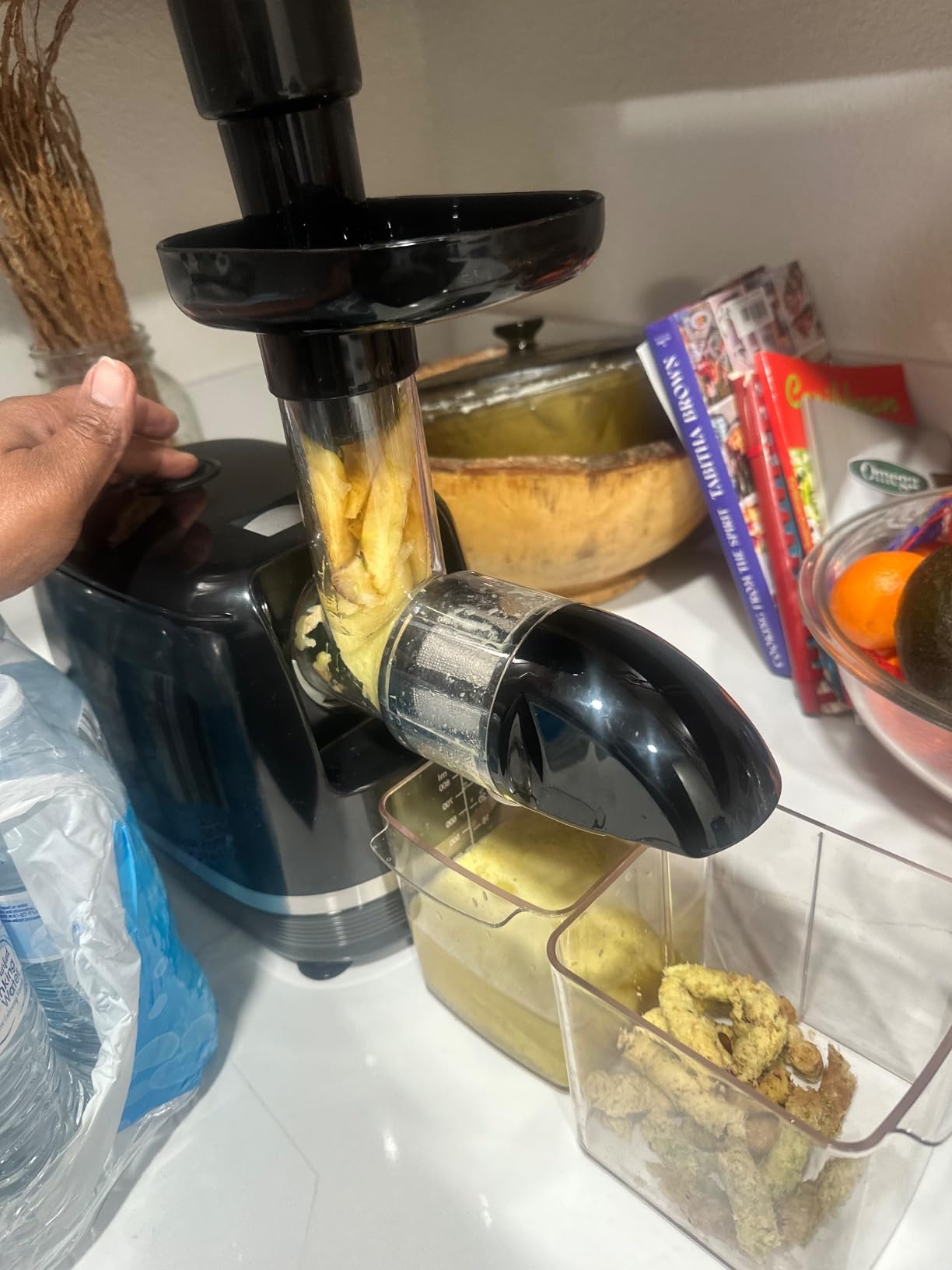
This is the one to buy if you are not yet sure celery juice is a habit you want to keep. It covers every job in the category at the lowest entry point, without a large hopper or a long feature list you will not use.
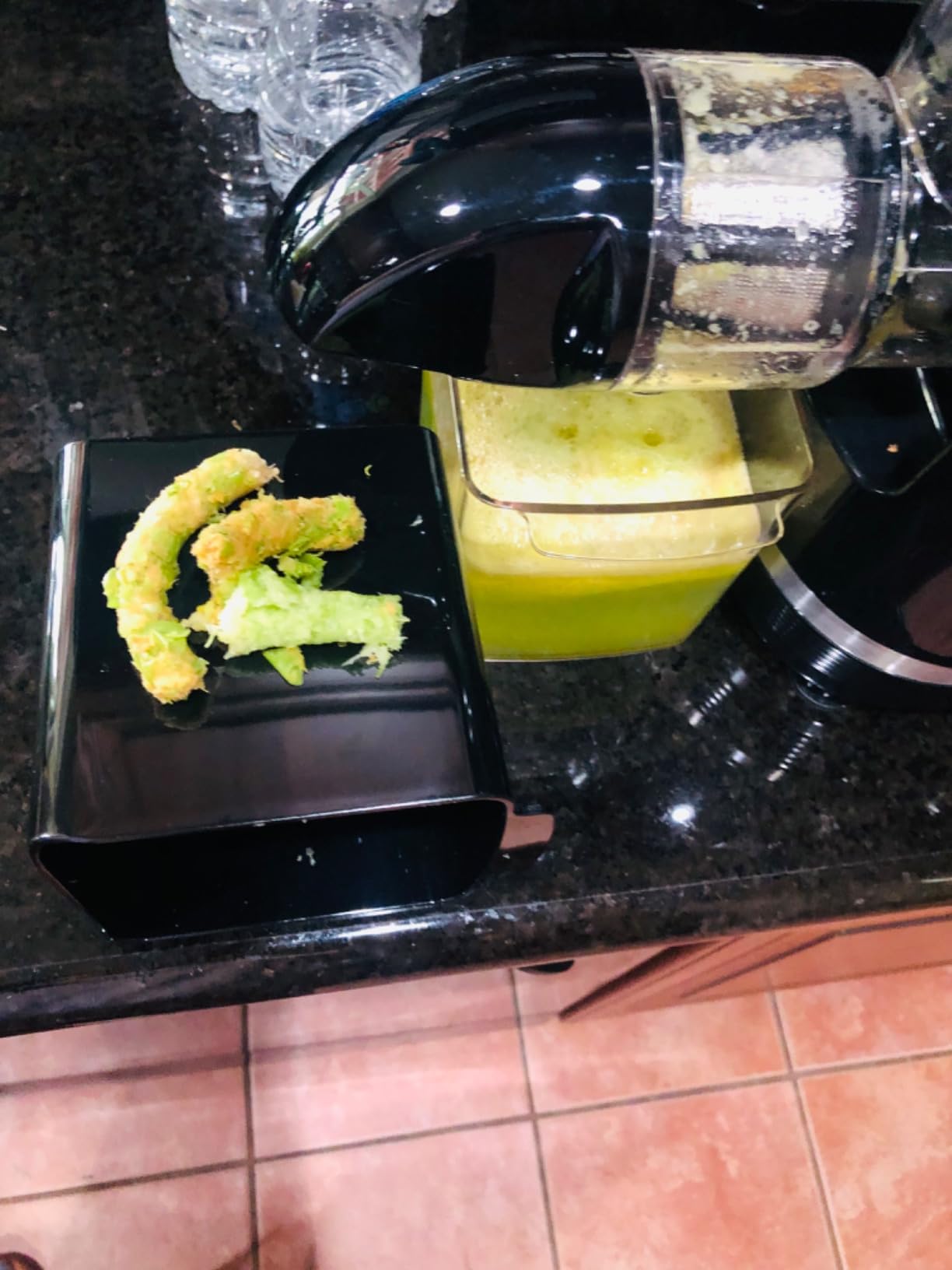
Be clear-eyed about the durability picture. At 4.2 stars from 2,516 reviews it carries the lowest average rating in this roundup, with 66 percent five-star feedback. Multiple reviews report the plastic drum and feed chute cracking within months and poor replacement part support.
What to check before you buy
The one-year warranty is the shortest in the group, and the fine juice screen takes real scrubbing. Juice that sits in the machine forms a hard film on the plastic grates, so rinse it the same day rather than in the evening.
It is also not built for daily hard items such as fresh turmeric and ginger unless they are peeled and cut small. Those are the ingredients that break budget masticating machines, and celery is a softer test.
Who it suits and who it does not
This suits a first-time juicer, a light user, and anyone who wants to try celery juice without a large commitment. The lower average rating reflects long-term durability, not bad juice.
It suits less well for a daily multi-year routine where failure would be disruptive. If celery juice is already a settled habit, the longer warranty on an Omega vertical is worth the difference.
Masticating vs Centrifugal vs Blender: Which Is Best for Celery?
Masticating cold press wins for celery, and the reason is mechanical rather than nutritional marketing. A slow auger at roughly 43 to 110 RPM crushes and squeezes celery through a fine screen, pressing liquid out while ejecting pulp separately with almost no heat generated. Centrifugal machines spin a blade fast enough to fling juice outward, which separates liquid quickly but shreds celery fiber into wet pulp and throws away a good share of the produce.
Centrifugal units are faster, louder, and much easier to wash, and for fruit juice or a mixed green drink they do an acceptable job. The catch is the same one forum users describe over and over: the fibrous strands that make celery healthy are exactly what a fast blade cannot process cleanly. The wet, heavy pulp is the tell that the machine was not designed for the job.
A blender is a different tool. It keeps all the fiber, so you get a smoothie rather than juice, and it is silent and cheap to clean. If you want to drink celery as a thick green drink, a blender works. If you want a clear 16-ounce glass, it is the wrong shape of appliance entirely.
One honest exception: a centrifugal juicer is fine when celery is one ingredient among sweeter fruit in a mixed juice, where the fruit moisture carries the load. For straight celery juice, stay with a cold press machine.
Juiced or Blended Celery: Which One Is Better?
Neither is universally better, and the honest answer depends on what you are trying to get. Juicing separates the liquid from the fiber, so you get a thinner drink that goes down fast on an empty stomach and delivers the juice fraction without the pulp. Blending keeps the fiber in the cup, which means a thicker, more filling drink and slower digestion.
If your goal is the juice itself, the standard celery juice routine, or mixing with lemon and ginger, a juicer is the correct tool. If you want satiety, or you are blending celery with fruit into something closer to a smoothie, a blender is simpler, quieter and does a better job.
From a pure nutrition angle, whole celery blended retains the fiber that juicing discards, and celery is close to 95 percent water, so you are not losing much by either route. Anyone on blood pressure medication or with kidney conditions should ask a doctor about daily large-volume juice intake, and blended celery is the gentler option on digestion.
How to Choose a Juicer for Celery: 8 Criteria That Matter
1. Motor torque. Celery fiber resists a weak motor. Look for at least 150 watts on a cold press machine, and note that many brands quote a maximum figure rather than a sustained one. Sustained torque is what matters when a mat of pulp builds up.
2. Auger speed. Somewhere between 40 and 80 RPM gives the best balance of extraction and heat control. Machines running well above 110 RPM are pushing rather than pressing, and you get more foam and faster oxidation.
3. Chute width. Every inch removes cutting. A narrow chute under 2 inches means a busy person will skip the machine. A chute above 5 inches means whole apple pieces and short celery sections go in untouched.
4. Strainer design. Fine mesh gives more juice but needs scrubbing and clogs faster. A single slotted strainer cleans in seconds and wastes a little liquid. Decide how much wash time you are willing to trade for yield.
5. Reverse function. This is the single most useful feature against celery clogs. A reverse button backs the auger off a snag instead of forcing you to reach in with a spoon while the motor runs.
6. Number of parts. Count the pieces you have to wash, not just the functions. A machine with six attachments produces six more things to rinse, and that arithmetic is why people stop juicing.
7. Noise. If you juice before anyone else is awake, check the decibel figure. Anything around 35 dB is near silent, under 60 dB is fine for most homes, and above that you will hear it in the next room.
8. Warranty length. A one-year warranty signals a machine built for light use. Five years and up suggests the manufacturer expects the motor to last. This matters most for budget cold press models, which is the category where owner reports of early failure are most common.
For a broader look at the technology itself, our guide to masticating juicers goes deeper on auger design, and our centrifugal juicer picks for beginners are worth a read if you mainly juice fruit.
How to Make Celery Juice Without Clogging
1. Wash and dry the stalks thoroughly. Water left on the surface turns into pulp paste at the bottom of the chamber faster than most people expect.
2. Cut celery into even pieces that fit the chute with a little room to spare. Even sizes matter more than small ones, because a mixed load causes the auger to stall on the large piece.
3. Cut carrots and any other firm produce to roughly the same size as the celery. Mismatched density is a common cause of the overload trips we see on high-watt machines.
4. Feed steadily using the pusher, and never force a piece. If the auger stalls, hit reverse rather than pushing harder. Forcing it is how plastic chambers crack.
5. Alternate hard and soft produce rather than running all the celery first, and clean the chamber midway through a large batch. A quick rinse at the halfway point prevents the string buildup that turns a clean juicing session into a scraping session.
As a rough guide, expect a large bunch of celery to yield two to three 16-ounce glasses depending on the machine and how much liquid you leave in the pulp. Dry pulp output means you are getting more of that total as juice.
What to Do With Celery Pulp and What to Drink It With
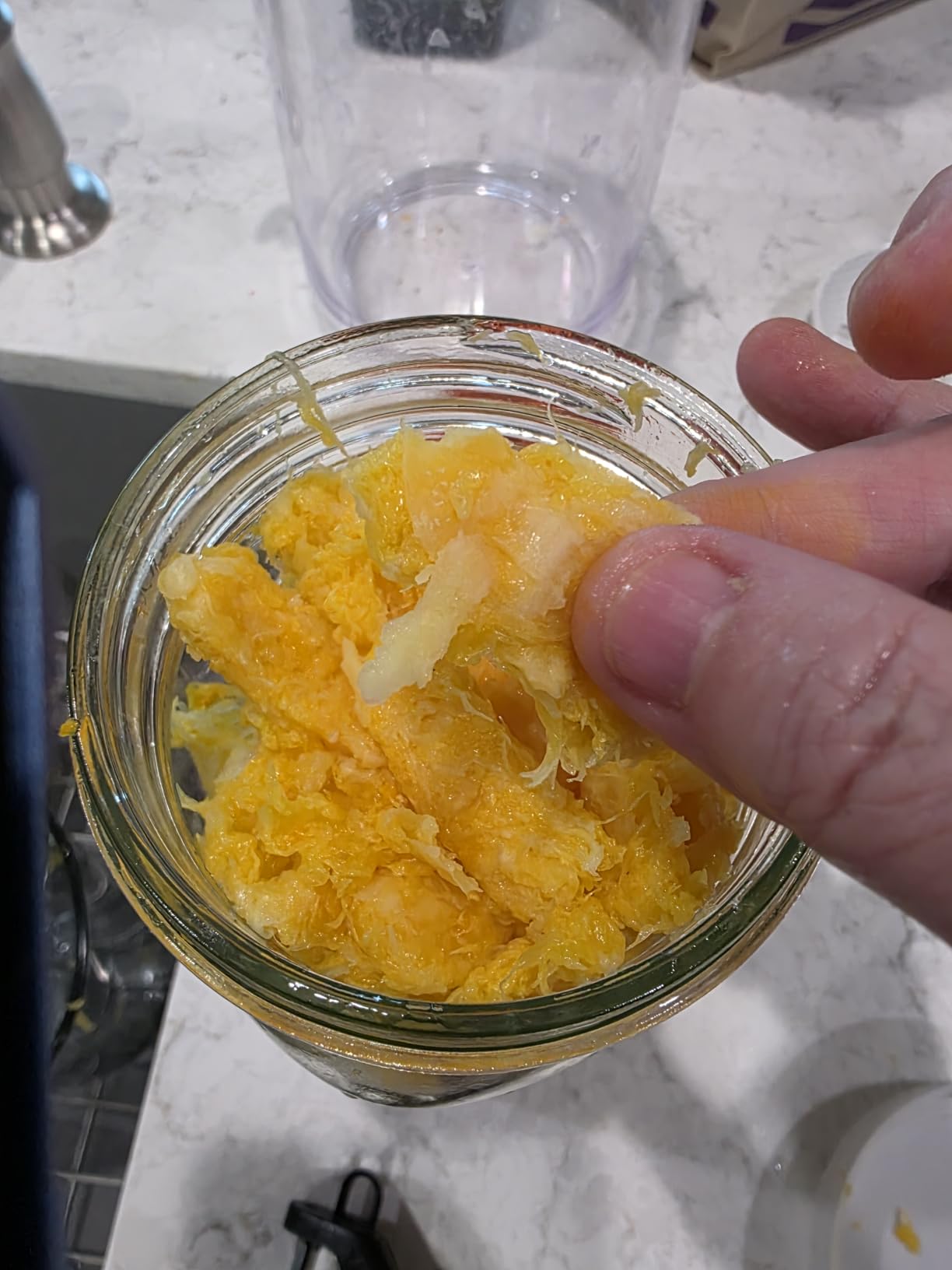
The discarded pulp is a fraction of the produce by weight, not a waste pile. Dry, loose pulp from a masticating juicer works well folded into bread or muffin batter, blitzed into a stock with onion and carrot, or spooned into a jar of oats. It also freezes in small portions for later baking.
Owners who juice celery for greens often add pulp to pet food in small amounts, and the stringy texture disappears into wet food. Avoid feeding large amounts to pets without checking first, and skip it entirely for pets on restricted diets.
For the juice itself, the most common pairing is lemon, which sharpens a straight celery glass. Ginger adds heat, green apple makes it sweeter and less bitter, and a small amount of pineapple or cucumber makes it drinkable if you are new to the flavor. Celery juice is traditionally drunk on an empty stomach, first thing in the morning, in a glass rather than a plastic cup.
Drink celery juice the same day if you can. If you must store it, fill a glass jar to the top, leave no air gap, refrigerate, and drink within about 24 to 36 hours before the flavor fades and the liquid separates.
Frequently Asked Questions
What kind of juicer is best for celery?
A slow cold press masticating juicer is best for celery. The auger compresses and squeezes stalks at roughly 43 to 110 RPM, pressing juice through a fine screen while ejecting dry pulp, so the long fibers do not wrap around a fast blade or stall the motor. A centrifugal juicer is acceptable only when celery is mixed with juicy fruit, and a blender gives you a thick green drink rather than a clear glass.
What is the best medical medium juicer for celery?
The Medical Medium approach calls for a cold press chewing juicer rather than a centrifugal one, because slow extraction limits heat and oxidation. Among the machines here, the Ninja NeverClog JC151 is the strongest all-round pick for a celery protocol, with a high-torque 150-watt motor, two pulp filters and a reverse function. The Omega VSJ843QR turns slowest at 43 RPM if you want the gentlest extraction, and the Omega J8006 offers the longest motor warranty.
Is celery better, juiced or blended?
Juicing is better if you want a thin drink that goes down fast, because the fiber is separated out. Blending is better if you want to keep the fiber and feel full, since the whole vegetable stays in the cup. Celery is about 95 percent water, so the nutritional difference between the two routes is smaller than most people assume. Blended celery is the gentler option if you are sensitive to fiber or are juicing in large daily volumes.
Why does my juicer clog on celery?
The usual causes are feeding too quickly, pushing too hard on the pusher, cutting pieces that are too large or uneven, and running firm produce alongside celery without cutting it to a matching size. Weak motors with less than about 150 watts are the most common underlying reason. Fix it by cutting everything evenly to fit the chute, feeding steadily, and using the reverse function instead of forcing the auger. Cleaning the chamber midway through a large batch prevents string buildup.
What are the disadvantages of a centrifugal juicer?
Centrifugal juicers spin a blade at high speed, so they produce heat, more foam, and faster oxidation. On celery the discarded pulp comes out wet and heavy, which means you waste a meaningful share of the produce. They are also louder, and the fine screens and blade area take longer to wash than the removable parts of a slow juicer. They are faster for fruit juice, which is the fair trade-off to weigh.
What is best to drink celery juice with?
Lemon is the classic pairing and it sharpens a straight glass of celery. Ginger adds warmth, green apple makes it sweeter and less bitter, and cucumber or pineapple dilutes the flavor if you are starting out. If you are following a structured routine, many people drink the juice plain first thing in the morning, on an empty stomach, and add other ingredients only once they are used to the taste.
How much celery do I need for 16 oz of juice?
A large bunch of celery, roughly one to two pounds, typically produces two to three 16-ounce glasses depending on the machine and how dry the discarded pulp is. Slow cold press machines with higher torque and tighter auger tolerance extract more liquid from the same produce, so you can expect the better dry-pulp machines to stretch a bunch further. Weigh your first bunch before and after to see what your own setup gives you.
How long does celery juice last in the fridge?
Drink it the same day whenever you can, because it oxidizes and separates quickly once exposed to air. If you need to store it, fill a glass jar completely with no air gap at the top, refrigerate it, and drink it within about 24 to 36 hours. The flavor fades and a sediment layer forms at the bottom, so give the jar a shake before pouring. A paper or plastic bag is not a good substitute for a sealed jar.
Final Verdict on the Best Juicers for Celery
For a daily celery routine in 2026, the Ninja NeverClog JC151 is the machine to buy. Its high-torque auger, two pulp filters, reverse button and dishwasher-safe parts cover every failure mode that makes people abandon a celery juicer, and its 4.5-star rating across 3669 reviews is the most consistent feedback in this group.
Buy the Omega J8006 instead if you want dry pulp, very quiet running and the strongest warranty, and do not mind cutting produce small. Buy the AAOBOSI if prep time and wash time are your real constraints, or the Tribest Greenstar if maximum extraction matters more than cleanup effort.
Whatever you choose, cut celery into even pieces, feed it steadily, and reach for the reverse button instead of pushing harder. That habit alone solves most of the clogging complaints we read about.