
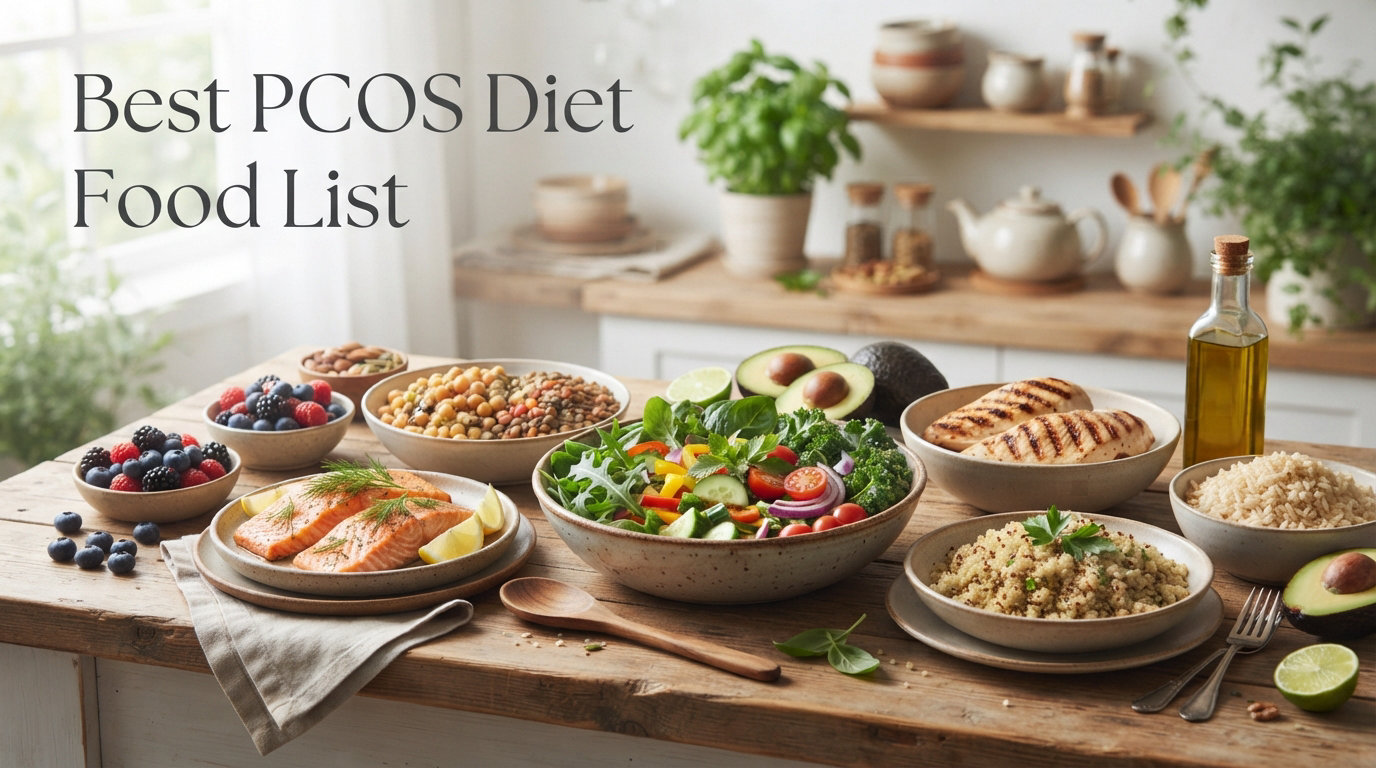
I remember standing in my kitchen three years ago, staring at an empty grocery list after my PCOS diagnosis. My doctor mentioned diet changes could help, but nobody handed me a clear PCOS diet food list to get started. That frustration led me to research, test, and ultimately transform how I eat.
Polycystic ovary syndrome affects up to 10% of women during their reproductive years. The condition creates a frustrating cycle of hormonal imbalance, insulin resistance, and inflammation that shows up as weight gain, irregular cycles, fatigue, and skin issues.
The food choices you make every day directly impact your symptoms. This guide gives you a complete PCOS diet food list that thousands of women have used to feel better, balance their hormones, and reclaim their energy.
Table of Contents
How PCOS and Your Diet Connect
Your body processes food differently when you have PCOS. Most women with this condition experience some degree of insulin resistance, which means your cells struggle to absorb glucose from your bloodstream effectively.
This resistance triggers your pancreas to pump out more insulin, which drives up androgen levels and worsens symptoms like acne, hair growth, and irregular periods. The right foods can break this cycle.
Anti-inflammatory foods also play a starring role. Chronic low-grade inflammation accompanies PCOS and contributes to fatigue, mood swings, and difficulty losing weight. Your plate can either fuel this fire or help extinguish it.
Foods that help manage blood sugar work similarly for PCOS because both conditions share insulin resistance as a root cause. The strategies overlap more than most people realize.
Best Foods for PCOS: Your Complete List
Building your PCOS diet food list starts with understanding food categories that support your body. These selections help stabilize blood sugar, reduce inflammation, and provide the nutrients your hormones need to function properly.
High-Fiber Vegetables and Greens
Fiber slows digestion and prevents blood sugar spikes, making it your best friend with PCOS. Non-starchy vegetables should fill half your plate at every meal.
Leafy greens top the list for their nutrient density. Spinach, kale, arugula, and romaine deliver folate, iron, and magnesium without raising blood sugar. Cruciferous vegetables like broccoli, cauliflower, Brussels sprouts, and cabbage offer additional hormone-supporting compounds that help process excess estrogen.
Other excellent choices include zucchini, bell peppers, asparagus, green beans, eggplant, and mushrooms. These vegetables add volume and satisfaction to meals while keeping carbohydrates minimal.
Root vegetables can work too, but portion control matters. Small servings of sweet potatoes, carrots, and beets provide beneficial nutrients without overwhelming your blood sugar response.
Lean Protein Sources
Protein anchors every PCOS-friendly meal. It promotes satiety, stabilizes blood sugar for hours, and provides the amino acids your body needs for hormone production.
Wild-caught salmon deserves special mention for its omega-3 fatty acids that fight inflammation. Sardines, mackerel, and herring offer similar benefits at lower price points.
Poultry provides versatile, affordable protein. Chicken and turkey work in countless recipes and digest easily. Eggs deliver complete protein plus choline for hormone synthesis.
Plant-based options round out your choices. Lentils, chickpeas, black beans, and edamame offer protein with bonus fiber. Tofu, tempeh, and seitan serve as meat alternatives when prepared with minimal processing.
Healthy Fats for Hormone Balance
Your body requires healthy fats to produce hormones properly. The key lies in choosing fats that calm inflammation rather than trigger it.
Extra virgin olive oil stands out for cooking and dressing. Its monounsaturated fats support heart health and reduce inflammatory markers. Avocado provides creamy texture plus fiber and potassium.
Nuts and seeds deliver concentrated nutrition in small packages. Walnuts contain omega-3s, almonds offer vitamin E, and pumpkin seeds provide zinc for hormone regulation. A small handful makes an ideal snack.
Other beneficial fats include coconut oil for medium-chain triglycerides, ghee for cooking at high heat, and nut butters without added sugars.
Anti-Inflammatory Power Foods
Some foods go beyond basic nutrition to actively fight the inflammation associated with PCOS. Adding these regularly can accelerate your symptom improvement.
Berries lead the pack in antioxidant content. Blueberries, strawberries, raspberries, and blackberries combat oxidative stress with minimal sugar impact. Frozen varieties work just as well as fresh.
Fatty fish appears here again because omega-3 fatty acids directly counter inflammatory pathways. Aim for two to three servings weekly.
Turmeric contains curcumin, a potent anti-inflammatory compound. Pair it with black pepper to boost absorption. Ginger offers similar benefits and aids digestion.
Green tea provides catechins that support metabolic health. A daily cup or two contributes to your anti-inflammatory strategy without caffeine overload.
Smart Carbohydrates and Whole Grains
Carbohydrates are not the enemy with PCOS, but quality and quantity matter enormously. Choose complex carbs that digest slowly and provide fiber.
Steel-cut oats make an excellent breakfast foundation. Quinoa offers complete protein along with complex carbs. Brown rice, wild rice, and barley provide satisfying alternatives to refined grains.
Legumes double as protein and carbohydrate sources. Their high fiber content blunts blood sugar response significantly compared to grain-based carbs.
Whole fruits fit into a PCOS diet when chosen wisely. Berries, apples, pears, and citrus fruits offer fiber that slows sugar absorption. Limit tropical fruits and fruit juices that hit your bloodstream faster.
Foods to Avoid with PCOS
Just as important as what you eat is what you skip. These foods worsen insulin resistance, trigger inflammation, and aggravate PCOS symptoms across the board.
Refined Carbohydrates and Sugary Foods
White bread, white rice, regular pasta, and pastries spike blood sugar rapidly. Your body responds with a surge of insulin that aggravates hormonal imbalance.
Sugary beverages cause the most dramatic problems. Sodas, sweetened teas, energy drinks, and even fruit juices deliver massive sugar loads without fiber to slow absorption.
Candy, cookies, cakes, and other sweets trigger the same response. If you crave something sweet, whole fruit or small portions of dark chocolate make better choices.
Processed and Inflammatory Oils
Vegetable oils used in most processed foods carry inflammatory omega-6 fatty acids in excessive amounts. Soybean oil, corn oil, cottonseed oil, and sunflower oil dominate packaged snacks and restaurant meals.
Trans fats hide in partially hydrogenated oils, though they are being phased out. Check labels for any remaining sources in margarines, shortening, and processed baked goods.
Fried foods combine problematic oils with high-heat cooking that creates inflammatory compounds. Limit fried chicken, french fries, and battered fish significantly.
Processed Meats and High-Sodium Foods
Deli meats, sausages, hot dogs, and bacon often contain preservatives, sodium, and additives that increase inflammation. Many also use low-quality meat sources.
Highly processed foods in general tend to contain hidden sugars, refined grains, and inflammatory oils. Read ingredient lists carefully on anything that comes in a package.
Dairy Considerations
Milk and dairy products affect women with PCOS differently. Some find that dairy triggers inflammation or digestive issues. Others tolerate it well.
If you consume dairy, choose full-fat, organic options when possible. Fermented choices like yogurt and kefir offer probiotics that support gut health, which connects directly to hormone balance.
Consider a dairy elimination trial for 30 days to assess your personal response. Reintroduce slowly and monitor symptoms.
Alcohol and Caffeine
Alcohol impacts liver function, which affects how your body processes hormones. It also contributes to blood sugar instability and provides empty calories that complicate weight management.
Caffeine affects cortisol levels and can worsen anxiety and sleep disruption already common with PCOS. If you drink coffee, stick to morning hours and moderate amounts.
PCOS Meal Planning Strategies
Knowing which foods to eat helps, but putting it into practice requires a strategy. These approaches simplify your daily decisions and keep you consistent.
The 30-30-30 Rule Explained
You might have heard about the 30-30-30 rule for PCOS circulating online. This approach suggests consuming 30 grams of protein within 30 minutes of waking, followed by 30 minutes of light exercise.
The underlying concept emphasizes protein-forward meals to stabilize blood sugar from the start of your day. Starting with adequate protein can indeed reduce cravings and energy crashes later.
However, individual needs vary significantly. Some women thrive with this structure while others need different timing. Focus on the principle of prioritizing protein at breakfast rather than rigid adherence to specific numbers.
Sample PCOS Meal Ideas
Making these guidelines practical starts with concrete meal examples. Here are combinations that balance your plate and satisfy your taste buds.
Breakfast Options:
Two eggs scrambled with spinach and mushrooms, served with half an avocado and a small handful of berries. Overnight oats made with steel-cut oats, chia seeds, walnuts, and cinnamon.
Check out our blood sugar-friendly breakfast ideas for more morning inspiration that works perfectly for PCOS nutrition goals.
Lunch Combinations:
Large salad with mixed greens, grilled chicken, olive oil dressing, and pumpkin seeds. Lentil soup with a side of roasted vegetables and a small piece of dark chocolate.
Dinner Ideas:
Baked salmon with roasted Brussels sprouts and quinoa. Stir-fried tofu with broccoli, bell peppers, and ginger over cauliflower rice. Turkey meatballs with zucchini noodles and marinara sauce.
Smart Snacks:
Apple slices with almond butter, a small handful of raw nuts, carrot sticks with hummus, or hard-boiled eggs keep you satisfied between meals without spiking blood sugar.
Grocery Shopping on a Budget
Eating for PCOS does not require expensive specialty foods. Smart shopping stretches your budget while supporting your health.
Buy frozen vegetables and berries when fresh prices spike. Frozen options retain nutrients and reduce waste from spoilage.
Shop sales on proteins and freeze extras. Bulk bins offer savings on nuts, seeds, and whole grains. Eggs remain one of the most affordable complete protein sources available.
Seasonal produce costs less and tastes better. Winter squash, root vegetables, and citrus fill winter months while berries and tomatoes shine in summer.
Preparing meals at home saves significantly compared to restaurants or packaged convenience foods. Batch cooking on weekends sets you up for success all week.
Lifestyle Tips Beyond Your Plate
Diet creates the foundation, but other factors influence your PCOS symptoms significantly. Addressing these areas multiplies your results.
Movement matters for insulin sensitivity. You do not need intense workouts. Walking after meals, gentle strength training, or yoga sessions improve how your body handles glucose.
Sleep quality directly affects hormone balance. Aim for seven to nine hours nightly. Poor sleep increases cortisol and insulin resistance, undermining even perfect nutrition.
Stress management deserves equal attention. Chronic stress raises cortisol, which worsens PCOS symptoms. Meditation, journaling, time in nature, or any calming practice helps.
Stay hydrated throughout the day. Water supports every metabolic process and can reduce false hunger signals. Herbal teas count toward your fluid intake.
PCOS Diet Frequently Asked Questions
What is the 30-30-30 rule for PCOS?
The 30-30-30 rule suggests eating 30 grams of protein within 30 minutes of waking, followed by 30 minutes of light exercise. This approach aims to stabilize blood sugar early in the day and support metabolic health. While some women find success with this structure, individual protein needs vary. The core principle of prioritizing protein at breakfast remains valuable for managing PCOS symptoms.
How do Japanese treat PCOS?
Japanese medical approaches to PCOS emphasize traditional dietary patterns combined with modern medicine. The Japanese diet naturally supports PCOS management through high fish consumption providing omega-3s, abundant vegetables, fermented foods for gut health, and minimal processed ingredients. Green tea consumption is also prevalent. These dietary habits align closely with recommended PCOS nutrition principles focused on anti-inflammatory, low-glycemic foods.
What is the best food plan for PCOS?
The best PCOS food plan emphasizes high-fiber vegetables, lean proteins, healthy fats, and complex carbohydrates while avoiding refined sugars and processed foods. This approach stabilizes blood sugar, reduces inflammation, and supports hormone balance. Most women succeed with a modified Mediterranean or low-glycemic eating pattern. Personalization matters since individual tolerance to foods like dairy or gluten varies.
What is the best thing to eat to lose weight with PCOS?
For PCOS weight loss, prioritize high-fiber vegetables, lean proteins like fish and poultry, and healthy fats from nuts, seeds, and olive oil. These foods promote satiety and stabilize blood sugar, making it easier to maintain a calorie deficit without constant hunger. Non-starchy vegetables can be eaten abundantly, while protein at every meal helps preserve muscle mass during weight loss.
Can a PCOS diet improve fertility?
Yes, diet significantly impacts fertility with PCOS. Foods that stabilize blood sugar and reduce inflammation help regulate ovulation and improve egg quality. Focus on omega-3 rich fish, leafy greens, berries, and whole grains. Avoiding processed foods and refined sugars helps restore hormonal balance that supports conception.
Is the keto diet good for PCOS?
The ketogenic diet helps some women with PCOS lose weight and improve insulin resistance in the short term. However, long-term adherence proves challenging for many, and extremely low carbohydrate intake can stress hormone production. A moderate low-carb approach with 100-150 grams daily often provides benefits without the sustainability challenges of strict keto.
Final Thoughts on Your PCOS Diet Food List
This PCOS diet food list gives you the foundation for eating in a way that supports your body. The principles are straightforward: emphasize vegetables, proteins, healthy fats, and complex carbs while minimizing processed foods and refined sugars.
Remember that perfection is not the goal. Progress matters more than getting every meal exactly right. Start by adding more of the beneficial foods before worrying about eliminating everything problematic.
Track how you feel as you make changes. Energy levels, skin clarity, cycle regularity, and mood improvements often appear before the scale moves. These non-scale victories confirm you are heading in the right direction.
Consider working with a healthcare provider or registered dietitian who understands PCOS for personalized guidance. Your specific needs may differ based on your symptoms, activity level, and other health factors.
You have more control over your symptoms than you might think. Every meal becomes an opportunity to nourish your body and support your hormones. Use this food list as your starting point for a healthier relationship with food and your body.