
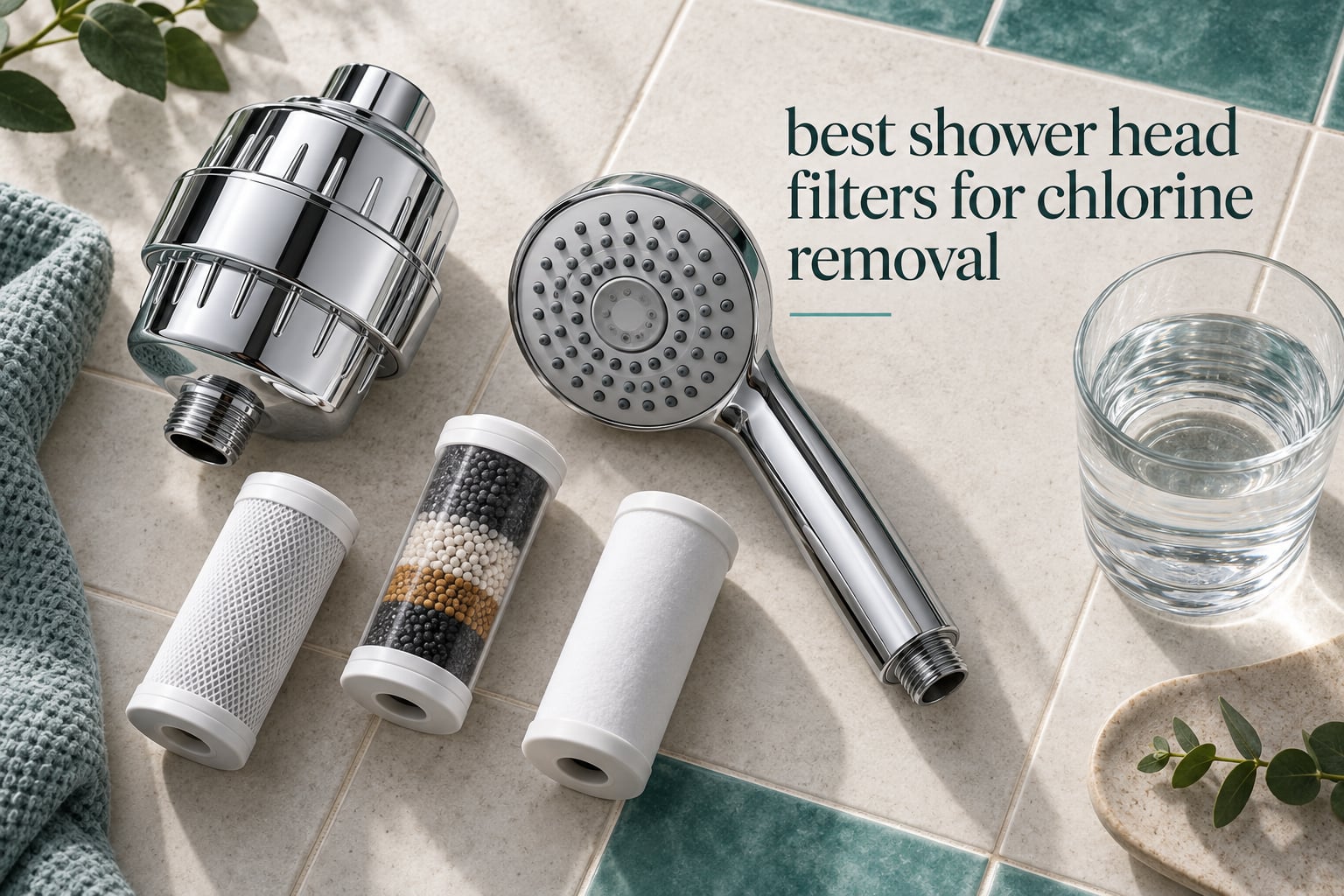
If you have ever stepped into a hot shower and caught a strong pool smell in the steam, you already know what residual chlorine does to a bathroom. That smell is the most obvious part of the problem. The less obvious part is what the chlorine is doing to your skin barrier and to the keratin cuticle on your hair while you stand there for eight minutes a day, several hundred times a year. Choosing among the best shower head filters for chlorine removal in 2026 comes down to one thing: knowing which media is actually doing the work.
That is where most shopping guides go wrong. They count stages. A 20-stage filter sounds like more filtration than a 3-stage one, but stage count is a marketing number, not a chemistry number. What matters is whether the cartridge contains KDF-55 copper-zinc media, activated carbon, calcium sulfite or ascorbic acid, and in what proportion. This roundup names the media in every one of the ten filters we looked at, and we tell you plainly where a cartridge makes claims it cannot back up.
A word on scope before we start. A point-of-use shower filter reduces chlorine at one tap. It does not soften water, it does not treat your whole house, and it is not a health intervention. If your water is heavily hard and you want scale gone everywhere, you need a different category of equipment. We cover that honestly further down, because the plumbers weighing in on homeowner forums are right about at least half of what gets said in shower filter marketing. If you want the wider picture first, our shower head filter buying guide and hard water shower filter picks cover formats and minerals in more detail.
Table of Contents
Top 3 Shower Head Filters for Chlorine Removal in 2026
The shortlist below is the three that stood out once media, cartridge economics and real owner feedback were weighed together. Each one earns its place for a different reason, and the third is the one to buy if you are unsure.

Aquabliss SF100 Filter
- Inline filter fits any standard shower head
- 6 month replacement cartridges
- Chrome ceramic and stainless steel body

FEELSO 15-Stage Filter
- Highest average rating in the list
- 15 stage media with carbon
- 1.8 GPM flow rate
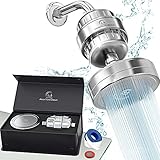
AquaHomeGroup 20+3 Stage
- KDF plus vitamin C
- E and A infusion
- Brass holder holds pressure
- Cartridges included in box
Quick Comparison: Every Filter in This Roundup Side by Side
All ten filters in the same place, with the media and format that actually drive chlorine performance. Prices and running costs are deliberately left out here because they change; the product buttons are the live reference.
| Product | Specifications | Action |
|---|---|---|
| Aquabliss SF100 Revitalizing Shower Filter |
|
Check Latest Price |
 SR SUN RISE Filtered Handheld Shower Head SR SUN RISE Filtered Handheld Shower Head |
|
Check Latest Price |
| AquaHomeGroup 20+3 Stage Filtered Shower Head |
|
Check Latest Price |
| FEELSO Filtered Shower Head 15 Stage |
|
Check Latest Price |
 Aqua Earth 20-Stage Vitamin C Shower Filter Aqua Earth 20-Stage Vitamin C Shower Filter |
|
Check Latest Price |
 Magichome 10-Mode Filtered Handheld Shower Head Magichome 10-Mode Filtered Handheld Shower Head |
|
Check Latest Price |
 PHILIPS AWP1775CH/37 NSF Shower Filter PHILIPS AWP1775CH/37 NSF Shower Filter |
|
Check Latest Price |
 Veken SP3V115 One-Press Shower Filter Veken SP3V115 One-Press Shower Filter |
|
Check Latest Price |
 MakeFit 7-Setting Filtered Shower Head MakeFit 7-Setting Filtered Shower Head |
|
Check Latest Price |
 weAQUA Heavy Duty 2-Pack Shower Filter weAQUA Heavy Duty 2-Pack Shower Filter |
|
Check Latest Price |
1. Aquabliss SF100 High Output Revitalizing Shower Filter – Best Inline Filter Overall
- Largest review pool in this roundup
- Installs in under two minutes with no tools
- Does not cut water pressure
- Works with fixed rain handheld and combo heads
- Cartridge replacements must be kept on hand
- Mesh strainer washer is poorly explained
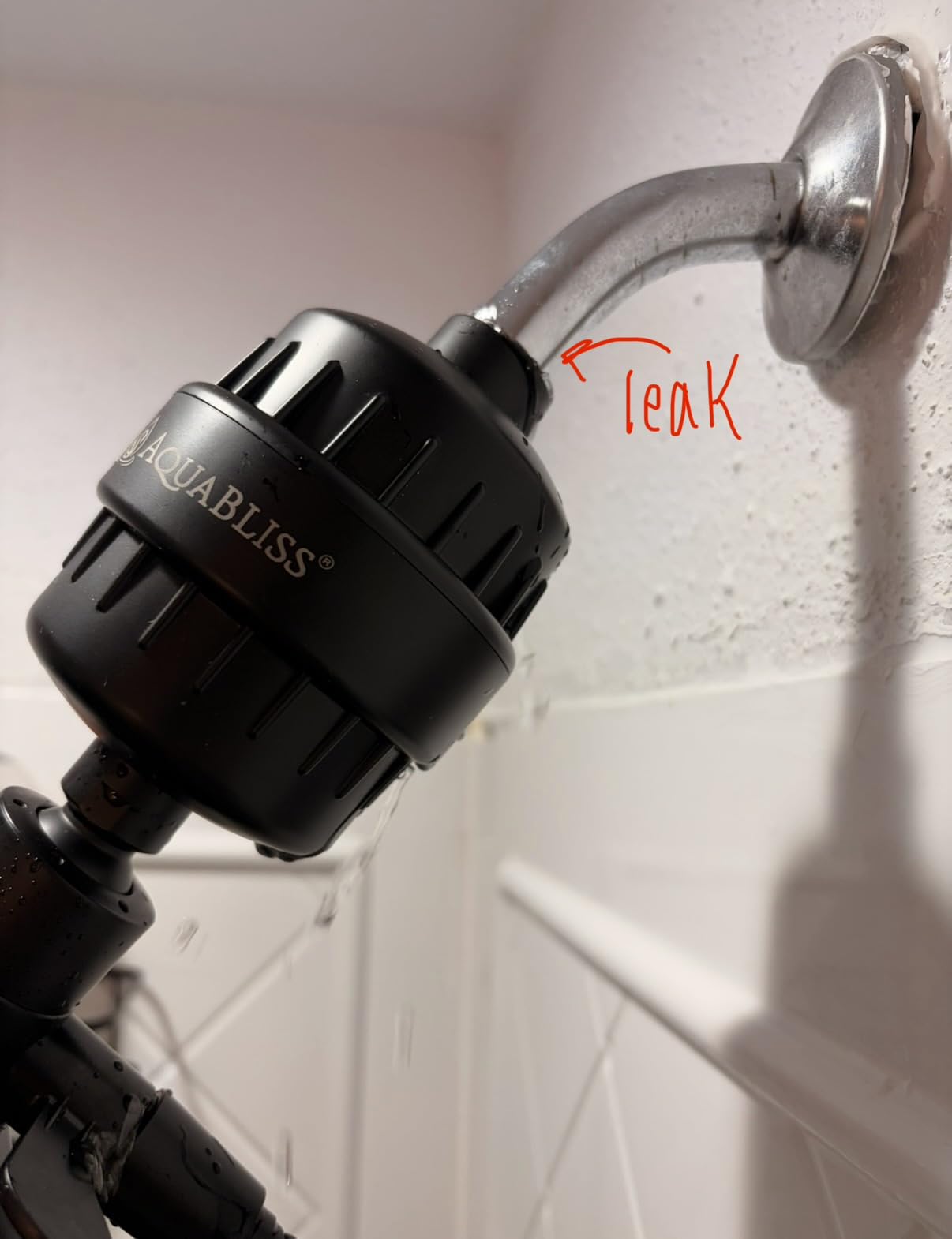
- Plastic threads can strip if overtightened
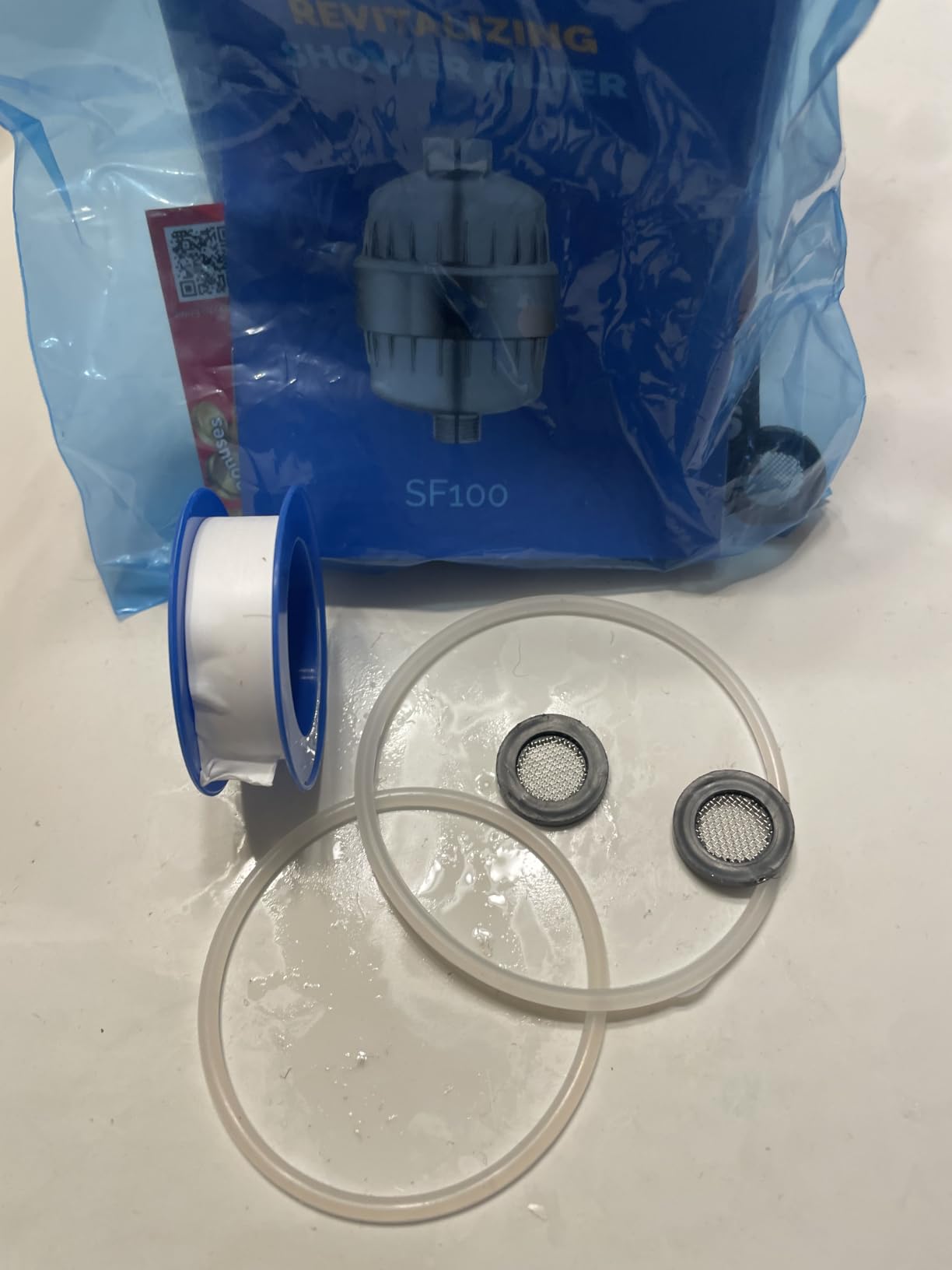
The Aquabliss SF100 sits between your shower arm and whatever head you already own, which makes it the least disruptive way to test whether chlorine is the thing bothering your skin and hair. It weighs about a pound, measures roughly 3.3 by 3.3 by 4.7 inches, and the box includes the adapter, the filter, plumber’s tape, spare washers and the SFC100 cartridge. That spare-hardware-in-the-box detail is the reason installation takes under two minutes with no tools.
Across a review pool of nearly 70,000 ratings, the most common first impression is softness. Owners describe hair that feels cleaner after one shower and skin that stops feeling tight within days. Flow rate is not the usual complaint here; a notable share of reviewers say the spray came out stronger than before, because the filter sits upstream of most flow restrictors rather than adding another one.
What the media does is worth being precise about. The cartridge is a multi-stage inline unit built around carbon and mineral media aimed at chlorine, odor and scale, and it is rated by the manufacturer at roughly six months of service before a swap. That rating is a Day-1-adjacent claim rather than an end-of-life guarantee, so plan on replacing it earlier if your shower runs two people twice a day.
The recurring criticism is dull but real: you have to buy replacement cartridges, and nothing in the box explains the small mesh strainer washer clearly. A few owners on chrome finishes report stripped plastic threads from overtightening, which is avoidable by hand-tightening only, as the instructions specify.
Who this filter suits
This is the pick if you like the shower head you already have and would rather not swap it. Because it is inline rather than a head replacement, it works with fixed, rain, handheld and combo setups on a standard 1/2-inch arm, and it is the easiest option to remove before a property sale or a move.
It also suits renters, since nothing about the install is permanent. And for anyone nervous about pressure drop, the inline position ahead of most restrictors makes this the safest of the ten for older homes with marginal water pressure.
Who should skip it
If you are on chloramine-treated water and chlorine odor is the main thing you are chasing, an inline cartridge without an ascorbic acid or calcium sulfite stage can leave you disappointed. Nothing on the listing confirms chloramine performance with a time window, which is exactly the caveat that shows up in forum threads from chloramine-supplied homes.
Skip it too if you are on very hard water and expect scale control. This filter reduces chlorine; it does not soften water, and treating mineral hardness properly is a different purchase.
2. SR SUN RISE Filtered Handheld Shower Head – Best Handheld and Combo Pick
- Filtration and handheld in one unit
- KDF plus vitamin C media
- 9 spray settings with Power Wash
- Holds spray at low pressure
- ABS body less durable than metal rivals
- 5 inch face is compact
- Silicone nozzles pick up mineral deposits
Most filters force a trade-off: keep your nice shower head and accept an inline unit, or replace the head and get filtration built in. The SR SUN RISE takes the second route and does it well, packaging a replaceable multi-layer cartridge using KDF, maifan stone and vitamin C balls into a handheld head with nine spray settings.
The vitamin C component is the part that matters for this topic. Ascorbic acid neutralizes both free chlorine and chloramine chemically rather than by adsorption, so this is one of the stronger matches for households on chloramine systems. Owners of hard water also report the usual softening effect on feel, which is largely about the mineral media rather than actual hardness reduction.
Two design details set it apart from cheaper handhelds. A flip-activated Power Wash mode concentrates spray for scrubbing tub and tile, and the boost technology is designed to keep the spray steady when household pressure is low, which is common in older builds. The 71-inch hose is long enough to rinse a wall without stepping out of the stream.
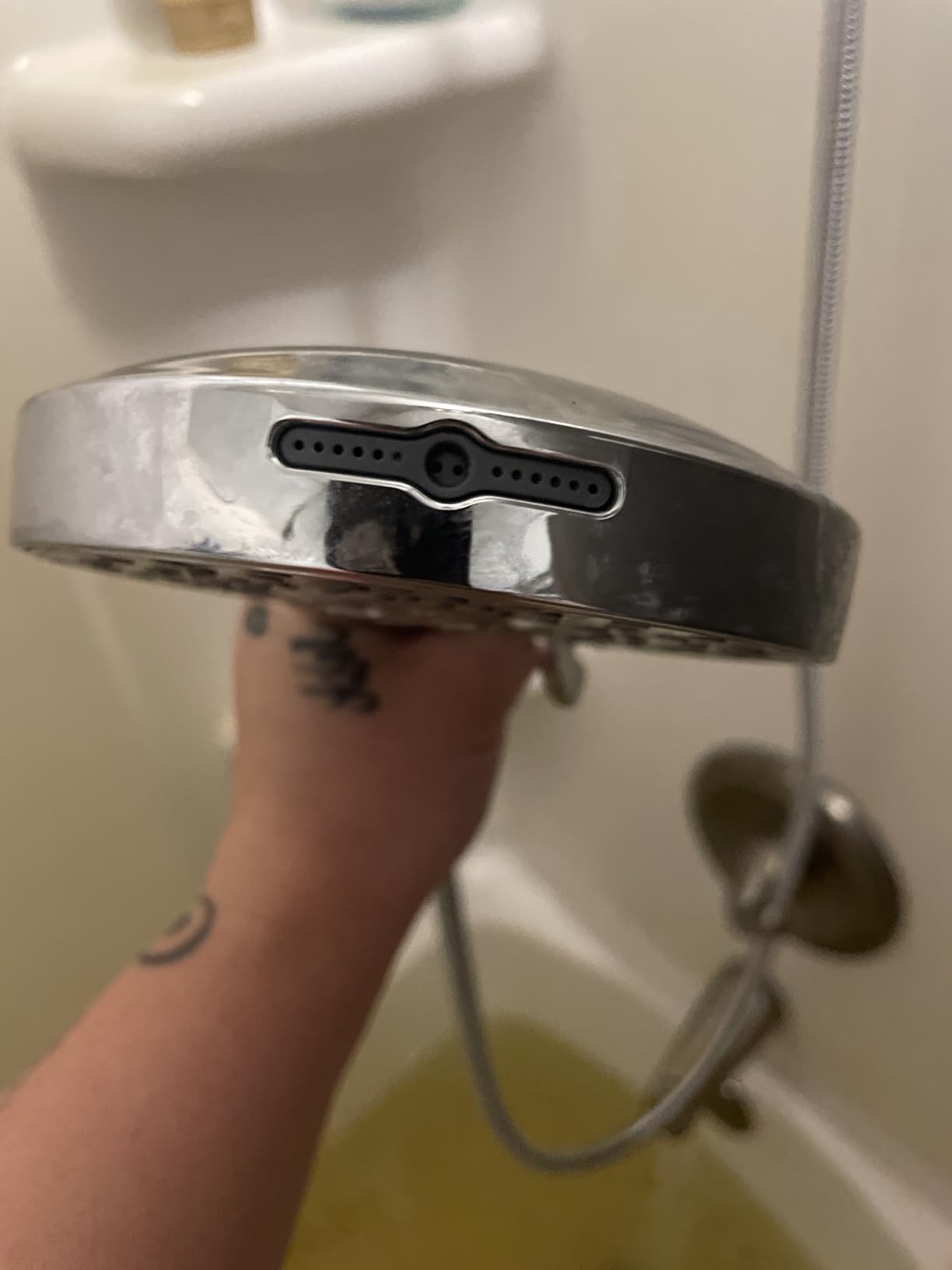
The trade-offs are honest ones. ABS is rust-proof and light, but it will not last as long as a brass-bodied unit. The 5-inch face is smaller than some rain-style heads, and silicone nozzles inevitably pick up mineral scale in hard water, so expect periodic descaling.
Who this shower head suits
Pick this if you are replacing a shower head anyway. Getting filtration and a nine-mode handheld in one unit is better value than an inline filter plus a separate head upgrade, and the universal G1/2-inch connection means no plumber and no permanent change.
It also suits chloramine households better than most KDF-only cartridges at this level, and households that wash a lot of hair in one sitting, since the hose length and spray variety make rinsing faster.
Who should skip it
Skip it if you already own a shower head you genuinely like, since you would be throwing that away. Also skip if durability matters more than features: two or three people showering daily for a decade will probably outlast the plastic body.
If you want certified removal percentages, this listing does not provide one, and stage naming on handhelds is often decorative. Judge it on media instead.
3. AquaHomeGroup 20+3 Stage Filtered Shower Head – Best Densest Media Stack
AquaHomeGroup Filtered Shower Head, 20+3 Stage, Reduces Chlorine, Chrome
- Densest named media stack in the roundup
- Vitamins C E and A for chlorine and chloramine
- Brass holder resists slipping
- Cartridges included in the box
- Highest priced unit here
- Does not address mineral hardness
- Cartridge refills are an ongoing cost
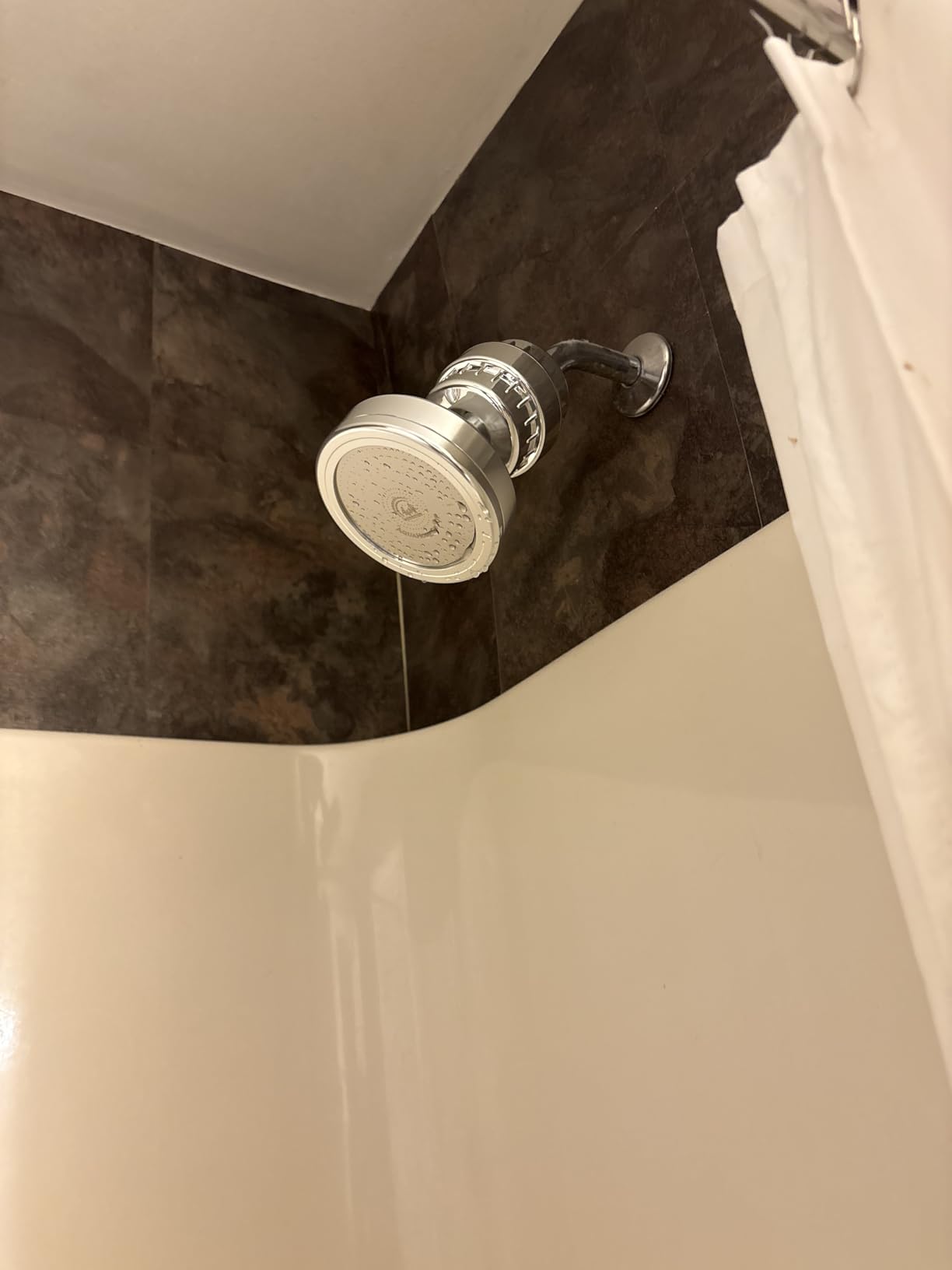
If you want the most media in one cartridge, this is the one. The AquaHomeGroup stacks KDF media with a vitamin C, E and A infusion, and the manufacturer claims KDF reduces more than 90 percent of chlorine alongside heavy metals and sediment. Owners of chlorinated supply generally report the shower steam losing its odor within the first week.
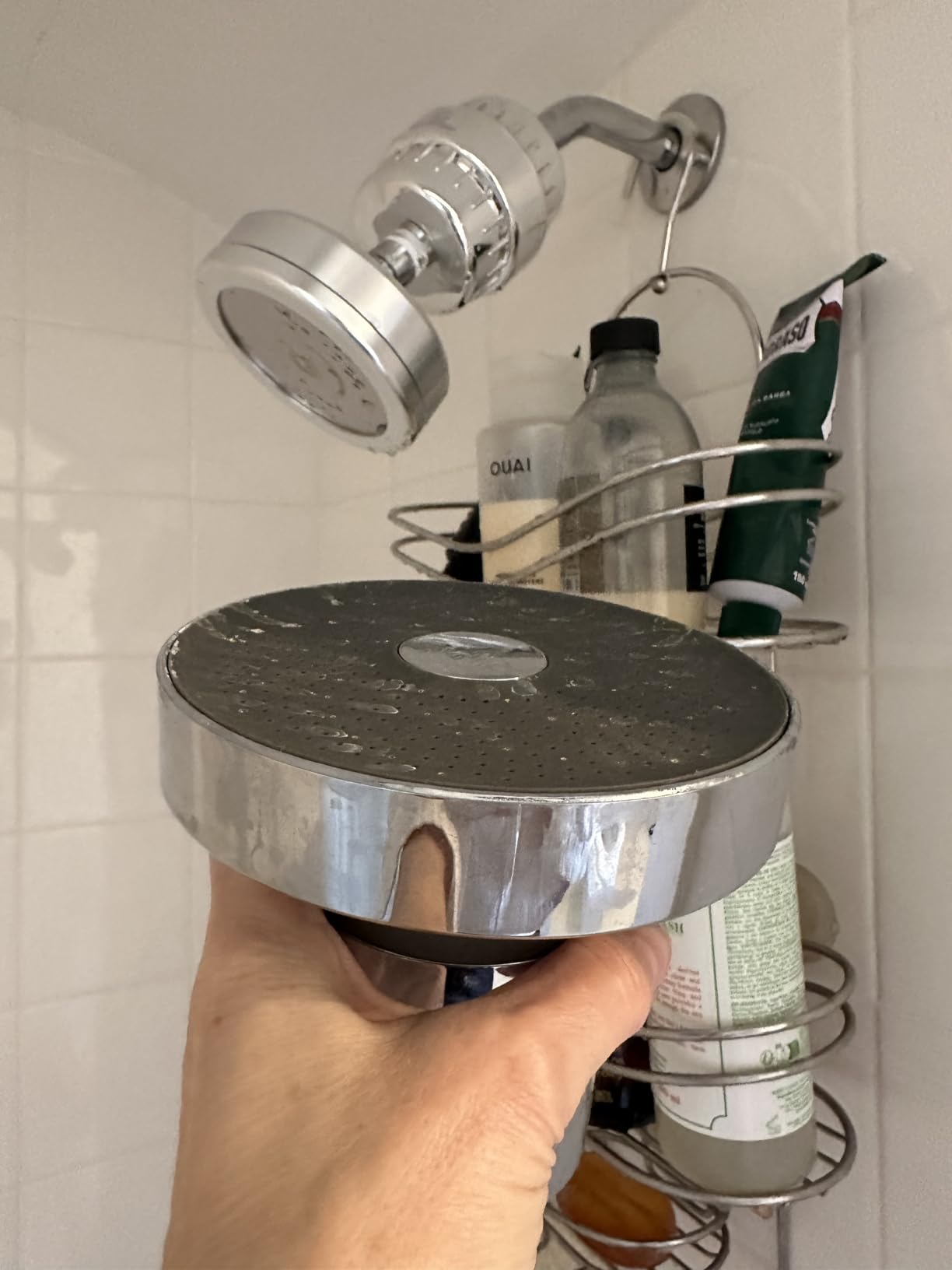
Unlike most competitors, its filter is a full replacement head rather than an inline attachment, and the reinforced metal brass holder is a genuine engineering advantage. It resists the slipping and drooping that lightweight plastic brackets develop, and reviewers say pressure holds steady across the cartridge’s service life rather than sagging at the end.
A stainless steel hose and spare replacement cartridges are in the box, so the first year is covered without a second order. The unit is wall-mounted on universal 1/2-inch connections and reaches full filtered operation within about five minutes of the first shower after installation.
The honest caveat is scope. This unit is built for chlorine and chloramine, not for calcium and magnesium, so if scale on your glass is the actual complaint you will want a different category of filter. And at the top of this price ladder, the ongoing cartridge cost is the thing to budget for, not the purchase.
Who this shower head suits
This suits readers who are chlorine-focused rather than mineral-focused, and who want a metal-bodied head that will outlast a plastic alternative. It is also a reasonable choice for homes where several people shower daily, since the media budget per cartridge is higher than the slimmer filters here.
If you dislike the visual bulk of inline housings, a head-mounted filter keeps the shower arm clean and the profile short.
Who should skip it
Skip it if you are on a tight budget. The upfront cost is the highest in this roundup and the cartridge refill keeps coming, so the running total over two years is the number to actually compare.
Skip it if your complaint is hard water. Rich media density does not lower total dissolved solids, and treating hardness needs a softener or a dedicated mineral filter.
4. FEELSO Filtered Shower Head 15-Stage Filter – Best Value Pick
FEELSO Shower Head with Shower Filter, Filtered Shower Head for Hard Water
- Highest average rating in this roundup
- Low entry cost with 15 stage media
- Targets chlorine and heavy metals
- Tool-free install on standard arms
- 1.8 GPM is low versus rivals
- Water can run dark until carbon flushes
- ABS body with chrome plating
The FEELSO is the highest-rated filter in this roundup at 4.6 stars across more than 13,700 ratings, and it sits at the affordable end of this list. Those two facts together are why it takes the value slot rather than a lesser position. Reviewers consistently describe it as the one they would buy again without overthinking.
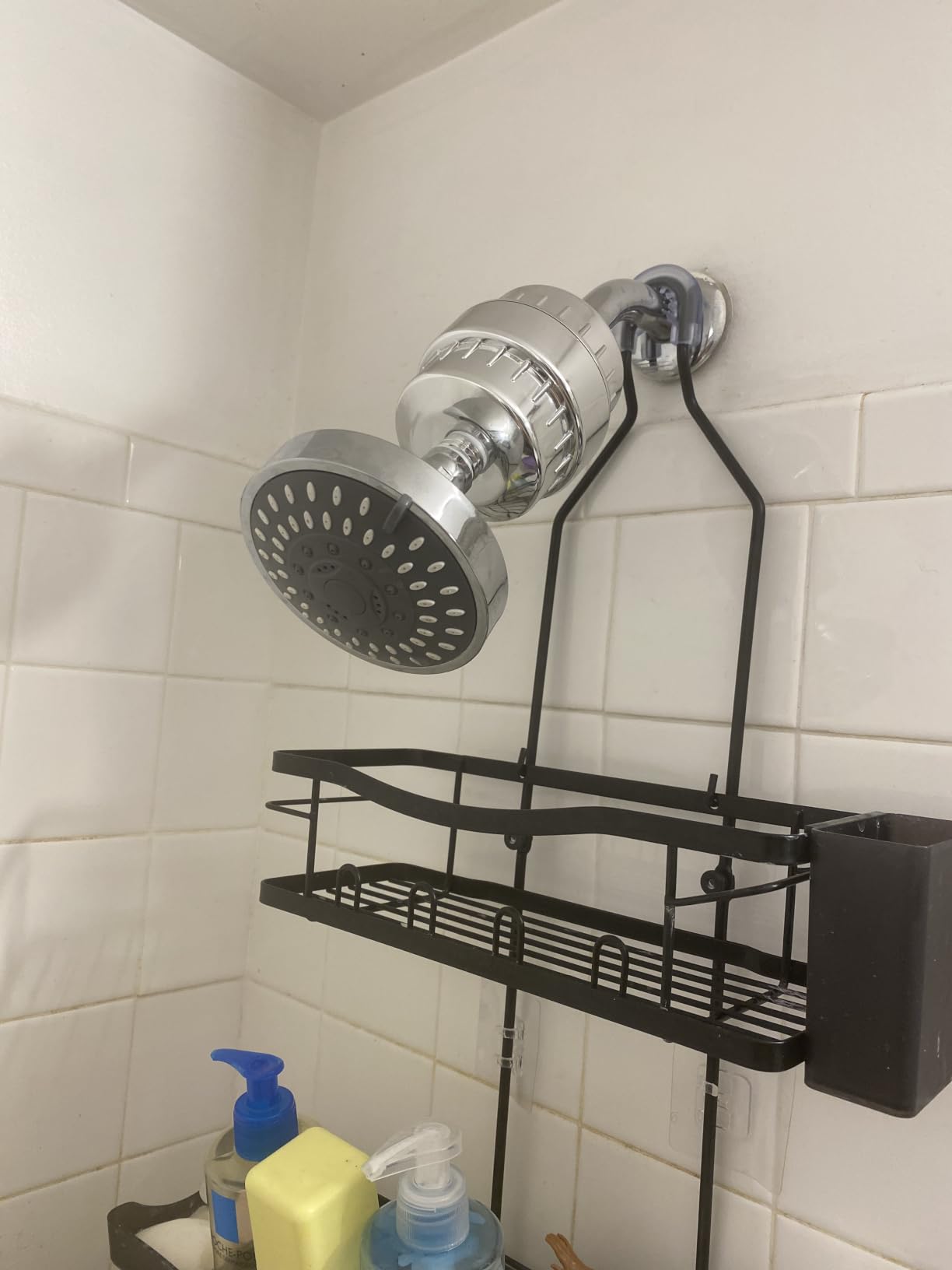
The 15-stage cartridge targets chlorine along with lead, mercury, nickel and chromium, and it is installed inside a fixed head rather than added to the arm. Five spray modes cover rain, massage, mist and two combinations, driven through an adjustable swivel ball joint that holds a usable spray even when pressure is on the low side.
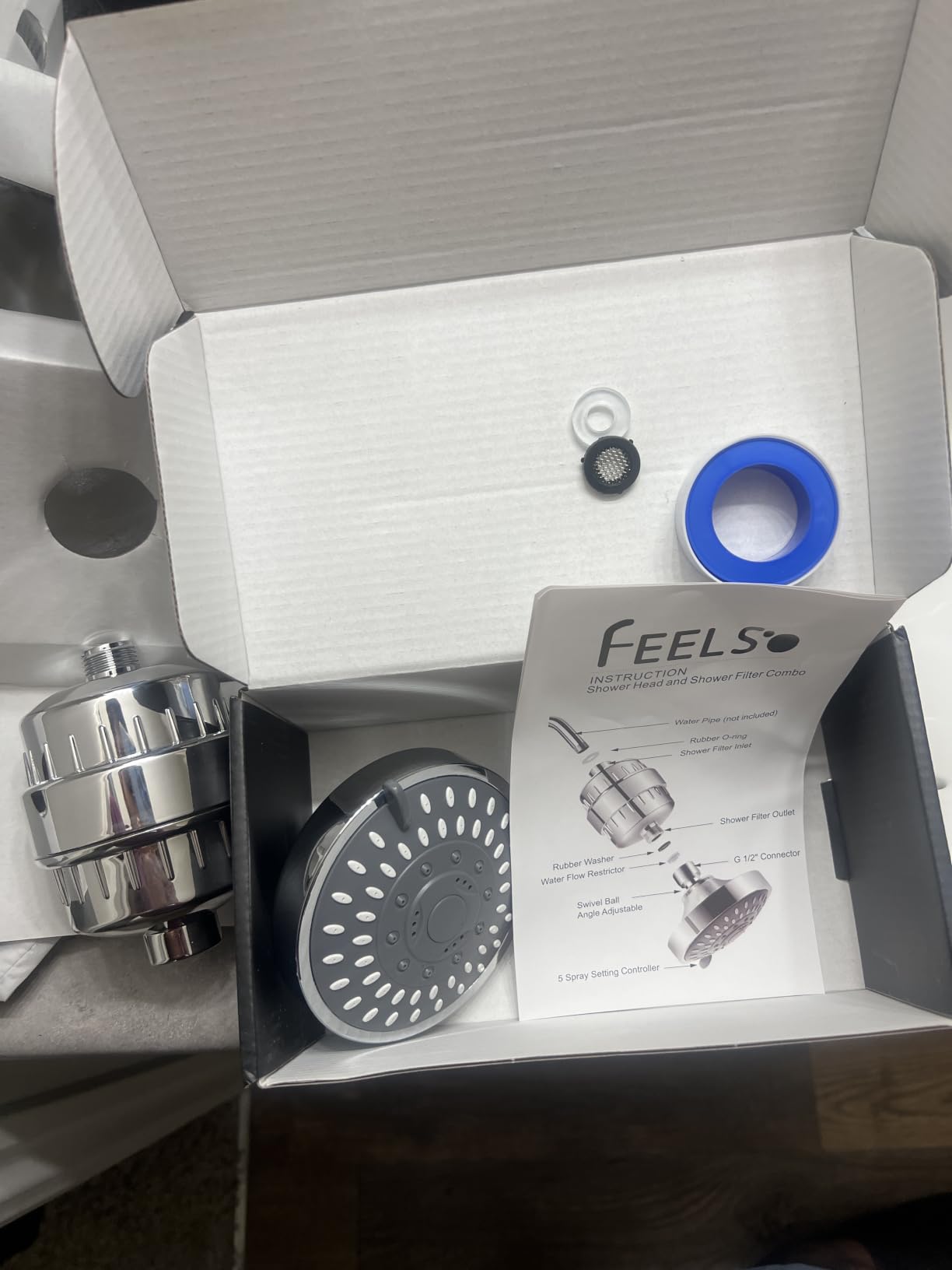
Two operational notes matter before your first shower. The instructions call for running water through the filter for five to ten minutes before use, which clears loose carbon dust that can otherwise darken the water at the start. And at 1.8 GPM, this is one of the lower flow rates here, so if you are used to a high-pressure head the transition will feel softer.
The body is chrome-plated ABS at 450 grams and about 7.8 by 4.1 inches, which is lighter and less premium feeling than metal rivals. Teflon tape and instructions are included, so nothing extra is needed for a tool-free install on a standard arm.
Who this shower head suits
This is the one to buy if you want chlorine reduction without spending much or replacing your whole setup. It suits first-time filter buyers, students and renters, and anyone who wants to find out whether chlorine is really the problem before committing to a premium inline unit.
It is also a good match for households with modest water pressure, where a restrained flow rate is less disruptive than a high-output head with a restrictor.
Who should skip it
Skip it if you have low water pressure and want a strong jet. At 1.8 GPM this is deliberately restrained, and adding filtration on top of already weak pressure is where flow complaints show up in homeowner threads.
Skip it if you are on chloramine. The media description names chlorine and metals but does not extend a chloramine claim, and that gap is where KDF-only cartridges disappoint people.
5. Aqua Earth 20-Stage Vitamin C Shower Filter – Best for Chloramine
Aqua Earth Shower Filter for Hard Water, 20-Stage Vitamin C E Chlorine
- Named media stack covering chloramine
- Spare cartridge gives about a year
- FDA listed with 1 year warranty
- Fits overhead handheld and rain heads
- One reviewer found media loosely packed
- Can drip briefly after a cartridge change
- Takes a week or two to show results
The Aqua Earth is the filter to look at first if your water utility uses chloramine. Its media stack is explicitly named as KDF-55, activated carbon, vitamin C, vitamin E and calcium sulfite, and the listed benefits call out chloramine reduction directly. That combination is what separates it from the many units that quietly handle free chlorine only.
Calcium sulfite is the underrated component here. It reacts with residual chlorine quickly and holds up at shower temperature, while KDF-55 handles free chlorine through a copper-zinc redox reaction and also binds iron, copper, lead and mercury. Vitamin C adds neutralization on top, which is the piece that matters for chloramine.
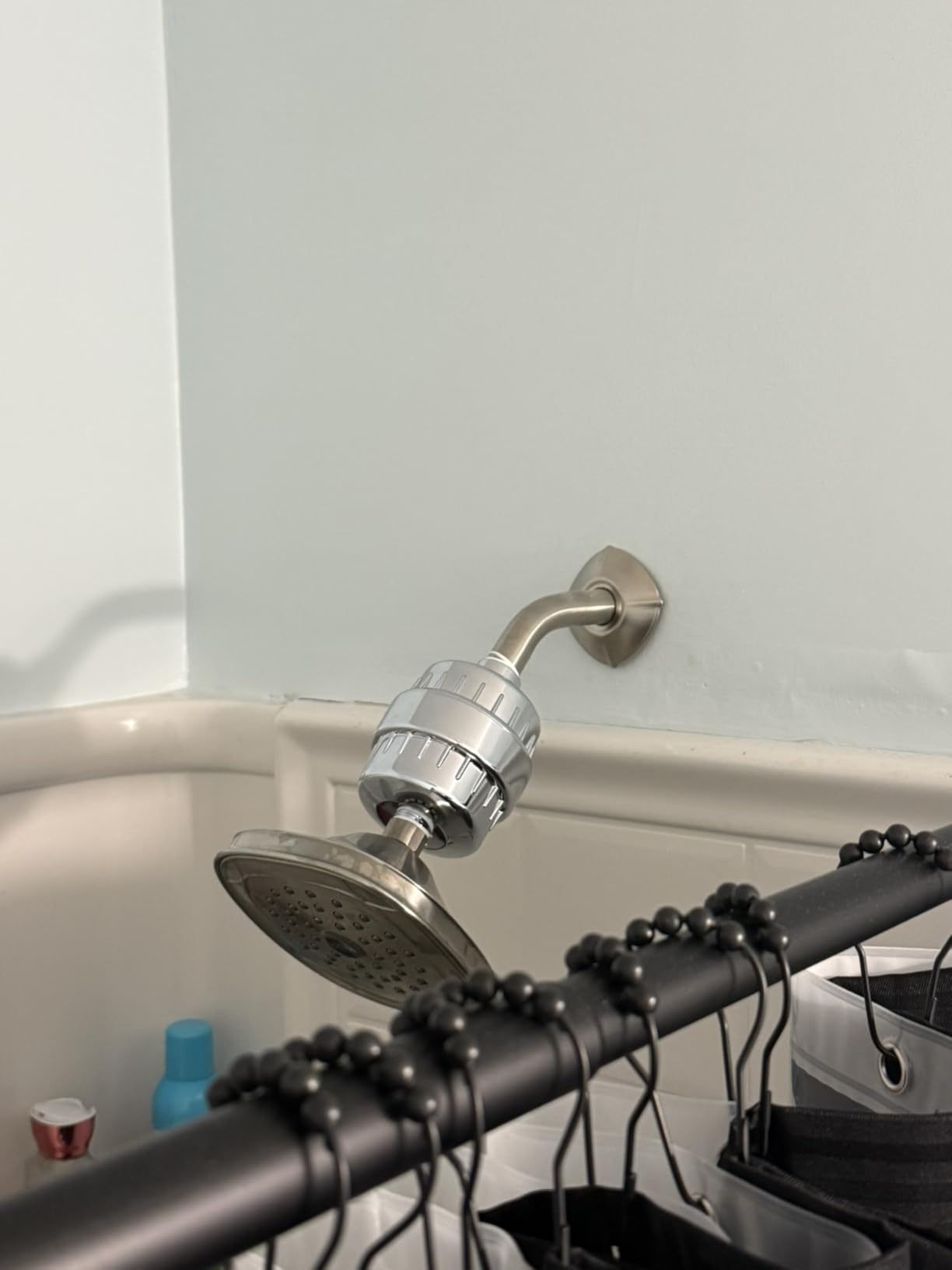
Practical details are good. Two cartridges ship in the box, one pre-installed and one spare, which covers roughly a year for a typical household. It is FDA listed, carries a 1-year limited manufacturer warranty, and fits overhead, handheld, rainfall and combo heads on a universal 1/2-inch connection without tools.
One reviewer who cut a cartridge open found the media loosely packed rather than tightly staged, which is worth knowing because it affects how evenly water contacts the layers. A few owners also report a slight drip right after a cartridge change until the seal seats over a few uses. Long-term owners describe steady results and durable housing.
Who this filter suits
This suits households on chloramine-treated municipal water, and anyone whose chlorine smell keeps coming back despite using a standard carbon filter. It also works well for older plumbing where rust and sediment add a second problem for the media to handle.
If you already have a shower head you like, the inline format means you keep it. And the included spare cartridge removes the most common first-year complaint buyers have, which is running out unexpectedly.
Who should skip it
Skip it if you expect overnight results. Owners report a week or two of consistent use before the improvement in lather and hair softness becomes obvious, and anyone who judges a filter in three days will be disappointed.
Also skip it if hard water is your main issue. The listing mentions inhibiting lime-scale growth, but inhibiting scale is not the same as removing hardness from the water.
6. Magichome 10-Mode Filtered Handheld Shower Head – Best for Spray Variety
- Ten spray patterns with a pause mode
- 90 anti-clog nozzles resist scale
- Stainless hose with brass swivel joint
- Tool-free fit to any standard arm
- No spare filters or interval info in the box
- Bracket is very tight to reposition
- Massage mode is a hard spray
The Magichome sells on spray control rather than filtration pedigree. Ten patterns cover rain, pulse, mist, spray and mixed settings, plus a water-saving pause mode that is genuinely useful when you are shampooing and do not want the meter running. Underneath that is a 90-nozzle face with air-induction technology and steel plate outlets designed to resist limescale.
On the chlorine question, this is a softener-beads handheld in the mainstream category, and reviewers on hard water report noticeably softer water and improved hair and skin from the first use. That is a useful everyday improvement, though it sits alongside the filter rather than replacing the more precisely specified media in the picks above.
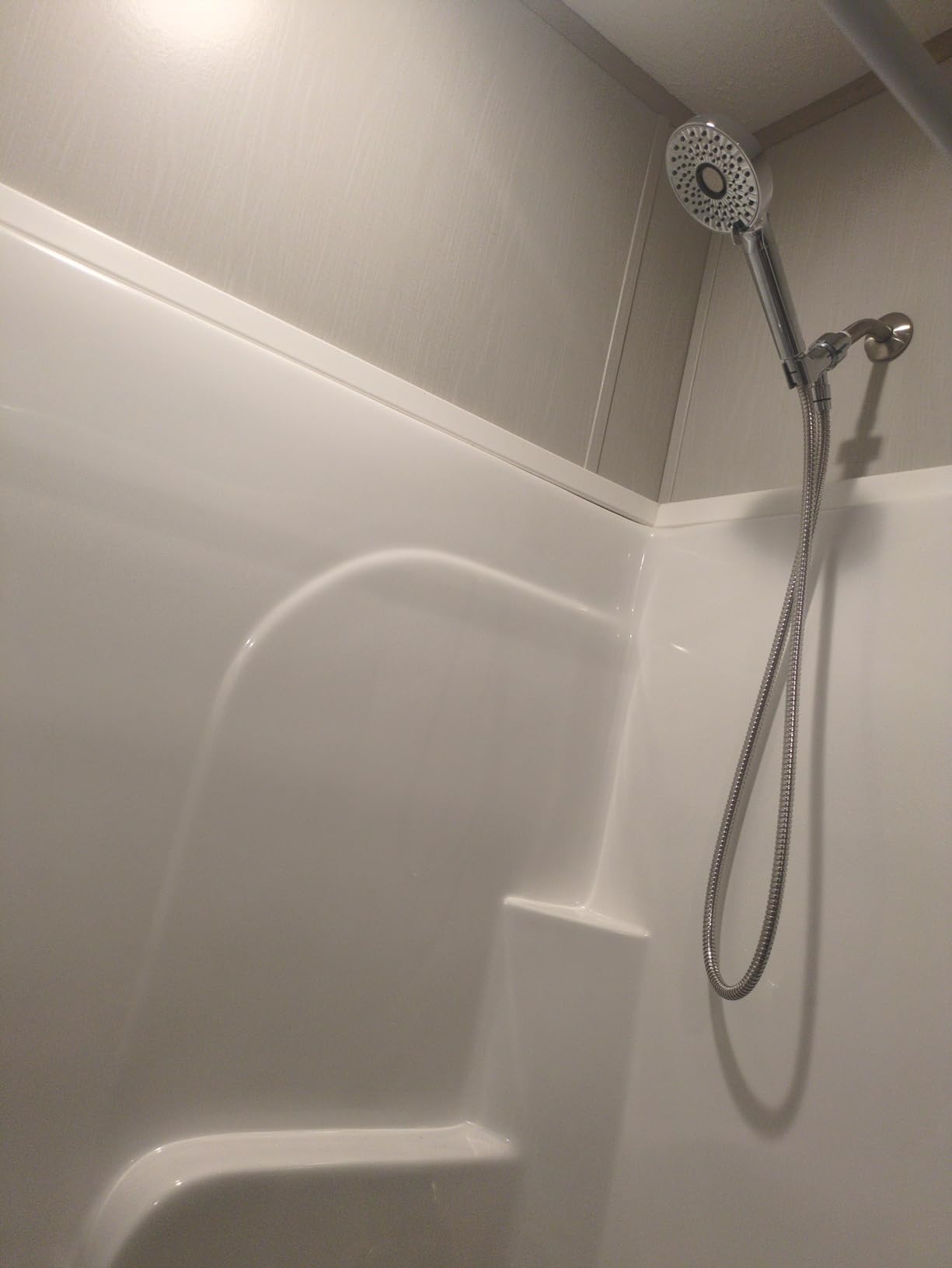
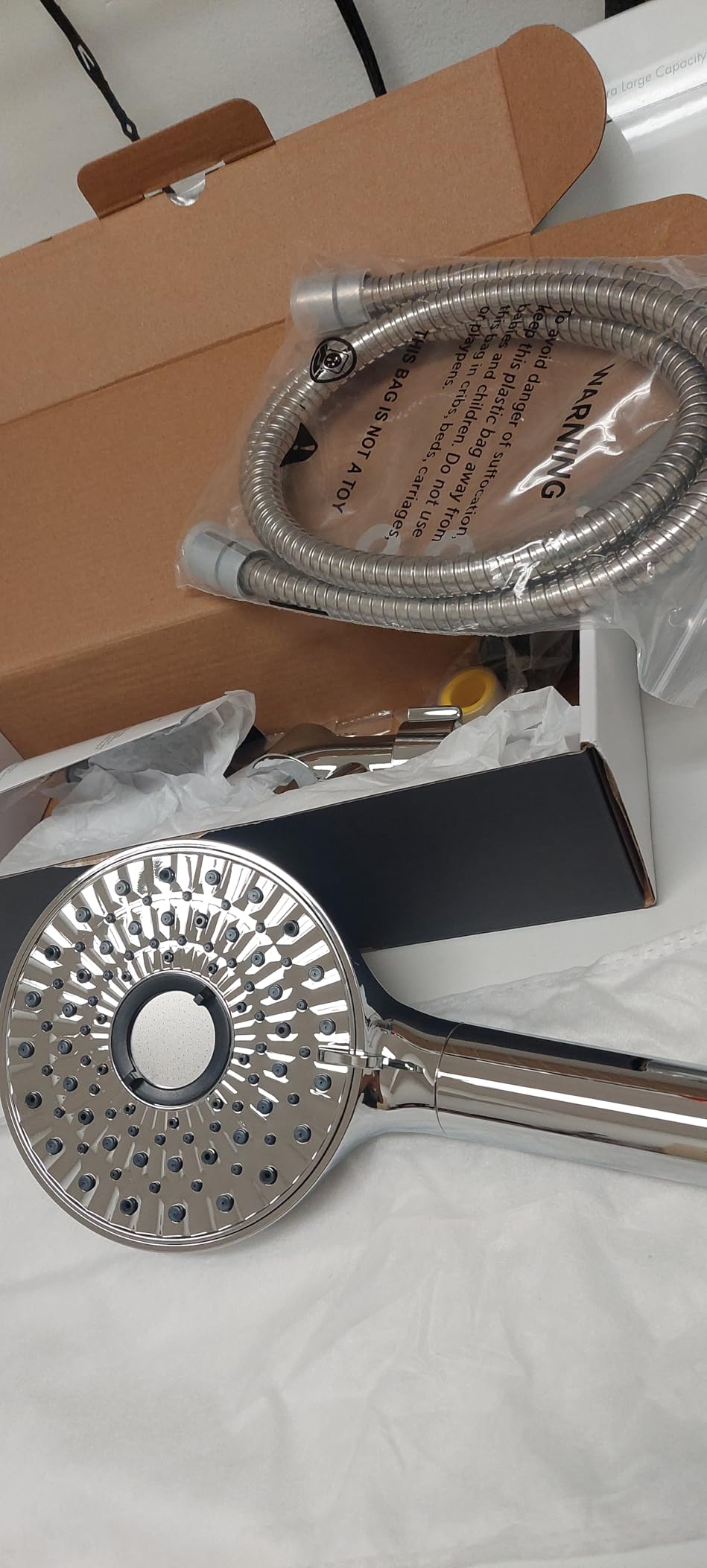
The hardware is decent for the class. A 59-inch stainless steel hose runs to a 360-degree bracket built around a brass swivel ball joint, and the ABS body is rust-proof and fade-proof, which matters in a permanently wet bathroom.
The repeated complaint across reviews is cartridge information. No spare filters or replacement interval guidance ship in the box, so you will need to source refills separately and set your own reminder. The bracket is also described as very tight to reposition, and the massage setting is a firm spray rather than a true pulsing pattern.
Who this shower head suits
This suits people who treat a shower head as a tool and want options, particularly households with children, pets or anyone washing off heavy conditioner. The pause mode and wide spray selection make it the most versatile unit in this roundup day to day.
The anti-clog nozzle design is a real advantage in hard water, where cheap rubber nozzles silt up within months. It is also a good low-pressure option given the air-induction setup.
Who should skip it
Skip it if you care most about verified chlorine chemistry. Nothing in the listing names KDF-55 or calcium sulfite explicitly, so you are buying the shower head and taking the filter on trust.
Skip it if cartridge transparency matters to you. The absence of any stated replacement interval means you have to manage the cadence yourself from day one.
7. PHILIPS AWP1775CH/37 Shower Filter – Best for NSF-Certified Media
PHILIPS Shower Filter, Reduces Chlorine & Heavy Metals, AWP1775CH/37
- Only NSF certified media in this roundup
- Metal housing avoids bulky plastic look
- Double mesh traps rust and sand
- Cartridge life stated in litres and months
- Lowest average rating here at 4.2
- Does not reduce total dissolved solids
- Cartridge AWP175 sold separately
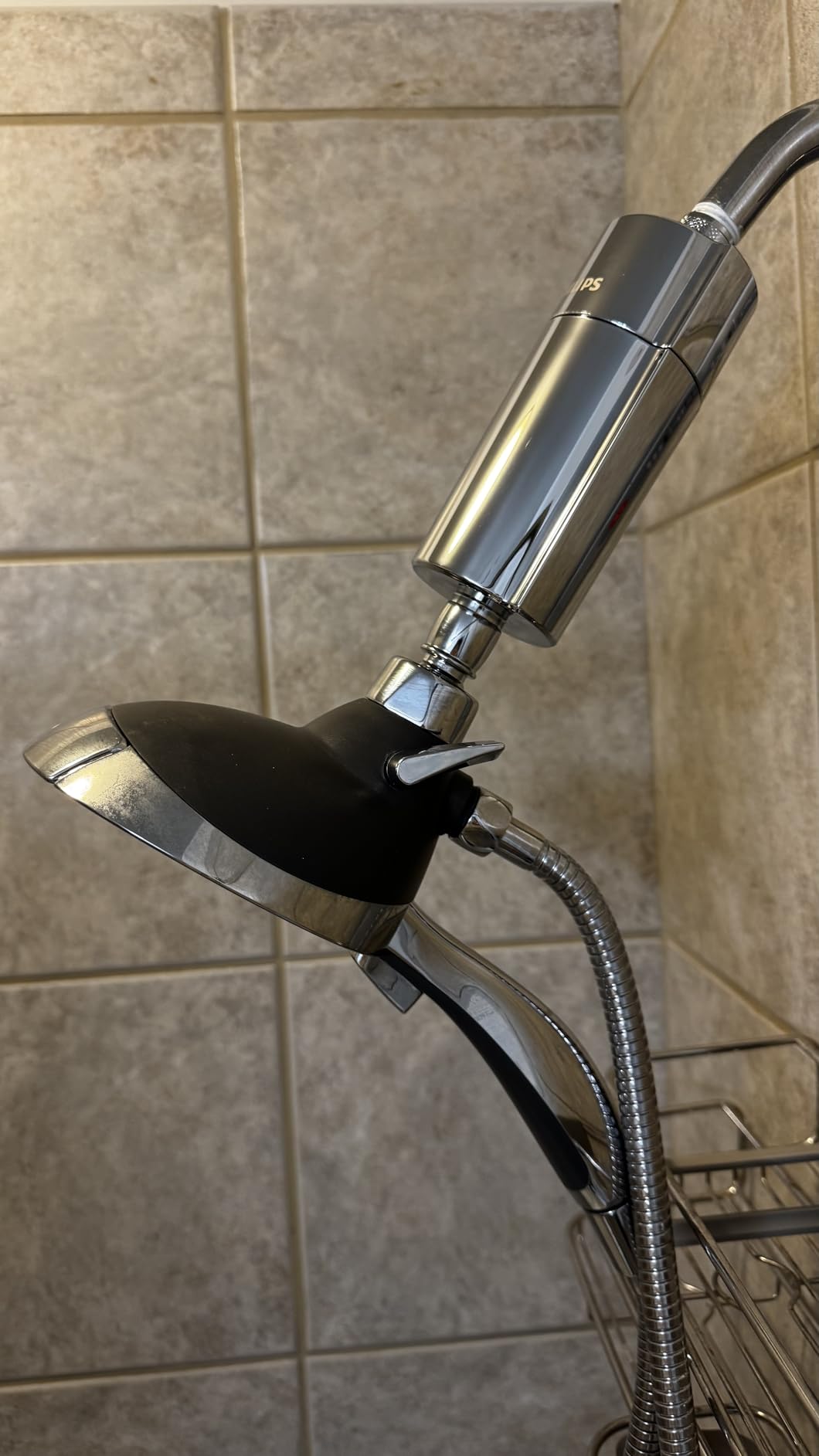
If you want a certification rather than a claim, this is the only filter in the roundup with NSF-certified KDF media and an external testing certification listed. It is a 3-stage unit at 2.4 inches across and 6.85 inches tall, which is taller than most inline filters and the main reason some reviewers describe it as visually prominent on the arm.
The cartridge specification is unusually concrete: 50,000 litres, or about 13,208 gallons, which works out to roughly four to six months of daily showers. That is a measured capacity rather than a marketing interval, and it lets you calculate running cost before you buy. Refills use the AWP175 cartridge, sold separately.
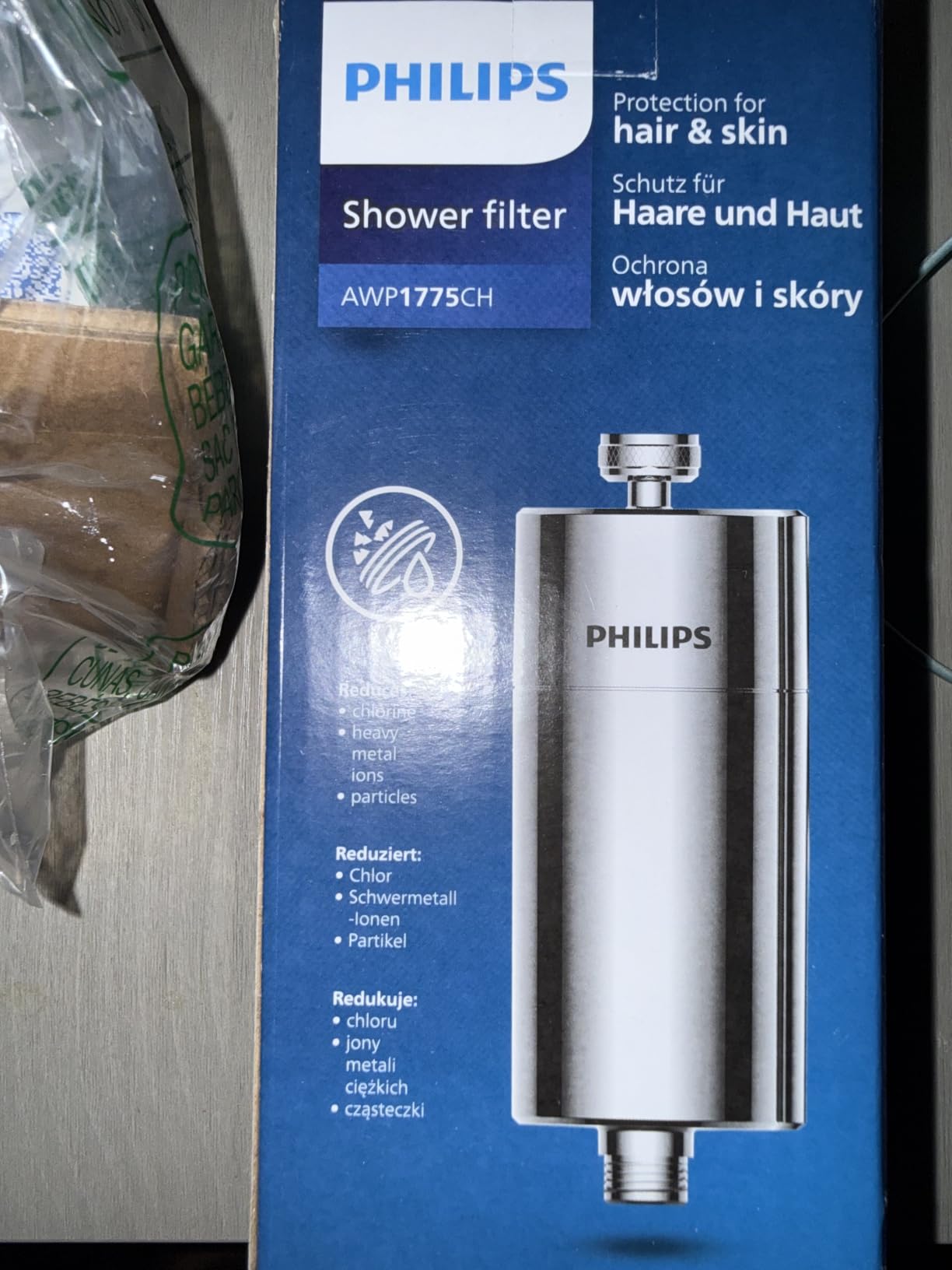
A double mesh stage traps rust, sand and visible debris in addition to chlorine, and the body is designed for hot and cold water with an anti-scald chamber. Installation is tool-free in about two minutes on most 1/2-inch threaded showers, including handhelds, rainfall heads and wall arms.
The honest drawback is the rating spread. At 4.2 stars, this is the lowest average in the roundup, with 14 percent of ratings sitting at three stars, and the confusion is usually about expectations. The unit does not reduce total dissolved solids, so on hard water the taste and a faint mineral note can remain even when chlorine is handled well.
Who this filter suits
This suits anyone who reads certification labels, and any household with older plumbing where rust and sediment are as much of a problem as chlorine. The litre-based cartridge rating is the most useful spec sheet in this roundup for planning a replacement budget.
It is also a good fit if you want to keep an existing shower head, since the chrome-finish metal body blends into hardware better than the white plastic housings common at this level.
Who should skip it
Skip it if you want the highest-rated experience. The 4.2 average is the lowest here, and the clustering of middling reviews suggests unclear expectations rather than a faulty product.
Skip it if hard water taste bothers you. Because the unit does not lower total dissolved solids, you will still taste minerals even when the chlorine is gone. For that, look at whole-house options.
8. Veken SP3V115 One-Press Shower Filter – Best for Easy Cartridge Swaps
Veken Shower Filter, Chlorine, Lead & Sulphide Tested, One-Press Cartridge
- Cartridge changes without dismantling the head
- Functional media only with no filler
- U-shaped channel lengthens contact time
- Lab tested for lead and sulphide
- Smallest review pool here
- Can be hard to tighten with a heavy rain head
- Three month cartridge interval is frequent
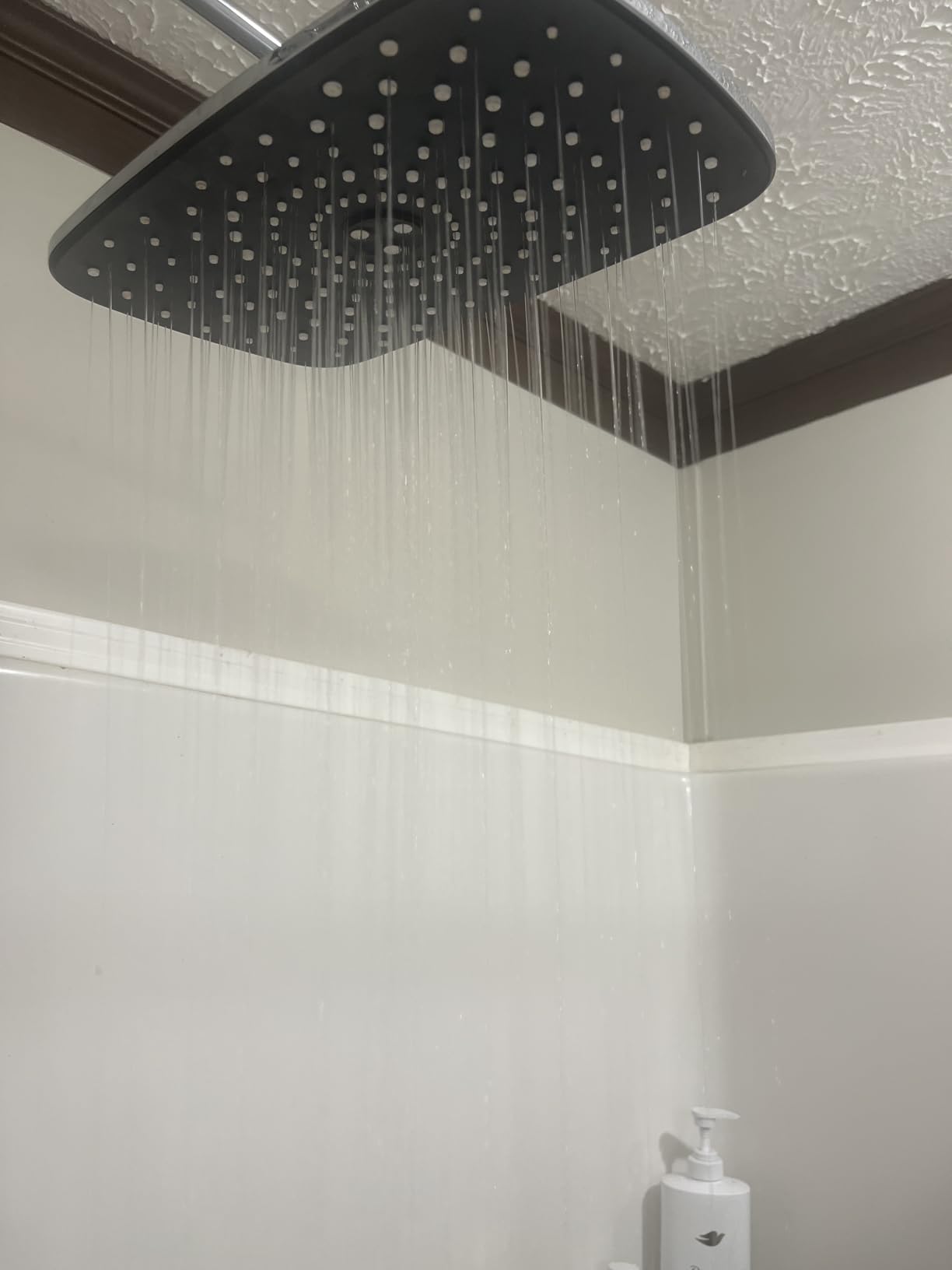
The Veken solves the complaint that shows up most often in homeowner threads about shower filters: needing to take the whole assembly apart to change a cartridge. A one-press mechanism releases and seats the cartridge from outside the housing, so a swap takes seconds and no tools, and you do not have to remove the shower head from the wall.
The media specification is the most credible in the roundup for a compact unit. It uses calcium sulfite, coconut shell carbon and KDF with no non-filtering filler media, and a U-shaped channel extends the water path so water stays in contact with the media longer than a straight-through housing allows. It is lab tested for lead and sulphide.
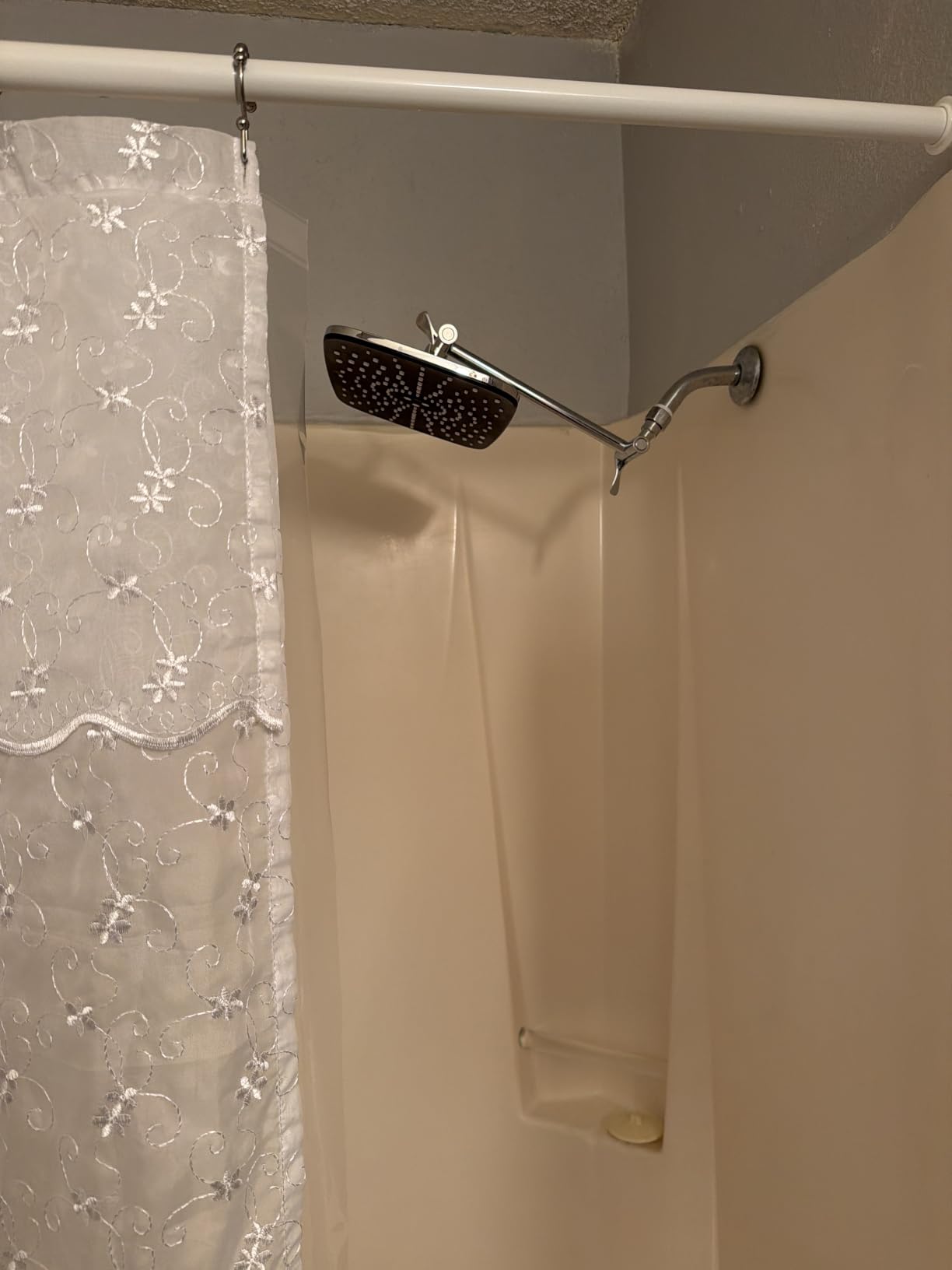
It is also the most compact of the inline filters here, at 5.59 by 3.31 by 3.35 inches, which means it extends the shower arm less than the bulkier cylindrical housings. Cartridge colours are matched to common bathroom decor, a small thing that matters more than it sounds.
The caveats are real. With 656 ratings, this is the smallest review pool in the roundup, so the 4.6 average is encouraging but based on a short track record. The manufacturer recommends replacement every three months, which is more often than most rivals and pushes your running cost up accordingly.
Who this filter suits
This suits anyone tired of wrestling with twist-out cartridges, and anyone in a household where more than one person touches the filter. It is also a strong pick for renters because it is fully removable and requires no plumbing changes.
If you are on chloramine, calcium sulfite plus KDF is a sensible pairing, and the absence of filler media means the space inside the housing is doing something.
Who should skip it
Skip it if you want a long-established review history, since the listing is a recent addition and the feedback pool is still thin.
Skip it if you have a heavy rain head mounted on the arm. Reviewers report that the connection can be difficult to get tight enough to stop leaks when the filter has to carry that weight.
9. MakeFit 7-Setting Filtered Shower Head – Budget Pick
- Lowest cost in the roundup
- Seven usable spray modes
- Transparent cartridge shows fill level
- Backed by a 2 year warranty
- One buyer measured no metal reduction
- Bulky appearance for some
- Batch-to-batch consistency has varied
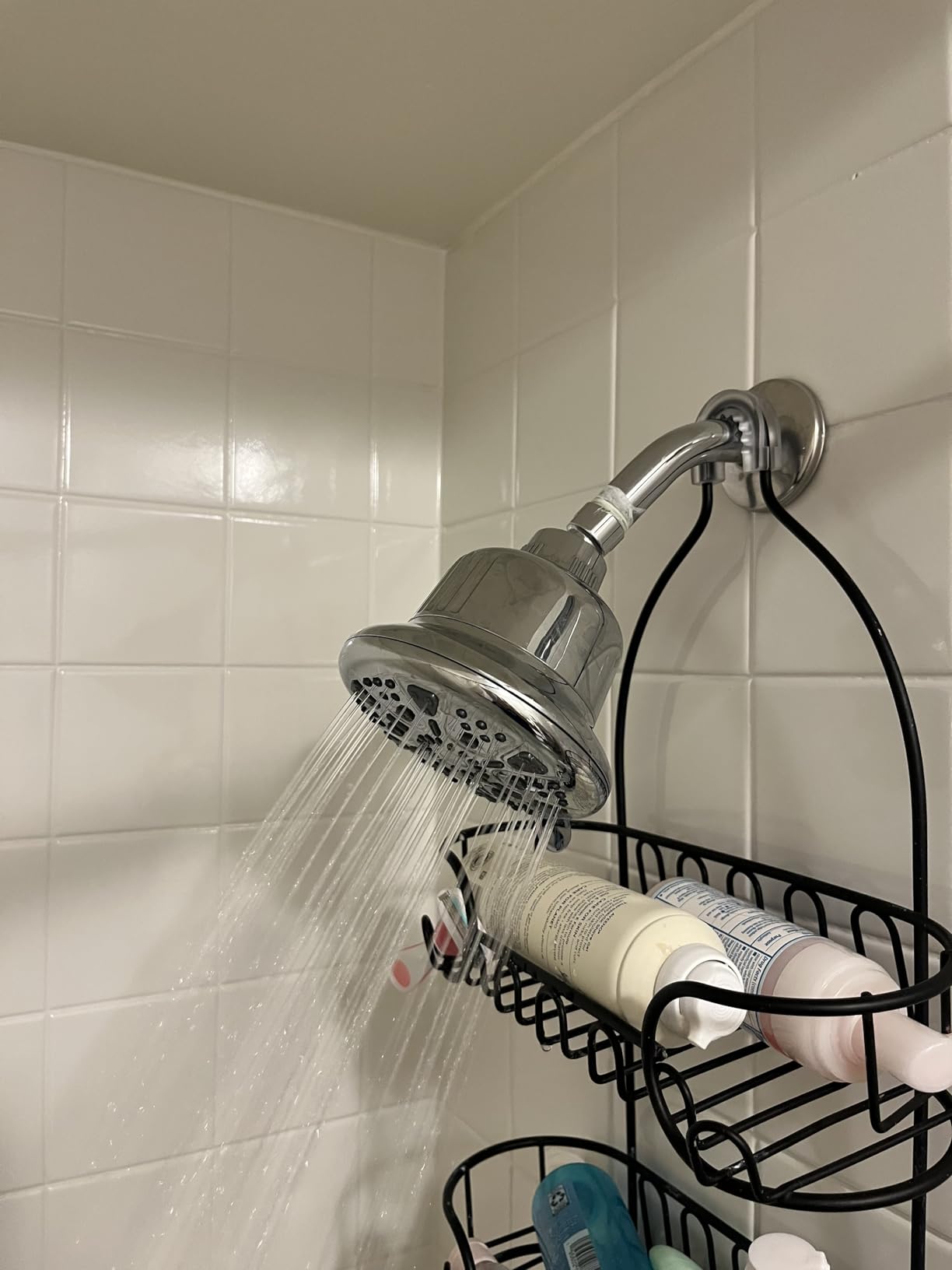
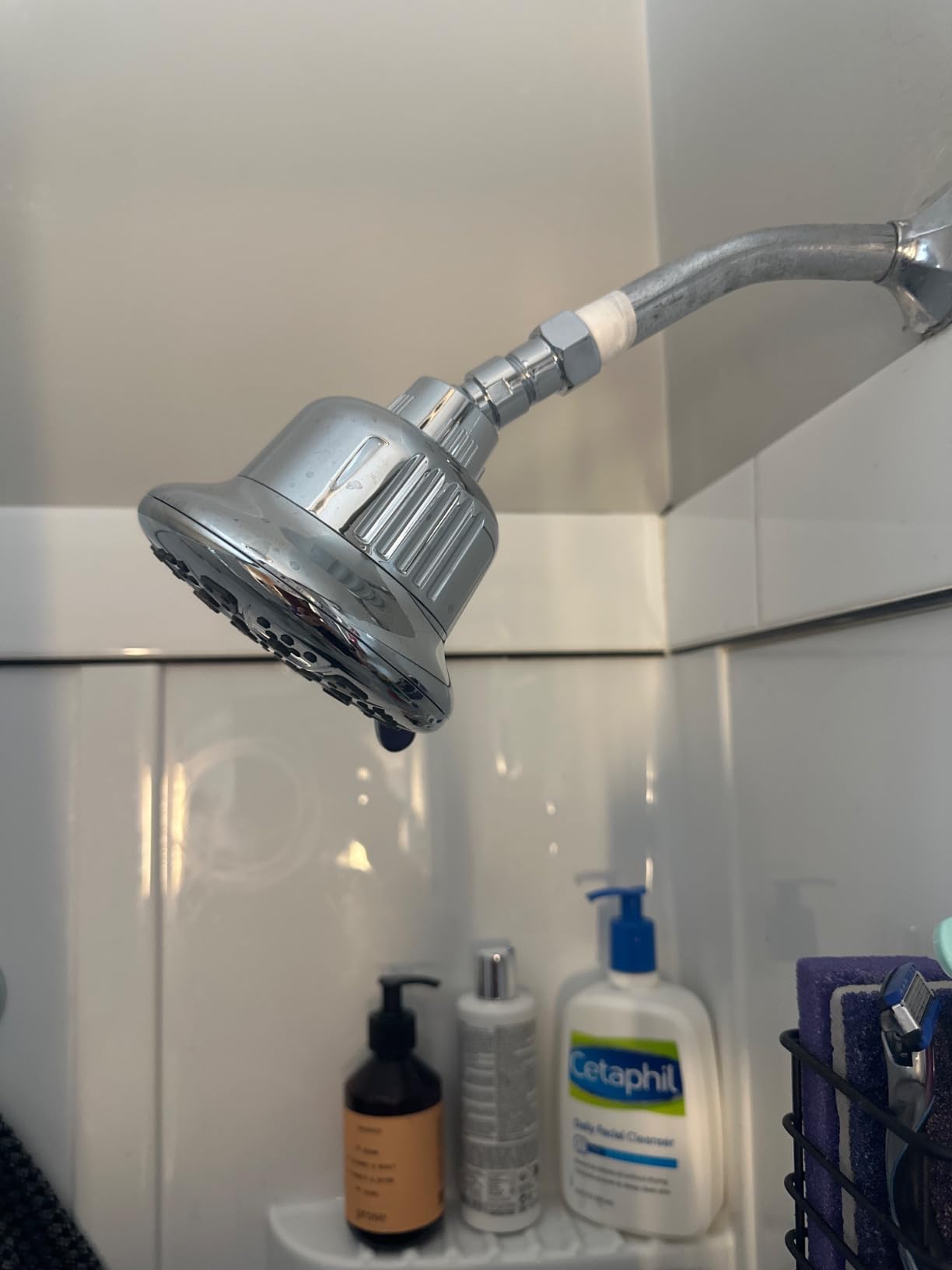
The MakeFit is the cheapest filtered head in this roundup and still manages a 4.5 average across more than 3,300 ratings. Seven spray modes with air-induction technology give it more usable output than the price would suggest, and the all-in-one height means tall users do not have to stoop.
Its filter blend is named as KDF-55, calcium sulfite and vitamin C, which covers free chlorine and gives it a fighting chance against chloramine. The transparent cartridge is the detail we liked most: you can see the media level and know when a replacement is due instead of guessing from a calendar.
The most useful critical review in the pool belongs here. One buyer tested output with a water quality monitor and saw no measurable reduction in metals or fluoride against unfiltered tap water, which questions how much beyond chlorine the cartridge handles. Treat the heavy metals and fluoride claims as marketing rather than measured performance.
Other drawbacks: the profile reads as bulky to some owners, build consistency has reportedly varied between production batches, and one reviewer simply called it cheap. The 2-year warranty is genuinely better than most at this price, and installation is a one-minute tool-free job on universal G1/2-inch threads with Teflon tape in the box.
Who this shower head suits
This suits first-time buyers on a strict budget who still want named media rather than decorative filter beads. The chrome finish, brass swivel ball connector and anti-clog nozzles make it look more considered than its cost suggests.
It is also a good rental or secondary-bathroom option, and the transparent cartridge removes the guesswork from cartridge timing, which is the most common reason people end up using spent filters.
Who should skip it
Skip it if you care about verified heavy metals removal. Unlike the PHILIPS, there is no independent certification here, and one measured review found no reduction beyond chlorine.
Skip it if appearance at the top of your list. Several reviewers describe the housing as bulky, and the 2-year warranty does not cover batch-to-build variation complaints.
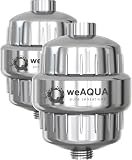
10. weAQUA Heavy Duty 2-Pack Shower Filter – Best for Two Bathrooms
weAQUA Heavy Duty 2-PACK Shower Filter for Hard Water Chlorine Heavy Metals
- Two filters cover a full year
- Real filtration media listed
- No pressure loss by design
- Spare installation parts included
- No third party certification listed
- Removal percentage is a maker claim
- Housings extend below the arm
The weAQUA solves a logistics problem rather than a chemistry one. You get two filters in one pack, each with a rated six-month life, which covers roughly a year for a single bathroom or a full year across two bathrooms without a second order. Buyers treat it as a household and second-bathroom value option for exactly that reason.
The media list is real and specific: sediment, carbon, KDF and calcium sulfite, and the brand is explicit that these replace inert ceramic balls found in cheaper units. That is a reasonable position, since filler media is the main reason some shower filters do almost nothing. Buyers also consistently report no pressure loss.
Installation is a five-minute tool-free job on a universal fit that covers every shower type, and the box includes all necessary hardware plus spare parts for future cartridge changes. The chrome-plated anti-impact ABS housing is designed to resist the knocks of a drop-and-drag installation.
The limitation to hold onto is verification. No third-party certification is cited, so the widely advertised removal figure is the manufacturer’s own claim rather than a certified test result. The cylindrical housings also hang lower below the shower arm than slim inline filters, which some people dislike visually.
Who this filter suits
This suits two-bathroom homes, families sharing a cartridge budget, or anyone who wants a year of service secured in one purchase. It is also a good pick for landlords or relatives managing units on a schedule.
Buyers who are sceptical of stage-count marketing tend to like this one, because the media list is honest and the pack count is verifiable rather than a claim.
Who should skip it
Skip it if you need certified performance figures. Without a third-party listing, the removal percentage is a maker claim, and readers who want lab verification should look at the NSF-certified option instead.
Skip it if profile matters in your bathroom. These housings extend noticeably further below the shower arm than slim inline filters, which can show on a glass-fronted shower.
What Filter Media Actually Removes Chlorine
A shower filter removes chlorine using one of four mechanisms, and the difference matters more than any brand name. Knowing which one you are buying tells you whether your water is handled properly.
KDF-55 is a copper-zinc alloy that runs a redox reaction, converting free chlorine to harmless chloride. It also binds lead, copper, iron and mercury as it passes, which is why it appears in most of the inline filters above. It is fast, mechanical in its reliability, and works at any temperature.
Activated carbon traps chlorine and odor by adsorption rather than reaction. Coconut shell carbon offers a higher surface area than lignite, but all carbon loses efficiency in hot water as it loads up. Carbon is the odor-control workhorse and a weak point for chloramine.
Calcium sulfite pellets react almost immediately with residual chlorine and hold their effectiveness at shower temperature. They are not reusable, they add dissolved solids as they dissolve, and they are one of the few media that handles chlorine reliably without any electronic assistance.
Vitamin C (ascorbic acid) neutralizes chlorine chemically, and uniquely among these media it also works on chloramine. It works fast, which is a double-edged sword because it exhausts quickly and needs more frequent replacement than KDF.
Media quality also explains why some cartridges underperform on hard water. KDF and carbon target chlorine and metals, not calcium, so a filter can be excellent at chlorine and still leave mineral taste and scale. If minerals are your complaint, read our hard water shower filter comparison before buying.
Chlorine vs Chloramine: How to Tell What Your Water Contains
You need to know which disinfectant your utility uses, because a chlorine-rated filter will quietly underperform on chloramine and leave you convinced filters do not work.
Free chlorine is the older, cheaper method. You smell it in the shower steam, it fades within hours of the water leaving the plant, and KDF-55 handles it well. Chloramine is a chlorine-ammonia combination that persists for days, travels further through pipes, causes more odor complaints, and is used by a large share of US water utilities.
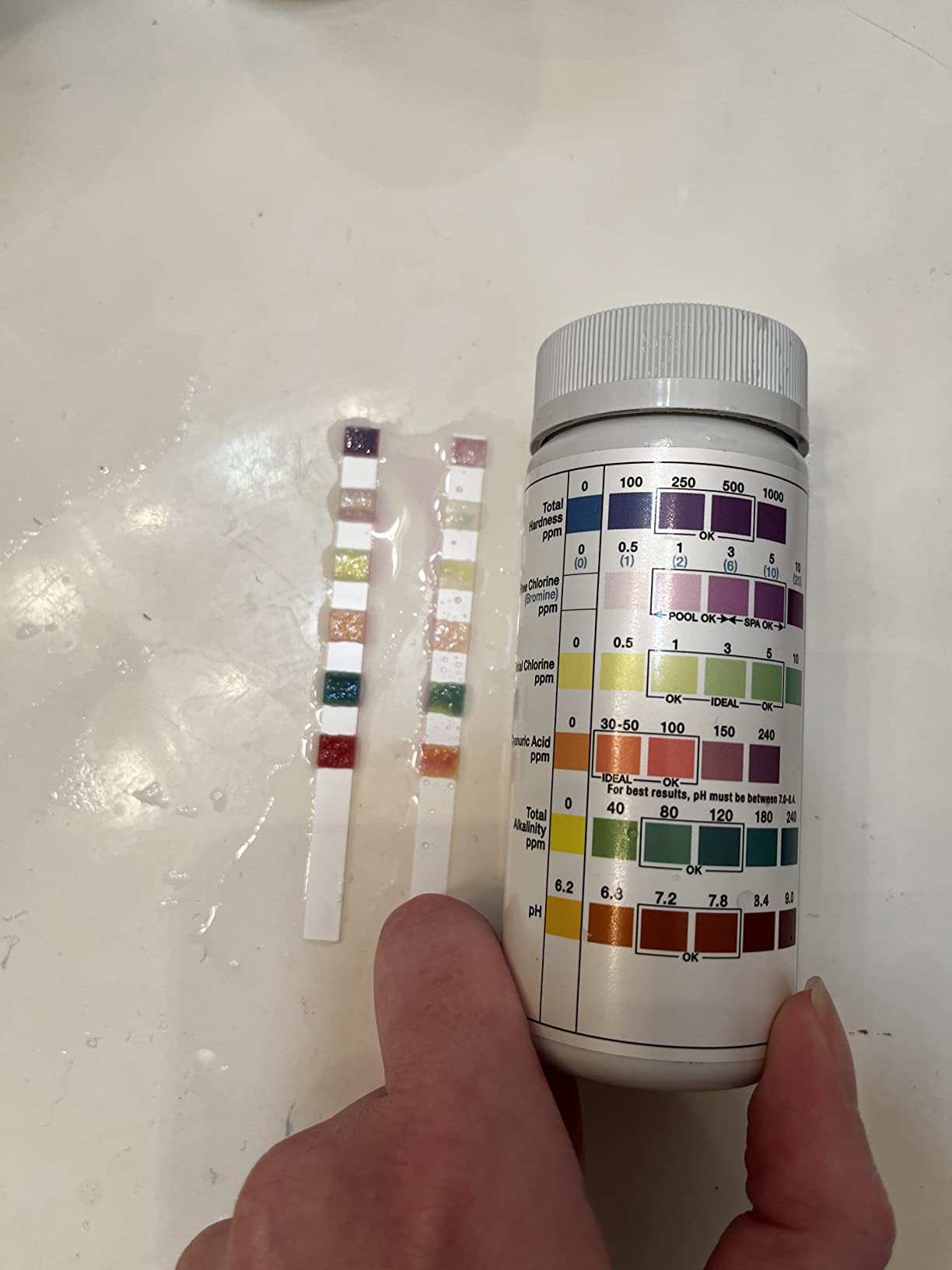
Two ways to find out. First, call your water utility and ask which disinfectant they use, then request the annual Consumer Confidence Report, which is a public document. Second, pick up a residual chlorine test kit from a hardware or pool supply shop; fill a sample and compare the colour against the chart. Both take under ten minutes and remove the guesswork.
If your utility uses chloramine, prioritise cartridges that name calcium sulfite or vitamin C alongside carbon. If your shower steam reeks of chlorine but you already own a KDF-only filter, the media is likely spent or simply wrong for the application, and that is a media problem rather than proof that filtration fails.
How to Choose a Shower Filter That Actually Removes Chlorine
Choose on four variables in this order: media, format, cartridge economics and certification. Everything else is finish and features.
Start with media. Named KDF-55, calcium sulfite and carbon will beat an unnamed stage count every time. A cartridge that will not tell you what is inside is a cartridge you are asked to trust.
Then pick a format. An inline filter keeps your existing shower head and is the least disruptive option, ideal for renters. A filtered shower head replaces the head and usually packs more media into the same space. A handheld combo makes sense only if you are replacing the head anyway. Our shower water filter picks break the formats down further, and the main shower head filter guide covers spray performance in detail.
Do the cartridge math. Multiply the refill cost by the number of changes per year. A 3-month interval on a modestly priced cartridge can exceed the cost of a 6-month interval on a pricier one, which surprises people. Buy two filters at once if the pack covers it.
Check flow rate against your house. Filters rated around 1.8 GPM suit low-pressure homes and frustrate high-pressure ones. Anything above that is safe in most homes but adds to the pressure complaints that dominate homeowner threads.
Look for certification where it exists. NSF/ANSI 42 covers taste and odor, which is exactly the chlorine claim, and NSF/ANSI 53 covers health-related contaminants such as lead. FDA listing is a weaker signal about materials rather than performance. If a listing claims a removal percentage with no certification, treat it as unverified.
For renters, count only filters that leave no permanent change: inline units, inline-style filtered heads, and handheld replacements on a universal arm. Anything requiring wall mounting or new valves is off the table without landlord approval.
What a Shower Filter Cannot Do
A shower filter removes chlorine at one outlet. It does not soften water, treat your whole house, or change any health outcome, and the plumbers weighing in on homeowner forums are right to push back on the marketing.
It does not soften hard water. Calcium and magnesium pass straight through every cartridge in this roundup. Inhibiting scale is not the same as lowering hardness, and only an ion-exchange softener does that.
It does not cover the whole house. Bathrooms, taps and the laundry stay untreated. If the smell is in your drinking water or your skin reacts across the whole house, you need a point-of-entry system rather than a shower head.
It is not a health intervention. Municipal chlorine levels are regulated and considered safe. The benefits users report are cosmetic and sensory: less odor, less dryness, hair that feels better and holds color longer.
It does not last forever. Media saturates, the chlorine smell returns, and chlorine performance decays across cartridge life rather than stopping abruptly. The stated interval is a starting point, not a guarantee.
It cannot fix plumbing. If the odor is coming from a specific valve or a new copper install, no cartridge solves it. A plumber is cheaper than a cartridge subscription you will cancel.
How to Install a Shower Filter and Change the Cartridge
Installation takes under five minutes on a standard 1/2-inch arm, and nothing about it is permanent.
- Turn off the water supply to the shower if your home has a shutoff valve for it, otherwise place a rubber washer in the shower arm threads to catch drips.
- Unscrew your existing shower head by hand, working counter-clockwise. If it is stuck, apply plumber’s tape and turn gently to avoid stripping the arm threads.
- Fit a fresh washer onto the filter threads and hand-tighten the filter onto the arm. Hand-tight plus a quarter turn is enough, and overtightening is the main cause of stripped plastic threads.
- Run the shower for five to ten minutes with no one under it. This flushes carbon dust, which is why some new filters discharge dark water on the first run.
- Screw your shower head back onto the filter, wipe the joint dry, and check for weeping after a minute. A slow drip that stops after a few uses is normal as the seal seats.
Changing a cartridge is easier. Most twist-out designs unlock by turning the cartridge a quarter turn counter-clockwise, then pull straight down. One-press designs such as the Veken release from the outside of the housing in seconds. Replace the washer each time, reset your reminder, and flush for two to three minutes before showering.
Signs your cartridge is spent: the chlorine smell returns in the shower steam, water runs dark or grainy at the start of a cycle, lather drops, or you notice grit particles in the stream. Some multi-stage cartridges shed small crystal or grit fragments when the media is breaking down, which is a clear signal to swap rather than flush through.
Frequently Asked Questions
Do showerhead filters remove chlorine?
Yes. A showerhead filter removes chlorine at the point of use by passing water through media that either react with it or adsorb it. KDF-55 copper-zinc media converts free chlorine to chloride through a redox reaction, activated carbon traps chlorine and odor by adsorption, calcium sulfite reacts almost instantly at shower temperature, and vitamin C neutralizes both free chlorine and chloramine. Performance depends on media quality and cartridge freshness, not on stage count.
What type of water filter is best for removing chlorine?
For chlorinated city water, a cartridge built around KDF-55 plus activated carbon is the reliable default. For chloramine-treated water, add calcium sulfite or vitamin C, because standard carbon and KDF handle free chlorine far better than chloramine. For drinking water at the tap, an activated carbon pitcher or under-sink carbon block is the usual answer. In every case, matched media and a cartridge replaced on schedule beat any stage count.
Do dermatologists recommend shower filters?
They are rarely prescribed, because municipal chlorine levels are regulated and considered safe for general exposure. What users and clinicians do discuss is that chlorine strips natural oils from the skin and degrades the keratin cuticle of hair, which can contribute to dryness, tightness and brittleness. People with eczema or sensitive skin often notice less irritation after removing chlorine. Treat a shower filter as a comfort and appearance measure rather than a medical one.
What are the downsides of using shower filters?
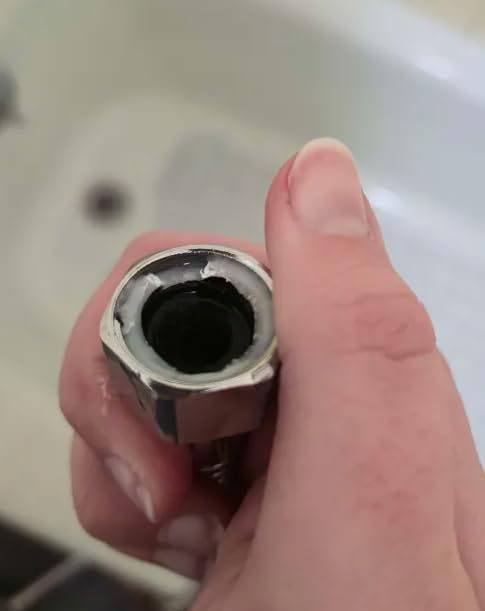
The main drawbacks are added cartridge cost over time, a possible drop in water pressure, occasional leaking at the inline connection, and chipped or stripped plastic threads if a filter is overtightened. Filters add plastic waste through spent cartridges. They also cannot soften hard water, so scale and mineral taste can remain. And if your water is chloramine-treated, a chlorine-only cartridge will disappoint you.
How often should I replace a shower filter cartridge?
Most manufacturers quote three to six months, and the difference is usually about water volume rather than time. A two-person household showering twice daily will exhaust a cartridge far faster than a single person showering once a day. Replace at the shorter end if the chlorine smell returns early, and never run past a rated gallon or litre capacity. Setting a calendar reminder beats judging by taste.
Can a shower filter soften hard water?
No. Every filter in this roundup targets chlorine, odor, sediment and some heavy metals. None lower calcium or magnesium, which is what hard water actually is. KDF-55 binds some metals but not hardness minerals. If hardness is your real complaint, you need an ion-exchange water softener for the whole house or a dedicated mineral-removal filter at the point of use.
Final Verdict: Which Shower Filter Should You Buy?
The Aquabliss SF100 is the best shower head filter for chlorine removal overall, because it keeps your existing shower head, installs in under two minutes without tools, adds no meaningful pressure restriction and has the deepest owner feedback pool in this roundup. If your water is chloramine, buy the Aqua Earth 20-Stage instead, since it names calcium sulfite and vitamin C alongside KDF-55.
Spend less and you get the FEELSO, the highest-rated option here. If you are replacing the shower head rather than keeping it, the SR SUN RISE handheld pairs filtration with nine spray modes, and the AquaHomeGroup 20+3 is the premium build for chlorine-focused households. For verified media rather than claims, the PHILIPS NSF-certified KDF is the only one on this list with an independent listing.
Two habits will decide whether any of them works for you. Replace the cartridge on schedule instead of waiting for the smell to return, and check whether your utility uses chlorine or chloramine before you buy, because that single fact rules out half the shelf.