
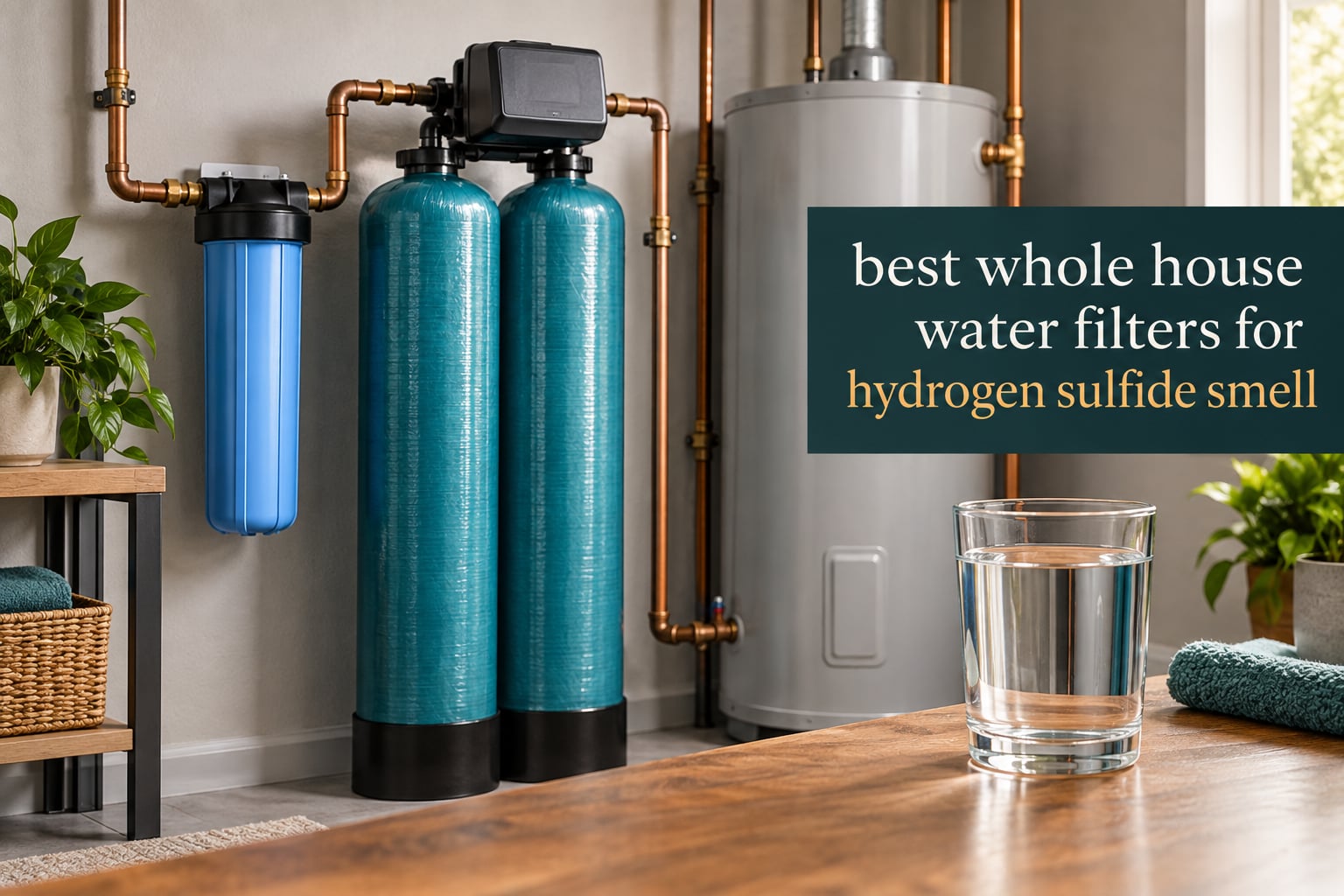
The rotten egg smell coming out of your tap is not your imagination, and neither is the hot water that reeks the worst. If you are hunting for the best whole house water filters for hydrogen sulfide smell, you are probably standing in front of a sink at 7am trying to brush your teeth around it.
Hydrogen sulfide is a dissolved gas that seeps into groundwater and well supplies from two very different sources: sulfur-reducing bacteria chewing through organic matter in oxygen-poor soil, or dissolved mineral sulfide pulled up from sulfide-bearing rock. Both end up in your glass as the same smell, and both drive people to buy the wrong filter first.
That is the trap. A standard activated carbon cartridge handles chlorine, chloramine, sediment, and taste compounds well, then gets overwhelmed by hydrogen sulfide. Owners on r/WaterTreatment describe the exact pattern: a 10 inch by 2 inch carbon cartridge lasting three months in the fall, then barely a week once the problem worsened. The advice that came back in the thread was blunt. It sounds like what you need is a backwashing, air-over-media, iron and sulphur filter. That carbon filter is about as useless as a hammer made of cotton.
We spent the last several weeks going through twelve whole house systems built specifically for sulfur reduction, comparing media chemistry, stated hydrogen sulfide capacity, flow rates, media life, and the complaints that show up again and again in reviews. What follows is that comparison, plus the buying framework that matters more than any single brand.
If you are still narrowing the field on the hardware side, our guide to the best whole house water filters for wells covers the general layout of a well system, and our breakdown of whole house well water treatment systems goes deeper on sequencing multiple treatment stages. Both matter here, because sulfur smell is rarely the only thing a well needs handled.
Table of Contents
Top 3 Whole House Water Filters for Hydrogen Sulfide Smell
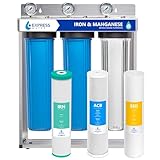
Express Water 3-Stage Iron and Manganese
- 17 gpm max flow
- 100000 gallon capacity
- Stainless steel frame
- NSF certified media
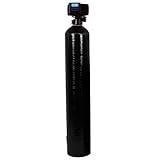
DuraWater Air Injection Iron Eater Filter
- Air injection oxidation
- Targets iron manganese and H2S
- Digital control valve
- DIY install

iSpring WCFM550K Iron and Sulfur Filter
- Hydrogen sulfide to 20 ppm
- 12 gpm service flow
- 10 year media life
- Automatic three stage control
All 12 Whole House Water Filters for Sulfur Compared in 2026
Every system below treats water at the point of entry, so the smell stops at the tap, the shower, and the dishwasher instead of being handled one drinking glass at a time. The hydrogen sulfide column tells you how much each one claims to handle, and the media type tells you how it does it.
| Product | Specifications | Action |
|---|---|---|
| Express Water 3-Stage Iron and Manganese |
|
Check Latest Price |
| DuraWater Air Injection Iron Eater Filter |
|
Check Latest Price |
 Home Master KDF85 Catalytic Carbon Cartridge Home Master KDF85 Catalytic Carbon Cartridge |
|
Check Latest Price |
 Home Master Three Stage Well Water System Home Master Three Stage Well Water System |
|
Check Latest Price |
 PRO+AQUA Heavy Duty Well Water Filter PRO+AQUA Heavy Duty Well Water Filter |
|
Check Latest Price |
 HQUA WF3-01 Three Stage System HQUA WF3-01 Three Stage System |
|
Check Latest Price |
| iSpring WCFM550K Iron and Sulfur Filter |
|
Check Latest Price |
 LiquaGen Catalytic Carbon and KDF 55 System LiquaGen Catalytic Carbon and KDF 55 System |
|
Check Latest Price |
 Waterdrop WHF3T-FG Well Water Filter Waterdrop WHF3T-FG Well Water Filter |
|
Check Latest Price |
 APEC FI-KDF85-10BB Cartridge APEC FI-KDF85-10BB Cartridge |
|
Check Latest Price |
 AFWFilters Air Injection Platinum 1.5 cu ft AFWFilters Air Injection Platinum 1.5 cu ft |
|
Check Latest Price |
 iSpring WGB32B-MKS Iron Manganese H2S System iSpring WGB32B-MKS Iron Manganese H2S System |
|
Check Latest Price |
Why Hydrogen Sulfide Smells Like Rotten Eggs
Hydrogen sulfide is H2S, a colorless gas that dissolves readily in water at ordinary temperatures. Your nose detects it at concentrations as low as 0.5 ppm, which is roughly 500 times below the federal limit for drinking water. The gas is not the danger at household levels; the odor is what makes water undrinkable.
There are two very different origins, and telling them apart saves you money. Mineral sulfide comes from geologic strata. Sulfur-reducing bacteria, on the other hand, generate H2S biologically as they consume organic matter in oxygen-starved groundwater. If your smell shows up after heavy rain, follows a flood, or worsens in late summer when the water table drops and organic matter concentrates, bacteria are a strong suspect.
A third possibility is not your water supply at all. If the odor appears only in hot water and stops the moment you run the cold tap, look at the anode rod in your water heater. That magnesium rod creates hydrogen gas that reacts with sulfide bacteria in the tank, and it is a separate problem from the one your well is creating.
Testing settles this faster than guessing. An accredited lab panel should include a sulfide-specific test, since standard hardness and iron panels often miss it entirely. Our general guidance on well water testing is covered in more detail in the whole house well water treatment systems guide.
Why Carbon Filters Alone Fall Short on Strong Sulfur Smell
Here is the chemistry that decides which filter you end up buying. H2S is a gas dissolved in water. Granular activated carbon and KDF media are designed to capture dissolved molecules by adsorption and surface reaction, and they do a solid job on chlorine, chloramine, VOCs, and metals. Dissolved hydrogen sulfide behaves differently. It needs to be oxidized, converted from a gas into a non-soluble solid, before a solid media bed can hold onto it.
That oxidation step is what air injection iron filters, manganese dioxide media, greensand with a catalyst, and chemical-fed peroxide or chlorine systems provide. KDF85 cartridges get partway there on their own by reacting H2S into solid zinc sulfide, which is why the APEC and Home Master cartridges in this roundup can genuinely work on moderate sulfur loads. They are doing chemistry, not simple adsorption.
When loads are high, the media exhausts in weeks and the smell returns. That is the single most common complaint across reviews of every budget carbon system for well water. If your sulfur reading is genuinely elevated, buy oxidation capacity, not more carbon pounds.
1. Express Water Whole House 3-Stage Iron and Manganese System
Express Water Whole House Water Filter System, Iron & Manganese, 3-Stage
- Heavy duty stainless steel frame with free-standing bracket
- Pressure gauges and pressure release buttons on each filter
- Targets iron and manganese staining along with unpleasant taste and smell
- Protects pipes appliances and softeners from silt buildup
- NSF certified filter media
- Does not reduce total dissolved solids
- Cartridge replacement every 6 to 12 months
- No published hydrogen sulfide capacity
This is the system I recommend first for most households dealing with a sulfur smell alongside iron staining on fixtures and laundry. It carries 2705 reviews averaging 4.5 stars, by a wide margin the largest review base in this group, and the pattern across those reviews is consistent: taste and odor improve, orange staining fades, and household pressure holds up at 17 gpm.
The honest limitation is that this is an iron and manganese system rather than a purpose-built oxidation tower. It handles taste, odor, and sediment well on moderate sulfur loads, and the three-stage layout with 25 micron down to fine sediment stages catches the iron particulate that makes water look rusty.
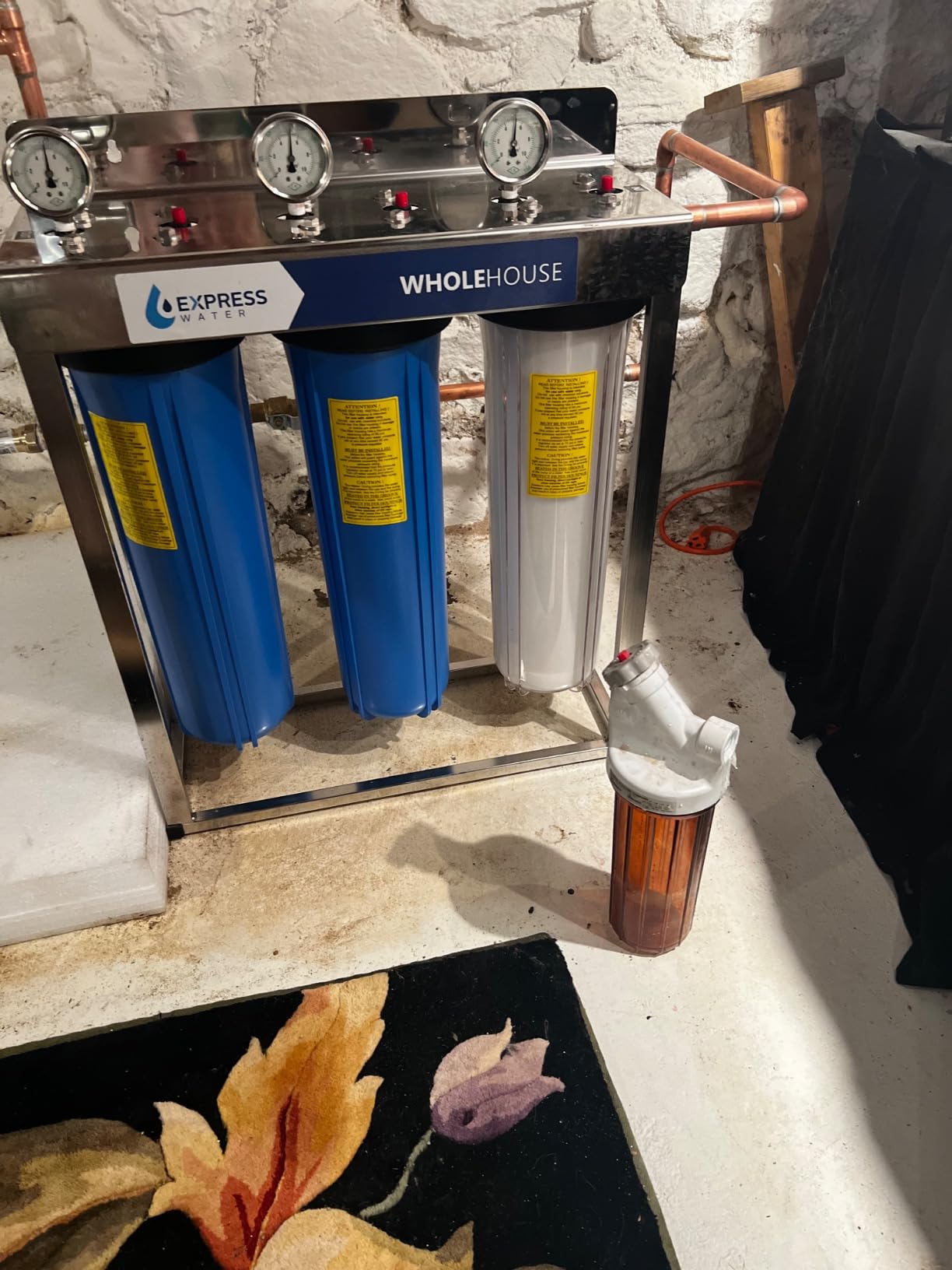
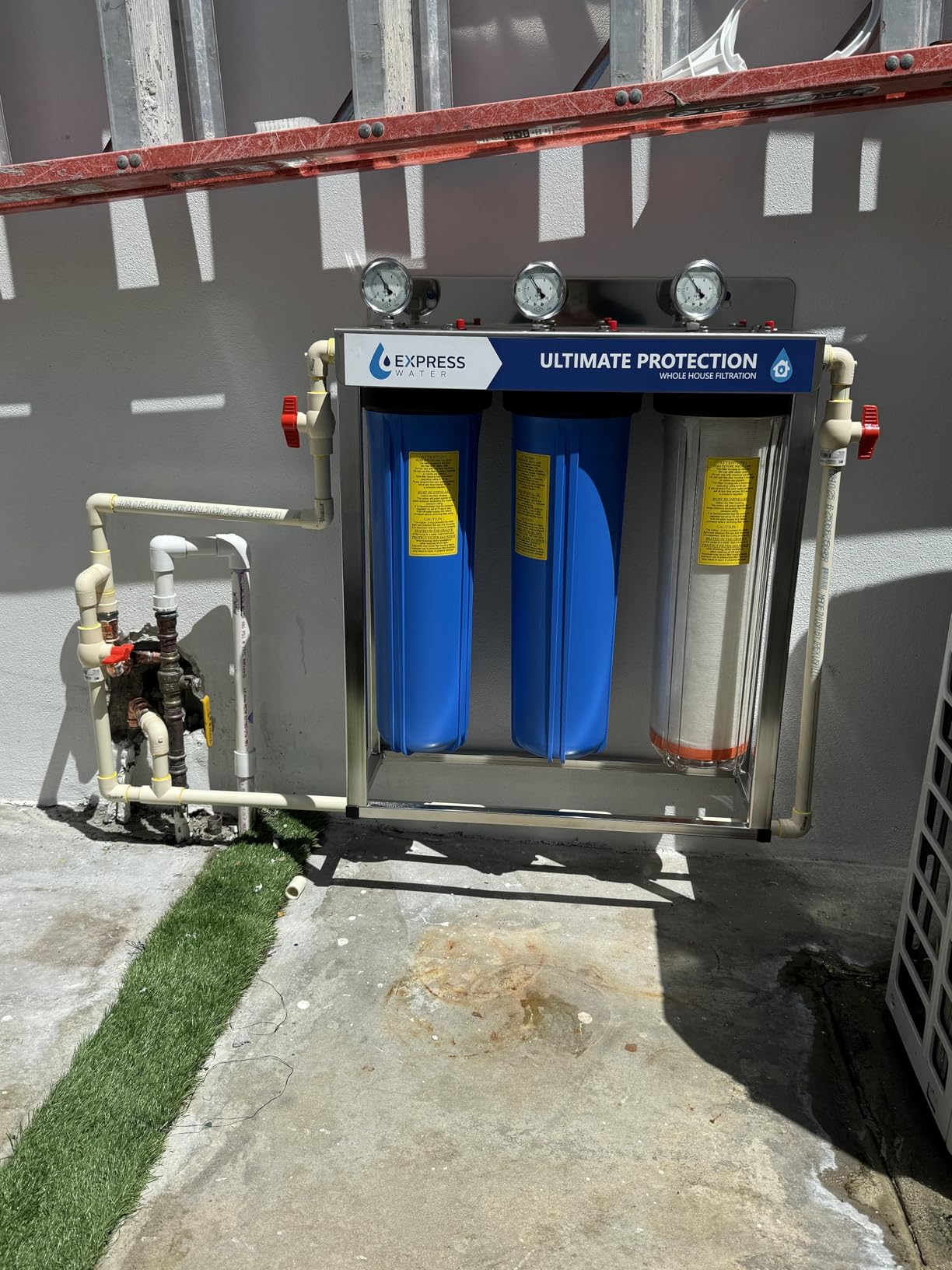
Build quality is a genuine strength here. The stainless steel frame and bracket are heavier than the plastic stands on competitors, and every housing carries a pressure gauge plus a pressure release button, which makes cartridge swaps faster and makes a developing clog visible before it becomes a surprise.
Replacement cost is the thing to plan around. Cartridges 1 through 3 go every 6 to 12 months depending on sediment load, and the system does nothing for total dissolved solids. If you also want TDS control, that is a separate reverse osmosis stage, and our notes on whole house water pressure booster pumps matter more if low pressure is slowing your flow through any filter.
Who this filter suits
This is the right call for a family on a well with moderate sulfur, visible iron staining, and a household that runs several fixtures at once. The 17 gpm rating and the free-standing frame mean you can install it in a utility room without planning a wall mount.
It also works well as a pretreatment stage ahead of a softer or more specialized sulfur unit, since it strips the sediment that would otherwise foul oxidation media.
Who should skip it
If your lab report shows sulfur above roughly 3 ppm, a cartridge design will not keep up, and you will be replacing filters on a schedule you will resent. It also does not lower TDS, so do not buy it expecting mineralization changes.
Owners running very hard water should know the cartridges clog faster than the stated interval suggests.
2. DuraWater 1.0 Cubic Foot Air Injection Iron Eater Filter
DuraWater Air Injection Iron Eater Filter 1.0. Removes Iron, Manganese, H2S
- Air injection oxidizes water with no salt or chemicals
- Complete package with media tank bypass valve and control valve
- Targets iron manganese and hydrogen sulfide directly
- Digital valve automates backwash cycles
- Straightforward DIY installation
- 1.0 cubic foot tank is the smaller capacity option
- Basic plumbing skills needed for setup
If your sulfur smell comes from a well with iron alongside it, this is the chemistry that makes sense, and at 375 reviews averaging 4.5 stars it has enough owner history to trust. Air injection creates a pocket of air at the top of the tank that super-oxidizes incoming water, converting dissolved iron and hydrogen sulfide into solids that the media bed traps until backwash flushes them away.
What stands out is the zero-chemical approach. No salt, no peroxide, no chemical feed to top up, which also means no brine discharge and nothing to buy but media when it needs replacing.
The package is complete rather than a parts sale: 1.0 cubic foot of media, a 10×54 inch mineral tank, a 1 inch plastic bypass, and a digital control valve. Reviews mention that one first-time installer completed the setup with basic plumbing skills, which is not always true of tank systems.
Sizing is the real question here. One cubic foot of media is the smaller option, and it works out fine for a two or three bathroom home with moderate daily use. Push much past that and you will feel the flow restriction.
Who this filter suits
It fits owners who want real oxidation chemistry without chemical feed or a salt-based softener feeding the well water. The automated backwash means you are not manually cleaning media every few months.
It is also a good second-stage companion to a sediment prefilter, and it plays nicely downstream of a well pressure tank setup.
Who should skip it
Skip it if you need more than about 9 gpm of sustained household flow, because the smaller tank will not keep up with simultaneous showers and laundry. It is also not the right tool for high manganese loads.
Buyers expecting to install it with no plumbing experience should budget for a plumber.
3. Home Master KDF85 and Catalytic Carbon Replacement Cartridge
- KDF85 converts hydrogen sulfide gas into solid zinc sulfide
- Catalytic carbon stage removes chloramine and chlorine
- Heavy media load with long service life
- Fits standard 20 inch by 4.5 inch Big Blue housings
- NSF externally tested
- 10 gpm ceiling causes noticeable pressure drop
- Occasional cracked cartridges from thin packaging
- Some units clog well short of the rated gallon life
This cartridge is the retrofit answer. It drops into any standard 20 inch by 4.5 inch Big Blue housing, so if you already own a whole house filter, you can upgrade the media instead of replacing the system. The mechanism is chemical rather than physical: KDF85 reacts hydrogen sulfide into hydrogen gas and solid zinc sulfide, and the catalytic carbon stage handles chloramine and chlorine on the way through.
At 4.3 stars across 270 reviews, it is not the highest rated cartridge here, but reviewers repeatedly describe it as the first thing that finally killed a stubborn sulfur odor after plain carbon failed. Some owners report eight or more years of consistent performance on wells with moderate sulfur.
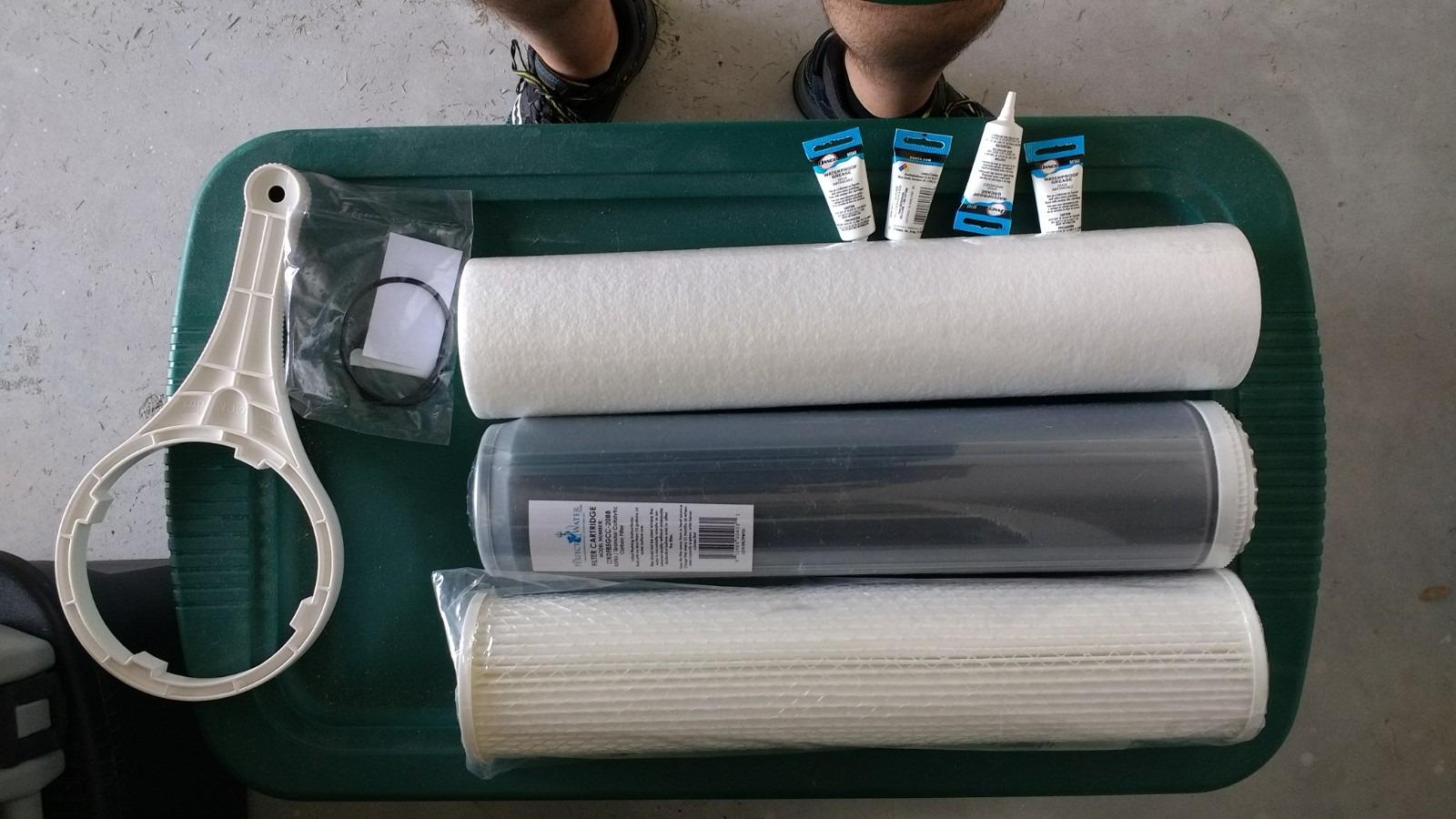
Two things temper the enthusiasm. The 10 gpm maximum flow rate is the real limiter, and owners report a measurable pressure drop during showers or when other fixtures run at the same time. If your household flow exceeds that, this is the wrong cartridge no matter how well the chemistry works.
Quality control is uneven. There are recurring reports of cartridges arriving cracked from insufficient protective packing, and a smaller number of units experiencing severe flow restriction or clogging far short of the 95000 gallon rating.
Who this cartridge suits
It suits owners who already have a Big Blue housing and want sulfur capability without buying a tank system. It is also a sensible second stage placed ahead of a carbon or sediment cartridge in an existing train.
Those with moderate sulfur readings and modest household flow will get the most out of it.
Who should skip it
Skip it for busy homes where fixtures run simultaneously, since the 10 gpm ceiling shows up as pressure loss exactly when you least want it. Anyone reading high sulfur numbers should treat it as a stopgap rather than a fix.
Inspect the cartridge on arrival, given the packaging complaints.
4. Home Master Three Stage Well Water Filtration System
Home Master Whole House Three Stage Water Filtration System with Fine Sediment, Iron and Carbon, Blue
- Sulfur filtration to 3 ppm combined with iron and manganese
- 15 gpm flow through oversized housings and 1 inch ports
- Four layer 25-10-5-1 micron sediment filter with high dirt capacity
- Removes up to 95 percent of iron manganese sediment and odor chemicals
- Two year limited parts warranty
- O-rings can pop out of the housing groove
- Brown water for a period after installation on untested well water
- Filter changes roughly every 6 to 11 months
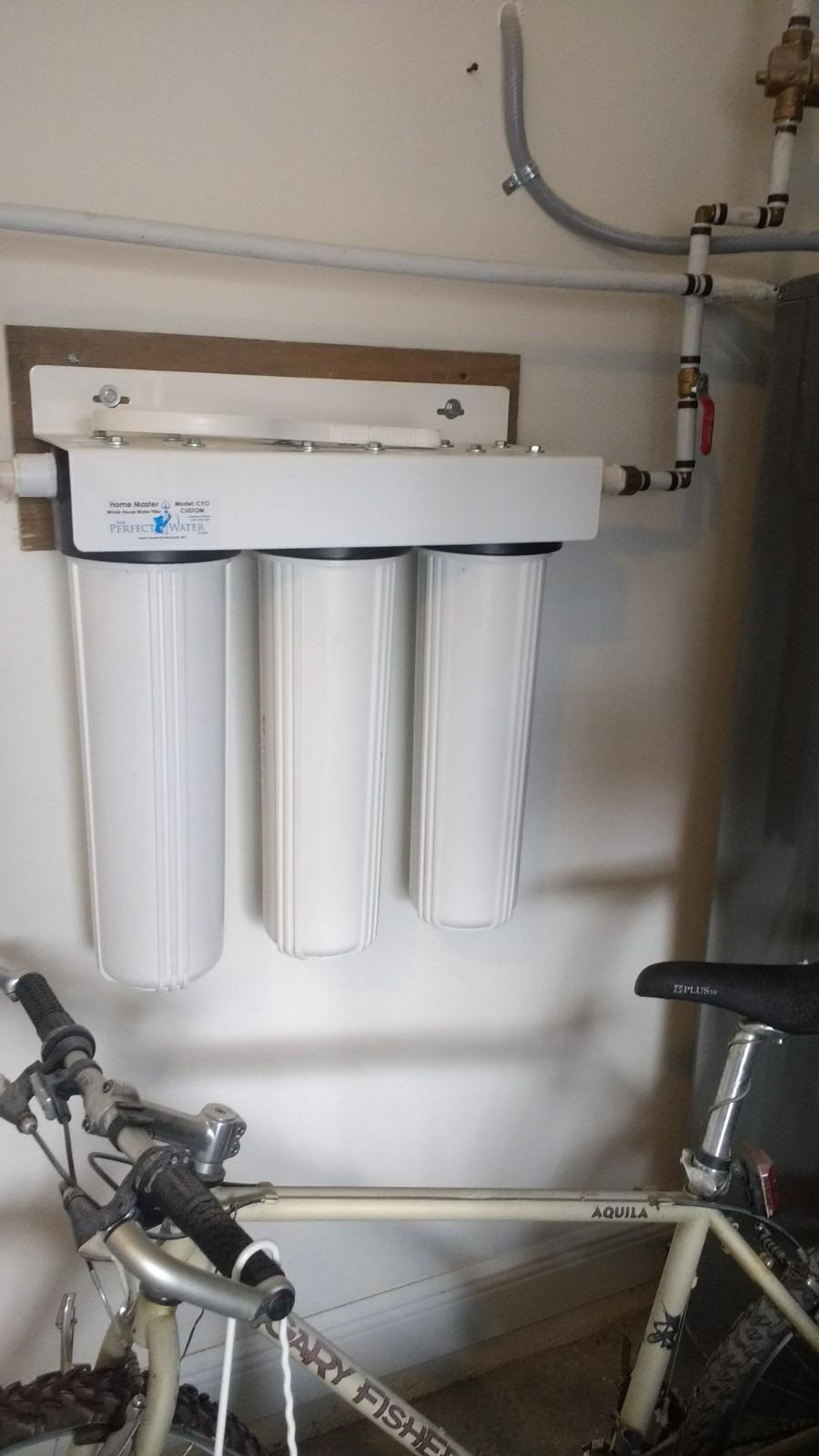
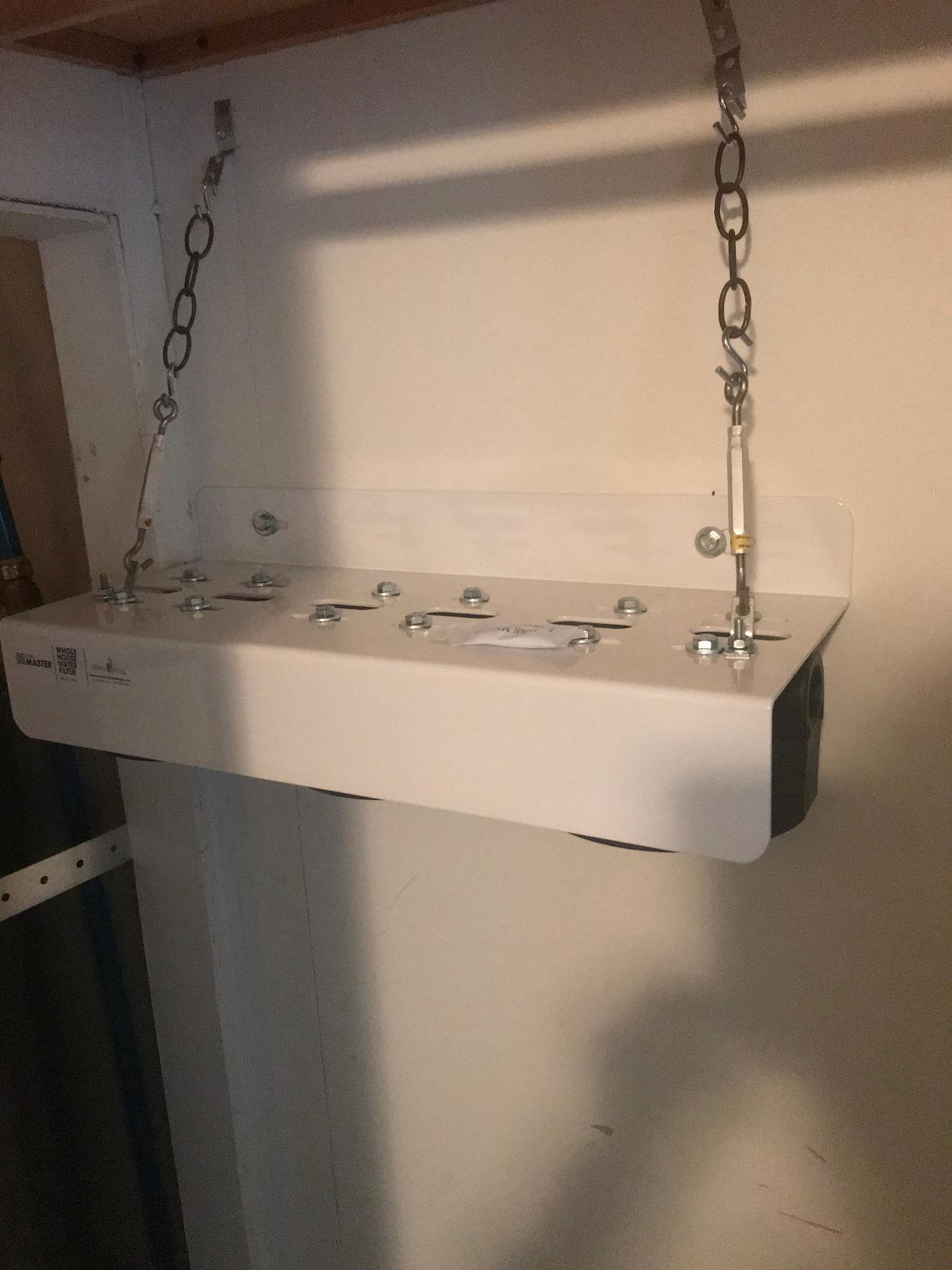
This is the most explicitly well-focused cartridge system in the roundup, and it states its sulfur rating plainly rather than hiding behind percentages: sulfur filtration to 3 ppm, combined with iron and manganese reduction. That specificity is why it earns a place here. Buyers comparing vague odor claims are guessing, and this one tells you its limit.
Owners on sulfur-smelling well water report the odor disappearing after install, and the 15 gpm rating through 1 inch ports means flow actually improves for some households rather than degrading. The four-layer sediment cartridge at 25, 10, 5, and 1 micron holds a lot of dirt before it needs attention.
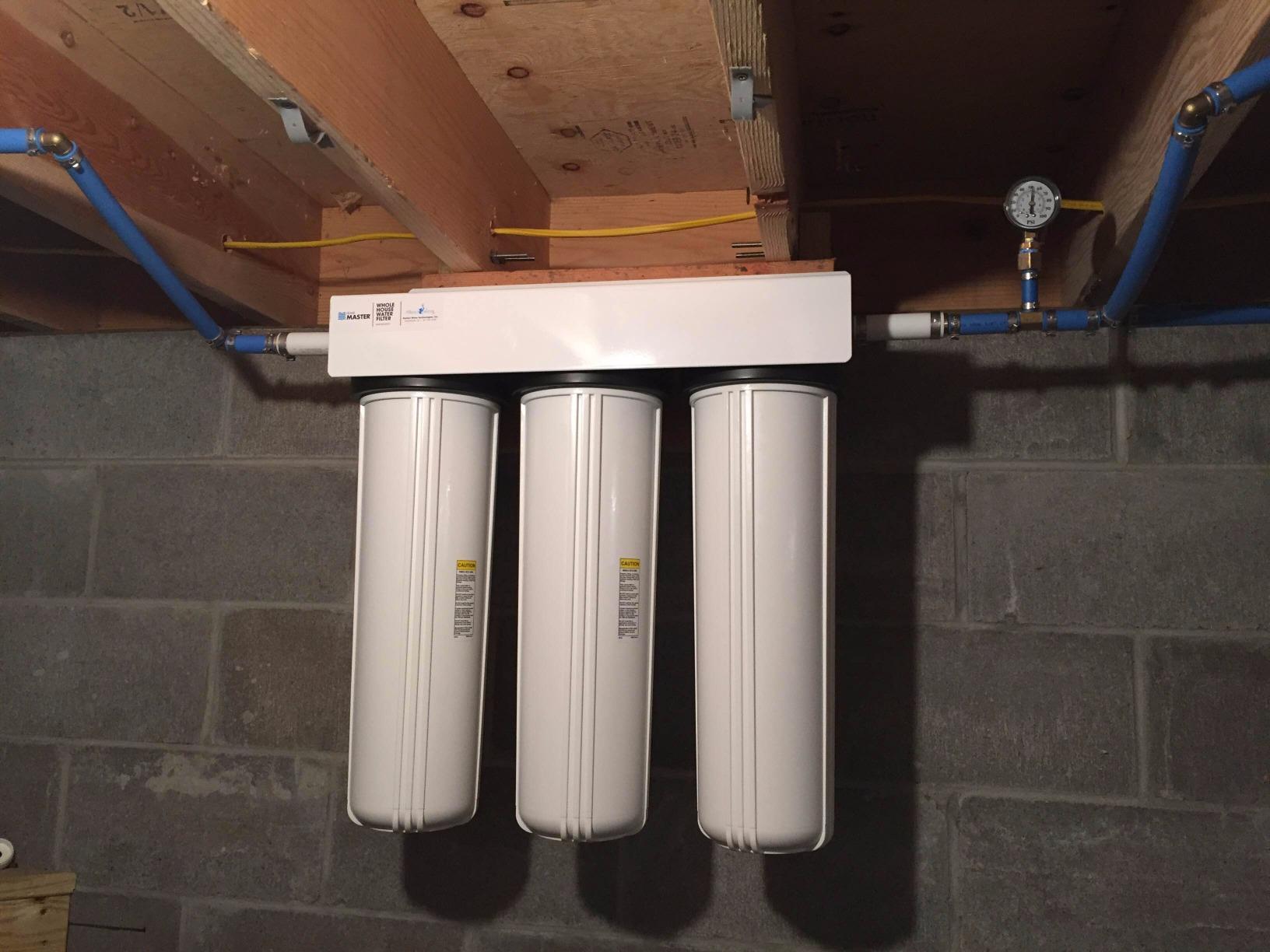
The practical complaints are about consumables and fittings rather than filtration. O-rings that lose diameter and pop out of the housing groove cause leaks and frustrating reassembly, which is why owners recommend keeping spares and using petroleum jelly on the seal.
Plastic-to-copper fittings can leak as well, and a warranty claim requires a company-approved certified plumber inspection at the homeowner’s expense. Expect some brown water for a period after installation on untested well water, and plan cartridge changes roughly every 6 to 11 months.
Who this system suits
It suits well owners with sulfur near the 3 ppm range plus iron and manganese who want one bracket-mounted assembly rather than separate housings. The radial flow design is aimed at cutting maintenance frequency on sediment-heavy wells.
It also works well for anyone who values a stated capacity figure over a broad promise.
Who should skip it
Skip it if you have very hard water, since the operating range tops out around 2000 ppm TDS, or if you are not comfortable keeping spare O-rings on hand. Those sensitive to installation quality should read the fitting reviews first.
Anyone above 3 ppm sulfur needs a dedicated oxidation unit instead.
5. PRO+AQUA Heavy Duty Whole House Well Water Filter System
- One cartridge covers hydrogen sulfide iron manganese and heavy metals
- Programmable backlit digital display with customizable flush intervals
- Fiberglass lined polyethylene tank and bypass built in the USA
- Prefilled premium grade resin
- Sized for households of four or more
- Freestanding tank stands 57 inches tall
- Does not reduce total dissolved solids
- Extended warranty needs online registration within 60 days
The pitch here is breadth. A single prefilled cartridge is claimed to address hydrogen sulfide alongside iron, manganese, zinc, copper, lead, uranium, radium, radionuclides, VOCs, and pesticides. For a well with a long contaminant list, consolidating into one tank is genuinely appealing, and the programmable digital control lets you tune the automatic flush to your own water and usage.
At 4.1 stars across 464 reviews, this is the lowest rated system in the group, with 13 percent of reviews at one star. Reading those critical reviews closely, the complaints center on installation and commissioning rather than on filtration performance, which is worth weighing against the convenience.
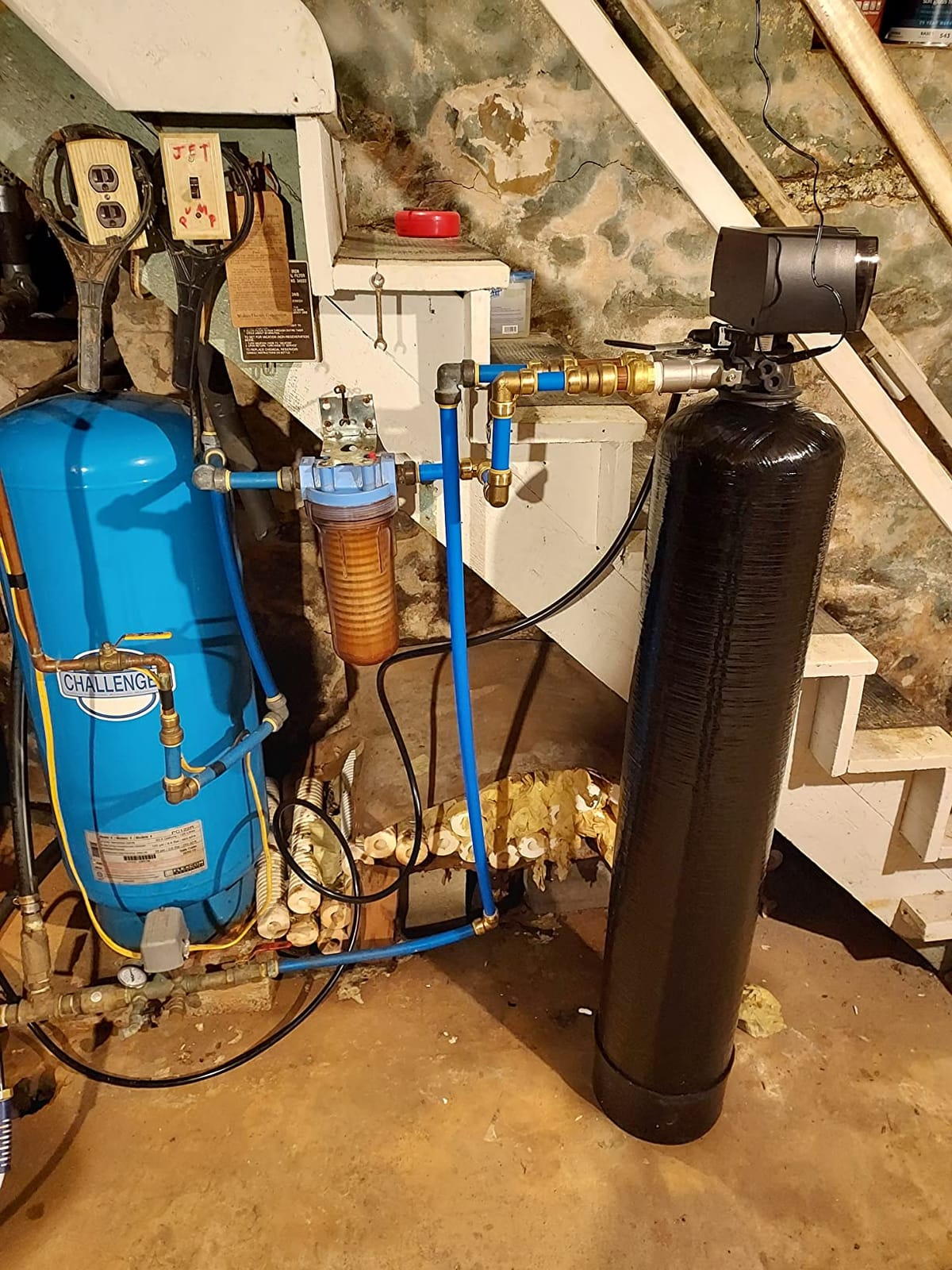
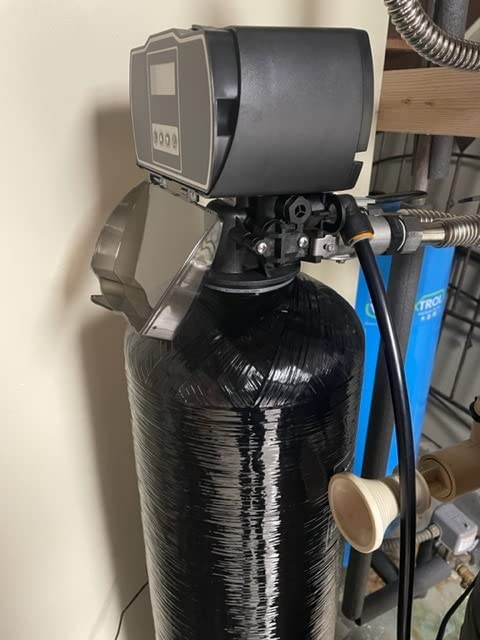
Build is solid: a fiberglass-lined polyethylene tank, a durable bypass valve, and commercial grade parts assembled in the USA, with three connection options for installation flexibility. It is rated at 10 gpm service flow for a family of four.
Two practical notes. The tank is 57 inches tall, so plan your clearance before you buy, and the extended warranty only applies if you register online within 60 days. As with most systems here, it does not reduce total dissolved solids.
Who this filter suits
It suits households that want one tank handling several contaminants at once rather than staging separate units. The programmable flush is a real advantage on wells where water quality swings through the year.
It is also a fit for owners comfortable with the 57 inch footprint and the registration step.
Who should skip it
Skip it if you want the highest satisfaction rate in the category, since this one trails the leaders on star rating and carries the largest share of one-star feedback. Anyone in a tight utility room should measure first.
High sulfur alone still deserves a dedicated oxidation unit.
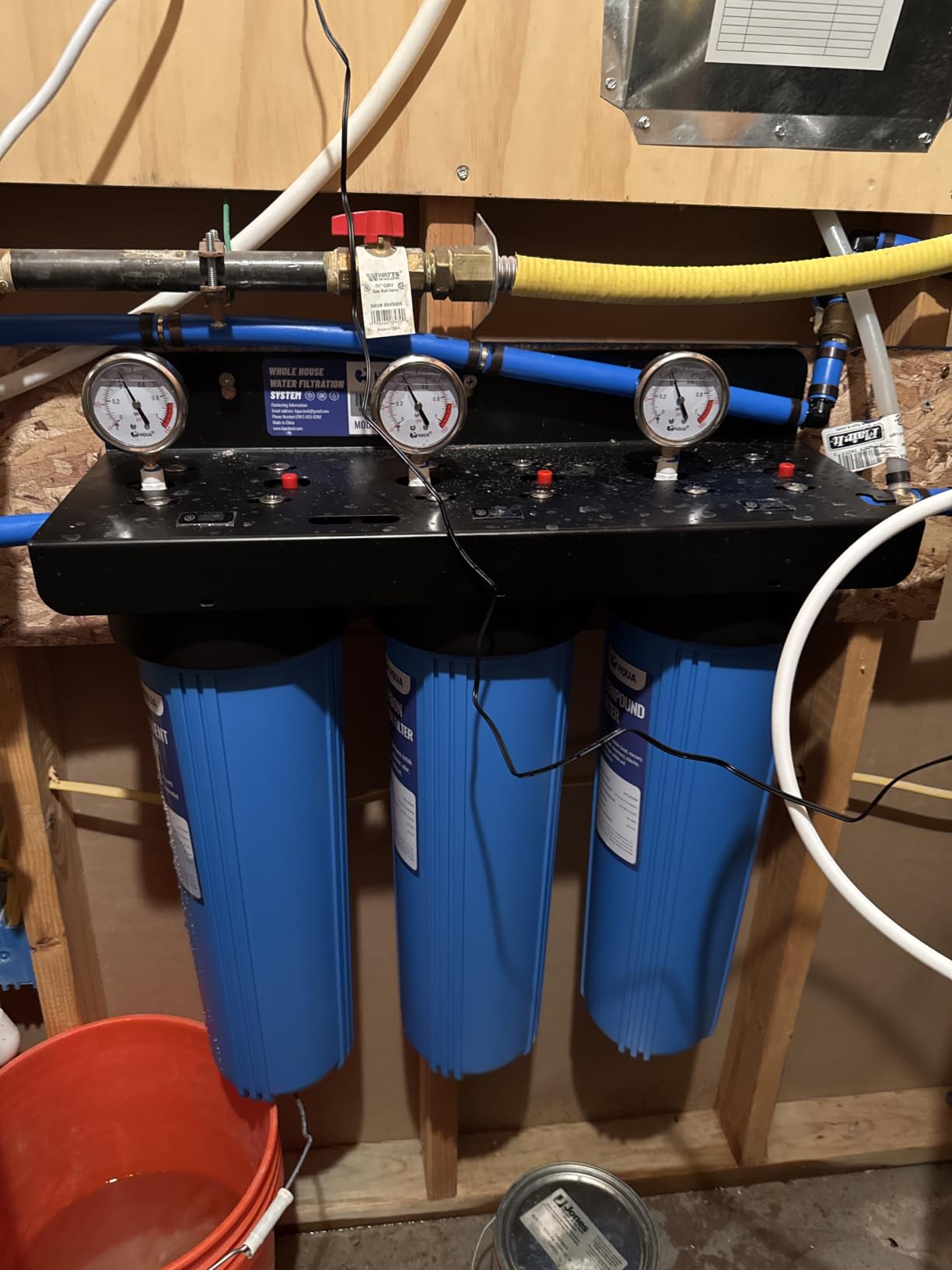
6. HQUA WF3-01 Three Stage Whole House Filtration System
HQUA WF3-01 3-Stage Whole House Water Filtration System, Reduces Heavy Metals (Lead, Mercury, Arsenic, Cadmium, Chromium), Chlorine, Sediment, Odor, and VOC’s
- Brass threaded ports resist the cracking common in competing systems
- 15 gpm flow holds pressure steady
- Per filter drains air purge buttons gauges and 180 day timers
- Owners on sulfur wells report the odor disappearing
- Extra gaskets both fitting sizes a brush and manual included
- Each housing needs two O-rings but the manual lists one
- Molded stainless threads reported out of specification on some units
- 44 pound assembly needs secure stud mounting
At 4.6 stars across 198 reviews, this is among the better rated systems in the roundup, and the owners we read about sulfur wells describe the rotten egg smell simply disappearing after install. The three-stage layout runs a sediment filter, a compound GAC and KDF stage for metals and chlorine, and a carbon block stage that handles odor and suspended solids.
What separates it from cheaper three-stage kits is the hardware. Brass threaded connection ports instead of plastic are the reason reviewers stop reporting fitting cracks and drips, and 15 gpm flow keeps pressure steady when several fixtures run.
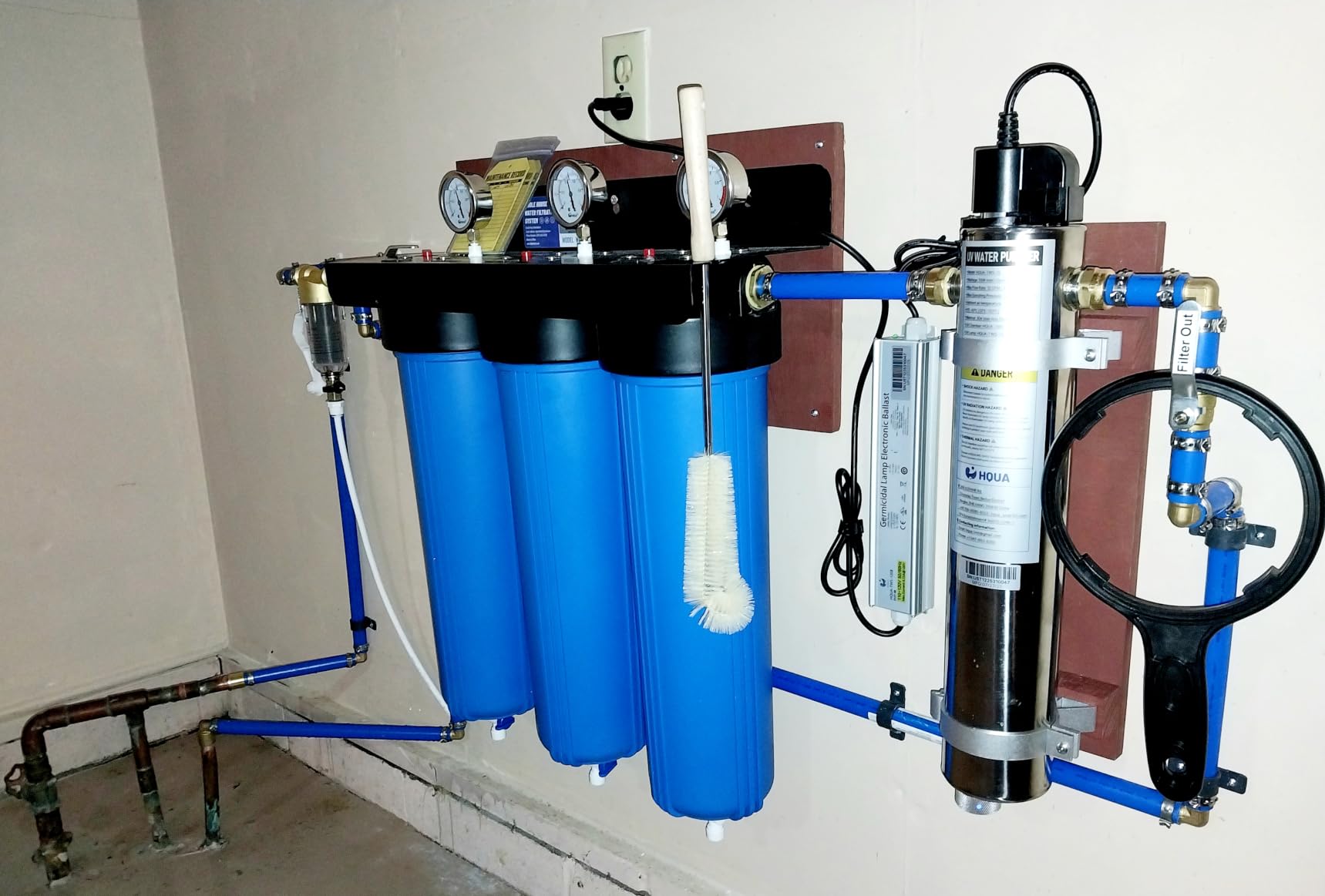
Servicing is unusually well thought out for this class: pressure gauges on each housing, pre-installed pressure relief and drain valves, air purge buttons, and 180-day countdown timers so you know when to act. The box also includes spare gaskets, 3/4 inch and 1 inch NPT adapters, silicone lubricant, a housing cleaning brush, and a large-print manual.
The recurring complaint is documentation rather than hardware. Each housing needs two O-rings but the instructions mention only one, and all three housings can leak out of the box if that second seal is missing. A minority of buyers also report persistent drips from molded-in stainless threads out of specification.
Who this filter suits
It suits owners who want strong flow and good accessories without moving to a tank-based oxidation system. The 44 pound assembly needs stud mounting, which makes it a better fit for a garage or basement than a tight closet.
Those who have fought cheap plastic fittings will appreciate the brass ports.
Who should skip it
Skip it if you want published hydrogen sulfide capacity in ppm, since this system does not state one, and it uses adsorption media rather than oxidation chemistry. If you are not methodical about following the manual, the single O-ring instruction will cost you a leak.
For high sulfur, look at the oxidation units instead.
7. iSpring WCFM550K Whole House Iron and Sulfur Filter
- Specifically engineered oxidation system rated for high hydrogen sulfide removal
- Removes iron to 12 ppm and manganese to 20 ppm
- Service flow 12 gpm with 26 gpm backwash capacity
- Regeneration customizable by time or treated volume with vacation mode
- 10 year effective media lifespan with long term parts support
- Highest price point in this group
- Phosphate feeding is not advised with this media
- Weighs 143 pounds to move and plumb
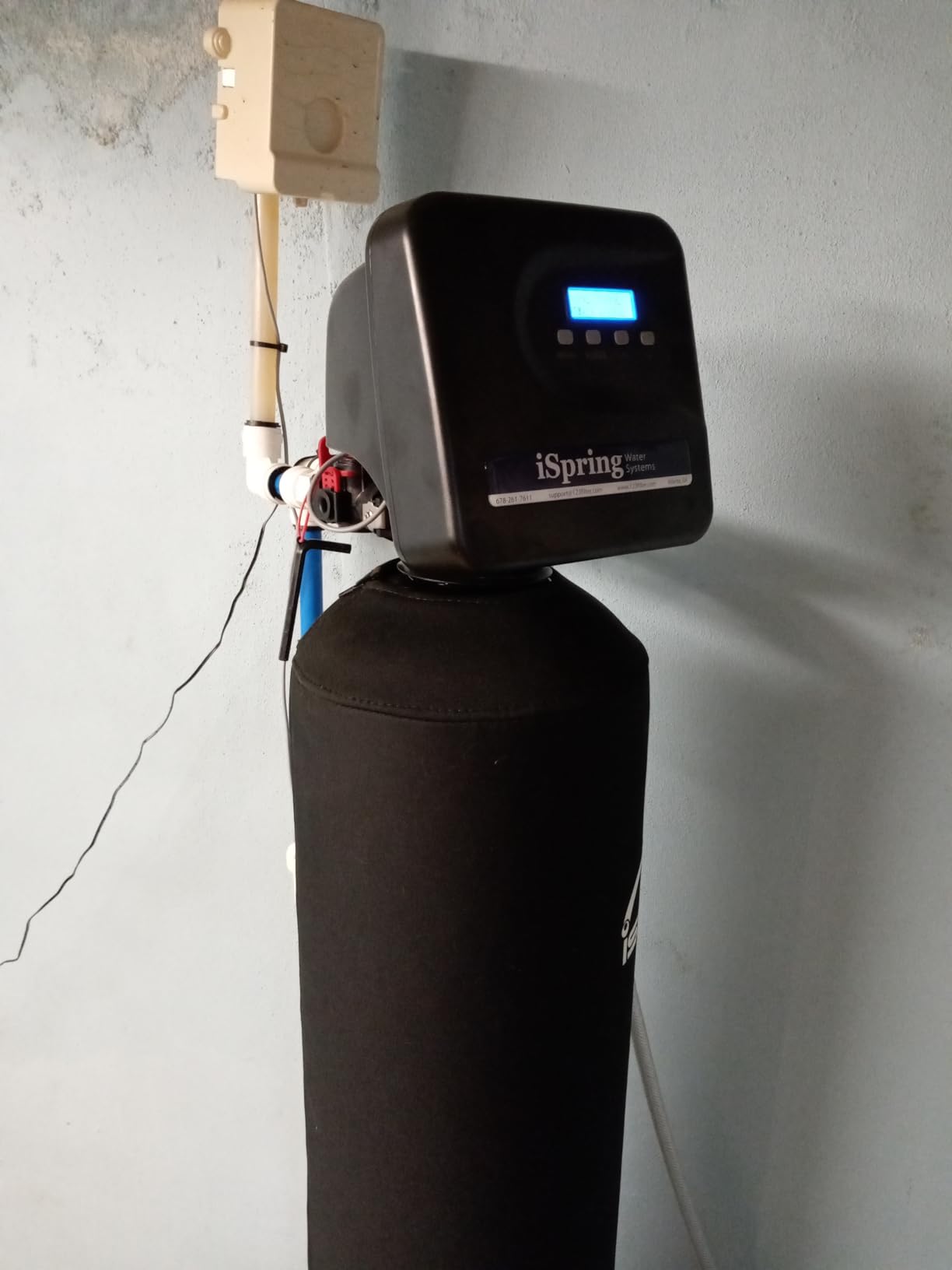
If your lab report shows a serious sulfur number, this is the system built for it. At 4.6 stars from 201 reviews with 82 percent five-star ratings, it is the most capable oxidation unit here, and its stated capacity of hydrogen sulfide to 20 ppm, iron to 12 ppm, and manganese to 20 ppm puts it well beyond anything else in this roundup.
The control valve is the reason most reviewers are happy. It runs three working stages, service, backwash, and air-draw, fully automatically, with regeneration set by time or by treated water volume, plus delayed regeneration and vacation mode for homes that sit empty.

Smart cleaning is a nice touch. When no flow is detected after a set number of days, the unit triggers its own backwash and rinse, which protects the media bed while you are away. Service flow is 12 gpm with backwash capacity up to 26 gpm, and it accepts 1 inch or 3/4 inch NPT connections.
The trade-offs are real. It is by far the most expensive system in this group, and the manufacturer explicitly advises against phosphate addition with this oxidation-based media because organic contaminants can deteriorate the media surface and defeat iron, manganese, and H2S removal. At 143 pounds, it is also a two-person lift.
Who this filter suits
It suits high-load wells where sulfur sits well above 3 ppm and a cartridge would be exhausted within weeks. The 10 year media lifespan also suits owners who do not want to think about replacements.
Homes with several simultaneous fixtures benefit from the 12 gpm service flow and 26 gpm backwash margin.
Who should skip it
Skip it if a moderate sulfur problem is the only issue, since you would be buying far more oxidation capacity than you need. It is also the wrong choice if organic contamination is already present in the water.
Budget matters here too, and the physical weight is a planning consideration.
8. LiquaGen Whole House Catalytic Carbon and KDF 55 System
- Dual media carbon and KDF 55 gives longer life than single media carbon
- Programmable control valve with scheduled backwash prevents channeling
- FRP mineral tank resists corrosion with a metal bypass valve
- Preloaded tank connects in about 2 hours
- Three tank sizes covering 1 to 7 plus bathrooms
- Aimed at municipal water rather than sulfur bearing wells
- Many reviews on this listing describe buying the Fleck valve as a replacement part
- One owner reports valve durability concerns after about four years
This is the city-water option in the group, and I include it because sulfur odor is not always a well problem. If you are on municipal water and the smell arrives after a water main event or a seasonal switch, chloramine and catalytic carbon tackle the taste and odor side of it effectively.
The dual-media blend is the reason to choose it over single-media carbon. Catalytic carbon handles chloramine better and lasts longer, and KDF 55 adds heavy metal reduction. The programmable valve backwashes on a schedule, which prevents channeling, and media life reaches 10 years or 1 million gallons.
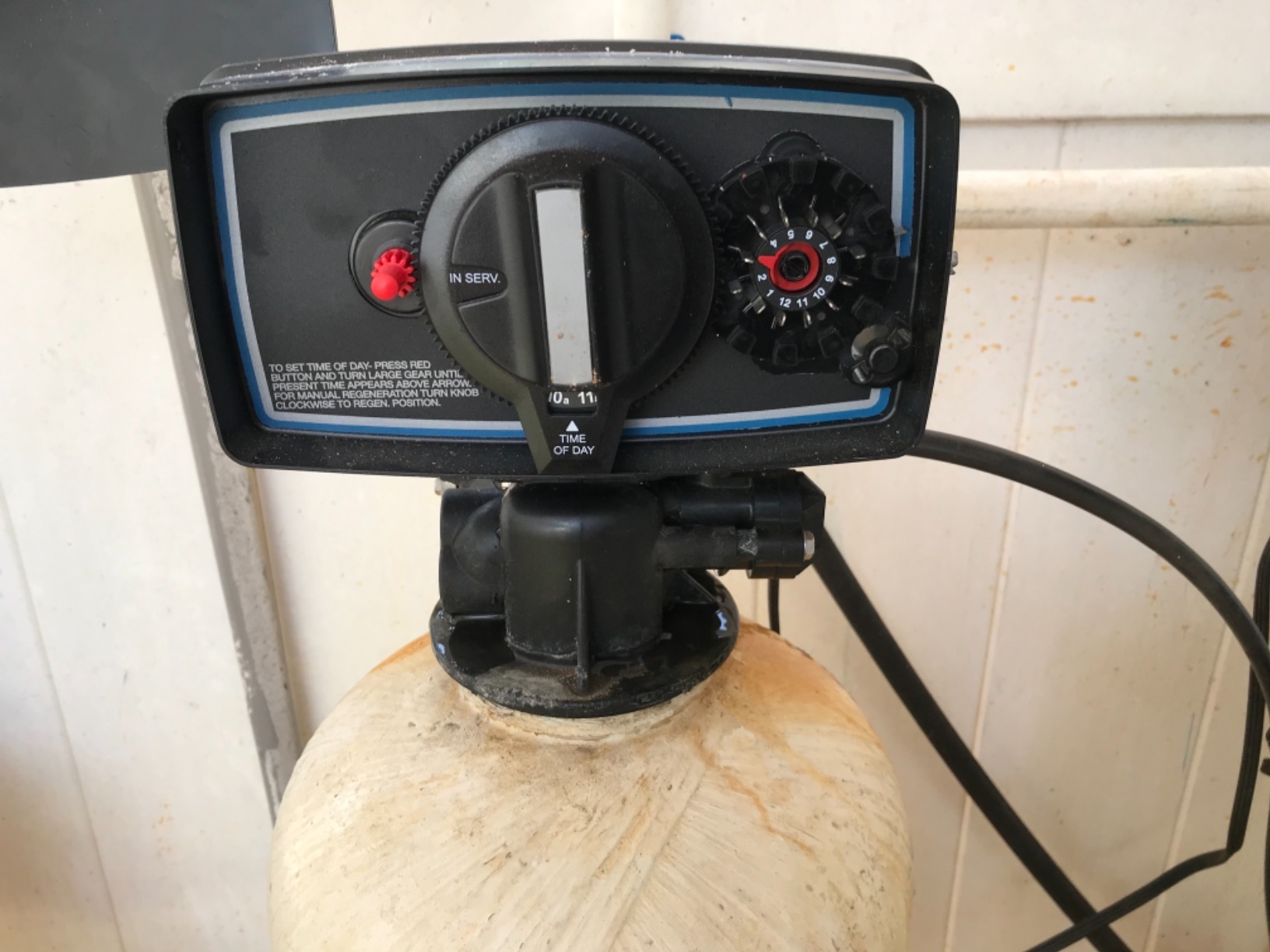
Sizing options are genuinely useful. Three tank sizes cover 1 to 3 bathrooms at 9 gpm, 4 to 6 at 12 gpm, and 7 or more at 20 gpm, so you are not forced into a one-size compromise. The FRP tank resists corrosion and the metal bypass valve lets you service the unit without shutting off water.
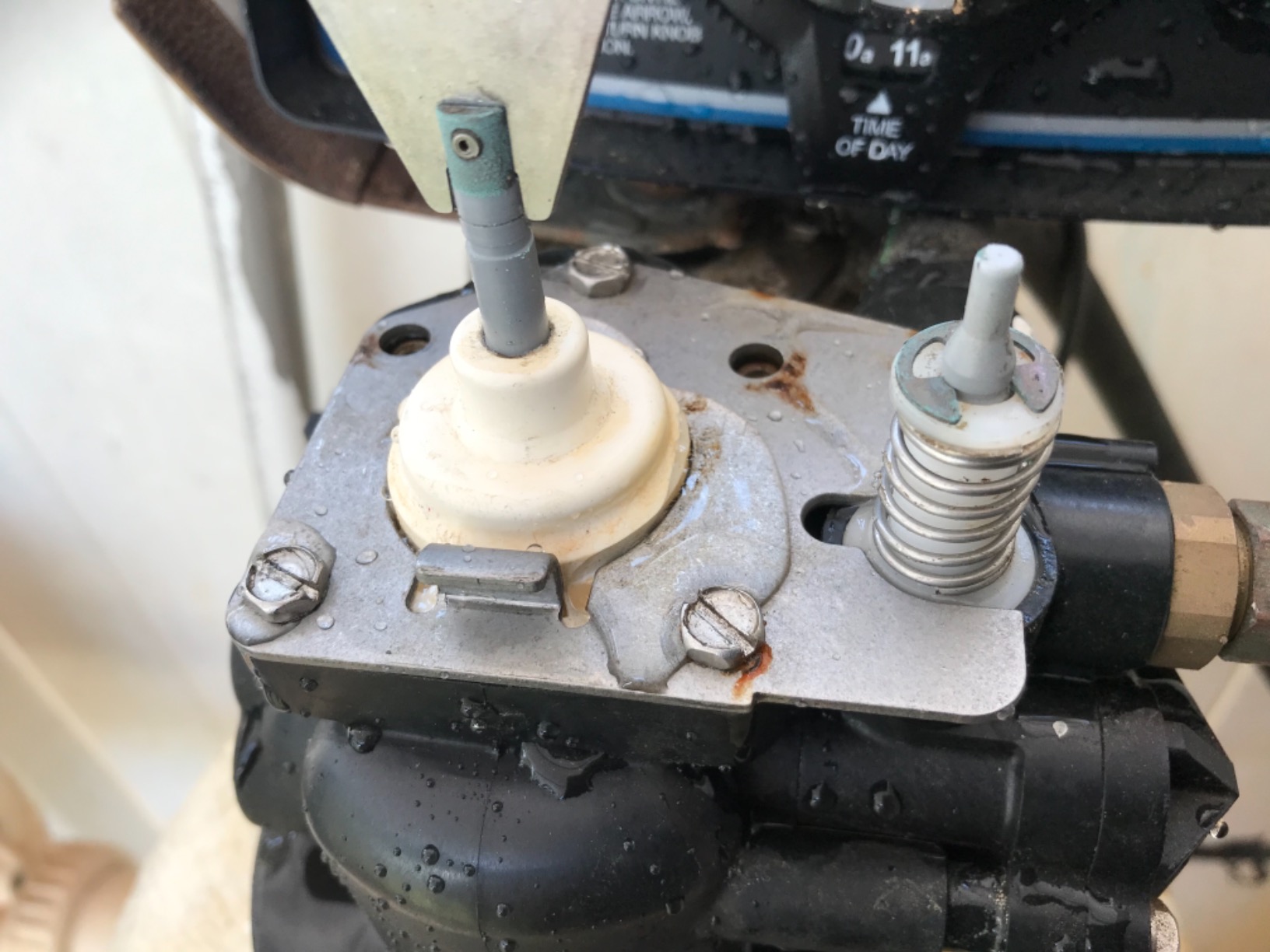
Be aware of what this is not. Its media focus is chlorine, chloramine, PFAS, sediment, and VOCs, which makes it less relevant to a well with genuine hydrogen sulfide. A quirk of this listing is that many reviews describe purchasing the Fleck 5600 valve as a replacement part rather than the whole system, and note no directions in the box.
Who this filter suits
It suits municipal water households dealing with chloramine, taste, and odor complaints, and anyone who wants a decade of media life without cartridge replacements. Larger homes have three tank sizes to choose from.
It also works as a polishing stage after an oxidation unit.
Who should skip it
Skip it if your sulfur smell comes from a private well with mineral sulfide, since the media is not built for that reaction. One long-term owner also reports valve durability concerns after about four years, which is worth factoring into a ten-year media claim.
Well owners should read the oxidation section above instead.
9. Waterdrop WHF3T-FG Three Stage Well Water Filter
Waterdrop WHF3T-FG 3-Stage Whole House Water Filter System for Well Water
- SGS tested at 95.9 percent iron and 99.7 percent manganese reduction
- Dual iron and manganese cartridges plus a carbon fiber stage for odor
- NSF ANSI 372 certified for lead free materials
- 15 GPM steady flow with 1 inch inlet and outlet
- Easy to follow instructions for DIY installation
- Iron and manganese cartridge replaced every 6 to 12 months
- Supports water TDS up to 300 ppm only
- 6 percent of reviews are one star
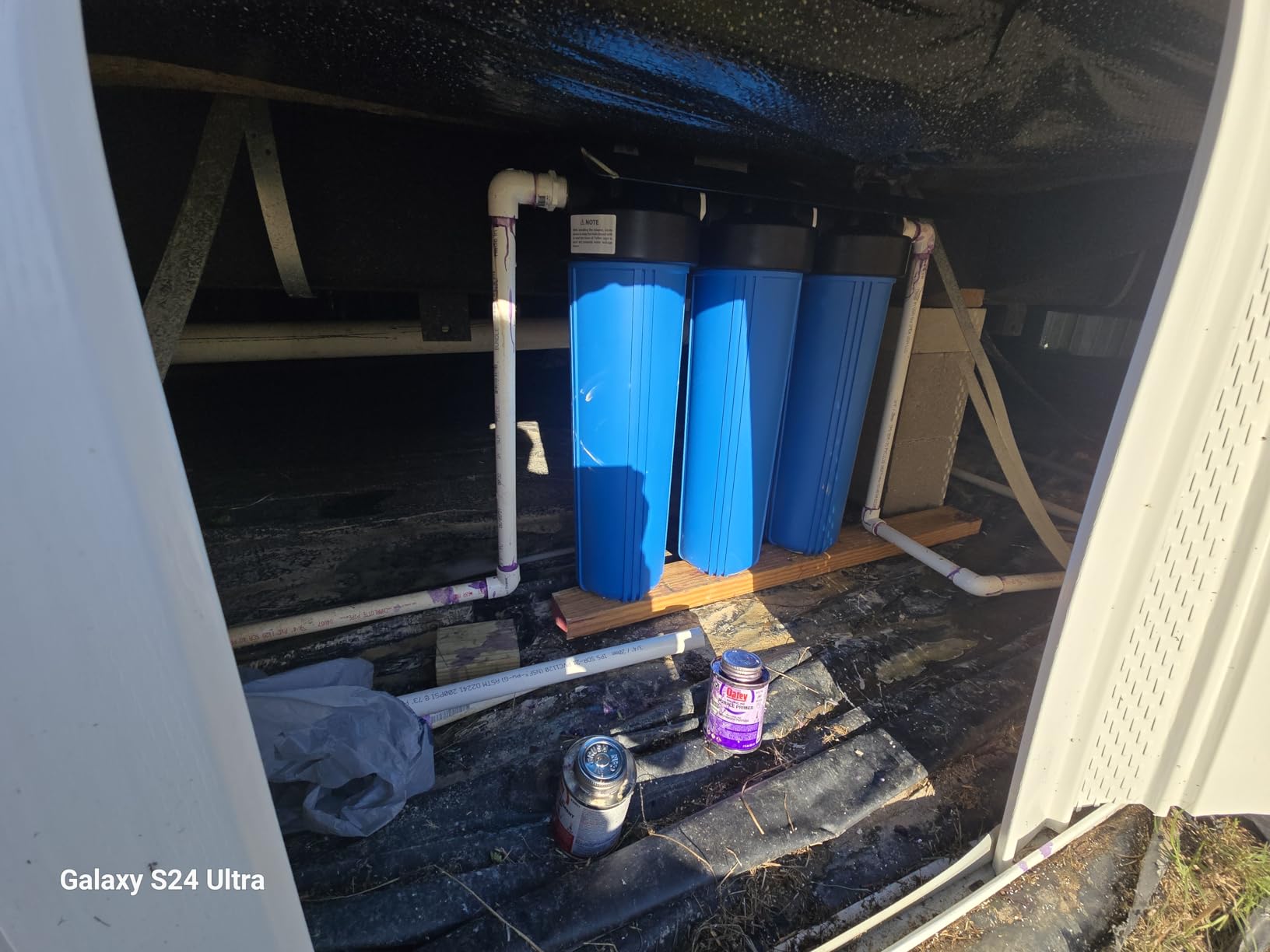
What sets this apart is third-party data rather than manufacturer claims. SGS testing reports 95.9 percent iron reduction and 99.7 percent manganese reduction, and the system carries NSF/ANSI 372 certification for lead-free materials, which is the certification that matters most for wells with older plumbing.
The filtration itself is seven stages using dual iron and manganese cartridges covered with a carbon fiber filter, aimed at odor alongside chlorine, sediment, rust, and sand. It handles both well and municipal water, which makes it a flexible middle option.

It also passed more than 100,000 water hammer tests, which tells you something about how it handles pressure spikes from a well pump cycling. At 15 GPM through 1 inch ports and a 5 micron rating, it holds flow for larger households without a noticeable pressure penalty.
The ongoing cost is the trade-off. The iron and manganese cartridge needs replacing every 6 to 12 months depending on load, while the granular activated carbon filter runs on a 12 month interval. Note also that supported TDS tops out at 300 ppm, the lowest ceiling among the systems here.
Who this filter suits
It suits owners who want verified reduction numbers rather than marketing language, particularly on wells where iron and manganese are the dominant problems alongside a moderate sulfur smell. The lead-free certification appeals to anyone with a home built before modern plumbing codes.
DIY installers get clear instructions and straightforward bracketed setup.
Who should skip it
Skip it if your well TDS runs above 300 ppm, since that exceeds its supported range. Anyone treating seriously elevated sulfur should use an oxidation unit, since this is still an adsorption and filtration design.
Budget for two cartridge sets a year if iron load is heavy.
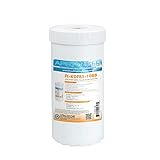
10. APEC FI-KDF85-10BB Iron and Hydrogen Sulfide Cartridge
APEC Water FI-KDF85-10BB Replacement Filter, Iron & Hydrogen Sulfide
- Built specifically for iron and hydrogen sulfide removal
- Retrofits any standard 10 inch whole house housing
- Each cartridge treats up to 20000 gallons
- Made in the USA and WQA certified
- Owners credit it with removing stubborn rotten egg odor
- Requires flushing after installation until water runs clear
- One reviewer received a cartridge blocked by an end plug
- 10 micron rating is coarser than 1 to 5 micron options
This is the smallest useful answer to a sulfur problem, and it is the one I would reach for as a diagnostic step. Drop the APEC FI-KDF85-10BB into an existing 10 inch Big Blue housing and see whether the odor changes over two weeks. If it does, you have your answer cheaply and quickly. If it barely moves, your sulfur load is above what cartridge chemistry can hold.
At 4.2 stars across 88 reviews with 64 percent five-star, the feedback is favorable but variable. Owners with sulfur-smelling wells consistently credit this cartridge with finally removing the rotten egg odor after other filters failed, and several describe retrofitting it into an existing train ahead of carbon and iron/manganese stages.
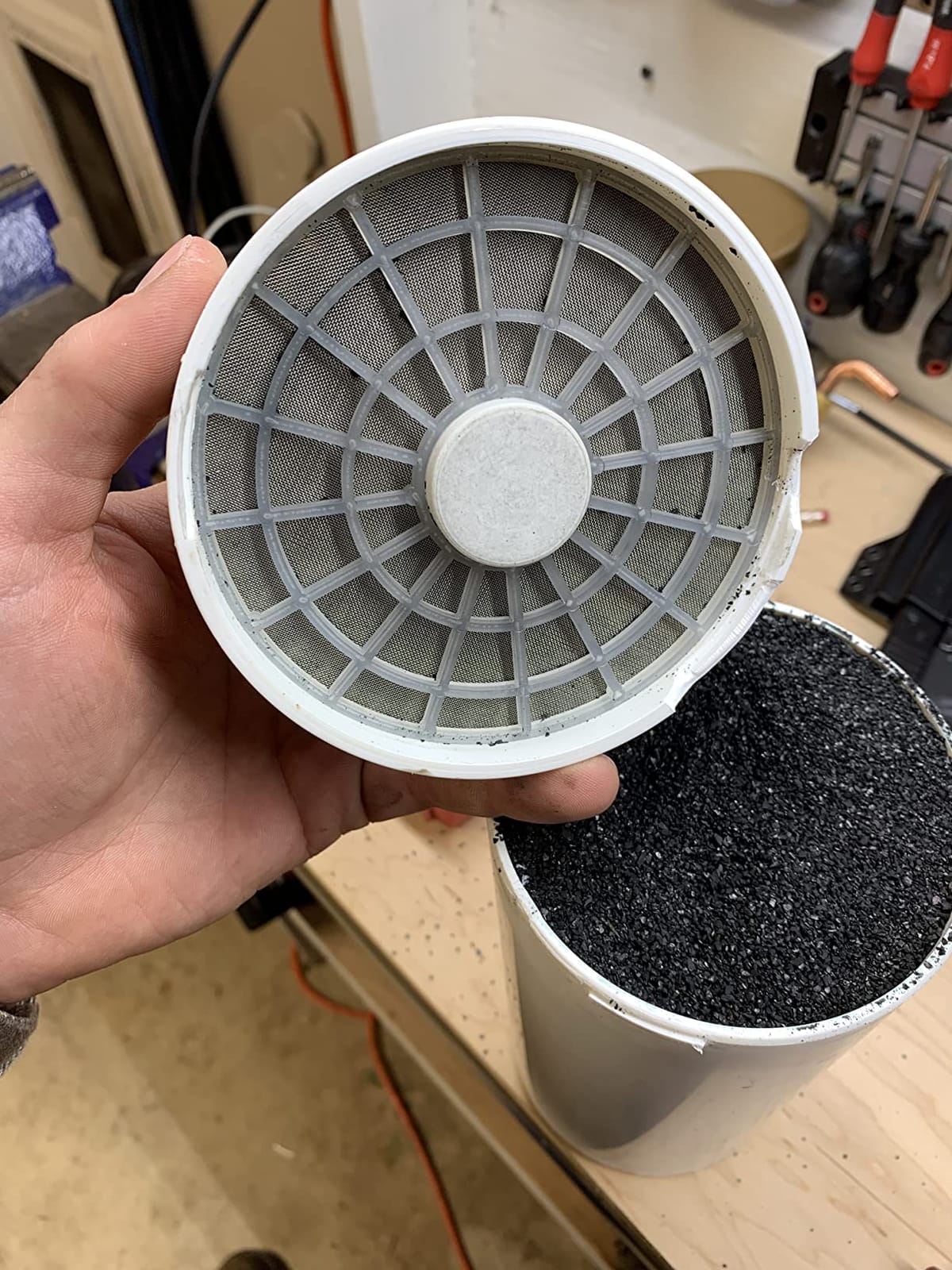
It is made in the USA and WQA certified, and some owners report two to three years of cartridge life on moderate wells. At 20,000 gallons per cartridge it is a much shorter runway than the tank systems, which is the tradeoff for the low commitment.
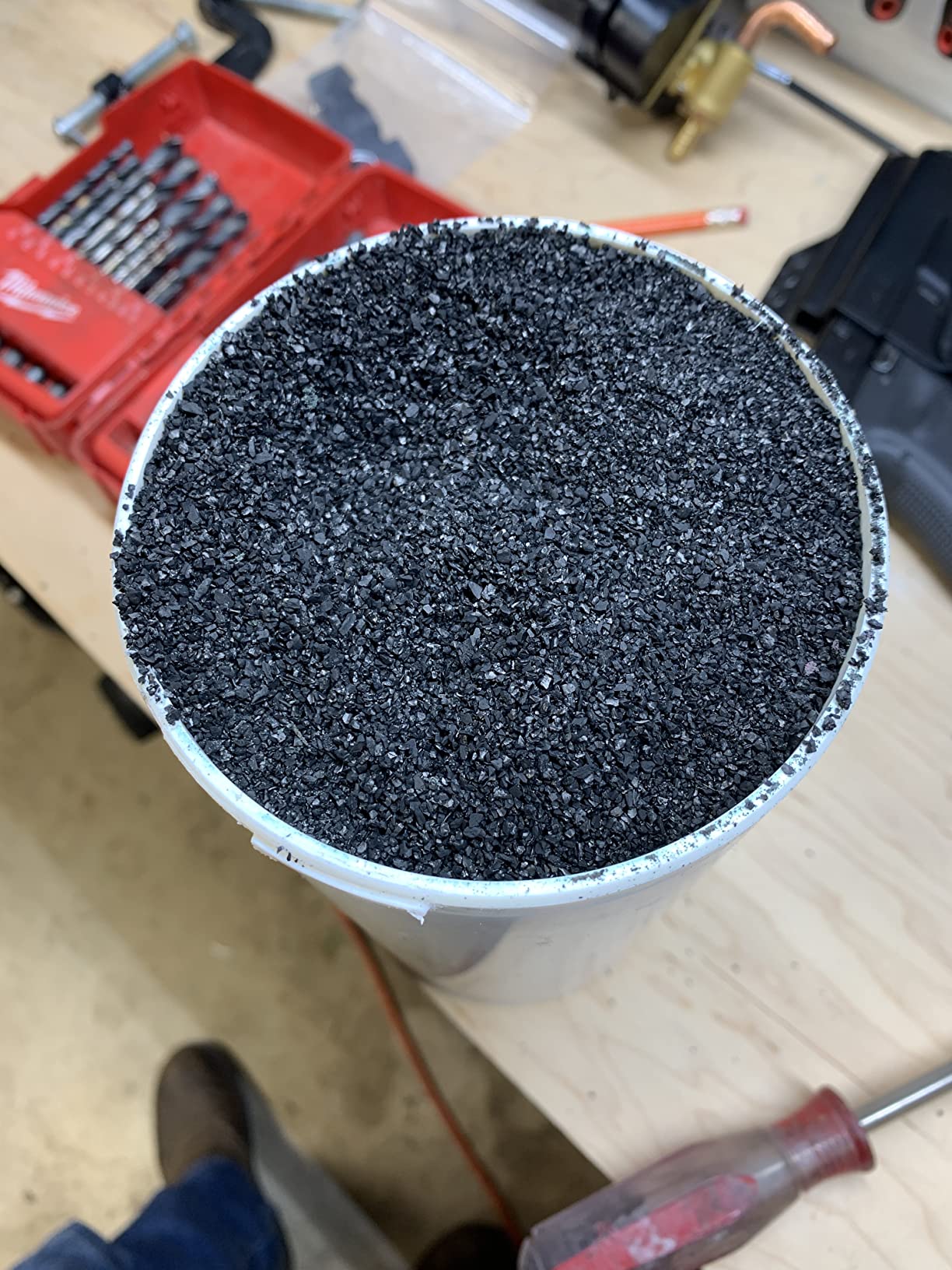
Two practical notes. Flush it after installation until the water runs clear to remove loose carbon, and inspect it on arrival, because one reviewer received a cartridge with a blue end plug that completely obstructed flow and could not be removed.
Who this cartridge suits
It suits owners who want to test whether media chemistry solves their sulfur problem before committing to a tank system. It also fits anyone with an existing 10 inch housing who needs iron reduction alongside odor control.
Budget-conscious households that want a bounded, inexpensive experiment will like it.
Who should skip it
Skip it if you need finer sediment filtration, since the 10 micron nominal rating is coarser than the 1 to 5 micron alternatives. Some owners on high-iron municipal water saw discoloration return after roughly 30 days, which is too short a window to be worth it for them.
High sulfur readings should go to oxidation equipment.
11. AFWFilters Air Injection Platinum 1.5 Cubic Foot System
AFWFilters Air Injection Platinum 1.5 cubic foot Iron, Sulfur, Manganese System
- Air injection and Filox media use only air and water with no chemicals or salt
- Handles sulfur up to 10 ppm iron up to 27 ppm and manganese up to 6 ppm
- 1.5 cubic foot tank handles 9-10 gpm for 3 to 4 bathrooms
- Phone support described as knowledgeable and patient
- Owners on severe sulfur wells report the odor completely gone
- 242 pounds arriving in five boxes makes media loading a two person job
- Regeneration frequency is fixed and cannot be changed
- One owner reported a unit failure with email only support
This is the chemical-free option for genuinely bad water. At 4.5 stars from 71 reviews with 82 percent five-star, owners with severely sulfur-smelling, high-iron wells are emphatic that the odor and staining disappeared, and one reports iron at roughly 30 ppm dropping to zero with TDS falling from 1250 to 27.
The chemistry is air injection plus Filox media. A pocket of air held at the top of the tank super-oxidizes iron and sulfur so they can be trapped in the media bed until backwash removes them. No chemicals, no salt, and no manual cleaning.
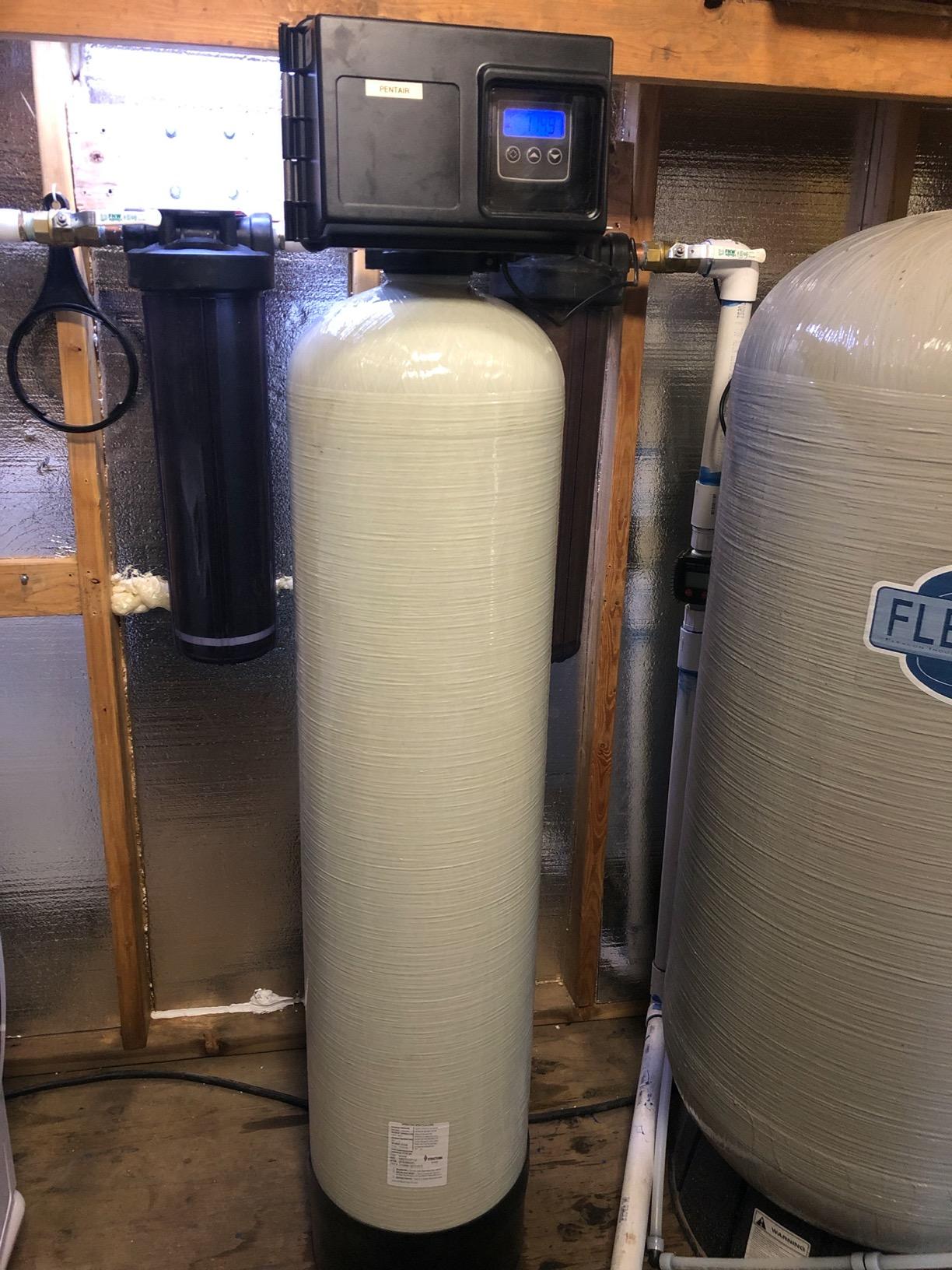
Capacity is strong: iron up to 27 ppm, sulfur up to 10 ppm, and manganese up to 6 ppm, in a 1.5 cubic foot Platinum 15 tank rated for 9 to 10 gpm, which suits a home with three or four bathrooms. It is NSF certified and arrives complete with Filox brand media.
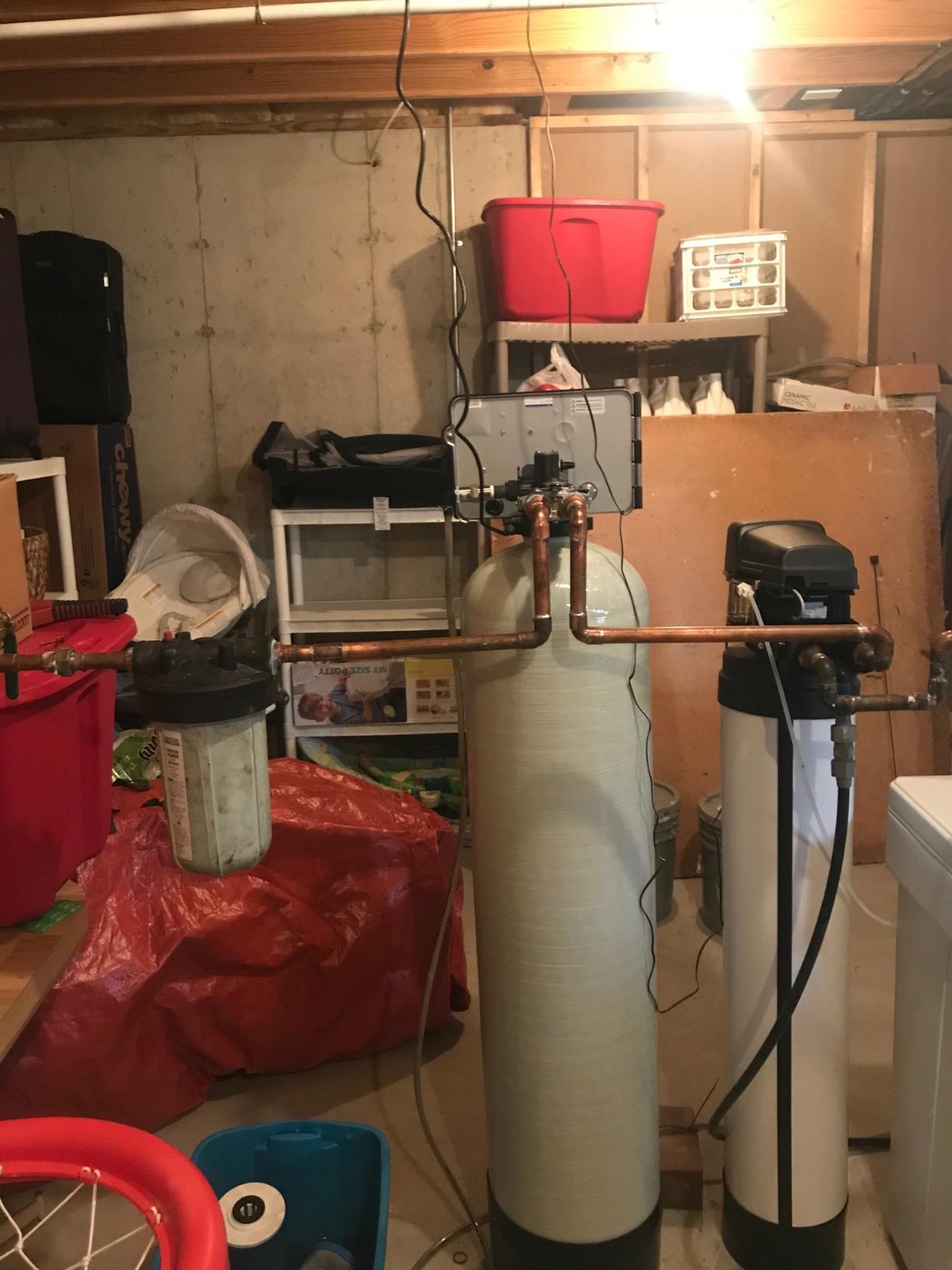
The logistics are the hard part. At 242 pounds arriving across five boxes, media loading is a two-person job, and the tank stands 60 inches tall and 12 inches across, needing inlet, outlet, and drain line connections.
Who this system suits
It suits owners with severe sulfur and very high iron who refuse chemical or salt feed, and anyone who wants a system with no routine cleaning. The stated capacities cover loads that would exhaust cartridge media in weeks.
Patient installers are rewarded, since several owners finished setup on their first attempt using the included loading funnel.
Who should skip it
Skip it if you cannot arrange a second pair of hands for the media load, or if you are sensitive to a fixed early-morning regeneration cycle that cannot be rescheduled. On very high iron loads the unit may need to flush every other day.
One owner also reported a complete unit failure with email-only support and no resolution.
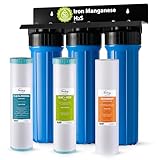
12. iSpring WGB32B-MKS Iron Manganese and H2S Filter System
- Highest average rating in this group at 4.7 stars
- Compound second stage targets hydrogen sulfide chlorine lead mercury and heavy metals
- 15 GPM with minimal pressure drop
- US based support praised for free replacement cartridges
- Preserves essential minerals unlike reverse osmosis
- Stage 2 and stage 3 cartridges are identical and unlabeled
- Sediment cartridge can clog quickly on clay heavy wells
- Loose charcoal flecks appear until faucets are run clear
This is the highest rated system in the roundup at 4.7 stars from 61 reviews, with 81 percent five-star. Owners on intense sulfur-smelling Florida well water describe both the smell and the sand buildup as fully resolved, which is a meaningful result on a well known for heavy sediment.
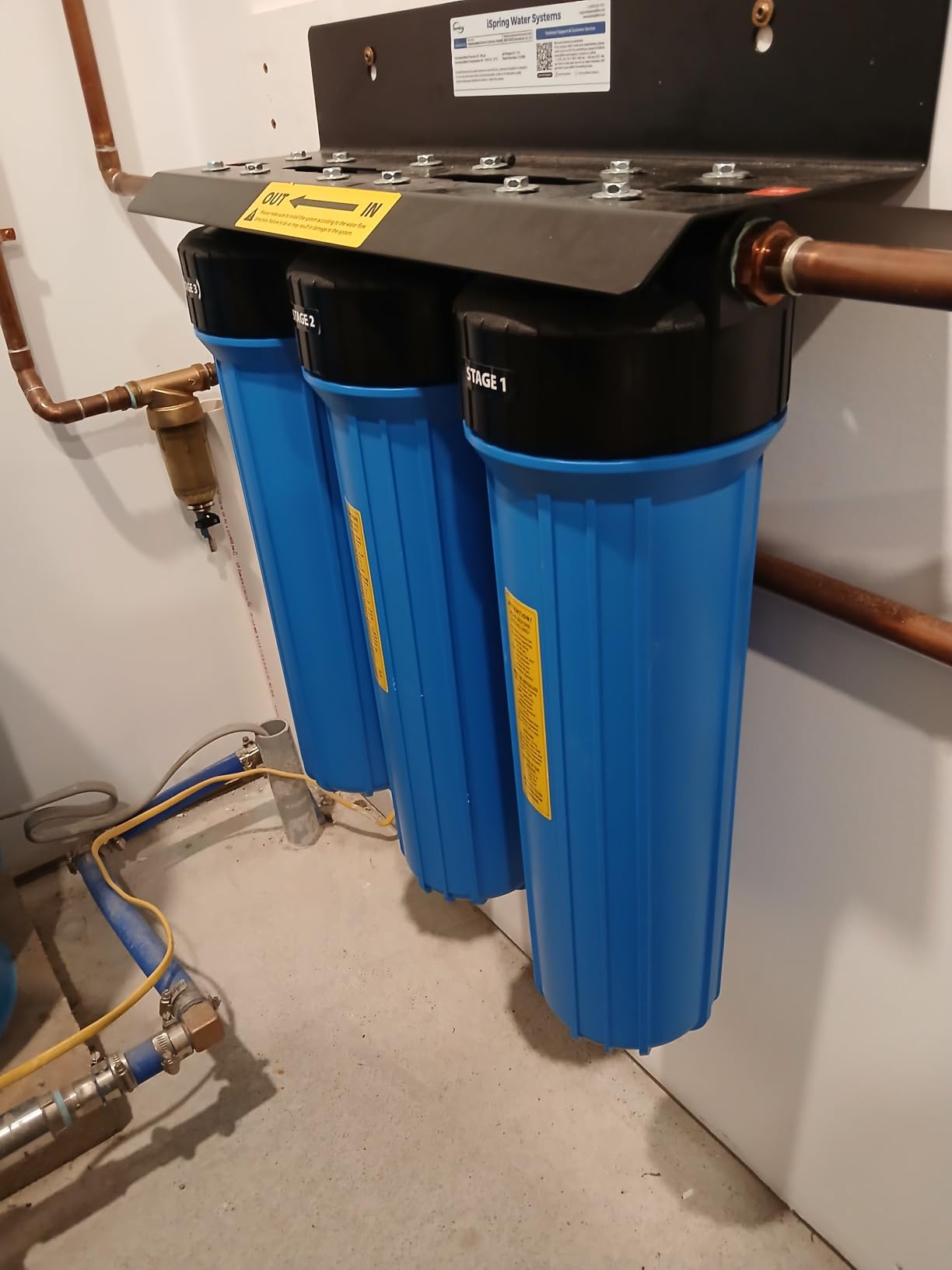
The second stage is the piece to understand. It is a compound carbon and KDF filter that targets hydrogen sulfide directly alongside chlorine, chloramine, lead, mercury, and heavy metals. The third stage reduces iron up to 3.0 ppm and manganese up to 1.0 ppm, and the first stage catches sediment at 5 microns.
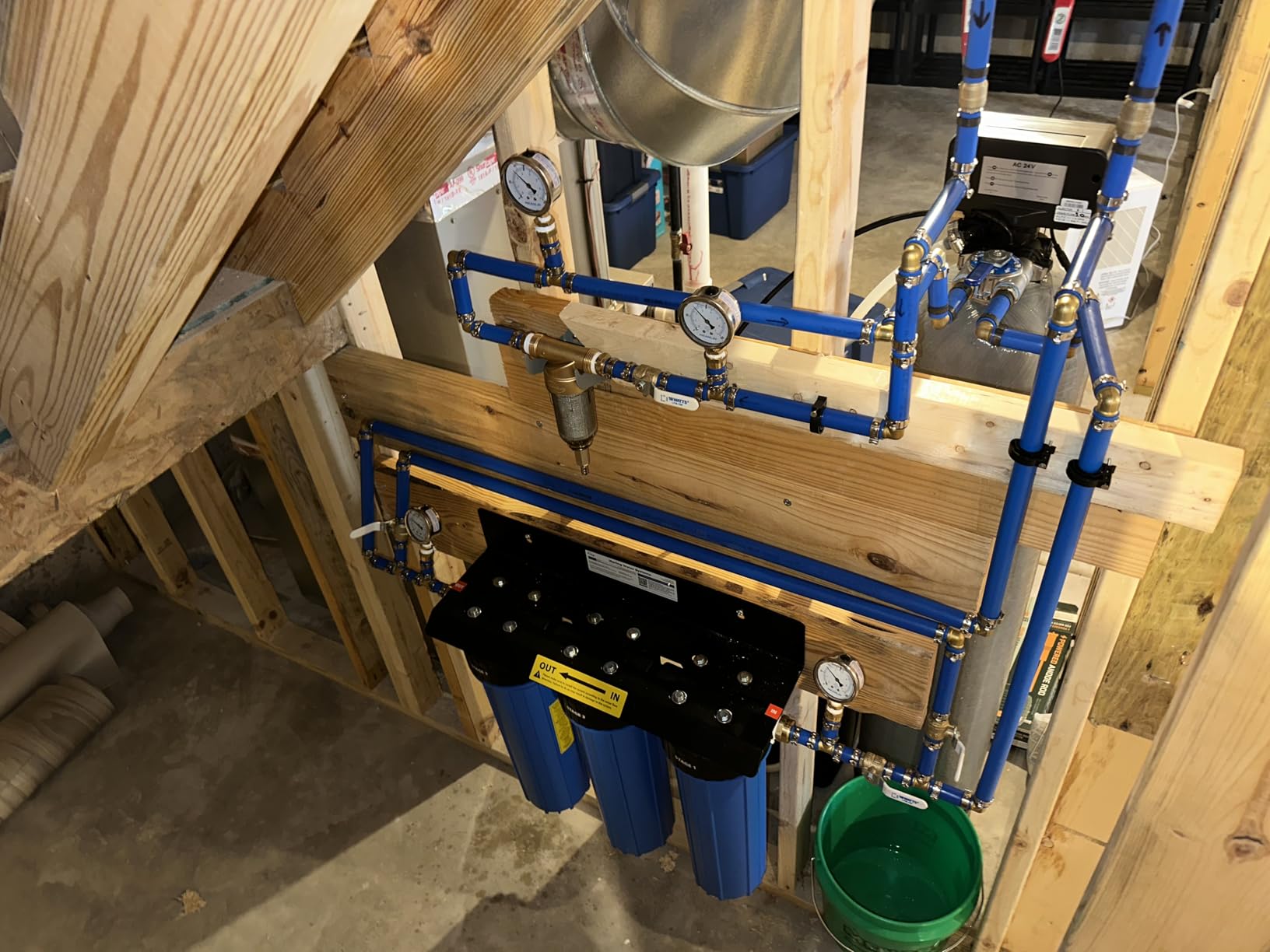
Flow is 15 GPM with minimal pressure drop through 1 inch NPT ports and 20 inch by 4.5 inch cartridges, sized for a family of four. Unlike reverse osmosis, it preserves the minerals already dissolved in your water, which many well owners prefer to keep.
Two things catch people out. The stage 2 and stage 3 cartridges look identical with no labeling or model number printed, so it is easy to install them in the wrong order. And on clay-heavy wells the sediment cartridge clogs fast enough that owners are advised to add a spin-down prefilter upstream.
Who this filter suits
It suits a family of four on a well where sulfur, iron, and sediment all need addressing and reversing osmosis is not wanted. Buyers who value phone and email support respond well to this brand, with reviewers describing free replacement cartridges and long troubleshooting calls.
It is a strong choice when you want one bracket to cover several problems.
Who should skip it
Skip it if your sulfur sits above 3 ppm, since 3.0 ppm is where its iron stage gives out and cartridge chemistry will not hold much beyond that. Write the stage numbers on the housings yourself with a label maker before you start.
Clay-heavy well owners should budget for a spin-down filter ahead of it.
How to Choose a Whole House Water Filter for Sulfur Smell
Start by identifying which kind of sulfur you have, because the media choice depends on it. Run an accredited lab panel that includes a sulfide-specific test along with iron, manganese, bacteria, and TDS. Knowing whether your water sits at 1 ppm or 8 ppm changes the answer completely, and it is far cheaper than buying a system twice.
Then match the media to the load. For sulfur below about 3 ppm on a well with modest iron, KDF85 and compound carbon cartridges do real chemical work converting H2S into solid zinc sulfide, and they are a legitimate choice at that level. Between 3 and 10 ppm you want oxidation: air injection systems, Filox or manganese dioxide media, or greensand with a catalyst. Above 10 ppm, look for a system that publishes its capacity in ppm and can backwash frequently enough to keep up.
Size for flow, not for the filter price. Households need roughly 5 to 8 gpm of service flow to run two showers and laundry at once, and many cartridge systems top out at 10 gpm. If your household runs more fixtures than that, choose a tank system with headroom rather than a cheap inline unit that will restrict your pressure.
Check certification for the specific claim. NSF/ANSI 42 covers aesthetic claims like taste and odor, NSF/ANSI 53 covers health-related contaminants, and NSF/ANSI 372 covers lead-free materials. Look for WQA or NSF marks specifically tied to the contaminant you care about, since certification for chlorine says nothing about hydrogen sulfide.
Decide where it sits in your system. Point-of-entry filtration treats everything, including the ice maker, dishwasher, and water heater, which matters because sulfide accelerates corrosion in copper and steel. A sediment prefilter ahead of any oxidation unit protects the media bed and cuts replacement frequency.
Think about softener compatibility. A standard ion exchange softener does not remove hydrogen sulfide, and some softener resins can even worsen taste. If you run both, put the oxidation stage ahead of the softener so the softener is not working on fouled water. Well owners with very hard water also need to think about TDS, since none of the systems here reduce it.
Finally, budget for the whole life of the unit, not the first purchase. Cartridge systems mean recurring costs every 6 to 12 months forever. Backwashing oxidation systems cost more up front and then go years between media changes, and they use water during backwash cycles, which is worth factoring in if you are on a well with a limited pump and pressure tank. Our guide to whole house water pressure booster pumps becomes relevant once you start adding multiple backwashing stages that each draw flow during regeneration.
Maintenance Schedules and What to Do When the Smell Returns
Write your replacement schedule down before you install anything. Cartridge systems need new filters every 6 to 12 months depending on sediment and iron load, and some owners with heavy iron see the interval drop to about 30 days. Tank and backwash systems follow a media life measured in years instead, from roughly 10 years for catalytic carbon units down to a few years on heavily loaded oxidation media.
When the smell returns, diagnose rather than replace. Run the cold tap for five minutes and then the hot tap. If only the hot side smells, check the water heater anode rod before you touch the filter. If both sides smell equally, the source is upstream and your media is likely exhausted.
Note the season when it comes back. Smell that appears after heavy rain or in late summer points to bacterial activity, and a periodic shock treatment or a UV stage may be a better answer than a bigger filter. Smell that returns on a fixed schedule regardless of weather usually means media exhaustion.
For backwashing systems, confirm the drain line is clear and the control valve is actually running cycles. A tank that has never backwashed since installation will eventually short-circuit and stop treating, which looks identical to a media failure.
Frequently Asked Questions
What is the best water filter for removing hydrogen sulfide?
For most homes, an air injection oxidation iron and sulfur filter is the best choice because it converts dissolved hydrogen sulfide gas into a solid that the media bed can trap. Below about 3 ppm, a KDF85 compound carbon cartridge works well and costs far less.
Will a carbon filter get rid of sulfur smell?
Sometimes, but not reliably. Carbon adsorbs dissolved compounds, while hydrogen sulfide is a gas that usually needs to be oxidized into a solid form first. On moderate loads KDF85 media performs that reaction, but plain carbon is exhausted in weeks on strong sulfur wells.
Why does my well water suddenly smell like sulfur?
Three causes are common. Sulfur-reducing bacteria increase after heavy rain or flooding when organic matter and low oxygen coincide, mineral sulfide can dissolve as groundwater levels change, and a sulfur smell limited to hot water usually comes from anode rod reactions inside the water heater.
Is it safe to drink and shower in sulfur-smelling water?
At typical residential levels hydrogen sulfide is an irritant rather than a poison, and the odor alone makes water unpleasant to drink. It is well below the federal drinking water limit. Treat it anyway, because sulfide speeds up corrosion in copper and steel piping and shortens the life of heaters and appliances.
Do I need a softener if I have sulfur water?
A standard ion exchange softener does not remove hydrogen sulfide and will not fix the smell. If you need both, put an oxidation filter ahead of the softener so the resin is not working on fouled water, and check TDS separately since no system in this roundup reduces dissolved solids.
Final Recommendation for Sulfur-Smelling Well Water
After working through twelve systems, the Express Water 3-Stage Iron and Manganese system remains our pick for most households. With 2705 reviews at 4.5 stars, 17 gpm of flow, and consistently reported improvements in taste, odor, and iron staining, it is the safest general choice for a moderate sulfur problem.
Read your lab results before you buy. Under 3 ppm of hydrogen sulfide, a cartridge system will handle it. Above that, buy oxidation chemistry, and choose between the DuraWater air injection unit for value, the AFWFilters Platinum for severe loads without chemicals, or the iSpring WCFM550K when you want published ppm capacity and a decade of media life.
And test the water first. Every hour spent on a proper panel analysis saves you from buying the wrong filter twice, which is exactly the mistake the carbon filter owners in the forums kept making.