
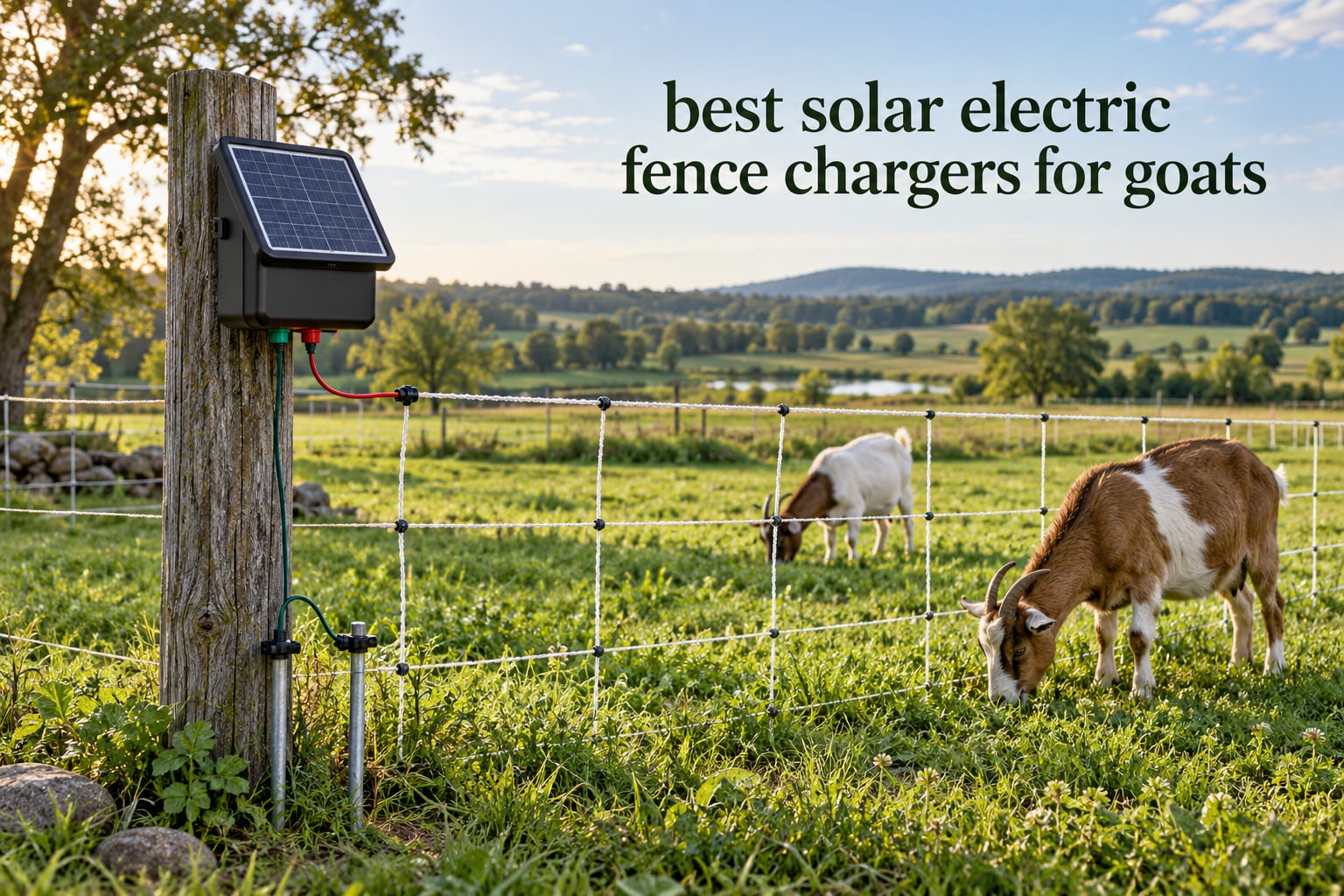
Short answer: goats need 0.1 to 0.2 joules for a portable net paddock of a few hundred feet, 0.3 to 0.6 joules for multi-strand permanent pasture fence, and roughly 1 joule or more once grass touches the wires through a full growing season. Nine solar fence energizers on this page cover that whole range, from a 0.06 J charger for a garden pen to a 0.53 J charger for long multi-wire runs.
Goats break fences. They climb, they jump, they wedge under net and they push through a wire that only stings. An electric fence does not change that. What it changes is that a contained animal remembers the shock once or twice and stops testing the line, which is why nearly every successful goat keeper says the same thing: the fence fails because the setup was wrong, not because the animal was impossible.
That is what this guide is for. We looked at nine solar electric fence chargers for goats, from budget all-in-one chargers to higher-output low-impedance energizers, and worked through the questions that actually decide whether a fence holds: how many joules, what battery chemistry survives a gray winter, how many ground rods the ground system needs, and what happens to a solar panel when a horse fence is six feet away. If you want the wider picture on fence energizers first, our electric fence charger roundup covers mains-powered chargers and the older technology in depth.
Everything below was last checked in October 2026. Specs come from the manufacturer listings, and where a listing contradicts itself we say so rather than repeat it.
Table of Contents
Top 3 Solar Fence Chargers for Goats
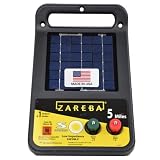
Zareba ESP5M-Z 5-Mile Solar Energizer
- 0.15 joule low-impedance output
- Up to 5 miles of clean fence
- Runs 2 weeks without sunlight
- T-post Y-post or wood bracket
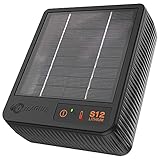
Gallagher S12 Solar Fence Charger
- Up to 4 miles single-wire or 0.6 miles multi-wire
- Ground rod doubles as the mounting post
- 3-year manufacturer warranty
- Compact alloy steel case

hovikoki 10-Mile 0.18J Solar Energizer
- 0.18 joule output with 9300V pulses
- 5W monocrystalline panel
- Up to 25 days without sun
- IPX4 weather-resistant case
Solar Electric Fence Chargers for Goats in 2026
| Product | Specifications | Action |
|---|---|---|
| Zareba ESP5M-Z 5-Mile Solar Energizer |
|
Check Latest Price |
| Gallagher S12 Solar Fence Charger |
|
Check Latest Price |
| hovikoki 10-Mile 0.18J Solar Energizer |
|
Check Latest Price |
 Epoify 24-Hour 0.18J Solar Charger Epoify 24-Hour 0.18J Solar Charger |
|
Check Latest Price |
 ANDMON MINI400 0.4J Solar Charger ANDMON MINI400 0.4J Solar Charger |
|
Check Latest Price |
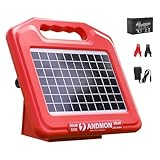 ANDMON S600 35-Mile 0.53J Solar Charger ANDMON S600 35-Mile 0.53J Solar Charger |
|
Check Latest Price |
 Zareba ESP10M-Z 10-Mile Solar Charger Zareba ESP10M-Z 10-Mile Solar Charger |
|
Check Latest Price |
 Pet and Livestock HQ S100 Solar Energizer Pet and Livestock HQ S100 Solar Energizer |
|
Check Latest Price |
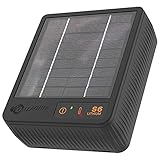 Gallagher S6 Solar Fence Charger Gallagher S6 Solar Fence Charger |
|
Check Latest Price |
How Many Joules Do Goats Actually Need?
Here is the sizing rule goat keepers arrive at after a few seasons. A 40-strand portable electric netting paddock, 300 to 500 feet around, that gets mown or grazed short needs 0.1 to 0.2 joules. A five-strand permanent fence over grazed pasture, 1,000 to 3,000 feet, needs 0.3 to 0.6 joules. Anything longer, any fence where grass touches the hot wire from June onward, or any herd with bucks, kids or a bully goat in it, wants 0.6 joules and up.
Two things complicate this. First, the “miles of fence” figure on a box is measured on a bare, dead-straight wire with good connections, not on a net fence in July. The Gallagher S12 is a good illustration: its listing claims 4 miles of single-wire fence, and the same listing says 0.6 miles once you go to multiple wires or add vegetation. Treat the single-wire number as a laboratory figure and the multi-wire number as your planning number.
Second, more joules is not the same thing as a harder shock, and it is not automatically better. Voltage is what pushes the pulse across the animal; joules are how much energy is behind that pulse, which is what lets it travel down a long wire and push through weeds. Farmers posting in AgTalk warn that very high-energy chargers are unpleasant for anyone who brushes the fence in passing and short out faster when vegetation touches them. Jumping from 0.2 J to 0.6 J solves a real problem. Jumping from 0.6 J to 5 J on a small goat paddock solves nothing and makes the fence harder to live with.
For calibration, a published field test on grazingwithleslie.com measured a Gallagher S80 Li on 500 feet of five-strand net fence at 4.5 kV on the first check, rising to 5 to 5.5 kV after the charger had been running. That is a useful target: if a fence checker reads 4 kV or more at the far end with the fence in normal summer condition, the shock is fine for goats.
A useful third-party reference point for the technology side of battery storage is our guide to battery chargers and how capacity ratings behave. The same chemistry logic that decides how long a lead-acid bank holds a charge applies to the battery inside a solar energizer.
1. Zareba ESP5M-Z 5-Mile Solar Energizer – Best All-Round Pick for Goat Paddocks
Zareba Solar Electric Fence Charger, 5 Mile Range Low Impedance Energizer
- 1479 reviews at 4.4 stars is the deepest owner history here
- Rotating bracket fits T-posts Y-posts and wood
- Two weeks of operation with no sun
- Internal battery and switch are replaceable
- Full-load tested in the USA
- Weak or intermittent pulse when the ground system is short on rods
- Some chargers fail around the 18 to 24 month mark
- Non-returnable so warranty runs through the manufacturer
The ESP5M-Z is the charger I would hand to a first-time goat keeper with no mains power in the paddock. It puts out 0.15 joules of low-impedance energy, which is the right band for portable net fencing and light two-strand pasture setups, and it carries more owner history than anything else in this group with close to 1500 reviews averaging 4.4 stars. That history matters more than the spec sheet, because this is a category where failures show up years later.
Owners consistently credit the mounting bracket, which rotates 360 degrees and fits T-posts, Y-posts and round wood. The stated runtime of up to two weeks without sunlight is generous compared with most competitors and gives real protection in a wet October or a stretch of overcast February. The on and off switch is another small thing people mention, and it lets you work on the fence line without unplugging leads.
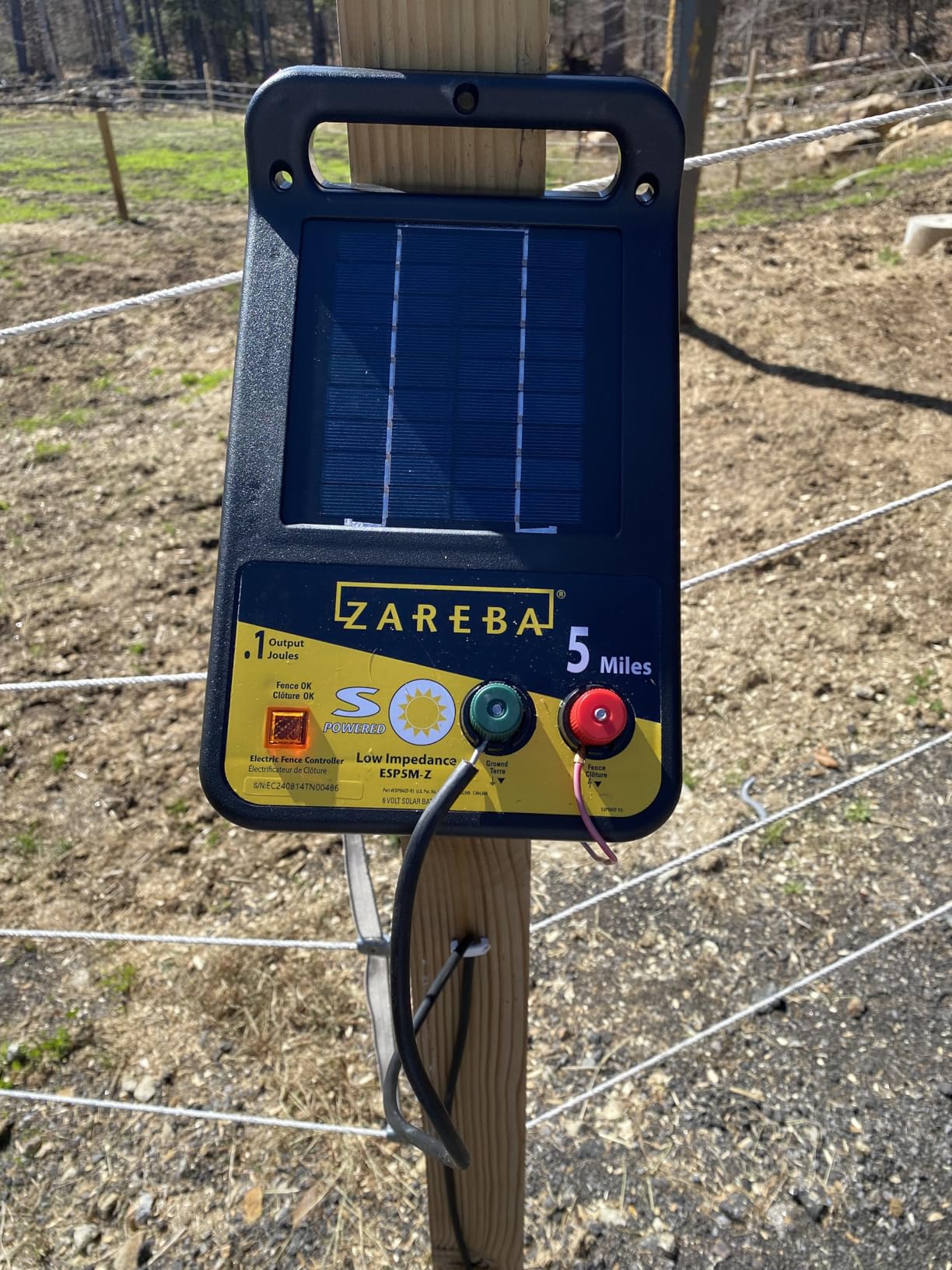
Ground systems decide this more than the charger does. Performance depends almost entirely on two or three long ground rods. Owners with a weak ground report a weak or intermittent pulse, and owners who drove proper rods report strong, consistent shocks from a charger that some critics assumed was underpowered. Before you blame the charger, count your rods.
There is a durability split in the reviews. A minority report failure at roughly one and a half to two years. Others describe batteries lasting five or more years in harsh weather, and lightning damage protection is frequently called out as working. Note that this listing is marked non-returnable, so warranty issues go straight to the manufacturer rather than through the retailer.
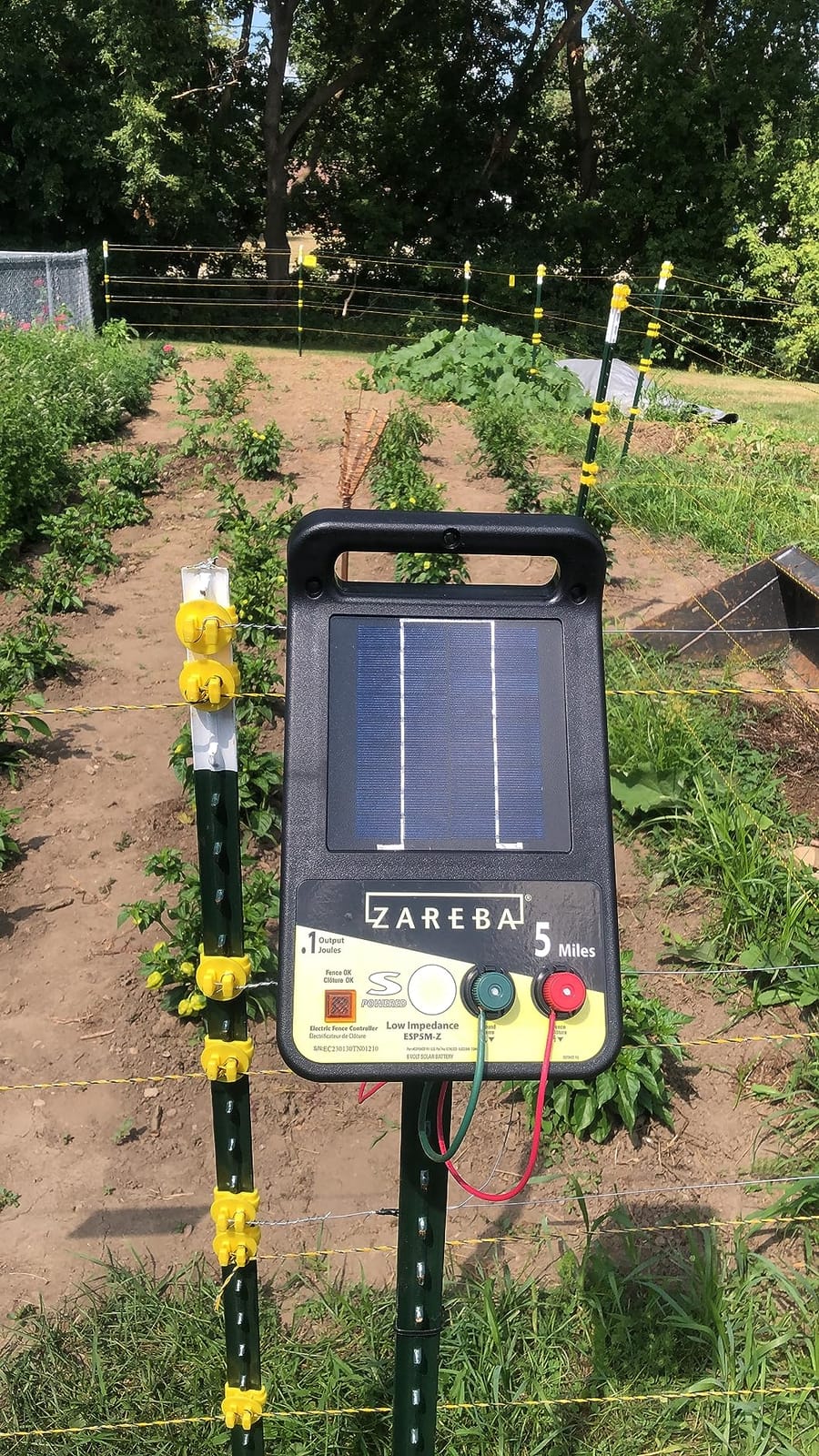
What to check before you buy
Output is the place to be precise. A 0.15 J charger pushing 1,500 feet of five-strand fence with weeds touching it in August is working at the edge of what it can do. If your fence runs longer than about 1,200 feet or carries heavy summer grass, step up in output.
Check that you can physically install three ground rods within 20 feet of the energizer. Owners on rocky ground or shallow topsoil often cannot, and that is where the shock falls apart. If your site will not support a proper rod array, choose a charger that mounts to a rod you already have rather than a bracket charger that needs a new post.
Where it falls short
It is not the strongest charger here. On 5-strand high-tensile fence in growing grass, or with a buck goat deciding to leave, 0.15 joules leaves less margin than you would like. Reviewers running longer or dirtier lines report the pulse weakening noticeably on cloudy days or in partial shade.
It is also not ideal for anyone who wants a longer warranty covered through a retailer, or for a site where the ground system is marginal. For a small acreage of goats on short grass with decent soil, though, this is the safest purchase on the page.
2. Gallagher S12 Solar Fence Charger – Best for Single-Rod Installation
- Highest average rating in the group at 4.5 stars
- Single-rod install means one lead wire instead of two
- Many owners report four-plus years of continuous service
- Compact footprint for small pasture splits
- US-based support and a 3-year warranty
- Power button must be held for several seconds to turn on
- Does not mount to a standard T-post
- Mileage rating assumes single-wire only
- A minority of chargers fail or stop recharging near two years
The S12 has the highest average rating of any charger in this group at 4.5 stars across 632 reviews, and the reason is not the power, it is the install. The grounding rod doubles as the physical mount and the electrical ground, so you drive one rod, bolt the charger to it and run a single lead to the fence. Owners describe setup as close to a one-job install, and several report doing it in under an afternoon with no other tools.
Coverage is the honest weak spot. Gallagher states 4 miles of single-wire in ideal conditions, and 0.6 miles for multi-wire or fencing with some vegetation. That second figure is the one to plan against, and it lines up with what most small-pasture goat keepers actually build. This is a charger for homesteads, hobby farms and pasture splits, which is exactly the description the manufacturer uses.
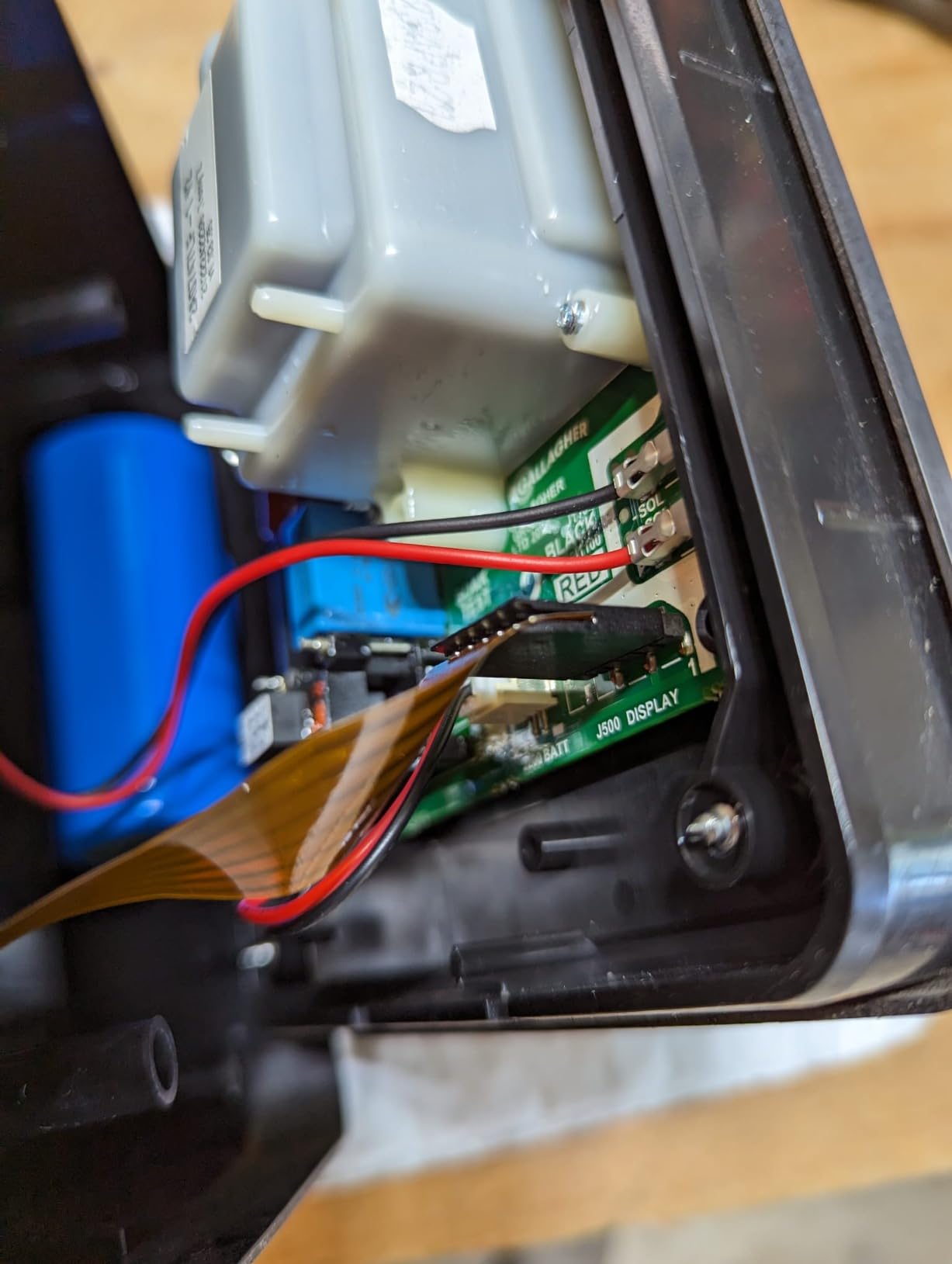
One owner detail worth stealing: several people report that swapping a galvanized ground rod for a copper one noticeably increased the delivered shock at the far end of the fence. That is a grounding story, not a charger story, and it costs very little. Another recurring tip is to charge it in direct sun for two to three days before first use, then keep the panel facing full sunlight day to day.
The most common complaint is the power button, which must be held for several seconds before the charger wakes up. First-time buyers read that as a dead charger. The other recurring note is longevity, which is genuinely good: many owners report four-plus years of continuous operation, while a minority report failures or a loss of charging ability around the two-year mark.
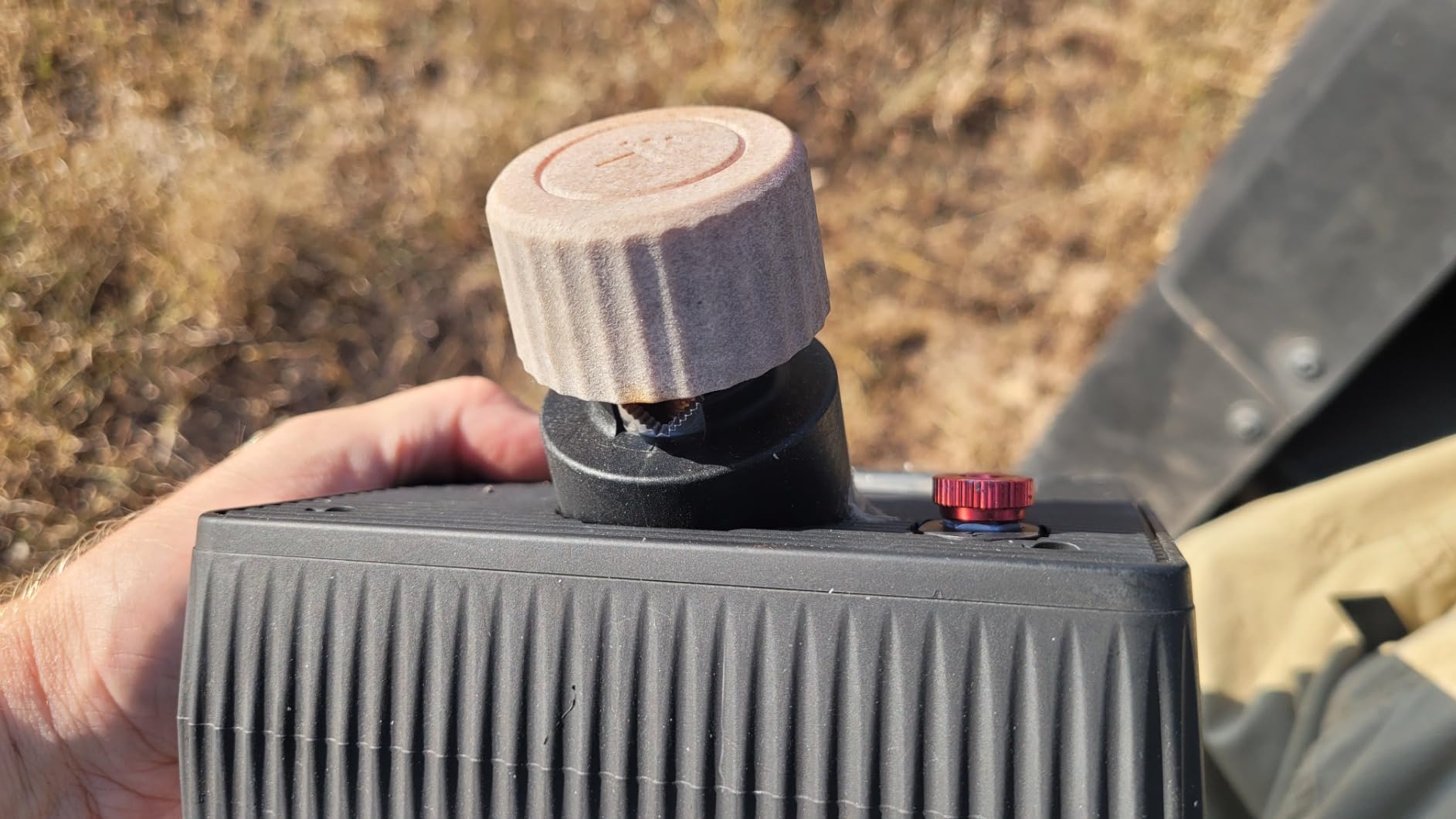
How to size it correctly
Use the 0.6-mile multi-wire figure as your ceiling and stay under it. For a small homestead paddock of 500 to 1,500 feet of net fence in mown grass, the S12 is comfortably sized. For 3,000 feet of five-strand fence over pasture, it is not, and no amount of grounding will make an undersized energizer push voltage to the far end.
Plan the rod before you plan the post. The S12 needs an unpainted rod up to half an inch in diameter, driven at least 18 inches into soil and deeper in dry or sandy ground, and it does not support any other grounding method. If you want T-post mounting, this is the wrong charger.
Where it falls short
It is a small charger, and buyers who outgrew it say so plainly. Users with horses report they largely ignore the shock, which is a fair signal that it is undersized for animals heavier and more determined than a goat. Gallagher itself says that for stubborn animals or long multi-wire fences you should choose a higher-powered model.
Two further caveats: the button behaviour confuses new users, and the sealed battery is not something you can swap yourself. If you want a lithium pack you can inspect and a T-post mount, look at the S6 further down or one of the bracket-mount budget chargers.
3. hovikoki 10-Mile 0.18J Solar Energizer – Best Budget Pick
10 Mile Solar Fence Charger 0.18J Electric Fence Energizer with Day Night Mode 24-Hour Protection Red
- 0.18 joules and a 5W monocrystalline panel at the lowest cost in this group
- IPX4 waterproof housing with a tempered glass panel
- Runs up to 25 days without sunlight when fully charged
- Tool-free T-post mounting makes paddock moves fast
- Includes an AC charger for cloudy-season top-ups
- GEL battery arrives disconnected and must be wired in first
- Sealed battery is not user-serviceable
- ABS case is less rugged than alloy steel in severe weather
- 0.18 J is thin for thick vegetation
This is the cheapest way to get a real 0.18 joule of low-impedance output with a monocrystalline panel behind it, and at 477 reviews averaging 4.4 stars it has more owner history than its price would suggest. Reviewers single it out as strong value for rotational grazing paddocks, gardens and small farms.
The 5W monocrystalline panel is the reason it holds up in low light, which is the single biggest failure mode for budget solar chargers. The stated runtime of up to 25 days without sunlight when fully charged is the longest figure in this group. Mounting is tool-free on a T-post, so moving it between paddocks takes minutes, and an AC charger is included for winter top-ups.
The 12V 5Ah sealed GEL battery is the one thing to understand before ordering. It arrives disconnected from the terminals for transit safety and has to be wired in before the charger will do anything. That is a five-minute job with a screwdriver, but it is the most common first complaint.
What to check before you buy
Budget for a 0.18 J charger realistically. That is enough for portable net paddocks, garden protection and short two-strand runs in grazed-down grass. It is at the bottom of the useful range for goats the moment vegetation starts touching the hot wire, and owners say so plainly.
Also budget for the weather. The IPX4 rating and ABS casing handle rain and snow fine. In severe weather with long-term sun exposure, alloy steel housings have the better record, and the ABS shell here is the compromise that keeps the cost down.
Where it falls short
When the sealed GEL battery finally fails the charger is finished rather than repairable. Contrast that with the Zareba chargers, where owners report replacing the internal battery and switch themselves and getting a decade or more out of the case.
There is no charge gauge and no status light, so you find out the state of the system by walking the fence with a checker. For anyone running this in a shaded corner or expecting it to hold a multi-strand permanent line through August, a higher-output charger is the better buy.
4. Epoify 24-Hour 0.18J Solar Charger – Best Value for First-Time Builders
- Ranks first in Livestock Fence Chargers on Amazon with 631 reviews
- Unusually detailed grounding instructions in the listing
- AC adapter included for cloudy-season charging
- Portable all-in-one design suits rotational grazing
- Needs a full 24 hour AC charge or 3 days of sun before first use
- ABS housing is less rugged in exposed weather
- Output drops in shaded or heavily vegetated runs
What sets this charger apart is the grounding instructions. The listing spells out a three-rod array in detail: rod one within 20 feet of the energizer, rod two 10 feet from rod one, rod three 10 feet from rod two, linked with insulated wire and clamped to the ground terminal, with a note to stay at least 50 feet from house, barn or utility grounds. Several owners credit that guidance for getting a strong pulse on their first attempt, which is more than most listings manage.
It runs a consistent 0.18 joule pulse and is rated up to 10 miles of coverage in good conditions. The 5,700 to 10,200 volt pulse range is genuinely useful for pushing voltage through polywire pens. Buyers commonly pair it with polywire for goat and poultry pens and report that it deters raccoons and foxes.
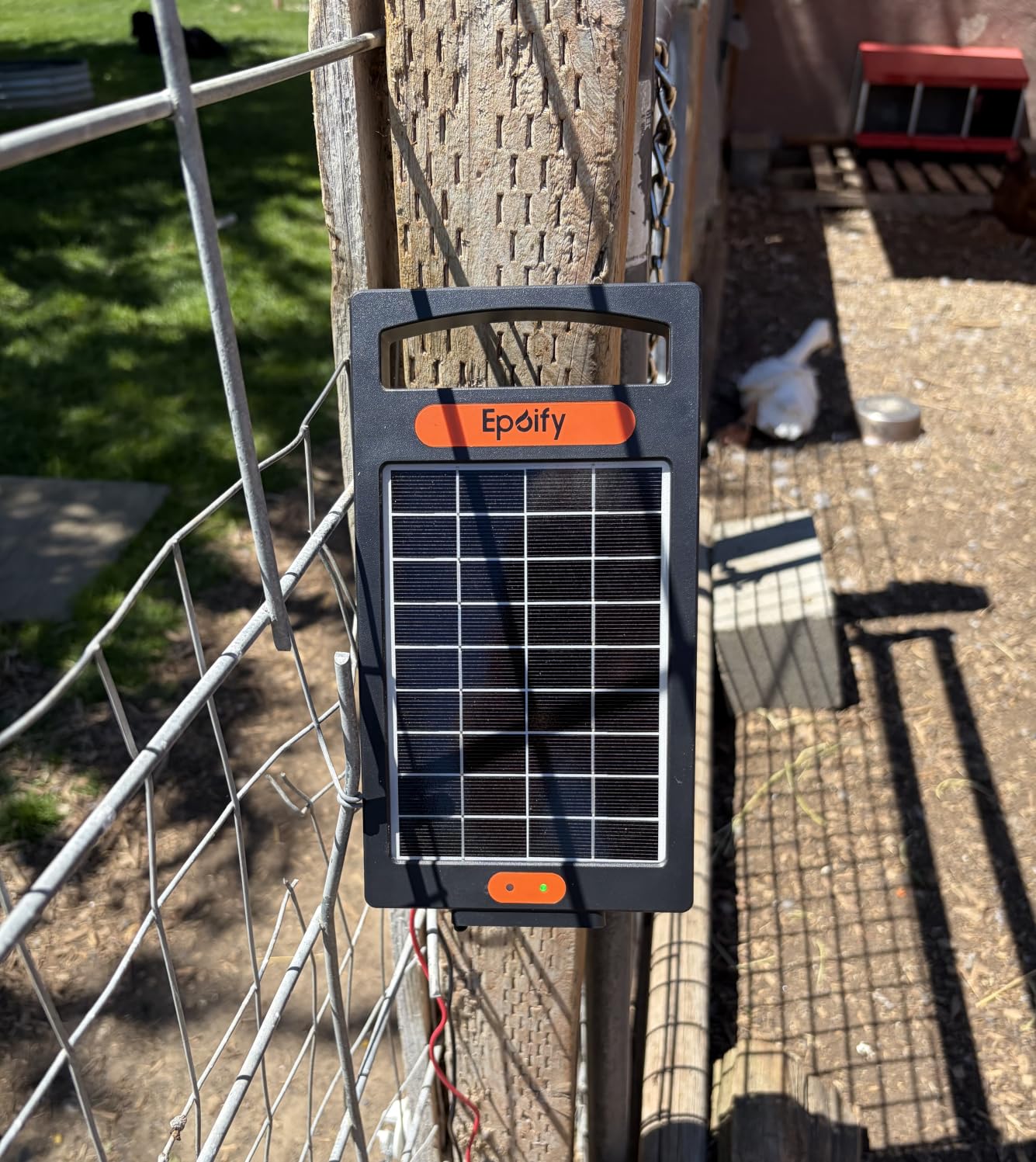
Two charging paths are offered, solar and the included AC adapter, so a dark stretch in midwinter does not have to mean a dead fence. The all-in-one housing is 6.6 by 4.3 by 8.2 inches and light enough to move between paddocks by hand.
The recurring drawbacks are predictable. It needs a full initial charge of 24 hours on AC or three full days of direct sunlight before first use, so plan the install a few days ahead. The ABS housing is less rugged than the metal-cased competitors in exposed weather. And output degrades in shaded or heavily vegetated fence lines, which is the normal summer condition on goat pasture.
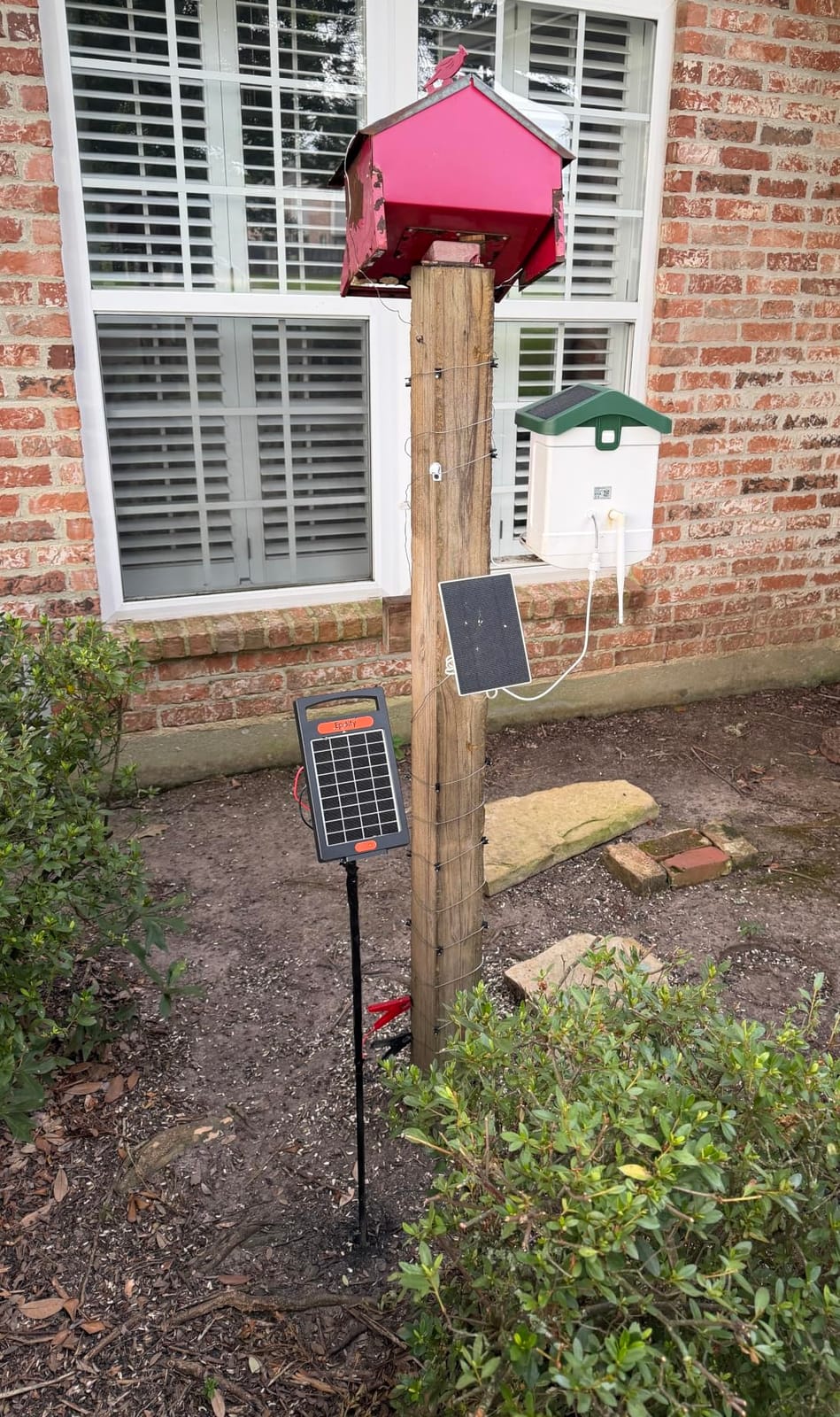
What to check before you buy
Check the 10-mile figure against your actual fence. Like every number on this page, it assumes good wire and clear ground. For 300 to 800 feet of polywire or netting in a mown paddock, the headroom is comfortable.
Check your sun. This panel has no stated charging time in sunlight the way some competitors do, and owners report reduced output in partial shade. If the mounting spot only gets grazing hours rather than full sun, buy a larger panel or accept that you will top up on AC in winter.
Where it falls short
The light housing and the missing charge indicator are the two practical gripes. There is no way to tell from the charger that the battery is flat, so a weekly fence checker walk is not optional with this one. For a first small paddock it is entirely adequate, but for a busy rotational system you will feel the lack of feedback.
It is also a mid-list rating rather than a standout one at 4.2 stars. That is normal for this segment and not a defect signal, but if you want the deepest owner history available, the Zareba at the top of this list has nearly three times the reviews.
5. ANDMON MINI400 – Best for Pushy Herds and Bucks
- Noticeably stronger bite than the sub-0.2J budget chargers
- Two to four hours of sun is enough to run all night per owners
- Day and night pulse modes conserve stored energy
- Holds pushy horses and contains sheep reliably
- Nearly 8 pounds is heavy for a portable paddock
- Battery arrives disconnected and must be wired in first
- No charge gauge and no reset button
- Some chargers go dead after cold weather until connections are reset
This is the point on the list where the output stops being decorative. At 0.4 stored joules the MINI400 delivers a noticeably stronger bite than the sub-0.2 joule chargers, and owners of pushy horses and roaming sheep report that the fence holds where smaller solar chargers failed. For a herd with a buck goat, an aggressive wether or animals that test the line every morning, that difference is the whole point.
The pulse control is genuinely useful in real conditions. It pulses every 1.5 seconds during the day and slows to every 2.9 seconds at night, which conserves stored energy when the fence is not being challenged. Charging speed is another strong point, with owners reporting two to four hours of sun as enough to cover the night.
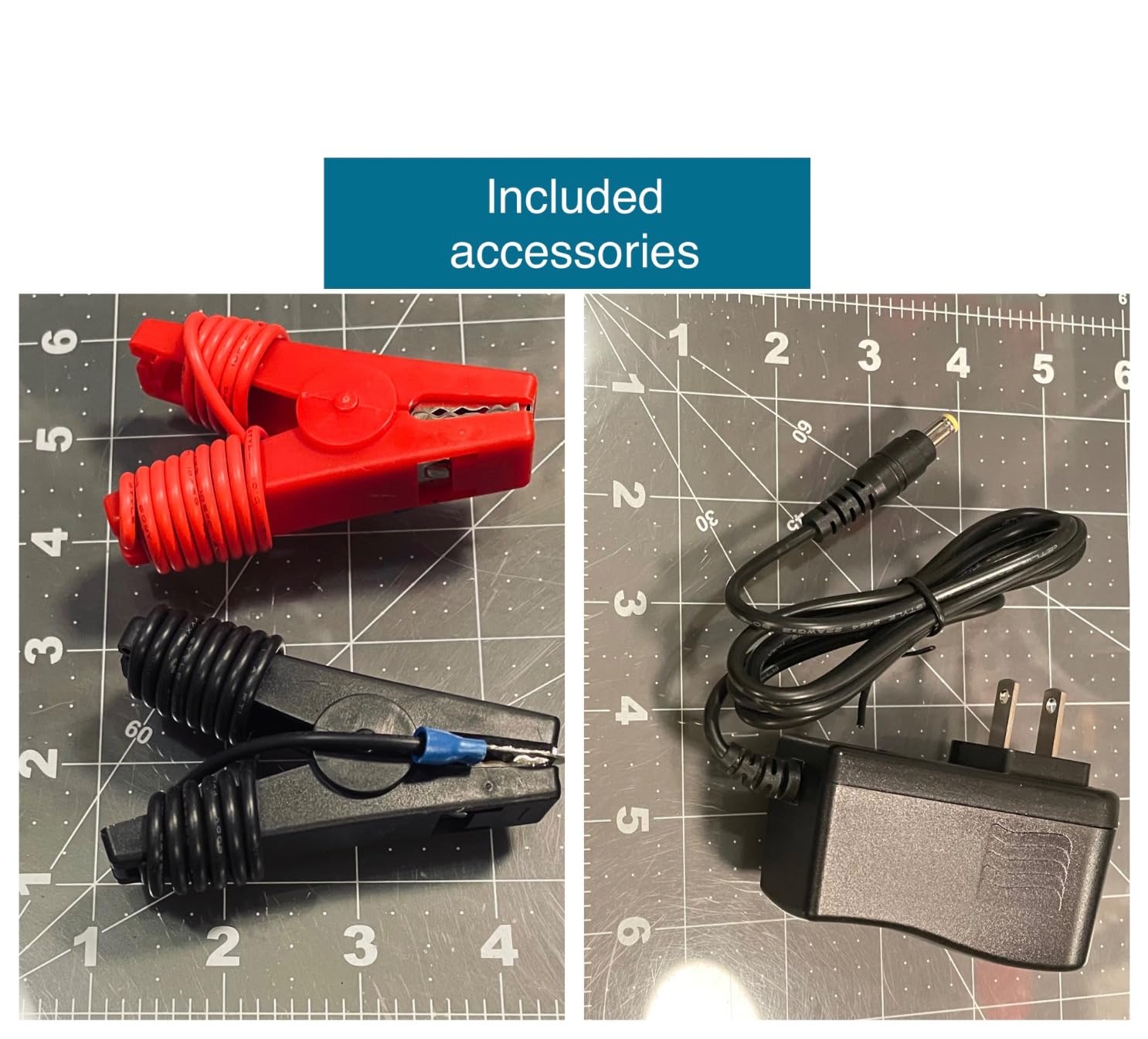
Install is simple once the battery is connected. The internal 12V 4.5Ah sealed lead-acid battery arrives disconnected for transit safety, so you open the battery cover and connect red to red and black to black before first use. After that it mounts on Y-posts, T-posts or wooden posts in under a minute, and the stated runtime is up to 14 days without sunshine.
The recurring practical note is cold weather. Some chargers go dead after a freeze until the battery connections are briefly reconnected, and there is no reset button and no charge indicator on the case to help you diagnose it. At nearly 8 pounds, it is also the heaviest portable charger here and tiring to move between paddocks.
When to spend up here
Spend up here when the animals are testing the fence hard, when the fence is multi-strand over pasture rather than a short portable run, or when vegetation contact is unavoidable. A single owner on a one-acre pasture reported the charge was not strong enough for their situation, so even 0.4 joules has a ceiling when the load is wrong.
Check that you can live with a 7.94 pound charger. If your system involves moving paddocks weekly, weight matters more than output. If it is a fixed subdivision of permanent pasture, it does not.
Where it falls short
There is no way to check the state of the battery from outside the case. With a 4.2 star rating across 259 reviews, the consensus is that it performs as specified once set up, but the feedback loop for troubleshooting is missing.
Both the ANDMON products here need the battery wired in before first use, which is a recurring design choice rather than a fault. Just know it before the charger arrives, because an unconnected battery looks exactly like a dead charger.
6. ANDMON S600 35-Mile – Best for High Output on Multi-Strand Fence
ANDMON S600 Solar Electric Fence Charger – 35 Mile Range, 0.65 Joules Powerful Solar Fence Charger, Ideal for Livestock and Garden Protection
- Largest battery capacity here at 12V 7.2Ah holding 14 days without sun
- Highest stored joule figure in this group at 0.53 J
- Installs on Y-posts T-posts and wooden posts
- Waterproof and UV-resistant casing for full exposure
- Line and earth cables with alligator clips included
- Listing title says 0.65 J while the feature detail says 0.53 J
- Battery arrives disconnected and must be wired in
- Sealed lead-acid battery is not user-replaceable
- Bulkier than smaller chargers for tight paddocks
The S600 is the highest-output solar charger in this group at 0.53 joules of stored energy, and it pairs that with the largest battery here at 12V 7.2Ah. That combination is aimed squarely at larger paddocks and multi-strand fence lines, which is exactly where the lower-output chargers leave animals pushing through.
The 8W panel recharges quickly and there is a DC charging path as well, so a gray stretch is not fatal. Owners report a majority seeing solid, consistent energizing and easy mounting on standard T-posts, Y-posts or wood posts. The waterproof, UV-resistant casing is rated for full outdoor exposure, which is a genuine step up from the ABS housings in the budget tier.
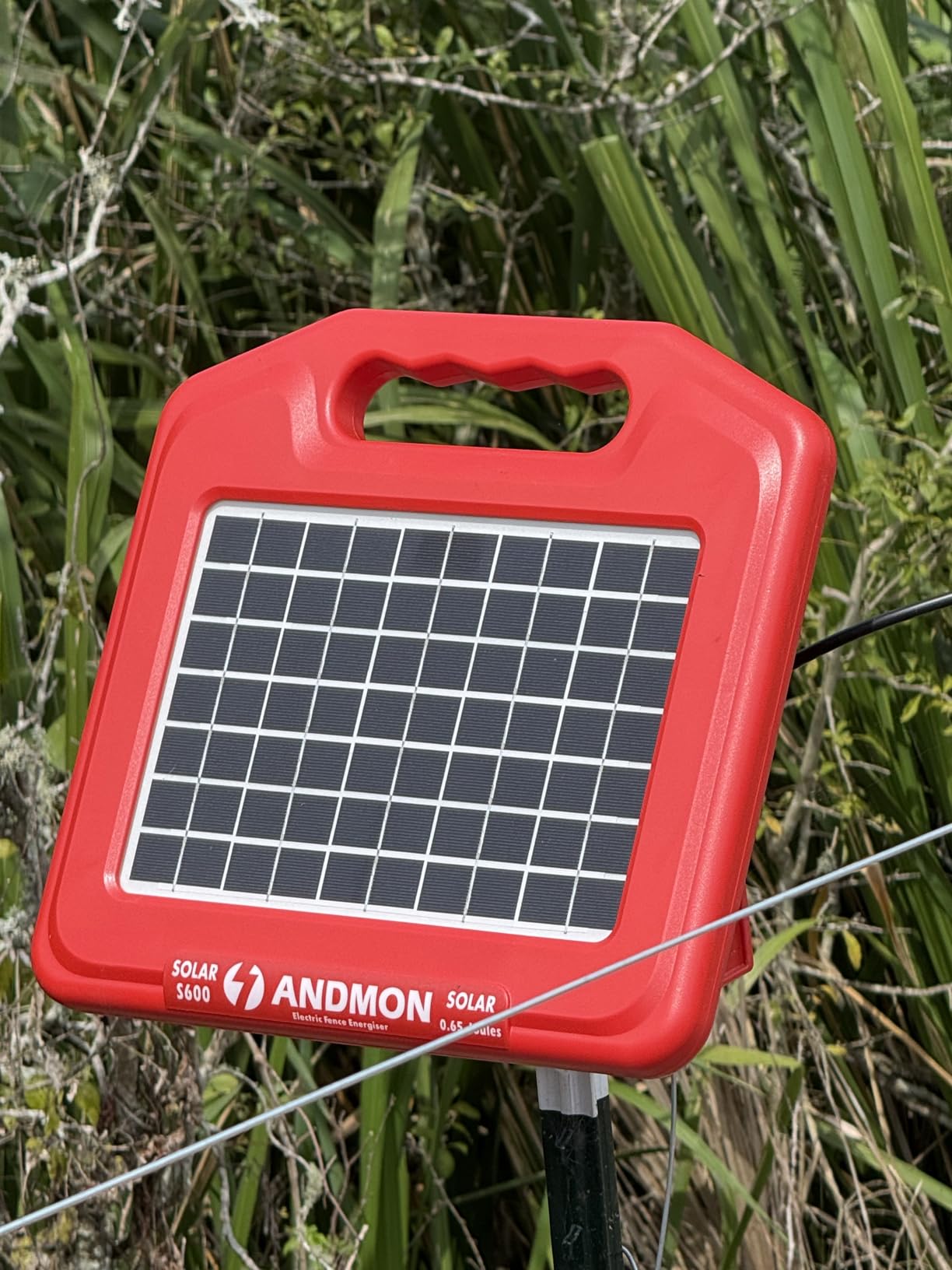
One thing to sort out before you read anything else on the listing. The product title says 0.65 joules while the feature detail says 0.53 joules. Reviewers notice the discrepancy and it is worth knowing which number you are planning around, because your fence sizing should use the lower figure until a manufacturer confirms otherwise.
The internal 12V 7.2Ah sealed lead-acid battery also arrives disconnected and has to be connected before use, and it is sealed rather than user-replaceable. That combination makes the battery a service item rather than a repairable part, so factor the whole-life cost of the charger rather than the sticker figure alone.
How to plan a system around it
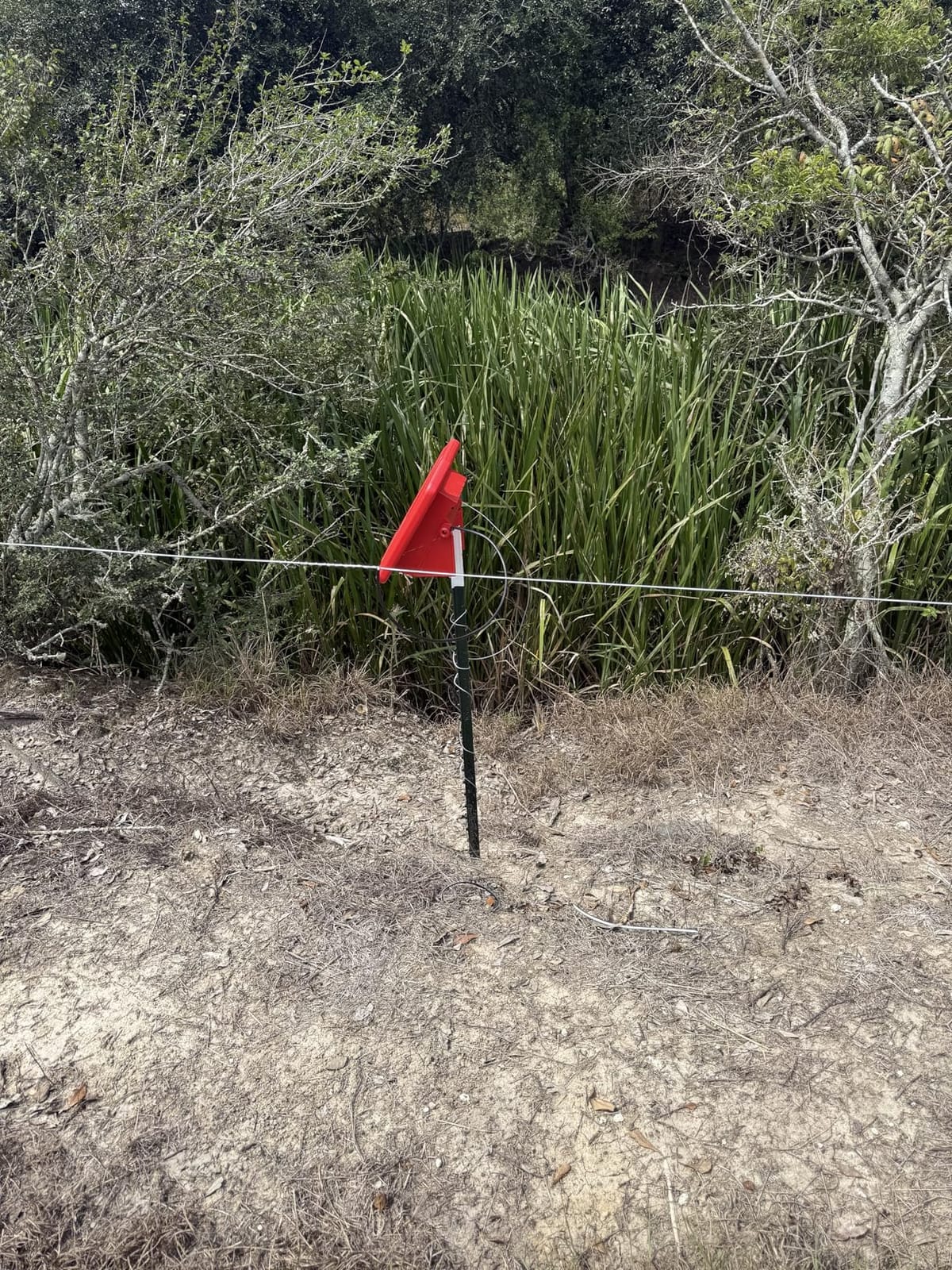
Treat the 35-mile claim as a laboratory number and plan against something far smaller. For a mixed setup with five-strand permanent fence plus one portable net paddock, this charger has the headroom to serve both from one box, which is where the extra output earns its keep.
Grounding scales with output. The rule of thumb is three feet of ground rod per joule of output, which for 0.53 joules means a real rod array rather than a single stake. Budget for two or three rods spaced about 10 feet apart, linked and clamped to the ground terminal.
Where it falls short
It is bulkier than the small chargers here and less pleasant to move, so it belongs on a fixed post rather than in a rotation you rebuild weekly. The sealed battery has no user replacement path, and the listing’s own joule figures disagree with each other, which is a fair signal to check your sizing against the lower number.
At 194 reviews this has the thinnest owner history in the group. That is not a defect marker on its own, but it is less proven over time than the Zareba or Gallagher chargers, and that matters when the charger is going to sit in a field through several winters.
7. Zareba ESP10M-Z 10-Mile – Best for Long Single-Wire Runs
Zareba 10 Mile Solar Powered Low Impedance Electric Fence Charger
- Long-term owners report five to fifteen years on the same case
- 10 miles ideal dropping to 5 miles in light weeds
- User-replaceable internal battery and on/off switch
- T-post bracket installs fast in new paddocks
- Higher cost than most solar chargers of similar output
- Case is not fully waterproof and one owner found water damage
- Shock weakens on cloudy days or in partial shade
- Some chargers fail within a couple of seasons
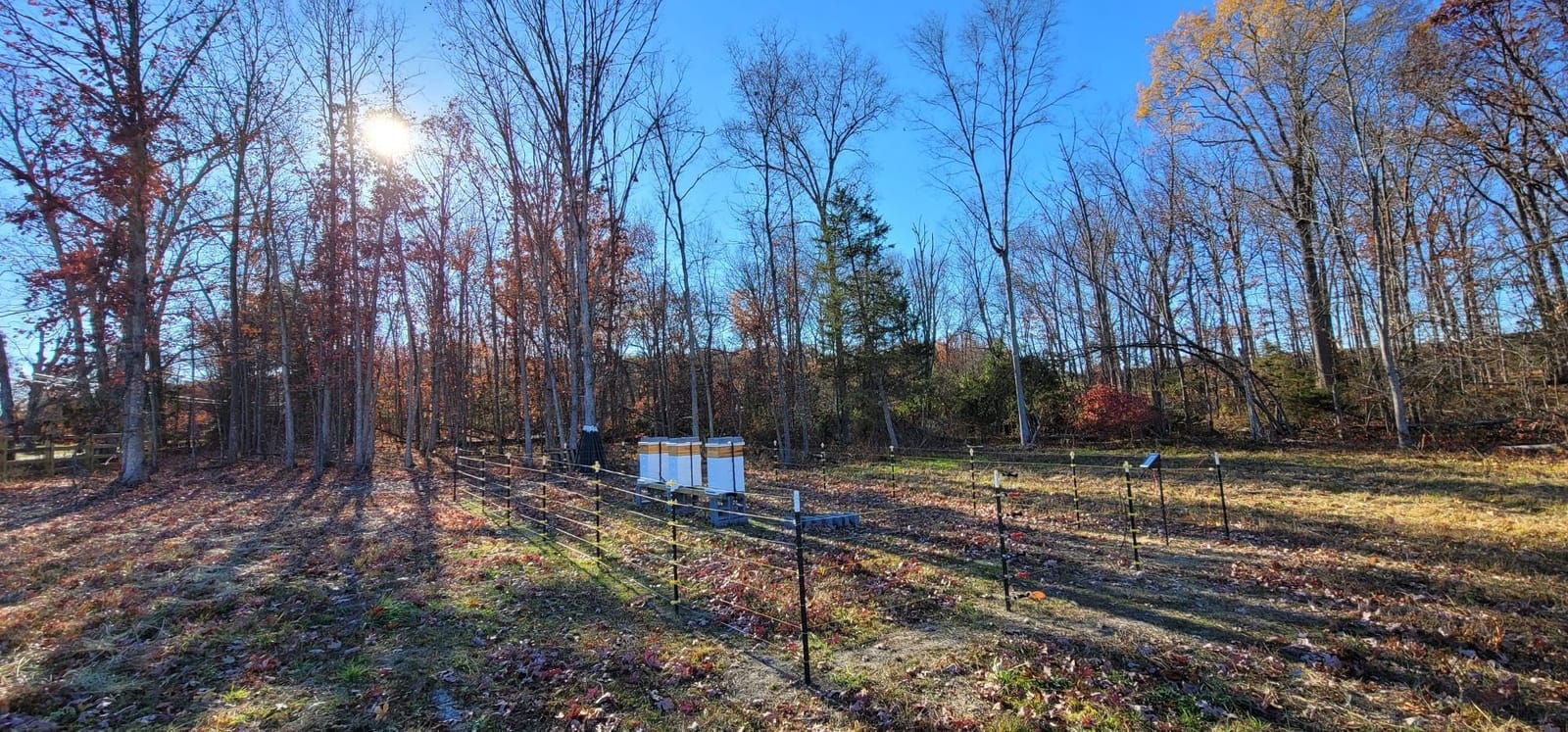
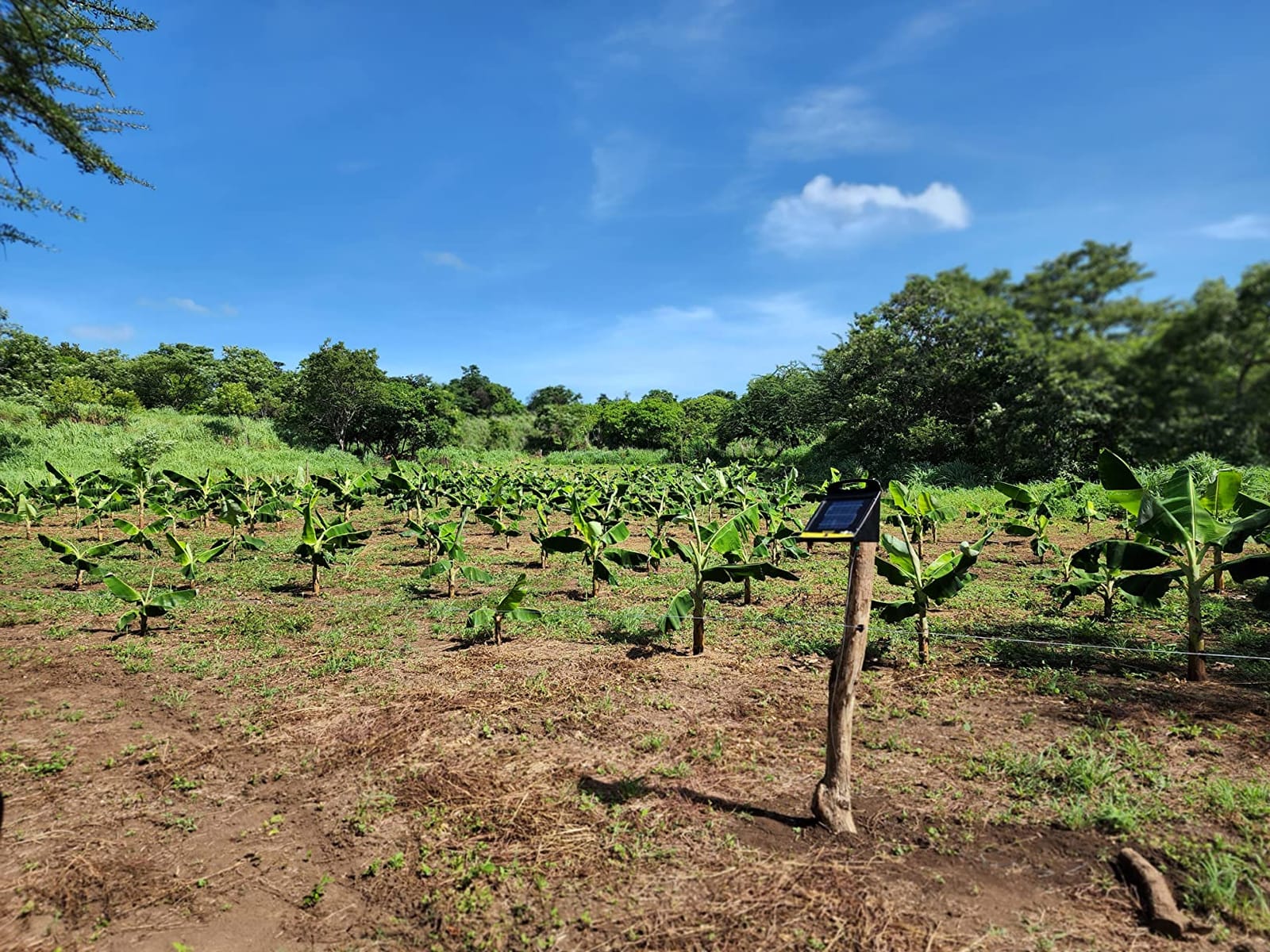
This is the longevity story of the group. Long-term owners describe running the same ESP10M-Z for five years, and some for fifteen, with only a switch and a battery replacement along the way. The T-post bracket plus a simple two-rod ground setup is repeatedly called out as fast to install in bee yards and small pastures.
The output figure is the same 0.15 joules as the 5-mile Zareba, but the coverage claim doubles: up to 10 miles of electric fence in ideal conditions, or 5 miles in light weeds. For long single-wire runs on open ground, that headroom is the difference between comfortable and marginal.
One detail that separates this from the 5-mile Zareba is serviceability. The internal battery and the on and off switch are both user-replaceable, so a charger that dies at eight years can be brought back rather than discarded. Several owners bought it specifically as a drop-in replacement for the same model they already had.
The main negative thread is weather sealing. At least one owner opened a failed charger to find water damage on the motherboard after about a year, and several note the pulse feels weak on cloudy days or in limited sun. A small share of chargers arrived unable to energize the wire or failed within a couple of seasons.
When this is the right unit
Pick this when your fence is long and mostly single-wire, or two-strand at most, and you want the case to last a decade. The replaceable battery and switch make it the cheapest long-term ownership option here if you keep it more than five years.
Check the sun on your mounting spot. Multiple reviews describe weak pulses in partial shade, and that is a placement problem rather than a product problem. A T-post at the open end of a paddock with full southern exposure will behave nothing like one under a tree line.
Where it falls short
It costs more than most solar chargers of similar joule output, and at 4.2 stars across 598 reviews it sits below the 5-mile Zareba. If your fence is short and heavily vegetated, the 0.15 joule output is the limiting factor, not the mileage claim, and you would be better served by a 0.4 joule unit.
The case is not fully waterproof, so a wall or post position that keeps driving rain off the panel is worth choosing deliberately. The bright on and off switch for fence work is genuinely useful and worth looking for on any replacement.
8. Pet and Livestock HQ S100 – Best for All-in-One Portability
Solar Electric Fence Charger 5 Mile – Solar Powered Energizer for Livestock – Low Impedance Solar Fencer Battery Powered
- Panel battery and leads all in one box with nothing to assemble
- 2.3W panel charges in low light conditions
- Polycarbonate case resists rust and corrosion
- One owner ran it through an entire dark wet winter month
- Shock is light and some compare it to a low-setting mains charger
- Ground lead is short so rods must be driven deep
- Rear-mounted switch and status light
- Will not mount directly to a star picket
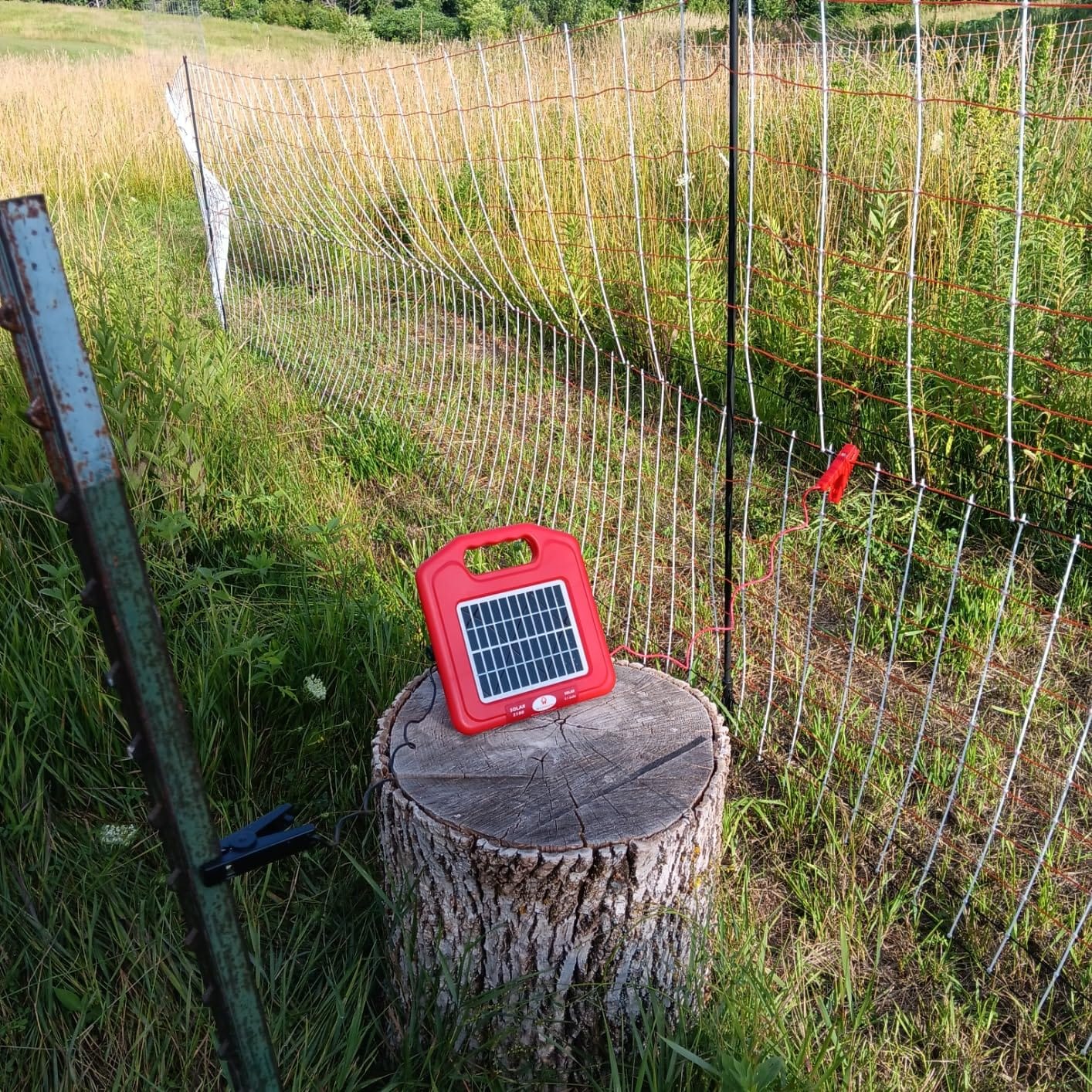
The S100 is the cleanest all-in-one package here. The 2.3W solar panel, the Panasonic 7.4V 3.4Ah lithium-ion battery and the leads all come in one box, so there is no separate battery enclosure to build and weatherproof. That is the whole appeal for someone putting up a temporary paddock in a field with no power and no workshop.
The panel charging in low light is the practical strength. At 2.3W it is small, but owners report it holding a charge for up to 10 days without sun, and one buyer confirms it stayed charged through the darkest, wettest month of the year in Canada. The heavy-duty polycarbonate enclosure resists rust and corrosion.
Performance against deer, rabbits and digging dogs on garden perimeters is widely reported as effective. It connects to netting fence, wire, polytape, polyrope or polywire, so it is not tied to one fence type. The manufacturer backs it with a 1-year warranty, the shortest in this group, and replaced a faulty charger quickly when asked.
The recurring limit is shock strength. At 0.1 joules the output is genuinely light, and some owners compare it to a low-setting mains charger. For goats that means it works best on short runs, mown ground and animals already accustomed to the fence, not on a demanding permanent pasture line.
What to check before you buy
Check the ground lead length. It is short, which means the rod has to be driven deep and close or you need to extend the lead. Owners who skipped this report weak results for the same reason as every other charger in this list.
Check the controls location too. The switch and status light are on the back of the case, not the front, so checking whether the charger is live means walking around it. Minor, but it matters in the dark at the far end of a field.
Where it falls short
It is the weakest output in the group at 0.1 joules and the 1-year warranty is the shortest. Buyers who tried it on a demanding multi-strand line found the shock too light, and it does not mount directly to a star picket, so you need a proper post.
It is also the one charger here with a reported heat problem, with a few owners saying it stopped charging when the enclosure got hot in direct sun. Position it where the case gets airflow rather than baking in full afternoon sun on a south-facing wall.
9. Gallagher S6 Solar Fence Charger – Best for Gardens, Chicken Coops and Small Pens
- Lithium iron phosphate battery resists overheating and holds charge for weeks
- Five-minute single-rod installation with a bright green live LED
- 3-year warranty with US-based support
- Two-plus years of use reported by several owners
- Shock is light and not enough for horses
- No T-post mounting option on this model
- Battery is sealed and must be replaced by the manufacturer
- Instructions are thin on setup detail
The S6 is the smallest output in the group at 0.06 joules, and it exists for a specific job: gardens, chicken coops, goat pens, pet enclosures and squirrel or raccoon deterrence on a deck. If your fence is a single portable paddock of 200 feet in mown grass, this is comfortably sized. If you have horses, owners are explicit that it is not enough. Do not stretch a garden-pen charger across a pasture and then wonder why the line feels soft.
The battery is the reason to like it. It uses lithium iron phosphate chemistry, which contains no cobalt and resists overheating, and it is rated for up to three weeks of operation without sunlight. The green status LED makes it easy to confirm the charger is live at a glance, which sounds minor until you are standing in a dark field wondering whether the fence is on.
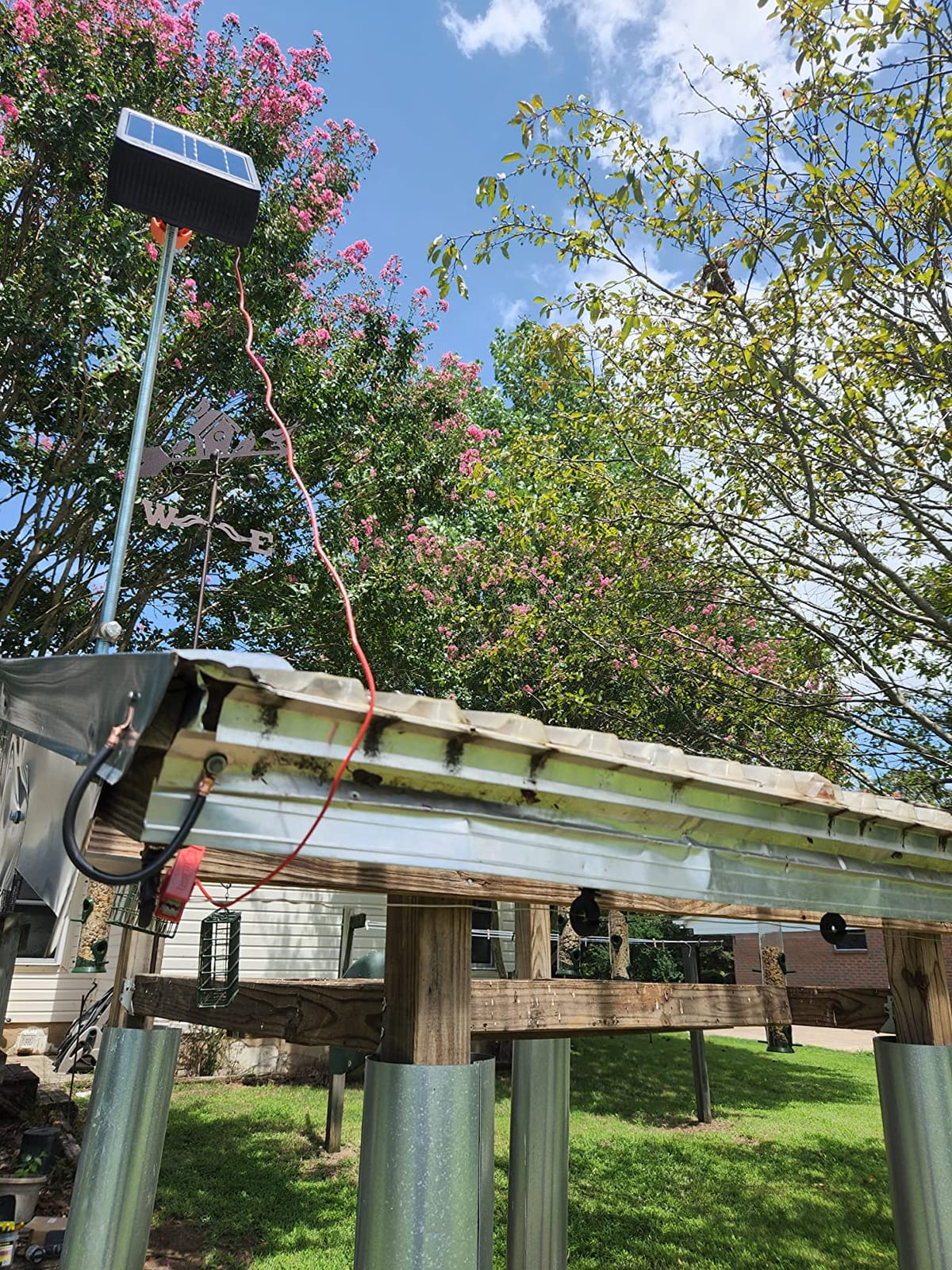
Installation takes under five minutes because the ground rod is both the mount and the electrical ground. It clamps to an unpainted grounding rod up to half an inch in diameter and supports no other grounding method, so drive the rod at least 18 inches into the soil. Digital pulse control holds steady voltage through light vegetation.
Most owners report two or more years of reliable service and say Gallagher customer support resolves setup problems well. The drawbacks are consistent: the battery is sealed and has to be replaced by the manufacturer, the instructions are thin, and one owner reported no charge after six days of direct Florida sun.
What to check before you buy
Be honest about the animal load. A 0.06 joule charger is sized for short fences, light animals and light vegetation. Multiple owners describe the shock as light duty, and horse owners report the animals largely ignore it. If goats are jumping this fence, more output is the answer, not more training.
Check that you are comfortable with a sealed lithium pack. Three-plus years of sunlight and temperature swings on a pack that only the manufacturer can replace is a different ownership experience from a Zareba with a user-swappable battery.
Where it falls short
It does not mount to a T-post. The rod mount is the only supported method, so you need a properly driven ground rod rather than whatever post is already there. That is a genuine limitation for anyone building a temporary paddock around existing T-posts.
The 0.06 joule output is the binding constraint. This is a garden and small-pen charger, and treating it as a pasture charger is the most common mismatch we see in buyer questions.
Solar vs Battery-Backed vs Mains Electric Fence Chargers
Solar is the obvious choice when there is no power at the paddock, and for a portable net fence that moves every few weeks it is the only sensible option. The trade-off is that you get what the sun gives you, so a solar charger has to be sized for the worst week of the year rather than the average. That pushes you toward more output and more battery than the fence strictly requires on a sunny July day.
A split system, which is the approach regulars on the Beesource forums favour, is a solar charge controller feeding a 12V deep-cycle marine battery with a 12V DC fence charger on the output. It is more to build and more to maintain, but the battery is replaceable and cheap, the fence can be wired in permanently, and you can add battery capacity to extend runtime rather than replace the charger.
Mains charging wins in one specific situation: a fixed yard fence within reach of an outlet, with no rotational moves. It is cheaper, stronger and never lets you down on a cloudy Tuesday. The reason it does not top this list is that goat fencing usually means a field, and fields do not have outlets.
Whichever architecture you pick, check whether the charger accepts both solar and AC input. Several products here include an AC adapter, and that single feature converts a failed winter into a top-up instead of an emergency.
Installation Checklist: Mounting, Panel Angle, and Grounding
Grounding is where most weak-shock complaints come from, and it is a solvable problem. The rule of thumb is three feet of ground rod per joule of output. A 0.15 joule charger needs about 4.5 feet of rod in total, so a single 8-foot rod is generous. A 0.53 joule charger needs closer to 10 feet, which is why high-output models ask for multiple rods.
Set the rods at least 10 feet apart, link them with insulated wire, and clamp the assembly to the ground terminal. One product in this group gives the geometry explicitly: rod one within 20 feet of the energizer, rod two 10 feet from rod one, rod three 10 feet from rod two. Keep the whole array at least 50 feet away from house, barn and utility grounding. Add more rods in dry or rocky soil rather than fewer.
Mount the panel where it gets full sun, angled toward the equator rather than straight up or facing north. The Zareba bracket rotates 360 degrees specifically so you can dial the angle after mounting. The Gallagher chargers mount to the ground rod itself, which removes a post from the equation but means the rod has to be placed where the sun is good rather than where the fence is convenient.
Then charge the charger before you trust it. Both Gallagher models specify two to three days of direct sun before first use. The Epoify charger asks for a full 24 hours on AC or three full days of sunlight, and two of the ANDMON chargers arrive with the internal battery disconnected so you must wire it in before anything happens. Skipping this step is the most common reason a new fence reads dead on day one.
Finally, test the far end, not the fence lead. Clip a fence checker to the last wire at the point furthest from the energizer and read it. If you get 4 kV or better in normal summer conditions with vegetation present, the system is doing its job for goats.
Why Goats Break Electric Fences and What the First 30 Days Should Look Like
Goats are not cattle, and they do not respect a fence because it is heavy or because the wire is taut. They climb, they jump, they look for the corner where the netting meets the ground, and they will push through a wire that only stings. Multiple sources make this point consistently, and it is the single biggest reason goat keepers conclude their charger is faulty when it is not.
Most electric fences fail in the first weeks because the animals were never taught what the fence means. Treat the first 30 days as a training period rather than a containment test. Walk the fence line with the goats inside it, let them meet it a few times, and do not leave them in a pen they can escape during the learning phase. Many keepers report better results with a temporary interior electric line than with a stronger charger.
Bait the fence deliberately. Some keepers run a strand of polywire a few inches inside the netting at nose height, so the goat touches the stronger line first and never has to work out how to get through the outer one. Others simply watch which panel the animals gather at and fix that panel rather than rebuilding the whole perimeter.
Keep the vegetation down for the first season at minimum. A weak hit from a low-impedance charger combined with a full-height grass line is how fences get learned to be safe to push through. As the herd grows, upgrade the charger before you add acreage. Several owners size their first charger for the paddock they have, then discover in year two that it no longer covers the expanded block.
One more thing: keep mineral and salt away from the fence line. Goats will work a mineral feeder sideways against any wire they can reach, and that contact leaks the pulse to earth. Moving the feeder ten feet back solves more weak-shock complaints than replacing a charger does.
How to Test and Troubleshoot a Weak Shock
Work through these in order. Each step is cheap and rules out a more likely cause than the one after it.
- Confirm the battery first. If the charger arrived with the internal battery disconnected, nothing will happen. On chargers with a status light, confirm the light is showing live.
- Walk the fence with a checker. Start at the energizer and walk to the far end. If voltage collapses partway along, the problem is in the fence line, not the charger.
- Read the far end. This is the number that matters. Below 2 kV in dry conditions means the system is not doing its job; 4 kV or more is fine for goats and sheep.
- Test the ground system. Disconnect the fence lead and read the charger into the ground array alone. A healthy system reads high with nothing attached. A low reading means rods, connections or soil.
- Clear vegetation. Walk the line and cut back anything touching the hot wire. Grass and weeds are the most common load on a goat fence, and cutting them can move the reading more than a new charger will.
- Check every connection. Fence leads, alligator clips and terminal posts corrode faster than people expect. Clean them and re-tighten before replacing anything.
- Count ground rods. Two or three rods spaced about 10 feet apart, with the array at least 50 feet from any other grounding system, is the baseline. Add rods in dry or rocky soil.
If the far-end reading is fine but goats still push through, the problem is not electrical. Look at training, at the fence height for the animals, and at where a mineral feeder or water trough sits against the line. Owners on livestock forums report the majority of “my fence does not work” cases resolve to one of those three things.
Buying Guide: What to Look for in a Solar Fence Charger
Output joules, honestly assessed. This is the number that decides whether animals stay in. Size to the fence you will actually build in two years, not the one you have now, and remember that goats in a buck herd need more than goats in a quiet dry lot. Below 0.1 J is garden and poultry territory.
Stored joules versus output joules. Stored energy is what the battery holds, output is what reaches the fence. Manufacturers quote them inconsistently, so treat a headline stored figure as an upper bound and plan on the lower number for sizing.
Low impedance. Every charger on this page is a low-impedance design, which means voltage rises automatically when vegetation loads the line. This is the architecture that survives a goat fence in August, and it is the reason the weaker-looking products here can still throw a usable shock.
Battery chemistry and dark-weather runtime. Lithium iron phosphate, as in the Gallagher S6, resists cold and heat and is rated for weeks without sun. Sealed lead-acid, as in the ANDMON chargers, is heavier and cheaper but a sealed pack that fails is finished. Compare the stated days without sunlight and assume you will get about half in a bad winter.
Clean-fence miles versus typical-fence miles. Manufacturers increasingly publish both, and the difference is enormous. The S12’s 4 miles is single-wire in ideal conditions; the same listing says 0.6 miles for multi-wire or vegetated fence. Plan with the lower number every time.
Grounding demands. Three feet of rod per joule of output is the standard rule, and higher-output units need real rod arrays rather than a single stake. Include ground rods, insulated ground wire and a proper clamp in your system budget, not just the charger.
Serviceability. A user-replaceable internal battery and switch is the difference between a ten-year charger and a two-year one. The Zareba chargers allow it, and owners get a decade or more out of the case. Sealed batteries, lithium or lead-acid, are service items.
Weatherproofing and warranty. IPX4 housings handle rain and snow. Fully sealed cases with metal enclosures have the better long-term record than ABS. Warranty length is a reasonable proxy for manufacturer confidence, and 3 years is common among the better units here.
Charge feedback. A status light or fence-OK indicator tells you the state of the system without a walk. Several products here have none, which means a weekly fence checker visit is part of the maintenance plan rather than an occasional check.
Mounting method. T-post brackets, Y-post brackets, wall mounts and rod mounts are not interchangeable. A rod-mount charger needs a properly driven rod, and a T-post bracket charger cannot be retrofitted onto a rod without extra hardware. Decide your post and fence type before you pick the charger.
Frequently Asked Questions
How many joules are needed for goats?
Plan on 0.1 to 0.2 joules for a portable net paddock of 300 to 500 feet in mown grass, 0.3 to 0.6 joules for multi-strand permanent pasture fence of 1000 to 3000 feet, and 0.6 joules or more once grass touches the wires, the fence is longer, or the herd includes bucks and kids. Joules measure the energy behind the pulse rather than shock intensity, and low-impedance designs push voltage through vegetation automatically.
What size electric fence charger do goats need?
Size the charger to the fence you will have in two years rather than the one you have now. Under 0.1 joules suits garden pens and short poultry runs. Between 0.1 and 0.2 joules covers portable netting and light two-strand setups. Between 0.3 and 0.6 joules handles multi-strand permanent pasture. Above that, you are buying headroom for heavy vegetation and stubborn animals rather than extra safety.
Is 2.2 joules enough for goats?
Far more than goats need on any normal fence. A 2.2 joule charger is built for long permanent runs, dense brush or predator pressure, and it will make the fence unpleasant for anyone who brushes against it. For a goat paddock, 0.2 to 0.6 joules is the working range, and farmers posting in AgTalk warn that very high-energy chargers short out more easily when vegetation touches the wire.
Why is my electric fence shock so weak?
Work through the causes in order: check the internal battery is connected and charged, walk the fence with a checker to find where voltage collapses, read the voltage at the far end, then disconnect the fence and test the charger into the ground array alone. A low reading into the ground means rods, connections or dry soil. The most common causes are too few ground rods and vegetation touching the hot wire.
Do solar fence chargers work in winter?
They do, provided you size for the worst week rather than the average one. Units rated at 10 to 25 days without sunlight give real protection in a dark stretch, and lithium iron phosphate packs hold up better in cold than sealed lead-acid. Charge the unit for two to three full days of direct sun before relying on it, and keep the panel angled at the sun with no shade on the panel.
How long does a solar fence charger battery last?
Expect three to five years for a sealed battery that cannot be replaced, and a decade or more for a case whose internal battery and switch owners can replace themselves. Charge level matters more than age, so keep the panel clear and unshaded. Long-term owners of the replaceable-battery units report running the same charger for five to fifteen years with a battery swap along the way.
Conclusion: Which Solar Fence Charger Suits Your Goats
For most goat keepers, the Zareba ESP5M-Z is the right first buy. It has the deepest owner history in the group, a bracket that fits any post, two weeks of dark-weather runtime and a user-replaceable battery that turns a case into a decade-long purchase. Pick the Gallagher S12 if you would rather drive one ground rod than install a post and a separate rod array, and pick an ANDMON MINI400 or S600 when the herd is pushy, the fence is multi-strand, or grass is going to touch the hot wire every August.
Whichever of these best solar electric fence chargers for goats you choose, install three ground rods before you blame the charger, and spend the first month training the animals rather than testing the fence. That combination does more for a goat fence than any amount of extra joules. Last reviewed in October 2026.