

I was halfway through making my sour cream cake donuts one Saturday morning when I realized the sour cream tub in my fridge had somehow turned into a science experiment. You know that moment. You open the lid, and instead of creamy white goodness, you find something that looks back at you. I had two choices: abandon the recipe or find a sour cream substitute that would actually work.
I went with option two, and honestly, it changed how I cook. Because here is the thing about sour cream: it is a fermented dairy product made by introducing lactic acid bacteria to heavy cream. That fermentation process creates the signature tangy flavor and thick, spoonable texture we all love. But when you do not have it on hand, several everyday ingredients can step in and do a remarkably good job.
Whether you ran out mid-recipe, are cooking for someone with a dairy allergy, or just want a lighter option, this guide covers every sour cream substitute worth knowing. I have tested each one in my own kitchen, and I will give you the exact swap ratios, flavor notes, and best-use scenarios so you can pick the right one with confidence.
Table of Contents
Quick Reference: Best Sour Cream Substitutes at a Glance
Before we get into the details, here is a cheat sheet you can pin to your fridge or bookmark for emergencies. Every substitute listed here works, but they each have different strengths. For more baking science like this, check out our baking soda vs baking powder guide.
| Substitute | Swap Ratio (for 1 cup sour cream) | Best For | Dairy-Free? |
|---|---|---|---|
| Greek Yogurt | 1 cup (1:1) | Baking, dips, toppings | No |
| Cottage Cheese (blended) | 3/4 cup + 2 tbsp milk + 1 tsp lemon | Dips, baking, casseroles | No |
| Crème Fraîche | 1 cup (1:1) | Soups, sauces, fancy toppings | No |
| Buttermilk | 3/4 cup + 1/3 cup butter | Baking only (cakes, muffins) | No |
| Mexican Crema | 1 cup (1:1) | Tacos, enchiladas, nachos | No |
| Coconut Cream | 1 cup cream + 1 tbsp lemon juice | Vegan baking, curries, dips | Yes |
| Cashew Cream | 1 cup soaked cashews blended with liquid | Vegan dips, pasta, toppings | Yes |
| Mayonnaise | 1 cup (thin slightly with water) | Baking, creamy dressings | Varies |
| DIY Sour Cream | 1 cup cream + 1 tbsp lemon juice | Anything (exact match) | No |
Best Dairy-Based Sour Cream Substitutes
These are your closest matches. If you eat dairy, start here. Each one brings something slightly different to the table in terms of tang, thickness, and how it behaves when heated.
1. Greek Yogurt (The Closest Match)

Greek yogurt is the number one sour cream substitute, and it is not even close. It has a similar tangy flavor, a thick and creamy consistency, and it works in almost every situation where you would normally reach for sour cream.
How to use it: Swap it 1:1. One cup of sour cream equals one cup of Greek yogurt. Use full-fat plain Greek yogurt for the best results. The lower-fat versions work too, but they are slightly thinner and less rich. If you are making something where texture really matters, like a cheesecake, go with whole-milk Greek yogurt. I actually use this swap regularly in my easy no-bake cheesecake and nobody has ever noticed the difference.
Best for: Baking (cakes, muffins, brownies), dips, salad dressings, baked potato toppings, chili. Greek yogurt also shines in our blood orange cardamom cake, where full-fat plain Greek yogurt works as a perfect 1:1 sour cream swap.
Heads up: Greek yogurt is slightly more tart than sour cream. If you are serving it as a topping and want a milder taste, stir in a tiny pinch of salt and a few drops of olive oil to round out the flavor.
2. Cottage Cheese (Blended for Smoothness)
Cottage cheese might not be the first thing that comes to mind, but blended properly, it transforms into a surprisingly convincing sour cream stand-in. I learned this trick from a thread on r/Cooking where several home cooks swore by it, and after trying it myself, I get the hype.
How to make it: Place 3/4 cup of cottage cheese in a blender along with 2 tablespoons of milk and 1 teaspoon of fresh lemon juice. Blend on high for 30 to 45 seconds until completely smooth. Scrape down the sides once during blending. The result should be a creamy, pourable mixture that closely mimics sour cream’s texture.
Best for: Casseroles, dips, baking recipes where sour cream gets mixed into a batter, creamy dressings.
Heads up: Do not skip the blending step. Unblended cottage cheese curds will give your dish a lumpy texture that nobody wants. Also, use small-curd cottage cheese if you have a choice, as it blends smoother.
3. Crème Fraîche (The French Upgrade)
Crème fraîche is essentially sour cream’s fancier French cousin. It is made the same way, by fermenting cream with bacterial cultures, but it has a higher fat content and a milder, less acidic tang. Think of it as sour cream that went to finishing school.
How to use it: Swap 1:1. One cup of crème fraîche replaces one cup of sour cream in any recipe.
Best for: This is where crème fraîche really shines: stirring into hot soups and sauces. Unlike sour cream, which can curdle if you boil it, crème fraîche is heat-stable. It will not break or separate, making it the smartest choice for pan sauces, creamy pasta dishes, or finishing a pot of tomato soup.
Heads up: It is more expensive than sour cream, so this is a “special occasion” substitute rather than an everyday one. But if you happen to have it in your fridge, it works beautifully.
4. Buttermilk (For Baking Only)
Buttermilk brings the acidity and tang that sour cream contributes to baked goods, but it is much thinner. That means it works well for baking, where the exact thickness matters less, but it fails as a topping or dip base.
How to use it: Replace 1 cup of sour cream with 3/4 cup of buttermilk plus 1/3 cup of melted butter. The butter adds back the fat that buttermilk lacks, keeping your baked goods rich and tender. If you are making something where extra liquid will not ruin the batter, you can use a straight 3/4 cup of buttermilk with no butter.
Best for: Cakes, muffins, pancakes, waffles, biscuits, any baked recipe where sour cream adds moisture and tenderness. My lemon raspberry donuts use buttermilk, and the batter works just as well with this swap.
Heads up: Do not try to dollop buttermilk on a taco. It will run everywhere. This is strictly a baking substitute.
5. Mexican Crema (The Authentic Swap)
If you have ever wondered what people in Mexico actually use on their tacos instead of sour cream, the answer is Mexican crema. It is a naturally cultured cream that is slightly sweeter, lighter, and thinner than American sour cream. The flavor is delicate and slightly tangy without the sharp bite.
How to use it: Swap 1:1. Mexican crema is a direct replacement for sour cream in any Mexican or Tex-Mex dish.
Best for: Drizzling over tacos, enchiladas, tostadas, nachos, elote (Mexican street corn), and chilaquiles. It is also excellent stirred into black bean soup or pozole.
Heads up: Mexican crema is thinner and pourable compared to sour cream. If you need a thicker consistency for a dip, let it drain through cheesecloth for 30 minutes in the fridge to thicken it up.
Best Dairy-Free Sour Cream Substitutes
Whether you are vegan, lactose-intolerant, or just trying to eat less dairy, these plant-based options bring real creaminess and tang to your cooking. Some require a bit more effort than the dairy swaps, but the results are worth it.
6. Coconut Cream (Vegan-Friendly)
Full-fat coconut milk is a surprisingly effective dairy-free sour cream substitute. The trick is using only the thick cream that rises to the top of the can when you refrigerate it overnight.
How to make it: Place a can of full-fat coconut milk in the fridge for at least 12 hours (overnight is ideal). Open the can without shaking it. Scoop out the thick, solid cream from the top and transfer it to a bowl. Discard or save the coconut water at the bottom. Add 1 tablespoon of fresh lemon juice or apple cider vinegar to the cream and whisk until smooth. This gives you about 1 cup of coconut sour cream.
Best for: Curries, vegan baking, tropical-flavored desserts, and creamy dips where a hint of coconut flavor is welcome.
Heads up: Yes, this will taste slightly like coconut. In my experience, that is a bonus in curries and tropical dishes, but it can feel out of place in a classic beef stroganoff. Reddit’s vegan communities recommend adding an extra squeeze of lemon and a pinch of salt to mask the coconut flavor when you need a more neutral taste.
7. Cashew Cream (The Vegan Chef’s Choice)
If there is a “gold standard” in the vegan sour cream world, this is it. Cashew cream is smooth, rich, and neutral-tasting, with a creamy consistency that is about as close to real sour cream as a plant-based ingredient can get.
How to make it: Start by soaking 1 cup of raw cashews in hot water for at least 4 hours (or in boiling water for 30 minutes if you are in a rush). Drain the cashews and add them to a high-speed blender with 1/2 cup of water, 2 tablespoons of fresh lemon juice, 1 teaspoon of apple cider vinegar, and a pinch of salt. Blend on high for 60 to 90 seconds until silky smooth. Add more water, 1 tablespoon at a time, if the mixture is too thick. This yields approximately 1.5 cups of cashew sour cream.
Best for: Topping nachos and baked potatoes, stirring into pasta sauces, making vegan ranch dressing, and any recipe where you need a neutral-tasting creamy element.
Heads up: You need a good blender for this. A standard food processor will leave tiny cashew grit. If your blender is not powerful, soak the cashews longer (up to 8 hours) to soften them as much as possible before blending.
8. Mayonnaise (The Pantry Secret)
This one surprises people, but mayonnaise works as a sour cream substitute in specific situations. Think about it: mayo is essentially oil and egg yolks emulsified with acid (vinegar or lemon juice). That acidity mimics sour cream’s tang, and the fat content keeps baked goods moist.
How to use it: Replace 1 cup of sour cream with 1 cup of mayonnaise. For a closer texture, thin the mayo with 2 to 3 tablespoons of milk (or water for dairy-free) and stir in 1 teaspoon of lemon juice to boost the tang.
Best for: Baking (especially chocolate cakes and brownies where the mayo flavor disappears), creamy salad dressings, and casseroles. It also works in our diabetic-friendly snacks recipes where lower-carb options are needed.
Heads up: Do not use mayo as a dollop on a baked potato. The texture and flavor are wrong for that. Multiple Reddit threads confirm that mayo works great in baking but feels off as a direct topping. Trust me on this one.
How to Make Sour Cream at Home (5-Minute DIY Recipe)
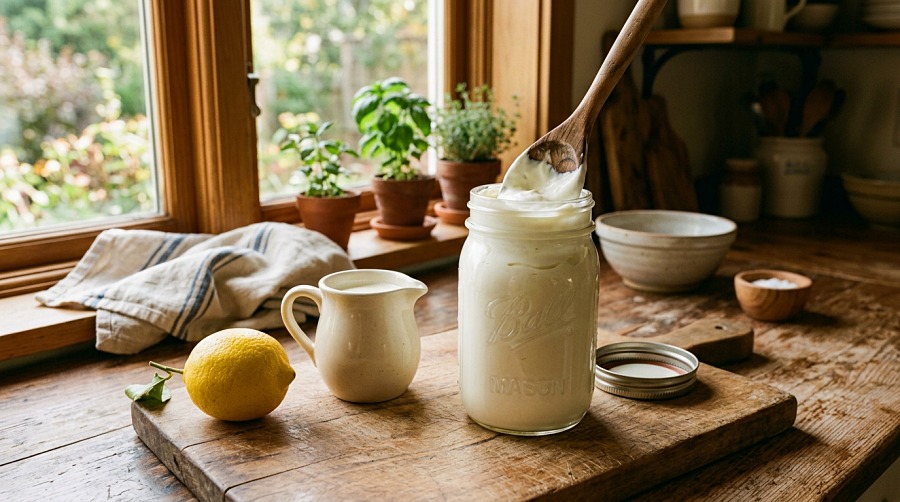
Sometimes the best sour cream substitute is just… making sour cream yourself. This two-ingredient recipe takes about 5 minutes of active prep, and the results are remarkably close to store-bought. I always keep heavy cream and lemons on hand now specifically for this.
Ingredients:
- 1 cup heavy whipping cream (not ultra-pasteurized if possible)
- 1 tablespoon fresh lemon juice or white vinegar
Step-by-step instructions:
Step 1: Pour 1 cup of heavy cream into a clean glass jar or bowl. Make sure the container is at room temperature (cold glass can slow the fermentation process).
Step 2: Add 1 tablespoon of fresh lemon juice or white vinegar. Stir gently with a whisk or fork for about 30 seconds until the mixture is well combined. You will notice the cream starting to thicken almost immediately as the acid begins to work.
Step 3: Cover the jar with a clean cloth or loose lid. Do not seal it tightly because the fermentation needs a tiny bit of airflow. Let it sit at room temperature for 10 to 15 minutes to develop the tang.
Step 4: Stir the mixture again. At this point, it will be thick and slightly tangy, ready to use right away in any recipe. For the best flavor and texture, transfer it to the fridge and let it chill for at least 24 hours. The cold rest deepens the tang and firms up the consistency to match store-bought sour cream almost perfectly.
Storage: Keep your homemade sour cream in an airtight container in the refrigerator for up to 2 weeks. You may notice a little whey (clear liquid) separating on top after a few days. Just stir it back in, and it is good to go.
When to Use Each Sour Cream Substitute
Not all substitutes work in all situations. The right choice depends on what you are making, what you have on hand, and whether you or your guests eat dairy. Here is my honest breakdown based on real kitchen testing.
Best Substitutes for Baking (Cakes, Muffins, Brownies)
When you are baking, sour cream plays a specific chemical role. Its acid reacts with baking soda to create lift, and its fat keeps the crumb tender and moist. You need a substitute that provides both acidity and fat.
Top picks for baking:
- Greek yogurt (1:1) is your best all-around baking substitute. It has the acid, the fat, and the moisture content to replicate sour cream’s effect on baked goods. I have used it in everything from sour cream donuts to coffee cakes, and the results are consistently excellent.
- Blended cottage cheese works well in denser baked goods like brownies and pound cakes, where its slightly different texture goes unnoticed.
- Buttermilk + butter is ideal for light, fluffy cakes and muffins where you want maximum tenderness.
- Mayonnaise sounds weird, but in chocolate cakes specifically, mayo has been a secret ingredient since the Great Depression. It adds incredible moisture without any mayo flavor.
What happens chemically: the lactic acid in sour cream (and these substitutes) reacts with baking soda to produce carbon dioxide bubbles, which gives your baked goods their rise. Without that acid, your cake will be flat and dense. So if your recipe calls for baking soda (not baking powder), make sure your substitute includes something acidic.
Best Substitutes for Tacos, Chili, and Savory Toppings
When sour cream is going on top of something, the flavor and texture matter more than the chemistry. You want something thick enough to dollop, tangy enough to cut through rich or spicy flavors, and neutral enough that it does not clash.
Top picks for toppings:
- Greek yogurt (1:1) again takes the top spot. Mix in a pinch of salt and a squeeze of lime juice to make it taste even more like the real thing.
- Mexican crema (1:1) is the authentic choice for tacos, nachos, and enchiladas. Its thinner consistency is actually perfect for drizzling.
- Crème fraîche (1:1) is the elevated option. If you are serving chili at a dinner party, this adds a touch of richness that guests notice.
- Cashew cream is the best dairy-free option for topping savory dishes. It is neutral, thick, and satisfying.
Best Substitutes for Dips and Dressings
Dips need creaminess above all. The tang is important too, but the body and spreadability are what make or break a dip.
Top picks for dips:
- Greek yogurt (1:1) makes a lighter, higher-protein dip. Mix it with herbs and garlic for a quick ranch-style dip.
- Blended cottage cheese creates an incredibly creamy dip base with more protein than sour cream. Add a packet of ranch seasoning and you will not miss the real thing.
- Cashew cream is the go-to for vegan dips. It has the richest mouthfeel of any dairy-free option.
- Mayonnaise thinned with water works for creamy dressings like blue cheese or Caesar where you already have strong flavors dominating.
Healthier and Diabetic-Friendly Options
If you are watching your blood sugar, choosing the right sour cream substitute matters. Regular sour cream contains about 2 grams of carbohydrates and 23 calories per tablespoon. It is already relatively low in carbs compared to many condiments, but some substitutes are even better choices.
Greek yogurt is the healthiest swap overall. It has more protein, fewer calories, and a lower glycemic impact than sour cream. Two tablespoons of plain Greek yogurt contain roughly 20 calories, 2 grams of carbs, and 3 grams of protein. For more ideas on healthy eating, browse our collection of diabetic-friendly snacks and recipes.
Blended cottage cheese is another excellent high-protein, lower-fat option. It has a similar calorie count to Greek yogurt with even more protein per serving.
Cashew cream is naturally low in sugar and contains healthy fats from the nuts, making it a solid plant-based option for blood sugar management.
FAQ
What can I use instead of sour cream if I don’t have it?
The best sour cream substitutes are Greek yogurt (1:1 swap), blended cottage cheese (3/4 cup blended with 2 tbsp milk and 1 tsp lemon juice), crème fraîche (1:1), buttermilk (3/4 cup for baking only), and coconut cream (1 cup coconut cream + 1 tbsp lemon juice for a dairy-free option). Greek yogurt is the most versatile and works for baking, dips, and toppings.
How do I make sour cream in 5 minutes?
Mix 1 cup of heavy whipping cream with 1 tablespoon of fresh lemon juice or white vinegar in a jar. Stir for 30 seconds, then let it sit at room temperature for 10-15 minutes. The acid thickens the cream into a sour cream-like consistency. For the best flavor, refrigerate it for 24 hours before using.
What is a substitute for 1 cup of sour cream?
Replace 1 cup of sour cream with 1 cup of full-fat plain Greek yogurt, 3/4 cup of buttermilk plus 1/3 cup melted butter (for baking), 1 cup of crème fraîche, or 1 cup of blended cottage cheese (3/4 cup cottage cheese + 2 tbsp milk + 1 tsp lemon juice, blended until smooth).
What do Mexicans use instead of sour cream?
Mexican cooking uses crema Mexicana (Mexican crema), a naturally cultured cream that is lighter, thinner, and slightly sweeter than American sour cream. It is drizzled over tacos, enchiladas, tostadas, and elote (Mexican street corn). You can substitute it 1:1 for sour cream in any Mexican or Tex-Mex dish.
Is sour cream OK for diabetics?
Sour cream is relatively low in carbohydrates (about 1 gram per tablespoon), so it can fit into a diabetic diet in moderation. However, Greek yogurt is a healthier alternative with more protein and fewer calories per serving. For more blood-sugar-friendly recipe ideas, check out our diabetic-friendly snacks guide.
Can I use milk instead of sour cream?
Plain milk alone is too thin to replace sour cream. However, you can make a quick substitute by adding 1 tablespoon of lemon juice or white vinegar to 1 cup of whole milk, letting it sit for 5 minutes to thicken. This creates a buttermilk-like mixture that works for baking but is still too thin for toppings or dips. For a thicker result, use heavy cream instead of milk.
Final Thoughts: Never Get Stuck Without Sour Cream Again
Finding yourself without sour cream does not have to derail dinner. Greek yogurt handles almost everything sour cream does, from baking to topping. Cottage cheese blended with a splash of milk and lemon juice is the protein-packed secret weapon most people overlook. And if you need a dairy-free option, cashew cream and coconut cream both deliver real creaminess without a single drop of dairy.
My personal rotation? I keep Greek yogurt in the fridge at all times as my everyday sour cream substitute. For baking projects like our cookies and cream donuts, it subs in beautifully. I also make the DIY sour cream recipe above whenever I want the real thing but cannot make it to the store.
The best sour cream substitute is the one you already have in your kitchen. Bookmark this guide, and the next time that sour cream tub lets you down, you will know exactly what to reach for instead.