
![Blood Orange Cardamom Cake Recipe [cy] (Soft, Moist, Easy)](https://thesweetandsimplekitchen.com/wp-content/uploads/2026/07/featured-update-42-1782945146427.jpg)
Some cakes are a weeknight project and some are a love letter to a season. This blood orange cardamom cake falls squarely in the second camp — a tender, butter-based citrus cake scented with ground green cardamom and finished with a glaze that turns a jaw-dropping natural pink straight from the fruit itself. I have been tweaking and retesting this recipe for over three years, and the version below is the one I am finally calling done.
A quick seasonal note before we begin. I am writing and republishing this recipe in July 2026, which means blood oranges are firmly out of season in the Northern Hemisphere (their peak window runs December through May). If you are reading this in summer, do not let that stop you — the recipe works beautifully with Cara Cara oranges, which have a similar pinkish blush and sweet flavor, or even with deep-red Moro oranges if you can find them imported from the Southern Hemisphere. I will flag every swap throughout the article so you can bake this any month of the year.
Blood orange cardamom cake is a moist, butter-based citrus cake flavored with fresh blood orange zest, juice, and ground green cardamom, then finished with a glossy blood orange glaze that turns naturally pink. It bakes in one pan in about 40 minutes and works as both a coffee cake and a celebration dessert.
Below you will find the full recipe plus a deeper dive than any other version on the internet right now: a blood orange variety guide, a cardamom cheat sheet, pan-size conversions, expanded variations including olive oil and upside-down versions, the most common mistakes (including how to keep your cake from turning bitter), and answers to every question I have ever been asked about this cake.
Table of Contents
Blood Orange Cardamom Cake Recipe at a Glance
| Detail | Info |
|---|---|
| Prep time | 20 minutes |
| Bake time | 35 to 40 minutes |
| Total time | About 1 hour 15 minutes (with cooling) |
| Yield | One 9 to 10 inch round cake (10 to 12 slices) |
| Difficulty | Easy / beginner-friendly |
| Pan | 9 or 10-inch round, springform, or bundt |
| Best season | December through May (blood orange season) |
| Nutrition (per slice) | Approximately 320 calories, 12g fat, 50g carbs, 4g protein, 1g fiber |
Why You Will Love This Blood Orange Cardamom Cake
This is not just another citrus cake. A few things set this version apart from the dozens of recipes you will see this season:
The crumb is genuinely tender. The combination of butter, brown sugar, and full-fat sour cream gives you that fluffy, almost-melty texture without making the cake heavy.
The glaze turns pink for free. Anthocyanins — the same antioxidant pigments that color raspberries and blueberries — are what give blood oranges their deep red flesh. When you mix that juice with powdered sugar, you get a stunning natural blush. No food coloring, no beetroot, no fuss.
The cardamom is dialed in. I have tested this cake with everything from a hesitant pinch to a heavy-handed two teaspoons. The sweet spot for most palates is three-quarters of a teaspoon — fragrant enough to register, restrained enough to let the citrus stay center stage.
One bowl, one pan, one glaze. No fancy techniques, no soaking syrups, no inverted upside-down assembly (unless you want to — I have included a full variation for that below).
Ingredients You Will Need
For the Cake
Half a cup (113 g) unsalted butter, softened to room temperature
Half a cup (100 g) granulated sugar
Half a cup (110 g) light brown sugar, packed
Zest of 1 blood orange (about one and a half tablespoons)
2 tablespoons fresh blood orange juice
2 large eggs, at room temperature
1 teaspoon vanilla extract
1 cup (240 g) full-fat sour cream, at room temperature
One and a half cups (190 g) all-purpose flour, spooned and leveled
2 teaspoons baking powder
Half a teaspoon baking soda
Three-quarters of a teaspoon ground green cardamom (start with half a teaspoon if you are cardamom-shy)
Quarter teaspoon ground cinnamon
Quarter teaspoon fine sea salt
For the Blood Orange Glaze
Juice of 1 large blood orange (about 4 to 5 tablespoons), minus the 2 tablespoons used in the cake
A few drops of vanilla extract
One and a half to 2 cups (180 to 240 g) powdered sugar, sifted
Optional for Decoration
1 to 2 thinly sliced blood oranges, for dried garnish
Powdered sugar, for dusting the slices
A few sprigs of fresh rosemary
1 egg white plus extra granulated sugar (for sugared rosemary)
Why Each Ingredient Matters
Butter plus brown sugar: Brown sugar’s molasses content keeps the crumb moist for 3 to 4 days and adds a faintly caramel note that flatters the citrus.
Sour cream: This is the secret to the cake’s tender crumb. The acidity tenderizes gluten and the fat coats flour proteins so the cake bakes up soft instead of chewy. If you ever run out, we have a full guide to the best sour cream substitutes for baking that covers every swap option in detail.
Both baking powder and baking soda: The soda reacts with the acidic sour cream and orange juice for lift; the powder gives a steady, even rise. If you want to understand the science behind why this recipe needs both, check out our deep dive on baking soda vs baking powder — it explains exactly how each leavener works and when to use one versus the other.
Blood orange zest and juice: Zest carries the most fragrance (the essential oils live in the colored part of the peel), while juice delivers tart liquid. You need both for a cake that tastes fully rounded.
Green cardamom (not black): Always use green cardamom for sweet baking — black cardamom is smoky and savory. If you grind your own from pods, you will get a noticeably more vivid, citrus-floral flavor than pre-ground.
Tools and Equipment
9 or 10-inch round cake pan, springform, or 10-cup bundt pan
Stand mixer or hand mixer
Microplane or fine zester
Citrus juicer or reamer
Mixing bowls
Whisk and rubber spatula
Cooling rack
Offset spatula (optional, for spreading the glaze)
How to Make Blood Orange Cardamom Cake (Step by Step)
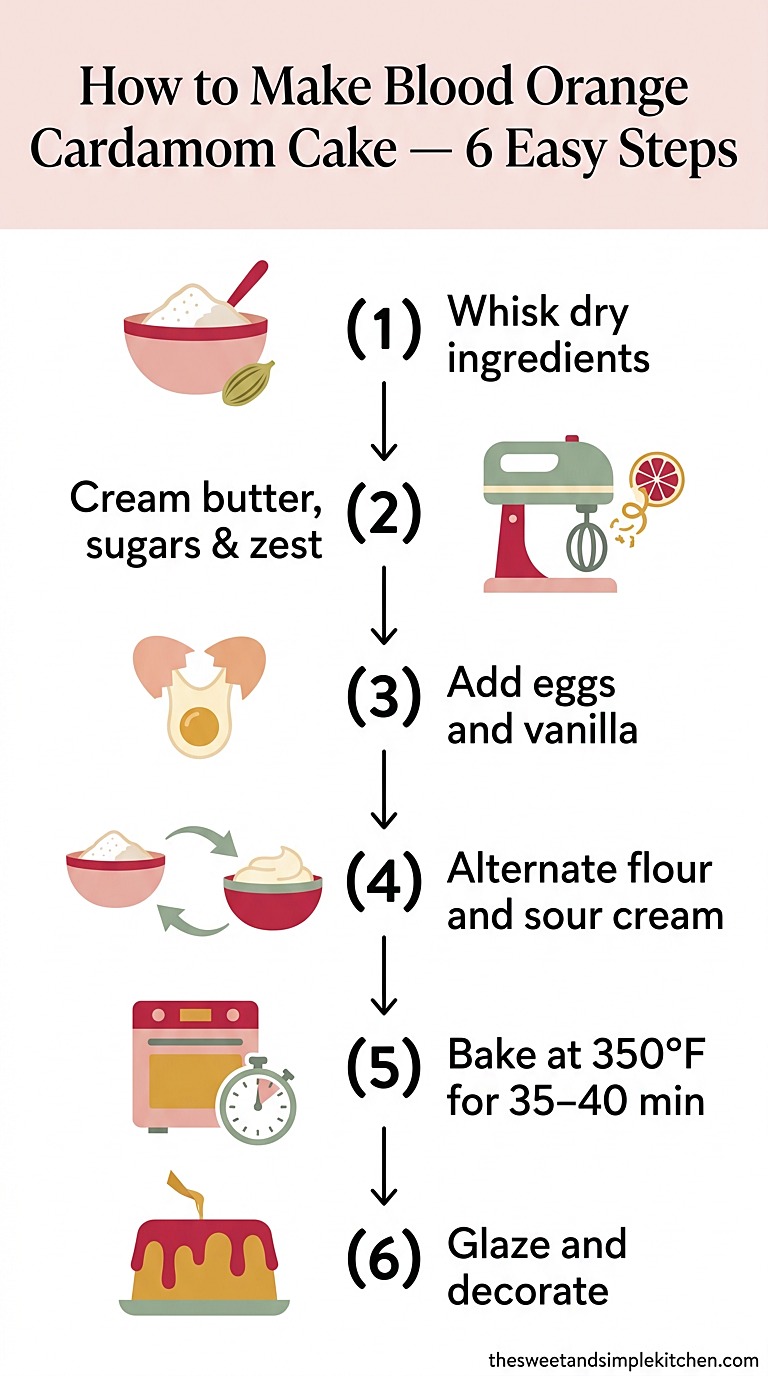
This is a straightforward, single-layer cake that comes together with standard creaming technique. The most important thing is to take your time with each stage — rushing the creaming or skipping the resting steps is where most bakers go wrong. Read through all six steps before you start so you know what is coming.
One thing I always tell first-time bakers: pull your butter, eggs, and sour cream out of the fridge at least an hour before you begin. Cold ingredients are the single biggest reason this batter curdles or fails to rise properly. If you forgot, you can warm eggs in a bowl of lukewarm water for 10 minutes and microwave sour cream in 5-second bursts — but never microwave butter, which melts unevenly.
Step 1 — Prep your pan and oven
Preheat the oven to 350 degrees Fahrenheit (175 degrees Celsius). Grease a 9 or 10-inch round cake pan thoroughly with butter or cooking spray, then line the bottom with a circle of parchment paper cut to fit. The parchment is non-negotiable for me — it guarantees the cake releases cleanly and you do not lose a chunk of crumb to a stuck bottom.
If you are using a bundt pan, the prep is different: brush every crevice generously with melted butter (not spray — spray leaves a sticky film on intricate pans) and dust the entire interior lightly with flour, tapping out the excess. A bundt that is not perfectly greased will tear when you flip it. Take an extra 60 seconds on this step and save yourself tears later.
Step 2 — Whisk the dry ingredients
In a medium bowl, whisk together the flour, baking powder, baking soda, cardamom, cinnamon, and salt. Whisk vigorously for at least 20 seconds — this is your only chance to evenly distribute the leaveners and spices before the wet ingredients go in. Clumped baking powder will leave bitter spots in the finished cake, and clumped cardamom will hit as a sharp, medicinal burst.
Set this bowl aside. If you have not already, this is also a good moment to zest your blood orange and juice it. You want about one and a half tablespoons of zest and roughly 5 to 6 tablespoons of juice total, split between the cake batter (2 tablespoons) and the glaze (the remainder).
Step 3 — Cream the butter, sugars, and zest
In a stand mixer fitted with the paddle attachment (or a large bowl with a hand mixer), combine the softened butter, granulated sugar, brown sugar, and blood orange zest. Before you turn the mixer on, use your fingertips to massage the zest directly into the sugars for about 30 seconds. This simple step bruises the essential oils out of the zest and into the sugar, and it will give you a noticeably more fragrant, evenly distributed orange flavor.
Now beat on medium speed for a full 3 minutes, stopping to scrape down the bowl once at the halfway mark. The mixture should look visibly lighter in color and noticeably fluffier — somewhere between pale tan and ivory. Properly creamed butter holds tiny air pockets that expand in the oven and give you lift. If you cut this step to 90 seconds, your cake will be denser and shorter.
Step 4 — Add eggs, vanilla, and orange juice
Add the eggs one at a time, beating well after each addition and scraping down the sides of the bowl. Beat in the vanilla and the 2 tablespoons of blood orange juice. The batter will probably look slightly broken or curdled at this stage — that is completely normal and will smooth out once the dry ingredients go in. The cause is the acidic orange juice hitting the butter mixture, which temporarily separates the emulsion.
If the batter looks severely curdled (large pools of liquid separating out), your eggs or butter were probably too cold. You can warm the bowl gently by wrapping a hot towel around the outside for 30 seconds, then beat again. Do not panic — it will come back together in the next step.
Step 5 — Alternate flour and sour cream
With the mixer on its lowest speed, add the dry ingredients in three additions, alternating with the sour cream in two additions. The pattern is: one-third of the flour mixture, half the sour cream, one-third of the flour, the rest of the sour cream, the rest of the flour. Always begin and end with the flour mixture.
Mix only until each addition just disappears into the batter. As soon as you stop seeing dry streaks, stop the mixer and finish combining by hand with a rubber spatula. Overmixing develops gluten, which gives you a tough, dense, rubbery crumb instead of the tender texture we are after. The batter should be thick, glossy, and spreadable.
Step 6 — Bake
Scrape the batter into your prepared pan and smooth the top with an offset spatula or the back of a spoon. Give the pan one firm tap on the counter — this releases any large air bubbles that would otherwise leave tunnels in the crumb. Bake for 35 to 40 minutes for a round pan (closer to 45 to 55 minutes for a bundt) until the top is golden and springs back when you press it lightly with a fingertip.
A toothpick or cake tester inserted into the center should come out with just a few moist crumbs clinging to it — not wet batter, and not bone-clean. If it comes out clean, you have probably overbaked by about 3 minutes. Start checking at the 32-minute mark, and remember that the cake continues to cook slightly from residual heat after it leaves the oven.
Cool the cake in the pan for 15 minutes, then run a butter knife around the edge and turn it out onto a wire rack to cool completely before glazing. Glazing a warm cake is the number-one mistake I see — the glaze melts straight into the crumb and you lose that glossy, photographic layer on top. Wait at least one full hour.
How to Make the Blood Orange Glaze
While the cake cools, whisk together the remaining blood orange juice, a few drops of vanilla, and one and a half cups of sifted powdered sugar in a small bowl. Add more powdered sugar a tablespoon at a time until the glaze is thick enough to coat the back of a spoon but still pourable — think honey, not syrup. Once the cake is fully cooled, pour the glaze over the top and let it drip naturally down the sides.
If your oranges are pale and the glaze comes out more cream than pink, you are not out of luck. A pinch of beetroot powder (available in the spice aisle of most grocery stores or online) whisked into the glaze will deepen the blush instantly without altering the flavor. Start with an eighth of a teaspoon — a little goes a long way, and you can always add more. A few drops of pomegranate juice work too, though they thin the glaze slightly.
Pro tip: For the deepest, most dramatic pink, seek out Moro blood oranges — they have the darkest red juice of any variety and consistently produce the most vivid glaze color.
A Quick Guide to Blood Oranges (And Which One to Use)
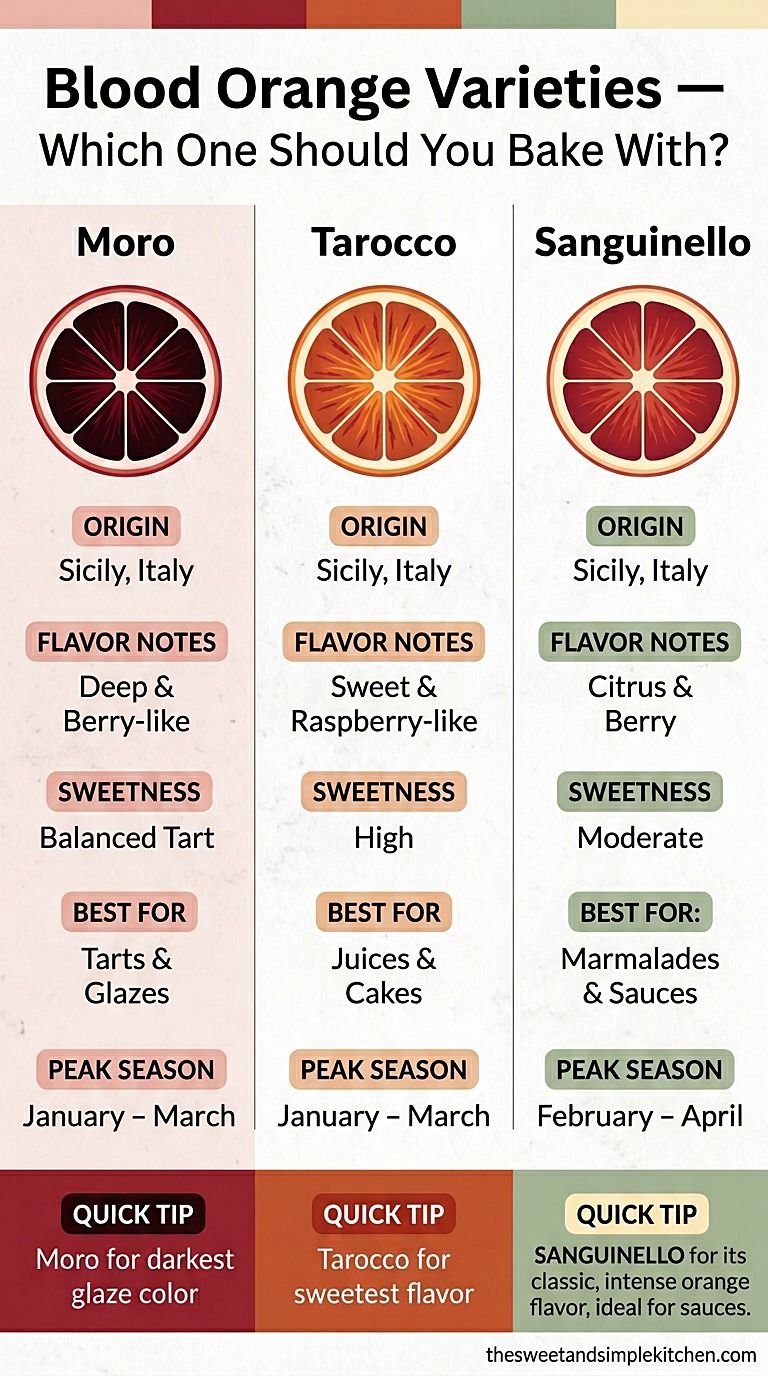
Not all blood oranges are created equal. The three most common types are the Tarocco (native to Italy), the Sanguinello (native to Spain), and the very dark Moro (also Italian) — and they each behave differently in baking.
| Variety | Flesh Color | Flavor | Best Use Here |
|---|---|---|---|
| Moro | Deep crimson to nearly black | Bold, slightly bitter, raspberry-forward | Glaze color plus bold zest |
| Tarocco | Streaks of red and orange | Sweetest, mildly tart, pure citrus | Cake batter (mild flavor) |
| Sanguinello | Blushed deep red | Sweet-tart, juicy | Either; widely available in Spain |
For this cake, my preference is Moro because its juice produces the most striking pink glaze. The dark flesh color comes from anthocyanins, a family of polyphenol pigments common in many fruits but uncommon in citrus, and the red color only develops when the fruit grows under low nighttime temperatures. If you want to read more about the science, the Wikipedia entry on blood oranges is genuinely well-sourced and worth a skim.
When Are Blood Oranges in Season?
In the U.S., blood orange season runs roughly from December through May, with peak availability in February and March. California-grown Moros tend to show up first, followed by Tarocco and Sanguinello. Blood oranges grow best at temperatures between 55 and 85 degrees Fahrenheit, and the cold nights are actually what produces the bright red pigmentation the fruit is famous for.
Baking in summer? If you are reading this in July or August and blood oranges are nowhere to be found, Cara Cara oranges are your best swap. They have a naturally pinkish-coral flesh, a sweet berry-tinged flavor, and they are widely available year-round. Your glaze will be more peach than crimson, but the flavor of the cake will be excellent. You can also use standard navel oranges with a squeeze of lemon juice added to brighten the acidity.
All About Cardamom in This Cake
Cardamom is the second star here, and getting it right is what separates a good citrus cake from a memorable one. It is also the ingredient that intimidates the most bakers, so let us demystify it.
Green vs. Black Cardamom
Always use green cardamom for this recipe. Black cardamom (a different species entirely) has a smoky, almost campfire-like flavor that belongs in savory braises, not cake. Per The Kitchn’s reporting on Cook’s Illustrated taste tests, green cardamom freshly ground from the pod was rated the most vibrant and balanced for baking applications.
Pods vs. Pre-Ground
Pre-ground cardamom is fine for short bake times like this one, but if you have whole pods on hand, freshly ground is dramatically more aromatic. The general conversion: about 12 green pods yield 1 teaspoon of ground cardamom. Crack the pods, scrape out the tiny black seeds, and grind in a spice grinder or mortar.
How to Add Cardamom to a Cake
This is one of the most common questions I get asked, and the answer is simple: whisk ground cardamom directly into your dry ingredients before combining them with the wet mixture. This distributes it evenly so you never get a concentrated pocket of spice. If you are starting from whole pods, crack them, remove the seeds, grind finely in a mortar or spice grinder, then sift the ground spice into the flour mixture along with the baking powder and salt.
For a standard 9-inch cake, three-quarters of a teaspoon is the recommended amount — fragrant without overpowering. If you are nervous about cardamom, start with half a teaspoon and taste a smear of the batter. You can always add more with the next batch.
How Much to Use
| Cardamom Level | Amount | Best For |
|---|---|---|
| Subtle | Half tsp | Cardamom-curious bakers, kids |
| Balanced (recommended) | Three-quarters tsp | Most palates |
| Pronounced | 1 tsp | Cardamom lovers |
| Bold | 1 and a quarter tsp | Scandinavian-style, very aromatic |
A word of caution — cardamom can turn slightly bitter if you go heavy-handed. Start at three-quarters of a teaspoon and adjust the next time you bake.
Pan Size Conversion Chart
The recipe is written for a 9 or 10-inch round, but it adapts to almost any pan you own. Adjust the bake time accordingly:
| Pan | Bake Time | Notes |
|---|---|---|
| 9-inch round | 35 to 40 min | Slightly taller cake |
| 10-inch round | 30 to 35 min | Original recipe |
| 9-inch springform | 35 to 40 min | Easiest unmolding |
| 10-cup bundt | 45 to 55 min | Grease very thoroughly |
| 9×5 loaf | 55 to 65 min | May need to tent with foil |
| Two 8-inch rounds | 22 to 25 min | For a layered version |
| 12 standard cupcakes | 18 to 22 min | Halve the glaze |
Substitutions That Actually Work
| Ingredient | Substitute |
|---|---|
| Blood orange | Cara Cara orange, navel orange plus 1 tsp lemon juice |
| Sour cream | Full-fat plain Greek yogurt (1:1) — see our full guide for more options |
| Butter | Equal weight neutral oil (slightly less fluffy crumb) |
| All-purpose flour | 1:1 gluten-free flour blend (works well) |
| Cardamom | Combination of cinnamon plus a pinch of ginger and clove |
| Brown sugar | Equal granulated sugar plus 1 tsp molasses |
| Powdered sugar (glaze) | Cream cheese frosting (half batch) |
For the sour cream swap specifically, full-fat plain Greek yogurt is the closest 1:1 replacement and works flawlessly. We have a detailed breakdown of every option (including dairy-free and lower-fat picks) in our complete sour cream substitute guide.
Common Mistakes to Avoid
After making this cake more times than I can count, here are the pitfalls I see most often:
Cold ingredients. Cold butter, cold eggs, and cold sour cream will not emulsify properly. Take them out at least an hour before baking.
Overmixing the batter. As soon as the flour disappears, stop mixing. Every extra rotation builds gluten and turns a tender crumb into a chewy one.
Skipping the zest. Most of the fragrance lives in the zest, not the juice. Do not skip it even if you are short on time.
Zesting too deep. Stop at the colored part of the peel. The white pith underneath is distinctly bitter, and accidentally incorporating it is the most common reason an orange cake turns bitter. Use a light hand with your Microplane and rotate the orange frequently so you never dig past the pigment.
Using a too-small pan. This batter needs room to rise. A 7-inch round will overflow and dome heavily.
Glazing a warm cake. The glaze will melt straight into the crumb instead of forming a glossy layer on top. Wait until the cake is fully cool — at least 1 hour.
Bottled blood orange juice. It loses the anthocyanin color and tastes oxidized. Always squeeze fresh.
Too much cardamom. Cardamom is potent, and overdoing it pushes the flavor from warm and floral to medicinal and bitter. Stick with three-quarters of a teaspoon unless you know you love a heavy hand.
Pro Tips From My Test Kitchen
Rub the zest into the sugar. Before creaming, massage the blood orange zest into both sugars with your fingertips for about 30 seconds. This bruises the citrus oils into the sugar and amplifies the orange flavor noticeably.
Bake at exact temperature. Most ovens run hot or cold by 15 to 25 degrees. An inexpensive oven thermometer is the single best baking investment you will make.
Tap the pan once before baking. A gentle tap on the counter releases large air bubbles that would otherwise leave holes in the crumb.
Glaze in two layers. Pour half the glaze, let it set for 5 minutes, then pour the rest. This builds a thicker, drippier finish.
Save those glaze drips. Whatever runs off the cake onto the parchment? Eat it with a spoon. Do not argue with me.
How to Decorate
You have options, ranging from 5 minutes to a full styling project.
Just glaze. Honestly, the natural pink drip is striking enough on its own.
Fresh blood orange slices. Lay paper-thin slices on top right after glazing. Best within a few hours.
Dried blood orange slices. Slice 1 to 2 oranges paper-thin, dust with powdered sugar, and bake at 200 degrees Fahrenheit for 2 to 2.5 hours until dehydrated. These keep their color beautifully and add a pretty stained-glass effect.
Sugared rosemary. Brush sprigs with lightly beaten egg white, dust with granulated sugar, and let dry on parchment for 30 minutes.
Edible flowers. Fresh pansies or violets in spring add a wow factor for showers and parties.
How to Store, Freeze, and Make Ahead
Room temperature: Cover loosely and store for up to 3 days if your kitchen is cool. The crumb actually improves on day 2 as the flavors settle.
Refrigerator: In an airtight container for up to 5 days. Bring slices to room temperature before serving.
Freezer (unglazed): Wrap the cooled, unglazed cake tightly in plastic and then foil, or freeze in slices. Keeps for 2 months. Thaw at room temperature, then glaze fresh.
Make ahead: You can bake the cake a day ahead and glaze the morning you serve it. The glaze is best applied within 6 hours of serving for the freshest sheen.
Variations to Try
Once you have mastered the base recipe, this cake is endlessly adaptable. Below are five variations I have tested extensively, including three — olive oil, upside-down, and bundt — that deserve their own walkthroughs because they change the technique enough to need explanation.
Blood Orange Cardamom Olive Oil Cake
This is the variation I make most often for dinner parties, and it is also the version closest to what several top-ranking competitors publish. Swap the half cup of melted butter for half a cup of good extra-virgin olive oil. The texture shifts from fluffy to dense and moist in a way that feels distinctly Italian — closer to a cornmeal-less polenta cake. The fruitier the olive oil, the better; look for a peppery, grassy California or Tuscan oil.
Because olive oil is liquid, you skip the creaming step entirely. Whisk the oil, sugars, zest, eggs, vanilla, and orange juice in one bowl, then fold in the dry ingredients alternately with the sour cream. Bake at the same temperature for 35 to 40 minutes. The crumb stays softer and keeps longer — olive oil cakes are famously better on day three than day one. If you want to lean into the Italian profile, replace one-quarter cup of the all-purpose flour with almond flour for a richer, slightly nuttier base.
Blood Orange Upside-Down Cake
This is the showstopper variation, and it is a direct response to one of the fastest-rising related searches for blood orange cake. The technique is borrowed from pineapple upside-down cake but far more elegant. Start by slicing 2 to 3 blood oranges into thin, even rounds (about an eighth of an inch thick) and arrange them in a tight overlapping circle on the bottom of a buttered 9-inch round pan.
Pour a thin layer of caramel over the slices before adding the batter — about a quarter cup of melted butter mixed with half a cup of brown sugar, simmered for 2 minutes. Spread the standard cake batter carefully over the top (do not disturb the fruit), then bake at 350 degrees Fahrenheit for 40 to 45 minutes. Let the cake cool in the pan for exactly 15 minutes, then invert onto a serving plate. The blood orange slices caramelize into jewel-toned glass on top, and the glaze is unnecessary — though a dusting of powdered sugar looks beautiful. This version is a favorite for birthdays and holiday tables.
Blood Orange Cardamom Bundt Cake (with Optional Streusel)
The bundt version is what I bring to potlucks because it slices cleanly and looks impressive with zero decorating effort. Use a 10-cup bundt pan, grease it obsessively (melted butter brushed into every crevice, then a dusting of flour), and pour in the batter. Bake for 45 to 55 minutes, checking at 45 with a long cake tester — bundts overbake fast in the last 5 minutes.
For a coffee-cake-style upgrade, add a streusel layer. Combine a third of a cup of flour, a third of a cup of brown sugar, half a teaspoon of cardamom, and 3 tablespoons of cold butter cut into cubes. Rub with your fingers until crumbly. Pour half the batter into the bundt, sprinkle the streusel evenly, then top with the remaining batter. The streusel bakes into a spiced ribbon that pairs beautifully with the citrus. Glaze as usual once cooled. If you love this cardamom-orange flavor combination, you might also enjoy our cardamom-orange yeast doughnuts for a completely different texture.
Other Variations
Almond version. Replace a quarter cup of the flour with almond flour for a richer, slightly nuttier crumb.
Layered. Bake in two 8-inch pans and stack with a thin layer of mascarpone whipped cream and blood orange curd between.
Mini loaves. Bake in 4 mini loaf pans for 30 to 35 minutes — perfect for gifting.
Yogurt cake. Replace sour cream with full-fat Greek yogurt for a slightly tangier crumb.
What to Serve With Blood Orange Cardamom Cake
This cake plays well with:
A strong cup of black coffee or cardamom-spiced chai
Freshly whipped cream with a dusting of cardamom
A scoop of vanilla bean or honey ice cream
A glass of Prosecco for brunches
A warm chai latte or hot cocoa for cozy afternoons
Frequently Asked Questions
Can I use regular oranges instead of blood oranges?
Yes — Cara Cara, navel, or even tangelos all work. The flavor will still be excellent, but you will lose the natural pink glaze color. To compensate, stir in a small amount of beetroot powder, beet juice, or pomegranate juice for color, or simply embrace a creamy orange glaze.
What does cardamom taste like in cake?
Cardamom in baking tastes warm, slightly floral, and faintly citrusy with hints of mint and eucalyptus. Used at the right amount, it sits in the background and amplifies the orange flavor. Used too heavily, it can taste medicinal — which is why I recommend starting at three-quarters of a teaspoon.
How to add cardamom to a cake?
Whisk ground cardamom directly into your dry ingredients (flour, baking powder, baking soda, salt) before combining with the wet mixture. This distributes it evenly so you never get a concentrated pocket of spice. If starting from whole pods, crack them, remove the inner seeds, grind finely in a mortar or spice grinder, then sift into the flour. Use three-quarters of a teaspoon for a standard 9-inch cake.
How to make orange cake not bitter?
Bitterness in orange cake comes from three sources: zesting too deep into the white pith, using too much cardamom, or including orange juice that is overly astringent. To prevent bitterness, zest only the colored outer layer of the peel (rotate the orange frequently and stop as soon as you see white), keep cardamom at three-quarters of a teaspoon or less, and use sweet, ripe blood oranges or Cara Caras rather than underripe fruit.
Why is my blood orange glaze not pink?
The most common reason is using a paler variety like Tarocco or a blood orange that was not fully ripe. Moros consistently produce the deepest pink. Bottled blood orange juice almost never works — the color oxidizes during pasteurization. Always squeeze fresh, and the more crimson the juice looks raw, the pinker your glaze will be. A pinch of beetroot powder can rescue a pale glaze without changing the flavor.
Can I make this cake gluten-free?
Yes. A high-quality 1:1 gluten-free flour blend (the kind that contains xanthan gum) works well in this recipe. The crumb will be slightly more delicate but still tender.
Can I use a bundt pan?
Absolutely. Use a 10-cup bundt, grease it thoroughly (every crevice), and bake for 45 to 55 minutes. The cake unmolds beautifully if you let it cool in the pan for 10 minutes before flipping. See the bundt variation above for a streusel option.
How long does blood orange cardamom cake stay fresh?
About 3 days at room temperature, 5 days refrigerated, or 2 months frozen unglazed. Wrapping is key — citrus cakes dry out faster than chocolate ones because of the acidity.
Can I make this cake dairy-free?
Yes. Replace the butter with vegan butter, the sour cream with full-fat coconut yogurt or a dairy-free sour cream. The flavor will be slightly different but still delicious.
Is this recipe sweet enough to be a dessert, or is it more of a coffee cake?
It works as both. Without the glaze, it is a perfect coffee cake — lightly sweet, citrusy, ideal with morning espresso. With the glaze and decorations, it absolutely holds up as a dinner party dessert.
Why did my cake sink in the middle?
The most common causes: opening the oven before the cake has set (first 25 minutes), too much leavener, or undermixing the butter and sugar (not enough air incorporated). Make sure your baking powder is fresh, and do not peek until at least 30 minutes in.
Can I double the recipe?
Yes — double everything and bake in a 9×13 pan for 40 to 45 minutes, or in two 9-inch rounds for layering.
Final Thoughts
I am republishing this recipe in the height of summer, which feels slightly rebellious — but that is the point. Yes, blood orange season is a brief, glorious window from December through May. No, you should not have to wait six months to make this cake. Cara Cara oranges, Moro oranges from the Southern Hemisphere, and even good navel oranges will give you a version worth eating right now, today, in July. Bookmark this page for January when the real blood oranges arrive and the glaze goes fully magenta.
This blood orange cardamom cake is the best way I know to bottle that fleeting, raspberry-tinged citrus flavor into something you can serve at brunch, slice for a friend, or eat over the sink at 11 p.m. (no judgment here). Save this recipe by pinning or bookmarking — you will want it again next winter, and the winter after that. And if you make it, I would love to hear how the cardamom level worked for you. The right dose is genuinely personal, and readers split fairly evenly between team half teaspoon and team one teaspoon.
Happy baking, friends. May your glaze be pink and your crumb be plush.