
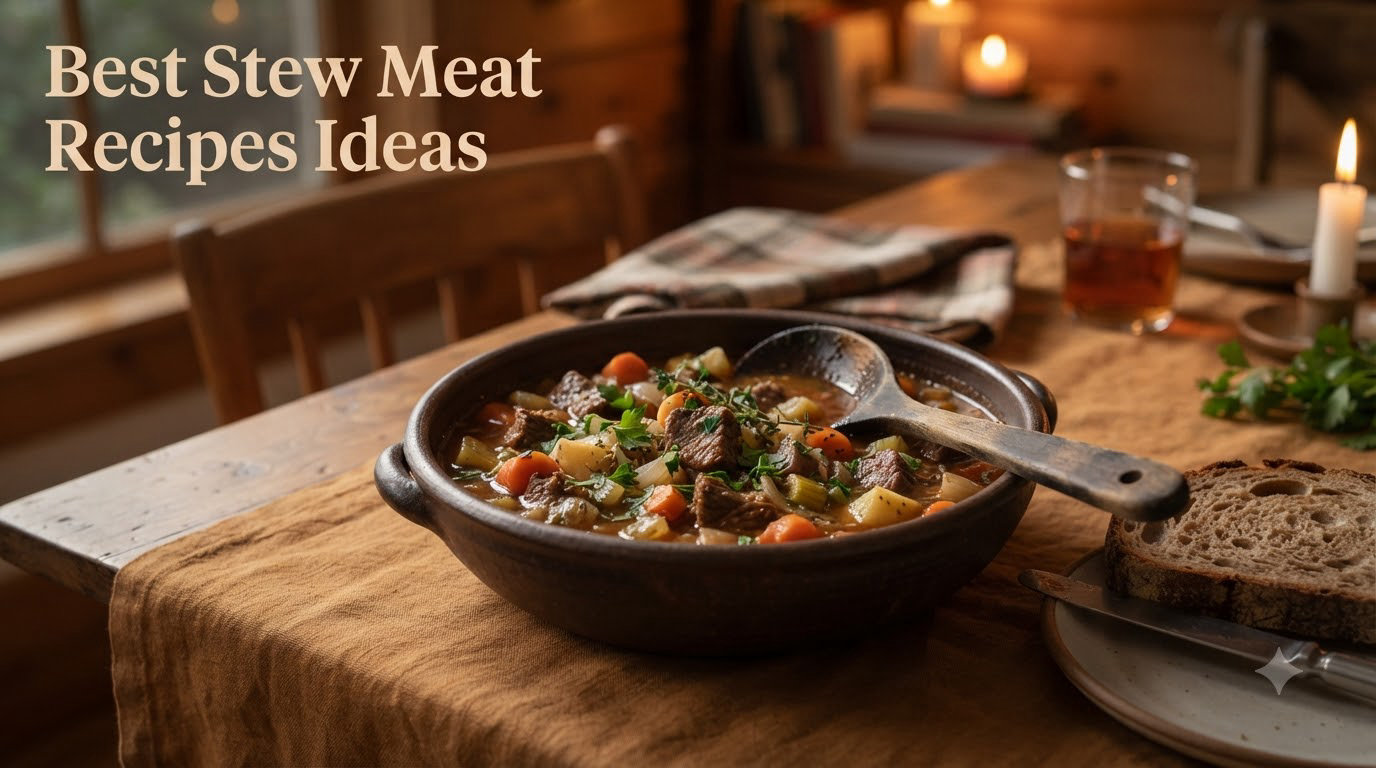
For tender stew meat, I brown the beef in small batches, add enough flavorful liquid for a gentle braise, and keep cooking until collagen—not the clock—says it is done. That is the practical foundation behind what to make with stew meat.
You will also find tender beef cube dinners presented naturally, with clear doneness cues, useful sides, storage guidance, and fixes for gray meat or cubes that remain tough. For another useful dinner plan, see these easy beef dinner recipes.
Table of Contents
What Is Stew Meat?
Stew meat is not actually a single specific cut of beef. It is a butcher label for bite-sized cubes of beef that come from tougher, well-exercised parts of the animal. Those parts develop lots of connective tissue and collagen, which sounds like a bad thing, but it is exactly what gives slow-cooked stew that silky, rich texture once it has time to break down.
When you pick up a package labeled “stew meat” at the grocery store, you are usually getting trimmings from cuts like chuck, round, and sometimes sirloin. Some butchers are generous and include chuck, which has wonderful marbling. Others use leaner round, which can dry out if you are not careful with your cooking method. That mix is also why two packages of stew meat can cook very differently.
The reason stew meat is cut into small cubes is to expose more surface area to liquid and heat. This helps the tough connective tissue melt into gelatin during a long, slow braise. The result is meat that literally shreds with a fork and a broth that tastes like it took all day, because it did.
Understanding this single concept changes how you cook stew meat forever. Once you know you are working with collagen-rich cuts that need moisture and time, you stop expecting a quick sear to make them tender. You lean into the slow cooking methods, and that is when the magic happens.
Best Beef Cuts for Stew Meat
Not all stew meat is created equal, and knowing which primal cut your cubes came from tells you a lot about how they will cook. Here is a quick breakdown of the cuts you will commonly find in a stew meat package.
Chuck is the gold standard for stew. It comes from the shoulder, has excellent marbling, and carries enough connective tissue to turn meltingly tender after a couple of hours of simmering. If you can choose, ask the butcher for a chuck roast and cut your own cubes.
Round (top round, bottom round) is leaner and less forgiving. It works fine for stew but can turn dry if overcooked. Round does better in recipes where the meat is sliced thin or cooked briefly in a flavorful sauce, like stir-fry or stroganoff.
Sirloin is tender enough to eat closer to medium, which makes it a smart pick if you want stew meat that cooks faster. It is pricier, so most store-packaged stew meat only has a small amount mixed in.
Brisket and oxtail show up in specialty packages and deliver incredible flavor. Brisket has gorgeous fat marbling and oxtail is packed with collagen for an almost gelatinous, lip-smacking broth. Both are worth seeking out for special-occasion stews.
When you shop, look for packages with good marbling and a mix of sizes rather than uniform cubes. A little fat running through the meat is your friend, because it renders into the broth and keeps each bite juicy.
How to Cook Stew Meat So It Is Tender
For safe handling, I follow the USDA thermometer guidance: whole cuts of beef and pork need 145°F plus a three-minute rest, while leftovers should be reheated to 165°F. Tender braises often cook beyond the safety minimum to soften collagen.
This is the question I get more than any other from readers. The answer comes down to one simple rule: low and slow with moisture. But there are a few techniques within that rule that separate a forgettable stew from one your family asks for every winter.
Step 1: Pat the meat dry and season generously. Wet meat will not brown, and a good sear is what builds deep, caramelized flavor in your final dish. I pat cubes dry with paper towels, then toss them with salt, pepper, and a light dusting of flour. The flour helps with browning and also thickens the broth later.
Step 2: Sear in batches. Add the cubes to a hot Dutch oven with a splash of oil, but do not crowd the pan. Brown them in two or three batches so each piece gets a real crust. This single step is the difference between a stew that tastes flat and one with complex, layered flavor.
Step 3: Deglaze the pot. Those browned bits stuck to the bottom of the pan are pure flavor. Pour in a splash of wine, broth, or even water and scrape them up. That liquid becomes the base of your stew broth.
Step 4: Cook low and slow. Add aromatics, liquid (broth, wine, beer, tomatoes), and your seared beef back to the pot. Cover and simmer gently for 1.5 to 3 hours, depending on the size of the cubes. You want a lazy bubble, not a rolling boil, because boiling makes the meat seize up and turn tough.
If you are wondering what to soak stew meat in to make it tender, you have a few options. A marinade of buttermilk, red wine, soy sauce, or even a mix of Worcestershire and balsamic vinegar will help tenderize and add flavor. Even 30 minutes of soaking makes a noticeable difference, especially for leaner cuts like round.
The collagen-to-gelatin conversion is the science behind tender stew meat. It happens at around 160°F to 180°F and takes time, which is why pressure cookers and slow cookers work so well. They keep the meat in that sweet spot for long enough to melt every bit of connective tissue into silky richness.
Best Stew Meat Recipes Ideas
For reliable what to make with stew meat, use these three checkpoints before choosing a recipe. The same checkpoints keep tender beef cube dinners practical rather than repetitive.
-
Best result: Brown without steaming, then braise gently until a fork enters with little resistance.
-
Avoid: Gray meat or cubes that remain tough.
-
Doneness: A cube should yield easily to a fork while still holding its shape; if it is chewy, it usually needs more gentle cooking time.
16 practical recipe ideas
Now for the fun part. These ideas span classic comfort food, international flavors, and quick weeknight shortcuts.
1. Classic Old-Fashioned Beef Stew
This is the recipe most of us picture when we hear “beef stew.” Cubes of seared chuck simmer slowly with onions, carrots, celery, potatoes, and a savory broth built on beef stock and tomato paste. A sprig of thyme and a bay leaf add herbal warmth.
Cook it covered in a Dutch oven at 325°F for about 2 hours, or until the meat shreds easily with a fork. The flour you used for searing thickens the broth into a silky gravy. Serve it with crusty bread for dipping.
Tip: Add a tablespoon of Worcestershire sauce and a splash of red wine to deepen the flavor. This is the recipe to master first, because the technique carries into almost every other stew meat dish.
2. Slow Cooker Beef Stroganoff
Tender beef cubes cook all day in a creamy mushroom sauce, then get finished with sour cream and served over egg noodles.
Sear the beef first, then transfer to the slow cooker with onion, garlic, mushrooms, beef broth, and a dollop of Dijon mustard. Cook on low for 6 to 8 hours. Stir in sour cream just before serving so it does not curdle.
Round steak works beautifully here because the long, slow cook tenderizes even lean cuts. It is pure comfort food and reheats brilliantly for lunch the next day.
3. Hearty Beef Chili
Swap ground beef for cubed stew meat and your chili becomes something special. The cubes hold their shape and give every bite a satisfying chew that ground meat just cannot match.
Brown the beef with onions and garlic, then add chili powder, cumin, oregano, diced tomatoes, and beef broth. Simmer for at least 90 minutes so the meat gets tender and the flavors meld. Add beans if you like them, or skip them for a Texas-style bowl of red.
This is one of the beef stew meat for feeding a crowd, and it freezes beautifully for easy lunches. For more family-friendly weeknight inspiration, check out these easy chicken recipes for variety.
4. Beef Bourguignon
This French classic is essentially the fancy cousin of beef stew. The beef simmers in a full bottle of red Burgundy wine with bacon, pearl onions, mushrooms, and a bouquet of fresh herbs.
The wine gives the broth a deep, complex flavor that is hard to describe until you taste it. Plan on a 3-hour simmer for the most tender, fall-apart cubes. Finish with a butter-flour paste called beurre manie to thicken the sauce into a glossy gravy.
This is the dish to make when you want to impress someone. It tastes like you spent all day in the kitchen, because you did, but most of that time is hands-off simmering.
5. Homemade Beef Birria Tacos
Birria took the internet by storm a few years ago, and for good reason. Stew meat braises in a fragrant blend of dried chiles (guajillo, ancho, chiles de arbol), tomatoes, onion, garlic, and warm spices until it shreds easily.
Strain the cooking liquid and use it to dip your tortillas before gridding them on a hot comal. Stuff with shredded beef and melty Oaxaca cheese, then pan-fry until crispy. Serve with extra consomme for dipping.
This recipe uses stew meat brilliantly because the long braise extracts every bit of collagen into the broth, which is what gives birria its signature rich, glossy dipping sauce.
6. Hungarian Beef Goulash
Real Hungarian goulash is a soup-stew hybrid, not the American macaroni casserole. Cubed beef simmers with onions, garlic, caraway seeds, and a generous amount of sweet Hungarian paprika in a rich beef broth.
The finished dish is somewhere between a soup and a stew, with tender beef and a deeply savory, paprika-forward broth. Serve it in wide bowls with crusty bread or small egg noodles called csipetke.
Add diced potatoes or carrots for a heartier meal. A dollop of sour cream on top is not traditional, but it is delicious.
7. Beef and Broccoli Stir-Fry
Stew meat is not just for slow cooking. Slice the cubes thinly across the grain and you have the perfect beef for stir-fry. The thin slices cook in minutes and absorb a savory brown sauce beautifully.
Marinate the sliced beef in soy sauce, cornstarch, and a splash of rice wine for 20 minutes. Sear quickly in a hot wok, then remove. Stir-fry garlic, ginger, and broccoli florets, return the beef, and finish with a glossy sauce of soy, oyster sauce, and a little sugar.
Serve over steamed rice for a takeout-style dinner that is ready in under 30 minutes. This is a great recipe for leaner round cuts.
8. Vietnamese Bo Kho
Bo kho is a fragrant Vietnamese beef stew that blends lemongrass, star anise, cinnamon, garlic, and chili with tomato and beef broth. The aroma alone will have neighbors asking what you are cooking.
Sear cubed beef with lemongrass paste and curry powder, then simmer with tomatoes, aromatics, and coconut water for about 2 hours. The result is tender beef in a complex, slightly sweet, deeply aromatic broth.
Serve it with crusty baguettes for dipping, or over rice noodles. A squeeze of lime and fresh herbs at the table brighten everything up.
9. Beef Enchiladas with Tender Stew Meat
Instead of ground beef, use shredded stew meat in your enchiladas. Braise the beef with onion, garlic, cumin, and chili powder until it falls apart, then roll it into tortillas with cheese and smother in enchilada sauce.
Bake until bubbly and the cheese is melted. The tender beef filling is so much better than ground meat, and it feels special enough for a weekend dinner.
This is a smart way to stretch a pound of stew meat across a whole pan of enchiladas that feeds six people. The leftovers reheat well too.
10. Slow Cooker Pepper Steak
Pepper steak is one of those dinners that tastes like you worked hard, but the slow cooker does it all. Strips of stew meat cook with bell peppers, onions, and a savory soy-ginger sauce until everything is tender and saucy.
Cook on low for 6 to 7 hours, then thicken the sauce with a cornstarch slurry right before serving. Pile it over rice for an easy weeknight dinner the whole family will eat without complaint.
Slice the beef against the grain into thin strips so it shreds easily during the slow cook. Round works well here because the extended cooking time tenderizes it completely.
11. Italian Beef Sandwiches
This Chicago classic turns a tough cut of beef into juicy, shreddy sandwich meat. Cook stew beef low and slow with Italian seasoning, garlic, pepperoncini, and beef broth until it falls apart.
Shred the meat directly in the cooking liquid and pile it onto crusty hoagie rolls with provolone cheese. Dip the whole sandwich back into the broth for the full Italian beef experience.
This is a fantastic recipe for feeding a group, and the leftover meat freezes beautifully for quick sandwiches later.
12. Kentucky Burgoo
Burgoo is a thick, hearty American stew with roots in Kentucky. It traditionally combines beef, pork, and chicken with a heap of vegetables including okra, corn, lima beans, and potatoes.
If you want to keep it simple, use just stew meat with a mix of whatever vegetables you have on hand. The key flavor builders are Worcestershire sauce, barbecue sauce, and a long, slow simmer that thickens everything into a thick, stick-to-your-ribs meal.
Burgoo is the kind of thing you make for a crowd. It only gets better the next day, which makes it perfect for potlucks.
13. Jamaican-Style Beef Stew
This Caribbean take on beef stew brings the heat. The beef gets marinated in a mix of allspice, thyme, scallions, garlic, ginger, and scotch bonnet pepper before browning.
Simmer with tomatoes, onions, and beef broth until the meat is meltingly tender. The spice blend gives every spoonful a warm, fragrant kick that is totally different from a classic European stew.
Serve over rice and peas with a side of fried plantains for a complete Caribbean dinner.
14. Beef Barley Soup
When you want something lighter than a stew but still hearty, beef barley soup is the answer. Tender stew meat simmers with carrots, celery, onions, mushrooms, and pearl barley in a rich beef broth.
The barley absorbs the broth and releases starch, which gives the soup a thick, satisfying texture. Simmer for about 90 minutes so the beef gets tender and the barley cooks through.
This is one of those soups that tastes even better on day two, so make a big pot and enjoy the leftovers for lunch.
15. Moroccan Beef Tagine
A tagine is a slow-simmered North African stew that pairs savory beef with sweet dried fruit and warm spices. Cubed beef cooks slowly with onions, garlic, ginger, cinnamon, cumin, and coriander.
Add dried apricots, raisins, or dates about halfway through cooking, along with chickpeas and a handful of toasted almonds at the end. The sweet-savory combination is unlike anything else on this list.
Serve over fluffy couscous to soak up the fragrant sauce. This is a wonderful dinner when you want to try something a little different without much extra effort.
16. Beef and Guinness Stew
This Irish classic uses a bottle of stout beer to build an incredibly rich, dark broth. Sear the beef with onions and carrots, then deglaze with Guinness before adding beef stock and a sprig of thyme.
Simmer covered for about 2 hours, until the beef is fork-tender. The beer gives the stew a deep, malty flavor that pairs perfectly with buttery mashed potatoes.
Patrick’s Day, but honestly it deserves a spot in your regular rotation all winter long. It is pure comfort in a bowl.
Slow Cooker vs Dutch Oven vs Pressure Cooker: Which Method Wins?
Across these beef stew meat, the same principle holds: brown without steaming, then braise gently until a fork enters with little resistance. That is what makes what to make with stew meat dependable instead of vague and keeps tender beef cube dinners useful. You can build the next meal around this comforting dinner casseroles.
All three cooking methods can produce incredible stew meat, but they each shine in different situations. Here is how to choose the right one for your schedule and your kitchen.
Dutch oven on the stovetop or in the oven gives you the most control and the best flavor. You can sear the meat, saute the aromatics, and simmer the stew all in one pot. The heavy cast iron distributes heat evenly, which means a slow, gentle braise that produces restaurant-quality results. The downside is that you need to be home for the 2 to 3 hours of cooking time.
Slow cooker is the busy cook’s best friend. Sear the meat first for best flavor, then dump everything in and walk away for 6 to 8 hours on low. The flavor is slightly less complex than a Dutch oven stew, but the convenience is unbeatable. Slow cookers also tend to produce more liquid, so you may need to thicken the broth at the end with a cornstarch slurry.
Pressure cooker (Instant Pot) is the middle ground. It cuts a 3-hour braise down to about 40 minutes of pressure cooking time, which means you can make real beef stew on a weeknight. The flavor is closer to the Dutch oven version than the slow cooker, because the high pressure extracts tons of flavor fast. The tradeoff is that you have less control over texture, and you cannot peek inside during cooking.
My advice: use the Dutch oven on weekends when you want the best possible result, the slow cooker on busy weekdays, and the pressure cooker when you forgot to plan ahead but still want real stew for dinner.
Cooking Tips and Common Mistakes to Avoid
I judge the finished dish by texture and temperature rather than time alone. A cube should yield easily to a fork while still holding its shape; if it is chewy, it usually needs more gentle cooking time. For a related technique, keep this easy slow-cooker recipes nearby.
-
Sear the meat first, always: Even in slow cooker recipes, taking 10 minutes to brown the beef in a hot skillet adds a layer of flavor that you cannot get any other way. The Maillard reaction builds those caramelized, savory notes that make a stew taste rich.
-
Do not rush the cooking time: Stew meat needs time for the collagen to convert to gelatin. If you cut the cook time short, you will have tough, chewy meat no matter how good your recipe is. Plan on at least 90 minutes for stovetop methods and 6 hours for slow cookers.
-
Keep the simmer gentle: A hard boil makes beef seize up and turn stringy. You want to see just a few bubbles breaking the surface, not a rolling boil. This is the single most common mistake that ruins stew meat.
-
Cut cubes uniformly: If some pieces are twice the size of others, the small ones will overcook and turn dry before the big ones get tender. Take a minute to cut the meat into even 1 to 1.5 inch cubes.
-
Do not skip the acid: A splash of wine, a spoonful of vinegar, or a squeeze of lemon at the end brightens all the rich flavors. Without acid, stews can taste flat and heavy.
-
Season in layers: Salt the meat before searing, season the vegetables as they cook, and taste the broth at the end. Seasoning only at the end leaves you with bland meat and salty broth.
-
Add delicate vegetables late: Potatoes, carrots, and other soft vegetables turn to mush if cooked the whole time. Add them about halfway through cooking so they are tender but still hold their shape.
Storage, Freezing, and Meal Prep with Stew Meat
Stew meat is one of the most freezer-friendly proteins you can buy, which makes it perfect for meal prep. Here is how I store and prep it for busy weeks.
-
Raw stew meat freezes well for 4 to 6 months: Portion it into 1-pound zip-top bags, press out the air, and lay them flat so they stack neatly in the freezer. Thaw overnight in the fridge before cooking.
-
Cooked stew meat dishes freeze even better, because the flavors continue to develop in the freezer. Cool the stew completely, portion into airtight containers, and freeze for up to 3 months. Reheat gently on the stovetop or in the microwave.
-
For easy weeknight dinners, assemble dump bags with raw stew meat, chopped onions, garlic, and seasonings, then freeze. On a busy morning, dump the frozen bag into the slow cooker with broth and cook on low for 8 hours.
-
Cooked stew meat keeps in the fridge for 3 to 4 days.
Frequently Asked Questions
What cut is sold as stew meat?
Packages commonly contain chuck or round trimmings, sometimes mixed. Marbling and connective tissue usually signal a better braising cut.
Why is my stew meat still tough?
If it has been simmering gently, tough meat often needs more time for collagen to dissolve.
Should I flour stew meat before browning?
Flour can help thicken a stew and improve browning, but use a light coating so it does not scorch.
Can stew meat be cooked quickly?
Tender pieces can work in a fast stir-fry when sliced thinly across the grain; cubes intended for braising are better cooked slowly.
Wrapping Up
For what to make with stew meat and tender beef cube dinners, use the recipes as flexible road maps, but let the doneness and texture cues make the final decision.
This guide answers the full dinner question: what to cook, how to know it is ready, what to serve, and how to keep the leftovers worth eating.