
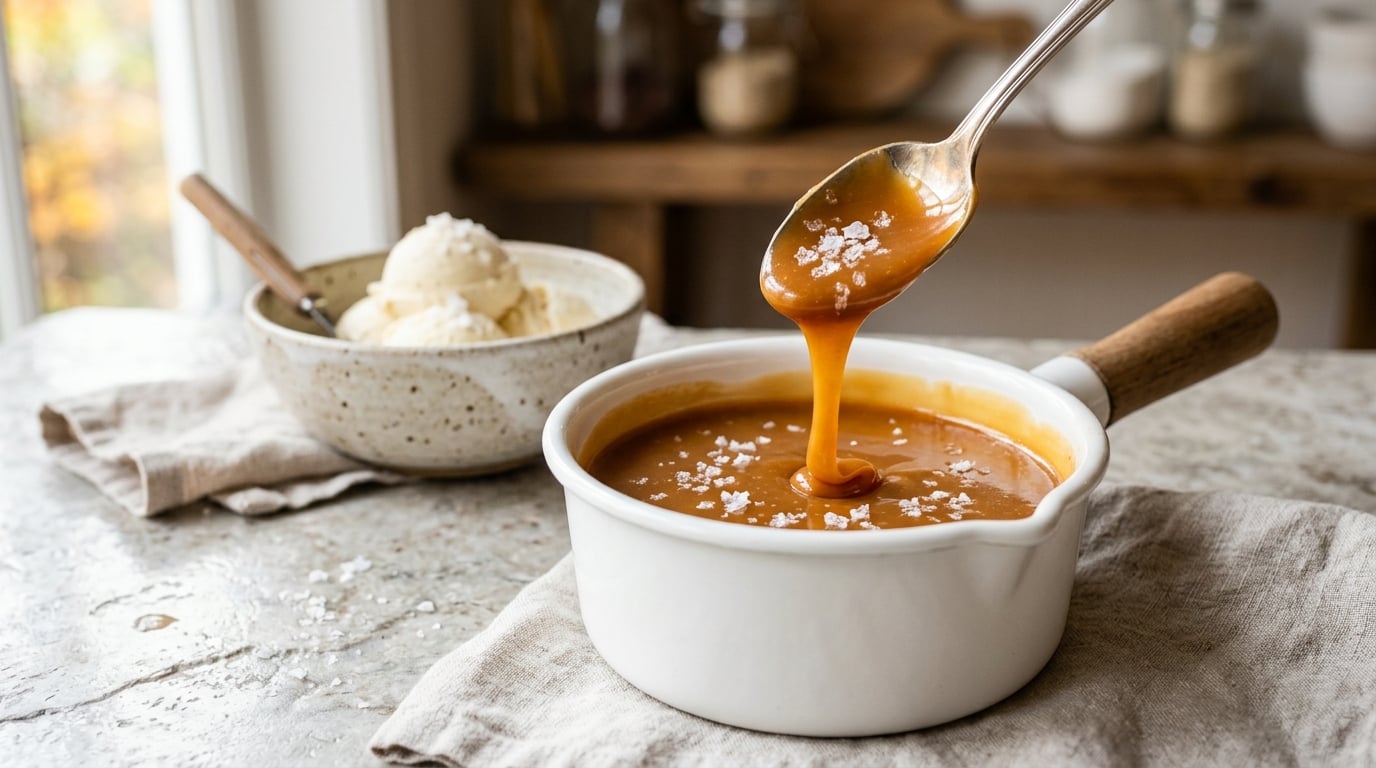
Easy homemade caramel sauce recipe in one pot: melt sugar with butter until it turns deep amber, then whisk in warm heavy cream for a glossy sauce that pours like warm honey. It takes about 15 minutes from the first bit of butter to the final spoon, and it is forgiving enough for a first-time cook.
Five ingredients do all the work here, and the same batch drizzles over ice cream, tops a cheesecake, dips apple slices and glazes a cake. Fall baking season is when I make it most, usually the evening a pie comes out of the oven, because one warm dessert deserves a warm sauce.
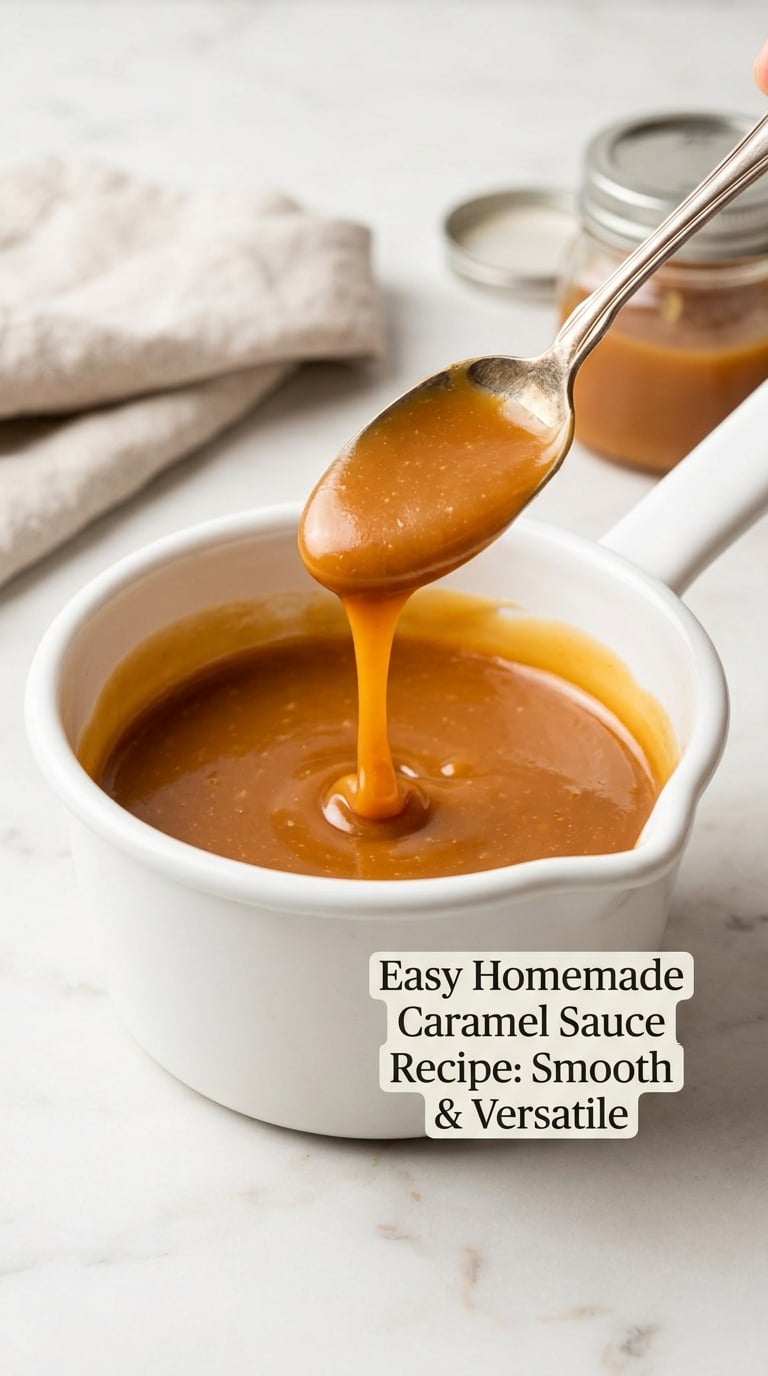
Table of Contents
Why This Recipe Works
Caramel looks fussy until you understand there is only one real decision: when to stop the heat. Everything else on this page is a cue to help you make that call at the right moment.
- Five ingredients, no hidden steps. Sugar, butter, cream, vanilla and salt. There is no corn syrup, no flour and no thickener, so nothing to hide lumps.
- A dry-style caramel, which tastes deeper. Browning the sugar on its own before the cream goes in gives you a toasted, almost nutty note that a wet caramel cannot match.
- Ready in about 15 minutes. Roughly 5 minutes of prep and 10 minutes of cook time, and most of that cook time is unattended once the sugar is in the pan.
- A thermometer is optional. Aim for 340°F to 350°F (170°C to 175°C) if you own one, but the deep amber color and nutty smell are perfectly reliable cues on their own.
- The cream is added at the end. That means no long bubbling stage and very little risk of a seized pan, which is the single most common caramel problem.
Ingredients
Caramel sauce made the classic way starts with granulated sugar and unsalted butter, then finishes with heavy cream for body. Dairy is the main allergen in this recipe.
- 1 cup (200 g) granulated sugar
- 6 tablespoons (85 g) unsalted butter, cut into cubes so it melts evenly
- 3/4 cup (180 ml) heavy cream, warmed in a heatproof measuring cup for 2 to 3 minutes
- 1 teaspoon (5 ml) pure vanilla extract
- 1/4 teaspoon fine salt, plus flaky sea salt for finishing
Unsalted butter gives you control over the seasoning. If that is all you have, use salted butter and drop the added salt to a pinch.
For a dairy-free version, keep every ratio the same and swap 3/4 cup of heavy cream for an equal volume of full-fat coconut milk, and use vegan butter for the butter. The sauce sets slightly softer and leans a little coconut-forward, but the method and timing do not change at all.
Equipment
Only one item actually matters: a heavy-bottomed saucepan with a pale or light-colored interior. A dark coating hides the color change, and that color is how you know when the caramel is ready.
- Heavy-bottomed saucepan, about 2 to 3 quarts, light interior, with a tight-fitting lid nearby
- Whisk or long heatproof spoon for whisking in the cream
- Silicone spatula for scraping the base of the pan
- Heatproof measuring cup for warming the cream
- Candy thermometer, useful but not required
Keep a damp, folded towel within arm’s reach. When the cream hits the hot caramel it spits, and it will spit at you whether you are ready or not.
How to Make Easy Homemade Caramel Sauce
Prep: 5 minutes · Cook: 10 minutes · Total: 15 minutes · Yield: about 1.5 cups (350 ml) · Difficulty: easy
This is a dry caramel, so the sugar browns on its own before any liquid arrives. Watch the color rather than the clock.
Easy Homemade Caramel Sauce: Melt the Butter
- Warm the cream first. Pour the heavy cream into a heatproof measuring cup and heat it on the stove or in the microwave until it is steaming and you see small bubbles at the edge. Set it beside the burner. Cold cream hitting hot caramel is what makes the mixture seize.
- Melt the butter over medium-low heat. Put the cubed butter in the saucepan and let it melt slowly until it is fully liquid and foamy, about 2 minutes. Let it cook 1 minute more so the milk solids start to turn lightly golden and smell nutty. Do not let it brown, or the finished sauce will taste of scorched butter.
Cook the Sugar to a Dark Amber Caramel
- Add the sugar and do not stir for the first few minutes. Sprinkle the sugar evenly over the melted butter. Let it sit untouched for about 2 minutes so the crystals dissolve on their own. Stirring too early is the number one cause of grainy caramel.
- Swirl the pan instead of stirring. Once the sugar has mostly dissolved, lift the pan by the handle and swirl it in small circles so the hot butter moves through the melting sugar. Keep the heat at medium-low. You will see clear syrup, then pale gold, then a deep amber.
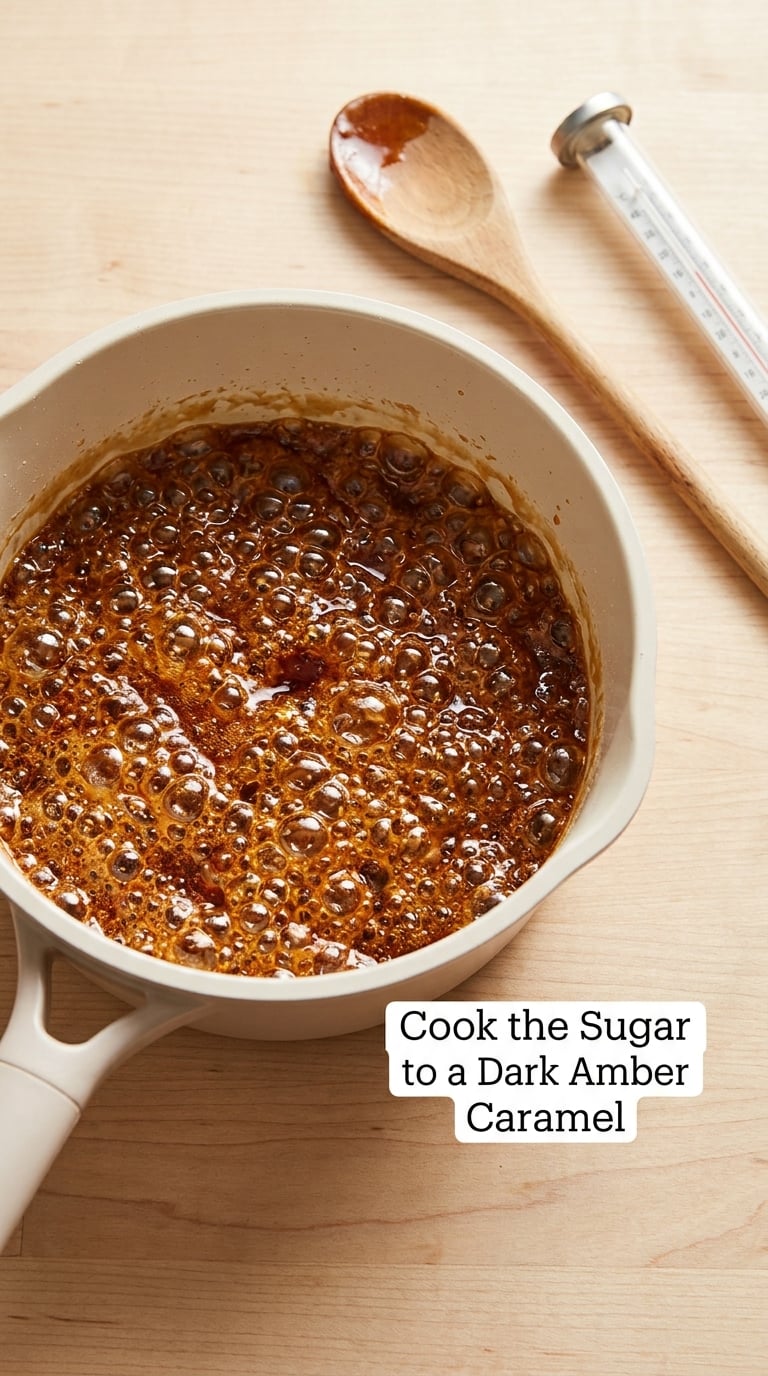
- Stop at deep amber, 340°F to 350°F (170°C to 175°C). The color should be a rich mahogany-amber, similar to a toasted hazelnut shell, and the smell should be deeply nutty rather than sharp. Bubbles get slower and thicker as you approach this stage, which is a second useful cue. Pull the pan off the heat the moment it hits dark amber, because the residual heat keeps darkening it.
Finish and Cool the Sauce
- Whisk in the warm cream. Pour the warm cream into the amber caramel and whisk steadily. It will bubble hard and steam for about 30 seconds, then turn into a smooth, glossy sauce. Keep whisking until no streaks of butter remain.
- Cook briefly, then cool. Return the pan to low heat for 1 to 2 minutes, stirring often, until the sauce is thick enough to coat the back of a spoon but still pours in a slow ribbon. Pour it into a heatproof bowl or a Mason jar, stir in the vanilla and the fine salt, and let it cool for about 10 minutes before using or storing.
The sauce thickens noticeably as it cools, so judge the texture while it is still warm and slightly thinner than you want it at serving temperature.
Tips for Success
- Grainy or gritty sauce: the sugar crystallized. Turn the heat off completely, add a splash of warm cream, and whisk hard. The sauce usually comes back smooth. If it stays grainy, strain it through a fine mesh sieve and call it a rustic caramel crunch.
- Hardened, lumpy caramel: a pour of cool cream hit a very hot pan and the mixture seized. Do not throw it out. Let it cool to just warm, set the pan over the lowest heat, and whisk in more warm cream a spoonful at a time until it loosens.
- Bitter, smoky sauce: the caramel burned. It is past saving for flavor, but you can still use it. Thin it with warm cream and treat it as a glaze for a dark chocolate cake, where the bitterness reads as depth.
- Rapid foaming that climbs the pan: a normal part of the process. Lower the heat to medium-low, stir the butter and sugar together more often once the foaming starts, and keep that damp towel close. Big bubbles are the sugar releasing moisture as it cooks.
- Sauce that is too thin to drizzle: simmer it a couple of minutes longer until it coats a spoon. For dipping apples, that slightly thicker consistency is exactly what you want, because a thin sauce runs straight off the fruit.
- Sauce that sets like firm candy in the fridge: normal, and fixable. Stand the jar in a bowl of warm water for 10 minutes, then stir. It loosens back to a pourable sauce in under a minute, and you can always add a tablespoon of warm cream to go further.
Variations
Some additions go in during cooking, where they are cooked into the caramel. Others go in after it cools, where they keep their character. Mixing the two up is how you lose the flavor you paid for.
Add during cooking
- Bourbon vanilla: replace 2 tablespoons of the cream with bourbon and add 1 extra tablespoon of bourbon with the vanilla at the end. Boil off most of the alcohol as you cook.
- Pumpkin spice: stir in 1/2 teaspoon pumpkin pie spice and a pinch of cloves right after the cream, while the sauce is still hot. Use 1/3 cup less cream so the sauce stays glossy.
- Chocolate: whisk 2 ounces of chopped dark chocolate into the warm sauce at the end. It thickens noticeably, so add a tablespoon of warm cream if needed.
Stir in after cooling
- Salted caramel: finish with a generous pinch of flaky sea salt. This is the version most people end up making on repeat.
- Coconut: fold in 1/3 cup of toasted coconut flakes once the sauce is just warm, so the flakes stay crunchy.
- Espresso caramel: dissolve 1 teaspoon of instant coffee granules in a tablespoon of warm cream and stir it in. The bitterness sharpens the flavor without making it taste like coffee.
Storage, Make-Ahead and Reheating
Homemade caramel sauce keeps well because of its sugar and fat content, and it is dairy-based, so it belongs in the refrigerator.
- Fridge: 2 weeks in a sealed jar or airtight container. It will be noticeably thicker than when you made it.
- Freezer: up to 3 months in a freezer-safe container, leaving a little headroom. Thaw it in the fridge overnight, not on the counter.
- Make-ahead: This is an excellent make-ahead recipe. A double batch keeps for a month if you freeze half of it in small jars, which is handy for dessert-making weeks.
- Reheating: warm a jar in a bowl of hot water for 10 to 15 minutes, stirring occasionally, or microwave 15-second bursts with a stir between each. If it is still too thick, add a tablespoon of cream and heat it again briefly.
For gifting, pour the warm sauce into a clean Mason jar, leave a half-inch of headroom, and add a small piece of parchment under the lid so it does not stick. It sets up like a thick sauce rather than a hard candy, so it keeps for the two fridge weeks above.
What to Serve With It
Four pairings cover most of what I make it for.
- Ice cream: Warm the sauce slightly and pour it over vanilla bean ice cream in a tall glass. A pinch of flaky salt on top makes it taste like a salted caramel sundae.
- Apple desserts: Warm it until pourable and drizzle over an apple pie, apple crisp or baked apples. It is also excellent as a dip for fresh apple slices alongside homemade granola recipes for a breakfast plate.
- Pancakes and waffles: Warm a small amount in a saucepan and spoon it over the top instead of maple syrup. Add a spoonful of the sauce to the batter for a shortbread-style pancake.
- Baked goods: Cool it to room temperature and use it as a glaze or filling. It pairs well with bakery-style homemade cookies, and it turns a plain chocolate cake into the centerpiece of the table.
A pinch of flaky salt on top of anything will do more for you than a heavier hand with the sugar ever could.
Frequently Asked Questions
What temperature should caramel sauce reach?
Aim for 340°F to 350°F (170°C to 175°C) on a candy thermometer for a deep amber, nutty caramel sauce with a soft drizzle consistency. Most cooks do fine without a thermometer: the color should reach a rich mahogany-amber and the smell should be deeply toasted rather than sharp. Remember the caramel keeps darkening after the heat is off, so pull the pan a touch earlier than the color you want.
Why is my caramel sauce grainy or crystallized?
Grainy caramel means crystals formed, usually because the sugar was stirred while it was still dissolving or because the pan splashed water into it. Turn off the heat, add a spoonful of warm heavy cream and whisk hard; it usually comes back smooth within a minute. If it stays grainy, strain it through a fine mesh sieve and enjoy it as a textured caramel crunch.
Can I make caramel sauce without heavy cream?
Yes, and the method does not change. Keep the same ratio of sugar to fat (1 cup sugar to 6 tablespoons butter) and replace the 3/4 cup of heavy cream with an equal volume of full-fat coconut milk or full-fat oat milk. The sauce will set slightly softer and taste less rich, so the vanilla and salt matter more. Using more butter in place of cream gives you a dairy-free caramel that is closer to a glaze than a sauce.
How do I know when caramel is burning?
Burning caramel goes past deep amber into a dark brown, and the smell changes first: the pleasant nutty aroma turns sharp, acrid and smoky. If you catch it there, take the pan off the heat immediately. A thin, bitter sauce can still be rescued by thinning it with warm cream and using it as a glaze on dark chocolate cake, but it will not taste good on ice cream.
How thick should caramel sauce be when it is ready?
Warm caramel sauce should coat the back of a spoon and fall off in a slow, continuous ribbon. It looks slightly thinner than you want at serving time because it thickens noticeably as it cools. For a thick dipping sauce, cook it two extra minutes; for a pourable drizzle, stop as soon as the ribbon breaks up. Adjust later with warm cream rather than more cooking.
Make Your First Batch for Desserts and Snacks
Make the plain vanilla version first. It is the most useful of the caramel sauces, it is the most forgiving, and it doubles as the base for every variation later, so you learn the heat and timing without a flavor distracting you.
Once this easy homemade caramel sauce recipe is part of your rotation, dessert stops being the hard part. Updated for 2026, it is a 15-minute job with a two-week shelf life in the fridge.