
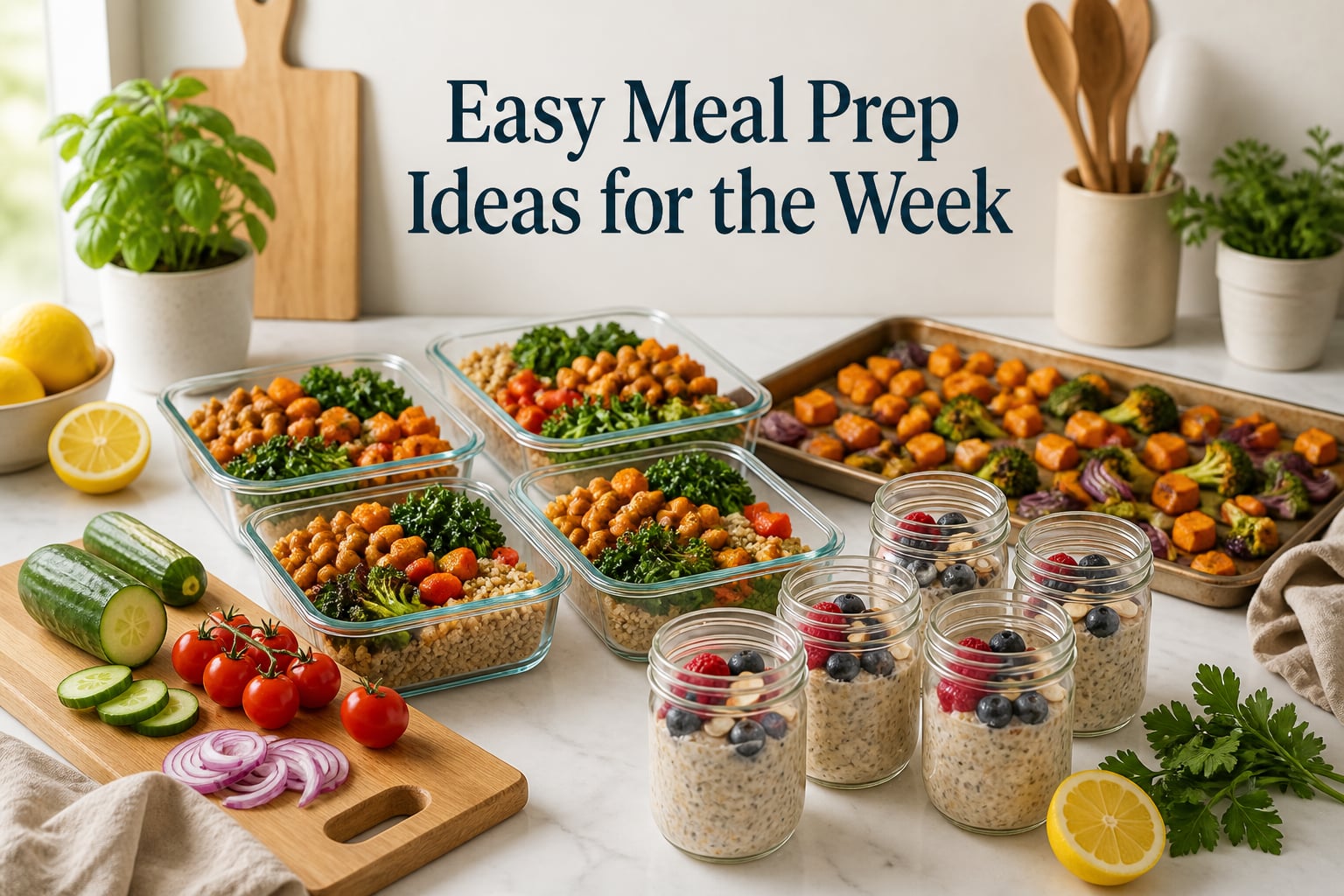
The easiest weekly plan is not fourteen identical boxes; it is a handful of cooked components assigned different jobs. These easy meal prep ideas for the week cover breakfast, cold lunches, hot lunches, family dinners, snacks, and freezer backups, with portions and storage boundaries included so the plan can move from Sunday to Friday without guesswork.
Table of Contents
14 Easy Meal Prep Ideas for the Week, from Breakfast to Backup
Prepare Breakfast Before the Morning Clock Starts
1. Five Overnight-Oat Jars
For five breakfasts, portion 2 1/2 cups rolled oats, 2 1/2 cups milk, 1 1/4 cups plain yogurt, and 5 tablespoons chia seeds across five 16-ounce jars. Sweeten the base with 2 tablespoons maple syrup, then give each jar a different finish: berries, diced apple and cinnamon, banana and peanut butter, peaches, or cocoa and cherries. Stir the dry base before adding milk so chia does not clump. Refrigerate immediately and add crunchy nuts only in the morning. The jars keep 4 days, so freeze the fifth without fresh fruit or assemble it Wednesday night. Use certified gluten-free oats when needed.
2. Freezer Egg and Bean Burritos
Scramble 10 eggs with 1/2 teaspoon salt, then combine with 2 cups rinsed black beans, 1 cup sautéed bell pepper, and 1 1/2 cups shredded cheese. Divide among eight 8-inch tortillas, keeping filling away from the edges. Cool the eggs before rolling, wrap each burrito in parchment and foil, and freeze flat. Thaw overnight or remove foil and microwave from frozen in short bursts; heat the center to 165°F. Salsa and avocado stay separate because both make the tortilla wet. A whole-wheat tortilla adds fiber, while cooked breakfast sausage can replace one cup of beans for a meat version.
If morning variety matters more than a full Sunday session, these fast breakfast formats can fill the days not covered by jars or burritos.
Build Lunches and Dinners from Separate Components
3. Lemon Chicken Grain Boxes
Roast 2 pounds lemon-garlic chicken thighs and a sheet pan of 6 cups broccoli and carrots while 2 cups dry farro simmer on the stove. Slice the chicken only after its 5-minute rest and confirmation at 165°F. Divide 5 ounces chicken, 3/4 cup cooked farro, and about 1 cup vegetables into each of six containers. Pack lemon-herb yogurt sauce in small cups so the grain does not absorb it. Refrigerate four boxes for up to 4 days and freeze two without sauce. Reheat the hot components to 165°F, then add sauce. Brown rice works when farro is unsuitable, but cool it promptly in shallow containers.
4. Mason-Jar Salmon Noodle Salads
Cook 12 ounces soba noodles, rinse them cold, and toss with 1 teaspoon sesame oil. Whisk 1/3 cup rice vinegar, 2 tablespoons soy sauce, 1 tablespoon grated ginger, and 1 tablespoon honey. Layer five jars with dressing first, then shredded carrots, cucumber, edamame, noodles, and 4 ounces cooked salmon at the top. Keep herbs in a separate bag if you want them crisp. Refrigerate for no more than 3 days because of the fish, transport with an ice pack, and shake into a bowl at lunch. Baked tofu can replace salmon and extends the plan to 4 days.
5. Turkey Taco Night Kits
Brown 2 pounds ground turkey with 2 tablespoons chili powder, 2 teaspoons cumin, and 1 teaspoon salt until it reaches 165°F. Cool and divide it into four dinner containers. In separate compartments, portion 2 cups cooked rice, 2 cans drained black beans, shredded lettuce, cheese, and quartered limes. Store salsa in small sealed cups and leave avocado whole until serving. The hot turkey-rice-bean base lasts 4 days refrigerated or 2 months frozen; lettuce should be refreshed if it wilts. Each night can become tacos, a bowl, or a salad, which changes the format without requiring a second protein.
6. Coconut Chickpea Curry Portions
Simmer 2 diced onions, 3 tablespoons curry powder, 3 cans rinsed chickpeas, one 28-ounce can crushed tomatoes, and one 13.5-ounce can coconut milk for 20 minutes until thick. Fold in 6 cups spinach and cook just until wilted. Portion 1 1/2 cups curry with 3/4 cup cooked basmati rice into six shallow containers, cooling before lids go on. Refrigerate four portions for 4 days and freeze two for up to 3 months. Reheat to 165°F and add lime or cilantro afterward. Cubed tofu can replace one can of chickpeas; keep it in larger pieces so it survives freezing.
7. Lentil Soup and Toast Packs
Cook a pot from 2 cups brown lentils, 8 cups broth, diced onion, carrots, celery, tomatoes, and thyme until the lentils are tender, then cool it in a wide container. Fill six soup jars with about 2 cups each, leaving headspace in the two destined for the freezer. Pack whole-grain toast or crackers in a dry bag and a spoonful of Parmesan in a separate cup. The refrigerated soup keeps 5 days; frozen portions keep 3 months. Reheat to a full 165°F, adding broth if the lentils have absorbed it. Spinach belongs in the reheated bowl rather than the freezer portion.
Three Prep Clocks Prevent Waste
-
Cook now: proteins, grains, sauces, soups, and sturdy roasted vegetables.
-
Assemble later: sandwiches, pitas, salads, avocado, herbs, and crisp toppings.
-
Freeze immediately: portions not scheduled within their refrigerator window.
The easy meal prep ideas for the week work best when the freezer is part of the plan on day one. These slow-cooker freezer meals add thaw-before-cook dinners when reheated portions are not appealing.
Rotate Sauces, Temperatures, and Serving Formats
8. Pesto Pasta and Roasted Vegetable Boxes
Roast 6 cups zucchini, peppers, and cherry tomatoes with 2 tablespoons olive oil at 425°F until browned, about 22 minutes. Cook 1 pound short pasta, drain, and cool briefly before tossing with 3/4 cup pesto and the vegetables. Divide among six boxes and add 1/2 cup white beans or 4 ounces cooked chicken to each. Keep extra pesto separate for refreshing after reheating. Refrigerate for 4 days and eat cold or heat to 165°F. The vegetables soften after freezing, so this plan is better as a refrigerator rotation. Choose sturdy penne or rotini instead of delicate noodles.
9. Greek Chicken Pita Components
Season 2 pounds chicken breast cutlets with oregano, garlic, lemon zest, salt, and olive oil, then cook to 165°F and rest before slicing. Prepare a tomato-cucumber salad, 2 cups tzatziki, and eight pita breads. Store chicken, salad, sauce, and bread in four separate containers rather than assembling sandwiches. For each lunch, warm 5 ounces chicken and one pita to 165°F, then add 1 cup salad and 1/4 cup sauce. The chicken keeps 4 days, the salad is best within 3, and tzatziki should remain cold. Falafel can replace chicken for a meatless kit.
10. Sesame Tofu and Broccoli Boxes
Press two 14-ounce blocks of extra-firm tofu, cube them, and roast with 2 pounds broccoli until the tofu is crisp and the florets are tender. Whisk 1/3 cup soy sauce, 2 tablespoons rice vinegar, 1 tablespoon sesame oil, 1 tablespoon maple syrup, and grated ginger. Divide 1 cup cooked brown rice, tofu, and broccoli among six boxes, keeping sauce in small cups. Refrigerate for 4 days; freezing changes tofu texture but remains safe if that chewier result is acceptable. Reheat the solids to 165°F, then add sauce. Shelled edamame can replace one block of tofu.
11. Breakfast Snack Boxes
Build five cold boxes with 2 hard-boiled eggs, 1 small piece of fruit, 1 ounce cheese, 1/4 cup nuts, and 4 whole-grain crackers each. Boil the eggs, chill them in ice water, and refrigerate unpeeled for easier storage; peel the night before packing. Cut apples only when needed or coat slices lightly with lemon. Keep boxes at 40°F or below and use within 4 days, replacing the fifth day’s eggs with a shelf-stable nut-butter packet if necessary. For a nut-free box, substitute roasted chickpeas or pumpkin seeds after checking workplace allergy rules.
Finish with Baked Breakfasts and Freezer Insurance
12. Hummus Bento Lunches
Spread 1/3 cup hummus into each of five leakproof cups. Add 1 cup sturdy vegetables such as carrots, snap peas, cucumber spears, and mini peppers, plus one pita, 1/2 cup grapes, and 1/3 cup marinated chickpeas. Dry cut vegetables before packing and keep pita in a separate bag. These require no reheating, but they still need an insulated bag and ice pack. Assemble only four days at once because cut cucumber declines first; keep the fifth set of carrots and peppers whole until midweek. Tzatziki can replace hummus, while sunflower-seed dip suits many sesame-free needs.
13. Baked Oatmeal Squares
Mix 4 cups rolled oats, 2 teaspoons baking powder, 2 teaspoons cinnamon, 2 mashed bananas, 2 eggs, 3 cups milk, and 2 cups berries. Bake in a greased 9-by-13-inch pan at 350°F for 35 to 42 minutes until the center is set and the edges are golden. Cool completely before cutting 12 squares. Refrigerate eight squares for 4 days and freeze the rest individually for 2 months. Reheat one square until steaming and add yogurt or nut butter after warming. Apples can replace berries, but dice them small so the center bakes on schedule.
14. Emergency Freezer Grain Bowls
Use leftover cooked components to assemble six freezer bowls: 3/4 cup cooled rice or quinoa, 1 cup roasted vegetables, 1/2 cup beans, and 4 ounces cooked chicken, pork, or tofu in each. Label every lid with contents, freeze date, thawing direction, and any fresh finish still needed. Freeze uncovered just until cold, then seal; use within 2 months for best texture. Thaw overnight and reheat to 165°F, or microwave from frozen with 1 tablespoon water and pauses for stirring. Add salsa, herbs, crunchy seeds, or yogurt only after heating so one base does not taste identical all week.
A purchased bird can shorten the protein step substantially; these rotisserie chicken dinners show how to portion cooked meat without drying it through repeated reheating.
Frequently Asked Questions
How many days should be prepped at once?
Four refrigerated days is a practical maximum for many cooked meals. Freeze later portions immediately or schedule a short midweek refresh for produce and fish.
Should hot food go directly into sealed containers?
No. Divide it into shallow containers so it cools quickly, then refrigerate within 2 hours. The USDA leftovers guidance explains cooling and reheating limits.
How can meal-prep food avoid becoming soggy?
Store sauce, wet fruit, crisp toppings, bread, and leafy greens separately. Reheat the hot base first and assemble at the last possible moment.
What is the easiest way to label containers?
Write the food, prep date, use-or-freeze date, reheating direction, and final fresh component on removable tape. A label should let another household member finish the meal.
Can one base serve different diets?
Keep the grain, vegetables, protein, sauce, and garnish separate. That makes it possible to change portions or substitute beans, tofu, dairy-free sauce, or gluten-free bread without cooking every meal twice.
Bottom Line: Prep Decisions, Not Repeated Plates
Choose two breakfasts, two lunch formats, one dinner kit, and one freezer backup rather than filling every container the same way. The easy meal prep ideas for the week become sustainable when each component has a job, a storage deadline, and a fresh finish waiting for serving day.